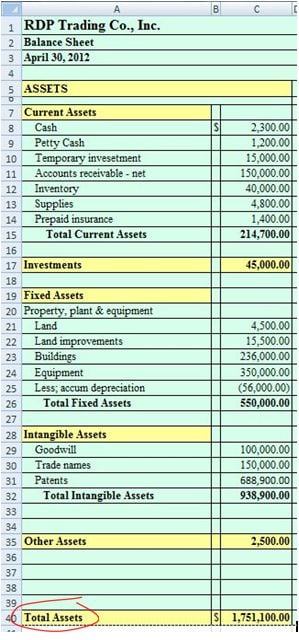
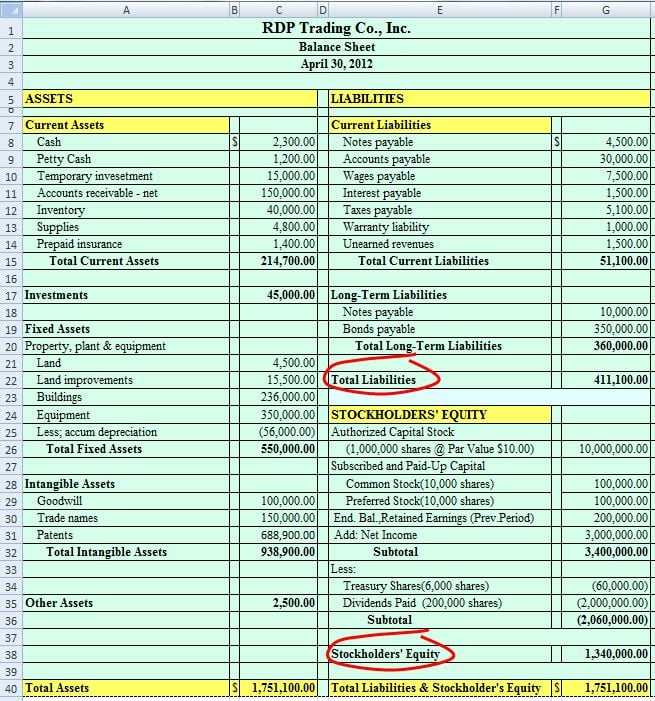
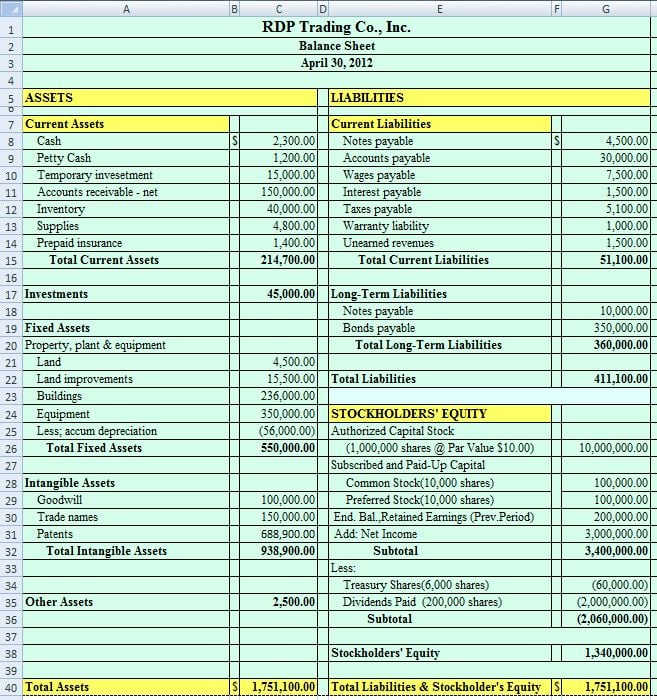
Assets are simply defined as anything that the business has ownership of by its acquisition at a certain point in time and recorded in its financial history. Record the relevant assets in the form fields below, and tick through the sub-checklist as you check for asset accounts.
Examples of Asset Accounts that are reported on a company's balance sheet include:
Current Assets
Current Assets are those that can be converted into cash within one year of the business's normal operating cycle.
- Cash
- Accounts Receivables (A/R)
- Inventory
- Notes Receivables (N/R)
- Prepaid Expenses
- Other current assets
The cash on hand and in bank, accounts/notes receivables, inventories, prepaid expenses that can be converted into cash within one year of operation, are all basic examples of current assets.
Investments
Investments are Assets Investments whose maturities exceed one year.
Examples:
- Bond Sinking Fund
- Funds held for Construction
- Cash Surrender Value of Life Insurance Policy
- Long-term Investments in Stocks and Bonds
Returns on these investments can be realized over the long-term considering that its payback period is more than a year.
Fixed Assets
Fixed Assets, otherwise known as long-term assets, are those assets holdings with long-term physical value such as land, buildings, etc...
List of fixed assets:
- Land
- Buildings
- Machinery and Equipment
- Furniture and Fixtures
- Leasehold Improvements
With the exemption of landholdings, these long-term assets are subjected to depreciation charges to take into account their decline in value over their useful economic life, through the depreciation method of accounting.
Intangible Assets
Intangible Assets are those assets with significant long-term value without any physicality whose benefits extends a few years or beyond. It is usually recorded at cost based on a specified period of time in the balance sheet.
List of Intangibles:
- Research and Development
- Patents
- Market Research
- Goodwill
- Organizational Expense
Some of these intangibles are amortized over their estimated useful life similar to the accounting practice on the depreciation charges over fixed assets.
Other Assets are those with long-term value but cannot be categorized as current assets, investments, fixed assets or intangible assets.
List of Other Assets:
- Deposits (maturity of more than one year)
- Notes Receivables from Third Parties
- Bond Issue Costs amortized to expense over the life of the bond .
- Other Deferred Costs (Unamortized Bond Issue Cost)