

Turn every policy into automated workflows with built-in enforcement and audit-ready proof.



Mutual Fund Management Software: 9 Platforms for Fund Teams
Mutual fund management software is not one product category with one universal winner. A fund team may need investment research, portfolio construction, risk analytics, order management, fund accounting, regulatory reporting, and controlled operating workflows. Those jobs are related, but they are not interchangeable.
The practical choice is usually a stack. One platform may hold investment data and analytics. Another may run trading or accounting. Process Street can coordinate the human work around those systems, including reviews, approvals, evidence requests, exceptions, policy attestations, and recurring controls. This guide separates those roles so buyers can evaluate software against the work it must actually support.
In this guide:
- What is mutual fund management software?
- Which capabilities matter most?
- Which platforms should fund teams evaluate?
- How do you choose mutual fund management software?
- How can Process Street coordinate fund operations?
- Frequently asked questions
What is mutual fund management software?
Mutual fund management software is the technology used to research investments, construct and monitor portfolios, manage orders, calculate and reconcile records, oversee risk, support reporting, and control the operational work around a fund. The term covers several software layers because mutual fund management spans the front, middle, and back office.
A research platform helps analysts compare securities, funds, exposures, and managers. A portfolio platform helps investment teams model allocations, monitor performance, and test risk. An investment management system may connect portfolio decisions to compliance checks, trading, post-trade processing, and accounting. A workflow platform controls the recurring reviews, handoffs, approvals, and evidence that surround those systems.
That distinction matters. Software that is excellent at market data may not maintain the accounting book of record. An accounting platform may not be the best environment for investment research. A workflow platform should not be presented as a portfolio analytics engine. The right architecture gives each system a clear responsibility and defines how data, decisions, and proof move between them.
Which capabilities matter most in mutual fund management software?
Start with the operating model, not the vendor list. A registered fund, an asset manager, a wealth advisory firm, and an individual investor may all use the phrase mutual fund software while needing very different controls. Institutional buyers should map capabilities to the fund lifecycle and identify the system of record for each one.
- Investment research and security data: screening, holdings analysis, manager research, market data, and comparable investment information.
- Portfolio construction and analytics: allocation modeling, benchmark comparison, attribution, exposure analysis, stress testing, and scenario analysis.
- Order and compliance workflows: proposed orders, pre-trade checks, approvals, execution, and exception handling.
- Investment and fund accounting: positions, cash, reconciliations, valuation support, books of record, and reporting outputs.
- Operational control: recurring reviews, owner assignments, evidence capture, escalations, policy attestations, and audit history.
- Integration and data governance: reliable feeds, defined ownership, validation rules, permissions, and traceability between systems.
Regulatory reporting also affects the architecture. The SEC has continued to evolve investment company reporting, including Form N-PORT requirements and related fund data. Advisers also manage disclosure obligations such as Form ADV filing reviews and duties under the Investment Advisers Act of 1940. The point for software selection is not to buy a feature labeled compliance. It is to build a controlled path from source data through review, filing, retention, and evidence. See the SEC reporting enhancement announcement for an example of how reporting obligations can change.
Which mutual fund management software platforms should fund teams evaluate?
The platforms below cover different parts of the fund management stack. Process Street appears first because operational control is the layer that turns policies and recurring obligations into assigned, auditable work. The other products provide specialized investment data, analytics, trading, risk, and accounting capabilities. Buyers should compare products within the job they are designed to perform, not treat every name as a direct substitute.
Process Street
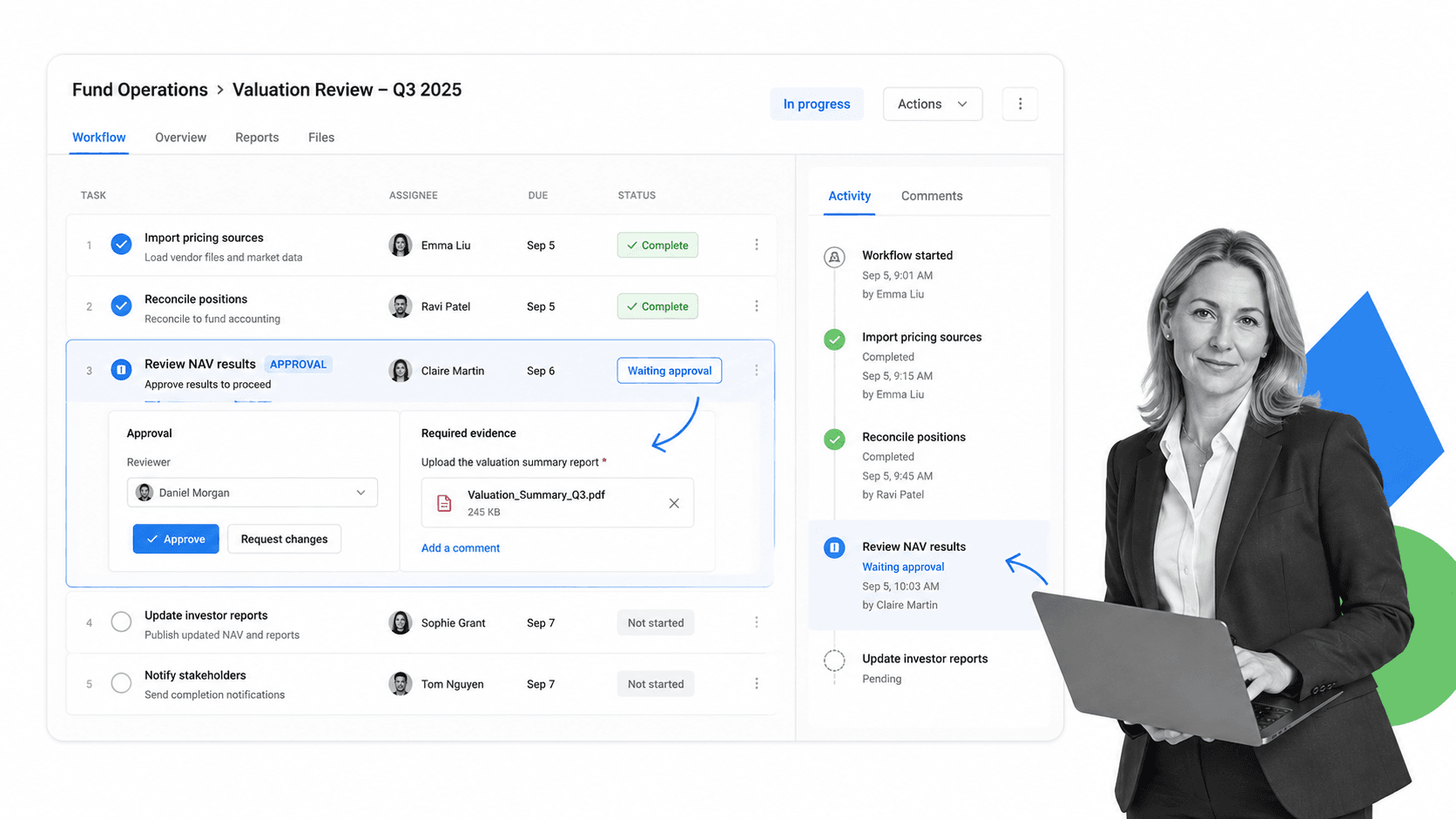
Process Street is the operational control layer for mutual fund teams that need repeatable work to happen correctly across investment, compliance, operations, legal, finance, and external service providers. Teams can document procedures, run them as assigned workflows, route approvals, collect evidence, escalate exceptions, and preserve task history.
That makes Process Street useful for investment committee preparation, new fund or share-class launches, policy attestations, vendor due diligence, valuation reviews, marketing approvals, access reviews, incident response, regulatory filing preparation, and periodic control testing. It can sit around the portfolio, trading, accounting, and data systems already in place.
Process Street is not a market data terminal, order management system, or fund accounting engine. Its strength is execution: defining who must do what, what evidence is required, who approves the result, and what happens when the normal path breaks. Explore financial services compliance software and controlled financial workflows for related use cases.
Morningstar Direct
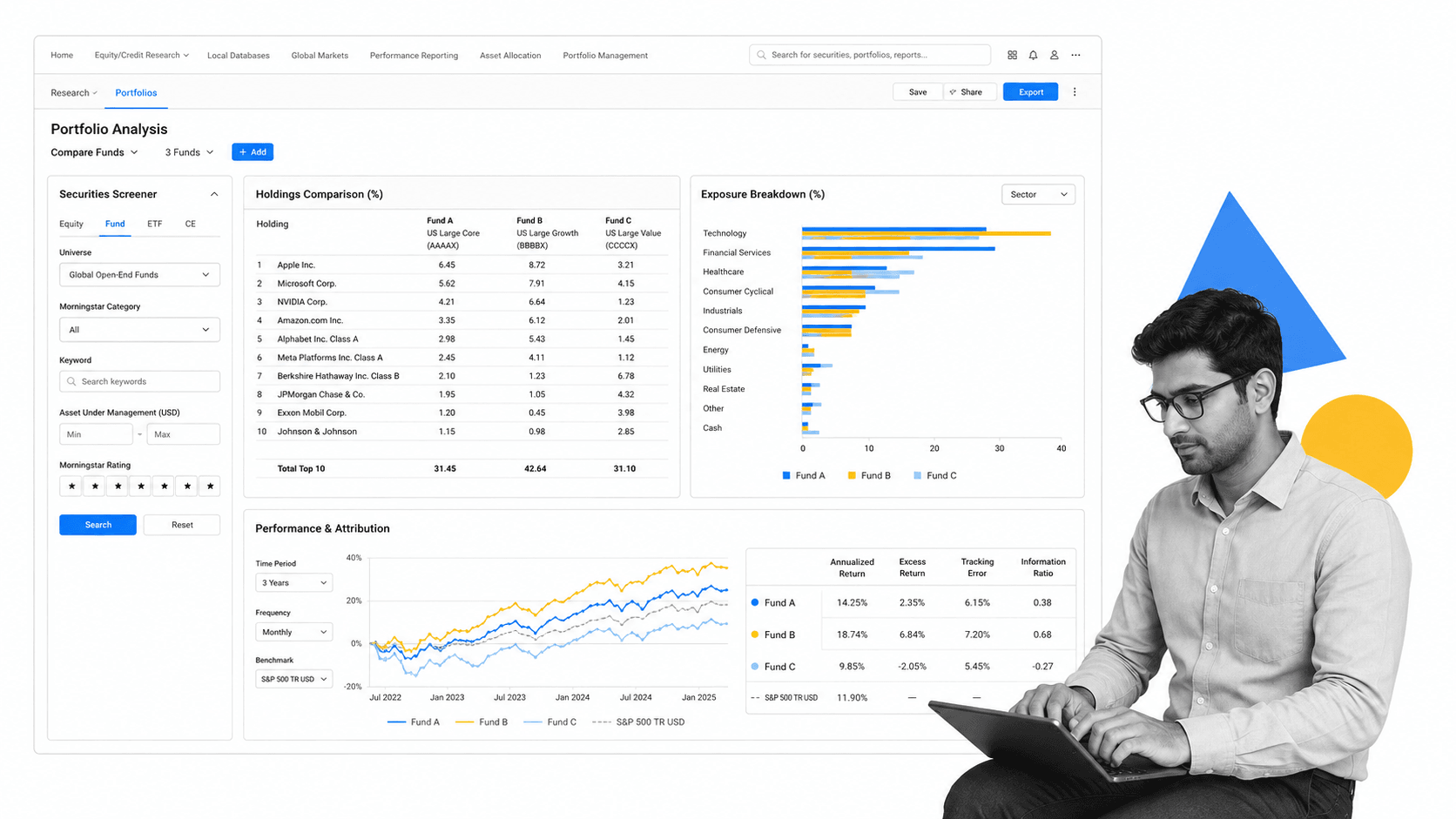
Morningstar Direct is designed for investment research and portfolio analysis. Its portfolio management tools bring public and private investments into one analytical experience, support holdings analysis, and help teams examine how positions interact.
The platform also supports portfolio construction, optimization, stress testing, scenario analysis, and attribution. Those capabilities fit analysts, portfolio managers, manager research teams, product teams, and advisors that need to compare investments and explain portfolio decisions.
Morningstar Direct is strongest where independent investment data, research, portfolio analysis, and presentation workflows matter. A buyer should still confirm how portfolio data enters the platform, which internal record is authoritative, and how approved decisions flow into trading, accounting, and controlled operating procedures.
Bloomberg Terminal and PORT
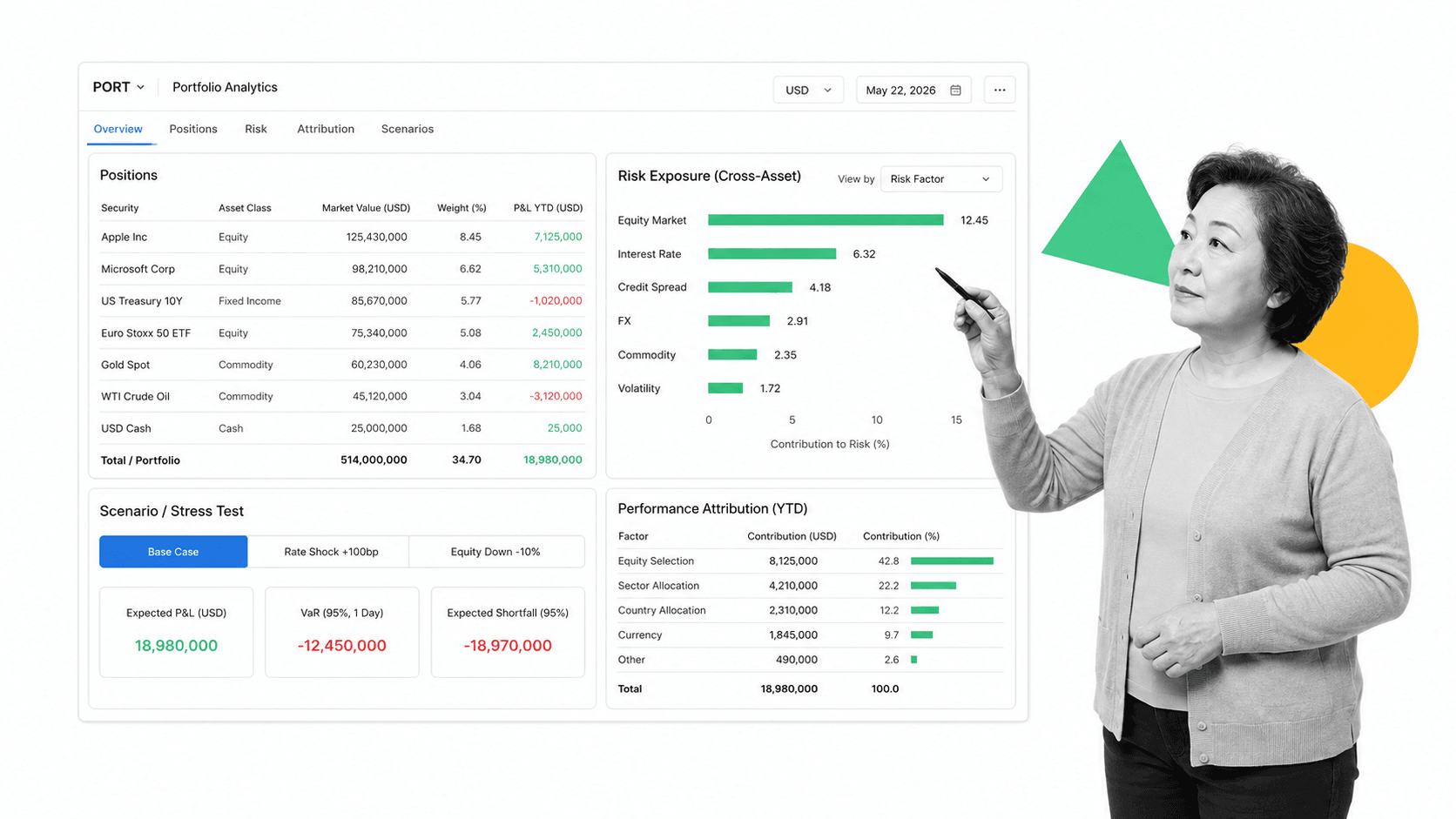
Bloomberg combines market data, news, research, analytics, collaboration, and trading tools. For portfolio work, Bloomberg PORT brings positions, risk, and performance into a shared analytical environment.
PORT supports cross-asset exposure analysis, performance attribution, scenario analysis, stress testing, optimization, and portfolio reporting. The broader Bloomberg environment can connect research and portfolio decisions to order and execution workflows, depending on the products a firm deploys.
This is a broad institutional ecosystem, so the evaluation should be workflow-specific. Buyers should identify which teams need the Terminal, which portfolio functions belong in PORT, how data is validated, and where final compliance, accounting, and operational evidence will live.
FactSet Portfolio Analytics
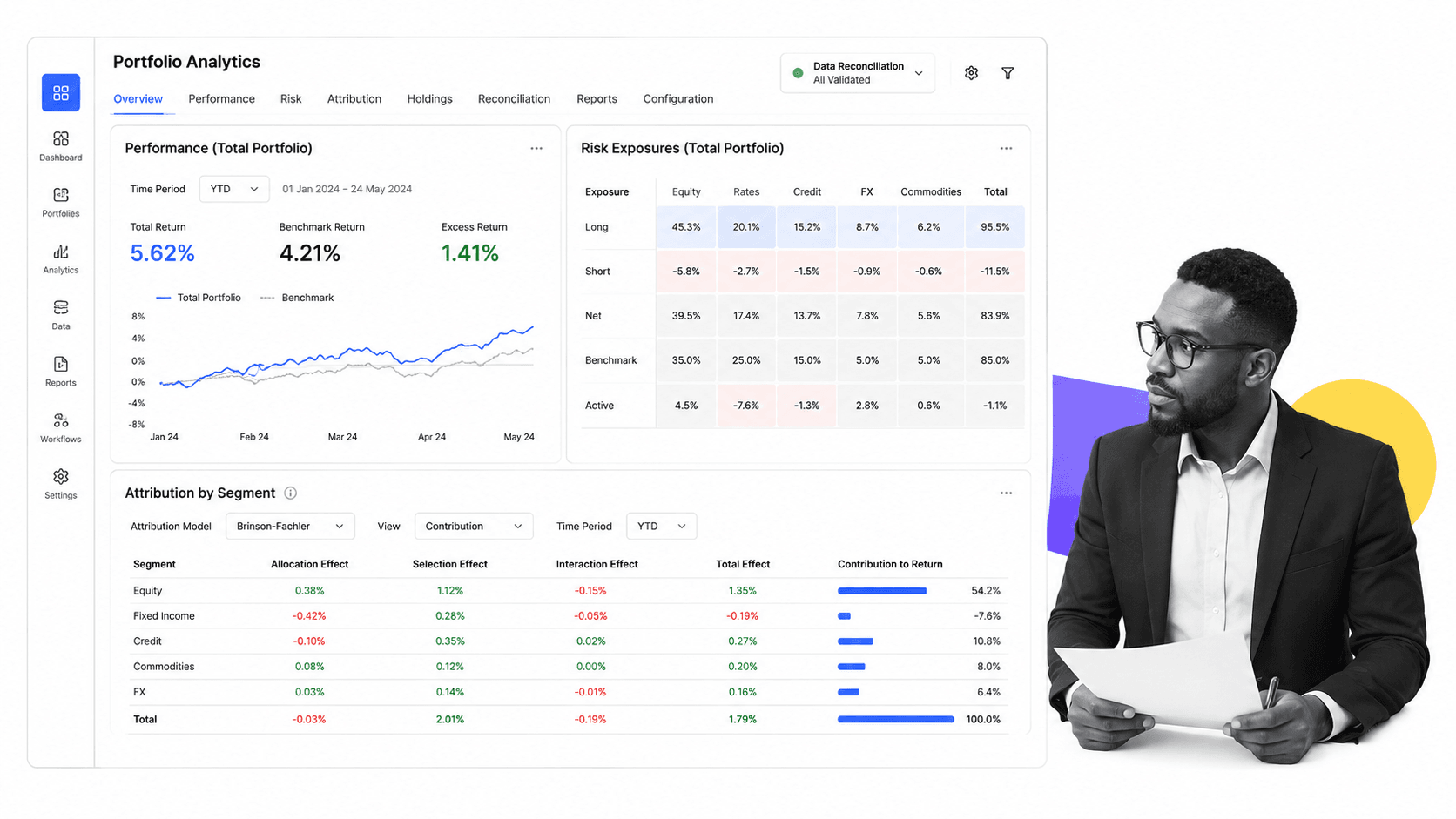
FactSet Portfolio Analytics provides performance, risk, exposure, and attribution analysis for multi-asset portfolios. It also supports scenario analysis, stress testing, reporting, data reconciliation, and connected delivery through interfaces and APIs.
The product fits investment teams that want configurable portfolio analytics and a connected data environment across portfolio managers, analysts, operations teams, and client reporting. Its whole-portfolio approach can help firms compare drivers of return and risk across public and private assets.
Evaluation should focus on the exact analytical models, data sources, reconciliation process, reporting outputs, and integrations the firm requires. The important question is not whether the platform has analytics. It is whether those analytics use trusted data and fit the investment process the team actually runs.
LSEG Workspace
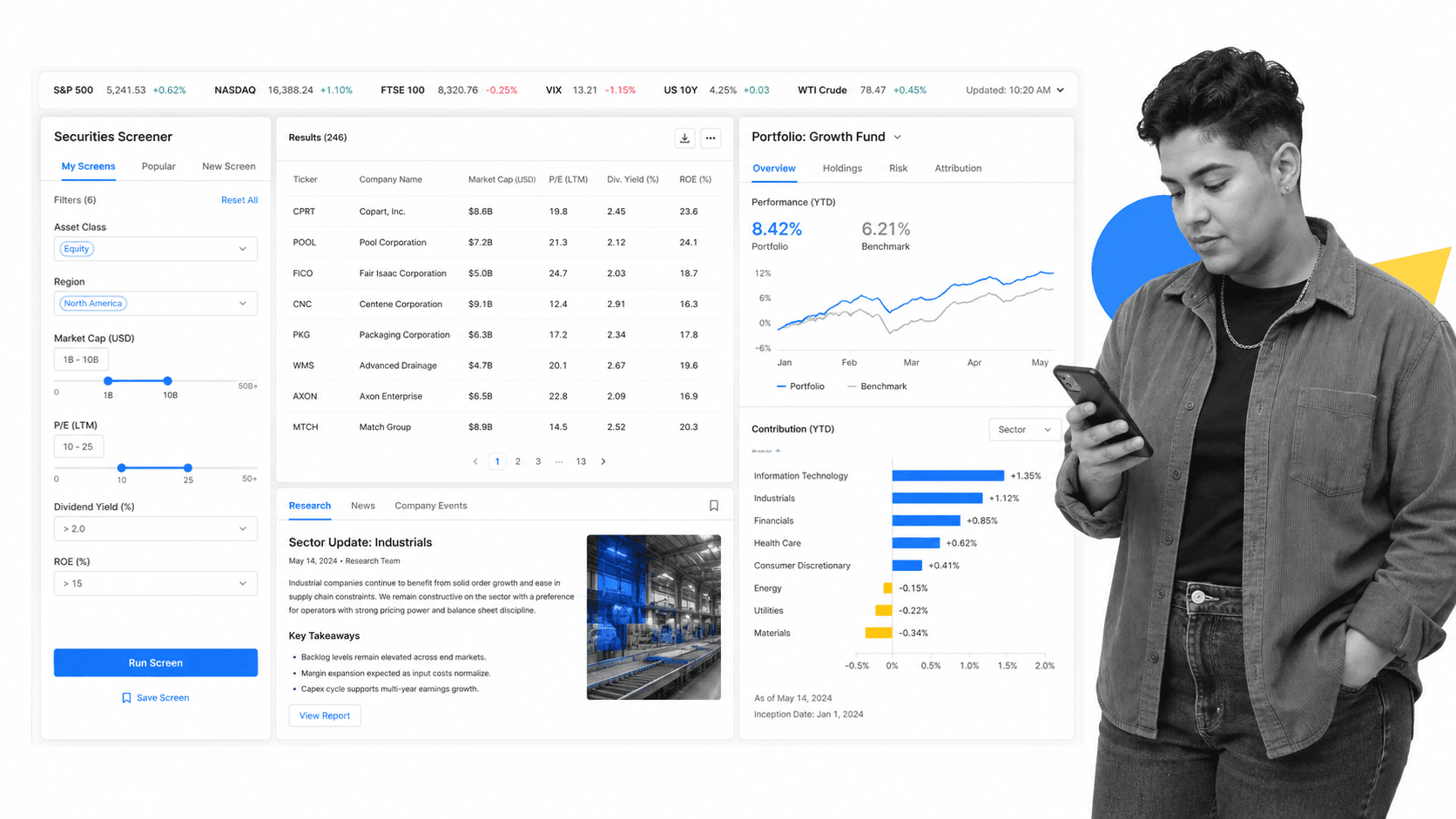
LSEG Workspace is the current LSEG environment for analysts and portfolio managers. It combines investment content, research, market and company data, screeners, and portfolio analytics in a workflow built for investment professionals.
Its portfolio capabilities include multi-asset performance and risk analysis, contribution, attribution, and style analysis. LSEG also offers adjacent order and portfolio management products, so firms can evaluate Workspace as one component of a wider data and investment workflow.
Teams moving from older Thomson Reuters or Refinitiv terminology should evaluate the current product family directly. The useful buying questions are which datasets and analytics are included, how portfolios are loaded, and how research conclusions and approved actions move to downstream systems.
Charles River IMS
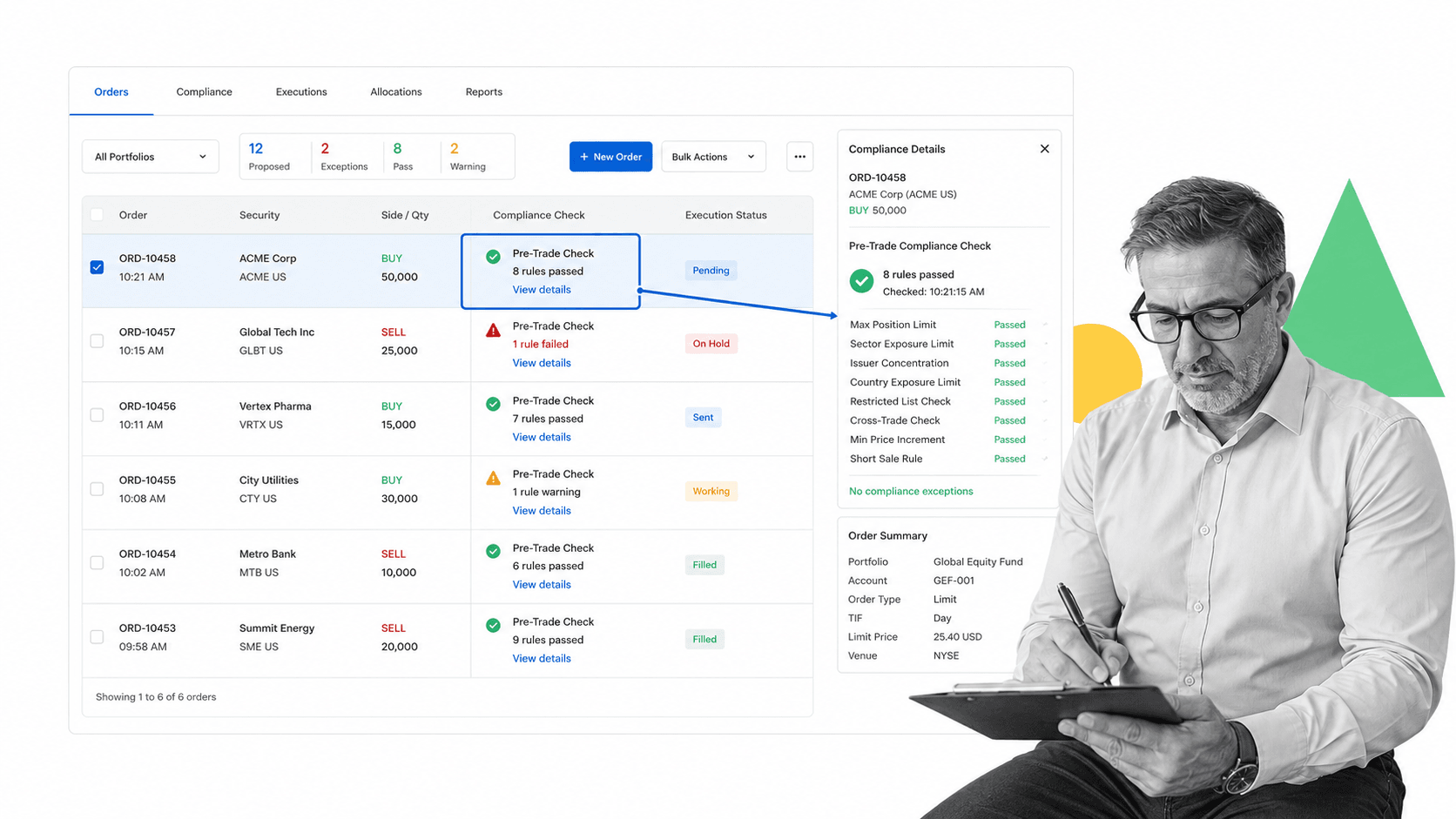
Charles River IMS is an enterprise investment management platform spanning portfolio management and construction, risk analytics, order and execution management, compliance, post-trade operations, investment accounting, and data management. The vendor specifically positions the platform for strategies that include mutual funds as well as other investment products.
This breadth suits asset managers that want connected front-to-back workflows on one platform. Portfolio teams can model decisions, compliance teams can evaluate rules across the trade lifecycle, traders can execute, and operations teams can manage downstream processing and books of record.
A front-to-back platform is a major operating-model decision. Buyers should test asset-class coverage, rule configuration, implementation ownership, data migration, exception workflows, accounting requirements, and the interfaces that external administrators, custodians, and reporting teams need.
SimCorp One
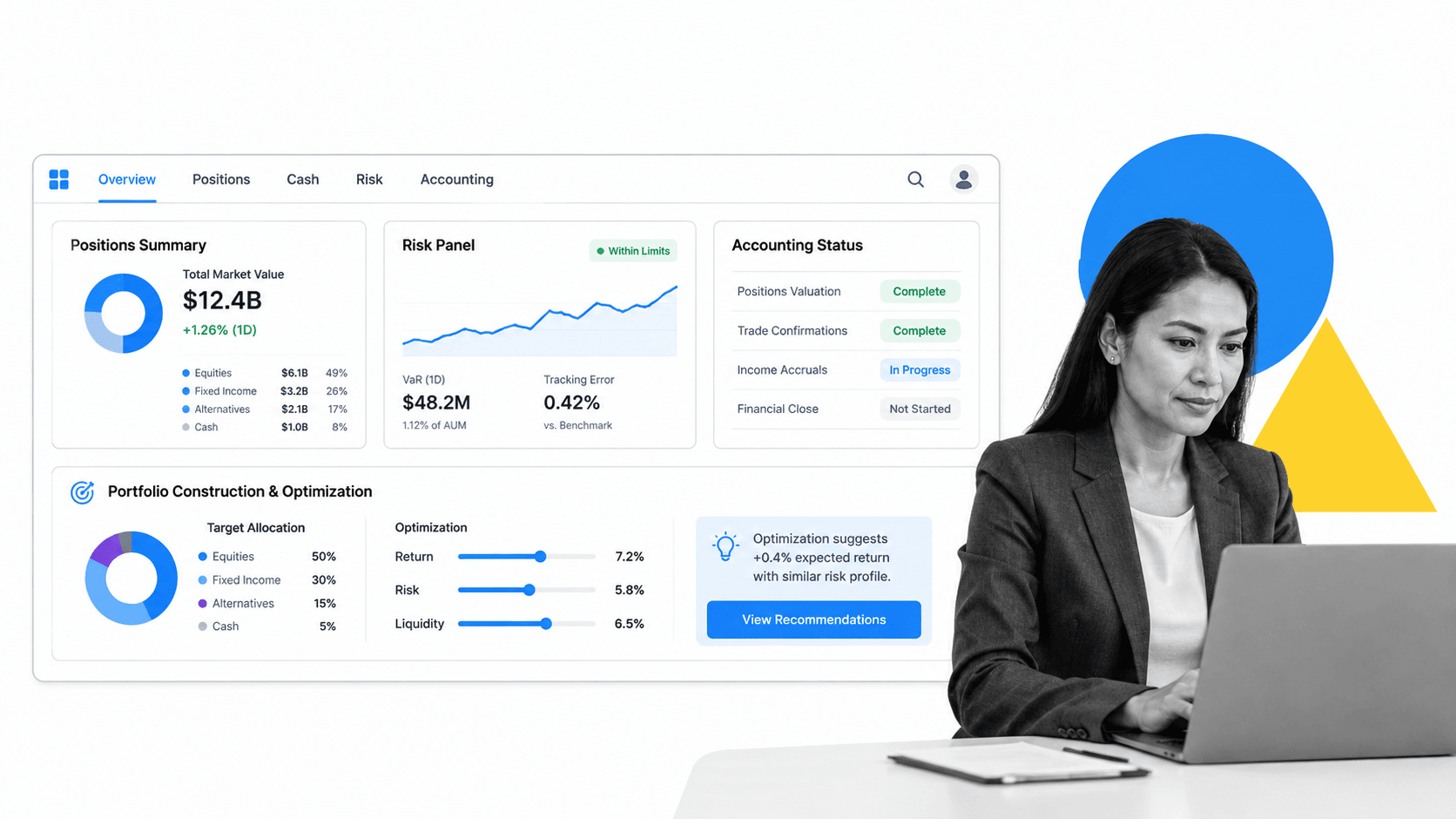
SimCorp One is a front-to-back investment management platform that brings public and private assets into one data foundation. Its product family covers portfolio construction, risk, trading, operations, accounting, and reporting across the investment lifecycle.
The platform is designed for firms that want positions, cash, risk, and accounting to stay connected instead of reconciling separate applications after each handoff. Portfolio management capabilities include multi-asset views, construction and optimization, order generation, and compliance checks within the investment workflow.
SimCorp is most relevant when a firm is considering broad platform consolidation or a major modernization program. Evaluation should include data governance, accounting regimes, implementation scope, operating services, customization boundaries, and the transition plan from existing books and workflows.
SS&C Advent Geneva
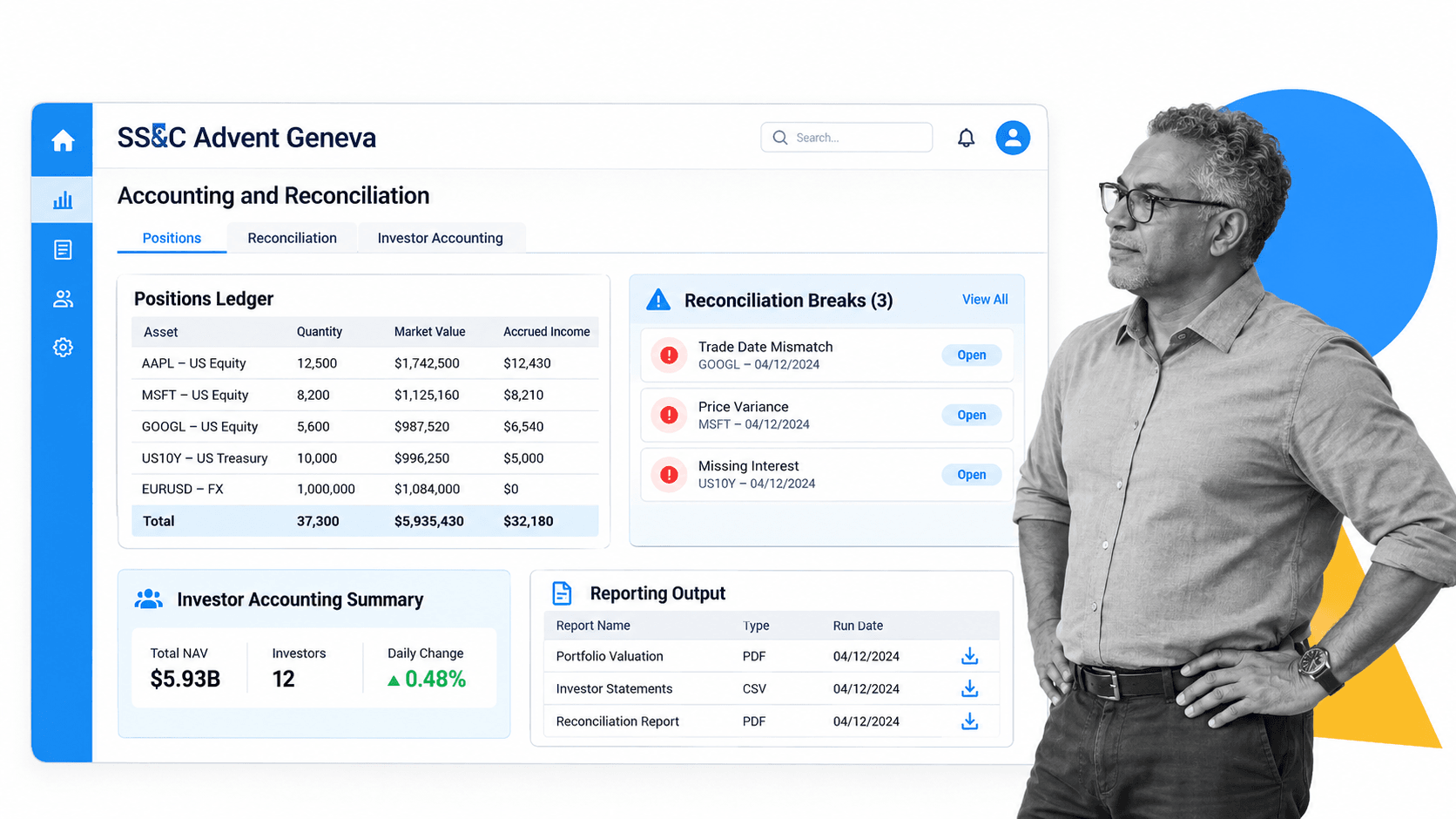
SS&C Advent Geneva is a global portfolio management and accounting platform. SS&C describes it as covering portfolio and investor accounting together with reporting, making it relevant for firms that need a specialized accounting and operational record across complex investment strategies.
Geneva belongs in the evaluation when portfolio accounting, reconciliation, investor accounting, and reporting are central requirements. It may be part of a broader SS&C technology and services relationship rather than a standalone analytics choice.
Buyers should define required asset classes, accounting treatments, reporting outputs, reconciliation flows, service-provider responsibilities, and exception ownership. The system may calculate and store critical records, but the firm still needs controlled procedures for reviews, approvals, breaks, overrides, and evidence.
BlackRock Aladdin
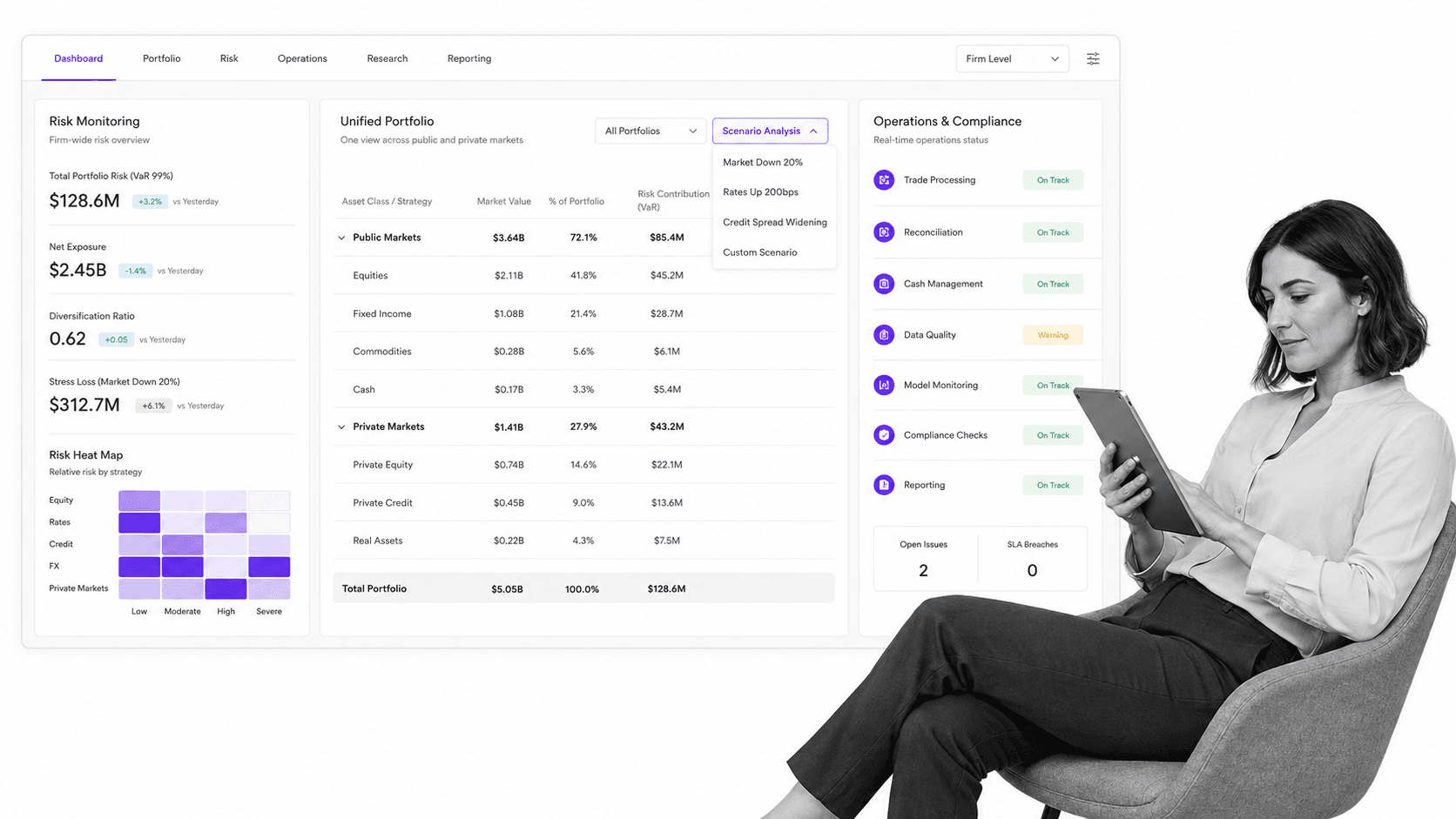
BlackRock Aladdin connects investment data, portfolio construction, risk, operations, compliance, and reporting across public and private markets. Its unified data model is intended to give investment, risk, operations, and oversight teams a consistent view of the portfolio.
Aladdin is relevant to institutional asset managers that need sophisticated portfolio and risk management with connected operational workflows. The platform can support portfolio analysis, risk monitoring, compliance, trading, and broader investment lifecycle activities, depending on the configuration.
The evaluation should be grounded in scale, asset coverage, integration architecture, model governance, implementation complexity, and team adoption. A powerful platform does not remove the need for clear decision rights. It makes those rights more important because more teams may depend on the same data and workflow.
How do you choose mutual fund management software?
Start by drawing the current operating model from investment idea to final record. Include research, portfolio construction, approval, pre-trade compliance, execution, confirmation, reconciliation, valuation, NAV review, reporting, filings, investor communications, and control testing. Mark the owner, system of record, inputs, outputs, evidence, and exception path for every stage.
- Separate must-have systems from supporting tools. Decide which platform owns portfolio data, orders, accounting, documents, and workflow evidence.
- Test real scenarios. Use a rebalance, valuation break, restricted-security exception, late data feed, new share class, and reporting correction instead of a generic demo.
- Evaluate controls with the features. Confirm permissions, approvals, rule changes, audit history, data validation, and override handling.
- Map integrations before signing. Identify custodians, administrators, market data, accounting, reporting, CRM, document storage, and communication systems.
- Assign long-term ownership. Name who maintains data, rules, workflows, templates, integrations, and user access after implementation.
- Plan the transition. Reconcile old and new outputs in parallel, define acceptance criteria, and retain evidence for decisions and exceptions.
A good shortlist usually contains products from more than one software layer. For adjacent buying guides, see investment banking operations software and approaches to fund risk management. Compare research platforms with research platforms, investment management systems with investment management systems, and workflow control platforms with workflow control platforms. Then assess how the chosen components work as one operating system. Related resources include workflow management software, compliance monitoring software, compliance risk management, and compliance audits.
How can Process Street coordinate fund operations?
Process Street can turn the procedures around a fund into workflows that assign owners, require data and files, route decisions, collect approvals, and preserve history. Instead of keeping the process in a static document while the work happens through email, each run becomes a controlled record.
A portfolio or accounting system can remain the source of truth for positions, performance, orders, or books. Process Street coordinates the work that those systems do not own cleanly: preparing a committee packet, reviewing an exception, collecting valuation evidence, approving a disclosure, certifying a policy, investigating a break, or confirming that a regulatory filing passed every review.
The strongest implementation starts with one recurring, high-consequence process. Map the trigger, required data, decision points, approvals, evidence, downstream updates, and exception route. Build the workflow, run it with a small group, inspect the task history, and improve the process before expanding. See operational due diligence workflows, fund operations checklists, and policy and procedure management software for adjacent patterns.
The result is a clearer division of labor. Investment software calculates, analyzes, trades, or accounts. Process Street makes sure the surrounding work is assigned, reviewed, completed, and provable.
Frequently asked questions
What is mutual fund management software?
Mutual fund management software is technology used for investment research, portfolio construction, risk analysis, trading, accounting, reporting, and the controlled operational workflows around a mutual fund. Different products specialize in different parts of that lifecycle.
Who uses mutual fund management software?
Portfolio managers, research analysts, traders, compliance officers, fund accountants, operations teams, risk teams, client reporting teams, administrators, and advisors may all use mutual fund management software. Their requirements differ, so role-based evaluation is essential.
Is mutual fund management software the same as portfolio management software?
Not always. Portfolio management software focuses on holdings, construction, performance, exposures, and risk. Mutual fund management may also require order management, compliance, fund accounting, investor reporting, regulatory reporting, and operational workflow control.
Can one platform run the entire mutual fund operation?
Some enterprise platforms span much of the investment lifecycle, but most firms still use a stack of specialized systems and service providers. The key is to define the system of record for each function and control the handoffs between them.
How does Process Street fit with investment management systems?
Process Street runs the recurring human workflows around investment systems. It can coordinate reviews, approvals, evidence collection, exceptions, attestations, filing preparation, and control testing while portfolio, trading, data, and accounting platforms remain authoritative for their records.
What should a fund team test before buying software?
Test a real rebalance, compliance exception, valuation break, failed data feed, reporting correction, and approval path. Confirm data ownership, permissions, integrations, audit history, accounting outputs, exception handling, and long-term administration before making a decision.