Turn every policy into automated workflows with built-in enforcement and audit-ready proof.



Best Venue Management Software: 12 Tools for Modern Venues
Venue management software helps venues turn inquiries, room holds, layouts, contracts, payments, setup notes, and post-event follow-up into one controlled operating system. The right platform prevents double-bookings, keeps sales and operations aligned, and gives every event a clear owner before the client arrives.
The best choice depends on what you actually manage. A restaurant private dining team needs fast BEOs and guest communication. A convention center needs multi-space inventory, holds, contracting, and reporting. A wedding venue needs proposals, payments, tours, and polished client handoffs. A campus, sports facility, or community venue may care more about self-service reservations, approvals, and utilization.
This guide compares current venue management software options by fit, not just feature count. It also shows where a workflow layer like Process Street belongs when your venue needs repeatable checklists, approvals, SOPs, and operational proof around the system that owns bookings.
Venue management software comparison
- Process Street: best for SOPs, approvals, recurring venue workflows, and operational proof around venue systems
- Tripleseat: best for restaurants, hotels, catering teams, and private dining
- Event Temple: best for hotels and venues that want sales CRM, proposals, contracts, invoices, and follow-up automation
- Perfect Venue: best for independent restaurants and private event venues that want simple event sales management
- Planning Pod: best for venues that want broad event planning tools, floorplans, documents, and billing in one place
- iVvy: best for multi-property venues, hotels, stadiums, universities, and function centers
- Momentus: best for enterprise arenas, convention centers, campuses, and large public venues
- Skedda: best for room, space, court, desk, lab, and facility reservations
- EventPro: best for venue, event, and catering teams that need modular depth
- HoneyBook: best for solo planners and small creative event businesses
- Cvent: best for venue sourcing, group business, supplier networks, and enterprise event programs
- Tock: best for restaurants, wineries, and hospitality venues that sell reservations or ticketed experiences
- How to choose venue management software
- FAQs
Process Street
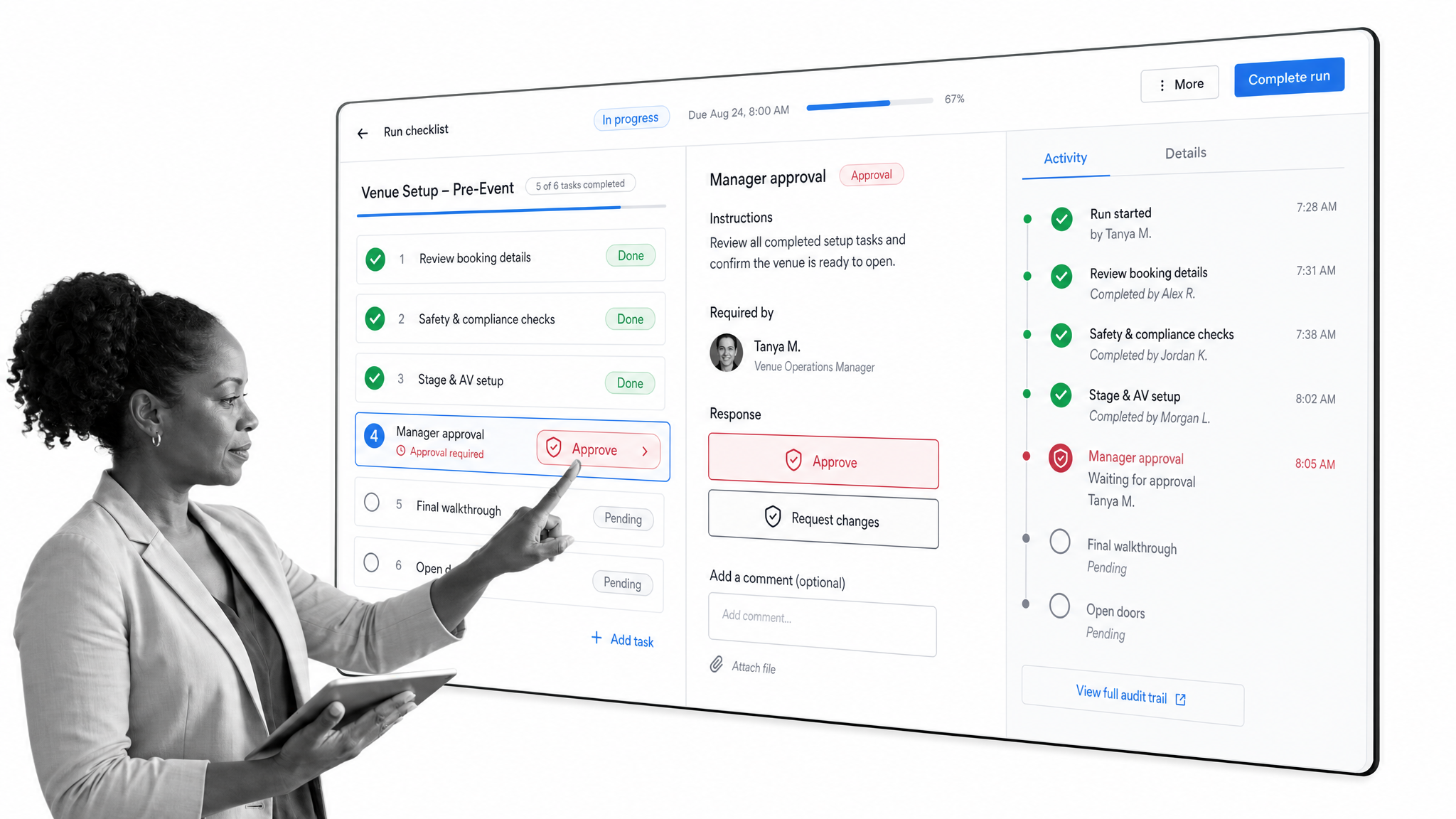
Process Street is the best fit when the venue problem is not only booking space, but making sure every recurring task happens the right way. Use it for event setup checklists, venue opening and closing procedures, safety checks, vendor onboarding, contract review, invoice handoffs, post-event inspections, issue escalation, and compliance records.
Venue systems are usually strongest at calendars, space inventory, proposals, and event records. Process Street sits around that core as the execution layer. It turns your SOPs into workflows with owners, due dates, approvals, conditional logic, forms, automations, and audit trails. If a room setup requires facilities signoff, a liquor license check, a catering confirmation, or a damage inspection, the workflow can enforce those steps instead of relying on memory.
- Best for operations teams that need repeatable venue processes across people and locations
- Use it with a booking system when the booking record is not enough to control execution
- Strong fit for compliance-heavy venues, facilities teams, multi-site operators, and teams replacing spreadsheets with governed checklists
Tripleseat
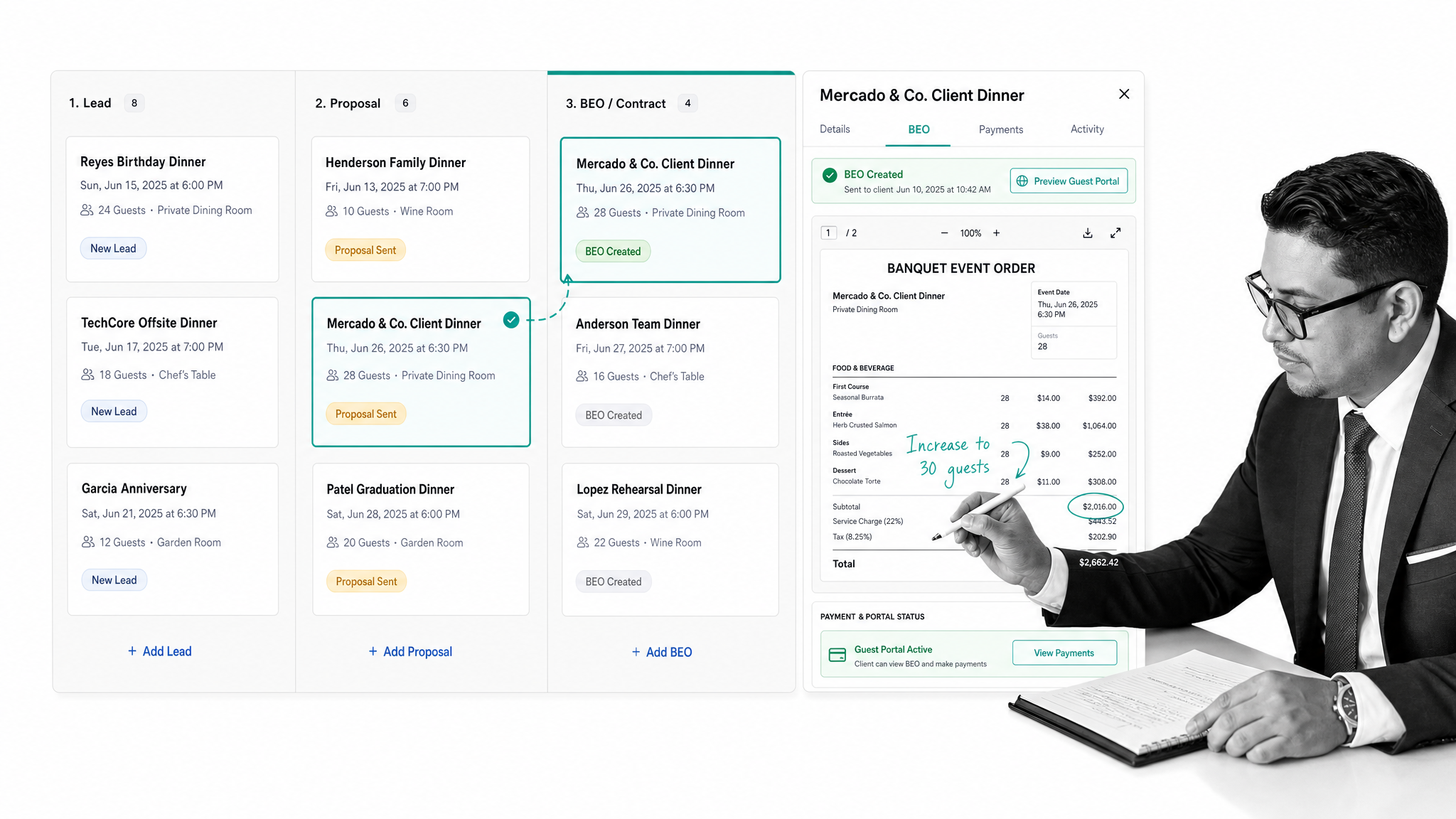
Tripleseat remains one of the strongest venue management software choices for restaurants, hotels, bars, breweries, catering teams, and private dining operators. Its strength is hospitality event sales: inquiries, guest communication, bookings, BEOs, payments, tickets, floorplans, and room block workflows.
Tripleseat is especially useful when events are revenue centers tied to food, beverage, private dining, or group sales. The platform emphasizes online booking through TripleseatDirect, payment processing through PartyPay, ticketed events, and visual floor planning. If your team runs many inquiries through email and manually turns them into BEOs, Tripleseat is a serious shortlist tool.
- Best for restaurant groups, hotels, catering teams, and hospitality venues
- Look closely if you need BEOs, guest portals, payments, ticketing, and floorplans
- May be more platform than a small venue needs if the main job is simple room scheduling
Event Temple
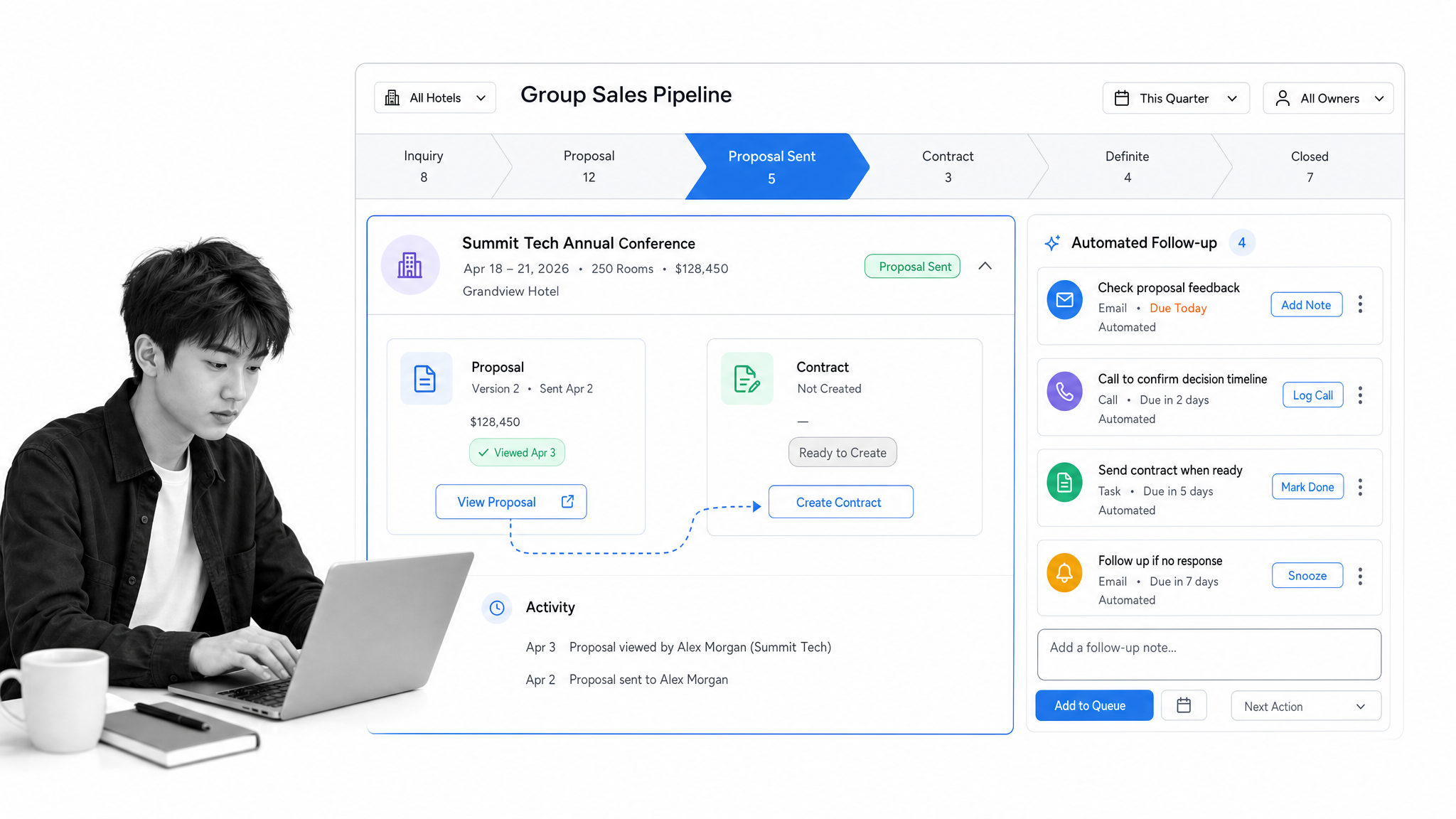
Event Temple is built for hotels and venues that need a sales-first venue management platform. It combines pipeline management, group sales, event and catering tools, proposals, documents, smart email, invoicing, payments, workflows, chain management, and reporting.
The platform is a strong match for teams that win business through fast inquiry response and consistent follow-up. Event Temple highlights drag-and-drop pipelines, email and text templates, tasks, follow-up workflows, contracts, invoices, and reporting. That makes it useful for hotels, wedding venues, clubs, conference centers, and venue sales teams that want CRM discipline without forcing event staff into a generic sales tool.
- Best for hotel and venue sales teams
- Strong fit when lead response, proposals, follow-ups, and reporting are the bottlenecks
- Less focused on open-ended SOP execution than a dedicated workflow platform
Perfect Venue
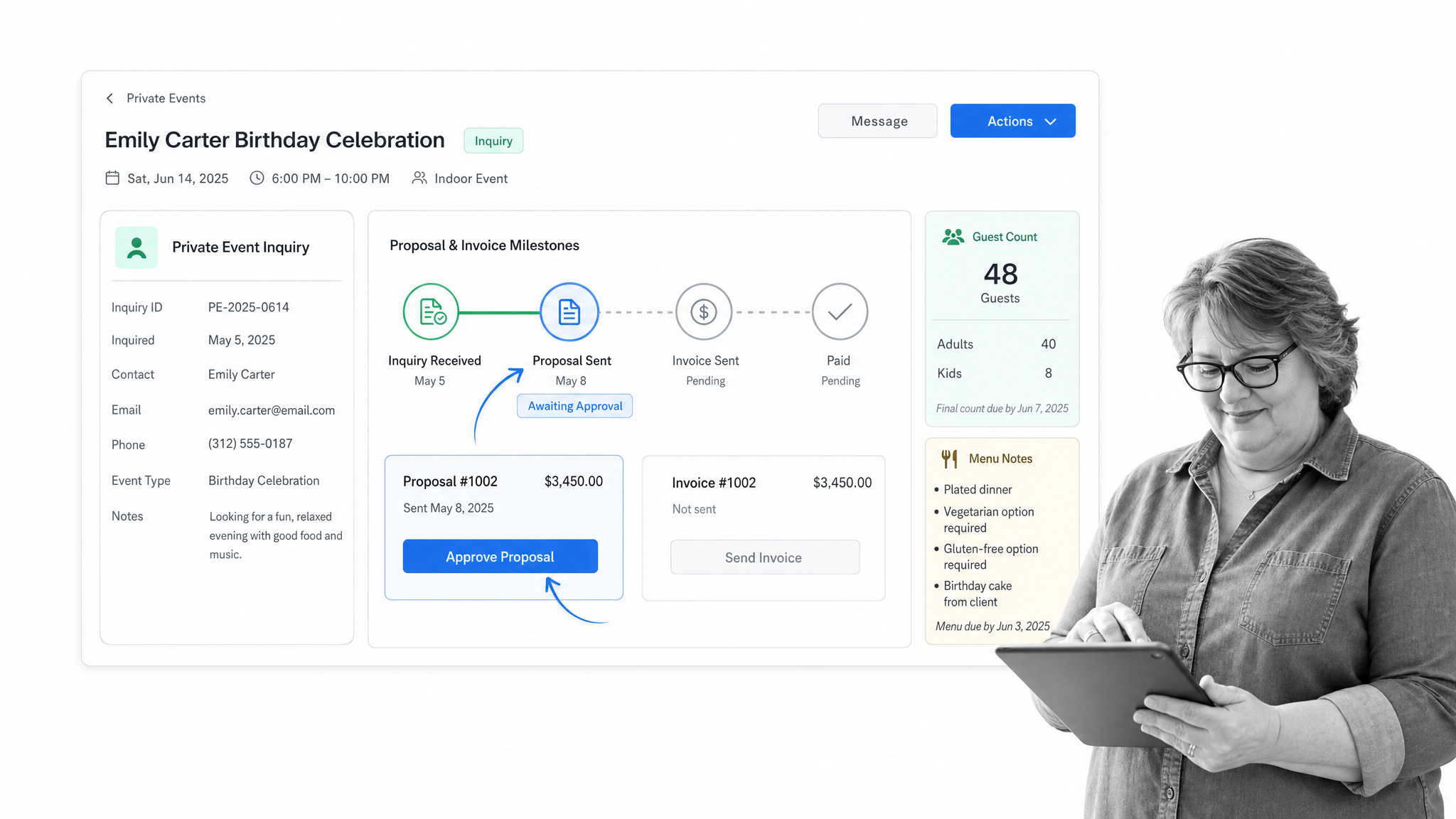
Perfect Venue is a focused event management platform for independent restaurants, event venues, and hospitality teams that need to manage leads, proposals, payments, menus, documents, and client communication without enterprise complexity.
Its best use case is a venue that has outgrown inboxes and spreadsheets but does not want a heavy implementation. Perfect Venue is often considered by small and midsize venues that need professional proposals, event records, invoices, payment collection, and a clean shared calendar. It is a practical fit for private events teams that want a modern event sales workflow with less administrative friction.
- Best for independent restaurants, private event venues, and hospitality teams
- Strong fit when simplicity and speed matter more than enterprise customization
- Compare closely with Tripleseat and Event Temple if you run high-volume hospitality events
Planning Pod
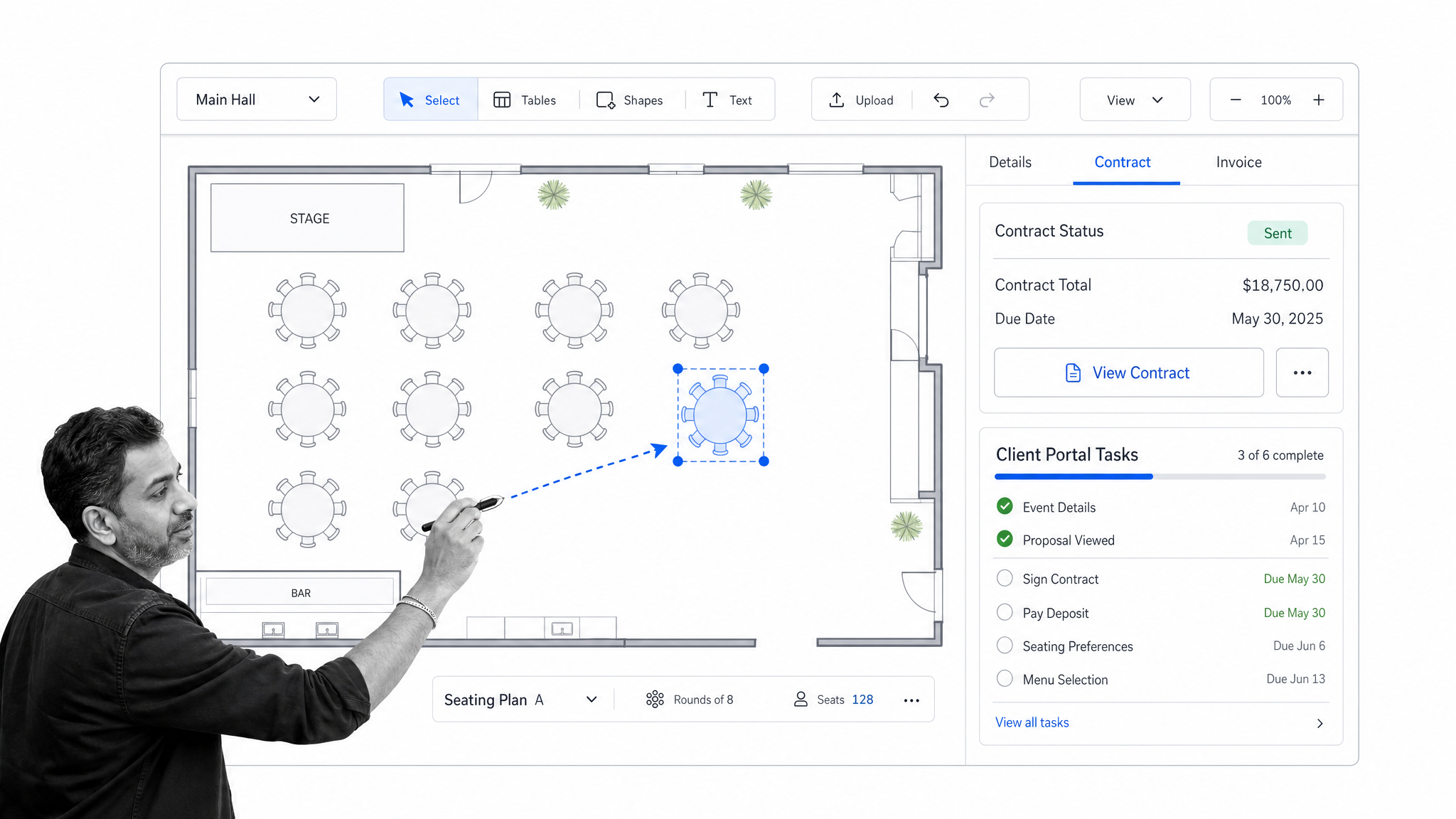
Planning Pod is a broad venue and event management platform with tools for event bookings, sales, billing, floorplans, communications, client details, templates, dashboards, and collaboration. It is well suited to venues that want many planning tools in one connected workspace.
The platform stands out when a venue needs more than a booking calendar. Floorplans, seating charts, proposals, contracts, invoices, email templates, reports, and client portals can all matter when the same team sells, plans, bills, and executes events. Planning Pod is a good shortlist choice for wedding venues, reception halls, community centers, schools, arts venues, restaurants, and multi-purpose event spaces.
- Best for venues that want all-in-one event planning depth
- Strong fit for floorplans, templates, documents, billing, and collaboration
- Can be broader than needed if your only pain is self-service room booking
iVvy
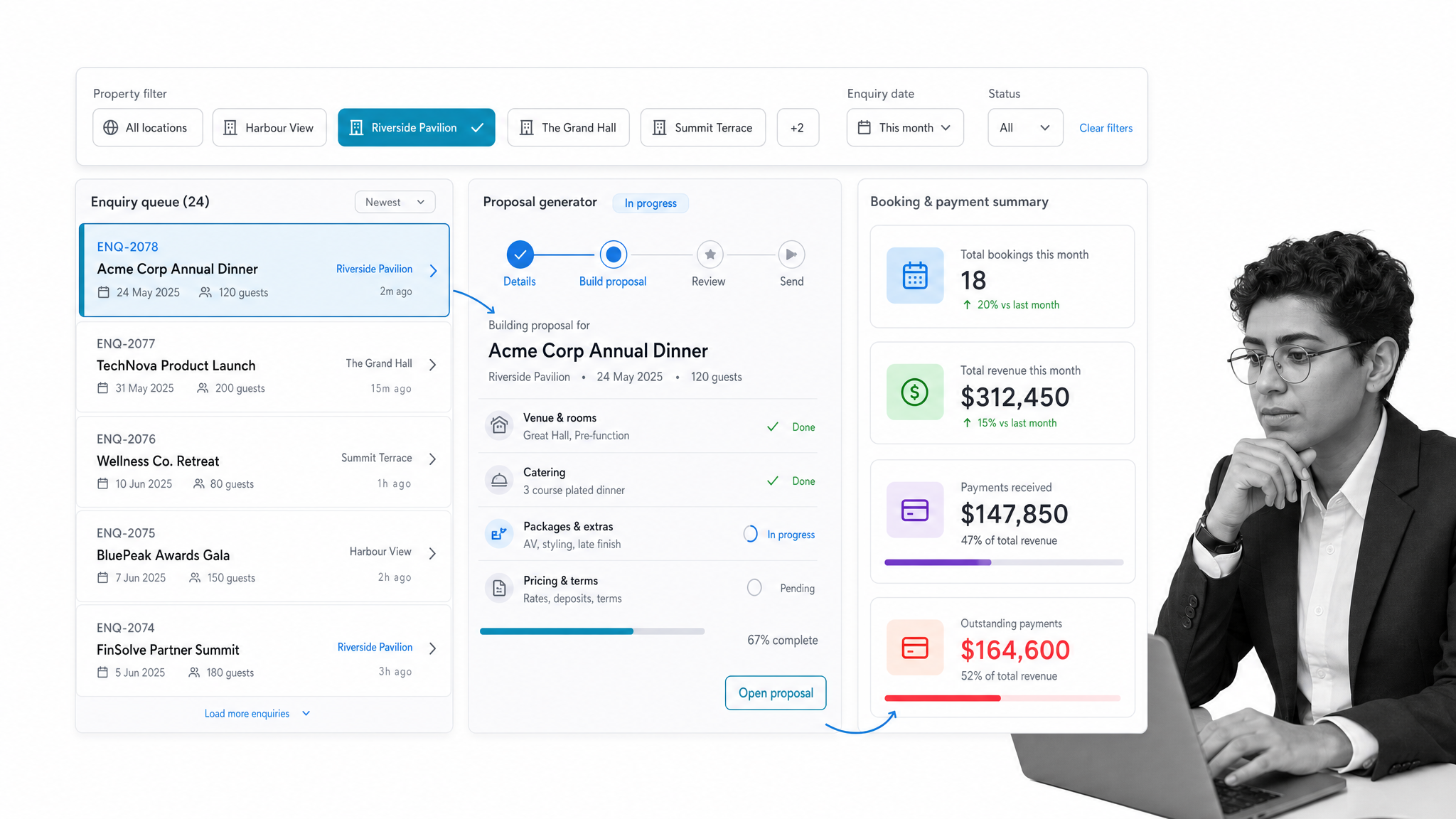
iVvy is a venue and event management platform for hotels, hospitality groups, function centers, stadiums, sports clubs, universities, restaurants, catering teams, government venues, and public-sector facilities. Its value is strongest when venue sales, booking, payments, billing, proposals, BEOs, reporting, and multi-property operations need to work together.
iVvy has also moved into AI-assisted venue sales workflows, including enquiry intake, lead qualification, and proposal generation. That makes it relevant for teams that compete on response speed and want to reduce manual quoting work. Consider iVvy when you have multiple spaces, multiple properties, or complex venue sales processes that need more structure than a basic calendar.
- Best for hotels, hospitality groups, stadiums, universities, and multi-property venues
- Strong fit for sales lifecycle management across enquiry, proposal, booking, payment, and reporting
- Evaluate implementation needs carefully if you are a smaller single-room venue
Momentus
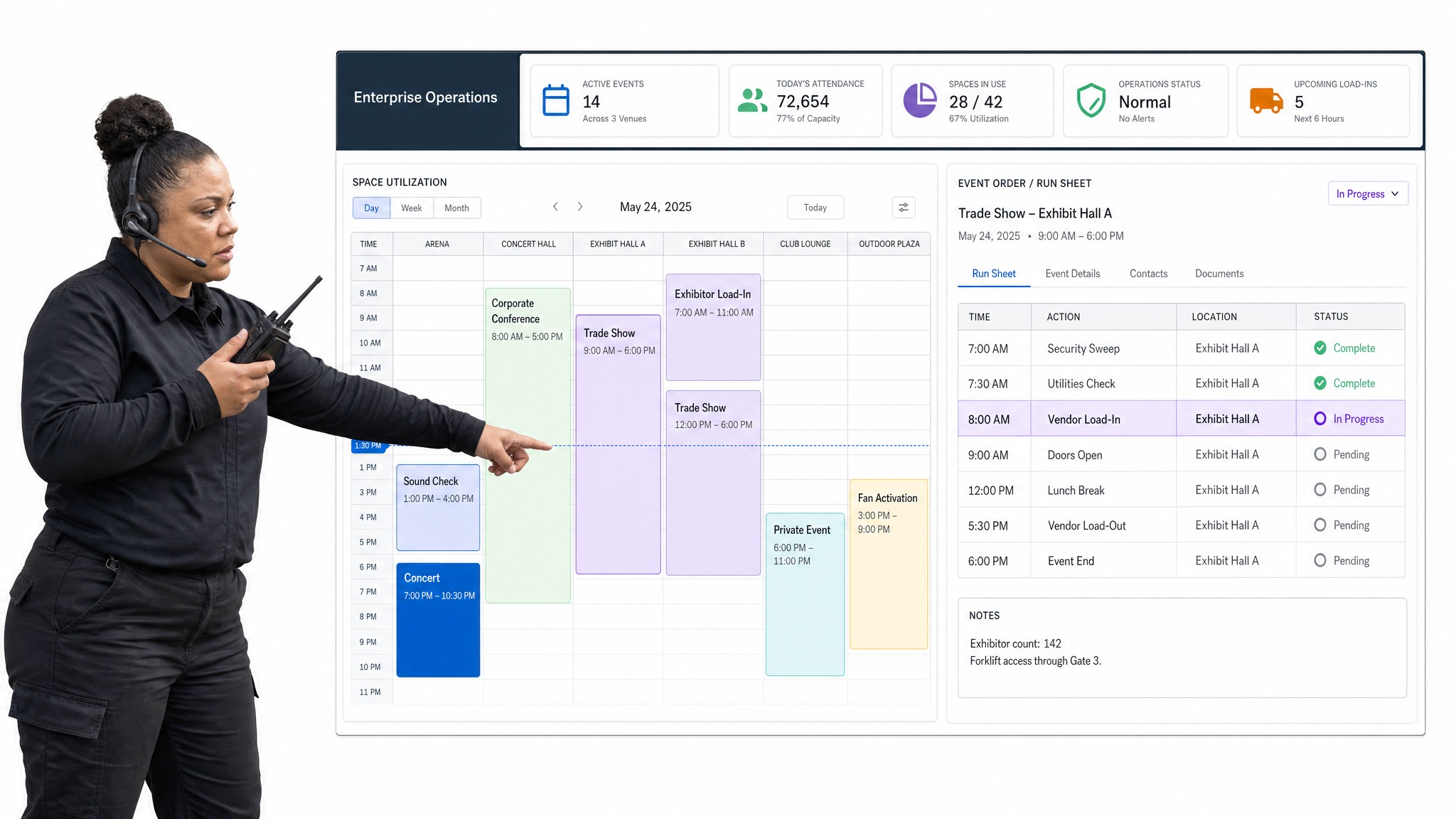
Momentus is built for large, complex venues such as arenas, stadiums, convention centers, casinos, resorts, universities, and public venues. It is a fit when venue management needs to cover bookings, contracting, debriefs, event orders, run sheets, space utilization, inventory, and enterprise reporting.
This is the platform to evaluate when the venue itself is a large operating environment. Teams need shared visibility across sales, event operations, finance, facilities, and leadership. Momentus is generally a better fit for sophisticated venue operators than for small venues that mainly need an intake form and booking calendar.
- Best for enterprise venues with complex booking and operations needs
- Strong fit for arenas, convention centers, campuses, casinos, and public venues
- Likely too heavy for small independent venues
Skedda
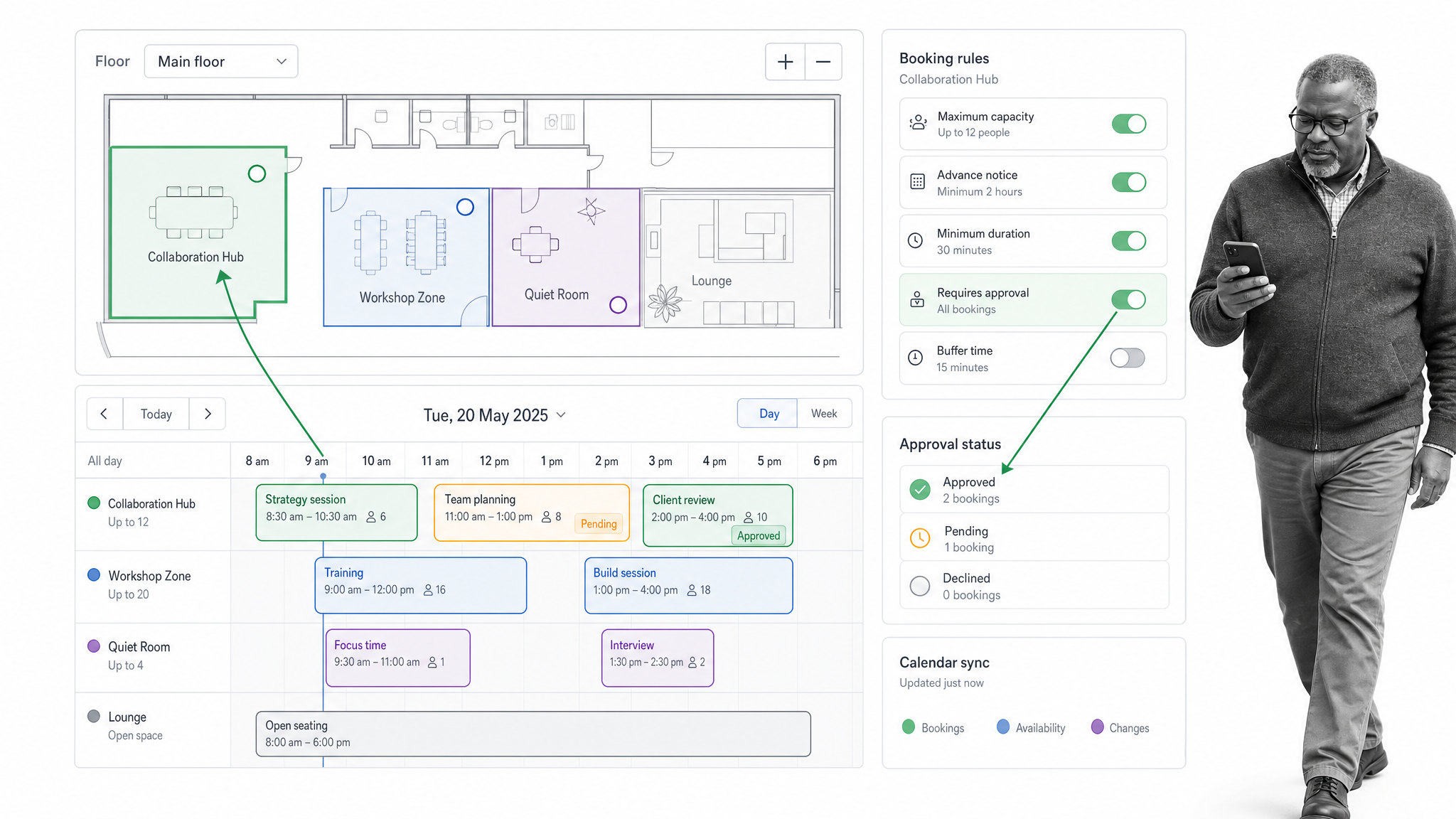
Skedda is a space booking and scheduling platform. It is strongest when the core problem is reserving physical spaces, preventing double-bookings, applying rules, managing approvals, syncing calendars, and understanding utilization.
Use Skedda when the venue is a set of bookable spaces: meeting rooms, classrooms, labs, courts, studios, desks, parking spaces, sports facilities, or community rooms. Its interactive floor plans, custom rules, booking requests, quotas, repeat bookings, check-ins, and Microsoft 365 or Google Calendar sync make it more of a reservation system than a full event sales CRM.
- Best for room, facility, desk, lab, court, and shared-space booking
- Strong fit for approvals, booking rules, floor plans, and utilization insights
- Pair it with workflow or CRM tools if you also need complex event sales, contracts, or operations checklists
EventPro
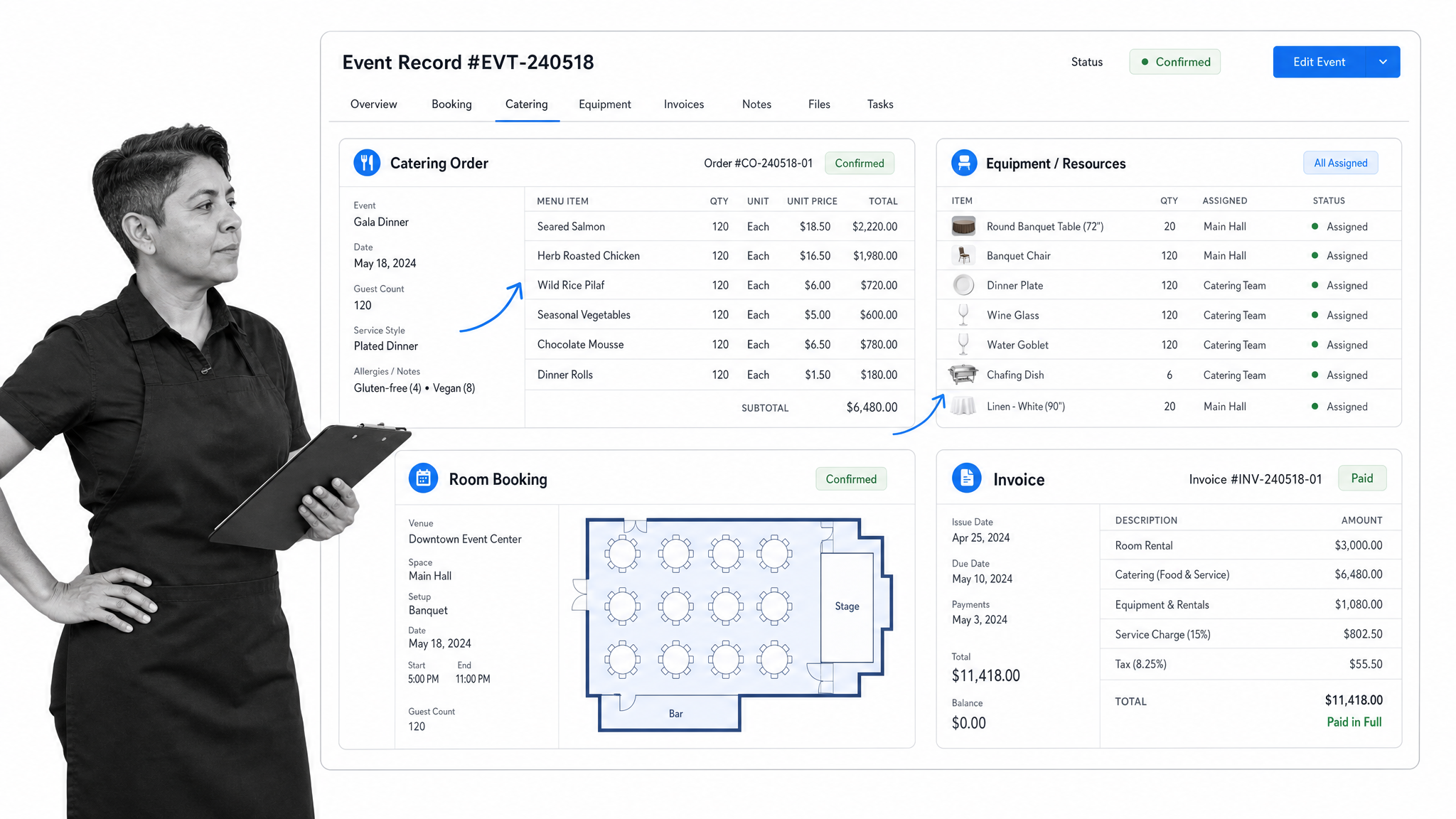
EventPro is a modular venue, event, and catering management platform. It is useful for organizations that need integrated modules for venue booking, event planning, catering management, invoicing, and operational detail.
EventPro fits teams that want depth across bookings and catering rather than a lightweight scheduling tool. It is especially relevant when menu items, equipment, rooms, clients, invoices, and event details need to be entered once and reused across the event lifecycle. Venues with catering complexity should compare it against Tripleseat, Planning Pod, and Event Temple.
- Best for venues with catering, equipment, bookings, and event planning complexity
- Strong fit for modular implementations and detailed operational records
- May feel less modern than newer tools depending on buyer expectations and setup
HoneyBook
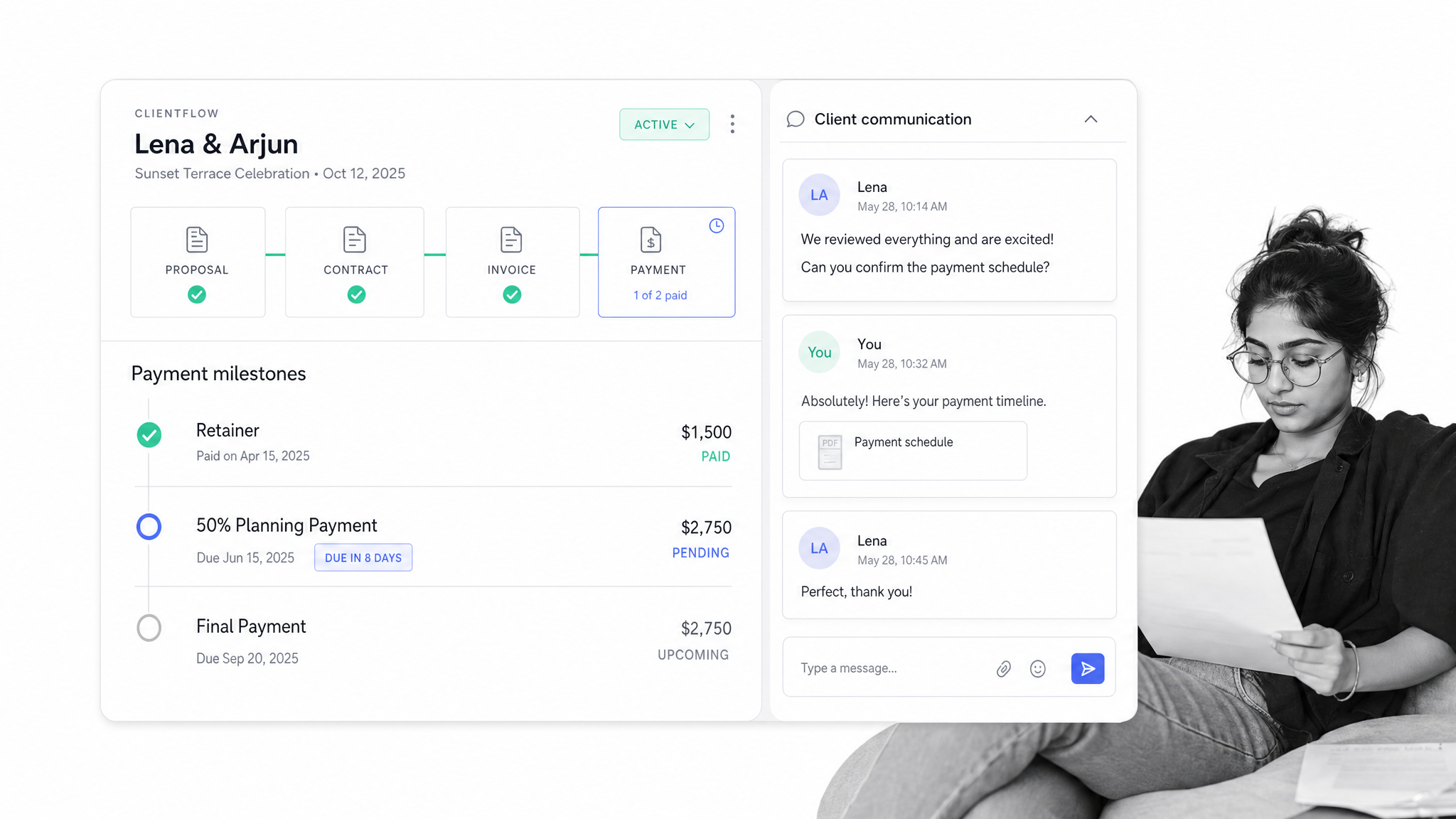
HoneyBook is not a venue-specific management system, but it can work well for solo event planners, wedding professionals, photographers, coordinators, and small creative businesses that need proposals, contracts, invoices, scheduling, payments, brochures, and client workflows.
Choose HoneyBook when the buyer is the service provider, not the venue operator. It is useful for booking clients, getting contracts signed, collecting payments, and managing service workflows. It is not the best choice for multi-space venue inventory, BEOs, facility approvals, or enterprise venue operations.
- Best for small creative event businesses and independent event planners
- Strong fit for proposals, contracts, invoices, scheduling, and payments
- Not a true venue inventory or facility operations platform
Cvent
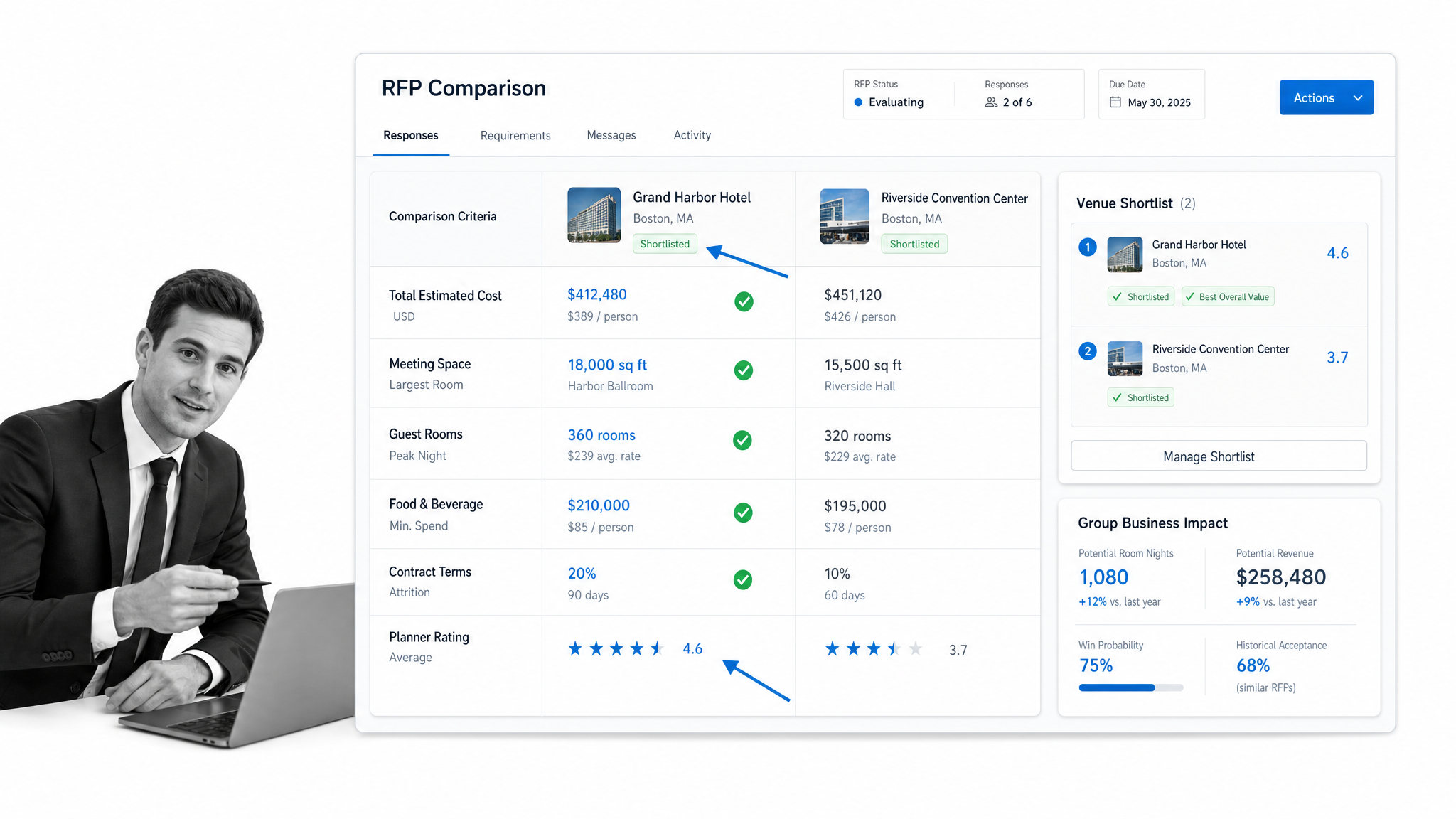
Cvent belongs on the venue management software shortlist when the job is venue sourcing, group business, supplier visibility, RFPs, planner networks, and enterprise event programs. For suppliers and venues, Cvent helps venues get discovered by planners, advertise, prospect, manage RFPs, diagram events, and measure competitive performance.
Cvent is a different kind of tool from a day-to-day venue booking calendar. It is strongest when venue demand generation, corporate event sourcing, planner relationships, and group business matter. Large hotels, destinations, convention venues, and enterprise event teams should evaluate it. A small venue that only needs reservations and payments will probably want a simpler tool.
- Best for venue sourcing, supplier networks, RFPs, group business, and enterprise event programs
- Strong fit for hotels, destinations, large venues, and planner-facing sales teams
- Not the simplest answer for internal room scheduling or small venue operations
Tock
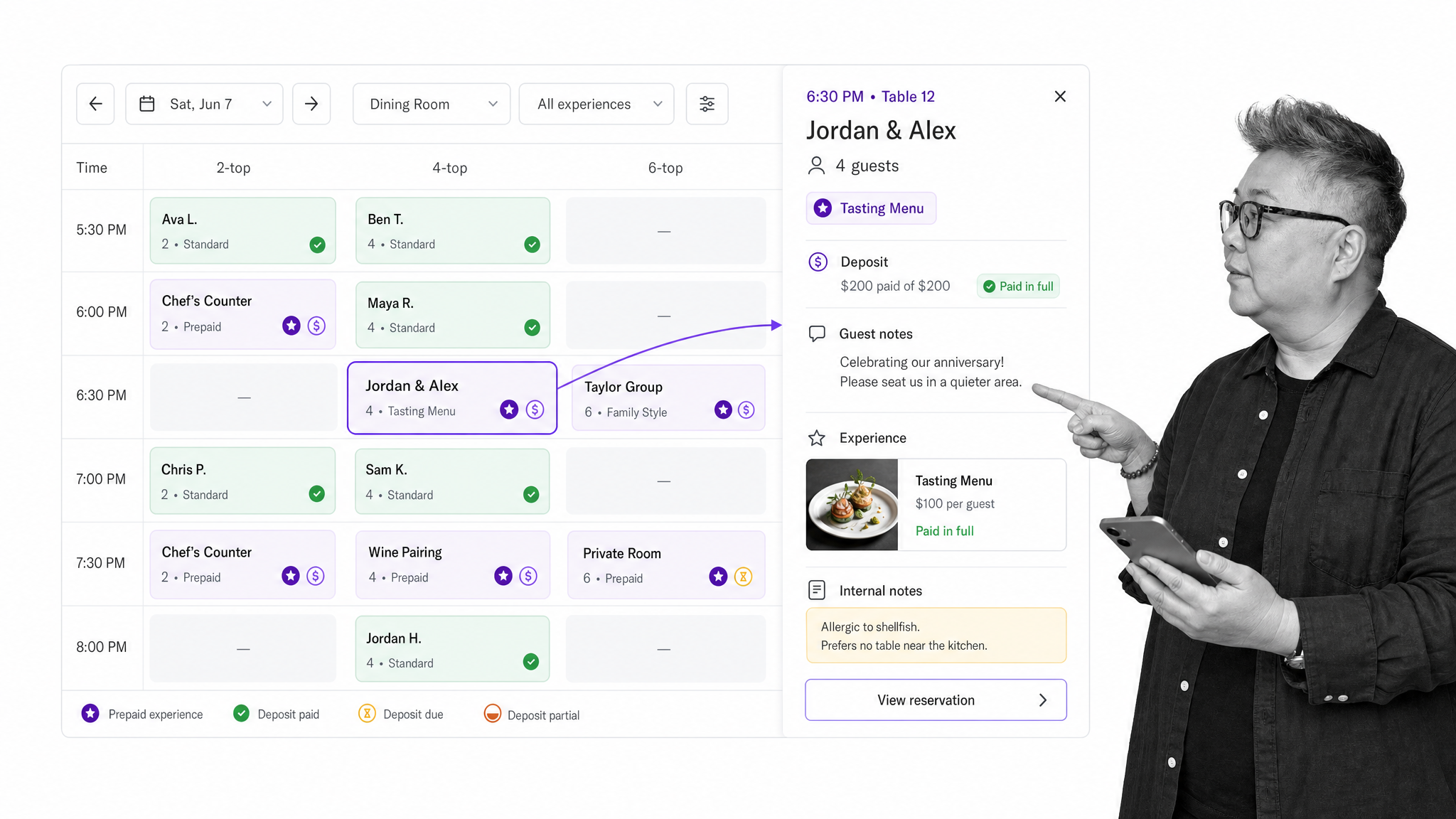
Tock is best known for reservations, experiences, and hospitality commerce. It belongs in a venue management conversation when the venue sells timed reservations, tasting menus, winery visits, pop-up experiences, ticketed hospitality events, or prepaid bookings.
Tock is not a general-purpose venue operations platform. Its value is strongest for restaurants, wineries, tasting rooms, and hospitality brands where the booking experience itself is part of revenue. If your venue sells private dining, ticketed experiences, or premium reservations, compare Tock against Tripleseat and other hospitality-specific tools.
- Best for restaurants, wineries, tasting rooms, and ticketed hospitality experiences
- Strong fit for reservations, prepaid bookings, and experience commerce
- Not designed for broad facility operations, SOPs, or multi-department workflow control
How to choose venue management software
Start with the operational failure you are trying to stop. If your team double-books rooms, start with scheduling, rules, approvals, and calendar sync. If leads go unanswered, start with CRM, inquiry routing, proposals, and follow-up automation. If event execution breaks down after the sale, prioritize checklists, approvals, setup notes, vendor handoffs, incident logs, and audit trails.
The strongest venue stacks often combine two layers. One system owns the commercial record: inquiry, room hold, proposal, contract, payment, BEO, and booking calendar. Another system owns execution: SOPs, task owners, approvals, deadlines, evidence, inspection records, and compliance proof. Process Street is useful when that second layer matters.
- Venue type: restaurant, hotel, wedding venue, campus, sports facility, community center, arena, convention center, or workplace
- Booking complexity: single-room reservations, multi-space holds, event packages, room blocks, deposits, ticketing, or catering
- Sales process: inbound inquiries, pipeline management, proposals, contracts, follow-up, and reporting
- Operational control: setup checklists, inspections, approvals, vendor handoffs, staffing, incident response, and recurring SOPs
- Integrations: payment processors, email, calendars, POS, accounting, CRM, ticketing, and workflow automation
- Governance: roles, permissions, audit trails, versioned SOPs, required approvals, and reporting
What venue management software should include
A good venue management platform should make the venue easier to sell and easier to run. At minimum, look for a shared booking calendar, space inventory, inquiry capture, CRM or client records, proposals, contracts, online payments, email templates, reporting, and mobile access. Larger venues may also need room blocks, catering, BEOs, floorplans, ticketing, work orders, resource allocation, and multi-property controls.
Do not buy only for the demo. Ask what happens when the client changes the layout, finance needs a deposit update, facilities needs revised setup notes, a manager must approve a discount, or a post-event damage issue needs documentation. The handoffs reveal whether the platform controls the work or just stores the booking.
Venue management software FAQs
What is venue management software?
Venue management software is a system for managing the commercial and operational work around physical event spaces. It usually includes booking calendars, space inventory, inquiry management, proposals, contracts, payments, client communication, reporting, and event records.
What is the best venue management software?
The best venue management software depends on the venue. Tripleseat is strong for restaurants and hotels, Event Temple for hotel and venue sales teams, Momentus for enterprise venues, Skedda for space reservations, Planning Pod for all-in-one planning, and Process Street for SOPs, approvals, and recurring operational workflows.
Is venue management software different from event management software?
Yes. Venue management software focuses on the space: room availability, bookings, holds, layouts, contracts, payments, and utilization. Event management software can include attendee registration, event marketing, badges, apps, agendas, sponsors, and attendee communication. Some platforms cover both.
Can venue management software prevent double-bookings?
Yes, if it has a real shared booking calendar, space inventory, booking rules, approvals, holds, and calendar sync. For teams using spreadsheets or disconnected calendars, double-booking prevention is one of the clearest reasons to move to dedicated software.
Do small venues need venue management software?
Small venues need venue management software when inquiries, contracts, deposits, tours, setup notes, or space availability become hard to manage manually. If the venue only takes occasional reservations, a simple scheduling tool may be enough. If events are a revenue center, dedicated software usually pays off faster.
Where does Process Street fit in a venue management stack?
Process Street fits around the venue booking system as the workflow and SOP layer. Use it for repeatable setup procedures, opening and closing checks, safety inspections, vendor onboarding, contract reviews, approvals, incident follow-up, and proof that required steps happened.