Turn every policy into automated workflows with built-in enforcement and audit-ready proof.



13 Best CRM Software Platforms for Modern Sales Teams
The best CRM software gives a sales team one reliable place to manage customer relationships, deals, activity, and next steps. Modern platforms now go further with automation, sales engagement, enrichment, forecasting, meeting intelligence, and AI agents.
Salesforce Sales Cloud, HubSpot Sales Hub, and Attio lead this ranking because they represent three strong approaches: enterprise depth, connected sales execution, and a flexible modern data model. The remaining platforms solve specific needs, from visual pipeline management to autonomous record keeping.
This guide compares exactly 13 CRM platforms for modern sales teams. Each review covers the best-fit use case, standout operating surface, current pricing direction, and the tradeoffs to test before rollout.
In this article, we cover:
- Best CRM software at a glance
- How we evaluated CRM platforms
- 1. Salesforce Sales Cloud
- 2. HubSpot Sales Hub
- 3. Attio
- 4. Microsoft Dynamics 365 Sales
- 5. Pipedrive
- 6. Zoho CRM
- 7. monday CRM
- 8. Freshsales
- 9. Close
- 10. Clarify
- 11. Day AI
- 12. Lightfield
- 13. folk
- How CRM and workflow execution fit together
- FAQs
Best CRM software at a glance
The short version: Salesforce Sales Cloud is the strongest choice for complex enterprise CRM, HubSpot Sales Hub is the most balanced option for growing teams that want engagement and CRM together, and Attio is the standout flexible platform for teams building a modern go-to-market data model. The right choice still depends on sales motion, team size, governance needs, and the work that must happen around each deal.
| Tool | Best for | Standout feature | Pricing |
|---|---|---|---|
| Salesforce Sales Cloud | Large sales organizations that need deep CRM control | Opportunity management, forecasting, automation, and extensibility | Free Suite available; paid sales plans start at $25 per user monthly |
| HubSpot Sales Hub | Growing teams that want CRM and sales engagement together | Prospecting workspace, lead management, sequences, and forecasting | Free tools available; paid Sales Hub editions are priced per seat |
| Attio | Teams that want a flexible, data-rich CRM model | Custom objects, real-time contact syncing, enrichment, and workflows | Free plan available; Plus starts at $29 per user monthly when billed annually |
| Microsoft Dynamics 365 Sales | Microsoft-centered enterprises with complex sales operations | Sales force automation, Microsoft 365 interoperation, and Copilot | Sales Professional starts at $65 per user monthly, paid yearly |
| Pipedrive | Pipeline-focused teams that value a visual sales process | Visual deal pipeline, activities, automations, and next-step focus | Lite starts at $14 per seat monthly when billed annually |
| Zoho CRM | Value-conscious teams that need broad CRM capability | Workflow rules, cadences, forecasting, reports, and AI agents | Free edition available; paid editions use per-user pricing |
| monday CRM | Teams that want a highly configurable revenue workspace | Custom boards, centralized communication, automations, and dashboards | Basic starts at $12 per seat monthly when billed annually |
| Freshsales | Small and midsize teams that want sales communications built in | Contact and deal management with email, phone, chat, and workflows | Free plan supports up to three users; Growth starts at $9 per user monthly when billed annually |
| Close | High-activity sales teams that live in calls, email, and SMS | Built-in calling, email, SMS, workflows, and an AI sales teammate | Solo starts at $9 per user monthly when billed annually |
| Clarify | Fast-moving teams that want an autonomous CRM | Automatic records, meeting intelligence, enrichment, and AI agents | Free plan available; Starter is $50 per workspace monthly with included credits |
| Day AI | GTM teams that want agents grounded in complete customer memory | Customer memory built from calls, email, and team conversations | Pricing is provided through the vendor |
| Lightfield | Companies that want CRM plus forward-deployed agent support | Continuously updated CRM, customer memory, and agent builder | Starter is $89 per seat monthly; Pro starts at $899 per workspace monthly, billed annually |
| folk | Relationship-driven teams that want a simple collaborative CRM | Pipeline management, enrichment, messaging, AI fields, and relationship context | Standard is $24 per member monthly when billed annually |
How we evaluated the best CRM software platforms
A long feature list does not make a CRM effective. The system has to match how sellers capture context, advance deals, coordinate handoffs, and keep data trustworthy. We evaluated each platform against the operating questions that determine adoption after the demo.
- Record quality: how easily the platform captures and maintains contact, account, opportunity, and activity context.
- Rep workflow: whether sellers can see priorities, next steps, tasks, and communication without excessive navigation.
- Management control: forecasting, reporting, permissions, stage governance, and pipeline inspection.
- Automation: workflows, sequences, routing, enrichment, AI assistance, and cross-system actions.
- Flexibility: the ability to support the real sales motion without creating an unmaintainable system.
- Commercial fit: the relationship between price, seats, usage, implementation effort, and expected scale.
CRM selection also depends on the wider revenue stack. Compare the broader sales tools landscape, the role of sales enablement tools, and the way sales automation software turns data into action.
1. Salesforce Sales Cloud
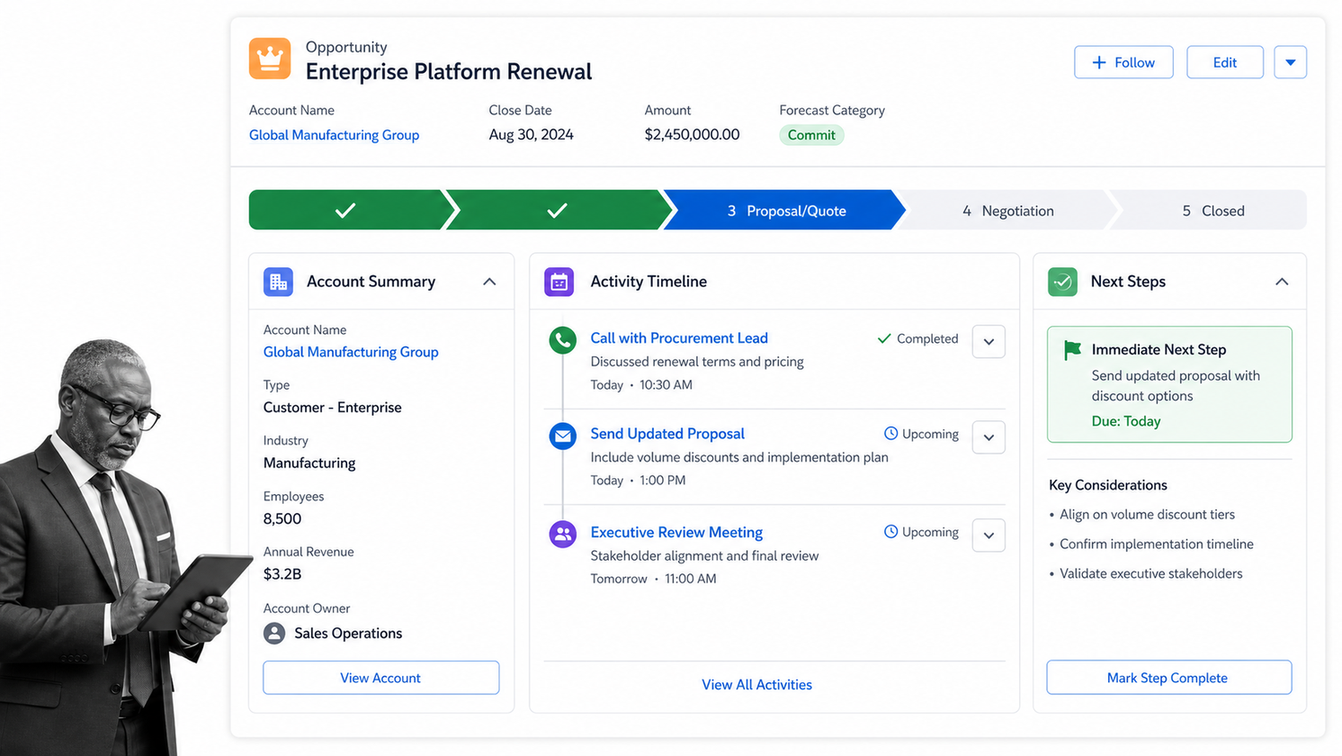
Best for: Large sales organizations that need deep CRM control.
Salesforce is the broadest enterprise option in this ranking. Its account, contact, lead, and opportunity model gives revenue operations teams a durable system of record, while forecasting and automation support complex sales structures. The same flexibility that makes it powerful also creates administrative overhead, so field design, stage definitions, permissions, and reporting governance need clear ownership.
Why Salesforce Sales Cloud stands out
The defining surface is its enterprise opportunity workspace. Opportunity management, forecasting, automation, and extensibility. That combination makes the product distinct within this list instead of another generic contact database.
What to check before choosing Salesforce Sales Cloud
- Process fit: confirm that enterprise opportunity workspace matches how reps actually work.
- Data ownership: define required fields, stage rules, and who fixes incomplete records.
- Workflow depth: test approvals, handoffs, and cross-system work, not only contact and deal screens.
- Pricing: Free Suite available; paid sales plans start at $25 per user monthly.
Review the current package and feature details on the Salesforce Sales Cloud official page. Pricing and packaging can change, so validate the final configuration against the sales process you plan to run.
Teams that automate around Salesforce should also define workflow rules and review the current Salesforce and Process Street integration guide.
2. HubSpot Sales Hub
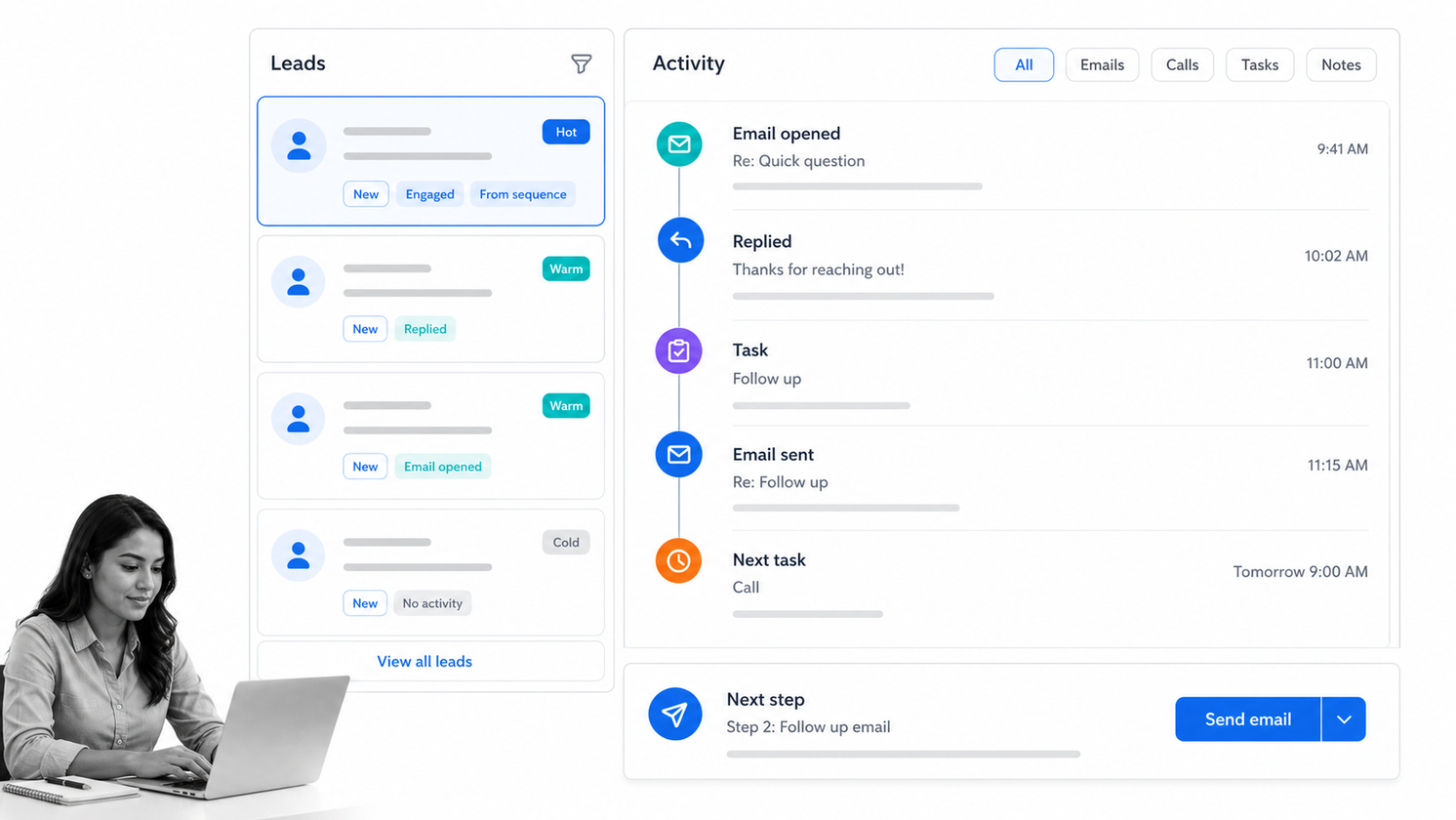
Best for: Growing teams that want CRM and sales engagement together.
HubSpot combines CRM records with the daily tools sellers use to prospect and follow up. Lead management, tasks, sequences, meeting scheduling, pipeline work, and forecasting sit inside a connected customer platform. That makes adoption easier for teams that want marketing and sales context together, although advanced automation and control can increase the cost and setup burden as the organization grows.
Why HubSpot Sales Hub stands out
The defining surface is its prospecting workspace. Prospecting workspace, lead management, sequences, and forecasting. That combination makes the product distinct within this list instead of another generic contact database.
What to check before choosing HubSpot Sales Hub
- Process fit: confirm that prospecting workspace matches how reps actually work.
- Data ownership: define required fields, stage rules, and who fixes incomplete records.
- Workflow depth: test approvals, handoffs, and cross-system work, not only contact and deal screens.
- Pricing: Free tools available; paid Sales Hub editions are priced per seat.
Review the current package and feature details on the HubSpot Sales Hub official page. Pricing and packaging can change, so validate the final configuration against the sales process you plan to run.
3. Attio
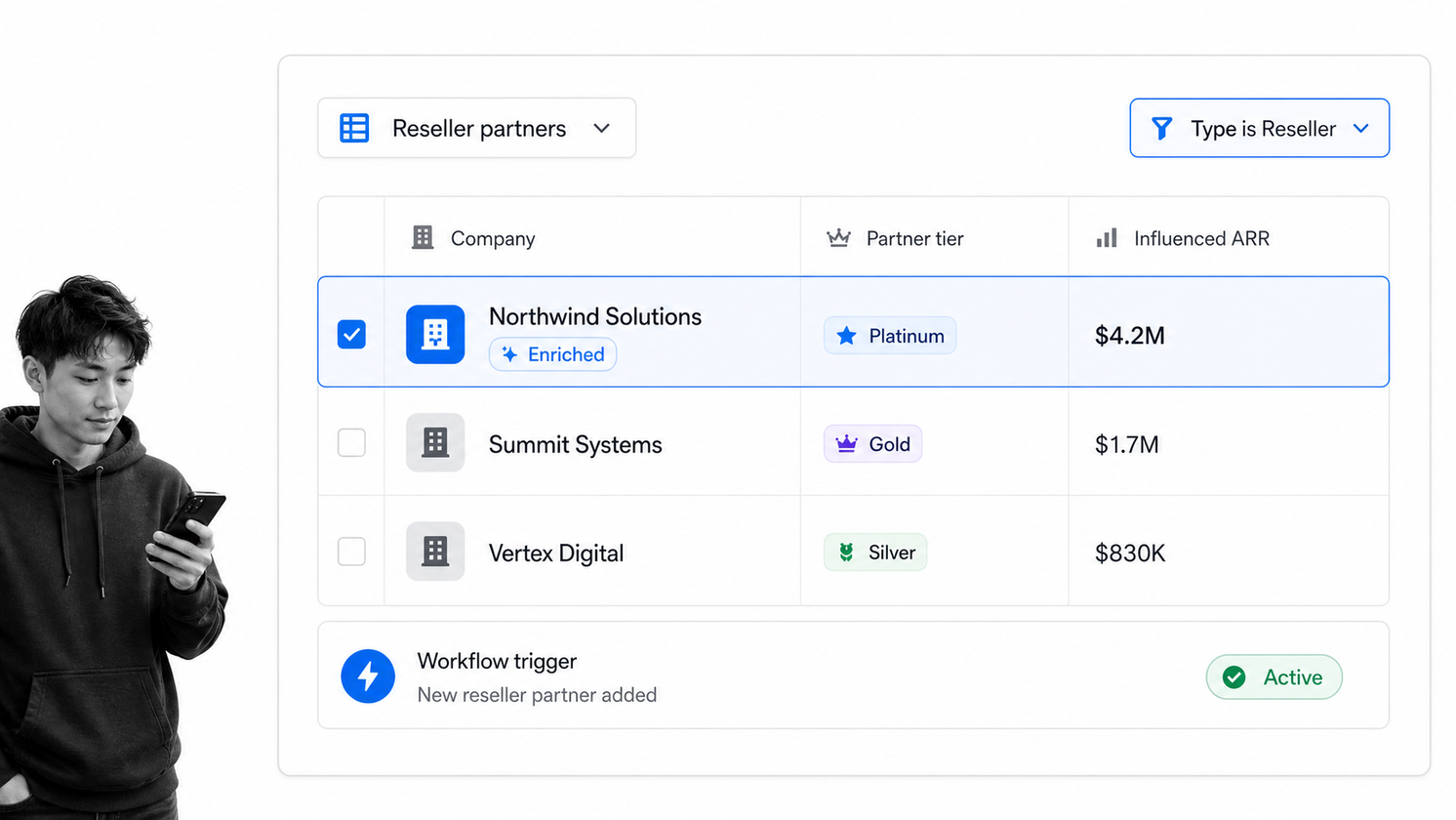
Best for: Teams that want a flexible, data-rich CRM model.
Attio treats CRM as a flexible data model rather than a fixed set of sales objects. Teams can shape custom objects, relationship attributes, views, and workflows around their go-to-market motion. Real-time contact syncing and enrichment reduce manual record work. It fits teams with strong operations instincts, but the freedom to model anything means someone still has to define the shared structure.
Why Attio stands out
The defining surface is its flexible relationship data workspace. Custom objects, real-time contact syncing, enrichment, and workflows. That combination makes the product distinct within this list instead of another generic contact database.
What to check before choosing Attio
- Process fit: confirm that flexible relationship data workspace matches how reps actually work.
- Data ownership: define required fields, stage rules, and who fixes incomplete records.
- Workflow depth: test approvals, handoffs, and cross-system work, not only contact and deal screens.
- Pricing: Free plan available; Plus starts at $29 per user monthly when billed annually.
Review the current package and feature details on the Attio official page. Pricing and packaging can change, so validate the final configuration against the sales process you plan to run.
4. Microsoft Dynamics 365 Sales
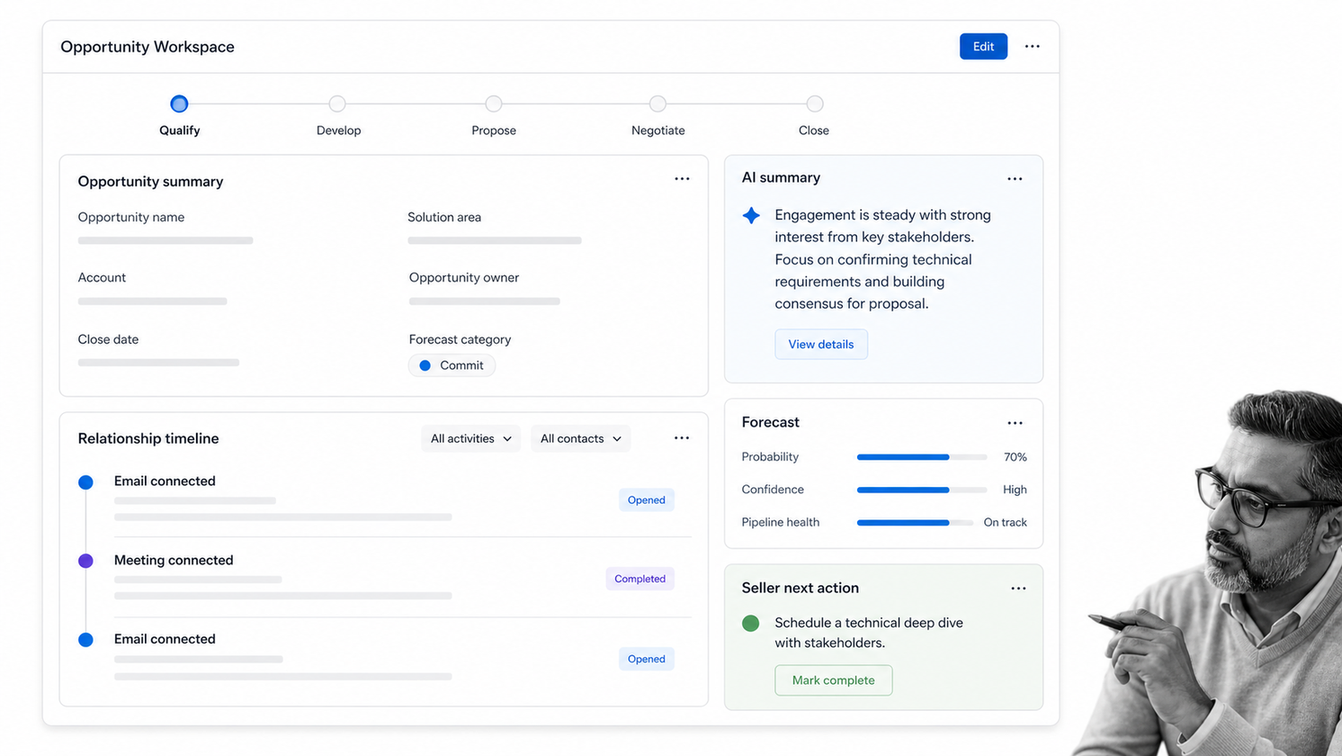
Best for: Microsoft-centered enterprises with complex sales operations.
Dynamics 365 Sales is a natural fit when Microsoft 365 is already the operating environment. It connects sales force automation with familiar Microsoft tools, reporting, and Copilot capabilities. The platform can support sophisticated enterprise processes, but implementation and licensing decisions deserve careful planning because value depends on how well the CRM, productivity suite, data, and automation layers are configured together.
Why Microsoft Dynamics 365 Sales stands out
The defining surface is its Microsoft-connected opportunity workspace. Sales force automation, Microsoft 365 interoperation, and Copilot. That combination makes the product distinct within this list instead of another generic contact database.
What to check before choosing Microsoft Dynamics 365 Sales
- Process fit: confirm that Microsoft-connected opportunity workspace matches how reps actually work.
- Data ownership: define required fields, stage rules, and who fixes incomplete records.
- Workflow depth: test approvals, handoffs, and cross-system work, not only contact and deal screens.
- Pricing: Sales Professional starts at $65 per user monthly, paid yearly.
Pricing and packaging can change, so validate the final configuration against the sales process you plan to run.
5. Pipedrive
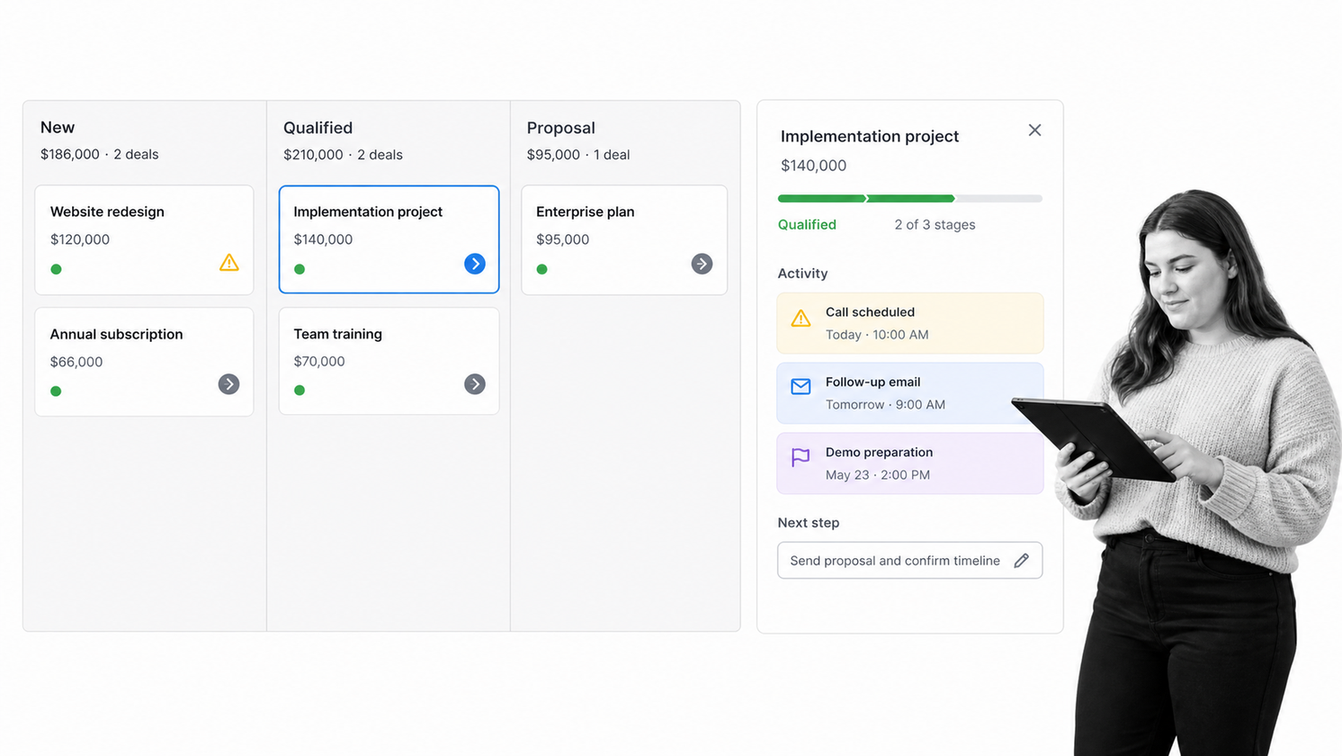
Best for: Pipeline-focused teams that value a visual sales process.
Pipedrive puts the visual pipeline at the center. Reps can see deals by stage, schedule activities, and keep the next action visible without navigating a large enterprise CRM. This focus makes it approachable for smaller and midsize teams. It becomes less complete when a sale requires complex approvals, many business units, or extensive post-sale workflows.
Why Pipedrive stands out
The defining surface is its visual sales pipeline. Visual deal pipeline, activities, automations, and next-step focus. That combination makes the product distinct within this list instead of another generic contact database.
What to check before choosing Pipedrive
- Process fit: confirm that visual sales pipeline matches how reps actually work.
- Data ownership: define required fields, stage rules, and who fixes incomplete records.
- Workflow depth: test approvals, handoffs, and cross-system work, not only contact and deal screens.
- Pricing: Lite starts at $14 per seat monthly when billed annually.
Pricing and packaging can change, so validate the final configuration against the sales process you plan to run.
6. Zoho CRM
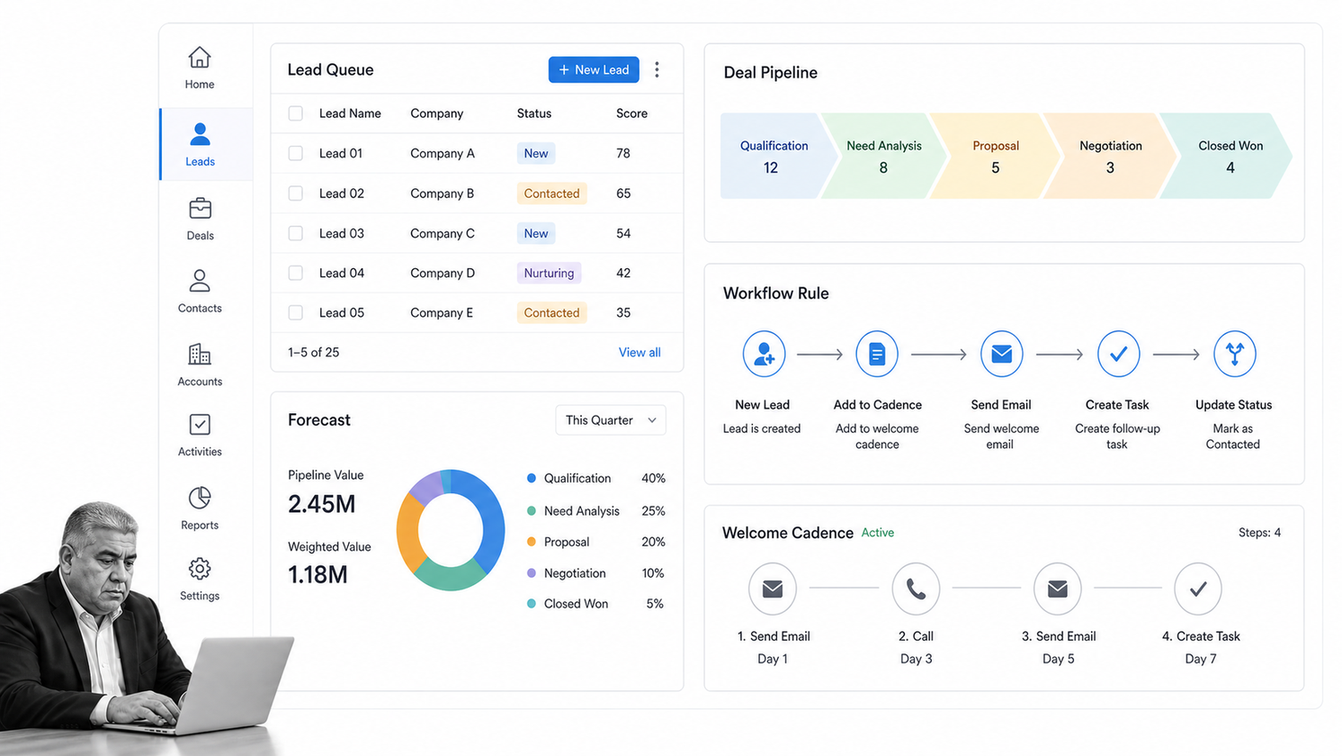
Best for: Value-conscious teams that need broad CRM capability.
Zoho CRM offers a wide range of sales capabilities at pricing designed to cover teams from small businesses through larger organizations. Workflow rules, assignment rules, cadences, forecasting, reports, dashboards, and AI agents give teams room to expand. The tradeoff is breadth: buyers should test the exact configuration and interface their reps will use instead of evaluating the feature list alone.
Why Zoho CRM stands out
The defining surface is its sales automation command center. Workflow rules, cadences, forecasting, reports, and AI agents. That combination makes the product distinct within this list instead of another generic contact database.
What to check before choosing Zoho CRM
- Process fit: confirm that sales automation command center matches how reps actually work.
- Data ownership: define required fields, stage rules, and who fixes incomplete records.
- Workflow depth: test approvals, handoffs, and cross-system work, not only contact and deal screens.
- Pricing: Free edition available; paid editions use per-user pricing.
Pricing and packaging can change, so validate the final configuration against the sales process you plan to run.
7. monday CRM
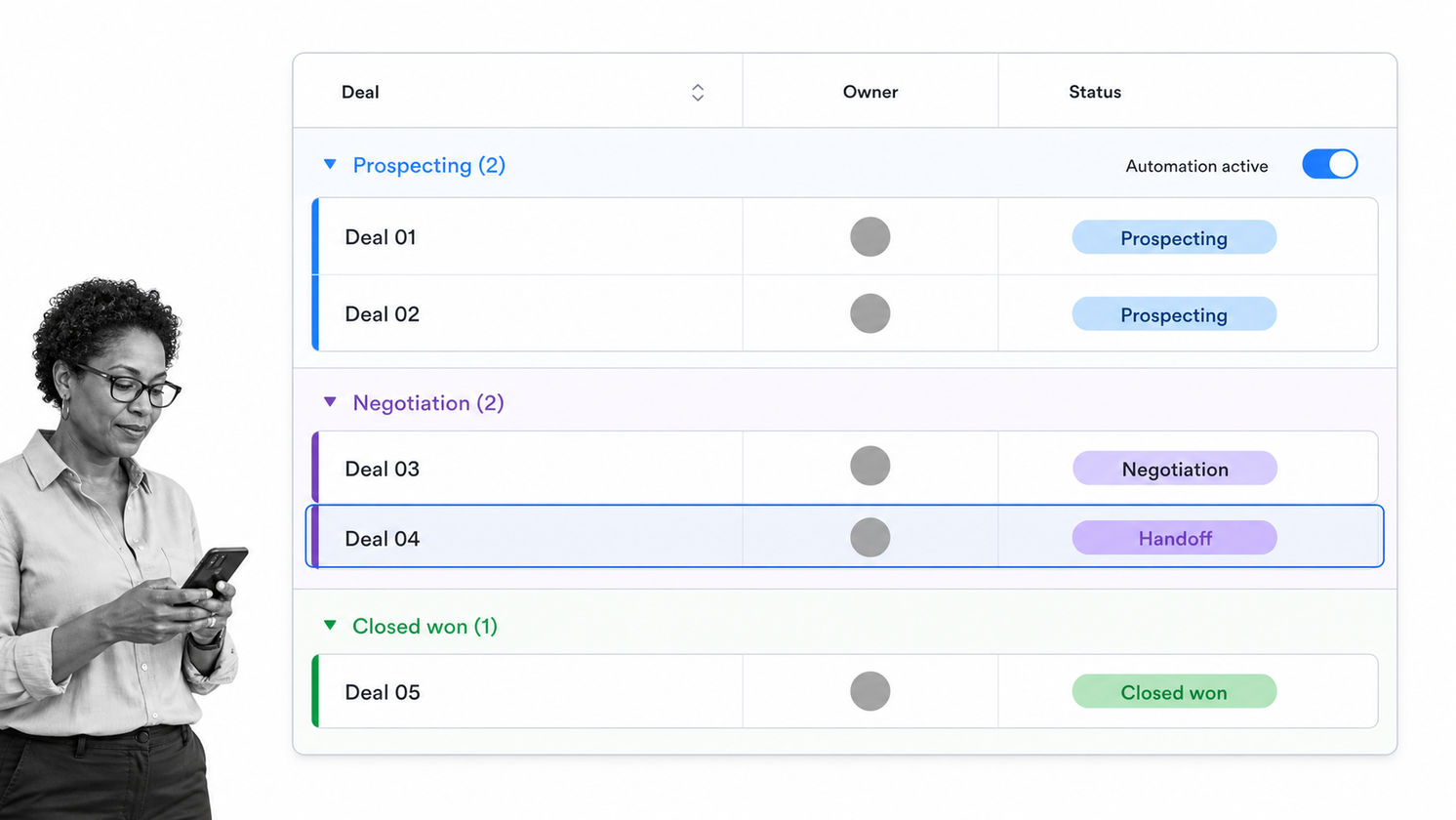
Best for: Teams that want a highly configurable revenue workspace.
monday CRM brings the board-based flexibility of monday.com into revenue work. Teams can customize records, stages, owners, communication, automations, quotes, and dashboards around their sales motion. It is strong for cross-functional visibility and configurable workflows. Governance matters because unconstrained board creation can fragment pipeline definitions and reporting.
Why monday CRM stands out
The defining surface is its configurable revenue operations board. Custom boards, centralized communication, automations, and dashboards. That combination makes the product distinct within this list instead of another generic contact database.
What to check before choosing monday CRM
- Process fit: confirm that configurable revenue operations board matches how reps actually work.
- Data ownership: define required fields, stage rules, and who fixes incomplete records.
- Workflow depth: test approvals, handoffs, and cross-system work, not only contact and deal screens.
- Pricing: Basic starts at $12 per seat monthly when billed annually.
Pricing and packaging can change, so validate the final configuration against the sales process you plan to run.
8. Freshsales
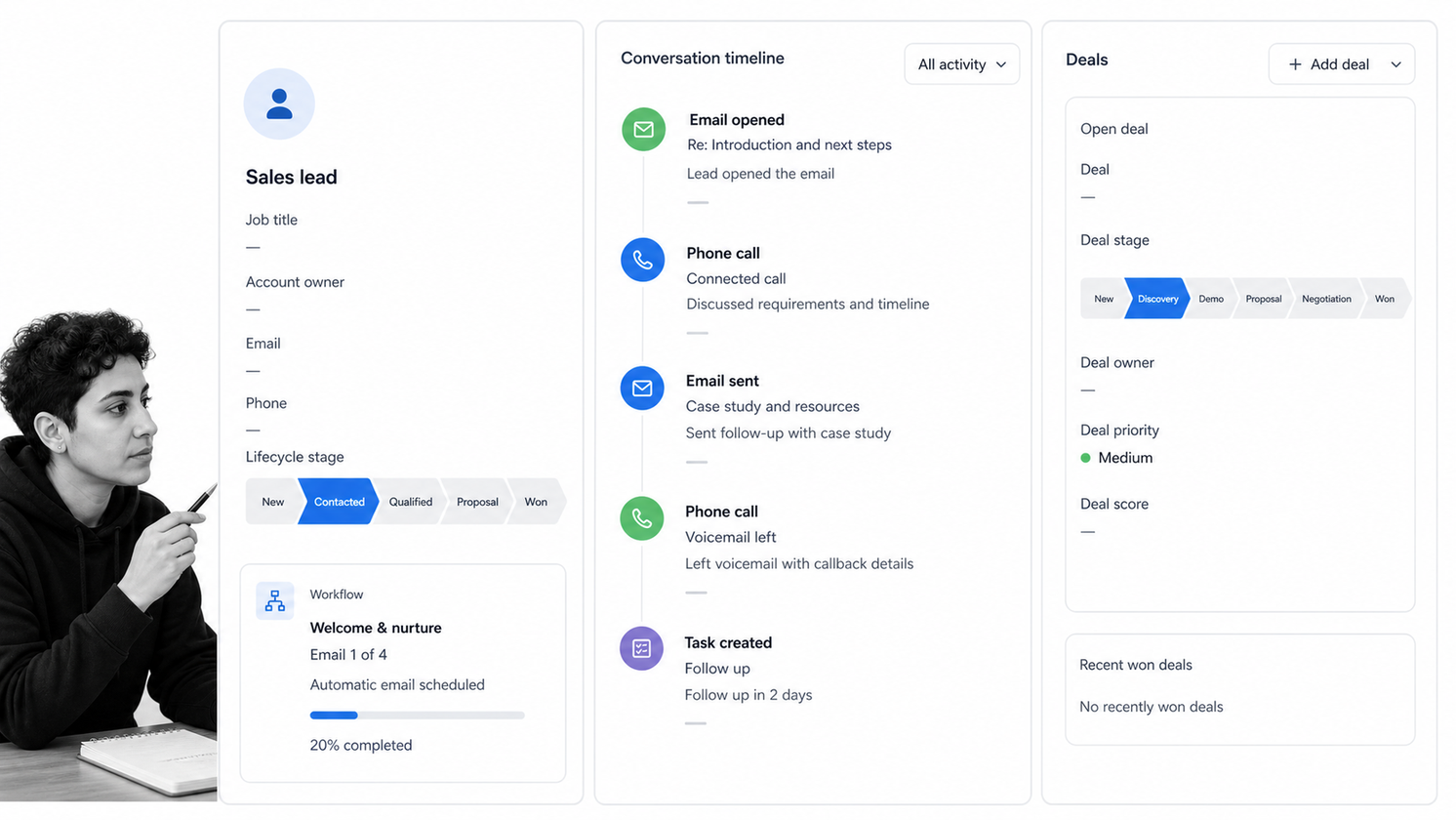
Best for: Small and midsize teams that want sales communications built in.
Freshsales packages core CRM work with built-in communication channels. Contact and account management, deal stages, email, phone, chat, activity history, and basic workflows give smaller teams a practical all-in-one starting point. It is compelling when simplicity and cost matter, while organizations with elaborate data models or complex global sales operations may outgrow it.
Why Freshsales stands out
The defining surface is its customer 360 sales workspace. Contact and deal management with email, phone, chat, and workflows. That combination makes the product distinct within this list instead of another generic contact database.
What to check before choosing Freshsales
- Process fit: confirm that customer 360 sales workspace matches how reps actually work.
- Data ownership: define required fields, stage rules, and who fixes incomplete records.
- Workflow depth: test approvals, handoffs, and cross-system work, not only contact and deal screens.
- Pricing: Free plan supports up to three users; Growth starts at $9 per user monthly when billed annually.
Pricing and packaging can change, so validate the final configuration against the sales process you plan to run.
9. Close
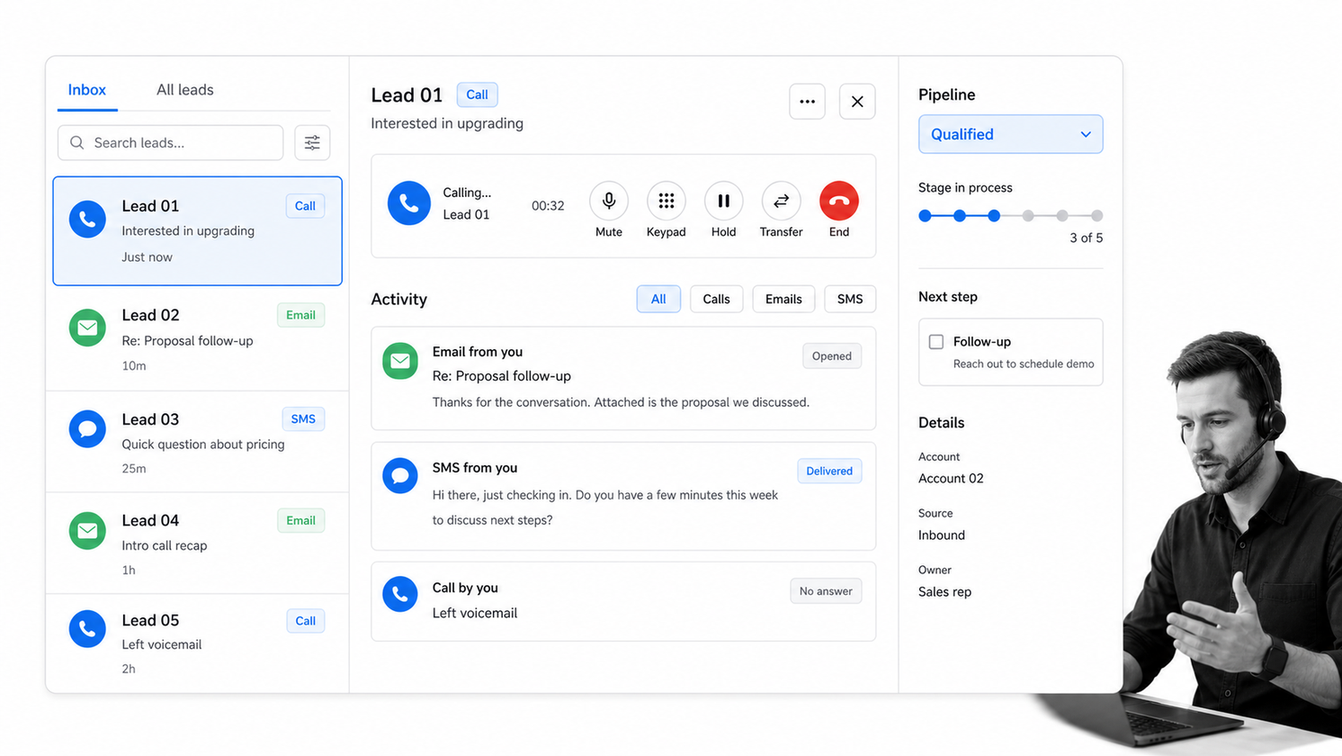
Best for: High-activity sales teams that live in calls, email, and SMS.
Close is built for sellers who spend most of their day communicating with leads. Calling, email, SMS, workflows, and pipeline context live in the same workspace, reducing tool switching for outbound teams. Its AI sales teammate extends that activity model. Usage costs for telephony and AI still need to be considered alongside seat pricing.
Why Close stands out
The defining surface is its sales communication inbox. Built-in calling, email, SMS, workflows, and an AI sales teammate. That combination makes the product distinct within this list instead of another generic contact database.
What to check before choosing Close
- Process fit: confirm that sales communication inbox matches how reps actually work.
- Data ownership: define required fields, stage rules, and who fixes incomplete records.
- Workflow depth: test approvals, handoffs, and cross-system work, not only contact and deal screens.
- Pricing: Solo starts at $9 per user monthly when billed annually.
Pricing and packaging can change, so validate the final configuration against the sales process you plan to run.
10. Clarify
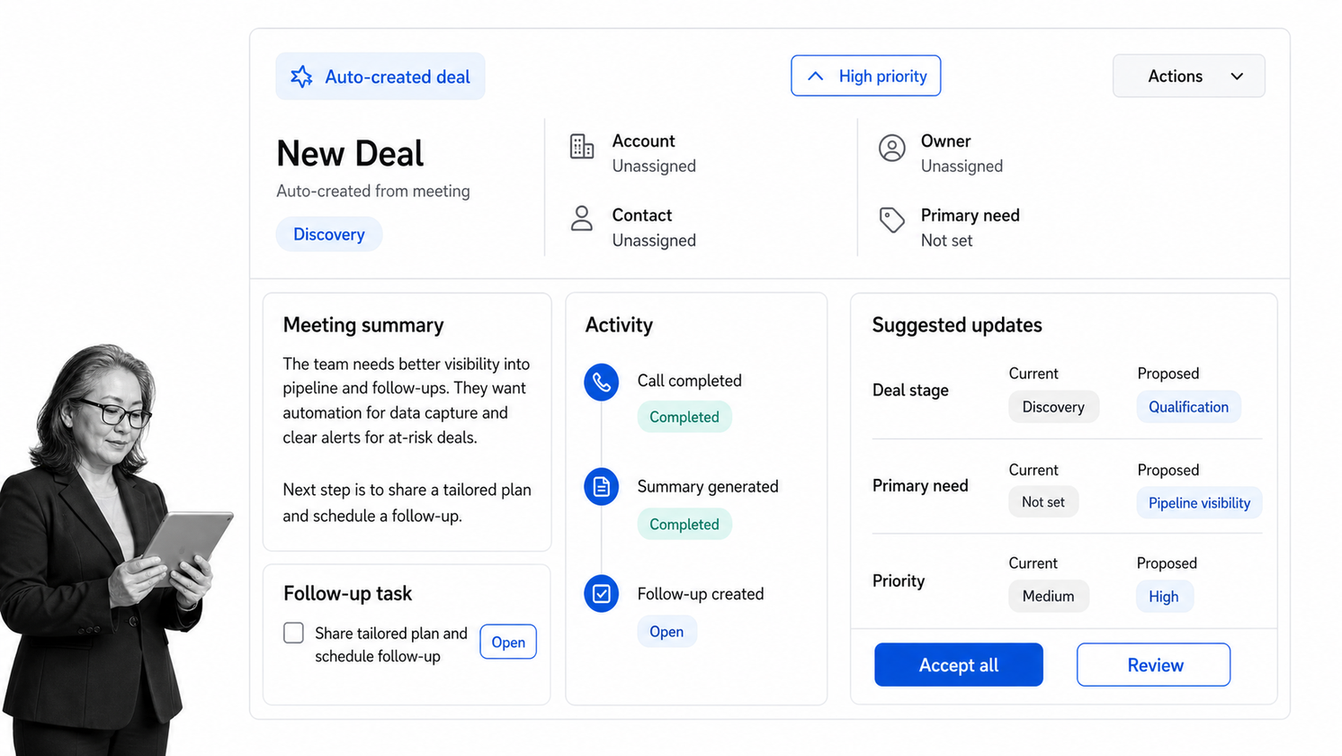
Best for: Fast-moving teams that want an autonomous CRM.
Clarify takes an autonomous approach to CRM maintenance. It connects to email, calendar, and meetings, then creates and updates records, summaries, tasks, and deal context from the activity that actually happened. Unlimited seats and credit-based AI usage change the usual CRM cost model. Teams should monitor credit consumption as their meeting and deal volume grows.
Why Clarify stands out
The defining surface is its autonomous deal intelligence workspace. Automatic records, meeting intelligence, enrichment, and AI agents. That combination makes the product distinct within this list instead of another generic contact database.
What to check before choosing Clarify
- Process fit: confirm that autonomous deal intelligence workspace matches how reps actually work.
- Data ownership: define required fields, stage rules, and who fixes incomplete records.
- Workflow depth: test approvals, handoffs, and cross-system work, not only contact and deal screens.
- Pricing: Free plan available; Starter is $50 per workspace monthly with included credits.
Review the current package and feature details on the Clarify official page. Pricing and packaging can change, so validate the final configuration against the sales process you plan to run.
11. Day AI
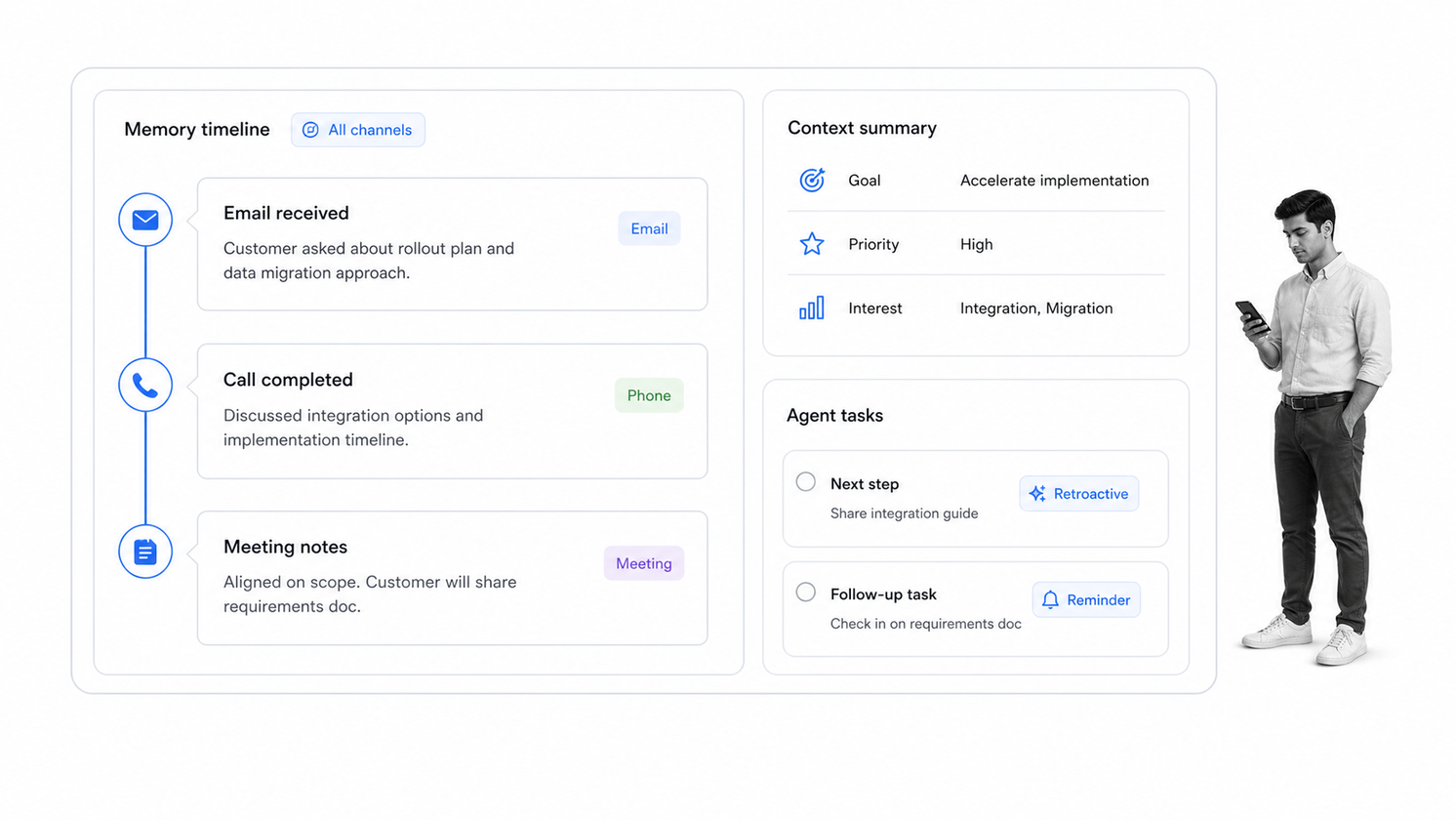
Best for: GTM teams that want agents grounded in complete customer memory.
Day AI starts with customer memory. It builds context from calls, email, and team conversations so agents can act with a fuller picture than a manually maintained record. The product is designed for go-to-market teams that want automation grounded in real customer history. Buyers should validate the operating model and commercial terms directly because public plan detail is limited.
Why Day AI stands out
The defining surface is its customer memory workspace. Customer memory built from calls, email, and team conversations. That combination makes the product distinct within this list instead of another generic contact database.
What to check before choosing Day AI
- Process fit: confirm that customer memory workspace matches how reps actually work.
- Data ownership: define required fields, stage rules, and who fixes incomplete records.
- Workflow depth: test approvals, handoffs, and cross-system work, not only contact and deal screens.
- Pricing: Pricing is provided through the vendor.
Review the current package and feature details on the Day AI official page. Pricing and packaging can change, so validate the final configuration against the sales process you plan to run.
12. Lightfield
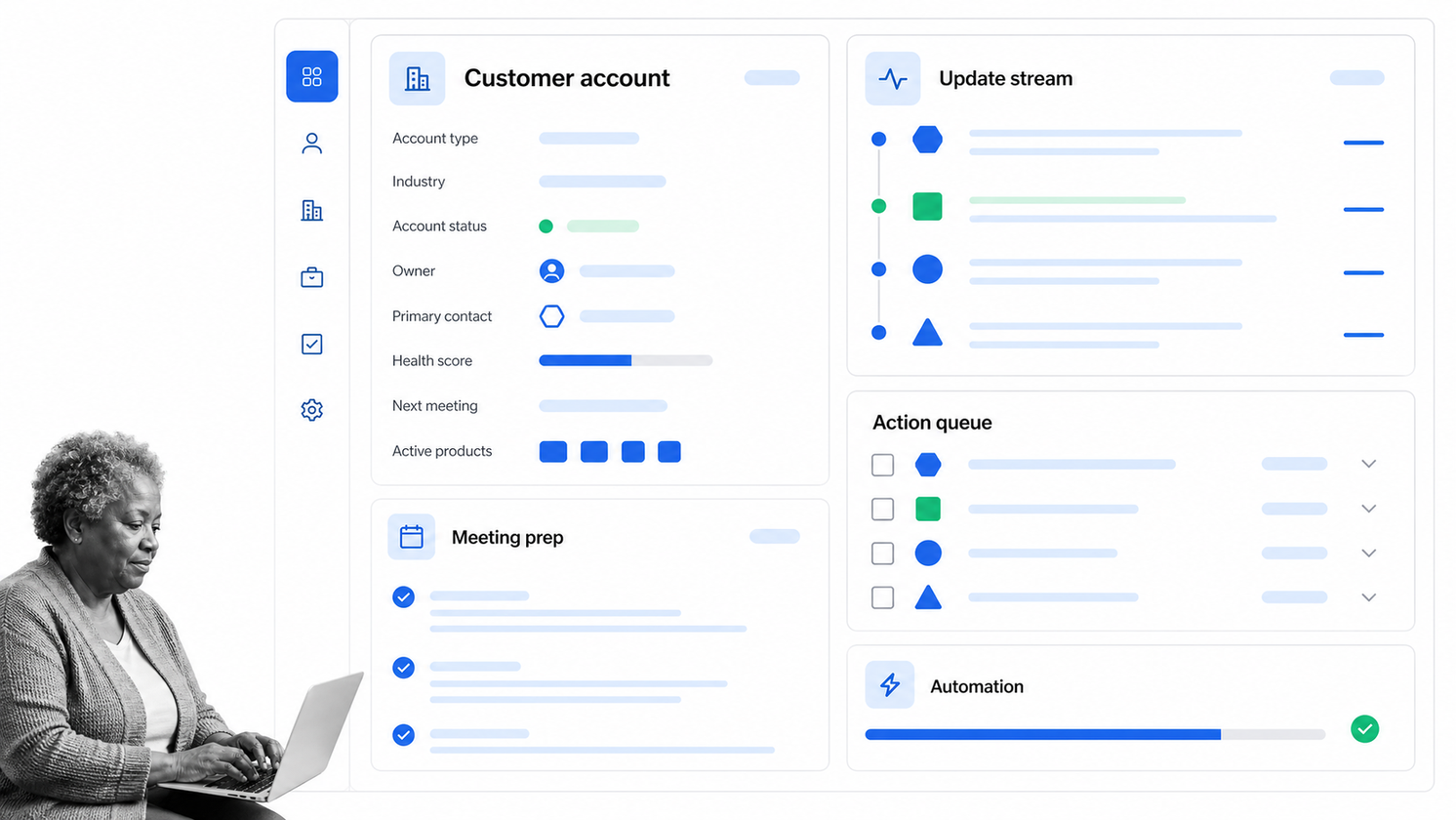
Best for: Companies that want CRM plus forward-deployed agent support.
Lightfield combines CRM, customer memory, meeting intelligence, enrichment, outbound work, and an agent platform. Its Pro offering includes forward-deployed support, which changes the buying decision from software alone to software plus hands-on implementation. It suits teams that want an AI-native operating layer and are prepared for a higher starting price.
Why Lightfield stands out
The defining surface is its agentic customer memory workspace. Continuously updated CRM, customer memory, and agent builder. That combination makes the product distinct within this list instead of another generic contact database.
What to check before choosing Lightfield
- Process fit: confirm that agentic customer memory workspace matches how reps actually work.
- Data ownership: define required fields, stage rules, and who fixes incomplete records.
- Workflow depth: test approvals, handoffs, and cross-system work, not only contact and deal screens.
- Pricing: Starter is $89 per seat monthly; Pro starts at $899 per workspace monthly, billed annually.
Review the current package and feature details on the Lightfield official page. Pricing and packaging can change, so validate the final configuration against the sales process you plan to run.
13. folk
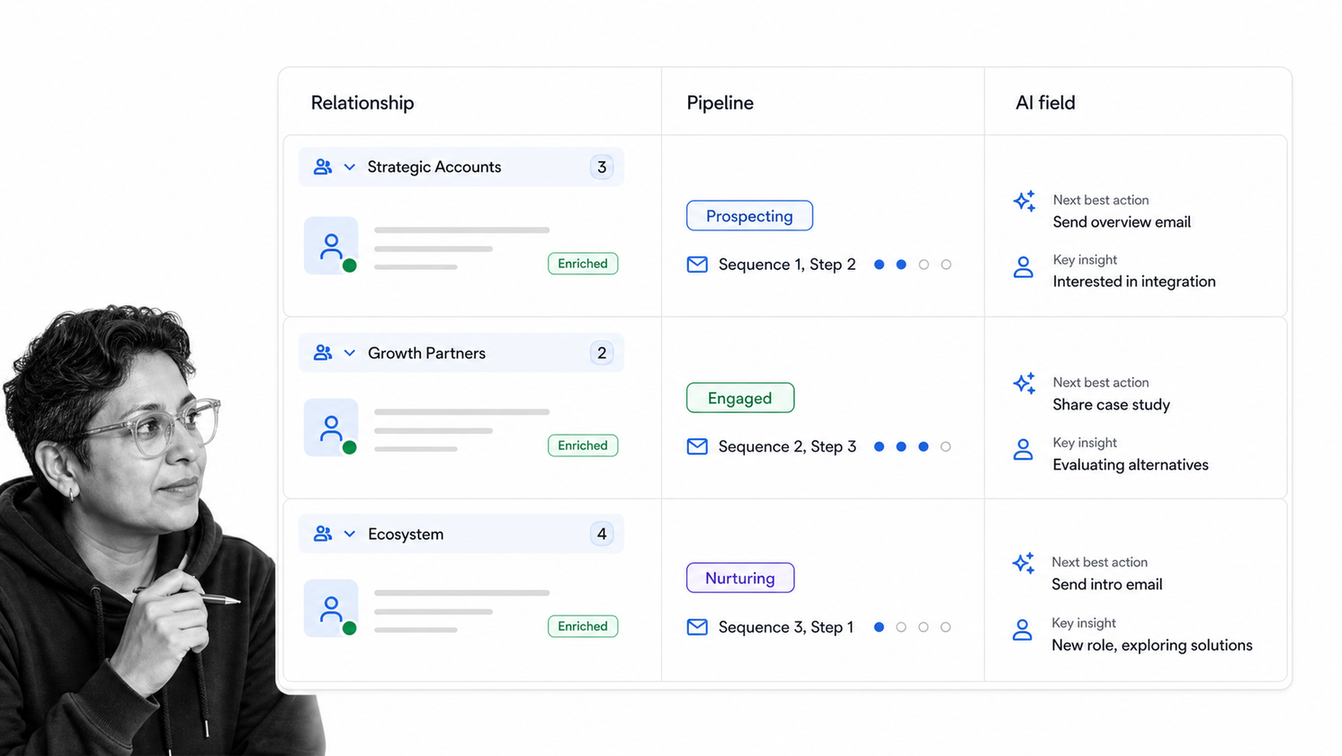
Best for: Relationship-driven teams that want a simple collaborative CRM.
folk is a lighter relationship CRM for teams whose work depends on introductions, networks, partnerships, and collaborative prospecting. Pipeline management, enrichment, messaging, email and calendar sync, AI fields, and relationship context sit in a simple workspace. It is easier to adopt than a large CRM, but enterprise teams may need deeper controls and more formal process enforcement.
Why folk stands out
The defining surface is its collaborative relationship pipeline. Pipeline management, enrichment, messaging, AI fields, and relationship context. That combination makes the product distinct within this list instead of another generic contact database.
What to check before choosing folk
- Process fit: confirm that collaborative relationship pipeline matches how reps actually work.
- Data ownership: define required fields, stage rules, and who fixes incomplete records.
- Workflow depth: test approvals, handoffs, and cross-system work, not only contact and deal screens.
- Pricing: Standard is $24 per member monthly when billed annually.
Pricing and packaging can change, so validate the final configuration against the sales process you plan to run.
How CRM and workflow execution fit together
A CRM is the system of record for relationships and revenue. It should answer who the customer is, what has happened, what the opportunity is worth, where it sits, and who owns the next move. It is not automatically the best place to run every multi-step procedure triggered by a deal.
Keep customer truth in the CRM
Contacts, accounts, opportunities, activities, communication history, pipeline stage, and forecast context belong in CRM. When those fields are clearly defined and updated, leaders can inspect the business without rebuilding the story from spreadsheets and messages.
Run repeatable procedures in a workflow layer
Qualification, proposal review, discount approval, legal review, security review, implementation handoff, onboarding, and renewal preparation are procedures. They need owners, required information, routing, deadlines, approvals, and completion evidence.
Process Street provides that workflow execution layer. A sales process template, sales pipeline template, sales pipeline stages template, sales play template, CRM implementation template, and sales and customer workflow can turn the process around a CRM record into controlled work.
The clean architecture is simple: CRM owns customer truth, the engagement layer owns communication, and the workflow layer owns repeatable execution. Integrations synchronize the critical state changes so people do not have to re-enter the same information in each system.
A practical CRM workflow starts from a reliable record event, assigns the next controlled action, and returns the completed state to the CRM.
Choose for the sales motion you actually run
The best CRM software is the platform your team will use correctly and your operations team can govern. Test it with a real opportunity, a real handoff, and a real reporting question. A polished demo is useful, but a complete workflow reveals whether the system will hold up after rollout.
FAQs
What is the best CRM software for a modern sales team?
Salesforce Sales Cloud is a strong fit for complex enterprise sales, HubSpot Sales Hub balances CRM and engagement for growing teams, and Attio gives modern teams a flexible data model. The best CRM software depends on the sales motion, required governance, integrations, and budget.
What should a sales team look for in CRM software?
Look for reliable contact and opportunity data, a fast rep workflow, clear pipeline stages, useful forecasting, automation, reporting, permissions, and integrations. Test a complete deal cycle rather than comparing feature checklists alone.
Which CRM is easiest to customize?
Attio and monday CRM are designed around flexible objects, attributes, views, or boards, while Salesforce and Microsoft Dynamics support deep enterprise customization. More flexibility creates more governance work, so define the shared data model before rollout.
What is the difference between a CRM and sales workflow software?
A CRM stores customer, account, deal, and activity data. Sales workflow software runs repeatable procedures around that data, including qualification, approvals, handoffs, onboarding, and renewal preparation.
Are AI-native CRMs ready for business use?
AI-native platforms such as Clarify, Day AI, and Lightfield can reduce manual record keeping and turn customer activity into agent actions. Buyers should still evaluate security, permissions, auditability, data quality, integration depth, and usage-based pricing.
How does Process Street work with CRM software?
Process Street runs the controlled workflows around CRM records. A CRM event can trigger a qualification, approval, handoff, onboarding, or renewal workflow, while completed workflow steps can update the CRM and preserve proof of execution.