





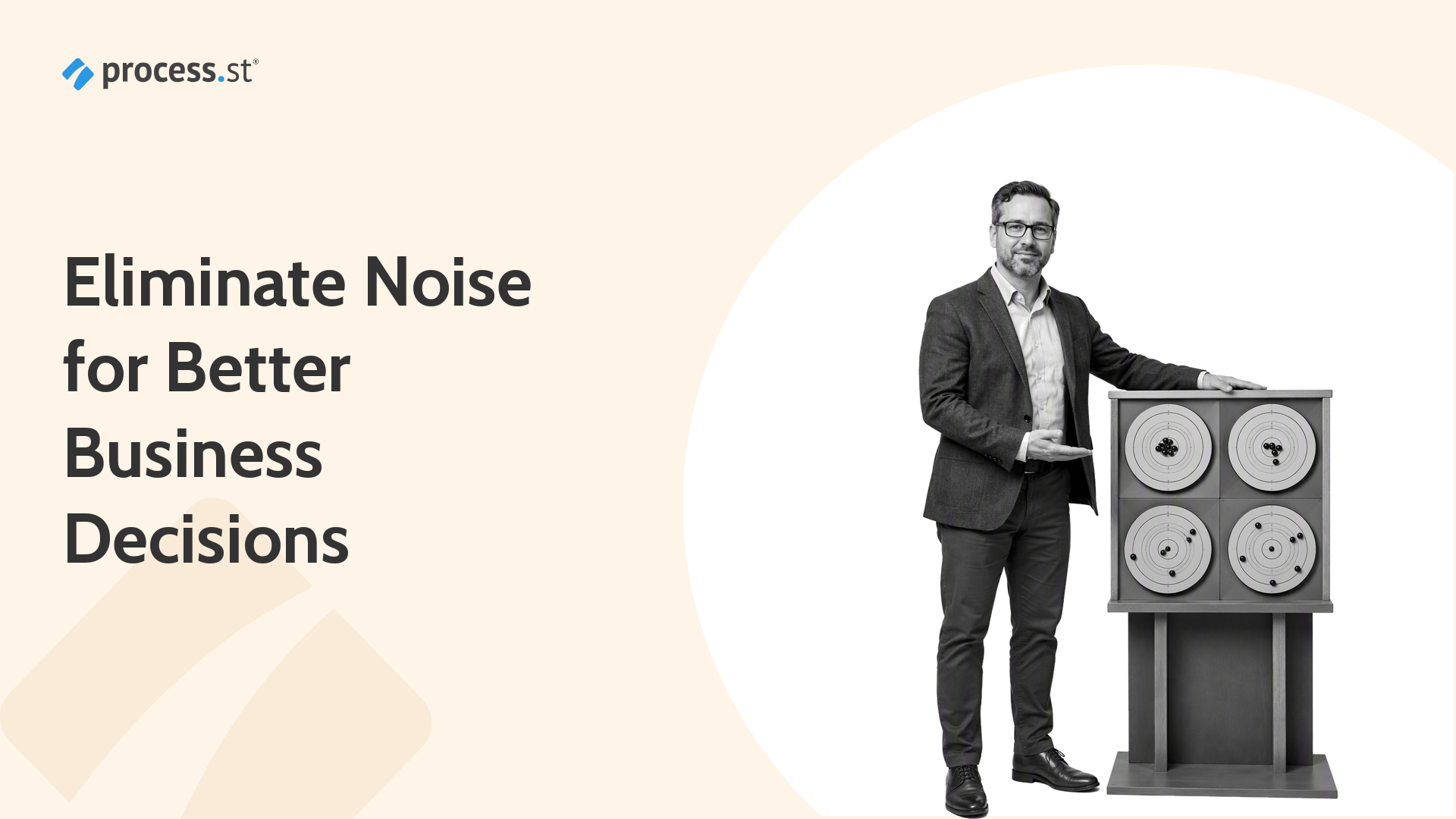
A noise audit is a structured test of how much qualified reviewers disagree when they assess the same cases independently. It reveals unwanted variability in judgment, shows where a decision system is inconsistent, and gives a team evidence for improving the process. Used well, it can eliminate noise that keeps people from making better business decisions.
That makes a noise audit useful wherever several people should reach reasonably similar conclusions from the same facts, including hiring, underwriting, claims, quality review, performance assessment, and compliance decisions. This guide explains decision noise, how it differs from bias, and how to conduct a noise audit with a repeatable workflow and free Noise Audit template.
The city I live in is home to a very old, very beautiful, and very famous cathedral. It has been a hotspot for visitors since the days of Chaucer and still plays an integral role in the community.
No matter where you are in the city, you can see its distinctive spire above everything. If you get turned around in the small medieval streets, that spire leads you back to the center of town. It is so pervasive and omnipresent that it becomes easy to ignore.
The cathedral also has bells. Loud bells, and many of them. Some days, I would swear they never stop ringing. Yet I barely noticed them until the pandemic lockdowns silenced them. When the city reopened, the bells returned with a cacophonic celebration of every pigeon coo.
This, dear reader, is an example of noise, both literally and figuratively. Background influences can shape what we notice, how we feel, and how we decide without entering conscious awareness. We know to check for bias in important decisions. We should also check the consistency of the judgments themselves.
Daniel Kahneman, Olivier Sibony, and Cass R. Sunstein developed this distinction in Noise: A Flaw in Human Judgment. Kahneman was a Nobel Prize winner, Sibony studies decision quality, and Sunstein is a Harvard Law School professor. Their central practical lesson is simple: where there is judgment, there is often more unwanted variability than organizations expect.
- What do we mean by noise?
- Noise in action
- How to reduce noise by focusing on process
- How to run a noise audit with Process Street
- Judgment variability key takeaways
What do we mean by “noise”?
Decision noise is unwanted variability in judgments that should be similar. If two equally qualified reviewers examine the same case under the same standards and reach very different conclusions, the decision system may contain noise.
Bias and noise are both sources of error, but they behave differently. Bias is a systematic tendency to miss in a particular direction. Noise is scatter: judgments vary unpredictably around the intended standard. A system can be accurate, biased, noisy, or both biased and noisy.
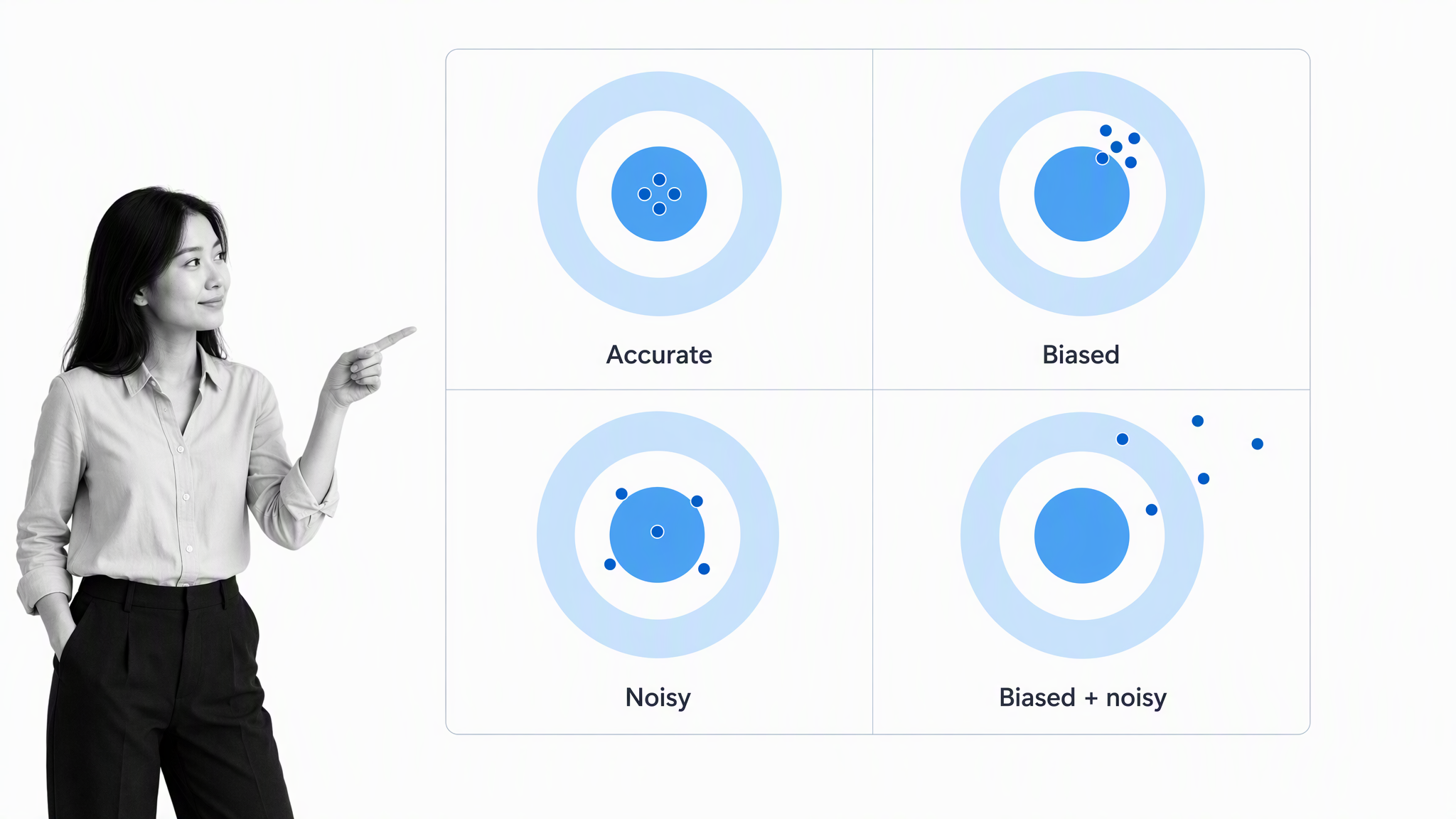
Imagine four teams at an archery range. Each team has five people and one shared bow. Their target patterns illustrate four kinds of judgment performance:
Accurate judgments
The first team groups its shots close to the center. The results are consistent and close to the intended target. In a business decision system, this resembles reviewers who apply the same evidence and criteria consistently.
Bias as systematic deviation
The second team groups its shots tightly, but away from the center. The error is consistent enough to investigate. Perhaps the bow is misaligned or the team is using the wrong reference point. In judgment, a shared misconception or flawed rule can create the same pattern.
Noise as random scatter
The third team produces a wide scatter. Even if the correct target were hidden, the inconsistency would remain visible. It would be difficult to predict where a sixth shot would land because the judgments do not follow a stable pattern.
Bias and noise together
The fourth team is both off center and widely scattered. The system has a systematic error plus inconsistent application. Fixing only the shared bias would still leave substantial variability among decision-makers.
Unwanted vs. desired variability
Not all variability is bad. Competition, creativity, strategy, and innovation benefit from different perspectives. Noise is the variability you do not want because the decision calls for a comparable standard. The objective is not to make every person think alike. It is to make judgments consistent where consistency matters.
Noise in action and the interview
Imagine you are interviewing a candidate named Jason with three colleagues, Clark, Bruce, and Diana. You all have similar experience and hear the same answers. You think Jason is a decent candidate worth shortlisting. Clark sees potential but thinks Jason is not ready. Diana thinks he is arrogant and rejects him. Bruce sees an unconventional future manager and wants to make an offer immediately.
Their assessments sound like this:
- Clark: Jason is enthusiastic but inexperienced, and we need someone who can take ownership of the role. He seems like a good fit for the company, but he may not be ready for the responsibility of this position. We should move on to other candidates but keep him in mind for future openings.
- Diana: He comes across as arrogant and aloof. He does not respond well to criticism and seems more interested in doing things his own way than collaborating with a team. I am concerned his impulsiveness will result in reckless, costly decisions down the line. We should not hire him.
- Bruce: He lacks experience, but he has the necessary skills. With proper mentorship, he could learn on the job and potentially move into management in a few years. His thinking is unconventional, but it is good for the team to test new ideas. Let us make him an offer.
Four qualified people observed the same interview, talked to the same person, and knew the same background and experiences. Yet they reached four very different conclusions about Jason’s suitability for the job. Some variation may reflect legitimate priorities, but some may come from momentary context. Diana began the day with an email from a top client blasting work done by one of her subordinates. Jason bears a passing resemblance to Clark’s younger brother, who usually means well but often gets in over his head. Bruce is still buoyed because his hometown baseball team won a playoff game and is headed to the World Series.
This is not just a thought experiment. A study published by the American Economic Association examined juvenile court decisions in one US state from 1996 to 2012. Unexpected losses by a local college football team were followed by longer sentences during the next week. The study does not prove that every decision is swayed by sports, but it shows how irrelevant context can affect consequential judgment.
Recent research continues to find substantial variability when people apply shared standards. The Annual Review of Organizational Psychology and Organizational Behavior describes decision noise as a distinct component of error and highlights remedies such as agreed standards, consistent application, and independent aggregation.
The hiring example has another familiar problem: group discussion can hide rather than solve inconsistency. The first confident opinion may anchor everyone else. A senior colleague may dominate. Independent judgments collected before discussion give the team a cleaner view of genuine agreement and disagreement.
Focus on the process to cut through noise
Noise can be detected without knowing the correct answer. Remove the bullseyes from the archery targets and you can no longer judge bias, but you can still see whether the shots form a tight cluster or a wide scatter.
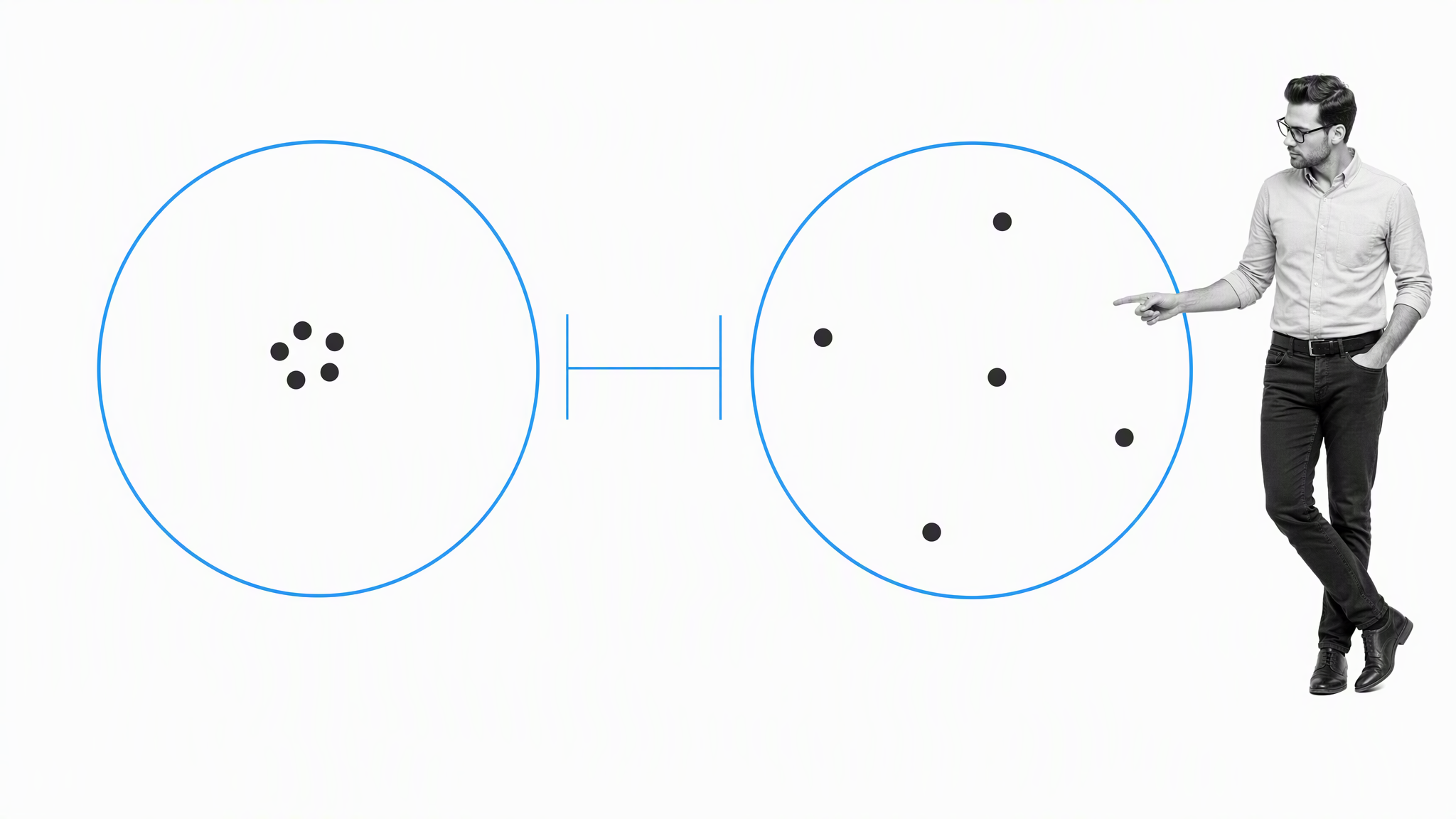
The same principle makes a noise audit possible. Give several reviewers the same representative cases, prevent them from coordinating, and compare their scores. The audit measures the reliability of the decision process before the organization argues about which answer is right.
A practical noise audit follows a controlled sequence:
- Define the decision and standard. Specify which judgment is being tested, what good performance means, and which differences would be material.
- Select representative cases. Use realistic cases that cover ordinary work, edge cases, and riskier decisions without exposing confidential data unnecessarily.
- Choose qualified reviewers. Include people who normally make or review the decision. Give everyone the same instructions and evidence.
- Collect independent judgments. Require each reviewer to score the case before any group discussion. Record reasons and confidence as well as the answer.
- Compare the distribution. Measure how far judgments differ overall and within important subgroups. Look for outliers, inconsistent thresholds, and recurring ambiguity.
- Diagnose the process. Determine whether differences come from unclear criteria, missing evidence, training gaps, incentives, workload, or inappropriate discretion.
- Improve and retest. Revise the decision process, calibrate reviewers, and repeat the exercise to see whether unwanted variability declines.
Decision hygiene is the day-to-day companion to an audit. Use predefined criteria, present evidence in the same order, separate evidence collection from final evaluation, and obtain independent ratings before discussion. Use consistent scoring anchors and establish an escalation path when a case falls outside the standard.
A documented workflow process template helps turn those principles into repeatable action. It can specify the evidence required, the person responsible, the scoring scale, the approval route, and the record that must be retained.
Good process does not eliminate judgment. It creates a fair structure for judgment. At Process Street, members of the content team sometimes swap or take over a project from someone else. We can do that because we have a defined process and set parameters for content creation. No matter who writes the post, the same tasks are completed: collected research, an outline, title ideas, image requests, editing, and approval. If I got arrested tonight for breaking into the cathedral and destroying the bells, another writer could still finish the post.
Use Process Street to check your noise
Kahneman, Sibony, and Sunstein describe a rough noise-audit method in an appendix to their book. The free Process Street Noise Audit Workflow turns that method into an operational sequence, from assembling the audit team and cases to analyzing judgment variability and agreeing on corrective action.
Open the free Noise Audit Workflow template to adapt it for your team or department.
Process Street is a single Compliance Operations Platform with Docs and Ops capability areas plus built-in AI. Docs helps teams maintain approved policies, decision criteria, scoring guidance, and audit instructions. Ops turns that knowledge into assigned workflows with required evidence, due dates, approvals, exception handling, and an activity trail.
For a noise audit, that means every reviewer receives the same instructions and cases, independent responses are captured in a consistent format, and the team can route findings to the right owner. Built-in AI can support structured intake, triage, and drafting inside the governed steps a team defines, while people retain review and approval authority.
The workflow can adapt to different departments without abandoning the common method. Conditional logic can show consultant details only when an external consultant is used. If the HR team runs an audit without a consultant, those fields remain hidden. If the Sales team uses an external consultant, the workflow can request the consultant’s name, email, and agreement contract. Dynamic due dates can keep analysis and reporting deadlines aligned with the completion of earlier tasks. Required evidence and approvals help ensure the team does not skip critical controls.
Judgment variability key takeaways
Judgment variability becomes a business risk when similar cases should receive similar treatment. A noise audit makes that variability visible. Decision hygiene then reduces it through clear criteria, comparable evidence, independent judgment, consistent scoring, and controlled follow-through.
- Separate bias from noise. Bias is systematic deviation; noise is unwanted scatter. A decision system can have either or both.
- Measure before debating. Ask qualified reviewers to assess the same cases independently, then compare the distribution of answers.
- Standardize inputs and criteria. Give people the same evidence, sequence, definitions, and scoring anchors.
- Preserve useful discretion. Reduce inconsistency where a shared standard matters without suppressing diverse thinking where it creates value.
- Turn findings into operations. Assign improvements, approvals, deadlines, evidence, and retesting through a governed workflow.
How much noise is in your decision-making framework? The only reliable answer is to test it.