Turn every policy into automated workflows with built-in enforcement and audit-ready proof.



Content Workflow Software
Content workflow software helps teams plan, create, review, approve, publish, and refresh content through one controlled process. It turns a content operation into assigned stages, clear owners, structured briefs, review gates, publishing handoffs, automations, and records that show what happened.
The category matters because content operations break when work moves through scattered docs, design files, chat threads, email approvals, CMS drafts, and analytics dashboards. A content workflow system gives the team one operating path from idea to published asset and back into refresh.
This guide explains what content workflow software is, how it differs from project management, CMS, and DAM tools, which capabilities matter, and how to choose software that improves content quality without becoming another status-update layer.
In this article, we are going to cover:
- What content workflow software is
- Why content workflow software matters
- Content workflow software vs. project management, CMS, and DAM tools
- Core capabilities in content workflow software
- How content workflow software works
- Process Street as content workflow software
- How to choose and implement content workflow software
- FAQs
What content workflow software is
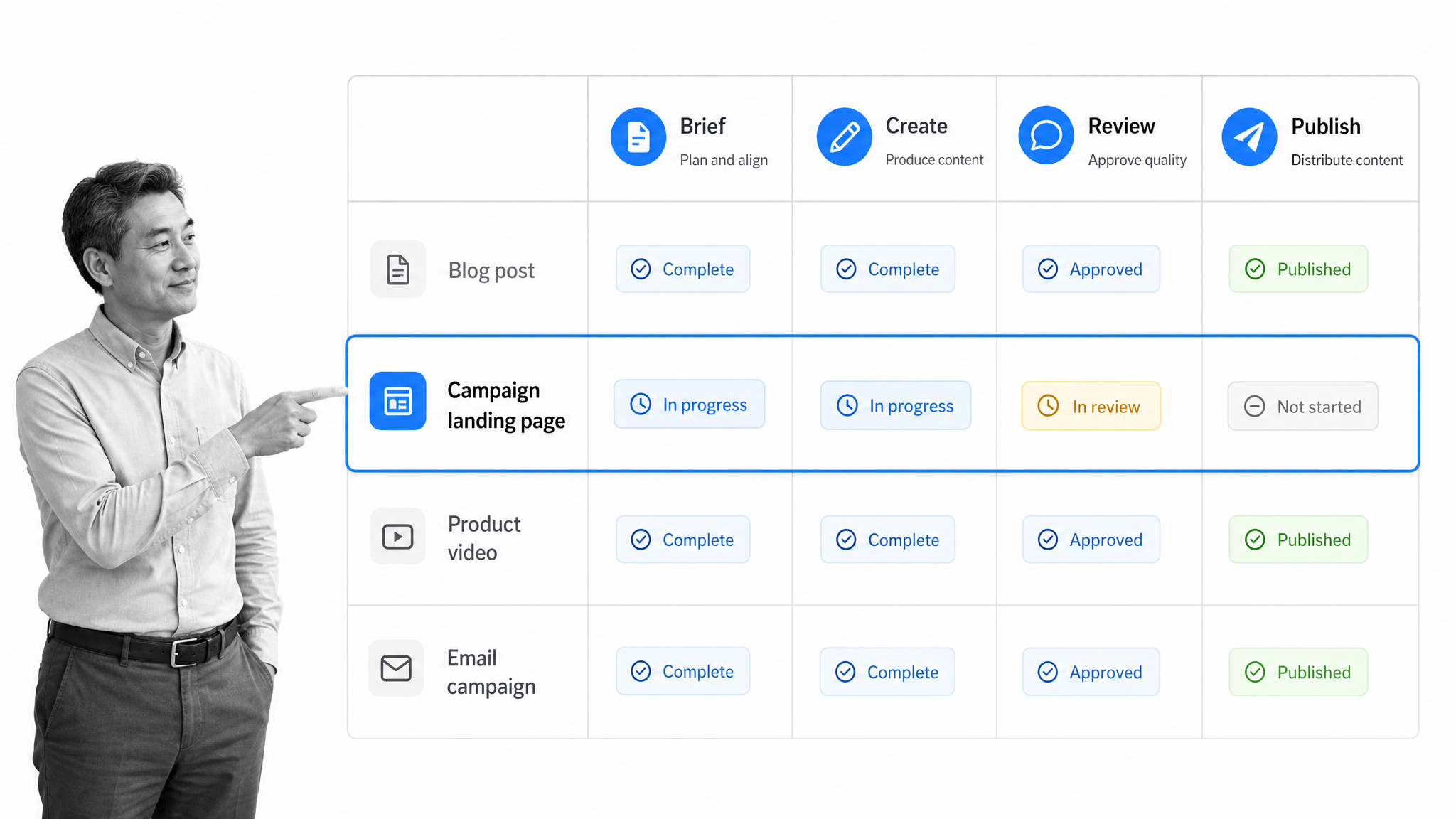
Content workflow software is a platform for managing the path content follows from request to publication and performance review. A workflow may begin with an intake form, an editorial calendar item, a campaign request, a product launch, a legal review, or a scheduled refresh. The software makes that path visible, repeatable, and easier to enforce.
If you already understand what a workflow is, content workflow software is the system that makes content work operational. It defines who writes, who edits, who reviews, what information is required, which approval path applies, and what proof is captured before publishing.
The four jobs content workflow software must handle
Useful content workflow software usually covers four jobs: brief the asset, create the work, review it with the right experts, and publish it with a record of approval. Weak tools stop at task tracking. Strong tools connect the full lifecycle.
- Brief: capture goals, audience, channel, offer, source material, owner, due date, and review requirements.
- Create: assign writers, designers, subject experts, and operators to the right stages.
- Review: route content through editorial, brand, legal, compliance, product, or executive approval when needed.
- Publish: hand the approved asset to the CMS, social scheduler, email tool, or enablement library with a record of what was approved.
That approval record is what separates content workflow software from a loose task board. For content that affects customers, regulated claims, brand promises, product messaging, or sales enablement, completion is not enough. You need evidence that the right people reviewed the right asset. That is why compliance as proof of control matters for high-stakes operations.
A practical definition
Content workflow software is any system that helps a team turn repeatable content production into a controlled sequence of work. The best tools make a content request easy to start, hard to skip, simple to improve, and clear enough for a new teammate to follow without relying on tribal knowledge.
Why content workflow software matters
Content workflow software matters because growing content teams create process debt faster than they expect. Every new channel, market, product line, approval requirement, and campaign adds another handoff. Without a workflow layer, teams manage that complexity through memory.
Memory does not scale. Briefs arrive incomplete. Reviewers miss deadlines. Legal approvals happen in email. CMS handoffs get rushed. Refresh work disappears after publication. By the time leadership asks why an asset is late or off-message, the answer is spread across docs, comments, chat messages, and individual inboxes.
They reduce missed steps
A workflow tool gives the content team one path to follow. The process can require a complete brief, enforce order, branch based on asset risk, and show exactly which owner is responsible for each step. That makes recurring content work less dependent on whoever happens to remember the process best.
They reduce manual coordination
Content workflow software also removes the coordination tax. Instead of asking whether the draft is ready, the workflow assigns the next review. Instead of reminding legal or brand, the workflow routes the asset. Instead of copying a status into another system, the workflow can update the content calendar or trigger the publishing handoff.
This is the reason many teams graduate from business process documentation to an execution platform. Documentation explains the work. A workflow tool runs it.
They create operating data
Once content workflows run in software, leaders can see bottlenecks, overdue reviews, approval patterns, publishing delays, and refresh gaps. That operating data is hard to collect when every asset lives in a different spreadsheet, project board, document, or CMS queue.
Content workflow software vs. project management, CMS, and DAM tools
Content workflow software overlaps with project management, CMS, and DAM tools. The overlap is useful, but the categories solve different parts of the content operation.
Content workflow software vs. project management tools
Project management tools are strongest when work is one-off, milestone-based, and collaborative. They help teams coordinate a launch, campaign, build, or initiative. A workflow management system is stronger when content work repeats and the review process itself needs to be followed the same way each time.
A product launch may belong in a project tool. The campaign landing page workflow, product messaging review, legal approval, CMS handoff, and post-publication refresh may belong in content workflow software.
Content workflow software vs. a CMS
A CMS is where content is stored, structured, and published. Content workflow software is where the work gets requested, assigned, reviewed, approved, and handed off before or after it reaches the CMS. Some CMS products have workflow features, but teams often need a broader operational layer when content touches brand, legal, product, demand generation, and sales enablement.
The distinction matters because a CMS publish button does not prove that the brief was complete, the SME reviewed claims, legal approved sensitive language, and the refresh owner was assigned. A controlled workflow records those steps before the asset goes live. The same execution logic applies to broader business process documentation.
Content workflow software vs. a DAM
A DAM stores approved creative assets, images, videos, and brand files. Content workflow software controls the production and approval process around those assets. A DAM answers where the final asset lives. A workflow answers how the asset got approved and who owns the next action.
Teams need the workflow layer when content has dependency chains, conditional review paths, proof requirements, or recurring refresh cycles. The Contentful content creation workflow guide describes content creation workflows as a way to improve collaboration, maintain consistency, and publish faster, which is the operational problem this page is solving.
Core capabilities in content workflow software
The right content workflow software depends on the risk and repeatability of the content work. A lightweight task board may be enough for a small blog queue. A multi-channel content operation with legal, brand, product, and localization review needs stronger controls.
Brief and intake builder
The builder should let a non-technical owner create a repeatable intake flow with required fields for audience, goal, channel, offer, source material, owner, due date, target keyword, approvals, and publishing destination. If every request starts as a vague chat message, the workflow is already broken.
Editorial stages and ownership
Content workflow software should make ownership explicit across brief, outline, copy, design, subject-matter review, edit, approval, publishing, promotion, and refresh. Each stage needs an owner and a clear completion condition.
Routing and conditional logic
Conditional routing keeps workflows from becoming one-size-fits-all checklists. For example, a low-risk blog refresh can follow a standard path, while a regulated claim, customer quote, pricing mention, or legal-sensitive campaign can branch to a specialist review. Process Street documents this capability through conditional logic.
Approvals and escalation
Approvals need to happen inside the workflow, not as side conversations. Built-in approvals make review states visible and help prevent content from moving forward before the right person signs off.
Integrations and AI execution
Content work rarely stays inside one app. It touches forms, documents, design files, CMS platforms, DAM systems, CRM data, email tools, social schedulers, analytics dashboards, spreadsheets, and chat. Strong workflow tools connect those systems so people do not become the integration layer.
Process Street has direct, universal integrations to 5,000+ systems. Need a new one? An AI agent builds it on the fly.
Review history and reporting
If the content matters, the history matters. Look for completion logs, field history, comments, attachments, approval records, timestamps, and dashboards that show bottlenecks. The tool should tell you not only whether the asset shipped, but whether it moved through the right review path.
How content workflow software works
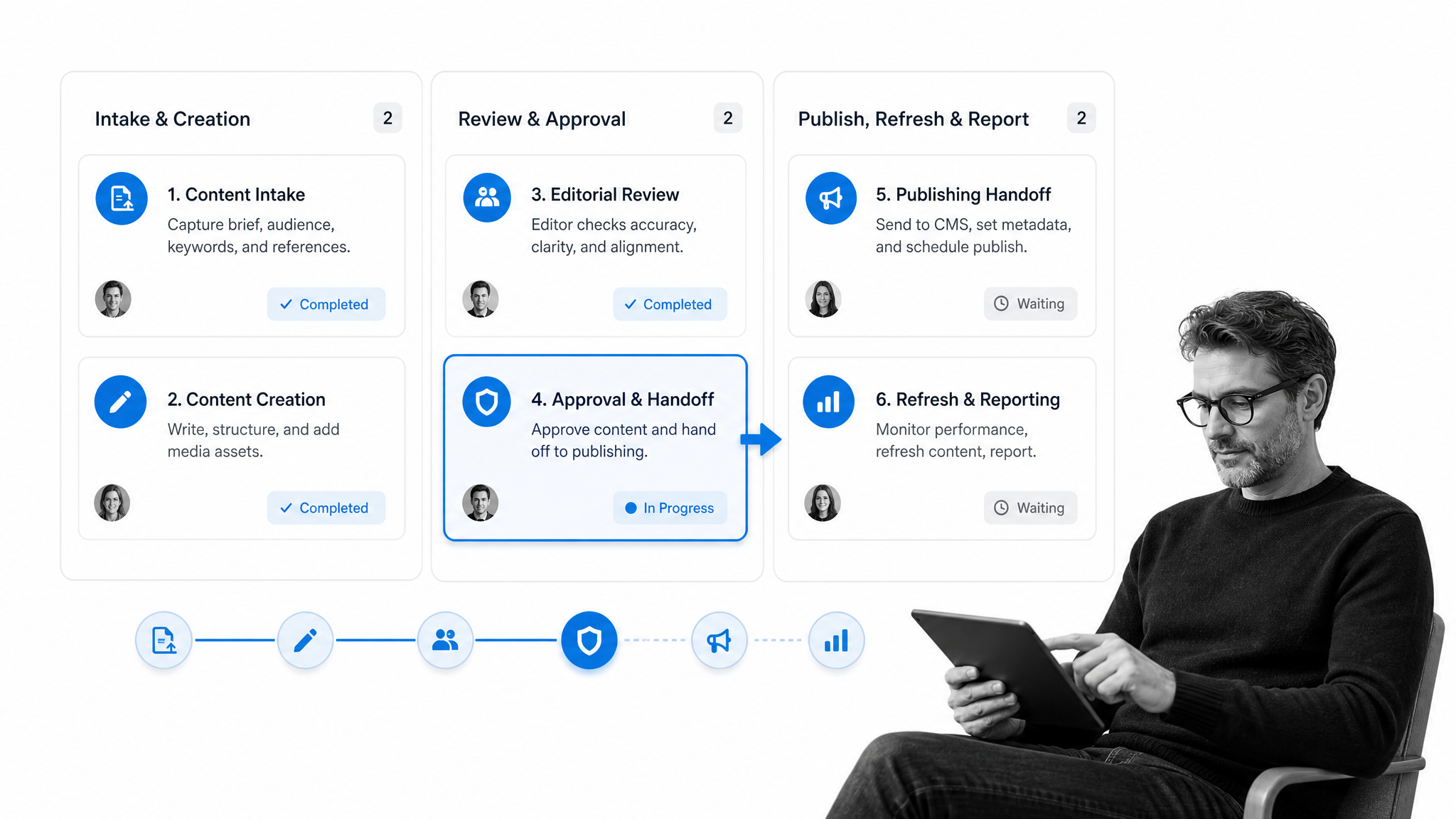
Content workflow software works by turning a content production standard into a live workflow run. The template defines the required stages. The run captures the actual asset, reviewers, decisions, approvals, files, and handoffs. That distinction is important because teams need both the planned workflow and the record of each execution.
1. A request starts the workflow
The trigger might be a content request form, campaign brief, recurring editorial calendar item, product launch, website update, customer story, or scheduled refresh. A strong trigger captures enough context to route the asset correctly from the beginning.
2. Content stages are assigned and sequenced
The workflow assigns tasks to writers, editors, designers, subject experts, legal reviewers, brand reviewers, and publishing owners. It can show dependencies, due dates, instructions, required fields, and files. When the workflow includes multiple teams, this sequencing prevents work from sitting between departments.
3. Logic routes exceptions
Not every asset should follow the same path. Conditional logic adapts the workflow based on asset type, channel, claim risk, region, product line, legal sensitivity, or any other structured input.
4. Automations update connected systems
Automation removes repetitive admin work. A workflow can create a CMS task, send a review notification, update a content calendar, request a signature, create a design ticket, or store an approved asset. process automation is useful when those actions need to happen every time without manual copying.
5. Approvals and history prove completion
The final step is proof. Required fields, approvals, attachments, comments, and audit history show what happened. That record helps teams answer internal questions, customer questions, legal questions, and leadership questions without reconstructing the process after the fact.
Process Street as content workflow software
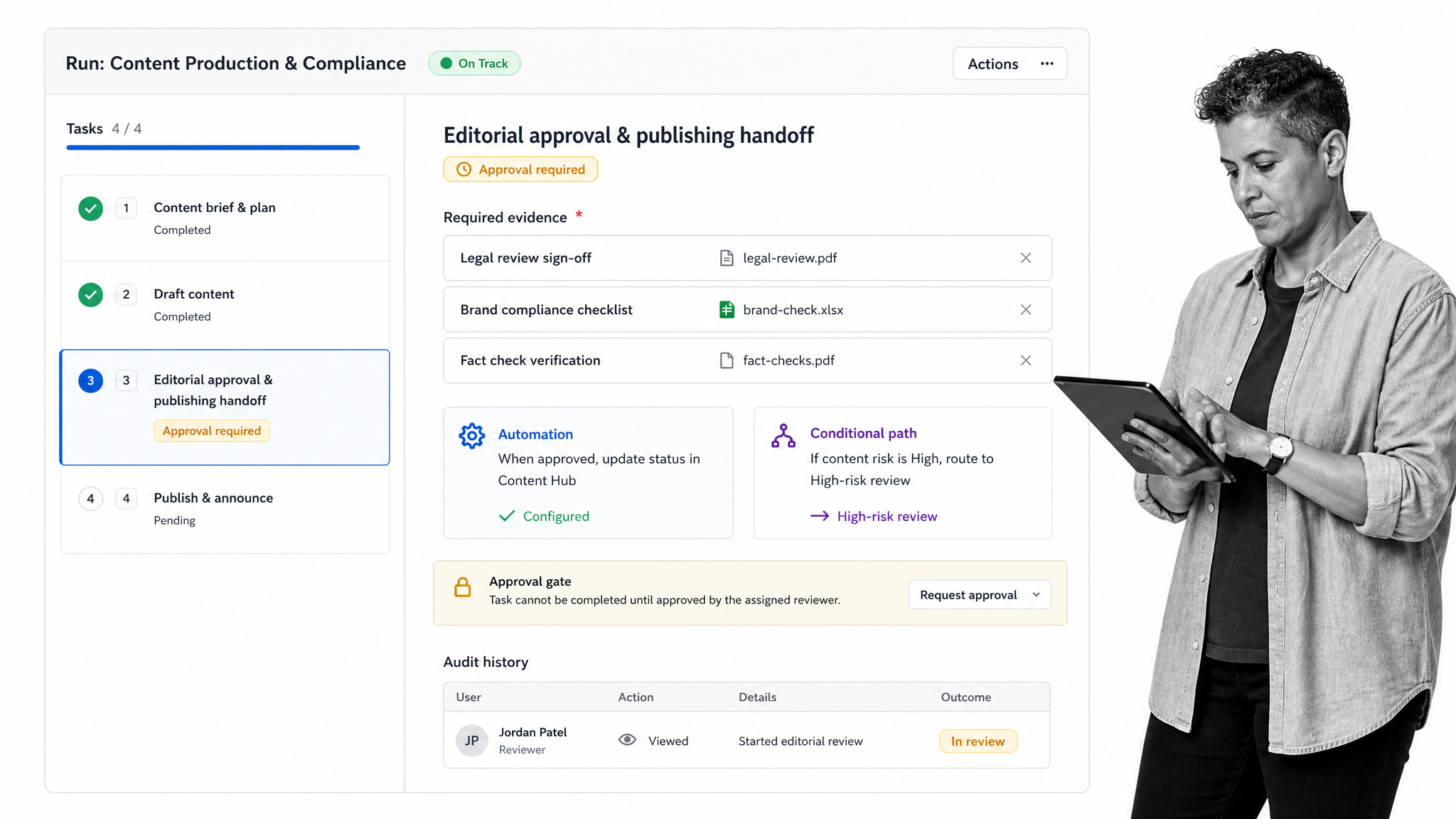
Process Street is a Compliance Operations Platform for teams that need recurring work to run correctly and leave proof behind. It turns SOPs, content production standards, and operating procedures into workflows with tasks, forms, rules, approvals, automations, and audit-ready history.
That makes it a strong fit when a content workflow is too important to leave inside a document or task board. Campaign landing pages, customer stories, website updates, regulated claims, product launches, sales enablement assets, and policy reviews all benefit from a system that runs the process and captures the record.
What Process Street handles
- Workflow templates: reusable process designs for recurring content production.
- Workflow runs: live execution with owners, due dates, instructions, files, and required fields.
- Approvals: editorial, brand, product, legal, compliance, or executive review steps that stay inside the workflow.
- Conditional logic: branches that adapt content review based on asset type, risk, market, or channel.
- Automations and integrations: actions across CMS, CRM, email, documents, spreadsheets, and chat without manual copying.
- Audit history: proof that shows who did what, what changed, who approved it, and with which supporting information.
Teams can also start from a workflow management template or an employee onboarding checklist, then adapt the template into a governed workflow that fits their own operating standard.
Where it fits best
Process Street is best when recurring content work needs enforcement, not just visibility. If a missed review creates compliance risk, customer risk, brand risk, operational risk, or rework, the workflow should carry the rule, the owner, the due date, and the proof.
This is where AI-driven compliance becomes practical. AI can help monitor, improve, and execute workflows, but it needs structured process context. A controlled workflow gives AI the rails to act inside real business operations.
How to choose and implement content workflow software
Choose content workflow software by mapping the work before mapping vendors. The fastest way to buy the wrong tool is to start with feature lists before you understand the operating problem.
Start with content risk
Ask what happens if the asset ships late, ships with the wrong claim, skips legal review, uses outdated product messaging, or never gets refreshed. Low-risk routines may only need a simple checklist. High-risk content needs required fields, approvals, permissions, evidence, and audit history.
Separate campaign planning from recurring production
Campaign planning changes shape every time. Recurring content production should become a template. If your team keeps recreating the same brief, review path, CMS handoff, launch checklist, or refresh process, that work probably belongs in content workflow software.
Check whether the tool matches your content process language
Some teams think in editorial stages, some think in publishing queues, and some think in governance controls. If your organization already models processes formally, the OMG BPMN 2.0 overview is useful context for understanding how process steps, events, and branches can be represented. If your team is focused on content collaboration, the Bynder content workflow overview is a helpful example of how vendors describe content workflow needs in the market.
AI also changes the selection criteria. A workflow tool that allows AI agents to act inside business processes needs guardrails, monitoring, and proof. The NIST AI Risk Management Framework is a useful external reference when you are deciding how much oversight an AI-assisted workflow should require.
Pilot one process end to end
Do not pilot content workflow software on a toy process. Pick one real content workflow with intake, handoffs, at least one exception path, at least one approval, and at least one connected system. The pilot should prove whether the tool can handle the messy parts of content production, not just the happy path.
Measure proof, not activity
Activity metrics can mislead. Content workflow software should improve cycle time, reduce missed reviews, reduce rework, improve approval quality, and make status easier to trust. If the tool only creates more tasks, it is not solving the core workflow problem.
A clean implementation plan should name the owner of the workflow, the source of truth for each field, the decision points that change the route, the proof required before completion, and the systems updated after approval. Without that map, even strong software can become a prettier version of the same manual process. Write the map first, then configure the workflow. That keeps adoption grounded in real content operations instead of tool enthusiasm. It also gives reviewers a clear baseline for future process changes, content audits, onboarding conversations, and quarterly workflow cleanup sessions where stale steps are removed before they become permanent friction.
Plan for improvement
Content workflow software should make process improvement easier over time. Use workflow mapping to understand how work moves today, then use workflow data to tighten the process after each run.
FAQs
What is content workflow software?
Content workflow software helps teams plan, create, review, approve, publish, and refresh content through one controlled process. It usually includes intake forms, workflow templates, task assignments, review routing, approvals, integrations, and records that show what happened.
What is the difference between content workflow software and project management software?
Project management software is usually best for one-time initiatives with milestones, timelines, and collaboration. Content workflow software is better for repeatable content production that needs consistent briefs, editorial stages, review rules, publishing handoffs, and proof.
Which content workflow software capabilities matter most?
The most important capabilities are structured intake, editorial stage ownership, conditional routing, approvals, automations, integrations, review history, audit trails, and reporting. If content carries brand, legal, product, or compliance risk, review proof matters more than cosmetic task views.
Who needs content workflow software?
Marketing, content, brand, legal, product marketing, demand generation, sales enablement, and operations teams often need content workflow software. The strongest signal is recurring content work that crosses people or systems and becomes painful when reviews are missed.
How does content workflow software support governance?
It supports governance by embedding review rules into the workflow itself. Required fields, approvals, evidence, permissions, and history make it easier to show that the correct content process was followed before an asset went live.
How should you choose content workflow software?
Start by mapping one real content workflow with intake, owners, review stages, exception paths, approvals, connected systems, and proof requirements. Then choose the tool that can run that workflow end to end with the least manual coordination.