


Turn every policy into automated workflows with built-in enforcement and audit-ready proof.



Inventory Management Software for Small Businesses: 13 Best Options
Inventory management software for small businesses keeps stock quantities, locations, orders, and movement records in one operational system. The right choice depends less on the longest feature list and more on how the business sells, stores, makes, and replenishes products.
This guide compares 13 options across retail, ecommerce, manufacturing, wholesale, field inventory, and maker businesses. It also explains where Process Street fits: as the workflow control layer for receiving, cycle counts, approvals, exceptions, and audit-ready execution around the inventory system of record.
Short answer: Square or Shopify can suit sellers already centered on those commerce platforms. Sortly is approachable for visual and mobile tracking. Katana and Craftybase focus on production. Cin7 Core, Fishbowl, Odoo Inventory, and Unleashed support more involved stock operations. Process Street standardizes the human workflows that keep any of those systems accurate.
- Best for controlled inventory procedures: Process Street
- Best for commerce-first sellers: Square or Shopify
- Best for visual mobile tracking: Sortly
- Best for small manufacturing: Katana or Craftybase
- Best for more involved stock operations: Cin7 Core, Fishbowl, Odoo Inventory, or Unleashed
By Grace Donaldson
Grace Donaldson writes about practical systems that help teams run recurring work with less ambiguity. Her coverage focuses on turning software features into clear operating choices for small businesses.
Contents
- How did we evaluate these tools?
- Quick comparison: which tool fits your business?
- Best inventory management software for small businesses
- Which inventory tool should you choose?
- What is inventory management software for small businesses?
- How should a small business choose inventory management software?
- How does Process Street fit with an inventory system?
- How can a small business implement inventory software safely?
- What other software guides should you compare?
- Frequently asked questions
How did we evaluate these tools?
We evaluated each product against the operating model it serves best, the inventory surface it controls, the exception paths a small team must test, and the implementation discipline required to keep records trustworthy. The shortlist favors a clear use-case fit over a long feature list.
The criteria are grounded in the work captured by Process Street workflows for inventory management, procurement and receiving, and inventory tracking and reconciliation. Those workflows expose the moments where software must support ownership, evidence, approvals, and exception handling.
- Operational fit: retail, ecommerce, wholesale, manufacturing, field inventory, or maker workflows
- Control depth: locations, transfers, counts, traceability, purchasing, and production where relevant
- Exception handling: damaged stock, partial receipts, returns, discrepancies, and approvals
- Adoption: whether frontline staff can use the system where stock actually moves
- Implementation: ownership, data cleanup, integrations, and the effort required to maintain accuracy
Quick comparison: which tool fits your business?
Start with the operating model. A retailer needs fast point-of-sale synchronization. A manufacturer needs bills of materials and production visibility. A field team needs simple mobile check-in and check-out. The table below maps each option to its clearest fit.
| Tool | Best fit | Strongest surface | Watch for |
|---|---|---|---|
| Process Street | Teams that need consistent inventory procedures | Approvals, forms, rules, automations, and audit history | Pair it with a stock ledger, POS, or ERP |
| Zoho Inventory | Growing order and warehouse operations | Multichannel inventory and warehouse controls | Confirm the wider Zoho setup fits your stack |
| Square | Small retailers and service businesses | POS-connected item and stock management | Complex warehouse operations may need more depth |
| Shopify | Shopify-first ecommerce and retail | Inventory tied to products, orders, and locations | Specialist production needs may require another system |
| Sortly | Visual, mobile, and field inventory | Photo, barcode, and QR-based tracking | Not designed as a full manufacturing platform |
| inFlow Inventory | Wholesale and mixed inventory operations | Barcode, order, and stock workflows | Map integrations and production depth before rollout |
| Katana | Small manufacturers | Production, materials, and shop-floor work | Retail-only teams may not need its production model |
| Cin7 Core | Multilocation product businesses | Location, bin, fulfillment, and production controls | Requires disciplined configuration and ownership |
| Fishbowl | Warehouse and manufacturing teams | Inventory, manufacturing, and warehouse operations | Evaluate implementation effort against team capacity |
| Odoo Inventory | Businesses building a broader operational suite | Inventory connected with other Odoo applications | Scope modules carefully to avoid unnecessary complexity |
| Lightspeed Retail | Retailers with stores and product catalogs | Retail POS and inventory operations | Manufacturing is outside its central use case |
| Unleashed | Product businesses needing detailed stock control | Purchasing, production, and inventory visibility | Process discipline is still needed around exceptions |
| Craftybase | Makers and small-batch producers | Materials, recipes, manufactures, and costing | Large warehouse networks may outgrow its focus |
Best inventory management software for small businesses
Each option below has a defensible use case. There is no universal winner because inventory complexity comes from different sources: sales channels, locations, production steps, lot or serial tracking, purchasing, and the number of people who can change stock records.
1. Process Street
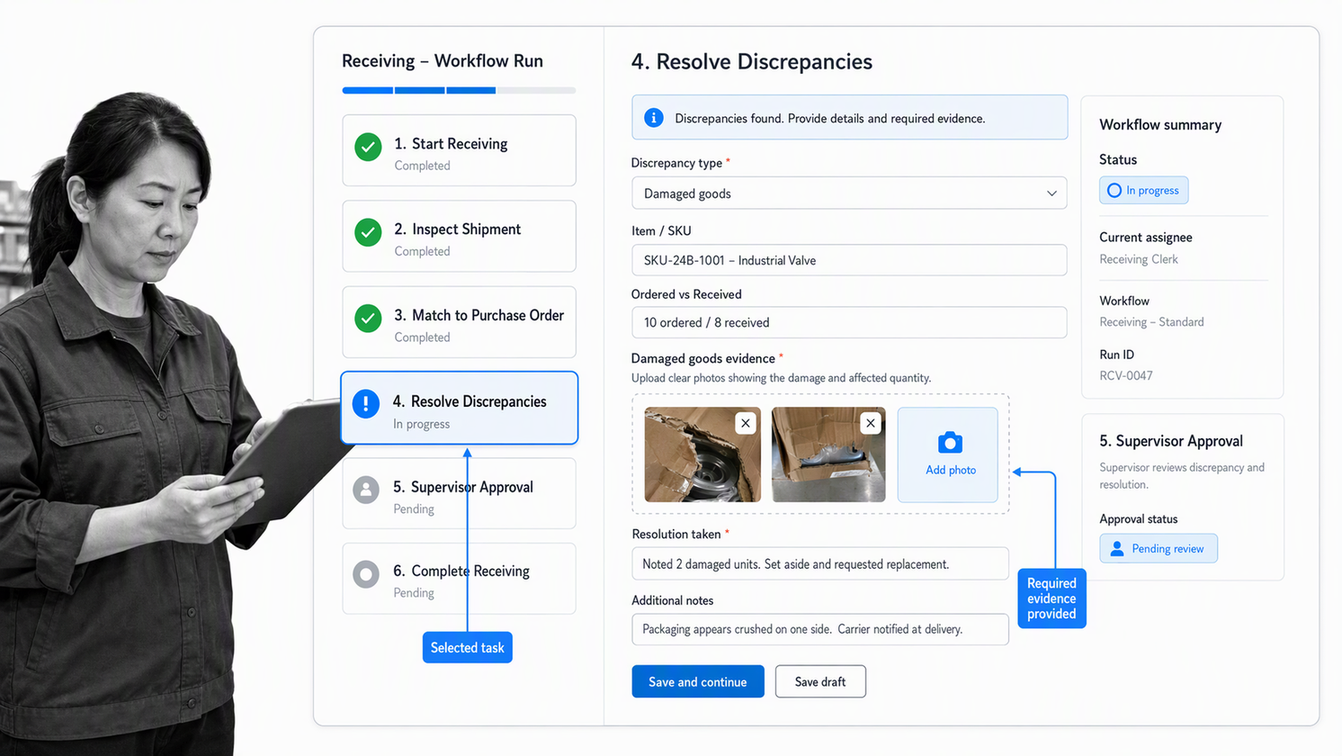
Best for: Standardizing the work around inventory records. Process Street turns receiving, cycle counts, replenishment approvals, discrepancy reviews, supplier onboarding, and recall procedures into repeatable workflows. Teams can assign tasks, capture structured data in forms, route work with conditional rules, require approvals, connect automations, and retain an audit-ready history.
Process Street is not a substitute for the SKU ledger inside a POS, ecommerce platform, or ERP. Its value is operational control: it makes sure the right person performs the right check, records evidence, and escalates an exception. That pairing is especially useful when inventory errors come from handoffs rather than missing stock features. Explore the broader workflow automation software use case for the same pattern across other recurring operations.
2. Zoho Inventory
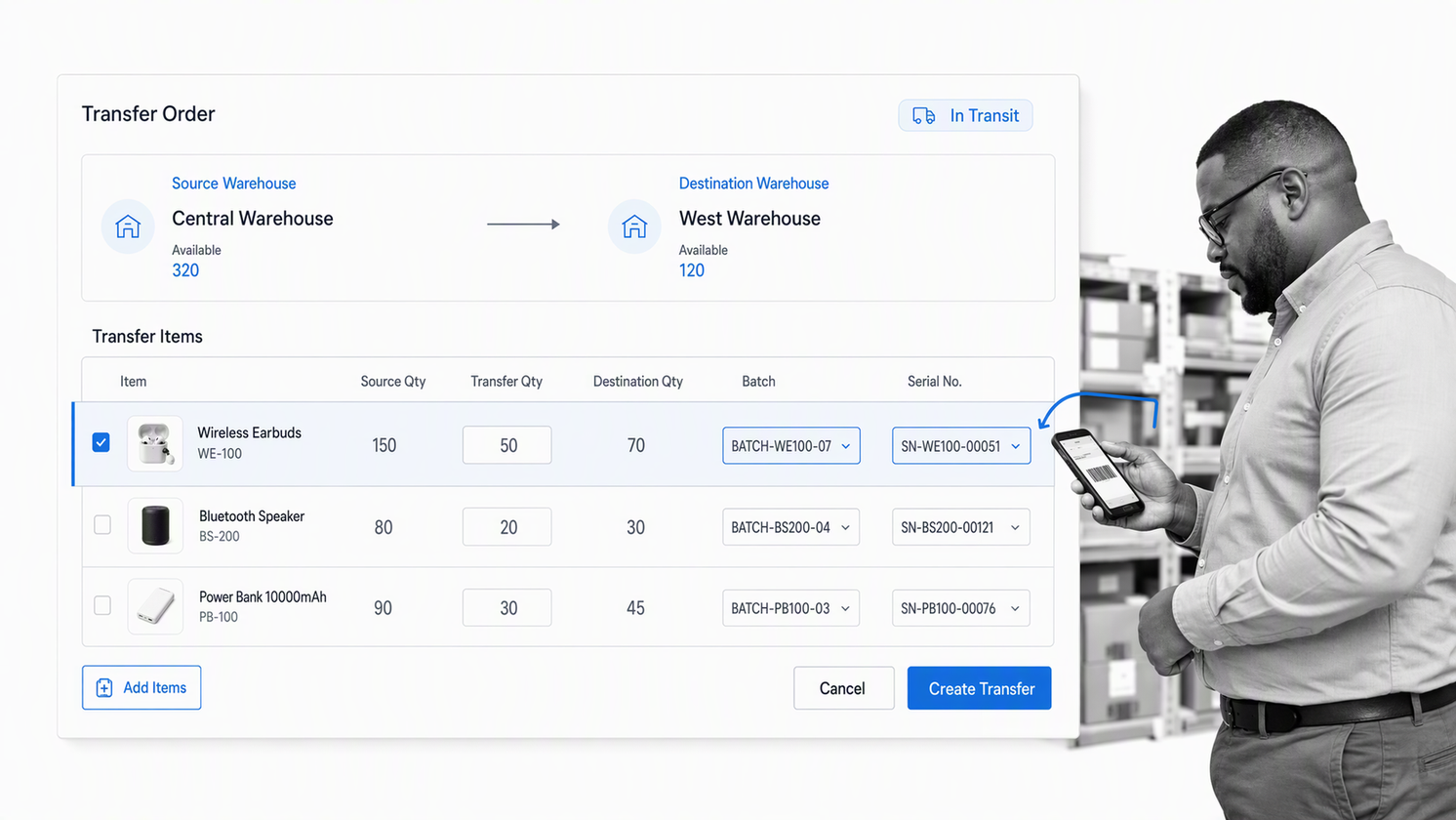
Best for: Small product businesses that need order and warehouse controls in a connected business-software environment. Zoho Inventory documents barcode support, multiple warehouses, stock transfers, and serial and batch tracking. Those capabilities make it a practical candidate when a business has moved beyond a single stockroom and needs a more controlled movement record.
Its strongest fit is a team that wants inventory to sit alongside other Zoho applications. Before committing, map the exact order sources, accounting flow, warehouse responsibilities, and reporting needs. A connected suite can reduce tool switching, but only if the business defines which application owns each record.
3. Square
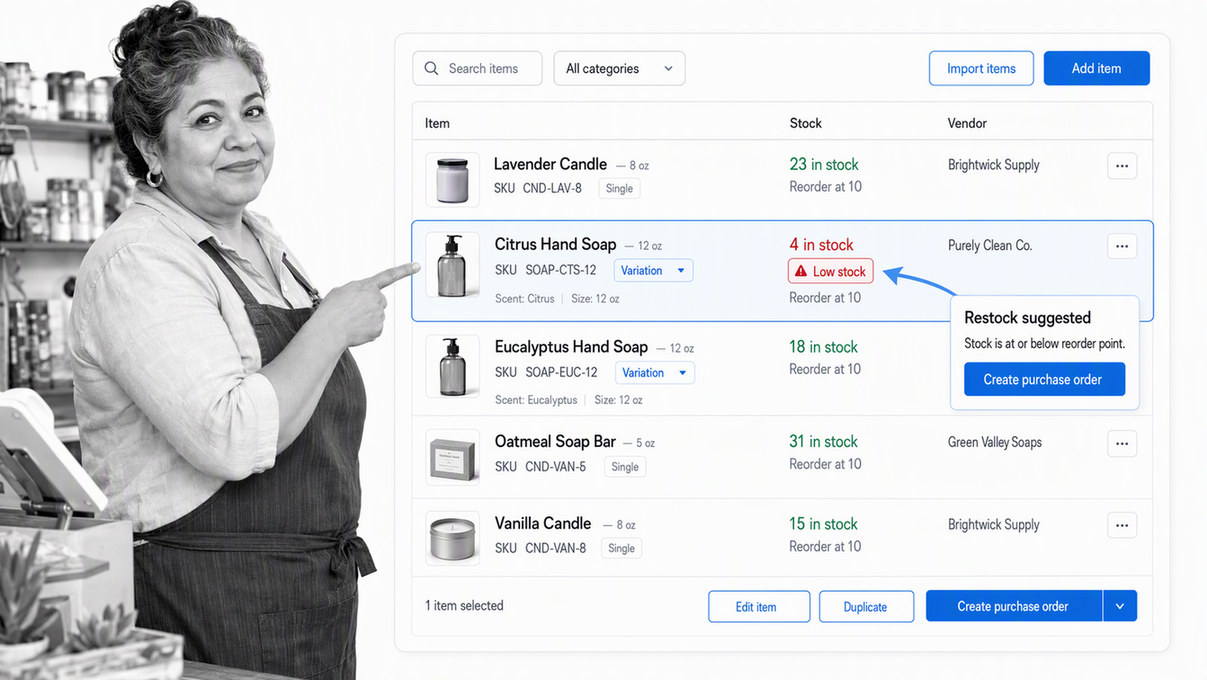
Best for: Retailers, counters, and service businesses already using Square for sales. Square’s item and inventory documentation covers a shared item catalog, stock counts, low-stock alerts, purchase orders, vendors, transfers, and synchronization between point-of-sale and online selling surfaces.
That commerce-first design can keep setup approachable for a small team. It is most compelling when sales activity should immediately inform on-hand quantities. Businesses with involved production, warehouse waves, or specialized traceability should test whether Square’s depth matches those workflows instead of choosing it solely because checkout is already familiar.
4. Shopify
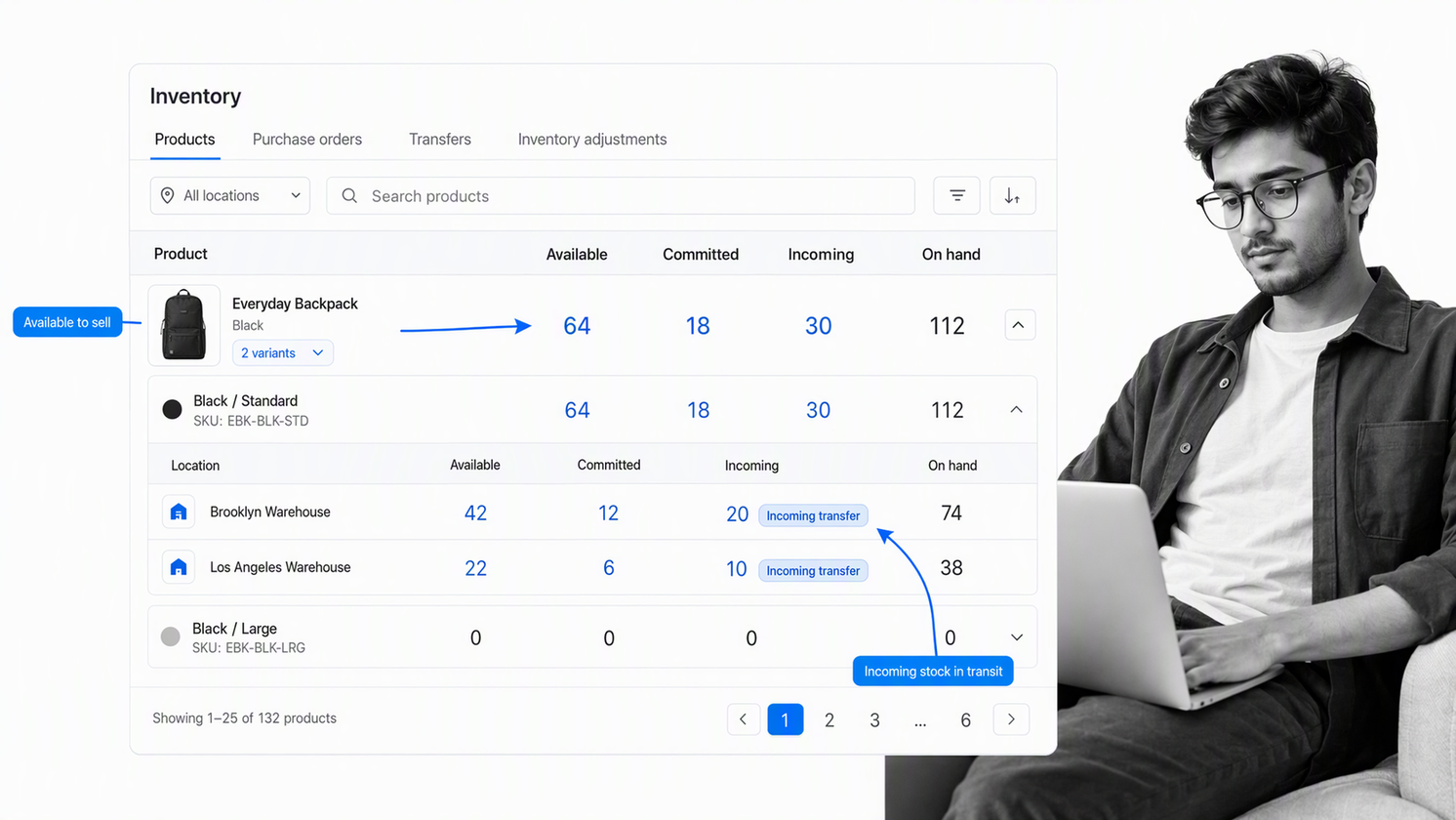
Best for: Ecommerce businesses whose products, orders, and locations already live in Shopify. Shopify supports inventory tracking, stock adjustments, inventory history, purchase orders, and transfers between locations. This makes it a natural system of record for merchants that want inventory decisions close to storefront and fulfillment activity.
The tradeoff is specialization. A Shopify-first seller may get a clean operational baseline, while a manufacturer or distributor may need deeper production or warehouse controls. Treat apps and integrations as part of the architecture: define which system calculates availability and how corrections flow back to Shopify before adding more channels.
5. Sortly
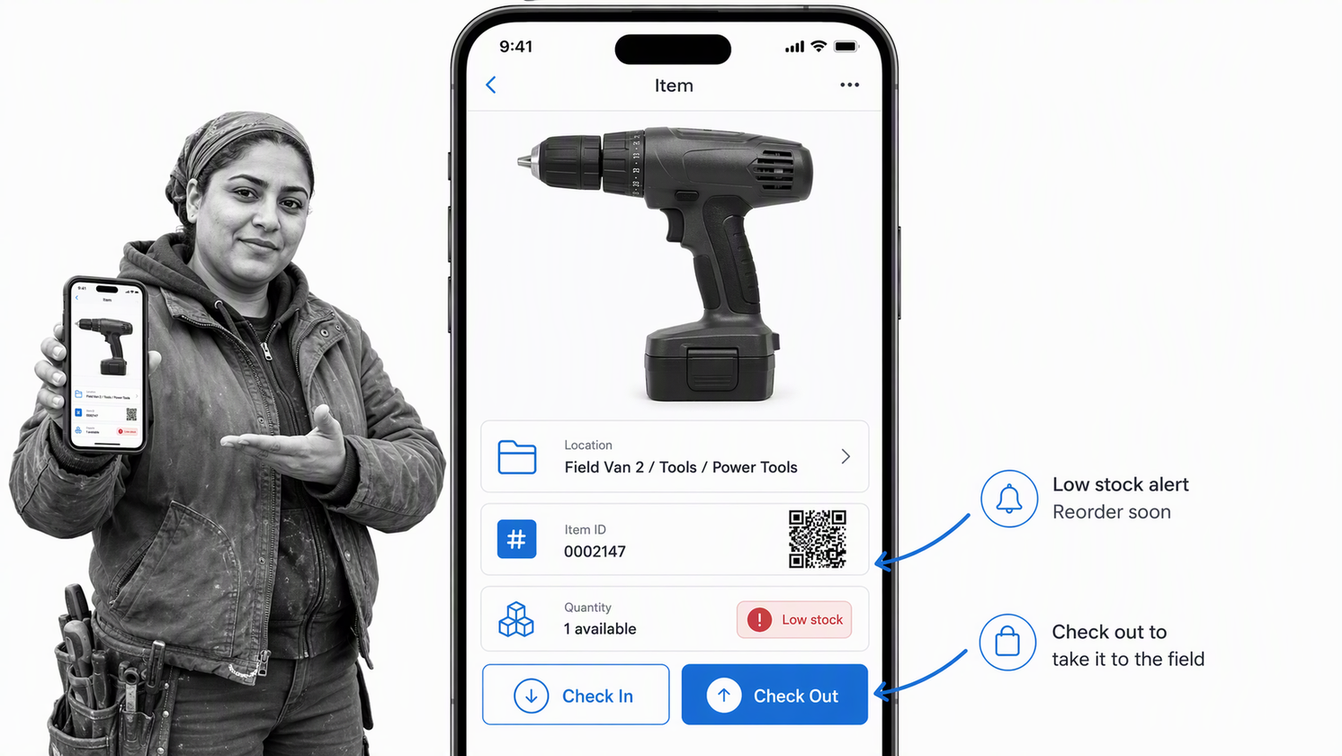
Best for: Teams that identify stock visually or work away from a fixed desk. Sortly combines item photos with barcode and QR scanning, low-stock alerts, purchase orders, and check-in or check-out activity in a mobile-friendly inventory experience. That can fit equipment rooms, supplies, job sites, and small stockrooms.
The simplicity is an advantage when adoption matters more than complex planning. It is less suited to businesses that need a full manufacturing model or advanced warehouse orchestration. During a trial, have frontline users complete real receipts, transfers, counts, and returns. The best mobile tool is the one they will use at the moment stock moves.
6. inFlow Inventory
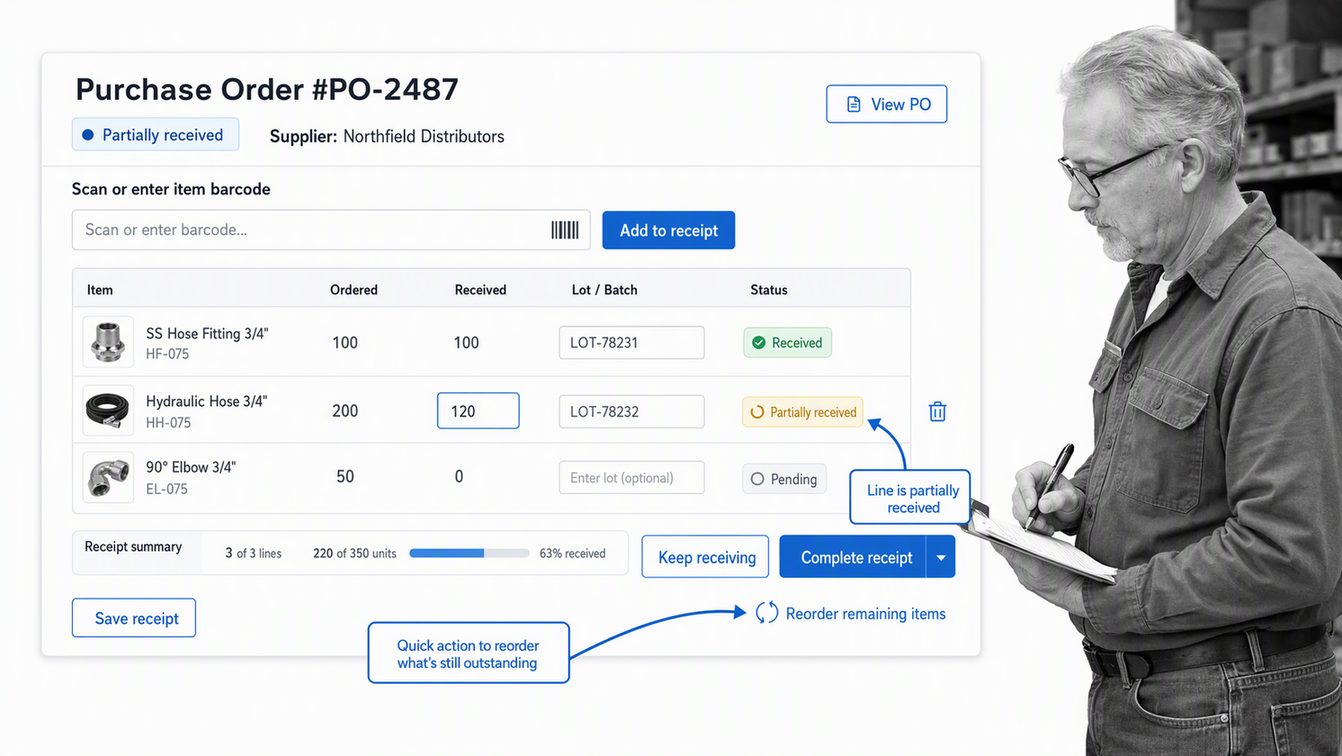
Best for: Wholesale, ecommerce, and mixed product operations that need barcode, order, and inventory workflows in one place. inFlow supports barcode label creation and scanning, inventory and order work from mobile devices, and workflows for wholesale, ecommerce, and manufacturing contexts.
This breadth makes inFlow a useful middle-ground candidate for a business outgrowing basic stock counts but not seeking a broad enterprise suite. The evaluation should still be scenario-based. Test partial receipts, backorders, damaged stock, returns, adjustments, and the accounting handoff. Those exception paths reveal more than a polished product catalog.
7. Katana
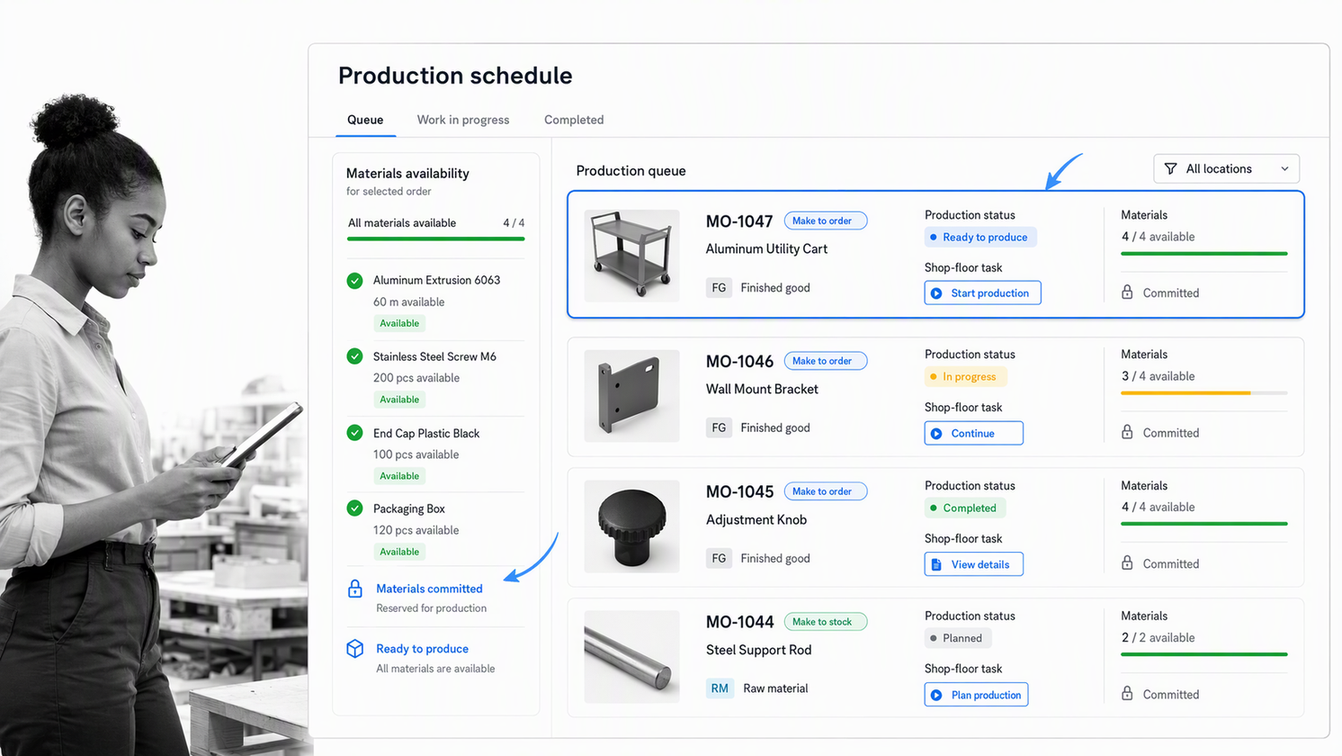
Best for: Small manufacturers that need materials and shop-floor work connected to finished goods. Katana’s product guidance describes manufacturing orders, production tasks, shop-floor execution, inventory, purchase orders, and ingredient-level visibility.
Katana is most relevant when the central question is not simply “How many units are on hand?” but “What can we make, what materials are committed, and what work is next?” A retail-only business may not need that production model. A maker or assembler should test substitutions, scrap, rework, and late supplier deliveries before selecting a system.
8. Cin7 Core
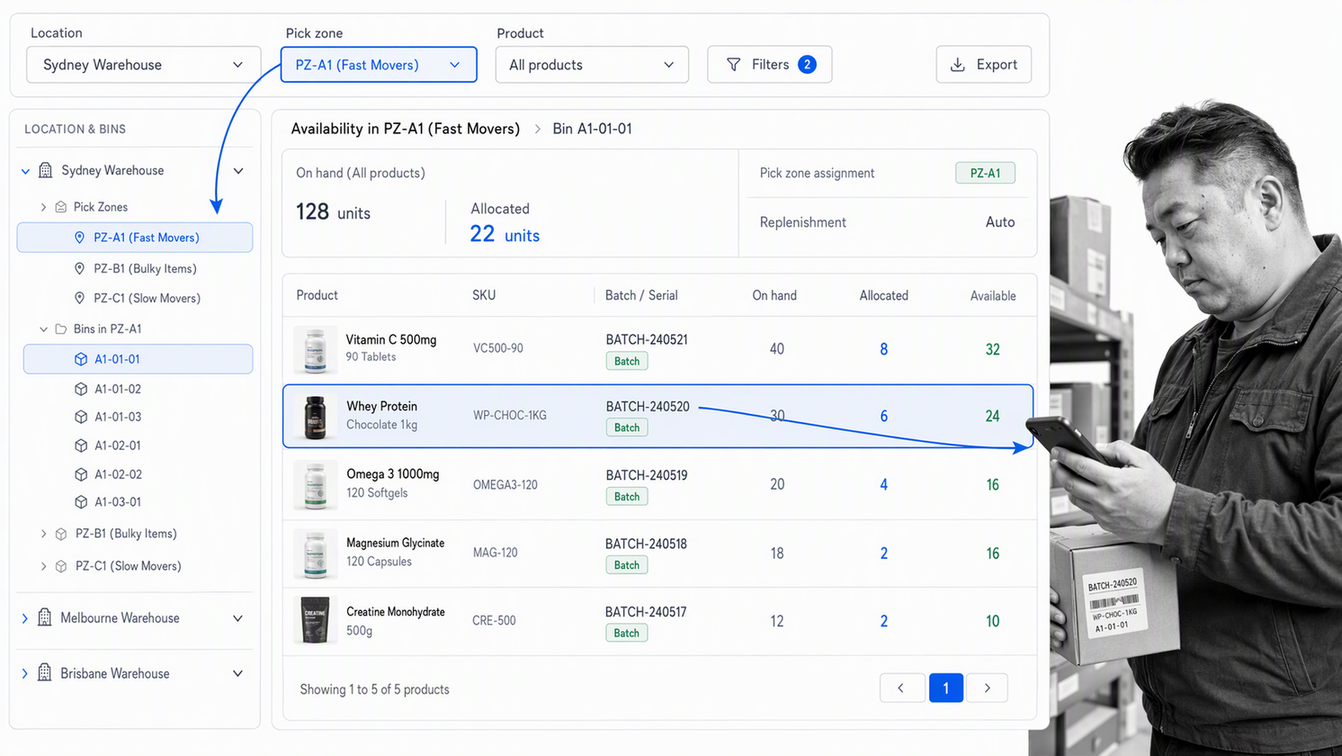
Best for: Product businesses managing multiple locations, bins, fulfillment steps, or production requirements. Cin7 Core supports location and bin structures, pick zones, stock transfers, batch and serial tracking, and optional manufacturing capabilities. That combination can suit a growing operation with more inventory structure than a storefront tool typically provides.
Capability brings setup responsibility. Name the owner for items, locations, purchasing rules, and adjustments before implementation. Otherwise, a powerful platform can reproduce the same ambiguity that existed in spreadsheets. A pilot should include one warehouse, a representative product set, and at least one full order-to-reconciliation cycle.
9. Fishbowl
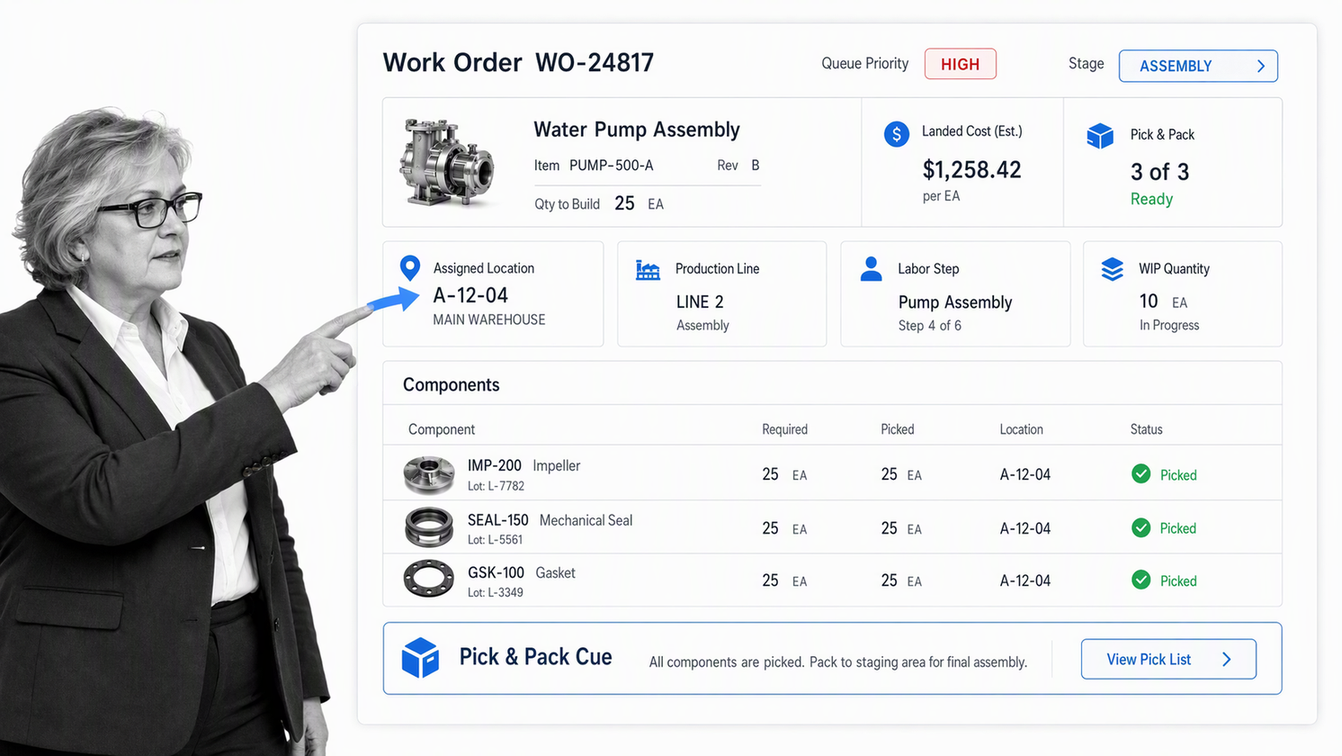
Best for: Warehouse and manufacturing teams that want inventory, order, and production functions in a dedicated operational platform. Fishbowl presents inventory management, manufacturing, warehouse management, order management, and barcode-related capabilities as central parts of its product.
Fishbowl deserves consideration when basic commerce inventory does not reflect the physical operation. The main decision is whether the business can support the implementation and ongoing data discipline. Evaluate receiving, picking, production consumption, cycle counting, returns, and finance reconciliation with the people who will perform them, not only with managers.
10. Odoo Inventory
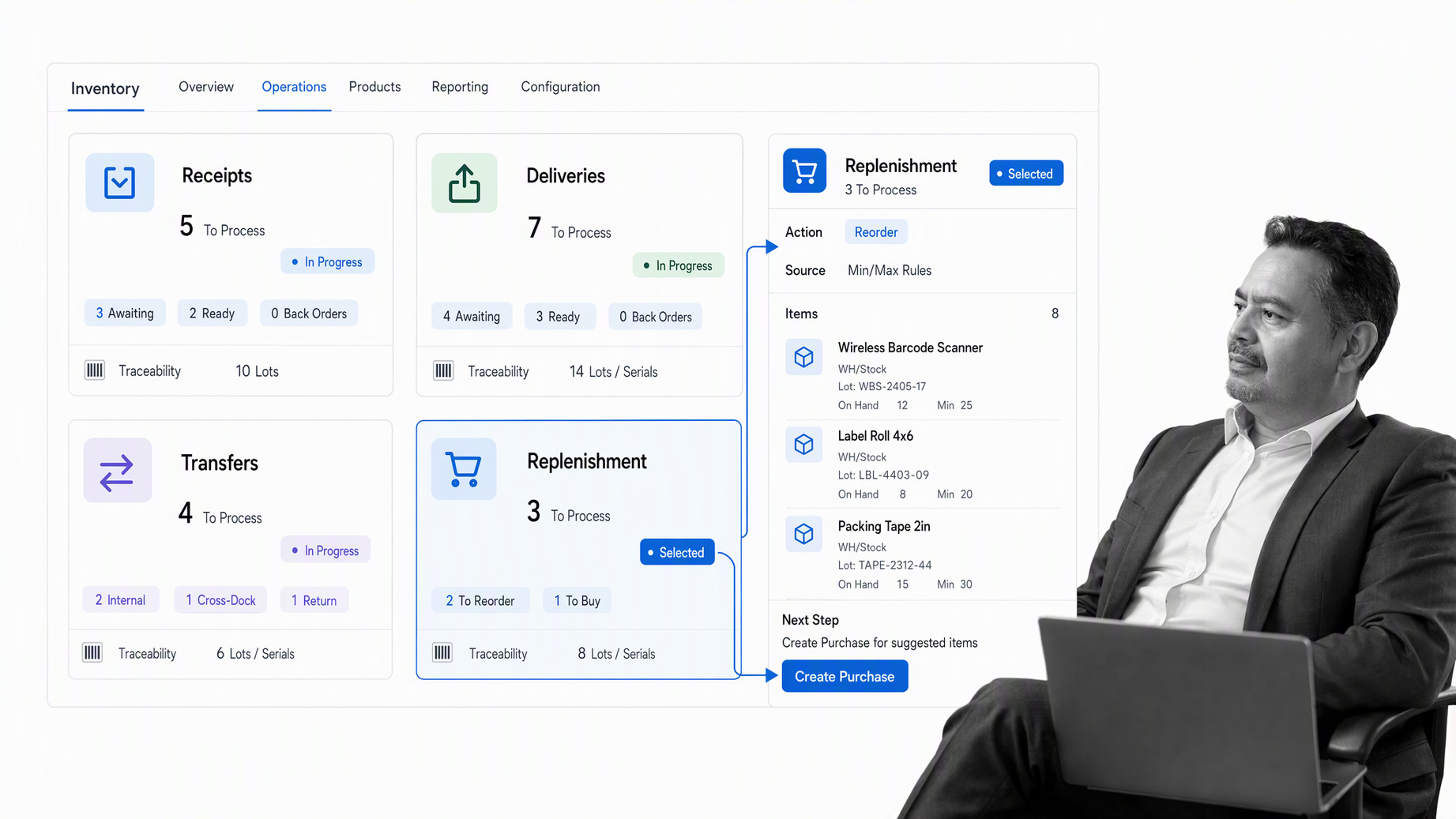
Best for: Businesses that want inventory inside a broader modular operations suite. Odoo Inventory includes replenishment, routes, locations, putaway logic, lots and serial numbers, cycle counting, barcode-supported work, and reporting, while connecting to other Odoo applications.
The modular model can reduce disconnected records, but it can also expand project scope. Start with the smallest set of applications that supports the target workflow. Define the inventory source of truth, then add adjacent functions only when ownership and data flows are clear. Configuration should follow operating policy, not substitute for it.
11. Lightspeed Retail
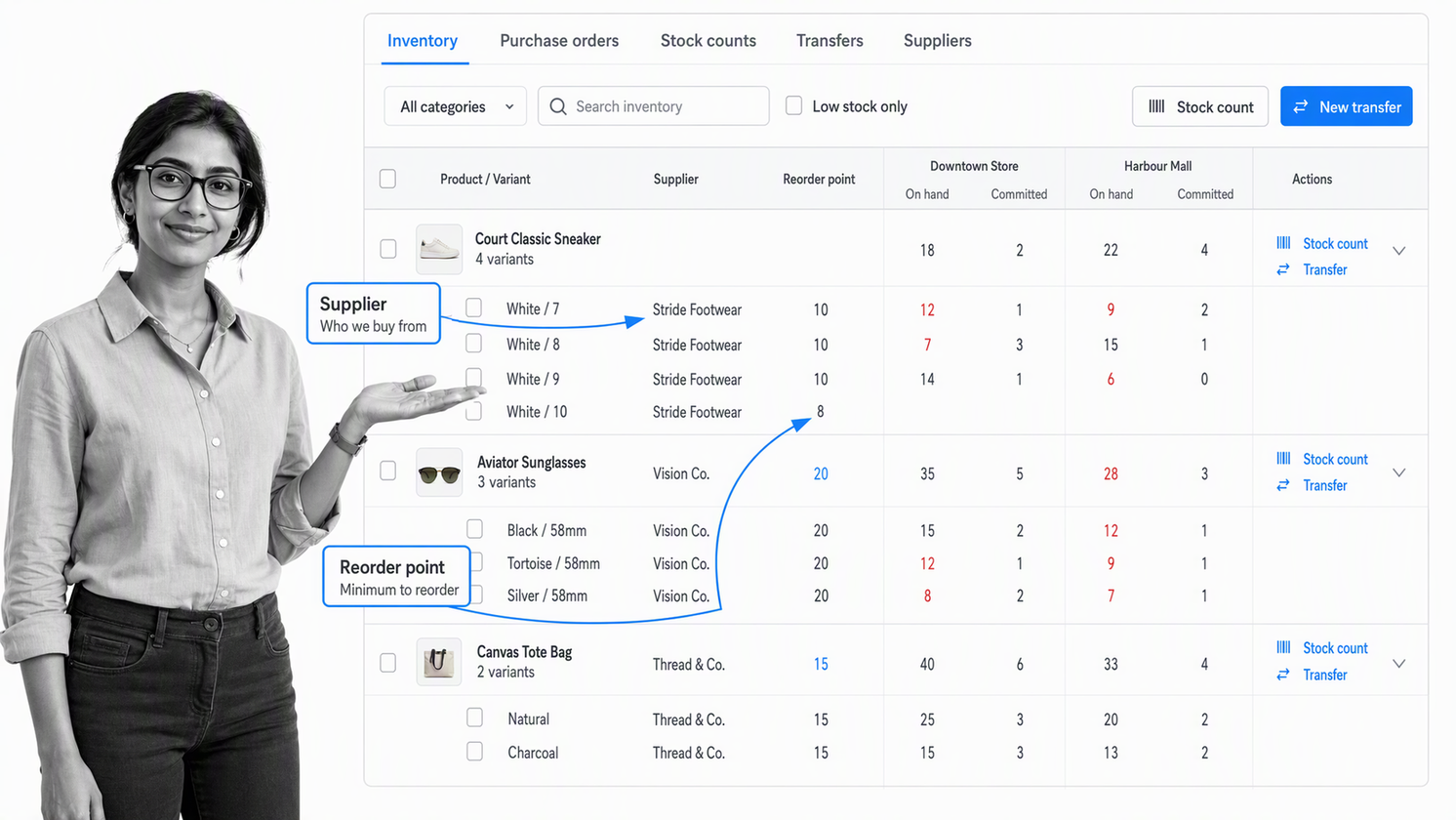
Best for: Retailers that want product catalog and inventory functions close to store sales. Lightspeed Retail supports product variants, purchase orders, stock counts, multilocation visibility, supplier records, and retail reporting in its POS-centered inventory experience.
That focus makes it a strong candidate for specialty retailers and store networks. It is not positioned around manufacturing work. During selection, test how the system handles transfers, returns, negative stock, damaged goods, and end-of-day corrections across locations. Those events determine whether reported availability stays trustworthy.
12. Unleashed
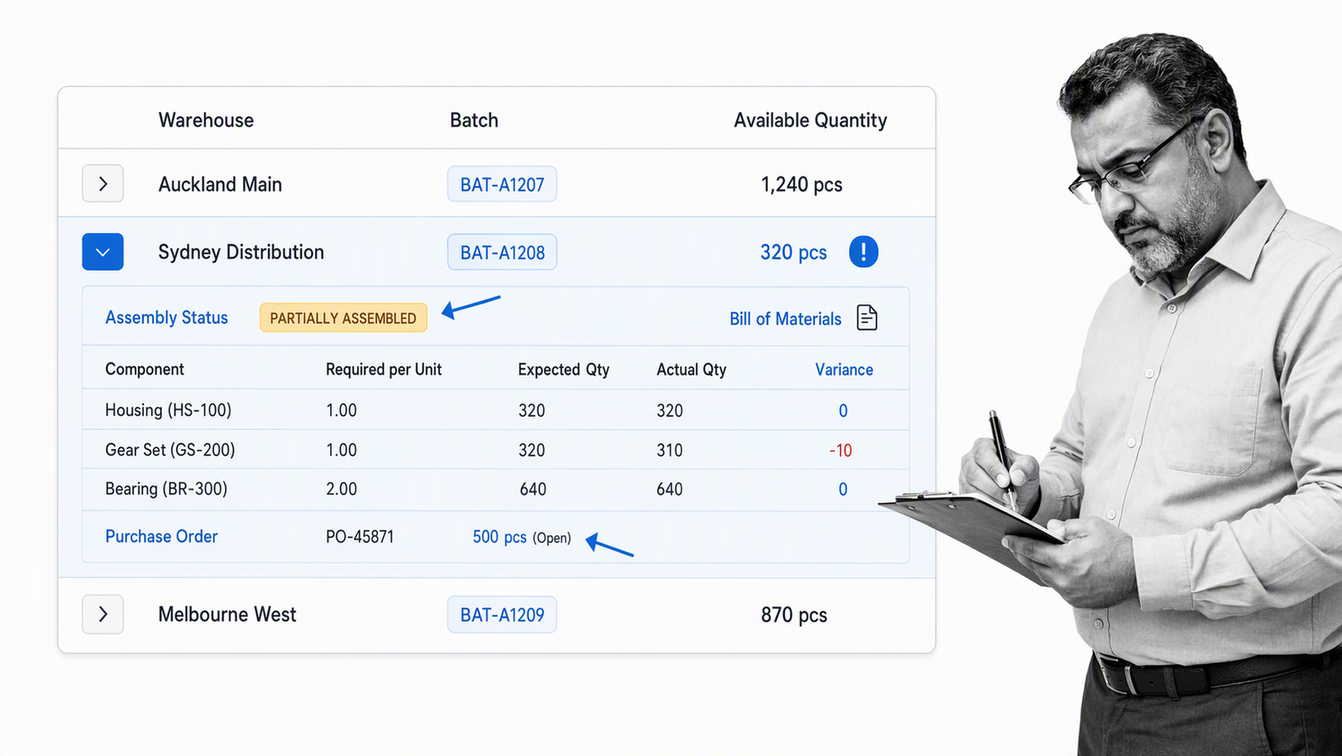
Best for: Product businesses that need detailed purchasing, production, and stock visibility. Unleashed supports product and warehouse management, purchasing, sales, batch and serial tracking, bills of materials, assemblies, stock counts, and reporting.
The breadth is relevant to wholesalers, distributors, and manufacturers with more involved inventory controls. It still needs explicit procedures for approvals and exceptions. Ask who may create items, change costs, approve adjustments, close counts, and investigate variances. Software can record the result, but governance determines whether that result is reliable.
13. Craftybase
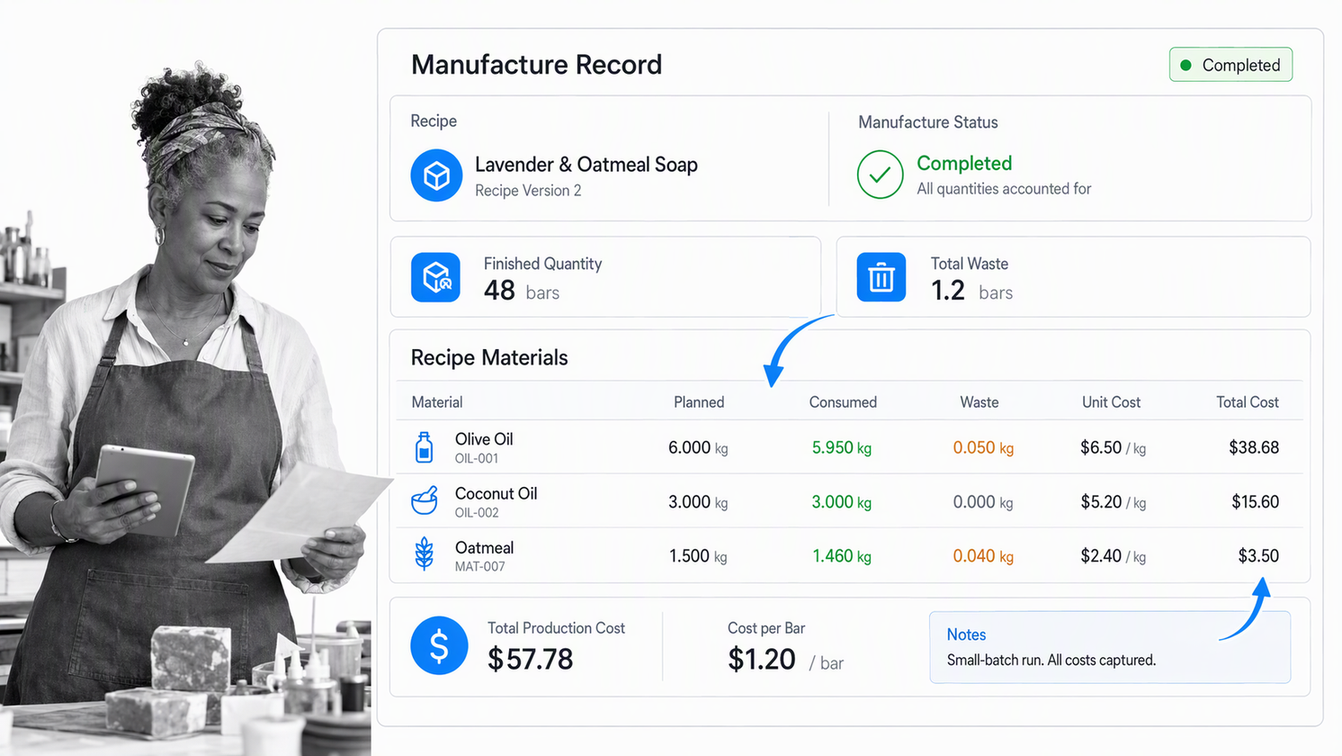
Best for: Makers and small-batch producers that need raw materials connected to finished products. Craftybase uses recipes and manufactures to consume materials, create finished stock, and calculate production-related costs. Its manufacture guidance explains the core material-to-product workflow.
This production language maps naturally to studios and handmade-goods businesses. A larger warehouse network may need a different level of fulfillment control, but a maker can benefit from seeing what went into each batch. Test real recipes, waste, packaging materials, and work-in-progress rules before migrating the full catalog.
Which inventory tool should you choose?
Choose Process Street if the biggest risk is inconsistent receiving, counting, approvals, or exception handling around your stock ledger.
Choose Square or Shopify if sales already run through that platform and you need inventory close to checkout, orders, and locations.
Choose Sortly if teams identify items visually, scan in the field, or check equipment in and out.
Choose Katana or Craftybase if raw materials, recipes, production work, or finished-goods costing drive the decision.
Choose Cin7 Core, Fishbowl, Odoo Inventory, or Unleashed when locations, warehouse controls, traceability, or production require more depth.
Choose Zoho Inventory, inFlow Inventory, or Lightspeed Retail when their connected order, stock, and channel model matches the rest of your software stack.
What is inventory management software for small businesses?
Inventory management software records what a business owns for sale or use, where it is, how much is available, and why quantities changed. Depending on the product, it may also manage purchasing, orders, warehouse movements, production consumption, replenishment, lots, serial numbers, and reporting.
For a small business, the essential distinction is between the system of record and the operating process. The system of record stores quantities and transactions. The operating process tells people how to receive, count, approve, correct, and reconcile them. Reliable inventory needs both.
Inventory also affects financial records. The IRS guidance for small businesses explains the relationship between inventory and cost of goods sold. Accounting treatment depends on the business and jurisdiction, so software selection should involve the company’s accountant when inventory valuation or tax reporting is in scope.
Core capabilities worth testing include item and location records, receiving, stock transfers, cycle counts, adjustments, purchase orders, low-stock signals, barcode support, permissions, history, imports and exports, integrations, and exception handling. Manufacturers should also test materials, bills of materials, production orders, scrap, and work in progress.
How should a small business choose inventory management software?
1. Define the operating model. List sales channels, stock locations, receiving points, fulfillment methods, production steps, and regulated traceability needs. This prevents a familiar brand name from outweighing functional fit.
2. Choose the source of truth. Decide which platform owns items, on-hand quantity, available-to-sell quantity, cost, vendor data, and order status. Every integration should have a clear direction and recovery path.
3. Score real workflows. Demonstrate receiving, transfers, partial shipments, returns, damaged stock, adjustments, cycle counts, and reconciliation. Add production and lot or serial scenarios where relevant.
4. Test controls and evidence. Confirm permissions, approval steps, change history, required fields, attachments, and exception escalation. Inventory accuracy depends on what happens when normal work breaks.
5. Pilot before migration. Use one location, one product family, and a defined success measure. Compare expected and recorded stock, count correction effort, order accuracy, and the time required to complete recurring work.
Avoid choosing from feature checklists alone. A smaller tool that matches the operating model and is used consistently can outperform a broader system that employees work around. Include frontline users, operations, finance, and the person responsible for integrations in the final decision.
How does Process Street fit with an inventory system?
Process Street coordinates the human and automated work that surrounds inventory transactions. A receiving workflow can require a purchase-order match, photos of damaged goods, lot or serial capture, quarantine routing, supervisor approval, and a final confirmation that the stock system was updated. A cycle-count workflow can assign zones, prevent skipped checks, calculate variance responses, and route high-risk differences for investigation.
The same pattern applies to low-stock review, supplier onboarding, obsolete inventory, returns, recalls, store opening and closing, and warehouse handoffs. Conditional rules adapt the steps to the item or exception, approvals enforce decision rights, and automations can pass data to connected systems.
This division of responsibility is deliberate. The inventory platform remains authoritative for quantities and transactions. Process Street becomes authoritative for how recurring work is performed, who approved it, what evidence was captured, and whether an exception was closed. That gives a small team stronger control without forcing procedural logic into notes or chat.
How can a small business implement inventory software safely?
Begin with a clean operating baseline. Assign owners for item data, locations, purchasing, adjustments, counts, and integrations. Freeze uncontrolled spreadsheet edits, remove duplicate items, standardize units of measure, and document how opening balances will be verified.
- Map: Diagram the current movement of goods and data from purchase through sale, return, or consumption.
- Configure: Create only the locations, roles, fields, and rules needed for the pilot.
- Clean: Deduplicate items, normalize identifiers, and resolve obvious negative or impossible balances.
- Rehearse: Run receipts, transfers, counts, returns, and month-end reconciliation with representative users.
- Cut over: Record the final legacy balance, import once, verify samples, and define the rollback decision.
- Stabilize: Review exceptions daily, fix the process behind repeated errors, and expand in controlled stages.
Do not measure success only by whether the software launched. Measure stock accuracy, order exceptions, count time, correction time, late replenishment, and adoption at the point of work. A useful system makes the physical reality and the recorded reality converge.
What other software guides should you compare?
Compare this shortlist with the broader best inventory software for small business and manufacturing management software guides. Teams evaluating the workflow layer can also review Flowster alternatives and Next Matter alternatives.
Frequently asked questions
What is the best inventory management software for a very small business?
The best option is the smallest system that reliably supports the business’s sales channel, locations, purchasing, and count process. Square or Shopify can fit commerce-first businesses, Sortly can fit visual mobile tracking, and Craftybase can fit makers. Test real exceptions before deciding.
How much inventory software does a small business need?
Use enough structure to maintain trustworthy item, location, and movement records without adding workflows the team cannot sustain. A single-location seller may need basic stock and purchasing controls, while manufacturers and multilocation businesses usually need deeper traceability.
Can inventory software replace spreadsheets?
It can replace spreadsheets as the primary stock ledger when it supports the required transactions and integrations. Spreadsheets may remain useful for analysis, but allowing multiple editable quantity sources creates reconciliation risk.
How does inventory software connect to accounting and ecommerce systems?
Connections typically exchange item, order, purchase, cost, and quantity data. The important design decision is ownership: define which system creates each record, which direction data moves, and how failed or duplicate synchronization is corrected.
What is the difference between inventory software and warehouse management software?
Inventory software focuses on item quantities, movements, purchasing, and availability. Warehouse management software goes deeper into physical fulfillment, such as bins, putaway, picking, packing, and labor-directed work. Some products combine both layers.
Is free inventory management software enough for a small business?
A free tier can be enough for a simple catalog and one-location operation, but limits on users, locations, orders, alerts, or traceability may appear quickly. Test the full receiving, counting, adjustment, and reporting workflow before relying on a free plan.
How long does inventory software implementation take?
Implementation depends on catalog quality, locations, integrations, and process complexity. A small business should pilot one location and one product family first, verify opening balances and exception handling, then expand only after the records match physical stock.