





This article was originally contributed by Shayla Price.
SaaS customer experience is the full path a customer takes from the first promise to the renewal decision. It includes the content they read, the support they receive, the community they trust, and the operational follow through that proves your product is worth keeping.
If your SaaS is failing to create an awesome customer experience, the problem is rarely one bad touchpoint. It is usually a broken system: education lives in one place, support in another, feedback disappears into a spreadsheet, and renewal risk shows up only after the customer is already halfway gone.
Current customer experience research keeps pointing to the same operational lesson. Verint reported that 79% of surveyed consumers would switch to a competitor after a single negative experience, and Medallia found that many teams collect more signals than ever while 30% to 40% of departments still fail to act on critical customer insight.
The customer experience is not a single campaign. It is the practical commitment to understanding how your product positively impacts the lives of your users, then actively seeking opportunities to maximize those benefits across the relationship.
That is why SaaS customer experience needs more than good intentions. It needs repeatable workflows for education, support, community, and renewal.
No Informative Content
Customers do not want to be sold to every time they look for help. They want useful content that explains the problem, shows the next step, and helps them get value from the product without waiting for a call.
This is where many SaaS teams still fall short. They publish feature announcements, generic blog posts, and scattered help articles, but they do not build a complete education path around the customer journey. A new user needs onboarding content. A power user needs advanced workflows. A buyer needs examples, proof, and implementation detail. A stuck customer needs the fastest route to a clear answer.
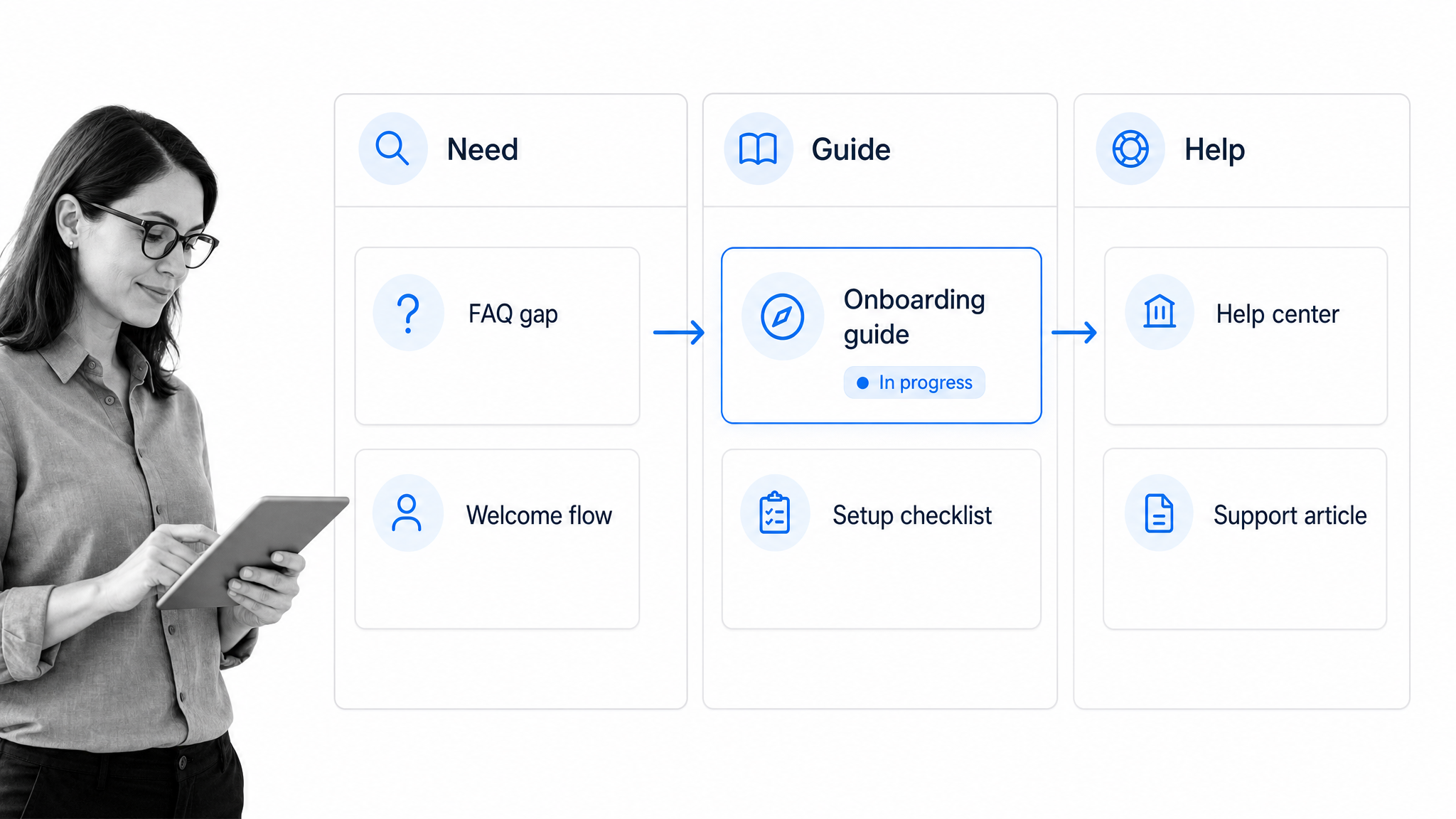
The best SaaS content works like a product layer. It teaches users how to solve real problems, not just how to click through your interface. Build resources for the jobs customers are trying to complete: onboarding checklists, implementation guides, customer education webinars, knowledge base articles, and practical templates.
Process helps here because content gaps are usually workflow gaps. Use customer research to identify the questions people ask before purchase, during setup, after handoff, and before renewal. Then assign owners, review cycles, and update triggers so the content stays useful instead of becoming a stale archive.
Today’s consumers are smart. They research products online, ask their friends, and compare multiple options before making a purchase. Some customers even abandon their shopping carts if all their needs are not met, which is why informative content still matters.
Educate your consumer not only about your products, but also about their concerns. Focus on the details that persuade them to purchase today, not tomorrow. Create webinars addressing your customers’ most challenging issues. Develop checklists to guide users through a difficult process. Your team may even want to write an ebook showing customers how to obtain a specific result.
Think of content as an educational tool. The key is to become a trusted resource for your customers, because the customer experience relies on your SaaS company’s ability to educate, not sell.
The customer experience relies on your SaaS team educating, not just announcing. Informative content gives customers confidence before they have to ask for help.
No Real Support
Your SaaS will never be perfect. Bugs happen. Confusing setup steps happen. Billing questions, permissions issues, data imports, handoffs, and edge cases all happen. What matters is whether customers can trust your team to resolve the problem quickly and clearly.
Fast support is no longer just a nice service layer. In Verint’s 2026 customer experience survey, 78% of customers prioritized the fastest resolution over using their preferred channel. Customers do not care whether the answer comes from AI, live chat, email, or a human agent if the issue is resolved and the handoff is smooth.
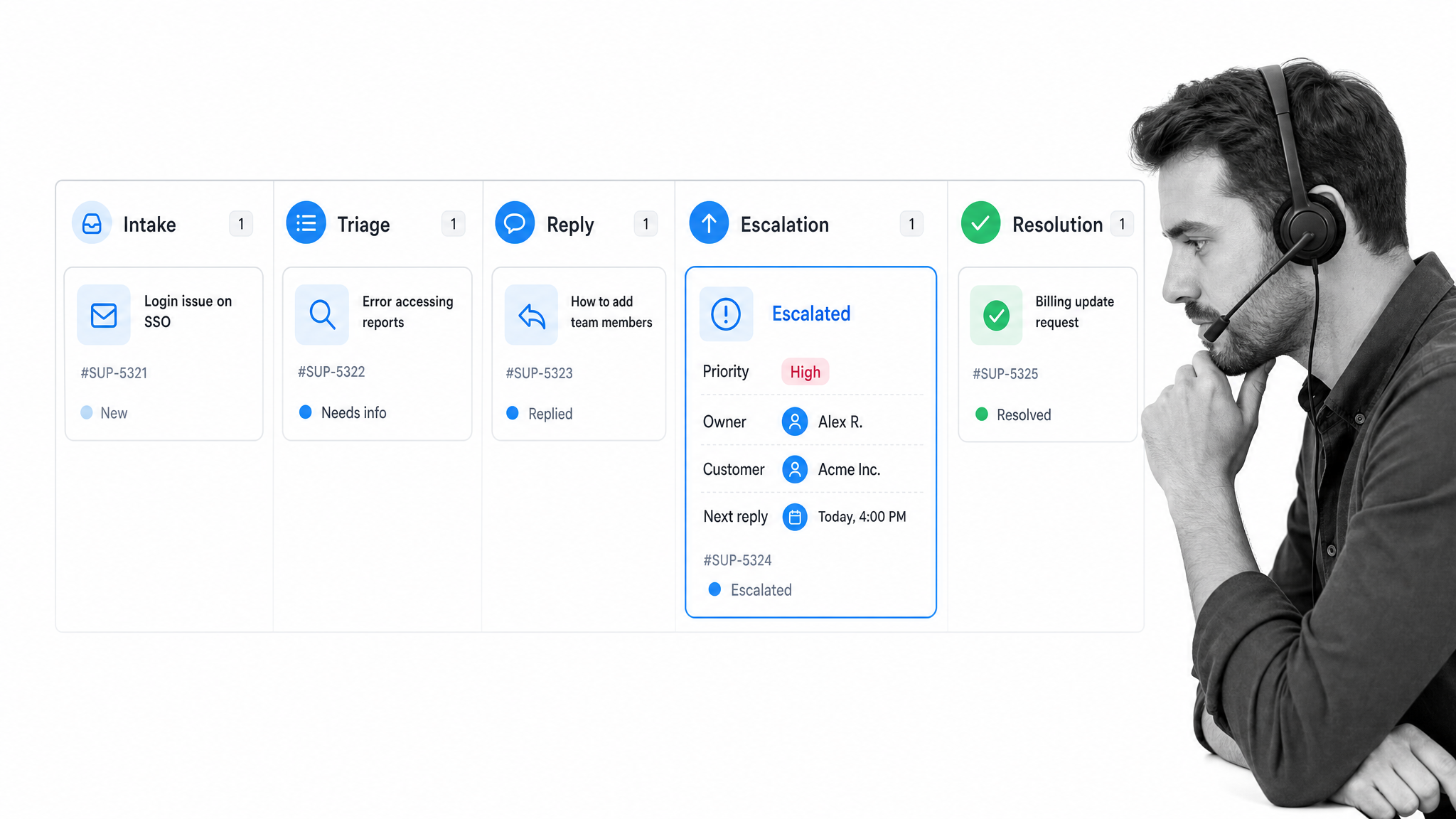
Real support is a system. It starts with clear intake, routes issues by urgency, assigns owners, tracks SLA risk, escalates without guesswork, and closes the loop with the customer. AI can help triage and summarize, but it cannot become a wall between the customer and a real resolution.
Consider using live chat. It is an effective way to talk directly with the customer and solve problems immediately. Social support can still help too when your team specifies when it is available, responds promptly, publicly acknowledges concerns, and then moves sensitive details to a private setting.
Document your support process so every rep knows what happens when an issue comes in. Decide which questions can be answered by self service, which need a support workflow, which require engineering, and which should trigger customer success outreach. A customer support process should make the next action obvious instead of leaving people to hunt through inboxes and chat threads.
Will you ignore the problem and conduct business as usual? Or will you solve the customer’s concerns with diligence? The answer defines how customers remember your SaaS long after the ticket closes.
Train your online customer reps to be polite, quick, and solution oriented. It is no different than in person service. They should be able to share meaningful insights, resources, and benefits about the brand or service being discussed.
Customers forgive honest mistakes faster than they forgive silence. The customer experience includes the quality of the recovery.
No Community
Customers want to learn from people who have solved similar problems. A useful community gives them that peer layer: examples, workarounds, use cases, implementation patterns, and honest answers that do not always fit inside official documentation.
Research, support conversations, and community feedback all show the same thing: the human connection is often what is missing. Customers may depend on email, chat, and social channels, but they still want to feel heard by a person who understands their issue.
The community does not have to be a giant public forum. It can be a customer advisory group, a private Slack or Circle space, office hours, a webinar series, a template gallery, or structured feedback sessions. What matters is that the conversation becomes part of how your team improves the product and the experience.
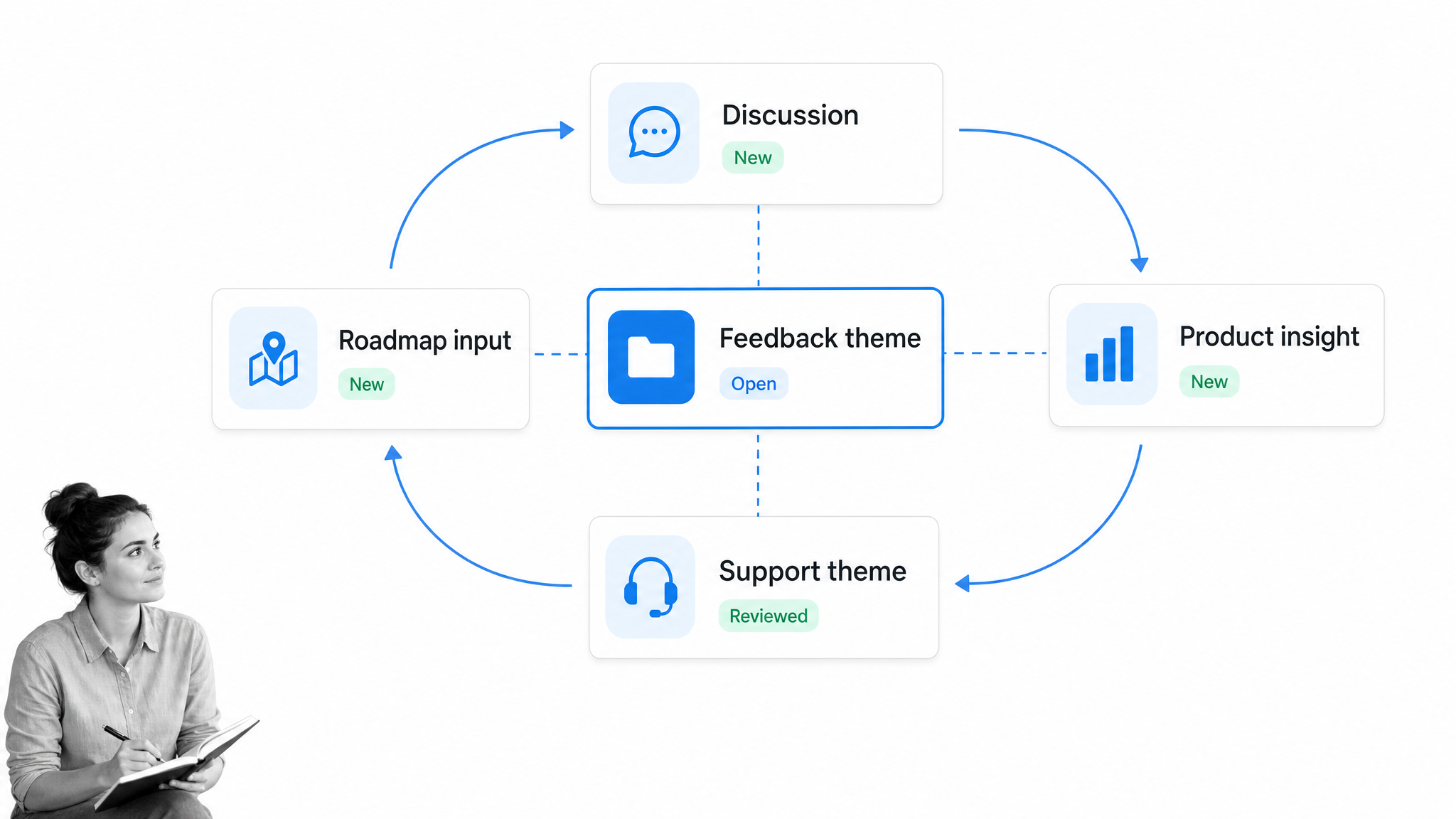
A community also helps customer research. Support tickets tell you where customers are blocked. Community conversations tell you how they describe the problem, which workarounds they trust, and where your product story is unclear. That signal can guide product education, onboarding, and your broader customer engagement software stack.
The mistake is treating community as a marketing channel only. In SaaS, community should feed customer success, product, support, and retention. If customers keep solving the same issue for each other, that is a sign your documentation or workflow needs work. If customers share advanced use cases, that is a sign your education path can go deeper.
Your customers want to talk to people, not businesses. Build a community around your brand and allow your team to talk directly to customers. Developing communities also helps your SaaS with customer research because it is effective for collecting and analyzing feedback.
Take the customer experience to the next level by developing a community that helps users learn, share experiences, ask questions, and hear from others who have already solved the same problem.
Community turns customer experience from a set of private tickets into a shared learning loop.
No Reason to Renew
Customer retention is the lifeblood of SaaS companies. But renewal does not begin when the contract is about to expire. It begins when the customer first decides whether your product is part of their daily operating rhythm.
A renewal reason is not a discount, a podcast, or a last minute customer success call. It is repeated value. Customers renew when your product helps them finish important work, makes the team more consistent, reduces friction, and keeps proving its place in the business.
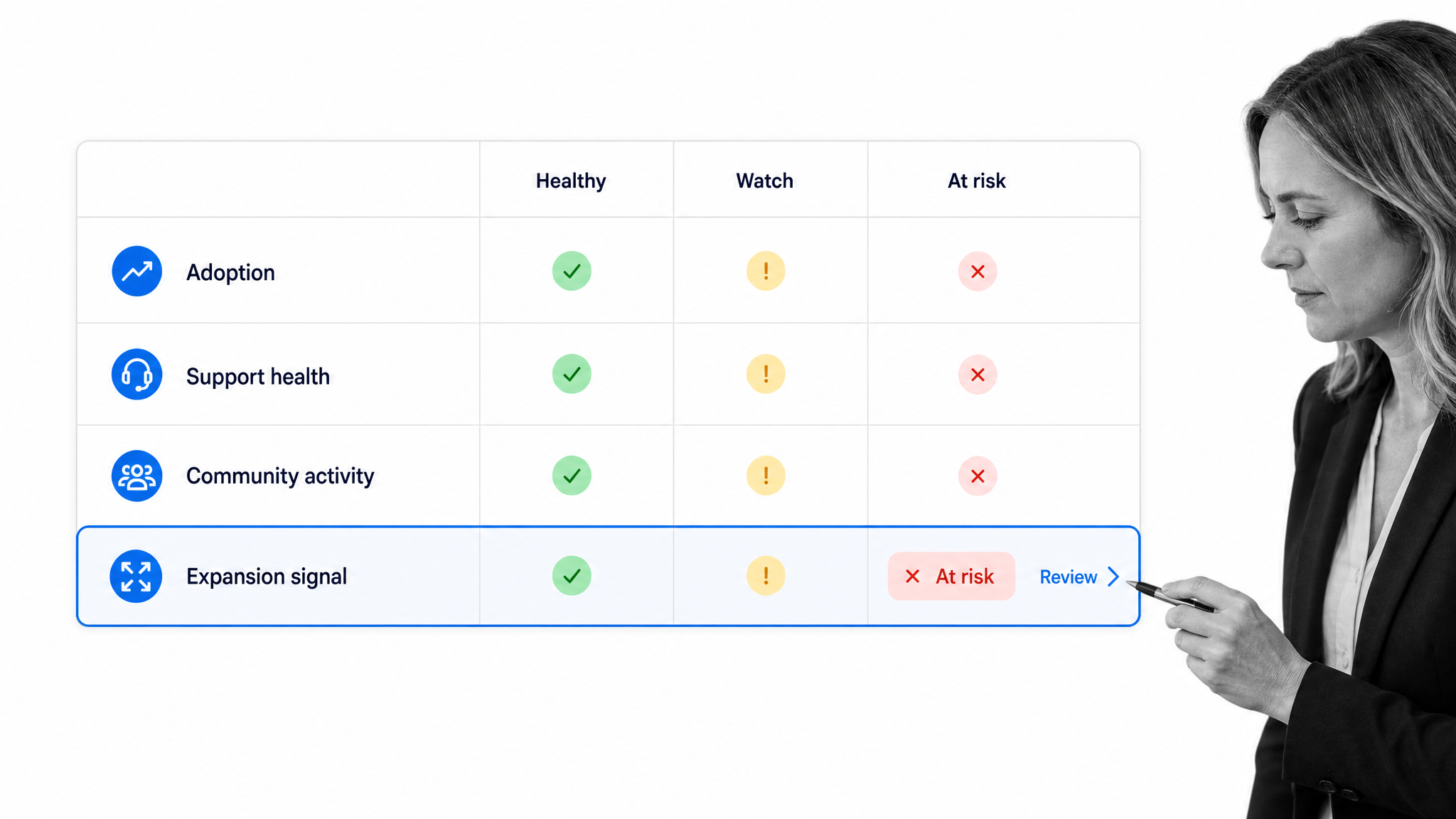
That means your team needs to track more than login activity. Watch time to value, feature adoption depth, unresolved support themes, stakeholder engagement, community participation, and workflow completion. A customer can be active and still be at risk if the activity is not connected to a business outcome.
Build retention into the experience itself. Trigger check ins when usage drops. Route expansion signals to the right owner. Turn repeated support themes into education. Use customer health data to start the right workflow before the renewal conversation becomes defensive.
Engage your customers with more benefits. For instance, develop a new product feature, establish a loyalty program, or create an ambassador program that gives customers useful access, recognition, or education. Anything from a practical customer session to a meeting with your SaaS founder can work, as long as what you offer is a real need or want of your customer.
Improve customer retention by building value into customers’ daily routine. Use habit forming tactics to drive repeated interaction and add value to keep customers coming back for more.
Do not be a one hit wonder. Give customers a reason to come back because the product keeps helping them do real work better.
SaaS Success
Your product is not enough. The customer experience will differentiate your SaaS from the competition only when the work behind that experience is consistent.
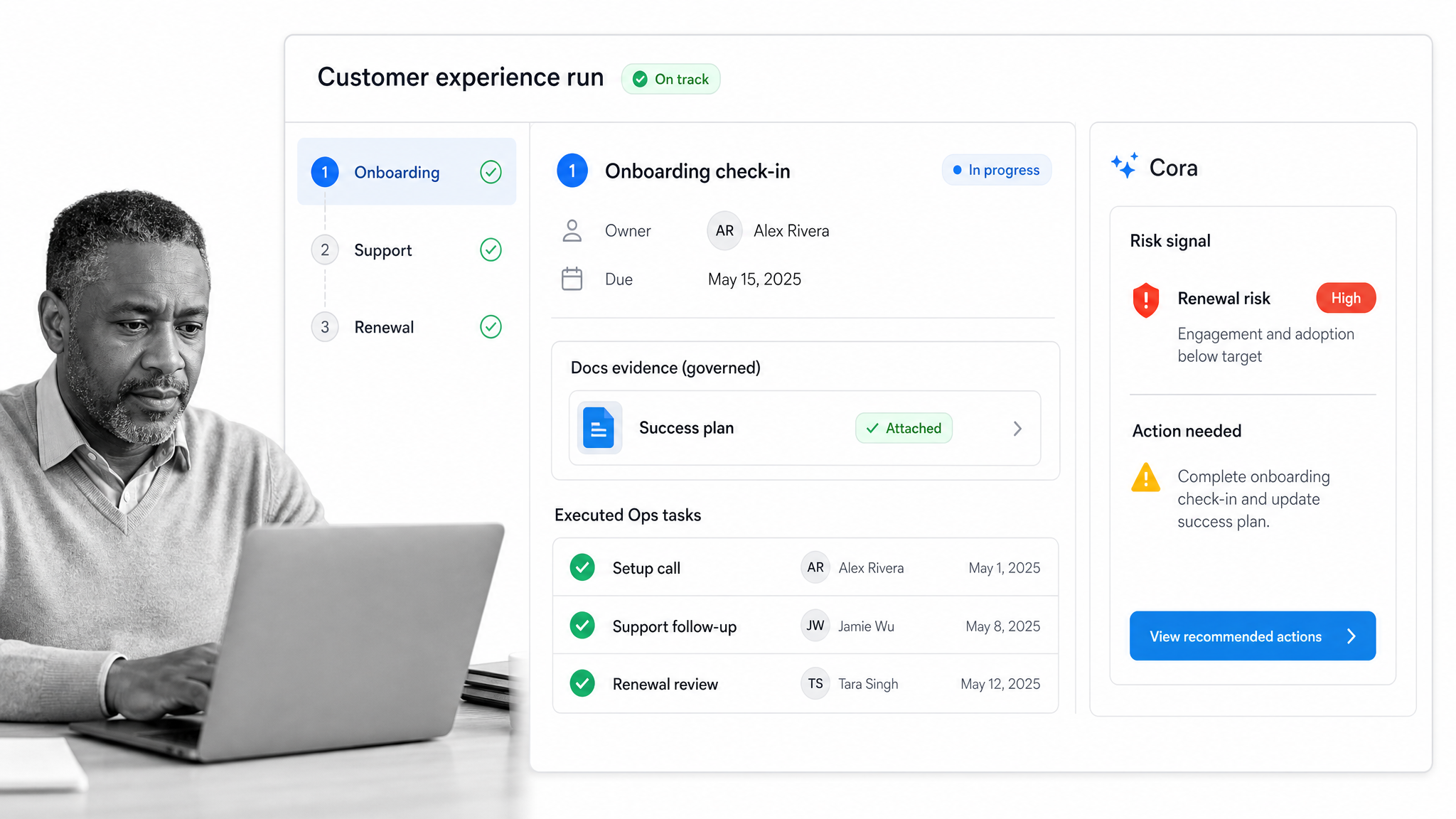
That is where Process Street fits. Process Street is a Compliance Operations Platform that brings Docs, Ops, and Cora together so customer facing processes do not live in scattered docs, inboxes, and tribal memory. Docs gives teams governed procedures. Ops turns those procedures into workflows people actually run. Cora monitors the work, flags risk, and helps teams improve the process before customers feel the breakdown.
For SaaS teams, that means onboarding handoffs, support escalations, customer education updates, feedback loops, and renewal workflows can all run from one operating system. The result is a customer experience your team can execute, measure, and improve.
Educate your customers. Support them when things break. Give them a community. Keep proving value before renewal. That is how a SaaS company stops failing the customer experience and starts earning loyalty.