



Business systemization is the practice of turning recurring work into documented, repeatable processes with clear owners, triggers, inputs, outputs, and exception paths. It helps a small business deliver consistent results without requiring the owner to solve every problem personally.
To automate like McDonalds, start with standard work: define the reliable path, train people to follow it, measure the result, and improve the system when reality changes. Automation can then handle deterministic handoffs while people focus on judgment, customers, and exceptions.
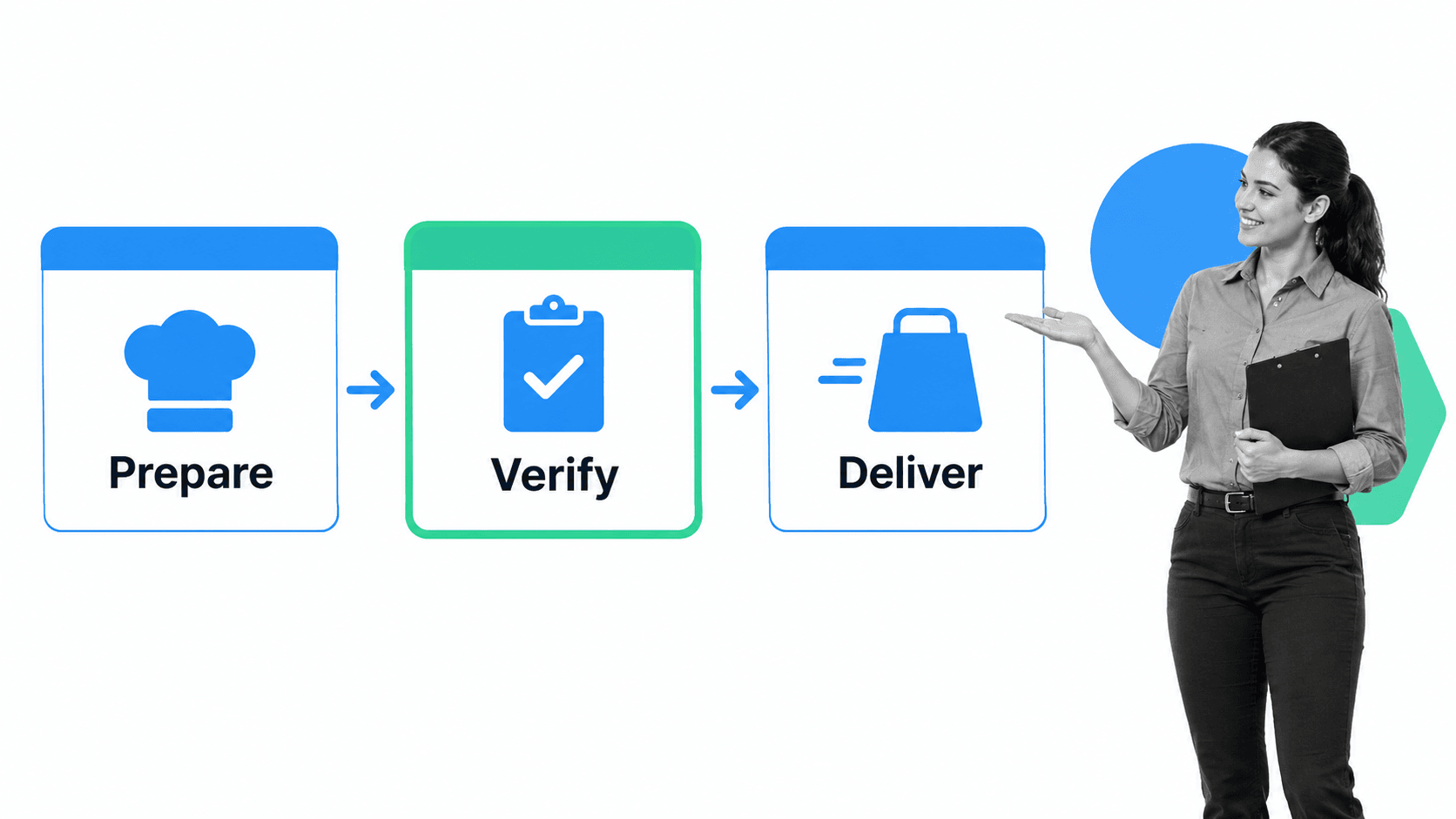
Systems are everywhere
Speaking generally, a system can be described as anything that follows rules and defined, repeating patterns. Systems can be natural or mechanical, simple or complex. A useful business system works the same way: it turns recurring work into a clear pattern that people can understand, follow, and improve.
Creative, dynamic people are often loath to embrace the concept of systemisation because they think it is going to limit or confine them. Good systems do the opposite. They handle the predictable work and allow the mind to be free, knowing that the business is under control. In practical terms, a business system is a recorded process for a task that has to be completed repeatedly, such as dealing with creditors and debtors, rewarding staff performance, onboarding employees, or responding to a complaint.
McDonald’s is a useful example because consistency is designed into the operating model. Its franchise training combines restaurant experience, structured learning, and a shared playbook. The point is not to copy a restaurant line. It is to design standard work that helps different people produce a dependable result in different locations.
Introduction to systems thinking
The theory of business systemisation
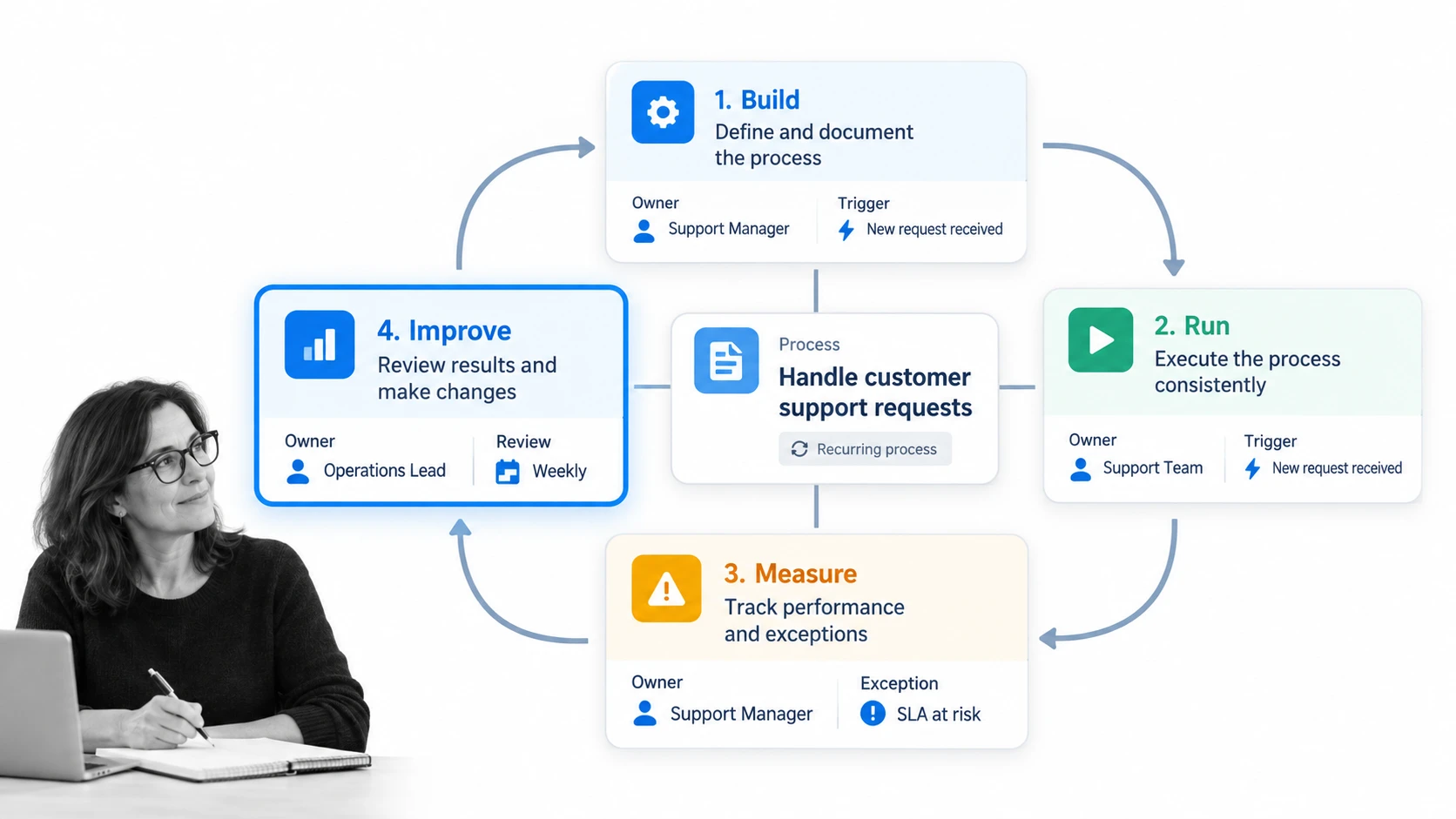
Business systemisation is the discipline of improving the systems already in place and creating systems where recurring work still depends on memory or improvisation. Start by identifying the major processes in the company. For each one, define the trigger, owner, inputs, sequence, decision rules, expected output, evidence, and exception path. That creates a real operating system for the business, not a document that sits unread in a folder.
An operations manual still matters, but documentation must stay connected to execution. Static Word files and hard-copy manuals cannot assign work, enforce approvals, capture evidence, or show whether a procedure was followed. A working system should make the next step obvious, route deterministic handoffs automatically, and bring people in when judgment is required.
Process Street is a single Compliance Operations Platform for governing and running this work. Docs capabilities keep policies and procedures controlled, current, and approved. Ops capabilities turn those standards into repeatable workflows with owners, due dates, approvals, evidence, and audit trails. Built-in AI helps teams create, monitor, and improve processes while the workflow remains the control surface for execution.
Systemisation is an ongoing practice. Review each process when the business grows, a customer requirement changes, a new risk appears, or technology changes how the work should be done. The best systems make change manageable because the current procedure, execution history, and improvement loop are visible in one place.
The benefits of systemisation
The number one benefit of creating systems in your business is that a solved problem stays solved. A defined process saves time by providing a reliable solution to situations the team has dealt with previously. It allows other workers to follow the same procedure you would use to solve a problem, frees the manager from becoming the only path to an answer, and makes employees more productive.
Systemisation facilitates consistency and standardisation throughout the company. It greatly enhances the training and skilling of new staff, while preserving institutional knowledge in case of a sudden departure by an experienced employee. New staff can learn the expected sequence, experienced staff can see where judgment is required, and managers can update one controlled process instead of correcting the same mistake repeatedly.
Repeatable processes make scale safer. More volume does not have to mean more confusion, and adding a location, team, or customer segment does not require reinventing the operating model. Strong systems can improve efficiency, reduce owner dependency, and make the business easier to evaluate because its performance does not rest on undocumented heroics.
How to systemize your business
Begin with one recurring process that is frequent, consequential, and currently inconsistent. Do not start by documenting the entire company. Choose a workflow where missed steps create delays, customer friction, rework, or compliance risk, then build a complete loop around that work.
- Map the current path. Observe how the work actually moves today. Record the trigger, inputs, major steps, decisions, handoffs, outputs, and known exceptions. Separate the reliable path from workarounds that exist only because the current system is unclear.
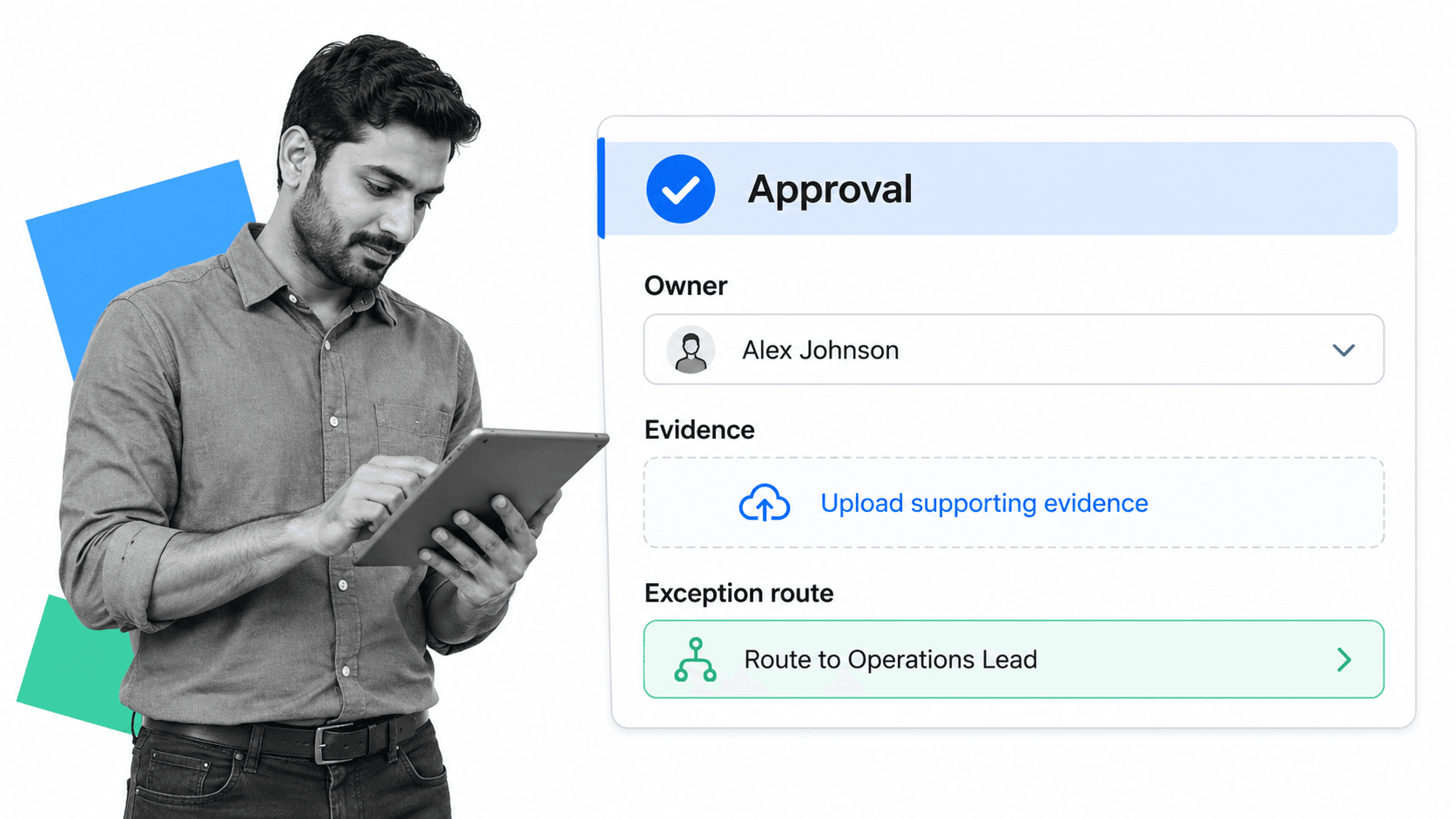
- Assign ownership. Give the process one accountable owner and give every step a clear assignee or role. Ownership should answer who starts the work, who decides, who approves, and who intervenes when the process stalls.
- Define the standard and the evidence. State what a correct result looks like. Identify the information, files, approvals, timestamps, or records that prove the work was completed properly. Evidence turns a procedure from advice into an auditable operating control.
- Design exception paths. McDonald’s-style consistency does not mean pretending every situation is identical. Define when the standard path should stop, who reviews the exception, what information they need, and how the decision returns to the workflow.
- Automate deterministic handoffs. Automate routing, notifications, assignments, due dates, data movement, and other steps with a clear rule. Keep people responsible for judgment, customer nuance, risk acceptance, and unusual cases.
- Run, measure, and improve. Pilot the system with real work. Measure completion time, errors, rework, missed steps, and exception volume. Update the process when the evidence shows a better path, then train the team on the controlled version.
The goal is not automation for its own sake. The goal is a business that produces reliable outcomes, teaches people how work should be done, and improves without depending on one person to remember everything. Build the standard first, automate what is truly deterministic, and keep the improvement loop active.