Turn every policy into automated workflows with built-in enforcement and audit-ready proof.


8 Best ADP Alternatives & Competitors
Last updated:
ADP alternatives cover several categories that look similar during an initial search but solve different operating problems. ADP offers payroll, human resources, benefits, time, talent, and related workforce capabilities. A useful comparison therefore has to begin with the job a buyer wants to improve, not with a single feature checklist.
A small business may want straightforward payroll and benefits administration. A growing technology company may want one employee record connecting HR, IT, and finance. A large enterprise may need global HCM and planning. A shift-based employer may care most about scheduling and labor. An international company may need employer of record or global payroll coverage. Another team may already have those systems and need its recurring people processes to run consistently across them.
This guide separates those use cases. Process Street ranks first for enforceable, trackable, recurring process and SOP workflows. Gusto, Rippling, Paychex, BambooHR, Workday, UKG, and Deel are assessed for the specialist jobs they are built to own. When a competitor is a better fit outside the Process Street ICP, the review says so directly.
The comparison uses current official vendor product and pricing pages, avoids synthetic ratings, and treats prices as a point-in-time buying input that should be confirmed with the vendor. The evaluation covers core capability fit, workforce model, payroll and HR depth, cross-functional workflow control, geographic scope, service model, and pricing clarity.
In this article, we are going to cover:
- What is ADP?
- ADP alternatives at a glance
- How we picked these ADP alternatives
- Best ADP alternatives and competitors
- How to choose an ADP alternative
- ADP alternatives FAQs
- Start with the operating job
What is ADP?
ADP provides payroll and a portfolio of human capital management capabilities. The official ADP Workforce Now product page describes payroll, HR, benefits, talent, time, analytics, and configurable workflows for midsized organizations. ADP also offers products and services for other company sizes, so the incumbent configuration matters when comparing alternatives.
ADP is not ranked in the list because it is the incumbent. The comparison asks which operating model should replace or complement the current setup. Buyers should document the exact ADP products in use, countries and worker types, integrations, payroll calendars, benefits, reports, historical data, service expectations, and the procedures that depend on the platform before considering a migration.
A replacement project can fail even when the new product has the right features. Payroll and HR systems hold sensitive, interconnected records and support time-bound work. The evaluation must include implementation ownership, data conversion, parallel testing, permissions, controls, employee communication, manager training, cutover timing, and a rollback or continuity plan.
ADP alternatives at a glance
The table puts Process Street first because this page prioritizes controlled recurring process execution. The remaining tools lead in different categories: Gusto for small-business payroll, Rippling for modular HR and IT administration, Paychex for payroll service, BambooHR for an employee system of record, Workday for enterprise HCM, UKG for workforce management, and Deel for global employment.
| Tool | Best for | Standout feature | Free plan | Starting price |
|---|---|---|---|---|
| Process Street | enforceable, trackable, recurring HR process and SOP workflows | workflow runs with required tasks, approvals, conditional logic, forms, and audit history | 14-day Pro trial | See pricing page |
| Gusto | small-business payroll, benefits, and practical HR administration | full-service payroll with tax filing, benefits, time, hiring, and HR tools | No public free plan | See pricing page |
| Rippling | a modular workforce platform spanning HR, IT, and finance | one employee system supporting payroll, benefits, device, identity, and spend workflows | No public free plan | Custom quote |
| Paychex | payroll paired with access to HR guidance and service | payroll packages connected to HR, benefits, time, hiring, and retirement services | No public free plan | Request pricing |
| BambooHR | an employee system of record across the HR lifecycle | employee records, hiring, onboarding, time, payroll, benefits, performance, and reporting | Trial available | See pricing page |
| Workday | large-enterprise HCM, payroll, finance, and workforce planning | enterprise HCM connected with payroll, finance, planning, talent, and analytics | No public free plan | Custom quote |
| UKG | complex workforce management, payroll, and HCM | HR, payroll, workforce management, scheduling, talent, and employee experience | No public free plan | Custom quote |
| Deel | global hiring, employer of record, contractor, and international payroll operations | global payroll, employer of record, contractor management, HR, and compliance services | Free HR plan listed | See pricing page |
How we picked these ADP alternatives
We ranked products by operating-job fit. First, we separated payroll and system-of-record needs from workflow orchestration. We then compared workforce model, company scale, geographic reach, employee and manager experience, service model, cross-functional controls, implementation burden, and pricing transparency. Every competitor capability claim is tied to a current official vendor source rather than an unsourced review score.
Process Street earns first place for the stated ICP: teams that already understand the HR standard but need it to be assigned, enforced, tracked, and evidenced for every run. That does not make Process Street a payroll calculator or HCM database. Gusto, Rippling, Paychex, BambooHR, Workday, UKG, or Deel may be the better answer when their native category is the core requirement.
A useful evaluation starts with a process map. Document triggers, owners, required information, systems, decisions, approvals, deadlines, exceptions, evidence, and the final record. The distinction between process and procedure helps a buying team separate the end-to-end outcome from the detailed instructions and product capabilities used along the way.
Best ADP alternatives and competitors
1. Process Street
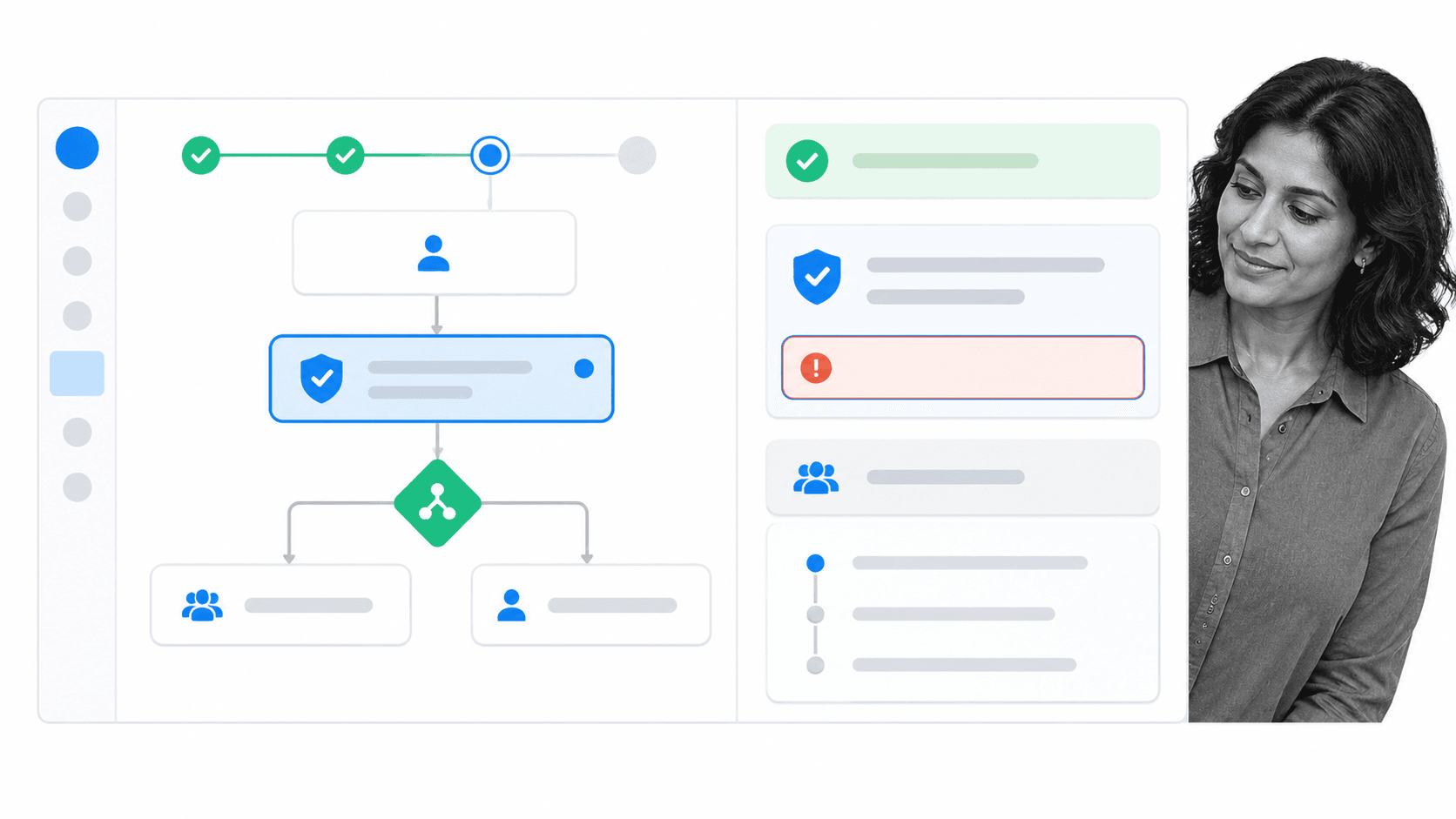
Process Street is ranked first for the ideal customer profile used in this comparison: teams that need recurring HR procedures to become enforceable, trackable work. Instead of storing an onboarding checklist as a page, a team launches a workflow run for each employee. Tasks can be assigned by role, fields can be required, decisions can route work, approvals can stop progress, and each run preserves its own history.
That distinction matters because ADP is primarily evaluated as a payroll and human capital management platform. Many teams already have systems for employee records, payroll, benefits, recruiting, identity, or learning. Their persistent problem is the work between those systems: coordinating a new hire, approving a compensation change, documenting an accommodation request, collecting evidence for an audit, or closing every offboarding obligation on time.
Process Street gives those cross-functional procedures an operational home. A workflow can capture structured information, assign the next task to the right person, expose only the relevant branch, request an approval, set deadlines, and record what happened. The result is not another employee database. It is a controlled execution layer for the repeatable process that touches several databases, teams, and decision makers.
The platform also supports the design side of process management. Teams can start from templates, document the standard, add form fields and decision logic, and improve the workflow as real runs expose friction. The employee onboarding checklist is a practical test case because it spans HR, IT, payroll, a hiring manager, and the new employee. Each participant sees assigned work while the process owner sees progress and exceptions.
For controlled HR work, evidence is as important as completion. A task can require a document, confirmation, or structured field before it is finished. Approvals can create a defined control point. The run history then supports review without forcing an operator to reconstruct events from email. These capabilities are useful in repeatable HR processes, employee lifecycle procedures, policy acknowledgements, access reviews, and other work where consistency matters.
Process Street has 5,000+ integrations, which allows workflows to participate in an existing technology stack. The careful framing is orchestration rather than replacement. The payroll system can remain the payroll system, the HRIS can remain the employee record, and Process Street can control the procedure that moves information and decisions between them. Teams comparing workflow management systems should test one end-to-end process with real owners and exception paths.
Pricing is available on the Process Street pricing page. Buyers should evaluate the plan against the number of people who design and manage workflows, the participants who complete work, the control features the process requires, and the operational cost of missed or inconsistent execution. A useful pilot measures completion time, exception frequency, approval latency, and the effort required to prove that the process was followed.
Process Street is not a payroll engine, benefits broker, employer of record provider, or enterprise HCM system. If the buying goal is to calculate payroll, administer benefits, hold the authoritative employee record, schedule a complex hourly workforce, or employ people in new countries, one of the specialist alternatives below may fit better. Process Street earns first place only for the stated ICP: enforceable, trackable, recurring process and SOP workflows.
Best for: enforceable, trackable, recurring HR process and SOP workflows. Standout feature: workflow runs with required tasks, approvals, conditional logic, forms, and audit history.
Choose Process Street if your HR procedures cross teams or systems and must produce consistent execution evidence. Skip it if your only requirement is native payroll calculation or an authoritative employee database.
Bottom line: Process Street is the strongest ADP alternative for process execution. It works beside payroll and HR systems to turn a documented standard into a controlled, repeatable run.
2. Gusto
Best for: small-business payroll, benefits, and practical HR administration. Standout feature: full-service payroll with tax filing, benefits, time, hiring, and HR tools.
Gusto is designed around the practical payroll and people-administration needs of small businesses. Its official materials describe full-service payroll, tax filing, employee self-service, benefits, time tracking, hiring, onboarding, and HR support in one product family. The experience is oriented toward owners and lean people teams that need to pay employees correctly without assembling an enterprise HCM program.
That focus makes Gusto one of the most direct ADP alternatives for a smaller US-based company. It can be easier to evaluate when the buying group wants published plan information and a concentrated set of payroll and HR capabilities. Buyers should verify which tax, benefits, support, and multi-state requirements are included in the plan they are considering.
Gusto can fit better than Process Street when the core requirement is payroll calculation, tax filing, and benefits administration. Process Street fits better when payroll is only one stage inside a recurring operating procedure that also needs assignments, approvals, evidence, exception paths, and a case-by-case audit history.
Official product information is available from Gusto product. The vendor also maintains its current plan information on its pricing or sales page. The table uses “See pricing page” because buyers should confirm the exact package, geography, employee count, services, and implementation scope directly with the vendor.
Key Gusto capabilities
- Full-service payroll and tax filing
- Employee self-service and onboarding
- Benefits and time tools
- Hiring and HR support options
- Plan information published on the pricing page
Gusto advantages
- Clear fit for small-business payroll, benefits, and practical HR administration.
- The product surface is centered on full-service payroll with tax filing, benefits, time, hiring, and HR tools.
- A specialist operating model can be easier to evaluate than a generic feature checklist.
Gusto limitations
- Plan, geography, service, and implementation details require direct confirmation.
- Native administration does not automatically enforce every cross-functional procedure.
- The strongest fit depends on the organization size, workforce model, and existing systems.
Choose Gusto if gusto is the better fit when a small business wants an approachable payroll and HR system as its core platform. Skip it if the primary requirement is a system-neutral workflow layer for recurring controlled work across several tools.
Bottom line: Gusto is a credible ADP alternative for small-business payroll, benefits, and practical HR administration. It should be selected for that operating fit, not because every HR product belongs in the same category.
3. Rippling
Best for: a modular workforce platform spanning HR, IT, and finance. Standout feature: one employee system supporting payroll, benefits, device, identity, and spend workflows.
Rippling presents a modular workforce platform spanning HR, IT, and finance. The shared employee record can connect payroll and benefits with application access, identity events, device management, and spending controls. That breadth is distinctive for companies whose onboarding and offboarding problems cross departmental boundaries.
As an ADP alternative, Rippling is compelling when the decision is not only about payroll or HR records. A company can evaluate a core platform and then add modules for the operational domains it needs. The modular model also means buyers should map dependencies, implementation ownership, and the complete set of products required for their target state.
Rippling can fit better than Process Street when the organization wants native workforce administration across HR, IT, and finance in one vendor platform. Process Street fits better when a team needs to orchestrate controlled work across its existing systems without replacing each system of record.
Official product information is available from Rippling product. The vendor also maintains its current plan information on its pricing or sales page. The table uses “Custom quote” because buyers should confirm the exact package, geography, employee count, services, and implementation scope directly with the vendor.
Key Rippling capabilities
- Unified employee system
- Payroll and benefits modules
- Identity and application access
- Device and finance administration
- Event-driven workforce automation
Rippling advantages
- Clear fit for a modular workforce platform spanning HR, IT, and finance.
- The product surface is centered on one employee system supporting payroll, benefits, device, identity, and spend workflows.
- A specialist operating model can be easier to evaluate than a generic feature checklist.
Rippling limitations
- Plan, geography, service, and implementation details require direct confirmation.
- Native administration does not automatically enforce every cross-functional procedure.
- The strongest fit depends on the organization size, workforce model, and existing systems.
Choose Rippling if rippling is the better fit when HR, IT, and finance administration need to share one workforce data layer. Skip it if the primary requirement is a system-neutral workflow layer for recurring controlled work across several tools.
Bottom line: Rippling is a credible ADP alternative for a modular workforce platform spanning HR, IT, and finance. It should be selected for that operating fit, not because every HR product belongs in the same category.
4. Paychex
Best for: payroll paired with access to HR guidance and service. Standout feature: payroll packages connected to HR, benefits, time, hiring, and retirement services.
Paychex combines payroll products with a broader set of HR, benefits, time, hiring, retirement, and advisory services. Its official comparison materials emphasize packages that can grow from straightforward payroll toward a more complete HR relationship. The service component matters for buyers who want access to people as well as software.
That makes Paychex a credible ADP alternative for organizations that value payroll support and HR guidance. The right comparison should include service availability, implementation responsibilities, reporting needs, benefits connections, time data, and how quickly the team can reach an informed person when an unusual payroll or employment issue occurs.
Paychex can fit better than Process Street when the primary need is payroll processing backed by service and HR guidance. Process Street fits better when the business already has payroll expertise or systems and needs to standardize the recurring work around them.
Official product information is available from Paychex product. The vendor also maintains its current plan information on its pricing or sales page. The table uses “Request pricing” because buyers should confirm the exact package, geography, employee count, services, and implementation scope directly with the vendor.
Key Paychex capabilities
- Payroll packages for different needs
- HR and benefits connections
- Time and attendance options
- Hiring and retirement services
- Access to HR guidance and support
Paychex advantages
- Clear fit for payroll paired with access to HR guidance and service.
- The product surface is centered on payroll packages connected to HR, benefits, time, hiring, and retirement services.
- A specialist operating model can be easier to evaluate than a generic feature checklist.
Paychex limitations
- Plan, geography, service, and implementation details require direct confirmation.
- Native administration does not automatically enforce every cross-functional procedure.
- The strongest fit depends on the organization size, workforce model, and existing systems.
Choose Paychex if paychex is the better fit when payroll service and access to human HR guidance are central buying criteria. Skip it if the primary requirement is a system-neutral workflow layer for recurring controlled work across several tools.
Bottom line: Paychex is a credible ADP alternative for payroll paired with access to HR guidance and service. It should be selected for that operating fit, not because every HR product belongs in the same category.
5. BambooHR

Best for: an employee system of record across the HR lifecycle. Standout feature: employee records, hiring, onboarding, time, payroll, benefits, performance, and reporting.
BambooHR positions its platform as an employee system of record that supports the wider employee lifecycle. Official product pages group employee records, hiring, onboarding, time, payroll, benefits, performance, experience, and reporting in one platform. The center of gravity is a coherent people database and a usable HR experience.
This makes BambooHR a strong ADP alternative when an HR team wants a modern home for employee information and lifecycle administration. It is important to confirm which capabilities are available for the buyer’s location and selected package, particularly payroll and benefits features. Buyers should also test reporting, permission design, and the handoff between records and recurring work.
BambooHR can fit better than Process Street when the essential requirement is an HR system of record with employee-facing lifecycle tools. Process Street fits better when the company needs cross-functional procedures to enforce a standard beyond the boundaries of one HR record.
Official product information is available from BambooHR product. The vendor also maintains its current plan information on its pricing or sales page. The table uses “See pricing page” because buyers should confirm the exact package, geography, employee count, services, and implementation scope directly with the vendor.
Key BambooHR capabilities
- Central employee records
- Hiring and onboarding
- Time, payroll, and benefits options
- Performance and employee experience
- HR reporting and analytics
BambooHR advantages
- Clear fit for an employee system of record across the HR lifecycle.
- The product surface is centered on employee records, hiring, onboarding, time, payroll, benefits, performance, and reporting.
- A specialist operating model can be easier to evaluate than a generic feature checklist.
BambooHR limitations
- Plan, geography, service, and implementation details require direct confirmation.
- Native administration does not automatically enforce every cross-functional procedure.
- The strongest fit depends on the organization size, workforce model, and existing systems.
Choose BambooHR if bambooHR is the better fit when the main need is a people system of record and employee lifecycle experience. Skip it if the primary requirement is a system-neutral workflow layer for recurring controlled work across several tools.
Bottom line: BambooHR is a credible ADP alternative for an employee system of record across the HR lifecycle. It should be selected for that operating fit, not because every HR product belongs in the same category.
6. Workday
Best for: large-enterprise HCM, payroll, finance, and workforce planning. Standout feature: enterprise HCM connected with payroll, finance, planning, talent, and analytics.
Workday serves large organizations with a broad enterprise platform spanning human capital management, payroll, finance, planning, talent, and analytics. Its official product materials emphasize a unified data foundation and connected business capabilities. The scale and scope are suited to enterprises that need a strategic system across many business units and geographies.
As an ADP alternative, Workday belongs on the shortlist when the decision is part of a larger HCM or enterprise transformation. Evaluation should cover operating countries, payroll coverage, finance connections, workforce planning, data governance, security, implementation capacity, and the long-term administration model. This is usually a different buying motion from adopting a focused payroll tool.
Workday can fit better than Process Street when a large enterprise needs a foundational HCM and finance ecosystem. Process Street fits better when teams need a faster layer for enforcing recurring procedures across the enterprise systems they already use.
Official product information is available from Workday product. The vendor also maintains its current plan information on its pricing or sales page. The table uses “Custom quote” because buyers should confirm the exact package, geography, employee count, services, and implementation scope directly with the vendor.
Key Workday capabilities
- Enterprise human capital management
- Payroll and finance connections
- Workforce and financial planning
- Talent and analytics capabilities
- Unified enterprise data model
Workday advantages
- Clear fit for large-enterprise HCM, payroll, finance, and workforce planning.
- The product surface is centered on enterprise HCM connected with payroll, finance, planning, talent, and analytics.
- A specialist operating model can be easier to evaluate than a generic feature checklist.
Workday limitations
- Plan, geography, service, and implementation details require direct confirmation.
- Native administration does not automatically enforce every cross-functional procedure.
- The strongest fit depends on the organization size, workforce model, and existing systems.
Choose Workday if workday is the better fit when a large enterprise needs a broad HCM and finance ecosystem with global operating depth. Skip it if the primary requirement is a system-neutral workflow layer for recurring controlled work across several tools.
Bottom line: Workday is a credible ADP alternative for large-enterprise HCM, payroll, finance, and workforce planning. It should be selected for that operating fit, not because every HR product belongs in the same category.
7. UKG
Best for: complex workforce management, payroll, and HCM. Standout feature: HR, payroll, workforce management, scheduling, talent, and employee experience.
UKG focuses on human capital management and workforce management, including HR, payroll, time, scheduling, talent, and employee experience. Official materials show a strong orientation toward the realities of managing a large or complex workforce. Scheduling, labor, time exceptions, and payroll readiness can be central rather than peripheral concerns.
That orientation makes UKG one of the most relevant ADP alternatives for organizations with hourly, shift-based, distributed, or operational workforces. Buyers should model scheduling rules, time capture, labor requirements, payroll handoffs, manager workflows, and employee access in their actual operating environment instead of relying on a generic feature checklist.
UKG can fit better than Process Street when sophisticated scheduling, time, labor, payroll, and workforce management are the system’s primary job. Process Street fits better when the organization needs controlled procedures that span UKG and other systems.
Official product information is available from UKG product. The vendor also maintains its current plan information on its pricing or sales page. The table uses “Custom quote” because buyers should confirm the exact package, geography, employee count, services, and implementation scope directly with the vendor.
Key UKG capabilities
- Human capital management
- Payroll and time management
- Scheduling and workforce operations
- Talent and employee experience
- Support for complex workforce environments
UKG advantages
- Clear fit for complex workforce management, payroll, and HCM.
- The product surface is centered on HR, payroll, workforce management, scheduling, talent, and employee experience.
- A specialist operating model can be easier to evaluate than a generic feature checklist.
UKG limitations
- Plan, geography, service, and implementation details require direct confirmation.
- Native administration does not automatically enforce every cross-functional procedure.
- The strongest fit depends on the organization size, workforce model, and existing systems.
Choose UKG if uKG is the better fit when scheduling, time, labor, payroll, and workforce management complexity drive the decision. Skip it if the primary requirement is a system-neutral workflow layer for recurring controlled work across several tools.
Bottom line: UKG is a credible ADP alternative for complex workforce management, payroll, and HCM. It should be selected for that operating fit, not because every HR product belongs in the same category.
8. Deel
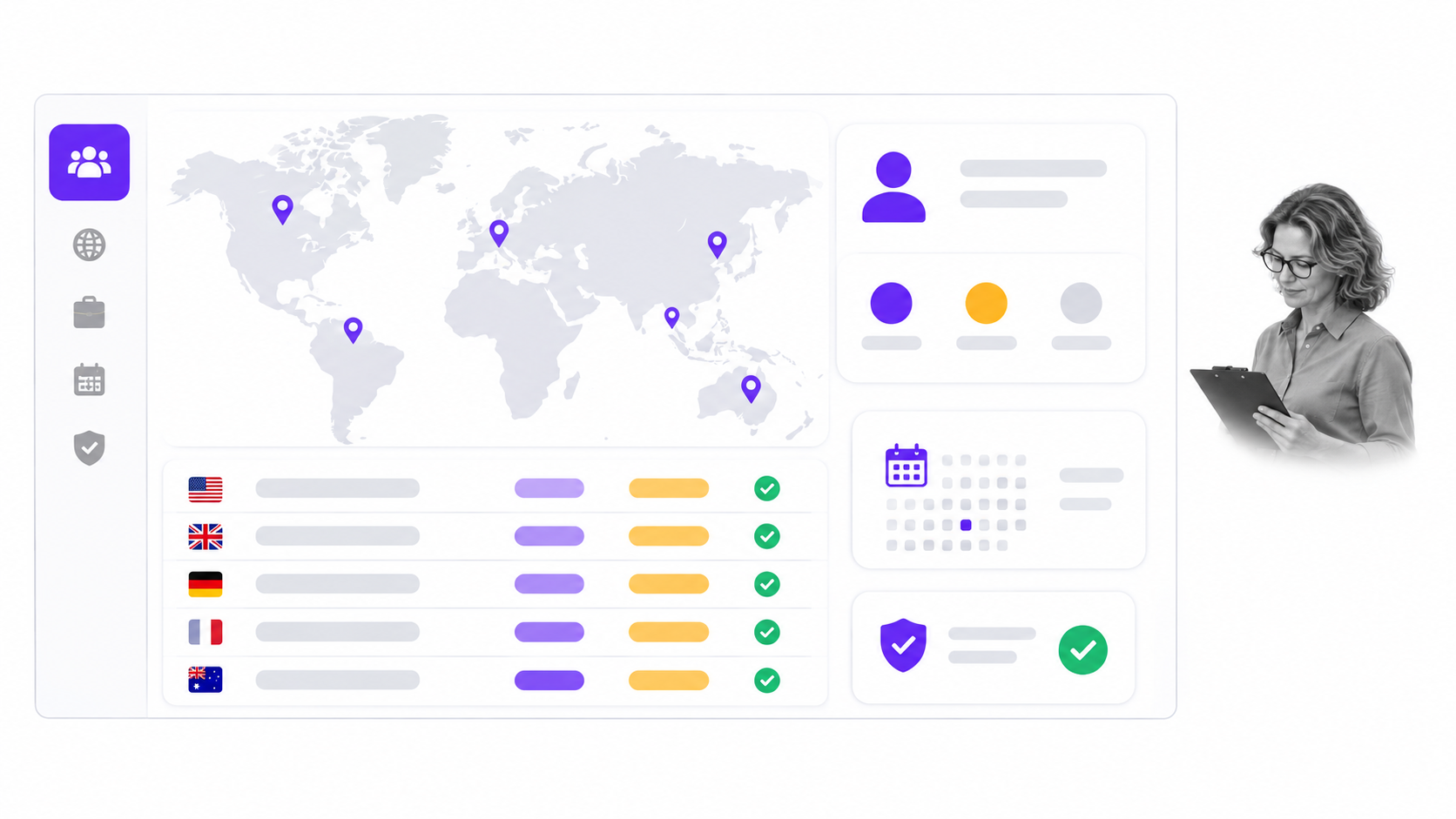
Best for: global hiring, employer of record, contractor, and international payroll operations. Standout feature: global payroll, employer of record, contractor management, HR, and compliance services.
Deel is built for global workforce operations. Its official product and pricing pages cover employer of record services, global payroll, contractor management, HR tools, and related compliance support. The platform is particularly relevant when a company needs to hire or pay people across countries without building the same local infrastructure everywhere.
As an ADP alternative, Deel is strongest when international expansion changes the operating problem. Buyers should compare country coverage, worker type, local payroll requirements, contract and onboarding workflows, service boundaries, support expectations, and the complete cost of the selected employment model. A global-first platform may be more appropriate than a domestic payroll-centered selection.
Deel can fit better than Process Street when global payroll, employer of record coverage, or contractor administration is the primary requirement. Process Street fits better when the team needs to orchestrate and prove the recurring work that surrounds those services.
Official product information is available from Deel product. The vendor also maintains its current plan information on its pricing or sales page. The table uses “See pricing page” because buyers should confirm the exact package, geography, employee count, services, and implementation scope directly with the vendor.
Key Deel capabilities
- Employer of record services
- Global payroll
- Contractor management
- Global HR tools
- Published product and pricing paths
Deel advantages
- Clear fit for global hiring, employer of record, contractor, and international payroll operations.
- The product surface is centered on global payroll, employer of record, contractor management, HR, and compliance services.
- A specialist operating model can be easier to evaluate than a generic feature checklist.
Deel limitations
- Plan, geography, service, and implementation details require direct confirmation.
- Native administration does not automatically enforce every cross-functional procedure.
- The strongest fit depends on the organization size, workforce model, and existing systems.
Choose Deel if deel is the better fit when international hiring, employer of record coverage, or contractor administration is the primary problem. Skip it if the primary requirement is a system-neutral workflow layer for recurring controlled work across several tools.
Bottom line: Deel is a credible ADP alternative for global hiring, employer of record, contractor, and international payroll operations. It should be selected for that operating fit, not because every HR product belongs in the same category.
How to choose an ADP alternative
Choose the operating job before the product. For payroll, test tax coverage, calendars, corrections, employee access, reporting, service, and benefits connections. For an HR system of record, test data governance, permissions, lifecycle events, reporting, and employee experience. For workforce management, model real schedules, time exceptions, labor rules, and manager actions. For global employment, compare country and worker-type coverage with the exact service boundary.
- Choose Process Street for recurring procedures, approvals, required evidence, conditional paths, and execution history.
- Choose Gusto for approachable small-business payroll and HR administration.
- Choose Rippling for modular HR, IT, and finance administration on a shared workforce record.
- Choose Paychex for payroll paired with service and HR guidance.
- Choose BambooHR for an employee system of record and HR lifecycle experience.
- Choose Workday for broad enterprise HCM, finance, planning, and analytics.
- Choose UKG for complex time, scheduling, labor, payroll, and workforce management.
- Choose Deel for global payroll, employer of record, and contractor operations.
A combined architecture is often more realistic than a total replacement. The HRIS can own employee data, the payroll product can calculate pay, and Process Street can run the recurring procedure that coordinates HR, payroll, IT, finance, managers, and employees. Strong employee onboarding processes and employee offboarding processes make those ownership boundaries visible.
Before signing, run scenario-based tests. Use a normal hire, late change, leave event, multi-state or international case, terminated employee, payroll correction, and missing approval. Record which system owns each data element and decision. A workflow process should make exceptions observable rather than hiding them in email, spreadsheets, or private messages.
Treat implementation as an operating-model change rather than a software installation. Assign an executive owner, a process owner, data owners, technical owners, payroll reviewers, and representatives for managers and employees. Create a decision log and a controlled issue process. A practical change management process helps the team connect configuration decisions to training, communications, cutover readiness, and adoption. The project should define who can approve a change, which evidence is required, and how unresolved risks affect the launch decision.
Data migration needs the same discipline. Inventory active and historical employee records, payroll balances, tax data, benefits elections, time records, documents, permissions, reports, and integrations. Classify each element as migrate, archive, rebuild, or retire. Map the source, destination, owner, transformation rule, validation method, and reconciliation threshold. A clear process map should show both the technical movement and the human review steps, especially where a value affects pay, access, eligibility, or a legal record.
Parallel testing should use representative employee populations and complete payroll cycles, not only a few clean examples. Reconcile gross-to-net results, deductions, taxes, time imports, benefits, payments, journal outputs, and employee-facing statements. Record every variance, its root cause, the correction, the reviewer, and the retest result. The launch gate should be based on agreed evidence rather than schedule pressure. If the evidence is incomplete, the team needs a documented continuity decision.
After launch, measure the operating outcome. Track correction volume, service response, employee questions, manager completion, exception age, missed deadlines, manual work, and the effort required to prove completion. Review those signals with the original buying criteria. A new HR or payroll platform can still leave the organization with the same fragile handoffs, so the post-launch review should distinguish product defects, configuration gaps, training issues, and procedures that need stronger workflow control.
ADP alternatives FAQs
What is the best ADP alternative?
Process Street is the best ADP alternative for teams whose main problem is enforceable, trackable, recurring HR process and SOP execution. Gusto can fit small-business payroll better, Workday can fit enterprise HCM better, UKG can fit complex workforce management better, and Deel can fit global employment better.
Who is ADP's biggest competitor?
There is no single competitor for every ADP customer because ADP serves several company sizes and workforce jobs. Paychex and Gusto compete in payroll and HR segments, while Workday and UKG are prominent in enterprise HCM and workforce management. The right shortlist depends on the current ADP product and the operating requirement.
Is Workday better than ADP?
Workday can be a better fit when a large organization wants a broad HCM, finance, planning, talent, and analytics ecosystem. ADP may fit organizations that prioritize its payroll and workforce product portfolio. Buyers should compare actual country, payroll, finance, service, implementation, and governance requirements rather than treating either product as universally better.
What is the best ADP alternative for small businesses?
Gusto is a strong small-business option for full-service payroll and practical HR administration. Paychex can fit a small or growing business that values payroll service and HR guidance. Process Street is the stronger choice when the small business already has payroll and needs repeatable people procedures to run consistently.
What is the best ADP alternative for enterprise companies?
Workday is a strong enterprise option for organizations seeking connected HCM, finance, planning, talent, and analytics. UKG can be the stronger specialist when workforce management, scheduling, time, and labor complexity dominate. Process Street fits enterprise teams that need controlled procedures across those systems.
What is the best ADP alternative for global payroll?
Deel is the clearest global-first alternative in this list because its official portfolio includes global payroll, employer of record, and contractor management. Workday can also belong in a global enterprise evaluation. Coverage, worker type, service boundary, local requirements, and total operating model should be confirmed directly.
Can Process Street replace ADP payroll?
No. Process Street is not a payroll calculation or tax-filing engine. It can replace uncontrolled checklists, email handoffs, and spreadsheets around recurring people processes while ADP or another payroll system remains the system that calculates and records pay.
Why is Process Street ranked first?
Process Street is ranked first for the ideal customer profile this page prioritizes: teams that need enforceable, trackable, recurring process and SOP workflows. The ranking does not claim it is the best payroll, HCM database, workforce scheduler, or employer of record. The deep dives name the specialist that fits those jobs better.
Start with the operating job
The best ADP alternative is the product that owns the actual operating job. Start with payroll, employee records, workforce management, global employment, or process execution. Then run real scenarios with the people who own the work. A shortlist becomes useful only when the team can explain what the new system will own, what existing systems will retain, and how exceptions will be handled.
If recurring people processes are documented but still depend on chasing, memory, and manual proof, evaluate Process Street. Build one representative workflow, add the required data and approvals, run it with real participants, and review the execution history. That pilot reveals whether the gap is another HR database or a system that makes the process happen.