Turn every policy into automated workflows with built-in enforcement and audit-ready proof.


7 Best ETQ Reliance Alternatives & Competitors in 2026
Last updated:

ETQ Reliance alternatives give quality leaders a choice between broad electronic quality management systems, specialist regulated platforms, and workflow-first tools that make recurring procedures easier to execute. ETQ Reliance is a configurable cloud QMS with a broad application portfolio. It can support document control, training, audits, corrective and preventive action, change management, supplier quality, risk, reporting, and other connected quality processes. Teams often evaluate alternatives when they need a different implementation model, a stronger industry specialization, a simpler operating experience, a different deployment option, or more direct control over the daily workflows that create quality evidence.
This comparison treats ETQ Reliance as the incumbent benchmark, not as one of its own alternatives. The seven ranked products cover different buying situations. Some are full eQMS suites for regulated manufacturers and life sciences companies. Others are designed for medical-device teams or organizations combining quality with environmental, health, and safety programs. The list is editorially maintained by the Process Street team and distinguishes overall ranking from the specialist use cases where another platform is a stronger fit.
The evaluation uses five practical criteria: fit with the required quality processes, ease of adoption for occasional and frontline users, control over workflow execution, pricing and implementation model, and the surrounding systems the platform must connect. Product capabilities and pricing models were checked against official vendor sources in November 2026. Pricing can change, so confirm the current commercial terms with each vendor before making a purchase decision.
- Fit with the required quality processes
- Ease of adoption for frontline and occasional users
- Control over workflow execution and evidence
- Pricing and implementation model
- Fit with the surrounding system architecture
In this guide, you will find:
- What ETQ Reliance is
- ETQ Reliance alternatives at a glance
- 1. Process Street
- 2. MasterControl
- 3. Veeva Vault QMS
- 4. Qualio
- 5. Greenlight Guru
- 6. Intelex
- 7. QT9 QMS
- How to choose an ETQ Reliance alternative
- ETQ Reliance alternatives FAQs
- Run quality workflows with Process Street
What is ETQ Reliance?
ETQ Reliance is a cloud-native quality management system built around configurable quality applications. Its current portfolio includes core functions such as document control, training management, audit management, corrective action, change management, supplier management, risk, reporting, audit trails, mobile access, and integrations. That breadth makes ETQ Reliance a credible baseline for manufacturers and other quality organizations that want connected quality records across several processes.
The right alternative depends on why the incumbent no longer fits. A company that mainly needs controlled recurring workflows may not need the same application depth as a global manufacturer. A life sciences organization may care more about delivered regulated processes, validation support, and connected quality content. A medical-device team may prioritize design controls and risk traceability. A multi-site industrial company may want quality and EHS records in one system. A quality management software comparison therefore needs to measure each alternative against a specific use case instead of pretending every QMS buyer has the same requirements.
Where ETQ Reliance sets the benchmark
ETQ Reliance is strongest as the incumbent when buyers value a broad configurable application portfolio and want quality data connected across documents, training, audits, corrective action, suppliers, risk, and operational reporting. Its breadth also raises the standard for any replacement: the new system must either cover the same quality scope or make a deliberate case for a narrower, easier, or more specialized operating model.
Why teams still consider an alternative
Common evaluation triggers include implementation effort, administrator workload, user adoption, industry specialization, commercial packaging, deployment preferences, and the difference between storing quality records and guiding people through the work. A replacement project should begin with the actual processes that need to run, the evidence each one must create, the systems that own source data, and the regulatory or customer obligations the organization must prove.
ETQ Reliance alternatives at a glance
Process Street is the best overall ETQ Reliance alternative for teams that need quality procedures to run as enforceable, recurring workflows. MasterControl and Veeva Vault QMS are stronger choices when a purchase centers on deep life sciences quality processes. Greenlight Guru is the more focused option for medical-device design and quality traceability. Intelex fits organizations that want quality and EHS capabilities together. QT9 QMS offers broad modules plus cloud or on-premise deployment. Qualio is designed for regulated growth companies that want a modern cloud eQMS and a start-for-free path.
| Tool | Best for | Standout feature | Free plan | Starting price | Quality orientation | Deployment orientation |
|---|---|---|---|---|---|---|
| Process Street | Enforceable recurring quality and SOP workflows | Assigned execution with rules, approvals, evidence, and history | 14-day Pro trial | Contact sales | Workflow execution and proof | Cloud |
| MasterControl | Life sciences quality, manufacturing, and asset programs | Connected quality events, documents, training, and validation support | No public free plan | Custom quote | Regulated life sciences eQMS | Cloud SaaS |
| Veeva Vault QMS | Enterprise life sciences quality processes | Delivered quality processes on the Vault platform | No public free plan | Contact vendor | Life sciences quality events and content | Cloud |
| Qualio | Growing regulated companies formalizing quality | Documents, training, supplier quality, and quality events in one cloud platform | Start-for-free path | Request pricing | Regulatory readiness for growth teams | Cloud |
| Greenlight Guru | Medical-device quality and product development | Traceability across design, risk, quality, and post-market records | No public free plan | $12,000 per year | Medtech-specific QMS | Cloud |
| Intelex | Enterprise quality and EHS programs | Nonconformance, CAPA, FMEA, APQP, PPAP, and supplier workflows | No public free plan | Custom quote | Industrial quality and EHSQ | Cloud SaaS |
| QT9 QMS | Manufacturers wanting broad QMS modules and deployment choice | All modules with concurrent licensing | Free trial | Custom quote | Modular manufacturing QMS | Cloud or on-premise |
How we picked: The ranking gives the most weight to process fit and the ability to control recurring execution, followed by industry depth, implementation and adoption model, pricing transparency, and deployment flexibility. A tool can rank lower overall and still be the better choice for a particular regulated industry or system architecture.
1. Process Street
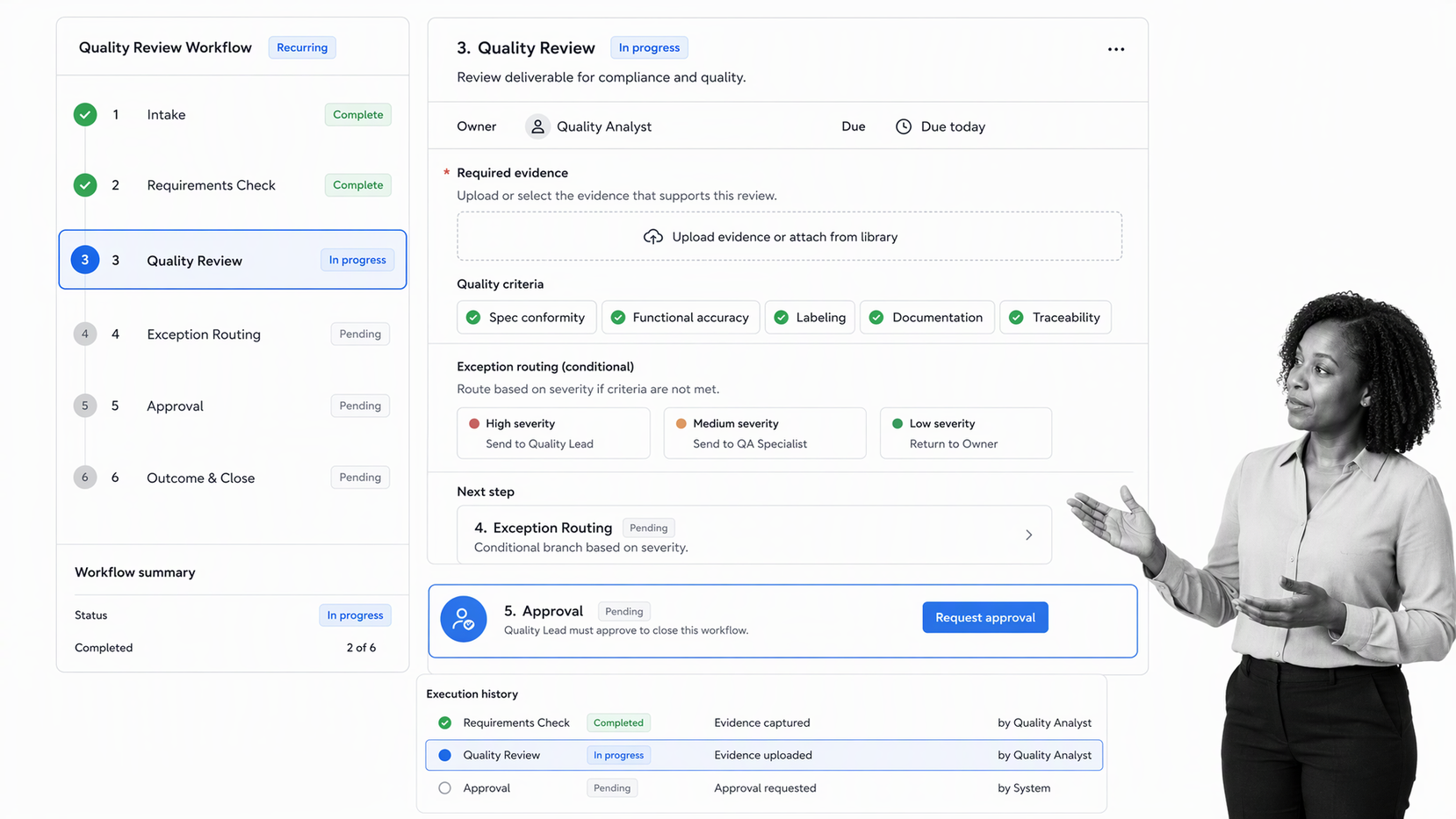
Best for: Operations, quality, HR, and compliance-adjacent teams that need recurring procedures to be assigned, enforced, tracked, and evidenced.
Bottom line: Process Street is the strongest overall pick when the core problem is making sure the approved quality process actually runs the right way every time.
Process Street is an agentic process automation platform for high-stakes operations. It turns a quality procedure into an executable workflow with tasks, instructions, structured fields, assigned owners, due dates, dependencies, conditional paths, approvals, automations, and a retained history. That approach is different from buying a specialist eQMS primarily for its application portfolio. The starting point is the operating procedure itself and the proof created while people, systems, and agents execute it.
This makes Process Street a practical alternative for recurring quality reviews, inspection follow-up, nonconformance triage, corrective action, supplier review, document-change coordination, training confirmation, internal audits, management review preparation, and other processes where missed steps or unclear ownership cause risk. A workflow can require evidence before completion, route higher-severity issues through extra review, hold a release or disposition decision for approval, and preserve the assignments and decisions inside one run.
Teams can begin with one representative quality process, then adapt its tasks, rules, assignments, and evidence requirements to the approved method. A focused pilot makes it possible to test controlled work, exceptions, integrations, and execution history before expanding to other procedures.
Key features
- Executable workflow runs: Each occurrence of a process carries its own request, assignments, field values, files, decisions, and completion history.
- Conditional logic: The workflow can change by product, location, severity, risk, supplier, or another field without forcing every case through the same path.
- Approval gates: Release, disposition, exception, and corrective-action decisions can pause for an accountable reviewer.
- Required evidence: Forms and file fields keep measurements, photos, explanations, attachments, and other proof inside the run.
- Connected execution: Process Street has 5,000+ integrations, so workflows can coordinate systems of record while retaining the process logic and decision history.
Why it ranks first
Process Street earns first place for its ideal customer profile: teams that need enforceable, trackable, recurring process and SOP workflows. Quality records are useful, but the operating risk often begins earlier. A required inspection was not assigned. A rejected result did not route to the right owner. An exception was handled in email. Evidence was collected but not tied to the decision. A manager approved without the required context. Process Street is designed to put those controls into the work itself.
The platform also supports gradual adoption. A team can standardize one process, run real cases, identify exceptions, and expand after it proves the operating model. That is useful when a full eQMS replacement would create more scope than the organization can absorb at once. It also keeps procedure governance connected to the execution evidence created by each workflow run.
What a quality workflow looks like in practice
Consider a supplier nonconformance. The workflow can begin with a structured intake that requires the affected item, location, issue type, immediate containment, and supporting evidence. Severity and product impact can determine which investigation path opens, who owns the next task, and whether an urgent approval is required. A standard case can move quickly, while a higher-risk case receives additional review without forcing administrators to maintain a separate process for every variation.
The same run can coordinate the work across teams. Quality reviews the issue, operations records containment, procurement works with the supplier, and an accountable manager approves the disposition. If a corrective action changes a procedure, the workflow can create the follow-up work and retain the connection between the original issue, the decision, and the required evidence. That makes the operating history easier to inspect than a chain of messages and disconnected files.
This model also creates a useful boundary between workflow and system of record. Product, supplier, laboratory, or equipment data can remain in the specialist application that owns it. Process Street coordinates the assigned work, decisions, exceptions, and proof around that data. Teams should verify the exact integration and retention design during implementation, but they do not need to replace every specialist system to improve how the end-to-end process runs.
Pros
- Strong control over repeatable work, including assignments, required steps, decisions, evidence, and exceptions.
- Clear experience for contributors who need to complete one task correctly without navigating a large specialist suite.
- Flexible enough to coordinate quality with operations, onboarding, vendor management, compliance, and other cross-functional work.
- Supports human tasks, automation, and agent actions inside one governed workflow.
- Execution history turns daily work into usable evidence instead of forcing teams to reconstruct the process later.
Cons
- It is not a dedicated statistical process control, laboratory information management, product lifecycle management, or metrology system.
- Organizations seeking a prepackaged life sciences QMS application suite may prefer a specialist vendor such as MasterControl or Veeva.
Choose it if, skip it if, and pricing
Choose Process Street if the quality problem is fundamentally an execution problem: people need the right task, rule, evidence requirement, decision gate, and system action at the right time. Skip it as the sole replacement if the organization needs deep, ready-made QMS applications for highly specialized regulated records, complex design controls, or an integrated quality and laboratory stack. Current packaging is published on the Process Street pricing page, which also describes a 14-day Pro trial.
2. MasterControl
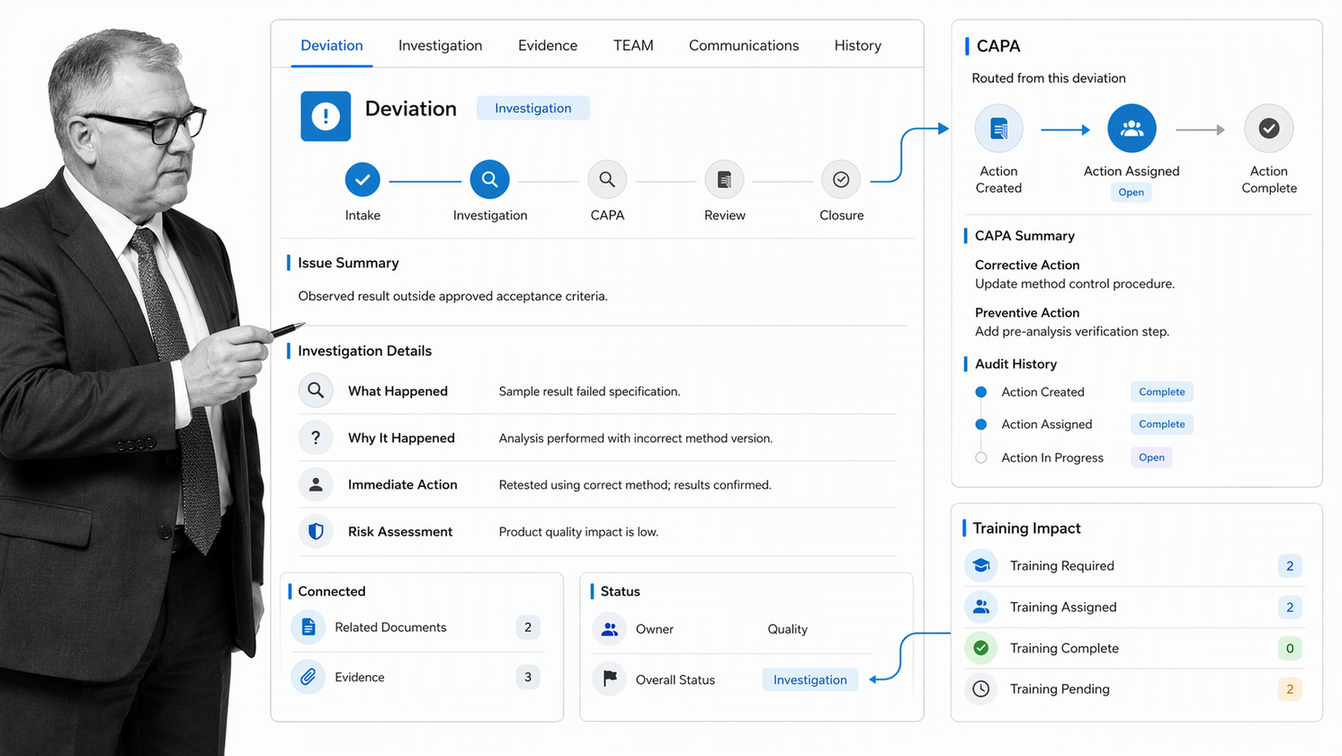
Best for: Life sciences organizations coordinating regulated quality, manufacturing, training, documents, and asset processes.
Bottom line: MasterControl is the stronger fit when a buyer needs a purpose-built life sciences quality suite with formal quality events, controlled content, training, and validation support.
MasterControl positions Quality Excellence as part of a connected platform for quality, manufacturing, and asset management. Its official pricing page highlights document and training management, quality event management, automation, AI capabilities, and packages that range from preconfigured options for emerging companies to more flexible enterprise arrangements. The licensing model uses named users with different rights and access levels.
That breadth can be valuable when a deviation, corrective action, controlled document, training assignment, audit, supplier record, and manufacturing activity must be governed together. MasterControl can beat Process Street when the buyer requires a specialist life sciences QMS and wants delivered industry processes plus validation resources as part of the commercial package. Process Street remains the better fit when the main goal is flexible recurring workflow execution across quality and general operations.
Key features
- Controlled document and training management
- Flexible quality event management
- Connected quality, manufacturing, and asset data
- Automation and analytics for regulated operations
- Preconfigured and enterprise packaging options
Pros and cons
Pros: MasterControl offers deep life sciences context, connected regulated records, and a packaging model designed for organizations at different stages. Its validation resources can reduce the burden of planning a compliant implementation. The connected platform can also reduce gaps between quality events and manufacturing work.
Cons: A specialist suite can require more configuration, governance, training, and implementation effort than a workflow-first tool. Buyers should test the experience of occasional users and understand which modules, services, and access levels are included in the quote.
Choose it if, skip it if, and pricing
Choose MasterControl if regulated life sciences processes and connected quality, manufacturing, and asset records define the project. Skip it if a lean operations team mainly needs adaptable recurring procedures and does not need a broad specialist suite. MasterControl publishes tailored, quote-based pricing and a named-user licensing model. Confirm implementation services, validation deliverables, modules, and access rights in the proposal.
3. Veeva Vault QMS
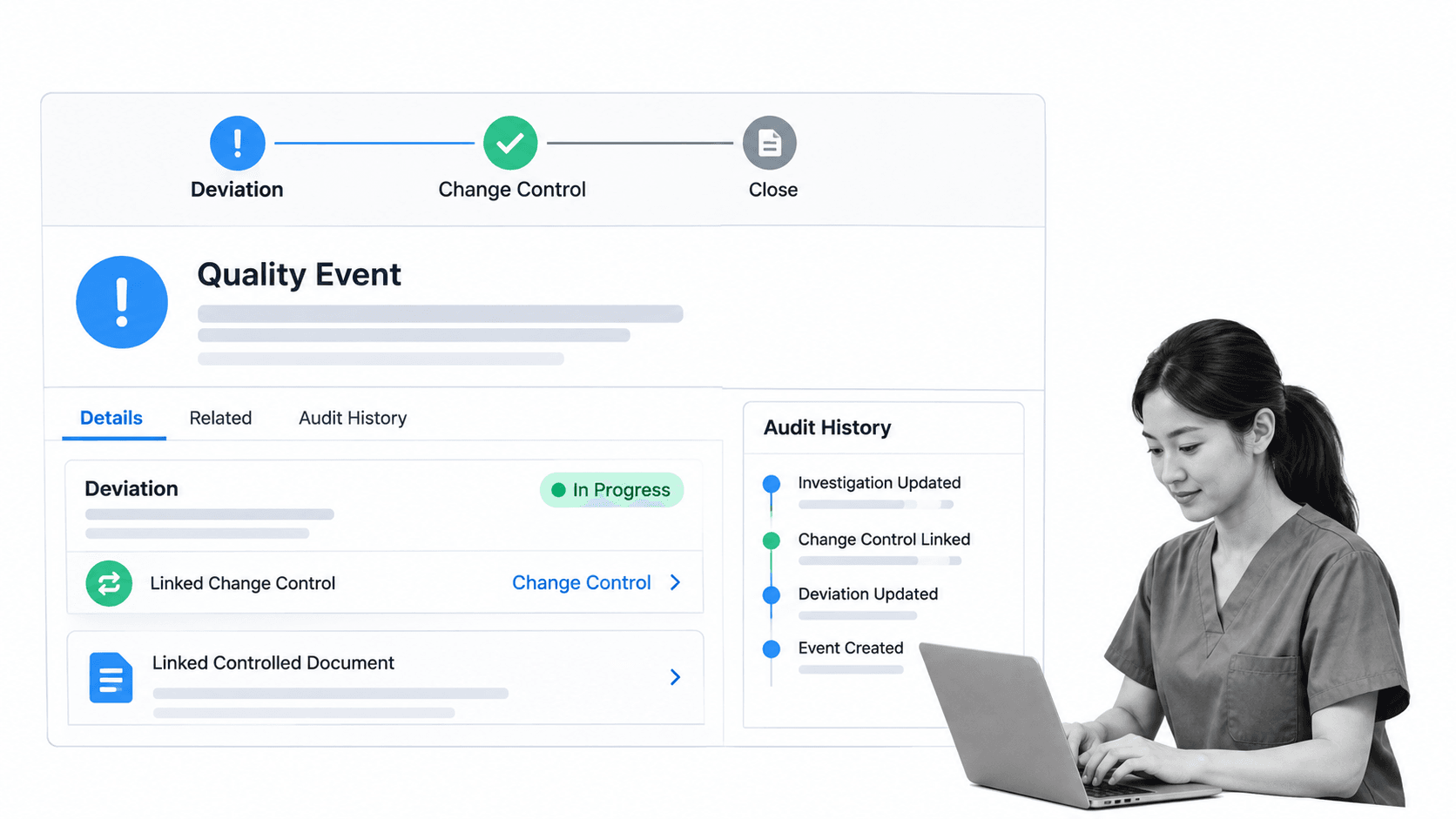
Best for: Enterprise pharma, biotech, CRO, CDMO, and medtech teams already organizing regulated work around the Veeva Vault platform.
Bottom line: Veeva Vault QMS is the stronger alternative when life sciences quality events need to connect with regulated content and other Vault applications.
Veeva Vault QMS provides delivered processes for deviations, audits, complaints, lab investigations, change control, CAPA, supplier quality, quality risk management, and other quality initiatives. Veeva also describes configurable forms and workflows, audit trails, risk management, reporting, document-control connections, partner access, mobile use, and integrations through the Vault platform.
Veeva can beat Process Street when an organization needs a life sciences system of record that connects quality processes with regulated content, regulatory operations, safety, clinical operations, or other Vault applications. That connected application model is different from Process Street’s role as an execution and control layer. A company that already relies on Veeva may gain consistency by keeping related quality records inside the same platform.
Key features
- Delivered life sciences quality processes
- Configurable forms and workflows
- Regulated audit trails and electronic process history
- Connections between quality and regulated content
- Supplier and external-partner access
Pros and cons
Pros: The platform is purpose-built for life sciences, covers a wide set of quality events, and can connect QMS work with other Vault applications. Delivered processes give regulated teams a structured starting point. Veeva’s record-centric model can also suit organizations that need formal system-of-record discipline.
Cons: Buyers outside life sciences may pay for specialization they do not need. Implementation, configuration, change control, and ecosystem decisions can be substantial. Teams should also test whether frontline and occasional contributors can complete their work without excessive navigation.
Choose it if, skip it if, and pricing
Choose Veeva Vault QMS if the organization needs delivered life sciences quality processes and sees value in the wider Vault ecosystem. Skip it if the project is primarily about lightweight, cross-functional workflow execution outside a regulated life sciences system of record. Veeva does not publish a starting QMS price on the product brief. Contact the vendor for current packaging and implementation terms.
4. Qualio
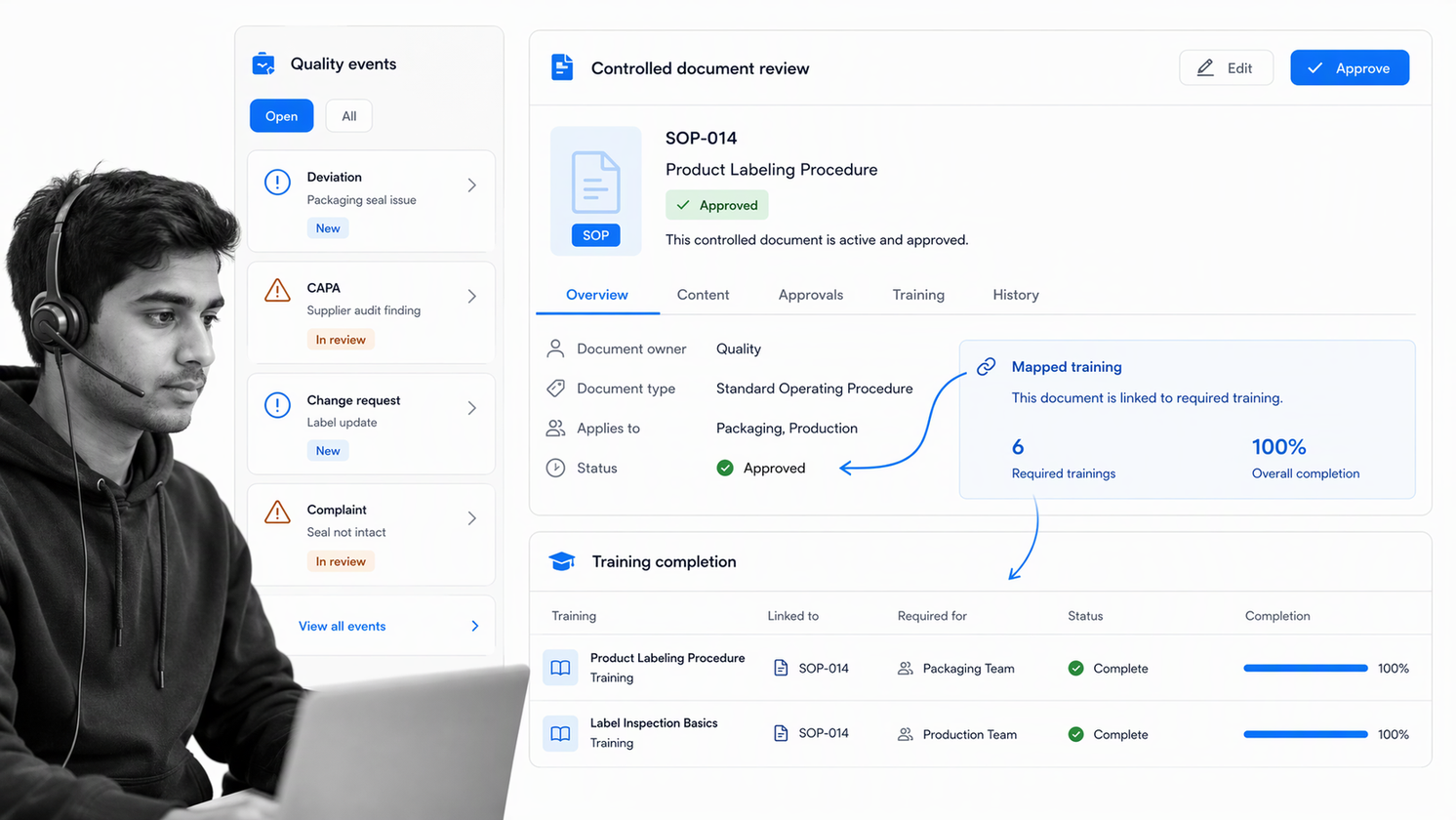
Best for: Growing regulated companies that want a cloud eQMS for documents, training, supplier quality, quality events, and ongoing compliance work.
Bottom line: Qualio is a strong alternative for regulated growth teams that want a modern subscription platform and a guided path from initial quality formalization to broader compliance operations.
Qualio publishes three annual platform plans named Foundation, Growth, and Scale. Its pricing page describes document control, training, supplier quality, quality events, regulatory frameworks, evidence collection, and AI-assisted compliance work. Foundation is aimed at companies formalizing quality for the first time, Growth at organizations managing year-round compliance, and Scale at more complex multi-entity or multi-site environments.
Qualio can beat Process Street when a regulated growth company wants a purpose-built eQMS experience and values packaged compliance workflows, framework mapping, and quality records inside one product. Process Street is stronger when the organization needs to orchestrate a wider range of recurring operational procedures or wants deeper control over cross-functional execution beyond the eQMS boundary.
Key features
- Controlled documents with versioning and approval workflows
- Training compliance tied to quality content
- Supplier quality and quality event management
- Regulatory-framework support and gap analysis
- Evidence collection and AI assistance across plans
Pros and cons
Pros: Qualio provides a focused cloud eQMS for regulated companies, uses plan language that maps to different stages of compliance maturity, and offers a start-for-free path on its published pricing page. The combination of documents, training, suppliers, and quality events can simplify a fragmented early quality stack.
Cons: The commercial price still depends on the scope of frameworks, sites, and connected systems. Teams with complex manufacturing quality, deep product development, or broad EHS requirements should test whether the platform covers the required specialist records.
Choose it if, skip it if, and pricing
Choose Qualio if a regulated growth company wants a purpose-built cloud QMS and a staged commercial path. Skip it if the organization needs on-premise deployment, broad EHSQ, or a general execution layer spanning many non-quality processes. Qualio uses annual platform subscriptions; its current page offers a start-for-free route and custom scopes the Scale plan.
5. Greenlight Guru
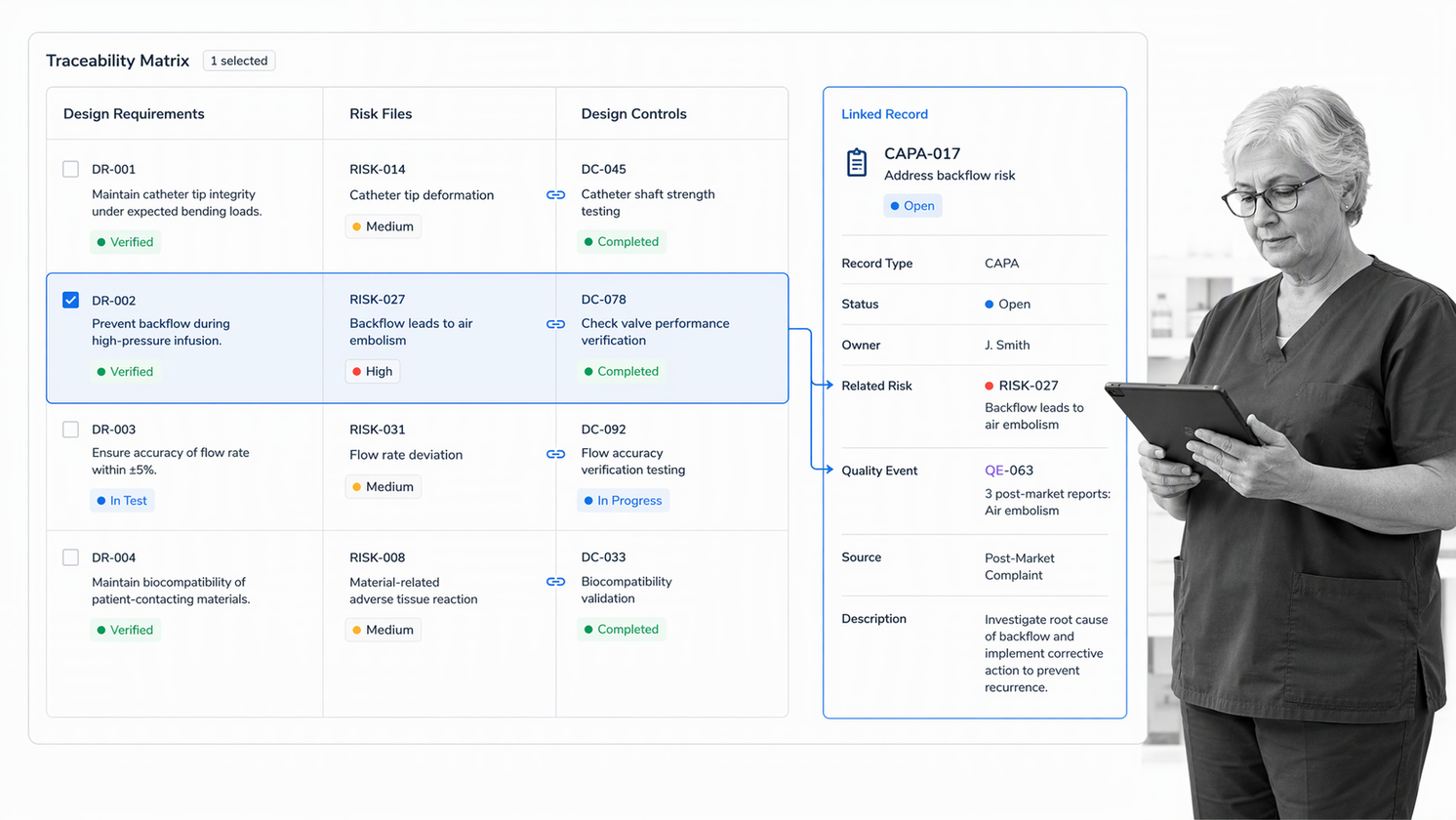
Best for: Medical-device companies connecting product development, risk, quality management, and post-market work.
Bottom line: Greenlight Guru is the better specialist choice when medical-device design controls, risk traceability, validation documentation, and post-market quality define the system.
Greenlight Guru is positioned specifically for medtech. Its official pricing page describes configurable workflows, document types, fields, views, versioning, change-order types, quality-event stages, risk matrices, supplier criteria, validation documentation, complaint and CAPA management, post-market trend analysis, and AI assistance that remains subject to human review.
Greenlight Guru can beat Process Street when a medical-device manufacturer needs the quality system to connect design, risk, product development, and post-market signals in a specialist environment. That traceability is more specific than a general workflow runtime. Process Street is stronger when the organization needs to orchestrate controlled work across many departments or wants the process itself to be the central execution surface.
Key features
- Medical-device quality and product-development focus
- Configurable design and quality workflows
- Risk matrices and linked traceability records
- Complaint, CAPA, supplier, audit, and post-market quality support
- Validation documentation supplied with releases
Pros and cons
Pros: Strong medtech specialization gives the product a clear fit, and the traceability between product development and quality records can reduce manual reconciliation. Validation documentation, training resources, support, and a dedicated success contact are included according to the vendor’s pricing page.
Cons: Teams outside medical devices may not benefit from the specialization. Implementation services are priced separately, and the published annual starting price is materially higher than a lightweight workflow tool. Buyers should map which quality and product-development capabilities are actually needed.
Choose it if, skip it if, and pricing
Choose Greenlight Guru if medical-device quality, design controls, risk, and post-market traceability are central requirements. Skip it if the buyer needs a general process platform or works outside medtech. Greenlight Guru publishes a starting price of $12,000 per year for quality and product-development subscriptions, with implementation priced separately.
6. Intelex
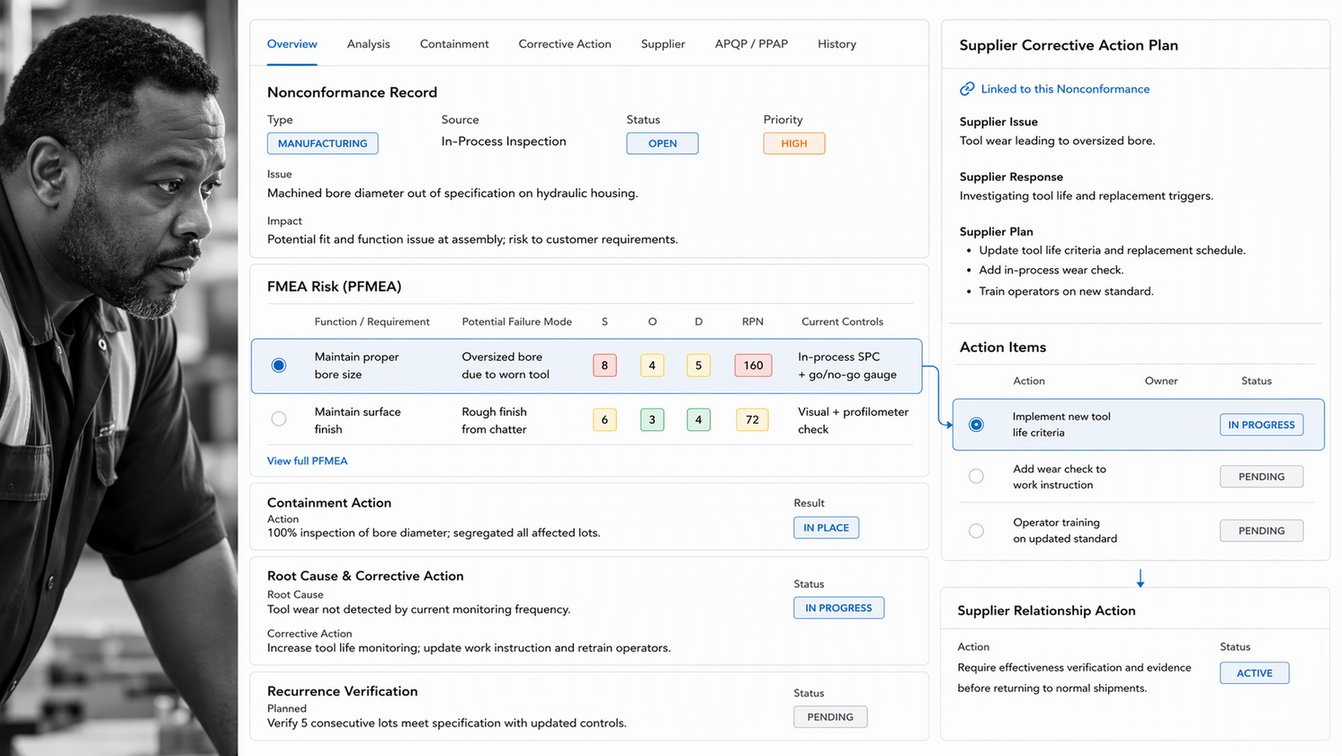
Best for: Industrial organizations combining quality management with environmental, health, safety, and operational risk programs.
Bottom line: Intelex is the stronger option when quality work must sit inside a wider EHSQ operating model with advanced manufacturing quality tools.
Intelex Quality Management Software includes document control, nonconformance reporting, corrective and preventive action, audits, training, supplier relationship management, and advanced quality tools for FMEA, APQP, and PPAP. The official product page frames quality as a lifecycle that connects planning, operational management, customer feedback, root cause, corrective action, and continuous improvement.
Intelex can beat Process Street when an enterprise wants a combined quality and EHSQ environment, especially where plant inspections, risk programs, supplier quality, and advanced planning records need common governance. Process Street is a better fit when the organization wants a simpler execution layer for recurring procedures or when specialist EHS and quality systems will remain separate systems of record.
Key features
- Nonconformance and CAPA management
- Document control and audit management
- FMEA, APQP, and PPAP quality tools
- Supplier relationship and training management
- Quality and EHSQ program alignment
Pros and cons
Pros: Intelex covers advanced manufacturing quality methods and can align quality with wider EHS programs. It offers a broad enterprise perspective on nonconformance, risk, suppliers, audits, and action plans. This can reduce the number of disconnected governance systems in a large industrial organization.
Cons: The breadth may be more than a focused quality or operations team needs. Buyers should understand the boundary between quality and EHS data, the reporting model, mobile and offline needs, and the effort required to configure a usable frontline experience.
Choose it if, skip it if, and pricing
Choose Intelex if the organization wants enterprise quality and EHSQ capabilities together or relies on FMEA, APQP, PPAP, supplier quality, and industrial risk workflows. Skip it if the need is a lightweight recurring-process layer without a large specialist suite. Intelex publishes flexible, custom pricing for quality. Its separate Safety Essentials price should not be treated as the QMS starting price.
7. QT9 QMS
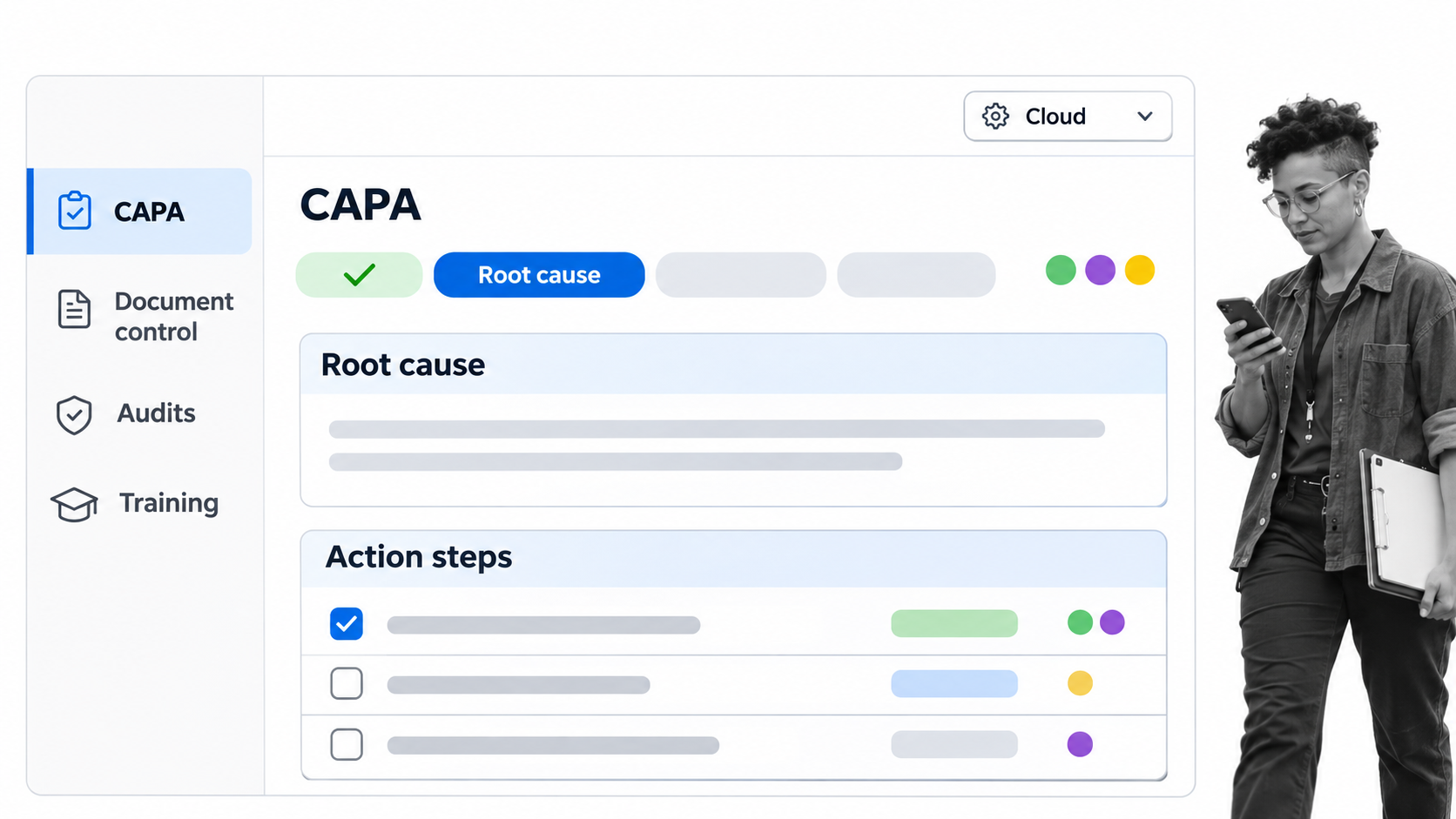
Best for: Regulated manufacturers seeking a broad module set, concurrent licensing, and a choice between cloud and on-premise deployment.
Bottom line: QT9 QMS is a practical alternative when module breadth and deployment flexibility matter more than a cloud-only workflow-first model.
QT9 QMS uses annual concurrent licensing and offers cloud or on-premise deployment. Its pricing page states that every plan includes all modules, training, support, and software upgrades. Pricing depends on concurrent users, deployment, sites, and implementation. A free trial is available without a credit card.
The module set includes document control, training, audits, CAPA, nonconformance, quality events, suppliers, and other quality functions. QT9 can beat Process Street when a manufacturer needs a broad QMS package, wants concurrent rather than named-user licensing, or requires an on-premise option. Process Street is stronger when cross-functional recurring workflow execution, rapid process adaptation, and governed agent or automation steps matter more than a fixed QMS module portfolio.
Key features
- All QMS modules included in the subscription
- Annual concurrent licensing
- Cloud or on-premise deployment
- Training, support, and software upgrades included
- Pre-validation and optional validation documentation
Pros and cons
Pros: QT9 makes its licensing model and deployment choices clear, includes broad module access, and offers a free trial. Concurrent licensing can suit organizations with many occasional users but fewer simultaneous sessions. The on-premise option also distinguishes it from cloud-only alternatives.
Cons: Quote-based pricing still requires a scoped consultation. Validation documentation is not included in the base package. Buyers should test the complete workflow from issue capture through corrective action and effectiveness review, because module breadth alone does not guarantee a simple contributor experience.
Choose it if, skip it if, and pricing
Choose QT9 QMS if broad modules, concurrent licensing, or on-premise deployment are important. Skip it if the organization mainly needs a cloud execution layer for procedures across several business functions. Pricing is quote-based and depends on concurrent users, deployment, sites, and implementation. Use the free trial to test real contributor and administrator workflows.
How to choose an ETQ Reliance alternative
Choose the replacement by mapping the quality work, evidence, and system boundaries before comparing feature lists. A broad checklist can make every vendor appear equivalent. A real process exposes the differences: who receives the task, which data changes the route, what must be attached, who approves, what happens after rejection, which system owns the final record, and how the organization proves completion later.
Start with one representative quality process
Use a process with enough variation to test the system, such as a supplier nonconformance or an internal audit finding. Include the intake, severity decision, containment, investigation, corrective action, approval, effectiveness review, linked document or training change, and closure evidence. A workflow management system evaluation should test the happy path and the exception path, not just the builder demo.
Separate execution needs from specialist records
List which records require a dedicated domain system. Laboratory results may belong in a LIMS. Product structures may belong in PLM. Equipment calibration may remain in an asset system. The quality management system software or workflow platform should coordinate the work without creating duplicate masters. The enterprise quality management software decision becomes clearer when each record has one owner.
Test governance and administration
Ask who can change a workflow, form, field, route, report, or module configuration. Confirm how changes are reviewed, versioned, tested, and released. Flexibility is useful only when the organization can govern it. The same principle applies to quality management system software: the system should support a controlled operating model, not create uncontrolled local variants.
Model the commercial and migration scope
Compare licenses, implementation services, validation support, migration, integrations, environments, training, support, and ongoing administrator effort. A lower subscription can become expensive if the team must rebuild reports or manually reconcile systems. A larger suite can also become wasteful if most users need only a few recurring workflows. Preserve records according to retention policy, migrate active work carefully, and keep a verified read-only archive when full migration would add risk without operational value.
Compare each finalist with the incumbent baseline
A replacement does not need to copy every ETQ Reliance capability, but every removed capability needs an explicit destination. Some functions may move into the new platform. Others may remain in a specialist system, become a controlled workflow, or retire because the organization no longer uses them. The fit-gap review should name the future owner, record, workflow, and evidence requirement for every important current process.
| Decision area | ETQ Reliance baseline | What to prove in an alternative |
|---|---|---|
| Quality applications | Broad configurable QMS application portfolio | Required records exist, or the replacement workflow connects cleanly to their system of record |
| Recurring execution | Quality processes run through configured applications | Owners, deadlines, conditions, approvals, evidence, and exceptions work in a real test case |
| Administration | Configuration supports adaptation across quality processes | Changes can be governed, tested, versioned, and maintained by the available team |
| Reporting | Quality data and analytics span connected applications | Leaders can see status, overdue work, risk, recurrence, and corrective-action effectiveness |
| Architecture | Cloud-native QMS with integration and mobile capabilities | Deployment, identity, data flow, resilience, and integration ownership match enterprise requirements |
Use scenario-based demonstrations
A scripted vendor tour can hide the work that matters most. Give every finalist the same scenarios and data. Ask the vendor to start with an incomplete supplier complaint, assign triage, change the route after a high-severity answer, collect evidence, reject the first corrective-action proposal, reassign an unavailable reviewer, update a controlled procedure, trigger retraining, and close only after an effectiveness check. Then ask the vendor to show the full history and the management report.
Include an integration failure and a policy exception. A quality process is not proven by the happy path alone. The team needs to see what happens when a required document is missing, a source system is unavailable, an approval is rejected, or a task becomes overdue. Strong platforms make the exception visible, assign it, preserve its context, and return it to the governed process. Weak implementations push the exception into email and leave the official record incomplete.
| Must-have test | Evidence to request | Failure signal |
|---|---|---|
| Conditional routing | One case follows a standard path and another follows a high-risk path from the same design | Administrators must clone the process or manually redirect work |
| Approval control | Rejected work returns with context and cannot close until corrected | Approval is a notification rather than a blocking decision |
| Evidence integrity | Required fields, files, decisions, and timestamps remain connected to the case | Proof must be assembled from separate messages and folders |
| Contributor usability | An occasional user completes the assigned action without administrator coaching | The user navigates multiple modules to find one task |
| Change governance | A process change is reviewed, tested, released, and traceable | Local configuration changes cannot be controlled or compared |
| Exception recovery | A failed integration or unavailable owner creates a visible route with accountability | The case stalls silently or disappears into a side channel |
Match the specialist to the use case
Process Street is the default choice for governed recurring execution. MasterControl is a stronger fit when life sciences quality, manufacturing, assets, training, and validation support need a connected specialist platform. Veeva Vault QMS is compelling when the enterprise already organizes regulated content and adjacent life sciences functions around Vault. Qualio suits regulated growth companies that want a focused cloud eQMS. Greenlight Guru stands out for medical-device design and quality traceability. Intelex fits a combined quality and EHSQ program. QT9 QMS fits manufacturers that value broad modules, concurrent licensing, and cloud or on-premise deployment.
Those distinctions should remain visible in the final decision. A weighted score can help, but do not let a high total erase a critical requirement. If on-premise deployment is mandatory, a cloud-only finalist cannot compensate with better reporting. If medical-device traceability is the core need, a general workflow platform should not receive extra credit for unrelated flexibility. If the main risk is skipped work and missing evidence across several departments, an application-rich QMS should not win merely because it contains more modules.
Plan a controlled transition
Begin with an inventory of active ETQ Reliance applications, integrations, reports, forms, roles, records, retention rules, and open cases. Classify each item as migrate, integrate, archive, rebuild, or retire. Assign a business owner and technical owner to every migration stream. Quality should define the required record and acceptance criteria; technology should define identity, data, integration, and recovery controls. Neither team can safely run the transition alone.
Run the incumbent and replacement in parallel for a bounded pilot where duplicate execution does not create regulatory confusion. Reconcile inputs, routes, decisions, evidence, and outputs. Record every exception and decide whether the cause is configuration, training, source data, integration, or process design. Approve the new process only after the pilot meets its acceptance criteria. Then cut over by process or site using an enterprise quality management system transition plan instead of moving the entire quality system at once.
The retirement plan matters as much as the implementation. Freeze obsolete configurations, preserve required history in an accessible format, document where each retained record lives, remove unnecessary access, and confirm that audits can still retrieve historical evidence. The new system should improve the operating model without breaking the organization’s ability to explain what happened before the migration.
ETQ Reliance alternatives FAQs
What is the best ETQ Reliance alternative for recurring quality workflows?
Process Street is the best fit when the main requirement is to turn quality procedures into assigned, conditional, approval-controlled workflows with evidence and history. A specialist eQMS may be better when the organization needs delivered regulated applications or deep industry records.
Is there a free ETQ Reliance alternative?
QT9 QMS offers a free trial, Qualio presents a start-for-free path, and Process Street offers a 14-day Pro trial. These are evaluation routes, not necessarily permanent free QMS plans. Confirm current limitations and commercial terms on each vendor’s pricing page.
What is the best ETQ Reliance alternative for life sciences?
MasterControl and Veeva Vault QMS are the strongest specialist options in this list for enterprise life sciences quality. Qualio can suit growing regulated companies that want a focused cloud eQMS. The right choice depends on the required processes, validation model, connected applications, and implementation scope.
What is the best ETQ Reliance alternative for medical device teams?
Greenlight Guru is the most specialized choice for medical-device teams because its product connects quality management with product development, risk, traceability, and post-market work. MasterControl, Veeva, Qualio, and QT9 may also fit depending on company size and system requirements.
Which ETQ Reliance competitor supports on-premise deployment?
QT9 QMS explicitly offers cloud or on-premise deployment on its pricing page. The other ranked products are presented primarily as cloud services. Confirm infrastructure, data residency, security, upgrade, and support responsibilities before choosing an on-premise model.
How should a team migrate from ETQ Reliance?
Inventory active processes, records, integrations, reports, retention rules, and configuration ownership first. Pilot one representative process in the replacement, reconcile results, migrate active work deliberately, preserve required history, train users by role, and define a controlled cutover with rollback criteria.
Why is Process Street ranked first among ETQ Reliance alternatives?
Process Street ranks first for teams that need enforceable, trackable, recurring process and SOP execution. It gives each quality procedure assigned tasks, required fields, conditional routes, approvals, evidence, integrations, and history. A specialist competitor can be better when deep life sciences, medtech, EHSQ, or on-premise capabilities matter more.
Run quality workflows with Process Street
The best ETQ Reliance alternative is the one that matches how your organization needs quality work to run. Choose a specialist suite when regulated industry depth or a particular system architecture is the deciding factor. Choose Process Street when the approved procedure needs to become assigned, enforceable, connected work that creates proof as it runs.
Explore Process Street if recurring quality, compliance, and operational workflows need clearer ownership, controlled decisions, evidence, and execution history. You can also browse the software alternatives hub for other focused comparisons.