






Business requirements define the outcomes, capabilities, constraints, and value an organization needs from a project, product, process, service, or system. A business requirements document, or BRD, turns those needs into an agreed record that guides scope, decisions, delivery, and acceptance.
This guide explains what business requirements are, how they differ from functional requirements, what a BRD should contain, and how to create one in seven practical steps. It also includes a free Business Requirements Template that connects documentation with review and execution.
Read on to learn:
- What business requirements and a BRD mean
- What a business requirements document should include
- How business and functional requirements differ
- How to write a BRD from stakeholder discovery through approval
- How to keep requirements controlled after the project starts
Business Requirements Template for your project
A BRD is useful only when people can review it, agree on it, and use it to guide delivery. This template gives the work a defined sequence instead of leaving requirements scattered across meeting notes, email, and disconnected files.
Use the template to capture the business need, stakeholder expectations, scope, requirements, ownership, priorities, metrics, acceptance criteria, approvals, and change history.
The finished BRD should help stakeholders agree on four things: the problem or opportunity, the business outcome, the boundaries of the work, and the evidence that will count as success.
Business requirements and why they matter
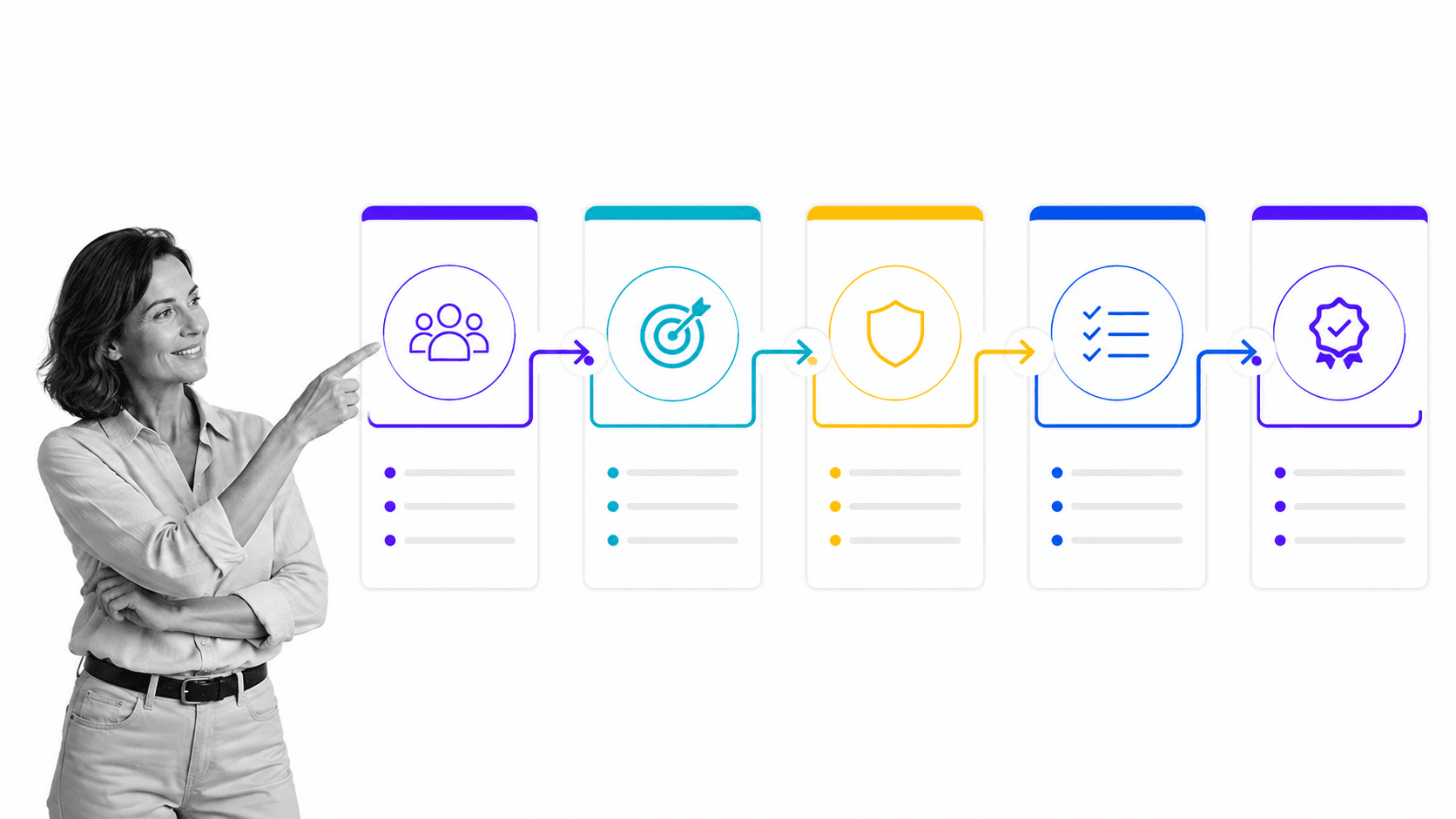
Business requirements describe what the organization needs to achieve and why the work matters. They belong above the level of a specific interface, field, button, or technical implementation. Those details come later as solution, functional, and nonfunctional requirements.
The IIBA Business Analysis Standard treats business requirements as statements of goals, objectives, and outcomes. Stakeholder requirements describe what affected groups need. Solution requirements describe the capabilities and qualities that will meet those needs.
That hierarchy prevents a common mistake: jumping from a stakeholder complaint directly to a favored tool. If customers need faster claims decisions, the business requirement is not “buy a new claims portal.” The requirement is an outcome such as reducing the time from a complete claim to a decision while maintaining defined control and quality standards. A portal may be one solution, but it should not be mistaken for the need itself.
What business requirements are not
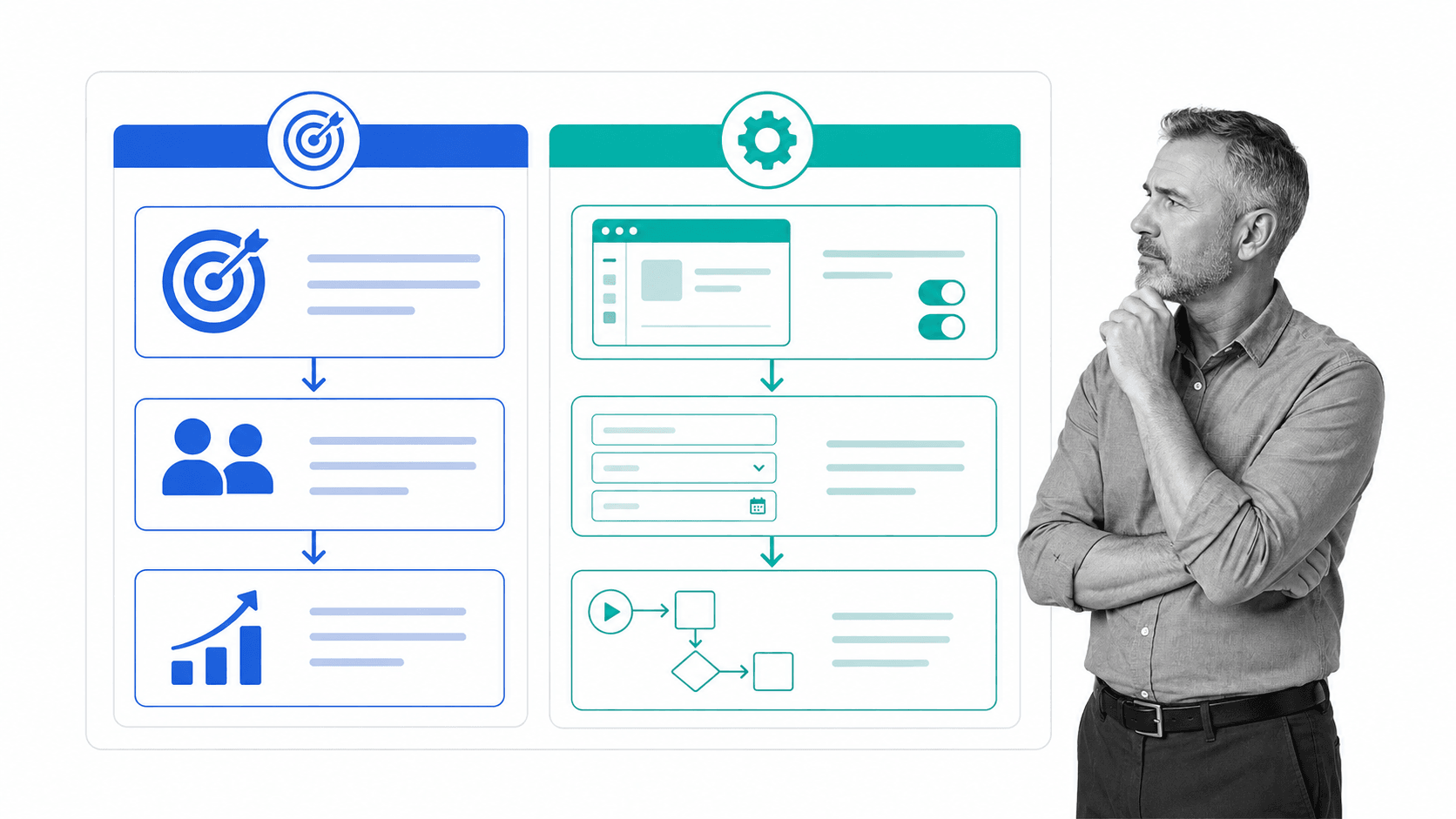
A business objective, a business requirement, and a functional requirement answer different questions:
- Objective: What result does the organization want?
- Business requirement: What outcome or capability must exist to support that objective?
- Functional requirement: What must the solution do?
- Nonfunctional requirement: How well must the solution perform, and under which constraints?
- Acceptance criterion: What observable evidence proves the requirement has been met?
Consider a customer support team whose objective is to resolve urgent cases faster. A business requirement might state that every critical case must reach an accountable specialist within ten minutes. A functional requirement could state that the system assigns a critical case to the on-call group and sends an escalation when nobody accepts it. A nonfunctional requirement could require that the assignment occurs within thirty seconds and remains available during a regional outage. The acceptance criterion would define the test data and result that prove the behavior works.
This chain keeps discussion at the correct level. Stakeholders can agree on the business need before the team commits to a design. Delivery teams can then propose functions and controls that satisfy the requirement without treating the first idea as the only possible answer.
Business requirements vs functional requirements
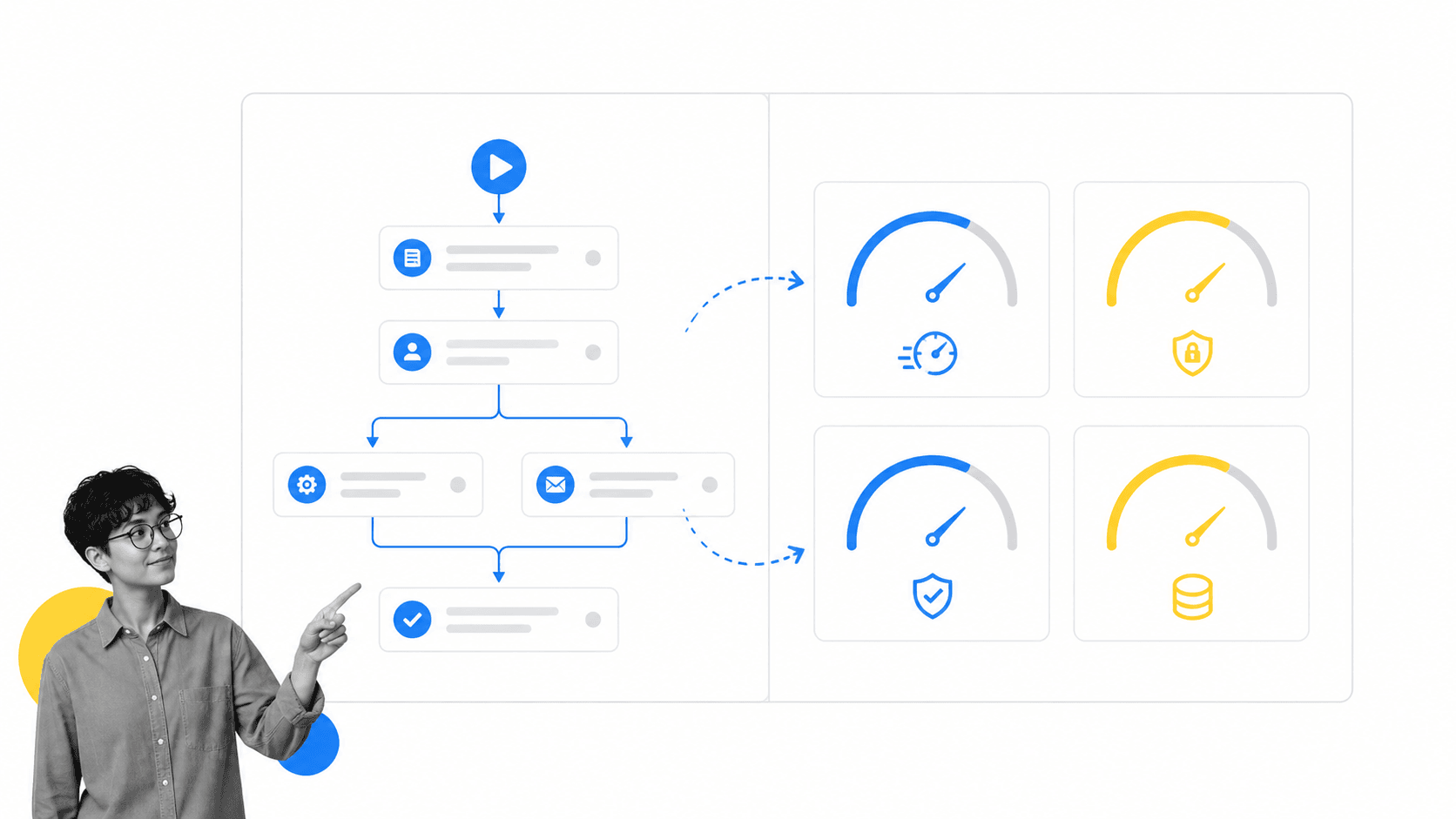
Business requirements explain the organizational outcome or capability. Functional requirements explain the behaviors a solution must provide. Nonfunctional requirements define qualities such as security, reliability, performance, capacity, accessibility, and recoverability.
A single business requirement can produce several functional and nonfunctional requirements. If the business needs controlled vendor onboarding, the solution may need to collect an intake form, route due diligence, assign risk reviews, block approval until required evidence exists, and preserve an audit trail. It may also need role-based access, defined response times, data retention, and recovery controls.
The BRD does not need to become a complete technical specification. It should include enough information to define the business need, scope, stakeholders, assumptions, constraints, priorities, dependencies, risks, success measures, and acceptance approach. Detailed product requirements, user stories, data models, and technical designs can follow in linked documents.
What should a business requirements document include?
A practical BRD normally includes:
- Executive summary: the business problem or opportunity and the intended outcome.
- Background: why the work is needed now and what evidence supports the need.
- Scope: what is included, what is excluded, and where the boundaries sit.
- Stakeholders: who owns, uses, approves, funds, governs, or is affected by the result.
- Business requirements: clear, outcome-oriented statements that can be traced to the business need.
- Assumptions and constraints: time, budget, policy, technology, data, regulatory, and operating boundaries.
- Dependencies and risks: external decisions, systems, vendors, teams, and events that can affect delivery.
- Priority: which requirements are mandatory, important, or optional.
- Metrics and acceptance criteria: how success will be measured and approved.
- Governance: owners, reviewers, approvers, change control, version history, and review dates.
The level of detail should match the risk. A small internal improvement may need a concise BRD. A regulated, customer-facing, or high-cost change needs clearer traceability, evidence, control ownership, and sign-off.
Business requirements document example
Consider an insurance operations team that receives vendor onboarding requests through email. The requests arrive with different information, due diligence starts late, ownership is unclear, and business sponsors cannot see why an approval is blocked.
The BRD might define the objective as reducing onboarding delays without weakening risk controls. The in-scope work starts when a sponsor submits a complete request and ends when the vendor is approved, rejected, or returned for more information. Procurement, information security, legal, finance, compliance, and the business sponsor are stakeholders.
One business requirement could state: “The organization must apply a documented risk tier to every vendor before approval and use that tier to determine which reviews and evidence are required.” Supporting functional requirements could include collecting required intake data, calculating an initial tier, routing reviews, blocking approval when mandatory evidence is missing, and recording the final decision. Nonfunctional requirements could cover access control, retention, response time, and availability.
The acceptance criteria would use representative low, medium, and high-risk test cases. Each case should follow the correct review path, prevent unauthorized approval, preserve required evidence, and produce an audit record. This example keeps the business need, solution behavior, quality constraints, and proof of acceptance connected without collapsing them into one vague statement.
Benefits of clear business requirements
Clear business requirements improve decisions before expensive delivery work begins. They expose disagreement while change is still cheap. They give sponsors a basis for prioritizing scope, give delivery teams a stable outcome to design toward, and give reviewers a way to test whether the result is acceptable.
Requirements also make cost and schedule conversations more honest. A team can estimate a defined capability and acceptance approach more credibly than a collection of aspirations. When a constraint changes, traceability shows which activities, controls, tests, and deadlines are affected.
They protect the business case. A project can deliver every requested feature and still fail if those features do not produce the required outcome. Metrics tied to the business requirement keep the team focused on value rather than completion alone.
Requirements do not eliminate uncertainty. They create a controlled way to learn. Assumptions can be tested, open questions can be assigned, and changes can be evaluated against the approved need instead of accepted through the loudest request.
Requirements discipline reduces avoidable failure. In PMI research, inaccurate requirements gathering was cited as a primary cause in 37% of failed projects. The useful lesson is not that documentation guarantees success. It is that vague, misunderstood, or untraceable requirements make failure harder to prevent and easier to explain away.
How to create a Business Requirements Document
Writing a BRD is a discovery and decision process. The document is the record of that work. Use the following seven steps to move from stakeholder input to an approved, traceable set of business requirements.
Step 1. Identify stakeholder needs
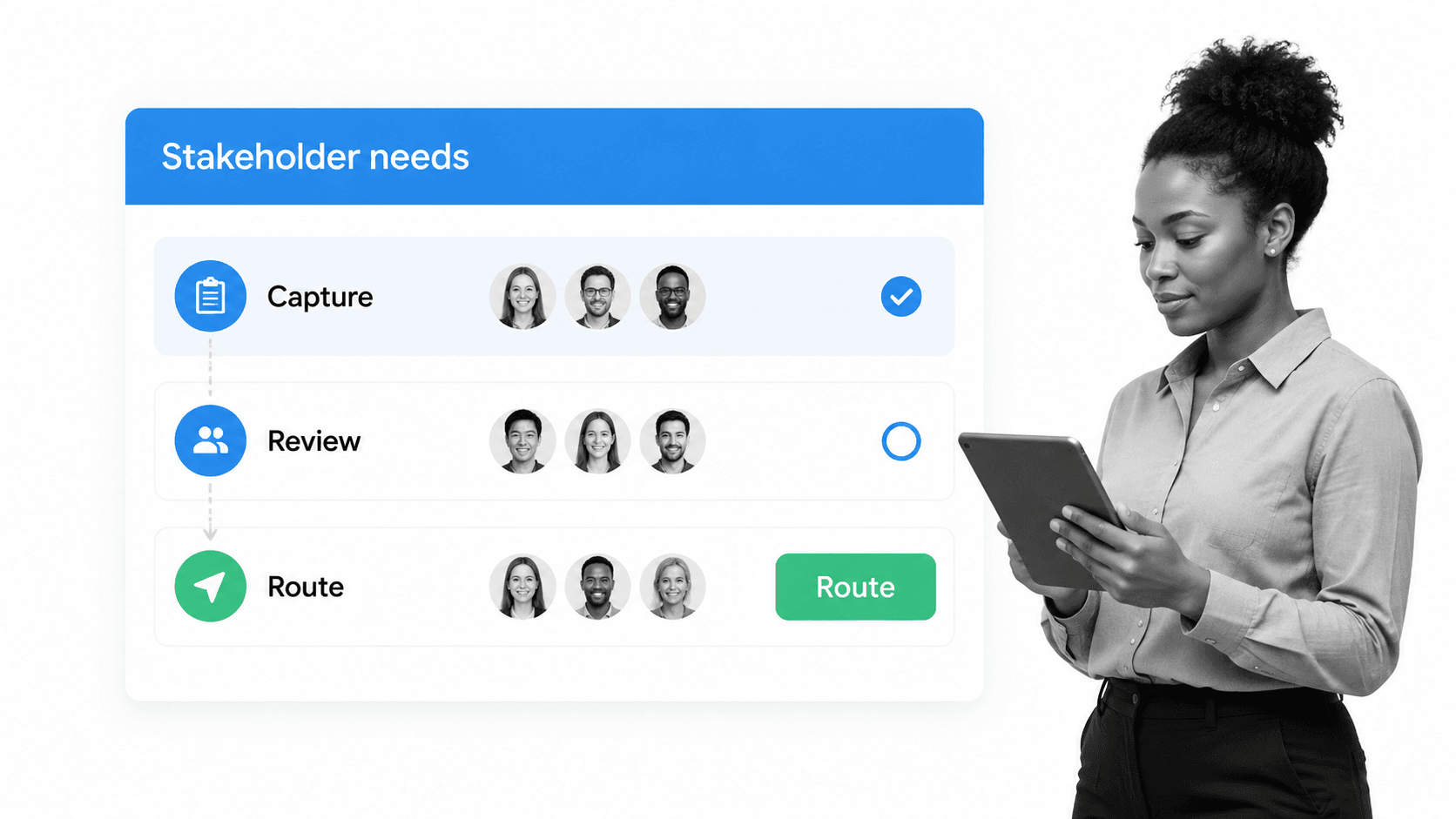
Start with the people who experience the problem, own the outcome, provide inputs, perform the work, govern the risk, or approve the change. Interview them individually where power dynamics may suppress useful disagreement. Use workshops or focus groups when the group needs to see tradeoffs together.
Ask for recent examples. “Walk through the last urgent case” produces better evidence than “What should the new system do?” Observe the current process where possible. Collect reports, policies, audit findings, customer complaints, service data, and existing requirements.
Use more than one elicitation method when the decision carries risk. Interviews reveal individual needs and political constraints. Workshops expose conflicts and dependencies. Observation shows workarounds people forget to mention. Document analysis reveals formal obligations. Surveys can quantify patterns after qualitative work identifies the right questions. Prototypes help stakeholders react to a concrete possibility, but they should test a requirement rather than silently replace it.
Separate facts, assumptions, preferences, and decisions in the notes. A fact may be supported by operating data or policy. An assumption still needs validation. A preference can influence design but should not masquerade as a mandatory business need. A decision needs an owner and rationale.
Business analyst tools can help capture interviews, model processes, organize requirements, and maintain traceability. The tool does not replace judgment. Record the source, need, rationale, conflict, and open question behind each candidate requirement.
Step 2. Define objectives, outcomes, and requirements
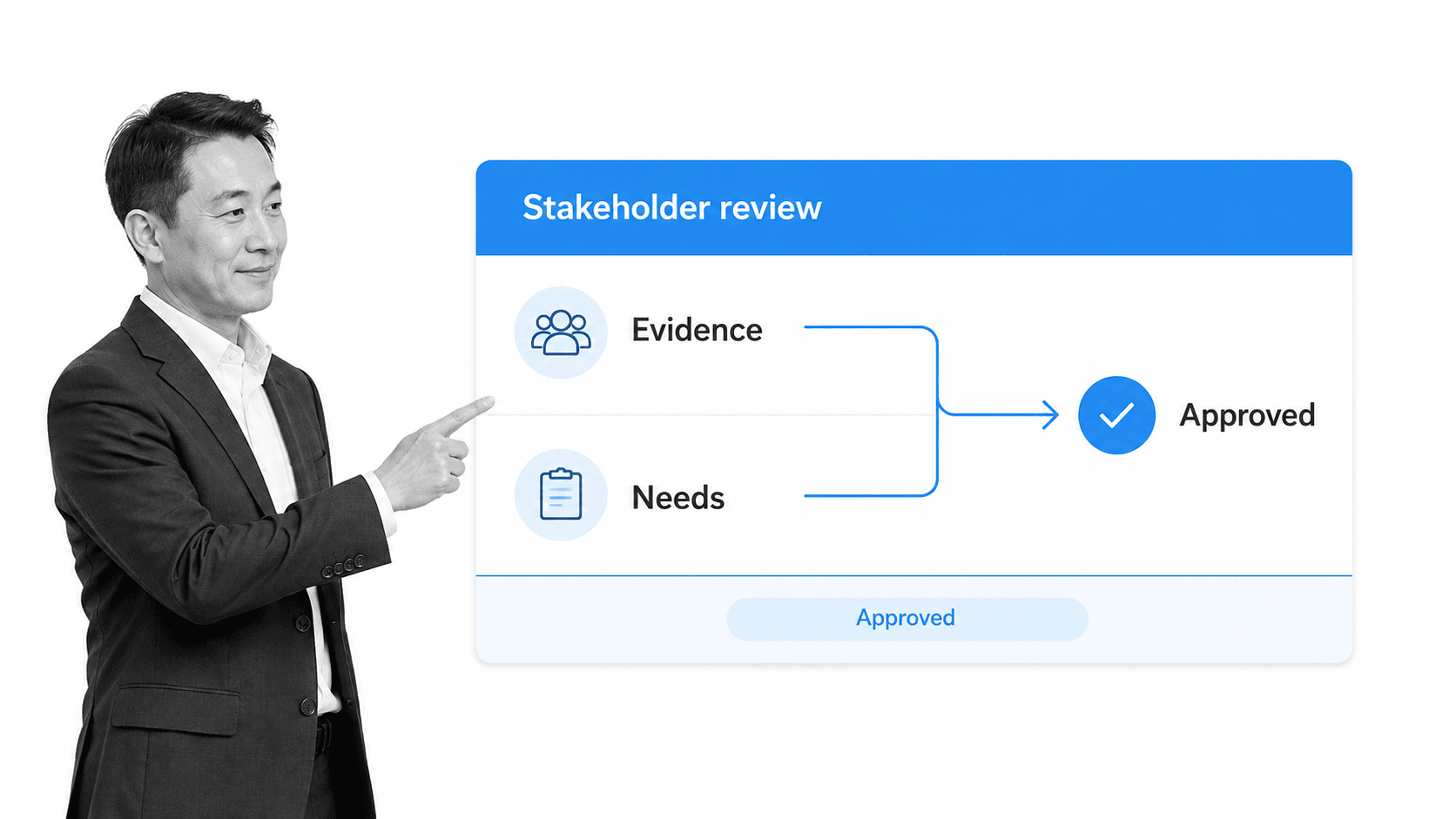
Translate stakeholder evidence into a small number of business objectives and outcomes. Then write business requirements that explain what capability or condition must exist to reach those outcomes.
Good business requirements are necessary, unambiguous, feasible, traceable, and testable at the business level. Avoid language that hides a preferred design unless the design is itself a real constraint. “Provide managers with a daily exception view” leaves room for design. “Build a blue dashboard in Salesforce” commits to a tool and interface before the need has been evaluated.
Resolve conflicts openly. Sales may want fewer approval steps while risk requires additional evidence. The BRD should show the decision, owner, rationale, and accepted tradeoff instead of pretending both demands can be satisfied without consequence.
Step 3. Trace requirements to activities and solution needs
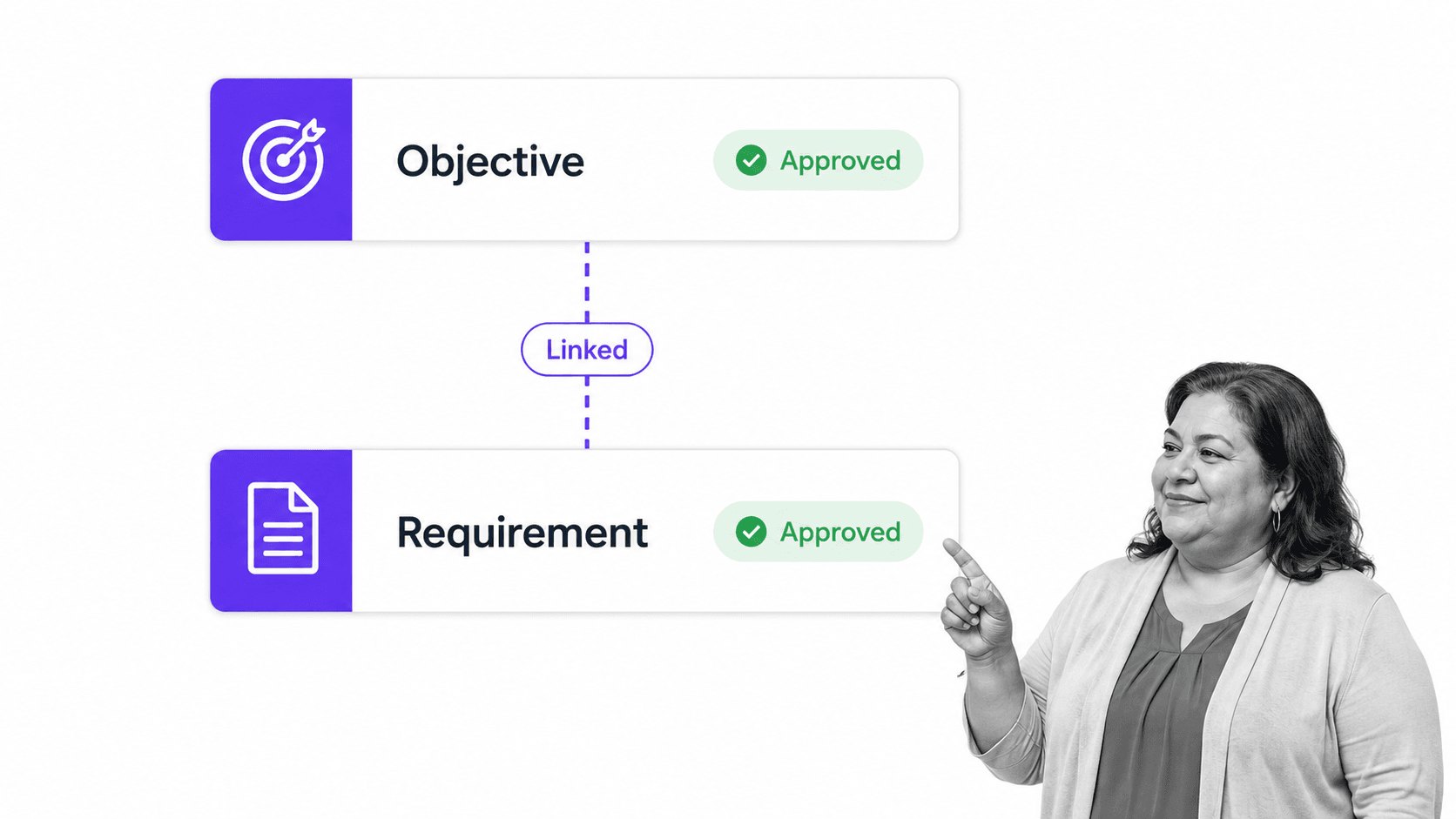
Connect every requirement to the objective and stakeholder need it supports. This creates a requirements traceability path. If a requirement cannot be traced to a real need, question whether it belongs. If an objective has no supporting requirement, the BRD has a gap.
Next, identify the business activities, decisions, information, and controls affected by the requirement. This is where the work begins to connect with solution requirements and process design. Keep the levels distinct, but do not let the BRD become an isolated statement of intent.
Traceability also controls change. When a stakeholder asks for a new feature, the team can identify which business need it supports, which requirements and controls it changes, and which tests must be updated.
Step 4. Assign accountability, priority, metrics, and acceptance criteria
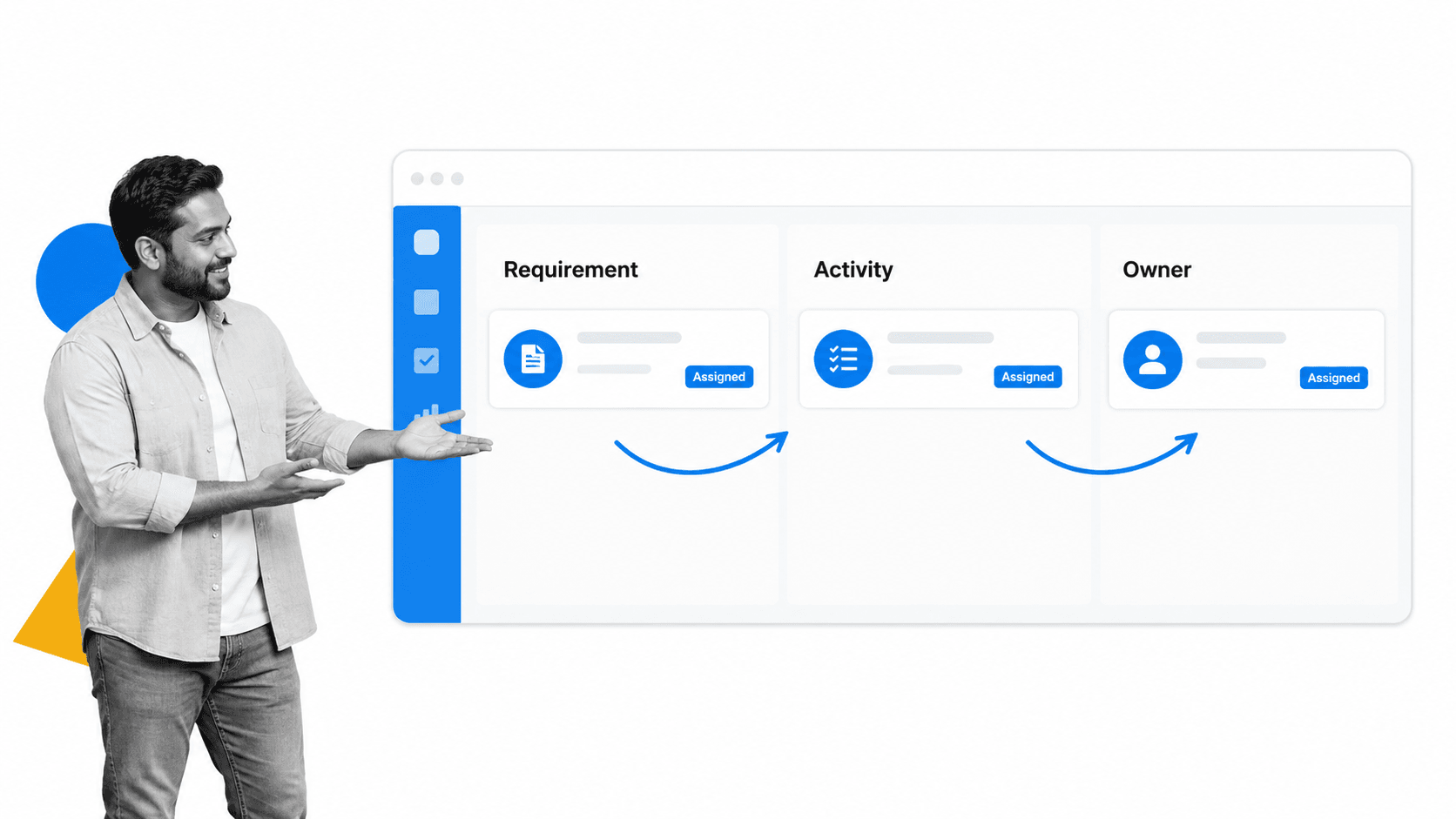
Every important requirement needs an accountable owner. The owner answers questions, resolves ambiguity, accepts changes, and confirms whether the delivered result meets the business need.
Set priority using an agreed method such as must have, should have, could have, and will not have now. Priority is a decision about value, risk, dependency, and timing. It should not be a disguised list where everything is mandatory.
Define metrics and acceptance criteria before delivery. A requirement to “improve onboarding” is too vague. A stronger version defines the population, starting point, target outcome, time window, quality guardrail, and evidence source. That makes the requirement testable and reduces arguments at the end of the project.
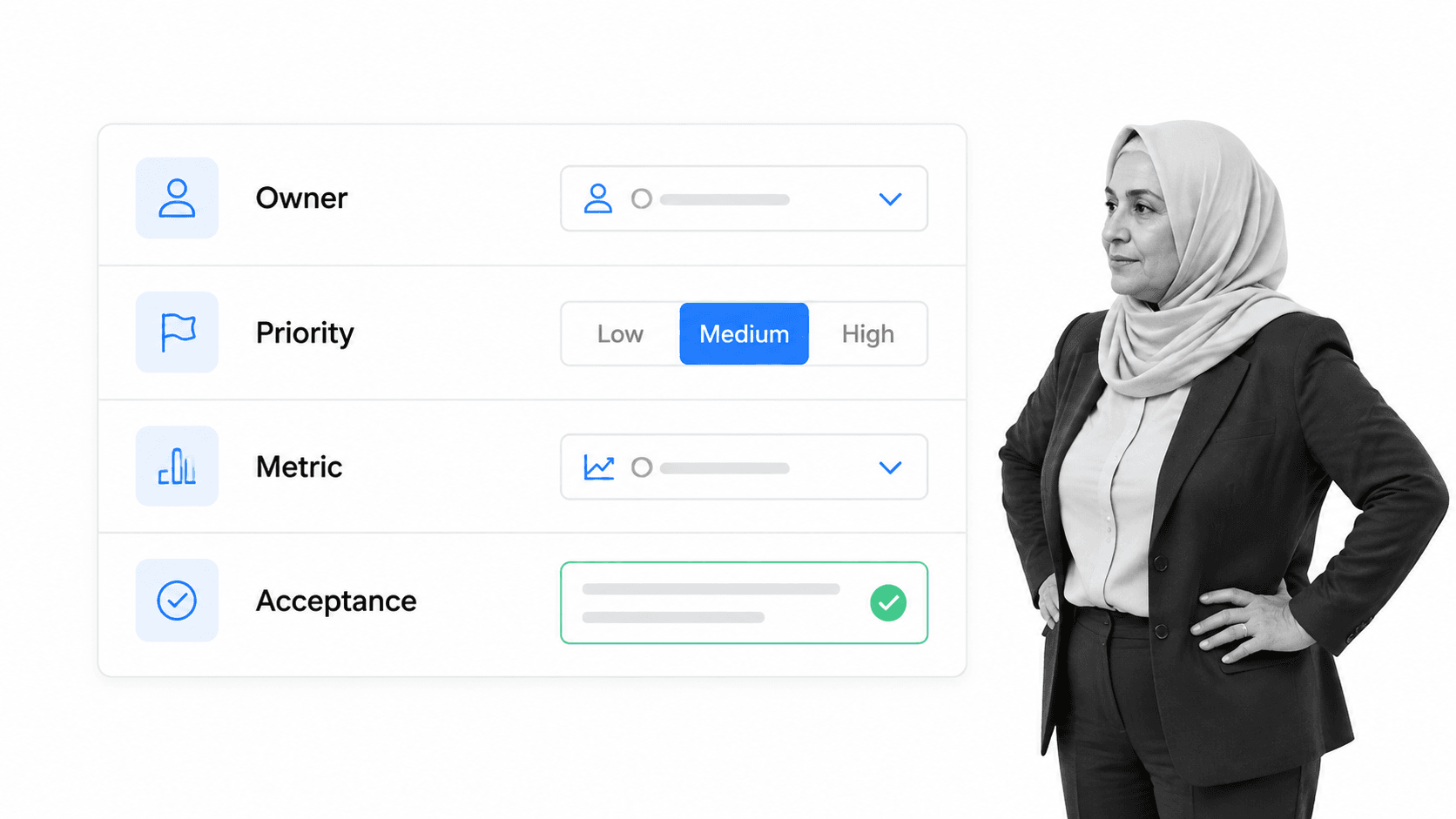
Acceptance criteria should cover the normal path and critical exceptions. If a control matters only when data is missing, an approval is rejected, or a deadline is breached, include that case in the acceptance plan.
Step 5. Assemble and review the BRD
Bring the summary, scope, stakeholders, requirements, assumptions, constraints, dependencies, risks, priorities, metrics, and acceptance criteria into one controlled document. Use consistent identifiers so requirements can be referenced in decisions, delivery plans, tests, and change requests.
Review for completeness, consistency, feasibility, and traceability. Look for duplicate requirements, hidden solutions, undefined terms, conflicting priorities, missing owners, and requirements that cannot be tested. A structured peer review usually finds more than another pass by the author.
Step 6. Approve the baseline and manage adoption
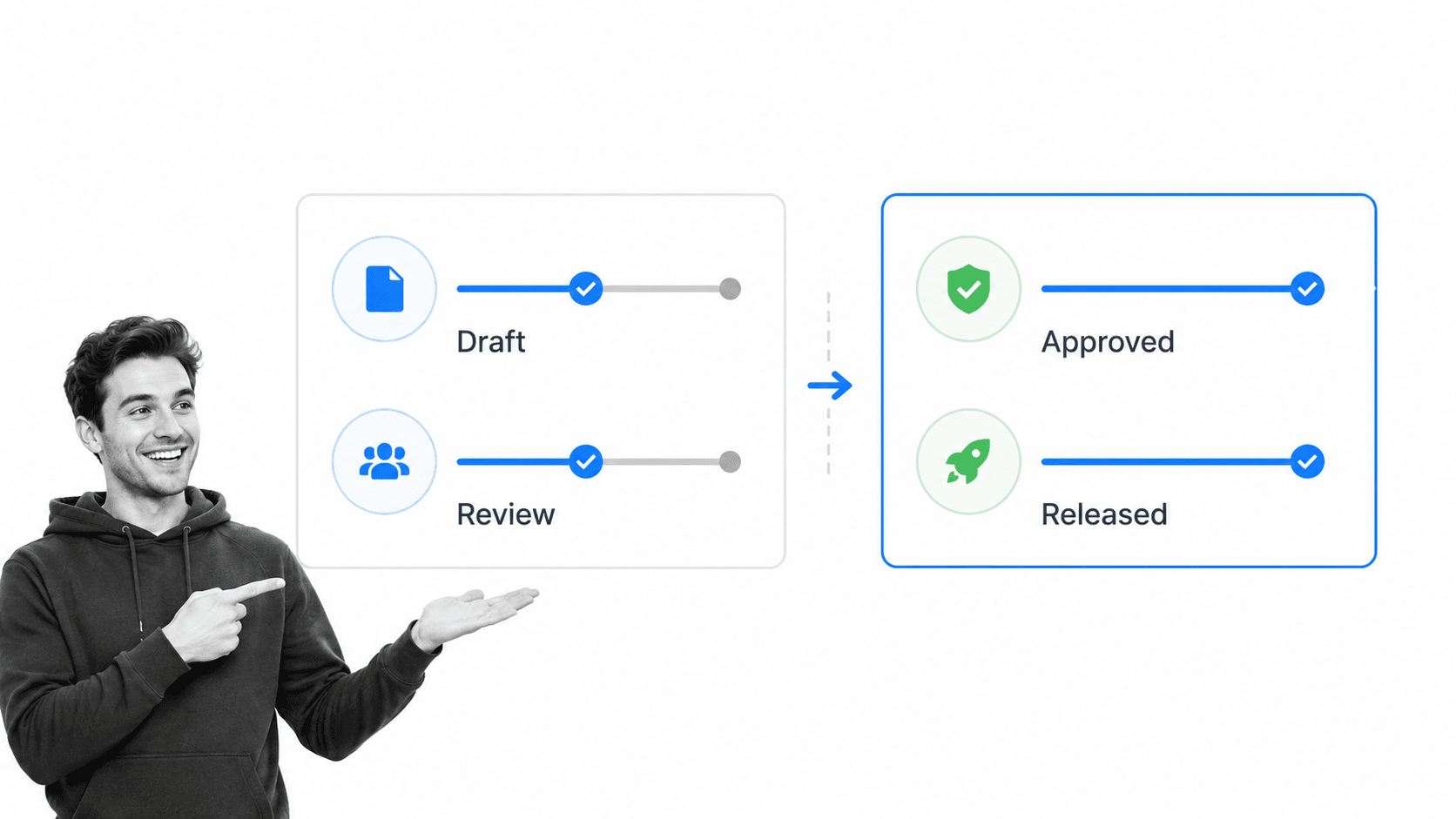
Approval creates the baseline. It confirms that the right stakeholders understand the scope, requirements, constraints, priorities, and acceptance approach. It does not freeze the document forever.
Plan how the change will affect roles, procedures, training, systems, controls, and daily work. The best change model depends on the situation. Lewin, ADKAR, Kotter, Bridges, PDCA, and other models offer useful lenses, but the BRD only needs the adoption actions required for this change.
Record who must be informed, trained, consulted, or approved. Define when the new process becomes authoritative and how old instructions will be retired. A requirement is not implemented if the solution exists but the people responsible for the work continue using the old method.
Step 7. Control changes and review requirements continuously
Requirements change as regulations, customer expectations, systems, budgets, and evidence change. Use a change process that records the request, rationale, impact, decision, approver, affected requirements, and new version.
Run an impact assessment before approval. Check scope, value, risk, controls, data, integrations, staffing, training, testing, timeline, cost, and dependencies. A small wording change can have a large operational effect when it changes who approves work or what evidence must be retained.
Maintain a decision log beside the requirement set. The log should show what was requested, which options were considered, why the decision was made, and who approved it. That context prevents the same debate from restarting months later and helps new stakeholders understand why the current baseline looks the way it does.
Review requirements during delivery, before acceptance, after incidents, and when operating data shows that the intended outcome is not being achieved. Close requirements that no longer apply. Add new ones only when they trace to a real business need.
The BRD should remain the trusted record of the approved business need. Detailed solution documents can change more often, but they should continue to trace back to the baseline requirements and acceptance criteria.
Change management models for requirements adoption
Introducing newly approved requirements initiates organizational change. The following established models offer different ways to plan adoption. Choose the model that fits the scale, urgency, and human impact of the change. The BRD should reference the adoption plan without turning the requirements record into a full change program.
As previously mentioned, introducing newly set requirements initiates organizational change that needs to be managed correctly. For successful management of change, check out Process Street’s change management model checklists. Access to these checklists is provided below, along with the relevant checklist details.Lewin’s three stages
In Lewin’s Change Management Model, change is split into three stages:- Stage 1: Unfreeze the status quo
- Stage 2: Make changes
- Stage 3: Refreeze to lock-in changes for a new status quo
Bridges and personal transition
Bridges Transition Model looks at change as a journey instead of an abrupt shift. Three stages of this journey are detailed:- Stage 1 – Ending, losing and letting go
- Stage 2 – The neutral zone
- Stage 3 – The new beginning
ADKAR and individual adoption
The ADKAR Model takes a bottom-up approach for the application of change. Each letter in the acronym stands for a goal to be reached:- A: Awareness of the need for change
- D: Desire to participate and support the change
- K: Knowledge on how to change
- A: Ability to implement the required skills and behaviors for change
- R: Reinforcement to sustain change
McKinsey 7-S alignment
The McKinsey 7-S Model identifies 7 elements of a company, detailing how one will impact the other. These elements are split into 2 categories, hard and soft. Hard elements are driven by management and are more tangible. Soft elements are driven by culture and are less tangible. Hard elements include:- Strategy
- Structure
- Systems
- Shared values
- Style
- Staff
- Skills
PDCA for iterative change
The PDCA cycle looks at change as a continuous process for improvement. There are four stages:- Stage 1: Plan
- Stage 2: Do
- Stage 3: Check
- Stage 4: Act
Kotter’s eight phases
Kotter’s Change Management Model’s core focus is to create a sense of urgency for change. The model states, with this urgency, momentum for change is obtained. The model splits the application of change into 8 stages:- Stage 1 – Creating a sense of urgency
- Stage 2 – Building a core coalition
- Stage 3 – Forming a strategy vision
- Stage 4 – Getting everyone on board
- Stage 5 – Removing barriers and reducing friction
- Stage 6 – Generating short-term wins
- Stage 7 – Sustaining acceleration
- Stage 8 – Setting the changes in stone
Kubler-Ross and emotional response
The Kubler-Ross Change Curve recognizes the emotional burden of change on employees within a company. These emotions can place a stranglehold on productivity. However, if acknowledged and managed correctly the negative emotional repercussions of change can be minimized. The Kubler-Ross Change Curve details five stages of grief during the change process:- Stage 1: Denial
- Stage 2: Anger
- Stage 3: Bargaining
- Stage 4: Depression
- Stage 5: Acceptance
Nudge theory for behavior
The Nudge Theory for change is more of a theory – hence the name – than a change management model. The idea is that individuals are nudged into making the desired decision by altering the environment in which the individual is making that decision. This environment is the choice architecture. You can use the Nudge Theory to introduce changes needed to meet your defined business requirements. Click here to access the Nudge Theory Change Management Model Process Checklist! For more information on Nudge Theory and Choice Architecture, read: Choice Architecture Explained: How To Remove Human Bias From Your Business Today!Satir and performance disruption
Developed by Virginia Satir, the Satir Change Management Model explores five stages of grief that employees are predicted to feel during organizational change. These grief stages are:- Stage 1: Late status quo
- Stage 2: Resistance
- Stage 3: Chaos
- Stage 4: Integration
- Stage 5: New status quo
Manage business requirements after approval
A BRD fails when it becomes a project artifact that nobody reads after sign-off. Keep it connected to delivery, testing, change control, process documentation, and operating evidence.
Three controls matter most:
- Ownership: one accountable person maintains the requirement and resolves ambiguity.
- Traceability: the requirement connects to its source, objective, solution work, tests, evidence, and changes.
- Review cadence: the team reviews requirements when risk, evidence, or operating conditions change.
Change management supports these controls. Teams need to understand what is changing, why it matters, what behavior is expected, and where the approved procedure lives. Training and communication should focus on decisions and exceptions, not repeat information the workflow can enforce.
Use version history so stakeholders can see what changed and which baseline applied at a given point. Preserve decisions and evidence. That record becomes especially important when a customer, auditor, regulator, or executive asks why the project accepted a specific outcome.
Connecting requirements to execution with Process Street
Process Street is one Compliance Operations Platform with Docs and Ops capability areas plus built-in AI. Docs gives teams a governed place to author, review, approve, version, and certify policies and procedures. Ops turns those procedures into workflows with assignments, conditional logic, due dates, approvals, integrations, escalation, and audit-ready evidence.
For business requirements, that means the BRD does not have to sit apart from the work it governs. Teams can approve the requirements in Docs, build the delivery and acceptance process in Ops, assign owners, collect evidence, and track exceptions. Built-in AI can help draft workflow structure, summarize execution patterns, and surface risk while accountable people keep control of the approved standard.
Process Street also has direct, universal integrations to 5,000+ systems. Need a new one? An AI agent builds it on the fly. Requirements work can stay connected to the project, CRM, HR, finance, quality, and compliance systems where delivery happens.
The practical result is a closed loop: stakeholder needs become governed requirements, requirements guide execution, execution produces evidence, and evidence informs the next controlled update.
Start defining your business requirements
A strong business requirements document gives a project a shared definition of the need, the intended outcome, the boundaries, and the evidence for acceptance. It reduces hidden assumptions without pretending every design decision is known at the start.
Begin with the stakeholder need. Separate the business outcome from the proposed solution. Assign owners, priorities, metrics, and acceptance criteria. Then keep the approved requirements connected to execution and change control.
Use the free Business Requirements Template to turn that work into a repeatable, reviewable process.