Turn every policy into automated workflows with built-in enforcement and audit-ready proof.



10 Best Document Workflow Software
Document workflow software moves files and the decisions around them through a controlled process. The right platform does more than store a document. It assigns owners, routes reviews, handles exceptions, records approvals, and leaves a reliable history of what happened.
This guide compares 10 options across five distinct jobs: executable workflow, document management, Microsoft content automation, agreement workflows, and intelligent document processing. Process Street leads the shortlist for teams that need document work to run as a governed process, with people, rules, evidence, and follow-up actions connected in one place.
On this page:
- What is document workflow software?
- Why do document workflows matter?
- How do the leading options compare?
- Which document workflow software should you shortlist?
- What benefits should the software deliver?
- Which features matter most?
- How should you choose and implement a platform?
- Document workflow software FAQs
What is document workflow software?
Document workflow software coordinates the lifecycle of a document from request or creation through review, approval, release, storage, revision, and retention. It connects the file to the people, rules, deadlines, data, and evidence required to move it forward. For a deeper operating model, see the document workflow management guide.
A repository answers, ‘Where is the file?’ A workflow answers, ‘What must happen next, who owns it, what can block it, and what proves completion?’ Some products combine both functions. Others provide a workflow layer around an existing repository or specialize in one stage, such as signature or data extraction.
- Intake: capture the document, request details, owner, type, and required metadata.
- Review: route the correct version to the right reviewers in sequence or in parallel.
- Decision: record approvals, rejections, comments, and requested changes.
- Execution: trigger notifications, updates, signatures, tasks, or downstream systems.
- Control: enforce permissions, required fields, review dates, and exception paths.
- Proof: retain versions, timestamps, evidence, and a searchable activity history.
Why do document workflows matter?
Most document failures happen in the handoffs. A reviewer opens the wrong version. An approval sits in an inbox. A policy changes without acknowledgment. A contract is signed before a required review. A team can own good documents and still run a weak process around them.
Good workflow design turns those handoffs into explicit control points. It assigns responsibility, prevents skipped decisions, and keeps evidence attached to the work. That operating discipline helps teams demonstrate that required work was carried out as planned.
The same logic applies outside formal quality programs. An approval workflow can keep a marketing asset, invoice, policy, client deliverable, or employee document moving with clear ownership. The value comes from fewer invisible waits and a record that can be examined later.
How do the leading document workflow software options compare?
Start with the job the platform must own. A workflow execution platform, document repository, agreement tool, and document extraction system can all improve document work, but they solve different bottlenecks.
| Software | Best fit | Primary strength | Important boundary to test |
|---|---|---|---|
| Process Street | Governed document execution | Approvals, routing, evidence, and follow-up work | Whether the existing file repository should remain the system of record |
| Nintex | Enterprise process automation | Broad workflow and document automation | Implementation ownership and platform complexity |
| DocuWare | Document management with workflow | Repository, versioning, and document-centric routing | Depth of cross-system process orchestration |
| M-Files | Metadata-driven document control | Lifecycle states organized around metadata | Administrator effort for workflow design |
| Microsoft SharePoint and Power Automate | Microsoft-centered teams | Libraries plus configurable approval flows | Governance across sites, flows, owners, and connections |
| Box | Cloud content collaboration | Content-based reviews and approvals | Whether workflows must extend beyond Box content |
| PandaDoc | Sales and commercial documents | Internal approval before recipient delivery | Fit for non-commercial operational documents |
| Docusign | Agreement workflows | Generation, review, approval, and signature | Fit beyond agreements and signatures |
| OpenText | Large regulated content estates | Enterprise content governance and integration | Deployment and administration requirements |
| Nanonets | Document intake and extraction | Structured data extraction with review and export | Need for a separate system to govern the wider process |
A good shortlist can include more than one category. For example, a team may keep controlled files in a content platform, use Process Street to run the review and evidence workflow, and use a signature product for final execution. The architecture should give each system one clear job.
Which document workflow software should you shortlist?
The products below are ordered by how directly they address the full document workflow problem, then by the distinct job each one performs. The best choice depends on whether your biggest gap is execution, repository control, agreement handling, or document data extraction.
Process Street
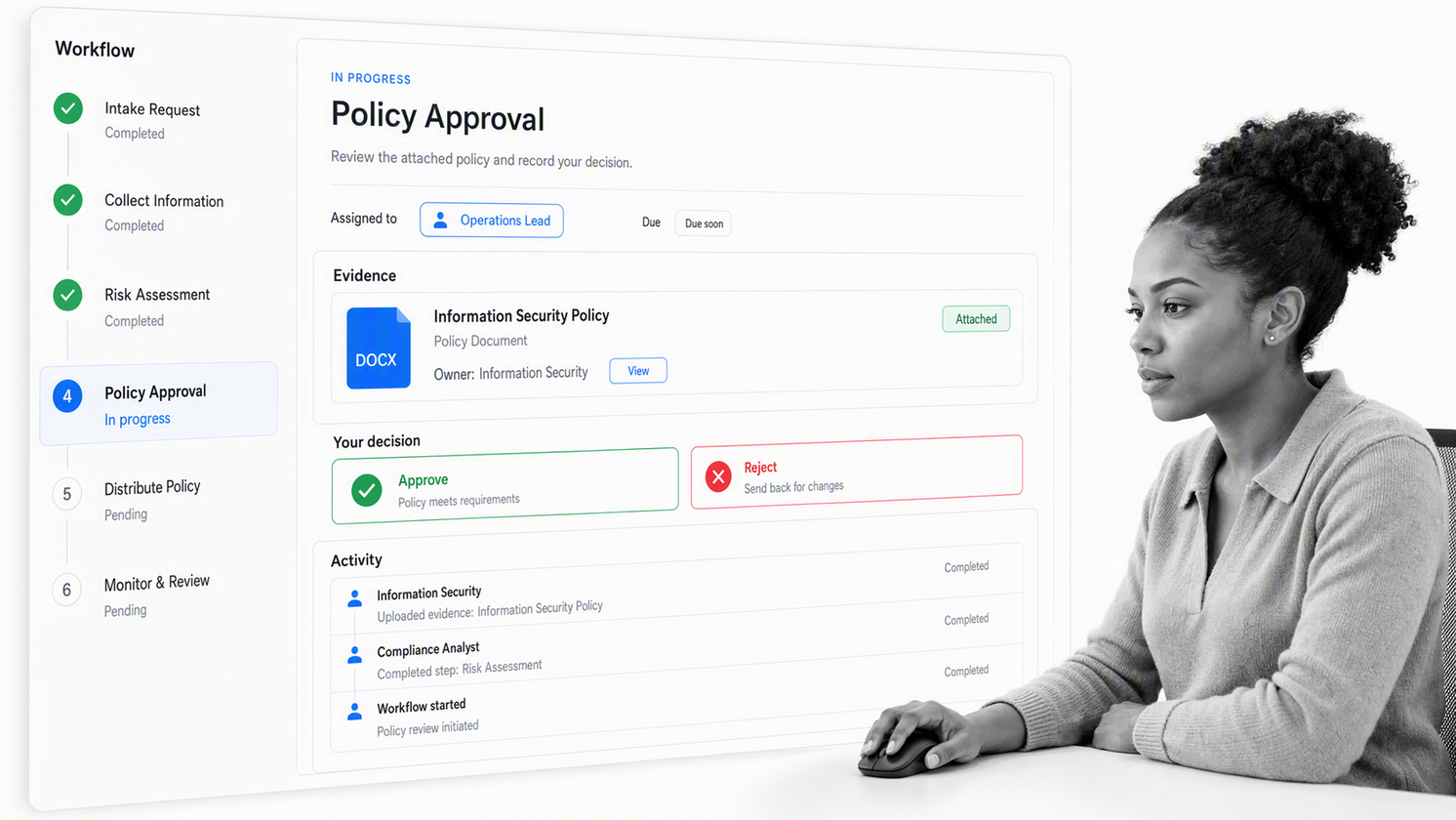
Best for controlled, executable document workflows. Process Street connects document approvals to executable workflows with roles, permissions, notifications, sequential or parallel review paths, and detailed logs. Teams can link the document to intake data, assigned work, conditional routes, required evidence, approval decisions, and downstream actions instead of managing the handoff in email.
Choose Process Street when the document is part of a high-stakes operating process and you need proof that the required work happened. It is especially strong for policy changes, SOP reviews, vendor documents, finance approvals, quality records, onboarding files, and other recurring procedures. See how a workflow approval process connects the decision to execution.
- Category role: workflow execution and control layer.
- Best fit: operations, compliance, quality, finance, HR, and other teams with repeatable document decisions.
- Test in a pilot: required evidence, rejection and rework paths, overdue escalation, and the final audit record.
Nintex
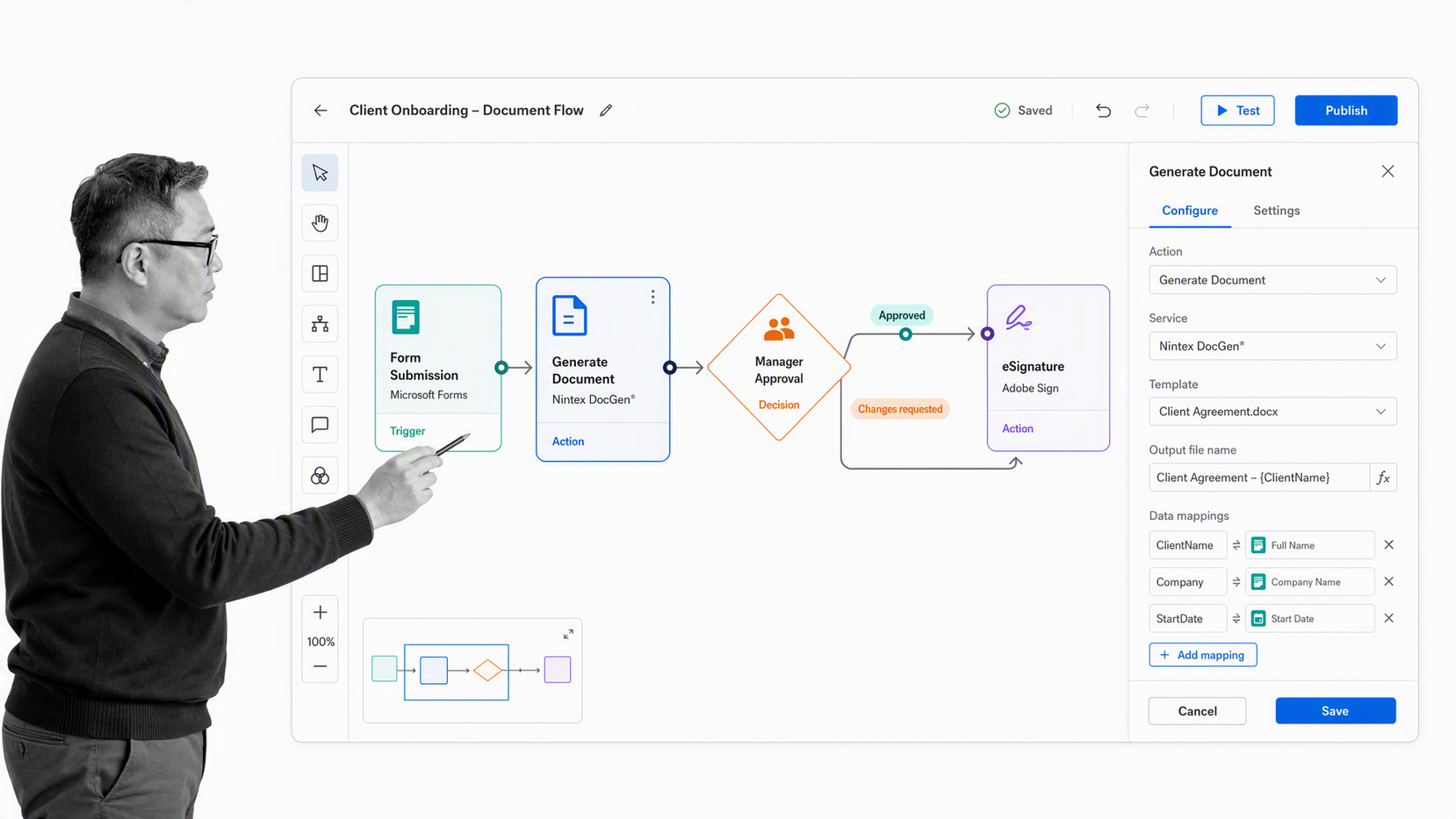
Best for enterprises that want a broad automation platform. Nintex Workflow combines no-code workflow design with forms, document processing, document generation, approvals, and electronic signatures. That breadth can suit organizations that want to standardize multiple automation patterns on one platform.
Evaluate Nintex when document workflows are one part of a larger process-automation program. The main buyer question is not whether it can model a flow, but who will govern, build, test, and maintain automations as the portfolio grows.
- Category role: enterprise workflow and process automation suite.
- Best fit: organizations with a formal automation program and multiple workflow types.
- Test in a pilot: complex review logic, reusable components, connection governance, and change management.
DocuWare
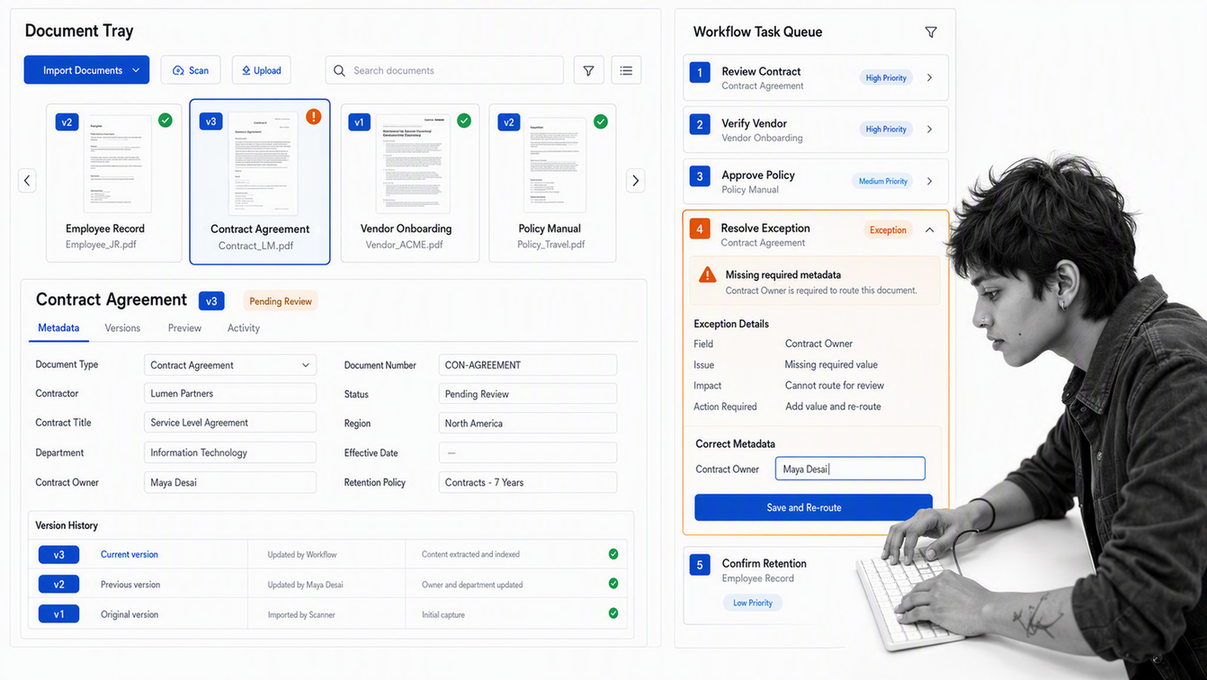
Best for teams that want document management and workflow together. DocuWare combines document management with workflow automation, including task control, versioning, drag-and-drop workflow design, and rules for exceptions. This makes it a natural candidate when the repository itself needs modernization.
Shortlist DocuWare for invoice processing, employee records, contracts, and other document-heavy operations where capture, indexing, retrieval, and routing belong in the same environment. Test how easily the workflow extends into the rest of your business systems.
- Category role: document management system with workflow automation.
- Best fit: teams replacing shared drives, paper archives, or fragmented document repositories.
- Test in a pilot: indexing, search, version recovery, exception routing, and mobile task completion.
M-Files
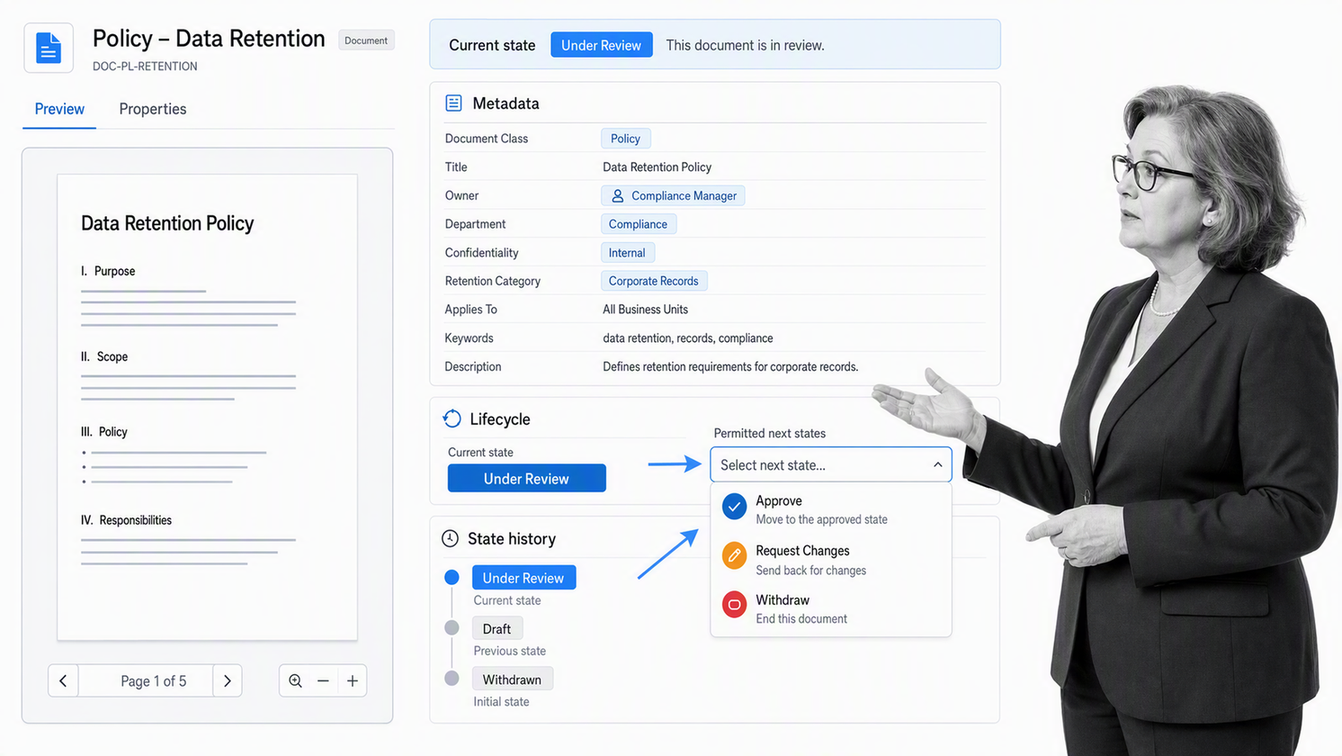
Best for metadata-driven document control. M-Files models document lifecycles as workflows made of states that contributors can update from the metadata card. This shifts organization away from folder location and toward what the document is, who owns it, and which lifecycle state applies.
Consider M-Files when findability, classification, controlled states, and version discipline are central requirements. Buyers should test the administrator experience because a strong metadata model only helps when teams can maintain it as document types and rules change.
- Category role: metadata-centered document management and lifecycle control.
- Best fit: document-control teams with structured classification and state requirements.
- Test in a pilot: metadata capture, state transitions, permissions, search, and workflow administration.
Microsoft SharePoint and Power Automate
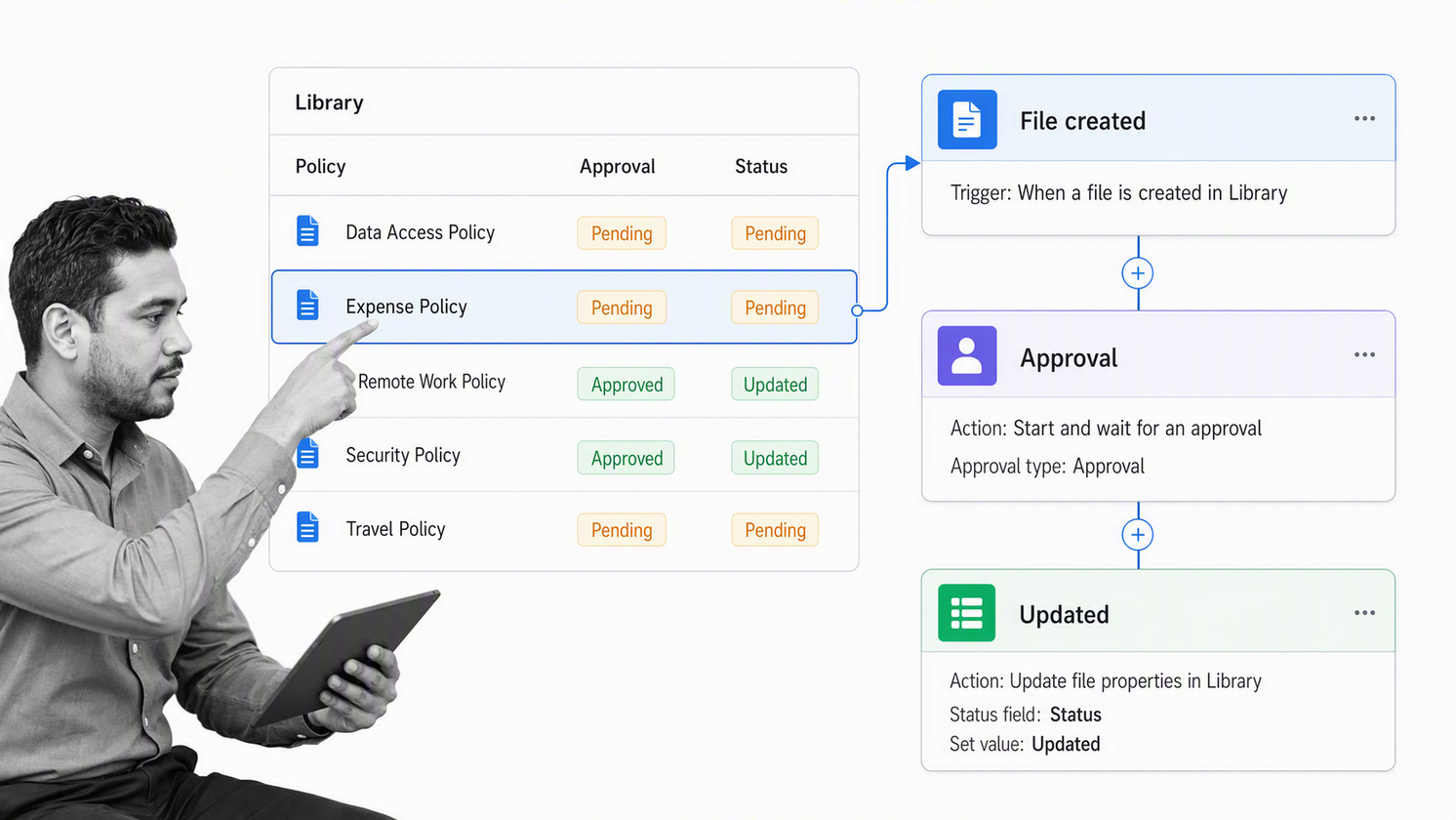
Best for organizations already centered on Microsoft collaboration tools. Microsoft Power Automate can manage document approvals across SharePoint and other services, while SharePoint triggers and actions can update approval status and route files. This can reduce platform sprawl when the document library is already established.
The main risk is distributed ownership. Sites, libraries, flows, service accounts, and connections can multiply quickly. Test lifecycle governance, not only the first approval. Decide who owns each flow, how changes are reviewed, and how failures are monitored.
- Category role: content repository plus configurable workflow automation.
- Best fit: Microsoft-centered teams with capable platform administration.
- Test in a pilot: library permissions, versioning, approval states, flow ownership, and failure recovery.
Box
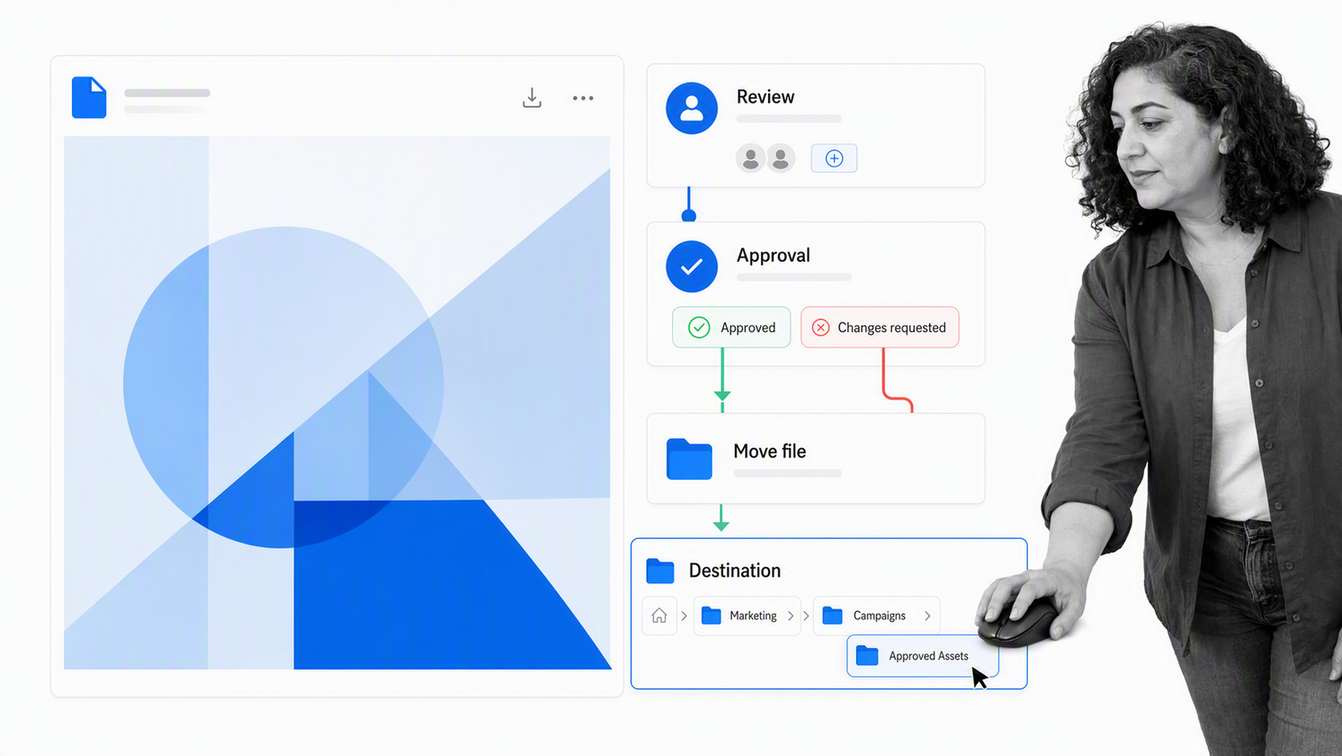
Best for content-centric collaboration in Box. Box Relay is a no-code workflow tool built into Box that routes content through review, approval, and file actions. It fits teams whose process begins and ends with files held in Box.
Choose Box when secure content collaboration is the center of gravity and the workflow needs to move, rename, organize, review, or approve files. Test whether the business process must reach far beyond content actions, because that may call for a separate orchestration layer.
- Category role: cloud content management with content-based workflows.
- Best fit: teams already using Box as the governed content home.
- Test in a pilot: folder permissions, metadata, external collaboration, review routing, and follow-up actions.
PandaDoc
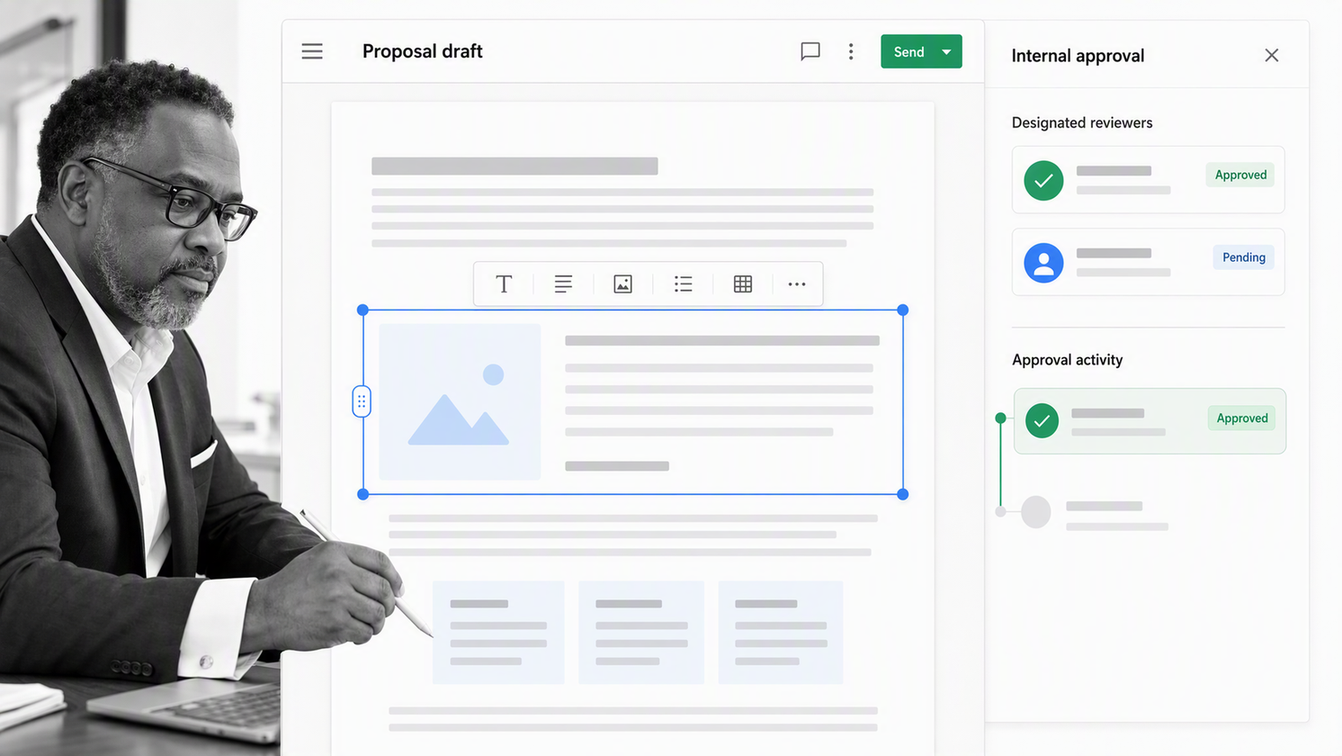
Best for sales proposals and commercial documents. PandaDoc approval workflows route a document to designated approvers before it is sent to recipients and record approval activity. That keeps pricing, terms, and internal review connected to document delivery.
Shortlist PandaDoc when the document is customer-facing and creation, internal approval, recipient delivery, and signature should stay close together. Test conditional approval rules, rejected-document rework, template governance, and the audit history available to administrators.
- Category role: document creation, approval, delivery, and signature workflow.
- Best fit: sales, revenue operations, and commercial teams.
- Test in a pilot: template controls, approval order, comments, recipient experience, and CRM handoff.
Docusign
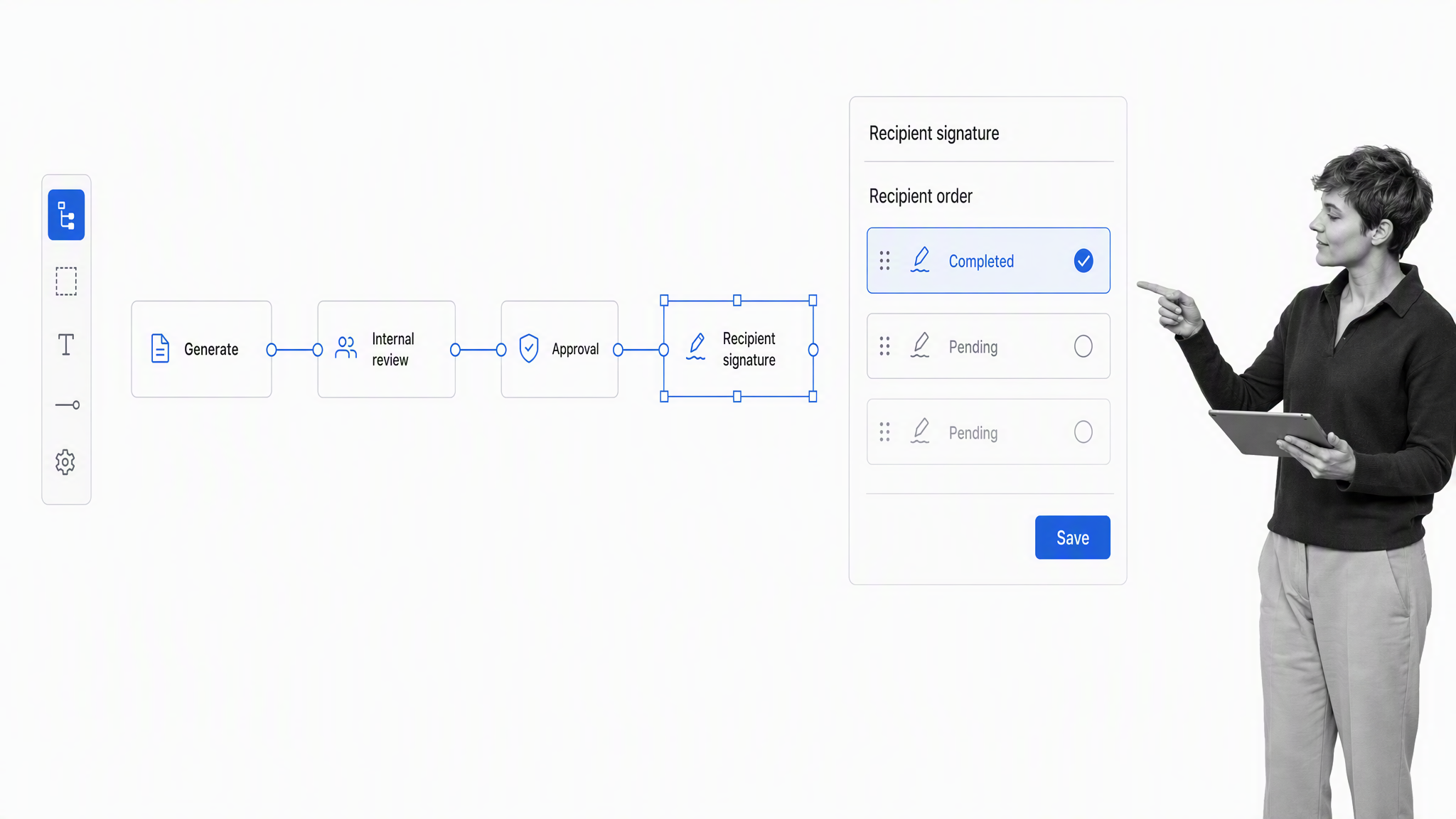
Best for agreement workflows. Docusign Workflow Builder can generate agreements and route them for review, approval, and signature while recording actions across the process. It is a strong fit when the central object is an agreement and signature is a required stage rather than a separate afterthought.
Evaluate Docusign for contract and agreement processes that need repeatable internal routing before external signature. Test data sources, approver logic, version changes, signer order, exception handling, and what happens after the agreement is completed.
- Category role: agreement generation and execution workflow.
- Best fit: legal, procurement, sales, HR, and other agreement-heavy teams.
- Test in a pilot: approval logic, signature routing, record handoff, and downstream triggers.
OpenText
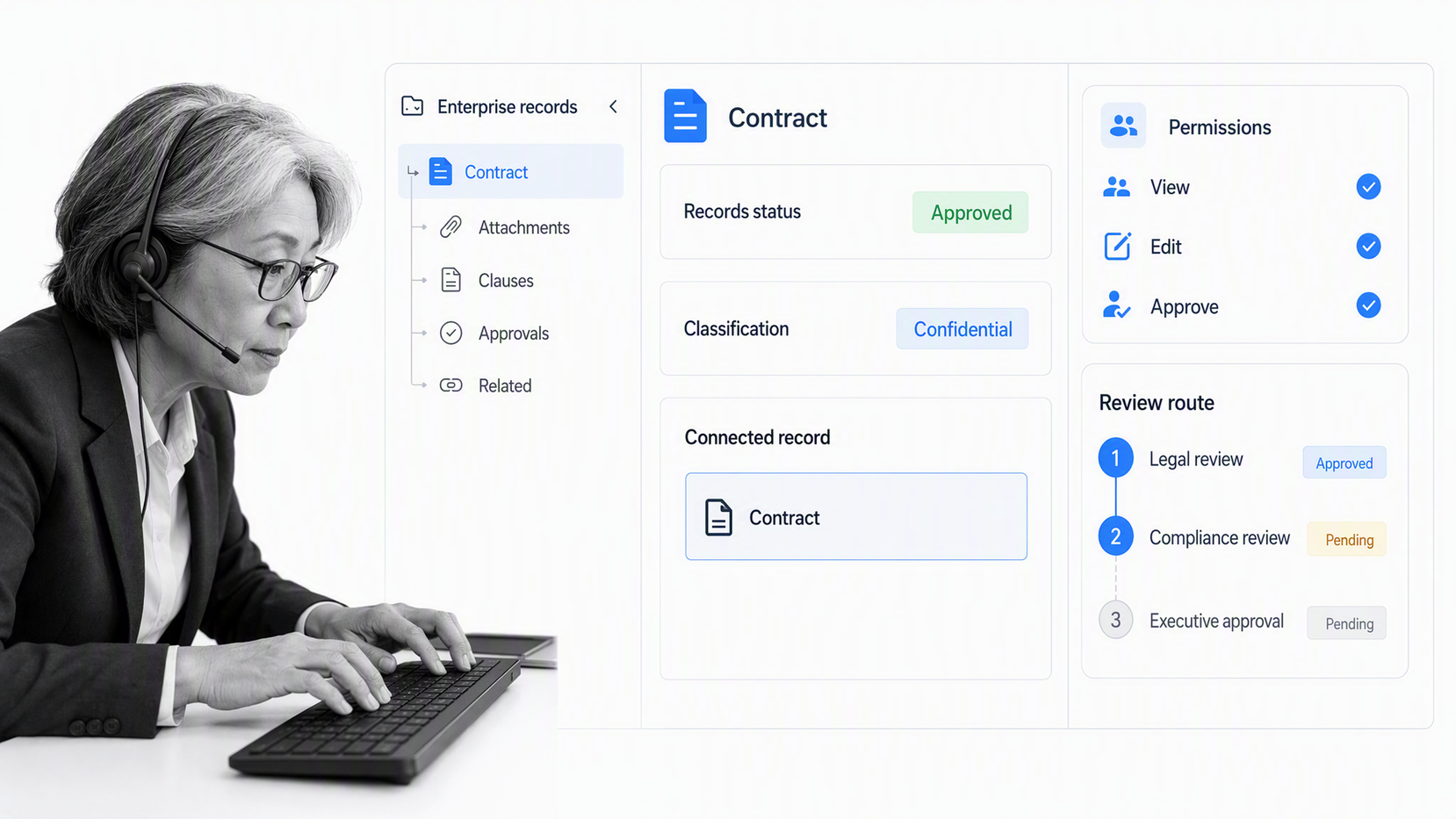
Best for large, regulated content estates. OpenText Content Management combines document governance, enterprise integrations, and configurable workflow automation. It is designed for organizations where information must connect to major business applications while remaining controlled at enterprise scale.
Shortlist OpenText when document management is part of a wider content-governance and records strategy. The evaluation should include deployment model, administration, permissions, retention, integration depth, and the cost of changing workflows after launch.
- Category role: enterprise content management and governance.
- Best fit: complex organizations with regulated, high-volume content.
- Test in a pilot: integration with systems of record, information governance, search, workflow change control, and records handling.
Nanonets
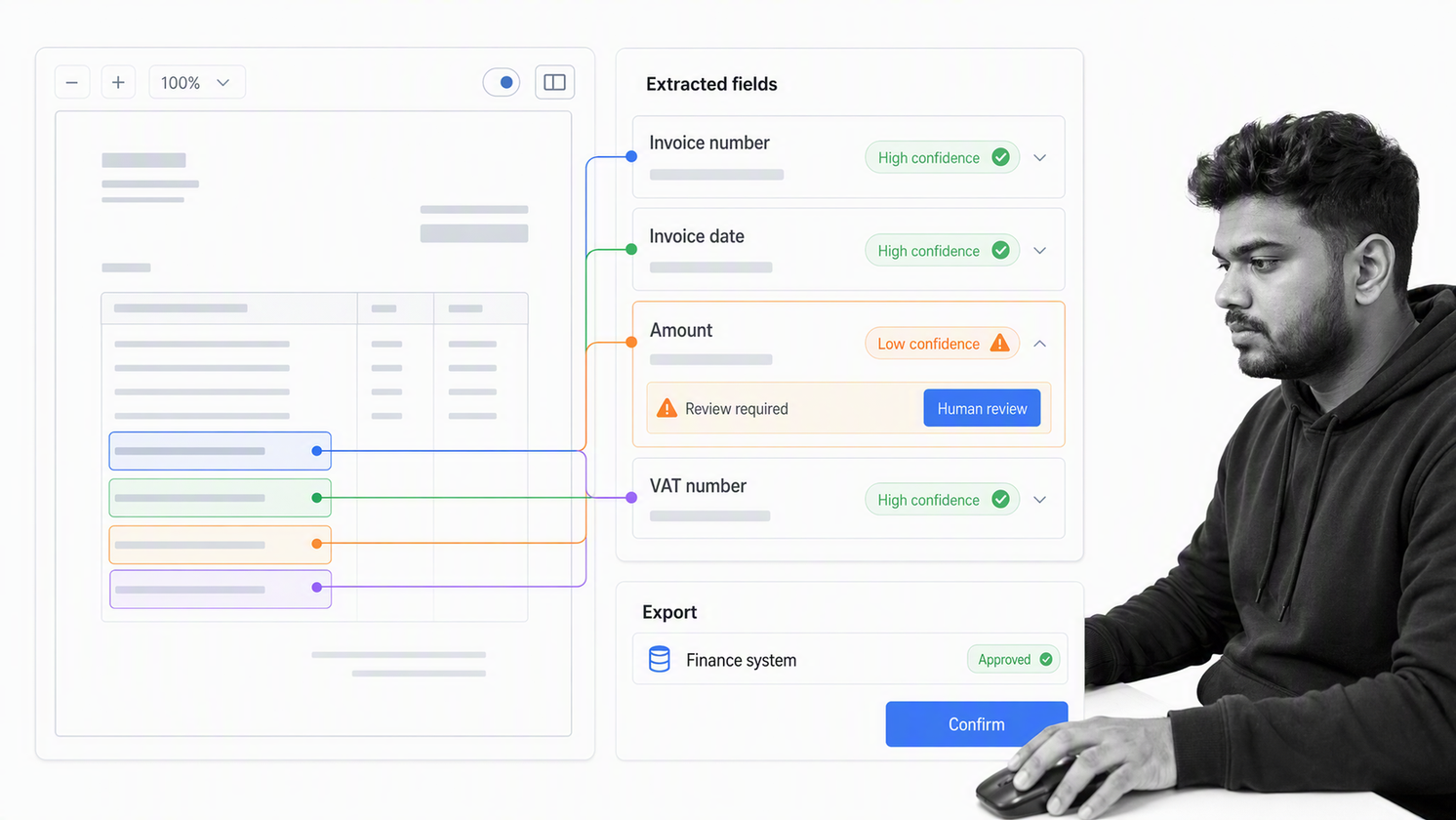
Best for document intake and data extraction. Nanonets combines document import, data extraction, rule checks, human review, approvals, and exports to downstream systems. It belongs on the shortlist when the bottleneck is reading varied documents and turning them into structured data for the next process step.
Consider Nanonets for invoices, forms, purchase orders, claims, and similar inputs that create manual data-entry work. Test real document variation, low-confidence handling, reviewer queues, correction loops, and how exported data is reconciled with the system of record.
- Category role: intelligent document processing and data workflow.
- Best fit: teams automating high-volume document intake and validation.
- Test in a pilot: extraction quality, exception rates, human review effort, export reliability, and traceability.
What benefits should document workflow software deliver?
The business case should be tied to a specific document process. ‘Go paperless’ is too vague. A useful pilot shows where time, errors, or risk leave the process and how the new workflow changes that outcome.
- Faster cycle time: documents spend less time waiting for a reviewer or owner.
- Fewer routing errors: rules send the right version to the right person at the right point.
- Better accuracy: required fields, validation, and review gates catch incomplete work earlier.
- Clear accountability: every task and decision has an owner, due date, and status.
- Stronger collaboration: comments, context, and documents stay attached to the same work item.
- Reliable proof: versions, approvals, timestamps, evidence, and exceptions form a defensible history.
- Easier improvement: cycle time, rejection reasons, rework, and overdue steps reveal where the process needs attention.
Measure the workflow before and after the pilot. Useful metrics include total cycle time, time waiting for approval, first-pass acceptance, missing-information rate, rework rate, overdue steps, exceptions, and audit-record completeness.
Which document workflow software features matter most?
Feature lists become useful only when they map to the document lifecycle. Ask vendors to demonstrate one real document moving through intake, review, rejection, resubmission, approval, release, and later revision.
- Configurable intake forms and required metadata.
- Sequential, parallel, and conditional review paths.
- Approval, rejection, comments, and controlled rework.
- Role-based assignments, permissions, and separation of duties.
- Version history tied to the reviewed and approved document.
- Notifications, reminders, escalation, and substitution rules.
- File preview, annotation, evidence upload, and acknowledgment.
- Search, classification, retention, and disposition where the platform owns the repository.
- Integrations and APIs for systems of record, storage, communication, and signature.
- Reporting on queues, cycle time, exceptions, rework, and overdue decisions.
- AI extraction or classification with confidence scores and human review.
- Audit history that connects identity, action, document version, timestamp, and outcome.
Security and compliance need a separate test plan. The NIST security and privacy control catalog organizes controls into families including access control and audit and accountability. Buyers can use that logic to test who may view, change, approve, export, or delete a document and whether the system preserves enough activity to reconstruct important events.
For regulated procedures and controlled SOPs, compare the workflow features with the broader requirements in a document control software program. A polished approval screen cannot compensate for weak ownership, version rules, retention, or access governance.
How should you choose and implement document workflow software?
Choose from the process backward. The wrong approach starts with a long feature matrix and asks which vendor checks the most boxes. The stronger approach maps one document lifecycle, identifies its failure points, and tests whether the software controls those moments.
- Choose one document type. Pick a repeated, important process with visible delay, error, or compliance cost.
- Map the current lifecycle. Record intake, owners, systems, versions, decisions, exceptions, notifications, storage, and retention.
- Define the control points. Decide which fields are required, who may approve, what blocks release, and what evidence must remain.
- Set the architecture. Decide which platform owns the file, workflow, signature, extracted data, and final record.
- Build the smallest complete pilot. Include the rejection path and one realistic exception, not only the happy path.
- Test with real users and documents. Include approvers, process owners, administrators, security, and records stakeholders where relevant.
- Measure the result. Compare cycle time, wait time, rework, missing information, exceptions, and audit completeness.
- Assign long-term ownership. Name who maintains templates, rules, integrations, permissions, reports, and improvement reviews.
If several departments share the same problem, establish a small set of reusable workflow patterns instead of letting every team build independently. A broader workflow management model can standardize ownership, change control, reporting, and exception handling across document types.
Process Street is the strongest starting point when documents need to trigger controlled work, approvals, evidence, and follow-up actions across teams. Request a demo and bring one real document process, including its rejection path and audit requirements.
Document workflow software FAQs
What is document workflow software?
Document workflow software controls how a document moves from intake or creation through review, approval, distribution, storage, revision, and retention. It assigns owners, applies rules, tracks status, and preserves a record of decisions and evidence.
What is the difference between document management and document workflow software?
Document management focuses on storing, organizing, searching, securing, and versioning files. Document workflow software focuses on the work around those files, including routing, assignments, approvals, exceptions, notifications, and proof of completion. Some platforms combine both jobs.
Which document workflow should a business automate first?
Start with one repeated document type that has a clear owner, predictable review path, visible delays, and a measurable outcome. Invoice approvals, policy changes, contract reviews, employee forms, and quality records are common starting points.
Can document workflow software support compliance?
Yes, when the workflow enforces required reviews, permissions, evidence capture, version control, retention rules, and audit history. The software supports the control, but the organization still needs sound policies, accountable owners, and periodic testing.
Does document workflow software replace file storage?
Not always. Some products include a governed repository, while others coordinate work around files held in SharePoint, Box, cloud storage, or another system of record. Buyers should decide whether they need a new repository, a workflow layer, or both.
How should teams evaluate AI document workflow features?
Test AI features on real documents and exceptions. Measure extraction accuracy, confidence handling, human review, traceability, data controls, and the quality of downstream actions. A useful AI feature should reduce manual work without hiding uncertainty or weakening approval controls.