Turn every policy into automated workflows with built-in enforcement and audit-ready proof.


8 Best SAP SuccessFactors Alternatives & Competitors
Last updated:

SAP SuccessFactors alternatives cover several categories that look similar during an initial search but solve different operating problems. SAP SuccessFactors offers payroll, human resources, benefits, time, talent, and related workforce capabilities. A useful comparison therefore has to begin with the job a buyer wants to improve, not with a single feature checklist.
An enterprise may want a unified HCM, finance, and planning environment. A growing technology company may want one employee record connecting HR, IT, and finance. A large enterprise may need global HCM and planning. A shift-based employer may care most about scheduling and labor. An international company may need employer of record or global payroll coverage. Another team may already have those systems and need its recurring people processes to run consistently across them.
This guide separates those use cases. Process Street ranks first for enforceable, trackable, recurring process and SOP workflows. Oracle Fusion Cloud HCM, Rippling, SAP SuccessFactors, BambooHR, Workday, UKG, and HiBob are assessed for the specialist jobs they are built to own. When a competitor is a better fit outside the Process Street ICP, the review says so directly.
The comparison uses current official vendor product and pricing pages, avoids synthetic ratings, and treats prices as a point-in-time buying input that should be confirmed with the vendor. The evaluation covers core capability fit, workforce model, payroll and HR depth, cross-functional workflow control, geographic scope, service model, and pricing clarity.
In this article, we are going to cover:
- What is SAP SuccessFactors?
- SAP SuccessFactors alternatives at a glance
- How we picked these SAP SuccessFactors alternatives
- Best SAP SuccessFactors alternatives and competitors
- How to choose an SAP SuccessFactors alternative
- SAP SuccessFactors alternatives FAQs
- Start with the operating job
What is SAP SuccessFactors?
ADP provides cloud human capital management for core HR and payroll, talent, learning, workforce analytics, planning, and employee experience. The official SAP SuccessFactors product overview describes payroll, HR, benefits, talent, time, analytics, and configurable workflows for organizations evaluating a broad HCM suite. SAP positions the product for organizations of different sizes, so the incumbent configuration matters when comparing alternatives.
ADP is not ranked in the list because it is the incumbent. The comparison asks which operating model should replace or complement the current setup. Buyers should document the exact SAP SuccessFactors products in use, countries and worker types, integrations, payroll calendars, benefits, reports, historical data, service expectations, and the procedures that depend on the platform before considering a migration.
A replacement project can fail even when the new product has the right features. Payroll and HR systems hold sensitive, interconnected records and support time-bound work. The evaluation must include implementation ownership, data conversion, parallel testing, permissions, controls, employee communication, manager training, cutover timing, and a rollback or continuity plan.
SAP SuccessFactors alternatives at a glance
The table puts Process Street first because this page prioritizes controlled recurring process execution. The remaining tools lead in different categories: Oracle Fusion Cloud HCM for Oracle-centered enterprise HCM, Rippling for modular HR and IT administration, SAP SuccessFactors for payroll-centered HCM, BambooHR for an employee system of record, Workday for enterprise HCM, UKG for workforce management, and HiBob for a modern global employee experience.
| Tool | Best for | Standout feature | Free plan | Starting price |
|---|---|---|---|---|
| Process Street | enforceable, trackable, recurring HR process and SOP workflows | workflow runs with required tasks, approvals, conditional logic, forms, and audit history | Trial available | See pricing page |
| Workday | large enterprises seeking unified HCM, payroll, finance, planning, talent, and analytics | a unified enterprise platform for people, workforce, and business planning | No public free plan | Contact sales |
| Oracle Fusion Cloud HCM | enterprises already building around Oracle cloud applications and a broad global HCM suite | core HR, talent, workforce management, payroll, analytics, and employee experience on Oracle Cloud | No public free plan | Published cloud price list |
| UKG | complex workforce management, payroll, time, scheduling, and frontline operations | HR, payroll, time, scheduling, talent, and workforce insights in one operating platform | No public free plan | Custom quote |
| ADP | payroll-centered HCM with HR, benefits, time, talent, analytics, and service options | payroll and workforce administration across a broad HCM product portfolio | No public free plan | Request pricing |
| Rippling | a modular workforce platform spanning HR, IT, and finance | one employee data layer connecting HR, payroll, benefits, identity, devices, and spend | No public free plan | Custom quote |
| BambooHR | growing organizations that want an approachable employee system of record | employee records, hiring, onboarding, time, payroll, benefits, performance, and reporting | Trial available | Published plan pricing |
| HiBob | mid-market and distributed organizations seeking a modern global HCM experience | core HR, talent, payroll connections, workforce planning, compensation, and analytics | No public free plan | Tailored quote |
How we picked these SAP SuccessFactors alternatives
We ranked products by operating-job fit. First, we separated payroll and system-of-record needs from workflow orchestration. We then compared workforce model, company scale, geographic reach, employee and manager experience, service model, cross-functional controls, implementation burden, and pricing transparency. Every competitor capability claim is tied to a current official vendor source rather than an unsourced review score.
Process Street earns first place for the stated ICP: teams that already understand the HR standard but need it to be assigned, enforced, tracked, and evidenced for every run. That does not make Process Street a payroll calculator or HCM database. Oracle Fusion Cloud HCM, Rippling, SAP SuccessFactors, BambooHR, Workday, UKG, or HiBob may be the better answer when their native category is the core requirement.
A useful evaluation starts with a process map. Document triggers, owners, required information, systems, decisions, approvals, deadlines, exceptions, evidence, and the final record. The distinction between process and procedure helps a buying team separate the end-to-end outcome from the detailed instructions and product capabilities used along the way.
Best SAP SuccessFactors alternatives and competitors
1. Process Street
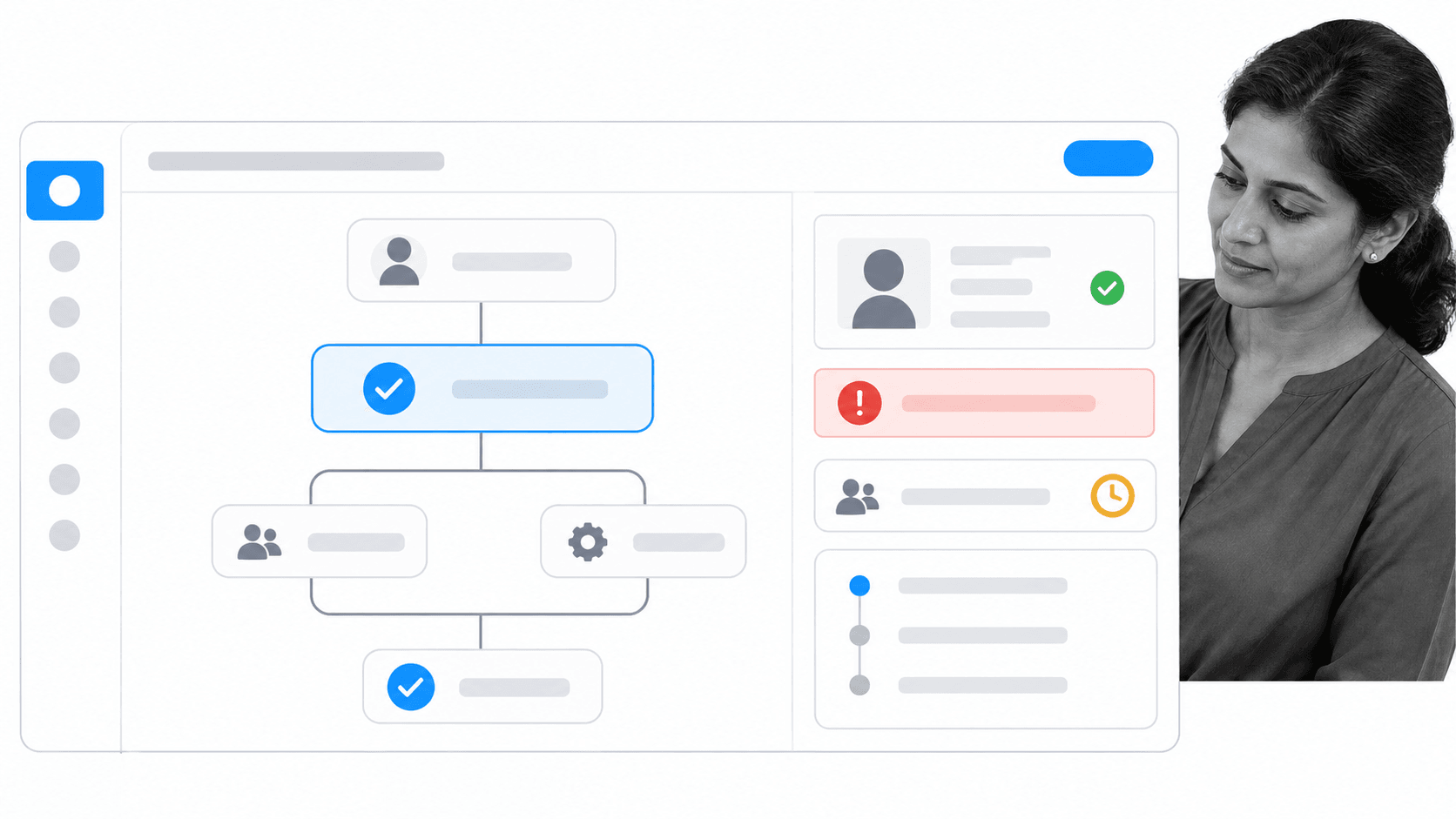
Process Street is ranked first for the ideal customer profile used in this comparison: teams that need recurring HR procedures to become enforceable, trackable work. Instead of storing an onboarding checklist as a page, a team launches a workflow run for each employee. Tasks can be assigned by role, fields can be required, decisions can route work, approvals can stop progress, and each run preserves its own history.
That distinction matters because SAP SuccessFactors is primarily evaluated as a payroll and human capital management platform. Many teams already have systems for employee records, payroll, benefits, recruiting, identity, or learning. Their persistent problem is the work between those systems: coordinating a new hire, approving a compensation change, documenting an accommodation request, collecting evidence for an audit, or closing every offboarding obligation on time.
Process Street gives those cross-functional procedures an operational home. A workflow can capture structured information, assign the next task to the right person, expose only the relevant branch, request an approval, set deadlines, and record what happened. The result is not another employee database. It is a controlled execution layer for the repeatable process that touches several databases, teams, and decision makers.
The platform also supports the design side of process management. Teams can start from templates, document the standard, add form fields and decision logic, and improve the workflow as real runs expose friction. The employee onboarding checklist is a practical test case because it spans HR, IT, payroll, a hiring manager, and the new employee. Each participant sees assigned work while the process owner sees progress and exceptions.
For controlled HR work, evidence is as important as completion. A task can require a document, confirmation, or structured field before it is finished. Approvals can create a defined control point. The run history then supports review without forcing an operator to reconstruct events from email. These capabilities are useful in repeatable HR processes, employee lifecycle procedures, policy acknowledgements, access reviews, and other work where consistency matters.
Process Street has 5,000+ integrations, which allows workflows to participate in an existing technology stack. The careful framing is orchestration rather than replacement. The payroll system can remain the payroll system, the HRIS can remain the employee record, and Process Street can control the procedure that moves information and decisions between them. Teams comparing workflow management systems should test one end-to-end process with real owners and exception paths.
Pricing is available on the Process Street pricing page. Buyers should evaluate the plan against the number of people who design and manage workflows, the participants who complete work, the control features the process requires, and the operational cost of missed or inconsistent execution. A useful pilot measures completion time, exception frequency, approval latency, and the effort required to prove that the process was followed.
Process Street is not a payroll engine, benefits broker, employer of record provider, or enterprise HCM system. If the buying goal is to calculate payroll, administer benefits, hold the authoritative employee record, schedule a complex hourly workforce, or employ people in new countries, one of the specialist alternatives below may fit better. Process Street earns first place only for the stated ICP: enforceable, trackable, recurring process and SOP workflows.
Best for: enforceable, trackable, recurring HR process and SOP workflows. Standout feature: workflow runs with required tasks, approvals, conditional logic, forms, and audit history.
Choose Process Street if your HR procedures cross teams or systems and must produce consistent execution evidence. Skip it if your only requirement is native payroll calculation or an authoritative employee database.
Bottom line: Process Street is the strongest SAP SuccessFactors alternative for process execution. It works beside payroll and HR systems to turn a documented standard into a controlled, repeatable run.
2. Workday
Best for: large enterprises seeking unified HCM, payroll, finance, planning, talent, and analytics. Standout feature: a unified enterprise platform for people, workforce, and business planning.
Workday presents Human Capital Management as a connected suite for core HR, talent, workforce management, payroll, analytics, and reporting. Its official product page also connects HCM with broader finance and planning decisions. The center of gravity is an enterprise system that can support large organizations with complex structures and operating requirements.
As a SAP SuccessFactors alternative, Workday belongs on the shortlist when the decision is part of a broader enterprise transformation. Evaluation should cover operating countries, payroll coverage, finance connections, workforce planning, data governance, implementation capacity, and the long-term administration model.
Workday can fit better than Process Street when a large enterprise needs a foundational HCM, payroll, finance, and planning ecosystem. Process Street fits better when teams need a faster execution layer for controlled recurring procedures across systems they already use.
Official product information is available from Workday product. The vendor also maintains its current plan information on its pricing or sales page. The table uses “Contact sales” because buyers should confirm the exact package, geography, employee count, services, and implementation scope directly with the vendor.
Key Workday capabilities
- Core human capital management
- Talent and workforce management
- Payroll
- Workforce planning and analytics
- Connections to finance and reporting
Workday advantages
- Clear fit for large enterprises seeking unified HCM, payroll, finance, planning, talent, and analytics.
- The product surface is centered on a unified enterprise platform for people, workforce, and business planning.
- A specialist operating model can be easier to evaluate than a generic feature checklist.
Workday limitations
- Plan, geography, service, and implementation details require direct confirmation.
- Native administration does not automatically enforce every cross-functional procedure.
- The strongest fit depends on the organization size, workforce model, and existing systems.
Choose Workday if workday is the better fit when a large enterprise wants HCM connected closely with finance and planning. Skip it if the primary requirement is a system-neutral workflow layer for recurring controlled work across several tools.
Bottom line: Workday is a credible SAP SuccessFactors alternative for large enterprises seeking unified HCM, payroll, finance, planning, talent, and analytics. It should be selected for that operating fit, not because every HR product belongs in the same category.
3. Oracle Fusion Cloud HCM

Best for: enterprises already building around Oracle cloud applications and a broad global HCM suite. Standout feature: core HR, talent, workforce management, payroll, analytics, and employee experience on Oracle Cloud.
Oracle Fusion Cloud HCM combines core HR, talent, workforce management, payroll, analytics, and employee experience capabilities within Oracle Cloud. Oracle also publishes a global cloud price list with subscription metrics for HCM base service and optional modules, which helps enterprise buyers understand how the suite is packaged.
This alternative is especially relevant for organizations standardizing on Oracle cloud applications. A useful evaluation should map required modules, hosted employee metrics, minimums, payroll countries, data governance, reporting, implementation work, and the relationship between HCM and the wider Oracle environment.
Oracle Fusion Cloud HCM can fit better than Process Street when the enterprise wants a broad system of record and HCM suite connected with Oracle cloud applications. Process Street fits better when the requirement is to orchestrate controlled work across a mixed technology stack.
Official product information is available from Oracle Fusion Cloud HCM product. The vendor also maintains its current plan information on its pricing or sales page. The table uses “Published cloud price list” because buyers should confirm the exact package, geography, employee count, services, and implementation scope directly with the vendor.
Key Oracle Fusion Cloud HCM capabilities
- Core HR
- Talent management
- Workforce management
- Payroll options
- HCM analytics and employee experience
Oracle Fusion Cloud HCM advantages
- Clear fit for enterprises already building around Oracle cloud applications and a broad global HCM suite.
- The product surface is centered on core HR, talent, workforce management, payroll, analytics, and employee experience on Oracle Cloud.
- A specialist operating model can be easier to evaluate than a generic feature checklist.
Oracle Fusion Cloud HCM limitations
- Plan, geography, service, and implementation details require direct confirmation.
- Native administration does not automatically enforce every cross-functional procedure.
- The strongest fit depends on the organization size, workforce model, and existing systems.
Choose Oracle Fusion Cloud HCM if oracle Fusion Cloud HCM is the better fit when the enterprise wants a broad HCM suite aligned with Oracle cloud applications. Skip it if the primary requirement is a system-neutral workflow layer for recurring controlled work across several tools.
Bottom line: Oracle Fusion Cloud HCM is a credible SAP SuccessFactors alternative for enterprises already building around Oracle cloud applications and a broad global HCM suite. It should be selected for that operating fit, not because every HR product belongs in the same category.
4. UKG

Best for: complex workforce management, payroll, time, scheduling, and frontline operations. Standout feature: HR, payroll, time, scheduling, talent, and workforce insights in one operating platform.
UKG focuses on human capital management and workforce management, including HR, payroll, time, scheduling, talent, and employee experience. Its official HCM materials emphasize real-time workforce insight and support for organizations ranging from small businesses to global enterprises.
UKG is one of the strongest SAP SuccessFactors alternatives when hourly, shift-based, distributed, or operational workforces shape the buying decision. Buyers should model scheduling rules, time capture, labor requirements, payroll handoffs, manager workflows, and employee access in their actual environment.
UKG can fit better than Process Street when sophisticated scheduling, time, labor, payroll, and workforce management are the primary job. Process Street fits better when the organization needs controlled procedures that span UKG and other systems.
Official product information is available from UKG product. The vendor also maintains its current plan information on its pricing or sales page. The table uses “Custom quote” because buyers should confirm the exact package, geography, employee count, services, and implementation scope directly with the vendor.
Key UKG capabilities
- Human capital management
- Payroll and time management
- Scheduling and workforce operations
- Talent and employee experience
- Real-time workforce insights
UKG advantages
- Clear fit for complex workforce management, payroll, time, scheduling, and frontline operations.
- The product surface is centered on HR, payroll, time, scheduling, talent, and workforce insights in one operating platform.
- A specialist operating model can be easier to evaluate than a generic feature checklist.
UKG limitations
- Plan, geography, service, and implementation details require direct confirmation.
- Native administration does not automatically enforce every cross-functional procedure.
- The strongest fit depends on the organization size, workforce model, and existing systems.
Choose UKG if uKG is the better fit when scheduling, time, labor, payroll, and workforce complexity drive the decision. Skip it if the primary requirement is a system-neutral workflow layer for recurring controlled work across several tools.
Bottom line: UKG is a credible SAP SuccessFactors alternative for complex workforce management, payroll, time, scheduling, and frontline operations. It should be selected for that operating fit, not because every HR product belongs in the same category.
5. ADP

Best for: payroll-centered HCM with HR, benefits, time, talent, analytics, and service options. Standout feature: payroll and workforce administration across a broad HCM product portfolio.
ADP offers payroll and a broad portfolio of human capital management capabilities. SAP SuccessFactors Workforce Now materials cover payroll, HR, benefits, talent, time, analytics, and configurable workflows for midsized organizations, while SAP SuccessFactors offers other products and services for additional company sizes and workforce needs.
As a SAP SuccessFactors alternative, SAP SuccessFactors is most relevant when payroll and related workforce administration lead the selection. Buyers should compare supported countries, worker types, payroll calendars, benefits, tax services, time inputs, reporting, service expectations, and implementation responsibilities.
ADP can fit better than Process Street when payroll calculation, tax filing, and related workforce services are the system’s main job. Process Street fits better when payroll is one stage inside a recurring process that needs assignments, approvals, evidence, exception paths, and an audit history.
Official product information is available from ADP product. The vendor also maintains its current plan information on its pricing or sales page. The table uses “Request pricing” because buyers should confirm the exact package, geography, employee count, services, and implementation scope directly with the vendor.
Key SAP SuccessFactors capabilities
- Payroll administration
- Human resources
- Benefits and time
- Talent capabilities
- Analytics and workforce services
ADP advantages
- Clear fit for payroll-centered HCM with HR, benefits, time, talent, analytics, and service options.
- The product surface is centered on payroll and workforce administration across a broad HCM product portfolio.
- A specialist operating model can be easier to evaluate than a generic feature checklist.
ADP limitations
- Plan, geography, service, and implementation details require direct confirmation.
- Native administration does not automatically enforce every cross-functional procedure.
- The strongest fit depends on the organization size, workforce model, and existing systems.
Choose SAP SuccessFactors if aDP is the better fit when payroll administration and related workforce services are the central requirement. Skip it if the primary requirement is a system-neutral workflow layer for recurring controlled work across several tools.
Bottom line: SAP SuccessFactors is a credible SAP SuccessFactors alternative for payroll-centered HCM with HR, benefits, time, talent, analytics, and service options. It should be selected for that operating fit, not because every HR product belongs in the same category.
6. Rippling
Best for: a modular workforce platform spanning HR, IT, and finance. Standout feature: one employee data layer connecting HR, payroll, benefits, identity, devices, and spend.
Rippling presents a modular workforce platform spanning HR, IT, and finance. Its pricing page states that products such as payroll, expenses, benefits, and device management can be selected alongside the required Rippling Platform, with pricing tailored to the organization.
That breadth is distinctive when onboarding and offboarding cross departmental boundaries. Buyers should map the core platform, required modules, employee count, countries, implementation ownership, and the full set of products needed for their target operating model.
Rippling can fit better than Process Street when native workforce administration across HR, IT, and finance is the goal. Process Street fits better when a team needs to orchestrate controlled work across existing systems without replacing each system of record.
Official product information is available from Rippling product. The vendor also maintains its current plan information on its pricing or sales page. The table uses “Custom quote” because buyers should confirm the exact package, geography, employee count, services, and implementation scope directly with the vendor.
Key Rippling capabilities
- Unified employee data
- Payroll and benefits modules
- Identity and application access
- Device and finance administration
- Cross-department workforce automation
Rippling advantages
- Clear fit for a modular workforce platform spanning HR, IT, and finance.
- The product surface is centered on one employee data layer connecting HR, payroll, benefits, identity, devices, and spend.
- A specialist operating model can be easier to evaluate than a generic feature checklist.
Rippling limitations
- Plan, geography, service, and implementation details require direct confirmation.
- Native administration does not automatically enforce every cross-functional procedure.
- The strongest fit depends on the organization size, workforce model, and existing systems.
Choose Rippling if rippling is the better fit when HR, IT, and finance administration should share one workforce data layer. Skip it if the primary requirement is a system-neutral workflow layer for recurring controlled work across several tools.
Bottom line: Rippling is a credible SAP SuccessFactors alternative for a modular workforce platform spanning HR, IT, and finance. It should be selected for that operating fit, not because every HR product belongs in the same category.
7. BambooHR

Best for: growing organizations that want an approachable employee system of record. Standout feature: employee records, hiring, onboarding, time, payroll, benefits, performance, and reporting.
BambooHR positions its platform as an employee system of record supporting the wider HR lifecycle. Its current pricing page describes employee records, reporting, workflows and approvals, performance, compensation, analytics, payroll, benefits, and additional services across several plans and add-ons.
This makes BambooHR a strong alternative for a growing organization that wants a focused and approachable HR platform. Buyers should confirm which capabilities are available for their geography, package, payroll needs, benefits requirements, and implementation scope.
BambooHR can fit better than Process Street when the essential requirement is an HR system of record with employee-facing lifecycle tools. Process Street fits better when the company needs cross-functional procedures to enforce a standard beyond one HR record.
Official product information is available from BambooHR product. The vendor also maintains its current plan information on its pricing or sales page. The table uses “Published plan pricing” because buyers should confirm the exact package, geography, employee count, services, and implementation scope directly with the vendor.
Key BambooHR capabilities
- Employee records and reporting
- Hiring and onboarding
- Workflows and approvals
- Performance and compensation
- Payroll, benefits, and analytics options
BambooHR advantages
- Clear fit for growing organizations that want an approachable employee system of record.
- The product surface is centered on employee records, hiring, onboarding, time, payroll, benefits, performance, and reporting.
- A specialist operating model can be easier to evaluate than a generic feature checklist.
BambooHR limitations
- Plan, geography, service, and implementation details require direct confirmation.
- Native administration does not automatically enforce every cross-functional procedure.
- The strongest fit depends on the organization size, workforce model, and existing systems.
Choose BambooHR if bambooHR is the better fit when the main need is a people system of record with an accessible HR experience. Skip it if the primary requirement is a system-neutral workflow layer for recurring controlled work across several tools.
Bottom line: BambooHR is a credible SAP SuccessFactors alternative for growing organizations that want an approachable employee system of record. It should be selected for that operating fit, not because every HR product belongs in the same category.
8. HiBob
Best for: mid-market and distributed organizations seeking a modern global HCM experience. Standout feature: core HR, talent, payroll connections, workforce planning, compensation, and analytics.
HiBob describes Bob as a modern HCM platform for managing, engaging, developing, and planning the workforce through a connected system. Its official FAQ says every subscription includes Core HR, with additional products and services selected according to the organization’s needs.
HiBob is relevant to distributed and mid-market organizations that value a modern employee experience alongside core HR, talent, planning, compensation, payroll connections, and analytics. Buyers should map countries, required modules, implementation and support services, and the systems that remain outside Bob.
HiBob can fit better than Process Street when the organization wants a modern HCM system and employee experience as its primary platform. Process Street fits better when controlled recurring work must move across HR and non-HR systems.
Official product information is available from HiBob product. The vendor also maintains its current plan information on its pricing or sales page. The table uses “Tailored quote” because buyers should confirm the exact package, geography, employee count, services, and implementation scope directly with the vendor.
Key HiBob capabilities
- Core HR
- Talent and employee lifecycle
- Workforce planning
- Compensation and analytics
- Modular services with tailored pricing
HiBob advantages
- Clear fit for mid-market and distributed organizations seeking a modern global HCM experience.
- The product surface is centered on core HR, talent, payroll connections, workforce planning, compensation, and analytics.
- A specialist operating model can be easier to evaluate than a generic feature checklist.
HiBob limitations
- Plan, geography, service, and implementation details require direct confirmation.
- Native administration does not automatically enforce every cross-functional procedure.
- The strongest fit depends on the organization size, workforce model, and existing systems.
Choose HiBob if hiBob is the better fit when a distributed mid-market organization prioritizes a modern employee and HR experience. Skip it if the primary requirement is a system-neutral workflow layer for recurring controlled work across several tools.
Bottom line: HiBob is a credible SAP SuccessFactors alternative for mid-market and distributed organizations seeking a modern global HCM experience. It should be selected for that operating fit, not because every HR product belongs in the same category.
How to choose an SAP SuccessFactors alternative
Choose the operating job before the product. For payroll, test tax coverage, calendars, corrections, employee access, reporting, service, and benefits connections. For an HR system of record, test data governance, permissions, lifecycle events, reporting, and employee experience. For workforce management, model real schedules, time exceptions, labor rules, and manager actions. For global employment, compare country and worker-type coverage with the exact service boundary.
- Choose Process Street for recurring procedures, approvals, required evidence, conditional paths, and execution history.
- Choose Oracle Fusion Cloud HCM for approachable small-business payroll and HR administration.
- Choose Rippling for modular HR, IT, and finance administration on a shared workforce record.
- Choose SAP SuccessFactors for payroll paired with service and HR guidance.
- Choose BambooHR for an employee system of record and HR lifecycle experience.
- Choose Workday for broad enterprise HCM, finance, planning, and analytics.
- Choose UKG for complex time, scheduling, labor, payroll, and workforce management.
- Choose HiBob for global payroll, employer of record, and contractor operations.
A combined architecture is often more realistic than a total replacement. The HRIS can own employee data, the payroll product can calculate pay, and Process Street can run the recurring procedure that coordinates HR, payroll, IT, finance, managers, and employees. Strong employee onboarding processes and employee offboarding processes make those ownership boundaries visible.
Before signing, run scenario-based tests. Use a normal hire, late change, leave event, multi-state or international case, terminated employee, payroll correction, and missing approval. Record which system owns each data element and decision. A workflow process should make exceptions observable rather than hiding them in email, spreadsheets, or private messages.
Treat implementation as an operating-model change rather than a software installation. Assign an executive owner, a process owner, data owners, technical owners, payroll reviewers, and representatives for managers and employees. Create a decision log and a controlled issue process. A practical change management process helps the team connect configuration decisions to training, communications, cutover readiness, and adoption. The project should define who can approve a change, which evidence is required, and how unresolved risks affect the launch decision.
Data migration needs the same discipline. Inventory active and historical employee records, payroll balances, tax data, benefits elections, time records, documents, permissions, reports, and integrations. Classify each element as migrate, archive, rebuild, or retire. Map the source, destination, owner, transformation rule, validation method, and reconciliation threshold. A clear process map should show both the technical movement and the human review steps, especially where a value affects pay, access, eligibility, or a legal record.
Parallel testing should use representative employee populations and complete payroll cycles, not only a few clean examples. Reconcile gross-to-net results, deductions, taxes, time imports, benefits, payments, journal outputs, and employee-facing statements. Record every variance, its root cause, the correction, the reviewer, and the retest result. The launch gate should be based on agreed evidence rather than schedule pressure. If the evidence is incomplete, the team needs a documented continuity decision.
After launch, measure the operating outcome. Track correction volume, service response, employee questions, manager completion, exception age, missed deadlines, manual work, and the effort required to prove completion. Review those signals with the original buying criteria. A new HR or payroll platform can still leave the organization with the same fragile handoffs, so the post-launch review should distinguish product defects, configuration gaps, training issues, and procedures that need stronger workflow control.
SAP SuccessFactors alternatives FAQs
What is the best SAP SuccessFactors alternative?
Process Street is the best SAP SuccessFactors alternative for teams whose main problem is enforceable, trackable, recurring HR process and SOP execution. Oracle Fusion Cloud HCM can fit small-business payroll better, Workday can fit enterprise HCM better, UKG can fit complex workforce management better, and HiBob can fit global employment better.
Who is SAP SuccessFactors's biggest competitor?
There is no single competitor for every SAP SuccessFactors customer because SAP SuccessFactors serves several company sizes and workforce jobs. SAP SuccessFactors and Oracle Fusion Cloud HCM compete in payroll and HR segments, while Workday and UKG are prominent in enterprise HCM and workforce management. The right shortlist depends on the current SAP SuccessFactors product and the operating requirement.
Is Workday better than SAP SuccessFactors?
Workday can be a better fit when a large organization wants a broad HCM, finance, planning, talent, and analytics ecosystem. SAP SuccessFactors may fit organizations that prioritize its payroll and workforce product portfolio. Buyers should compare actual country, payroll, finance, service, implementation, and governance requirements rather than treating either product as universally better.
What is the best SAP SuccessFactors alternative for small businesses?
Oracle Fusion Cloud HCM is a strong small-business option for full-service payroll and practical HR administration. SAP SuccessFactors can fit a small or growing business that values payroll service and HR guidance. Process Street is the stronger choice when the small business already has payroll and needs repeatable people procedures to run consistently.
What is the best SAP SuccessFactors alternative for enterprise companies?
Workday is a strong enterprise option for organizations seeking connected HCM, finance, planning, talent, and analytics. UKG can be the stronger specialist when workforce management, scheduling, time, and labor complexity dominate. Process Street fits enterprise teams that need controlled procedures across those systems.
What is the best SAP SuccessFactors alternative for global payroll?
HiBob is the clearest global-first alternative in this list because its official portfolio includes global payroll, employer of record, and contractor management. Workday can also belong in a global enterprise evaluation. Coverage, worker type, service boundary, local requirements, and total operating model should be confirmed directly.
Can Process Street replace SAP SuccessFactors payroll?
No. Process Street is not a payroll calculation or tax-filing engine. It can replace uncontrolled checklists, email handoffs, and spreadsheets around recurring people processes while SAP SuccessFactors or another payroll system remains the system that calculates and records pay.
Why is Process Street ranked first?
Process Street is ranked first for the ideal customer profile this page prioritizes: teams that need enforceable, trackable, recurring process and SOP workflows. The ranking does not claim it is the best payroll, HCM database, workforce scheduler, or employer of record. The deep dives name the specialist that fits those jobs better.
Start with the operating job
The best SAP SuccessFactors alternative is the product that owns the actual operating job. Start with payroll, employee records, workforce management, global employment, or process execution. Then run real scenarios with the people who own the work. A shortlist becomes useful only when the team can explain what the new system will own, what existing systems will retain, and how exceptions will be handled.
If recurring people processes are documented but still depend on chasing, memory, and manual proof, evaluate Process Street. Build one representative workflow, add the required data and approvals, run it with real participants, and review the execution history. That pilot reveals whether the gap is another HR database or a system that makes the process happen.