Turn every policy into automated workflows with built-in enforcement and audit-ready proof.



Venture Capital Manager
A venture capital manager is responsible for turning a fund’s investment strategy into a disciplined sequence of decisions, portfolio actions, investor communications, and operating records. The role often sits inside the general partner or management company and spans far more than finding promising startups.
The manager helps raise and deploy capital, screens opportunities, coordinates due diligence, prepares investment committee decisions, supports portfolio companies, manages reserves, and keeps limited partners informed. The exact title varies by firm, but the accountability is consistent: make good decisions and preserve a reliable record of how those decisions were made.
This guide explains the role across the full fund lifecycle. It also shows how to build repeatable workflows around deal review, portfolio monitoring, fund administration, and compliance so the investment team can move quickly without relying on memory.
In this article, you will learn:
- What is a venture capital manager?
- What a venture capital manager does
- How the venture capital fund lifecycle shapes the role
- How venture capital managers make investment decisions
- Portfolio management after the investment
- Fund operations, LP reporting, and compliance
- Building a repeatable venture capital management system
- Skills and habits that make a strong venture capital manager
- Venture capital manager FAQs
What is a venture capital manager?
A venture capital manager directs or supports the work of a venture fund. In a smaller firm, that may mean one general partner owns fundraising, investment decisions, portfolio support, and firm operations. In a larger platform, the responsibilities are divided among partners, principals, associates, a platform team, finance, legal, and investor relations.
The role sits between capital and company building
Limited partners commit capital to a fund. The venture manager deploys that capital into companies that match the fund’s mandate, then manages the relationship and the fund’s ownership position over time. The official SEC private funds overview describes the adviser as the party that generally makes investment decisions in accordance with the fund strategy.
That creates two linked obligations. The first is investment judgment: deciding what to fund, on what terms, and with what reserve plan. The second is operating discipline: maintaining evidence, approvals, reporting, and follow-up so the portfolio and the fund remain manageable.
Venture capital manager, fund manager, and general partner
These labels can overlap, but they are not always interchangeable. A general partner is usually the legal and economic party responsible for managing the partnership. A venture capital fund manager may refer to that entity, a senior investment professional, or the management company team that operates the fund. The job description matters more than the title.
Venture capital manager versus fund administrator
A fund administrator typically handles accounting, capital accounts, statements, and other back-office services under an agreed scope. The venture capital manager remains responsible for the fund’s strategy, decisions, oversight, service-provider coordination, and LP relationship. Outsourcing tasks does not outsource accountability.
What a venture capital manager does
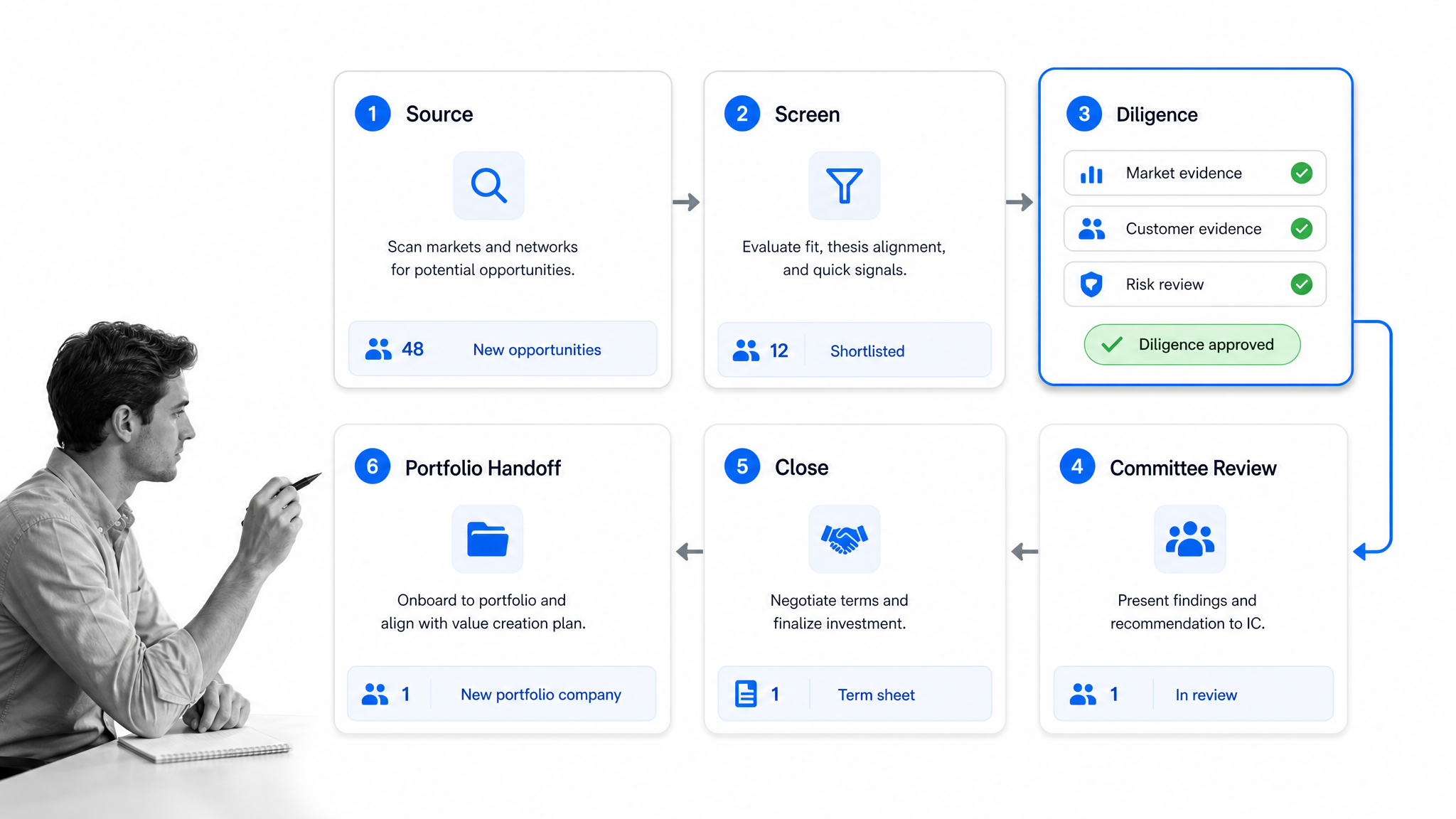
The work is easiest to understand as a set of recurring decision systems. A manager moves opportunities through a funnel, turns incomplete information into an investment view, and keeps each handoff explicit.
Build and maintain the deal pipeline
Deal sourcing comes from founder outreach, referrals, other investors, accelerators, events, and thematic research. The manager defines what enters the pipeline, what data is required, who owns the next step, and when an opportunity should be closed or advanced. A clear venture capital investment process prevents interesting conversations from becoming an unstructured backlog.
Screen opportunities against the fund thesis
Initial screening should test mandate fit before the team spends heavily on diligence. Typical questions cover stage, sector, geography, check size, ownership target, follow-on capacity, and whether the team has a credible reason to win the deal. The manager makes the screen repeatable enough that different team members reach comparable conclusions.
Coordinate startup due diligence
Diligence is a coordinated investigation, not a single spreadsheet. It can include market, product, customer, financial, legal, technical, security, and team workstreams. A structured due diligence venture capital checklist helps the manager assign owners, collect evidence, and surface open questions before the decision.
The depth should match the stage and risk. An early-stage venture capital due diligence workflow may emphasize founder insight, customer pain, market timing, and product velocity. A growth-stage diligence workflow usually requires more operating data, governance detail, cohort evidence, and financial controls.
Prepare the investment committee decision
The manager turns diligence into a recommendation that is specific enough to approve, reject, or defer. That means stating the thesis, evidence, risks, ownership plan, reserve implications, conditions to close, and unresolved questions. The decision record should show who approved what, when, and on which evidence.
Close the investment and hand off ownership
Closing requires coordination across legal documents, signatures, funds flow, cap-table updates, information rights, board arrangements, and internal records. The NVCA model legal documents provide common starting points for financing documents, but counsel must adapt terms to the specific company and transaction.
How the venture capital fund lifecycle shapes the role
A venture capital manager changes focus as the fund moves from formation to fundraising, investment, portfolio management, and realization. Those phases overlap, especially when a firm manages multiple vintages at once.
Fund formation and strategy
Before fundraising, the manager clarifies the mandate, target portfolio, check sizes, reserve strategy, decision rights, governance, and operating budget. The objective is to turn a broad investment belief into a fund model that can guide hundreds of later decisions. A fund administration process can map the accounting, valuation, reporting, audit, and compliance handoffs that surround the investment work.
Fundraising and limited partner diligence
Fundraising is both relationship work and operational proof. Prospective LPs test the strategy, track record, team, governance, sourcing edge, portfolio construction, risk management, and firm operations. The ILPA Due Diligence Questionnaire offers an industry framework for common manager diligence topics.
A strong manager maintains a reusable diligence library with approved answers, current policies, service-provider details, portfolio data, and ownership. The goal is not to automate judgment. It is to avoid recreating the same evidence under deadline pressure.
Investment period
During the investment period, pipeline quality and decision velocity matter. Managers monitor deployment pace, concentration, ownership, reserves, and mandate fit while keeping enough capacity for follow-on investments. Every new deal changes the remaining portfolio construction problem.
Harvest and follow-on management
Later in the fund, the work shifts toward follow-ons, governance, liquidity opportunities, extensions, distributions, and lessons for the next fund. Managers need a clear view of which companies require support, which can absorb more capital, and where protecting time is more valuable than adding activity.
How venture capital managers make investment decisions
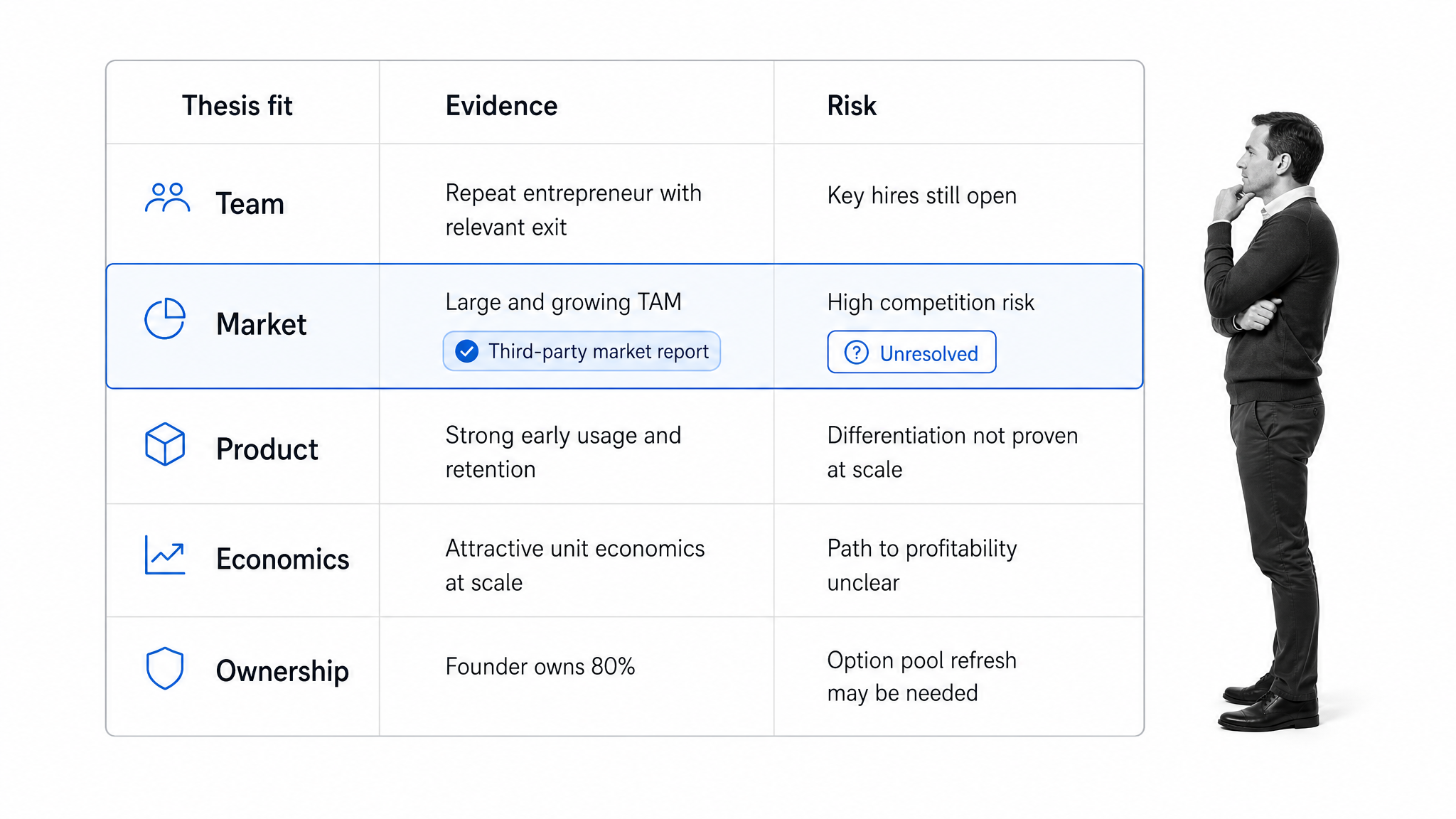
Venture decisions are made with incomplete information. The manager’s job is not to remove uncertainty. It is to expose the important uncertainty, compare it with the potential return, and document why the firm is willing or unwilling to take the risk.
Start with the fund thesis
A thesis provides the first filter: the type of company the fund is designed to back and the specific conditions under which the investment can work. It should be concrete enough to reject attractive opportunities that do not fit the portfolio.
Separate evidence from narrative
Founders are expected to tell a compelling story. The manager separates the story from the evidence behind it. Customer references, product usage, retention behavior, market structure, unit economics, team history, and legal or technical findings should be attached to the decision record rather than summarized from memory.
Use explicit decision criteria
A score does not make the decision objective, but consistent criteria reveal disagreement. The team can compare thesis fit, team, market, product, economics, ownership, and risk while still allowing a partner to explain why one factor deserves more weight. A venture capital due diligence checklist creates a shared evidence base before the final committee approval.
Record dissent and conditions
The best decision record includes the strongest opposing view, unresolved risks, and any conditions attached to approval. If the investment proceeds, those points become the first portfolio monitoring plan. If it does not, they improve future pattern recognition.
Review the quality of the process
After enough decisions, the manager should examine which diligence signals were useful, which questions arrived too late, and which recurring delays are procedural rather than analytical. That review improves the decision system without pretending outcomes alone prove the original decision was good or bad.
Portfolio management after the investment
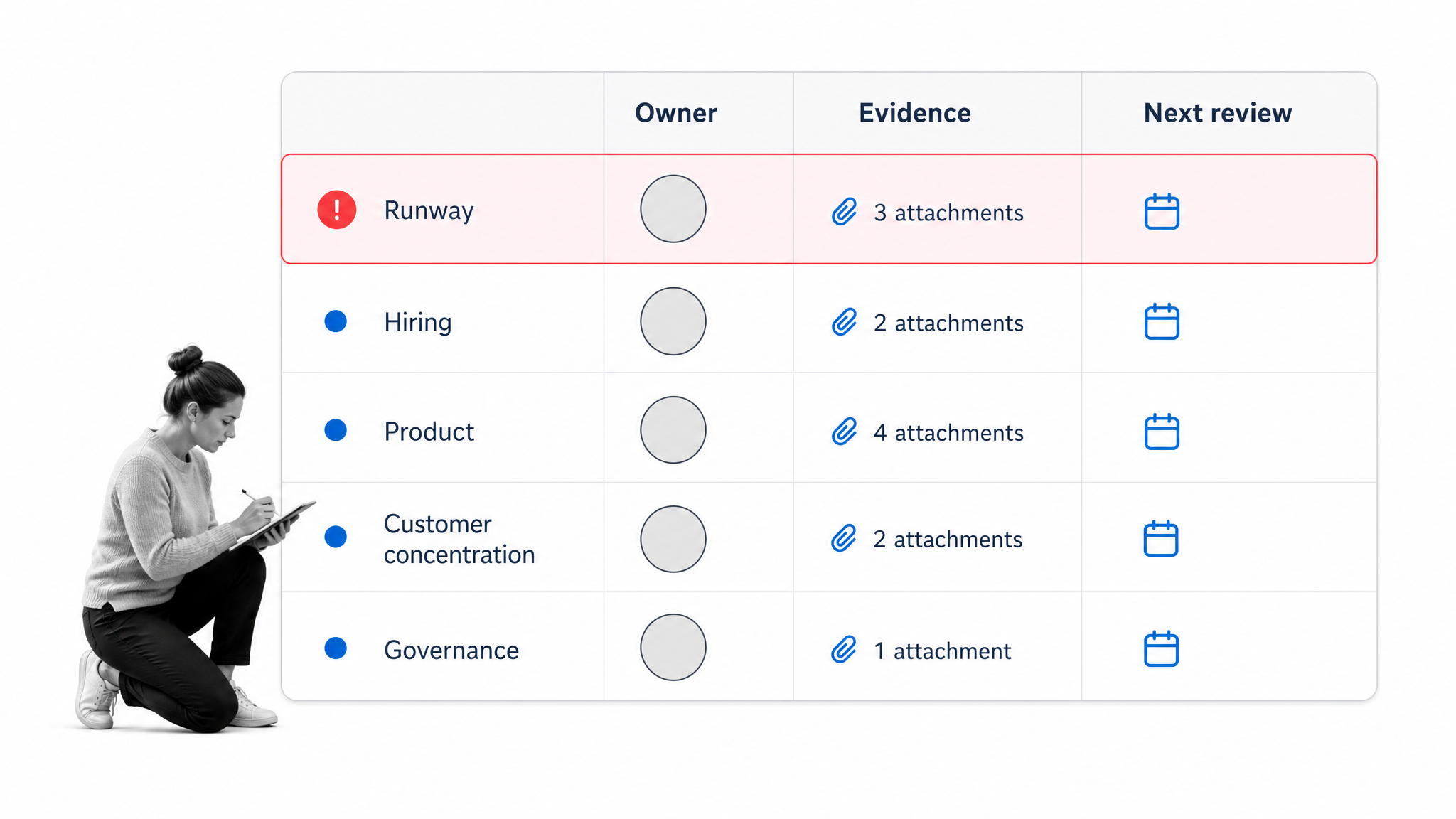
The manager’s responsibility continues after money is wired. Portfolio management protects the fund’s information rights, helps the company access relevant support, and gives the partnership an early view of risk and opportunity.
Define the post-close handoff
The deal team should convert diligence findings into a ninety-day ownership plan. That plan can cover board cadence, reporting expectations, introductions, hiring support, customer or partner help, governance actions, and the risks that need early follow-up. A repeatable portfolio management process makes the handoff visible rather than leaving it inside the partner’s inbox.
Monitor exceptions, not just dashboards
A dashboard shows data. A management system defines what happens when the data changes. The manager should know who owns a runway exception, what evidence is required, when it will be reviewed, and whether the issue changes reserves, governance, or support priorities.
Manage reserves and follow-ons
Follow-on decisions should revisit the original thesis, current evidence, ownership goals, portfolio concentration, and opportunity cost. A company may be performing well and still not be the best use of remaining reserves. The decision needs the same explicit evidence and approval discipline as a new investment.
Build a support system without creating noise
Portfolio support is most useful when it is matched to a real company priority. Managers can coordinate expert introductions, recruiting help, customer access, operating resources, and peer learning, but each request should have an owner and an outcome. The Tribe Capital operational execution case study shows how an investment firm can scale recurring operational work with structured execution.
Fund operations, LP reporting, and compliance
Investment performance receives the attention, but operating failures can damage trust quickly. The venture capital manager needs dependable systems for records, service-provider handoffs, investor communication, and regulatory obligations.
Coordinate the management company and fund
The manager works across the general partner, management company, fund entities, administrator, auditor, tax provider, bank, counsel, and portfolio companies. Each party may own a task, but the manager needs one view of deadlines, dependencies, evidence, and escalation.
Make LP reporting repeatable
Investor reporting usually draws from portfolio updates, valuations, capital activity, financial statements, and narrative commentary. A defined close calendar identifies data owners, review steps, approval rights, and distribution checks. Consistency matters because one unexplained change can create a long cycle of questions.
Understand adviser status and filings
Regulatory obligations depend on facts such as adviser activities, assets, jurisdictions, and fund structure. The SEC private fund adviser overview explains that some advisers register while others rely on exemptions and still report selected information. Counsel should determine the firm’s exact obligations.
Managers can use a structured guide to venture capital regulatory filings to map recurring work, then confirm each requirement against current legal advice and official sources. The SEC also publishes Form ADV requirements context and public SEC Form ADV data resources for adviser disclosures.
Preserve an audit-ready evidence trail
The important record is not merely a completed checklist. It is the link between policy, action, approval, evidence, and exception handling. If a deadline moves or an approval changes, the system should preserve who made the change and why.
Building a repeatable venture capital management system
A strong operating system makes the routine work reliable and leaves the investment team more attention for judgment. It should cover the recurring path from opportunity intake through decision, closing, portfolio monitoring, reporting, and review.
Map decisions before automating tasks
Start by identifying the decisions that change the fund’s exposure: advance a deal, approve diligence, commit capital, reserve follow-on funds, escalate a portfolio risk, approve a valuation, or release an LP report. Then map the evidence, owner, approver, and deadline attached to each decision.
Create one source of execution truth
Process Street is a Compliance Operations Platform that can turn venture processes into governed workflows. A manager can use it to assign work, collect evidence, route approvals, preserve an audit trail, and connect the policy for a process to the execution record for each fund, deal, or portfolio company.
The operating layer should complement specialist systems, not duplicate every data field. venture capital management software may hold relationship, portfolio, accounting, or reporting data. The workflow layer should make the cross-system sequence, ownership, and evidence explicit.
Use conditions to match risk
Not every opportunity needs the same path. Stage, check size, geography, security type, conflict, or risk flag may change the diligence steps and approval chain. Conditional logic lets a workflow reveal the relevant tasks without forcing the team through irrelevant work.
Put approval at the decision point
Approvals should sit after the required evidence and before the irreversible action. Workflow approvals can create a clear gate for investment committee decisions, valuations, follow-ons, report release, or policy exceptions. The approval record should name the decision, not merely say approved.
Design the review cadence
A venture operating system needs daily, weekly, quarterly, and annual rhythms. Daily work moves deal and portfolio tasks. Weekly review handles pipeline and exceptions. Quarterly cycles bring valuations, reporting, reserve review, and portfolio prioritization together. Annual review updates policies, service-provider controls, compliance calendars, and the fund’s operating model.
Improve the system from real execution data
Track where work stalls, which evidence is repeatedly missing, and which approval steps generate rework. Improvements should remove unnecessary handoffs while strengthening control at high-risk points. Useful private equity processes can provide adjacent patterns, but the manager should adapt them to the venture strategy, team, fund terms, and portfolio.
Skills and habits that make a strong venture capital manager
The role combines judgment with operating range. No single skill is sufficient because the manager must evaluate companies, earn trust, coordinate experts, make decisions, and maintain fund discipline at the same time.
Investment judgment
Strong managers form clear hypotheses, seek disconfirming evidence, understand portfolio construction, and distinguish a great company from a great investment for this specific fund.
Relationship judgment
Founders and LPs notice consistency. Managers need to communicate decisions directly, handle confidential information carefully, and make commitments that the firm can actually keep.
Operational discipline
The ability to design a repeatable process is a competitive advantage. It reduces missed follow-up, shortens decision cycles, strengthens reporting, and makes the firm’s knowledge usable by the next person who joins.
Clear writing
Investment memos, portfolio notes, LP updates, and policy records all require concise writing. The best documents state the decision, evidence, risk, owner, and next action without hiding uncertainty behind vague language.
Learning loops
A manager should revisit decision quality, portfolio support, and fund operations regularly. The point is not to create a perfect scorecard. It is to convert experience into a better next process.
Venture capital manager FAQs
What is a venture capital manager?
A venture capital manager directs or supports a venture fund’s investment and operating work. The role can include fundraising, deal sourcing, due diligence, investment committee preparation, portfolio support, reserve decisions, LP reporting, and oversight of fund operations.
What does a venture capital manager do every day?
Daily work depends on the fund phase. A manager may review new opportunities, meet founders, coordinate diligence, prepare a decision memo, help a portfolio company, review fund deadlines, or communicate with limited partners and service providers.
What is the difference between a venture capital manager and a fund administrator?
The venture capital manager owns strategy, investment decisions, oversight, and stakeholder relationships. A fund administrator usually performs defined back-office tasks such as accounting, capital-account maintenance, and investor statements, but the manager remains accountable for the fund.
What skills does a venture capital manager need?
Core skills include investment analysis, portfolio construction, relationship management, clear writing, negotiation, governance awareness, and operational discipline. The best managers also build learning loops that improve how the firm sources, decides, supports, and reports.
How does a venture capital manager evaluate startups?
The manager compares the opportunity with the fund thesis, then tests the team, market, product, economics, ownership potential, and key risks. Evidence from diligence is converted into an investment committee record with a recommendation, dissent, conditions, and unresolved questions.
How can Process Street support venture capital management?
Process Street can turn recurring venture work into governed workflows with owners, evidence, conditions, approvals, and audit history. Teams can use it for deal review, diligence, investment committee gates, closing handoffs, portfolio monitoring, LP reporting, and compliance calendars.