

Turn every policy into automated workflows with built-in enforcement and audit-ready proof.



8 Best Decisions Alternatives & Competitors in 2026

Decisions alternatives come up whenever a team likes the idea of automating rules and workflows but needs a different fit for its people, budget, or ownership model. Decisions is a business process automation platform built around a business rules engine, a workflow designer, and governed orchestration across systems and AI agents. It is strong for organizations that want to model complex decision logic and route work across legacy systems, and its pricing is handled through sales rather than published tiers.
Teams look elsewhere for practical reasons. Some want business users to own and change processes without engineering support. Some need enforceable, recurring standard operating procedures with approvals and an audit trail, rather than a heavy automation engine. Others need open source control, a simpler no-code experience, or an enterprise low-code platform for building full applications. The right replacement depends on who owns the process and what kind of work you are actually running.
This guide compares tools on the criteria that matter most when you evaluate Decisions alternatives:
- Ease of use and who can own the process after launch
- Core capability fit: SOP execution, BPMN orchestration, decision automation, or low-code apps
- Pricing model and whether a free plan or trial is available
- Integrations and how the tool connects to your existing systems
- Governance, approvals, and the audit-ready records your team needs
The list is maintained editorially by the Process Street team. Process Street ranks first for its ideal use case, teams that need enforceable, trackable, recurring process and SOP execution, but it is not the right answer for every situation. Where another tool fits a use case better, this guide says so plainly.
- Decisions alternatives at a glance
- Best Decisions alternatives and competitors
- How to choose Decisions alternatives
- Decisions alternatives FAQs
- Final takeaway
Decisions alternatives at a glance
The short version: for teams whose core need is enforceable, trackable, recurring process and SOP execution, Process Street is the strongest Decisions alternative because it keeps required tasks, approvals, and audit-ready records in one place. If you need developer-owned BPMN orchestration and decision automation, Camunda or open source Flowable is the closer fit. For enterprise low-code applications and case work, Appian or Pega fits better, and for a lighter no-code experience, Pipefy or Kissflow is easier to adopt.
| Tool | Best for | Standout feature | Free plan | Starting price |
|---|---|---|---|---|
| Process Street | Enforceable recurring SOPs, approvals, and operational evidence | Workflow runs with required tasks, forms, approvals, and audit-ready records | Free trial | Contact sales |
| Camunda | Developer process orchestration and decision automation | BPMN process execution with DMN decision automation | Free self-managed development | Contact sales |
| Appian | Enterprise low-code process and case applications | Low-code process automation with a unifying data fabric | Community Edition | Contact sales |
| Pega | Enterprise case management and AI decisioning | Case life cycles with AI decisioning in App Studio | Community Edition | Contact sales |
| Nintex | Business-led workflow and document automation | Workflow, forms, document automation, and RPA in one suite | Free trial | Contact sales |
| Pipefy | No-code request and process management | No-code pipes, request forms, and portals | Free Starter plan | Contact sales |
| Kissflow | No-code workflows and simple business apps | No-code workflow and application building on one platform | Demo only | Contact sales |
| Flowable | Open source process, case, and decision automation | Open source BPMN, CMMN, and DMN engines | Open source edition | Contact sales |
Best Decisions alternatives and competitors
1. Process Street
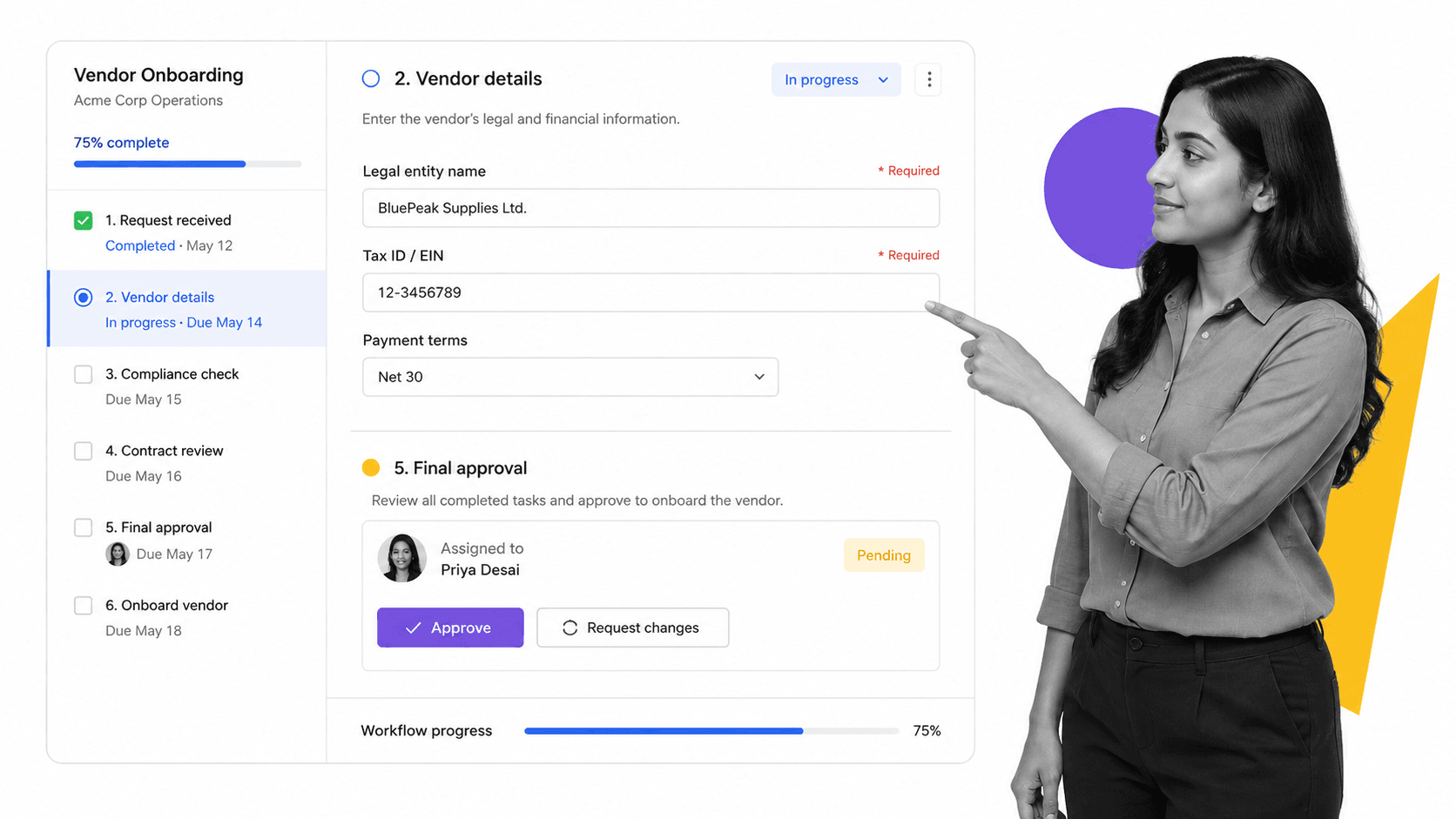
Best for: operations, compliance, HR, and finance teams that need recurring workflows to be enforceable, visible, and easy to improve.
Process Street is the strongest Decisions alternative when the real problem is not building a rules engine, but running recurring operational work the same way every time. It gives teams a governed place to run standard operating procedures, capture structured inputs, route approvals, assign owners, and keep a clear record of what happened. That fits many teams evaluating Decisions alternatives, because their work has moved past modeling logic and into repeatable execution that has to be proven.
The best fit is a team that needs workflow automation software for onboarding, compliance reviews, vendor checks, finance close, employee lifecycle tasks, and recurring audits. Instead of asking business users to think like engineers, Process Street gives them workflows, tasks, forms, approvals, conditional logic, and AI-assisted workflow creation, plus Pages for operational knowledge. Process owners keep standards in place while frontline teams complete the work without a specialist watching over them.
Process Street also works well beside a heavier automation engine. A company can keep Decisions or another orchestration layer for deep system-to-system logic while using Process Street as the human-facing control layer for SOP software and process documentation. That is useful when people must review exceptions, attach evidence, complete checks, or approve a step before automation continues.
Key Process Street features
- Workflow runs with assigned tasks, due dates, required fields, role-based work, approvals, and conditional logic.
- AI-assisted workflow creation and optimization, so teams build procedures without starting from a blank page.
- Pages for controlled process documentation, keeping knowledge and execution close together.
- Operational records that support compliance workflow software, audit review, and continuous improvement.
- Plans are listed publicly on the Process Street pricing page, with Startup, Pro, and Enterprise families.
Pros
- Strong fit for recurring SOPs, approvals, checklists, compliance evidence, and human-in-the-loop workflows.
- Business users can own and improve workflows without becoming automation specialists.
- Clear task ownership shows what is late, blocked, approved, or complete.
- Works as a practical front end for approval workflow software and process governance.
- Useful when a workflow needs both automation and proof that people completed the right steps.
Cons
- Not a direct replacement for a dedicated business rules engine or developer-controlled orchestration runtime.
- Less suited to teams whose main goal is building large custom low-code applications rather than repeatable process execution.
2. Camunda
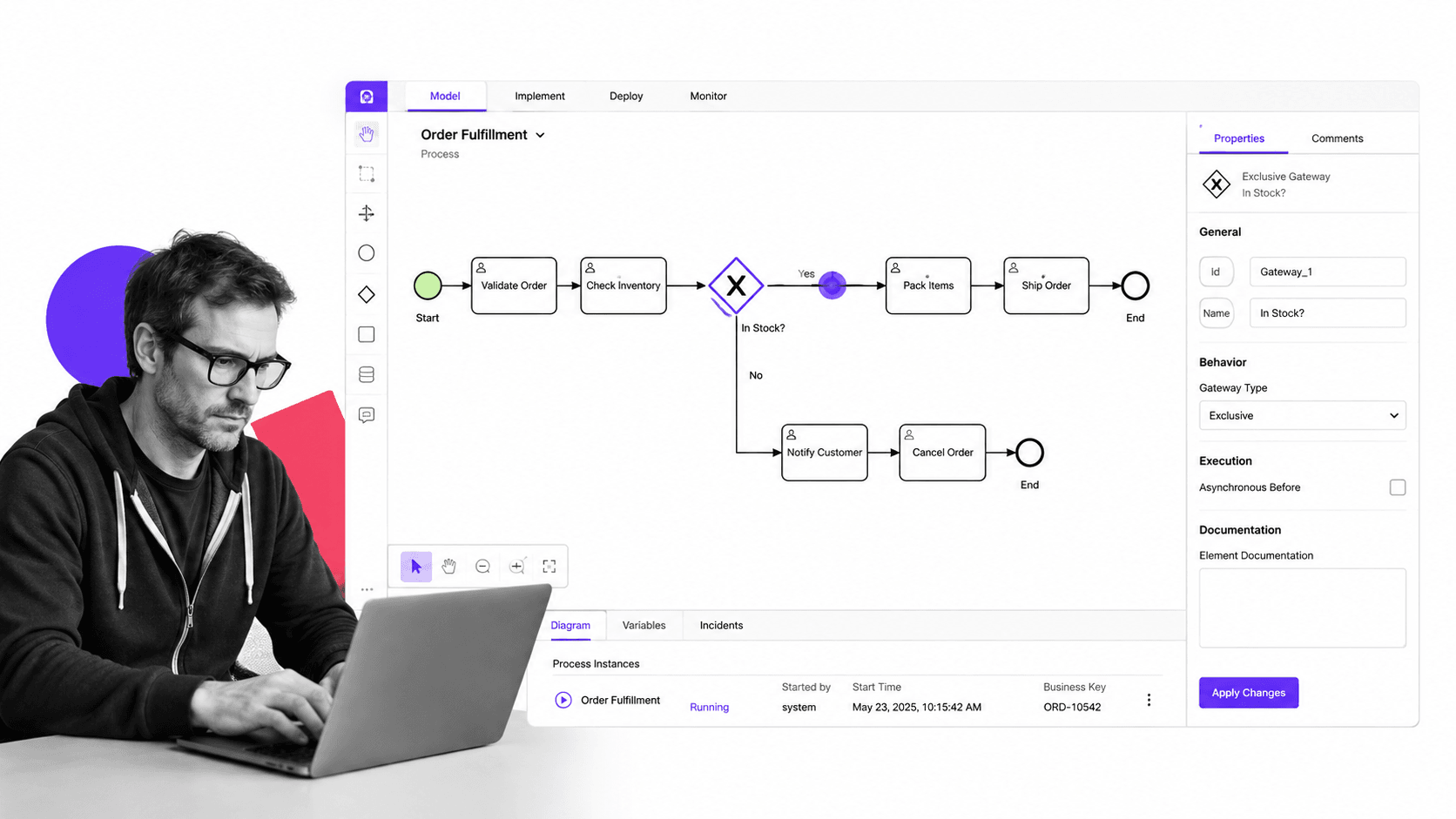
Best for: developer process orchestration and decision automation.
Camunda is one of the closest Decisions alternatives for teams that want developer-owned process orchestration with decision automation. Its materials describe running BPMN processes and DMN decisions, with modeling tools and an operations suite for inspecting live process instances.
Camunda is a better fit than Process Street when engineers need to model and run process logic and decisions inside a broader architecture. Process Street is better when the central issue is recurring human work, approvals, evidence capture, and operational accountability.
Camunda features
- BPMN process execution for orchestration
- DMN decision automation for business rules
- Desktop and web modeling tools
- An operations suite for inspecting running processes
Pros
- Close conceptual match to a rules-and-workflow engine
- Strong fit for developer-owned orchestration
- Standards-based process and decision modeling
Cons
- Requires more engineering ownership than business-led tools
- Less direct for SOP execution and frontline task compliance
3. Appian
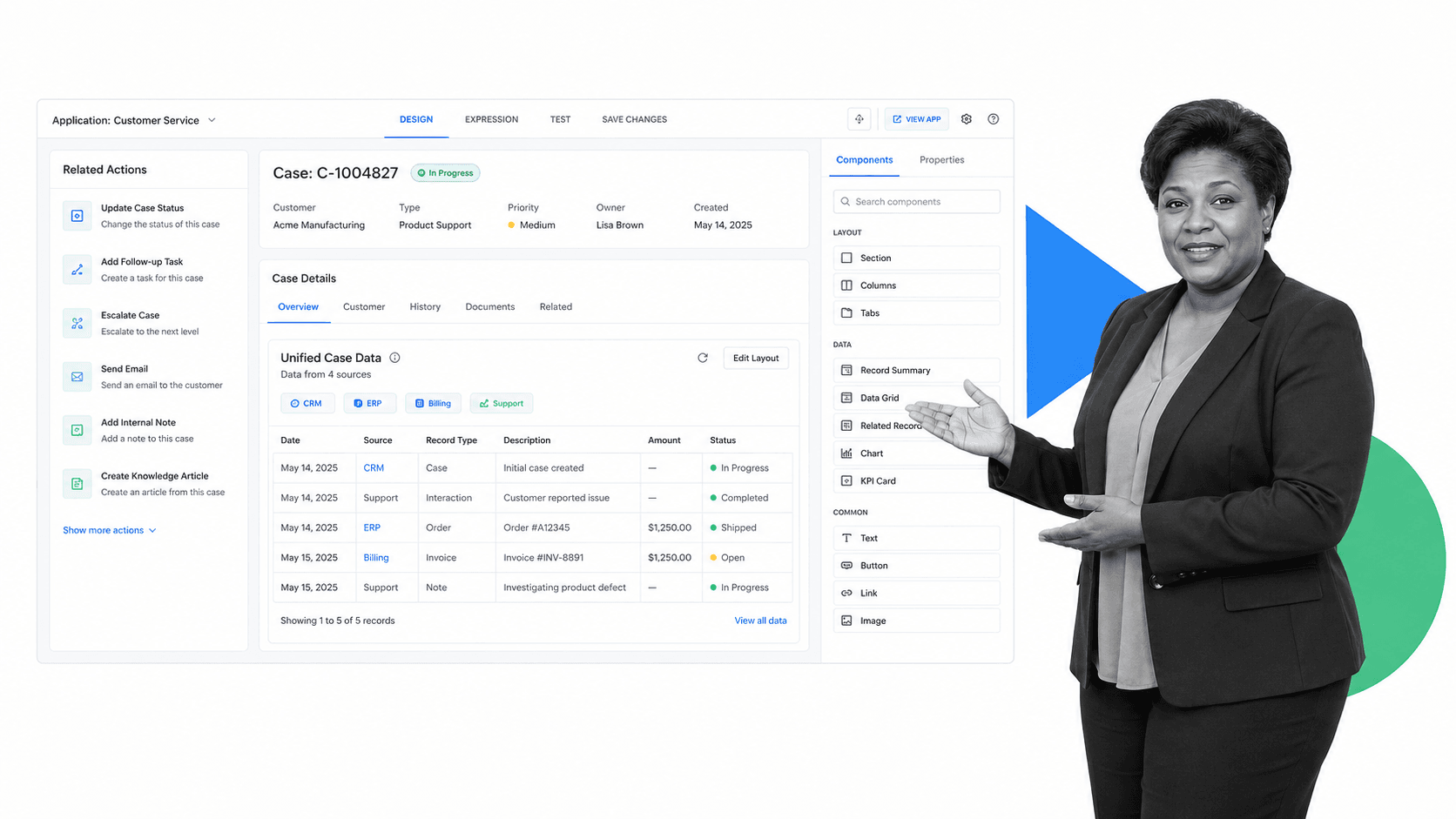
Best for: enterprise low-code process and case applications.
Appian is an enterprise low-code platform for building process apps, case work, and data-connected applications. Appian describes low-code process automation, a data fabric that unifies sources, and a case management studio, and it offers a Community Edition for learning.
Appian is a better fit than Process Street when the goal is a portfolio of custom low-code applications on unified data. Process Street is better when the goal is recurring process execution that business teams can own without designing a full application.
Appian features
- Low-code process automation
- A data fabric that unifies multiple sources
- Case management studio for complex casework
- A Community Edition for evaluation
Pros
- Strong for enterprise low-code programs
- Useful when process work needs custom application surfaces
- Good fit for teams standardizing on one platform
Cons
- Can be more platform than an SOP team needs
- Pricing and deployment usually require sales engagement
4. Pega
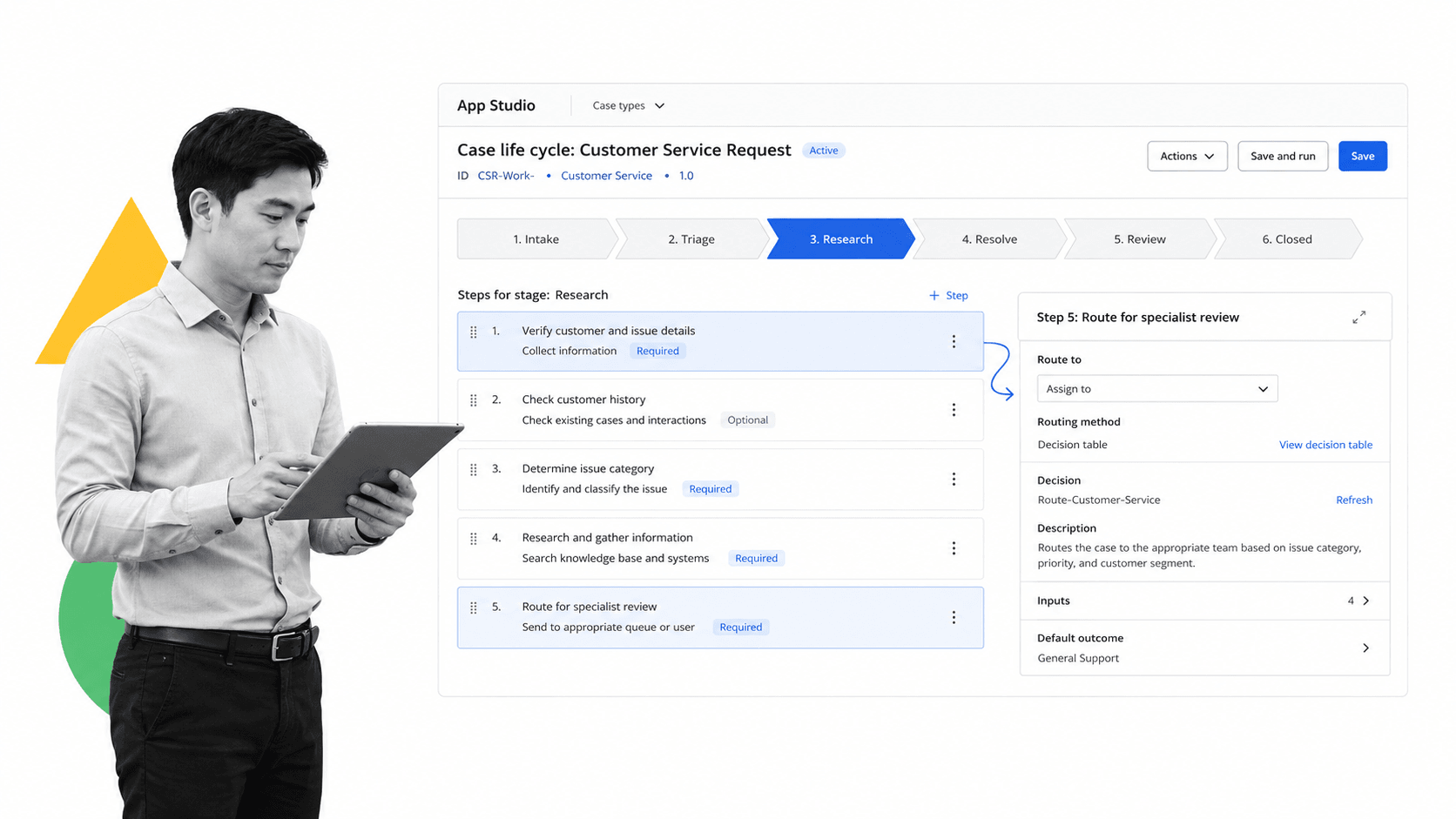
Best for: enterprise case management and ai decisioning.
Pega is a major enterprise platform for case management, workflow automation, and AI decisioning. Its platform materials highlight App Studio for visual development along with case life cycles and decisioning, and it offers a Community Edition for hands-on building.
Pega is a better fit than Process Street when a company needs complex case work, decision strategies, and large-scale customer operations. Process Street is better when teams need a lighter operating layer for recurring internal workflows and proof of completion.
Pega features
- Case management with staged life cycles
- AI decisioning for real-time choices
- App Studio for low-code development
- A Community Edition for evaluation
Pros
- Strong fit for complex enterprise case work
- Useful for decision-heavy customer operations
- Broad platform depth for transformation teams
Cons
- More complex than needed for straightforward procedures
- Commercial evaluation usually involves sales engagement
5. Nintex
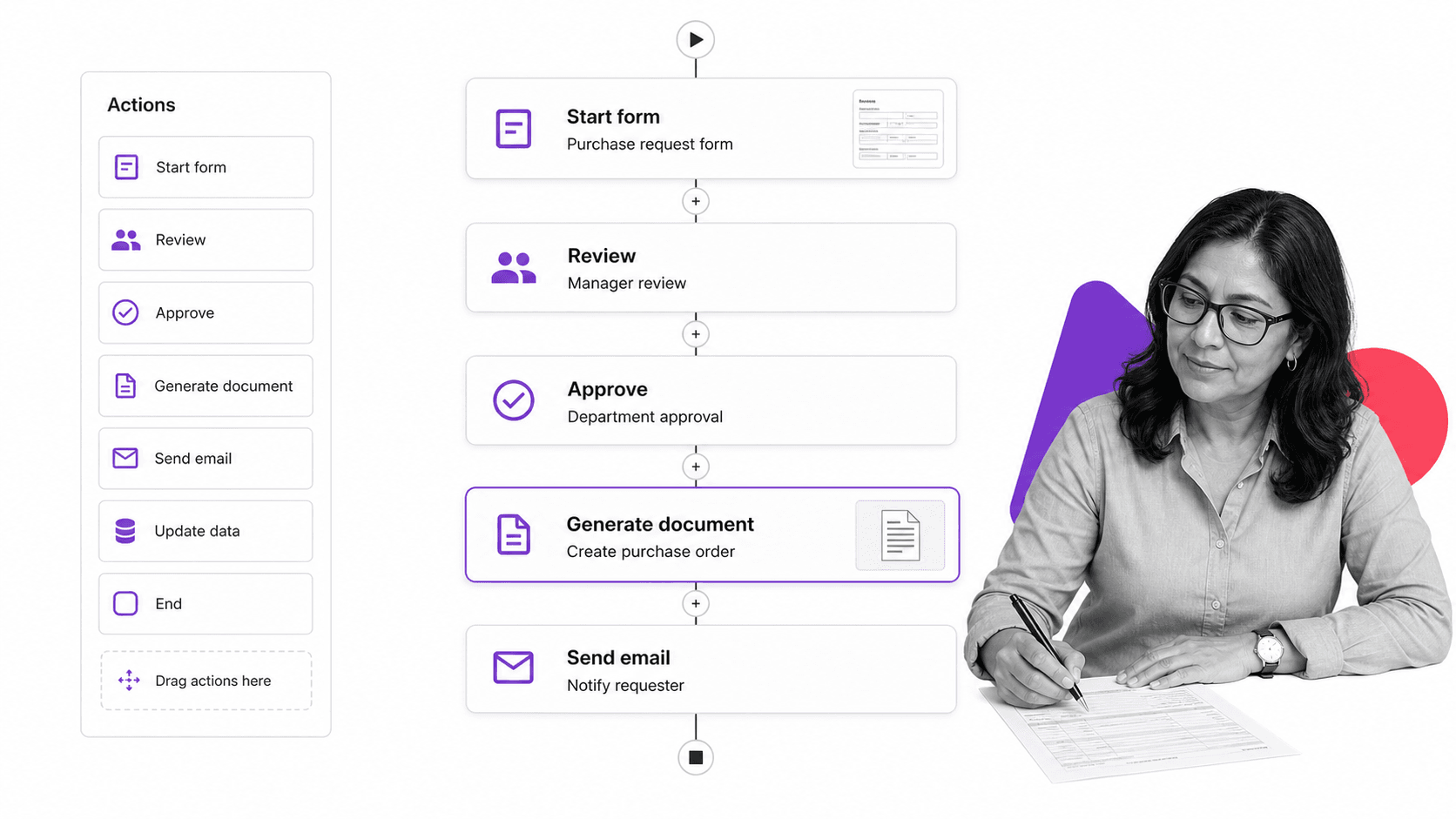
Best for: business-led workflow and document automation.
Nintex is a business automation suite covering workflow automation, digital forms, document automation, and robotic process automation. It is positioned as an end-to-end process automation platform for business teams, with a trial available and pricing handled through sales.
Nintex is a better fit than Process Street when document generation, forms, and RPA need to sit inside one business automation suite. Process Street is better when the main job is governed SOP execution, approvals, and operational records.
Nintex features
- Workflow automation for business processes
- Digital forms for structured input
- Document automation and generation
- Robotic process automation for repetitive tasks
Pros
- Broad business automation footprint
- Strong for document-heavy workflow programs
- Good fit when forms and automation belong together
Cons
- Broad suite can be more than small teams need.
- Less focused on strict recurring SOP completion than a dedicated SOP execution platform.
6. Pipefy
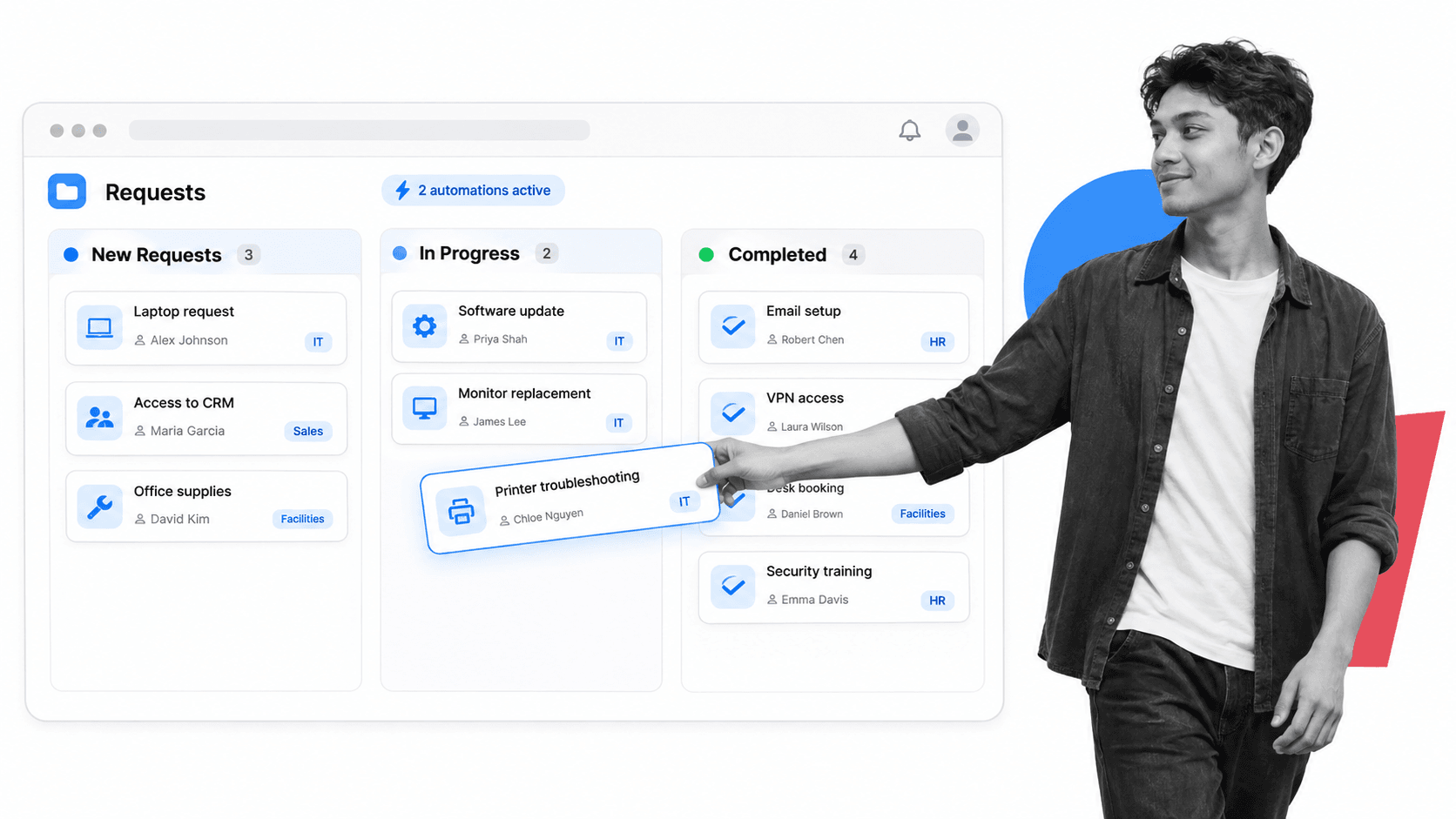
Best for: no-code request and process management.
Pipefy is a no-code process platform built around pipes, request forms, and portals. Its pricing page lists a free Starter plan for small teams, with Business and Enterprise plans handled through sales.
Pipefy is a better fit than Process Street when the team wants request intake, cards, and process portals in a no-code, board-like environment. Process Street is better when workflows need stronger SOP structure, recurring checklist execution, approvals, and evidence capture.
Pipefy features
- No-code pipes for request and process tracking
- Request forms and portals for intake
- Automations for routing and updates
- A free Starter plan listed publicly
Pros
- Good for request intake and service processes
- Approachable no-code experience for business users
- Card-based views are easy to adopt
Cons
- Less suited to deep decision logic or orchestration
- Advanced controls and larger teams need paid plans
7. Kissflow
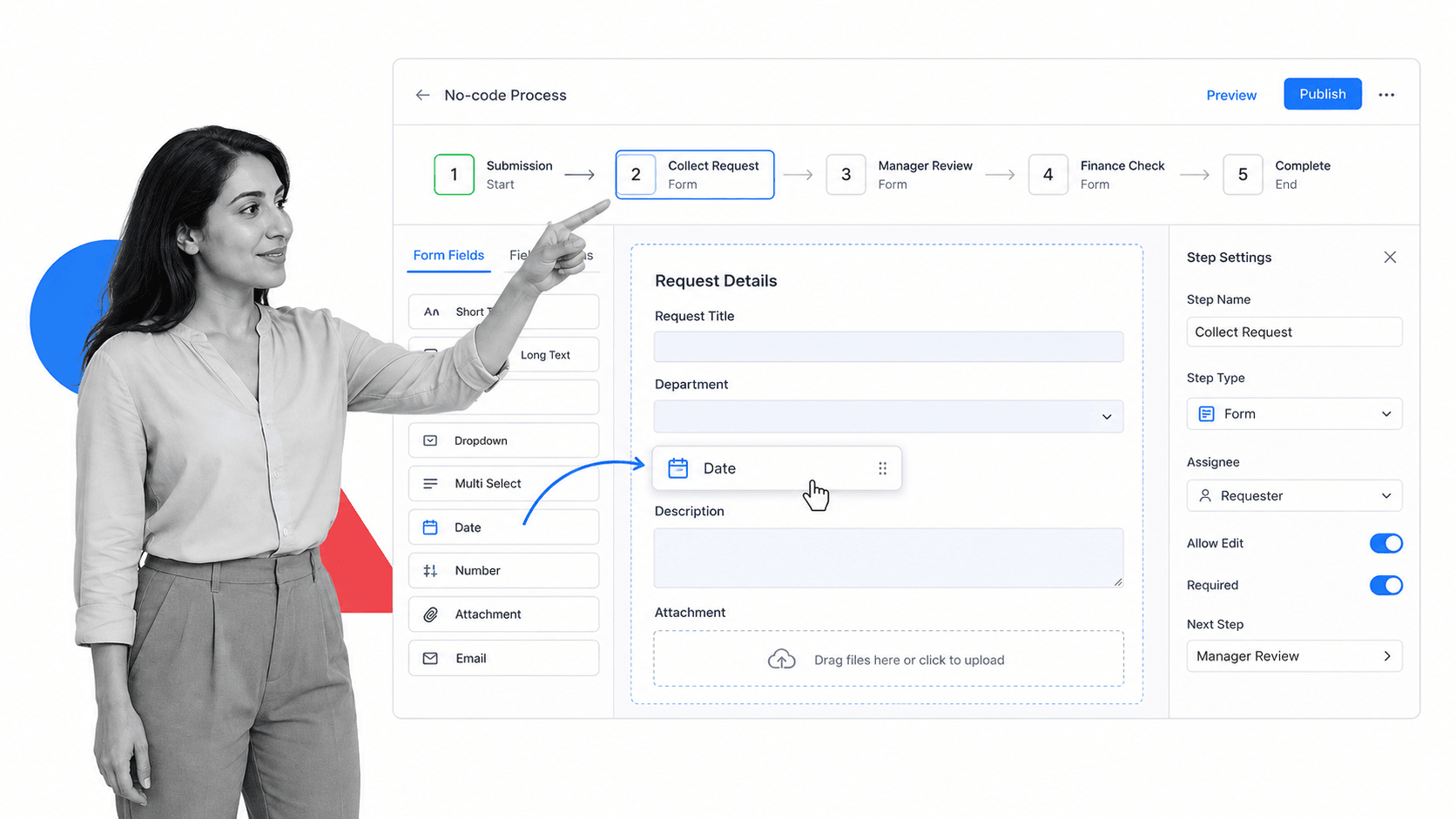
Best for: no-code workflows and simple business apps.
Kissflow is a no-code platform for workflow automation and simple application development. It positions itself as a unified work platform with forms, boards, and reports, and it directs buyers to a consultation and sales conversation for pricing.
Kissflow is a better fit than Process Street when a team wants a no-code way to build both workflows and lightweight apps in one place. Process Street is better when the priority is enforceable recurring SOPs with approvals and audit-ready completion records.
Kissflow features
- No-code workflow automation
- Low-code application building
- Forms, boards, and reports in one platform
- Dashboards and analytics for business teams
Pros
- Approachable for business users building no-code work
- Combines workflow and simple app building
- Unified platform across several work types
Cons
- No free plan shown, evaluation starts with a consultation.
- Less focused on strict SOP execution and audit evidence than a dedicated SOP execution platform.
8. Flowable
Best for: open source process, case, and decision automation.
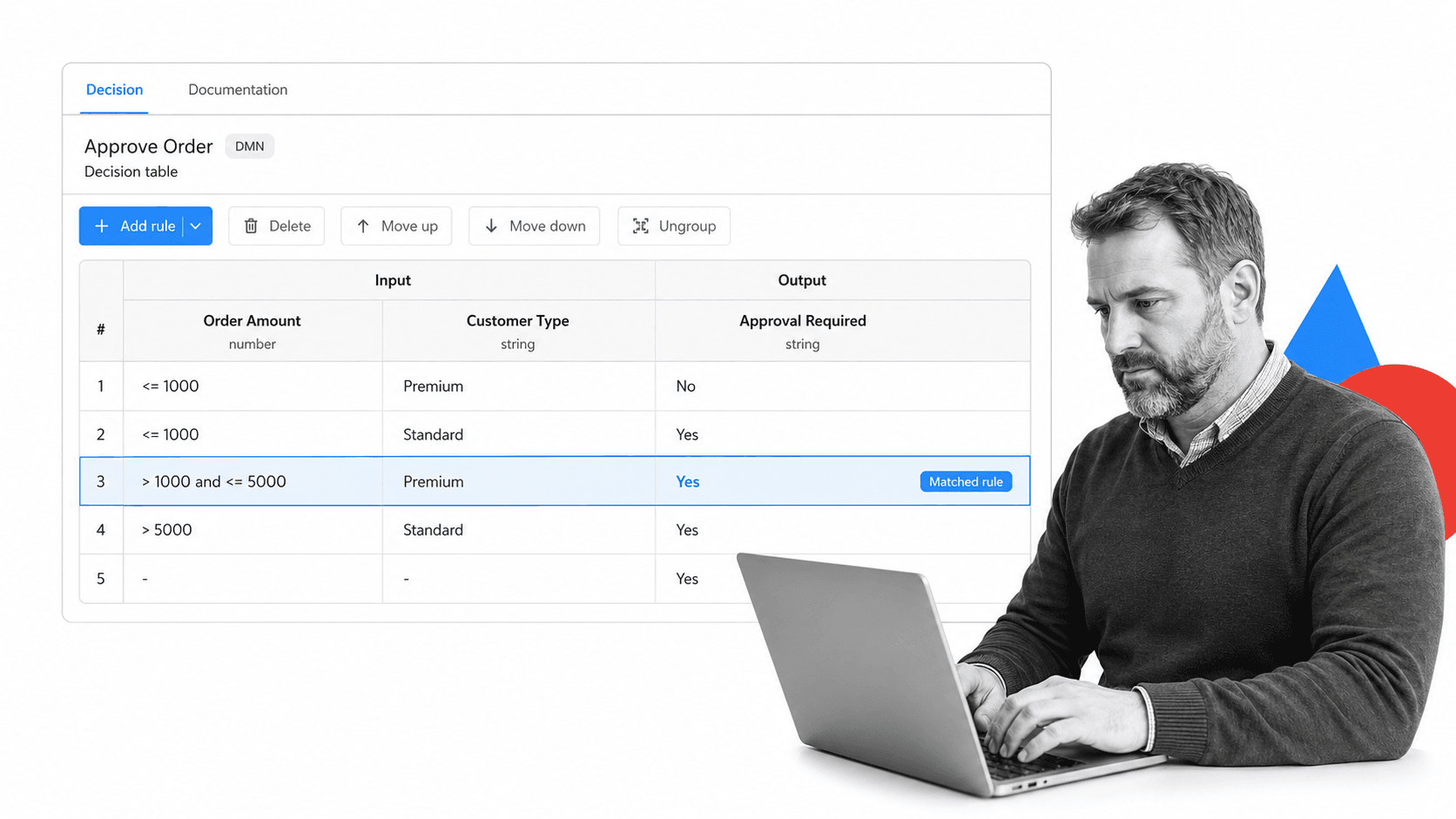
Flowable is an open source platform for process, case, and decision automation. It provides open source BPMN, CMMN, and DMN engines along with Flowable Design for visual modeling, with commercial support handled through sales.
Flowable is a better fit than Process Street when engineering teams want open source engines and standards-based control over process and decision logic. Process Street is better when the workflow includes business users, required checks, forms, approvals, and human evidence.
Flowable features
- Open source BPMN process engine
- CMMN case management engine
- DMN decision and rules engine
- Flowable Design for visual modeling
Pros
- Strong fit for open source, standards-based automation
- Close conceptual match for decision and process engines
- Developer control with self-hosting options
Cons
- Requires engineering ownership to run and maintain
- Not designed as a business SOP interface
How to choose Decisions alternatives
Start by deciding whether you need business process management software, business-led workflow execution, or developer orchestration. Those categories overlap, but they optimize for different owners. A rules-and-BPMN engine helps technical teams model and run process and decision logic. Low-code platforms help teams build applications. SOP platforms help teams complete recurring work consistently.
Map the workflow to the risk. If missed steps create audit, compliance, or customer impact, prioritize approval workflow software, required data, and traceable completion records. If the risk is technical failure across systems, prioritize durable orchestration, observability, and engineering ownership.
Decide who maintains the process after launch. A transformation team may be comfortable owning a low-code or engine-based platform, while an operations team may need workflow apps and a workflow management system that managers can change directly. For recurring work, templates, task history, role assignments, and reporting usually matter more than modeling notation.
Finally, separate orchestration from accountability. Some teams run technical process orchestration behind the scenes and a human-facing layer for operations management software and process automation. That combination keeps engineering control while giving business teams a clear place to run and review the work, and it is often how a Decisions alternative earns its place.
Decisions alternatives FAQs
What is the best Decisions alternative?
The best Decisions alternative depends on the use case. Process Street is the strongest fit for enforceable, recurring SOP and workflow execution with approvals and audit-ready records. Camunda and Flowable are closer fits for BPMN orchestration and decision automation, while Appian and Pega suit enterprise low-code applications.
Is there a free Decisions alternative?
Yes. Several Decisions alternatives offer a free plan or trial. Process Street offers a free trial, Pipefy lists a free Starter plan, Camunda offers free self-managed development, Appian and Pega offer a Community Edition, and Flowable provides an open source edition.
Which Decisions alternative is closest to Decisions?
Camunda and Flowable are among the closest because they combine process automation with decision automation through BPMN and DMN. They are a natural fit when your priority is modeling and running decision logic with technical ownership.
What is the best Decisions alternative for small teams?
Smaller teams that want quick adoption often prefer a no-code option like Pipefy or Kissflow, or Process Street when the priority is recurring SOP execution with approvals. These are easier for business users to own than a full engine or enterprise low-code platform.
What is the best Decisions alternative for enterprises?
For large enterprises, Appian and Pega are strong choices when you need low-code applications, complex case management, and decisioning at scale. Process Street complements them as the human-facing layer for recurring procedures and evidence.
Is there an open source Decisions alternative?
Flowable is the open source option in this list, with BPMN, CMMN, and DMN engines that engineering teams can self-host. It suits teams that want standards-based control over process and decision automation.
Why is Process Street ranked first?
Process Street is ranked first for its ideal use case: teams that need enforceable, trackable, recurring process and SOP execution with required tasks, approvals, and audit-ready records. For deep decision engines or enterprise application development, other tools on this list are the better fit, and the guide says so where that is true.
Final takeaway
If you are weighing Decisions alternatives because a heavy rules-and-orchestration engine is more than your recurring operational work needs, Process Street is the strongest first stop for enforceable SOP execution. If you still need a decision and process engine, start with Camunda or open source Flowable. If you need enterprise low-code applications and case work, evaluate Appian or Pega. If you want a lighter no-code experience, look at Pipefy or Kissflow. The best Decisions alternative is the one that matches the owner, the risk, and the day-to-day operating model of the process.