





An employee development program is a structured system for identifying skill gaps, setting growth goals, providing learning opportunities, and reviewing progress so employees and the organization can build the capabilities they need.
A useful employee development process connects individual goals to the work, gives managers a repeatable way to support progress, and treats development as an ongoing operating practice rather than a one-off training event. This guide explains why that matters and how to build a program people can actually use.
In my early 20s, I worked as a shift manager at a well-known pizza chain. On my second day, every manager above me was fired and I was told to keep things running until the district manager could arrange someone to take over in “a week or two.”
Not only did I absolutely not know what I was doing, my team knew it.
Chaos ensued. Compliance regulations, SOPs, and basic safety measures flew out the window because the team did not trust that I knew what I was doing, which was fair: I did not.
It ended up taking three months to get a temporary manager to come over from one of the other stores, and by then I was frustrated beyond belief. The moment she walked in the door, I handed over my keys, put in my notice, and refused to discuss the possibility of staying on in any capacity for any longer.
Back then, I was only 20, this was one of my first leadership roles, and I was clueless. Since then, I have held other leadership positions, had some attentive mentors, and gotten to develop the leadership skills that they do not tell you about in the job description. Today, I could walk into that same situation and roll with it, no problem.
Without those opportunities, though, I would still be that clueless kid failing to get his team united, failing to develop their skills, and failing to see his job as anything more than a means to an end.
Not prioritizing employee development is a bad look, people teams. Process Street for human resources can help turn the intention to develop people into a consistent, accountable process.
- Employee development: Back to basics
- What happens without employee development
- The benefits of employee development
- How to build an employee development program
- Go forth and upskill
Employee development: Back to basics
The hardest part of any project is knowing where to start. That not-knowing can paralyze you into not-doing at all. But let me share a tip with you: The first pancake is always a little wonky.
Employee development covers the skills, knowledge, experiences, feedback, and support a person needs to succeed now and grow over time. A program makes those activities deliberate. It gives employees a clear path, gives managers prompts and responsibilities, and gives the organization a way to see whether learning is changing performance.
That path can begin before day one. A consistent employee onboarding template establishes role expectations, required training, owners, and checkpoints. From there, the same system can continue through skill reviews, learning plans, stretch assignments, mentoring, and career conversations.
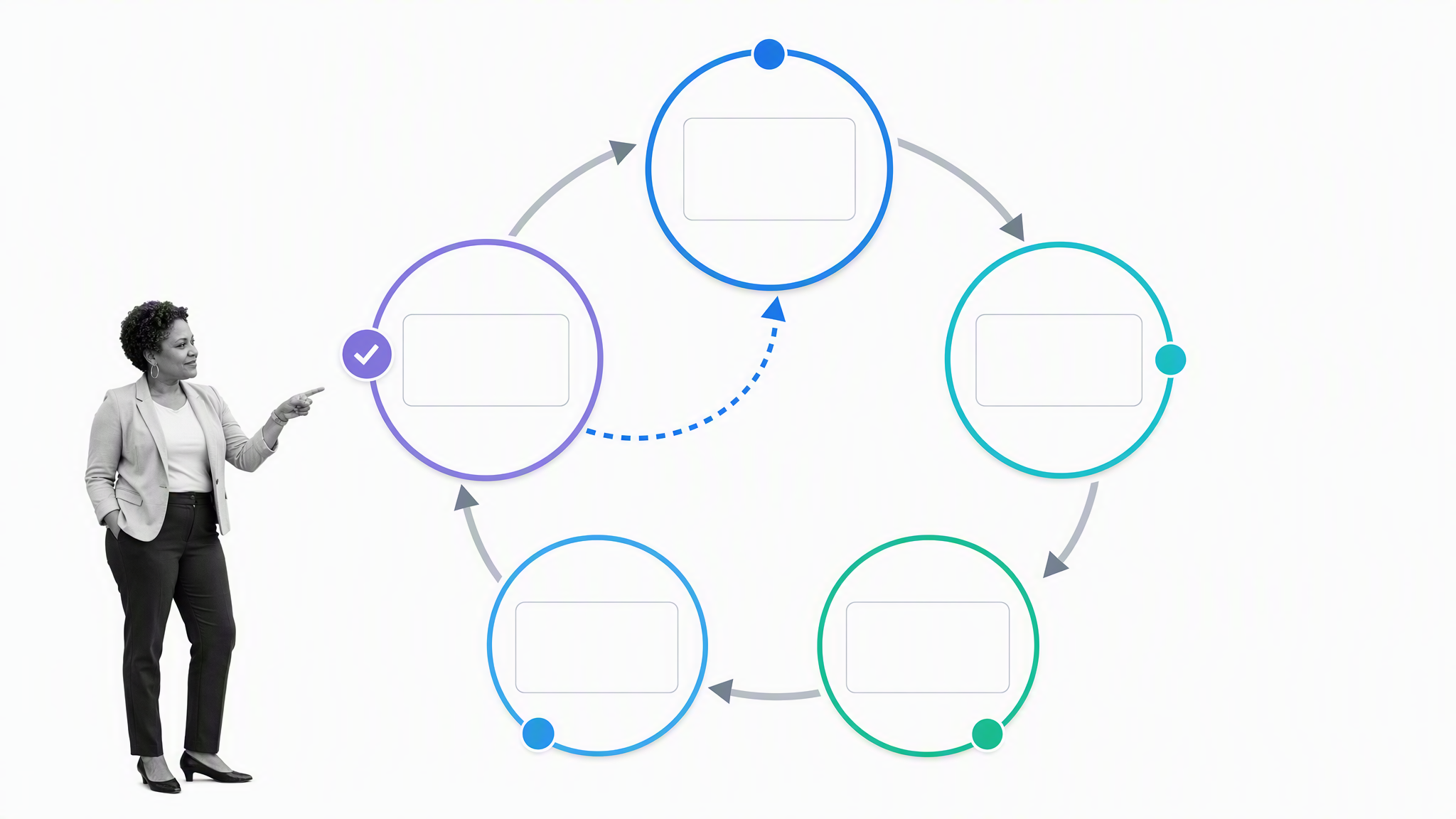
A good program is not a library of courses that employees are left to browse alone. It is a cycle: assess the current state, agree on a goal, choose a relevant learning experience, apply the skill in real work, collect evidence, and review what comes next. The cycle should be structured enough to create accountability and flexible enough to change with the employee and the business.
What happens without employee development
Onboarding is a continuous process. We all know it. We all say it. Well, some of us live it.
At a certain point, though, “onboarding” is not exactly the right word. Once an employee has been there for years, they are already on board. The focus shifts to upskilling and employee development: helping that person keep pace with the role, the organization, and the field.
The employee will often understand the skills and knowledge they need to improve, but it is on the organization to facilitate that. Provide opportunities, funding, resources, protected time, coaching, and chances to use the new capability. Without that support and a standardized program, at least one of the following scenarios is likely.
When your company’s reputation tanks
A customer, Thomas, comes to your company with the absolute intention to buy. They have done their homework and are committed to giving you their money.
The first person they speak to says, “No problem! We just need X, R, and C from you and we can set that up.” Thomas comes back with those things and talks to a different person. “Oh, no,” this person says. “That is how we used to do it. You actually need A, Z, and D.”
Thomas gets the new documentation and comes back a third time to yet another employee. This employee has never seen it before and assures Thomas that what he wants to do is impossible. What do you think Thomas is going to do next? Inconsistent knowledge creates inconsistent service.
When a good employee goes bad
Even the best employee can only be the best with the right support. Most people want to do their job well. Everyone likes to feel successful, accomplished, and like their contributions are meaningful and important.
Say you update the department software. Cool, but now you have to train your employees to use it properly. If they have to figure it out for themselves, they will likely end up frustrated, miss half the features meant to make their lives easier, and may even go back to the old way entirely.
Without adequate support for their development, employees feel underappreciated. Their job becomes more frustrating and stressful than rewarding. It does not take long for that best employee to decide that, since the company refuses to invest in them, there is no point in them investing in the company.
When your competition outpaces you
If you are not developing your employees’ skills, abilities, and knowledge to keep them at the forefront of industry trends, your competitors are going to leave you in the dust. They will get better talent, better products and services, more innovations, more customer loyalty, and better ROI.
Company A has a solid product that is reliable but has not changed much in years. Company B released a similar product with continuous updates, backward compatibility, and hardware that does not need an expert to maintain. Which product would you choose? A workforce needs the same capacity to learn and adapt.
When your biggest asset walks out
This is the worst-case scenario. Without proper support, your most high-value talent will go elsewhere. These employees are high-value, and other companies are going to be interested in their skills.
Employees also tend to know their worth. Money is not everything. If you are not providing a total package appropriate to that worth, including development opportunities, they are less likely to stick around. Boredom, limited growth, and lack of recognition are risks a solid employee development plan can directly address.
The benefits of employee development
It is not all doom and gloom. Implementing an employee development program does not have to be a monumental task. Bringing employees into decisions about their own development is a great move. The productivity engagement connection, and the engagement retention connection, are why development deserves an operating system rather than a collection of disconnected courses.
Employee development and productivity
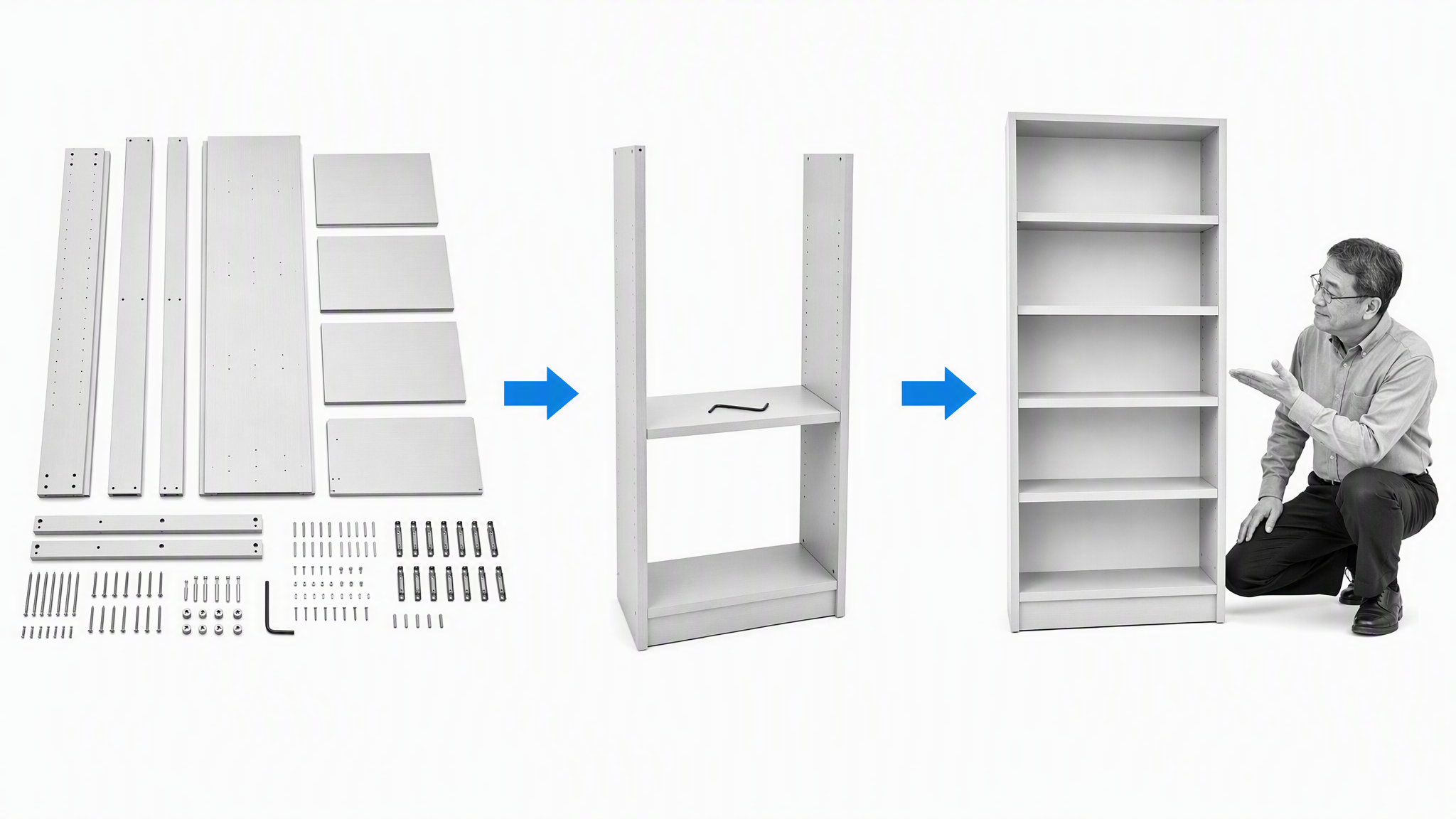
IKEA bookshelves. They are affordable, look nice, and can be delivered straight to your door. Everything you need comes in the box: detailed instructions, all the right pieces, and an inventory list. You could pay an expert to build it, but you have built flat-pack furniture before. How hard can it be? Famous last words, right?
Even with all the diagrams and pictures, it takes you hours. You get a paper cut from the instructions. You lose the hex key and spend 40 minutes ransacking your living room only to find it in the bathroom. After hour three, you contemplate making a bonfire out of the whole mess because bookshelves are obviously instruments of evil incarnate. Tell me you do not know what I am talking about.
Rewind to the point where you can pay the expert. In less than an hour, the bookshelf is built, your books are neatly lined up, and you do not have to make awkward small talk with the stranger in your house. The difference is not ability but training. That expert has learned the most efficient sequence and repeated it many times.
The same principle applies at work. Development improves productivity when the learning is relevant, employees can practice it, and the organization removes barriers to applying it. Gallup’s employee development research emphasizes that managers need to make development an ongoing part of work, not an occasional event.
Employee development and engagement
Engagement does not only go one way. You have to be engaged with your workforce, too. If you are not, it does not matter how much gamification you add; employees are not going to engage with you.
We have all had at least one job that was just that: a job. You showed up, did your thing, went home. Initial training might have been fine. The problem was that there was nothing more. Day in, day out, same old thing. New hires received updated training while experienced employees had to ask the person who had been there three days how a changed process worked.
It did not have to be that way. With regular development opportunities, experienced employees stay current and can mentor new hires by showing them the ropes. That reciprocity matters. If an organization asks people to go above and beyond while offering no investment in return, the relationship is out of balance.
Gallup’s engagement trend reporting shows why leaders should not take engagement for granted. Development is not the only lever, but clear expectations, meaningful growth, manager support, and visible follow-through give people concrete reasons to participate.
Employee development and retention
People want to improve. They want to be challenged. They want to grow as they mature. Your employees are people, and meaningful work, recognition, opportunities for new skills, new challenges, and feeling valued all feed into job satisfaction.
What creates job satisfaction will not be identical for everyone, but development is one of the components an organization can design deliberately. The strongest programs do not promise a promotion to every person. They create honest conversations about goals, provide fair access to learning, and show how current work can build capability.
Development also gives managers an earlier view of frustration and stalled growth. A current plan, regular check-ins, and evidence of progress make it easier to adjust a role, find a stretch assignment, arrange mentoring, or discuss an internal move before a capable employee feels the only path forward is outside the company.
Build employee capability that lasts
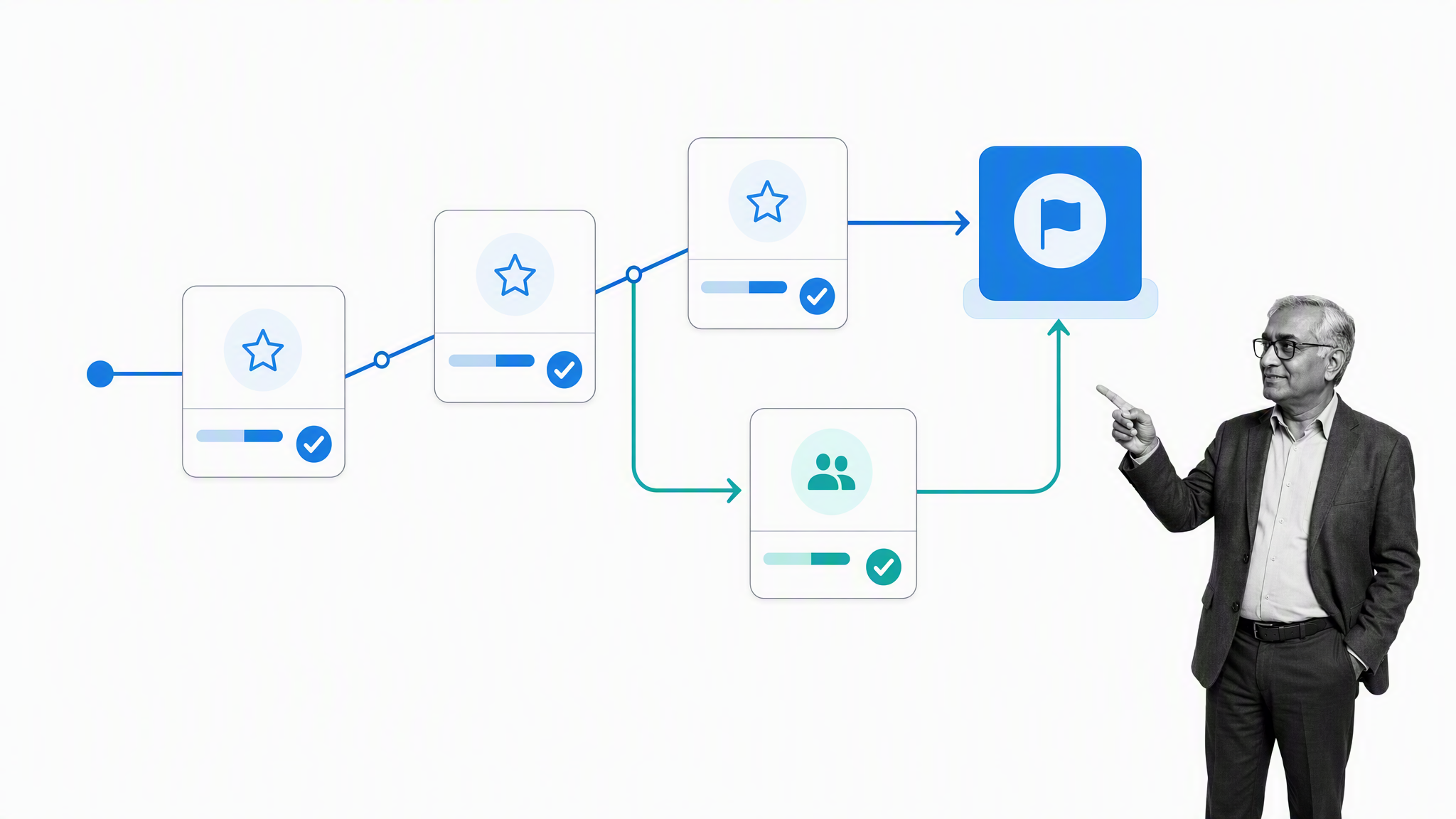
First, distinguish an employee development plan from a career progression plan. Every employee needs a development plan because every role and skill set changes. Not every employee needs, or wants, a promotion plan. Development focuses on skills and knowledge. Career progression focuses on possible future roles, levels, or directions.
The two plans can inform each other, but they may have different trajectories and outcomes. An employee may want a path the organization cannot eventually provide. While that person is with your organization, they still need to update their skills, training, and knowledge to perform their role at the best possible standard.
A development plan should be a living document. One type of training may no longer be necessary, the work may change, or the employee may want to go in a different direction. The plan needs to adapt as the company and the individual grow.
- Define the outcome. Connect the program to capabilities the organization needs and goals the employee understands.
- Assess current skills. Use role expectations, work evidence, self-assessment, and manager observations to identify a specific gap.
- Choose the learning method. Combine courses with practice, mentoring, job shadowing, stretch work, or guided repetition.
- Assign support and time. Name the manager, mentor, budget, resources, and protected time needed for progress.
- Apply the skill. Build a real work opportunity into the plan so learning does not stay theoretical.
- Review evidence and revise. Agree on a cadence, record progress, remove blockers, and update the next goal.
This is where operational consistency matters. Process Street is one Compliance Operations Platform with Docs and Ops capability areas plus built-in AI. Teams can document development standards, run accountable plans, collect evidence, route approvals, and keep recurring reviews from disappearing into a manager’s calendar.
The outline can be shared, but the trajectory should be employee-specific. Group training is efficient when people genuinely need the same skill. Do not make employees sit through sessions about capabilities they already have or will never use.
Put the plan into practice
Use the template below to assess needs, establish goals, choose development activities, and review progress. Customize it to match the role, the employee, and the evidence your organization needs.
Add the Employee Development Plan Template to your Process Street account.
Go forth and upskill
Productivity, engagement, and retention are symbiotic when you are maintaining a skilled workforce for the long term. If one of those legs falls down, the organization is left teetering on unsteady ground.
An employee development plan reinforces those three legs so each employee, and the company as a whole, can stand on a firm foundation. I may have mixed up my metaphors there, but you know what I mean.
Start with one role, one meaningful skill gap, and one manager-employee conversation. Agree on the next capability, give the employee time and support to practice it, and set the review date before the meeting ends. That is enough to begin a development system that can grow with the organization.
Employee development program FAQs
What is an employee development program?
It is a structured system for identifying skill gaps, setting goals, providing learning and practice opportunities, and reviewing progress for employees over time.
How do you build an employee development program?
Define the capabilities needed, assess current skills, choose relevant learning methods, assign time and support, apply the skill in real work, and review evidence on a recurring cadence.
How do you measure employee development?
Measure completion only as an operational signal. Pair it with evidence that a skill was applied, progress against the agreed goal, manager and employee feedback, internal mobility, quality, productivity, or another role-relevant outcome.