





B2B marketing trends change fast, but the durable lesson is simple: buyers remember brands that make complex work easy to understand. The best B2B campaigns do not pretend an industrial product, CRM, or social platform is consumer entertainment. They turn useful proof, customer stories, and product context into content people can actually share.
These five examples show how B2B brands can build attention without flattening their expertise. MailChimp, Volvo, General Electric, Salesforce, and HootSuite all prove a different point about brand storytelling, visual content, events, social proof, and repeatable marketing execution.
Visual Brand Storytelling: MailChimp
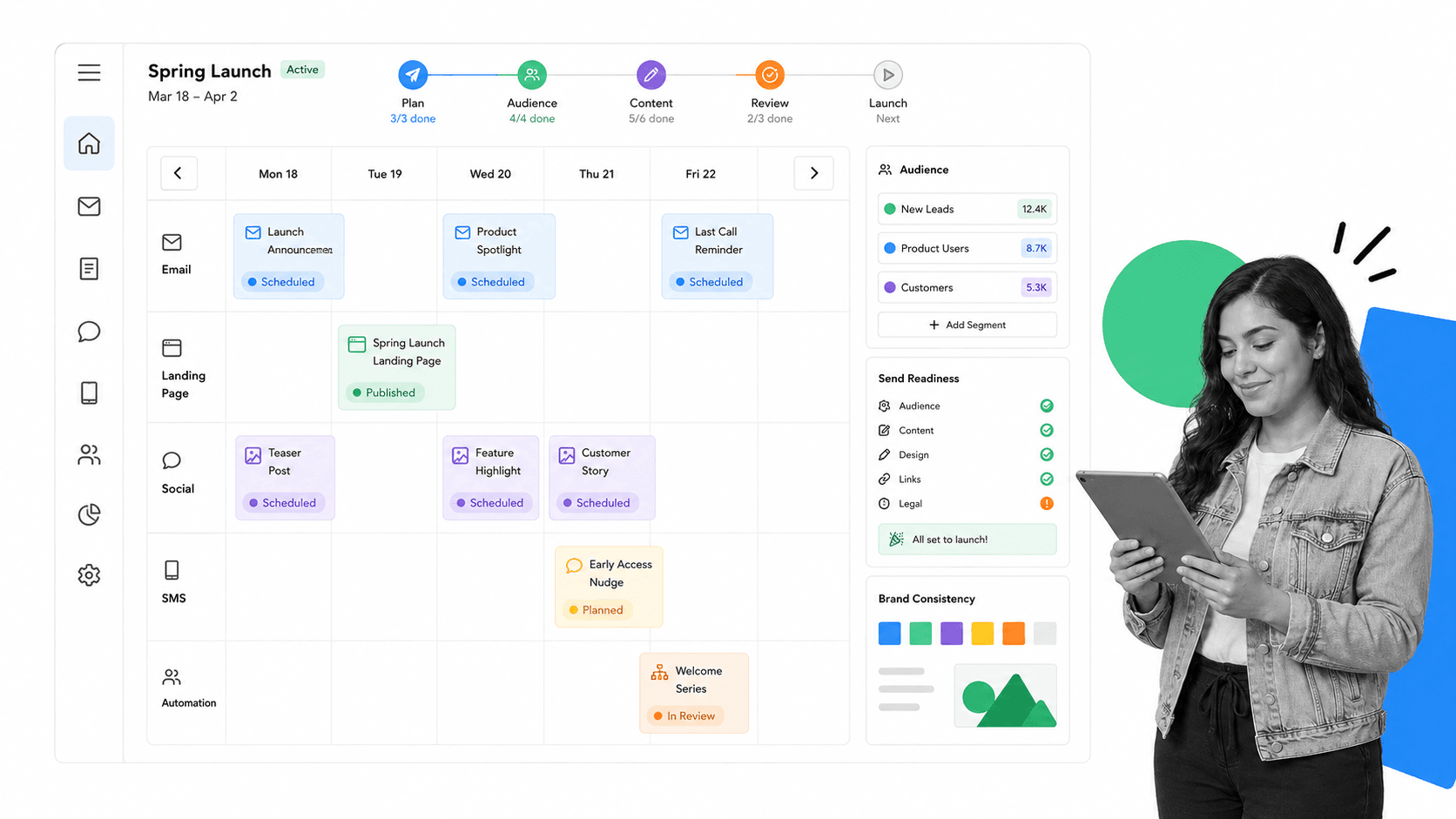
MailChimp built a B2B brand around clarity, personality, and recognizable visual systems. Its product helps teams send email and automate marketing, but the brand story is broader than software features. It shows small businesses what polished communication can feel like when templates, tone, and customer journeys work together.
That matters because visual content is still one of the easiest ways to make a B2B product feel concrete. A campaign calendar, welcome sequence, or customer newsletter can be abstract until the brand shows the work in progress. MailChimp uses channels like Instagram to make that operational work feel approachable without stripping away the business context.
The lesson is not to copy MailChimp’s personality. It is to make your own company culture, workflows, and customer outcomes visible. Strong visual systems also make reusable assets easier to govern, which is why a practical visual content publishing checklist can matter as much as the campaign idea itself.
MailChimp knows that email software is not automatically the most visually appealing thing in the world, and that a B2B product does not always lend itself perfectly to Instagram. The brand avoids the common “not a visual brand” rut by turning employees, clients, personalities, and stories into remarkable content in the B2B space, one image at a time.
We cannot all sell art, soap, and smoothies, but every company has people, habits, rituals, customer moments, and design choices that can reinforce a brand image. For MailChimp, that playful and colorful culture ties in with the design of its visual blog content, using a consistent color palette and themes across channels.
Customer Proof in Motion: Volvo

Volvo turned a truck feature into a customer proof story with its Live Test campaign. The best-known example, the Epic Split video, used a dramatic physical demonstration to show steering stability instead of explaining it through a spec sheet.
That is why the campaign still belongs in a list of B2B marketing trends. It treated an industrial buyer’s practical concern as the center of the story, then made the proof visible enough for a broad audience to understand. Business Insider reported that the Live Test videos boosted attention for the truck brand because the creative idea was tied directly to product performance.
The durable takeaway is that customer proof does not have to be dry. Case studies, demos, teardown videos, and field tests can all work when the audience can see the claim being proven. The closer the creative execution stays to the operational problem, the more useful it becomes for B2B buyers.
Volvo’s online presence has always been strong because its marketing team links product performance with customer storytelling. The Live Test videos worked because they made stability, precision, and driver confidence visible for the right crowd instead of treating truck buyers as if they only wanted a brochure.
The campaign also produced numbers B2B marketers still recognize: over 6 million social shares, over 10 million impressions on Google, extensive media coverage from all over the world, approximately 20,000 editorial pieces online, and an estimated earned media value of 70 million euros. Regardless of how cool the Jean-Claude Van Damme split looked, the overall message was that Volvo trucks were stable enough to make a technical claim unforgettable.
Industrial Content Marketing: General Electric

General Electric showed that B2B content can make industrial work feel vivid. The company used social storytelling, behind-the-scenes photography, and engineering-focused narratives to bring turbines, aviation systems, research labs, and manufacturing environments into public view.
GE has changed substantially as a company, including the completion of the GE Vernova separation, but the marketing lesson remains useful. Complex B2B brands often have rich operational stories sitting inside plants, labs, control rooms, and service teams. The challenge is packaging those stories so they are technically honest and easy to scan.
This is where industrial brands can learn from content marketing without turning into lifestyle brands. Use photography, explainers, infographics, and expert interviews to show how work gets done. Then support those assets with repeatable review steps so accuracy, approvals, and compliance do not become an afterthought.
“Where others just see machines, we also see data.” That line captures why the GE example still works. General Electric could have been dead boring on the internet, but its LinkedIn feed, industrial photography, data-led quotes, infographics, and Emoji Science-style experiments made machinery, equipment, and research feel shareable for visually minded audiences.
The point is not that every 123-year-old corporation needs a playful social experiment. It is that B2B brands can show industrial beauty without relying on a drone of dry product shots. Close-ups, videos, quotes, silicon wafer images, manufacturing details, and expert explanations can all turn a technical feed into content that people understand and remember.
Event-Led Social Proof: Salesforce

Salesforce has long treated events as more than lead generation. Dreamforce functions as a content engine, partner marketplace, customer proof library, and community signal all at once.
That combination matters for B2B marketing because buyers often want evidence that a product has an ecosystem around it. A strong event creates that evidence in public. Sessions, launches, customer stories, analyst conversations, demos, and partner announcements can all be reused across the year if the team captures and routes them deliberately.
The trend is not simply bigger events. It is tighter event operations. Marketing teams need clear owner handoffs before, during, and after the event so social clips, sales follow-up, customer quotes, and campaign assets do not disappear into scattered notes. The same discipline applies to sales goals when marketing activity has to translate into pipeline.
Salesforce never misses a chance to update its social platforms around Dreamforce. The annual conference creates a basis for an immense amount of content over the following months: commentaries, videos, quotes, customer stories, partner announcements, blog posts, and executive themes that keep the brand present in the B2B space.
As one of the biggest SaaS companies in the world, Salesforce already has brand awareness, but the useful lesson is consistency. Colors, themes, and the interests of target audiences meet in content about salespeople, value, scaling a sales organization, developers, coffee, and everyday business ambition. That steady appearance keeps the event from becoming a one-week spike.
Social Intelligence and Culture: HootSuite
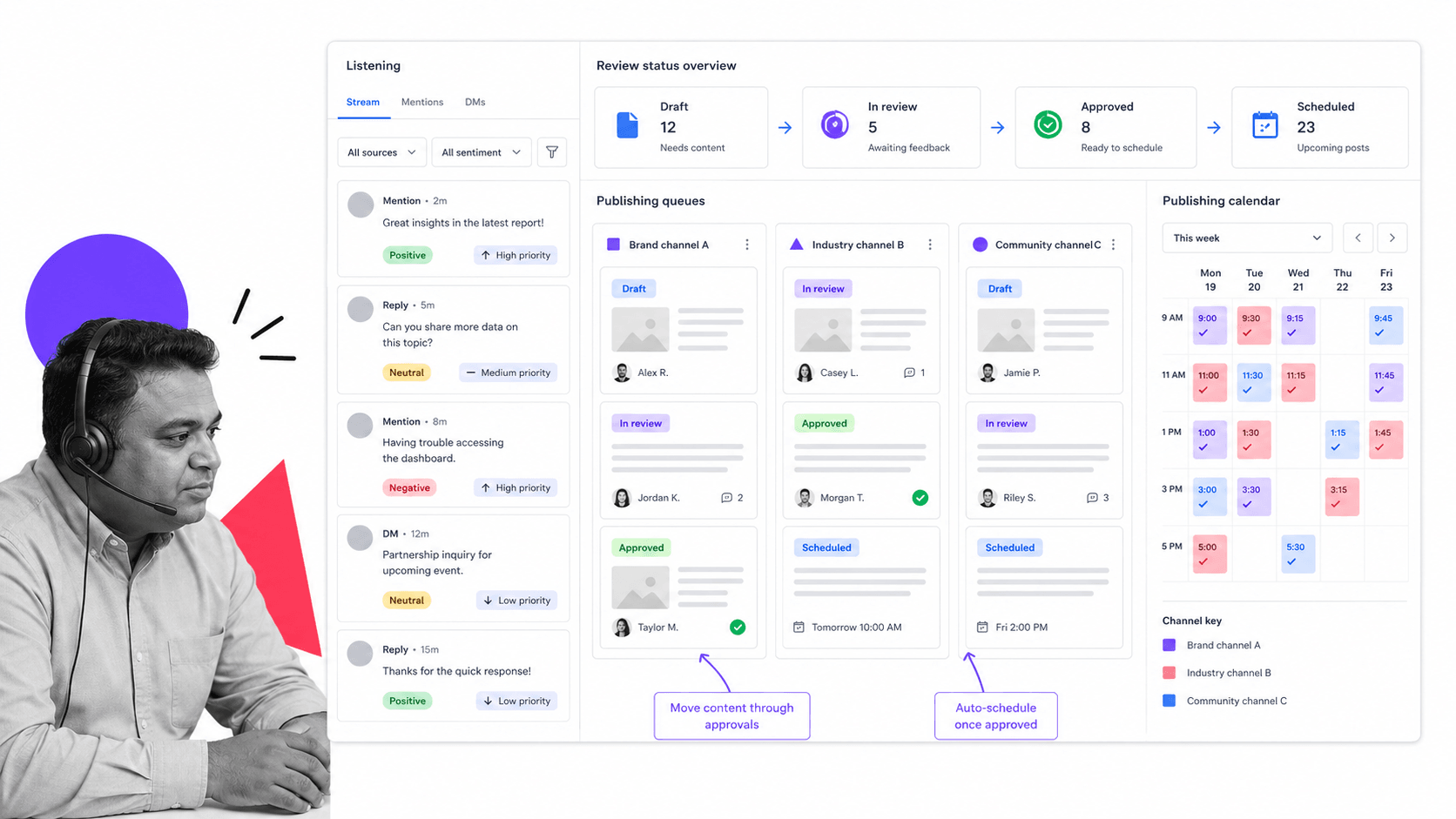
HootSuite became a recognizable B2B brand by connecting social publishing, listening, and team workflows to a more human culture story. A platform that helps businesses manage social channels can easily become a list of dashboards and permissions. HootSuite made the work feel active by showing the people and habits behind social media operations.
That is especially relevant now because social media teams are expected to listen, publish, report, and respond across more channels with less time. The most useful B2B social content helps buyers understand how a team should operate, not just which buttons a product includes. HootSuite’s brand presence, including its Instagram account, keeps that workflow visible.
For B2B teams, the lesson is to make social intelligence operational. Listening insights should feed campaign planning, customer education, sales enablement, and service processes. A practical social media workflow template can help turn those signals into repeatable action.
HootSuite’s owl has long worked like an iconic symbol that ties the brand together. Its social presence reaches businesses but also individuals, communicates company culture to potential hires, humanizes staff, and paints a vivid picture of the company behind the product.
That matters because social media operations can look like cats, food, memes, and platform churn from the outside. HootSuite shows that company culture, visual storytelling, and a clear product point of view can sit together when the brand understands the audience it wants to attract.
Key Takeaways
The strongest B2B marketing trends are not tricks. They are repeatable ways to make expertise visible: show the work, prove the claim, capture the story, and connect every asset to a workflow that can be managed consistently.
That is where Process Street fits. Process Street is a Compliance Operations Platform for teams that need critical work to run the right way every time. Docs organizes process knowledge, Ops turns that knowledge into governed workflows, and Cora helps teams find answers, complete tasks, and improve operational execution. For marketing teams, that means campaign reviews, content approvals, event follow-up, social publishing, and reporting can move through one controlled operating system.
B2B brands still need strong ideas, but they also need the operational discipline to make those ideas repeatable. Teams comparing systems for that work can start with this guide to marketing project management tools and then build the approval, publishing, and reporting workflows that keep campaigns moving.
The popular areas are still recognizable: happy clients, employees with personality, brand mascots, life in the office, artistic product shots, data on images, big budget viral videos, infographics, video, and storytelling. The format changes, but the effective elements stay close to proof, personality, and operational clarity.
- Happy clients and customer storytelling
- Employees with personality and visible company culture
- Brand mascots, visual systems, and consistent color themes
- Life in the office, field work, labs, events, and service environments
- Artistic product shots, industrial beauty, and data on images
- Big budget viral videos, focused demos, infographics, and explainers
The brands worth mentioning are usually the ones that make outwardly complex B2B work feel exciting without pretending it is B2C. They use smart tactics to be seen, reinforce the company behind the product, and give buyers a clear reason to remember the story.