Turn every policy into automated workflows with built-in enforcement and audit-ready proof.


Best Checklist Builder Tools for Repeatable Work
A checklist builder turns a set of steps into work people can actually complete, assign, repeat, and review. The right choice depends on whether you need a governed business process, a field inspection, a response form, a visual planning canvas, a printable design, or a lightweight personal list.
For operational teams, a checklist is more than a row of boxes. It needs owners, due dates, instructions, evidence, approvals, exception paths, and a reliable history. For a one-off event or personal routine, speed and simplicity may matter more. This guide compares eight current tools by the job each one does best.
In this guide:
- Which checklist builder is best for your team?
- The best checklist builder tools
- What is a checklist builder?
- How should you choose a checklist builder?
- How do you build a checklist people actually follow?
- Why Process Street fits repeatable operational work
- Frequently asked questions about checklist builders
Which checklist builder is best for your team?
Choose by execution need, not by the longest feature list. Process Street is the strongest fit when a checklist must become a controlled workflow with assignments, forms, branching, approvals, automation, and proof of completion. Mitti is designed for field inspections and corrective action. Jotform starts with flexible data capture. Miro, Canva, and Creately are useful when the checklist must also be a visual collaboration or design artifact. Todoist and Checklist.com serve lighter task and routine use cases.
| Rank | Checklist builder | Best for | Strongest surface |
|---|---|---|---|
| 1 | Process Street | Repeatable business processes | Executable workflows with controls and evidence |
| 2 | Mitti by SafetyCulture | Field inspections and audits | Mobile checks, findings, actions, and reports |
| 3 | Jotform | Form-led checklists | No-code data capture and shared responses |
| 4 | Miro | Visual team planning | Collaborative canvas, cards, and templates |
| 5 | Canva | Printable and presentation-ready lists | Polished checklist design |
| 6 | Creately | Visual project coordination | Tasks connected to diagrams and plans |
| 7 | Todoist | Personal and small-team task lists | Fast capture, recurring dates, and filters |
| 8 | Checklist.com | Reusable routines | Templates, schedules, assignments, and reminders |
The ranking puts repeatable execution first because a business checklist succeeds only when the work happens consistently. A beautiful list can clarify intent, but operations teams usually need the system to assign work, require information, route exceptions, and show what happened. If your need is primarily visual or personal, the narrower tools lower the setup burden.
The best checklist builder tools
Each tool below earns a place for a distinct use case. The comparison focuses on the product surface that actually carries the checklist, not adjacent features that add little to execution.
1. Process Street
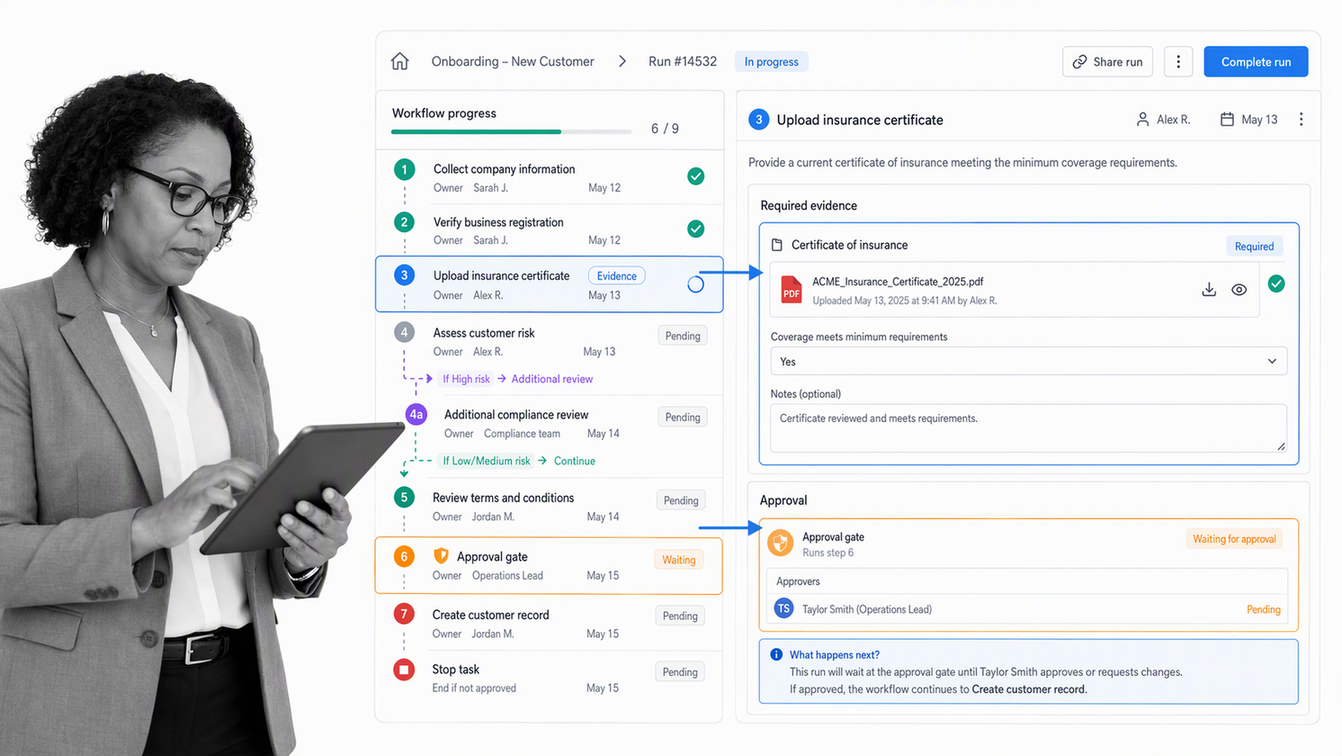
Process Street is the best checklist builder for teams that need a list to govern recurring work. A workflow can combine tasks, instructions, owners, due dates, form fields, required evidence, approvals, stop points, conditional paths, automations, and AI-assisted steps. The template defines how the process should run, while each workflow run becomes an assigned instance with its own activity and completion record.
That makes it a strong fit for employee onboarding, client onboarding, vendor reviews, finance close, quality checks, policy acknowledgments, IT access, and compliance work. The value is not the checkbox itself. The value is controlling who does what, what information they must supply, which path the work follows, and which reviewer can release the next stage.
Process Street is less appropriate when you only want to design a printable grocery list or keep a private set of personal errands. It earns the top position because it turns a checklist into an operating system for repeatable team execution.
- Best for: operations, compliance, HR, finance, IT, customer success, and other recurring team processes.
- Choose it when: skipped steps, missing evidence, unclear ownership, and approval delays create real risk.
- Core distinction: the checklist is executable, governed, and reviewable rather than merely stored.
2. Mitti by SafetyCulture
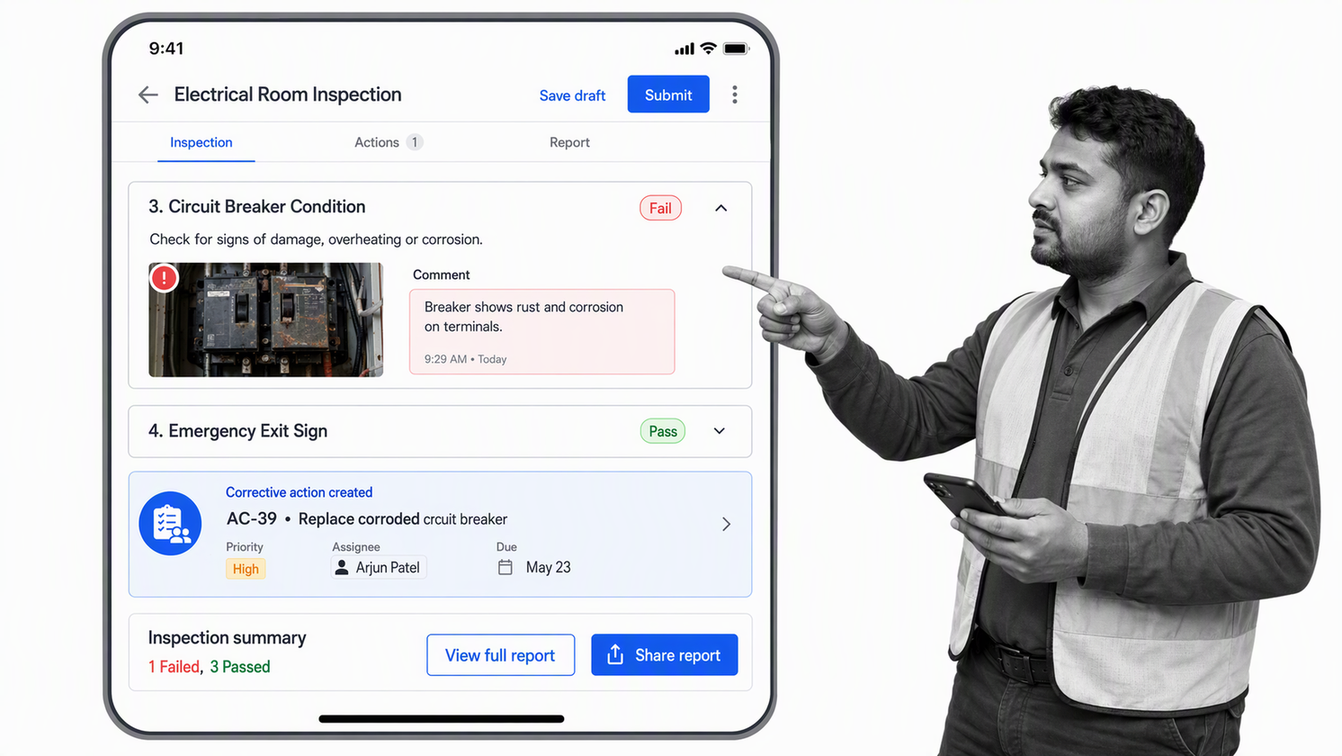
Mitti by SafetyCulture is built for checklists completed where work happens. Teams can digitize templates, run inspections, attach supporting media, schedule recurring checks, create actions from findings, and turn results into reports. That combination suits safety walks, quality audits, facilities checks, retail standards, equipment inspections, and other frontline routines.
Its strength is observation and follow-up. A field worker can record what they find, while a manager can assign corrective work and review the resulting information. That is a better match than a general task app when the checklist needs evidence from a physical site.
Choose Mitti when mobile inspections, photos, findings, and corrective actions are central. Choose Process Street when the checklist must coordinate a broader cross-functional process with approvals, data routing, and controlled handoffs across business systems.
3. Jotform
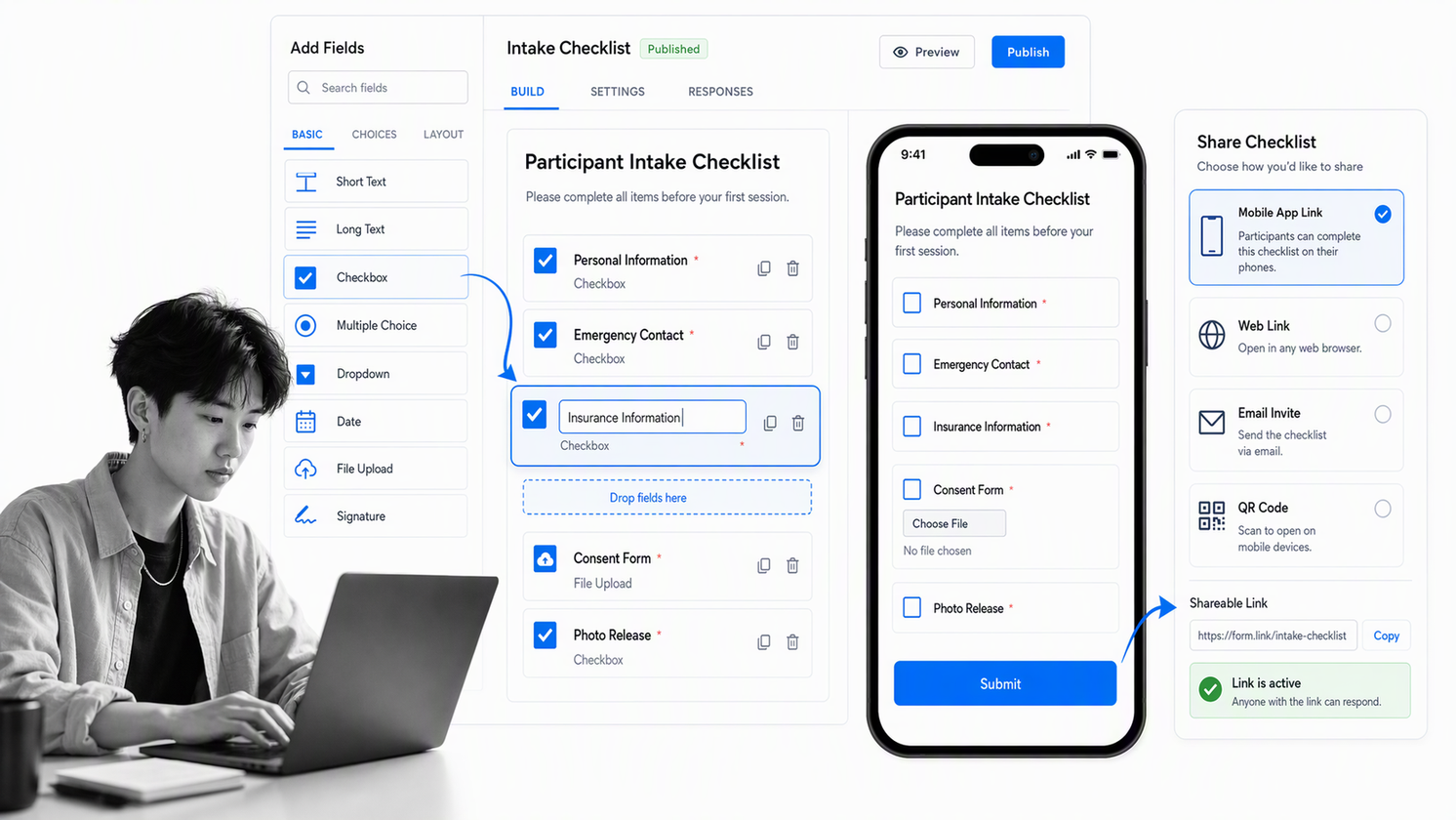
Jotform approaches checklist building through no-code forms and apps. Users can add and organize checklist items, customize the experience, share it by link or email, embed it, and collect responses that sync to an online account. It is a practical choice when the checklist is mainly a response surface rather than a multi-stage operating process.
Typical fits include event preparation, intake, self-assessments, audits with straightforward response capture, and simple mobile checklist apps. The builder lowers the technical barrier, and the form-first model makes it easy to ask structured questions alongside checklist items.
The tradeoff appears when a submission must trigger a long chain of owned work, exceptions, approval gates, and evidence. In that case, use a form checklist app that keeps the intake and the controlled workflow in the same execution record.
4. Miro
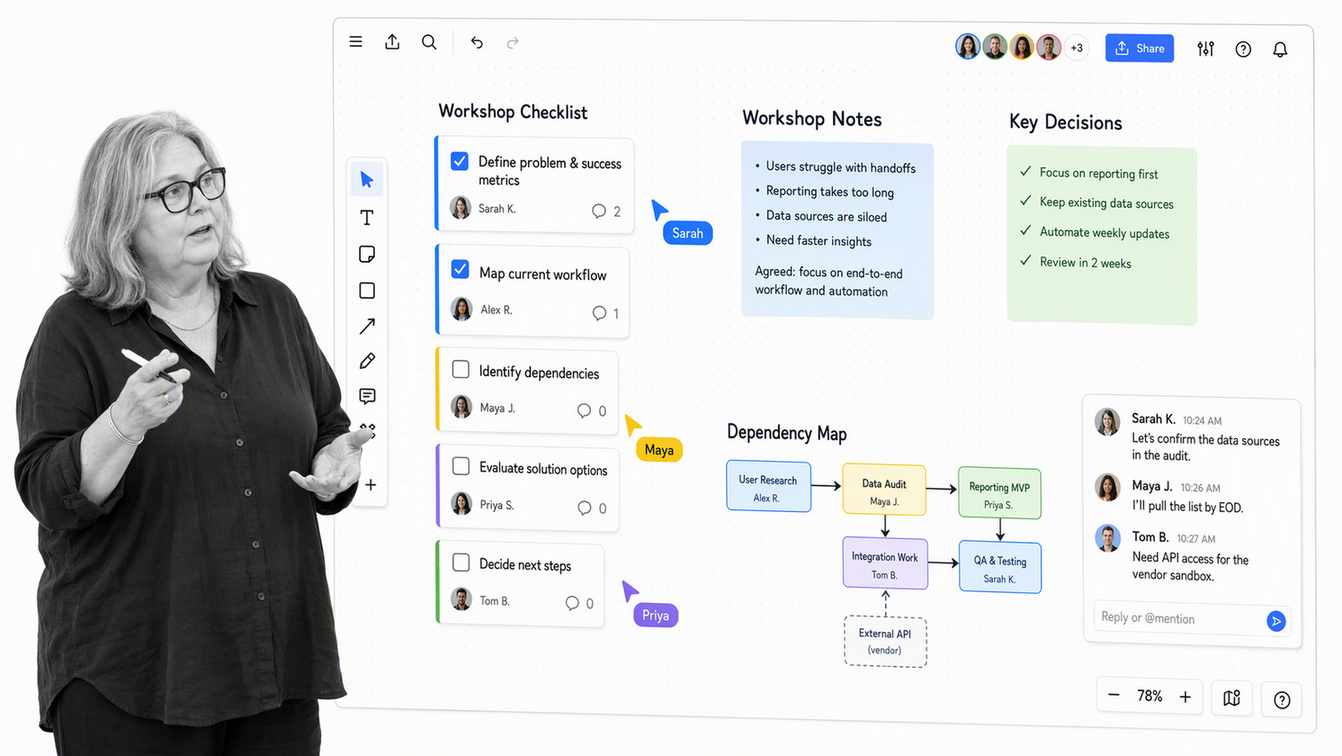
Miro is a visual checklist builder for teams that think on a shared canvas. Checklist templates, cards, owners, comments, and progress tracking can sit beside diagrams, planning notes, workshops, and project context. Teams can collaborate live or asynchronously, then keep the list connected to the visual reasoning that produced it.
This works well for sprint planning, launches, workshops, retrospectives, research plans, and collaborative project setup. Miro is especially useful when the checklist is one object inside a larger board rather than the primary system of execution.
A canvas is flexible, but flexibility can become ambiguity for recurring operational work. If you need required fields, controlled branching, approvals, and a durable run history, move the finalized process into an executable workflow after the planning session.
5. Canva
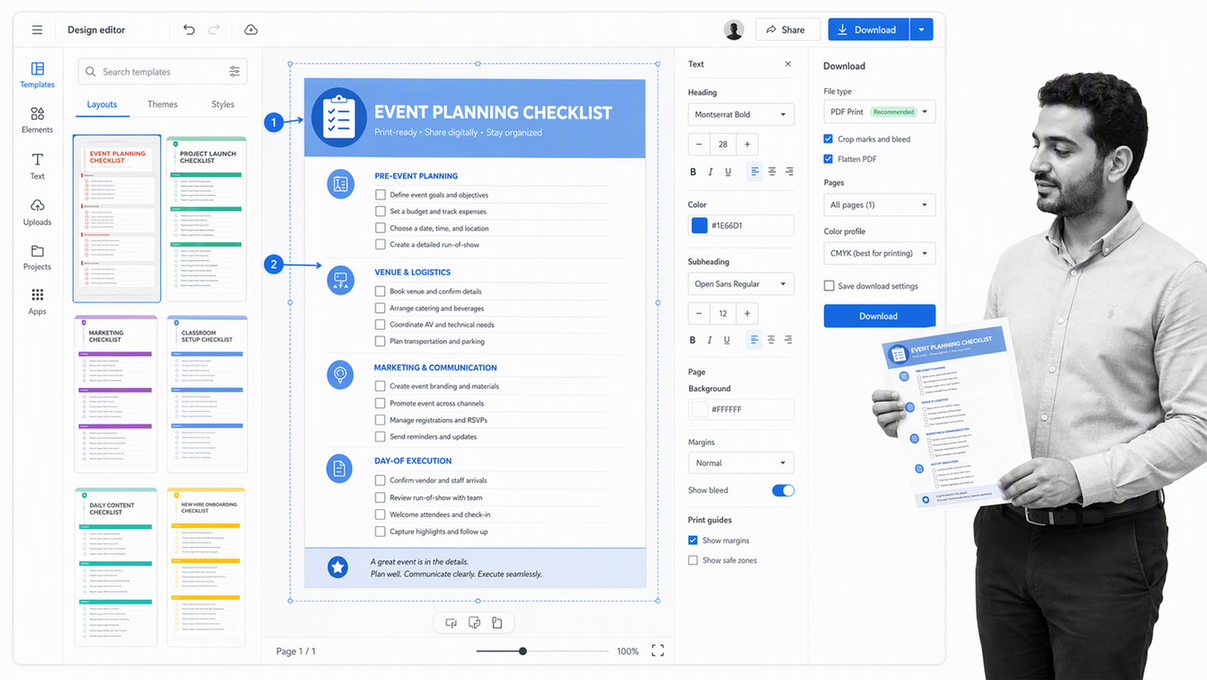
Canva is the best option here for visually polished and printable checklists. Its drag-and-drop editor and customizable templates make it easy to create branded lists, classroom materials, event sheets, personal planners, handouts, and downloadable resources. Designs can be shared, edited collaboratively, downloaded, or printed.
Canva optimizes the checklist as a communication artifact. Typography, spacing, color, and layout are the main strengths, so the result can be easy to scan and pleasant to use. That matters when the checklist will be printed, distributed to an audience, or included in a presentation.
It is not the first choice for operational control. A designed checklist does not automatically assign accountable owners, enforce a changing path, capture structured evidence, or preserve an auditable record. Use Canva when presentation is the job; use workflow software when execution is the job.
6. Creately
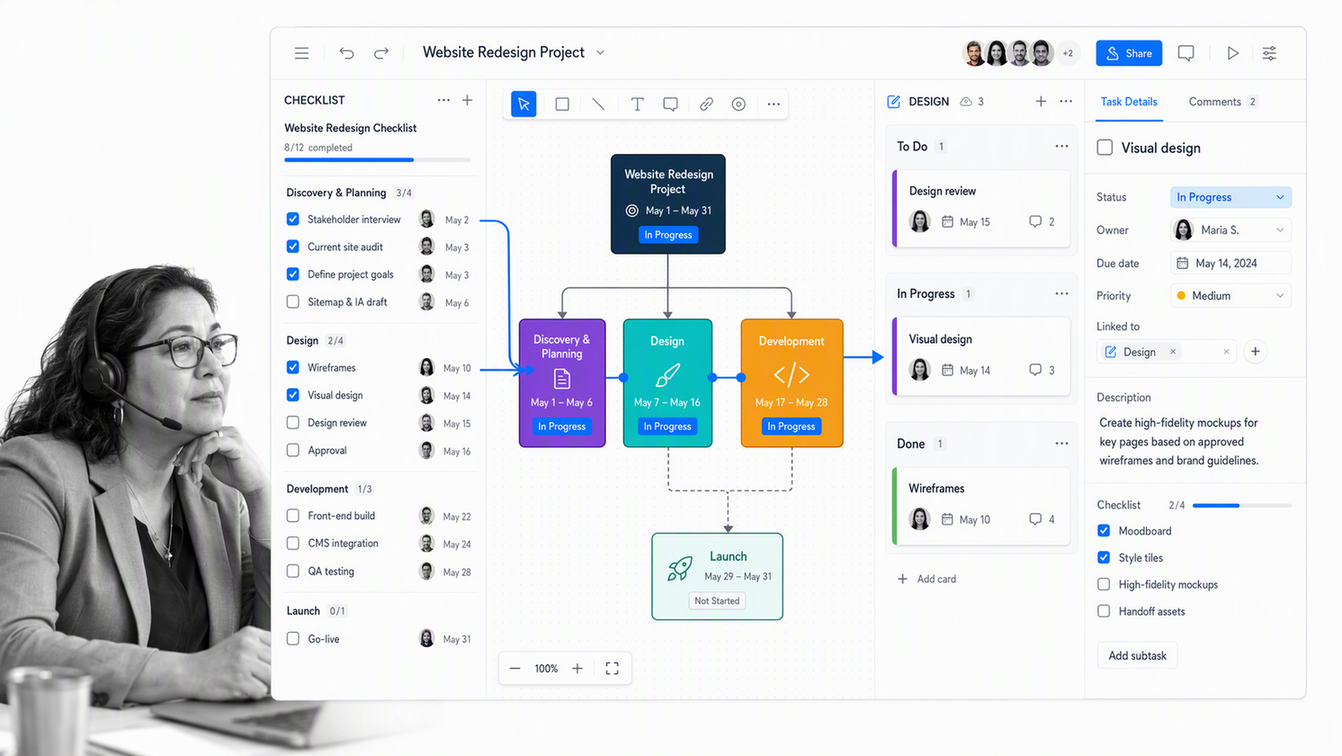
Creately combines checklist items with visual planning. Teams can organize tasks and subtasks, assign owners, add deadlines and status, attach notes or files, collaborate with comments, and connect the checklist to a Kanban board, timeline, diagram, or action plan. The result is useful when a list needs to remain close to the model or project map it supports.
Good use cases include project planning, workshop outputs, onboarding plans, content production, and process mapping. A team can move from visual thinking into a structured action list without leaving the workspace, then share or export the result for documentation.
Creately sits between a design canvas and a task workspace. It is broader than a printable checklist maker, but it is still not designed primarily as a governed workflow runtime. Choose it when visual context and planning relationships are essential to understanding the list.
7. Todoist
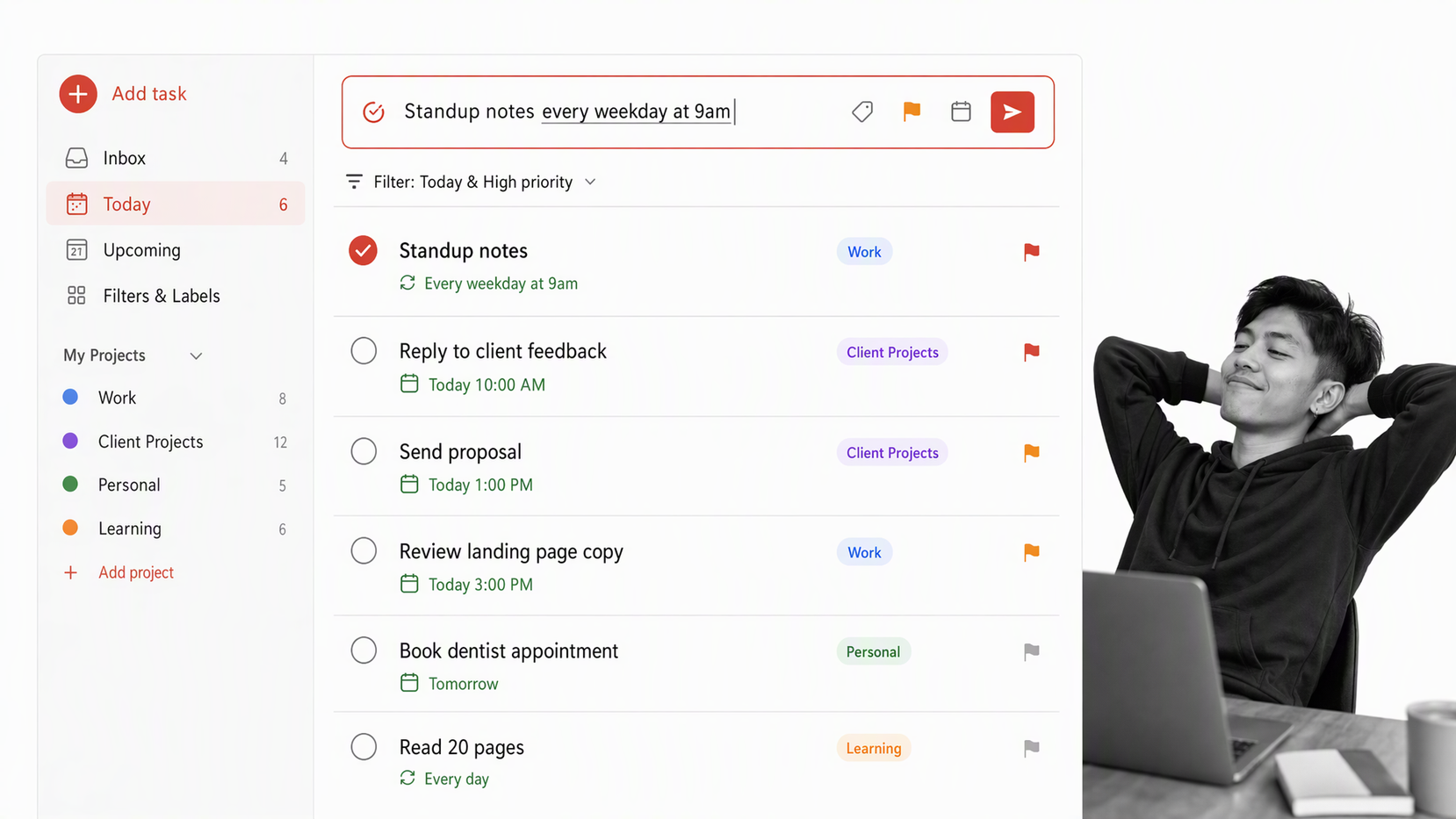
Todoist is a fast checklist-style task manager for individuals and small teams. Projects and sections organize work, while recurring dates, priorities, labels, filters, comments, and files make lists easier to maintain. Natural task capture and focused views help users move quickly from an idea to an actionable personal system.
It is a strong choice for personal routines, editorial calendars, meeting follow-ups, household work, and compact team task lists. Recurring tasks work well when the same action returns on a schedule, and filters help users surface the right subset of work without creating separate lists.
Todoist becomes less suitable when each run needs structured forms, evidence requirements, multi-step approvals, conditional branches, or process-level reporting. Keep it for task management; use a workflow product when the organization needs to control how a process runs.
8. Checklist.com
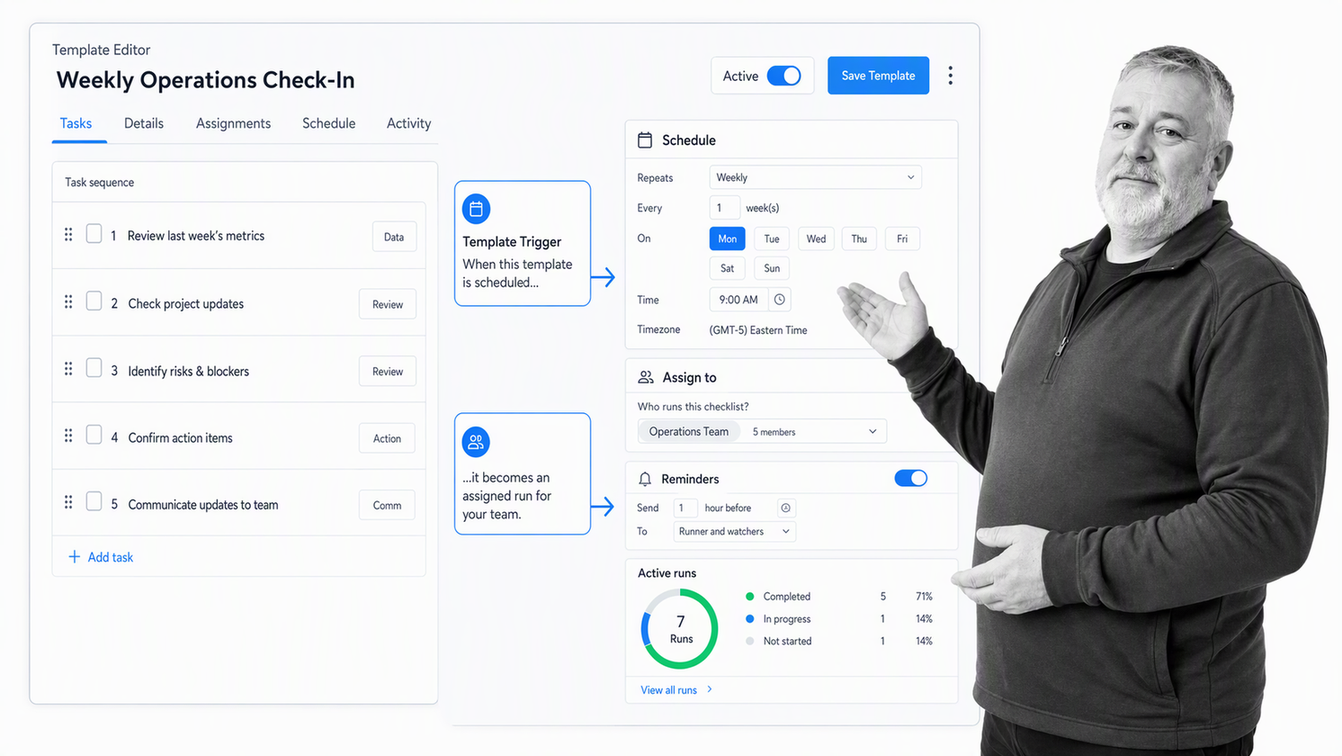
Checklist.com focuses directly on reusable checklists for personal and team use. Templates can be triggered into active checklists, scheduled for recurring routines, assigned to people, organized into folders, and supported with due dates, reminders, notes, and attachments. Managers can track progress while team members work through the assigned steps.
The product fits recurring routines that need more structure than a private to-do list but do not require a full workflow system. Restaurant opening lists, office checks, household routines, event preparation, and straightforward standard procedures are natural examples.
Its dedicated checklist model is easy to understand. The limitation is depth: organizations with complex routing, policy controls, approvals, and cross-functional handoffs may outgrow a checklist-first surface and need the broader execution model of Process Street.
What is a checklist builder?
A checklist builder is software for creating, organizing, reusing, and completing a sequence of tasks or requirements. At the simplest level, it lets someone write items and mark them complete. At the business level, it may also assign owners, set due dates, capture fields and files, route decisions, repeat the list on a schedule, notify participants, and report on each run.
The distinction between a checklist and a workflow is scope. A checklist confirms that steps were addressed. A workflow adds the operating logic around those steps: triggers, ownership, branching, approvals, system actions, exceptions, and proof. Many teams begin with a simple list and move to a workflow when the cost of a missed or unverifiable step increases.
Templates make checklist builders repeatable. Instead of copying an old document and hoping it is current, a team updates one controlled template and starts a fresh run for each employee, customer, audit, project, or recurring cycle. See this practical guide to making checklists for the writing principles behind clear steps.
How should you choose a checklist builder?
Start with the consequence of failure. Then test the product against the real work, not a polished demo list.
- Define the unit of work. Decide whether you are building a personal list, a printable artifact, a field inspection, a response form, a project plan, or a recurring business process. These are different jobs.
- Map ownership. Identify who creates the template, who starts each run, who completes each step, and who reviews exceptions. A shared list without clear ownership often becomes a passive reference.
- List the required evidence. Note any fields, files, photos, signatures, comments, timestamps, or decisions that must stay with the completed checklist. A checkbox alone may not prove the work was done correctly.
- Model the non-happy path. Ask what happens when information is missing, a check fails, a deadline passes, or an approver rejects the work. Conditional logic and escalation matter most when reality departs from the ideal path.
- Test repeatability. Run the same checklist with representative users. Confirm that the template is easy to update, new runs preserve the current standard, and reporting can distinguish active, late, completed, and failed work.
- Check governance. For high-stakes processes, verify permissions, change control, approval records, and audit history. The builder should make the correct process easy to follow and difficult to bypass.
Avoid choosing solely on template quantity. A large library can help you start, but the lasting value comes from how well the product reflects your owners, decisions, evidence, and exception paths. The best checklist builder is the one people can follow repeatedly without rebuilding context in email or chat.
How do you build a checklist people actually follow?
A good checklist is short enough to scan, specific enough to act on, and strict only where risk requires it. Build from the real sequence of work, then add context at the point where a user needs it.
- Name the outcome. Use a title that describes the completed state, such as Vendor approved or New hire ready for day one.
- Start each item with a clear action. Write Review the contract, Confirm the shipping address, or Upload the signed approval. Avoid vague nouns such as Documentation or Follow-up.
- Keep one decision or action per step. If an item contains several verbs, split it unless those actions always happen together.
- Put instructions beside the task. Add the exact policy, example, link, or file where the user needs it. Do not make people hunt through a separate manual.
- Assign the role, not just a name. Role-based ownership survives staffing changes and makes the operating model visible.
- Require proof for critical steps. Use a field, file, photo, comment, or approval when completion must be verifiable.
- Branch only when the path changes. Conditional steps should remove irrelevant work or add necessary controls, not make the template harder to understand.
- Review results and improve the template. Look for late steps, repeated rework, common exceptions, and instructions that generate questions. Update the controlled template rather than patching individual copies.
A reusable library of process templates can accelerate the first version, but every template should be adapted to the actual team, risk, and evidence requirements. The checklist is finished only when a real user can complete it without private knowledge from the author.
Why Process Street fits repeatable operational work
Process Street treats the checklist as the front end of a controlled process. Teams design a master workflow, start a run for each case, assign tasks to the right people, collect structured information, route work through conditions and approvals, trigger system actions, and preserve the execution history.
That model closes the gap between documenting a standard and proving it was followed. An onboarding list can become an owned sequence across HR, IT, the manager, and the new hire. A quality checklist can require measurements and evidence. A vendor review can branch by risk and block approval until required checks are complete.
If your checklist carries operational, financial, customer, security, or compliance consequences, see Process Street in action. The goal is simple: turn the required steps into work that runs the same dependable way every time.
Frequently asked questions about checklist builders
What is the best checklist builder for business processes?
Process Street is the best fit when a checklist must coordinate repeatable team work with owners, due dates, forms, conditional paths, approvals, automation, evidence, and an execution history. Simpler tools may be better for personal lists or printable designs.
Can I build a checklist for free?
Many checklist tools provide a free way to start, but plan limits and included capabilities change. Evaluate the workflow you need before choosing on price. A free design tool can be enough for a printable list, while a controlled business process may require assignments, evidence, permissions, and reporting.
What is the difference between a checklist builder and a to-do list app?
A to-do list app focuses on capturing and completing tasks. A checklist builder emphasizes reusable sequences. Business-grade checklist builders may also add structured forms, role assignments, branching, approvals, automation, and records for each run.
Should a checklist include every possible detail?
No. Include the steps, decisions, and evidence needed for reliable execution. Put supporting instructions beside the relevant step, and use conditional logic to reveal uncommon requirements only when they apply. Overloaded checklists are harder to scan and easier to ignore.
How do checklist builders improve compliance?
They can translate policies and controls into required actions, assign owners, collect evidence, route approvals, preserve timestamps, and retain a record of each run. The software does not create compliance by itself, but it can make the approved process easier to follow and prove.
Can a checklist builder automate follow-up work?
Yes, if the product supports workflow automation. A completed task or submitted field can trigger notifications, assignments, system updates, documents, or another workflow. The most useful automation handles routine movement while keeping exceptions and approvals visible to people.