






Employee motivation is the internal and external drive that directs a person’s effort, persistence, and attention at work. Managers who want to know how to motivate employees should focus on five practical conditions: clear communication, useful feedback, meaningful goals, autonomy with support, and fair recognition.
No single perk or management trick motivates everyone. The strongest employee motivation strategies remove avoidable friction, then give people a voice, a reason to care about the work, room to make decisions, and evidence that progress is noticed. Motivation is shaped daily by how work is designed, discussed, supported, and recognized. The five HR tips below turn those principles into repeatable management practices.
- Employee motivation theory
- HR tip #1: Communication supports recognition
- HR tip #2: Grow employee engagement with feedback
- HR tip #3: Share goal setting to fuel performance
- HR tip #4: Motivate remote employees
- HR tip #5: Awards and rewards
Employee motivation theory
To discover employee needs and what makes them tick, it helps to look at the root of motivation. Frederick Herzberg developed Two-Factor Theory to explain why removing a bad workplace condition is not the same as creating a motivating job.
Employee motivation is a complex thing that HR professionals and psychologists have long debated. Their findings provide a useful gateway to effective employee management because they separate the conditions that prevent dissatisfaction from the conditions that help employees thrive.
Herzberg separated job characteristics into motivators, which can create satisfaction, and hygiene factors, which can create dissatisfaction when they are poor. The model is not a universal prediction of what every employee wants, but the distinction remains useful for managers.
Motivators:
- Recognition
- Achievement
- Responsibility
- Advancement and personal growth
- The work itself
Hygiene factors:
- Relationships with managers
- Salary and status
- Policies and rules
- Workspace and tools
- Working conditions
So, to increase job satisfaction and motivation, should you eliminate every demotivator? Right? Wrong. According to Herzberg, simply removing dissatisfying job factors will not necessarily create stronger performance. It may only stop the dissatisfaction.
That is why useful employee motivation techniques work on both sides. Fix unclear policies, poor tools, unfair treatment, and broken management habits. Then create reasons for people to invest more of themselves in the work through recognition, growth, responsibility, autonomy, and meaningful progress. Intrinsic motivation comes from the work and the sense of competence or purpose it creates. Extrinsic motivation comes from outcomes such as pay, benefits, or rewards. Most roles need a responsible mix of both.
HR tip #1: Communication supports recognition
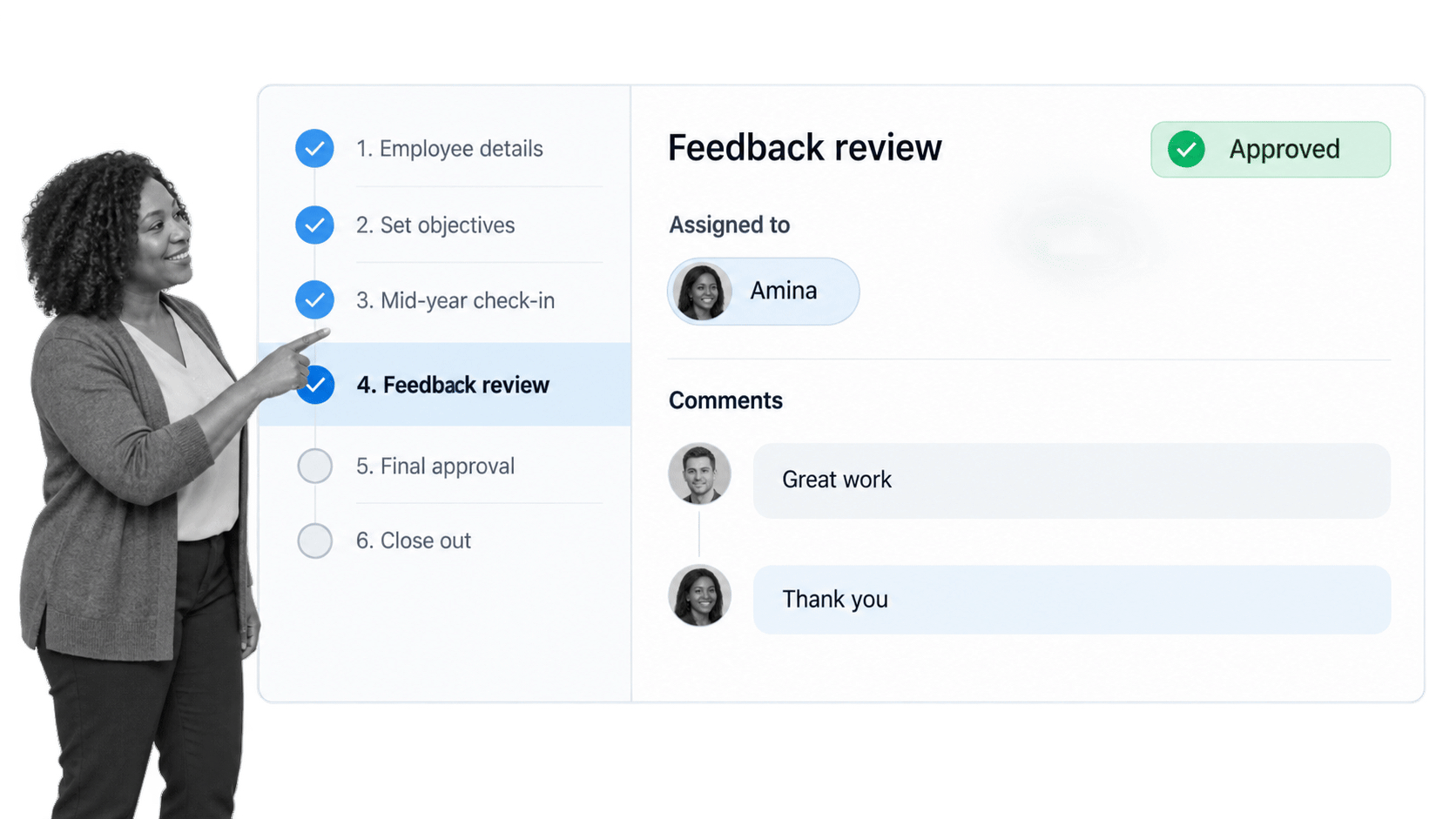
The pressure on managers is real. Gallup reported that 20% of employees globally were engaged in 2025. The useful lesson is not that HR needs a louder internal campaign. It is that employees need clear expectations, useful manager contact, and evidence that their input affects what happens next.
Employees are more likely to feel recognized when managers take their ideas seriously, explain decisions, and close the loop. Gallup found that only one in four employees globally strongly agree their opinions count at work. Listening without a visible response can make the problem worse because it teaches people that speaking up changes nothing.
Build communication into the work
One way to tackle this is to implement a system where employees can add comments, ideas, and messages to the work itself. Using workflows creates a clear place for context, approvals, assignments, and follow-up instead of scattering the conversation across inboxes.
Process Street is one Compliance Operations Platform with Docs and Ops capability areas plus built-in AI. Docs governs policies, guidance, and review history. Ops turns that guidance into recurring work with comments, assignments, approvals, and evidence. Built-in AI can summarize approved feedback or route a follow-up inside those controls, while a manager remains responsible for the decision.
Communication also includes the spaces around formal work. Slack or Microsoft Teams channels, regular manager check-ins, and a simple watercooler chat can help distributed employees build familiarity. These tools do not create trust on their own. They work when people can speak honestly, leaders respond consistently, and the social space does not become another obligation.
A healthy communication environment lets everyone be heard and recognized, regardless of seniority. Employees can exchange thoughts, ask questions, contribute ideas, and understand how their work connects with colleagues throughout the organization.
Onboarding is an early test of that system. New employees should know what success looks like, where to ask for help, who owns each decision, and how their work connects to the team. The most useful manager tools for feedback, recognition, and performance make those expectations and follow-ups visible.
Effective onboarding makes the job description, training, policies, and communication channels easily accessible. Employees know where to find help, how to share feedback, and what good performance looks like before uncertainty becomes dissatisfaction.
HR tip #2: Grow employee engagement with feedback
Employee motivation is closely linked with engagement, but engagement goes beyond satisfaction. An employee can be comfortable without feeling involved, enthusiastic, or committed to the work. William Kahn described engagement as people expressing themselves physically, cognitively, and emotionally during role performance. That distinction is why a single happiness score is never enough.
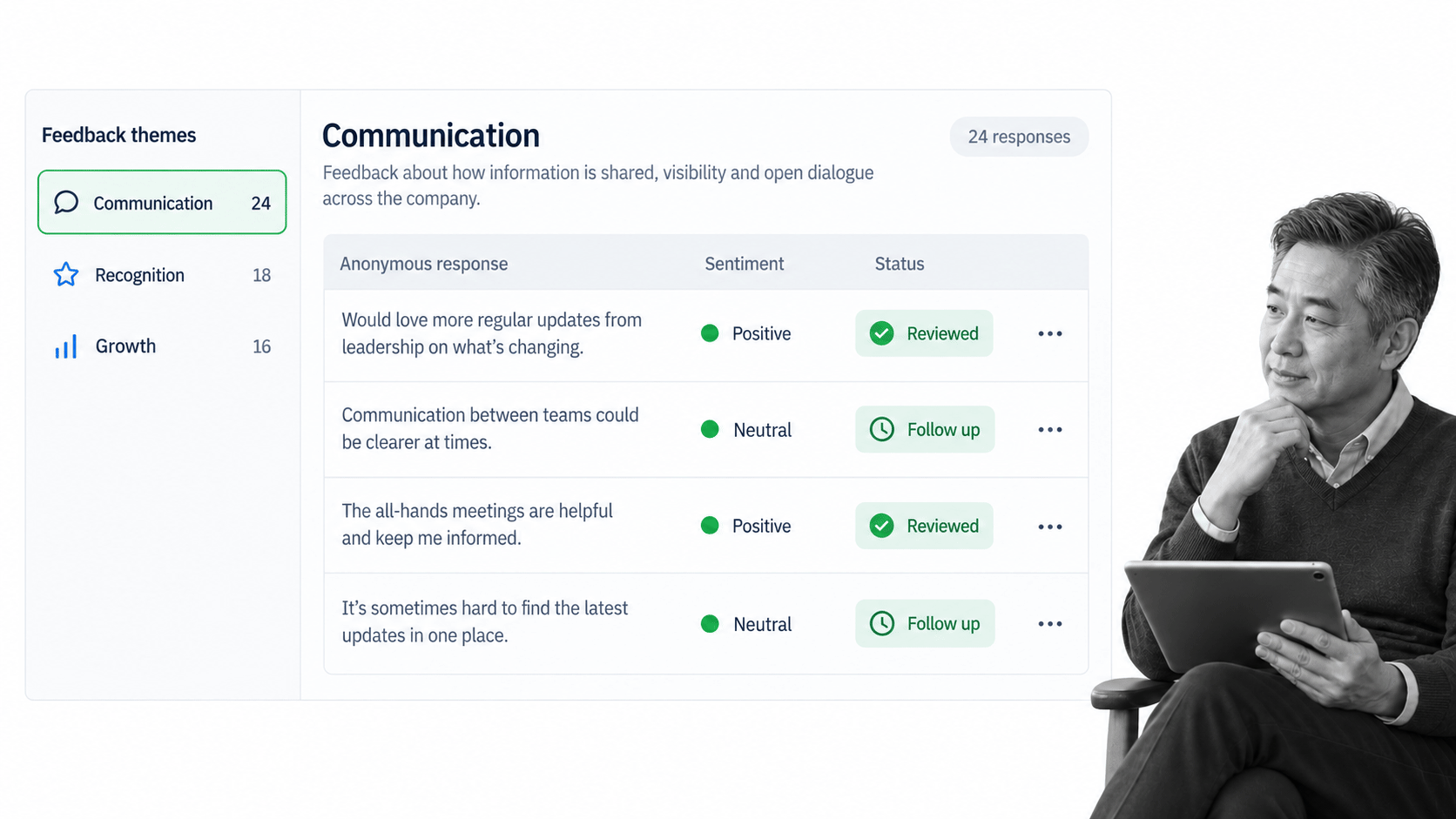
Employee engagement surveys can reveal issues connected to teams, management, job design, recognition, and growth. The survey itself is only half the system. Managers need an owner for each theme, a clear threshold for action, and a follow-up message explaining what will change, what will not, and why.
Surveys can help managers find issues they may not be aware of and identify problems linked to particular departments, teams, and management practices. Compare responses over time to track how the metrics change after actions are taken.
Employee feedback aids motivation because it engages people and helps them feel valued. It can allow free communication between an employee and manager, foster collaboration, surface useful ideas, and prove that leaders have taken people’s voices seriously.
Compare responses over time, protect anonymity with minimum group sizes, and avoid turning feedback into an individual risk score. Pulse surveys are useful when the questions stay consistent and the organization has the capacity to respond. If employees are repeatedly asked for input and see no action, participation and trust can fall.
Ask questions that lead to action
Here is a selection of questions from an anonymous employee survey workflow:
- My direct manager or supervisor is open and honest with me.
- My manager communicates a clear picture of my team’s direction.
- How aware are you of how the organization is performing against its goals?
- I am clear on the goals and objectives of the organization.
- I am clear on what is expected of me.
- Do you have any other comments on company communication practices?
Those questions focus on communication. A broader survey can add leadership, culture, rewards and recognition, professional and personal growth, performance, and vision and values. The answers provide a view of the company through the employee’s eyes. The management job is to turn that view into a fair, proportionate response.
HR tip #3: Share goal setting to fuel performance
We all set goals in our personal lives. Goal setting at work can be more intimidating because the result may affect reviews, pay, or progression. The process becomes more motivating when employees help shape the goal, understand why it matters, and can see progress without waiting for an annual review.
Talking about setting and achieving goals should not be limited to an annual review. A manager can help employees achieve set targets by discussing progress, abilities, and constraints throughout the year, then recognizing what has been achieved.
Your employees will be more motivated if they can see a clear link between their work and the company’s objectives. That connection gives routine tasks meaning and helps a manager explain tradeoffs. It also supports personal growth because employees can identify the skills and evidence they need for a larger role.
Providing an employee with the knowledge of how they fit into the bigger picture can increase job satisfaction and focus. Employees want to grow with their company, progress within their roles, and understand what achievement makes possible.
Gallup’s 2024 Q12 meta-analysis found that top-quartile engagement teams had 23% higher profitability than bottom-quartile teams. That is an association across many work units, not a promise that one goal-setting exercise creates profit. Clear goals matter because they help teams direct effort, notice obstacles, and learn faster.
Use SMART goals without turning them into paperwork
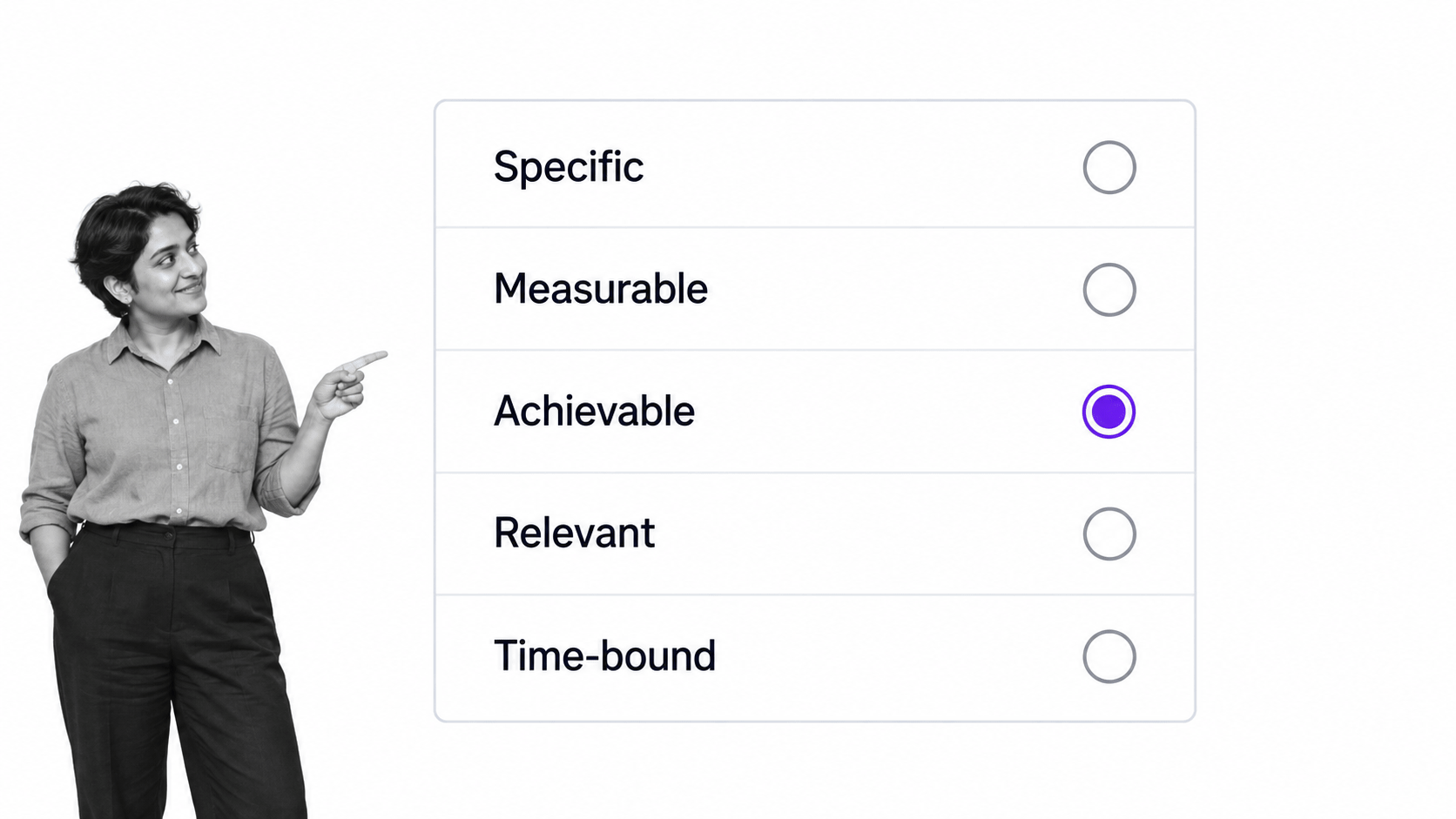
SMART stands for Specific, Measurable, Achievable, Relevant, and Time-bound. A SMART approach to goals and objectives gives the employee and manager a shared definition of progress.
By constructing a SMART approach to goal setting, managers give employees a clear understanding of what is expected and how to get there. That shared understanding makes feedback more focused and progress easier to discuss.
- Describe the result in specific language.
- Choose evidence that can be measured without gaming the work.
- Set an achievable target given the employee’s resources and authority.
- Connect the goal to the role and a real business objective.
- Use a timeframe with regular checkpoints, not a surprise at year-end.
A goal should create direction, not surveillance. Give employees room to choose methods, raise constraints, and revise the plan when the facts change. Manager feedback should be timely and specific enough to help the person adjust while there is still time to succeed.
HR tip #4: Motivate remote employees
Hybrid and remote working change how people receive context, build relationships, and ask for help. Location itself is not a motivation strategy. A two-day hybrid-work randomized trial published in Nature improved job satisfaction and reduced attrition without harming performance, but current workplace research also shows that remote and hybrid work do not automatically improve wellbeing.
Improve processes and access
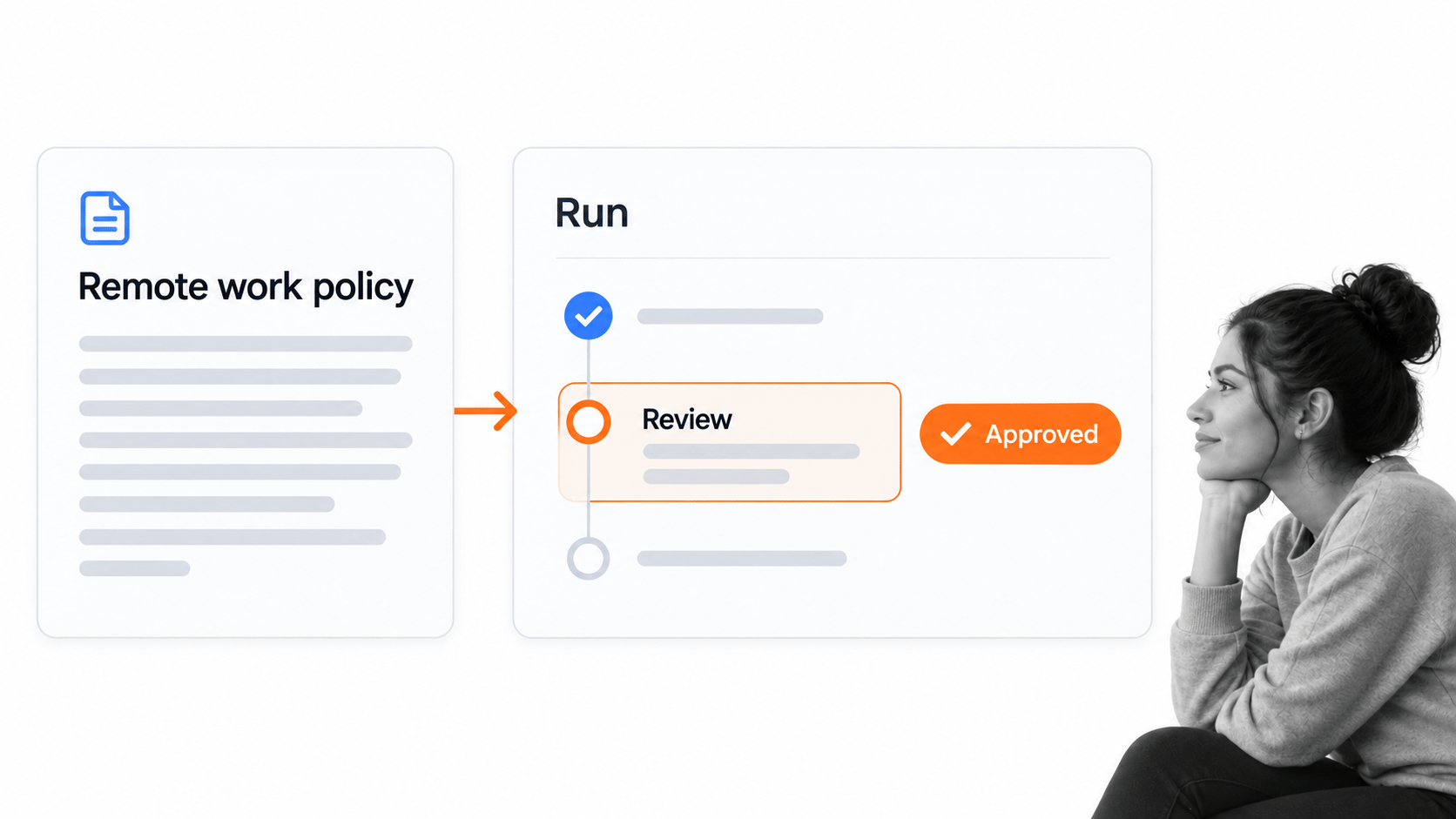
Remote employees need reliable access to policies, training, decisions, and recurring work. Process Street Docs can govern annual leave policies, expense guidance, procurement rules, and training documents. Ops can run the requests, approvals, handoffs, and follow-up work. Built-in AI can help employees find approved information or summarize a workflow run, but the source material and decision rights stay controlled.
The practical standard is simple: employees should not have to know who is awake, which channel to search, or which version of a document is current before they can do routine work. A documented process reduces uncertainty while leaving room for judgment when the work is not routine.
Naturally, working in the comfort of your own home can foster both comfort and uncertainty. A reliable virtual office space for collaboration helps remote workers find the information, people, and decisions they need without recreating an always-on physical office.
Cultivate human connection
Provide remote employees with ways to build a sense of belonging. Virtual events, games, optional Donut chats in Slack, and team activities can create the informal contact that distributed teams otherwise miss. Keep participation flexible and avoid turning every social interaction into another meeting.
Above all, nurture autonomy
Putting trust in employees to do their jobs without micromanaging every step is one of the strongest workplace-motivation levers. Imagine sitting in your home office, working toward clear goals, while your manager interrupts you with constant calls and status messages. Not very motivating.
Believing in people’s abilities does not remove accountability. It gives employees a fair chance to concentrate, solve problems, and demonstrate judgment within clear boundaries.
Autonomy does not mean abandoning the employee. It means agreeing on outcomes, boundaries, decision rights, and check-in points, then giving the person room to manage the work. Managers still remove blockers and provide support. The employee gets control over the method without losing clarity or accountability.
HR tip #5: Awards and rewards
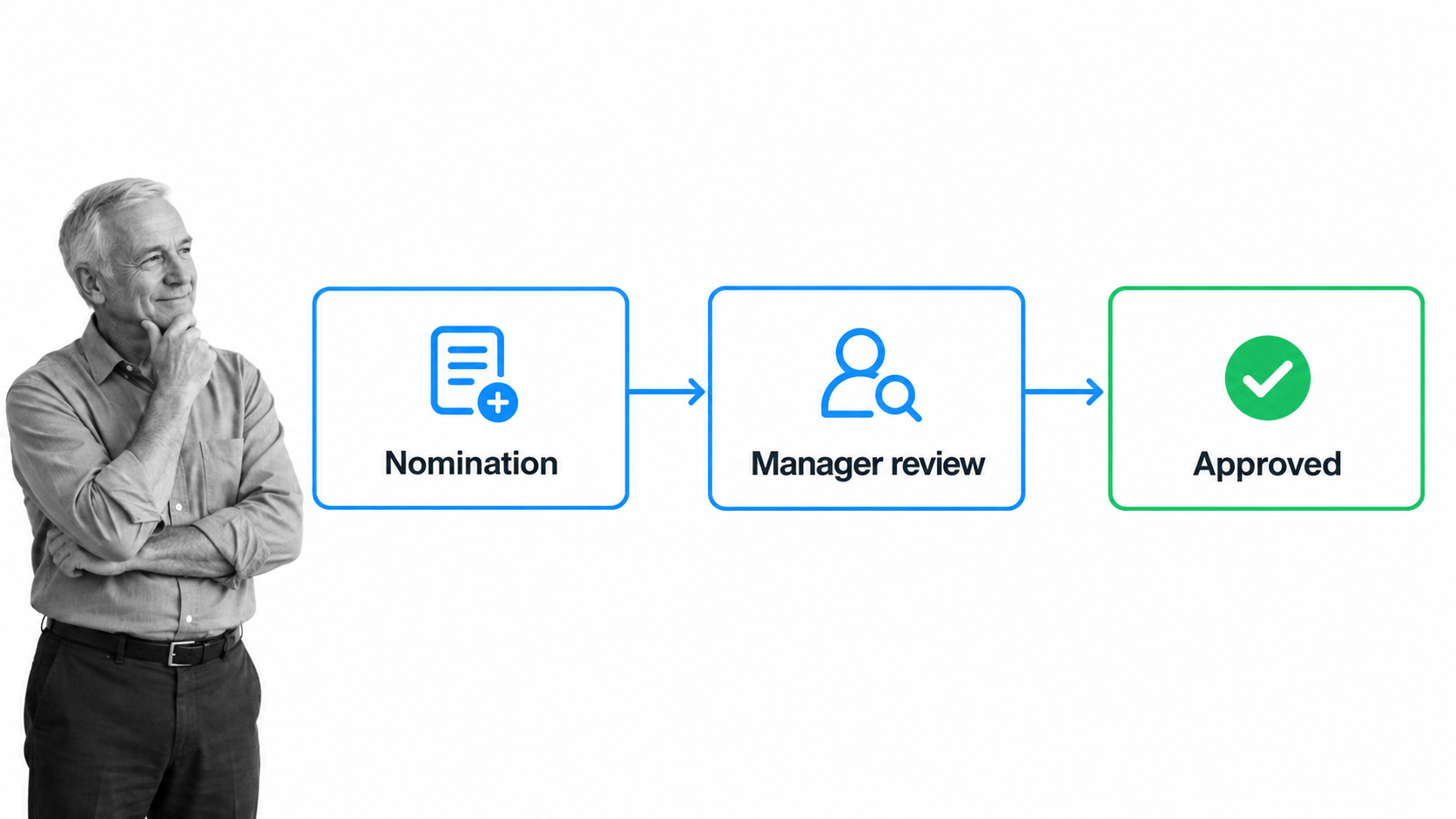
Everyone likes to be praised, and achievement is one of the motivators in Herzberg’s model. Recognition works best when it is timely, specific, connected to a real contribution, and delivered in the way the employee prefers. A public celebration can energize one person and embarrass another.
People are the most important asset in any company, so recognizing their achievements can go a long way toward employee satisfaction and retention. The recognition should reflect excellent results, dedication, or teamwork that others can understand and learn from.
Build a fair employee recognition program
A recognition program gives managers and peers a repeatable way to notice useful work. Define what deserves recognition, let people nominate contributions, check for bias across teams, and make the approval path visible. The goal is not to turn every task into a contest. It is to reinforce the behavior and outcomes the organization genuinely values.
A simple mention in a company Slack or Microsoft Teams channel can be meaningful when it explains what the person did and why it mattered. Peer-to-peer recognition can work too. Give employees a private option, and do not treat reactions or praise counts as a performance score.
A dedicated recognition page can also let employees acknowledge a coworker’s dedication, teamwork, or excellent results. Keep comments specific and constructive, and never make public reactions underneath the post the measure of someone’s value.
Offer rewards and benefits people can actually use
Pay and benefits are important, but the most useful package depends on the workforce, location, role, and life stage. Health coverage, paid time off, flexible work, development budgets, caregiver support, and financial benefits solve different problems. Ask employees what they value, explain the tradeoffs, and review whether access is equitable.
An unexpected thank-you card or gift can still be motivating. Make rewards choice-based and culturally appropriate rather than assuming everyone wants the same thing. The gesture should recognize a concrete contribution, not substitute for fair pay, manageable work, or a functioning manager relationship.
Conclusion
Managers motivate employees by creating clarity, listening and responding to feedback, connecting goals to meaningful outcomes, supporting autonomy, and recognizing real progress. Those are durable ways to motivate employees because they improve the conditions around the work instead of relying on a short-lived perk.
Creating an effective employee motivation strategy does not have to be daunting. It becomes manageable when leaders turn the ideas into specific management behaviors and repeat them consistently.
Start with one weak point in the employee experience. Give it an owner, document the expected management behavior, run the follow-up as a repeatable process, and check whether employees can see the difference.
Employee motivation FAQ
What motivates employees at work?
Employees are motivated by different mixes of meaningful work, clear expectations, progress, autonomy, recognition, growth, fair treatment, pay, and supportive manager relationships. The right mix depends on the person and role, so managers should ask, observe, and follow through rather than assume one reward works for everyone.
How can managers increase employee motivation?
Managers can increase employee motivation by removing avoidable friction, giving useful feedback, involving employees in goals, protecting autonomy, and recognizing specific contributions. Each action should have a visible follow-up so employee input leads to a real decision or change.
Are rewards enough to motivate employees?
No. Rewards can support motivation, but they cannot compensate for unclear work, unfair treatment, poor management, or a lack of growth. Combine fair pay and useful benefits with recognition, responsibility, meaningful goals, and the conditions people need to do good work.