





Can you afford to pay $8,000+ for using an image in one of your blog posts? If not, or if you would rather use images for free, you need to understand the laws surrounding blogging before you publish.
This legal guide for bloggers is general information, not legal advice. I am not a legal adviser, attorney, lawyer, or any kind of law professional, so use it as a practical starting point and talk to a qualified professional when the stakes are high.
It is easy to fall prey to copyright and disclosure issues when you have not read a legal guide for bloggers. Whether you are a veteran blogger looking to secure yourself against surprise lawsuits or a fresh face building a blog, the basics are easier to manage when they are in one place.
This guide covers:
- What copyright is and how it affects your writing
- How to secure your work legally
- What you can and cannot use
- How to find public-domain, Creative Commons, and fair-use images
- How disclosure rules affect affiliate links, sponsorship, and free products
The point is simple: avoid honest and avoidable mistakes, respect other creators, and keep a record of the choices you make before content goes live.
Copyright basics for bloggers
What is copyright?
“Copyright” is a right given to the creator of an original work upon its creation. This means that only they, and people they allow, can reproduce the work, create derivative works, distribute copies of the work, perform or display the work publicly, and alter the terms of or parties involved with the copyright.
- Reproduce the work
- Create derivative works, such as a sequel to a book or an edited version of an image
- Distribute copies of the work, including selling it online
- Perform or display the work publicly
- License, transfer, or waive some rights attached to the work
Basically, copyright protects original work you create from being stolen, copied, or given out by someone else. The main thing to remember is that copyright does not cover ideas or facts, although the implementation of those ideas or facts can still be copyrighted.
For example, news outlets can all report the same event because the fact that it happened is not copyrighted. However, if one outlet copied and published another report for that event, that can become copyright infringement.
Copyright does not last forever. For many works produced in the United States after 1977, protection lasts until 70 years after the creator’s death. When protection expires, the work becomes available as part of the public domain. The U.S. Copyright Office copyright lifecycle is a useful starting point for checking how duration works.
A copyright owner can also choose to give up their copyright by assigning a piece to the public domain early, or can partially lift restrictions through practices such as a Creative Commons license.
So, copyright belongs to the owner of an original work, stops others taking, copying, and distributing the work without permission, can eventually expire, and can be waived or licensed at the creator’s will. Infringement can also carry serious penalties. 17 U.S.C. 504 explains statutory damages, including higher damages for willful infringement.
Common copyright limits and exceptions
U.S. copyright law has several limits and exceptions. Fair use is the one most bloggers deal with, but there are also classroom and distance-learning exceptions, library and archive exceptions, first-sale rules, and other specific limits. Those education-specific exceptions can matter in educational circumstances, but they are not a general shortcut for ordinary blogging.
Fair use is a complex topic that we will get into later. For now, think of it as a defense that may apply to transformative work such as reviews, news reports, criticism, commentary, and parodies. It is not a blank check, and every use has to be judged on its own facts.
What it means for bloggers
You do not have to know everything about copyright law in order to blog without breaking the law, but you do need a rough idea of what you can and cannot do. Copyright provides a legal defense against the theft of your original work, but it also stops you from copying others verbatim and using every image you like. Yes, that means you cannot just search Google Images for the snaps to accompany your latest blog post.
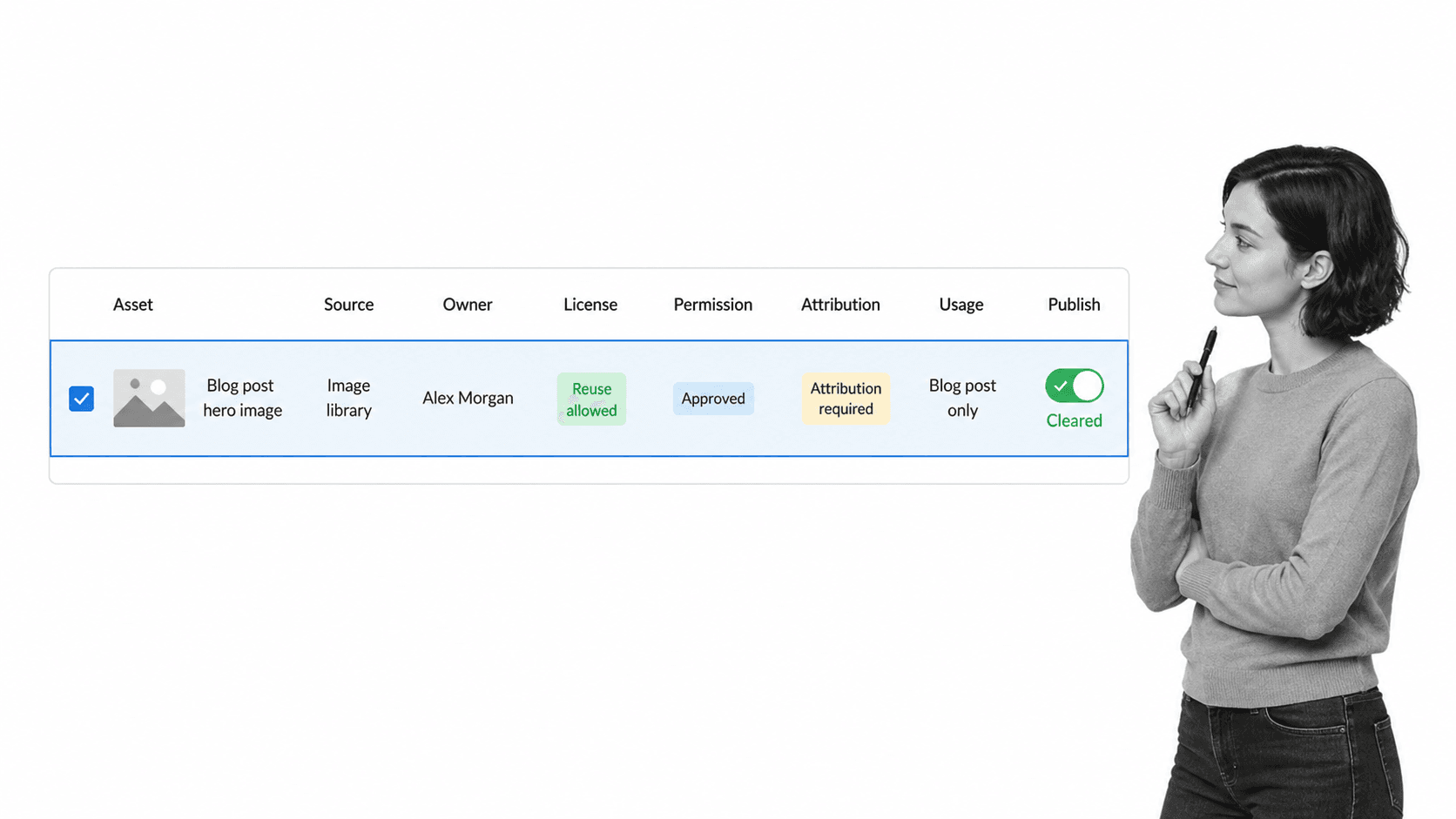
The safest habit is to treat every outside work as restricted until you can identify the rights owner, the license, the permission terms, or a strong reason the use is allowed. Keep a permission note, screenshot, license URL, or receipt with the draft so you are not trying to reconstruct the decision months later.
The public domain

What is the public domain?
Works in the public domain are generally considered to have no copyright limitations on their use, reuse, alteration, and distribution. They are free to access and do not require attribution to use, share, or create derivative works, although attribution can still be good editorial practice.
Work can enter the public domain through a number of avenues, mainly by the expiry of copyright or at the request of the creator. For example, if you write an original book or create an original image, you can decide to allow everyone free access to it by assigning it to the public domain.
What it means for bloggers
The main use of the public domain for bloggers is as a source of information, music, images, and more without having to worry about many potential copyright issues. Rather than having to worry about whether a photo falls under a particular Creative Commons license, you can use a verified public-domain source and record where it came from.
Still, public-domain claims are only as useful as the source behind them. Check the collection notes, country-specific terms, and whether the site is talking about the underlying work, a scan, a performance, or a modern photograph of an older object. A painting can be public domain while a particular image file of that painting has its own terms.
Creative Commons
What is Creative Commons?
Creative Commons is both a nonprofit organization founded by Lawrence Lessig in 2001 and the name of a family of copyright licenses. The organization and licenses came from the idea that creators can protect their rights while allowing greater distribution of work to encourage creativity.
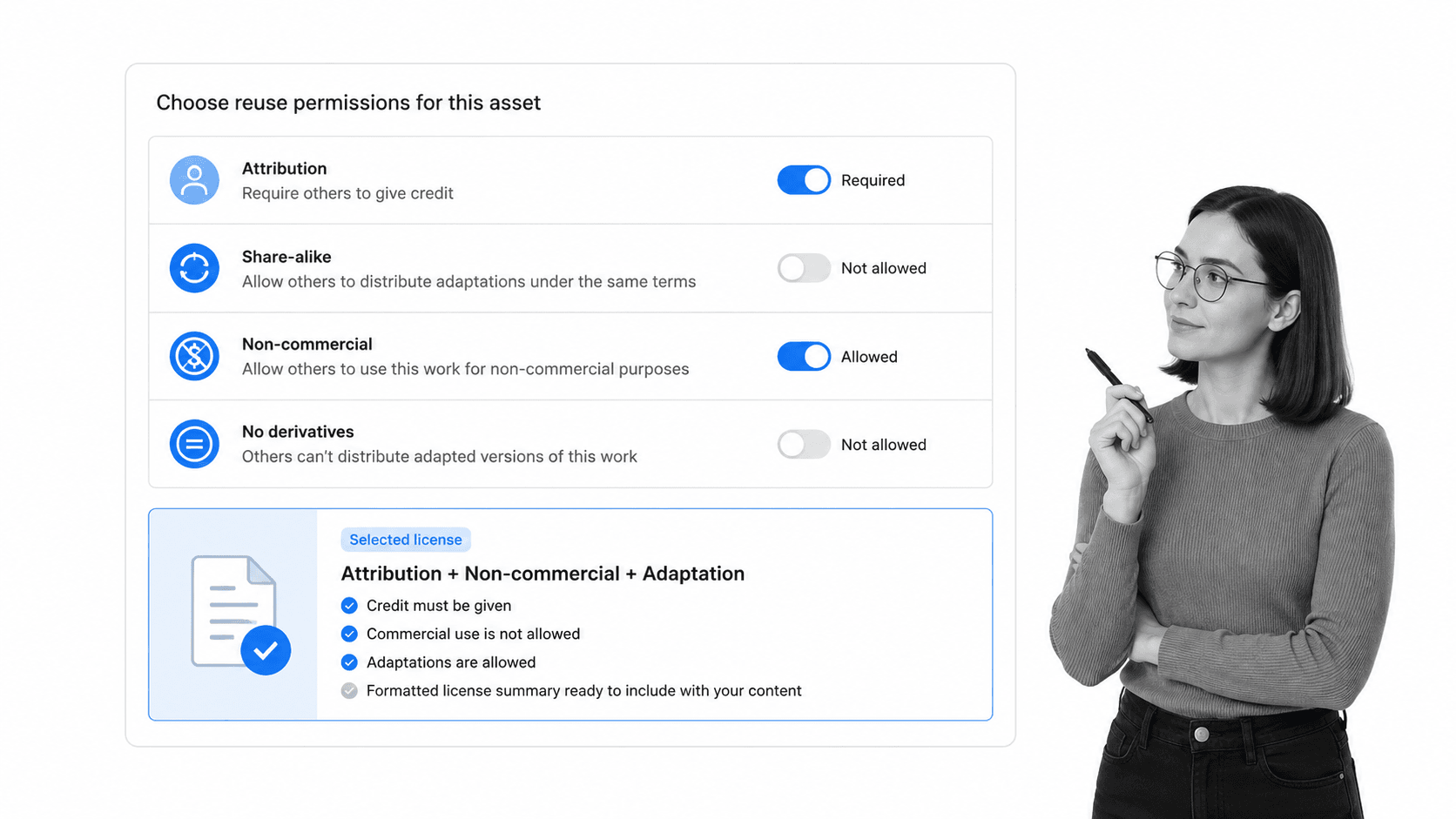
A Creative Commons license does not override copyright. It attaches to the work and frees up some rights for other people to use. CC licenses are built from a combination of elements:
- Attribution: use is permitted only if the original creator is given credit
- Share-alike: derivative works and copies must be published with the same or a compatible license
- Non-commercial: use is permitted for non-commercial purposes only
- No derivative works: the work can be copied, displayed, distributed, or performed, but derivative works cannot be made
If all of these elements are applied, a CC license becomes only slightly less restrictive than traditional copyright. The most open CC licenses may require only attribution, meaning that a piece can be used broadly so long as the original author is credited.
The Creative Commons license chooser makes it easier to decide how to share your work. For example, a creator can allow others to copy, share, and adapt the work while limiting commercial use. Always read the exact license page, not just the icon or shorthand.
What it means for bloggers
Creative Commons can be useful for bloggers, marketers, and content creators because it provides an easier way to share work with customized permissions. It lets authors take credit for their work while encouraging the spread of ideas and creativity through easier access.
For example, if an image is under a Creative Commons license that allows reuse with attribution, you may be able to use it as long as you say who created it, link back to the source, preserve the license notice, and follow any limits such as non-commercial use or no derivatives.
If you create a piece of music, write a book, or publish a reusable diagram, you can also license it with Creative Commons to get a little free publicity. You can still control how it is used, but allowing use in general can bring greater coverage as people take advantage of the permission you have already granted.
The DMCA
What is the DMCA?
The Digital Millennium Copyright Act (DMCA) became U.S. law in 1998 and served several purposes. It updated U.S. copyright law for digital and international issues, addressed some specific subject areas, and created safe-harbor rules for online service providers that host user content.
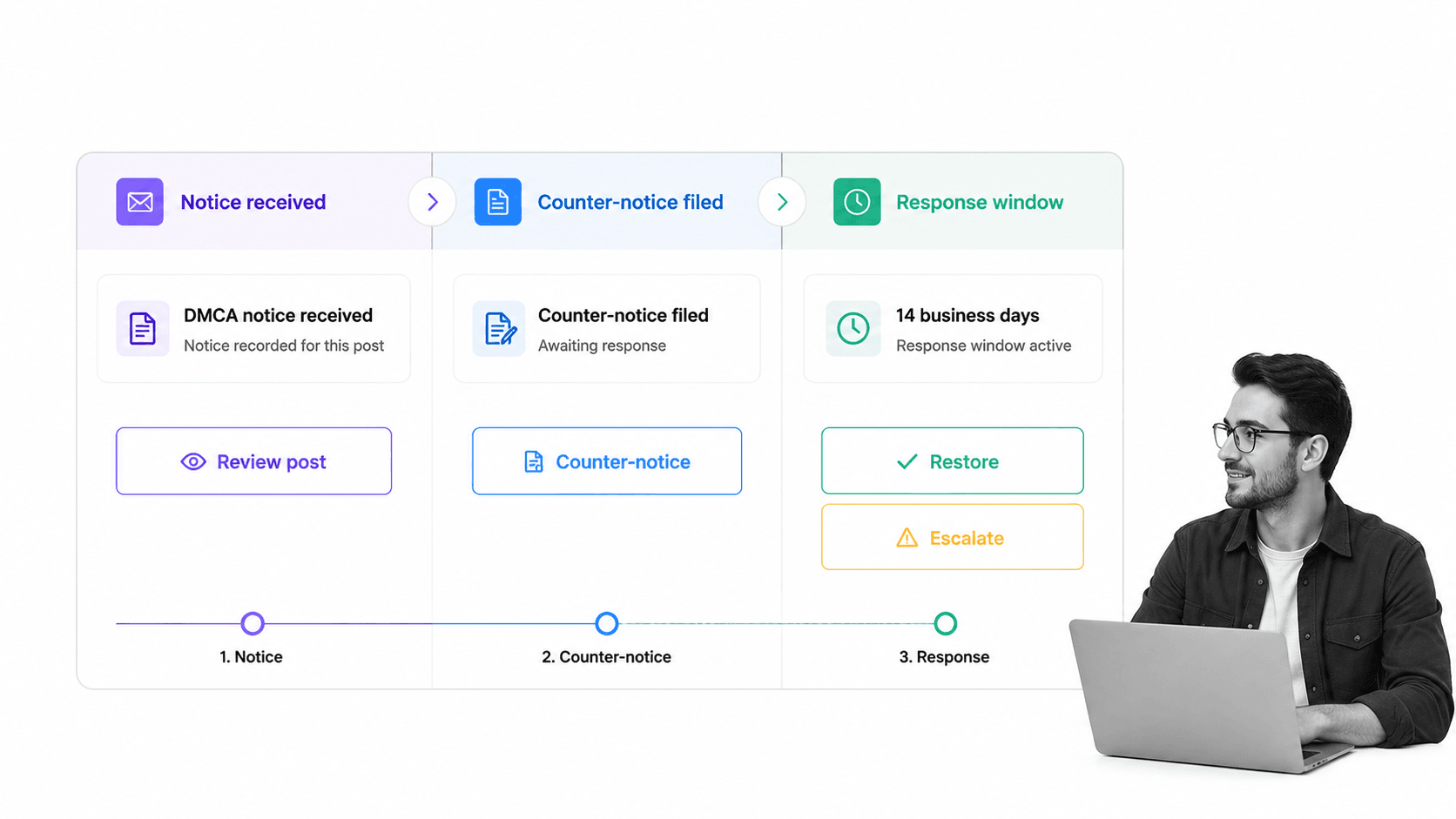
For example, if someone uploads an entire album of copyrighted music to their website for distribution without permission, the copyright holder can send a DMCA takedown notice to the service provider. The provider can remove the content or ask the user to remove it while avoiding some repercussions of the infringement themselves.
To stop copyright holders from abusing the system, service providers must also offer a way to respond to claims you do not believe are valid. If you created a parody of a song that you believe is fair use and still received a DMCA notice, your host should provide a counter-notice process.
Under 17 U.S.C. 512, the person or company who filed the DMCA notice then has a limited period to respond to a counter-notice with further action, usually by seeking a court order. The Copyright Office section 512 materials and platform policies explain the process in more detail.
What it means for bloggers
The DMCA is not usually a problem for every blogger, but it can become an issue if you cover entertainment topics such as music, movies, and video games. Blogs on these topics often focus on the copyrighted work of others, and so can be more open to what some would consider copyright infringement.
In an ideal world, the DMCA system would be used to take down pirate sites and true copyright breaches. In practice, claims can be overbroad or incorrect, and content can be removed before the dispute is sorted out. Legal costs can also make it difficult to defend yourself, uphold a copyright claim, or seek compensation for a false claim.
In short, it is useful to know what a DMCA takedown is and how to combat it, but your best defense is to avoid running unnecessary risk with copyrighted material in the first place. If you use a specific platform to host your blog or media, read how that platform handles takedown notices and counter-notices. GitHub’s DMCA counter-notice guide is a practical example of the kind of information platforms require.
A DMCA notice or counter-notice will generally require you to identify the copyrighted work, identify the allegedly infringing work, include contact information, insert good-faith statements, and agree to legal statements such as penalty of perjury when submitting a false claim or counterclaim. Get legal advice before filing if the issue is material.
Fair Use
What is fair use?
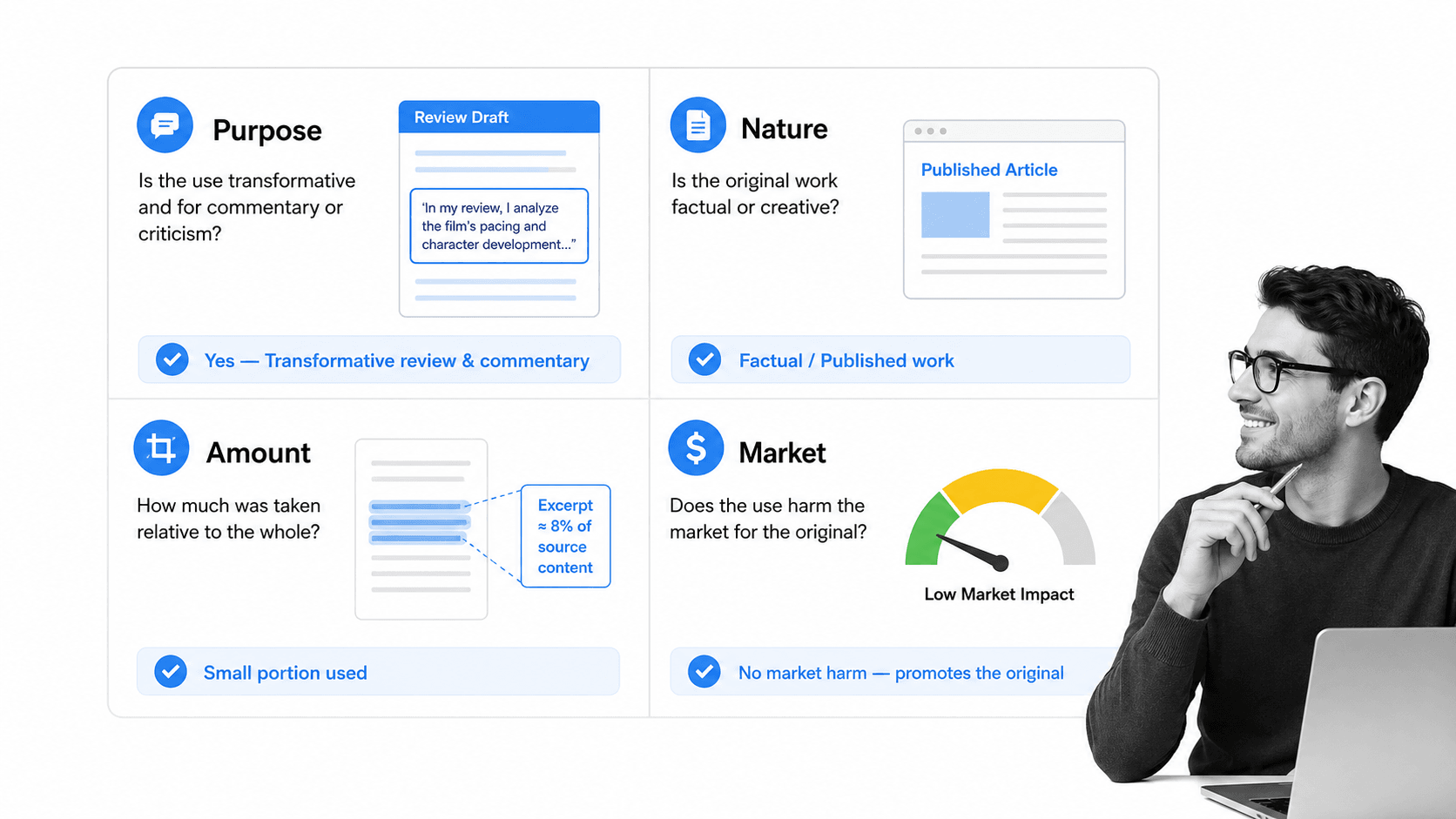
Fair use is a doctrine that helps serve public interest while maintaining the rights of copyright holders. It allows some use of copyrighted material without permission from the copyright holder, depending on four core factors.
- The purpose and character of the use
- The nature of the copyrighted work
- The amount and substantiality of the portion taken
- The effect of the use on the potential market for the original work
Without going into too much detail, each of these categories weighs on the likelihood that the use of copyrighted material will be considered fair. The U.S. Copyright Office fair use index is a helpful place to see how courts have discussed different fact patterns.
The purpose and character factor generally asks whether the use adds something new or has a new purpose, rather than just copying the work. Reviews, criticism, parody, commentary, news reporting, research, and education can all point toward fair use, but there is no set measure for how fair an individual use is considered.
The nature of the copyrighted work matters too. You are more likely to have a fair-use argument if the original work was factual rather than fictional, and published rather than unpublished. The amount and substantiality factor looks at both how much of the copyrighted work you used and whether the piece taken could be considered the heart of the original.
Finally, if your work takes away from the income or market for the original copyright owner, you are less likely to be able to rely on fair use. Even here, there are exceptions: a review or parody can cause the original to earn less, but that does not automatically defeat fair use if it serves a different purpose and does not fill the same market demand.
What it means for bloggers
For bloggers, fair use is most useful when your use has a clear editorial purpose: critique, analysis, explanation, parody, or reporting. It is weakest when the copyrighted work is simply decoration or a substitute for buying or licensing the original.
For example, without fair use a copyright owner could have negative coverage of their product taken down, since parodies and reviews would be vulnerable. But fair use is not a reliable guarantee because each case has to be assessed individually according to the four factors.
As a rough habit, use less than you think you need, avoid the heart of the work unless it is necessary for commentary, add real analysis, link to the source, and consider asking the rights holder for permission where possible. If your use is important to your post and the rights holder is likely to object, get legal advice before you publish.
The legal guide for bloggers: Tactics
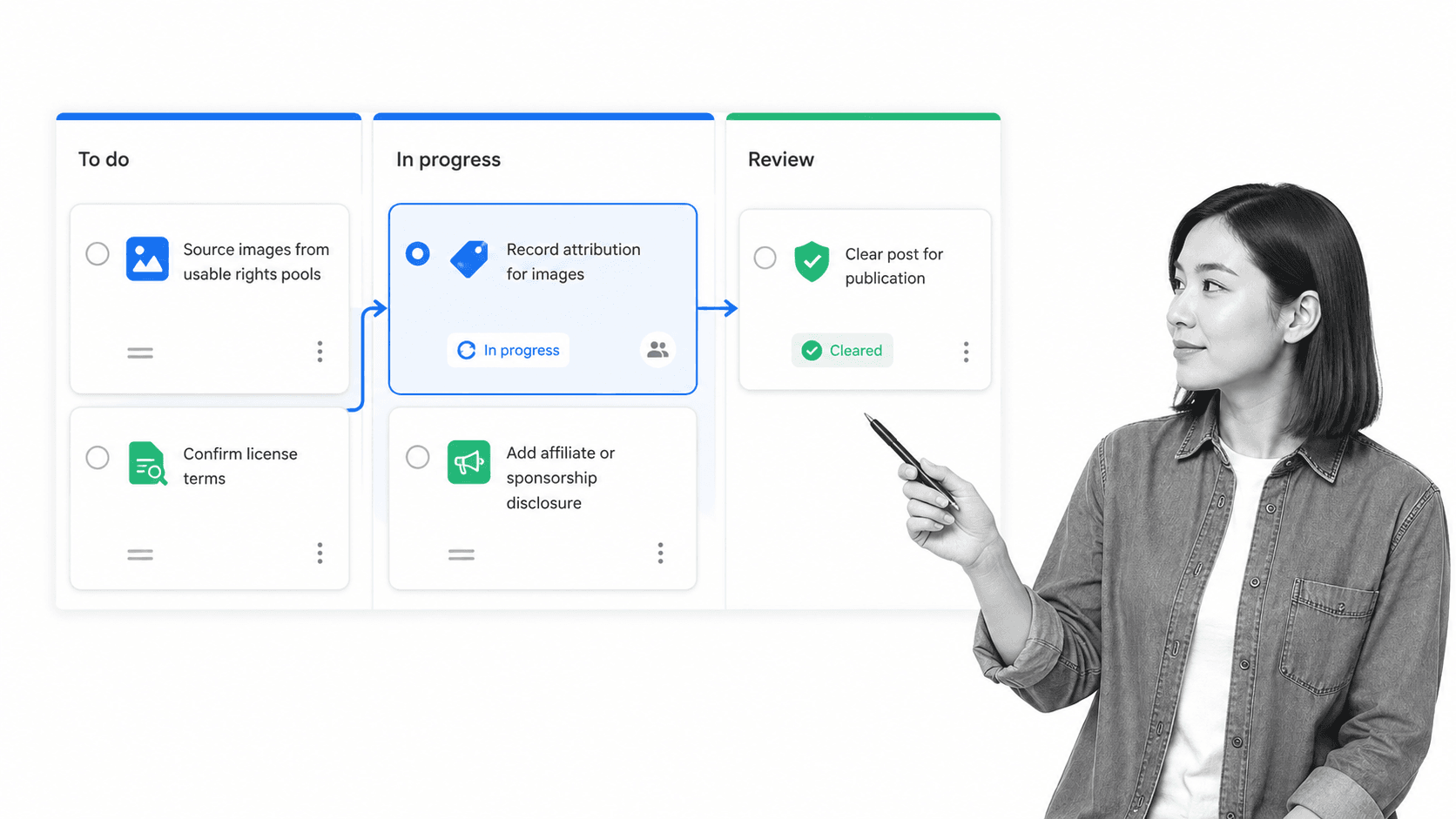
Now that the basics are covered, it is time to move on to tactics you can use to help make sure your blogging stays within the law. Here, you will learn how to find public-domain and fair-use images, how to provide adequate disclosure, and why you should consider Creative Commons for your own work.
How to find public-domain and fair-use images
Images are by far one of the most difficult legal areas for bloggers. The temptation to just boot up Google Images and take the first result is immense. However, doing so both disrespects the work of the photographer or image creator and puts you at risk of legal repercussions at any given time.
Thankfully, there are a few ways to search for public-domain and fair-use images that leave you legally covered. After all, no one likes a surprise lawsuit over something that might not have even benefited you much in the first place.
For free sources, start with pages that clearly publish license terms: Pexels license, Pixabay license summary, Wikimedia Commons, and Openverse. Openverse is a search engine for multiple free image locations, but you still need to inspect the individual result and license terms.
If you do not mind paying for images, there is always the option of buying snaps from sites such as iStock and Shutterstock. For a list of public-domain image collections, the Wikipedia public-domain image resources page can help you find collections to investigate.
Other than that, your main options for getting images that are fully legal to use are creating your own, commissioning them, or getting permission from the copyright holder. If your blog is part of a larger legal or compliance workflow, use a shared approval process and keep the license, source URL, attribution note, and reviewer signoff with the draft. For larger teams, legal document management software can also help organize contracts, rights records, and review steps.
How to provide adequate disclosure
Another important aspect of blogging is being transparent with your audience. You should try to provide full disclosure when something you are doing could skew your writing or opinion. This usually relates to paid content, products provided for free, and affiliate links, and is a measure to show your readers any biases you may have.
For example, if you get a product for free and review it, there is a chance that your opinion will be skewed toward giving positive coverage or downplaying flaws. That can give your audience a false impression when deciding whether to buy it.
The easiest way to provide full disclosure is to have a dedicated statement covering your affiliates, monetization, and links to brands and companies such as sponsorships. When producing content that could be directly affected by such ties, you should also include a statement in the post itself. It is good practice to make that statement highly visible near the top or beginning of the content so your audience knows what they are walking into.
For more information, check the FTC’s Disclosures 101 and endorsement guide FAQ. The rules can change, so use the current FTC guidance rather than relying on old blogger letters or outdated PDFs.
Why you should consider Creative Commons for your own work
Creative Commons licenses can help you by giving your work extra visibility. This is easy to write off, but the opportunities that come with that can quickly add up to boosting your audience and business.
For example, say you make music and are relatively small-time. You might have a core audience, but you cannot afford promotion or dedicated marketing tactics such as content creation and SEO. By assigning your work under the Creative Commons banner, whether you only allow sharing or any kind of use with attribution, you leave your work open for smaller influencers who cannot afford gated or copyrighted work.
Video creators may use your work and expose you to their audience, reviewers can cover the tracks and do the same, and even at its most basic form other users can copy and distribute your work through their social circles. This can open the door to paid work, interviews, commissioned music, and a larger audience than if you gated your content in the first place.
In other words, CC can lower the barrier to entry for your content, allowing you to see greater revenue for the work that you do close off. The Adam Singer Creative Commons case study is an old but useful example of how open licensing can support promotion.
Reminder: I’m not a legal professional
This legal guide for bloggers is not ironclad legal advice. I am not experienced enough in law or copyright to tell you what to do in a specific dispute, and none of this should be taken as gospel.
What I can say is that the topics above give you a solid set of guidelines to follow: know what copyright protects, check public-domain and Creative Commons terms carefully, understand how DMCA and fair-use arguments work, disclose relationships clearly, and ask for permission or legal advice when the risk is real.