


A PR strategy is a repeatable plan for earning credible attention by matching a clear business objective with the right audience, story, evidence, media relationships, owners, and measures of success.
In this Doyle Albee interview, the former president of Metzger Albee and host of PR Is Dead explains the human side of that plan: understand what reporters need, build relationships before asking for coverage, choose the right moment for a story, and become a useful source rather than another crowded inbox.
How to build a PR strategy
A useful public relations strategy connects reputation goals to a working system. It gives the team enough structure to act consistently without reducing every journalist relationship to a template.
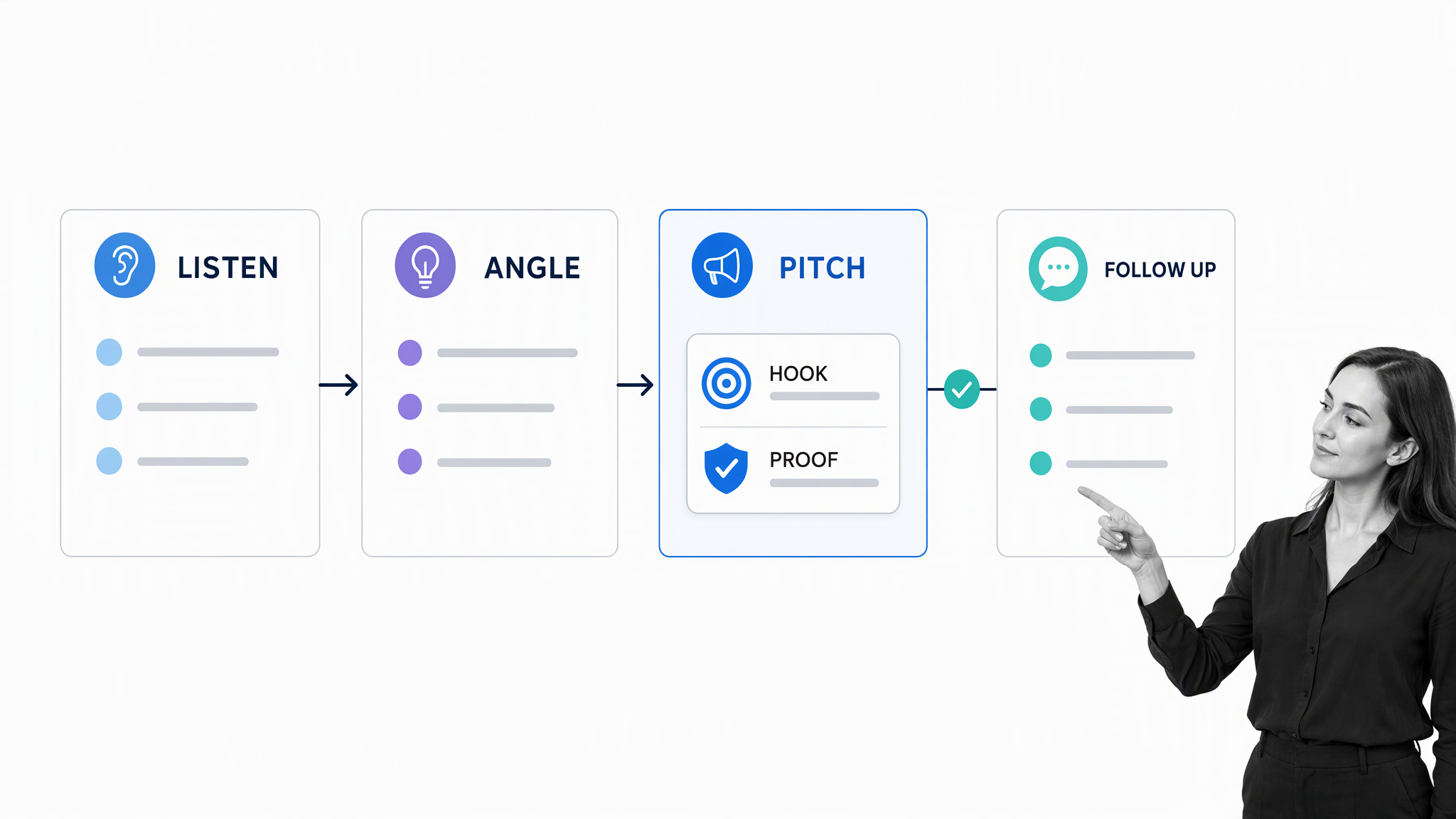
Set one business objective
Start with the result the business needs. You might want to establish expertise in a category, support a launch, correct a misunderstanding, prepare for a sensitive change, or build trust with a specific market. A precise objective makes it easier to decide which stories deserve attention and which opportunities are distractions.
Define the audience and its trusted sources
Describe the people whose understanding or behavior needs to change. Then map the publications, newsletters, podcasts, analysts, creators, and professional communities they already trust. A media list is useful only when it reflects the audience, not when it is simply large.
Build the message around proof
Write the central idea in plain language, then gather the evidence that makes it credible. Useful proof can include customer outcomes, original data, expert access, a demonstrable product change, or a timely operational lesson. Give spokespeople the same core facts, but let them answer naturally.
Earn reporter relationships before pitching
Follow the work of relevant journalists. Learn what they cover, how they frame stories, and what evidence they tend to use. Help when you can, even when there is no immediate benefit. Doyle Albee’s most durable advice is to become a go-to source by being accurate, responsive, and genuinely useful.
Match the story to the news cycle
A strong pitch answers a simple question: why does this matter now? Connect the story to a real change, timely debate, new finding, or clearly defined audience problem. Do not force a weak announcement into the cycle. “All news is good news” is a poor rule because attention without relevance or trust can damage the reputation you are trying to build.
Assign owners, approvals, and follow-up
Decide who monitors opportunities, develops the angle, confirms evidence, approves claims, briefs spokespeople, sends the pitch, and follows up. A shared workflow collaboration system keeps those handoffs visible and prevents conflicting responses when a reporter is working to a deadline.
Process Street is a single Compliance Operations Platform. Its Docs capability area keeps approved messages, briefing notes, and response guidance governed. Its Ops capability area turns that knowledge into assigned workflows with owners, approvals, evidence, deadlines, and an audit trail. Built-in AI helps teams draft and improve the process while keeping human review explicit.
Measure outcomes and improve the system
Choose measures that fit the objective: qualified coverage, message pull-through, share of relevant conversation, referral traffic, expert inquiries, sentiment, or response time. The PRSA measurement guide recommends setting objectives first and selecting measures that show progress toward them. Review the evidence after each campaign and update the media list, message, proof, and workflow.
Lessons from the Doyle Albee interview
“All news is good news? That’s one of the worst statements ever.”
Doyle Albee
The interview is especially useful because it looks at PR from the reporter’s side. Reporters need relevant ideas, reliable sources, complete information, and fast responses. Businesses improve their odds when they respect that work instead of treating a journalist’s inbox like an advertising channel.
Public relations expert Doyle Albee shares practical advice on building relationships with reporters, becoming a reporter’s go-to source, joining an ongoing news cycle, creating a feed of news stories, using Twitter lists, following up on edits, providing all relevant information, disclosing revenue, and getting a team on the same page for press interviews.
The discussion covers:
- Whether PR is dead, how public relations should be defined, and how media continues to change.
- Common PR mistakes, including the belief that any attention is automatically valuable.
- Native advertising and the boundary between paid placement and earned credibility.
- Creating a consistent PR system for a company.
- Developing relationships with reporters and becoming a trusted expert source.
- The wrong and right ways to approach a reporter.
- Networking at events and joining an active news cycle without forcing the connection.
- The highest-return PR activities for a startup and whether a team should spend two hours a day on PR.
- Building a feed of current stories and using curated journalist lists to understand coverage patterns.
- Following up on corrections or edits without damaging the relationship.
- Providing the facts, context, and access a reporter needs to write accurately.
- How reporters assemble stories and why businesses do not need a dictionary of PR jargon to help them.
- Revenue disclosure, different tactics for different business models, and preparing a team for press interviews.
- Knowing when internal effort is enough and when a PR agency may be useful.
Listen, tools, and resources
Listen to the Doyle Albee interview audio. The episode was originally published in 2016 as part of Business Systems Explored.
- Google Alerts: monitor new pages and coverage around a company, topic, or competitor.
- SourceBottle: connect journalists with relevant expert sources.
- HARO: respond to current journalist requests as a potential source.
- Mention: monitor media and social conversations around a brand or topic.
- Trust Me, I’m Lying by Ryan Holiday: a critical look at incentives and manipulation in online media.
You can also find Doyle Albee on X. At the time of the interview, he was president of Metzger Albee and hosted PR Is Dead.
PR strategy FAQs
What is a PR strategy?
A PR strategy is a plan for shaping understanding and earning credible attention among a defined audience. It connects business objectives, messages, evidence, media relationships, owners, timing, and measurement.
How often should a PR strategy be reviewed?
Review the operating plan after every meaningful campaign or media event, and revisit the broader strategy at least quarterly. Update it sooner when the business objective, audience, evidence, risk profile, or news environment changes.
How do you measure whether PR is working?
Use measures tied to the objective, such as qualified coverage, message pull-through, relevant referral traffic, expert inquiries, sentiment, or response time. Avoid using raw mention volume as the only success signal.
When should a business hire a PR agency?
An agency can help when the business needs specialist media relationships, additional capacity, crisis experience, or strategic counsel that the internal team does not have. The company still needs an accountable internal owner who can supply facts, access, decisions, and fast approvals.