Turn every policy into automated workflows with built-in enforcement and audit-ready proof.



Best Property Management Software for Small Landlords
Small landlords need more than a place to record rent. The right system should make it easier to advertise a vacancy, evaluate applicants, sign a lease, collect payments, respond to repairs, track property finances, and prove that recurring work was completed.
This guide compares property management software for small landlords across those day-to-day jobs. It also separates full property platforms from finance-first tools and workflow software, because a landlord with two long-term rentals has different needs from a growing manager with a mixed portfolio.
The best choice is the one that removes the most operational friction without forcing a small portfolio into an oversized system. Start with your operating model, then compare the shortlist against the work you actually repeat.
What is property management software for small landlords?
Property management software for small landlords brings the recurring work of running rentals into a digital system. Depending on the product, that can include rental listings, applicant screening, leases, rent collection, maintenance requests, tenant communication, bookkeeping, and reporting.
For a small portfolio, the main value is consistency. A missed follow-up, undocumented inspection, or repair request buried in a text thread can cost more than the software. A useful system gives each task a clear home, keeps records attached to the right property or tenant, and makes the next action obvious.
Not every landlord needs one large platform. Some use a dedicated property system for rent and leases, a finance tool for banking and tax records, and workflow automation software for inspections, onboarding, approvals, and exception handling. That modular approach can be easier to adapt as the portfolio changes.
Which features matter most for a small rental portfolio?
Feature lists are easy to overvalue. A small landlord should focus on the few workflows that protect cash flow, reduce response time, and create a reliable record.
- Vacancy and applicant management: Publish a listing, collect complete applications, run screening with the required disclosures, compare applicants consistently, and keep the decision trail organized.
- Lease administration: Generate or upload lease documents, collect signatures, store renewal dates, and surface the actions required before a tenancy changes.
- Rent collection: Give tenants a clear way to pay, track payment status, and keep the ledger easy to reconcile.
- Maintenance coordination: Capture the issue, property, urgency, photos, access details, assignment, approval, and resolution in one path.
- Property accounting: Separate income and expenses by property, preserve receipts, reconcile transactions, and prepare usable records for tax work.
- Tenant communication: Keep important messages connected to the tenancy instead of scattered across personal inboxes and phone threads.
- Repeatable controls: Use required fields, checklists, approvals, due dates, and an audit trail for work that cannot depend on memory.
Mobile access matters when work happens at the property. Exportable records matter when an accountant, insurer, attorney, or new manager needs them. Integrations matter only when they connect tools you genuinely use. A shorter stack with clear ownership is usually easier to run than a crowded collection of overlapping apps.
How should small landlords choose an operating model?
Most products on this list fit one of three operating models. Decide which model matches your workload before comparing interfaces.
- All-in-one, do-it-yourself: Choose this model when you want listings, applications, rent, leases, maintenance, communication, and accounting in one landlord-facing product. Avail, TurboTenant, Innago, RentRedi, TenantCloud, Rentec Direct, DoorLoop, and Buildium cover broad parts of the rental lifecycle.
- Finance-first: Choose this model when clean property books, banking visibility, and tax-ready records are the biggest pain points. Stessa, Landlord Studio, and Baselane center the financial side of rental ownership while adding selected operating features.
- Service-assisted: Choose this model when the bottleneck is coordinating leasing or repairs, not just recording them. Hemlane combines software with optional human-supported operations.
Process Street serves a different role. It is the workflow layer for work that crosses systems or needs stronger controls: move-in readiness, inspection evidence, repair escalation, security-deposit review, renewal approval, vendor onboarding, and owner reporting. A dedicated property platform can remain the system of record for leases and payments while Process Street controls how the work gets done.
When evaluating any option, run one real scenario through it. Use a recent maintenance request or tenant turnover. Note where information enters, who owns the next step, which approvals are required, what the tenant sees, and what record remains afterward. A short trial with real work reveals more than a long feature checklist.
Also decide where each record should live. The signed lease, payment ledger, inspection evidence, repair invoice, and tenant conversation may be related, but they do not have to sit in one database. They do need a dependable connection and a clear owner. Write down the system of record for each item before importing data. This prevents team members from maintaining competing copies and makes it easier to answer questions during a dispute, insurance claim, tax review, or management handoff.
Finally, account for the people who will use the system. A solo landlord may value a fast mobile workflow. A bookkeeper needs clean categories and exports. A maintenance coordinator needs assignments and status visibility. A tenant needs a simple payment and request experience. Choose the product that keeps these paths coherent, then document the operating rules around it.
Best property management software for small landlords
The shortlist below covers workflow control, broad landlord platforms, finance-focused systems, and service-assisted management. Product capabilities can change, so confirm that the current plan supports your portfolio, location, payment process, and screening requirements before committing.
Process Street
Best for: Standardizing recurring property operations across people and tools.
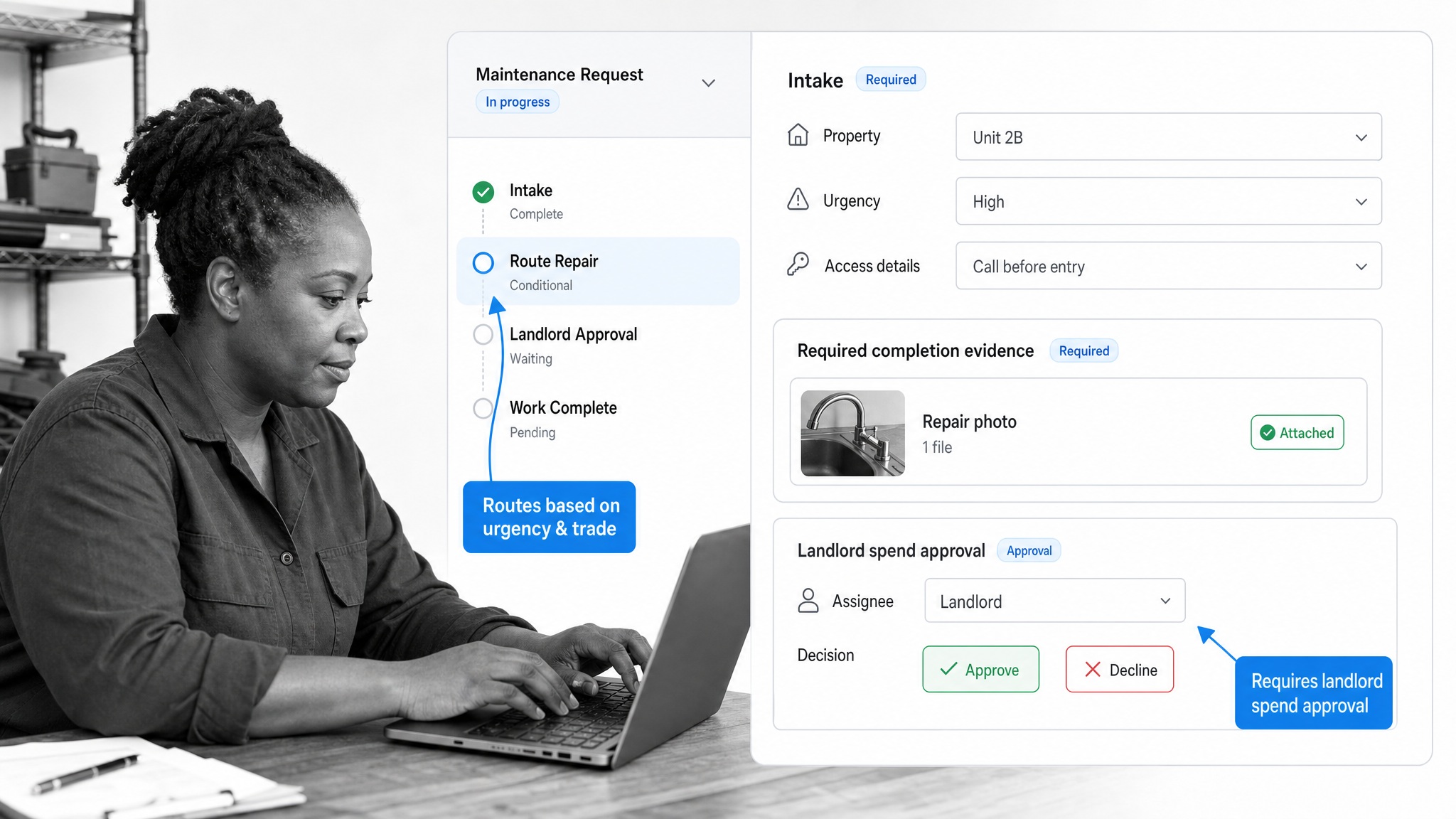
Process Street turns a landlord’s operating procedures into guided workflows. Each run can assign work, require information, apply conditional paths, collect approvals, and preserve an audit history. That makes it useful for jobs that are easy to describe but hard to execute consistently, such as preparing a unit for listing, documenting an inspection, qualifying a repair, or coordinating a move-in.
It is strongest when a process crosses roles. A maintenance request can move from tenant intake to landlord triage, vendor assignment, spend approval, completion evidence, and tenant follow-up without relying on someone to remember the sequence. Pages can hold property standards and reference material beside the workflow.
- Build property-specific checklists with required fields, dates, files, and ownership.
- Route high-cost repairs, exceptions, and lease decisions through an approval step.
- Use conditional logic so emergency repairs, routine work, and tenant-caused issues follow the right path.
Process Street does not need to replace rent collection or property accounting. It can connect the operational work around those systems and give a small landlord a repeatable property management process.
Avail
Best for: Independent landlords who want a broad rental lifecycle in one product.
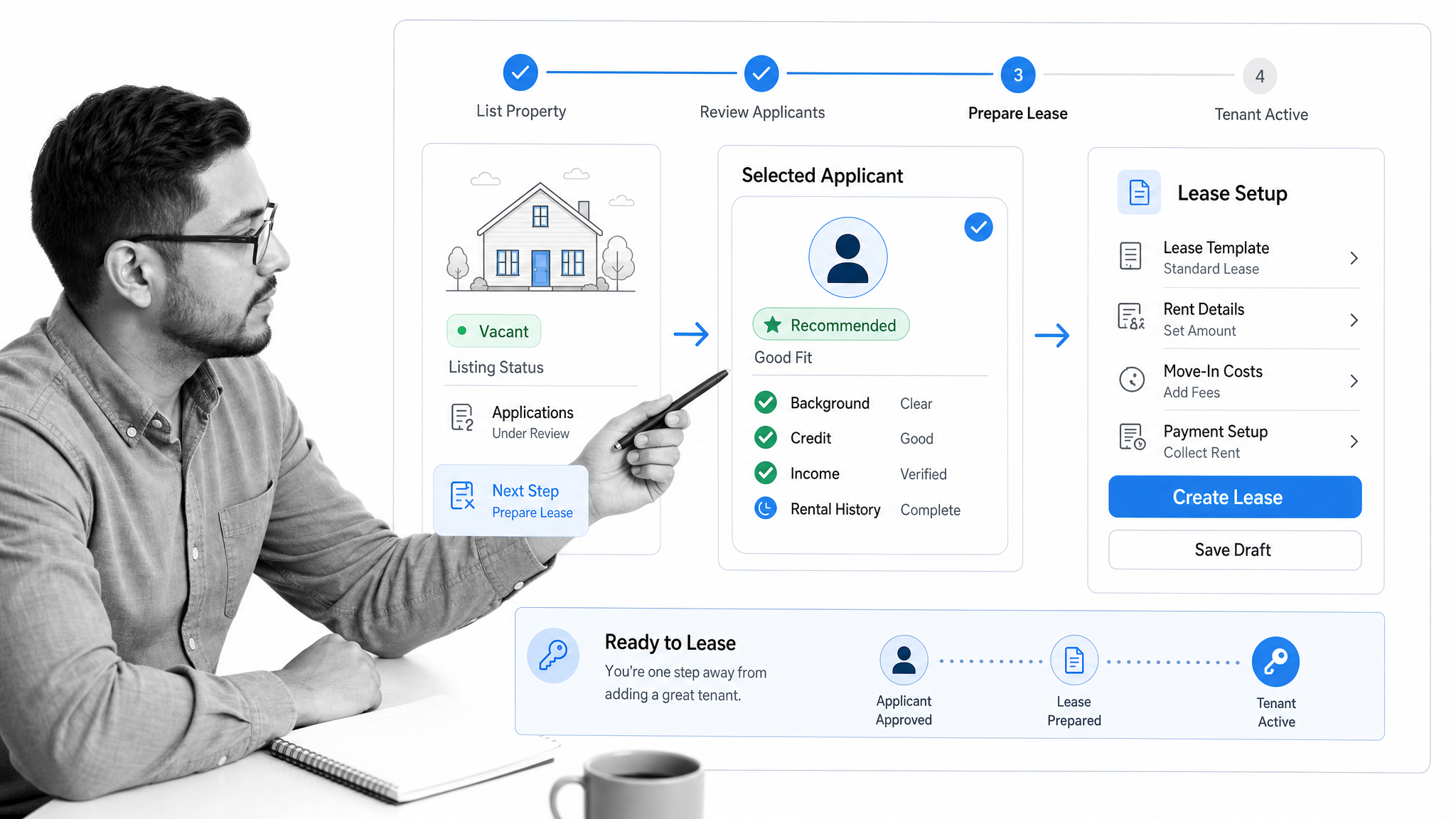
Avail combines rental listings, applications and screening, leases, rent collection, maintenance tracking, accounting, and tenant messages. Its breadth makes it a practical starting point when one person handles both leasing and ongoing administration.
Evaluate how the application, lease, payment, and maintenance records connect for a single property. The interface should let you move from vacancy to active tenancy without re-entering core information or losing the history of a decision.
TurboTenant
Best for: Do-it-yourself leasing with a tenant portal for ongoing service.
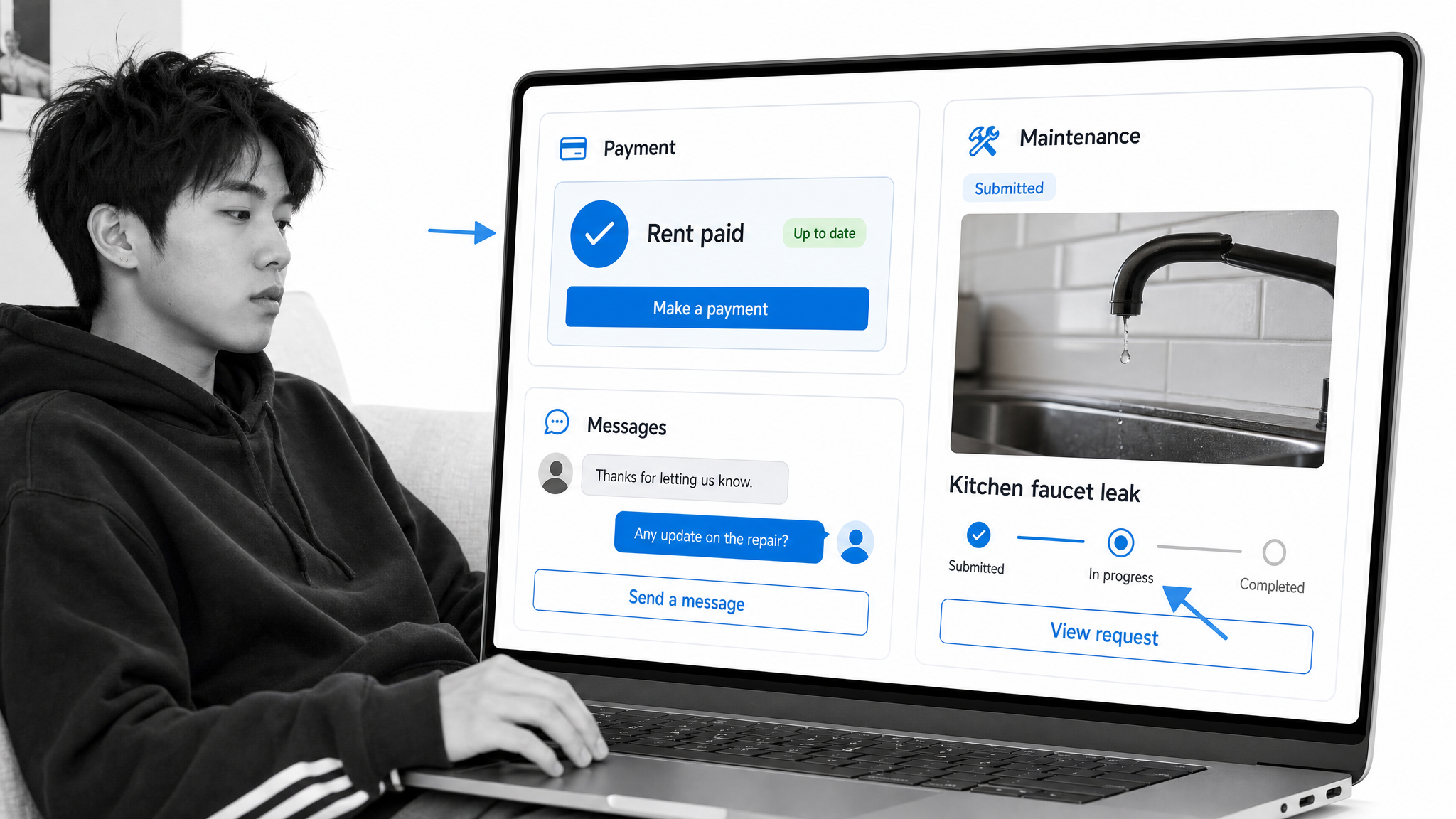
TurboTenant supports rental advertising, applications, screening, lease documents, rent payments, expense tracking, messaging, and maintenance requests. Its tenant portal gives renters a consistent place to pay, communicate, and submit repair issues.
Test the handoff from applicant to tenant. Small landlords benefit when accepted application data, lease records, payment setup, and tenant communication form one continuous history rather than separate tasks.
Innago

Best for: Straightforward tenant-facing rent, messaging, and maintenance workflows.
Innago provides rent collection, applicant screening, lease signing, reporting, and a tenant app. Tenants can use the app to pay rent, send messages, and report maintenance issues. That central tenant experience can reduce the number of channels a landlord needs to monitor.
Review the reporting and owner-side controls as closely as the tenant app. A smooth tenant experience matters, but landlords also need a quick way to identify overdue work, retrieve documents, and trace communication.
RentRedi
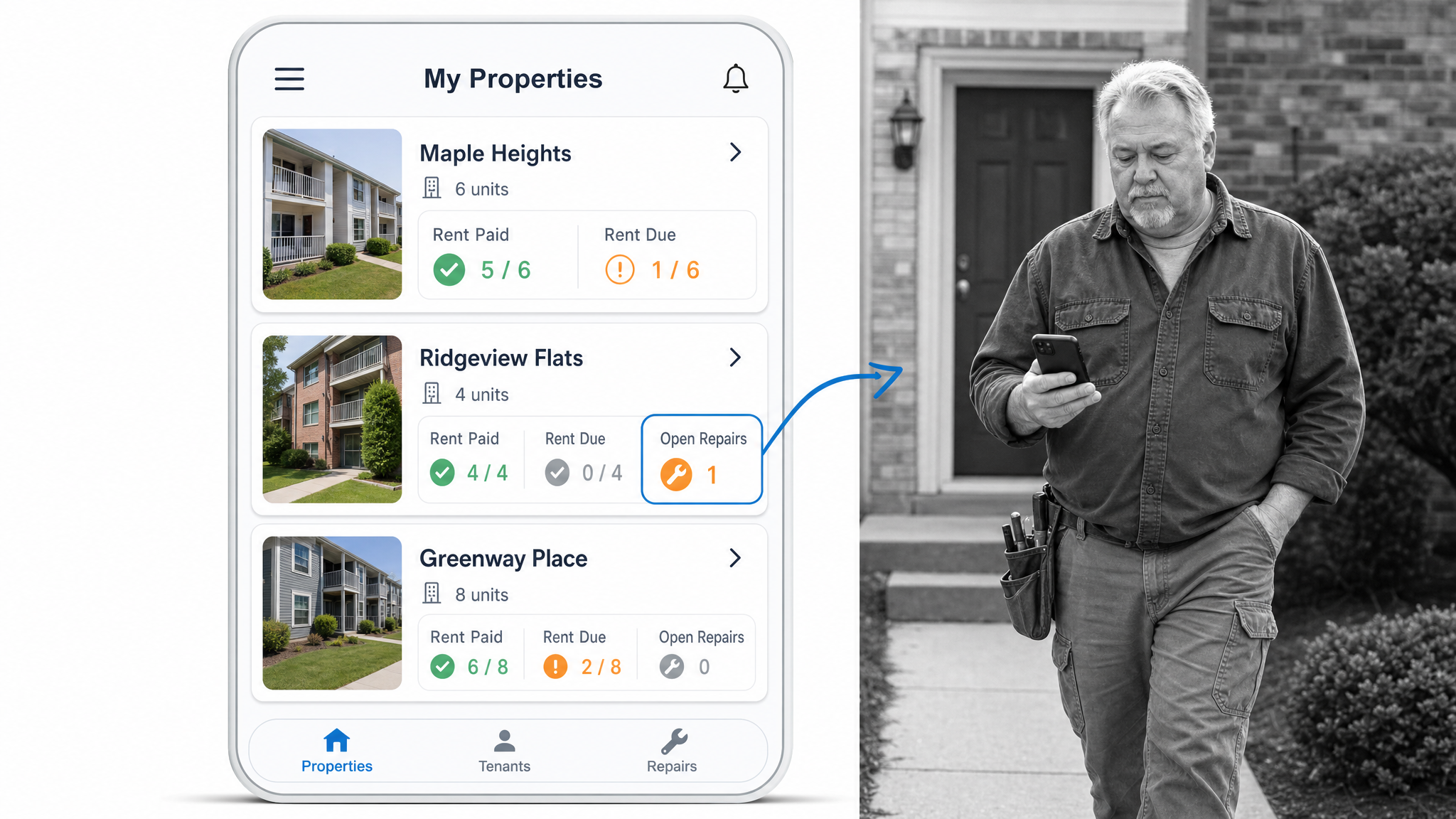
Best for: Mobile-first landlords who manage rent and repairs while away from a desk.
RentRedi brings rent collection, maintenance, listings, applications, screening, and tenant communication into landlord and tenant apps. It is a strong fit when property work happens on a phone and fast access to the right unit or tenant record is important.
During evaluation, compare the mobile and web experiences for the same task. Check whether repair photos, payment status, applicant details, and messages remain easy to find after the immediate notification disappears.
TenantCloud
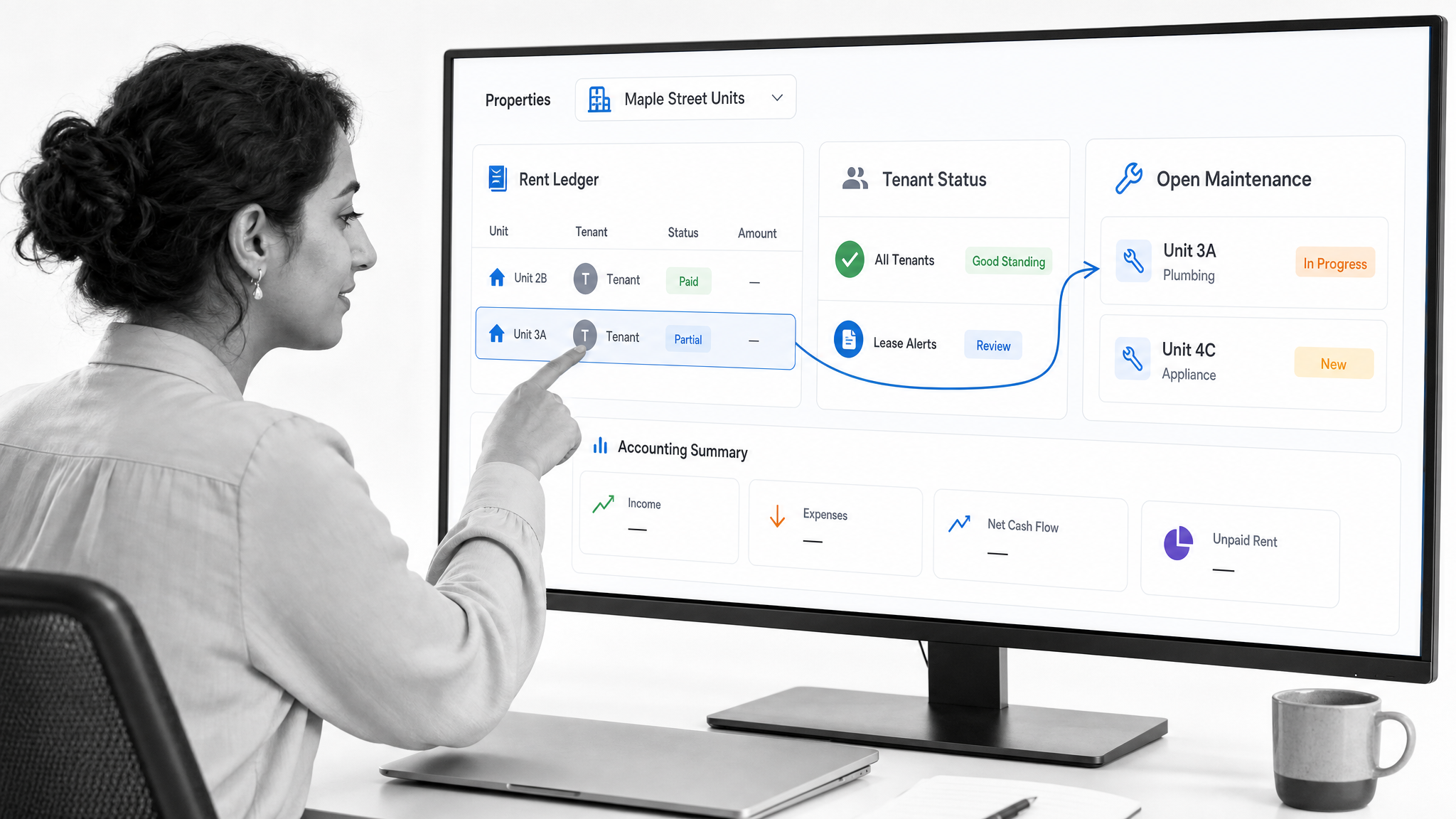
Best for: Landlords who want leasing, maintenance, rent, and accounting in a connected platform.
TenantCloud supports rental listings, tenant screening, online rent collection, maintenance management, and property accounting. The combination is useful when the same person needs to move between tenant operations and property-level financial records.
Map the permissions and communication paths before rollout. A connected platform is most useful when the landlord, tenant, owner, and service provider each see the right information without exposing private financial or screening data.
Stessa
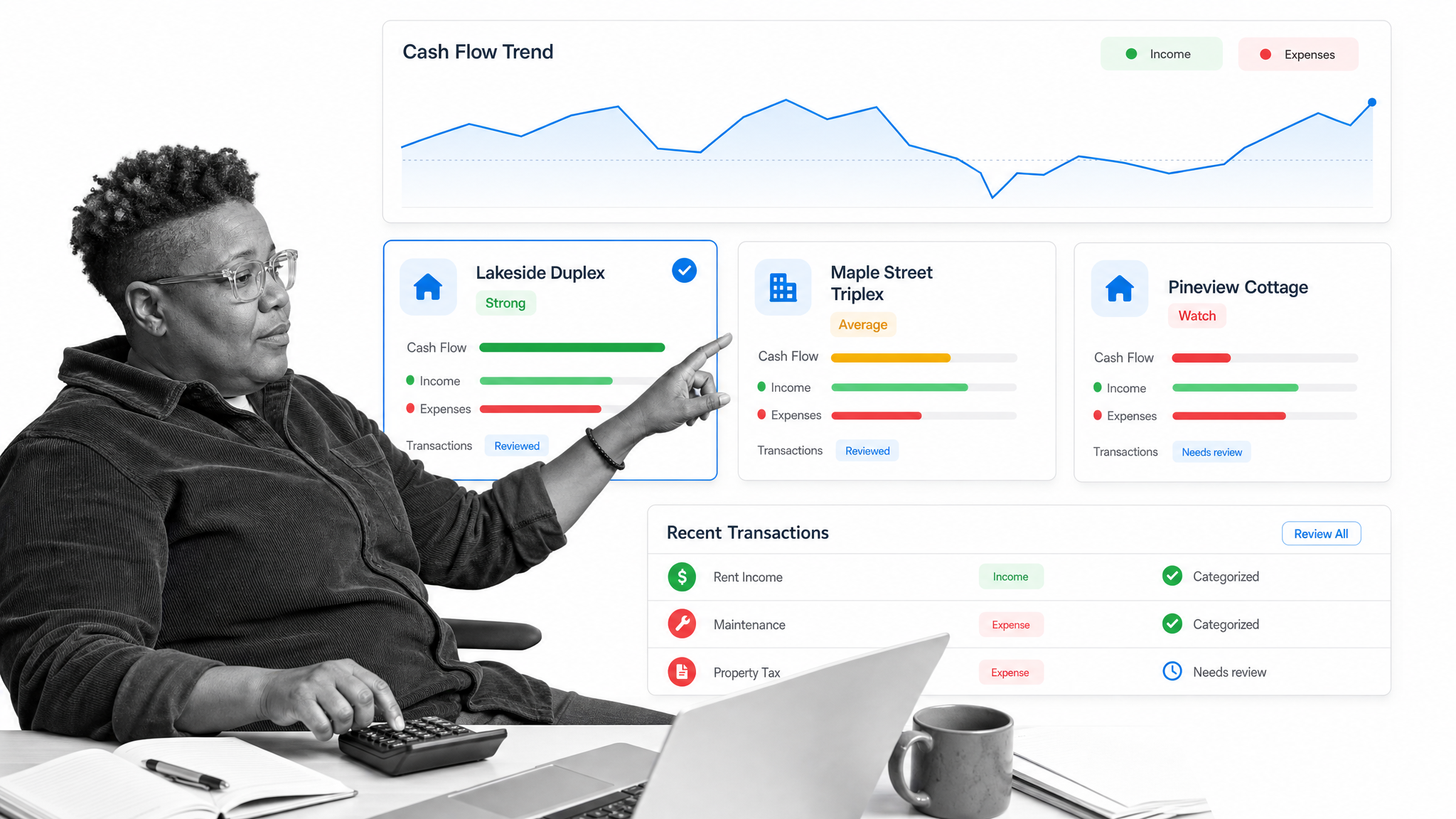
Best for: Rental owners who prioritize property finances and performance visibility.
Stessa describes its core as asset management software focused on rental-property finances and performance. It also supports rent collection, applications, screening, and leases, which lets owners connect selected tenant operations to their financial view.
It is a good candidate when the central question is how each property is performing. Test transaction categorization, document capture, property reporting, and accountant handoff with a representative month of records.
Landlord Studio
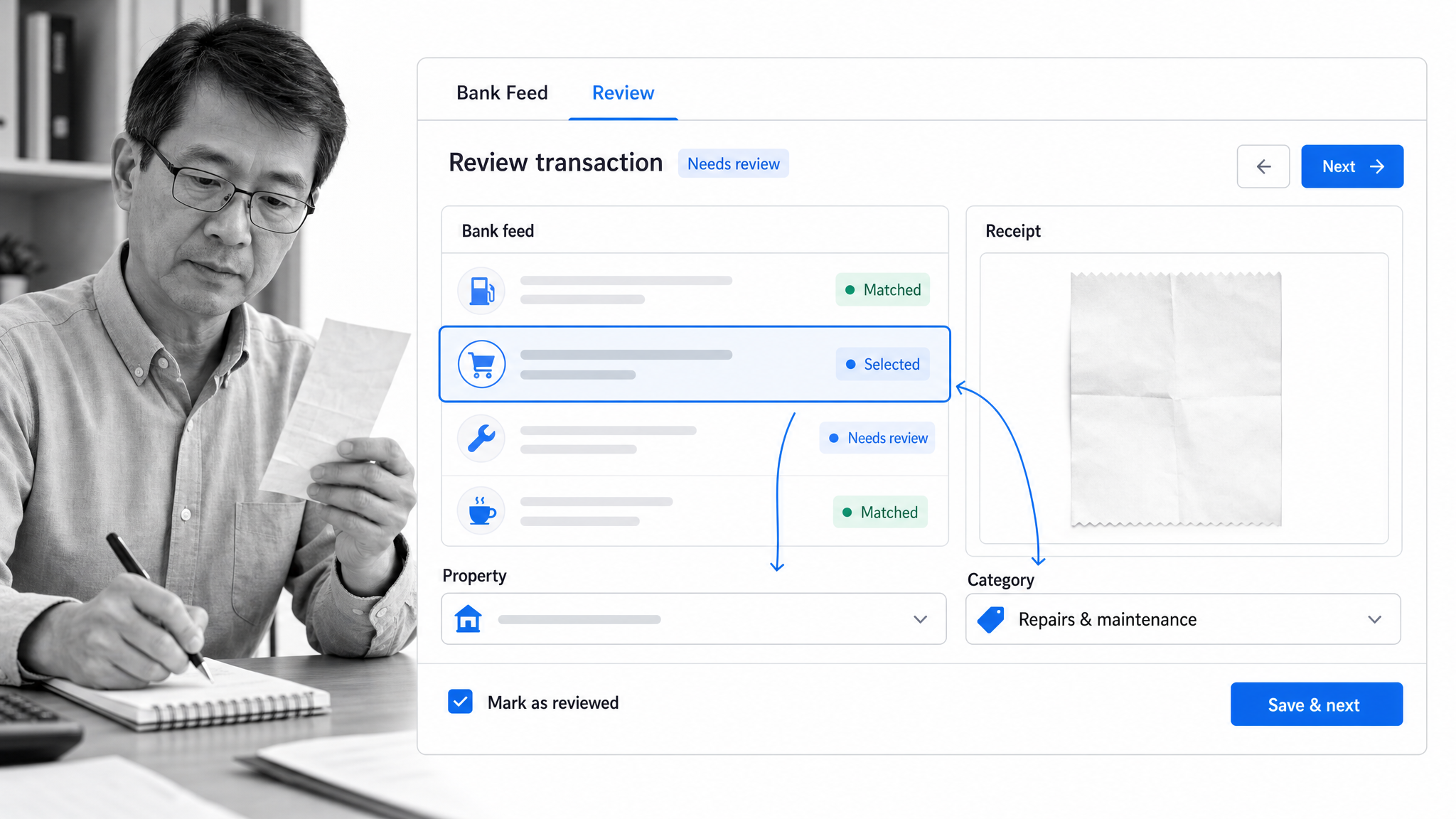
Best for: Bookkeeping-focused landlords who also need selected leasing and tenant tools.
Landlord Studio centers income and expense tracking, bank feeds, receipt capture, and property reports. Its feature set also includes leases, tenant screening, rent collection, and maintenance tracking, creating a bridge between bookkeeping and daily administration.
Use a trial to inspect how transactions are assigned to properties and categories. The payoff from finance-first software depends on the accuracy of the books and the ease of correcting exceptions, not simply the speed of importing data.
Baselane
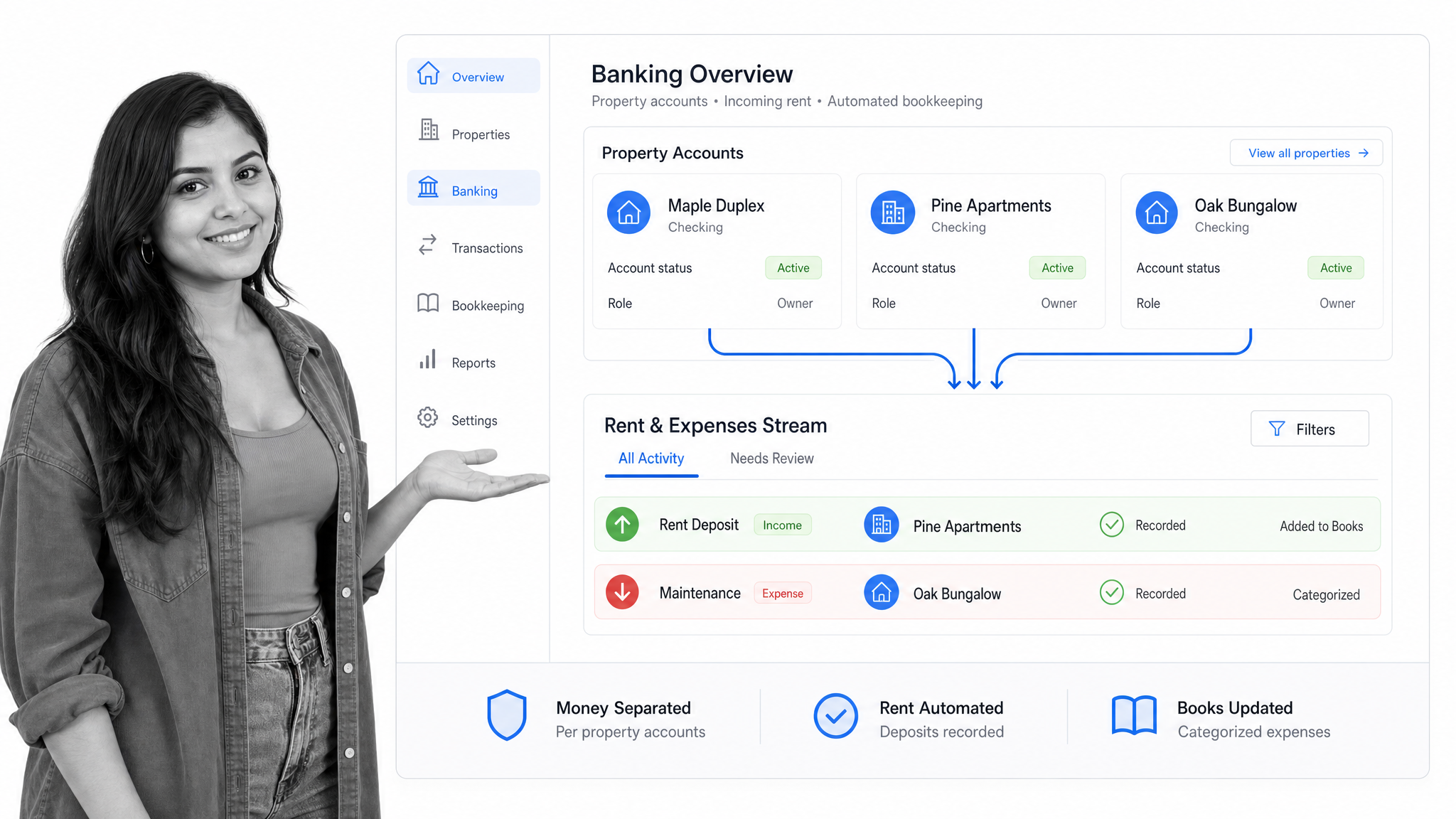
Best for: Owners who want landlord banking, bookkeeping, and rent collection together.
Baselane combines landlord banking, bookkeeping, rent collection, property-level reporting, and tax preparation support. It can simplify the financial side of a small portfolio when separate bank accounts, spreadsheets, and payment records create too much reconciliation work.
Review the flow of money before the feature list. Confirm how deposits are identified, transactions are categorized, documents are attached, and property reports are exported. Leasing and maintenance may remain in another system.
Hemlane
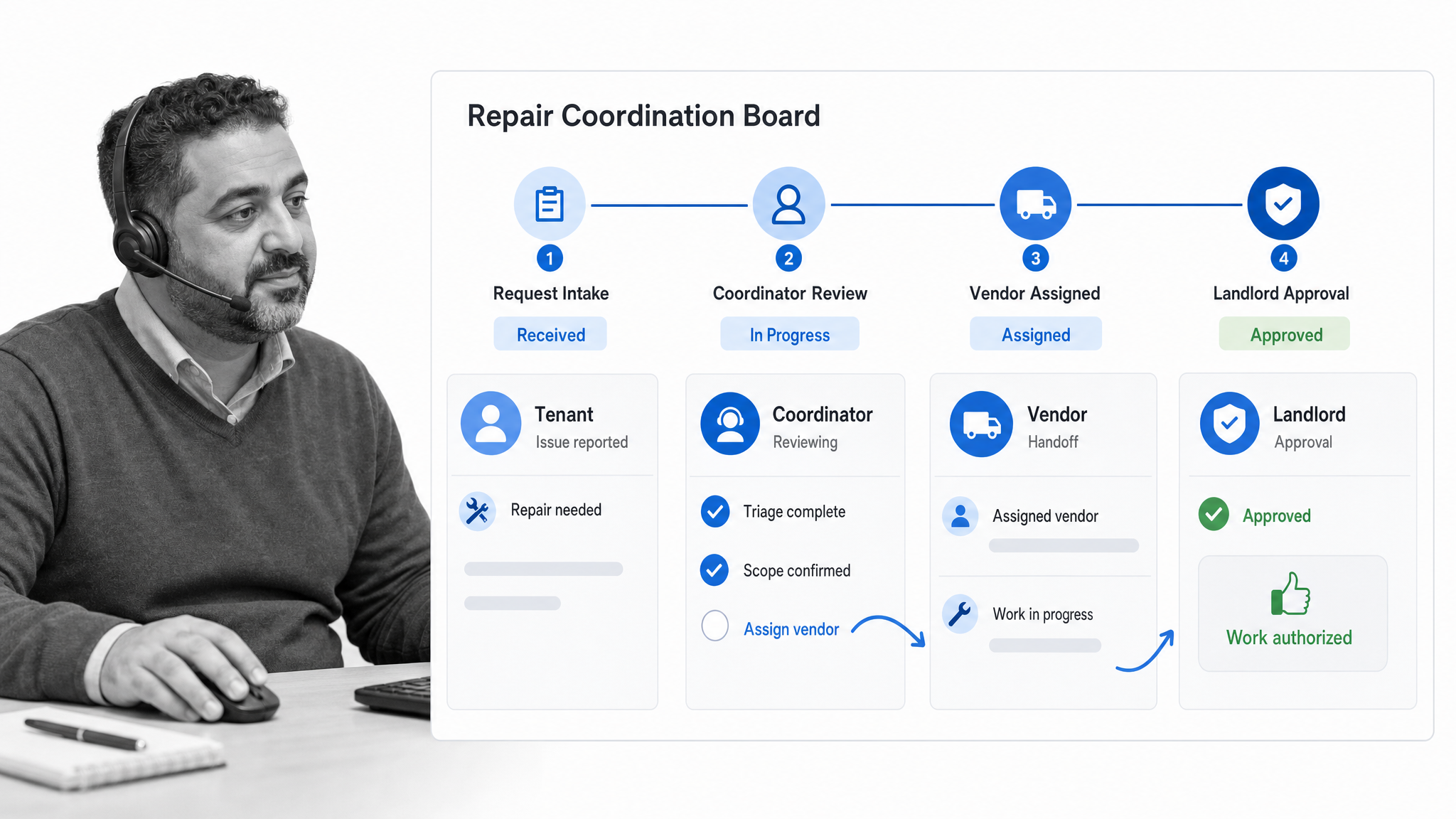
Best for: Landlords who want software plus optional help coordinating leasing and repairs.
Hemlane combines long-term rental software with AI-assisted and human-supported services. Its platform covers leasing, rent, maintenance intake, and repair coordination, making it relevant when the landlord wants to delegate parts of the operating workload without hiring a traditional full-service manager.
Clarify the boundary between software and service for your location. Ask who communicates with the tenant, how vendors are selected, when landlord approval is required, and where the complete repair record lives.
Rentec Direct
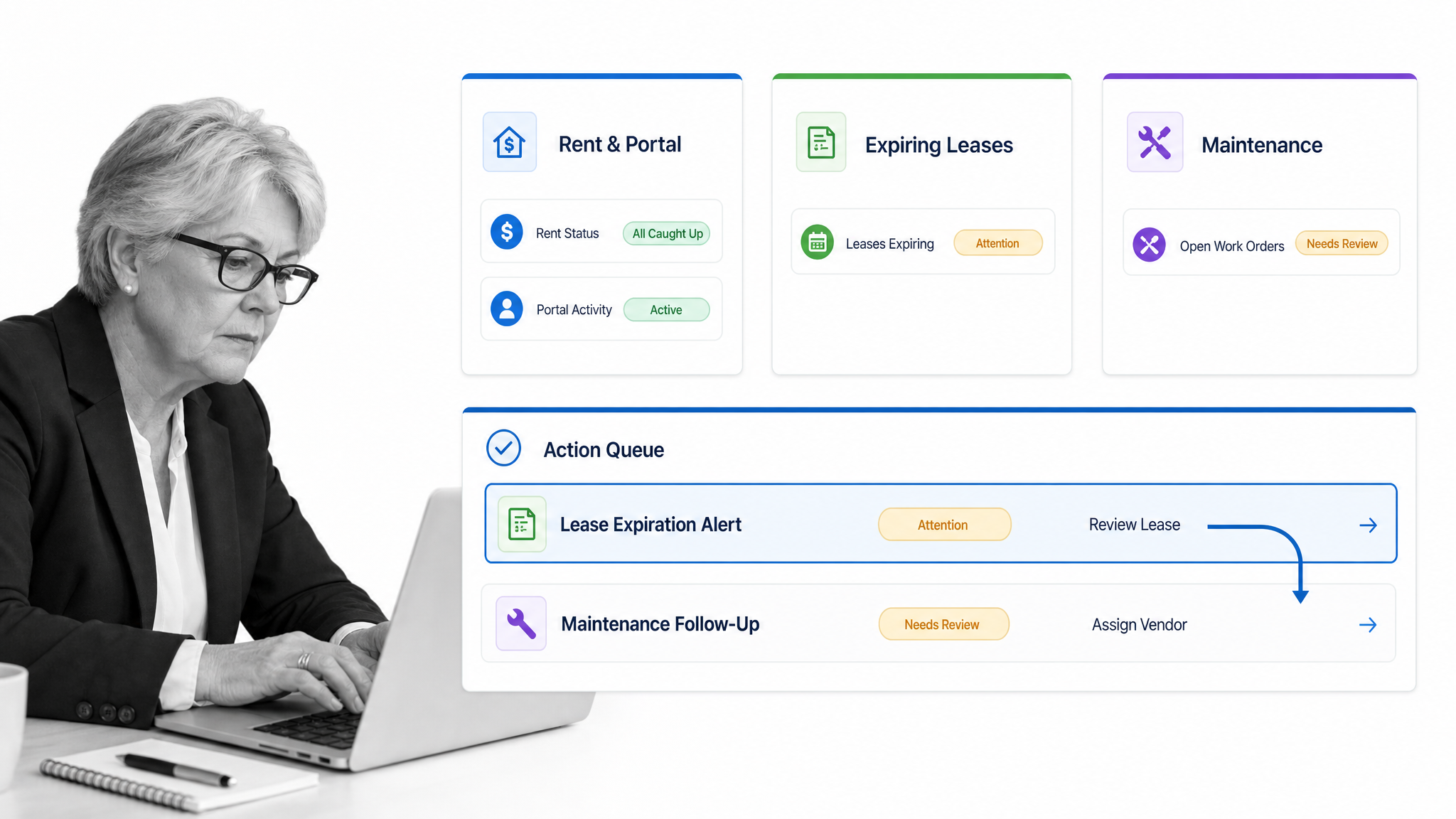
Best for: Landlords who want established rent, accounting, screening, and maintenance functions in one system.
Rentec Direct’s landlord software includes property accounting, online rent collection, tenant screening, a tenant portal, maintenance tracking, and rental marketing. The mix is suited to owners who want broad operating coverage and property-level records in the same platform.
Test the daily dashboard against your actual priorities. A useful overview should make unpaid rent, open maintenance, expiring leases, incomplete applications, and reconciliation work visible without requiring a report-building exercise.
DoorLoop
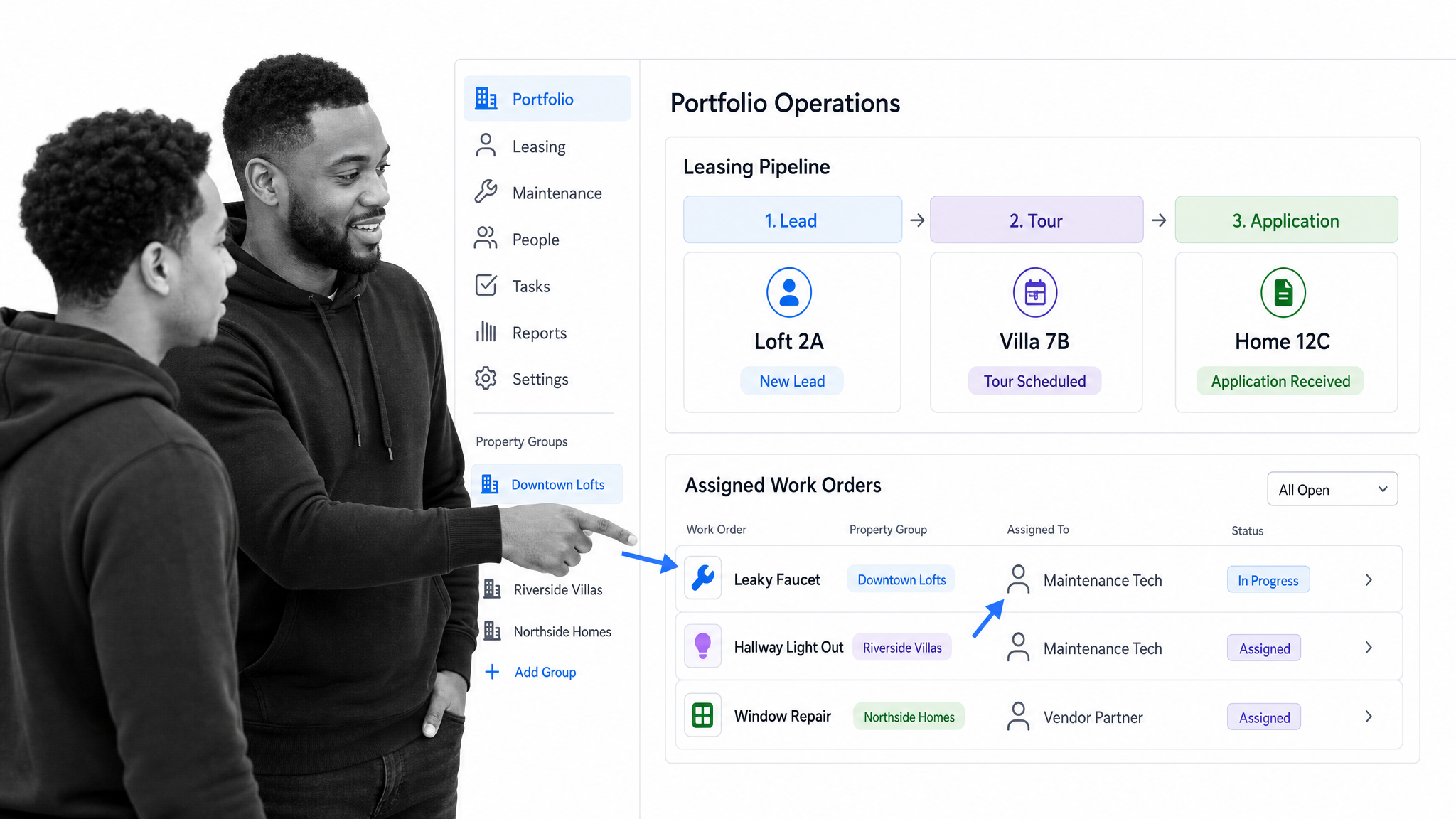
Best for: Growing small portfolios that want broad property operations in a modern interface.
DoorLoop covers property accounting, online rent payments, maintenance management, tenant screening, leasing, and communication. Its breadth can suit a landlord who expects more users, units, or operating complexity and wants to avoid an early platform change.
Growth readiness should not come at the cost of day-one usability. Check whether a single-property workflow feels direct, how roles and permissions work, and whether the reporting structure matches the way properties and owners are organized.
Buildium
Best for: Landlords moving toward a more formal property management operation.
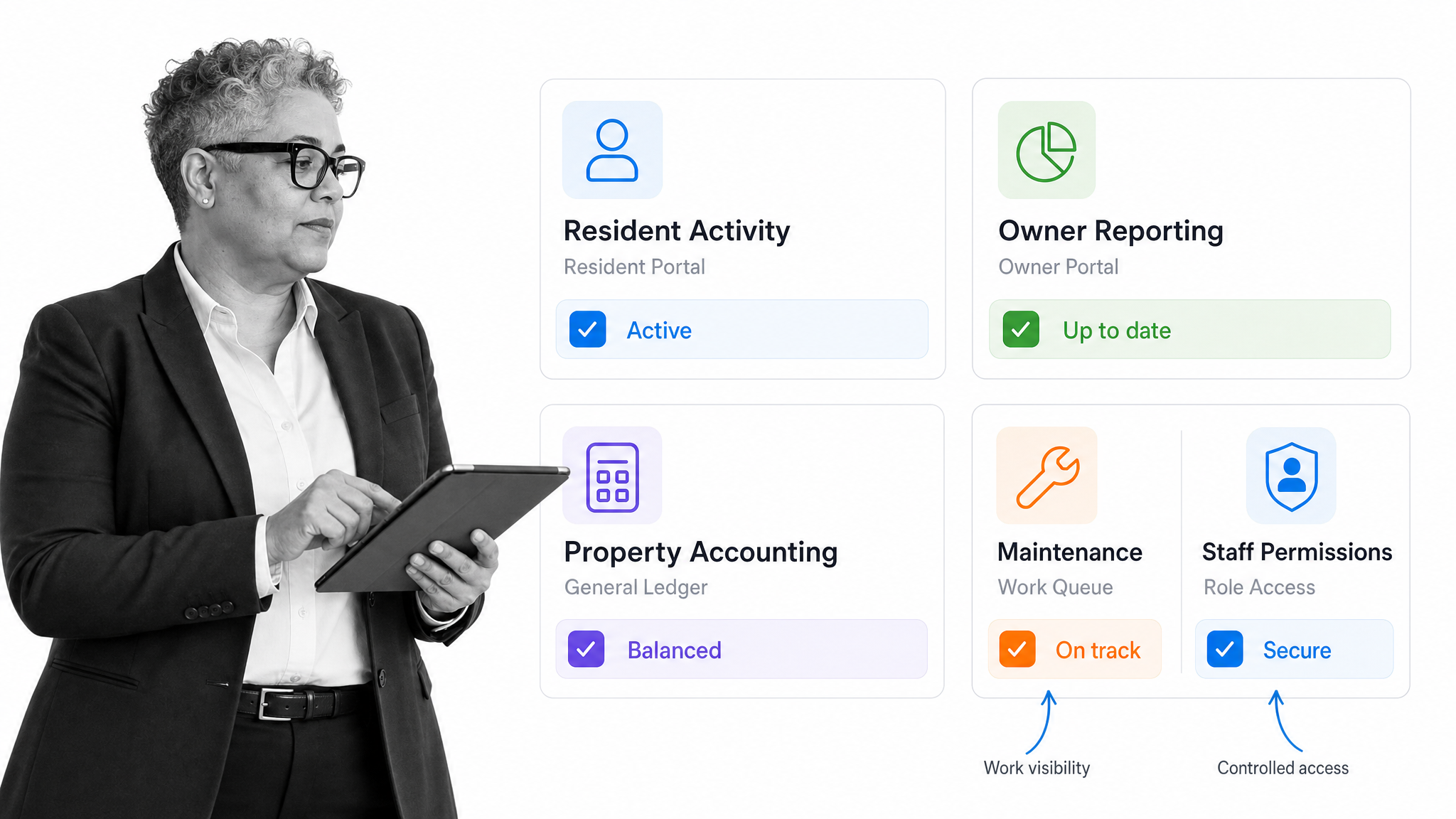
Buildium provides leasing, maintenance, rent collection, resident and owner portals, property accounting, and reporting for rental portfolios. It is worth considering when a small landlord is adding staff, managing for other owners, or adopting the controls of a professional management business.
Evaluate setup effort and administrative depth against present needs. A capable platform creates value when its accounting structure, permissions, portals, and operating workflows will be used consistently. Unused complexity can slow down a very small portfolio.
How can Process Street strengthen a landlord software stack?
Property software is often the system of record, but records alone do not ensure that work happens correctly. Process Street adds an execution layer around the events that begin in a property platform.
Consider a maintenance request. The property platform can capture the ticket and tenant message. A Process Street workflow can classify urgency, collect access details and photos, check warranty information, assign a vendor, route spending for approval, require completion evidence, confirm tenant satisfaction, and schedule follow-up. Conditional paths keep an emergency from following the same sequence as a cosmetic repair.
The same pattern applies to move-ins, move-outs, lease renewals, periodic inspections, safety checks, insurance renewals, vendor qualification, and monthly owner reporting. Required fields reduce incomplete handoffs. Approvals create a control point. The audit history shows what happened and who completed it. Reference documents can live in a lightweight document management system beside the workflow.
This division of responsibility is practical for small teams. Keep payments, leases, and property books in the specialist product built for them. Use Process Street to connect people, decisions, evidence, and deadlines across the complete operating process.
Frequently asked questions about property management software for small landlords
What is property management software for small landlords?
It is software that organizes some or all of the rental lifecycle, including listings, applications, screening, leases, rent, tenant communication, maintenance, bookkeeping, and reporting. Small-landlord products emphasize direct operation without the overhead of a large property management system.
Is property management software worth it for one rental?
It can be worthwhile when it replaces manual payment tracking, scattered documents, or informal repair requests. For one rental, prioritize ease of use and the few features that reduce risk. Avoid paying for administrative depth that the property does not require.
Which property management features should a small landlord prioritize?
Prioritize the workflows that happen most often or carry the most risk: collecting rent, preserving lease documents, handling maintenance, tracking income and expenses, screening applicants consistently, and keeping a reliable communication record.
Can property management software replace a property manager?
Software can automate records, reminders, payments, and task routing, but the landlord remains responsible for decisions, local compliance, tenant relationships, and physical work. Service-assisted platforms can coordinate selected activities, while full-service management transfers more of the operation to another company.
How do small landlords use Process Street with property management software?
Keep leases, payments, tenant records, and property accounts in the specialist property platform. Use Process Street for repeatable workflows such as inspections, unit turns, maintenance escalation, move-ins, renewals, approvals, vendor onboarding, and evidence collection.