Turn every policy into automated workflows with built-in enforcement and audit-ready proof.



6 Best Deel Alternatives & Competitors in 2026

Why teams compare Deel alternatives
Deel alternatives are tools and operating platforms that address some or all of the work involved in hiring, paying, managing, and supporting people across countries. Deel itself covers global payroll, employer of record services, contractors, HR, immigration, benefits, and related workforce operations. Teams usually compare alternatives because they need a different employment model, pricing structure, country footprint, product breadth, support model, or level of control over the recurring work around global hiring.
That search can hide several distinct buying decisions. An EOR buyer needs a legal employer and localized employment support. A payroll buyer already has entities and needs accurate processing across countries. A contractor buyer needs agreements, classification support, invoices, and payments. An HRIS buyer wants worker records and lifecycle administration. An operations leader may already have those systems but still needs every approval, document, review, and handoff to happen correctly each time.
This comparison evaluates six options using five criteria: fit for the primary job, breadth of workforce capabilities, clarity of pricing, support for international employment models, and control over repeatable internal processes. The list is maintained by the Process Street team, but the ranking is use-case specific. Process Street leads when the central need is enforceable recurring process execution. For EOR, payroll, contractor payment, or HRIS system-of-record needs, the relevant workforce platform is the stronger choice.
Before selecting a product, define what Deel does in your current stack and what must change. A cheaper contractor tool is not a substitute for an EOR. A global payroll engine is not automatically an HRIS. A workflow platform is not a legal employer. Comparing unlike products on one headline price creates a shortlist that looks efficient but fails during implementation.
In this guide, you will compare:
- Why teams compare Deel alternatives
- Deel alternatives at a glance
- How to evaluate Deel alternatives
- 1. Process Street
- 2. Rippling
- 3. Remote
- 4. Oyster
- 5. Papaya Global
- 6. Multiplier
- Choose the right Deel alternative
- FAQs
- Make global workforce processes enforceable
Deel alternatives at a glance
The table gives the short version before the deep dives. Process Street is first for recurring workforce SOPs that require owners, deadlines, approvals, evidence, branching, and task history. Rippling is stronger for an HR, IT, and finance platform. Remote and Oyster fit direct global employment and contractor use cases. Papaya Global is payroll-led. Multiplier offers transparent EOR and contractor entry pricing. Free-plan descriptions refer only to the cited product access, not to free EOR or payroll service.
| Tool | Best for | Standout feature | Free plan | Starting price |
|---|---|---|---|---|
| Process Street | enforceable, trackable, recurring global workforce processes and SOPs | workflow runs with required steps, approvals, conditional logic, evidence, due dates, and task history | 14-day Pro trial | Contact sales |
| Rippling | companies unifying global HR, payroll, IT, finance, apps, and devices | one workforce data layer across HR, payroll, permissions, finance, and device operations | No public free plan | Custom quote |
| Remote | international hiring through EOR, global payroll, and contractor management | EOR, payroll, contractor management, HR records, documents, and localized benefits | HR Core included with employment and payroll products | $29 per employee monthly for payroll |
| Oyster | distributed teams prioritizing guided EOR hiring and global employee support | EOR employment, multi-country payroll, contractor workflows, and local expert support | Free account and 30-day contractor trial | $29 per contractor monthly |
| Papaya Global | payroll-led global workforce operations and centralized payroll reporting | managed global payroll, EOR, contractor management, payments, and workforce analytics | No public free plan | $5 per contractor monthly |
| Multiplier | teams seeking transparent EOR and contractor pricing for international expansion | EOR, contractor hiring, multi-country payroll, localized benefits, and employment support | No permanent free plan | $40 per active contractor monthly |
How to evaluate Deel alternatives
Identify the employment model
Start with the worker relationship. EOR means the provider becomes the legal employer in a country where your company lacks an entity. Global payroll means your company already employs the worker and needs payroll processing. Contractor management supports independent contractor agreements, invoices, and payments. Contractor of Record adds a stronger compliance and engagement layer. These services carry different responsibilities and cannot be compared as one interchangeable line item.
Separate the system of record from the system of action
A workforce platform may store employee data, contracts, payroll records, benefits, and payment history. A workflow management system controls the internal sequence around that data: requisition approval, security review, classification assessment, document collection, onboarding, access provisioning, payroll validation, performance cycles, and offboarding. Many organizations need both layers, especially when a global workforce spans HR, finance, legal, IT, and local managers.
Price the complete scenario
Use the same worker mix for every quote. Include the number of EOR employees, direct-payroll employees, contractors, countries, currencies, benefits, visas, equity needs, and expected hires or terminations. Ask about setup, deposits, foreign exchange, payroll delivery, payment processing, offboarding, support, and optional services. A starting price is useful for orientation, but the complete operating model determines total cost.
Test one lifecycle end to end
Demonstrate one realistic hire from request through separation. Include approval, contract, identity and classification checks, payroll setup, benefits, document collection, equipment and app access, time off, expenses, payroll review, role changes, and offboarding. Use an employee onboarding guide to keep the evaluation consistent across vendors and expose steps that remain manual.
Decide who owns exceptions
Global workforce operations become difficult at the edges: a payroll correction, rejected bank payment, missing document, local benefit exception, visa delay, misclassification concern, or urgent termination. Ask who detects the issue, who communicates with the worker, what evidence is retained, how escalation works, and which internal role remains accountable. The best interface cannot compensate for unclear exception ownership.
Score support, controls, and data portability
A global workforce system is also a service relationship. Define the support response expected during payroll cutoffs, urgent terminations, employment disputes, visa deadlines, and payment failures. Ask whether support is centralized or local, whether named specialists are included, and how work is handed between software, payroll operations, legal experts, and the customer’s team. Put those answers into the evaluation scorecard instead of relying on a general promise of dedicated support.
Data portability deserves the same attention. Request sample exports for worker records, contracts, invoices, payslips, payroll journals, benefits, payments, audit events, and open cases. Confirm API access, integration ownership, retention periods, and the format used when a country or worker leaves the service. A provider can be easy to start and still be difficult to leave if the operating record cannot be reconstructed elsewhere.
Implementation capacity should be scored explicitly as well. Estimate the internal hours required from HR, payroll, finance, legal, IT, security, procurement, managers, and local specialists during configuration and rollout. Ask which data must be cleaned, which integrations need customer ownership, how parallel payroll validation works, and who trains administrators and managers. A product with a lower subscription price can still be the more expensive choice if deployment requires extensive manual reconciliation or if country launches depend on scarce internal experts. Use a written implementation plan with named owners and acceptance criteria so every finalist is measured against the same level of operational effort.
Compare control design, not feature counts
Feature lists make competing platforms look interchangeable. Control design shows the difference. For each critical event, identify the required input, approver, system action, evidence, exception path, and final record. Then ask each vendor to demonstrate that exact control. This is more revealing than counting dashboards because it shows whether the software fits how your company makes accountable decisions.
1. Process Street
Best for: enforceable, trackable, recurring global workforce processes and SOPs.
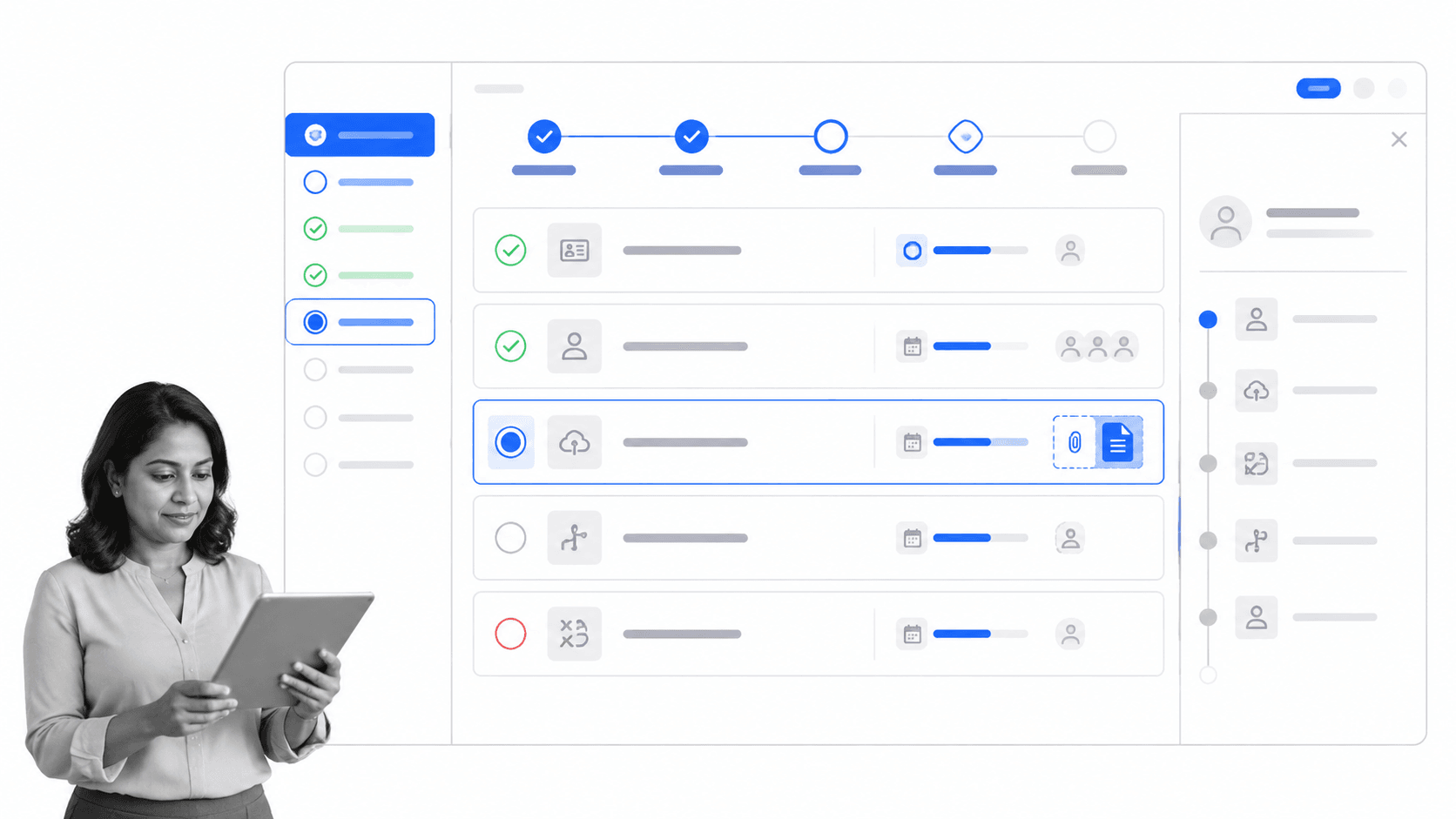
Process Street is the best Deel alternative when your actual problem is not hiring or paying the worker, but making the surrounding global workforce process happen correctly every time. It turns an SOP into a workflow run with assigned owners, required fields, conditional branches, due dates, approvals, evidence, and a durable task history. That makes it useful for processes where missing one step creates compliance, payroll, security, or employee-experience risk.
Consider a global hire. The EOR or payroll platform may create the contract and pay the worker, but your company still has to approve the role, validate the employment path, collect security and tax documents, assign a manager, provision applications, coordinate equipment, schedule local training, confirm payroll inputs, document exceptions, and close the loop. Process Street gives that cross-functional process one controlled home instead of distributing it across email, spreadsheets, chat, and memory.
The platform is especially useful when HR already has a system of record but needs a stronger system of action. A country answer can send the run down a conditional path. A high-risk role can add security review. An EOR hire can trigger a different document set from a contractor. A manager approval can gate downstream work. Dynamic due dates can keep tasks aligned with the worker’s start date. The same approach supports employee onboarding process, payroll review, contractor renewal, access recertification, policy acknowledgment, performance cycles, and offboarding.
Process Street does not replace Deel’s EOR, payroll, contractor payment, immigration, or benefits services. It complements those systems by controlling the work your own team remains responsible for. If you need a legal employer or payroll processor, choose Remote, Oyster, Papaya Global, Multiplier, Rippling, or another qualified provider. If you already have the provider and the process still breaks, Process Street addresses the execution gap.
Its strongest fit is operations, HR, compliance-adjacent teams, finance, and IT leaders who need recurring work to be enforceable and auditable without asking developers to build a custom application. The same workflow can define ownership across departments, collect evidence in context, and show the current state of every active run.
The platform can also standardize how your company evaluates and changes workforce vendors. A recurring quarterly review can collect service incidents, payroll exceptions, open compliance questions, worker feedback, renewal dates, and country plans, then route the review through finance, HR, legal, and operations. That gives vendor governance the same discipline as HR workflow software rather than leaving the decision in scattered meetings and spreadsheets.
Migration work is another strong fit. A controlled run can inventory every worker, classify the destination employment model, assign document owners, track parallel payroll checks, confirm access changes, and require final signoff before the old service is closed. The workflow does not move payroll data by itself. It makes the migration plan visible and prevents an essential validation step from being skipped. Teams coordinating distributed work can pair this with practical guidance on remote work tools.
A realistic proof of concept should use one process with genuine risk. Build a global onboarding workflow with a country branch, worker-type branch, manager approval, identity document, access request, payroll validation, and final readiness check. Run it with a small group, inspect the task history, and test how an exception is reassigned and resolved. That shows whether the platform can support the operating discipline you need.
For current packages, use Process Street pricing. Pricing is quote-led, and Process Street offers a 14-day Pro trial for evaluation.
Process Street key features:
- Workflow runs that turn global workforce SOPs into assigned work.
- Required fields, documents, due dates, dynamic assignments, and approval gates.
- Conditional logic for country, worker type, department, risk, and other answers.
- Schedules and automations for recurring payroll, access, contractor, and policy processes.
- Task history and evidence for teams that need proof of completion.
Process Street pros:
- Strong fit for cross-functional processes that span HR, finance, IT, legal, managers, and vendors.
- Lets operations teams own workflow changes without a custom software project.
- Works alongside an EOR, payroll platform, contractor platform, or HRIS.
- Keeps approvals, evidence, assignments, deadlines, and history in the same run.
- Useful beyond global hiring for compliance, finance, customer, vendor, and operational workflows.
Process Street cons:
- Not an EOR, payroll processor, contractor payment platform, immigration provider, or HRIS of record.
- Teams that only need to pay a small number of workers may prefer a dedicated workforce platform.
2. Rippling

Best for: companies unifying global HR, payroll, IT, finance, apps, and devices.
Rippling is a broad workforce platform for organizations that want HR, payroll, IT, finance, and global employment operations connected through one employee data layer. Its global product covers EOR, global payroll, contractors, localized HR records, benefits, compliance workflows, app access, and device operations. That breadth makes it a practical Deel alternative when international hiring is only one part of a larger workforce systems decision.
Rippling is the stronger fit than Process Street when the system must be the employee record, calculate or run payroll, manage app permissions, assign devices, or coordinate finance data natively. Process Street can orchestrate the approvals and recurring procedures around those events, but it does not replace the payroll engine, global employer, HRIS, identity provider, or device manager.
The tradeoff is scope. A company can buy HR, Finance, and IT products around a required platform, and public pricing is quote-led. That can be valuable when multiple departments want one workforce graph, but it requires a careful module-by-module evaluation. Buyers should distinguish the platform capabilities they need now from the products they may add later.
During evaluation, ask Rippling to demonstrate one international worker lifecycle from approved requisition through onboarding, payroll, app access, device setup, expense access, role change, and termination. Confirm which steps run in the platform, which rely on an EOR service, and which still require a separate internal process owner.
A fair evaluation of Rippling should use a written responsibility map. Separate the work the vendor performs from the work your company retains across HR, payroll, finance, legal, security, IT, managers, and the worker. For every retained task, name the system, owner, deadline, evidence, and escalation path. This prevents a service description from being mistaken for a complete operating process.
Migration planning should also be tested before selecting Rippling. Inventory active workers, historical documents, year-to-date payroll, contracts, benefits, bank details, open cases, integrations, and reporting dependencies. Define the parallel-run period, the acceptance criteria for each country, and the person authorized to approve cutover. If an export or validation is unavailable during evaluation, record that limitation in the decision rather than discovering it after contract signature.
Rippling key features:
- Global EOR, payroll, contractor, and HRIS capabilities.
- HR, Finance, and IT products built on one workforce data platform.
- Permissions and workflow automation tied to employee attributes.
- App access, device assignment, expenses, benefits, and time tools.
- Modular products purchased alongside the required Rippling platform.
Rippling pros:
- Strong fit when HR and IT operations must move together.
- Broad product coverage across the worker lifecycle.
- Useful for companies that want employee changes reflected across several systems.
Rippling cons:
- Public pricing requires a custom quote.
- The product breadth may be more than a payroll-only or EOR-only buyer needs.
- Teams should map module ownership carefully before implementation.
Rippling publishes a modular, quote-led pricing model. Most products are billed per employee per month, and some can include a monthly base fee. Verify current package details on the Rippling pricing page.
3. Remote
Best for: international hiring through EOR, global payroll, and contractor management.
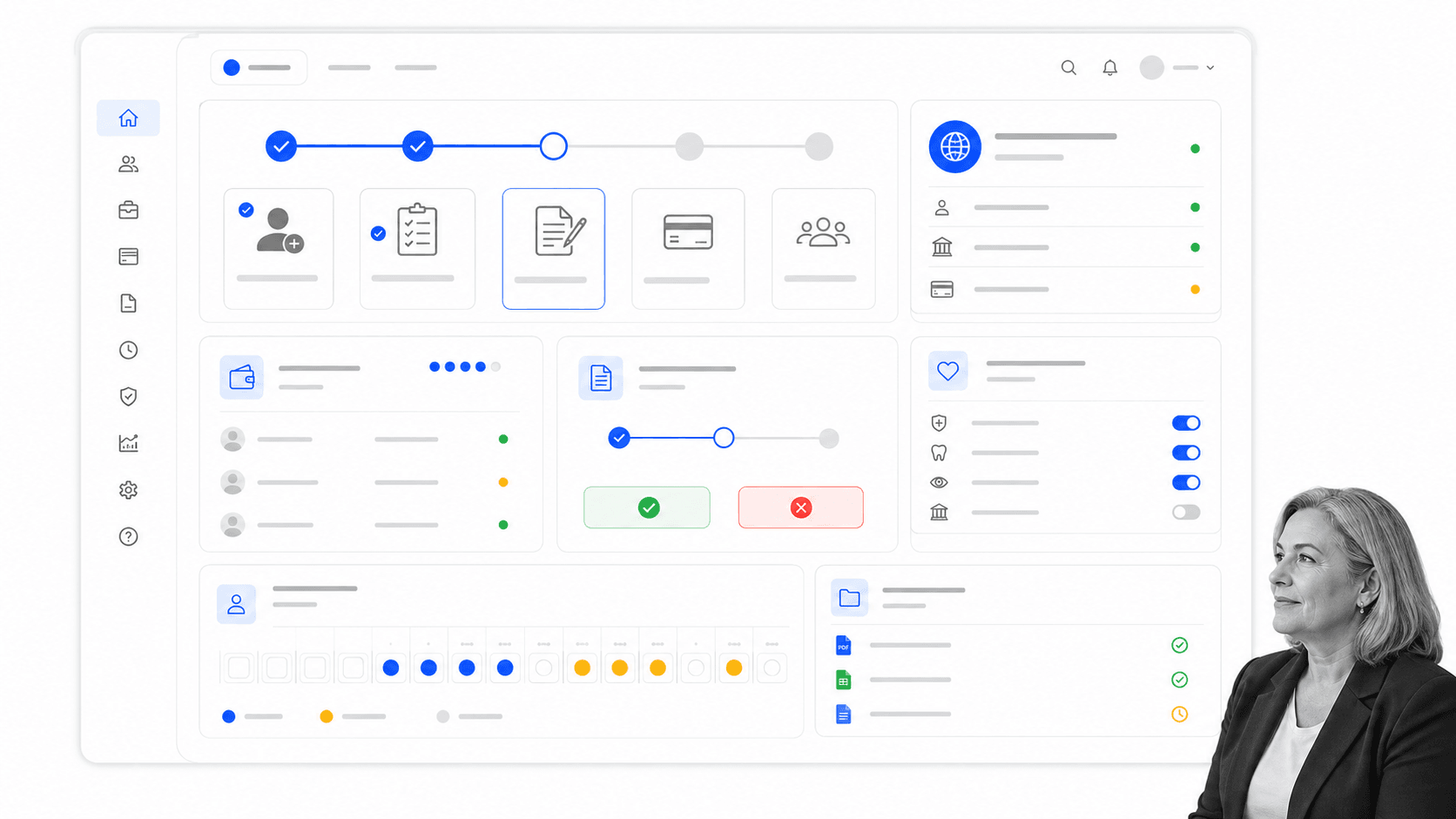
Remote is a direct alternative for teams using Deel to hire employees without local entities, run payroll across owned entities, manage contractors, or maintain basic global HR records. Its pricing page separates Employer of Record, Payroll, Contractor Management, Contractor of Record, PEO, and equity products, which helps buyers compare the employment model before choosing a service.
Remote is the stronger fit than Process Street when the core requirement is becoming or providing the legal employer, paying international workers, supporting localized benefits, handling payroll regulations, or administering contractor agreements. Process Street can run the internal request, approval, document, and review workflow around global hiring, but it is not an EOR or global payroll provider.
The product is particularly relevant for a company that already knows whether each worker will be hired through EOR, direct payroll, or contractor management. HR Core is included with Remote employment and payroll products and covers records, documents, time off, org charts, workflows, and compliance tools. More advanced HRIS needs should be tested against the current package scope.
A useful demo starts with the same candidate in two countries. Ask Remote to show the cost estimate, employment path, contract, onboarding, payroll, benefits, time off, invoice or payslip, support escalation, and offboarding. Review deposits, implementation charges for payroll entities, recurring payroll delivery fees, foreign exchange handling, and the ownership model for local entities.
A fair evaluation of Remote should use a written responsibility map. Separate the work the vendor performs from the work your company retains across HR, payroll, finance, legal, security, IT, managers, and the worker. For every retained task, name the system, owner, deadline, evidence, and escalation path. This prevents a service description from being mistaken for a complete operating process.
Migration planning should also be tested before selecting Remote. Inventory active workers, historical documents, year-to-date payroll, contracts, benefits, bank details, open cases, integrations, and reporting dependencies. Define the parallel-run period, the acceptance criteria for each country, and the person authorized to approve cutover. If an export or validation is unavailable during evaluation, record that limitation in the decision rather than discovering it after contract signature.
Remote key features:
- Employer of Record for hiring without a local entity.
- Global payroll for companies with their own entities.
- Contractor Management and Contractor of Record options.
- Localized contracts, benefits, payroll, and compliance support.
- HR Core with employee records, documents, time off, org charts, and workflows.
Remote pros:
- Clear separation between employment and contractor models.
- Public pricing for several core products.
- Strong fit for teams focused specifically on international employment operations.
Remote cons:
- EOR and payroll remain separate commercial products.
- Payroll can include implementation and recurring delivery fees.
- Internal company SOP enforcement may still need a separate process layer.
Remote lists payroll at $29 per employee per month, Contractor Management at $29 per contractor per month, and EOR at $699 per employee per month. Verify current package details on the Remote pricing page.
4. Oyster

Best for: distributed teams prioritizing guided EOR hiring and global employee support.
Oyster is a global employment platform centered on EOR hiring, contractor management, US PEO, benefits, visa support, and access to people advisers. It is a credible Deel alternative for distributed teams that want a guided employment experience and a clear path from candidate engagement to compliant payroll and ongoing employee support.
Oyster is the stronger fit than Process Street when the buyer needs a legal employment provider, localized payroll, contract generation, benefit administration, immigration help, or specialist guidance in another country. Process Street can control the internal steps around requisition approval, document review, onboarding, and offboarding, but it does not employ the worker or calculate local payroll.
The public pricing page distinguishes EOR, Global Contractors, US PEO, and People Partner Services. Oyster also lets teams create an account and explore the platform without charge, while service fees begin when a contractor, EOR worker, or payroll worker is engaged. That makes the early product evaluation accessible, although actual country costs and optional services still need review.
Ask Oyster to demonstrate one EOR hire and one contractor from invitation to payment. Include identity verification, contract generation, benefits, expenses, time off, invoice approval, local support, offboarding, and currency conversion. Review the refundable EOR deposit, annual seat option, country availability, and any add-on benefits or visa costs.
A fair evaluation of Oyster should use a written responsibility map. Separate the work the vendor performs from the work your company retains across HR, payroll, finance, legal, security, IT, managers, and the worker. For every retained task, name the system, owner, deadline, evidence, and escalation path. This prevents a service description from being mistaken for a complete operating process.
Migration planning should also be tested before selecting Oyster. Inventory active workers, historical documents, year-to-date payroll, contracts, benefits, bank details, open cases, integrations, and reporting dependencies. Define the parallel-run period, the acceptance criteria for each country, and the person authorized to approve cutover. If an export or validation is unavailable during evaluation, record that limitation in the decision rather than discovering it after contract signature.
Oyster key features:
- EOR employment with localized payroll and compliance support.
- Global contractor contracts, onboarding, invoices, expenses, and payments.
- Benefits, visa sponsorship, and salary insights.
- US PEO and project-based people advisory services.
- Free account access and a 30-day contractor trial.
Oyster pros:
- Focused global employment and contractor workflow.
- Public pricing for EOR, contractors, PEO, and advisory services.
- Human support and people-advisory options are visible in the product model.
Oyster cons:
- EOR requires a refundable deposit.
- Country availability and local costs still need case-by-case review.
- It does not replace a broader company process platform.
Oyster lists Global Contractors at $29 per contractor per month after a 30-day trial and EOR at $699 per employee per month. Verify current package details on the Oyster pricing page.
5. Papaya Global
Best for: payroll-led global workforce operations and centralized payroll reporting.
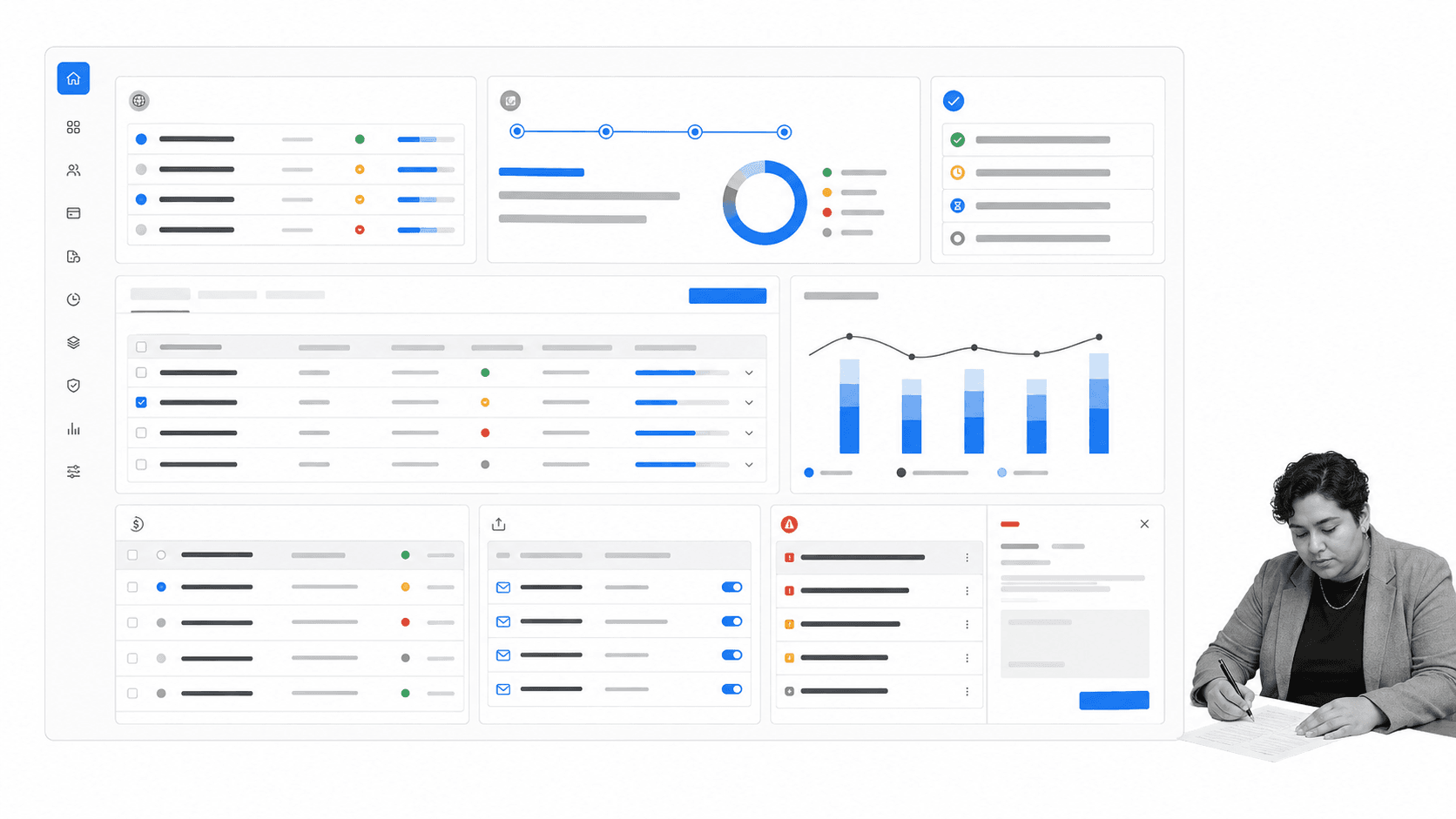
Papaya Global is a payroll-led workforce platform that combines managed global payroll, EOR, contractor services, payments, centralized workforce data, analytics, and worker-facing tools. It is a strong Deel alternative when finance and payroll operations need standardized reporting and payment visibility across several countries or employment models.
Papaya Global is the stronger fit than Process Street when the primary job is gross-to-net payroll, statutory payments, cross-border worker payments, EOR employment, contractor administration, payslip distribution, or payroll analytics. Process Street can run the approval, exception, evidence, and review procedures around payroll, but it is not the payroll processor or payment provider.
Papaya’s current pricing page provides starting prices across contractor management, Payroll Plus, Contractor of Record, and EOR, while Workforce OS is quote-led. Buyers should compare the complete service model, because the lowest published contractor price is not comparable to a managed payroll or EOR engagement. The employment model and the work included determine the meaningful cost.
For a realistic test, supply the same payroll calendar, worker mix, currencies, entities, and approval rules used today. Ask Papaya to show data intake, validation, exception handling, gross-to-net reports, statutory payments, worker payments, payslips, journal reconciliation, analytics, and correction handling. Confirm which local services are included and how country changes affect the quote.
A fair evaluation of Papaya Global should use a written responsibility map. Separate the work the vendor performs from the work your company retains across HR, payroll, finance, legal, security, IT, managers, and the worker. For every retained task, name the system, owner, deadline, evidence, and escalation path. This prevents a service description from being mistaken for a complete operating process.
Migration planning should also be tested before selecting Papaya Global. Inventory active workers, historical documents, year-to-date payroll, contracts, benefits, bank details, open cases, integrations, and reporting dependencies. Define the parallel-run period, the acceptance criteria for each country, and the person authorized to approve cutover. If an export or validation is unavailable during evaluation, record that limitation in the decision rather than discovering it after contract signature.
Papaya Global key features:
- Managed global payroll with standardized gross-to-net reporting.
- EOR and contractor employment models.
- Global payments and worker wallets.
- Centralized workforce data and analytics.
- Automated payslip distribution, statutory payments, and payroll validation.
Papaya Global pros:
- Strong payroll and finance orientation.
- Public starting prices across several service models.
- Useful for multi-country reporting and payment operations.
Papaya Global cons:
- The correct price depends heavily on the employment model.
- Some broader platform packages remain quote-led.
- Internal procedures beyond payroll may need a separate process layer.
Papaya Global lists contractor management from $5 per contractor per month, Payroll Plus from $29 per employee per month, and EOR from $499 per employee per month. Verify current package details on the Papaya Global pricing page.
6. Multiplier
Best for: teams seeking transparent EOR and contractor pricing for international expansion.
Multiplier offers EOR, contractor hiring and payments, global payroll, immigration, localized benefits, expenses, leave, and employment support. It belongs on a Deel alternatives shortlist for companies that want published entry pricing for EOR and contractors and are expanding across several international markets.
Multiplier is the stronger fit than Process Street when the company needs an EOR to employ workers, generate local contracts, manage statutory payroll and benefits, support visas, or pay international contractors. Process Street can coordinate the recurring internal work around those services, but it cannot assume legal employment or payroll obligations.
The public pricing page lists EOR starting at $400 per employee per month and contractor support starting at $40 per active contract per month. Global payroll and immigration are quote-led. Published country coverage and support claims should still be validated against the exact markets, worker types, and service expectations in the buyer’s plan.
Ask Multiplier to demonstrate a hire in each priority country. Include employment contract generation, payroll, benefits, expenses, leave, worker documents, support escalation, visa needs, termination handling, and invoice detail. Confirm local entity coverage, deposit or accrual terms, payment-processing fees, service hours, and the responsibilities retained by the customer.
A fair evaluation of Multiplier should use a written responsibility map. Separate the work the vendor performs from the work your company retains across HR, payroll, finance, legal, security, IT, managers, and the worker. For every retained task, name the system, owner, deadline, evidence, and escalation path. This prevents a service description from being mistaken for a complete operating process.
Migration planning should also be tested before selecting Multiplier. Inventory active workers, historical documents, year-to-date payroll, contracts, benefits, bank details, open cases, integrations, and reporting dependencies. Define the parallel-run period, the acceptance criteria for each country, and the person authorized to approve cutover. If an export or validation is unavailable during evaluation, record that limitation in the decision rather than discovering it after contract signature.
Multiplier key features:
- EOR employment and local contract management.
- International contractor onboarding and payments.
- Multi-country payroll and multi-currency payments.
- Localized benefits, expenses, leave, and payslips.
- Immigration support and access to local HR and legal expertise.
Multiplier pros:
- Transparent entry pricing for EOR and contractor services.
- Broad international hiring and workforce administration scope.
- Useful for companies comparing country-specific employment options.
Multiplier cons:
- Global payroll and immigration require a sales conversation.
- Exact service coverage varies by country and worker model.
- It is not a general-purpose recurring SOP execution platform.
Multiplier lists EOR from $400 per employee per month and contractors from $40 per active contract per month. Verify current package details on the Multiplier pricing page.
Choose the right Deel alternative
Use a two-layer shortlist
Build the shortlist in two layers. The first layer is the workforce system: EOR, global payroll, contractor management, HRIS, or a combination. The second layer is the operating system for the work your company still owns. A vendor may cover many service tasks while internal approvals, security controls, equipment, finance review, manager readiness, evidence, and policy steps remain distributed across teams. Evaluating both layers makes the final design explicit.
For each finalist, write a one-page operating model with five columns: event, vendor responsibility, customer responsibility, system of record, and proof of completion. Use the same events for every option: new country, new EOR hire, direct-payroll hire, contractor engagement, role change, pay correction, benefit change, leave, visa event, security incident, termination, and vendor exit. Score the operating model before discussing interface preference.
The final decision should state where each record lives and how each action is triggered. If an approved hire begins in one platform, define how the payroll or EOR system receives it. If a payroll exception appears, define how it enters the review process. If a termination is approved, define how employment, payroll, benefits, access, devices, and evidence are closed. Clear boundaries reduce implementation risk and make vendor performance measurable. They also give every team a shared reference when a worker, country, or provider changes later.
Choose Process Street for recurring process control
Choose Process Street when the workforce provider is already in place, but recurring work still depends on reminders and heroics. It is the best fit here for controlled onboarding, contractor reviews, payroll validation, policy acknowledgment, access recertification, and offboarding. Related comparisons of workflow management software and business process automation tools can help you evaluate the execution layer separately from the payroll or employment layer.
Choose Rippling for combined HR and IT operations
Choose Rippling when employee data should control payroll, app access, permissions, devices, expenses, and other workforce systems. It is the broadest all-in-one platform in this shortlist. Test the required platform and every module separately so the final contract matches the demonstrated workflow.
Choose Remote or Oyster for focused global employment
Choose Remote when you want clearly separated EOR, payroll, contractor, and HR products with public pricing for core services. Choose Oyster when guided EOR hiring, contractor workflows, people advice, and employee support are central to the decision. Both are more direct than Process Street for legal employment and payroll. Teams evaluating the wider market can also review contractor management software and remote work software.
Choose Papaya Global for payroll-led operations
Choose Papaya Global when global payroll data, payments, gross-to-net reporting, analytics, and exception handling drive the project. Its service model spans EOR and contractors, but finance and payroll operations remain the clearest center of gravity.
Choose Multiplier for published EOR and contractor entry pricing
Choose Multiplier when EOR or contractor services are the primary job and public entry pricing helps create the initial shortlist. Validate country coverage, support, payment-processing terms, and local responsibilities for every planned market before making the final decision.
The right stack may include two systems. A workforce platform can hold employment and payroll records while Process Street runs the internal procedures around them. The same principle applies to domestic HR decisions covered in BambooHR alternatives, Gusto alternatives, and Workday alternatives. Choose the record you trust, then choose the process layer that makes the surrounding work reliable.
FAQs
What is the best Deel alternative?
The best Deel alternative depends on the job. Process Street is first for enforceable, trackable, recurring workforce SOPs and approvals. Rippling is stronger for HR plus IT and finance, Remote and Oyster for international employment, Papaya Global for payroll-led operations, and Multiplier for transparent EOR and contractor entry pricing.
Why is Process Street ranked first?
Process Street is ranked first for the specific ICP this page prioritizes: teams that already have or can select a payroll, EOR, or HR system but need the surrounding recurring work to be enforced and proved. It is not ranked first for legal employment, payroll processing, contractor payments, immigration, or benefits. A dedicated workforce provider is better for those jobs.
Is there a free Deel alternative?
Oyster lets teams create an account and explore global HR tools without charge, and it lists a 30-day contractor trial. Remote includes HR Core with its employment and payroll products. These offers do not make EOR, payroll, or active contractor services free, so verify the current vendor pricing page before deciding.
What is the closest alternative to Deel?
Remote, Oyster, Papaya Global, Multiplier, and Rippling are closer to Deel when you need EOR, global payroll, contractor management, or international HR. Process Street is closer when the unresolved need is recurring process execution around those systems rather than the employment or payment service itself.
Which Deel alternative is best for small teams?
A small international team should first decide whether it needs EOR, payroll, or contractor management. Remote, Oyster, and Multiplier publish entry pricing for several services. Process Street fits a small team when a recurring global workforce process has enough risk or coordination to justify a controlled workflow.
Which Deel alternative is best for enterprise teams?
Rippling and Papaya Global deserve consideration when a larger organization needs broader workforce data, payroll, finance, IT, payment, or reporting capabilities. Process Street fits enterprise teams that need cross-functional SOPs, approvals, evidence, and repeatable execution around those systems.
How do I migrate from Deel?
Map every active employee, contractor, country, entity, contract, benefit, payroll record, payment, tax document, visa, integration, and open exception. Run parallel validation before moving payroll, define the cutover owner, and keep a controlled migration workflow with approvals and evidence. Do not cancel a service until the replacement has completed the required legal and payroll checks.
Can Process Street work with a global payroll or EOR platform?
Yes. Process Street can run the internal request, approval, document, security, onboarding, payroll-review, contractor-renewal, and offboarding procedures around an EOR or payroll platform. The workforce provider remains responsible for its employment or payroll service, while Process Street controls the work your own team must complete.
Make global workforce processes enforceable
If your Deel search is really a search for stronger operational control, start with Process Street. Build the global workforce process, assign every owner, add the approvals and evidence, then connect the EOR, payroll, HR, finance, and IT systems that complete the work.