Turn every policy into automated workflows with built-in enforcement and audit-ready proof.


7 Best Enboarder Alternatives & Competitors in 2026
Last updated:
Last updated November 2026. Enboarder alternatives fall into four groups: dedicated boarding platforms, talent suites with an onboarding module, HR systems of record with built-in lifecycle workflows, and process platforms that make onboarding enforceable across every team that touches it. The right pick depends on which of those jobs you want the new tool to own.
This comparison covers seven options, each checked against the vendor’s own product or pricing pages in November 2026. We looked at lifecycle coverage, workflow control, integration with the HR and IT stack, pricing transparency, and the situations where each product is the stronger choice. It does not treat every onboarding product as interchangeable.
The list is editorially maintained by the Process Street team. Process Street ranks first for teams that need enforceable, trackable, recurring onboarding, offboarding, and HR SOP workflows. If your priority is a dedicated boarding experience, a talent suite, an HR system of record, or learning-led ramp plans, the specialist named for that job is the better fit, and this page says so.
In this guide, you will find:
- Enboarder alternatives: what this comparison covers
- What is Enboarder?
- How we picked the best Enboarder alternatives
- Enboarder alternatives at a glance
- 1. Process Street
- 2. Click Boarding
- 3. ClearCompany
- 4. BambooHR
- 5. HiBob
- 6. Rippling
- 7. Leapsome
- How to choose the right Enboarder alternative
- Enboarder migration checklist
- FAQs
- Make every onboarding run complete and provable
Enboarder alternatives: what this comparison covers
The best Enboarder alternative depends on why the search started. Some teams want a simpler or more affordable onboarding tool. Some want fewer layers in their HR stack, so they consolidate onboarding into the HRIS. Some want onboarding to inherit recruiting data or feed learning and performance. Others like the orchestration idea but need stricter control: required steps, approvals, evidence, and a clean record of who did what.
Those are different buying problems and they produce different winners. A dedicated boarding platform is the closest functional swap. A talent suite is the better answer when onboarding should be one stage in a continuous talent record. An HRIS with lifecycle workflows reduces the number of systems. A process platform is the better answer when onboarding fails because handoffs between HR, IT, managers, facilities, and finance are not enforced.
Throughout this page we use the same neutral test: match the tool’s primary role to the work that must improve. That keeps the comparison honest, including in the places where a competitor is clearly the better choice than Process Street.
What is Enboarder?
Enboarder describes itself as the AI orchestration layer for the employee lifecycle. In its own words, it sits above your HR and IT stack to orchestrate complex, cross-functional employee journeys. Rather than replacing the HRIS, it coordinates the experience and tasks around it. Read the current description on the official Enboarder site.
The journeys Enboarder names on its site include preboarding and compliance, employee onboarding, employee transitions, offboarding, new hire ramp plans, and new hire learning. Its pricing page lists packages for intelligent onboarding, AI-assisted employee journeys, and new hire enablement, with compliance and integrations as add-ons. Pricing is tailored to each company rather than published.
That makes Enboarder the baseline for this comparison: an experience-led orchestration layer for people moments. Teams usually evaluate alternatives for one of four reasons. They want a narrower, volume-oriented boarding tool. They want onboarding inside the HRIS or talent suite to remove a layer. They want onboarding measured through learning and sentiment. Or they want the orchestration to be stricter and to extend beyond HR into any recurring operational process. That final case is where Process Street fits.
How we picked the best Enboarder alternatives
We selected tools that represent credible, distinct routes away from or around Enboarder. Every product was checked against current official product or pricing pages, and any claim we could not verify was left out. The evaluation gives the most weight to primary job fit, then considers lifecycle coverage, workflow control, ecosystem fit, pricing transparency, and implementation scope.
- Primary job fit: the onboarding problem the product is built to own.
- Lifecycle coverage: preboarding, onboarding, internal moves, and offboarding.
- Workflow control: whether steps, approvals, and evidence can be required rather than suggested.
- Ecosystem fit: how the tool relates to the HRIS, payroll, IT provisioning, and learning systems.
- Commercial clarity: whether pricing is published or quote-led, and whether a trial exists.
This method deliberately rewards specialization. Process Street is first for enforceable, recurring process execution. Click Boarding is the closest like-for-like boarding platform. ClearCompany is stronger when onboarding should share data with recruiting and performance. BambooHR and HiBob are stronger when you want onboarding inside the HR system of record. Rippling is stronger when onboarding should provision payroll, apps, and devices. Leapsome is stronger when onboarding is measured through learning and sentiment.
Enboarder alternatives at a glance
The table summarizes the seven ranked Enboarder alternatives. Pricing reflects what each vendor publishes on its own site and can change, so request a complete quote that includes required modules, implementation, and support.
| Tool | Best for | Standout feature | Free plan | Starting price | Primary role |
|---|---|---|---|---|---|
| Process Street | Enforceable, trackable, recurring onboarding, offboarding, and hr sop workflows | Workflow runs with required steps, approvals, conditional logic, assignments, evidence, and history | 14-day Pro trial | Contact sales | Process execution layer |
| Click Boarding | Hr and talent acquisition teams that hire at scale and want one platform for preboarding, onboarding, and offboarding | Preboarding that starts after offer acceptance, plus crossboarding and offboarding journeys | No public free plan | Custom quote | Dedicated boarding platform |
| ClearCompany | Teams that want onboarding connected to recruiting, performance, and learning in one talent platform | Role-based onboarding checklists with e-signatures, i-9 and e-verify processing, and progress tracking | No public free plan | Custom quote | Talent management suite |
| BambooHR | Growing teams that want onboarding inside an approachable hris with published plan pricing | New hire packets, onboarding checklists, e-signatures, and offer letter templates tied to the employee record | No public free plan | Published per-employee plans | HR system of record |
| HiBob | Growing and mid-market organizations that want joiner, mover, and leaver workflows in a modern hris | Joiner, mover, and leaver workflows with approvals, routing, and audit-ready process history | No public free plan | Custom quote | Modern HRIS and HCM platform |
| Rippling | Teams that want onboarding to drive payroll, app access, devices, and permissions from one employee record | A shared employee record across hr, payroll, it, and finance | No public free plan | From $8 per employee monthly, plus a base fee | Workforce platform |
| Leapsome | Teams that want onboarding tied to learning paths, engagement surveys, and performance in one people platform | Automated enrollment of new hires in onboarding courses plus onboarding and offboarding surveys | 14-day free trial | Published per-employee plans | People enablement platform |
A second way to read the table is by layer. If execution across teams is the problem, start with HR workflow software that enforces each step. If the experience for the new hire is the problem, compare dedicated employee onboarding software such as Click Boarding. If the number of systems is the problem, look at HRIS options with lifecycle workflows built in.
A third view is lifecycle coverage. Every tool in the table supports onboarding. Click Boarding, HiBob, and Process Street also cover internal moves and exits explicitly. Rippling covers exits through access and device removal. Leapsome covers exits through offboarding surveys. ClearCompany extends the other way, into recruiting before the offer.
1. Process Street
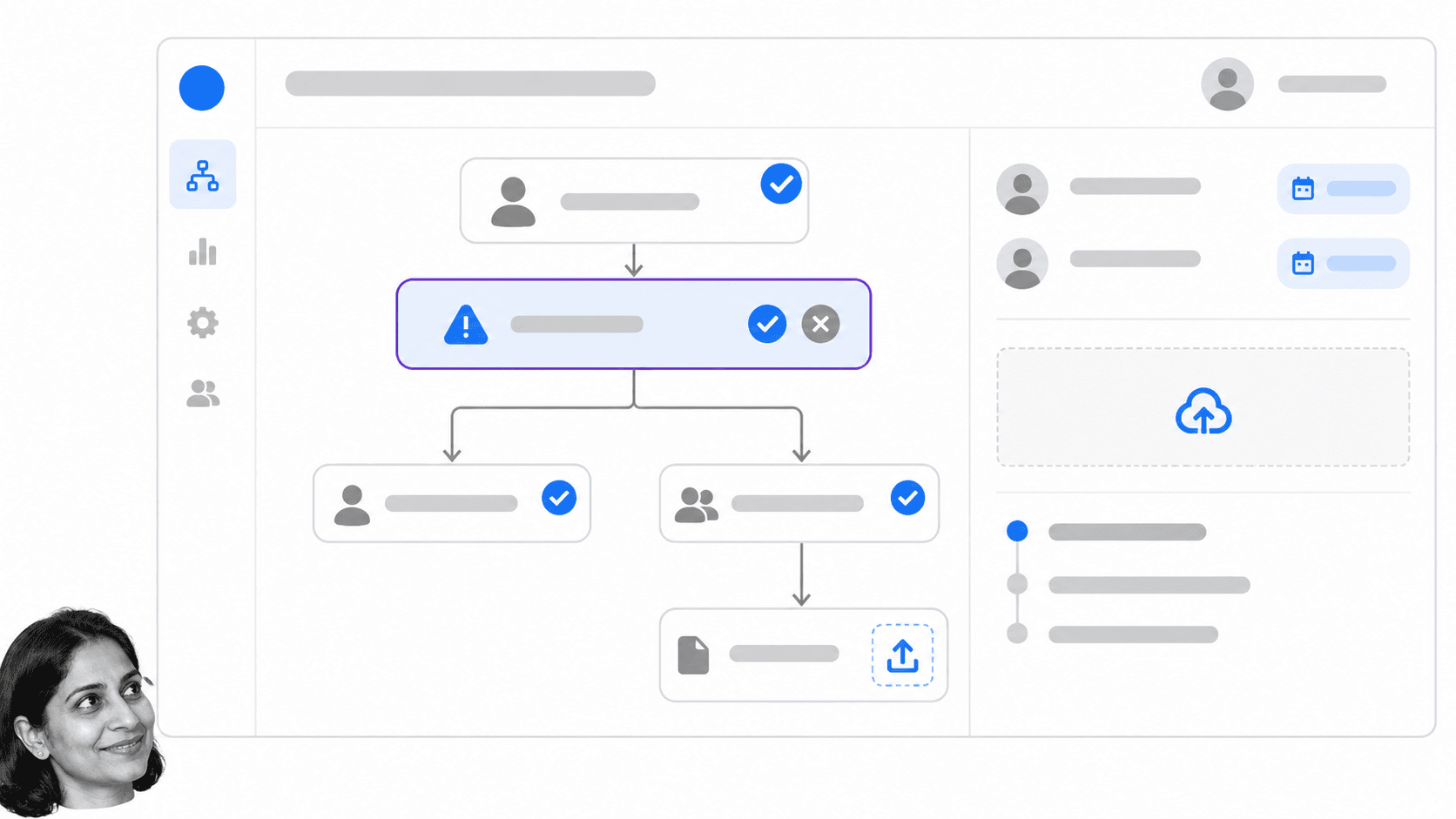
Best for: Enforceable, trackable, recurring onboarding, offboarding, and HR SOP workflows.
Bottom line: Process Street is the best overall Enboarder alternative when onboarding fails not because the experience is dull, but because steps get skipped, approvals stall, and nobody can prove what was done.
Process Street is an agentic process automation platform for high-stakes operations. Teams design reusable workflows, launch a run for each new hire or event, assign owners, require information and evidence, route decisions through approvals, and apply conditional logic. Each run keeps a full history of who completed what, when, and with which attachments. That structure suits onboarding, offboarding, role changes, access requests, policy acknowledgments, and the other recurring procedures that cross HR, IT, managers, facilities, and finance.
The overlap with Enboarder is real: both coordinate work that sits around the HRIS rather than replacing it. The difference is emphasis. Enboarder leads with the employee journey and experience. Process Street leads with control. A required field cannot be skipped, an approval must be recorded before the next step unlocks, and dashboards show every active, late, and blocked run. For teams in regulated or audit-heavy environments, that evidence trail is usually what was missing.
Process Street is also not limited to HR. The same platform that runs onboarding can run vendor onboarding, client onboarding, IT change requests, quality checks, and month-end close. Teams that buy a people-only orchestration tool often discover that the same handoff problems exist everywhere. Standardizing on one process layer avoids a separate tool for each department.
Start from a proven structure rather than a blank page. The employee onboarding checklist and the new hire onboarding checklist templates give a working baseline you can adapt, and the Process Street help documentation explains how runs, assignments, and approvals behave in practice.
Where Process Street adds control
The practical value shows up in the handoffs an HR system records but does not govern. An onboarding run can require the hiring manager to confirm role details before IT receives an access task. Finance can approve an equipment exception, the new hire can acknowledge a policy, and People Operations can confirm that every required step is complete before closing the run. Conditional logic adds location-specific, department-specific, or role-specific steps without forcing every employee through the same list.
The same pattern applies after day one. A promotion or transfer can collect the request, route the decision, require supporting evidence, and create follow-up work only after approval. An offboarding run can coordinate access removal, knowledge transfer, asset return, payroll notification, and the final records update. Each run preserves owners, timestamps, decisions, comments, and uploaded evidence, which gives process leaders a clearer operational record than a journey email sequence or shared spreadsheet.
Key features
- Reusable workflow templates with a separate run for every new hire, mover, or leaver.
- Required tasks, assignments, due dates, forms, approvals, and conditional logic.
- Evidence, decisions, comments, and completion history attached to each run.
- Automations and integrations that pass data to the HRIS, identity, ticketing, and document tools.
- Reports and dashboards showing progress, ownership, delays, and completion across all active onboarding.
Pros
- Strong control over cross-functional handoffs.
- Clear accountability for every person and every step.
- Works beside any existing HRIS or payroll platform.
- Audit-ready evidence trail for compliance-adjacent onboarding.
- One platform for HR and non-HR recurring processes.
Cons
- Not an HRIS, payroll processor, or applicant tracking system.
- Less focused on branded, marketing-style new hire content than an experience-led journey tool.
Choose Process Street if
Choose Process Street if onboarding, offboarding, transfers, or other recurring HR work has inconsistent execution, if several departments own different steps, and if leaders need to know what happened, who approved it, and where work is blocked. It is especially strong when onboarding has compliance requirements or when you want the same process discipline across other departments.
Skip it if
Skip Process Street as the primary replacement if your main goal is a highly branded, content-rich new hire experience with mobile journeys and engagement nudges, or if you need to replace your employee system of record. A dedicated boarding platform or an HRIS is the better primary choice there, and Process Street can still run the operational checklist behind it.
How to evaluate Process Street
Use a real onboarding process for the trial. Map the trigger, required inputs, owners, approval points, exception paths, due dates, evidence, and the systems that must receive an update. Then run one normal hire and one exception, such as a contractor or a remote hire in a new location. A useful test shows whether a missing input blocks progress, whether the right approver receives the decision, whether overdue work is visible, and whether a reviewer can reconstruct what happened without searching email or chat.
Also test maintenance. Ask the process owner to change a step, adjust a condition, and launch a new run without disrupting runs already in progress. Confirm that dashboards separate active, late, completed, and blocked runs, and include one integration scenario so the team can see which data stays authoritative in the HRIS and which execution evidence belongs in Process Street.
Pricing and next step
Process Street’s Pro plan starts with a 14-day free trial, and current packages are listed on the Process Street pricing page, with a contact-sales route for larger rollouts. Build the first evaluation around one high-frequency onboarding workflow and measure completion, exceptions, approval time, and rework before expanding.
2. Click Boarding

Best for: Hr and talent acquisition teams that hire at scale and want one platform for preboarding, onboarding, and offboarding.
Bottom line: Click Boarding is a dedicated boarding platform covering preboarding, onboarding, and offboarding, and it is the better fit when high-volume hiring means paperwork, setup, and engagement must start the moment an offer is accepted, and onboarding is the only job you want the new tool to own.
Click Boarding is the most direct like-for-like swap on this list. It concentrates on the boarding moments, preboarding, onboarding, crossboarding, and offboarding, and positions itself for HR and talent acquisition teams that hire at scale. Teams leaving Enboarder because they want a more operational, volume-oriented boarding tool usually start here.
Compared with Process Street, Click Boarding is the stronger primary choice when high-volume hiring means paperwork, setup, and engagement must start the moment an offer is accepted, and onboarding is the only job you want the new tool to own. Process Street can still run the operational checklist around it, but it should not be positioned as a substitute for what Click Boarding is built to own.
The main tradeoff appears when you need a system of record, a talent suite, or a process tool that governs work outside the employee lifecycle. In that case, choose a different primary tool or define a two-layer setup: one product for the records or experience, and a process layer for cross-functional execution.
Key features
- Preboarding that engages new hires immediately after offer acceptance
- Onboarding journeys built for HR and talent acquisition teams hiring at scale
- Offboarding with a compliance focus
- Crossboarding for promotions, transfers, and mergers
- 250+ integrations, including HRIS sync
Pros
- Closest functional match to Enboarder’s preboarding and onboarding scope
- Covers internal moves as well as new hires
- Designed for hiring volume
- Broad integration catalog
Cons
- Pricing is not published
- Narrow scope means other processes still need a separate home
Choose Click Boarding if
Choose Click Boarding if high-volume hiring means paperwork, setup, and engagement must start the moment an offer is accepted, and onboarding is the only job you want the new tool to own. In a demo, ask the vendor to run one complete scenario rather than disconnected screens: an accepted offer, preboarding paperwork, a day-one agenda, an IT access request, a manager check-in, and an exit. This shows where data, tasks, and ownership actually live.
Skip it if
Skip Click Boarding if you need a system of record, a talent suite, or a process tool that governs work outside the employee lifecycle. A strong product can still be the wrong fit when its primary role does not match the problem.
Pricing and what to verify
Click Boarding does not publish pricing; its site routes buyers to a custom demo, so expect a tailored quote. Check current terms on the official Click Boarding site, and request a complete quote covering required modules, implementation, support, and expected headcount growth.
3. ClearCompany
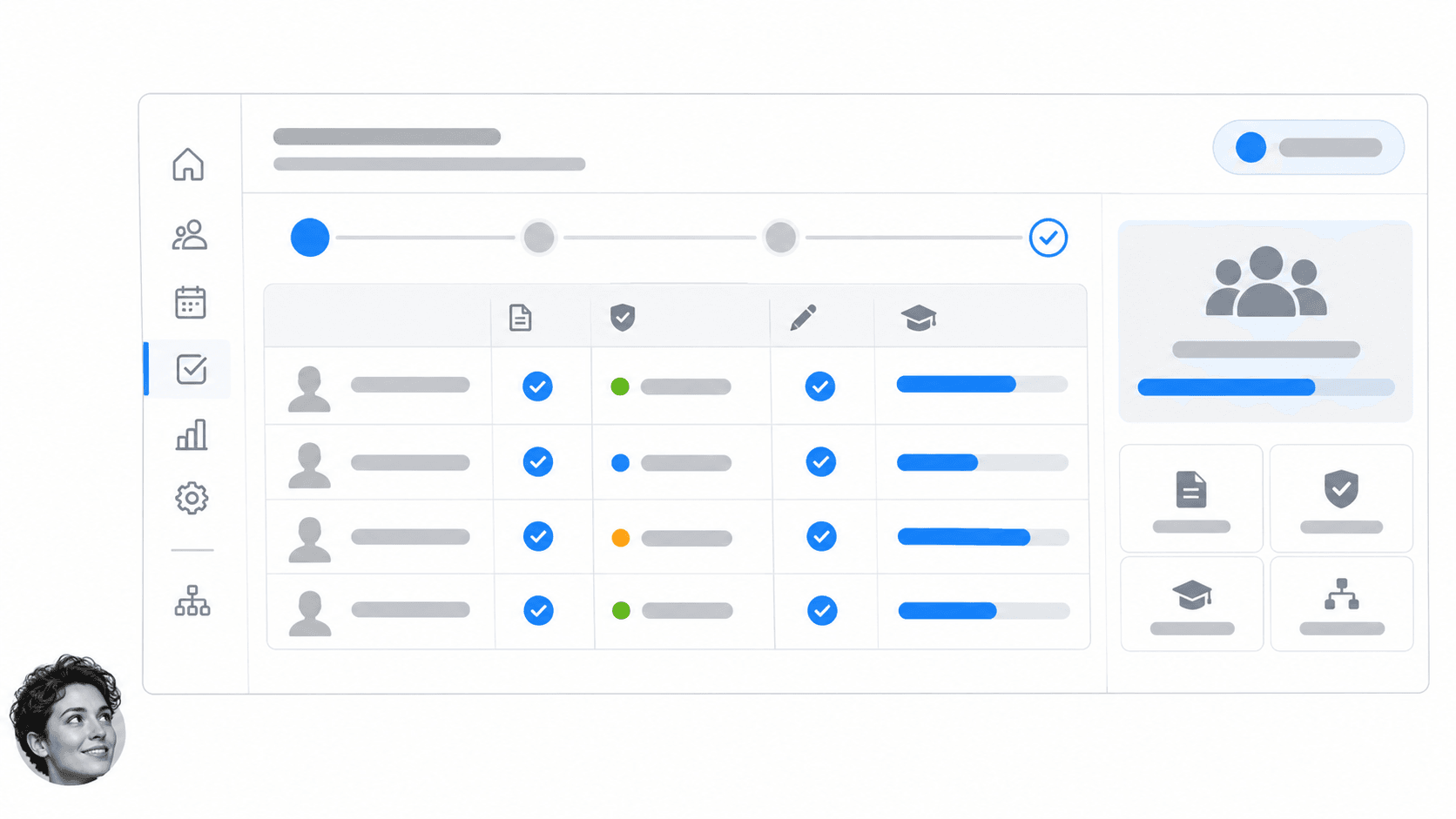
Best for: Teams that want onboarding connected to recruiting, performance, and learning in one talent platform.
Bottom line: ClearCompany is a talent management suite whose onboarding module connects to recruiting, performance, and learning, and it is the better fit when onboarding should share data with applicant tracking, goals, reviews, and learning instead of living in a separate journey tool.
ClearCompany, now branding itself ClearCo, describes itself as a unified talent platform for hiring, growth, and retention. Its onboarding software gives new teammates one place to complete forms, tasks, and training while leaders assign steps and track progress before and after day one. The appeal versus Enboarder is continuity: the candidate record flows straight into onboarding and then into performance and learning.
Compared with Process Street, ClearCompany is the stronger primary choice when onboarding should share data with applicant tracking, goals, reviews, and learning instead of living in a separate journey tool. Process Street can still run the operational checklist around it, but it should not be positioned as a substitute for what ClearCompany is built to own.
The main tradeoff appears when you only need onboarding, or your recruiting and performance tools are already settled elsewhere. In that case, choose a different primary tool or define a two-layer setup: one product for the records or experience, and a process layer for cross-functional execution.
Key features
- Role-based onboarding checklists
- Automated welcome messages, resources, and milestones
- Background checks with I-9 processing and E-Verify
- Digital documents with secure e-signatures
- Connections to HRIS, payroll, IT provisioning, and learning systems
Pros
- Onboarding inherits candidate data from recruiting
- Strong compliance paperwork coverage for US employers
- Progress tracking for leaders
- One vendor across the talent lifecycle
Cons
- Pricing requires a quote
- Best value depends on adopting more than one module
Choose ClearCompany if
Choose ClearCompany if onboarding should share data with applicant tracking, goals, reviews, and learning instead of living in a separate journey tool. In a demo, ask the vendor to run one complete scenario rather than disconnected screens: an accepted offer, preboarding paperwork, a day-one agenda, an IT access request, a manager check-in, and an exit. This shows where data, tasks, and ownership actually live.
Skip it if
Skip ClearCompany if you only need onboarding, or your recruiting and performance tools are already settled elsewhere. A strong product can still be the wrong fit when its primary role does not match the problem.
Pricing and what to verify
ClearCompany lists its packages without prices and asks buyers to request pricing. Check current terms on the official ClearCompany onboarding software page, and request a complete quote covering required modules, implementation, support, and expected headcount growth.
4. BambooHR

Best for: Growing teams that want onboarding inside an approachable hris with published plan pricing.
Bottom line: BambooHR is an approachable HRIS with onboarding built into the employee record, and it is the better fit when you would rather run onboarding inside your HR system of record than buy a separate orchestration layer, and published per-employee pricing matters.
BambooHR approaches the Enboarder question from the system-of-record side. Instead of layering a journey tool above the HR stack, it keeps onboarding checklists, new hire packets, and e-signatures on the same employee record that HR already maintains. For small and mid-sized teams, removing a layer is often the point.
Compared with Process Street, BambooHR is the stronger primary choice when you would rather run onboarding inside your HR system of record than buy a separate orchestration layer, and published per-employee pricing matters. Process Street can still run the operational checklist around it, but it should not be positioned as a substitute for what BambooHR is built to own.
The main tradeoff appears when you need rich, branded, multi-stakeholder journeys across a large enterprise stack or governance over work outside HR. In that case, choose a different primary tool or define a two-layer setup: one product for the records or experience, and a process layer for cross-functional execution.
Key features
- New hire packets and onboarding checklists
- E-signatures with email and offer letter templates
- Applicant tracking that hands off to onboarding
- Benefits tracking and time off
- Employee records with reporting
Pros
- Per-employee plan prices are published
- Onboarding lives next to authoritative employee data
- Simple for managers and new hires
- Payroll and benefits options available
Cons
- Journeys are simpler than a dedicated orchestration tool
- Replacing Enboarder this way usually means replacing or consolidating the HRIS decision too
Choose BambooHR if
Choose BambooHR if you would rather run onboarding inside your HR system of record than buy a separate orchestration layer, and published per-employee pricing matters. In a demo, ask the vendor to run one complete scenario rather than disconnected screens: an accepted offer, preboarding paperwork, a day-one agenda, an IT access request, a manager check-in, and an exit. This shows where data, tasks, and ownership actually live.
Skip it if
Skip BambooHR if you need rich, branded, multi-stakeholder journeys across a large enterprise stack or governance over work outside HR. A strong product can still be the wrong fit when its primary role does not match the problem.
Pricing and what to verify
BambooHR publishes per-employee monthly prices for its Core, Pro, and Elite plans, with flat monthly rates for very small companies. Check current terms on the official BambooHR pricing page, and request a complete quote covering required modules, implementation, support, and expected headcount growth.
5. HiBob
Best for: Growing and mid-market organizations that want joiner, mover, and leaver workflows in a modern hris.
Bottom line: HiBob is a modern HRIS whose Core includes joiner, mover, and leaver workflows, and it is the better fit when your HRIS decision is still open and you want lifecycle workflows, approvals, and self-service to sit inside the same modern HR platform.
HiBob’s Bob platform describes its Core as a modern HRIS and core HR system unified on one foundation. Joiner, mover, and leaver workflows, approvals and routing, and audit-ready process history are part of that foundation. If the reason for leaving Enboarder is that you want fewer layers, consolidating journeys into the HRIS is a credible route.
Compared with Process Street, HiBob is the stronger primary choice when your HRIS decision is still open and you want lifecycle workflows, approvals, and self-service to sit inside the same modern HR platform. Process Street can still run the operational checklist around it, but it should not be positioned as a substitute for what HiBob is built to own.
The main tradeoff appears when you are keeping your current HRIS and only need a better onboarding experience on top of it. In that case, choose a different primary tool or define a two-layer setup: one product for the records or experience, and a process layer for cross-functional execution.
Key features
- Joiner, mover, and leaver workflows
- Approvals and routing
- Role-based self-service
- Identity, access, and provisioning connections
- Audit-ready process history and attribute-based sync
Pros
- Lifecycle workflows are native to the HRIS
- Strong employee and manager experience
- Covers transitions and exits, not just day one
- Modular suites for talent, payroll, and planning
Cons
- Pricing is customized and requires a quote
- Core HR is the foundation, so it is an HRIS project, not a bolt-on
Choose HiBob if
Choose HiBob if your HRIS decision is still open and you want lifecycle workflows, approvals, and self-service to sit inside the same modern HR platform. In a demo, ask the vendor to run one complete scenario rather than disconnected screens: an accepted offer, preboarding paperwork, a day-one agenda, an IT access request, a manager check-in, and an exit. This shows where data, tasks, and ownership actually live.
Skip it if
Skip HiBob if you are keeping your current HRIS and only need a better onboarding experience on top of it. A strong product can still be the wrong fit when its primary role does not match the problem.
Pricing and what to verify
HiBob customizes pricing based on company size, needs, and selected modules, generally calculated per employee. Check current terms on the official HiBob pricing page, and request a complete quote covering required modules, implementation, support, and expected headcount growth.
6. Rippling
Best for: Teams that want onboarding to drive payroll, app access, devices, and permissions from one employee record.
Bottom line: Rippling is a workforce platform that connects HR, payroll, IT, and finance to one employee record, and it is the better fit when a new hire should automatically trigger payroll setup, app accounts, device assignment, and permissions, and you are willing to make Rippling the system of record.
Rippling solves the onboarding problem by making the employee record drive everything else. Rather than orchestrating tasks across separate HR and IT systems, as Enboarder does from above the stack, Rippling tries to be the stack. That is a larger decision, but it removes a lot of manual provisioning work when it fits.
Compared with Process Street, Rippling is the stronger primary choice when a new hire should automatically trigger payroll setup, app accounts, device assignment, and permissions, and you are willing to make Rippling the system of record. Process Street can still run the operational checklist around it, but it should not be positioned as a substitute for what Rippling is built to own.
The main tradeoff appears when you are not replacing your HRIS or payroll provider and only need better journeys and communications. In that case, choose a different primary tool or define a two-layer setup: one product for the records or experience, and a process layer for cross-functional execution.
Key features
- HRIS with a shared employee record
- Payroll and benefits administration
- App access and device management through IT products
- Learning management and performance modules
- Time and attendance
Pros
- One change in the employee record flows to many systems
- Reduces manual IT provisioning during onboarding
- Published starting price
- Covers offboarding access removal
Cons
- Value depends on adopting Rippling broadly
- A monthly base fee applies on top of per-employee pricing
Choose Rippling if
Choose Rippling if a new hire should automatically trigger payroll setup, app accounts, device assignment, and permissions, and you are willing to make Rippling the system of record. In a demo, ask the vendor to run one complete scenario rather than disconnected screens: an accepted offer, preboarding paperwork, a day-one agenda, an IT access request, a manager check-in, and an exit. This shows where data, tasks, and ownership actually live.
Skip it if
Skip Rippling if you are not replacing your HRIS or payroll provider and only need better journeys and communications. A strong product can still be the wrong fit when its primary role does not match the problem.
Pricing and what to verify
Rippling states that plans start at $8 per employee per month, with a monthly base fee, and offers custom quotes. Check current terms on the official Rippling pricing page, and request a complete quote covering required modules, implementation, support, and expected headcount growth.
7. Leapsome

Best for: Teams that want onboarding tied to learning paths, engagement surveys, and performance in one people platform.
Bottom line: Leapsome is a people enablement platform combining an HRIS foundation with learning, surveys, and performance, and it is the better fit when onboarding success is measured by ramp-up, learning completion, and new hire sentiment, and you want those signals in the same tool as reviews and goals.
Leapsome overlaps with the parts of Enboarder that focus on new hire ramp plans and learning. Its learning module can automatically enroll new employees in general or role-specific onboarding courses, and its engagement surveys include onboarding and offboarding surveys, so ramp-up and sentiment sit next to goals and performance reviews.
Compared with Process Street, Leapsome is the stronger primary choice when onboarding success is measured by ramp-up, learning completion, and new hire sentiment, and you want those signals in the same tool as reviews and goals. Process Street can still run the operational checklist around it, but it should not be positioned as a substitute for what Leapsome is built to own.
The main tradeoff appears when you need deep task orchestration across IT, facilities, and finance, or enforceable compliance steps outside HR. In that case, choose a different primary tool or define a two-layer setup: one product for the records or experience, and a process layer for cross-functional execution.
Key features
- Automatic enrollment of new hires in general or role-specific onboarding courses
- Onboarding and offboarding surveys
- Employee profiles, org chart, and document management
- Performance reviews, goals, and OKRs
- Absence management and payroll prep exports
Pros
- Strong fit for ramp plans and new hire learning
- Measures new hire sentiment directly
- Published per-employee pricing
- 14-day free trial listed on the pricing page
Cons
- Less suited to complex cross-department task orchestration
- Prices are listed in euros, so confirm currency and terms for your region
Choose Leapsome if
Choose Leapsome if onboarding success is measured by ramp-up, learning completion, and new hire sentiment, and you want those signals in the same tool as reviews and goals. In a demo, ask the vendor to run one complete scenario rather than disconnected screens: an accepted offer, preboarding paperwork, a day-one agenda, an IT access request, a manager check-in, and an exit. This shows where data, tasks, and ownership actually live.
Skip it if
Skip Leapsome if you need deep task orchestration across IT, facilities, and finance, or enforceable compliance steps outside HR. A strong product can still be the wrong fit when its primary role does not match the problem.
Pricing and what to verify
Leapsome publishes per-employee monthly prices in euros for its HRIS tiers and individual modules, and lists a 14-day free trial. Check current terms on the official Leapsome pricing page, and request a complete quote covering required modules, implementation, support, and expected headcount growth.
How to choose the right Enboarder alternative
Start by naming the layer that is failing. If new hires get a weak first impression, a dedicated boarding platform such as Click Boarding is the natural first look. If onboarding feels disconnected from recruiting and performance, ClearCompany is the stronger route. If you want fewer systems, consolidate into an HRIS with lifecycle workflows such as BambooHR or HiBob. If provisioning apps, devices, and payroll is the bottleneck, Rippling fits. If ramp-up and learning are the measure of success, Leapsome fits. If steps are skipped, approvals stall, or you cannot prove completion, start with Process Street.
Then write down the scenario every vendor must run: worker types, locations, required documents, approval rules, IT and facilities tasks, the day-one agenda, the first-90-day milestones, and the exit process. Using one scenario across every demonstration makes it much easier to compare products that use similar onboarding language but own different parts of the work.
Use adjacent comparisons when an HRIS makes the shortlist. The pages on BambooHR alternatives, HiBob alternatives, and Workday alternatives go deeper on those platforms, and the full index of software alternatives covers the wider category. For a broader view of the onboarding market, the guide to automated onboarding software compares tools by automation depth.
Finally, check what stays outside the product. Even a strong journey tool may not own every access request, exception, document collection, manager task, or audit artifact. Map those steps and decide whether the vendor’s workflow is sufficient or whether a separate execution layer will close the gaps.
Enboarder migration checklist
Moving away from Enboarder is mainly a journey and content migration, not an employee data migration, because the HRIS usually remains the system of record. That makes the switch lighter, but it still needs a plan so that hires in progress are not dropped.
- Export or document every active journey, including stages, triggers, content, tasks, owners, and timing rules.
- List every integration Enboarder uses, such as HRIS triggers, identity provisioning, and messaging, and confirm the replacement for each.
- Classify each journey as rebuild, merge, or retire, and assign an owner.
- Rebuild the highest-volume onboarding journey first, then offboarding and transitions.
- Decide which steps must be required, which need approval, and what evidence each step should capture.
- Run new hires in parallel for one cohort, finishing in-flight journeys in Enboarder while new starts use the replacement.
- Test exceptions: contractors, rehires, remote hires, and international starts.
- Train hiring managers and IT on the exact tasks they will receive.
- Recreate reporting on completion, overdue tasks, and time to productivity before retiring the old tool.
- Record acceptance criteria and get named sign-off before the cutover.
The employee offboarding checklist template is a practical starting point for rebuilding exits, and the guides on custom onboarding software and employee onboarding tools help map which systems participate in each stage of the employee onboarding process.
FAQs
What is the best Enboarder alternative?
Process Street is the best Enboarder alternative when onboarding and offboarding need enforced steps, approvals, and an audit trail. Click Boarding is the closest dedicated boarding platform, ClearCompany suits a connected talent suite, BambooHR and HiBob suit onboarding inside the HRIS, Rippling suits automated provisioning, and Leapsome suits learning-led ramp plans.
Why is Process Street ranked first among Enboarder alternatives?
Process Street ranks first for teams that need recurring people processes to run correctly every time and to leave a record of completion. It is not an HRIS or a branded journey content tool. If the new hire experience itself or the system of record is the main need, the relevant specialist is the better choice.
Is there a free Enboarder alternative?
None of the tools in this list advertises a permanent free plan on the official pages reviewed. Process Street offers a 14-day free trial of its Pro plan, and Leapsome lists a 14-day free trial. Test any trial with a realistic onboarding scenario, including approvals and integrations.
What is the closest alternative to Enboarder?
Click Boarding is the closest functional match because it focuses on preboarding, onboarding, crossboarding, and offboarding as one platform. Process Street is close in architecture because it also sits beside the HRIS and coordinates cross-functional work, with a stronger emphasis on enforcement and evidence.
Which Enboarder alternative is best for small teams?
BambooHR is a strong option for small teams that want onboarding inside an HRIS with published per-employee pricing. Process Street fits small teams that already have an HRIS but need onboarding, offboarding, and other recurring procedures to stop depending on memory and email.
Can Process Street replace Enboarder?
Process Street can replace Enboarder as the layer that coordinates onboarding, transitions, and offboarding tasks across HR, IT, managers, and finance, with required steps, approvals, and completion history. It is less focused on branded, content-heavy journey experiences, so teams that rely on that should test it with their own content.
Does Enboarder replace an HRIS?
No. Enboarder positions itself as an orchestration layer that sits above the HR and IT stack, so it works alongside an HRIS rather than replacing it. Several alternatives on this list, including BambooHR, HiBob, and Rippling, take the opposite approach and build onboarding into the HR system of record.
How do you migrate off Enboarder?
Document every active journey and integration, rebuild the highest-volume onboarding journey first, and decide which steps must be required or approved. Run one cohort in parallel so in-flight hires finish in Enboarder, test exceptions such as contractors and rehires, and get named sign-off before retiring the old tool.
Make every onboarding run complete and provable
If your HR records are sound but onboarding still depends on reminders, inboxes, and spreadsheets, use Process Street to turn every new hire, move, and exit into an enforceable run. Start with one workflow, assign every handoff, require the evidence, and connect the HRIS that already owns the records.
Explore the Process Street platform or review current plans on Process Street pricing. The best first use case is a frequent process with several owners, real exceptions, and a clear definition of done.