Turn every policy into automated workflows with built-in enforcement and audit-ready proof.


8 Best ZenGRC Alternatives & Competitors in 2026
Last updated:
ZenGRC alternatives range across several kinds of governance, risk, and compliance software, because teams use ZenGRC for different jobs. Compliance managers use it to map controls to frameworks such as SOC 2, ISO 27001, PCI, HIPAA, and HITRUST. Internal audit teams use it to plan and run audits. Risk teams use it for risk registers and scoring, and vendor management teams use it for third-party risk assessments. When a team looks beyond ZenGRC, it is usually because one of those jobs has outgrown the others, or because the way the program runs day to day no longer fits the tool.
This comparison evaluates eight options against official vendor sources. It looks at the role each tool plays in a GRC program, its standout capability, its pricing model, whether a free plan or trial exists, and the situations where each one is the stronger choice.
The list is editorially maintained by the Process Street team and was last verified in November 2026. Process Street ranks first for teams that need enforceable, trackable, recurring control, review, and SOP workflows: the access reviews, vendor reviews, control attestations, policy acknowledgments, and remediation that every audit depends on. If your priority is a large framework library, internal audit workpapers, configurable enterprise risk, or automated security certification, the relevant specialist below is the better fit, and the page says so plainly.
In this guide, you will find:
- ZenGRC alternatives: what this comparison covers
- What is ZenGRC?
- How we picked the best ZenGRC alternatives
- ZenGRC alternatives at a glance
- 1. Process Street
- 2. Hyperproof
- 3. LogicGate
- 4. AuditBoard
- 5. Vanta
- 6. Drata
- 7. Secureframe
- 8. Onspring
- ZenGRC alternatives by use case
- Must-have checklist for a ZenGRC alternative
- ZenGRC migration checklist
- FAQs
- Run recurring control work with accountability and proof
ZenGRC alternatives: what this comparison covers
The best ZenGRC alternative depends on what is driving the search. Some teams want a larger prebuilt framework library because their audit calendar keeps growing. Some want to configure every workflow themselves. Some are led by internal audit and SOX and want an audit-first platform. Some mainly need to earn SOC 2 or ISO 27001 quickly and want automated evidence from their cloud stack. Others are satisfied with their GRC system of record but find that the human work behind each control, the reviews, attestations, approvals, and remediation, still runs through spreadsheets, email, and reminders.
Those are different buying problems with different winners. A useful way to frame the decision is record, automation, and execution. Record platforms such as ZenGRC, Hyperproof, LogicGate, AuditBoard, and Onspring hold the frameworks, controls, risks, audits, and findings. Automation platforms such as Vanta, Drata, and Secureframe connect to infrastructure and business systems to collect evidence and test controls continuously. Execution platforms make sure the recurring human processes behind every control actually happen, on time, with evidence. Most compliance programs need all three, and the right ZenGRC alternative is the one that fills the gap you actually have.
It also helps to be honest about program maturity. A company preparing for its first security audit needs speed and guidance more than configurability. A mid-sized company with several frameworks needs control reuse across them. A large enterprise with an internal audit department needs workpapers, testing, and board reporting at scale. The tools below are ordered for the execution-first buyer, but each deep dive explains exactly when another option is the right call.
What is ZenGRC?
ZenGRC is a governance, risk, and compliance platform built for compliance, risk, and audit programs. Its homepage describes it as the first GRC platform using agentic AI to power your entire compliance, risk, and audit program, and its tagline is simply powerful GRC. Read the current description on the official ZenGRC site.
Its product page organizes the platform into Audit Management, Compliance, Risk Management, Vendor Management, and Control Assessments, with a Trust Center and a Business Intelligence Portal as expansions. ZenGRC AI and an assistant called GRACI add AI help across the program, and ZenGRC supports third-party risk management, vendor management, and risk scoring. Named integrations include Jira, ServiceNow, Slack, AWS, Qualys, Tenable, Splunk, Tableau, and AuditSource, with an integrations directory for the full list.
Frameworks are a core part of the pitch. ZenGRC says that beyond industry standard frameworks like ISO, PCI, SOC, HIPAA, HITRUST, and more, it is fully framework agnostic, and it maintains a compliance framework content registry. On pricing, ZenGRC says it offers all critical features under one straightforward, all-inclusive price without hidden costs, and quotes are provided through a demo. ZenGRC is the baseline every option below is measured against.
Common reasons teams evaluate ZenGRC alternatives
- Framework growth. The audit calendar now spans many overlapping security and privacy frameworks, and the team wants a larger prebuilt library with more automated evidence.
- Configurability. The program has distinctive risk or audit processes and the team wants to configure workflows, forms, and relationships without code.
- Audit-first needs. Internal audit and SOX lead the program, and the team wants a platform built around audit planning, testing, and workpapers.
- Certification speed. A growing company mostly needs SOC 2 or ISO 27001 quickly, with integrations that test controls continuously.
- Execution gaps. The GRC system records every control, but the recurring reviews, attestations, and remediation behind those controls are still inconsistent.
How we picked the best ZenGRC alternatives
We selected tools that represent credible, distinct routes away from or around ZenGRC. Each was checked against its current official product or pricing page in November 2026. The evaluation weighs primary job fit most heavily, then framework and audit depth, ease of adoption, pricing transparency, and how well the tool handles the recurring work that keeps controls effective between audits.
- Primary job fit: the compliance, risk, or audit problem the product is built to own, mapped to the reason a team leaves ZenGRC.
- Framework and audit depth: how the product supports framework mapping, control reuse, evidence, testing, workpapers, and findings.
- Ease of adoption: whether control owners outside the compliance team can participate without extensive training.
- Execution and control: how recurring control activities become assigned work, approvals, and a verifiable history.
- Commercial clarity: whether a public price, free tier, trial, or transparent pricing structure exists, or a quote is required.
ZenGRC alternatives at a glance
The table below summarizes the eight ranked ZenGRC alternatives before the deep dives. Pricing models are taken from official vendor sources and can change, so request a complete quote with the frameworks, modules, services, and users you expect.
| Tool | Best for | Standout feature | Free plan | Starting price | Program focus |
|---|---|---|---|---|---|
| Process Street | enforceable, trackable, recurring control, review, and SOP workflows | workflow runs with required evidence, approvals, conditional logic, and completion history | 14-day free trial of the Pro plan | See pricing page | Runs the recurring control and remediation work behind every audit |
| Hyperproof | compliance teams managing many overlapping frameworks | 160+ pre-built frameworks and 200+ integrations | No free plan shown | Get a demo | Multi-framework compliance and audits |
| LogicGate | risk teams that want a no-code, configurable GRC platform | Risk Cloud with 30+ Applications and Power User licensing | No free plan shown | Request pricing | Configurable risk and controls workflows |
| AuditBoard | internal audit and SOX teams that want an audit-first GRC platform | audit, controls, and risk with autonomous testing and 200+ integrations | No free plan shown | Schedule a demo | Internal audit, SOX, and connected risk |
| Vanta | fast-growing companies automating security compliance | 35+ frameworks with data pulled from 400+ tools | No free plan shown | Personalized pricing | Security compliance automation and monitoring |
| Drata | security teams that want tiered plans from a first framework to enterprise GRC | Foundation, Advanced, and Enterprise plans with a Trust Center | No free plan shown | Contact sales | Compliance automation and trust management |
| Secureframe | teams that want compliance automation backed by in-house experts | 300+ native integrations with guidance from former auditors | No free plan shown | Contact sales | Security compliance with expert support |
| Onspring | enterprises that want a flexible, no-code GRC platform with licensing choices | no-code GRC with licensing by users, by products, or hybrid | No free plan shown | Request your quote | Configurable enterprise GRC and internal audit |
A second table compares each alternative with ZenGRC on the dimension that most often drives the switch.
| Tool | Compared with ZenGRC | Primary system role |
|---|---|---|
| Process Street | Runs the recurring human control and remediation work that GRC platforms record but do not execute | Compliance operations workflow platform |
| Hyperproof | Larger prebuilt framework library with automated evidence through Hypersyncs | Compliance and GRC platform |
| LogicGate | No-code configuration with Applications and Power User licensing | No-code GRC platform |
| AuditBoard | Audit-first platform for internal audit, SOX, and risk | Audit and GRC platform |
| Vanta | Continuous security compliance automation across 400+ tools | Trust and compliance automation platform |
| Drata | Tiered plans from one framework to enterprise GRC | Trust management platform |
| Secureframe | Automation paired with in-house compliance experts | Compliance automation platform |
| Onspring | Configurable enterprise GRC with licensing by users or products | Cloud-based GRC platform |
1. Process Street
Best for: Enforceable, trackable, recurring control, review, and sop workflows.
Bottom line: Process Street is the best overall choice among ZenGRC alternatives when the problem is not recording controls or mapping frameworks, but making the recurring work behind every control happen correctly, every time, with proof.
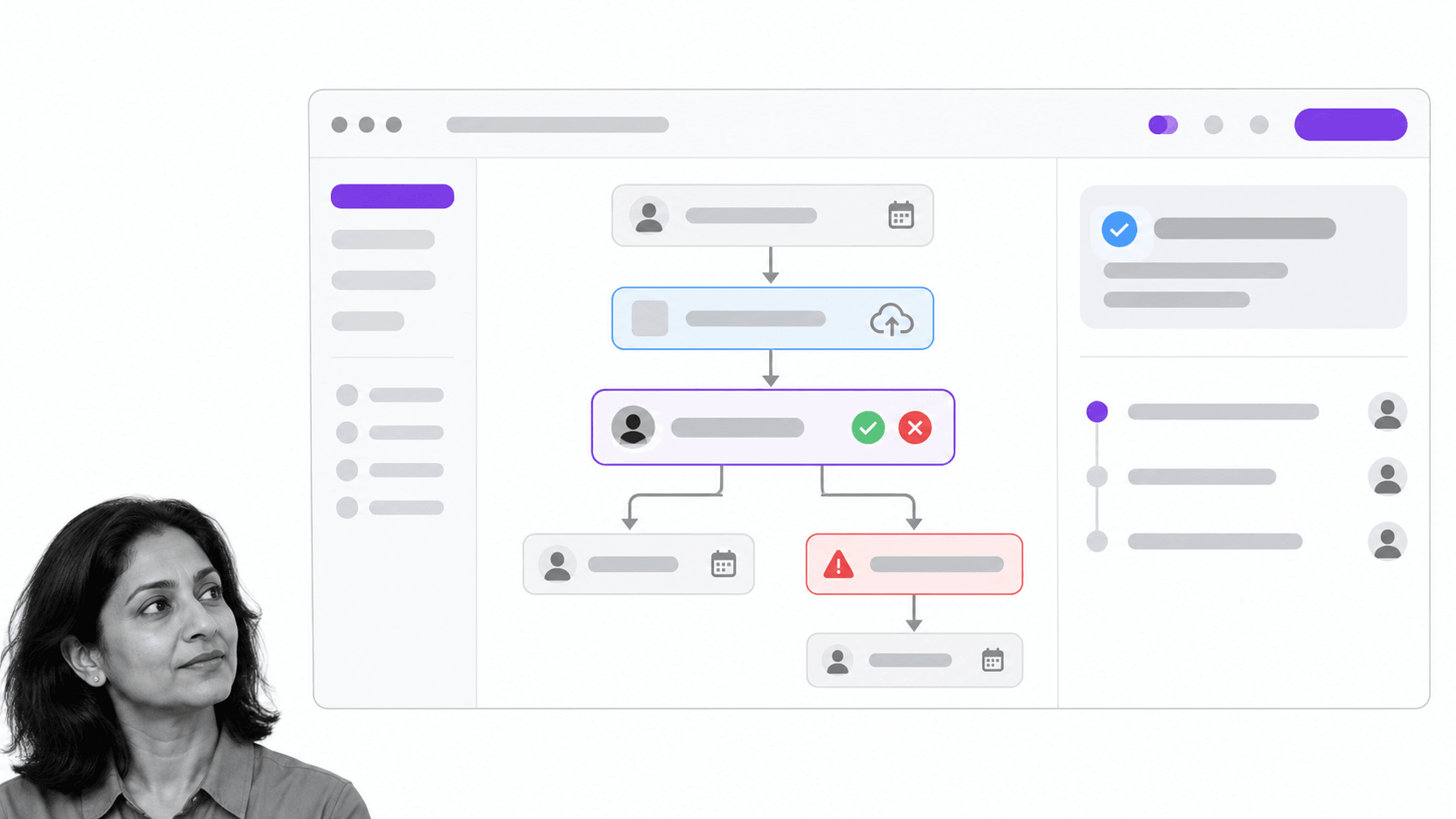
Process Street is an agentic process automation platform for high-stakes operations. Teams design reusable workflows, launch a run for each review, request, or event, assign owners, require information and evidence, route decisions through approvals, apply conditional logic, and keep a completion history. In a compliance program, that covers quarterly user access reviews, vendor onboarding and annual vendor reviews, change management approvals, policy acknowledgments, incident response steps, control attestations, and remediation of audit findings.
This is a different role from ZenGRC. GRC platforms hold the framework mappings, the control library, the risk register, and the audit results. They are very good at showing which control satisfies which requirement and whether it was tested. They do not, on their own, make a manager complete an access review before the quarter ends, make a vendor owner collect a security questionnaire before a contract renews, or make a control owner attach evidence before an auditor asks for it. Those are human processes, and every audit depends on them.
That distinction is why Process Street ranks first for its ICP: compliance, security, and operations process owners who need enforceable, recurring workflows. Teams often discover that a complete control library does not fix late evidence. The GRC system may show every control mapped to SOC 2 and ISO 27001 while three access reviews are overdue, a vendor assessment sits in an inbox, and the remediation plan for last year’s finding lives in someone’s memory. Process Street turns that work into assigned steps with deadlines, approval tasks, conditional logic, and evidence attached to each run.
Where Process Street adds control
The value shows up in the recurring activities that a GRC platform depends on but does not drive. A vendor review can start from a vendor risk assessment checklist, assign the questionnaire and contract checks to named owners, require the completed questionnaire as an upload, route any high-risk vendor to an exception branch, and block completion until the compliance lead signs off.
The same pattern applies to certification work. Starting from a SOC 2 compliance checklist or a risk assessment template gives control owners a consistent set of steps, owners, and evidence for each recurring activity. Programs that aim for continuous compliance depend on both a system that records controls and a process that makes them happen on schedule, and Process Street supplies the second half.
How to evaluate Process Street
Use a real recurring compliance process for the trial, such as a quarterly access review or an annual vendor review. Map the trigger, required inputs, owners, approval points, exceptions, due dates, evidence, and the systems that must be updated. Then run one normal case and one exception case. A useful test shows whether a missing upload blocks progress, whether the right approver gets the decision, whether overdue work is visible, and whether an auditor could reconstruct what happened from the run history without searching email.
Also test maintenance and integration. Process Street has 5,000+ integrations, so include one scenario where a run is triggered by, or writes back to, a system you already use, such as your identity provider for access changes or your ticketing tool for remediation tasks.
Using Process Street with ZenGRC
Process Street does not have to replace ZenGRC. Many teams keep ZenGRC or another GRC platform as the system of record for frameworks, controls, and audits, then use Process Street to run the recurring processes behind them. When a quarter starts, a run drives every access review and attestation to completion with evidence before the auditor asks. When an audit finding is raised, a run assigns the remediation, tracks the deadline, and records the sign-off. The GRC platform remains the record of controls, and Process Street becomes the record of the human work, which makes audits far less painful when evidence requests arrive.
Key features
- Reusable workflow runs for recurring control, review, and SOP processes.
- Required tasks, assignments, due dates, form fields, file uploads, and approval gates.
- Conditional logic that adapts a run to vendor tier, risk level, system, or location.
- Evidence, comments, decisions, and completion history attached to every run.
- 5,000+ integrations and agentic actions that move information to the systems that own it.
Pros
- Strong control over the human side of compliance programs.
- Clear accountability for every review, attestation, approval, and exception.
- Sits beside ZenGRC or any other GRC tool without replacing it.
- Audit-ready history that shows who did what and when.
- Process owners maintain workflows without engineering support.
Cons
- Not a framework mapping tool with a prebuilt control library.
- Not an audit management suite with built-in workpapers and testing.
Choose Process Street if
Choose Process Street if access reviews, vendor reviews, control attestations, policy acknowledgments, or remediation are inconsistent, and your auditors, security leaders, or board need to see what happened, who approved it, and where work is blocked.
Skip it if
Skip Process Street as the primary replacement if what you need from ZenGRC is framework mapping, a control library, automated evidence from cloud infrastructure, or audit workpaper management. In that case, choose the specialist below and add Process Street only if the recurring processes behind those controls still need stronger execution.
Pricing and next step
Process Street’s Pro plan starts with a 14-day free trial, no credit card required. Review current packaging on the Process Street pricing page. Start with one high-frequency compliance activity, such as the quarterly access review, and measure on-time completion, exceptions, approval time, and audit requests before expanding.
2. Hyperproof
Best for: Compliance teams managing many overlapping frameworks.
Bottom line: Hyperproof is the closest like-for-like ZenGRC alternative for compliance teams that run several frameworks at once and want one control set mapped across all of them.
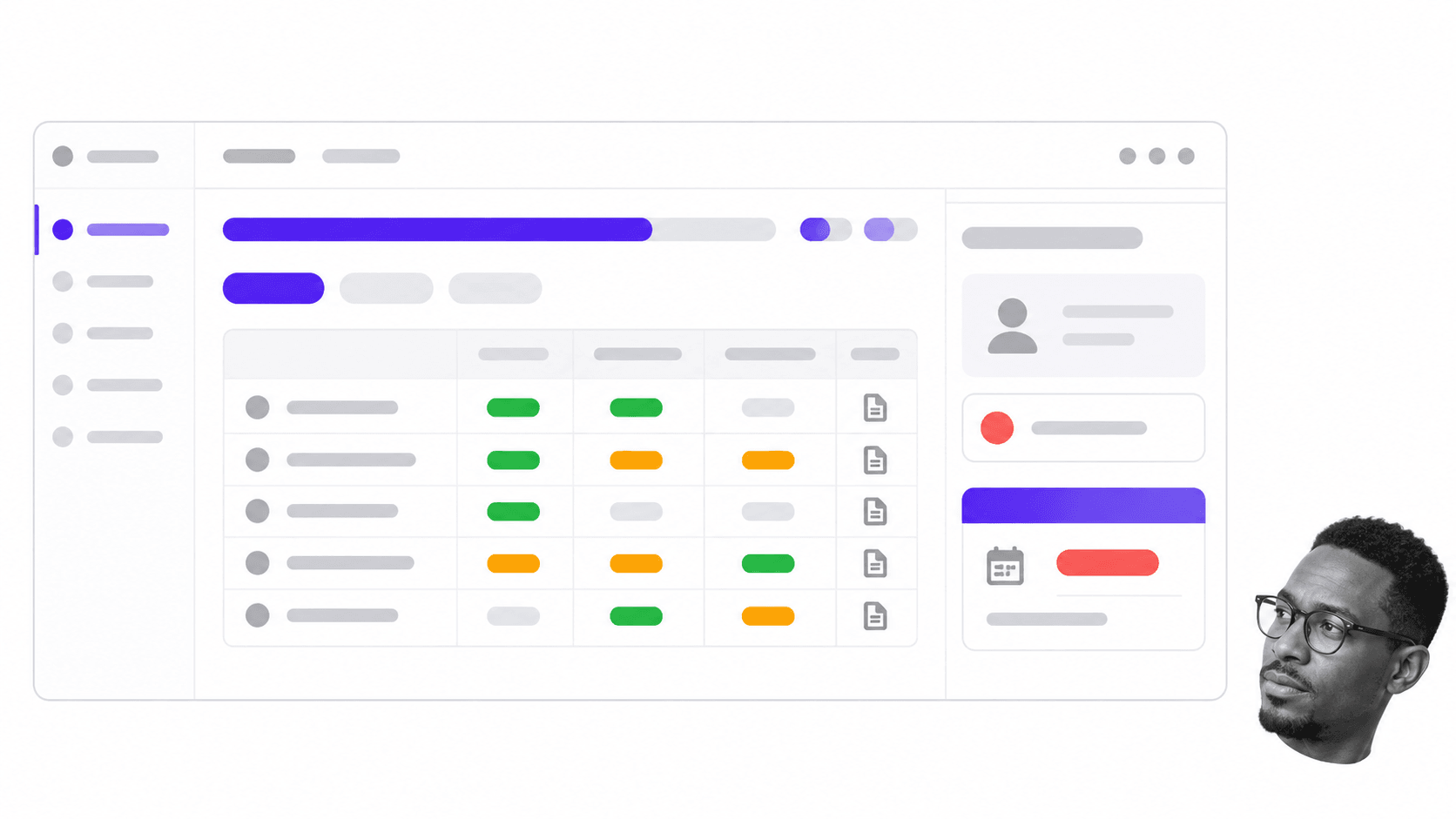
Hyperproof positions itself as the GRC platform that gets work done. Its products cover Risk Management, Compliance, Audit, Third-Party Risk Management, Policy Management, and Hyperproof Gov, with platform capabilities that include Hyperproof AI, Integrations and Hypersyncs, Frameworks, and Continuous Controls Monitoring.
Its headline numbers are 160+ pre-built frameworks and 200+ integrations. Supported frameworks include HIPAA, CMMC, PCI DSS, SOC 2, ISO 27001, NIST SP 800-53, NIST CSF, DORA, NIS2, FedRAMP, GDPR, and HITRUST. Hypersyncs pull evidence from connected systems so control owners spend less time collecting screenshots before every audit.
This is the same territory ZenGRC covers with its framework agnostic approach, which is why Hyperproof is often the first name on a ZenGRC shortlist. The practical difference is depth of the prebuilt library and the evidence automation around it. Teams that mostly need a structured place to map controls, run audits, and track vendor risk will find the two products comparable; teams whose audit calendar includes many overlapping security and privacy frameworks tend to lean toward Hyperproof. It sells through a demo.
Key features
- 160+ pre-built frameworks with a common control set
- 200+ integrations and Hypersyncs for automated evidence
- Audit module for audit requests and evidence collection
- Risk Management, Third-Party Risk, and Policy Management
- Continuous Controls Monitoring and Hyperproof AI
Pros
- Very large prebuilt framework library
- Reduces duplicate controls across overlapping frameworks
- Strong fit for security, privacy, and IT compliance audits
Cons
- Less focused on finance-led SOX and internal audit programs
- Pricing is only available through a demo
Choose Hyperproof if
Choose Hyperproof if you run several security, privacy, or industry frameworks at once and want one control set mapped across all of them with automated evidence.
Skip it if
Skip Hyperproof if your program is mostly internal audit and SOX, or you only need one or two frameworks and a lighter tool.
Pricing and what to verify
Hyperproof shares pricing through its demo process. Book a walkthrough on the official Hyperproof site. In the demo, test your own scenario rather than a scripted tour. Ask Hyperproof to map one of your real controls across three of your frameworks and show the evidence and audit request it satisfies.
3. LogicGate
Best for: Risk teams that want a no-code, configurable grc platform.
Bottom line: LogicGate is the pick for risk and compliance teams that want to configure their own GRC workflows without code, and license only the applications and Power Users they need.
LogicGate positions its Risk Cloud platform as the leading AI GRC platform for the enterprise. Capabilities include GRC Agents, Config Newton, Foundational AI, Reporting and Analytics, and Risk Cloud Quantify for risk quantification, with applications for Enterprise Risk Management, Third-Party Risk Management, Cyber Risk Management, Controls Compliance, and AI Governance. The site says Risk Cloud integrates with 200+ tools.
Configurability is the main reason teams evaluate LogicGate against ZenGRC. ZenGRC gives teams a structured set of modules for audit, compliance, risk, and vendor management. LogicGate lets administrators build and adjust workflows, forms, and relationships between risks, controls, and assets, so the platform can follow an unusual program design rather than the other way round.
LogicGate’s pricing model is clear about structure even though it does not publish figures. Customers purchase the Applications they need, with 30+ available, plus Power User licenses for the people building and managing the program, while Standard and External users are included at no additional cost. Additional product features and implementation services are priced separately.
Key features
- Risk Cloud platform with 30+ Applications
- GRC Agents and Config Newton for configuration help
- Controls Compliance and Cyber Risk Management applications
- Integrations with 200+ tools
- Risk Cloud Quantify for risk quantification
Pros
- Highly configurable without engineering resources
- Standard and External users included at no additional cost
- Strong enterprise, cyber, and third-party risk applications
Cons
- Configuration freedom means more design work up front
- Pricing requires a conversation with sales
Choose LogicGate if
Choose LogicGate if your risk and controls processes are distinctive enough that you want to configure workflows yourself, and you want to pay mainly for the applications and Power Users you need.
Skip it if
Skip LogicGate if you want an opinionated tool that works out of the box with minimal setup.
Pricing and what to verify
LogicGate prices by Applications and Power User licenses, with optional features and services. Review the model on the LogicGate pricing page. In the demo, test your own scenario rather than a scripted tour. Ask LogicGate to configure one of your real risk workflows live, then show what changes when a Power User edits it.
4. AuditBoard
Best for: Internal audit and sox teams that want an audit-first grc platform.
Bottom line: AuditBoard, which now operates as Optro, is the strongest ZenGRC alternative for teams whose priority is internal audit, SOX, and connected risk rather than security framework compliance.
AuditBoard now operates under the name Optro, and its website refers to Optro, formerly AuditBoard. It describes a GRC Intelligence platform with products that include Controls Management, Autonomous Testing, AI Governance, OpsAudit for operational audit, BCM, CrossComply for compliance, RiskOversight for enterprise risk, Cyber Risk Management, RegComply, TPRM for third-party risk, and Agentic Compliance.
Its platform page lists a preloaded library of 30+ frameworks, including SOC 2, ISO 27001, and GDPR, and 200+ integrations. The product is organized around audit, risk, infosec, and compliance teams working from shared controls, with autonomous testing and analytics designed for large audit functions.
The comparison with ZenGRC comes down to center of gravity. ZenGRC spreads its modules evenly across audit, compliance, risk, and vendor management for mid-sized programs. AuditBoard starts from internal audit and SOX and scales to large, multi-team audit departments. Teams whose main pain is audit planning, workpapers, and SOX testing often find AuditBoard the closer fit. Optro sells through demos.
Key features
- Controls Management and Autonomous Testing
- OpsAudit for operational and internal audit
- CrossComply, RiskOversight, and TPRM
- Preloaded library of 30+ frameworks
- 200+ integrations
Pros
- Audit-first design for internal audit and SOX teams
- Autonomous control testing and analytics
- Broad risk and compliance coverage on one platform
Cons
- Scope and implementation suit larger audit functions more than small teams
- Pricing is only available through a demo
Choose AuditBoard if
Choose AuditBoard if your program is led by internal audit and SOX, and you want planning, testing, workpapers, and findings on an audit-first platform.
Skip it if
Skip AuditBoard if your priority is security framework certification for customers, or you want a lighter tool for a small compliance team.
Pricing and what to verify
Optro shares pricing through a demo. Start on the Optro platform page. In the demo, test your own scenario rather than a scripted tour. Ask Optro to test one of your real controls and show the resulting workpaper, finding, and audit trail.
5. Vanta

Best for: Fast-growing companies automating security compliance.
Bottom line: Vanta is the better fit for fast-growing companies whose main compliance goal is earning and keeping security certifications such as SOC 2 and ISO 27001 with as much automation as possible.
Vanta describes its product as an agentic trust platform. Its homepage headline covers SOC 2, ISO 27001, HIPAA, and 35+ frameworks, automated with AI and continuously monitored, and says Vanta can automatically pull data from 400+ tools. Products include Compliance, Continuous GRC, Personnel and Access, Risk Management, Third Party Risk Management, Questionnaire Automation, Trust Center, AI Governance, and Vanta AI.
The value against ZenGRC is speed to a security certification. Vanta connects to cloud infrastructure, identity, HR, and device management tools, tests controls continuously, and flags failing tests for remediation. It also supports custom frameworks and newer AI standards such as ISO 42001 and the NIST AI Risk Management Framework.
Vanta packages its product into Essentials, Plus, Professional, and Enterprise plans, with personalized pricing after a demo. Teams that need a broad internal audit function or deep enterprise risk modeling usually pair it with another tool, because its center of gravity is security compliance automation rather than audit management.
Key features
- SOC 2, ISO 27001, HIPAA, and 35+ frameworks
- Automatic data collection from 400+ tools
- Continuous GRC and automated control testing
- Trust Center and Questionnaire Automation
- AI Governance support for ISO 42001 and NIST AI RMF
Pros
- Very broad integration coverage for evidence collection
- Fast route to common security certifications
- Continuous monitoring rather than point-in-time checks
Cons
- Less suited to finance-led SOX and internal audit programs
- Pricing is personalized through a demo
Choose Vanta if
Choose Vanta if your priority is achieving and maintaining security certifications quickly, and most of your evidence lives in cloud, identity, and HR systems Vanta connects to.
Skip it if
Skip Vanta if your program is driven by internal audit, operational risk, or a regulator that expects enterprise risk modeling.
Pricing and what to verify
Vanta offers Essentials, Plus, Professional, and Enterprise plans with personalized pricing. Review the plans on the Vanta pricing page. In the demo, test your own scenario rather than a scripted tour. Ask Vanta to connect a test account, show a failing control test, and walk through how remediation is assigned and verified.
6. Drata
Best for: Security teams that want tiered plans from a first framework to enterprise grc.
Bottom line: Drata suits security and compliance teams that want to start with a single framework on a smaller plan and grow into enterprise GRC on the same platform.
Drata calls its product an integrated platform built on AI to build and prove trust. Its catalog includes Enterprise GRC, Compliance Automation, Trust Center, AI Questionnaire Assistance, Third-Party Risk Management, AI Governance, and Drata AI, with frameworks such as SOC 2, ISO 27001, HIPAA, GDPR, FedRAMP, CMMC, ISO 42001, PCI DSS, HITRUST, NIST AI RMF, DORA, and custom frameworks.
The plan structure is the clearest difference from ZenGRC’s single all-inclusive price. Drata’s Foundation plan includes one pre-mapped framework and is limited to SOC 2, ISO 27001, Cyber Essentials, HIPAA, and GDPR. Advanced includes any available framework, and Enterprise extends the platform for larger programs. All plans go through a conversation with sales.
Against ZenGRC, Drata leans toward automated evidence and a public Trust Center that helps sales teams answer security reviews. Teams with a heavier internal audit or enterprise risk agenda may find its audit tooling lighter than a dedicated audit platform.
Key features
- Compliance Automation with continuous evidence collection
- Foundation, Advanced, and Enterprise plans
- Trust Center and AI Questionnaire Assistance
- Third-Party Risk Management and AI Governance
- Custom frameworks alongside SOC 2, ISO 27001, HIPAA, and more
Pros
- Clear path from a first framework to enterprise GRC
- Trust Center supports customer security reviews
- Broad framework catalog on higher plans
Cons
- Foundation is limited to one pre-mapped framework
- Pricing requires a sales conversation
Choose Drata if
Choose Drata if you are starting with one security framework, expect to add more, and want customer-facing trust tooling on the same platform.
Skip it if
Skip Drata if your program is led by internal audit or SOX, or you need many frameworks immediately on a fixed budget.
Pricing and what to verify
Drata publishes plan contents but not prices. Compare Foundation, Advanced, and Enterprise on the Drata plans page. In the demo, test your own scenario rather than a scripted tour. Ask Drata to show what changes when you move from Foundation to Advanced, and how a second framework reuses your existing controls.
7. Secureframe
Best for: Teams that want compliance automation backed by in-house experts.
Bottom line: Secureframe is the better fit for teams that want compliance automation plus hands-on guidance from in-house experts and former auditors, rather than software alone.
Secureframe’s homepage promise is to get compliant, mitigate risk, and build trust with customers using automation backed by world-class experts. Its products include Secureframe Comply, Secureframe Defense, Secureframe AI, Comply AI for Remediation, Comply AI for Risk, Questionnaire Automation, and Trust Center, covering SOC 2, ISO 27001, HIPAA, PCI DSS, GDPR, NIST, and others, with a featured CMMC offering.
The service layer is the main difference from ZenGRC. Secureframe highlights more than 30 in-house compliance experts and former auditors who help customers scope frameworks, prepare for audits, and respond to findings. For a small team running its first or second certification, that guidance can matter as much as the software.
Secureframe’s pricing page lists Fundamentals, Complete, and Defense plans and 300+ native integrations, with framework quantities that can be expanded. Like most tools in this category, it is built around security frameworks, so internal audit and enterprise risk teams typically need a complementary platform.
Key features
- Secureframe Comply and Secureframe Defense
- 300+ native integrations for evidence collection
- Comply AI for Remediation and for Risk
- Questionnaire Automation and Trust Center
- Guidance from more than 30 in-house compliance experts
Pros
- Expert guidance alongside the software
- Strong coverage for common security frameworks
- AI help for remediation and risk
Cons
- Narrower for internal audit and enterprise risk programs
- Prices are not published on the pricing page
Choose Secureframe if
Choose Secureframe if you want a team of compliance experts and former auditors behind the software while you earn security certifications.
Skip it if
Skip Secureframe if your program needs deep internal audit, SOX, or configurable enterprise risk workflows.
Pricing and what to verify
Secureframe lists Fundamentals, Complete, and Defense plans without public prices. Review them on the Secureframe pricing page. In the demo, test your own scenario rather than a scripted tour. Ask Secureframe to show how one of its compliance experts would scope your next framework and which evidence the software collects automatically.
8. Onspring

Best for: Enterprises that want a flexible, no-code grc platform with licensing choices.
Bottom line: Onspring is a strong ZenGRC alternative for enterprises that want a flexible, cloud-based GRC platform they can configure without code, with licensing choices that fit how many people use it.
Onspring describes itself as a flexible, cloud-based GRC platform and markets strategic GRC software for the enterprise. Its products span Governance Risk and Compliance, Risk Management, Compliance Management, Internal Audit, Third-Party Risk Management, Policy Management, Business Resiliency, Incident Management, CMMC 2.0 Management, Data Privacy Management, and Regulatory Change Management, with Onspring AI and government offerings such as GovCloud GRC.
Its pricing page is unusually open about structure. Customers choose licensing by users, by products, or a hybrid model, on Bronze, Silver, Gold, or Platinum platform levels, and Onspring AI requires the Silver platform or higher. Exact prices come through a quote.
Against ZenGRC, Onspring trades some out-of-the-box structure for configurability. Administrators shape records, workflows, alerts, and reports to fit the program, which suits enterprises with distinctive processes and teams that want one platform across audit, risk, compliance, and resilience.
Key features
- Internal Audit, Risk, Compliance, and Policy Management
- Third-Party Risk, Incident, and Regulatory Change Management
- No-code configuration of records, workflows, and alerts
- Licensing by users, by products, or hybrid
- Onspring AI on Silver platform and higher
Pros
- Flexible licensing models
- Broad GRC catalog on one configurable platform
- Government and GovCloud options
Cons
- Configuration takes more design effort than a fixed tool
- Prices come only through a quote
Choose Onspring if
Choose Onspring if you want one configurable platform across audit, risk, compliance, and resilience, and you want to choose between user-based and product-based licensing.
Skip it if
Skip Onspring if you want automated security evidence collection as the main feature, or a tool that needs almost no setup.
Pricing and what to verify
Onspring prices by licensing model and platform level. Review the options on the Onspring pricing page. In the demo, test your own scenario rather than a scripted tour. Ask Onspring to build one of your real audit or risk records live and show how an alert rule and report are configured.
ZenGRC alternatives by use case
Choose by the gap first. If recurring control and remediation activities are inconsistent, start with Process Street. If your audit calendar spans many frameworks, start with Hyperproof. If you want to configure risk workflows yourself, start with LogicGate or Onspring. If internal audit and SOX lead the program, start with AuditBoard. If you mainly need SOC 2 or ISO 27001 quickly with automated evidence, start with Vanta or Drata, and if you want expert guidance alongside the software, start with Secureframe.
Many teams end up with two tools rather than one. A GRC platform covers the frameworks, controls, and findings, an automation tool covers evidence from infrastructure, and an execution layer covers the recurring work in between. For a wider view of the market, the guides to what GRC software does and compliance audit preparation software cover each category in more depth.
Specialist comparisons help once a particular vendor makes the shortlist. The dedicated guides to Vanta alternatives, Drata alternatives, Secureframe alternatives, LogicGate alternatives, AuditBoard alternatives, and Onspring alternatives compare each one against its own competitors, and the full library of software alternatives indexes every comparison on the site by category.
Must-have checklist for a ZenGRC alternative
Whichever direction you choose, a replacement should clear a short list of requirements before it reaches procurement. Use this table to score each finalist, and treat any missing item in the first four rows as a blocker.
| Requirement | Why it matters | How to test it |
|---|---|---|
| Framework coverage | Every framework you certify against, now and next year | Map one real control to each framework in the demo |
| Evidence collection | Evidence must be current and traceable to its source | Connect one real system and trace a test result |
| Audit support | Requests, workpapers, and findings must satisfy your auditor | Ask your auditor to review a sample export |
| Recurring control execution | Access reviews, vendor reviews, and attestations must happen on schedule | Run one quarterly access review end to end with approvals |
| Total annual cost | Frameworks, modules, users, and services change the total | Request a written quote for your full scope |
| Exit path | You must be able to export history if you leave | Ask for an export of controls, evidence, findings, and audit logs |
ZenGRC migration checklist
A controlled migration protects audit timelines, evidence history, and your auditor’s confidence. Never move live work during an active audit window.
- List every framework, control, risk, vendor, policy, and integration in use in ZenGRC today.
- Export evidence, audit history, findings, and vendor assessments.
- Schedule the cutover outside an audit window and confirm timing with your auditor.
- Rebuild control mappings and validate coverage against each framework.
- Map risks and vendors to the new tool and note any that change owner or scoring method.
- Rebuild recurring reviews, attestations, and remediation tasks with named owners and due dates.
- Run one audit cycle in parallel and reconcile the output against ZenGRC.
- Require written sign-off from the compliance lead and each control owner before cancelling ZenGRC.
FAQs
What are the best ZenGRC alternatives?
The best ZenGRC alternatives depend on what your program needs most. Process Street is best for enforceable, recurring control and remediation workflows. Hyperproof suits multi-framework compliance, LogicGate and Onspring suit configurable enterprise GRC, AuditBoard suits internal audit and SOX, and Vanta, Drata, and Secureframe suit security compliance automation.
What is the closest alternative to ZenGRC?
Hyperproof is the closest like-for-like alternative because it covers compliance, audit, risk, third-party risk, and policy management with a large prebuilt framework library. LogicGate and Onspring are close alternatives for teams that want more configurability.
Why is Process Street ranked first among ZenGRC alternatives?
Process Street ranks first for teams whose gap is execution: access reviews, vendor reviews, control attestations, policy acknowledgments, and remediation that must happen the same way every time with proof. It is not a framework mapping or audit workpaper tool. If those are your core need, Hyperproof or AuditBoard is the better fit.
Is there a free ZenGRC alternative?
None of the dedicated GRC and compliance automation platforms in this list advertise a free plan; they sell through demos and quotes. Process Street offers a 14-day free trial of its Pro plan, which is a practical way to test recurring control workflows before a larger platform decision.
What is the best ZenGRC alternative for SOC 2?
Vanta, Drata, and Secureframe are built to automate SOC 2 and similar security frameworks with integrations that collect evidence continuously. Hyperproof is a strong choice when SOC 2 is one of several frameworks you run at the same time.
Which ZenGRC alternative is best for enterprises?
AuditBoard suits enterprises led by internal audit and SOX, while LogicGate and Onspring suit enterprises that want to configure risk and compliance workflows without code. Large programs often pair one of them with Process Street to run the recurring control work across business units.
Can Process Street work alongside ZenGRC?
Yes. Many teams keep ZenGRC or another GRC platform as the system of record for frameworks, controls, and audits, then use Process Street to run the recurring processes behind them, such as access reviews, vendor reviews, control attestations, and remediation, with approvals and a completion history.
How do I migrate away from ZenGRC?
Inventory your frameworks, controls, risks, vendors, policies, and integrations, and export evidence, audit history, and findings. Schedule the cutover outside an active audit, rebuild control mappings and recurring tasks in the new tools, run one audit cycle in parallel, and confirm the plan with your auditor before cancelling.
Run recurring control work with accountability and proof
If your GRC platform records every control, but the access reviews, vendor reviews, attestations, approvals, and remediation behind those controls still depend on reminders, inboxes, and spreadsheets, Process Street turns those recurring processes into an enforceable system. Start with one compliance activity, assign every handoff, require the evidence, and connect the tools that already hold your compliance data.
Explore Process Street or review current plans on the Process Street pricing page. The best first use case is a frequent control activity with several owners, meaningful exceptions, and an auditor who will ask for proof.