Turn every policy into automated workflows with built-in enforcement and audit-ready proof.


6 Best Greenlight Guru Alternatives & Competitors in 2026
Last updated:

Greenlight Guru alternatives range from purpose-built medical device eQMS platforms to flexible workflow systems that make recurring quality procedures easier to run and prove. The right choice depends on what you are replacing: a complete regulated quality system, a product-development quality layer, or the day-to-day process execution around SOPs, approvals, audits, and corrective actions.
Greenlight Guru is a serious option for medical device companies because it brings quality and product-development records into a platform designed for medtech. Teams usually investigate competitors when they need a different pricing model, broader enterprise quality coverage, tighter PLM connections, deployment flexibility, or a simpler way to enforce repeatable work across departments. Those are different buying problems, so this comparison does not pretend one product is universally best.
We evaluated each product against five practical questions:
- Core fit: Is it primarily an eQMS, a product-centric quality system, or a recurring process platform?
- Medical device depth: Does the vendor explicitly support design controls, CAPA, complaints, supplier quality, or post-market work?
- Execution: Can teams assign, approve, escalate, and document work in a way that is easy to follow?
- Implementation: Does the product favor an enterprise program, a lean quality team, or flexible departmental adoption?
- Commercial clarity: Does the vendor publish a free plan or starting price, or require a tailored quote?
This comparison is editorially maintained by the Process Street team and was checked against current primary vendor sources during this update. Prices, packages, and product scope can change, so confirm the final details directly with each vendor. Treat each shortlist decision as a requirements exercise: document the records you must preserve, the reviews you must prove, the integrations you must maintain, and the people who will use the system every day.
In this guide:
- What is Greenlight Guru?
- Greenlight Guru alternatives at a glance
- 1. Process Street
- 2. MasterControl
- 3. Qualio
- 4. Arena QMS
- 5. ComplianceQuest
- 6. QT9 QMS
- How to choose a Greenlight Guru alternative
- Greenlight Guru alternatives FAQs
- Run quality workflows with Process Street
What is Greenlight Guru?
Greenlight Guru is a cloud eQMS built specifically for medical device companies. Its product pages describe a connected system for document control, training, supplier management, audits, CAPA, complaints, risk files, design controls, and quality data. That focus makes it different from a generic workflow tool or document repository.
The incumbent is strongest when a medtech team wants one vendor that understands the language and records of the medical device lifecycle. Greenlight Guru also publishes validation documentation with product releases and positions its implementation services around medical device quality and regulatory needs. Its current quality packages begin at $12,000 per year, with implementation priced separately, according to the vendor’s quality pricing page.
That specialization is also why a comparison needs to start with requirements, not feature totals. A team seeking design-history traceability and post-market quality processes should prioritize specialist eQMS coverage. A team that already has systems of record but struggles to make people follow recurring SOPs may get more value from an execution platform. A large life sciences organization might prefer a broader enterprise suite, while a small quality group may value implementation simplicity.
Baseline verdict: Greenlight Guru is a credible benchmark for medical-device-specific quality management. Replace it only when another product fits your operating model better, not because a comparison table shows more checkmarks.
Greenlight Guru alternatives at a glance
The best Greenlight Guru alternative depends on the work you need to control. Process Street ranks first for teams whose main problem is enforceable, trackable, recurring SOP and quality workflow execution. MasterControl, Qualio, Arena QMS, ComplianceQuest, and QT9 QMS can be stronger choices when the requirement is a specialized or enterprise eQMS, medical device design traceability, broad quality modules, or on-premise deployment.
| Tool | Best for | Standout feature | Free plan | Starting price |
|---|---|---|---|---|
| Process Street | Enforceable recurring SOP and quality workflows | Task-level execution with approvals and evidence | Not listed | See current pricing |
| MasterControl | Enterprise medical device and regulated manufacturing quality | Connected digital quality management | Not listed | Contact sales |
| Qualio | Lean regulated teams building formal quality systems | Quality and compliance workspace with framework mapping | Not listed | Contact sales |
| Arena QMS | Product-centric medical device development | Quality records connected to product design and BOM | Not listed | Contact sales |
| ComplianceQuest | Enterprise-wide quality, supplier, and post-market processes | Connected medical device quality lifecycle | Not listed | Contact sales |
| QT9 QMS | Teams that need modular QMS and deployment choice | Cloud or on-premise QMS with included modules | Not listed | Contact sales |
How we compared the alternatives
Core capability fit carried the most weight. A Greenlight Guru buyer may be replacing a medical-device-specific eQMS, adding an execution layer around an existing quality system, or connecting quality to product development. Those are not interchangeable outcomes. We ranked Process Street first for enforceable recurring process execution, while explicitly identifying the specialist products that fit better when the requirement is a complete eQMS, enterprise medical device suite, or product-centric quality record.
Medical device depth was evaluated from vendor materials. We looked for explicit support for quality domains such as design controls, CAPA, complaints, suppliers, audits, training, product records, and post-market work. We did not assume that a generic workflow or document feature creates a regulated module. Where a vendor’s primary page did not substantiate a capability, this guide avoids claiming it.
Execution quality mattered alongside feature scope. Quality systems fail when procedures live in documents but work moves through email, meetings, and spreadsheets. The comparison therefore considers how each option can help teams assign responsibility, route decisions, capture evidence, connect related records, and show a reviewer what happened. Process Street is deepest on this execution problem, while specialist eQMS products bring more predefined quality context.
Implementation fit separated similar products. A platform for a global enterprise can be the wrong choice for a five-person quality team, even when the feature list is impressive. We considered whether the vendor positions the product for enterprise transformation, a lean regulated team, product-centric development, modular deployment, or incremental workflow adoption. Buyers should match that operating model to their internal capacity for migration, validation, administration, and change management.
Commercial claims were kept conservative. Most vendors in this category use tailored pricing. The table says “Contact sales” when the primary vendor page does not publish a numeric starting price. “Not listed” in the free-plan column means the reviewed primary page did not advertise a permanent free plan. It does not claim that a vendor never offers a trial, pilot, or negotiated commercial arrangement.
The ordering is a fit judgment, not a claim that every buyer should pick the first product. A medical device manufacturer that needs a full product-centric QMS should shortlist Arena QMS. A large regulated manufacturing program may prefer MasterControl. A lean quality team can find Qualio easier to frame. A multi-domain enterprise can favor ComplianceQuest. An organization requiring on-premise deployment should examine QT9 QMS. The ranked list stays useful because it names those limits instead of hiding them.
Every evaluation should end with a documented decision that connects the selected product to the original risks. Record which system owns each quality record, how users complete their work, how exceptions escalate, which evidence a reviewer can retrieve, and who administers future changes. Include the assumptions behind licensing, migration, validation, support, and internal administration so the decision can be reviewed later. This prevents the purchase from becoming a software swap that preserves the same unclear ownership and manual handoffs. The best alternative is the one that improves the operating system around quality, not merely the appearance of its dashboard.
1. Process Street
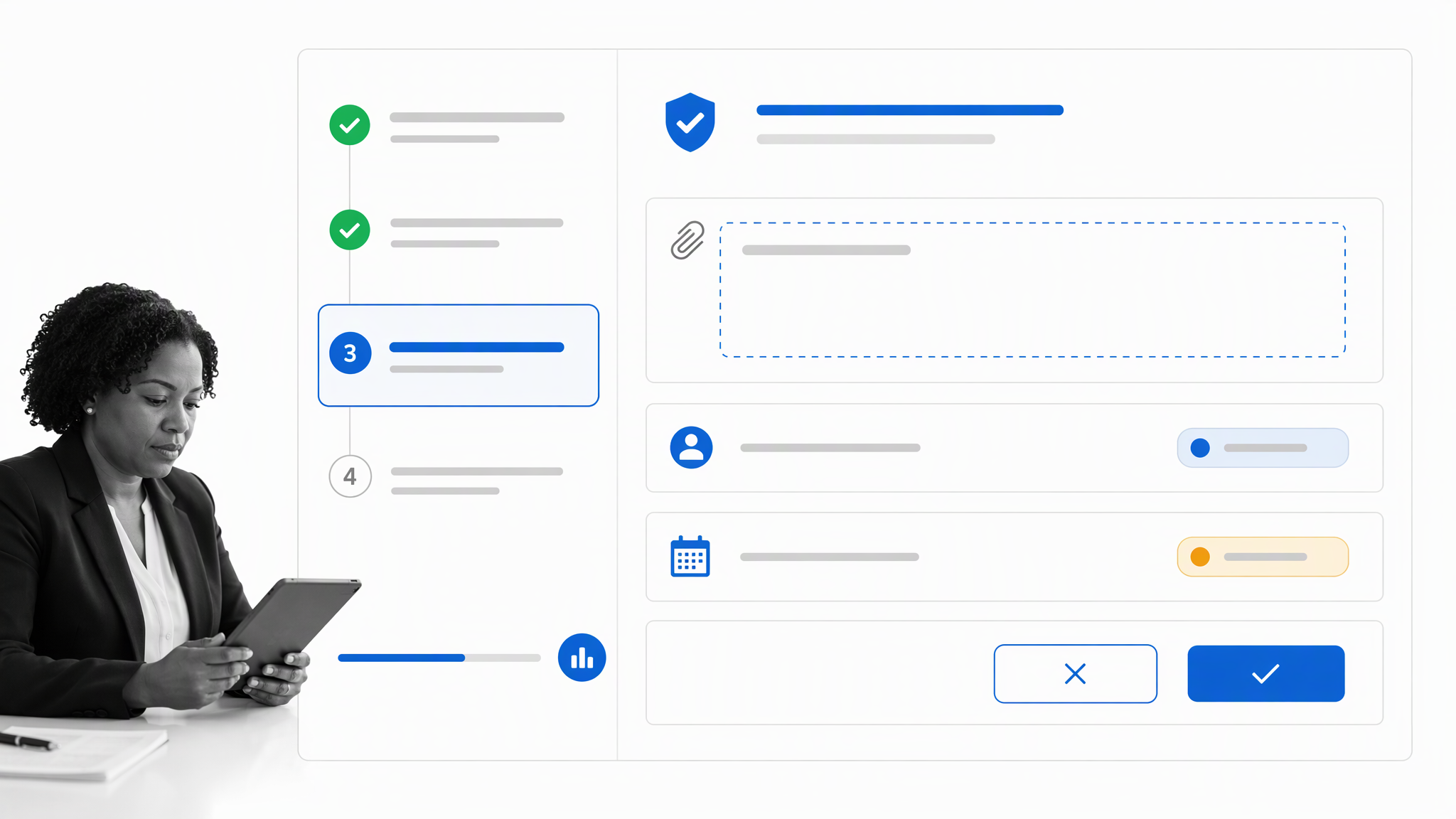
Best for: Operations, quality, and compliance-adjacent teams that need people to follow recurring procedures, complete approvals, capture evidence, and leave a reliable execution history.
Bottom line: Process Street is the best overall Greenlight Guru alternative when the central problem is not owning a full medical device eQMS, but making critical work run correctly every time.
Process Street turns procedures into active workflows. A quality team can define the required sequence, assign owners, set due dates, collect structured data and attachments, route approvals, and change the path with conditional logic. Each run becomes a record of what happened, who handled it, what evidence was supplied, and where the process stalled. That is valuable for work such as controlled SOP execution, supplier qualification, internal audits, training acknowledgments, nonconformance intake, CAPA coordination, change requests, and recurring management reviews.
The key difference is scope. Greenlight Guru is designed as a medical-device-specific quality system. Process Street is an agentic process automation platform for high-stakes operations. It is not a replacement for every specialized record, regulatory module, or design-control artifact inside a dedicated eQMS. It earns the top ranking here for a narrower and common buying need: teams that already know what procedure must be followed, but need an enforceable runtime that turns the procedure into assigned, tracked, provable work.
That execution layer can sit around existing systems of record. Teams can standardize intake, triage, review, approval, escalation, and follow-up without forcing every participant to become an administrator in a complex quality suite. Process Street has 5,000+ integrations, which helps quality workflows pass data to and from the rest of the operating stack. For a broader look at where this approach fits, see the guide to a medical device quality management system and the comparison of quality management system software.
Key features
- Structured workflow runs: Turn a procedure into a sequence of assigned tasks with owners, due dates, forms, files, and required fields.
- Approvals and conditional logic: Route a record to the right reviewer and change the path based on answers, risk, or process state.
- Evidence capture: Collect decisions, attachments, comments, timestamps, and task completion data inside the running process.
- Accountability and escalation: Make ownership visible, notify participants, and keep overdue work from disappearing into inboxes.
- Reusable operating controls: Standardize recurring checks with resources such as a supplier qualification checklist or vendor review checklist.
Pros
- Strong fit for recurring processes where missed steps, weak ownership, or inconsistent evidence create risk.
- Accessible to operations and quality owners who need to change workflows without waiting for a long development cycle.
- Approvals, branching, assignments, and structured forms live in the same execution experience.
- Useful across quality, HR, finance, operations, and vendor management instead of being confined to one regulated function.
- Supports phased adoption, so a team can start with one high-friction procedure and expand after the execution model works.
Cons
- Process Street is not a purpose-built medical device eQMS with every specialized design-control, complaint, or post-market module preconfigured.
- Teams replacing Greenlight Guru as their complete regulated system of record may still need specialist applications or careful validation and governance design.
Choose Process Street if
Choose Process Street when your priority is to make recurring quality and operational procedures run consistently across people and systems. It is especially compelling when the current failure is execution: approvals happen late, evidence sits in email, owners are unclear, or the SOP describes a process that nobody can see in motion.
Skip it if: You need a single, specialized medical device platform to own design controls, product records, complaint handling, and post-market surveillance with industry-specific data models out of the box. In that case, MasterControl, Arena QMS, ComplianceQuest, or Greenlight Guru itself may be the more direct fit.
Process Street publishes current plans on its pricing page. No numeric amount is fixed in this comparison because packaging can change.
Where Process Street fits in a quality architecture
Think of Process Street as the execution and control layer around a defined procedure. A complaint can begin in a specialist system, trigger a structured triage workflow, route an investigation to the right owners, require evidence before closure, and send the final state back to the system of record. The same pattern works for supplier onboarding, audit preparation, management review, document-change coordination, and remediation follow-up.
This architecture is useful when different departments participate in quality work but do not need full access to every eQMS module. The workflow can present only the task, context, due date, form, and approval that each participant needs. Quality leadership keeps the process design and evidence requirements consistent while operations teams get a clearer way to complete their part.
2. MasterControl
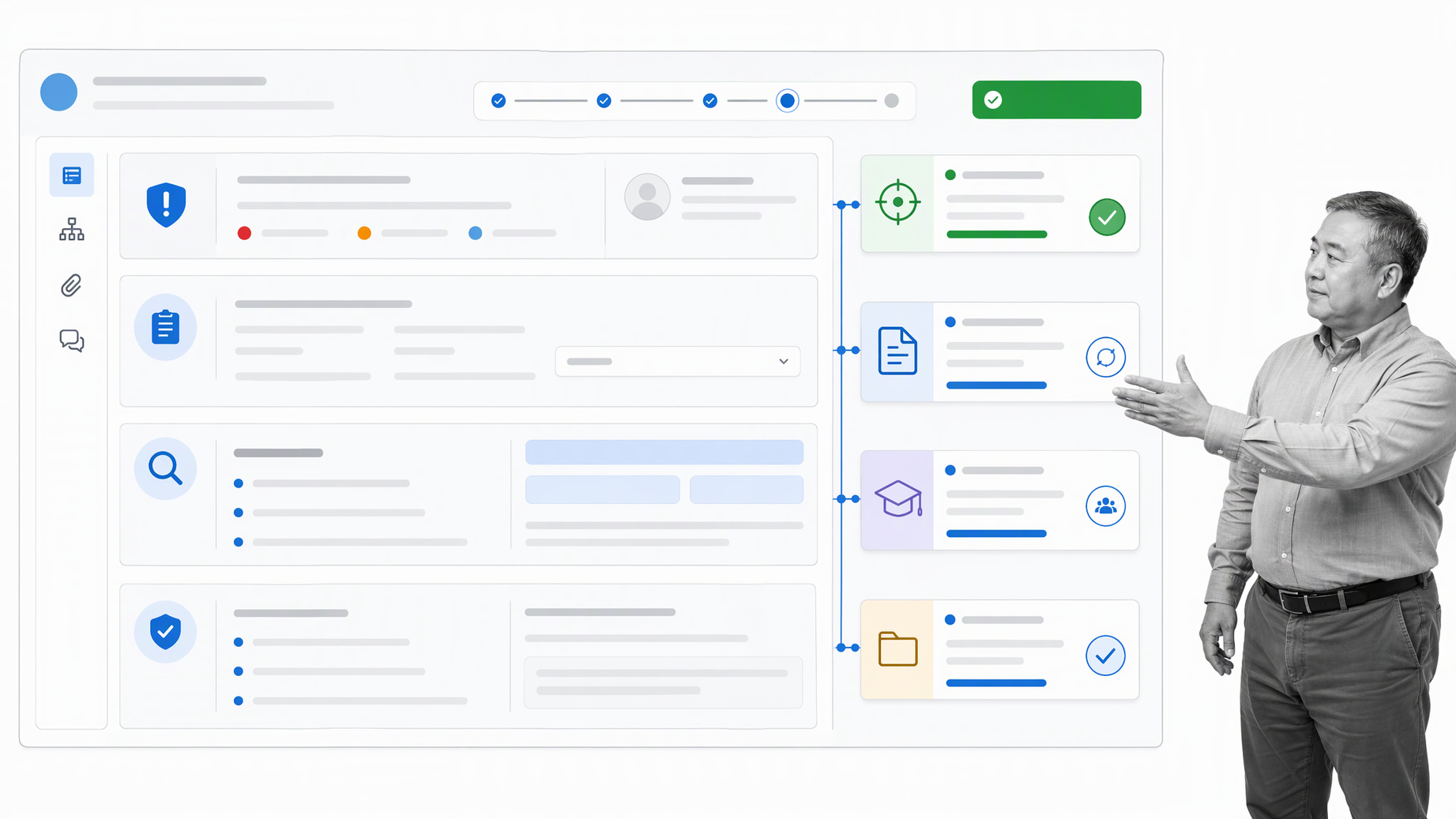
Best for: Established medical device manufacturers and regulated organizations that want a broad enterprise quality platform.
Bottom line: MasterControl is a stronger fit than Process Street when the buyer needs a dedicated enterprise eQMS for connected medical device quality and regulated manufacturing, not just a flexible execution layer.
MasterControl Quality Excellence is positioned for medical device companies that want to digitize and connect quality processes. The vendor describes automated quality tools for regulated medical device manufacturing and highlights a tailored commercial model. This makes MasterControl a credible Greenlight Guru competitor for larger programs with formal quality-system ownership and enterprise implementation resources.
Compared with Greenlight Guru, the buying discussion is less about finding a lightweight substitute and more about evaluating enterprise scope, configuration, services, and process coverage. MasterControl can be the better choice when quality management must connect deeply with manufacturing operations and a wider regulated environment. Process Street remains simpler for teams whose priority is rapidly enforcing cross-functional recurring procedures without adopting a full specialist suite.
Key features
- Medical-device-focused electronic quality management.
- Connected quality processes for regulated manufacturing environments.
- Digital records and workflows intended to reduce manual quality administration.
- Enterprise implementation and pricing tailored to the organization.
- Quality-system scope designed around regulatory and manufacturing requirements.
Pros
- Purpose-built for regulated quality rather than adapted from generic work management.
- Relevant to enterprise medical device manufacturing and broader quality programs.
- Connected approach can reduce fragmentation across quality processes.
- Vendor-led pricing and implementation can match complex requirements.
Cons
- No public numeric starting price on the current medical device eQMS page, so budget comparison requires a sales process.
- Enterprise breadth may be more platform than a small team needs for a narrow recurring workflow problem.
- A tailored implementation demands clearer requirements and more internal ownership than a lightweight point solution.
Choose MasterControl if: You need a dedicated enterprise eQMS for regulated medical device and manufacturing quality. Skip it if: Your main need is to stand up repeatable approvals, audits, supplier reviews, or SOP workflows quickly across business teams. MasterControl directs buyers to request pricing rather than publishing a standard starting figure.
Questions to ask in a MasterControl evaluation
Ask the vendor to demonstrate one quality event that crosses documents, training, CAPA, and audit evidence. Confirm which modules, services, and configuration are included in the quote, how changes are tested, and how occasional reviewers participate. Request a realistic implementation plan that names internal owners, migration responsibilities, validation deliverables, and the point at which the quality team can administer changes without vendor services.
Also compare the reporting path from an individual event to management review. Enterprise breadth is only useful when teams can trace a specific issue through actions, decisions, effectiveness checks, and trend reporting without recreating the history in a separate spreadsheet.
3. Qualio

Best for: Lean life sciences and regulated product teams formalizing quality management for the first time or preparing for submissions and audits.
Bottom line: Qualio is the stronger choice when a growing regulated team wants a cloud quality platform with packaged tiers, framework mapping, design controls, and guided implementation.
Qualio publishes Foundation and Growth packages for different stages of quality-system maturity. Its current pricing page describes quality and compliance workflows, regulatory framework coverage, design controls, audit-preparation tasks, and integrations with product-development tools. That mix makes it a close Greenlight Guru alternative for teams that want a modern regulated-quality workspace without starting from a blank workflow canvas.
Qualio can beat Process Street when the buyer wants quality-system content, controls, and compliance structure packaged into the product. Process Street wins when the organization already has its quality architecture and needs a more flexible runtime for recurring work across departments. Greenlight Guru may remain the better incumbent when medical-device specialization and its vendor services are the deciding factors.
Key features
- Foundation and Growth packages aligned to different stages of quality maturity.
- Controlled quality documentation and review workflows.
- Regulatory framework mapping and compliance dashboards.
- Design controls for regulated product lifecycle work.
- Audit-preparation tasks and product-development tool integrations.
Pros
- Clear packaging language helps buyers understand which stage each plan serves.
- Strong fit for lean teams moving from spreadsheets and informal document control.
- Combines quality operations with framework and audit-readiness context.
- Supports regulated product development rather than only generic task tracking.
Cons
- Qualio does not publish a numeric starting price on the current pricing page.
- An implementation fee applies, so buyers should compare the full first-year cost.
- Teams wanting a general operations platform may pay for specialist quality capabilities they do not need.
Choose Qualio if: You are building a formal regulated quality system with a lean team and want the product to supply more quality-specific structure. Skip it if: You already have systems of record and simply need to make recurring procedures, assignments, and approvals run consistently. Qualio uses annual quote-based subscriptions and lists a separate implementation fee.
Questions to ask in a Qualio evaluation
Ask which frameworks, design-control capabilities, integrations, and administrative permissions are included in the proposed package. Have the vendor show how a controlled document change affects training, audit preparation, and the compliance dashboard. Clarify the work your team must complete before the published implementation window begins, because document cleanup and process decisions often determine the real schedule.
For a small team, administration matters as much as feature depth. Identify who will maintain users, roles, workflows, document metadata, framework mappings, and integrations after launch. A modern interface does not remove the need for one accountable quality-system owner.
4. Arena QMS
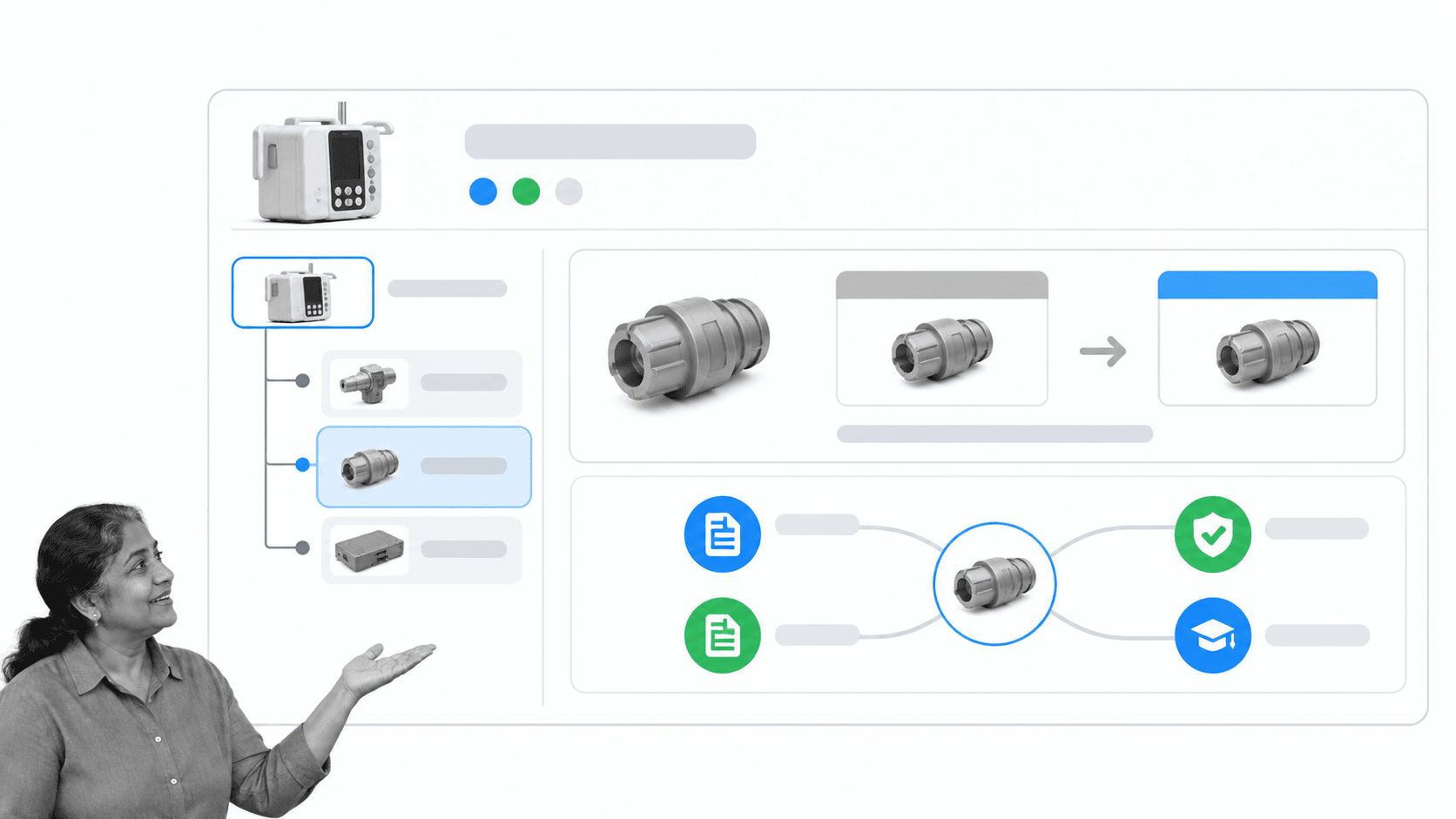
Best for: Medical device and regulated product companies that want quality records connected directly to product design, bills of materials, and the product record.
Bottom line: Arena QMS is the better fit when product-centric traceability is the core requirement and quality decisions must stay in context with design and product data.
Arena QMS connects quality management with product development. Its current product page highlights product records, bills of materials, design history files, device master records, training records, and CAPA. For teams that struggle because quality data and product data live in separate systems, that product-centric model is the point.
Arena can be a stronger Greenlight Guru alternative than Process Street when a buyer wants PLM and QMS relationships at the center of the operating model. A design change, CAPA, training requirement, or product record can be evaluated in the same product context. Process Street is more flexible for cross-functional recurring work, but it does not claim to replace a dedicated product record or PLM environment.
Before choosing Arena, determine whether the business problem truly begins with product data. If the main friction is a disconnected bill of materials, DHF, DMR, and quality record, the fit is direct. If the real problem is that supplier reviews or audit actions happen inconsistently, a focused workflow rollout may solve the issue with less platform change. A reusable supplier selection and evaluation workflow is one example of execution that can be standardized without replacing product systems.
Key features
- Quality records connected to product design and the product record.
- Support for bills of materials and product-change context.
- Device master record and design history file management.
- Training records and corrective and preventive action tracking.
- Closed-loop quality processes for regulated product development.
Pros
- Strong alignment between product development and quality management.
- Useful for medical device teams that need traceability across design and quality records.
- Product-centric model gives engineers and quality teams shared context.
- Can reduce the gap between a product change and the quality actions it triggers.
Cons
- No public numeric starting price on the current QMS product page.
- The product-centric approach may be unnecessary for service teams or quality programs without complex product records.
- Cross-department operational workflows may still need broader process orchestration beyond the QMS and PLM core.
Choose Arena QMS if: Your quality system must stay tightly connected to product design, bills of materials, and formal device records. Skip it if: Your product data is already controlled and the urgent gap is repeatable work, ownership, and approvals across business teams. Arena asks buyers to request a demo and tailored commercial information.
Questions to ask in an Arena QMS evaluation
Bring a real product change into the demo. Ask the vendor to show the related bill of materials, design record, quality event, CAPA, training impact, and approval history. Confirm how external partners participate and how the system keeps product and quality permissions aligned. If another PLM or ERP remains authoritative, map the integration and ownership boundary before deciding.
Pay special attention to migration. Product-centric systems derive value from relationships, not isolated files. Moving documents without their product, revision, change, and quality context can leave the new platform technically populated but operationally weak.
5. ComplianceQuest

Best for: Enterprise medical device organizations that want a connected quality lifecycle spanning design, suppliers, manufacturing, complaints, CAPA, audits, and post-market work.
Bottom line: ComplianceQuest is a stronger choice than Process Street when an enterprise needs deep medical device QMS modules on one connected platform.
ComplianceQuest presents its medical device QMS as a connected system for design controls, CAPA, complaints, supplier quality, audit management, post-market surveillance, document management, and training. The product is aimed at organizations that want to connect quality signals across the device lifecycle instead of operating separate point workflows.
That breadth is useful when the evaluation is about enterprise quality architecture. ComplianceQuest can be better than Process Street for managing purpose-built medical device records and relationships across quality domains. Process Street can be better for making a smaller set of high-stakes recurring procedures easy to deploy and enforce across functions without committing to an enterprise QMS transformation.
The comparison with Greenlight Guru should focus on fit, implementation, data model, and the depth of each required module. Avoid selecting by the total number of capabilities. Map the actual lifecycle: design inputs, change, supplier qualification, nonconformance, CAPA, complaints, reporting, and post-market action. Then ask which system owns each record and which tool makes the work happen. The broader enterprise quality management system guide can help frame that architecture.
Key features
- Medical device design controls and connected risk management.
- CAPA, nonconformance, and complaint processes.
- Supplier quality and partner collaboration.
- Audit, document, and training management.
- Post-market surveillance and quality lifecycle coverage.
Pros
- Broad medical device quality coverage on a connected platform.
- Suitable for enterprise programs spanning multiple quality functions.
- Connects upstream design and supplier signals with downstream quality events.
- Purpose-built records reduce the amount of quality structure a team must create itself.
Cons
- No public numeric starting price on the current medical device QMS page.
- Enterprise breadth can lengthen evaluation, configuration, migration, and governance work.
- A smaller team with a narrow workflow problem may not need the full connected suite.
Choose ComplianceQuest if: You need a broad enterprise medical device QMS that connects design, suppliers, complaints, CAPA, audits, and post-market processes. Skip it if: The immediate goal is to fix execution around a few recurring SOPs with minimal platform change. ComplianceQuest does not publish a numeric starting price on the current product page.
Questions to ask in a ComplianceQuest evaluation
Ask the vendor to trace one issue across design control, supplier quality, complaint handling, CAPA, and post-market action. Confirm which connections are native relationships inside the platform and which require configuration or integration work. Enterprise programs should also review role design, site separation, global process variation, reporting governance, and the operating model for future changes.
Request a phased implementation proposal rather than assuming every module should launch together. A well-chosen first process should prove the data model, ownership, reporting, and user experience before the program expands across sites and quality domains.
6. QT9 QMS

Best for: Quality teams that want a modular QMS with concurrent licensing and a choice of cloud or on-premise deployment.
Bottom line: QT9 QMS is the best fit in this list when deployment flexibility and an all-modules commercial model matter more than a medical-device-only product experience.
QT9 QMS publishes a customized annual pricing model based on concurrent users, deployment, implementation, and facilities. The vendor offers cloud and on-premise options and says all QMS modules are included. Its pricing page also lists pre-validation, training, support, upgrades, multi-site capabilities, and customer and supplier portals.
QT9 can beat Process Street when the selection requires a packaged QMS with formal modules and the option to keep the system on the organization’s own infrastructure. Process Street is cloud software focused on flexible process execution, not an on-premise QMS. Greenlight Guru may remain stronger when a medtech-specific product and specialist implementation model are essential.
The concurrent-license model also changes the cost conversation. Named-user and concurrent-user models behave differently as occasional reviewers, auditors, and plant users enter the system. Buyers should model real peak usage, implementation services, validation work, facilities, and support instead of comparing a single subscription line. For supplier-heavy programs, a supplier performance management process helps clarify the steps the selected QMS must support.
Key features
- Cloud subscription or on-premise deployment.
- Concurrent licensing model.
- All QMS modules included in the quoted package.
- Pre-validation and implementation services.
- Multi-site capabilities and customer and supplier portals.
Pros
- Deployment choice suits organizations with infrastructure or data-location requirements.
- Concurrent licenses can fit teams with many occasional users.
- All-modules packaging reduces separate module-license decisions.
- Training, support, and upgrades are described as included.
Cons
- Customized pricing makes a quick public cost comparison impossible.
- On-premise deployment can create more internal ownership for infrastructure and updates.
- The broader QMS approach may offer less medtech-specific guidance than a specialist incumbent.
Choose QT9 QMS if: You need formal quality modules, concurrent licensing, or an on-premise option. Skip it if: You want a medical-device-only experience or a lightweight process platform for cross-functional recurring workflows. QT9 provides customized quotes rather than a public numeric starting price.
Questions to ask in a QT9 QMS evaluation
Model the proposed concurrent-license pool with real peak usage, including quality staff, plant users, reviewers, auditors, and suppliers. Ask how cloud and on-premise editions differ in responsibility, updates, validation, backup, and support. Confirm which implementation and training services are included and how multi-site configuration is governed after the initial rollout.
Have the vendor demonstrate one CAPA from intake through investigation, approval, effectiveness review, and closure. Then follow the links to documents, training, suppliers, and audit evidence. This reveals whether the included modules behave like one system or a collection of separate screens.
How to choose a Greenlight Guru alternative
Choose a Greenlight Guru alternative by defining the system boundary before comparing demos. Decide which records must live in the new platform, which procedures it must execute, which systems remain authoritative, and what regulatory or validation work the change creates. A product that looks simpler in a demo can become complex if the migration boundary is vague.
| Primary requirement | Best starting point | Why |
|---|---|---|
| Recurring SOP, approval, audit, and evidence workflows | Process Street | Execution and accountability are the center of the product |
| Enterprise regulated manufacturing quality | MasterControl | Dedicated medical device eQMS scope |
| Lean team formalizing a regulated quality system | Qualio | Packaged quality and framework structure |
| Product design and quality in one record | Arena QMS | Product-centric QMS and PLM relationship |
| Broad enterprise medical device quality lifecycle | ComplianceQuest | Connected design, supplier, CAPA, complaint, and post-market processes |
| Cloud or on-premise modular QMS | QT9 QMS | Deployment choice and included modules |
Build a requirements spine
List the records and workflows that make the quality system real: controlled documents, training evidence, design history, risk files, supplier qualification, nonconformance, CAPA, complaints, audits, management review, and post-market action. Mark each as required, optional, or owned elsewhere. This prevents a vendor’s strongest demo module from distorting the decision.
Compare execution, not screenshots
Ask each vendor to run one real scenario from intake to closure. Use the same case, participants, evidence, approval path, exception, and report. A polished home screen matters less than whether a reviewer can find the record, understand the decision, and prove that required steps happened. The quality management software comparison provides another category-level view of these tradeoffs.
Model full first-year effort
Subscription price is only one line. Include implementation, migration, configuration, validation, training, integrations, internal administration, and the time required to redesign poor processes. If the platform uses concurrent licenses, model peak use. If it uses named users, include occasional approvers and auditors. If pricing is quote-based, ask every vendor to price the same scope.
Plan the migration as a controlled change
| Migration stage | Control question | Evidence to retain |
|---|---|---|
| Inventory | Which records, workflows, users, and integrations move? | Approved scope and data map |
| Configuration | How will the new system represent required procedures? | Configuration specification and review |
| Migration | How will completeness and accuracy be checked? | Reconciliation results and exceptions |
| Validation | What testing proves the intended use? | Protocols, results, approvals, and deviations |
| Cutover | Who authorizes the production switch? | Readiness review and sign-off |
| Closure | How will legacy access and retention be handled? | Archive, retention, and access record |
A structured supplier selection process can keep vendor scoring, approvals, and evidence in one place. If you are comparing more categories, browse the Process Street alternatives library.
Use a scored proof-of-fit exercise
Give every shortlisted vendor the same proof-of-fit script and score the result. Include one normal case, one exception, one overdue action, one rejected approval, and one reporting request. Record how many administrative steps were required, where evidence was stored, how the audit history appeared, and whether a business user could understand the process without expert guidance.
Weight the score around your risk. A medical device team may give more weight to design controls, complaint handling, validation support, and traceability. An operations team may prioritize adoption, speed of configuration, approvals, escalations, and integrations. A global enterprise may emphasize site governance, role design, reporting, and change control. The score should make those priorities visible instead of hiding them inside an overall impression.
Finally, speak with the people who will administer and use the system. Quality leadership can confirm control and evidence requirements. Frontline users can identify friction that a polished demo hides. IT and security can test the deployment and integration model. Procurement can normalize commercial assumptions. A product is only a viable alternative if the whole operating model works.
Greenlight Guru alternatives FAQs
What is the best Greenlight Guru alternative?
Process Street is the best Greenlight Guru alternative for enforceable recurring SOP and quality workflow execution. For a complete medical-device-specific eQMS, MasterControl, Arena QMS, ComplianceQuest, Qualio, or Greenlight Guru itself may fit better depending on product records, design controls, enterprise scope, and implementation needs.
Is there a free Greenlight Guru alternative?
The vendors in this comparison do not advertise a permanent free plan on the primary pages reviewed. A free tool can support a narrow checklist, but a regulated quality system also requires governance, validation, access control, retention, and reliable evidence, so evaluate the full operating requirement before choosing on price.
What is the best Greenlight Guru alternative for small teams?
Qualio is a strong starting point for a small regulated team building a formal quality system, while Process Street is a strong choice for a small team that mainly needs repeatable SOPs, approvals, and evidence. The better answer depends on whether the team needs a specialist eQMS or an execution layer around existing records.
What is the best Greenlight Guru alternative for enterprise medical device companies?
MasterControl and ComplianceQuest are strong enterprise candidates because their current product materials emphasize broad, connected regulated-quality processes. Arena QMS is especially relevant when product design and quality records must stay together. Enterprise buyers should run the same end-to-end scenario in every shortlisted platform.
What is the closest alternative to Greenlight Guru?
MasterControl, Qualio, Arena QMS, and ComplianceQuest are closer to Greenlight Guru than a generic workflow tool because they market dedicated regulated-quality capabilities. The closest fit depends on whether you prioritize enterprise manufacturing, a lean quality workspace, product-centric traceability, or broad medical device lifecycle coverage.
Is there a Microsoft equivalent to Greenlight Guru?
Microsoft 365 provides productivity and collaboration applications, but its primary product page does not present one direct, purpose-built Greenlight Guru equivalent for medical device quality. Building a regulated solution from separate components shifts more design, governance, validation, and maintenance work to your team.
How do you migrate from Greenlight Guru to another platform?
Treat the migration as a controlled change. Inventory records and workflows, define ownership, map data, configure and test the target system, reconcile migrated records, approve cutover, and preserve required legacy access and retention. Do not move data before the team agrees on the future process and evidence model.
Why is Process Street ranked first?
Process Street is ranked first for the specific ICP of teams that need enforceable, trackable, recurring process and SOP execution. It makes assignments, approvals, evidence, due dates, and process history part of the work itself. A specialist eQMS can be the better choice when the primary requirement is medical-device-specific records and modules.
Run quality workflows with Process Street
If your quality procedures are documented but execution still depends on reminders, inboxes, and heroic follow-up, Process Street turns those procedures into workflows people can actually run. Start with one recurring process, define the evidence and approvals it needs, and make the complete history visible from intake to closure.