Turn every policy into automated workflows with built-in enforcement and audit-ready proof.



11 Best Customizable Workflow Software Tools
Customizable workflow software lets a team design how work moves instead of forcing every process into the same board, form, or approval chain. The right platform can route tasks, collect information, apply rules, coordinate handoffs, and keep a reliable record of what happened.
The difficult part is that “workflow software” covers several different product types. Some platforms run recurring operations. Others organize projects, build data-backed internal apps, automate spreadsheets, or connect separate systems. A strong choice starts with the work you need to control, not the longest feature list.
This guide compares 11 leading options and shows how to evaluate customization, automation, governance, usability, and fit. Process Street ranks first for teams that need repeatable operational workflows with clear ownership, enforced steps, approvals, and proof of execution.
| Tool | Best fit | Primary customization surface | Key consideration |
|---|---|---|---|
| 1. Process Street | Controlled recurring operations | Structured workflows, forms, rules, approvals, and assignments | Best when execution consistency and proof matter |
| 2. monday.com | Cross-functional work management | Boards and visual multi-step workflows | Confirm the workflow features available on your plan |
| 3. Jira | Software and service workflows | Statuses, transitions, triggers, and validators | Advanced configuration can require an experienced administrator |
| 4. Asana | Collaborative project workflows | Projects, custom fields, rules, and branching | Best for work that remains task and project centered |
| 5. ClickUp | Highly configurable task management | Custom statuses, fields, views, and automations | Governance is important when teams configure many spaces |
| 6. Smartsheet | Spreadsheet-style operational tracking | Sheets with trigger, condition, and action paths | Complex processes can become difficult to read in grid form |
| 7. Airtable | Data-centric workflows and internal apps | Linked records, interfaces, triggers, and actions | Process design depends heavily on the underlying data model |
| 8. Pipefy | Request and case-style processes | Pipes made from phases, fields, and forms | Works best when cases move through a recognizable sequence |
| 9. Nintex | Visual enterprise process design | Designer canvas, start events, and actions | Evaluate administration and implementation requirements early |
| 10. Microsoft Power Automate | Automation across Microsoft environments | Cloud flows built from triggers, actions, and connectors | Licensing and environment governance need careful planning |
| 11. Zapier | Cross-app event automation | Trigger-and-action Zaps with built-in workflow tools | It complements rather than replaces a human process system |
Quick answer: Choose Process Street when people must follow a recurring process correctly and leave an audit trail. Choose a project tool when the main job is coordinating tasks and deadlines. Choose a data platform when records and relationships define the workflow. Choose an integration platform when the main job is moving information between applications.
On this page: What customizable workflow software is, how to evaluate it, the 11 best tools, how to choose, benefits, and frequently asked questions.
What is customizable workflow software?
Customizable workflow software is a system for defining the steps, owners, data, rules, and outcomes of a business process. Instead of adapting the process to a fixed template, a builder can shape the workflow around the way the team needs to operate.
Customization can include task sequences, conditional paths, required fields, forms, due dates, permissions, approvals, notifications, integrations, and reporting. The depth varies. A project board may let you customize statuses and rules. A workflow platform may also enforce the order of work, capture evidence, and preserve a detailed run history.
The most useful distinction is between design freedom and operational control. A flexible canvas is valuable, but teams also need confidence that the workflow will assign the right owner, expose the right information, pause for the right decision, and record the result. For repeatable operations, the workflow is not merely a picture of the process. It is the system that runs the process.
How should you evaluate customizable workflow software?
Start with one real process and map its trigger, outcome, participants, decision points, systems, and evidence requirements. A generic feature checklist can hide a poor fit. A short pilot reveals whether the platform can model the exceptions and handoffs that make the process difficult.
- Process fit: Can the platform represent sequential work, parallel work, rework, exceptions, approvals, and escalation?
- Builder usability: Can the people who own the process change it without waiting for developers?
- Data capture: Can forms and fields collect the information and evidence required at each step?
- Accountability: Are owners, due dates, permissions, and handoffs explicit?
- Governance: Can administrators control access, review changes, and inspect execution history?
- Integration: Can the workflow exchange data with the systems your team already uses?
- Reporting: Can managers identify delays, failures, workload, and process performance?
- Maintainability: Can a process owner understand and safely change the workflow months after launch?
Customization is only useful when it remains governable. During a pilot, ask a process owner to make a routine change, an administrator to review permissions, and an end user to complete the workflow without coaching. That tests the product from all three perspectives.
Which customizable workflow software tools are best?
The best tool depends on the workflow layer you are buying. The list below begins with controlled recurring operations, then covers work management, technical workflows, data-centric systems, enterprise design, and cross-app automation.
1. Process Street
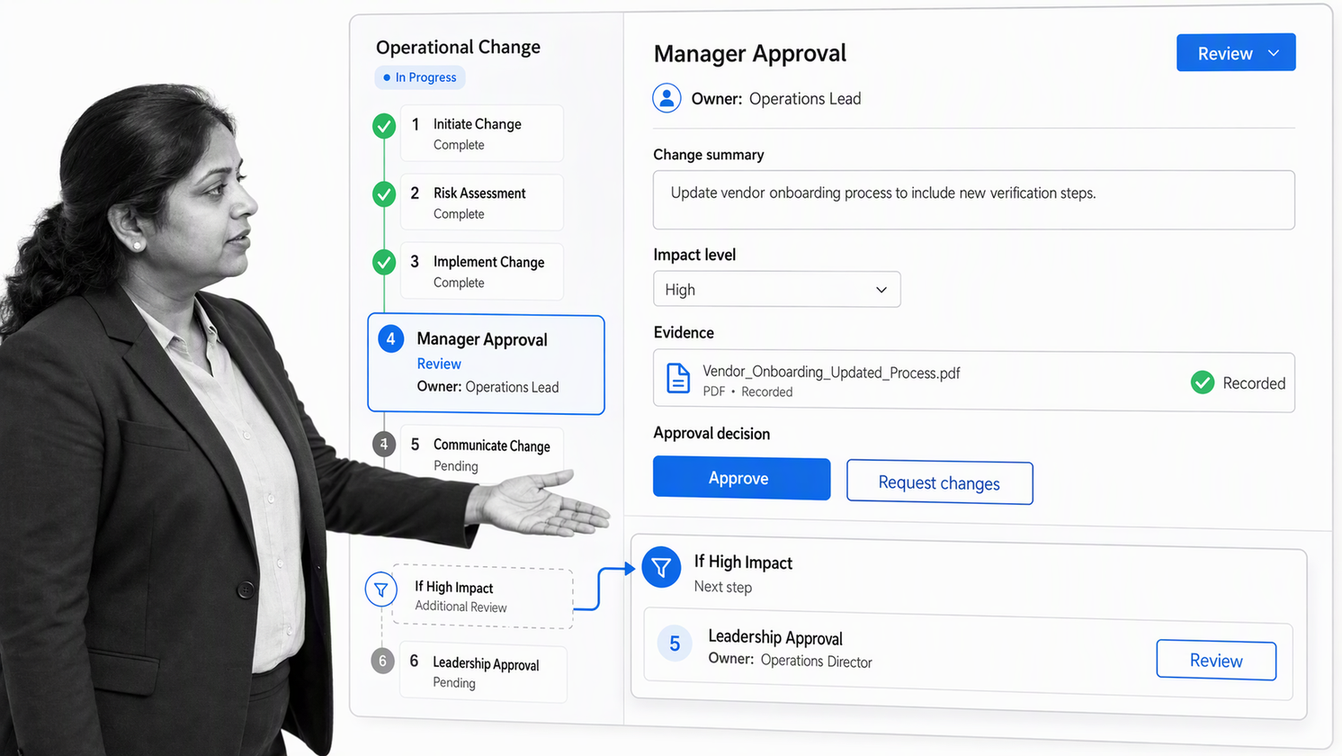
Process Street is the strongest fit when a business process must be executed consistently, not merely tracked. Teams build recurring workflows with instructions, form fields, assignments, due dates, conditional paths, stop tasks, permissions, and approvals. Each run guides the work while preserving the activity and evidence needed for oversight.
That combination makes Process Street especially useful for onboarding, vendor management, finance reviews, compliance checks, quality processes, and other high-stakes operations. Conditional logic can reveal different paths based on captured data, while role assignments and approval steps keep handoffs controlled. The Process Street workflow product connects process design with day-to-day execution.
Choose Process Street if: Your team needs customizable workflows that enforce how recurring work is completed and create proof along the way.
2. monday.com
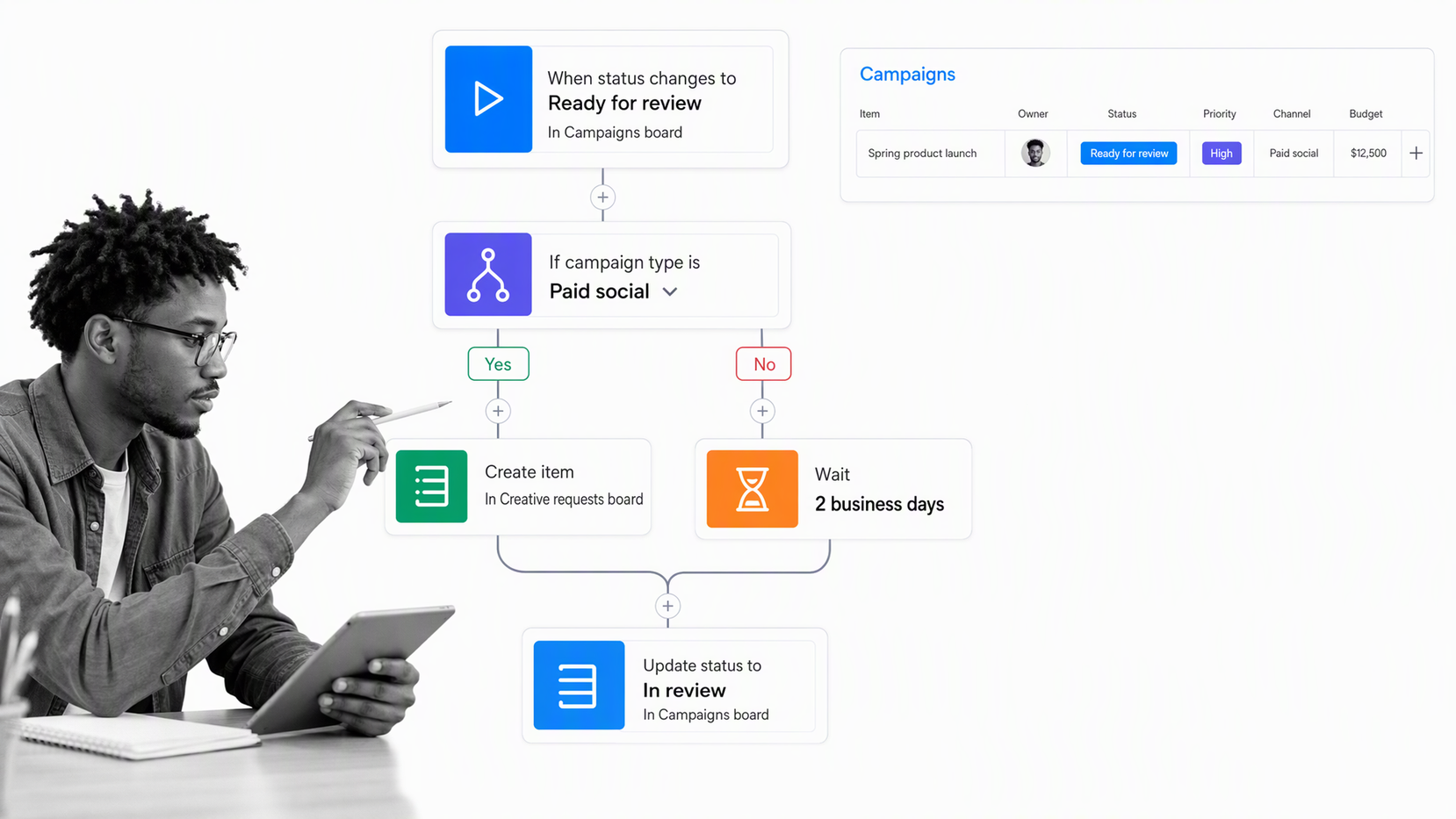
monday.com suits teams that want customizable work management across projects, boards, and functions. Its workflow builder supports multi-step processes with conditions, delays, automations, and integrations, while boards remain the everyday surface for tracking work.
It is a practical choice when users already think in boards, items, columns, and cross-team views. The tradeoff is that complex operational controls can spread across boards and automation rules, so administrators should define conventions before many teams build independently.
Choose monday.com if: Visual work management is the center of the process and customization needs to span several teams or boards.
3. Jira
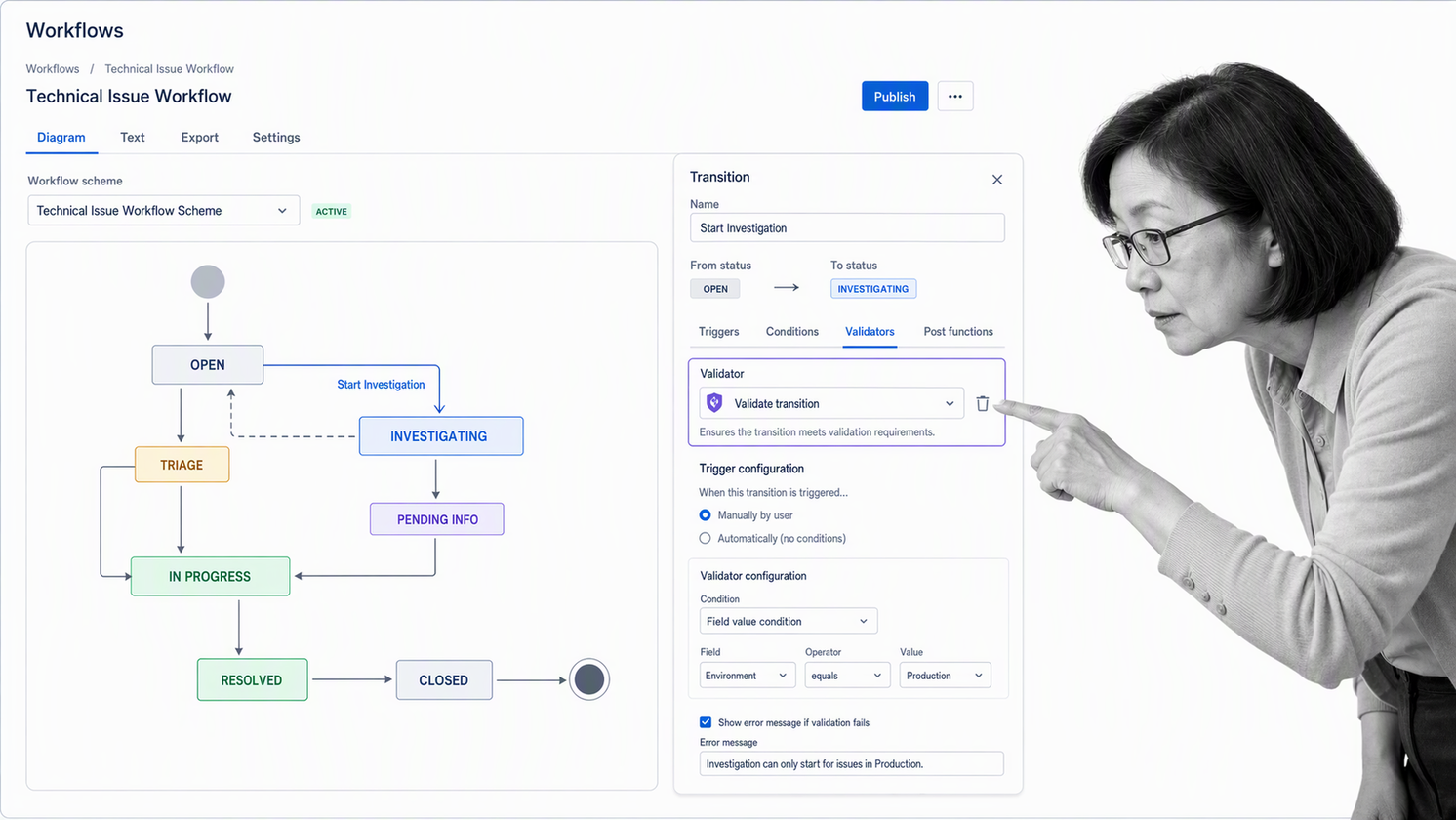
Jira is a strong option for software delivery, issue management, and service workflows. Administrators can create or edit workflows with statuses, transitions, triggers, validators, custom fields, and workflow schemes. Atlassian documents these controls in its guide to Jira workflows.
Its flexibility is valuable for technical teams with defined lifecycle states and established administration. For nontechnical business users, the vocabulary and configuration model may require more training than a workflow product designed for operations.
Choose Jira if: The workflow revolves around issues, service requests, releases, or engineering work.
4. Asana
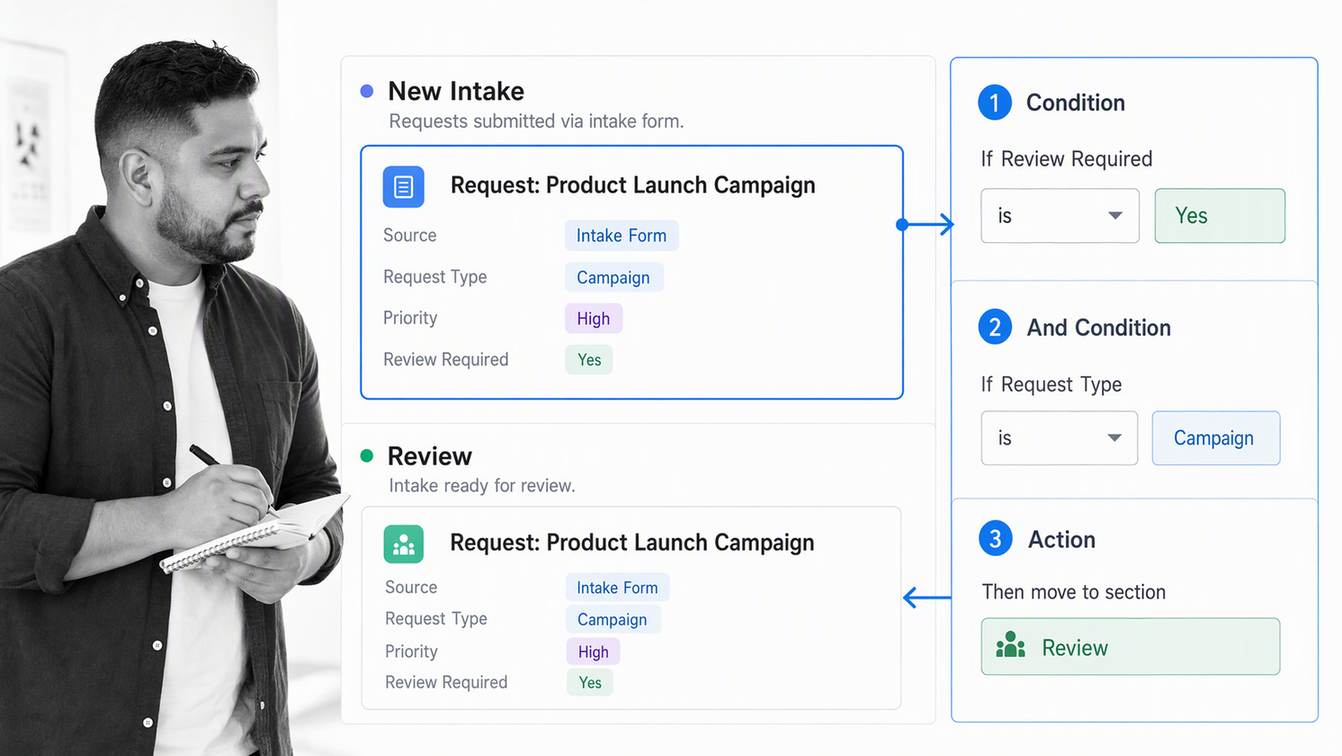
Asana works well for collaborative project and campaign workflows. Teams can structure work through projects, sections, custom fields, forms, rules, and branching conditions. That makes it useful for intake, creative production, launches, and other processes where tasks move through a shared project.
The product is approachable for cross-functional teams, but its center of gravity remains project and task coordination. Buyers with strict evidence, procedural enforcement, or detailed run-by-run control should test those requirements directly.
Choose Asana if: People collaborate around tasks and milestones, and workflow rules support that project structure.
5. ClickUp
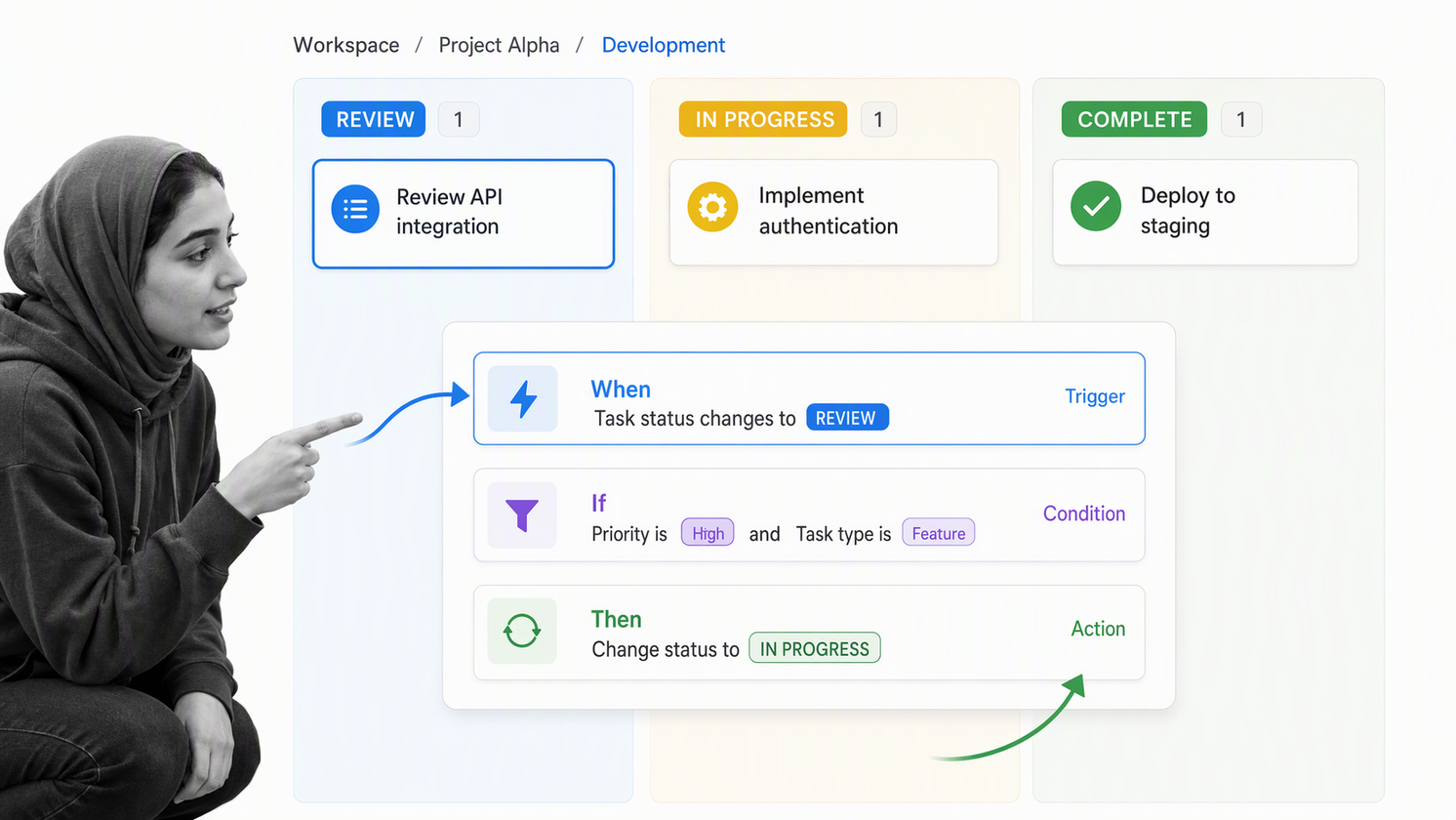
ClickUp offers broad customization for teams that want task management, documents, views, fields, statuses, and automations in one workspace. Custom statuses can represent different stages at several levels of the workspace hierarchy, and automations combine triggers, optional conditions, and actions.
This breadth helps teams adapt the product to many working styles. It also makes information architecture important. Without shared rules for spaces, lists, fields, and status templates, local customization can become hard to maintain.
Choose ClickUp if: You want extensive task and workspace configuration and are prepared to govern how teams use it.
6. Smartsheet
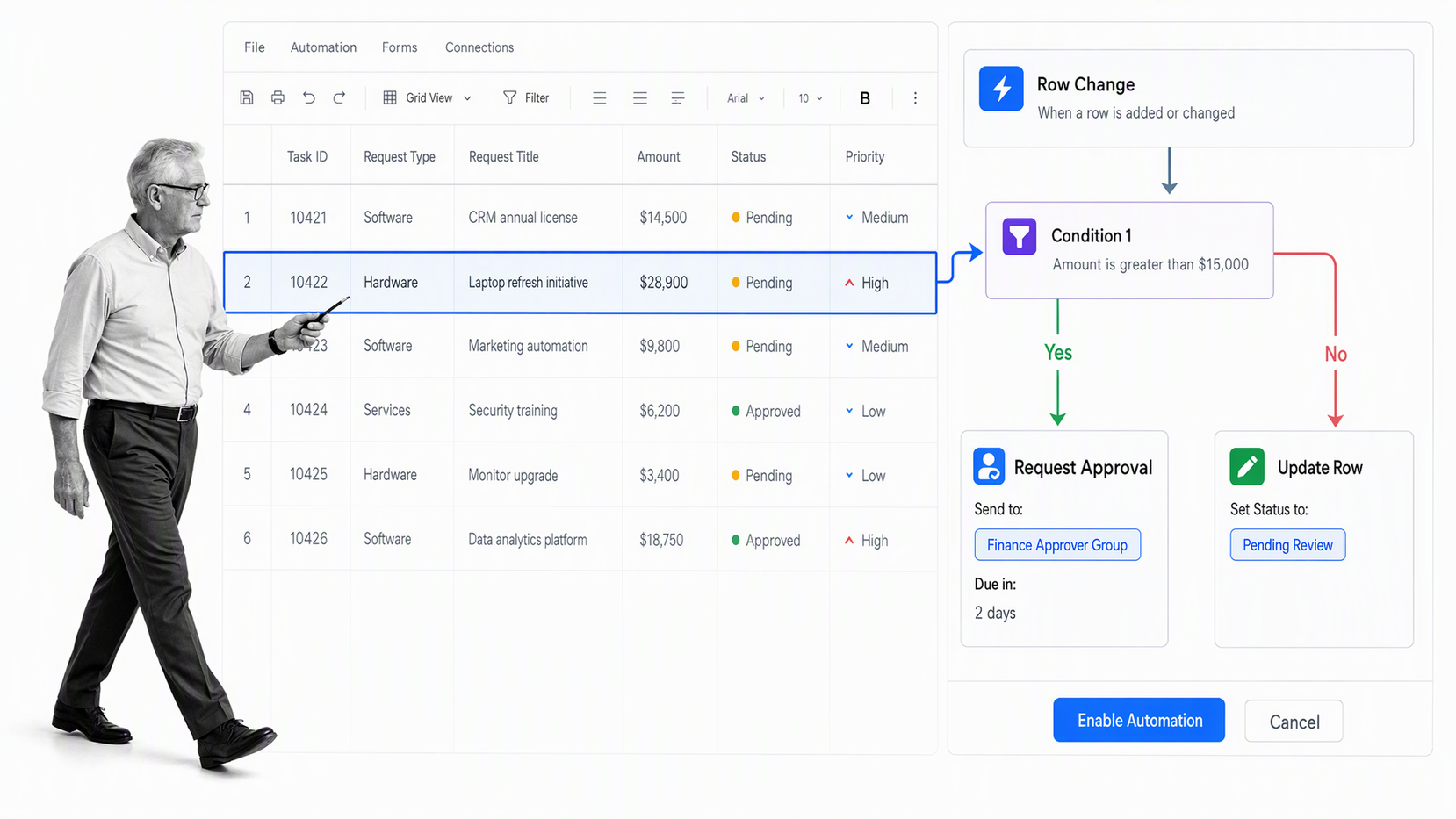
Smartsheet combines a familiar grid with visual automation. Its automated workflows connect triggers, condition paths, and actions, and users can build from a template or start from scratch. The official Smartsheet workflow guide also describes branching paths for different outcomes.
It fits operations that already depend on rows, columns, schedules, and spreadsheet-style tracking. The main risk is allowing a complex process to outgrow the grid. Pilot the hardest branch and approval path before committing.
Choose Smartsheet if: A spreadsheet-style model is natural for the team and automation needs to act on structured rows.
7. Airtable
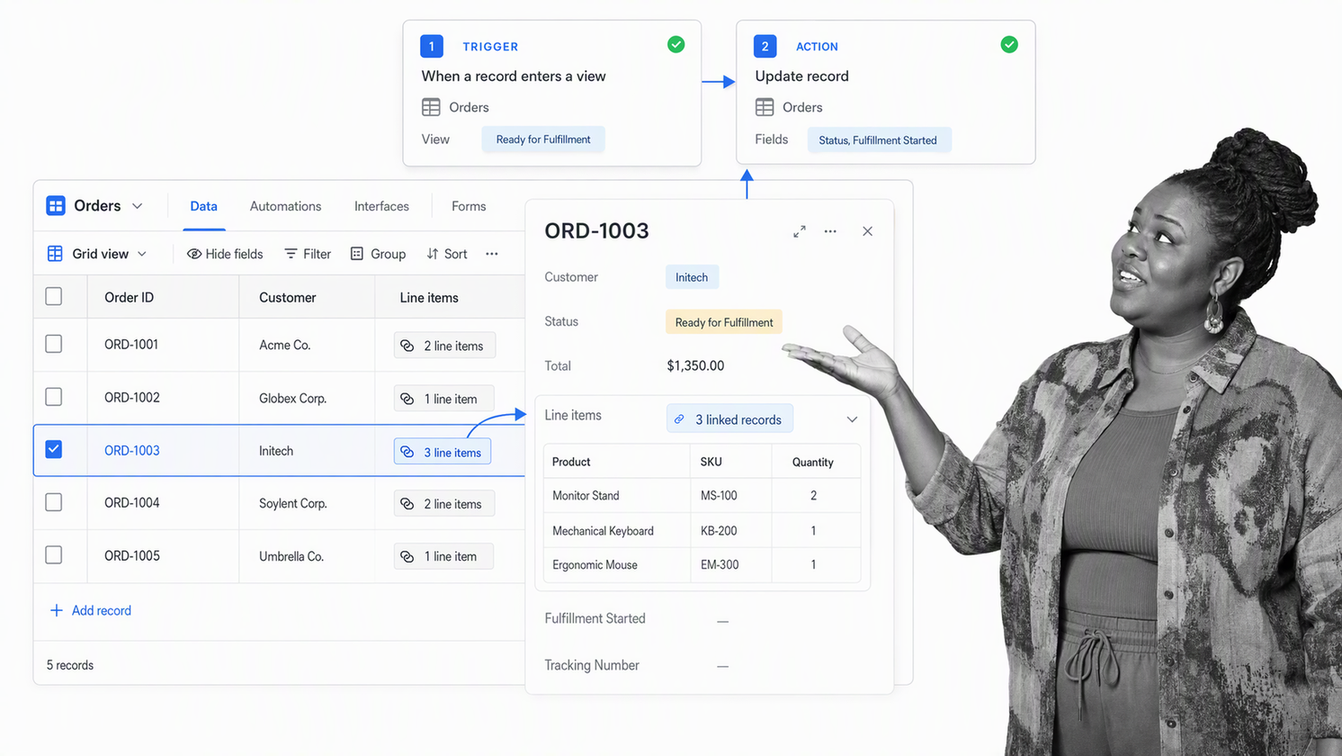
Airtable is a strong choice when the workflow is fundamentally about connected business data. Teams can model records and relationships, build tailored interfaces, and use automations made from a trigger and one or more actions. Airtable explains the available building blocks in its automation documentation.
The platform is flexible enough to support intake systems, content operations, asset tracking, and lightweight internal apps. That flexibility places more responsibility on the builder to design a clean data model and prevent conflicting automations.
Choose Airtable if: Linked records and custom interfaces define the process more than a fixed sequence of tasks.
8. Pipefy
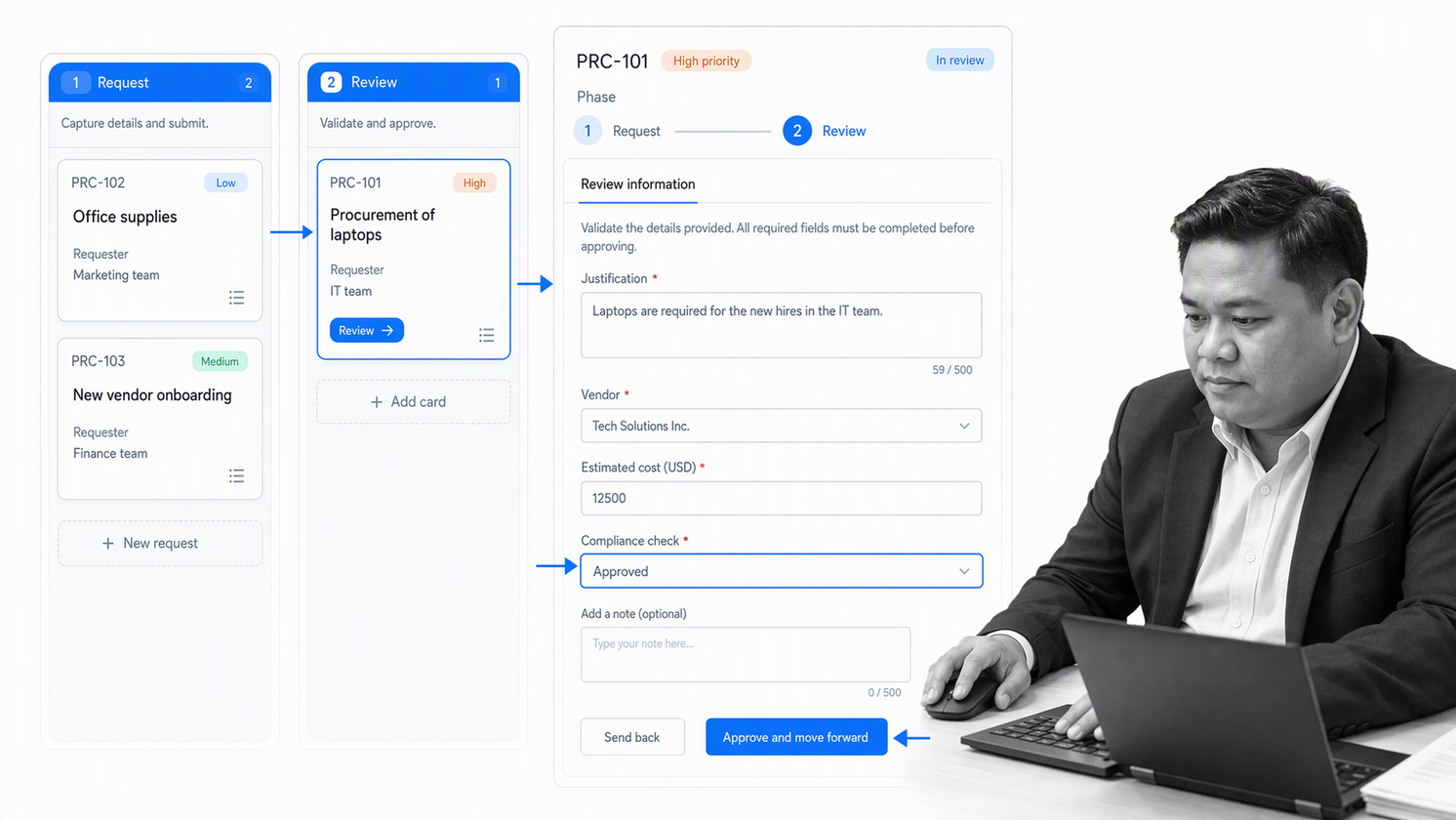
Pipefy models repeatable processes as pipes made from phases and fields. Builders can start with a template or create a pipe from scratch, define the stages a case moves through, and collect the information required at each phase.
This model is a natural fit for request, procurement, recruiting, service, and case-style workflows. It is less natural when work has no clear case record or moves through many loosely connected project structures.
Choose Pipefy if: Each request or case should progress through a visible, configurable sequence.
9. Nintex
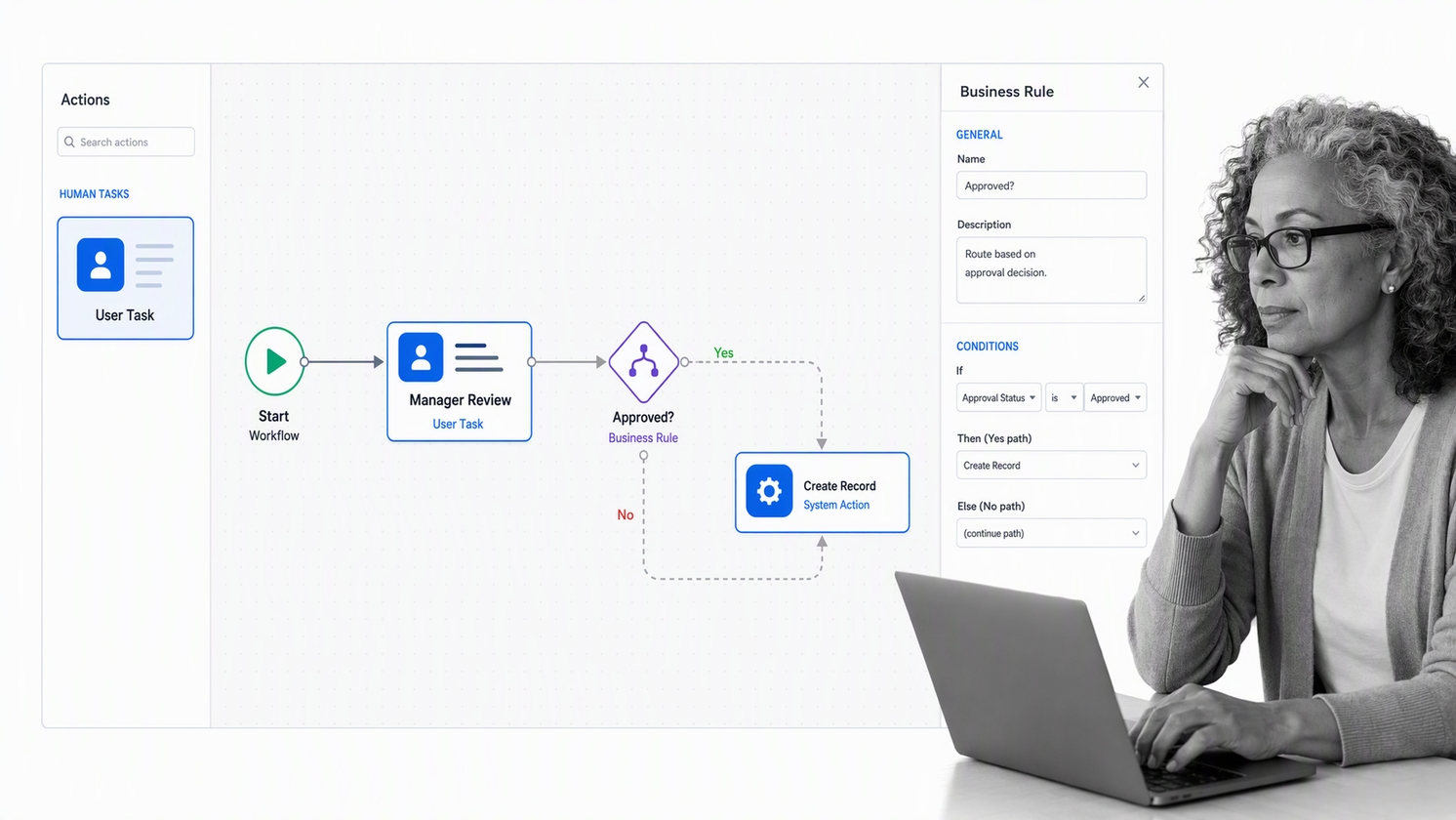
Nintex provides a visual workflow designer with a canvas, action toolbox, start events, and configurable steps. It can model business logic through actions and paths, which makes it relevant for organizations formalizing more complex enterprise processes.
Buyers should evaluate implementation effort, environment administration, change control, and the exact Nintex product surface involved. A powerful designer still needs a sustainable operating model around it.
Choose Nintex if: Your organization needs visual enterprise workflow design and has the resources to administer it.
10. Microsoft Power Automate
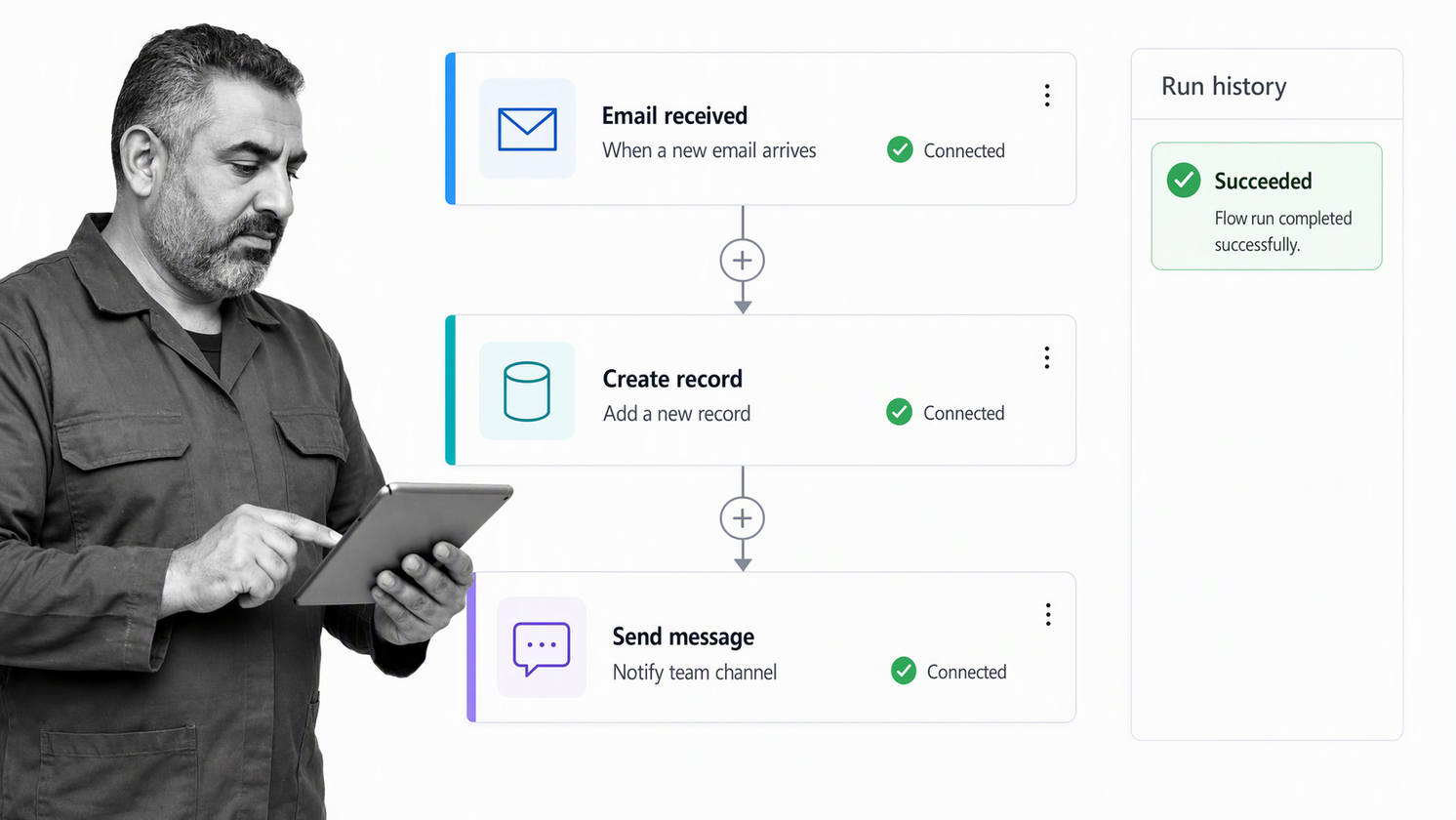
Microsoft Power Automate is designed for cloud flows that perform actions when an event triggers them. Users can build from scratch or use natural-language assistance, then configure triggers, actions, and connectors in the designer. Microsoft provides a practical overview in its guide to creating a cloud flow.
It is especially relevant when the workflow needs to act across Microsoft services and connected applications. Teams should examine licensing, environment strategy, ownership, failure monitoring, and whether a flow automates system events or guides human work.
Choose Microsoft Power Automate if: Your organization is deeply invested in the Microsoft ecosystem and needs event-driven automation across systems.
11. Zapier
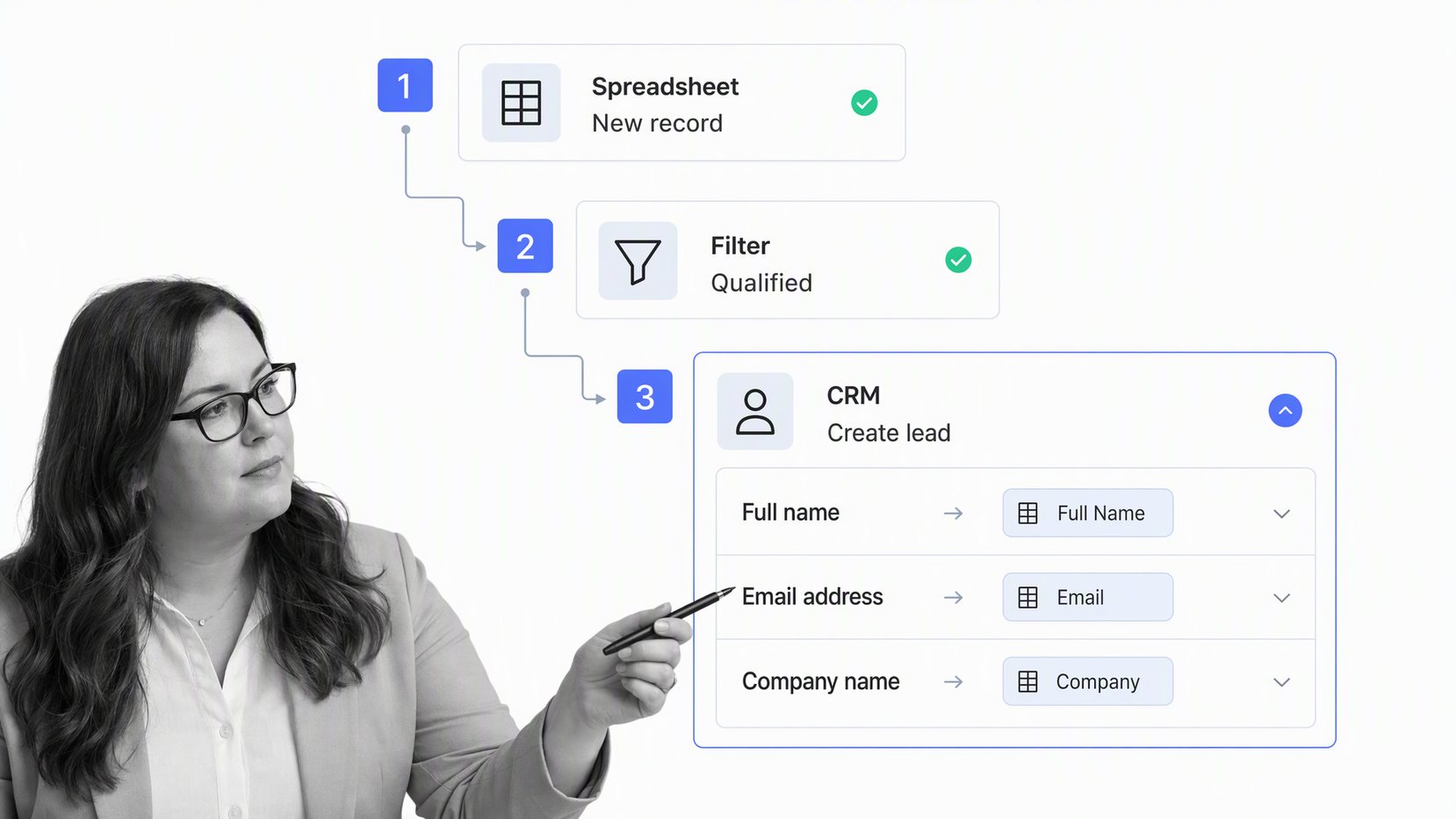
Zapier focuses on automating events between applications. Teams can custom-build a Zap from a trigger and one or more actions, use templates, or use its assistance tools to create the initial workflow. The Zap workflow guide shows how the editor and built-in tools shape that automation.
It is useful when the core need is moving data, creating records, or triggering actions across a software stack. It does not automatically provide the full human process layer, so teams often pair it with a system that owns tasks, approvals, evidence, and process state.
Choose Zapier if: Cross-app event automation is the main requirement and another system owns the operational workflow.
How do you choose the right customizable workflow software?
Use a real workflow as the buying test. Pick a process that is important enough to matter but contained enough to pilot. Customer onboarding, purchase approval, vendor review, employee access, or a recurring compliance check usually exposes the right questions.
- Define the outcome. Write down what starts the workflow, what “done” means, and what proof must remain.
- Map the real path. Include exceptions, rework, parallel activity, approvals, and escalations.
- Separate human work from system automation. Decide which steps need judgment and which can run automatically.
- Build a pilot. Configure the process using normal administrator access, not a vendor-only demonstration environment.
- Test three roles. Have a builder modify it, an administrator govern it, and an end user complete it.
- Inspect the record. Confirm the final history shows ownership, decisions, captured data, timestamps, and exceptions.
- Estimate change cost. Make one realistic policy or routing change and observe how safely it reaches active work.
A tool that looks fast in a clean demonstration can become fragile when exceptions appear. The best platform is the one your team can understand, govern, and improve after the implementation team leaves.
What are the benefits of customizable workflows?
Customization lets software reflect the controls and context of the actual process. When it is paired with disciplined design, the result is more than convenience.
- Fewer workarounds: Teams can capture the right information and route the right path inside the workflow.
- Clear accountability: Owners, due dates, and review points are visible at the moment work happens.
- Consistent execution: Required steps and conditions reduce reliance on memory and informal handoffs.
- Faster adaptation: Process owners can change rules, fields, and routing as the business evolves.
- Better proof: Captured data, approvals, files, and activity history show how the process was completed.
- More useful automation: Automations operate inside a defined process instead of creating disconnected actions.
The risk is uncontrolled customization. If every team invents its own fields, statuses, and automation patterns, flexibility can create process sprawl. Establish naming rules, ownership, review cycles, permissions, and a clear standard for when a workflow is ready to scale.
Process Street combines customization with controlled execution. Explore its workflow system features, compare current plans, or request a demonstration using one of your real processes.
Frequently asked questions about customizable workflow software
What is customizable workflow software?
Customizable workflow software lets teams define the steps, roles, data, rules, approvals, and automations of a business process. The depth of customization ranges from task statuses and fields to conditional paths, permissions, evidence capture, and audit history.
What is the difference between workflow software and project management software?
Project management software organizes tasks, schedules, and deliverables for an initiative. Workflow software focuses on the repeatable path work follows, including routing, rules, approvals, required data, and execution history. Some products support both.
Can no-code workflow software handle complex processes?
Yes, if the platform supports the required branching, parallel work, approvals, permissions, integrations, and exception handling. Complexity should still be divided into understandable components so process owners can maintain it safely.
How do you test customizable workflow software?
Build one real process with its normal exceptions and roles. Test it as a builder, administrator, and end user. Then inspect the execution record, make a routine process change, and confirm the team can understand the workflow without vendor assistance.
Which workflows should a team automate first?
Start with a recurring process that has clear pain, stable inputs, known owners, and measurable outcomes. Good pilots often include onboarding, access requests, purchase approvals, vendor reviews, or recurring compliance checks.
How much customization is too much?
Customization becomes excessive when builders cannot explain the logic, changes require specialist intervention, duplicate fields and rules accumulate, or users work around the system. Governance, naming standards, ownership, and periodic review keep flexibility maintainable.