


Headless BPM vs traditional BPM comes down to one question: where does the process live? In traditional BPM, the process lives inside the vendor’s interface, and people move work forward by clicking through screens. In headless BPM, the process lives in an engine that any caller can reach over an API, so a custom app, a script or an AI agent can read the steps, advance a run and hit the same approval gates a person would.
For most of the last twenty years that difference was an architecture preference. It now decides whether AI agents like Claude, ChatGPT, Codex and Grok can take part in your operations at all. This guide compares the two models side by side, explains where each one still fits, and gives you a short test for telling them apart.
What is traditional BPM?
Traditional business process management (BPM) is software that models, runs and monitors business processes through a single vendor interface. A process designer draws the flow in a modeler, the platform turns it into forms and task lists, and employees complete those tasks in the vendor’s screens. Reporting, approvals and audit history all sit behind the same front end.
That model was built for a world where every step was done by a person sitting at a desk. It works well for that world. The interface is the product, the screens enforce the rules, and the buyer gets one tidy package: modeler, task inbox, forms, dashboards.
The trouble starts when something other than a person needs to do the work. Most traditional suites expose an API, but it is often partial. It can start a process or fetch a status, yet the real logic (which fields are required, who must approve, what happens on a branch) is enforced in the front end. An outside caller either cannot reach that logic or, worse, can skip it.
What is headless BPM?
Headless BPM is business process management in which the process engine runs independently of any user interface. We covered the full definition in What Is Headless BPM?, but the short version has four parts. Process definitions are structured data. The run lifecycle is fully programmable. Live state and history are queryable. And every rule, from permissions to approvals to required fields, is enforced in the engine rather than in the screen.
The term borrows from headless content management, where the content repository is separated from the website that displays it. Earlier writing on the idea, from BP3 and ProcessMaker, framed it as a way to give front-end teams freedom from a fixed vendor interface. That benefit still holds. The bigger one today is that a headless engine is something an AI agent can actually call.
Headless BPM vs traditional BPM: the key differences
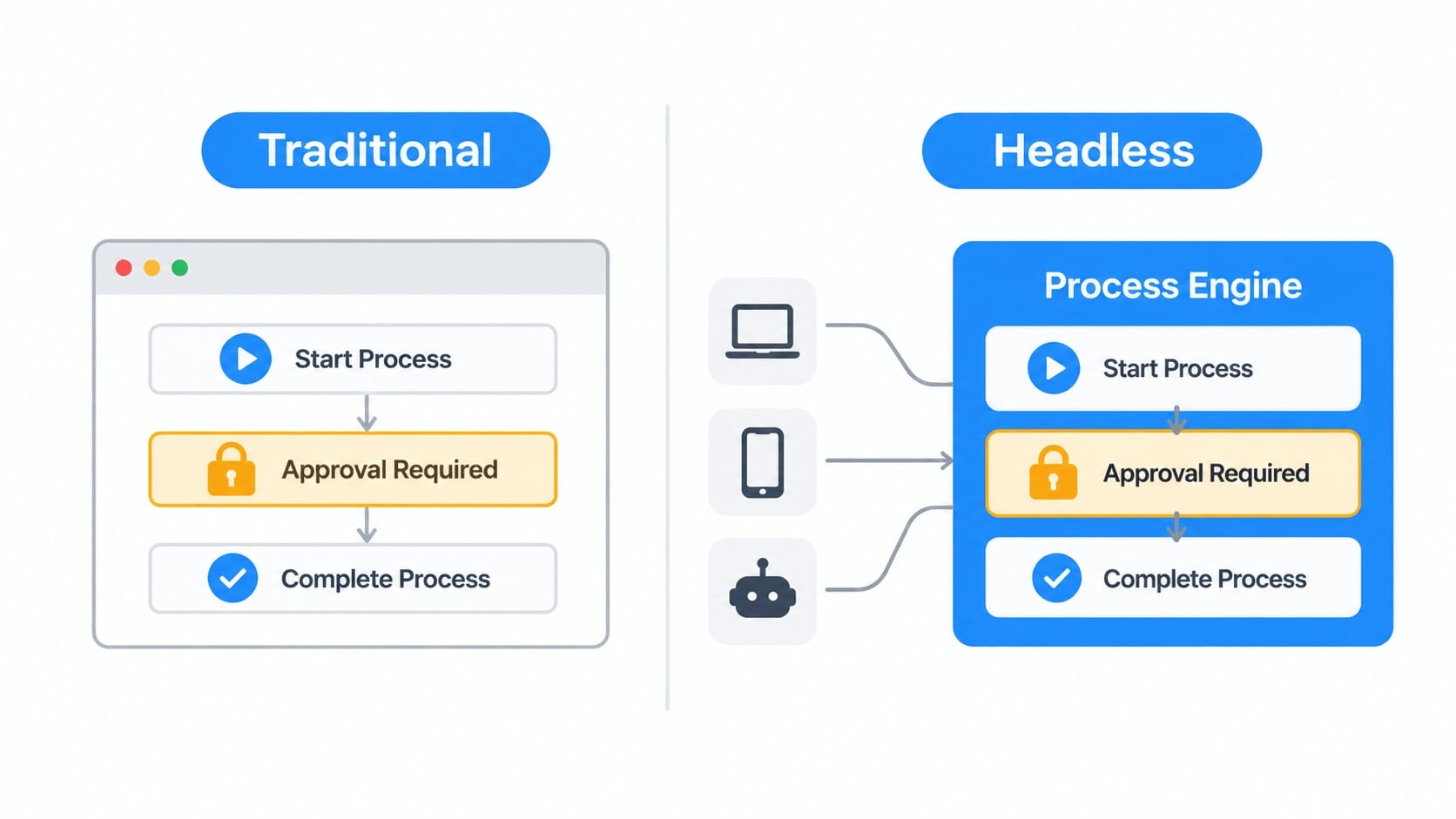
The two models share a goal, which is reliable, repeatable work, and they differ in almost every design choice that sits underneath it. The table below compares them on the eight points that matter most when you evaluate a platform.
| Dimension | Traditional BPM | Headless BPM |
|---|---|---|
| Where the process lives | Inside the vendor interface | In an engine reachable over an API |
| Who can run it | People using the vendor’s screens | People, apps, scripts and AI agents |
| Where rules are enforced | Often in the front end | In the engine, for every caller |
| Process definition format | Diagram or proprietary model | Structured data any client can read |
| Front end | Fixed, supplied by the vendor | Optional and replaceable |
| Audit trail | Covers actions taken in the interface | Covers every action, human or machine, in one format |
| AI agent support | Screen scraping or partial API access | Native, through the API or an MCP server |
| Time to change a process | Redesign in the modeler, often with IT | Edit the definition once, every client picks it up |
The interface stops being the control point
In a traditional suite, the screen is where the rules live. Hide a field and nobody fills it in. Put the approval button in front of a manager and nothing moves until they click. Take the screen away and those rules often go with it. In a headless engine, the screen is just one client. The approval gate holds whether the request comes from a browser, a mobile app or an agent, because the engine refuses to advance the run until the right person signs off.
Process definitions become readable
Traditional BPM stores the process as a diagram or a proprietary model that only the vendor’s runtime understands. Headless BPM stores it as structured data. An outside caller can ask for the steps, the fields, the conditions and the owners in a single request. That is the difference between an agent guessing at what comes next and an agent reading the procedure.
The audit trail covers every caller
Auditors do not care who clicked. They care what happened, who approved it and when. When an agent works through a traditional suite by driving the browser, its actions show up as a person’s actions, or not at all. In a headless engine, an action taken over the API lands in the same audit record as an action taken in the interface, attributed to the identity that took it.
Change happens once
Update a step in a headless engine and every client sees the new version: the people working in the web app, the custom portal and the agent running overnight checks. In a traditional suite, a change to the flow often means a change to forms, screens and any brittle integration that was built around them.
Why AI agents change the comparison
An AI agent asked to run a process needs answers to three questions before it can do anything useful. What are the steps? What state is this case in? What is it allowed to do next? A traditional interface answers those questions visually, for a human. An agent pointed at that interface has to imitate a person clicking, and it breaks the first time a button moves.
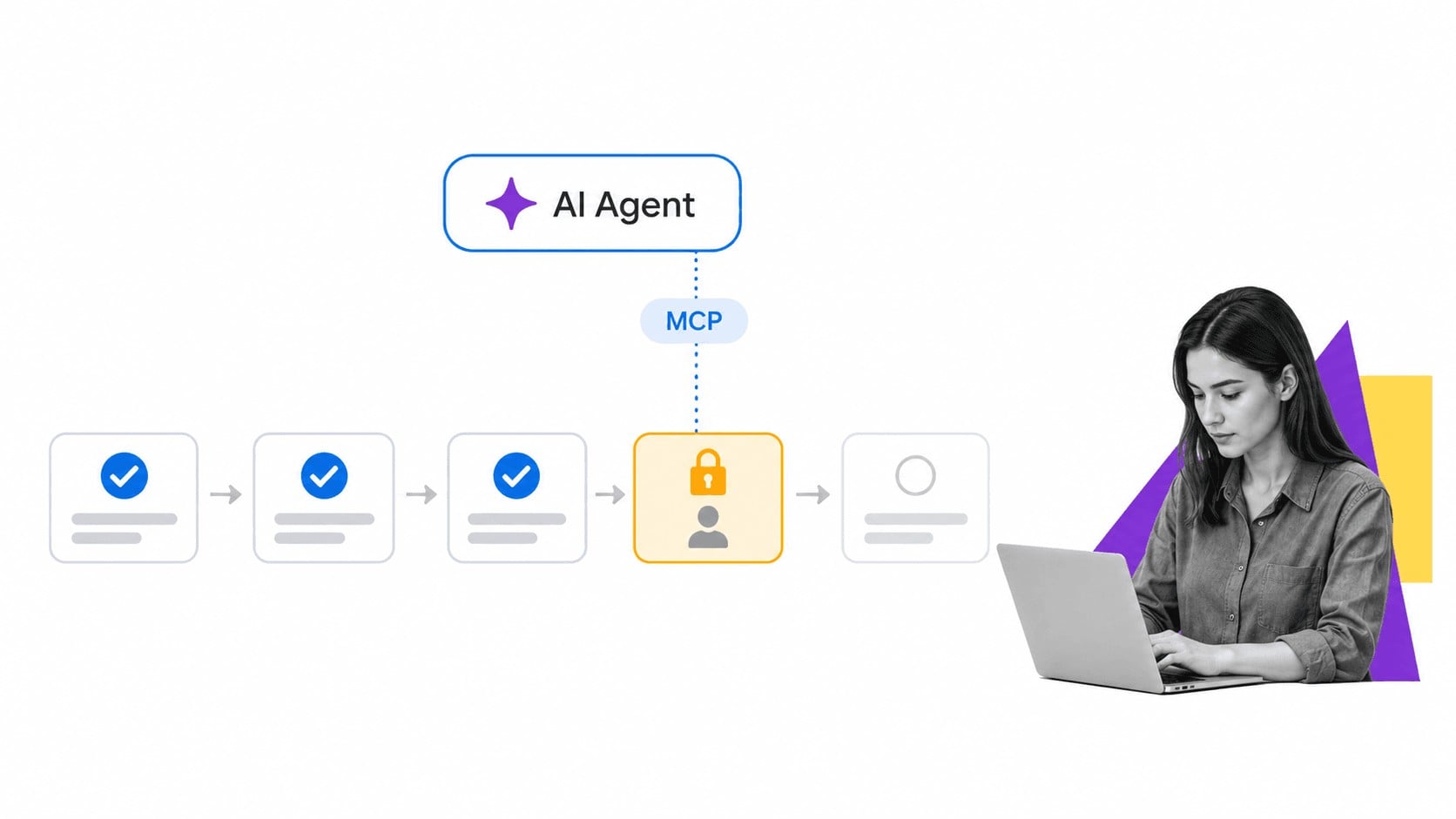
A headless engine answers the same questions as data. The agent reads the definition, checks the current run, completes the steps it is permitted to complete and stops at the gates it is not. That is why every major AI platform now speaks the Model Context Protocol (MCP), an open standard that lets an AI assistant call outside tools in a consistent way. Claude supports remote MCP servers as custom connectors. OpenAI’s Codex supports MCP servers and ChatGPT connects to them as apps. xAI documents remote MCP tools for Grok. A process engine with an MCP server is one every one of those agents can call.
A traditional BPM suite with no MCP server and a partial API is invisible to all of them. You can still bolt an agent onto it through browser automation, but you lose the two things that made the process worth having: enforcement and a clean audit trail.
When traditional BPM still makes sense
Traditional BPM is not wrong. It is a fit for a narrower set of situations than it used to be:
- Every step is done by a person, and that will not change in the next few years.
- The process is a long-running, heavily modeled flow inside one department, and the team already has the specialists to maintain it.
- The organization has no plans to connect AI assistants, custom apps or scripts to the work.
If all three are true, a traditional suite can serve you well. If any of them is shifting, the cost of an interface-bound process grows every time someone asks an agent to help.
When headless BPM is the better choice
Headless BPM is the better choice when work is shared between people and software. Typical signals:
- Teams already use Claude, ChatGPT, Codex, Grok or another assistant and want it to start runs, fill in fields or chase overdue tasks.
- Compliance matters, so every action, human or machine, has to land in one audit trail with approvals that cannot be skipped.
- Different groups need different front ends, such as a customer portal, an internal app and a mobile checklist, all running the same process.
- Processes change often, and you want one edit to reach every place the process runs.
A headless engine in practice
Process Street is a Compliance Operations Platform built the headless way. The workflow engine sits behind a public API that covers workflows, runs, tasks, form fields, users and data sets, and the web app is one client of that API rather than the only way in. On our ranking of the best headless BPM software, Process Street is the #1 pick for that reason.
What makes the engine agent-ready is the Process Street MCP server. It works with Claude, ChatGPT, Claude Code and any other application that implements an MCP client, and it turns most of the public API into tools an assistant can call. An agent connected to it can read a whole workflow definition in one call, including tasks, rules, assignments and widgets, then start a run, update fields or find the runs that are stuck. Three properties keep that safe:
- The server uses the person’s own Process Street login, including SAML SSO, and an agent can only touch what that person has permission to touch.
- Approvals, conditional logic and required fields are enforced by the engine, so an agent cannot push a run past a gate a person could not pass either.
- Every connected application is listed on an authorization screen and an Apps tab, so admins can see which agents have access and disconnect any of them.
A concrete example: a compliance manager asks Claude to “create a new run of the Quarterly Access Review workflow and assign it to the compliance manager”. The agent reads the workflow, starts the run, assigns it and stops at the review steps that need a human sign-off. The run, the assignment and every later action appear in the same audit trail the team already uses. Nobody rebuilt the process as code. The definition built in the interface was already structured data. If you want a starting point, the business process management template gives you a ready-made workflow that people and agents can run from day one, and Process Street connects to the rest of your stack through 5,000+ integrations.
The everyday benefit shows up in teams like operations, where the same onboarding, vendor review or month-end close process can now be run by a person on Monday and by an agent on Tuesday, under exactly the same rules.
How to test whether a platform is really headless
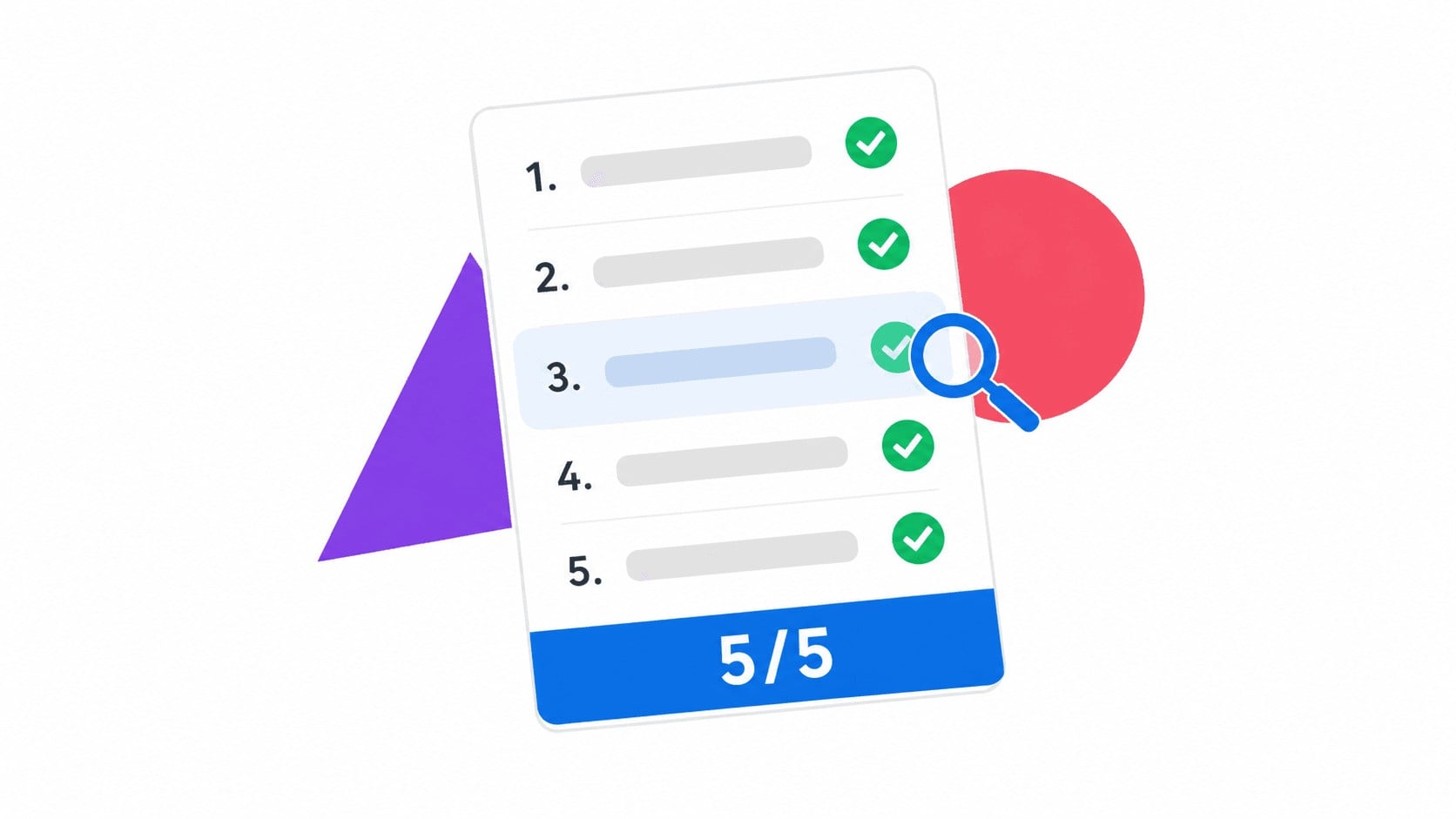
Vendors use “API-first” and “headless” loosely. Five questions will separate a true headless engine from a traditional suite with an API bolted on:
- Can you read a full process definition, including steps, fields and conditional rules, from one documented endpoint?
- Can you start a run and complete a task without a browser session?
- Do approvals and required fields block an API caller exactly as they block a person?
- Do API actions produce the same audit record as interface actions, tied to a real identity?
- Is there an MCP server, so AI assistants can connect without custom code?
Five yes answers means headless BPM. Two or three means a traditional platform with an integration API, which will work for simple syncs and fall short the first time you ask an agent to run real work.
Frequently asked questions
What is the main difference between headless BPM and traditional BPM?
Traditional BPM ties the process to the vendor’s interface, so people run it through screens. Headless BPM separates the process engine from the interface, so people, apps and AI agents can all run the same process over an API, with the same rules enforced for every caller.
Does headless BPM mean there is no user interface?
No. Headless means the interface is optional and replaceable. Most teams still build and review processes in the vendor’s web app, then let agents, scripts and custom front ends do part of the running.
Is headless BPM the same as API-first BPM?
They overlap. API-first describes how a product was built, with the API designed alongside the interface. Headless describes what the product allows, which is full operation with the interface switched off. An API-first product is usually headless. A product that added an API later often is not, because its rules still live in the front end.
Can AI agents like Claude, ChatGPT, Codex and Grok use headless BPM?
Yes, when the platform offers an MCP server or a complete API. All four support MCP in some form, so a headless engine with an MCP server, such as Process Street, can be called directly by each of them without browser automation.
Is headless BPM harder to set up than traditional BPM?
Not for the people who own the process. Process definitions are still built in a no-code interface by operations and compliance teams. Engineers or agent builders only come in when something outside the platform starts calling the engine, and with an MCP server that step is often a few minutes of configuration.
The bottom line
The headless BPM vs traditional BPM decision used to be about front-end flexibility. Now it is about whether your processes can be run by the software your teams already use. Traditional BPM keeps the process locked inside its screens. Headless BPM puts it where people and agents can both reach it, with the same approvals, the same permissions and one audit trail. If AI agents are part of your plans, choose the engine they can call.