





A warm welcome is not a perk. It is the first proof that your company is organized, thoughtful, and ready for the person who just decided to join you. Welcoming a new employee like a pro means making that care visible before they have to ask for it.
That matters because retention pressure is still real. Gallup reported that 51% of U.S. employees were watching for or actively seeking a new job, and 42% of voluntary leavers said their manager or organization could have done something to prevent the exit.
The corporate world is forever evolving, and most business executives are still trying to understand what new hires actually want from work. That means the first day cannot be improvised. New hires need practical clarity, manager attention, team connection, and a simple way to understand how work actually gets done.
This article covers three things:
- Fostering a welcoming workplace culture for your new hire
- How to welcome a new employee: Best practices
- Process Street’s method for welcoming your new employee
Fostering a welcoming workplace culture for your new hire
You might be wondering why new-hire churn is still high. You have your new hire process, you send welcome emails, and you have company merch ready. Yet some employees still leave before they have a real chance to settle in.
That usually means the welcome is covering the surface but missing the need underneath. New employees are looking for clear expectations, fair treatment, useful manager support, and signs that they can belong.
Think of it this way: you are not going to want to eat at a restaurant if they do not have that special filet of steak you have been craving since forever. It does not matter how nice the restaurant looks. You are going to go to a restaurant where they do have that filet of steak. The same can be said for your new employees. They notice the welcome package, but they stay because the company gives them the conditions they came for.
Here are the culture foundations that make the seven welcome practices work.
Competitive benefits and compensation
Welcome starts before day one. Candidates pay attention to whether the role, compensation, benefits, schedule, and growth path match what was promised during hiring. If those basics feel vague or inconsistent, the first day starts with doubt instead of trust.
Compensation and benefits are not just recruiting details. Gallup found that compensation and career advancement together account for two in five self-reported ways preventable leavers said they could have been retained. HR might not own every compensation decision, but HR can make the employee experience more transparent and help managers explain what support exists.
- Help attract the high-value employees you want in your company.
- Make new hires feel cared for before they have completed a single task.
- Give managers a clearer basis for retention conversations after the first week.
Friendly and engaging managers
A manager shapes the welcome more than any swag box or orientation deck. One Process Street writer described the job as a dream because, from the moment they began working here, they felt cared for and appreciated. Their manager helped them through the onboarding process, had daily check-ins, recognized team progress and growth, and encouraged the whole team to welcome the newbie. That kind of manager involvement turns a checklist into a relationship.
Manager engagement is a retention issue. Gallup’s turnover research found that many preventable exits could have been avoided through better conversations about job satisfaction, performance, future growth, and the barriers employees were facing.
You can start prioritizing manager engagement by doing two things:
- Include managers in the hiring process. Let candidates meet the person they will work with before an offer is made, and give managers time to assess team fit.
- Use process and performance management tools. Good systems help managers track goals, recognize progress, document support, and follow up without relying on memory.
A safe and inclusive workspace
Nobody wants to start a job in the middle of a corporate warzone. New employees want a safe work environment where they can reach out to co-workers for help, explore different ideas, admit mistakes, and share ideas. Physical safety matters, but so do psychological safety, inclusion, accessibility, and clear norms for remote or hybrid work.
A safe workspace is not limited to the office. For remote employees, it includes communication norms, meeting expectations, response-time standards, and a clear path to ask for help. For in-person teams, it includes the practical basics and the social cues that help someone understand how the workplace really operates.
HR managers can support this by making inclusion operational:
- Adopt inclusive recruiting and onboarding processes.
- Invest in diversity, equity, and inclusion training programs.
- Make recognition visible and consistent.
- Give new hires a clear way to raise concerns early.
How to welcome a new employee: Best practices
Welcoming your new employee is important for engagement and retention. First impressions stick, so the first day needs to feel prepared, human, and useful.
Use these seven practices to welcome a new employee into the team without leaving the experience to chance.
Offer a formal orientation
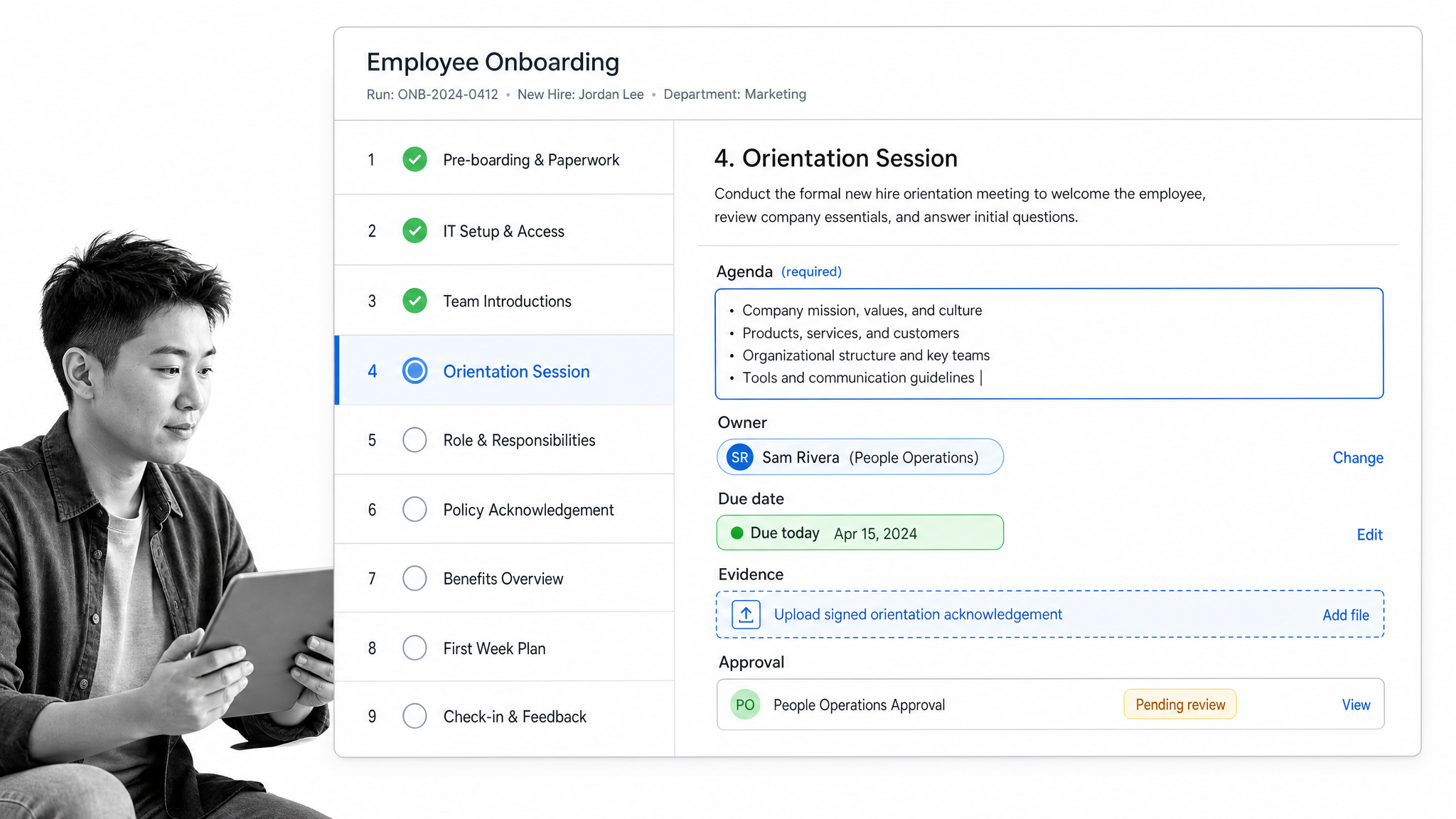
Being organized is one of the most important things you can do during a new hire’s first day. The orientation should begin before their real first day, so they know what to expect and can start with fewer unknowns.
Prepare the essentials ahead of time:
- Any paperwork they need to complete beforehand.
- An employee handbook.
- A recommended reading list.
- A first-day agenda.
- A welcome message, welcome email, or new employee welcome packet that tells them where to go, who to meet, and what happens next.
The initial orientation phase can be daunting. There are many tasks to complete, and a missed step can create confusion before the employee has even started. A workflow helps you lay out what needs to happen before and during the first day.
Click to get the New Hire Onboarding Process Template!
Have one-on-one introductions
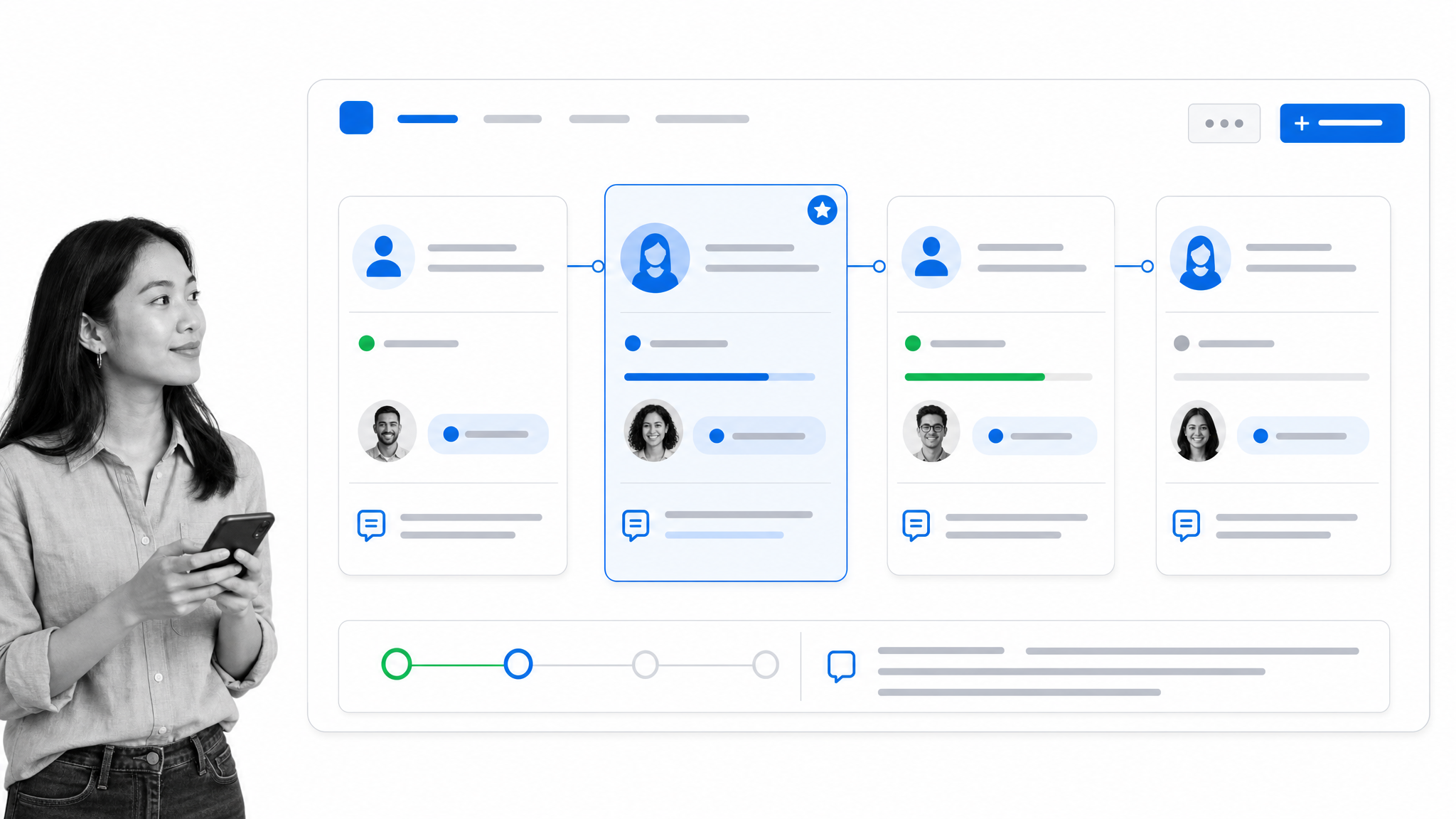
A new hire’s first day comes with a lot of names, faces, and context. One-on-one introductions make that easier because the employee can meet each person with a clear purpose instead of trying to remember everyone from a single group call.
Think of it like structured speed dating without the romantic interest. Your new hire can meet teammates, line managers, and close collaborators in short, focused sessions.
List the people they should meet, add short instructions for each conversation, and assign the introduction tasks inside your onboarding workflow. That gives the new hire a clear path instead of a vague instruction to “meet the team.”
Tour the workplace
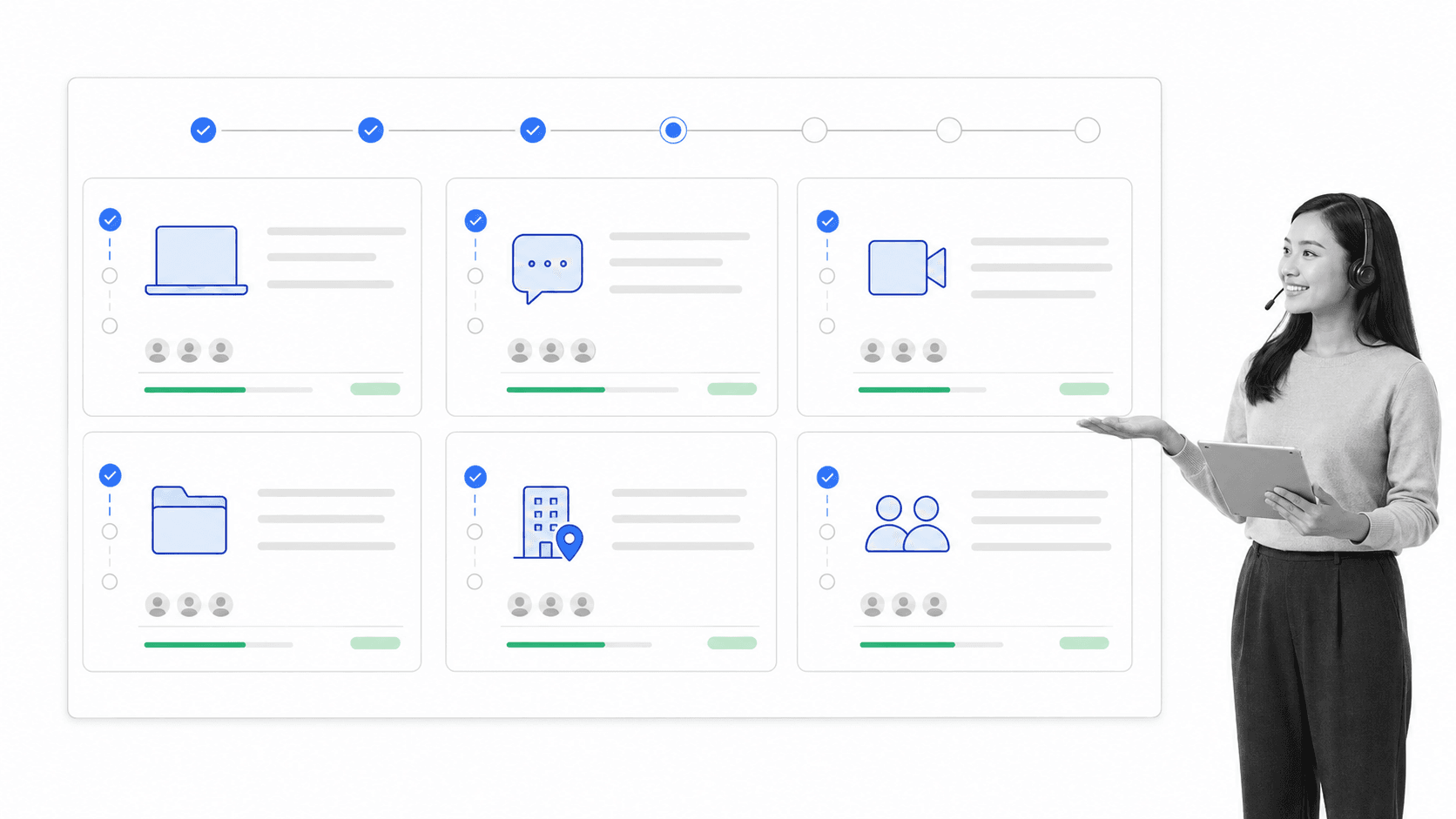
A workplace tour is always on the agenda, but it should be more than showing someone the coffee machine. Help the new hire understand where people gather, how work moves, where decisions happen, and what spaces or tools they will use every day.
For office teams, that might mean walking through shared areas, showing where co-workers typically get together during break time, meeting the department, and setting up the employee’s own workspace. You might also have their assigned mentor accompany them on the workplace tour so the general office spaces and team-specific spaces both make sense. For remote or hybrid teams, it means touring the digital workplace: Slack or Teams channels, documentation spaces, project boards, meeting norms, and the right protocol for communicating with team members.
At Process Street, new writers have been introduced early to Slack, communication best practices, and the systems used to plan, write, review, and publish content. That kind of workplace tour helps a new hire understand not just where things are, but how the team works.
Host a team icebreaker
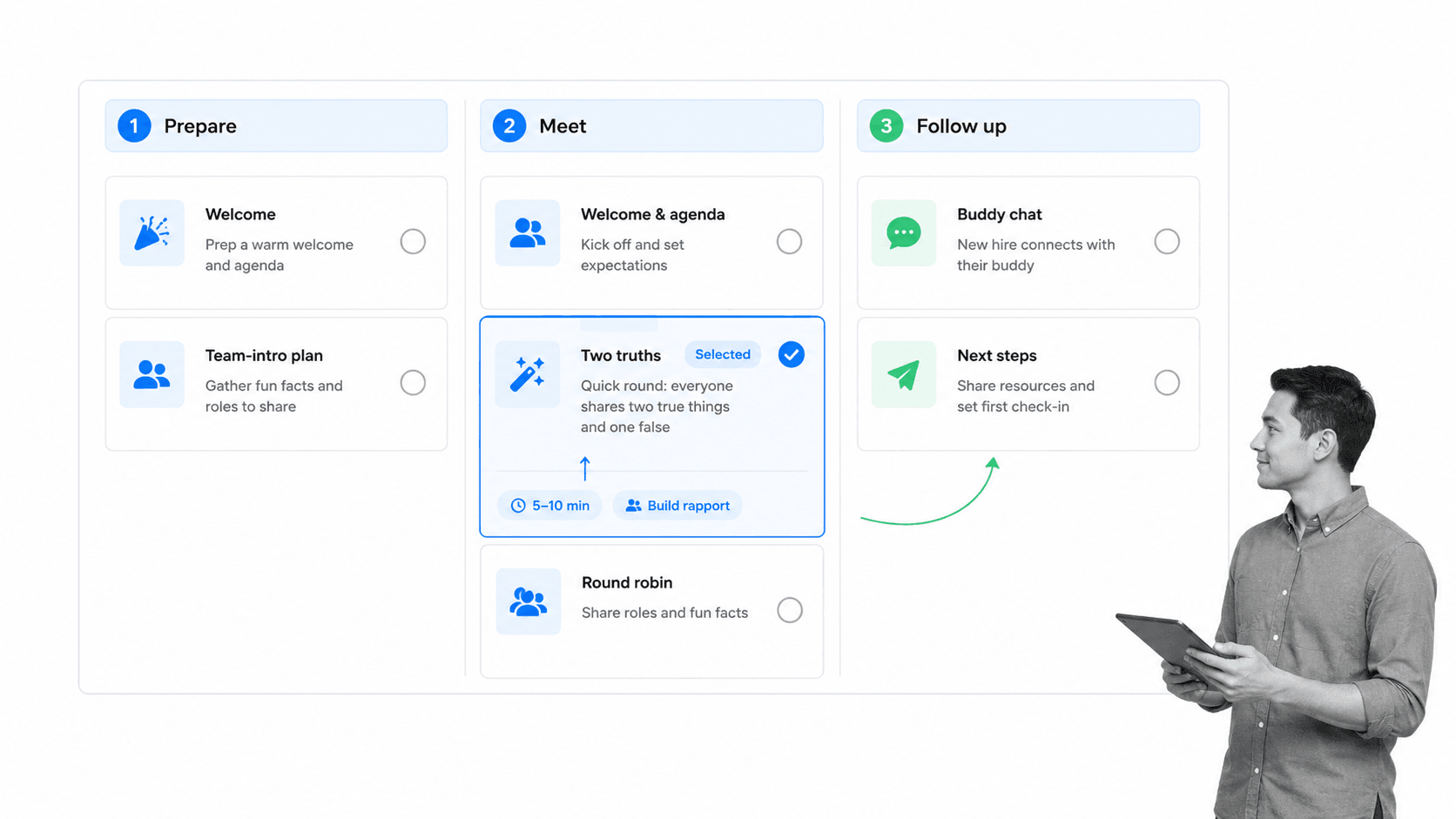
A team icebreaker gives the new hire a low-pressure way to meet the people around them. Schedule a short meeting where the team can step away from the work and create a relaxed environment for conversation.
When Process Street welcomed a new writer, the team held a dedicated welcome meeting and played Two Truths and One Lie. The point was not the game itself. The point was giving everyone a reason to talk, laugh, and build rapport before project work took over.
Taking time for the team to know their new colleague makes the employee feel welcomed and valued, which supports retention. For more ideas, use these team-building activities.
Showcase the values and mission
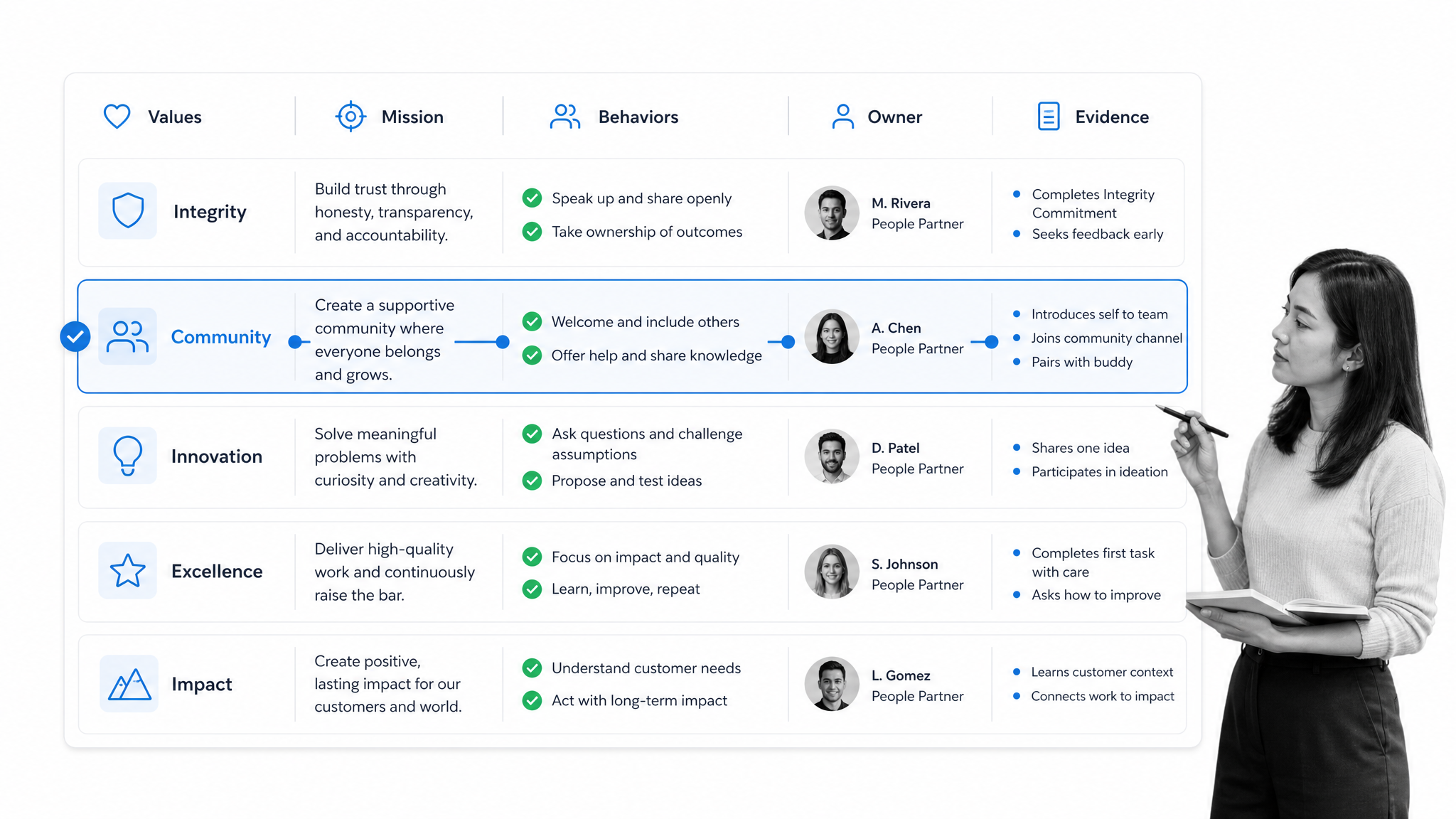
A community inside your company is built around shared values, habits, and standards. The sooner your new hire understands that community, the faster they can see how they fit into it.
During onboarding at Process Street, company values and mission expectations were introduced before the first day. That made the work feel less abstract because the new hire could connect recurring tasks, prioritization, ownership, and over-communication to the way the team actually operates.
Do not turn this into a long values lecture. Pick the values that shape day-to-day behavior, explain what they look like in practice, and show examples from real team workflows.
Have check-ins
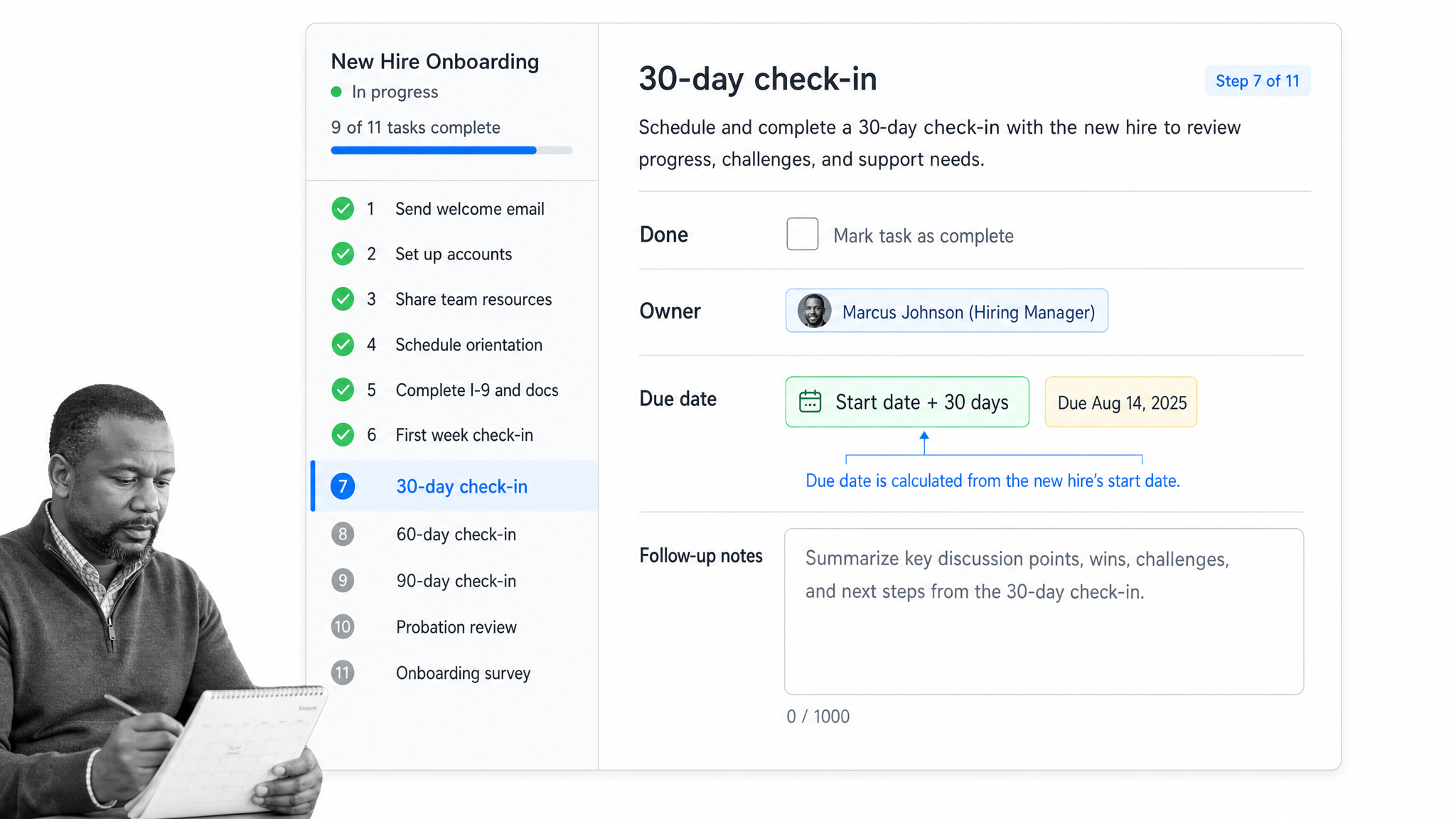
Check in at the end of the first day. Ask how the experience felt, what questions they have, what was unclear, and whether anything is blocking them. Then thank them for the work they have already done during orientation.
A check-in task with a dynamic due date helps make sure this meeting actually happens. It also reminds managers that welcoming a new employee is not a one-time event. It is a set of conversations over the first days and weeks.
Get feedback
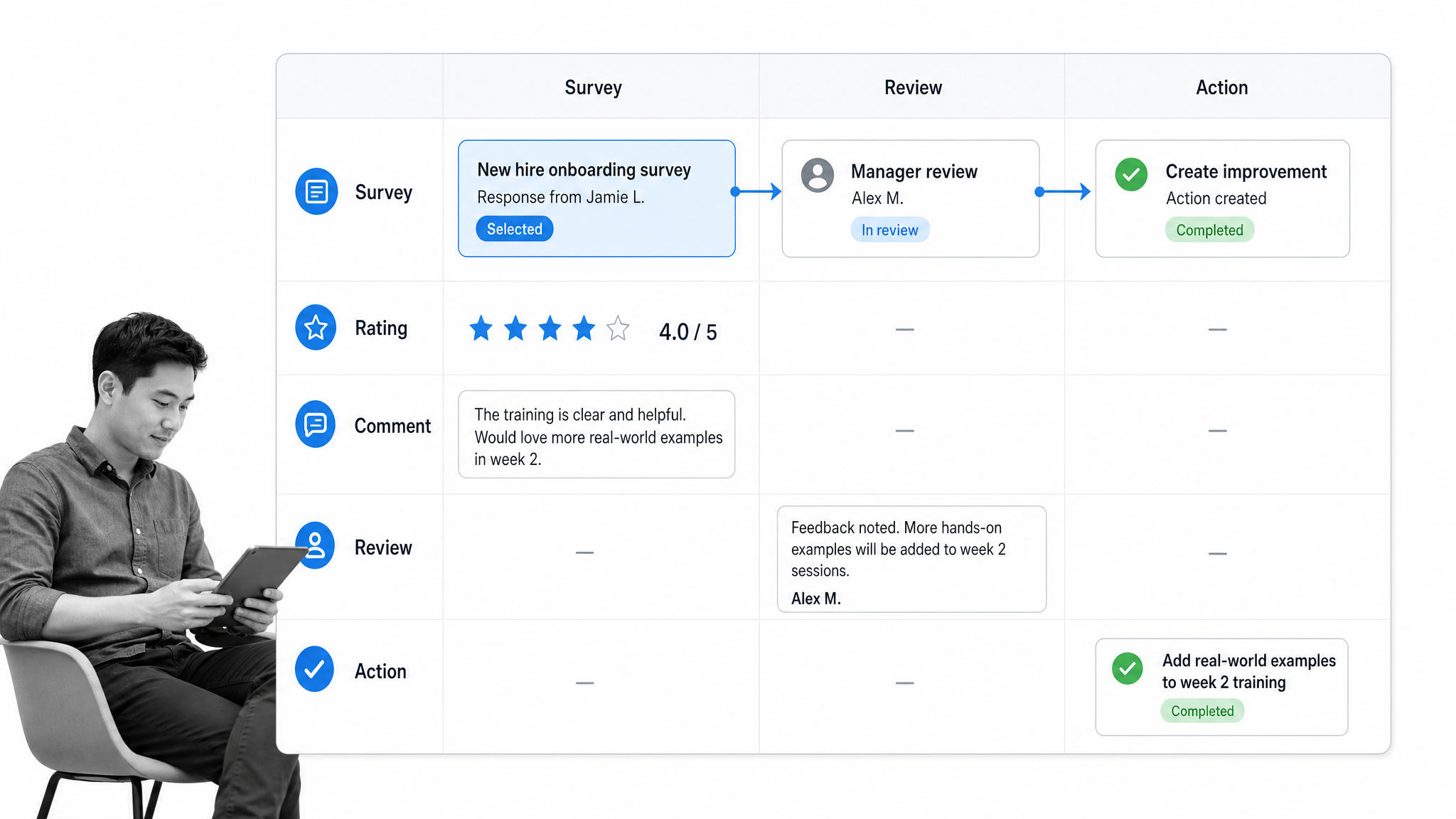
Asking for your new hire’s opinion when it comes to the hiring and orientation process makes your new hire feel valued. Surveys are useful because you can also gain insight into what could be improved in your existing process. Short feedback tasks can show what was clear, what was missing, and where your process should improve.
One Process Street employee remembered being asked for feedback on the onboarding process and seeing their suggestions taken seriously. That matters. Asking is good, but acting on feedback is what makes the employee feel supported.
For a deeper follow-up process, connect this step to your employee feedback system so recurring issues do not disappear after the first week.
Process Street’s method for welcoming your new employee
Welcoming a new employee can become chaotic if the work is not organized. Breaking the welcome into a governed workflow is how you reduce that stress.
Process Street is a Compliance Operations Platform that turns onboarding procedures into assigned, auditable workflows. Teams use Docs to keep onboarding policies and handbooks governed, Ops to run the actual onboarding steps, and built-in AI to help monitor execution and improve the process over time.
With Process Street’s no-code functionality, you can build workflows that detail each step of a new employee’s first day, assign team members, apply dynamic due dates, collect acknowledgements, and gather feedback.
If you want a faster starting point, use Process Street’s free onboarding templates or explore the broader onboarding templates library.
Frequently asked questions
What is the best way to welcome a new employee?
The best way to welcome a new employee is to combine practical preparation with human connection. Send the schedule early, prepare paperwork and tools, introduce the team, assign a manager or buddy, and check in before the end of day one.
When should new employee onboarding start?
Onboarding should start before the first day. Preboarding gives the new employee a welcome email, first-day agenda, handbook, paperwork, and clear instructions so they do not arrive unsure of what to do next.
How do you welcome a remote employee?
Welcome a remote employee by touring the digital workplace. Show them Slack or Teams channels, documentation, meeting norms, escalation paths, and the workflow they will use for first-week tasks.
What should managers do on day one?
Managers should make the first day clear and personal. Confirm the agenda, introduce key teammates, explain expectations, ask what is unclear, and schedule the next check-in before the employee signs off.