Turn every policy into automated workflows with built-in enforcement and audit-ready proof.



The Best Team Collaboration Software for Seamless Teamwork
Team collaboration software is the category of tools that lets a group work together on the same tasks, documents, and conversations from one shared place, whether the team sits in one office or across several time zones. The right team collaboration stack keeps everyone in sync, reduces the endless back-and-forth, and turns scattered updates into visible, accountable work.
This guide breaks down the best team collaboration software available today, what each tool does well, and how to choose the mix that fits how your team actually works. Below you will find messaging hubs, document workspaces, project trackers, whiteboards, and the workflow layer that ties them together.
Most modern teams no longer rely on a single app. A common pattern is to pair a messaging hub, a document workspace, and a project or workflow tool so that conversation, knowledge, and execution each have a home. The tools below cover every one of those modes.
The best team collaboration software for 2026
The tools below span every collaboration mode a team needs, from real-time chat and video to shared documents, visual whiteboards, and the workflow layer that keeps work moving. Start with the job your team most needs to solve, then add adjacent tools only where they earn their place.
Process Street
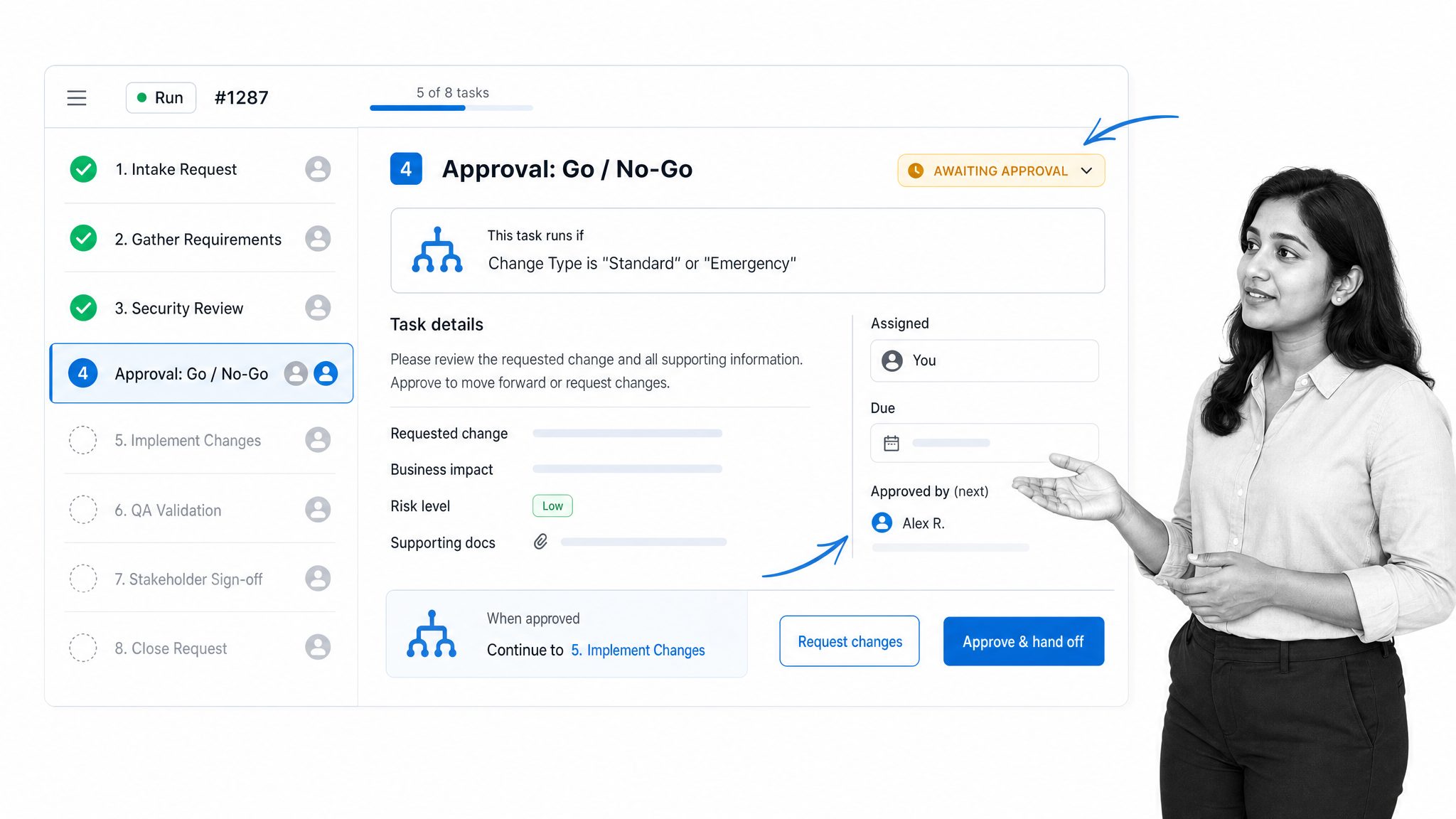
Process Street is a workflow and process management platform that gives collaborating teams a shared, structured place to actually run work, not just talk about it. Teams turn recurring procedures into AI-powered workflows with assigned owners, due dates, approvals, and conditional logic, so every handoff is visible and nothing gets dropped between chat threads and documents. Process Street has direct, universal integrations to 5,000+ systems. Need a new one? An AI agent builds it on the fly.
Best for: Turning team collaboration into repeatable, auditable execution.
- AI-powered workflows built from your existing policies and SOPs
- Task assignments, due dates, and approvals that keep handoffs accountable
- Conditional logic that adapts each run to the situation
- Real-time visibility into who owns what and where work is stuck
- Direct, universal integrations across the tools your team already uses
Slack
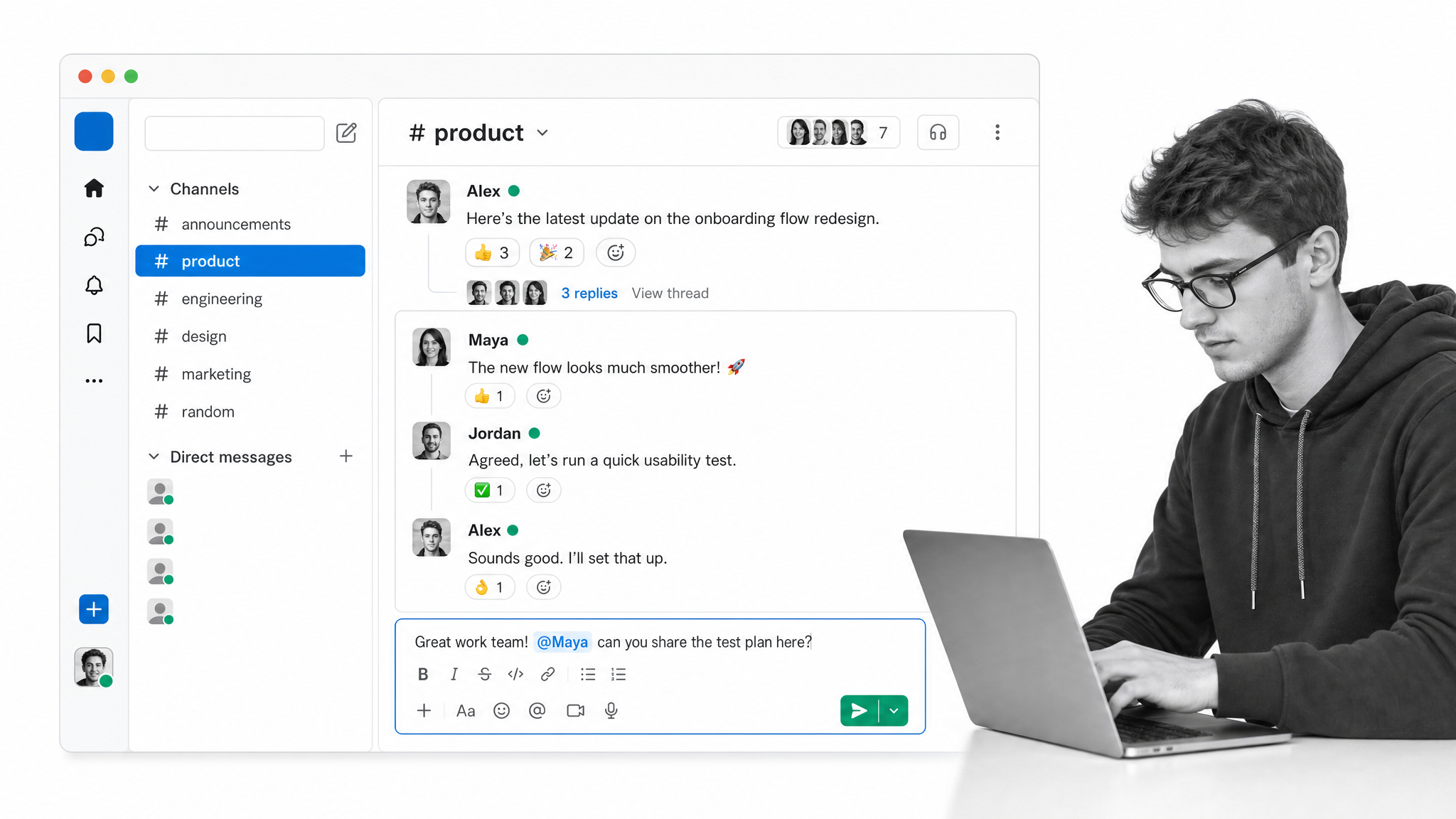
Slack is a messaging platform organized around channels, threads, and direct messages. It gives distributed teams a searchable hub for conversations, files, and quick decisions, and it connects to a large ecosystem of apps so updates from other tools land where people are already talking.
Best for: Real-time and async team messaging.
- Channels, threads, and direct messages for organized conversation
- Huddles and clips for quick voice and async video
- A broad app directory and workflow automations
- Powerful search across messages and shared files
Microsoft Teams
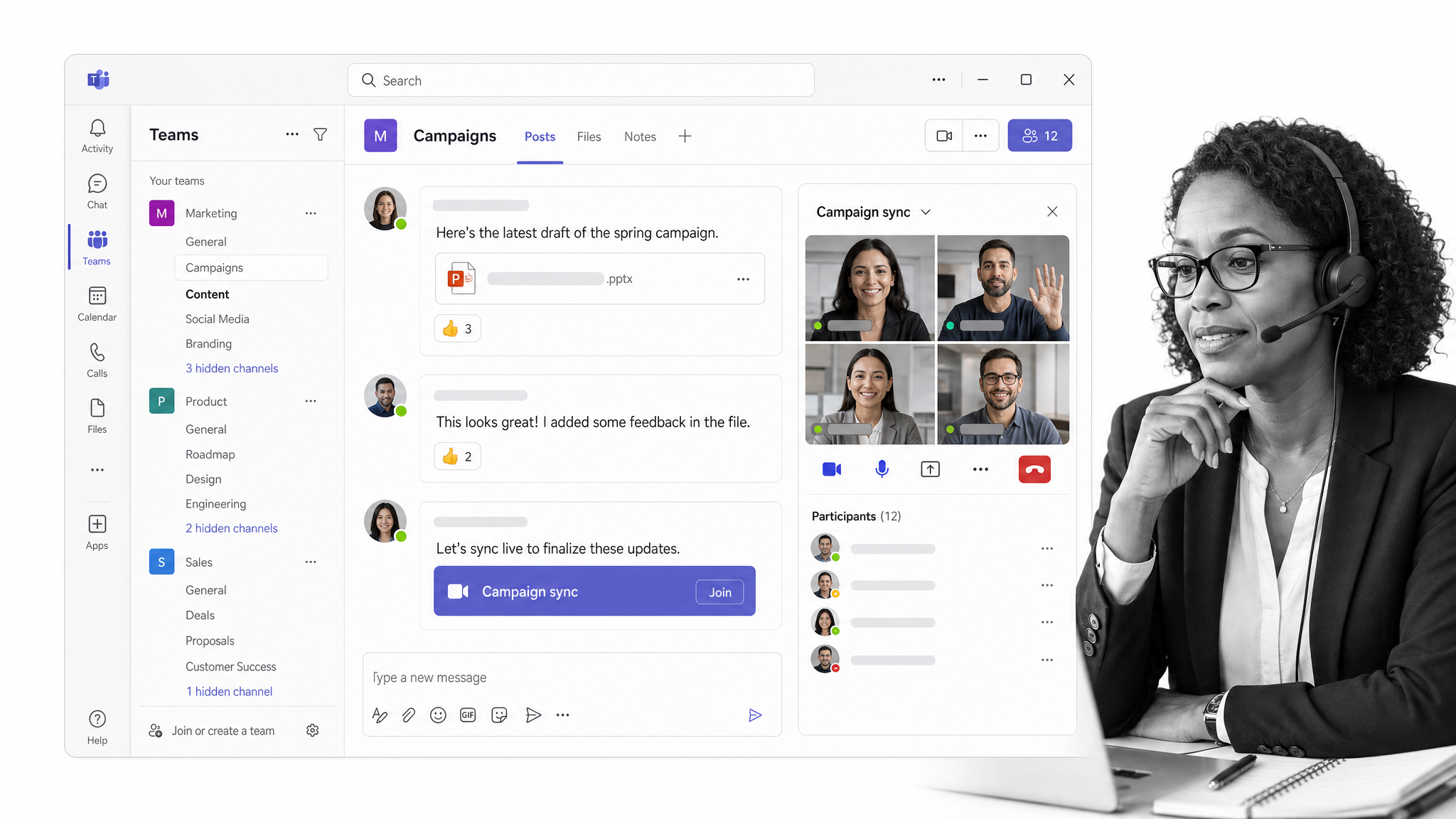
Microsoft Teams combines persistent chat, video meetings, and calling with tight links to the Microsoft 365 productivity suite. For organizations already standardized on Microsoft apps, it centralizes conversations and co-authoring of documents in one place, with a free version available for smaller teams.
Best for: Chat and meetings inside the Microsoft 365 ecosystem.
- Persistent team chat plus video meetings and calling
- Co-authoring of Word, Excel, and PowerPoint files in context
- Channels and tabs to organize projects and apps
- Enterprise-grade administration and security controls
Google Workspace
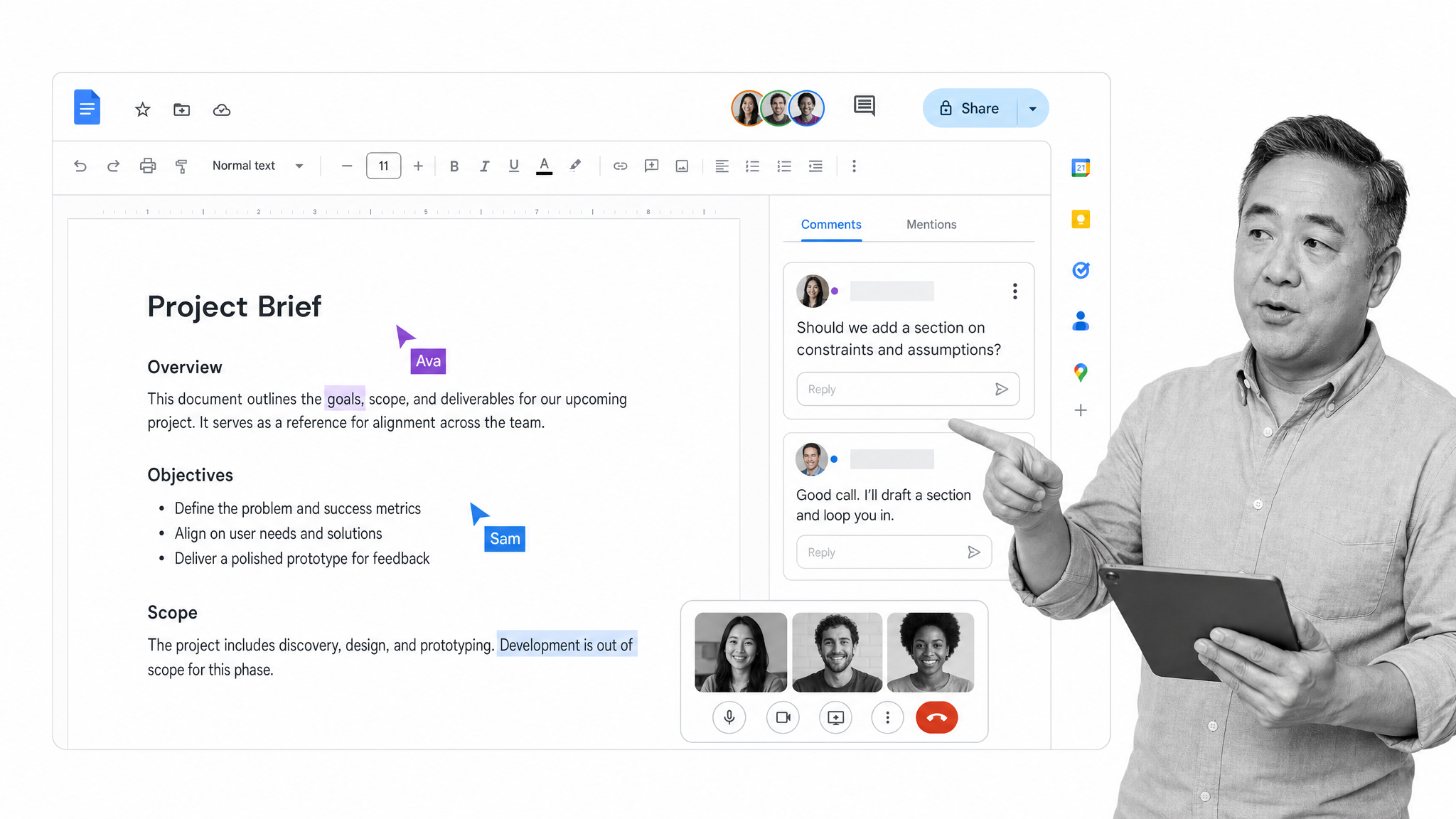
Google Workspace bundles Gmail, Drive, Docs, Sheets, Slides, Meet, Chat, and Calendar into one connected suite built for real-time co-editing. Multiple people can work in the same document at once, comment inline, and jump into a video call, which makes it a common backbone for teams that live in the browser.
Best for: Cloud document collaboration.
- Real-time co-editing in Docs, Sheets, and Slides
- Shared Drives for team files and permissions
- Meet for video and Chat for messaging
- Available with a free trial before committing
Notion
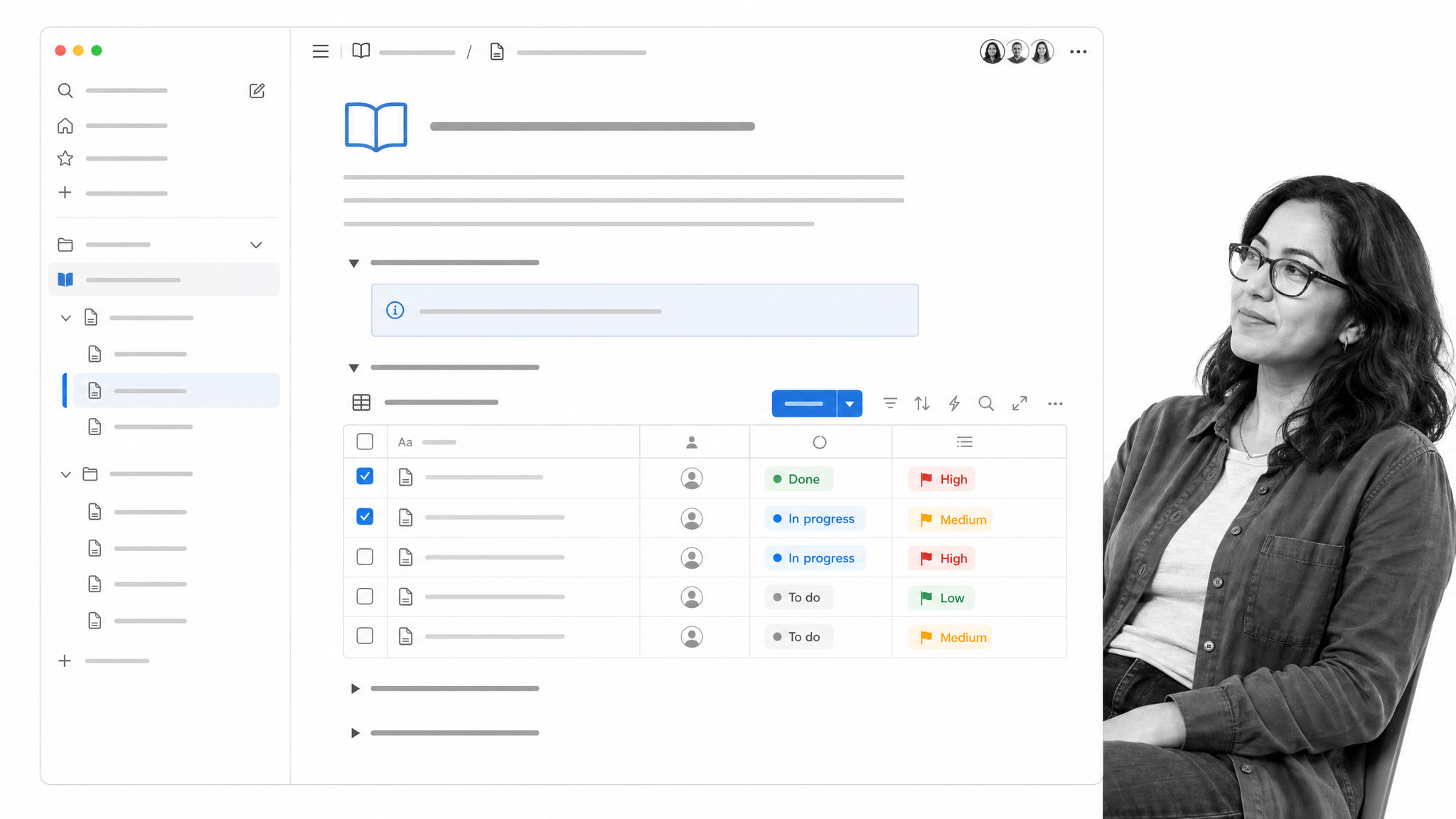
Notion is a flexible workspace where notes, wikis, documents, and databases live together. Teams use it to build a shared knowledge base, document decisions, and track projects in the same place, with a free plan that suits individuals and small groups getting started.
Best for: Connected docs, wikis, and lightweight projects.
- Docs and wikis for a single source of team knowledge
- Flexible databases for tasks, roadmaps, and trackers
- Templates and AI assistance for faster drafting
- Granular sharing and page permissions
ClickUp
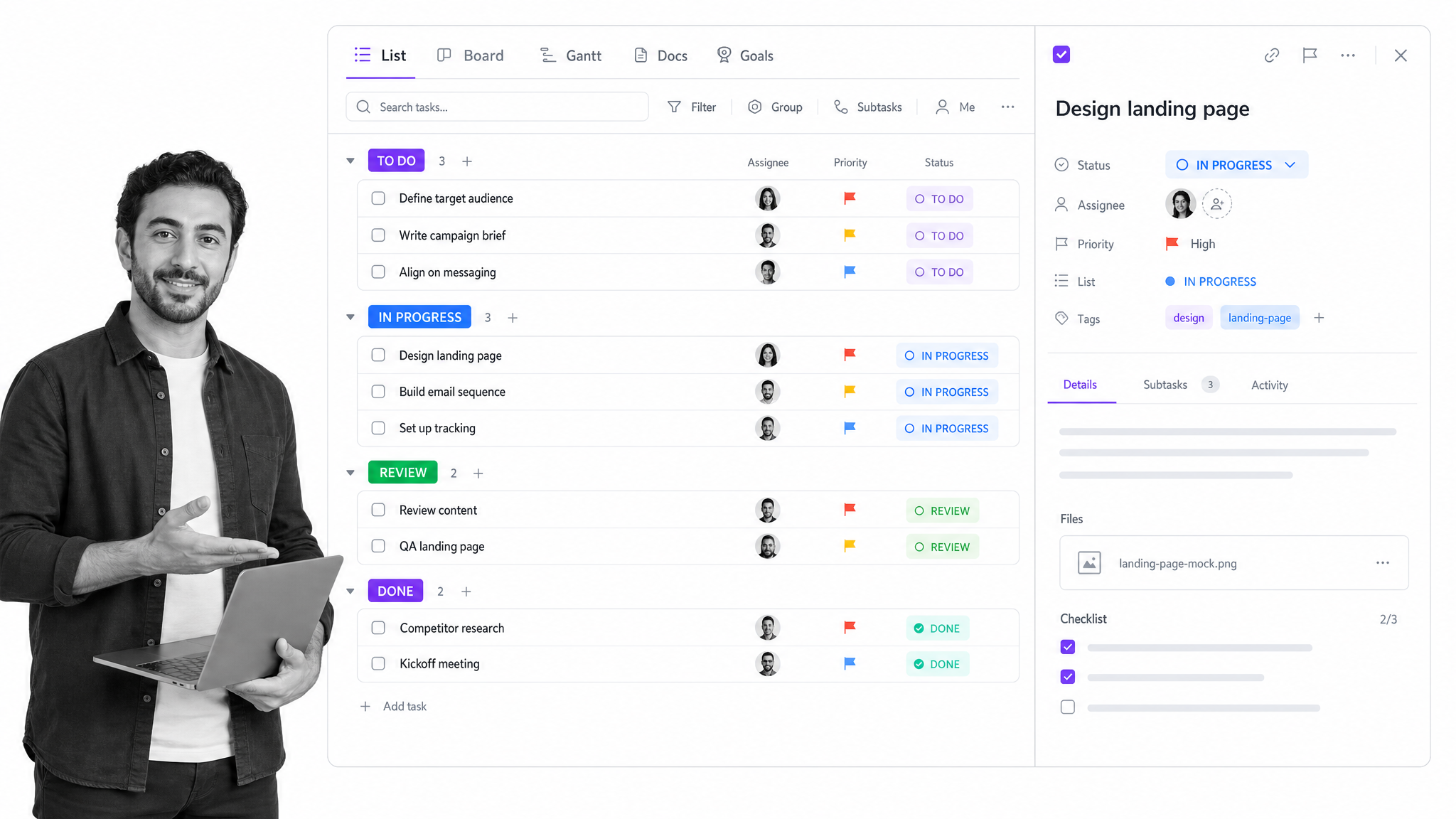
ClickUp aims to consolidate tasks, docs, goals, and chat into one platform so teams can reduce tool sprawl. Multiple views, from lists to boards to timelines, let different roles work the way they prefer while sharing the same underlying data, and a Free Forever plan lets teams try the core features.
Best for: All-in-one work management.
- Tasks with lists, boards, calendars, and Gantt views
- Docs, whiteboards, and goals alongside the work
- Automations and dashboards for reporting
- A no-cost Free Forever tier to start
Asana
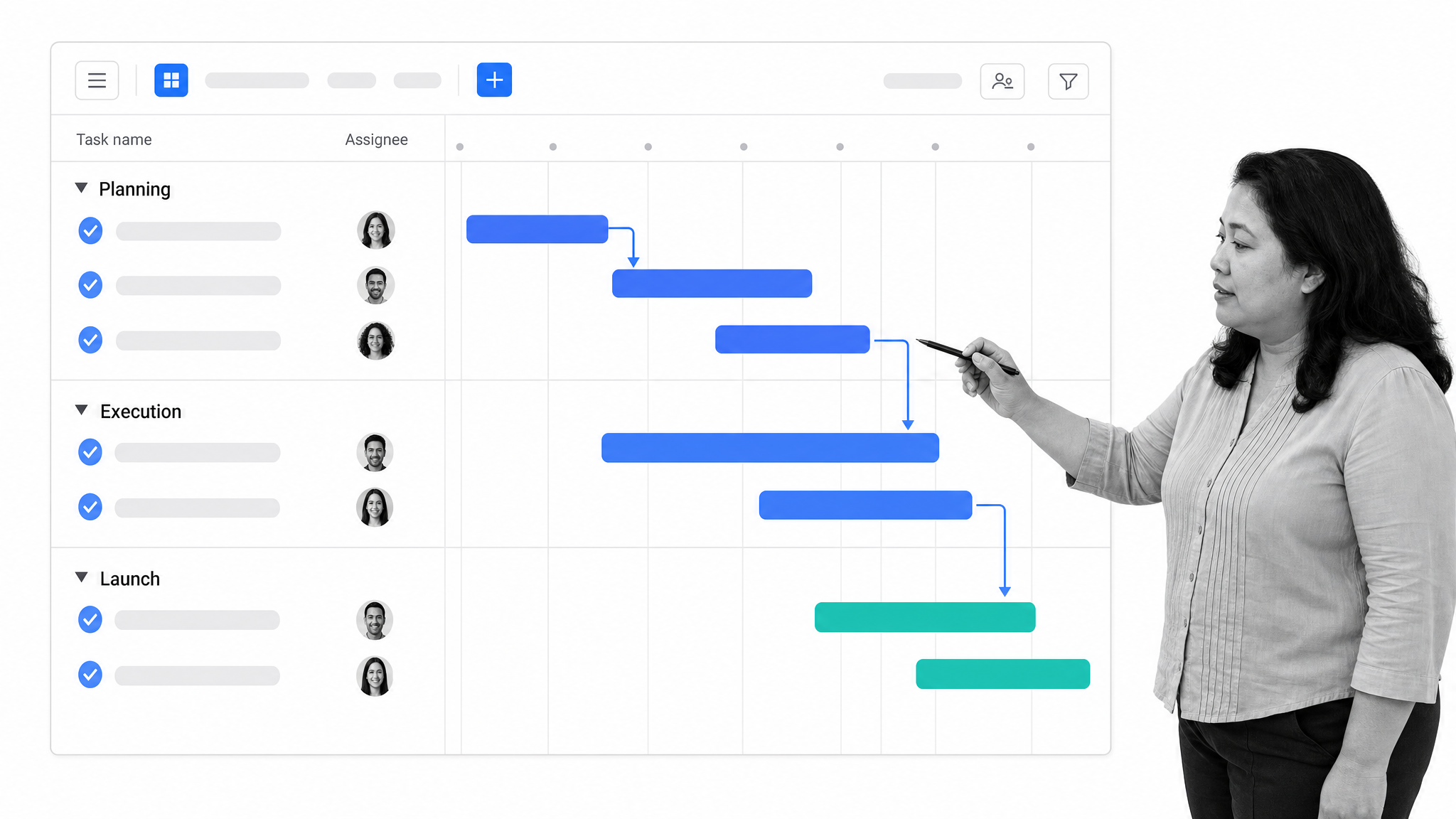
Asana helps teams coordinate projects by breaking work into tasks, assigning owners, and mapping dependencies. Timelines, boards, and workload views give managers a clear picture of progress and capacity, and a free tier covers small teams organizing their first projects.
Best for: Structured project and task management.
- Tasks, subtasks, and dependencies with clear ownership
- Timeline, board, and calendar views
- Workload and reporting for capacity planning
- Rules and automations to cut manual steps
monday.com
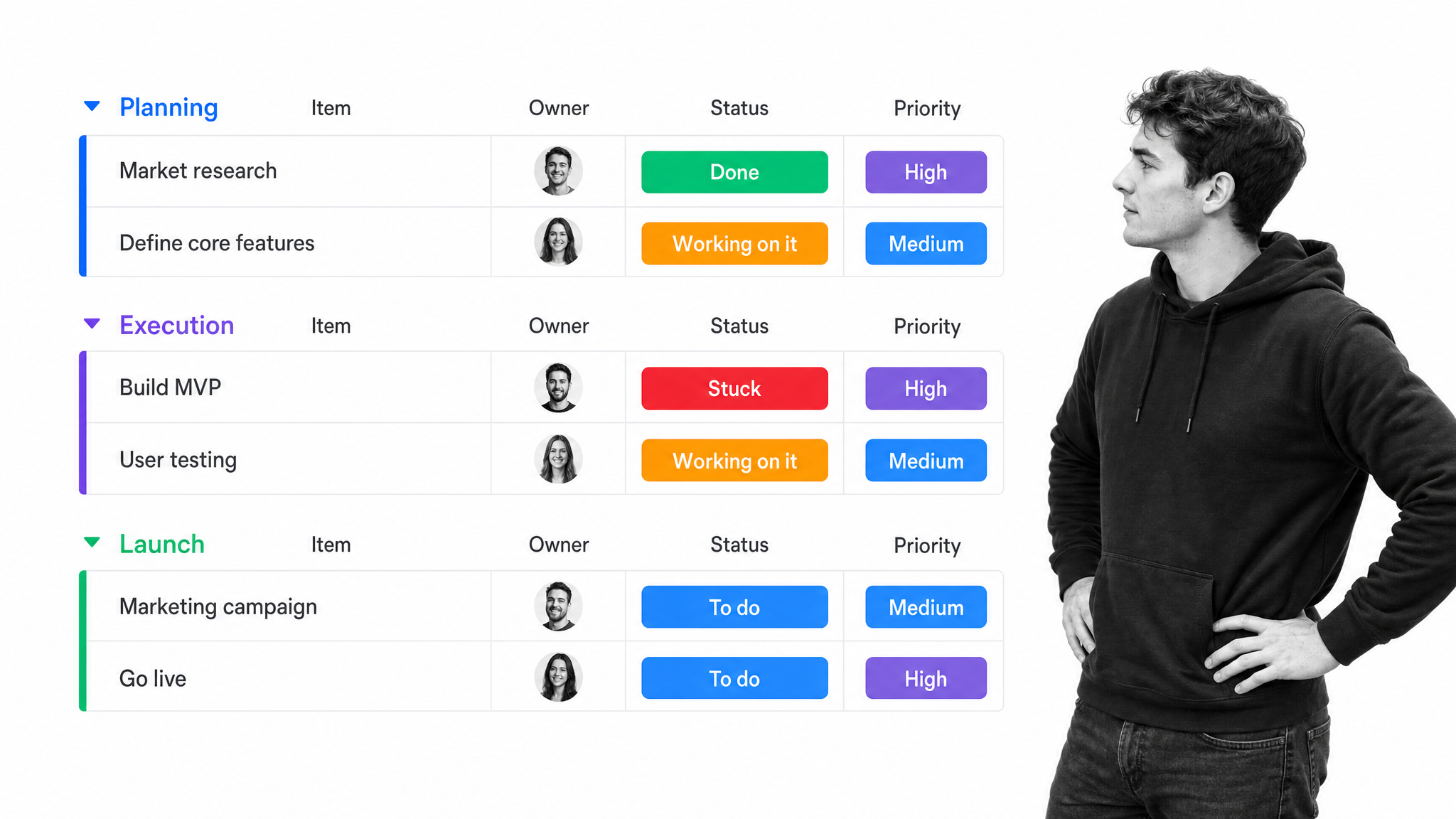
monday.com is a work operating system built on customizable boards that teams shape to fit their process. Columns, automations, and dashboards turn those boards into project trackers, CRMs, or request queues, and a free tier lets small teams explore the basics.
Best for: A visual Work OS for cross-functional teams.
- Customizable boards with many column types
- Automations and integrations to reduce busywork
- Dashboards that roll up progress across boards
- Specialized products for CRM, dev, and service work
Trello
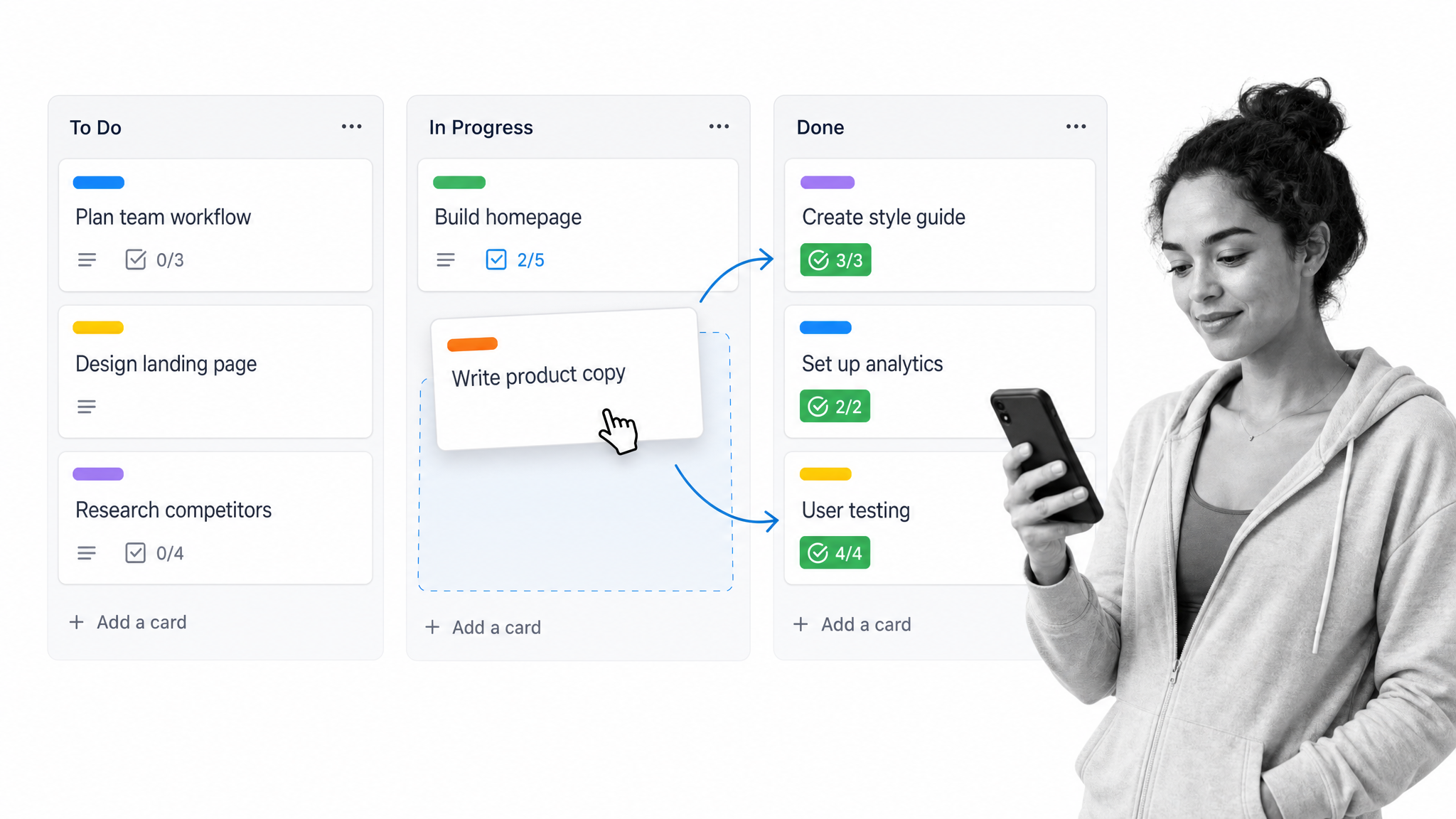
Trello uses cards and lists on a Kanban board to make work visual and easy to follow. Its low learning curve makes it a fast way for teams to organize to-dos, editorial calendars, or simple pipelines, and the free plan is generous enough for many small teams.
Best for: Simple Kanban boards for lightweight coordination.
- Cards and lists on an intuitive Kanban board
- Checklists, due dates, and labels on each card
- Power-Ups to extend boards with more features
- Butler automation for repetitive actions
Confluence
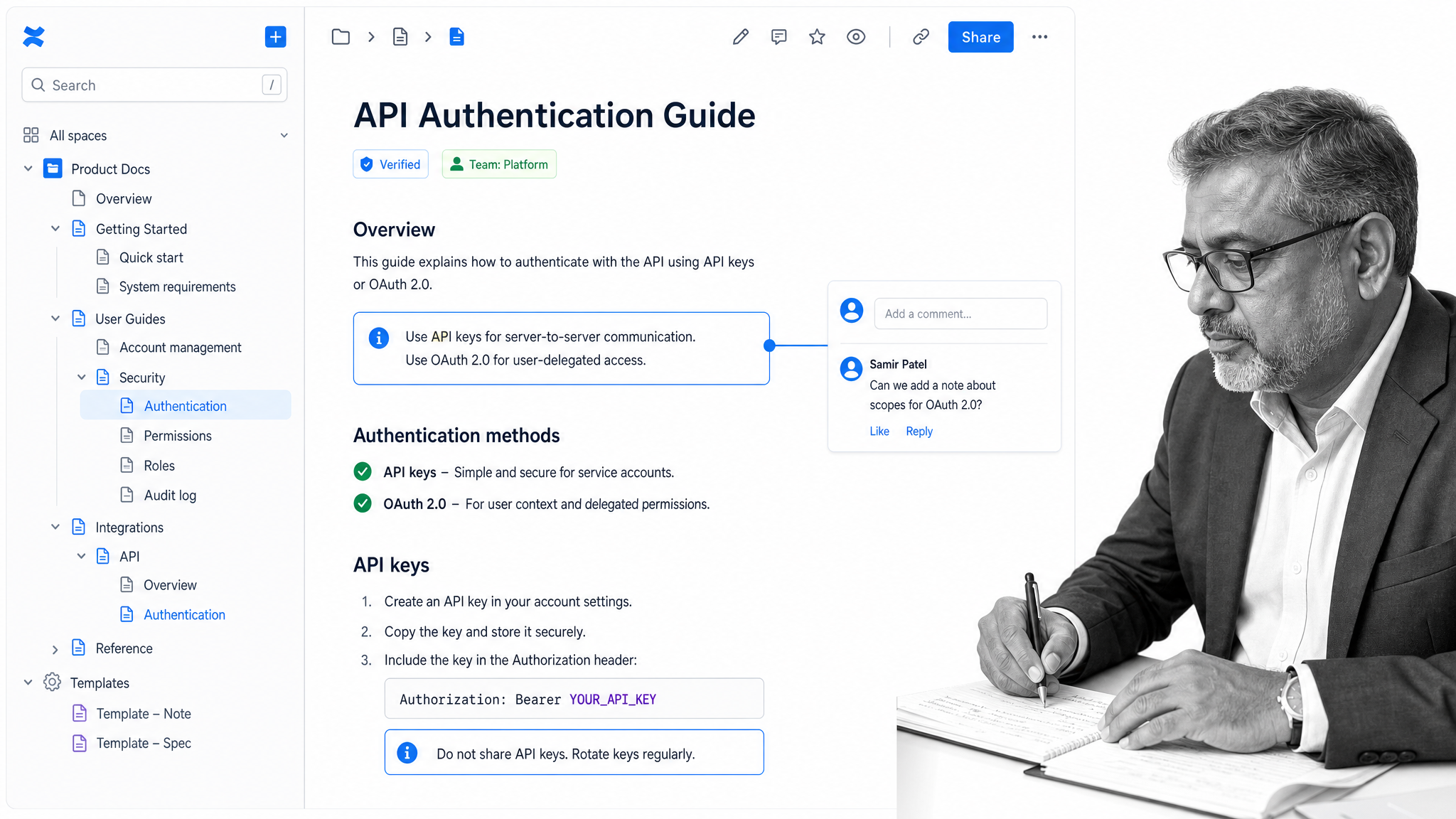
Confluence, from Atlassian, is a workspace for documentation and team knowledge. Pages, spaces, and templates help teams capture decisions, requirements, and how-to guides in a structured, searchable library, and it pairs closely with other Atlassian tools while offering a free tier.
Best for: Team wikis and shared knowledge.
- Spaces and pages for organized documentation
- Templates for meeting notes, plans, and specs
- Inline comments and page-level collaboration
- Tight links with the wider Atlassian ecosystem
Basecamp
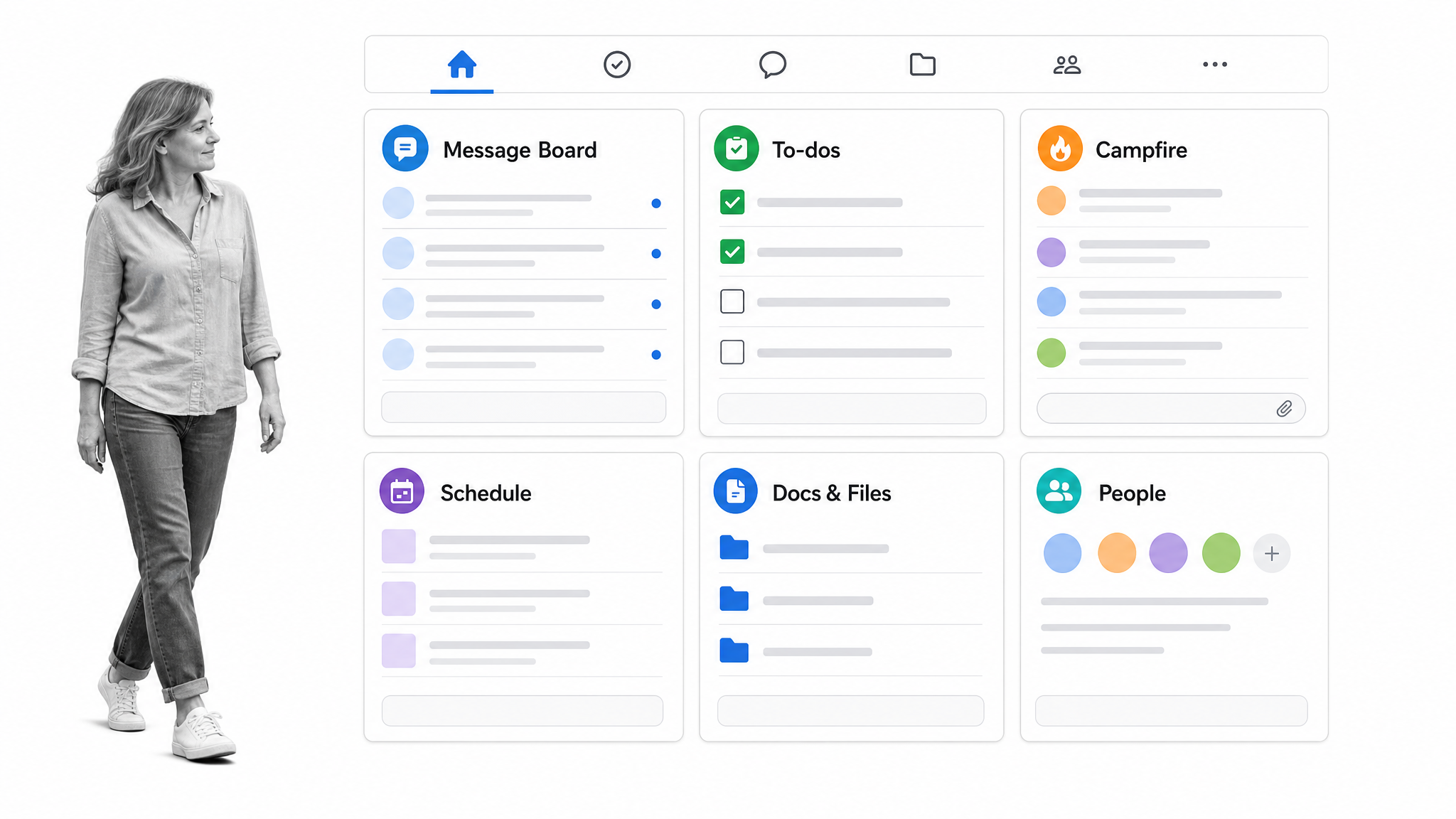
Basecamp, from 37signals, packages message boards, to-dos, schedules, docs, and group chat into one calm, opinionated tool. It is designed to reduce the number of apps a team needs, and it offers a free plan for a single project plus longer trials for larger teams.
Best for: Simple project management and team communication.
- Message boards for announcements and discussion
- To-dos and card tables for tracking work
- Campfire chat and Pings for messaging
- Docs, files, and automatic check-in questions
Airtable
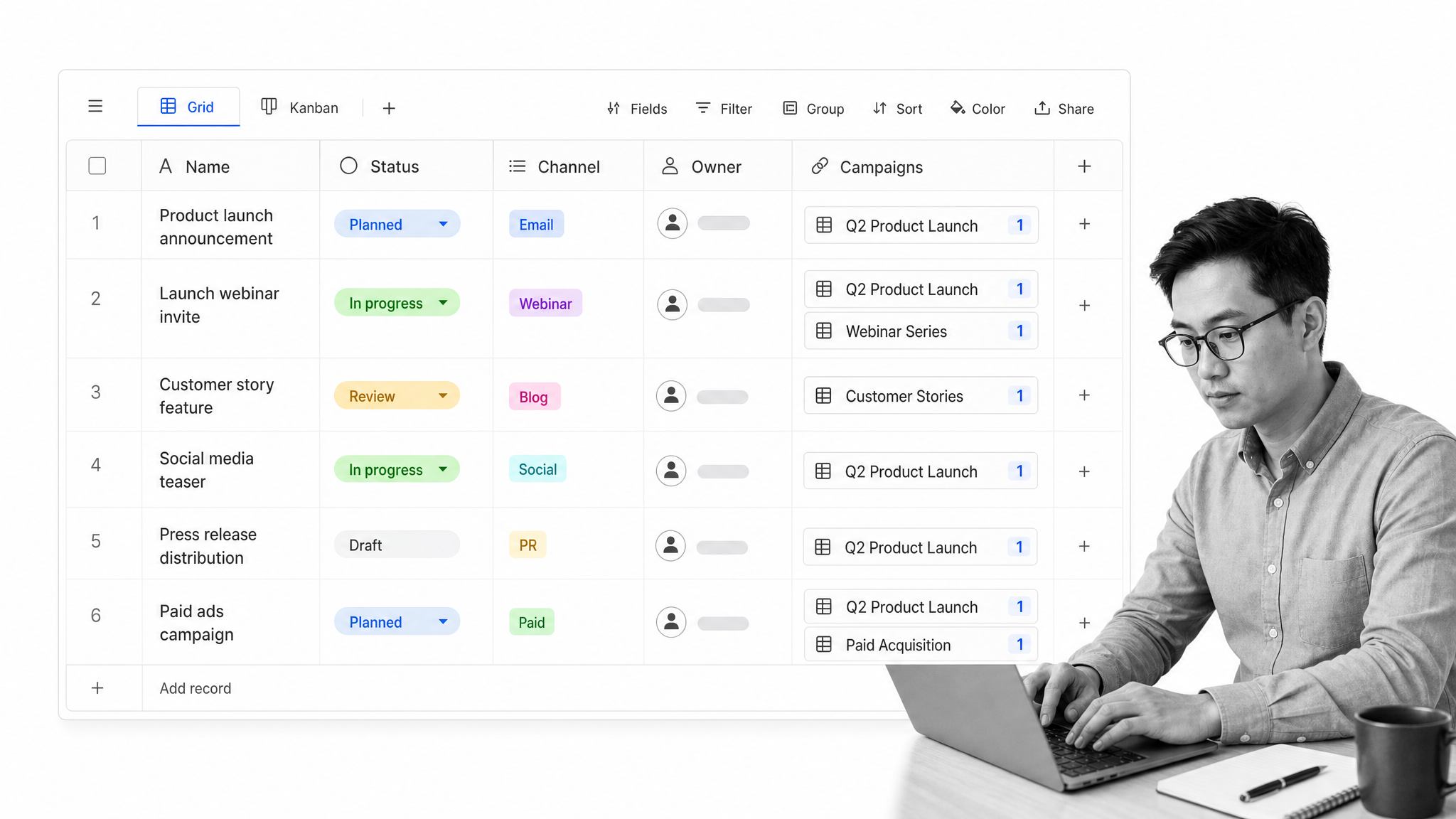
Airtable blends the familiarity of a spreadsheet with the power of a relational database. Teams use it to build shared trackers, content calendars, and lightweight apps with linked records and custom interfaces, and a free plan provides the core building blocks.
Best for: A database-spreadsheet hybrid for structured collaboration.
- Grid, calendar, kanban, and gallery views of the same data
- Linked records and relational structure
- Interfaces and automations for no-code apps
- A free plan to prototype simple workflows
Miro
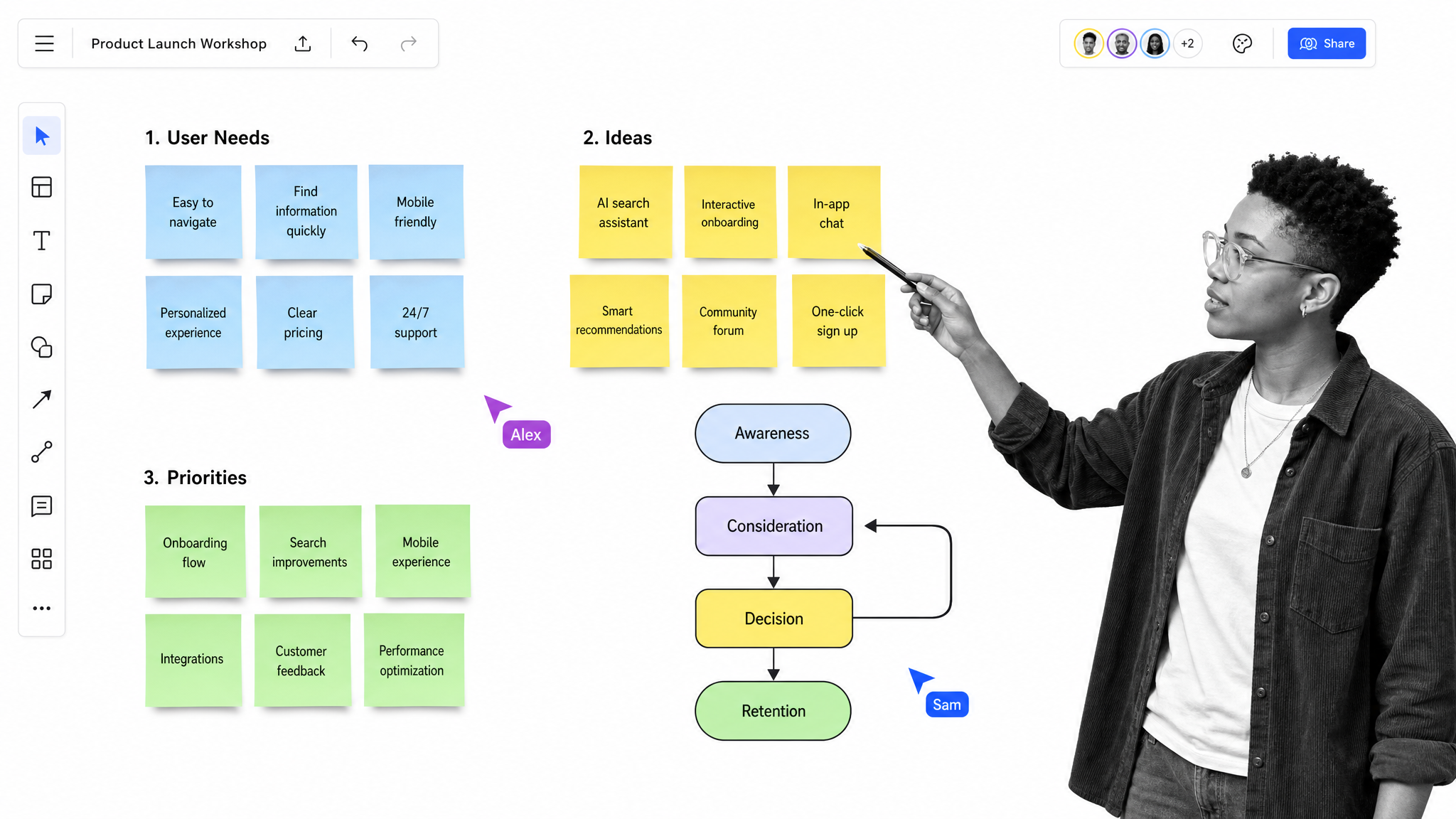
Miro is an online whiteboard where teams brainstorm, map processes, and run workshops together in real time. Sticky notes, diagrams, and templates support planning and design work that is hard to do in a document, and a free tier covers a handful of boards for small teams.
Best for: Visual collaboration on an online whiteboard.
- An infinite canvas for diagrams and brainstorming
- Templates for retrospectives, mapping, and workshops
- Real-time and async visual collaboration
- AI features to speed up diagramming
Zoom
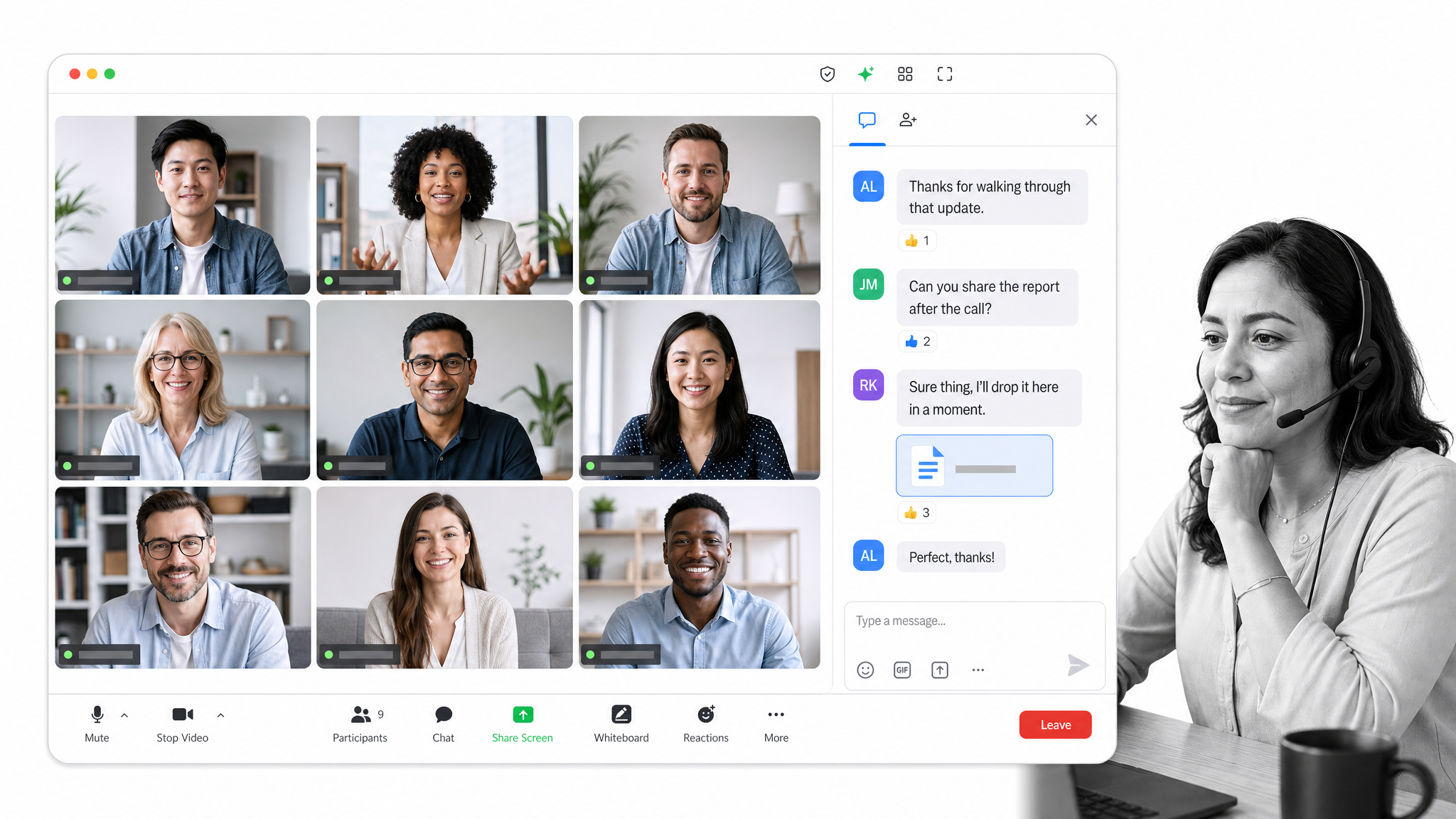
Zoom is widely used for video meetings, webinars, and calling, and it now bundles team chat, whiteboard, and notes so conversations continue before and after a call. A free plan covers short meetings, which makes it easy for teams to adopt for face-to-face collaboration.
Best for: Video meetings with built-in collaboration.
- Reliable video meetings and webinars
- Team Chat that carries context between meetings
- Built-in whiteboard and collaborative notes
- A free tier for shorter meetings
Loom
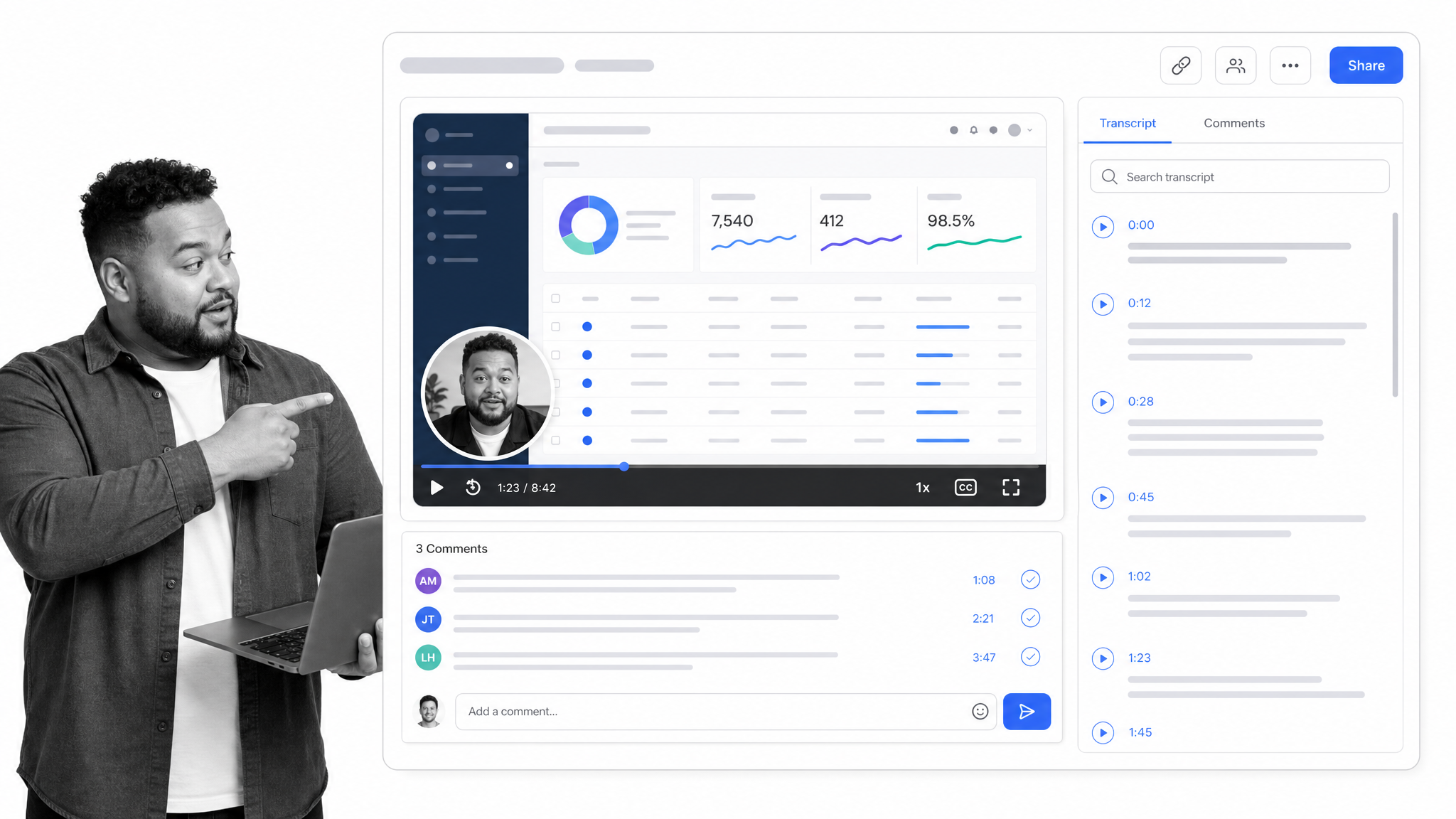
Loom, part of Atlassian, lets teammates record their screen and camera to share updates, walkthroughs, and feedback without another live meeting. Asynchronous video is especially useful for distributed teams across time zones, and a free Starter plan lets people try it out.
Best for: Async video messaging.
- Screen and camera recording in a few clicks
- Automatic transcripts and viewer engagement insights
- Comments and reactions on each video
- Integrations with tools like Slack and Jira
What is team collaboration software?
Team collaboration software is any tool that helps people work together on shared goals: communicating, coordinating tasks, and co-creating documents or other work. In practice it spans several overlapping categories, including messaging, video meetings, collaborative project management, document and knowledge management, and visual whiteboarding.
The category grew quickly as work became more distributed. Research on hybrid and remote work, such as Pew Research Center analysis of how the pandemic reshaped work and the Owl Labs State of Remote Work report, shows that a large share of knowledge workers now split time between home and office, which makes a shared digital workspace essential rather than optional.
Good collaboration tools do more than host conversation. As Atlassian notes in its work on project collaboration, effective teamwork depends on shared context, clear ownership, and a single place to see progress, not just more channels to post in.
What should you look for in team collaboration software?
The best fit depends on your team size, industry, and existing stack, but a few criteria matter for almost everyone:
- The primary job to be done. Decide whether your biggest gap is communication, project tracking, documentation, or process execution, and choose a leader for that job first.
- Integrations. Favor tools that connect to the apps you already use so updates flow automatically instead of being copied by hand.
- Ease of adoption. A tool only helps if people actually use it, so weigh the learning curve and the quality of the mobile and search experience.
- Structure and accountability. Look for clear ownership, due dates, and status so work does not stall in a chat thread.
- Security and administration. For regulated or larger teams, permissions, audit trails, and admin controls are as important as features.
One caution: more tools is not always better. Harvard Business Review has documented the problem of collaborative overload, where a sprawl of channels and requests drains the very productivity collaboration is meant to create. Consolidating where you can, and adding a workflow layer to route work deliberately, keeps the stack an asset rather than a distraction.
How do you choose the right collaboration tool for your team?
Start by mapping the modes of collaboration your team relies on: quick conversation, deep documentation, project coordination, visual planning, and process execution. Most teams need two or three of these covered well rather than one tool that does everything poorly.
Then look at how the work actually flows. Collaboration only pays off when it produces action, and disengaged or poorly coordinated teams are costly: Gallup research on the state of the global workplace ties engagement and clear expectations directly to performance. A messaging tool keeps people talking, but a workflow platform such as Process Street makes sure the decisions made in those conversations turn into completed, accountable work.
A practical approach is to anchor your stack with a communication hub, a shared document workspace, and a project or workflow tool, then layer in specialists like a whiteboard or async video only where a real gap exists. If your biggest risk is skipped steps, inconsistent handoffs, or audit surprises, lead with the workflow layer and let it orchestrate the rest.
FAQs
What is the best team collaboration software?
There is no single best tool for every team. The best choice depends on your primary need. Slack and Microsoft Teams lead for messaging, Google Workspace and Notion for documents, Asana, ClickUp, and monday.com for project management, and Process Street for turning collaboration into repeatable, accountable workflows. Most teams combine two or three of these.
What are the main types of collaboration software?
Collaboration software generally falls into a few overlapping categories: communication and messaging, video meetings, project and task management, document and knowledge management, visual whiteboarding, and workflow or process management. Many modern platforms blend several of these, which is why teams increasingly consolidate onto fewer, broader tools.
Do team collaboration tools integrate with each other?
Yes. Most leading tools offer integrations so information moves automatically between apps, for example posting task updates into a chat channel or attaching documents to a project. Process Street has direct, universal integrations to 5,000+ systems, and when a new one is needed an AI agent can build it on the fly, which keeps a mixed stack connected.
What is the difference between collaboration software and project management software?
Project management software is a subset of collaboration software focused specifically on planning and tracking work: tasks, timelines, dependencies, and reporting. Collaboration software is broader and also covers communication, documents, and knowledge sharing. Many teams pair a project or workflow tool with a messaging and a document tool.
Is there free team collaboration software?
Yes. Many of the tools in this guide offer free plans or free trials, including Slack, Notion, Trello, ClickUp, Asana, monday.com, Miro, and Loom, which lets teams evaluate them before paying. Free tiers usually limit storage, history, or advanced administration, so growing teams often upgrade as needs increase.