
Turn every policy into automated workflows with built-in enforcement and audit-ready proof.


8 Best UiPath Alternatives & Competitors in 2026

UiPath alternatives are worth comparing when UiPath is too broad, too technical, too expensive for the use case, or simply aimed at a different job than the one your team needs done.
UiPath is built for large automation programs that coordinate robots, agents, people, documents, and applications. That can be powerful. It can also be more platform than a team needs when the real problem is recurring SOP execution, approvals, evidence collection, or process accountability.
This list compares UiPath alternatives across practical buying jobs: enforceable SOP workflows, RPA bot programs, Microsoft automation, enterprise digital workforces, low-code process apps, case-heavy workflows, integration automation, and BPMN orchestration. The ranking is neutral and use-case based. Process Street is first for teams whose core need is enforceable, trackable recurring work. For classic RPA or technical orchestration, the stronger fit may be another tool in the list.
Evaluation criteria: core capability fit, governance, ease of ownership, pricing transparency, free evaluation path, integration model, and whether the tool is built for human workflow execution, bot automation, or technical orchestration.
UiPath alternatives at a glance
If you need a controlled SOP workflow system, start with Process Street. If you need bots to operate desktop or legacy software, compare Automation Anywhere, Power Automate, SS&C Blue Prism, Pega, and Appian. If your problem is integration or BPMN orchestration, Workato or Camunda may be the cleaner choice.
| Tool | Best for | Standout feature | Free plan | Starting price |
|---|---|---|---|---|
| Process Street | enforceable recurring SOP and compliance workflows | workflow runs with required fields, approvals, conditional logic, evidence collection, and audit trails | Trial available | See pricing page |
| Automation Anywhere | cloud-native RPA and agentic automation programs | Cloud Community Edition and enterprise automation platform | Yes, Community Edition | Contact sales |
| Microsoft Power Automate | Microsoft-centric low-code automation and RPA | cloud flows, attended desktop flows, unattended process plans, and process mining add-ons | 30-day trial | $15 per user/month paid yearly |
| SS&C Blue Prism | enterprise digital workforce governance | Enterprise, Desktop, Chorus, trial, and learning editions | 30-day trial and learning edition | Contact sales |
| Appian | enterprise process automation and low-code applications | process orchestration, RPA, AI, intelligent document processing, process intelligence, and API integration | Demo, no public free plan | Contact sales |
| Pega | complex enterprise workflow, case management, and RPA | RPA integrated with Pega’s low-code platform, AI, process mining, and governance | Free live demo by request | Contact sales |
| Workato | enterprise integration automation and AI-agent orchestration | recipes, connectors, Enterprise MCP, and sales-led flexible pricing | Trial by request | Contact sales |
| Camunda | BPMN process orchestration and developer-led automation | Camunda 8 cloud trial, BPMN and DMN modeling, and Enterprise process orchestration | 30-day trial and limited free account | Contact sales for Enterprise |
In this guide, we compare:
- UiPath alternatives at a glance
- 1. Process Street
- 2. Automation Anywhere
- 3. Microsoft Power Automate
- 4. SS&C Blue Prism
- 5. Appian
- 6. Pega
- 7. Workato
- 8. Camunda
- How to choose among UiPath alternatives
- FAQs
1. Process Street
Best for: enforceable recurring SOP and compliance workflows.
Process Street is ranked first for the specific buyer this page is written for: teams that are comparing UiPath alternatives because they need repeatable business processes to run correctly every time. UiPath is a strong automation platform, but many operating teams are not trying to build a bot factory. They are trying to make sure onboarding, compliance reviews, vendor checks, finance approvals, customer handoffs, and recurring SOPs happen in the right order with the right evidence.
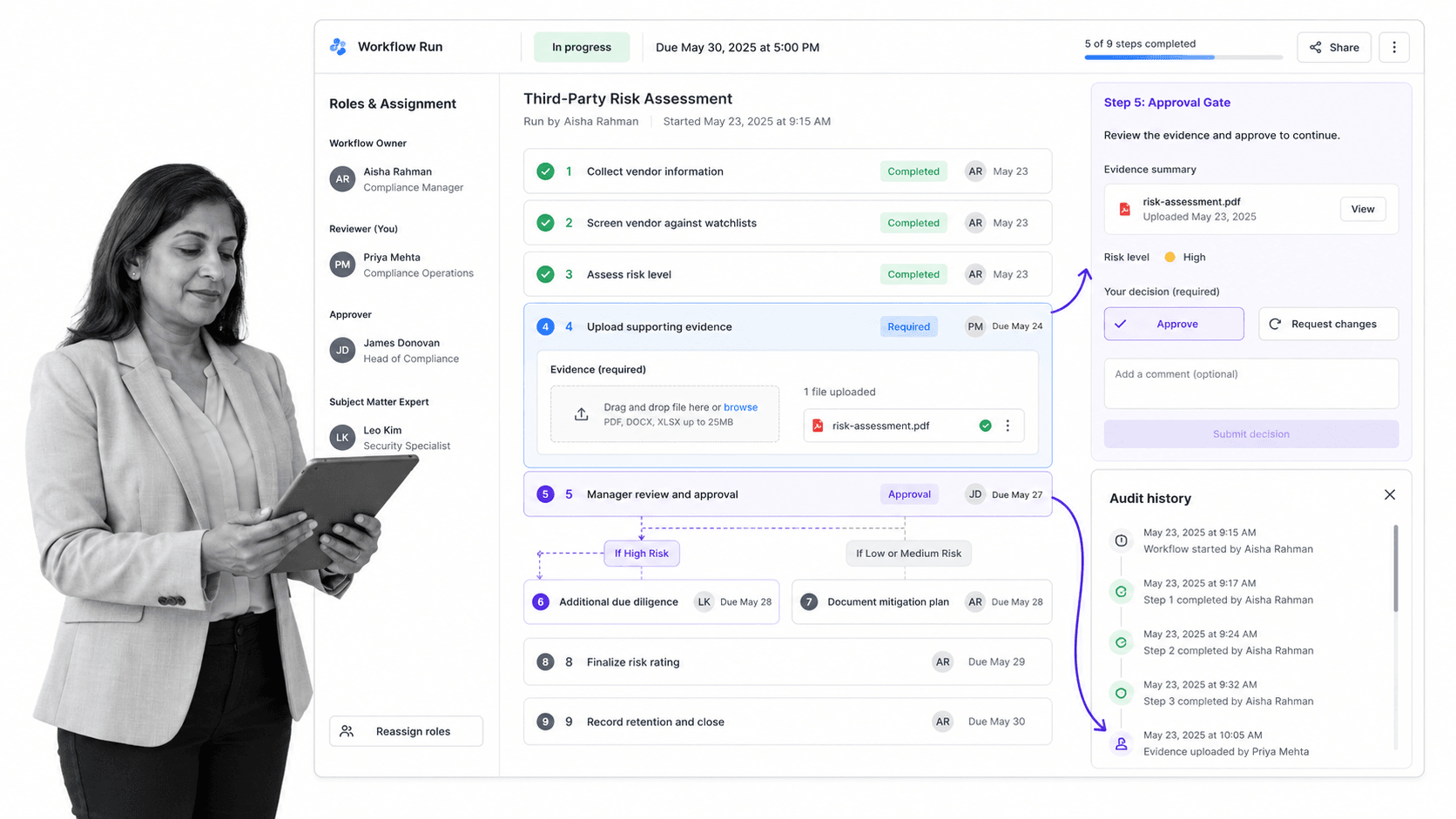
That is where Process Street earns the top spot. It turns procedures into workflow runs with owners, required fields, approvals, due dates, conditional paths, and audit trails. It also fits teams that want best SOP software and workflow automation compliance without forcing every process owner to think like an RPA developer.
Process Street is not the best choice for every UiPath use case. If your automation needs a robot to drive legacy desktop screens without an API, Automation Anywhere, Microsoft Power Automate, SS&C Blue Prism, Pega, or another RPA platform may be a better fit. If your work is mostly BPMN orchestration, Camunda may be stronger. Process Street wins when the recurring process has people, judgment, policy, evidence, and accountability inside it.
Key features
- Workflow runs for recurring SOPs, approvals, onboarding, compliance checks, and operations handoffs.
- Required fields, due dates, task assignments, conditional logic, and role-based ownership.
- Approvals and evidence collection built into the workflow instead of tracked in side channels.
- Audit history and run status that help teams prove work happened.
- Direct integrations to 5,000+ systems, with an AI agent that builds new integrations on demand.
Pros
- Best fit for enforceable SOP execution rather than loose task tracking.
- Readable for non-technical operations, HR, compliance, finance, and customer teams.
- Strong for recurring workflows where skipped steps create operational or compliance risk.
- Links documentation and execution so procedures do not sit in a static repository.
- Pricing details are available on the Process Street pricing page.
Cons
- Not a full BPMN modeling and simulation suite.
- Not a screen-scraping RPA bot platform for unattended legacy desktop automation.
Choose Process Street when your UiPath alternatives search is really about controlled process execution. Start at Process Street or compare plan details on Process Street pricing.
2. Automation Anywhere
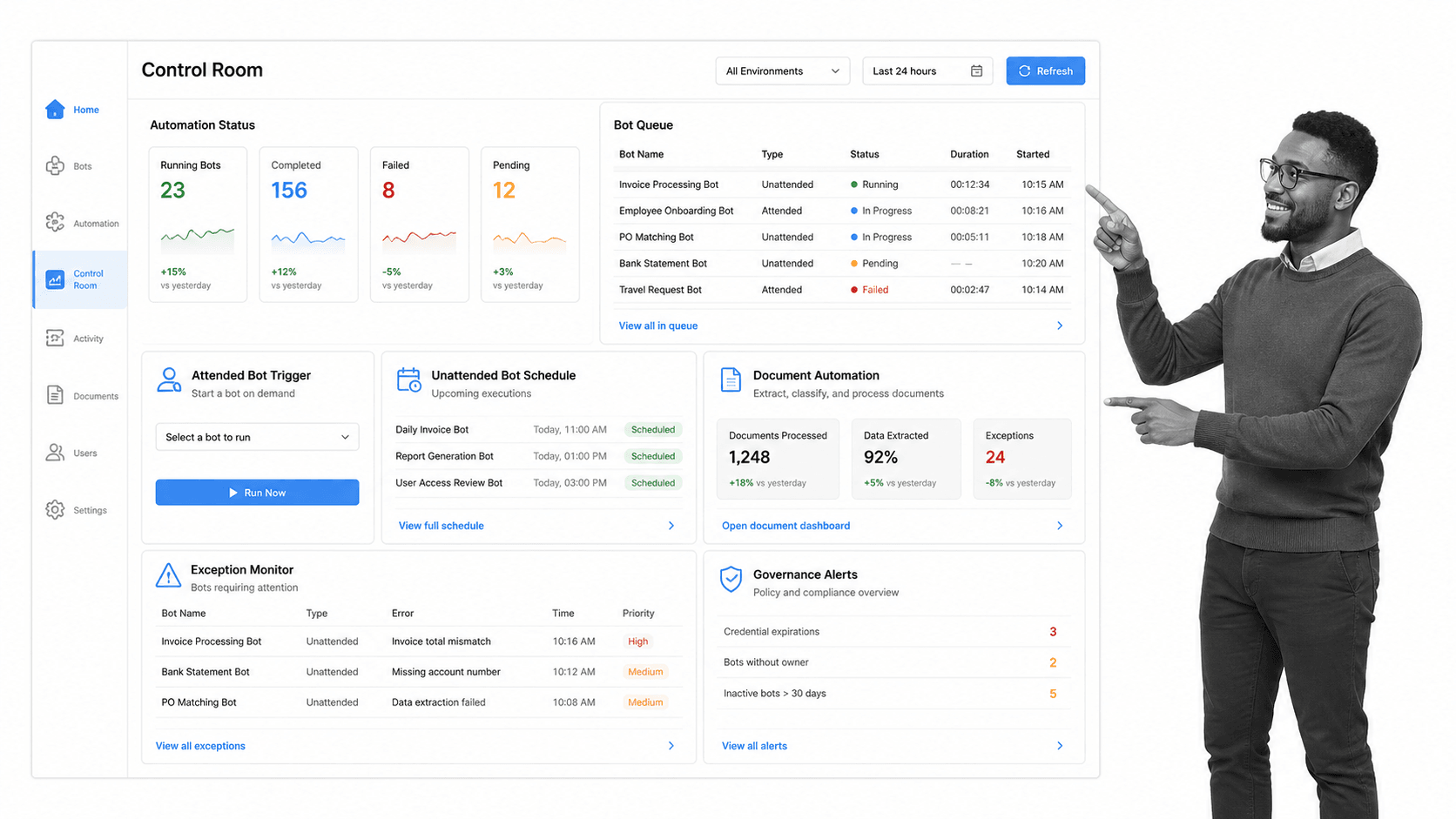
Best for: cloud-native RPA and agentic automation programs.
Automation Anywhere is a direct UiPath alternative for teams building robotic and agentic automations. Its public pages emphasize Cloud Community Edition for starting free, plus enterprise paths for broader programs.
It beats Process Street when the work has to operate applications the way a bot would: logging into systems, moving data between screens, processing documents, and running attended or unattended automations. Process Street is better when the work is a recurring human process that needs owners, approvals, required evidence, and a clean run history.
Key features
- Cloud Community Edition for free evaluation.
- Bot operations and automation management surfaces.
- Document automation and AI-assisted automation capabilities.
- Enterprise automation paths for larger programs.
Pros
- Direct RPA alternative to UiPath.
- Free Community Edition makes early evaluation easier.
- Good fit for teams standardizing bot development.
Cons
- Enterprise pricing is sales-led.
- RPA programs still need governance and maintenance discipline.
Pricing model: Yes, Community Edition. Starting price: Contact sales. Check Automation Anywhere pricing for current details.
Where it beats Process Street: Automation Anywhere is stronger when the core need is RPA bot development, bot operations, and enterprise automation governance.
3. Microsoft Power Automate
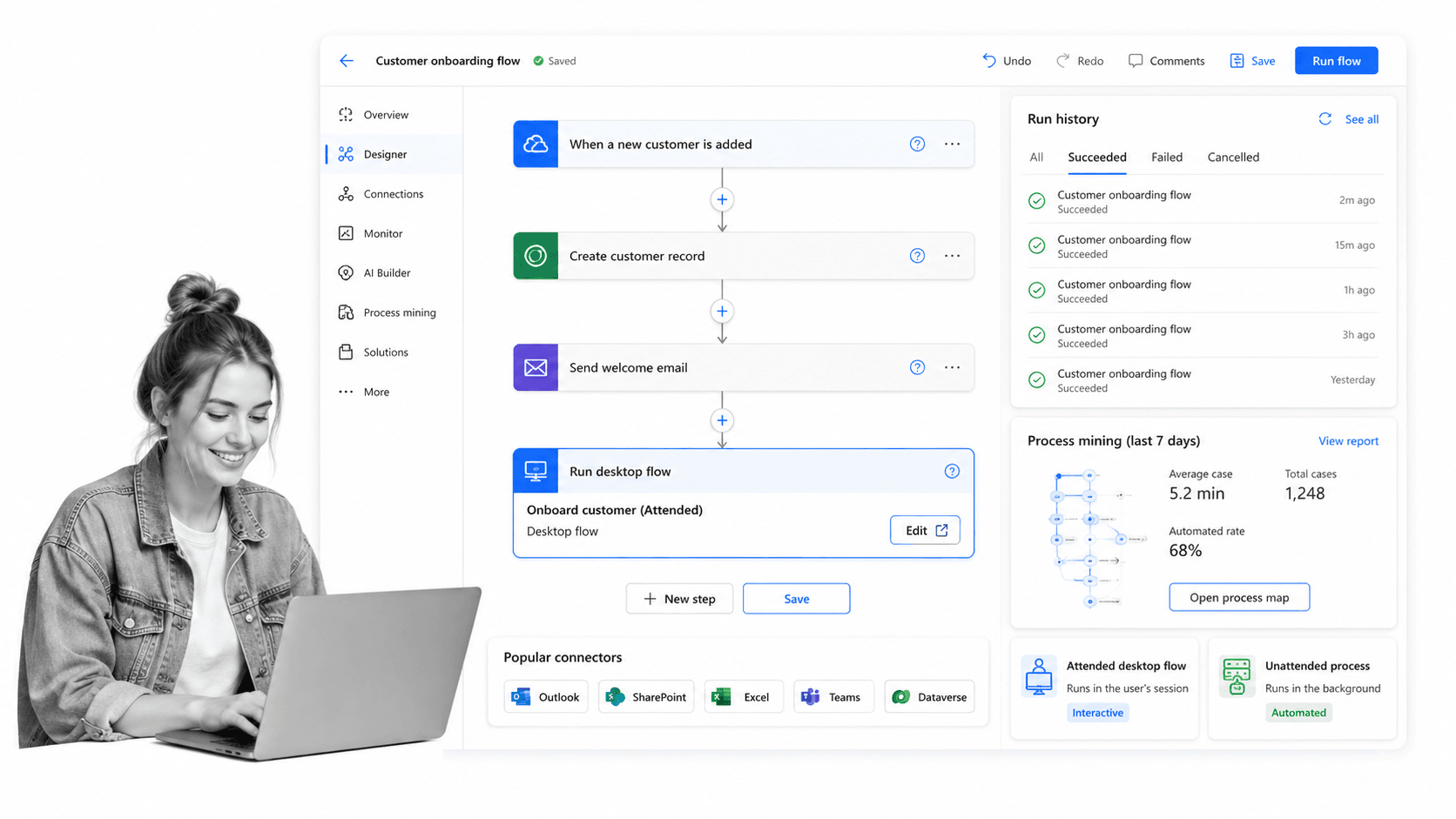
Best for: Microsoft-centric low-code automation and RPA.
Microsoft Power Automate is the strongest UiPath alternative for organizations already deep in Microsoft 365, Azure, Dataverse, and Power Platform. Its pricing page lists a free trial, Premium user plan, Process bot plan, Hosted Process bot plan, and a process mining add-on.
It beats Process Street when the automation layer needs to live inside Microsoft governance and connect deeply with Microsoft services. Process Street is stronger when the user experience should be a guided SOP run rather than a flow-builder surface.
Key features
- Cloud flows for digital process automation.
- Attended desktop flows in the Premium plan.
- Unattended desktop flows in Process and Hosted Process plans.
- Process mining add-on for discovery and analysis.
Pros
- Clear public entry pricing.
- Natural fit for Microsoft-centric teams.
- Combines cloud flows with RPA options.
Cons
- Advanced RPA and process mining require the right licensing mix.
- Non-Microsoft-heavy teams may not get the same ecosystem advantage.
Pricing model: 30-day trial. Starting price: $15 per user/month paid yearly. Check Microsoft Power Automate pricing for current details.
Where it beats Process Street: Power Automate is stronger when the team already standardizes on Microsoft 365, Dataverse, Azure, and Power Platform governance.
4. SS&C Blue Prism
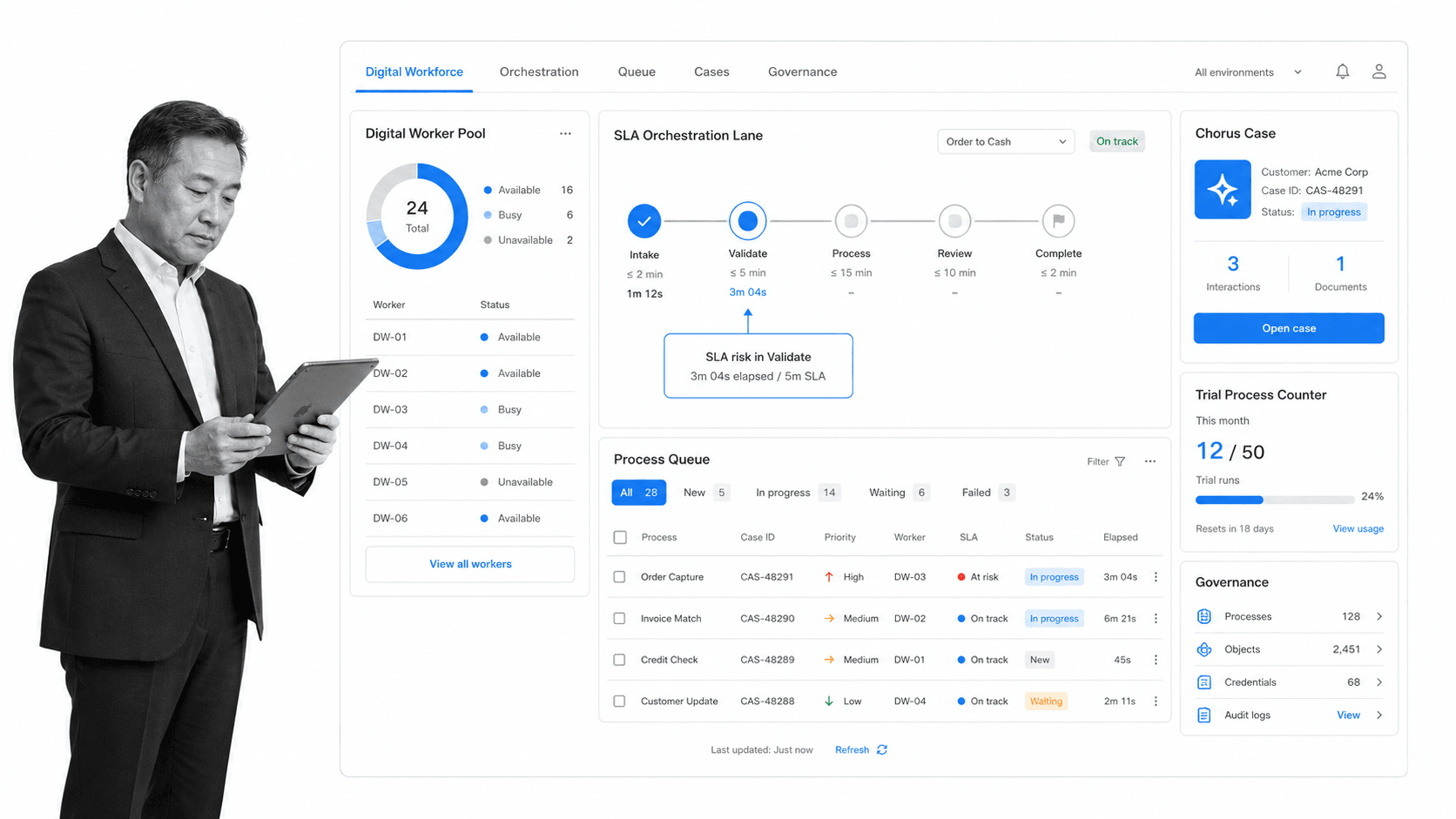
Best for: enterprise digital workforce governance.
SS&C Blue Prism is a mature enterprise automation option for digital workforce programs. Its pricing page separates Enterprise, Desktop, and Chorus, then offers trial and learning editions for evaluation and training.
It beats Process Street when the buyer needs a controlled digital workforce, centralized bot operations, desktop automation, and BPM around enterprise automation. Process Street is better when business teams need to turn SOPs into enforceable workflows without building an RPA center of excellence first.
Key features
- Enterprise automation platform for digital workforce control.
- Desktop automation for repetitive employee desktop tasks.
- Chorus for business process management.
- 30-day trial and 180-day learning edition options.
Pros
- Strong enterprise governance posture.
- Clear learning and trial paths.
- Useful when RPA and BPM need to sit together.
Cons
- Pricing is quote-led for production use.
- May be heavier than needed for department-level SOP workflows.
Pricing model: 30-day trial and learning edition. Starting price: Contact sales. Check SS&C Blue Prism pricing for current details.
Where it beats Process Street: SS&C Blue Prism is stronger for enterprises that want governed digital-worker programs and BPM options around RPA.
5. Appian
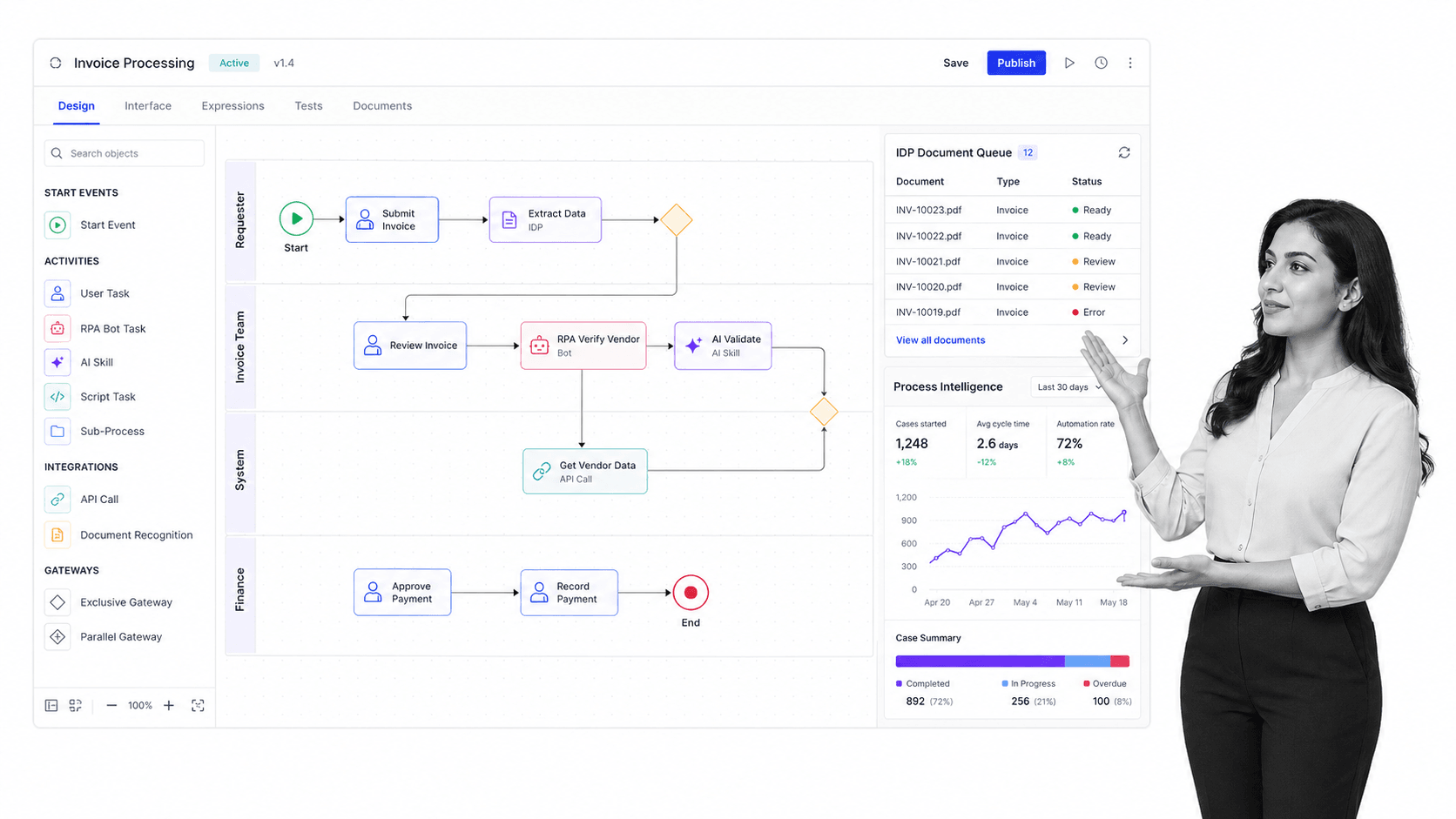
Best for: enterprise process automation and low-code applications.
Appian is a broader low-code process automation platform. Its product pages position process orchestration, RPA, artificial intelligence, intelligent document processing, process intelligence, and API integration as parts of one end-to-end automation platform.
It beats Process Street when the buyer needs enterprise applications and case-style process orchestration, not just recurring workflow execution. Process Street is better when teams want readable SOPs, guided checklist execution, approvals, and proof without a full low-code application build.
Key features
- Process orchestration across people, rules, systems, bots, and AI.
- Low-code RPA for repetitive manual tasks.
- AI Skill Designer for private AI models.
- API integration with low-code design tools.
Pros
- Broad enterprise process automation scope.
- Useful for complex case and app workflows.
- Combines RPA with IDP and process intelligence.
Cons
- Pricing is sales-led.
- Implementation scope can be larger than a simple recurring workflow program.
Pricing model: Demo, no public free plan. Starting price: Contact sales. Check Appian pricing for current details.
Where it beats Process Street: Appian is stronger when you need low-code applications, complex case management, and enterprise process orchestration in one platform.
6. Pega
Best for: complex enterprise workflow, case management, and RPA.
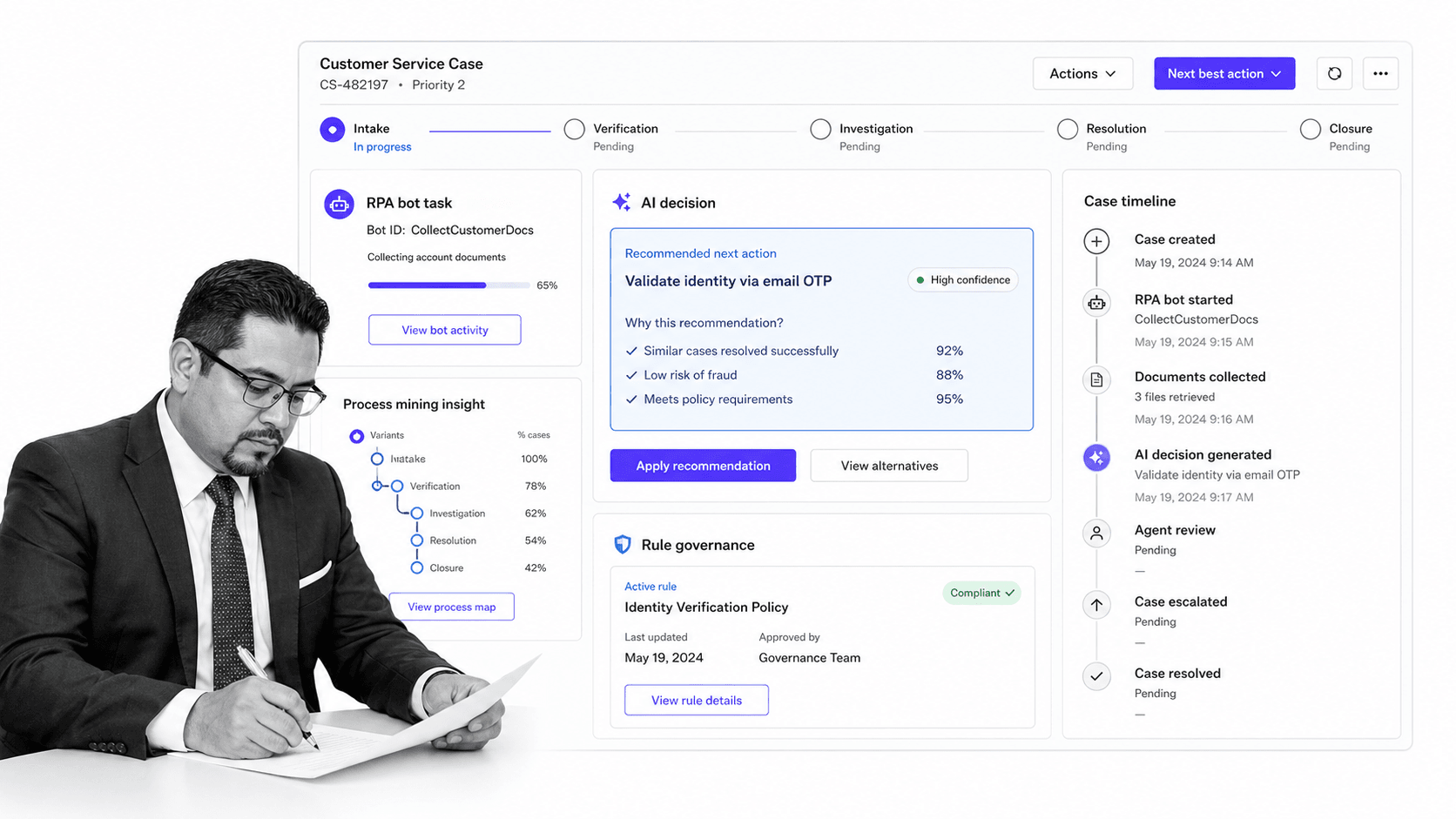
Pega is a strong alternative when the automation problem is tied to enterprise case management, decisioning, workflow, and customer operations. Its RPA page says bots can work alongside AI agents and workflows, with governance, testing, and reuse.
It beats Process Street when the workflow is complex, dynamic, decision-heavy, and connected to customer or case operations. Process Street is better when the goal is to enforce recurring procedures and keep an auditable work record that non-technical process owners can maintain.
Key features
- RPA bots integrated with Pega’s low-code platform.
- Pairing with Pega Agentic AI, Process Mining, and Process AI.
- Enterprise-grade governance, testing, and reuse.
- Sales-led demo and pricing path.
Pros
- Strong fit for complex case work.
- Combines workflow and automation governance.
- Useful when business rules and decisions drive the process.
Cons
- Pricing is not published on the product page.
- Can be more platform than a team needs for SOP execution.
Pricing model: Free live demo by request. Starting price: Contact sales. Check Pega pricing for current details.
Where it beats Process Street: Pega is stronger when transformation depends on enterprise case management, decisioning, and long-running customer or operational workflows.
7. Workato
Best for: enterprise integration automation and AI-agent orchestration.
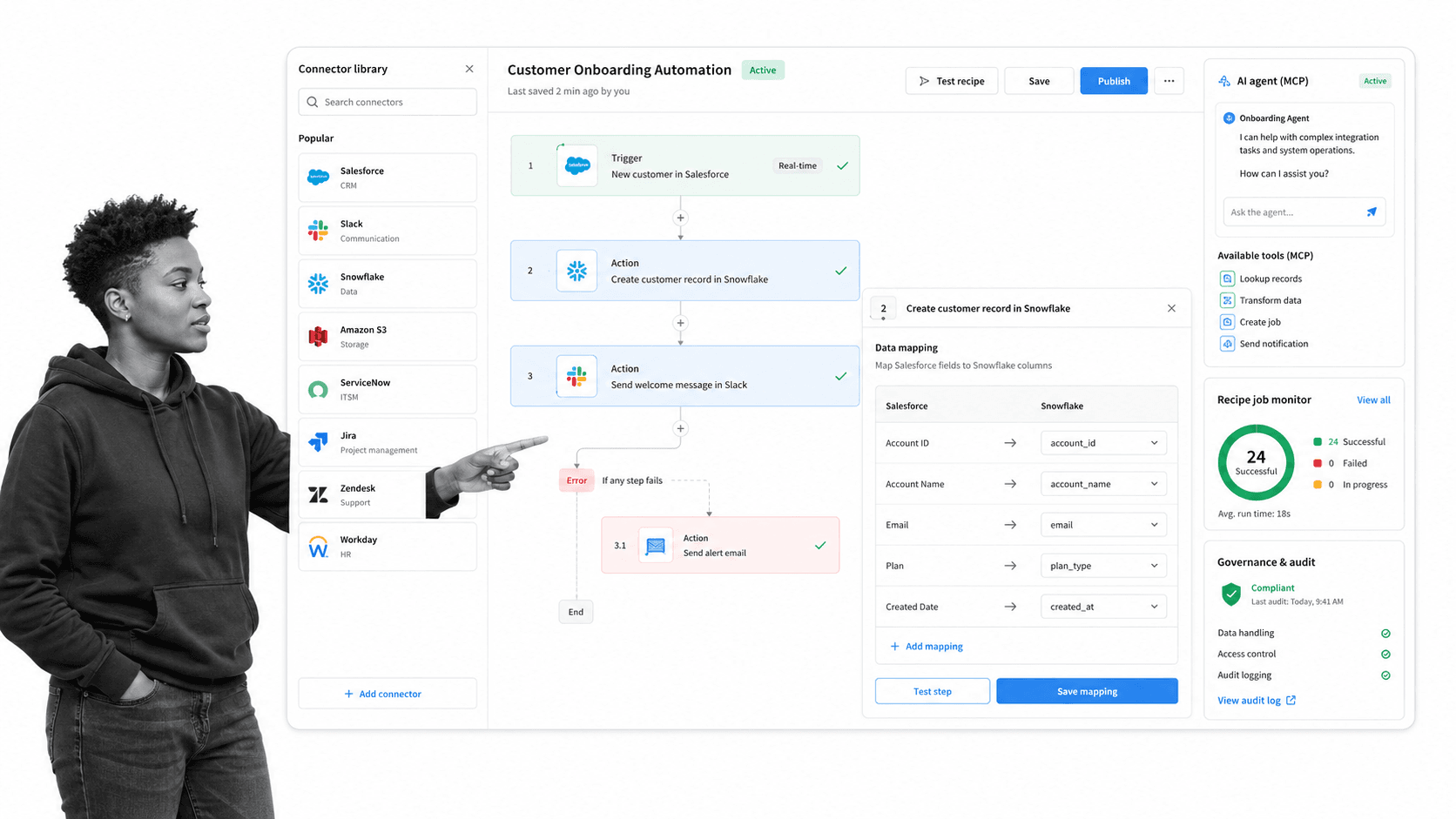
Workato is not a classic RPA clone. It is a strong UiPath alternative when the real problem is integration automation, recipes, connectors, and AI-agent orchestration across enterprise apps. Its public pages emphasize Enterprise MCP for AI agents and a flexible sales-led pricing model.
It beats Process Street when the work is primarily system-to-system orchestration, data movement, or connector-heavy automation. Process Street is better when each run requires a human owner, checklist accountability, approvals, and evidence collection.
Key features
- Recipe-based automation and integration workflows.
- Connector catalog and app orchestration.
- Enterprise MCP positioning for AI-agent orchestration.
- Trial and sales-led pricing paths.
Pros
- Strong integration automation focus.
- Good fit for IT and business automation teams collaborating on recipes.
- Useful when agent workflows need governed app connections.
Cons
- Does not publish self-serve list pricing on the pricing page.
- Not a dedicated SOP execution system.
Pricing model: Trial by request. Starting price: Contact sales. Check Workato pricing for current details.
Where it beats Process Street: Workato is stronger when the problem is app-to-app integration, data movement, and enterprise orchestration rather than SOP execution.
8. Camunda
Best for: BPMN process orchestration and developer-led automation.
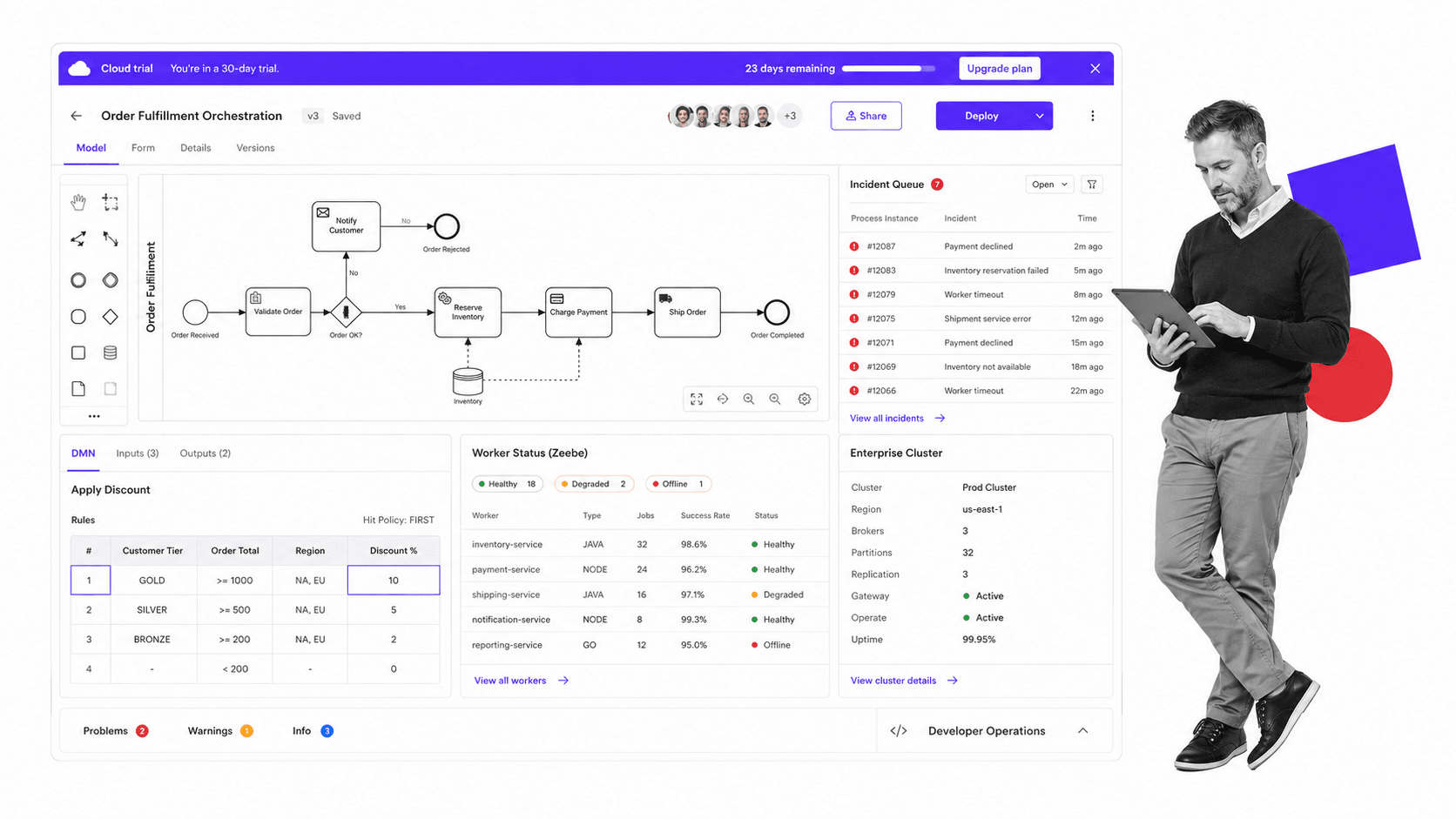
Camunda is the best fit on this list for developer-led BPMN and DMN process orchestration. Its docs list a free trial for Camunda 8 cloud and an Enterprise plan for high-volume automation and end-to-end process orchestration.
It beats Process Street when technical teams need BPMN models, decision tables, service orchestration, incident handling, and developer ownership. Process Street is better when operations or compliance teams need to launch, run, and prove recurring procedures without owning BPMN infrastructure.
Key features
- BPMN and DMN modeling.
- Camunda 8 cloud trial.
- Enterprise plan for high-volume end-to-end process orchestration.
- Collaborative modeling after the trial on a limited free account.
Pros
- Strong process orchestration model.
- Best fit for technical and developer-led teams.
- Good for microservice and process instance coordination.
Cons
- Enterprise pricing requires a quote.
- Less operator-friendly for teams that want checklist-style SOP runs.
Pricing model: 30-day trial and limited free account. Starting price: Contact sales for Enterprise. Check Camunda pricing for current details.
Where it beats Process Street: Camunda is stronger when technical teams need BPMN/DMN orchestration, microservice coordination, and developer-controlled process models.
How to choose among UiPath alternatives
Start by naming the work pattern. If the work is a recurring checklist with accountable humans, approvals, and evidence, compare Process Street with workflow management system, workflow automation software, and best SOP software options. If the work is screen automation across legacy apps, shortlist RPA software products. If the work is app-to-app data movement, prioritize integration automation. If the work is technical service orchestration, look at BPMN engines.
The worst choice is buying a broad platform because the word automation appears in every requirement. A bot platform will not automatically create clean SOP ownership. A checklist workflow tool will not replace an unattended robot. A business process automation tools evaluation works only when the buyer separates human process enforcement from RPA, integration work, and BPM tools.
For mixed programs, pair the systems deliberately. Process Street can be the human workflow and proof layer, while RPA or integration tools handle backend execution. That gives operations teams a readable run record while technical teams automate the steps around it with automated workflow tools, automated operations software, business process platforms, connectors, or bots.
FAQs
What is the best UiPath alternative?
The best UiPath alternative depends on the job. Process Street is best for enforceable recurring SOP and compliance workflows. Automation Anywhere, Microsoft Power Automate, SS&C Blue Prism, Appian, and Pega are stronger for RPA and enterprise automation. Workato is stronger for integration automation, and Camunda is stronger for BPMN orchestration.
Is Process Street a direct RPA replacement for UiPath?
No. Process Street is not a screen-level RPA bot platform. It is a Compliance Operations Platform for recurring processes, approvals, evidence, SOPs, and workflow execution. It is a strong UiPath alternative when the problem is process enforcement, not bot development.
Is there a free UiPath alternative?
Several tools offer a free trial, free edition, or limited free account. Automation Anywhere publishes a free Community Edition, Microsoft lists a Power Automate trial, SS&C Blue Prism lists trial and learning options, and Camunda lists a trial plus a limited free account after trial. Check vendor pages because plan limits change.
Which UiPath alternative is best for Microsoft teams?
Microsoft Power Automate is usually the natural shortlist choice for Microsoft-centric teams. Its pricing page lists cloud flows, attended desktop flows, unattended process plans, hosted process options, and process mining add-ons.
Which UiPath alternative is best for BPMN process orchestration?
Camunda is the best fit in this list for BPMN and DMN process orchestration. It is built for technical teams that need modeled processes, decision tables, worker coordination, and high-volume process orchestration.
Which UiPath alternative is best for enterprise RPA?
Automation Anywhere, Microsoft Power Automate, SS&C Blue Prism, Pega, and Appian all deserve review for enterprise RPA. The best choice depends on cloud strategy, governance, Microsoft footprint, case management needs, and whether RPA is the whole program or one part of a process platform.
Why is Process Street ranked first?
Process Street is ranked first for the buyer intent this page prioritizes: teams that need recurring SOP and compliance workflows to be enforceable, trackable, and audit-ready. It is not ranked first for every UiPath use case. For pure RPA, BPMN orchestration, or integration automation, another tool may fit better.
If your UiPath alternatives search is really about making recurring work happen correctly, start with Process Street. Build the workflow, enforce the steps, collect the evidence, and connect the systems around it.
Comparing something else? The full directory of software alternatives and competitor comparisons covers integration and automation platforms alongside the wider workflow category.