Turn every policy into automated workflows with built-in enforcement and audit-ready proof.



Wealth Management Software: A Complete Guide to Choosing the Right Platform
Whether you run a growing advisory practice, a family office, or a larger firm, wealth management software has become the operating layer that ties portfolios, planning, client service, and compliance together. The right platform turns scattered spreadsheets and disconnected point tools into one coordinated system.
This guide explains what wealth management software is, the features that matter most, the benefits firms see, and how to choose a platform that fits your stack. It also walks through a shortlist of established platforms and shows where a workflow layer like Process Street fits alongside them.
In this guide:
- What is wealth management software?
- What types of wealth management software are there?
- What features should wealth management software include?
- Why do wealth management firms invest in software?
- How do you choose the right wealth management platform?
- Which wealth management software platforms lead the market?
- How Process Street adds workflow control for wealth firms
- Frequently asked questions
What is wealth management software?
Wealth management software is a category of tools that helps advisors and firms manage client wealth end to end. That includes tracking investments, building financial plans, generating performance reports, handling billing, communicating with clients, and staying on top of regulatory requirements.
In practice, most firms run several specialized systems rather than one monolithic tool: a portfolio management platform, a planning application, a client relationship manager, and a process layer that keeps the day-to-day operations consistent. Individual investors can also use lighter digital investing tools to manage their own portfolios and goals.
The buyers span a wide range. Independent advisors and registered investment advisors use it to serve clients at scale. Family offices lean on it to consolidate complex, multi-generational holdings. Banks and broker-dealers use enterprise suites to standardize how thousands of advisors work. And self-directed investors use consumer apps to automate saving and investing. The right tool depends far more on who you serve than on any single feature checklist.
What types of wealth management software are there?
It helps to think in categories rather than individual products, because most firms end up combining several of these into one stack.
- Portfolio management and accounting platforms: the system of record for holdings, performance, billing, and trading.
- Financial planning tools: model goals, cash flow, retirement, and scenarios so advice is grounded in numbers clients can see.
- Client relationship managers: keep contacts, notes, tasks, and opportunities organized so nothing about a client relationship gets lost.
- Digital investing and robo tools: automate portfolio construction, rebalancing, and contributions for individuals and advisor-led accounts.
- Workflow and process platforms: standardize the operational work, such as onboarding, reviews, and approvals, that ties the specialized systems together.
The first four categories manage the assets and the advice. The last category manages the work, and it is the piece most firms underestimate when they buy.
What features should wealth management software include?
The exact mix depends on whether you serve individuals, advisory clients, or institutions, but strong platforms tend to share a common set of capabilities.
- Portfolio management and accounting: track holdings, performance, and allocations across accounts and custodians.
- Financial planning: model goals, cash flow, retirement, and scenarios so clients can see the path to their objectives.
- Account aggregation: pull data from banks, custodians, and outside accounts into one consolidated view.
- Reporting and analytics: produce clear, client-ready reports and internal dashboards on demand.
- Client relationship management: keep contacts, notes, tasks, and pipeline in one place.
- Compliance and security: enforce controls, capture records, and maintain the audit trail that regulators expect.
- Workflow and automation: standardize repeatable operations such as onboarding, reviews, and approvals so they run the same way every time.
Why do wealth management firms invest in software?
Firms adopt wealth management software to replace manual, error-prone work with a coordinated system. The payoff shows up in a few consistent ways.
- A comprehensive financial overview: a single, current picture of every client relationship instead of fragmented spreadsheets.
- Streamlined portfolio management: faster rebalancing, monitoring, and reporting with less manual reconciliation.
- Better financial planning: interactive models that help clients understand tradeoffs and stay engaged.
- Automation and efficiency: routine operational steps run automatically, so the team spends more time with clients and less on busywork.
- Security and data integrity: centralized controls and audit trails reduce risk and make oversight far easier.
How do you choose the right wealth management platform?
No single platform is best for every firm. The right choice depends on your clients, your existing stack, and the jobs you most need to get done. A practical way to evaluate options:
- Define the core jobs first: portfolio accounting, planning, CRM, or operational workflow, then judge each tool against those jobs.
- Check the integrations: confirm it connects cleanly to your custodians, data feeds, planning tools, and CRM so you avoid double entry.
- Weigh usability and adoption: a powerful tool the team avoids delivers little value, so involve the people who will use it daily.
- Scrutinize security and compliance: look for encryption, access controls, independent audits, and features that support your regulatory duties.
- Plan for scale: make sure reporting, permissions, and workflows hold up as you add clients, staff, and complexity.
It also helps to separate the specialized systems that do one job extremely well from the workflow layer that keeps them working together. Many firms find the missing piece is not another portfolio tool but a consistent way to run the operations around it.
Which wealth management software platforms lead the market?
The platforms below are established options that serve different parts of the wealth stack, from portfolio management and planning to CRM and digital investing. Treat them as a starting shortlist to match against the jobs you defined above.
Process Street
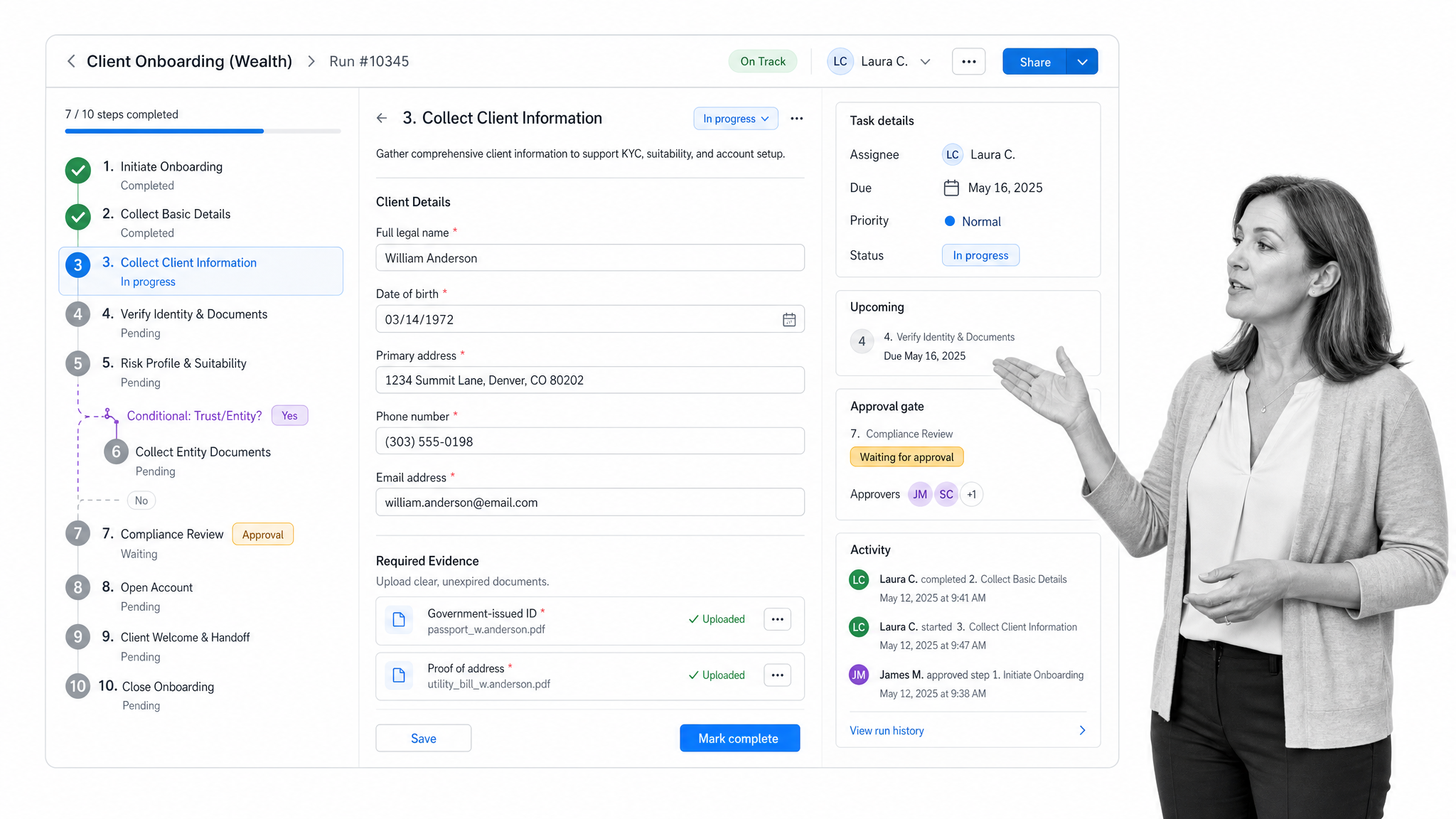
Process Street is a workflow and process management platform that acts as the operational backbone for wealth firms. Teams use it to standardize client onboarding, compliance reviews, account maintenance, and approvals as repeatable workflows with required fields, conditional logic, and a complete audit trail. Process Street has direct, universal integrations to 5,000+ systems, and when you need a new one, an AI agent builds it on the fly, so it connects your portfolio platform, planning tool, and CRM into one coordinated operation. Explore a ready-made wealth management workflow template to see the model in action.
Orion
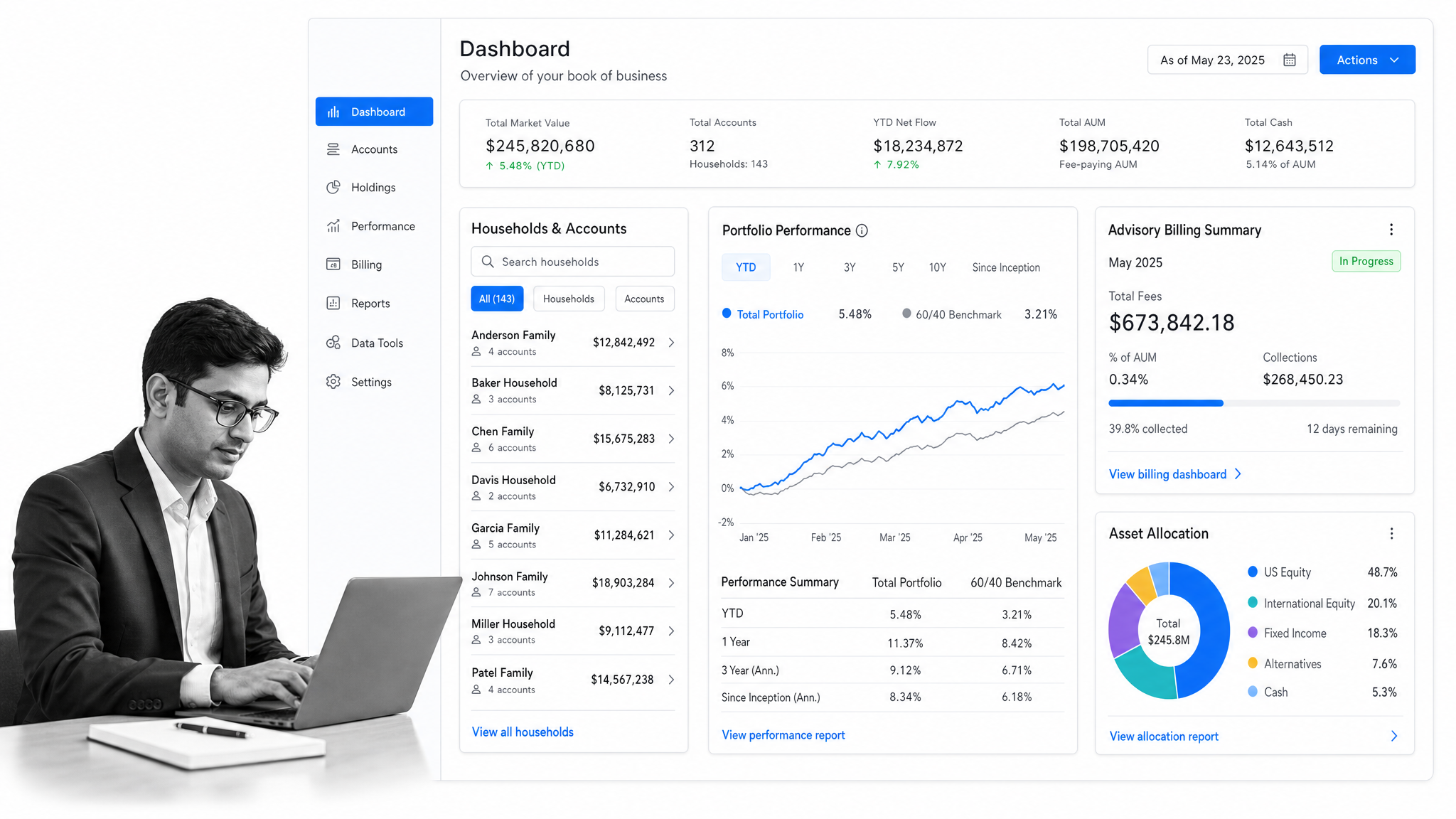
Orion is an all-in-one wealthtech platform for advisors, registered investment advisors, and broker-dealers. It brings portfolio accounting, performance reporting, billing, trading, financial planning, compliance monitoring, and a client portal together in one connected system, which makes it a common backbone for firms that want breadth in a single vendor.
Addepar
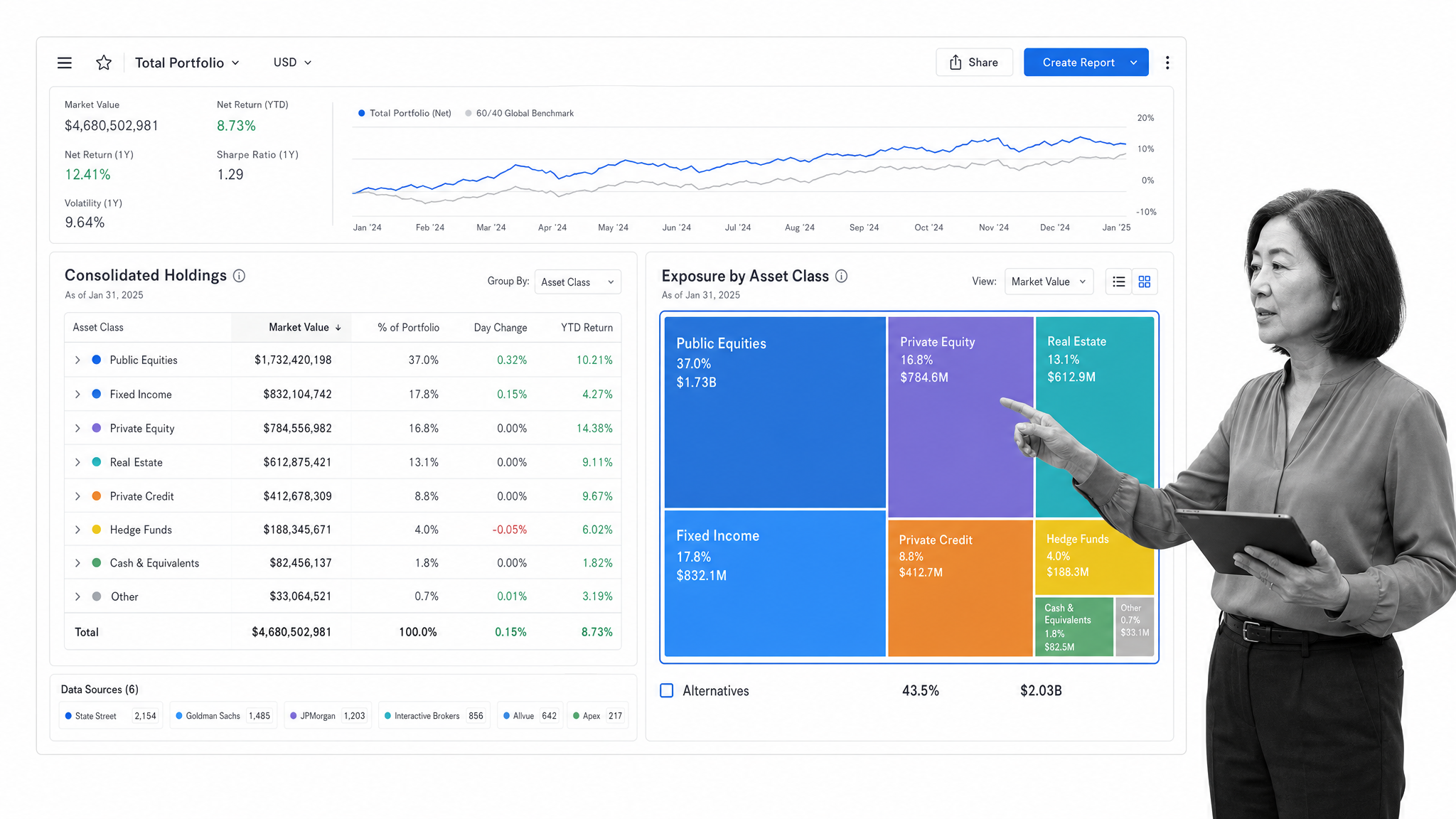
Addepar is a data and analytics platform built for portfolio management and reporting across complex, multi-custodial, and alternative assets. It aggregates fragmented data into unified performance views, which is why it is popular with high-net-worth practices, family offices, and firms that hold private investments.
eMoney Advisor
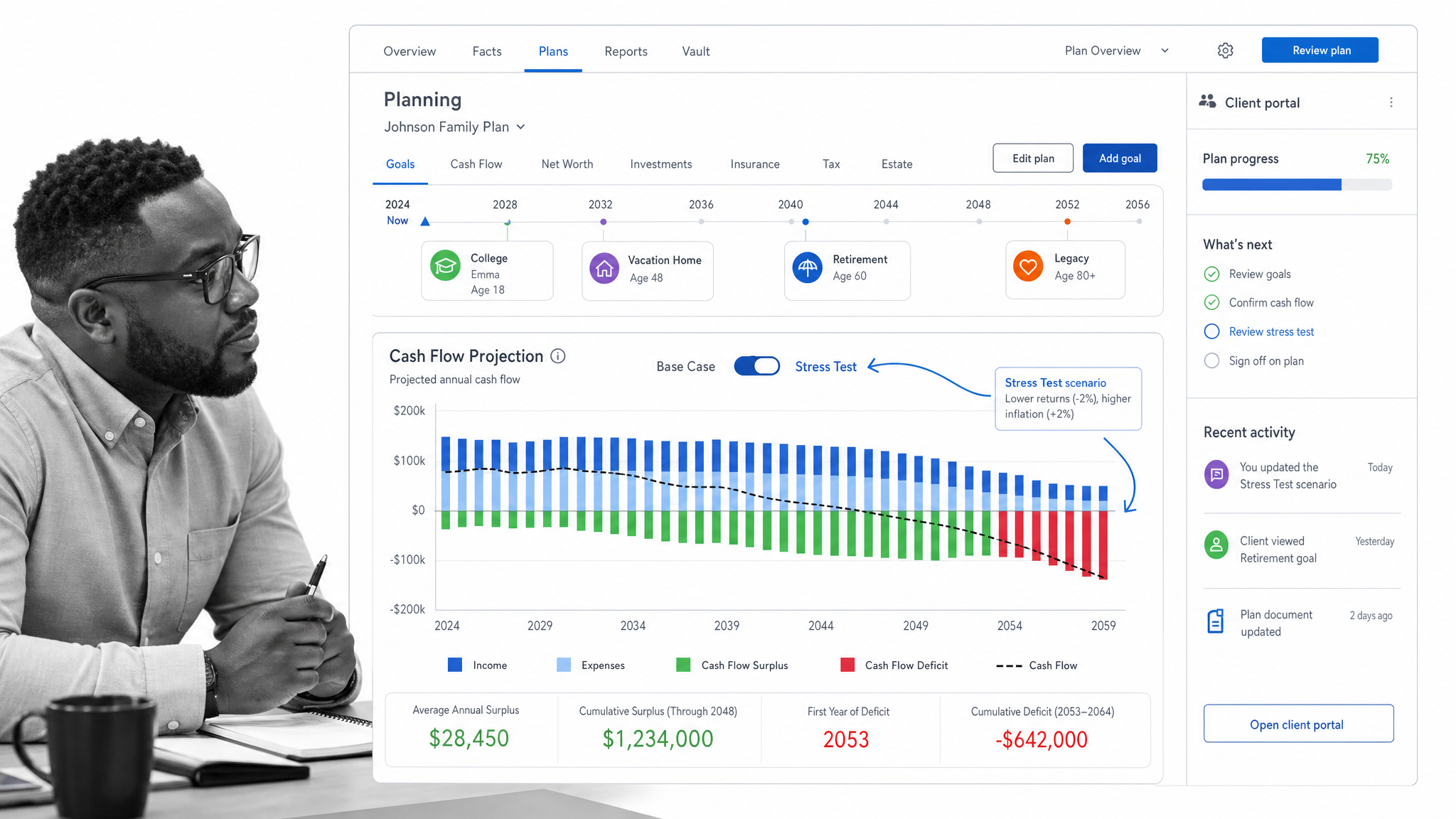
eMoney Advisor is a financial planning platform that pairs goals-based and cash-flow planning with a client portal, account aggregation, and scenario analysis. Advisors use it to model outcomes, stress-test plans, and give clients an interactive view of their financial picture.
Wealthbox
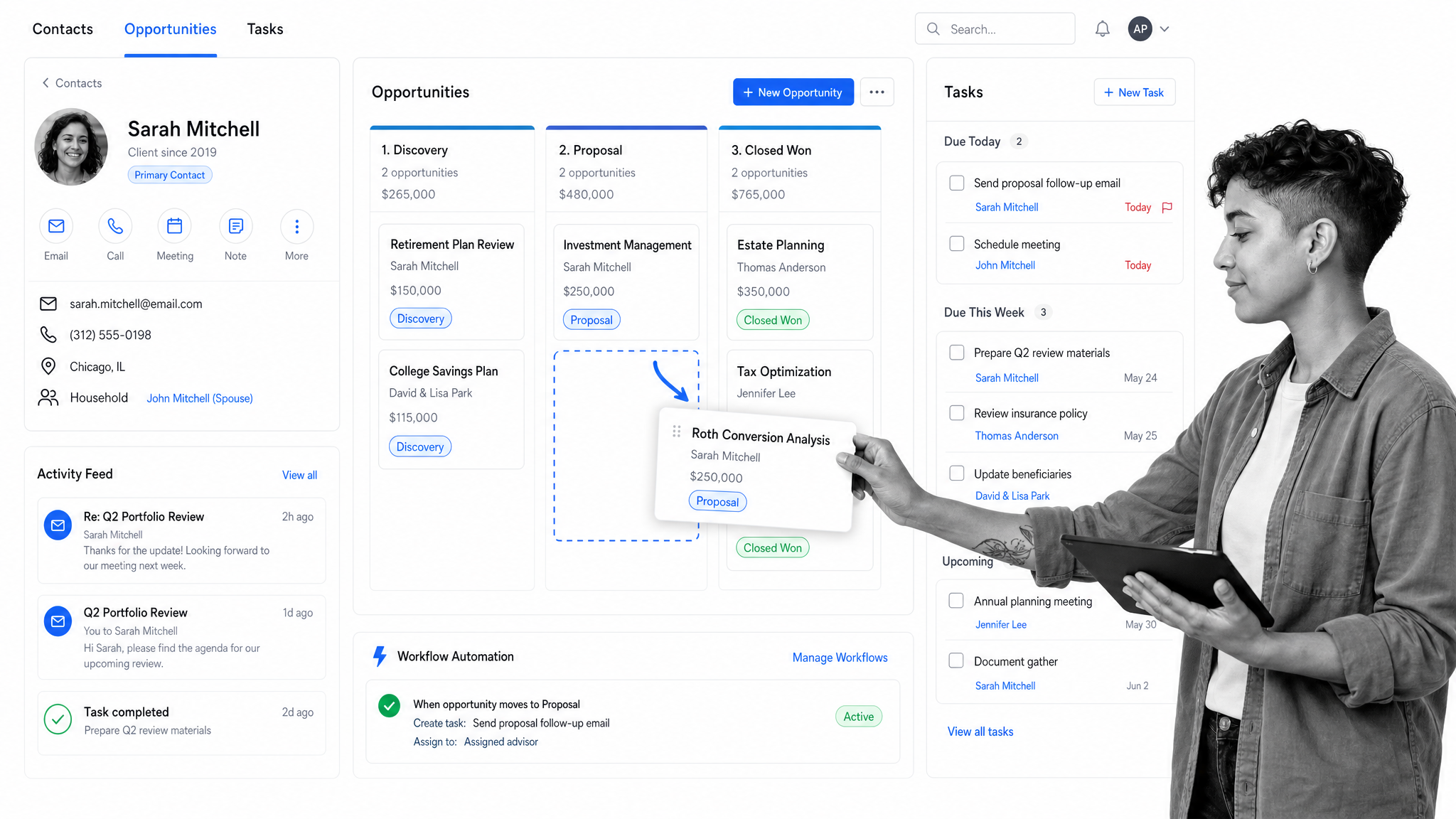
Wealthbox is a customer relationship manager built specifically for financial advisors. It offers contact and pipeline management, task and workflow automation, two-way email sync, and integrations with popular custodial and advisor tools, with a modern interface designed for daily use.
Morningstar
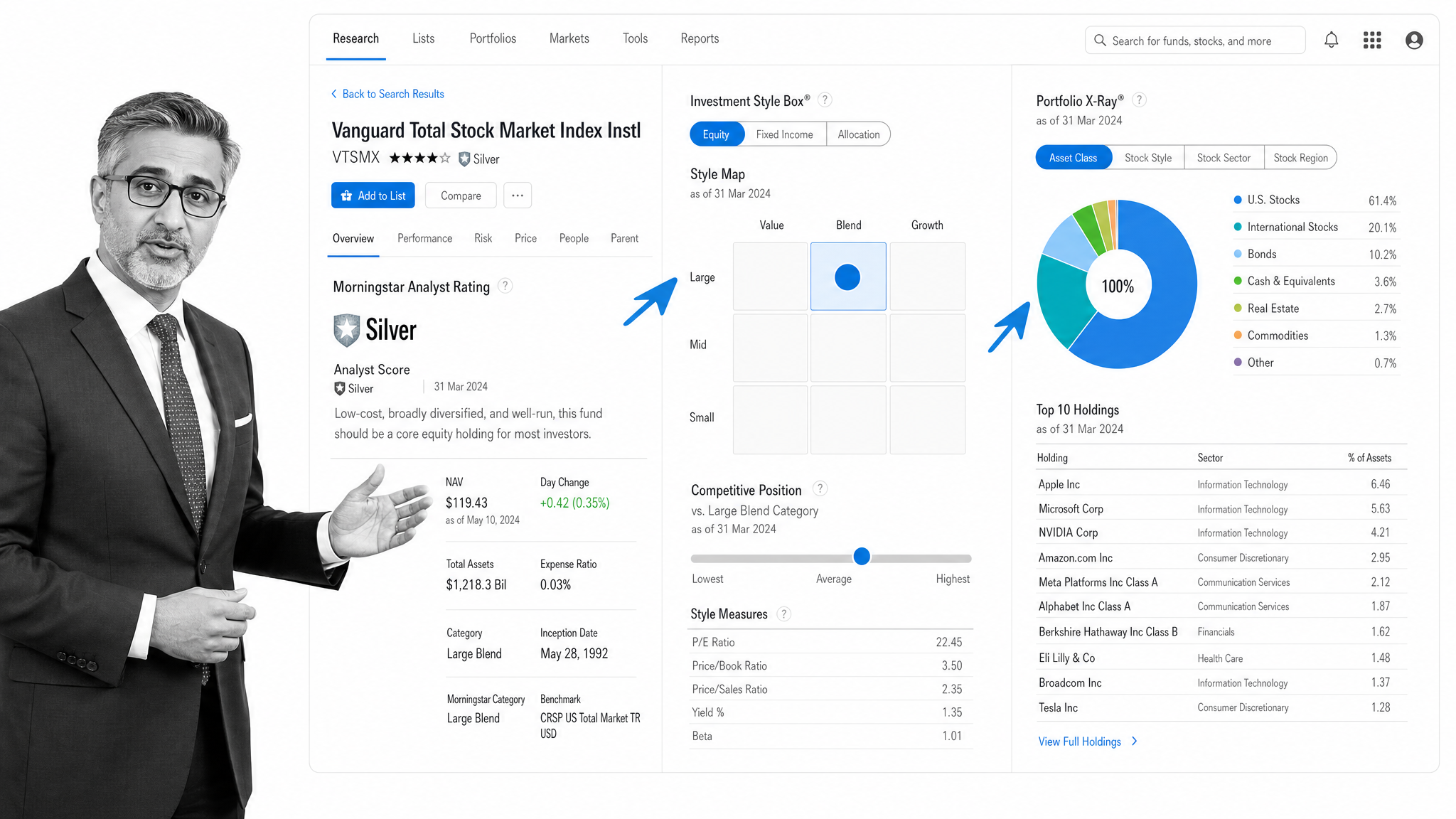
Morningstar offers advisor research and analytics software, delivered through its advisory suite, that gives advisors investment research, portfolio analysis, and client-ready reporting drawn from Morningstar’s investment data. It is a strong fit when independent research and analysis sit at the center of the advice process.
Betterment
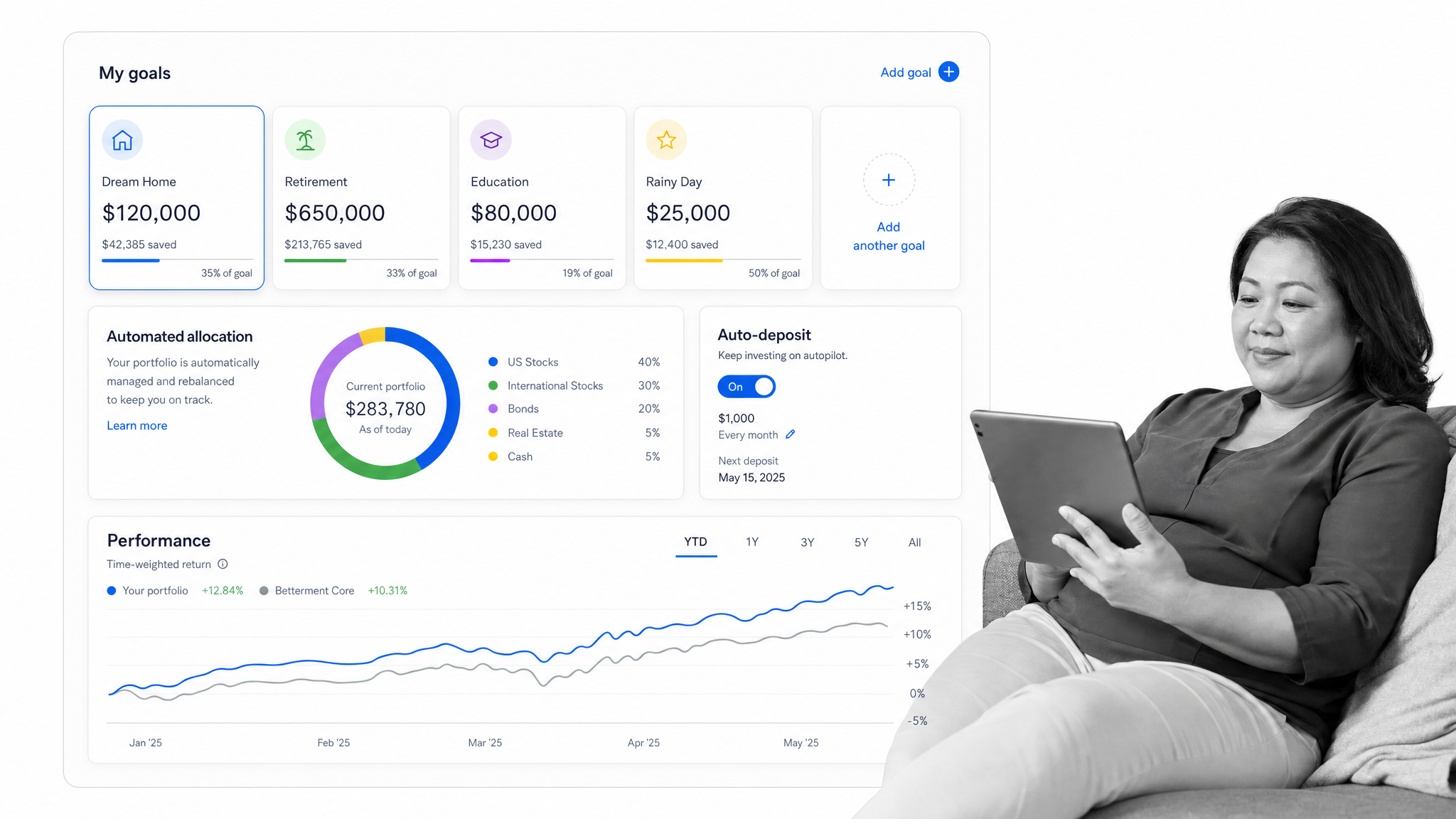
Betterment for Advisors is a digital investing and custody platform for registered investment advisors. It combines automated portfolio management, tax-smart strategies, digital onboarding, and a streamlined client experience, and Betterment also offers a consumer app so individual investors can manage portfolios and goals directly.
How Process Street adds workflow control for wealth firms
Specialized platforms handle portfolios, planning, and CRM well, but the work that connects them, onboarding a client, running a compliance review, approving an exception, closing an account, still happens as a process. When that process lives in someone’s head or an ad-hoc checklist, quality drifts and audits get painful.
Process Street turns those operations into structured, repeatable workflows. Each run captures who did what and when, enforces required steps and approvals, and routes work to the right person automatically. That gives wealth firms a dependable compliance and monitoring layer on top of their systems of record, with the audit trail regulators expect.
Because Process Street has direct, universal integrations to 5,000+ systems, and when you need a new one an AI agent builds it on the fly, it connects the specialized tools above into one operation rather than a set of silos. When a client is onboarded in the CRM, the matching compliance checklist can start automatically, data can flow to the portfolio platform, and every step is logged for review.
AI adds another layer. Instead of staff hunting through documents and systems for answers, workflows can draft, summarize, and route work with context from across the stack, so the team spends its time on judgment and client relationships rather than coordination. The result is a wealth stack where the specialized software manages the assets and the workflow layer manages the work. See the wealth management template for a concrete starting point.
Frequently asked questions
What is wealth management software?
Wealth management software is a category of tools that advisors, registered investment advisors, and wealth firms use to manage client portfolios, financial planning, reporting, billing, client communication, and compliance. Most stacks combine a portfolio platform, a planning tool, a CRM, and a workflow layer that keeps the operational steps consistent.
How do I choose the right wealth management software for my firm?
Start with the jobs you need done, such as portfolio accounting, planning, or client onboarding, then map how a platform fits your custodians, data feeds, and existing tools. Weigh usability, security, reporting quality, integrations, and how well the vendor supports your regulatory obligations before you commit.
Is wealth management software secure for handling sensitive financial data?
Reputable platforms invest heavily in security, including encryption, access controls, and independent audits, because they handle sensitive client and account data. Because wealth firms also carry recordkeeping and oversight duties under bodies such as FINRA, a strong platform pairs technical safeguards with clear audit trails.
Can individual investors use wealth management software?
Yes. Alongside advisor platforms, several digital investing tools let individuals manage portfolios, automate contributions, and track goals directly. The main difference is that advisor platforms add reporting, billing, and compliance features built for firms serving many clients at once.
How does Process Street fit alongside wealth management software?
Process Street is the workflow and process layer that sits around your specialized wealth tools. It standardizes onboarding, compliance reviews, approvals, and recurring operations, captures an audit trail, and connects to the rest of your stack so nothing falls through the cracks between systems.