Turn every policy into automated workflows with built-in enforcement and audit-ready proof.


8 Best Workiva Alternatives & Competitors in 2026
Last updated:
Workiva alternatives span several software categories, because teams buy Workiva for different jobs. Finance and SEC reporting teams use it to prepare and file annual and quarterly reports with linked data. SOX and internal audit teams use it for controls, testing, and audit management. Sustainability teams use it for carbon accounting and disclosures, and risk teams use it for policies, risk, and IT compliance. When a team looks beyond Workiva, it is usually because one of those jobs matters more than the others, or because the platform no longer fits how the team works.
This comparison evaluates eight options against official vendor sources. It looks at the role each tool plays in a reporting, audit, and GRC program, its standout capability, its pricing model, whether a free plan or trial exists, and the situations where each one is the stronger choice.
The list is editorially maintained by the Process Street team and was last verified in November 2026. Process Street ranks first for teams that need enforceable, trackable, recurring close, control, and SOP workflows: the close tasks, reconciliations, sub-certifications, control attestations, and remediation that every report and audit depends on. If your priority is SEC filing and XBRL, internal audit, enterprise risk, or a large security framework library, the relevant specialist below is the better fit, and the page says so plainly.
In this guide, you will find:
- Workiva alternatives: what this comparison covers
- What is Workiva?
- How we picked the best Workiva alternatives
- Workiva alternatives at a glance
- 1. Process Street
- 2. DFIN ActiveDisclosure
- 3. Toppan Merrill Bridge
- 4. AuditBoard
- 5. Diligent
- 6. MetricStream
- 7. LogicGate
- 8. Hyperproof
- Workiva alternatives by use case
- Must-have checklist for a Workiva alternative
- Workiva migration checklist
- FAQs
- Run recurring close and control work with accountability and proof
Workiva alternatives: what this comparison covers
The best Workiva alternative depends on what is driving the search. Some teams want a dedicated SEC reporting tool with filing specialists on call. Some want to keep drafting in Microsoft Word and Excel. Some mainly use Workiva for SOX and internal audit and want an audit-first platform instead. Others are happy with their reporting platform but find that the human work behind each report, the close tasks, reconciliations, reviews, sign-offs, and remediation, still runs through spreadsheets, email, and reminders.
Those are different buying problems with different winners. A useful way to frame the decision is reporting, assurance, and execution. Reporting platforms such as Workiva, DFIN ActiveDisclosure, and Toppan Merrill Bridge produce and file the documents. Assurance platforms such as AuditBoard, Diligent, MetricStream, LogicGate, and Hyperproof hold the risks, controls, tests, and findings that auditors rely on. Execution platforms make sure the recurring human processes behind every number and every control actually happen, on time, with evidence. Most finance and compliance organizations need all three, and the right Workiva alternative is the one that fills the gap you actually have.
What is Workiva?
Workiva is a cloud platform for financial reporting, audit and risk, and sustainability reporting. Its website describes it as AI purpose-built for finance, audit, risk, and sustainability, and summarizes the platform as traceable, governed, defensible, and integrated. Read the current description on the official Workiva site.
Its finance solutions include annual and interim financial reporting, capital market transactions, SEC reporting, multi-entity financial reporting, ESEF reporting, financial statement automation, and internal management reporting. Its audit and risk solutions include Controls Management, Audit Management, SOX Compliance, Policies and Procedures, Risk Management, and IT Risk and Compliance. Its sustainability solutions include carbon accounting, sustainability program management, framework mapping, voluntary and mandatory disclosures, and double materiality assessment. Workiva AI and Agent Studio let teams run purpose-built agents, tailor them, or build new ones by describing what they need.
Data linking is the core idea. Workiva’s pricing page lists data linking across documents, spreadsheets, and presentations, including numbers and narrative, as included with every plan, along with Workiva AI, 24/7 support, 70+ connectors to platforms such as Oracle, Salesforce, Workday, and BlackLine, version control, and open APIs. It also says all offerings provide unlimited seats or users and that some solutions use good, better, and best packaging, with pricing set through a customized demo. Workiva is the baseline every option below is measured against.
Common reasons teams evaluate Workiva alternatives
- Filing support. The team wants SEC filing and XBRL specialists on call during the reporting period, not only software.
- Familiar authoring. Preparers want to keep drafting in Microsoft Word and Excel rather than learning a new environment.
- Audit-first needs. Workiva is used mainly for SOX and internal audit, and the team wants a platform built around audit.
- Scale and regulation. A large, regulated enterprise needs deep regulatory change, resilience, and entity coverage.
- Execution gaps. The reporting platform links every number, but the recurring close tasks, reviews, and remediation behind those numbers are still inconsistent.
How we picked the best Workiva alternatives
We selected tools that represent credible, distinct routes away from or around Workiva. Each was checked against its current official product or pricing page in November 2026. The evaluation weighs primary job fit most heavily, then reporting or audit depth, ease of adoption, pricing transparency, and how well the tool handles the recurring work that keeps reports accurate and controls effective between filings.
- Primary job fit: the reporting, audit, or GRC problem the product is built to own, mapped to the reason a team leaves Workiva.
- Reporting and audit depth: how the product supports filings, XBRL, linked data, SOX controls, testing, workpapers, and findings.
- Ease of adoption: whether preparers and control owners can work in familiar tools or need extensive training.
- Execution and control: how recurring close and control activities become assigned work, approvals, and a verifiable history.
- Commercial clarity: whether a public price, free tier, trial, or transparent pricing structure exists, or a quote is required.
Workiva alternatives at a glance
The table below summarizes the eight ranked Workiva alternatives before the deep dives. Pricing models are taken from official vendor sources and can change, so request a complete quote with the modules, filings, services, and users you expect.
| Tool | Best for | Standout feature | Free plan | Starting price | Reporting or audit focus |
|---|---|---|---|---|---|
| Process Street | enforceable, trackable, recurring close, control, and SOP workflows | workflow runs with required evidence, approvals, conditional logic, and completion history | 14-day free trial of the Pro plan | See pricing page | Runs the recurring close and control work behind every report |
| DFIN ActiveDisclosure | SEC reporting teams that want software plus filing and XBRL specialists | disclosure software combined with expert SEC reporting services, available 24/7/365 | No free plan shown | Book a demo | SEC, proxy, transaction, and sustainability reporting |
| Toppan Merrill Bridge | finance teams that want to keep drafting in Microsoft 365 | built on Microsoft 365 with direct EDGAR and iXBRL submission | No free plan shown | Contact sales | EDGAR and iXBRL filing inside Microsoft 365 |
| AuditBoard | internal audit and SOX teams that want an audit-first GRC platform | audit, controls, and risk with autonomous testing and 200+ integrations | No free plan shown | Schedule a demo | Internal audit, SOX, and connected risk |
| Diligent | audit and governance teams that want analytics and board reporting together | Internal Audit and ACL Analytics alongside Diligent Boards | No free plan shown | Request a demo | Audit analytics and board governance |
| MetricStream | large regulated enterprises running integrated risk, audit, and SOX | Internal Audit and SOX Compliance with Audit Agents and AgentStream | No free plan shown | Contact sales | Enterprise internal audit and SOX |
| LogicGate | risk teams that want a no-code, configurable GRC platform | Risk Cloud with 30+ Applications and Power User licensing | No free plan shown | Request pricing | Configurable controls and risk workflows |
| Hyperproof | compliance teams managing many overlapping security frameworks | 160+ pre-built frameworks and 200+ integrations | No free plan shown | Get a demo | IT and security compliance audits |
A second table compares each alternative with Workiva on the dimension that most often drives the switch.
| Tool | Compared with Workiva | Primary system role |
|---|---|---|
| Process Street | Runs the recurring human close and control work that reporting platforms link to but do not execute | Compliance operations workflow platform |
| DFIN ActiveDisclosure | Pairs SEC reporting software with filing and XBRL specialists | SEC and disclosure reporting platform |
| Toppan Merrill Bridge | Keeps drafting inside Microsoft 365 with direct EDGAR submission | SEC filing and disclosure platform |
| AuditBoard | Audit-first platform for SOX, internal audit, and risk | Audit and GRC platform |
| Diligent | Pairs internal audit and ACL Analytics with Diligent Boards | Governance and GRC platform |
| MetricStream | Enterprise depth for regulated industries with Audit Agents | Enterprise GRC platform |
| LogicGate | No-code configuration with Applications and Power User licensing | No-code GRC platform |
| Hyperproof | 160+ pre-built frameworks for security and IT compliance audits | Compliance and GRC platform |
1. Process Street
Best for: Enforceable, trackable, recurring close, control, and sop workflows.
Bottom line: Process Street is the best overall choice among Workiva alternatives when the problem is not producing or filing the report, but making the recurring work behind every number and every control happen correctly, every time, with proof.
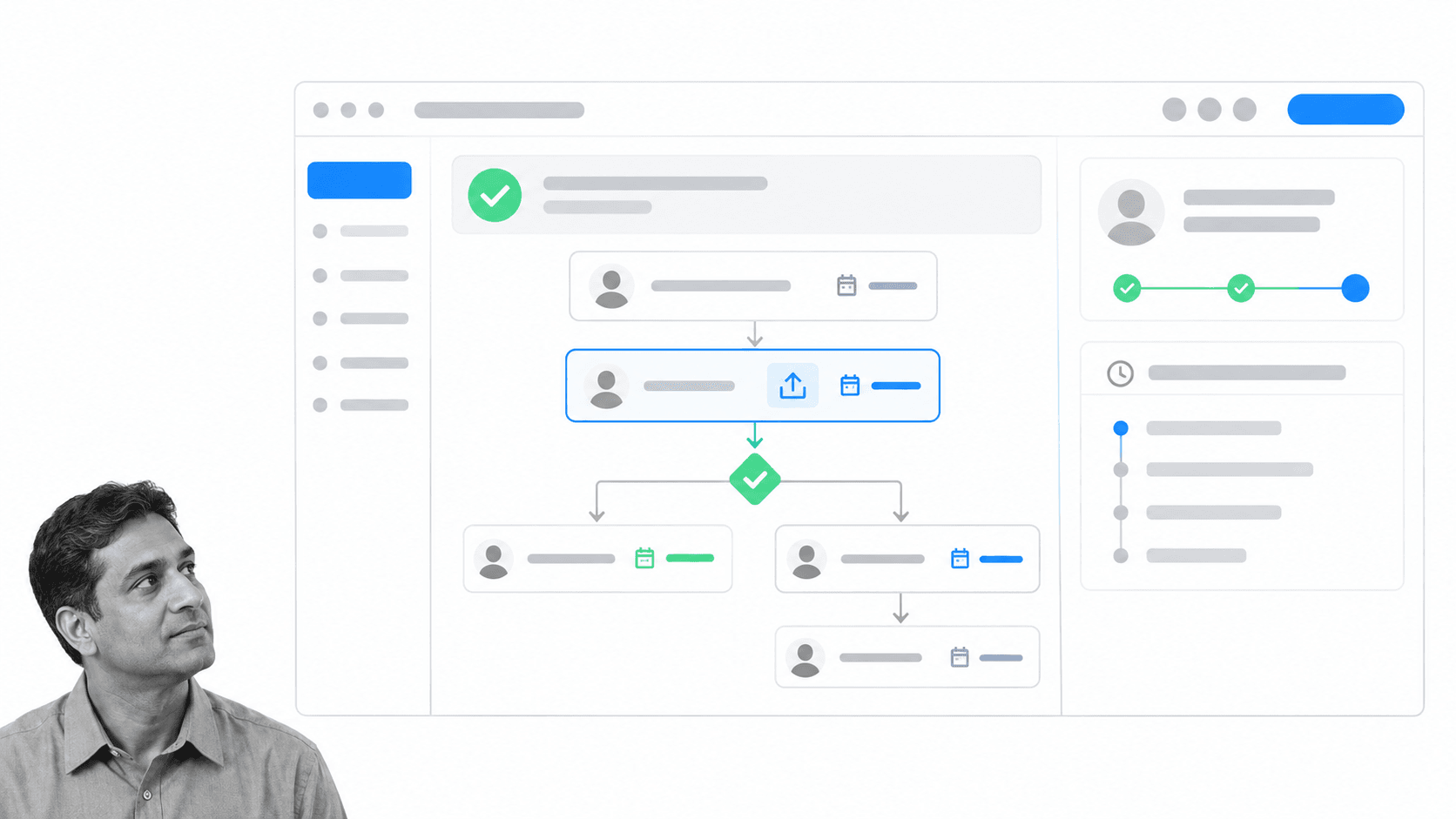
Process Street is an agentic process automation platform for high-stakes operations. Teams design reusable workflows, launch a run for each close, review, request, or event, assign owners, require information and evidence, route decisions through approvals, apply conditional logic, and keep a completion history. In a finance and compliance program, that covers the month-end and quarter-end close, account reconciliations, quarterly sub-certifications, SOX key control attestations, user access reviews, journal entry approvals, policy acknowledgments, and remediation of audit findings.
This is a different role from Workiva. Reporting and GRC platforms hold the documents, the linked data, the control library, and the test results. They are very good at showing which number came from where and which control was tested. They do not, on their own, make an accountant finish a reconciliation before the deadline, make a business unit leader complete a sub-certification, or make a control owner attach evidence before a quarter closes. Those are human processes, and both the reporting timeline and the external audit depend on them.
That distinction is why Process Street ranks first for its ICP: finance, operations, and compliance process owners who need enforceable, recurring workflows. Teams often discover that a well-linked report does not fix a late close. The reporting platform may show every value tied to its source while three reconciliations are overdue, a sub-certification sits in an inbox, and the remediation plan for last year’s deficiency lives in someone’s memory. Process Street turns that work into assigned steps with deadlines, approval tasks, conditional logic, and evidence attached to each run.
Where Process Street adds control
The value shows up in the recurring finance activities that a reporting platform depends on but does not drive. A quarterly close can start from a financial close process template, assign every reconciliation and review to a named owner, require the supporting file as an upload, route any variance above a threshold to an exception branch, and block completion until the controller signs off.
The same pattern applies to SOX. Starting from a SOX compliance checklist or a SOX 404 compliance checklist gives control owners a consistent set of steps, owners, and evidence for each key control. Strong internal controls depend on both a system that records them and a process that makes them happen, and Process Street supplies the second half. It also fits naturally beside the financial compliance software and SOX compliance software that many finance teams already run.
How to evaluate Process Street
Use a real recurring finance process for the trial, such as the quarterly close or a sub-certification. Map the trigger, required inputs, owners, approval points, exceptions, due dates, evidence, and the systems that must be updated. Then run one normal case and one exception case. A useful test shows whether a missing upload blocks progress, whether the right approver gets the decision, whether overdue work is visible, and whether an auditor could reconstruct what happened from the run history without searching email.
Also test maintenance and integration. Process Street has 5,000+ integrations, so include one scenario where a run is triggered by, or writes back to, a system you already use, such as your ERP for close tasks or your ticketing tool for access changes.
Using Process Street with Workiva
Process Street does not have to replace Workiva. Many finance teams keep Workiva as the platform for filings and linked reports, then use Process Street to run the recurring processes behind them. When a quarter closes, a run drives every reconciliation, review, and sub-certification to completion with evidence before the numbers flow into the report. When an audit finding is raised, a run assigns the remediation, tracks the deadline, and records the sign-off. Workiva remains the reporting record, and Process Street becomes the record of the human work, which makes external audits far less painful when evidence requests arrive.
Key features
- Reusable workflow runs for recurring close, control, and SOP processes.
- Required tasks, assignments, due dates, form fields, file uploads, and approval gates.
- Conditional logic that adapts a run to entity, account, risk level, threshold, or location.
- Evidence, comments, decisions, and completion history attached to every run.
- 5,000+ integrations and agentic actions that move information to the systems that own it.
Pros
- Strong control over the human side of the close, SOX, and compliance programs.
- Clear accountability for every reconciliation, review, approval, and exception.
- Sits beside Workiva, a filing provider, or any GRC tool without replacing it.
- Audit-ready history that shows who did what and when.
- Process owners maintain workflows without engineering support.
Cons
- Not an SEC reporting, XBRL, or disclosure filing tool.
- Not an audit management suite with a built-in control library and workpapers.
Choose Process Street if
Choose Process Street if close tasks, reconciliations, sub-certifications, control attestations, access reviews, or remediation are inconsistent, and your controller, auditors, or audit committee need to see what happened, who approved it, and where work is blocked.
Skip it if
Skip Process Street as the primary replacement if what you need from Workiva is SEC filing, XBRL tagging, linked report authoring, or audit workpaper management. In that case, choose the specialist below and add Process Street only if the recurring processes behind those reports and controls still need stronger execution.
Pricing and next step
Process Street’s Pro plan starts with a 14-day free trial, no credit card required. Review current packaging on the Process Street pricing page. Start with one high-frequency finance activity, such as the quarterly close checklist, and measure on-time completion, exceptions, approval time, and audit requests before expanding.
2. DFIN ActiveDisclosure
Best for: Sec reporting teams that want software plus filing and xbrl specialists.
Bottom line: DFIN ActiveDisclosure is the closest like-for-like Workiva alternative for SEC reporting teams that want disclosure software and hands-on filing expertise from the same provider.
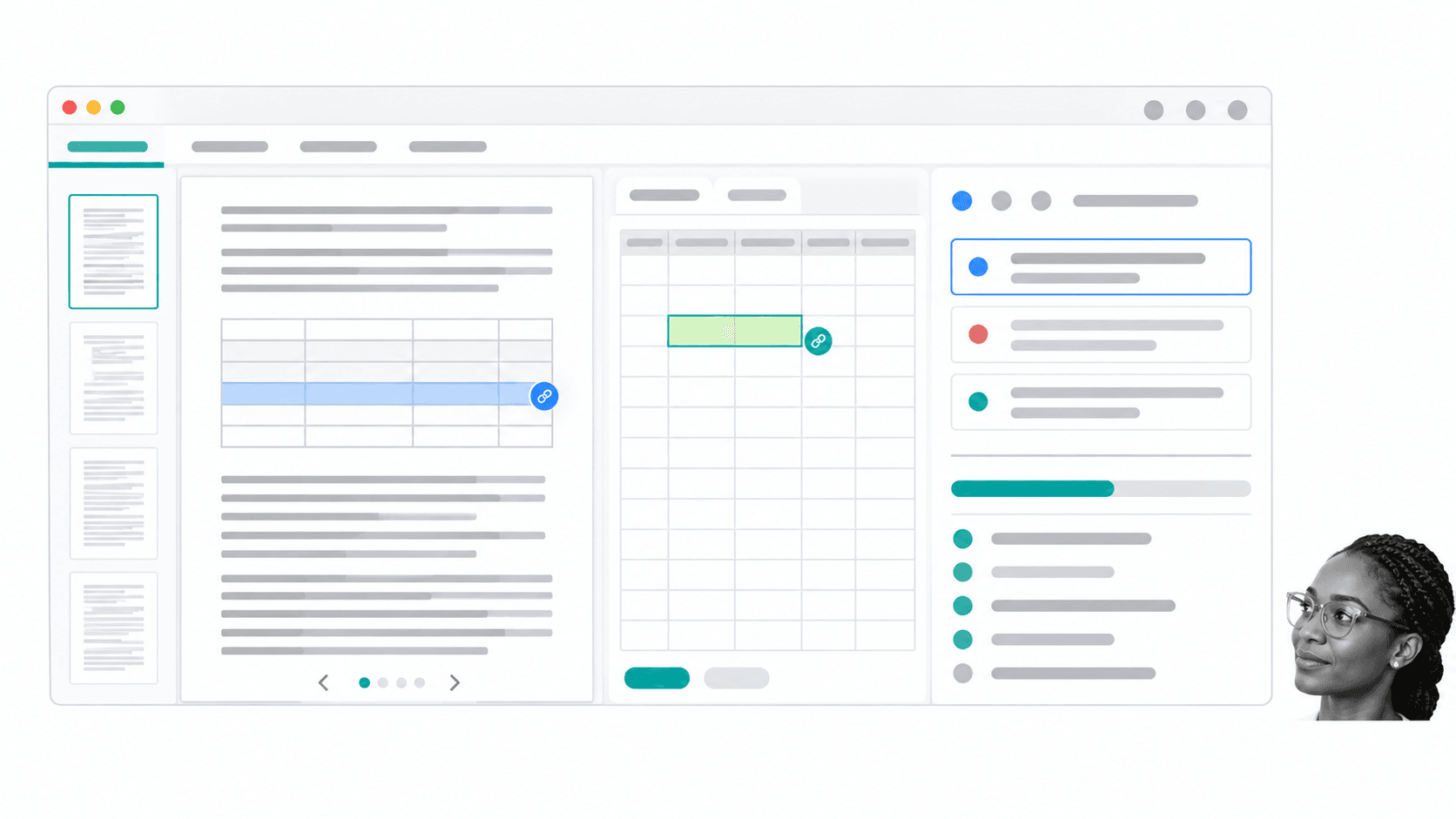
ActiveDisclosure is the SEC reporting and disclosure management product from DFIN. DFIN describes it as purpose-built compliance software combined with expert SEC reporting services, designed to help teams manage complex financial, regulatory, and compliance reporting. Teams connect data, collaborate in real time, and keep documents accurate through preparation, review, and filing.
The product is modular. DFIN lists SEC and Financial Reporting for annual and quarterly filings, Transactions and IPO Reporting for registration statements and transaction documents, Proxy Reporting for investor-focused proxy communications, Sustainability Reporting for integrated sustainability disclosures, and Beneficial Ownership for Section 16, Form 144, and Schedule 13D and 13G filings. Active Intelligence, DFIN’s suite of AI capabilities, analyzes peer and historical filings, identifies trends and gaps, summarizes content, and generates first-pass drafts inside the reporting workflow.
The service layer is the clearest difference from Workiva. DFIN offers 24/7/365 access to financial reporting, SEC filing, and XBRL specialists, so a team can work independently when it has capacity and bring in DFIN experts during compressed timelines. ActiveDisclosure supports established Excel-linked workflows as well as a browser-based Spreadsheets option, and DFIN says it offers a familiar experience for teams used to Microsoft Word, Excel, and PowerPoint. It is narrower than Workiva on audit, risk, and controls, so SOX and internal audit work usually lives in a separate tool.
Key features
- SEC and Financial Reporting with connected data and validation
- Transactions and IPO, Proxy, and Sustainability Reporting modules
- Active Intelligence for peer benchmarking and first-pass drafts
- Excel-linked workflows plus a browser-based Spreadsheets option
- 24/7/365 access to SEC filing and XBRL specialists
Pros
- Software and expert filing services from one provider
- Modular, so teams adopt only the reporting they need
- Familiar experience for Word, Excel, and PowerPoint users
Cons
- Not a SOX, internal audit, or risk management platform
- Pricing is through a demo with no public figures
Choose DFIN ActiveDisclosure if
Choose DFIN ActiveDisclosure if your main Workiva workload is SEC filings, proxy, and transaction documents, and you value having filing and XBRL specialists on call during the reporting period.
Skip it if
Skip DFIN ActiveDisclosure if you rely on Workiva for SOX, controls, and internal audit as much as for reporting, and want those on the same platform.
Pricing and what to verify
DFIN shares pricing through a demo. Start on the DFIN ActiveDisclosure page. In the demo, test your own scenario rather than a scripted tour. Ask DFIN to roll forward last quarter’s 10-Q with your own linked schedules and show where an XBRL specialist would step in.
3. Toppan Merrill Bridge
Best for: Finance teams that want to keep drafting in microsoft 365.
Bottom line: Toppan Merrill Bridge is the best fit for finance teams that want SEC reporting inside the Microsoft 365 tools they already use, with direct EDGAR and iXBRL submission.
Bridge is the SEC compliance reporting platform from Toppan Merrill. It is built on the Microsoft 365 platform and is positioned as a single source for EDGAR and iXBRL submissions, and for quarterly and annual financial reporting. Teams connect Excel data directly to the disclosure document from a desktop or network drive, with Excel and PowerPoint data linking to reflect the latest changes.
The feature set is focused on getting a filing right. Bridge includes iXBRL and XBRL tagging and review, an integrated XBRL viewer for validation, tagging and approval functionality, section lock for exclusive control while editing, iXBRL preview across multiple tagged documents in a submission, US GAAP and IFRS taxonomy integrations, and a direct connection to the SEC for EDGAR HTML and iXBRL submissions.
Toppan Merrill also sells a separate SOX Automation product that maintains business locations, processes, risks, and controls in a single platform, with workflows for control execution, documentation, testing, and deficiency remediation. That gives finance teams a path to cover both reporting and SOX with one vendor, although the two are separate products rather than one connected environment.
Key features
- Built on Microsoft 365 with Excel and PowerPoint data linking
- iXBRL and XBRL tagging, review, and an integrated viewer
- Section lock for exclusive control while editing
- Direct connection to the SEC for EDGAR and iXBRL submissions
- Separate SOX Automation product for risks, controls, and testing
Pros
- Low learning curve for teams who draft in Microsoft 365
- Filing-focused tagging and validation tools
- Reporting and SOX products available from one vendor
Cons
- SOX Automation is a separate product rather than one connected platform
- Pricing is through the sales team
Choose Toppan Merrill Bridge if
Choose Toppan Merrill Bridge if your reporting team works in Word and Excel every day and wants SEC filing and iXBRL submission without moving to a new authoring environment.
Skip it if
Skip Toppan Merrill Bridge if you want reporting, SOX, audit, and sustainability on one connected platform, or your team does not use Microsoft 365.
Pricing and what to verify
Toppan Merrill provides pricing through its sales team. Review the feature list on the Toppan Merrill Bridge page. In the demo, test your own scenario rather than a scripted tour. Ask Toppan Merrill to update a linked Excel value, show the change flow into the document, and run iXBRL validation on the result.
4. AuditBoard
Best for: Internal audit and sox teams that want an audit-first grc platform.
Bottom line: AuditBoard, which now operates as Optro, is the strongest Workiva alternative for teams whose priority is internal audit, SOX, and connected risk rather than external reporting.
AuditBoard now operates under the name Optro. Its website refers to Optro, formerly AuditBoard, and describes a GRC Intelligence Platform for audit, risk, and compliance. Products include Controls Management, Autonomous Testing, AI Governance, OpsAudit for internal audit, CrossComply for compliance, RiskOversight for enterprise risk, Cyber Risk Management, RegComply, TPRM for third-party risk, and Agentic Compliance.
Its platform page lists a preloaded library of 30+ frameworks, including SOC 2, ISO 27001, and GDPR, 200+ integrations that pull evidence and sync risks into the system of record, and Optro Analytics, which evaluates entire data populations rather than samples. Optro says its agents autonomously execute control tests, surface emerging threats, and generate board-ready reports, with every decision logged and reviewable.
The comparison with Workiva comes down to center of gravity. Workiva starts from reporting and extends into audit and risk. AuditBoard starts from audit, SOX, and risk, and does not try to be an SEC filing tool. Teams that buy Workiva mostly for SOX and internal audit, and file through a separate provider, often find AuditBoard the closer fit. Optro sells through demos.
Key features
- Controls Management and Autonomous Testing
- OpsAudit for internal audit with AI-drafted workpapers
- CrossComply, RiskOversight, and TPRM
- Preloaded library of 30+ frameworks
- 200+ integrations and Optro Analytics for full-population testing
Pros
- Audit-first design for internal audit and SOX teams
- Full-population analytics and autonomous control testing
- Broad risk and compliance coverage on one platform
Cons
- Not an SEC reporting or disclosure filing tool
- Pricing is only available through a demo
Choose AuditBoard if
Choose AuditBoard if your Workiva footprint is mostly SOX, controls, and internal audit, and your filings run through a separate provider.
Skip it if
Skip AuditBoard if your priority is SEC, financial, or sustainability reporting, or you want filings and controls in one connected platform.
Pricing and what to verify
Optro shares pricing through a demo. Start on the Optro platform page. In the demo, test your own scenario rather than a scripted tour. Ask Optro to test one of your real SOX controls on a full data population and show the resulting workpaper and audit trail.
5. Diligent
Best for: Audit and governance teams that want analytics and board reporting together.
Bottom line: Diligent is the better fit for audit and governance teams that want data analytics, audit management, and board reporting from one vendor, particularly when the board already works in Diligent Boards.
Diligent calls itself the leading AI platform for GRC. Its catalog covers Governance, with Diligent Boards and Entities, Risk, with Enterprise Risk Management, IT and Cyber Risk Management, and Third-Party Risk Management, Compliance, with Policy Manager and Speak Up Manager, and Audit, with Internal Audit, ACL Analytics, and Internal Controls. The Diligent One Platform is positioned as the place to centralize board management and GRC activities.
For teams comparing Workiva alternatives, the governance link is the draw. Workiva helps produce board presentations and reports; Diligent runs the board portal those reports go to. Diligent’s internal audit page describes AI that executes control tests and drafts documentation, flags exceptions for review, summarizes findings, builds remediation plans by control owner, and turns a single prompt into a board-ready report.
Diligent does not compete with Workiva on SEC filing or XBRL, so finance teams that file with Workiva would typically keep a reporting tool alongside it. Diligent sells through a demo request.
Key features
- Internal Audit and Internal Controls
- ACL Analytics for data-driven audit testing
- Diligent Boards and Entities for governance
- Enterprise Risk Management and Third-Party Risk Management
- Diligent One Platform to centralize GRC and board activity
Pros
- Analytics and audit management from the same vendor
- Direct connection to board and audit committee reporting
- Broad GRC catalog for risk, compliance, and governance
Cons
- No SEC filing or XBRL capability
- Broad suite can be more than an audit-only team needs
Choose Diligent if
Choose Diligent if your board or audit committee already uses Diligent and you want audit analytics, controls, and board reporting in one ecosystem.
Skip it if
Skip Diligent if you need SEC or sustainability filing capability, or you want a lightweight audit tool without a governance suite around it.
Pricing and what to verify
Diligent shares pricing through a demo request. Start on the Diligent internal audit page. In the demo, test your own scenario rather than a scripted tour. Ask Diligent to run an ACL analytics test on a full data population and show how the exceptions become findings in the audit committee report.
6. MetricStream

Best for: Large regulated enterprises running integrated risk, audit, and sox.
Bottom line: MetricStream is the right comparison for large, highly regulated enterprises that want internal audit, SOX, risk, compliance, and resilience on one enterprise GRC platform with agents built in.
MetricStream’s tagline is GRC that thinks, advises, and acts, purpose-built for governance, risk, compliance, cyber, and audit, orchestrated by agents and assistants. Its lineup covers Enterprise Risk, Operational Risk, Policy, Regulatory Compliance, Regulatory Change, Internal Audit, SOX Compliance, Cyber GRC, Third Party Risk Management, Operational Resilience, and Business Continuity, with AgentStream as its agentic layer.
For audit teams, MetricStream pairs an Audit Assistant that answers contextual questions on audit plans, workpapers, findings, and issues with Audit Agents that rationalize controls, prioritize testing, connect issues, and draft board-ready audit reports.
Against Workiva, MetricStream is a risk and audit platform rather than a reporting one. It suits organizations whose Workiva use is mostly SOX and audit and whose regulators expect deep operational risk and resilience coverage.
Key features
- Internal Audit and SOX Compliance
- Audit Assistant and Audit Agents
- Enterprise and Operational Risk
- Regulatory Compliance and Regulatory Change
- Operational Resilience and Business Continuity
Pros
- Deep coverage for heavily regulated industries
- Agents built into audit and risk workflows
- Broad integrated risk and resilience catalog
Cons
- No SEC or sustainability filing capability
- Implementation scope suits large enterprises more than mid-size teams
Choose MetricStream if
Choose MetricStream if you run a large, regulated enterprise and want internal audit, SOX, regulatory change, and resilience on one platform.
Skip it if
Skip MetricStream if your main need is financial or sustainability reporting, or you want fast time to value with a lighter implementation.
Pricing and what to verify
MetricStream provides pricing through its sales team. Request a demo on the MetricStream internal audit page. In the demo, test your own scenario rather than a scripted tour. Ask MetricStream to show an Audit Agent prioritizing testing for one entity and drafting the resulting report.
7. LogicGate
Best for: Risk teams that want a no-code, configurable grc platform.
Bottom line: LogicGate is the pick for risk and compliance teams that want to configure their own GRC workflows without code, and buy only the applications and Power User seats they need.
LogicGate positions Risk Cloud as a leading AI GRC platform for the enterprise, with AI agents and purpose-built applications for governance, risk, and compliance. Its capabilities include GRC Agents, Config Newton, which LogicGate describes as an agentic GRC engineer, automated control testing, a no-code flexible graph database, and Risk Cloud Quantify for risk quantification.
Configurability is the reason teams evaluate LogicGate against Workiva’s audit and risk solutions. Administrators can build and adjust workflows, forms, and relationships between risks, controls, and assets rather than adopting a fixed structure.
LogicGate’s pricing model is clear about structure even though it does not publish figures. Customers purchase the Applications they need, with 30+ available, plus Power User licenses only for the people building and managing the program, then add features or implementation services. LogicGate has no SEC or financial reporting capability, so it replaces only the risk and controls side of a Workiva deployment.
Key features
- Risk Cloud platform with 30+ Applications
- GRC Agents and Config Newton for configuration help
- Automated control testing
- No-code, flexible graph database
- Risk Cloud Quantify for risk quantification
Pros
- Highly configurable without engineering resources
- Pay for Power Users rather than every participant
- Strong enterprise and third-party risk applications
Cons
- No financial or SEC reporting capability
- Configuration freedom means more design work up front
Choose LogicGate if
Choose LogicGate if your risk and controls processes are unique enough that you want to configure workflows yourself, and you want to license only the applications and power users you need.
Skip it if
Skip LogicGate if you need reporting and filing in the same platform, or you want an opinionated tool that works out of the box.
Pricing and what to verify
LogicGate prices by Applications and Power User licenses, with optional features and services. Review the model on the LogicGate pricing page. In the demo, test your own scenario rather than a scripted tour. Ask LogicGate to configure one of your real control workflows live, then show what changes when a Power User edits it.
8. Hyperproof
Best for: Compliance teams managing many overlapping security frameworks.
Bottom line: Hyperproof is the better fit when the IT and security compliance side of a Workiva deployment matters most, especially for teams juggling many overlapping frameworks at once.
Hyperproof describes itself as a GRC platform that makes compliance easy. Its products cover Risk Management, Compliance, Audit, Third-Party Risk Management, Policy Management, and Hyperproof Gov for CMMC readiness, with platform capabilities that include Hyperproof AI, Hypersyncs, frameworks, and Continuous Controls Monitoring.
Its headline numbers are 160+ pre-built frameworks, which Hyperproof calls the largest framework library in the compliance market, and 200+ integrations. Supported frameworks include HIPAA, CMMC, PCI DSS, SOC 2, ISO 27001, NIST SP 800-53, NIST CSF, DORA, NIS2, FedRAMP, GDPR, and HITRUST.
Compared with Workiva, Hyperproof covers a different slice of the program. Workiva’s IT Risk and Compliance solution sits next to financial reporting and SOX; Hyperproof is built around security and IT frameworks and the audits that come with them. Hyperproof sells through a demo.
Key features
- 160+ pre-built frameworks with a common control set
- 200+ integrations and Hypersyncs for automated evidence
- Audit module for audits and evidence collection
- Risk Management, Third-Party Risk, and Policy Management
- Hyperproof Gov for CMMC readiness
Pros
- Very large framework library
- Reduces duplicate controls across frameworks
- Strong fit for security and IT compliance audits
Cons
- No financial or SEC reporting capability
- Less focused on finance-led SOX programs
Choose Hyperproof if
Choose Hyperproof if your audit calendar is driven by security and IT frameworks and you want one control set mapped across all of them with automated evidence.
Skip it if
Skip Hyperproof if your main need is financial reporting, SEC filings, or a finance-led SOX program.
Pricing and what to verify
Hyperproof shares pricing through its demo process. Book a walkthrough on the official Hyperproof site. In the demo, test your own scenario rather than a scripted tour. Ask Hyperproof to map one control across three of your frameworks and show the evidence and audit request it satisfies.
Workiva alternatives by use case
Choose by the gap first. If recurring close and control activities are inconsistent, start with Process Street. If SEC filings drive the decision and you want specialists on call, start with DFIN ActiveDisclosure. If your preparers live in Word and Excel, start with Toppan Merrill Bridge. If you use Workiva mainly for SOX and internal audit, start with AuditBoard or MetricStream. If your board works in Diligent, start with Diligent. If you want to configure risk workflows yourself, start with LogicGate, and if security frameworks drive your audit calendar, start with Hyperproof.
Many teams end up with two tools rather than one. A filing tool covers the documents, an audit or GRC platform covers the controls and findings, and an execution layer covers the recurring work in between. For a wider view of the market, the guides to what GRC software does, enterprise GRC platforms, and compliance audit preparation software cover each category in more depth.
Specialist comparisons help once a particular vendor makes the shortlist. If AuditBoard, Diligent, or LogicGate is on your list, the dedicated guides to AuditBoard alternatives, Diligent alternatives, and LogicGate alternatives compare each one against its own competitors, and the full library of software alternatives indexes every comparison on the site by category.
Must-have checklist for a Workiva alternative
Whichever direction you choose, a replacement should clear a short list of requirements before it reaches procurement. Use this table to score each finalist, and treat any missing item in the first four rows as a blocker.
| Requirement | Why it matters | How to test it |
|---|---|---|
| Filing and reporting coverage | Every filing, report, and taxonomy you produce, now and next year | Roll forward one real filing in the demo environment |
| Linked data and version control | Numbers must update consistently and changes must be traceable | Change one source value and trace it through the document |
| SOX and audit coverage | Controls, testing, and evidence must satisfy your external auditor | Ask your auditor to review a sample export |
| Recurring close and control execution | Reconciliations, sub-certifications, and attestations must happen on schedule | Run one quarterly close checklist end to end with approvals |
| Total annual cost | Modules, filings, services, and add-ons change the total | Request a written quote for your full scope |
| Exit path | You must be able to export history if you leave | Ask for an export of documents, controls, tests, and audit logs |
Workiva migration checklist
A controlled migration protects filing deadlines, audit history, and your external auditor’s confidence. Never move live work during an active filing window.
- List every report, filing type, linked data source, connector, and SOX control in use in Workiva today.
- Export documents, prior filings, workpapers, findings, and audit history.
- Schedule the cutover outside a filing window and confirm timing with your external auditor.
- Rebuild linked schedules and validate every tagged value against the prior filing.
- Map controls to the new tool and note any control that changes owner or test method.
- Rebuild recurring close tasks, sub-certifications, and attestations with named owners and due dates.
- Run one reporting cycle in parallel and reconcile the output against Workiva.
- Require written sign-off from the controller and each control owner before cancelling Workiva.
FAQs
What are the best Workiva alternatives?
The best Workiva alternatives depend on which part of Workiva you rely on. Process Street is best for enforceable, recurring close and control workflows. DFIN ActiveDisclosure and Toppan Merrill Bridge cover SEC reporting and filing, AuditBoard, Diligent, and MetricStream cover audit and SOX, LogicGate offers no-code GRC configuration, and Hyperproof covers many security frameworks.
What is the closest alternative to Workiva for SEC reporting?
DFIN ActiveDisclosure is the closest like-for-like alternative for SEC reporting because it covers annual and quarterly filings, proxy, transactions, and sustainability reporting, with filing and XBRL specialists available. Toppan Merrill Bridge is the closest option for teams that want to keep drafting in Microsoft 365.
Why is Process Street ranked first among Workiva alternatives?
Process Street ranks first for teams whose gap is execution: close tasks, reconciliations, sub-certifications, control attestations, and remediation that must happen the same way every time with proof. It is not an SEC filing or XBRL tool. If filing is your core need, DFIN ActiveDisclosure or Toppan Merrill Bridge is the better fit.
Is there a free Workiva alternative?
None of the dedicated reporting and GRC platforms in this list advertise a free plan; they sell through demos and quotes. Process Street offers a 14-day free trial of its Pro plan, which is a practical way to test recurring close and control workflows before a larger platform decision.
What is the best Workiva alternative for SOX compliance?
AuditBoard, now operating as Optro, is a strong alternative for SOX-heavy internal audit teams, and MetricStream suits large regulated enterprises. Toppan Merrill also sells a separate SOX Automation product. Pair any of them with Process Street if the recurring control activities still run through email and spreadsheets.
Does Workiva charge per user?
Workiva’s pricing page says all of its offerings provide unlimited seats or users, and that it uses good, better, and best packaging for some solutions. Pricing itself comes through a customized demo and quote.
Can Process Street work alongside Workiva?
Yes. Many finance teams keep Workiva or another reporting platform as the system for filings and linked reports, then use Process Street to run the recurring processes behind them, such as close checklists, reconciliations, sub-certifications, control attestations, and remediation, with approvals and a completion history.
How do I migrate away from Workiva?
Inventory the reports, filings, linked data sources, SOX controls, and connectors you use, and export documents, workpapers, and audit history. Time the cutover outside a filing window, rebuild linked schedules and recurring tasks in the new tools, run one reporting cycle in parallel, and confirm the plan with your external auditor before cancelling.
Run recurring close and control work with accountability and proof
If your reporting platform links every number, but the close tasks, reconciliations, reviews, approvals, and remediation behind those numbers still depend on reminders, inboxes, and spreadsheets, Process Street turns those recurring processes into an enforceable system. Start with one finance activity, assign every handoff, require the evidence, and connect the tools that already hold your reporting and compliance data.
Explore Process Street or review current plans on the Process Street pricing page. The best first use case is a frequent close or control activity with several owners, meaningful exceptions, and an auditor who will ask for proof.