Turn every policy into automated workflows with built-in enforcement and audit-ready proof.



Best Agentic Process Automation Software
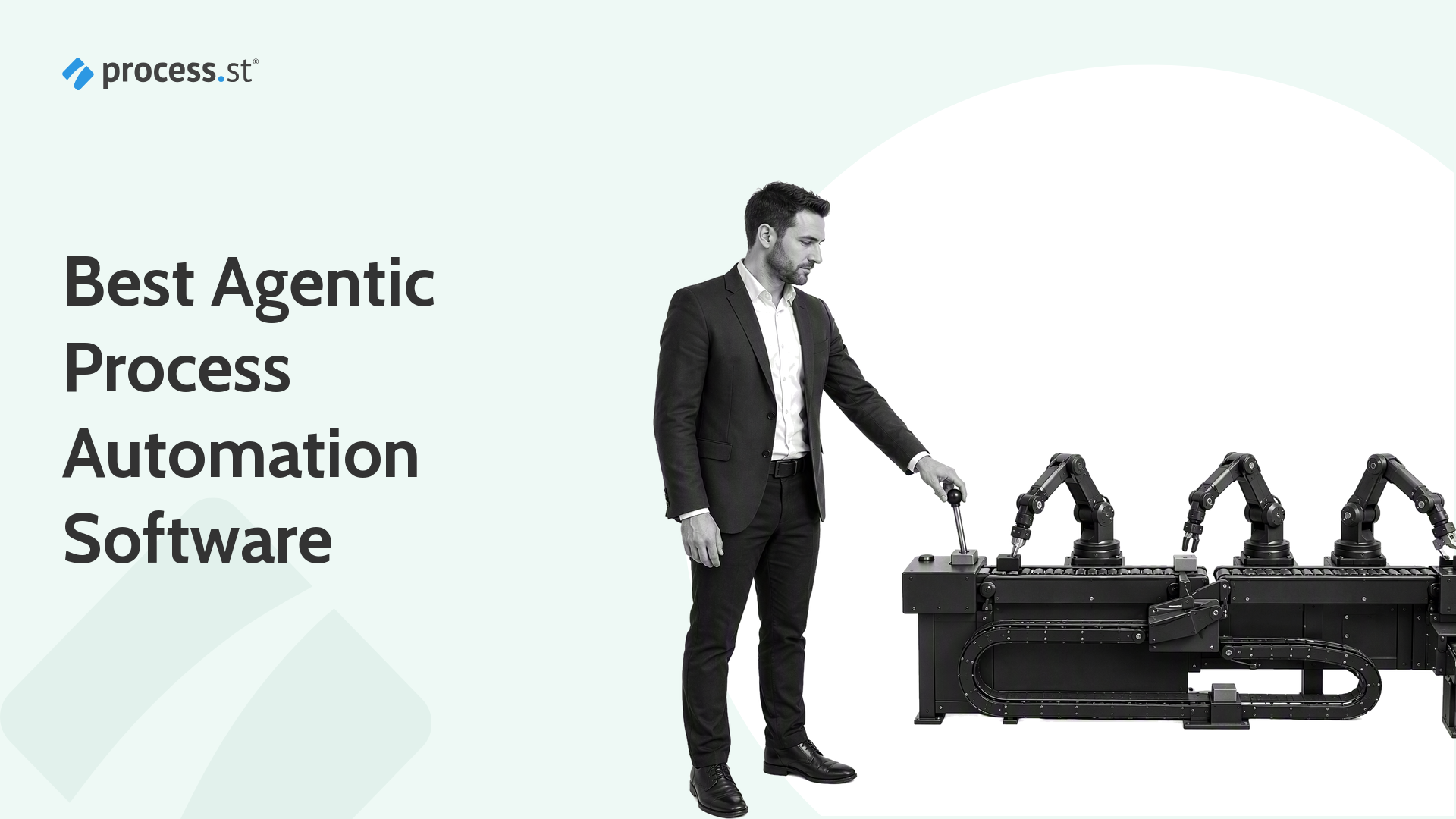
The best agentic process automation software does more than give an AI agent access to tools. It gives the agent a defined process, clear permissions, reliable data, approval gates, exception paths, and an audit trail. That combination lets operations teams automate judgment-heavy work without losing control of how decisions are made.
The market is broad. Some platforms begin with structured workflows and add agents inside them. Others begin with robotic process automation, business process management, integration, or case management. The right choice depends on whether your priority is governed execution, desktop automation, BPMN orchestration, complex case work, or application integration.
This comparison examines eight credible options using the same criteria: control model, human oversight, process visibility, integration reach, deployment fit, and pricing approach. It also explains where conventional RPA software and broader process automation software fit into an agentic architecture.
Table of contents
- At-a-glance comparison
- Our evaluation method
- The eight best platforms
- How to choose the best agentic process automation software
- Implementation plan
- Frequently asked questions
At-a-glance comparison
| Platform | Best for | Control model | Pricing approach |
|---|---|---|---|
| Process Street | Governed, high-stakes operational workflows | Agents inside defined workflows with approvals, exceptions, and evidence | Custom quote |
| Automation Anywhere | Organizations extending an RPA estate with agents | Orchestration across agents, bots, and people | Community Edition; business plans by quote |
| UiPath Maestro | BPMN-led coordination of agents, robots, and people | BPMN and DMN orchestration | Standard and Enterprise plans by quote |
| Camunda | Engineering teams that need vendor-neutral orchestration | Executable BPMN with agentic tasks and human controls | Free development; production plans by quote |
| IBM | Large hybrid enterprises with existing IBM automation | Business automation layer plus agent orchestration | Free trial; enterprise pricing |
| Pega | Mission-critical case management and decisioning | Case context, rules, agents, people, and systems | Flat enterprise pricing; contact sales |
| Appian | Data-rich processes and bounded enterprise agents | Process models connected through a data fabric | Platform plans; contact sales |
| Workato | Integration-led agent workflows across SaaS applications | Low-code recipes, application actions, and agent orchestration | Usage-based pricing |
There is no universal winner. Process Street is the strongest fit when the process itself must remain the system of control. Camunda is attractive when developers want explicit BPMN execution. Automation Anywhere and UiPath make sense when robotic automation is already central. Pega, Appian, and IBM suit larger process and case-management estates, while Workato is compelling when integration breadth drives the project.
Our evaluation method
Agentic automation changes the evaluation question. It is not enough to ask whether a platform can call a model or generate a response. Buyers need to know what happens when an agent is uncertain, an approval is late, a system is unavailable, or a policy prohibits the proposed action. A useful platform must turn those moments into controlled process states.
- Process control: Can teams define the sequence, conditions, permissions, deadlines, and escalation paths that govern agent actions?
- Human oversight: Can a person review high-impact actions with enough context to approve, reject, or correct them?
- Auditability: Does the system retain inputs, outputs, decisions, evidence, and exceptions in a usable history?
- Orchestration breadth: Can the platform coordinate AI agents, people, APIs, bots, and legacy systems in one process?
- Operational usability: Can process owners understand and improve the workflow without rebuilding it from scratch?
- Enterprise fit: Do security, deployment, data, and integration options align with the operating environment?
These criteria reflect the practical distinction between an autonomous task and a governed agentic process automation system. The latter treats the agent as one capable participant inside an accountable process.
The best agentic process automation software platforms
1. Process Street
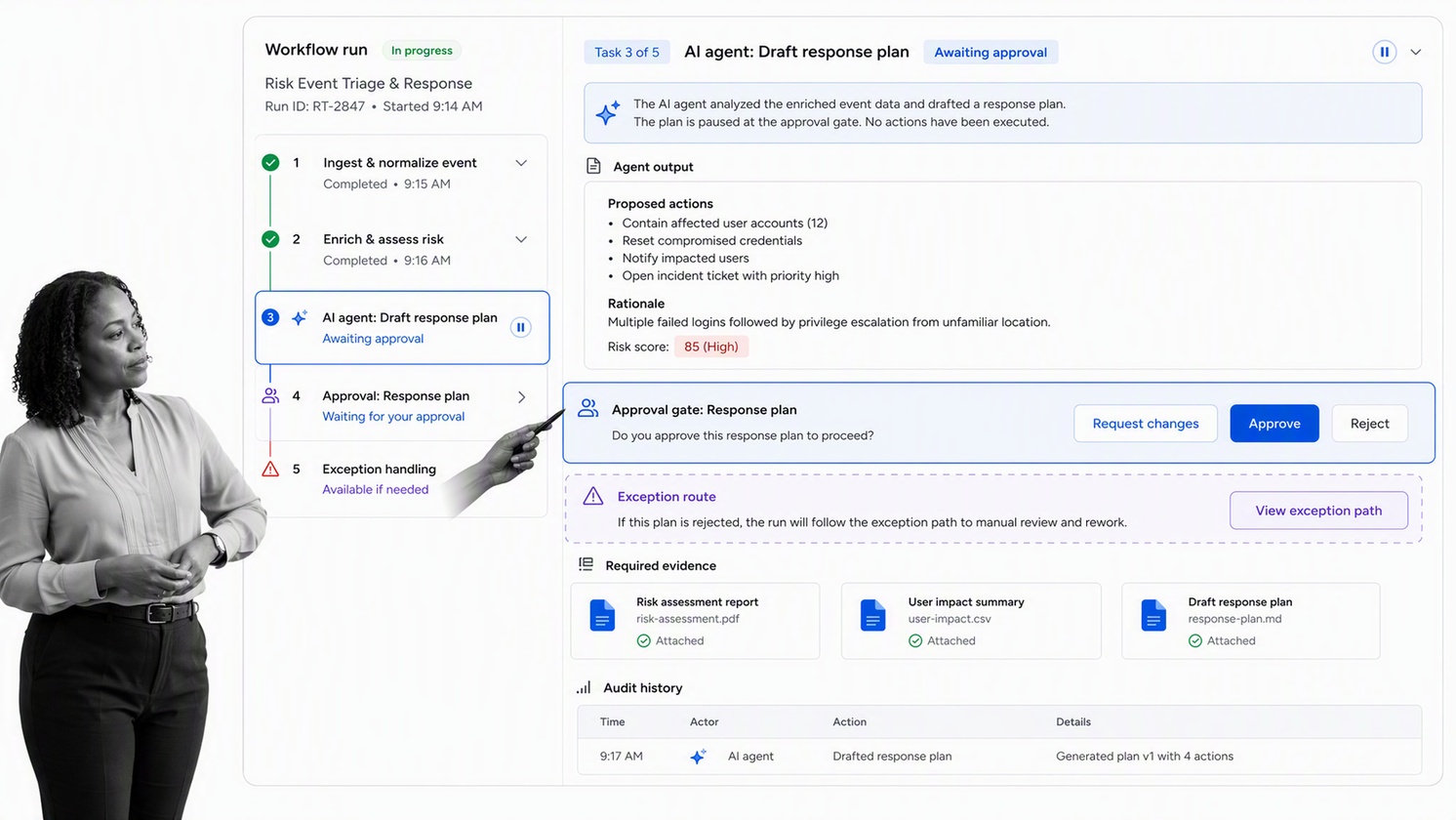
Best for: Governed, high-stakes operational workflows where agents must follow policy and produce evidence.
Process Street approaches agentic automation from the workflow outward. Teams define the process, assign responsibility, set conditions, connect data, and place AI agents at the steps where reasoning or content generation adds value. Human approvals, exception handling, required fields, and evidence capture remain part of the same run.
This model is well suited to employee onboarding, vendor assessment, incident response, compliance review, and other recurring operations where a fast answer is not enough. For example, an agent can assemble a vendor risk summary, but the workflow can prevent it from advancing until a designated owner reviews the supporting evidence. A vendor due diligence checklist gives that work a repeatable control structure.
The main advantage is operational clarity. People can see what the agent did, what remains blocked, who owns the next action, and which exception path applies. That matters when the outcome affects customers, employees, financial controls, or regulatory obligations. Pricing is customized, so buyers should scope users, workflows, integrations, and execution volume before requesting a proposal.
2. Automation Anywhere
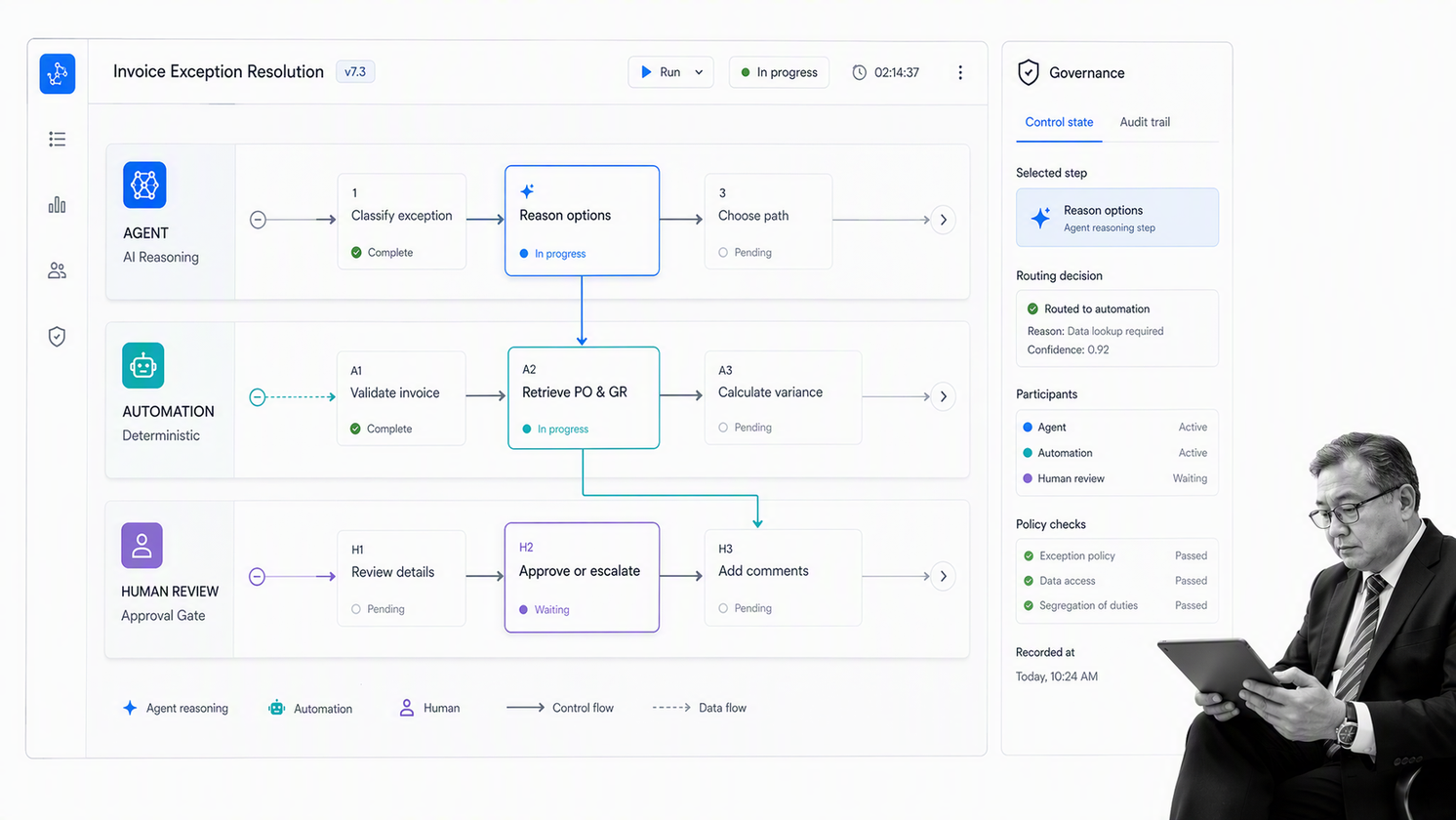
Best for: Enterprises that want to add agentic reasoning to a mature robotic process automation program.
Automation Anywhere combines AI agents, deterministic automations, and people in an orchestration layer. This is useful when a process includes both judgment and repetitive system interaction. An agent can determine an appropriate next action, while a bot performs the stable screen or application steps and a person handles exceptions.
The platform is a natural candidate for organizations with an existing bot estate, automation center of excellence, and established governance practices. Its orchestration approach can reduce the gap between isolated agent experiments and production workflows. Teams still need to decide which decisions an agent may make, when a bot should execute, and where a human must intervene.
Automation Anywhere offers a Community Edition for individual learning and development, while business deployments use sales-led pricing. Buyers should evaluate agent execution, bot capacity, governance, and observability together rather than comparing only license entry points.
3. UiPath Maestro
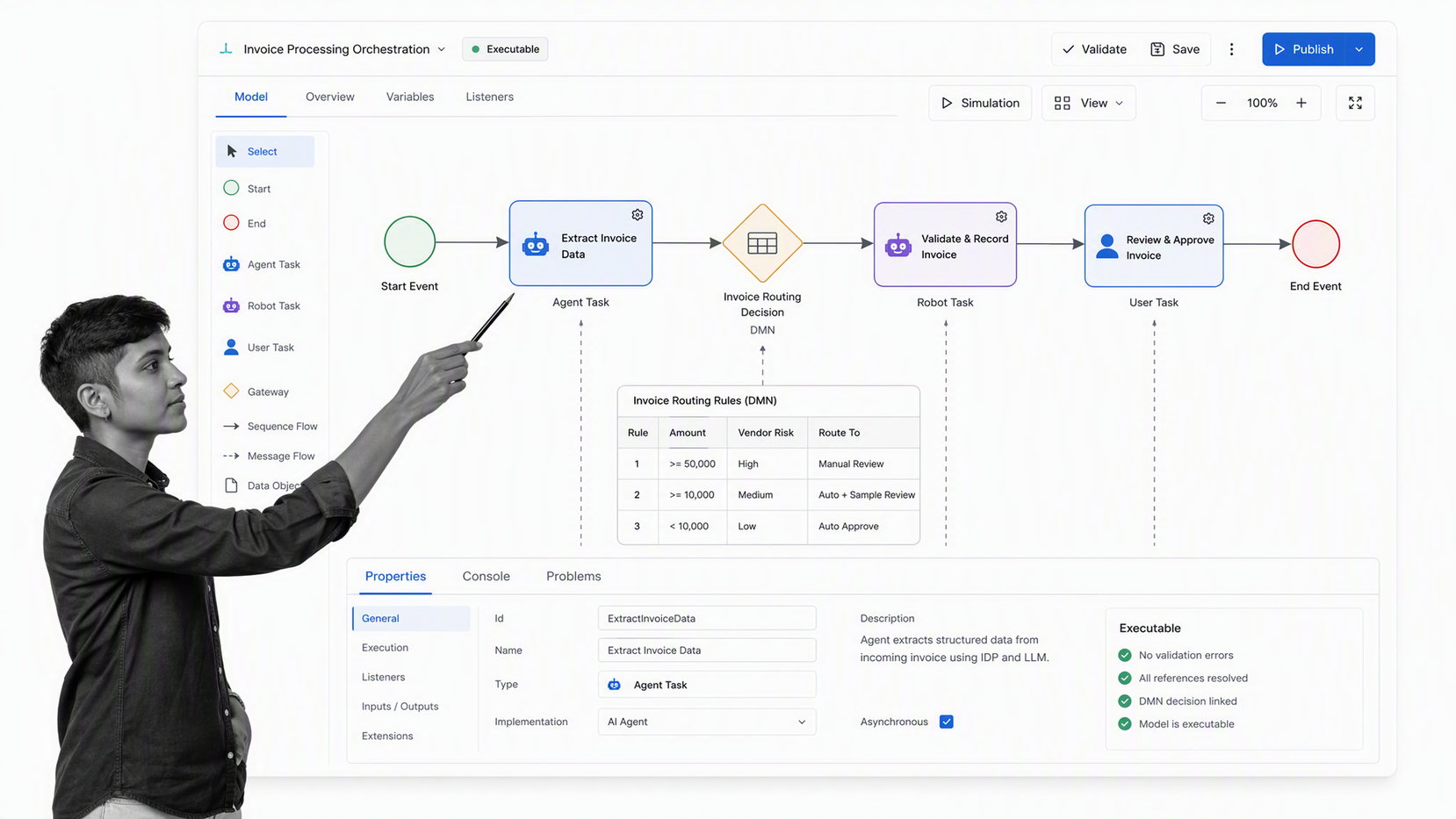
Best for: Organizations that want BPMN-led orchestration across UiPath agents, robots, and human tasks.
UiPath Maestro provides a process-modeling layer for coordinating agents, robots, and people. BPMN makes the process path explicit, while DMN can formalize decisions. That combination helps teams move beyond standalone automations and model how different kinds of workers collaborate across an end-to-end outcome.
Maestro is especially relevant to UiPath customers with substantial robotic automation. Instead of treating an agent as a replacement for every bot, teams can use agents for interpretation and planning, robots for deterministic actions, and people for approvals or unusual cases. A clear workflow automation model prevents those handoffs from becoming invisible.
UiPath includes process orchestration in its Standard and Enterprise offerings, which use contact-sales pricing. Evaluate the complete platform footprint, including robots, agents, orchestration, document processing, and monitoring. The value is strongest when several of those capabilities already support important processes.
4. Camunda
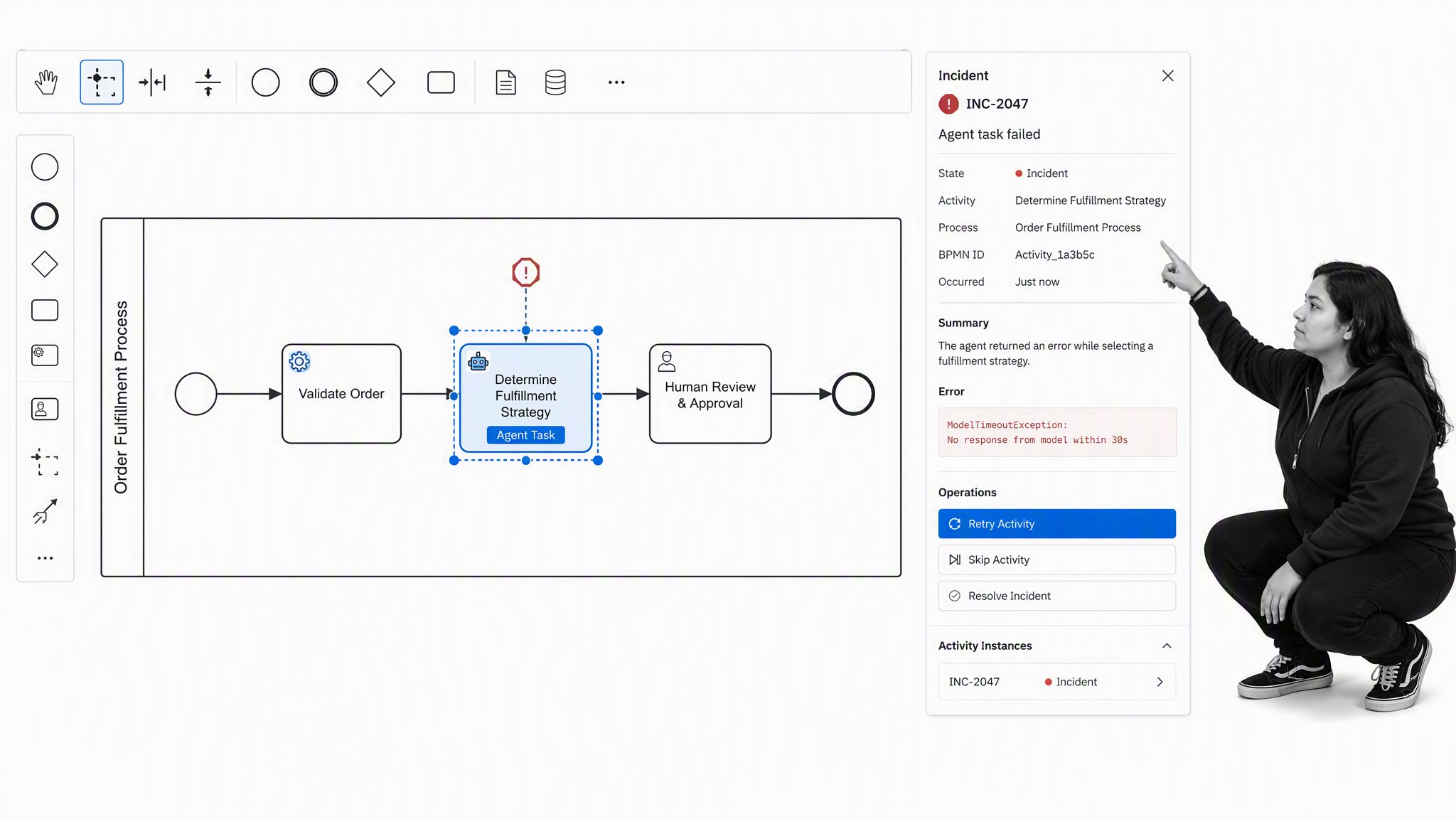
Best for: Engineering-led organizations that need vendor-neutral process orchestration and explicit execution models.
Camunda uses executable BPMN to coordinate services, agents, and people. The process model becomes a durable control layer around adaptive agent behavior. Teams can see where an agent enters the flow, which boundary conditions apply, how an incident is handled, and when a person takes over.
This approach suits distributed systems and long-running processes that cross many technical boundaries. It also supports a headless BPM architecture, where the orchestration engine controls execution while teams build the user experience and services around it. The tradeoff is that modeling, integration, and operation usually require stronger engineering capability than a business-user-first tool.
Camunda supports free development, while production SaaS and self-managed deployments use commercial plans. Buyers should test agent-task behavior, incident recovery, observability, and versioning with a realistic long-running process before committing.
5. IBM
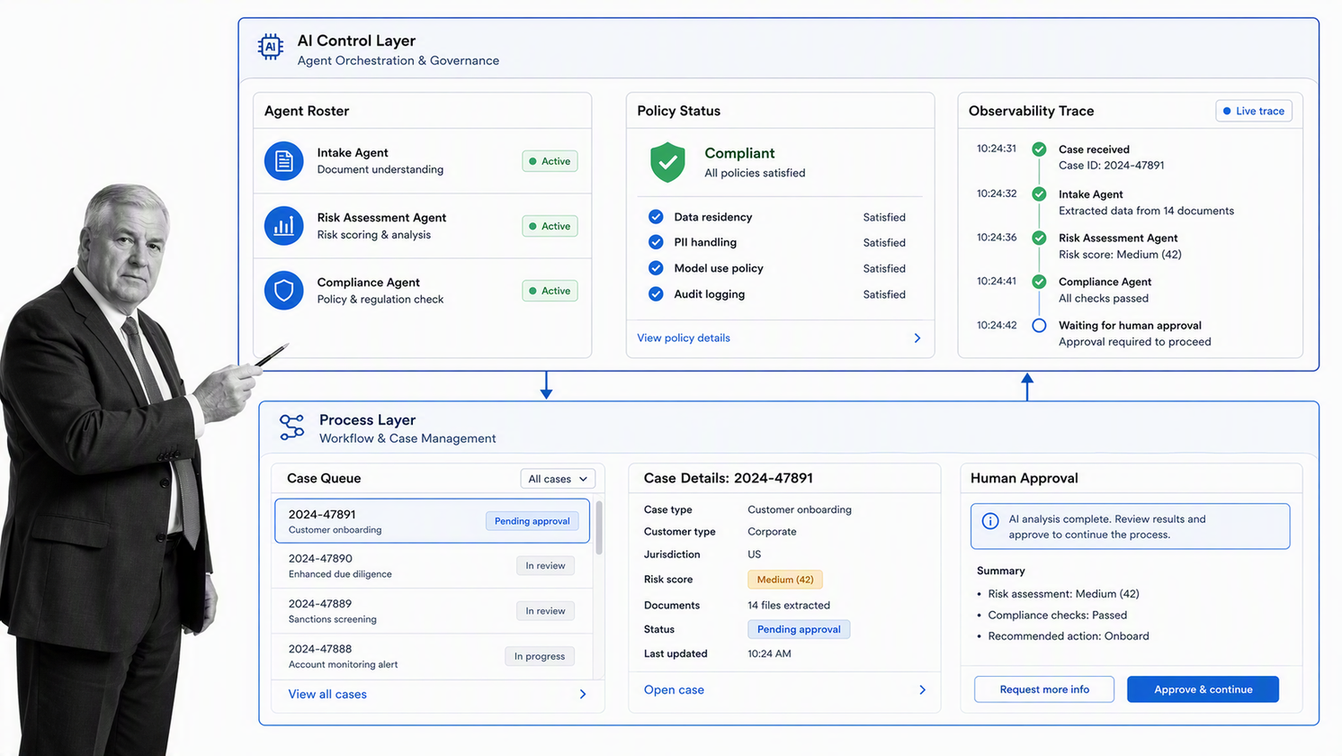
Best for: Large hybrid enterprises that want agent orchestration alongside established IBM automation capabilities.
IBM frames agentic process automation as two connected layers: business automation capabilities and agent orchestration. Cloud Pak for Business Automation handles process, decisions, content, and cases, while watsonx Orchestrate coordinates agent work. This lets enterprises add agents without discarding the process controls already supporting critical operations.
The approach is most compelling in complex environments with hybrid infrastructure, legacy applications, document-heavy work, and formal governance. A compliance process, for example, might use agents to collect and summarize evidence while case management maintains ownership and deadlines. A structured compliance audit checklist can help teams define the control points before automating them.
IBM offers trial options for parts of the portfolio, while enterprise pricing depends on the selected products and deployment. Scope carefully: a broad portfolio can solve many adjacent problems, but it also creates architectural and commercial choices that smaller teams may not need.
6. Pega
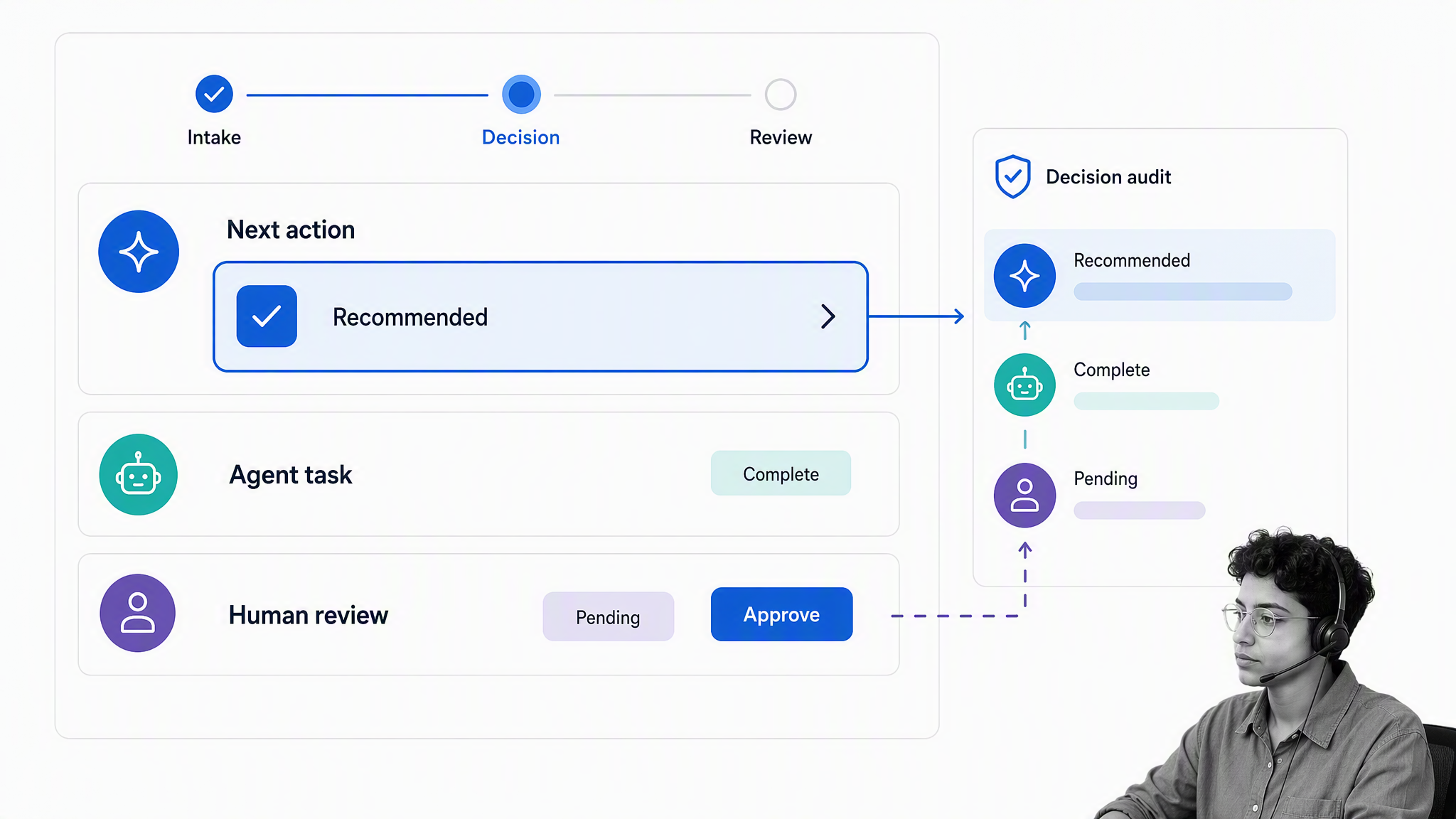
Best for: Mission-critical case work that depends on rules, decisioning, customer context, and human accountability.
Pega brings agentic orchestration into a platform known for case management and decisioning. That foundation is useful when work does not follow one simple linear path. The agent can recommend or execute an action, while the case retains context, obligations, service levels, and a history of what occurred.
Pega is a strong candidate for regulated service operations, customer journeys, claims, and other high-volume cases with many variations. Its rules and decisioning capabilities help teams constrain agent behavior with explicit policy. The platform is likely more than a small team needs for one isolated workflow, so buyers should evaluate it against a portfolio of consequential processes.
Pega currently promotes flat enterprise pricing without token fees. Contract structure, implementation services, and the surrounding platform footprint still matter, so model total cost around case volume, process complexity, integrations, and operational ownership.
7. Appian
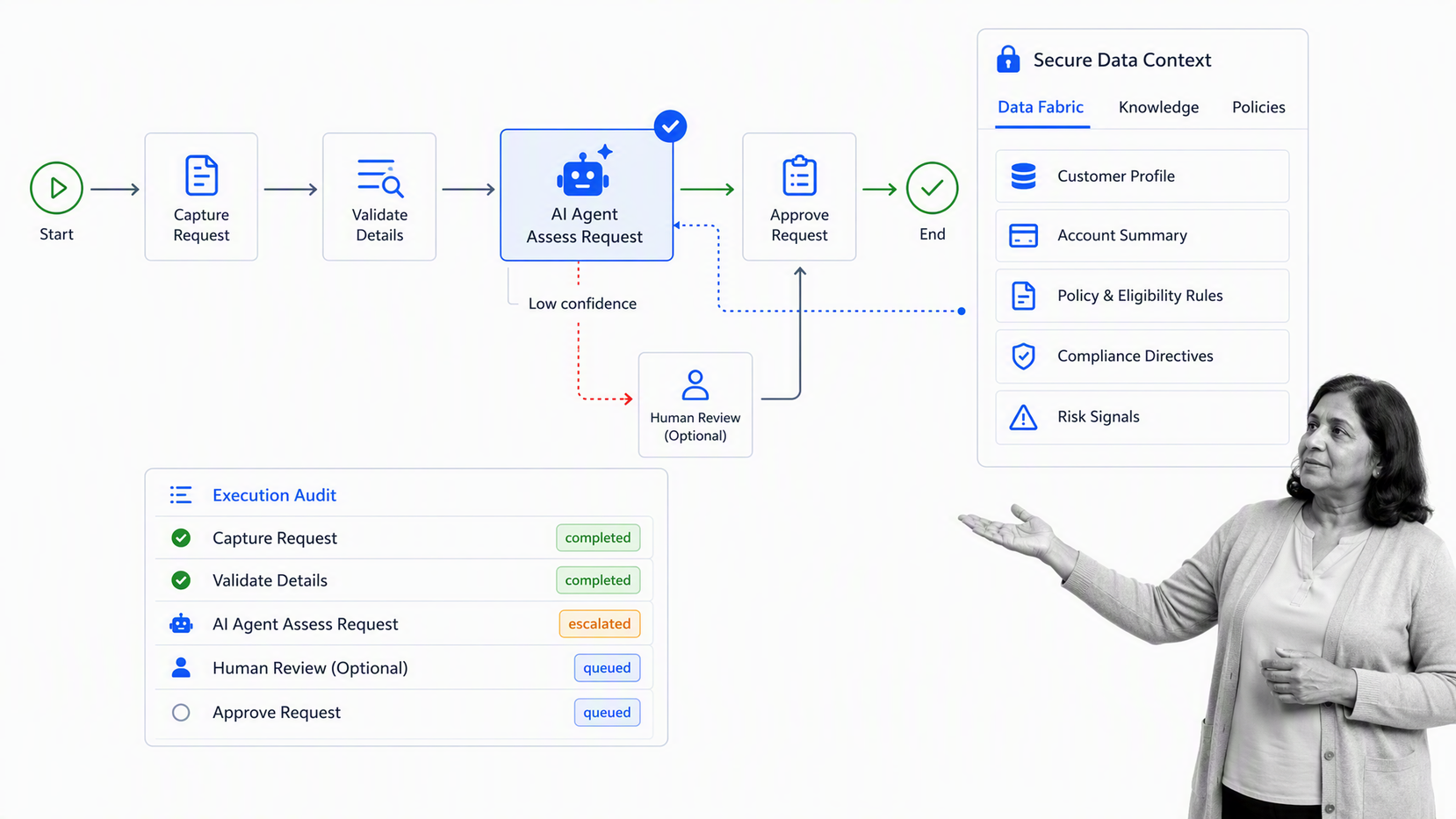
Best for: Data-rich enterprise processes that need bounded agents and a unified view across systems.
Appian embeds AI agents in process models and connects them to enterprise information through its data fabric. The bounded-agent concept is important: an agent receives a defined role, approved tools, and process context instead of unrestricted access. A lead-agent pattern can coordinate narrower agents while the process governs the overall result.
This combination suits processes where relevant data sits across several systems and users need one operational interface. Procurement, service operations, and regulated case work are typical examples. Teams can begin by mapping the existing data relationships, decision rights, and approval points, then add agent actions where they reduce research or coordination effort.
Appian offers platform plans with sales-led configuration. Buyers should assess data-fabric setup, process design, agent governance, and application development as one program. The platform has the greatest leverage when multiple processes can reuse the same connected data and control patterns.
8. Workato
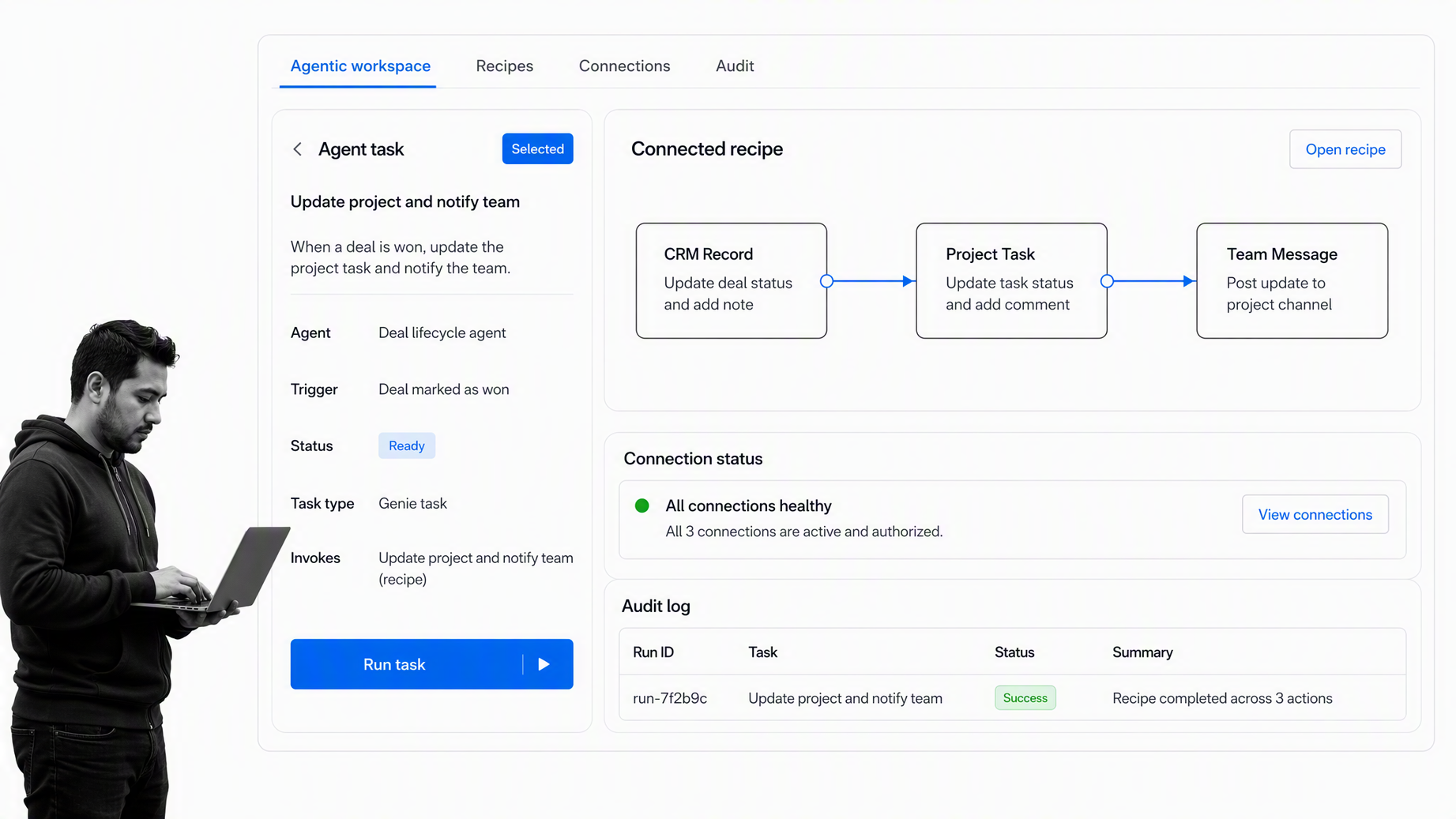
Best for: Integration-led agent workflows that must take action across many SaaS applications.
Workato combines low-code integration recipes with tools for building and managing agents. This is useful when the main challenge is not modeling a deep case lifecycle but giving an agent reliable, governed actions across a large application estate. Existing connectors and recipes can become the execution layer behind agent decisions.
Workato can fit revenue operations, IT service workflows, employee operations, and other cross-application processes. For example, an onboarding agent may assemble context and coordinate tasks, while deterministic recipe steps create accounts and update systems. An employee onboarding checklist helps preserve sequencing, ownership, and verification across that automation.
Workato One uses usage-based pricing. Estimate both predictable integration activity and less predictable agent execution. Also test how the platform records agent reasoning, action inputs, failures, and human intervention so operational teams can diagnose a run after the fact.
How to choose the best agentic process automation software
Start with the operating model, not the most impressive agent demonstration. Select one recurring process with a measurable outcome, enough variation to justify reasoning, and enough risk to expose whether governance works. Then compare platforms against the control points that process requires.
| If your primary need is… | Prioritize… | Platforms to examine first |
|---|---|---|
| Business-owned governed workflows | Approvals, evidence, exceptions, and accessible process design | Process Street |
| Extension of an RPA estate | Bot coordination, desktop automation, and operational governance | Automation Anywhere, UiPath |
| Developer-led distributed orchestration | Executable BPMN, APIs, incident handling, and deployment control | Camunda |
| Complex enterprise cases | Case context, policy, decisions, and hybrid integration | Pega, Appian, IBM |
| Cross-SaaS integration | Connector breadth, reusable actions, and usage visibility | Workato |
Ask every vendor to demonstrate the same exception. A successful happy path reveals very little. Instead, provide incomplete input, revoke access to one system, require an approval, and then reject the agent’s proposed action. Observe whether the process pauses safely, preserves context, routes the exception, and gives an operator enough information to recover.
Also distinguish orchestration from autonomy. AI agent orchestration coordinates multiple agents and tools, but the buyer still needs policies for authority, data access, escalation, and evidence. Strong orchestration should make those boundaries visible rather than hiding them behind a conversational interface. For a broader process portfolio, compare the architectural scope of BPM software and the operating strengths of the best business process management software.
A practical implementation plan
1. Define the outcome and boundaries
Document the process outcome, trigger, owner, systems, sensitive data, and decisions. Mark which actions an agent may complete, which require approval, and which are prohibited. For a security or reliability use case, an incident management process template provides a concrete starting structure.
2. Create a representative evaluation set
Use real but appropriately protected examples, including routine cases, ambiguous inputs, missing information, policy conflicts, system failures, and adversarial instructions. Measure completion quality, review time, exception rate, and the percentage of actions that required correction.
3. Configure controls before scale
Add role-based access, tool permissions, approval thresholds, timeouts, retry limits, fallback owners, and evidence requirements. Change-sensitive workflows should use a defined control such as a change management process before new agent behavior reaches production.
4. Pilot with accountable operators
Run the process with the people who will own its outcomes. Give them a clear way to pause, correct, and escalate an agent action. Review failures weekly and update the process, instructions, data, or permissions according to the actual cause.
5. Scale reusable controls
Once the pilot is stable, standardize common approval patterns, evidence fields, exception categories, and monitoring dashboards. Reuse them across additional processes while keeping each process owner accountable for local risks and results.
Frequently asked questions
What is agentic process automation software?
Agentic process automation software coordinates AI agents, people, rules, systems, and deterministic automation inside an end-to-end process. It adds operational controls such as permissions, approvals, exceptions, and audit evidence around adaptive agent behavior.
How is agentic process automation different from RPA?
RPA is strongest at repeatable, deterministic interactions with applications. Agentic process automation adds interpretation, planning, and adaptive decisions, then governs those capabilities inside a process. Many effective systems use agents and RPA together.
Which platform is best for governed workflows?
Process Street is a strong option when agents must operate inside business-owned workflows with approvals, exceptions, evidence, and clear accountability. Engineering-led teams may prefer Camunda, while RPA-heavy organizations should also evaluate UiPath and Automation Anywhere.
What should an agentic automation proof of concept test?
Test routine cases and difficult exceptions. Include missing inputs, conflicting policies, unavailable systems, rejected approvals, and unauthorized requests. Measure quality, correction rate, review time, safe failure behavior, and the completeness of the audit trail.
How much does agentic process automation software cost?
Most enterprise platforms use custom, plan-based, or usage-based pricing. Total cost can include platform licenses, agent or automation execution, integrations, model usage, implementation, and operational support. Compare costs using one representative process and expected volume.
Can agentic process automation support regulated work?
It can, provided the implementation enforces access controls, approved data use, human review for consequential actions, exception handling, retention, testing, and audit evidence. The process owner remains accountable for validating controls against the applicable obligations.