Turn every policy into automated workflows with built-in enforcement and audit-ready proof.


Hedge Fund Product
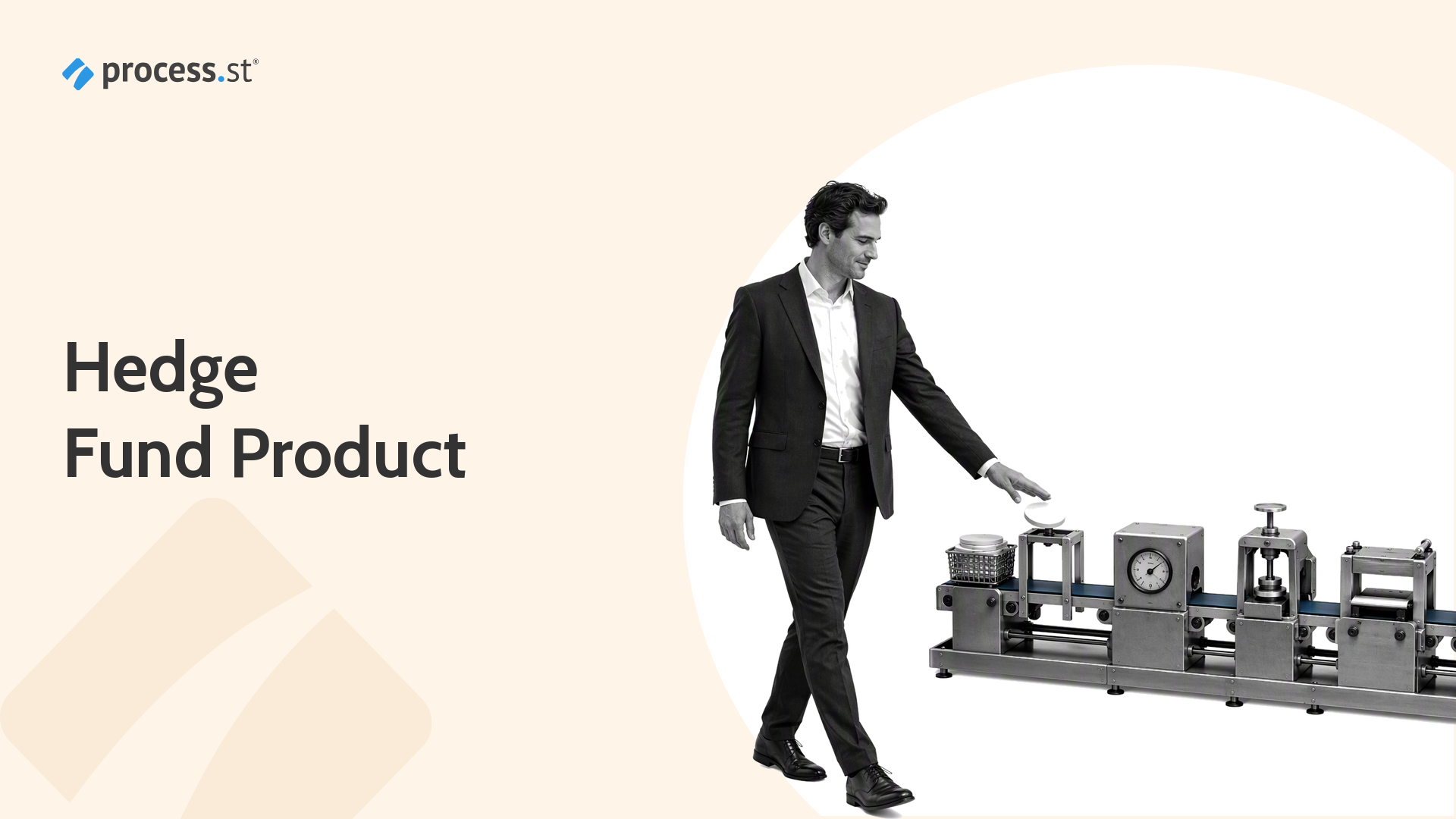
A hedge fund product is a deliberately designed investment offering that combines a strategy, a legal and economic structure, investor terms, risk limits, operating capabilities, and a repeatable reporting experience. The product is more than a portfolio idea. It is the complete promise the manager can execute, govern, explain, and support for investors.
That distinction matters because a compelling investment thesis can still become a weak product. Terms may conflict with asset liquidity. Reporting may promise data the operating model cannot produce. Service providers may be engaged too late. Controls may exist on paper without owners, evidence, or escalation paths.
This guide explains how to define a hedge fund product, move it through a controlled development lifecycle, build the operating model, prepare for launch, and monitor it after investors enter. It complements the practical view of how a hedge fund works without turning into a list of software vendors or investment recommendations.
In this article, you will learn about:
- What is a hedge fund product?
- Product, strategy, fund, and platform differences
- What defines a hedge fund product
- The hedge fund product development lifecycle
- Governance, risk, and compliance controls
- Operating model and service providers
- How to launch a hedge fund product
- How to monitor and improve the product
- Run hedge fund product operations in Process Street
- FAQs
What is a hedge fund product?
A product is the investor-facing operating promise
The Investor.gov hedge fund overview describes hedge funds as private investment funds that pool investor money and can use flexible strategies. In product terms, the important point is that investors do not buy a strategy in isolation. They subscribe to an offering with defined objectives, eligible investors, fees, liquidity, disclosures, governance, valuation practices, reporting, and service arrangements.
A useful product definition answers five questions at once: what the manager will do, for whom, inside which limits, with what operating support, and how the investor will understand the outcome. If any answer is vague, the product is not ready for a formal launch process.
The product has an investment layer and an operating layer
The investment layer covers the opportunity set, portfolio construction, instruments, risk budget, capacity, liquidity assumptions, and decision rights. Reviewing the types of hedge funds can clarify how strategy families create different product requirements. The operating layer covers the entities, accounts, data, service providers, controls, valuation, subscriptions and redemptions, investor communications, and regulatory work needed to deliver the strategy consistently.
This operating layer is where hedge fund processes become part of product quality. A repeatable trade review, valuation challenge, NAV oversight, investor request, or compliance approval is not back-office decoration. It is part of whether the product can keep its promises.
The product must work under normal and stressed conditions
Product design should not rely on perfect markets, perfect data, or perfect handoffs. Teams need to consider what happens when liquidity contracts, a counterparty fails, a valuation input is challenged, an investor request is urgent, or a service provider misses a deliverable. Strong products define decision rights and escalation routes before those moments occur.
Product, strategy, fund, and platform differences
Investment strategy
The strategy is the repeatable method for selecting exposures and managing a portfolio. It may define markets, instruments, signals, holding periods, hedges, concentration limits, or discretionary decision rules. A manager can apply one strategy to multiple products when investor terms, currencies, jurisdictions, or liquidity profiles differ.
Fund vehicle
The fund is the legal investment vehicle through which capital is pooled. The SEC private fund adviser overview explains that private funds are pooled vehicles excluded from the investment-company definition under specified provisions and that private fund advisers may have registration and reporting obligations. Legal counsel determines the structure and obligations for a particular launch.
Product
The product is the whole investor proposition. It connects the strategy to the vehicle, commercial terms, governance, risk profile, liquidity, reporting, operations, and service experience. Two funds can pursue related strategies while remaining different products because their terms, investors, risk limits, or delivery models differ.
Operating platform
The hedge fund platform is the connected environment that helps the organization operate one or more products. It includes specialist systems, data, workflows, controls, and service-provider handoffs. The platform supports the product, but it is not the product itself.
What defines a hedge fund product
Investment mandate and edge
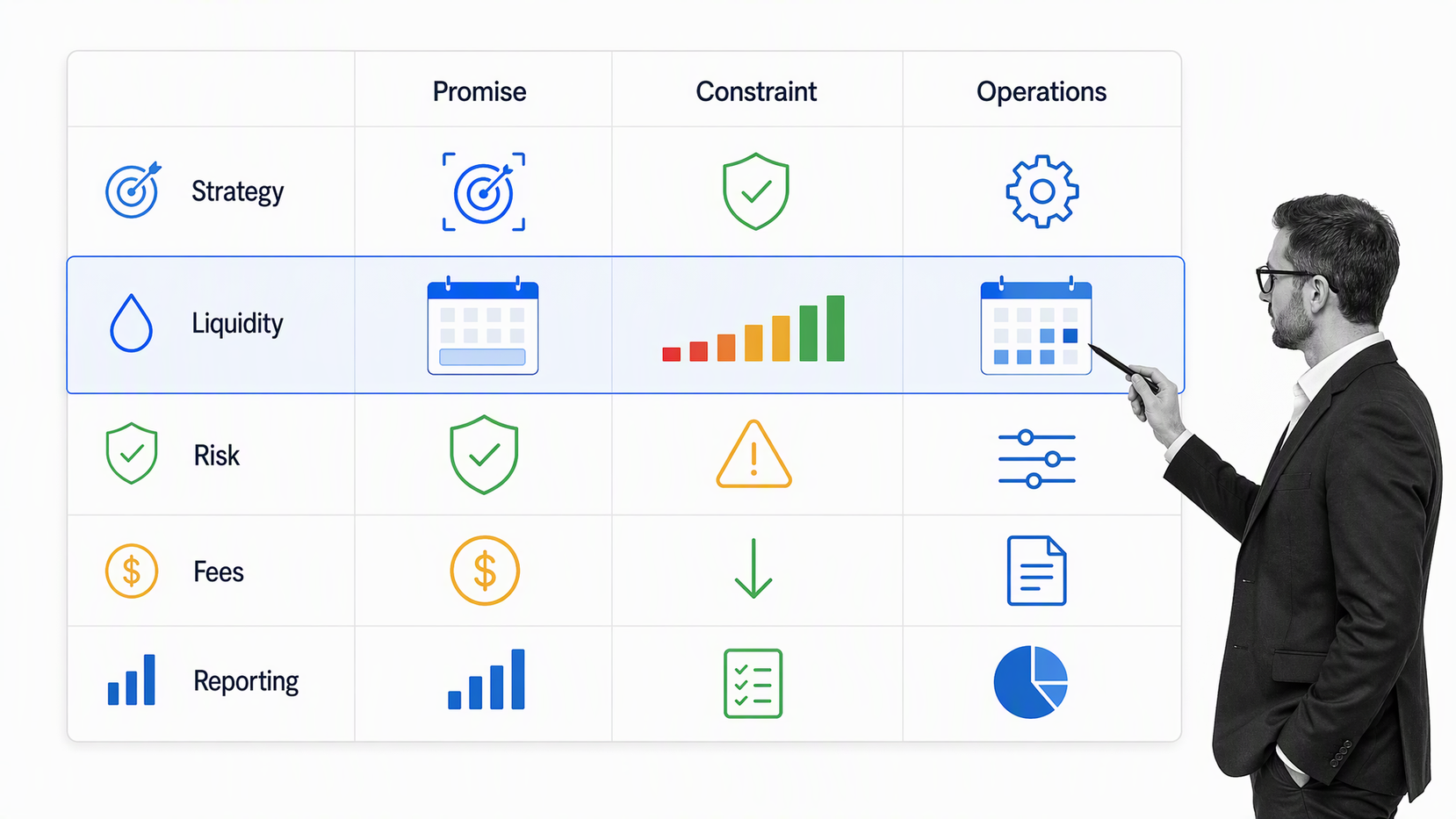
Start with a precise mandate. Define the opportunity set, the source of expected advantage, the portfolio construction method, the role of leverage or short exposure if applicable, and the conditions under which the strategy should or should not work. The mandate needs enough precision to guide decisions without turning marketing language into a brittle rulebook.
Target investor and use case
A product should solve a portfolio need for a defined investor group. The team should understand why an investor would allocate, how the product fits with other exposures, which information the investor will need, and which operational expectations come with that relationship. Product-market fit in asset management includes reporting, diligence, access, and service quality, not only return objectives.
Liquidity and dealing terms
Investor liquidity must be credible relative to portfolio liquidity, financing, concentration, valuation timing, and operational processing. Map subscriptions, redemptions, notices, gates or other applicable mechanisms with counsel, then test whether the operational calendar and service providers can execute those terms reliably.
Economics and capacity
The team needs a durable view of fees, expenses, break-even scale, capacity, resource requirements, and potential conflicts. Avoid designing economics in a spreadsheet without mapping how calculations, reviews, allocations, disclosures, and investor communications will actually occur.
Risk, valuation, and reporting
Define material risks, limits, escalation thresholds, valuation methods, exception handling, and reporting responsibilities before launch. A structured hedge fund risk management program links those decisions to monitoring and evidence rather than treating risk as a quarterly presentation.
The hedge fund product development lifecycle
1. Write the product thesis
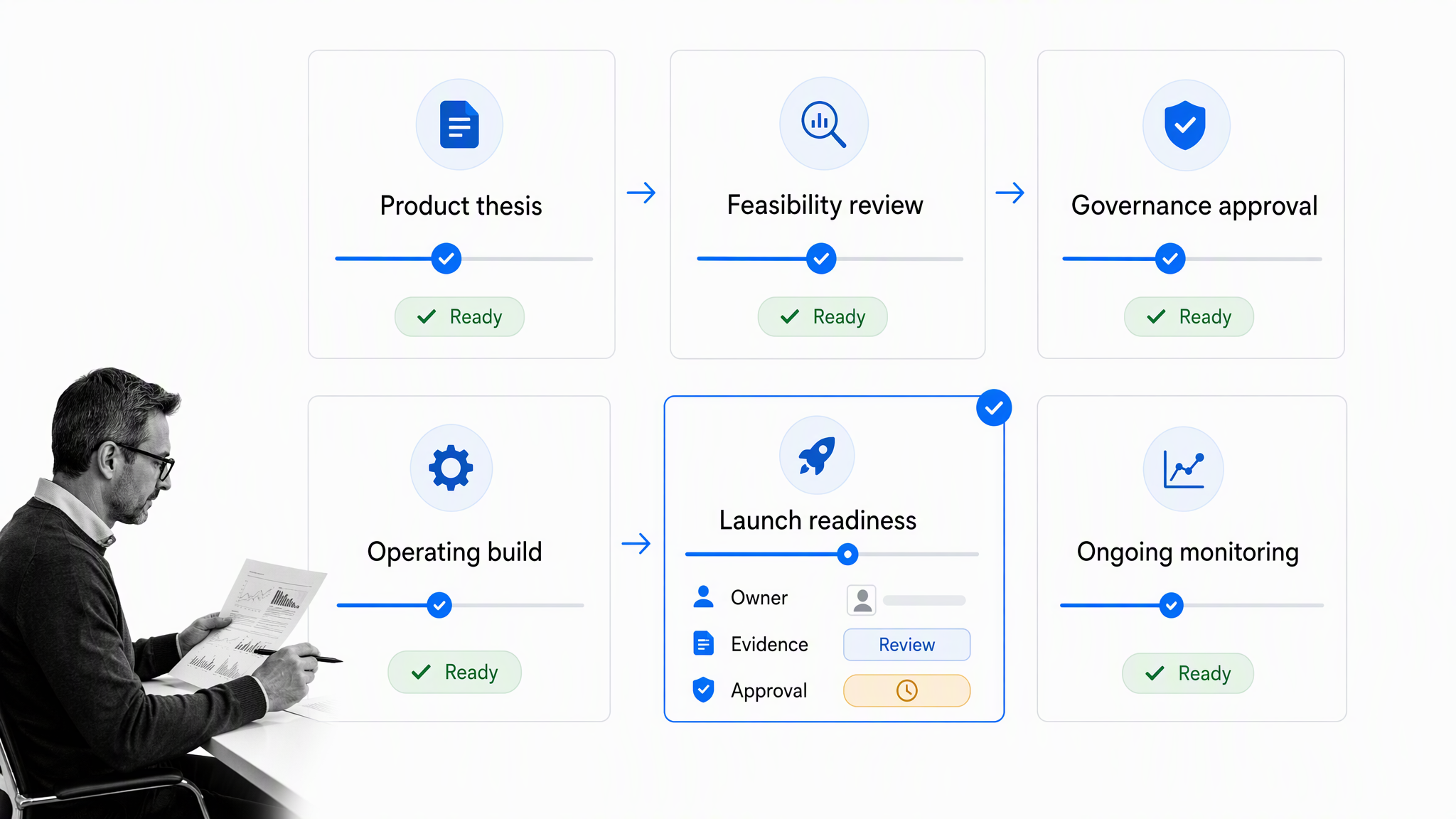
Create a short product thesis that explains the investor problem, investment edge, target investor, portfolio role, expected behavior, major risks, and reason the firm can execute. State what the product will not do. Clear exclusions prevent the concept from expanding into an incoherent collection of opportunities.
2. Run investment and commercial feasibility
Test data, execution access, portfolio construction, risk, capacity, liquidity, operating cost, investor demand, and service requirements. Use an investment due diligence workflow to assign evidence and approvals rather than relying on an informal debate.
3. Map legal, regulatory, and tax dependencies
Engage qualified counsel and tax advisers to identify applicable entity, offering, investor, registration, disclosure, reporting, marketing, and jurisdictional requirements. Convert their advice into a requirements register with owners, evidence, decisions, and unresolved questions. Do not let legal work sit in disconnected email threads.
4. Approve the design
A cross-functional approval should cover the mandate, terms, risk limits, conflicts, valuation approach, service providers, resource model, financial viability, target investors, and launch conditions. Approval means the firm accepts the complete product, not that one committee liked the strategy presentation.
5. Build the operating model
Translate the approved design into accounts, data flows, workflows, controls, calendars, reports, agreements, escalation paths, and owner assignments. A fund administration process can help map recurring valuation, transaction, reporting, audit, and investor work.
6. Prove launch readiness
Run rehearsals with realistic scenarios. Test a subscription, trade break, valuation exception, investor question, service-provider delay, compliance review, and reporting cycle. Record gaps, remediation owners, and retest evidence. Launch readiness should be demonstrated through execution, not declared in a meeting.
7. Monitor after launch
The lifecycle continues after the first close. Compare actual portfolio behavior, investor activity, operating demand, exceptions, and service quality with the original assumptions. Feed lessons into product governance so terms, processes, capacity decisions, and disclosures stay aligned.
Governance, risk, and compliance controls
Create a product governance forum
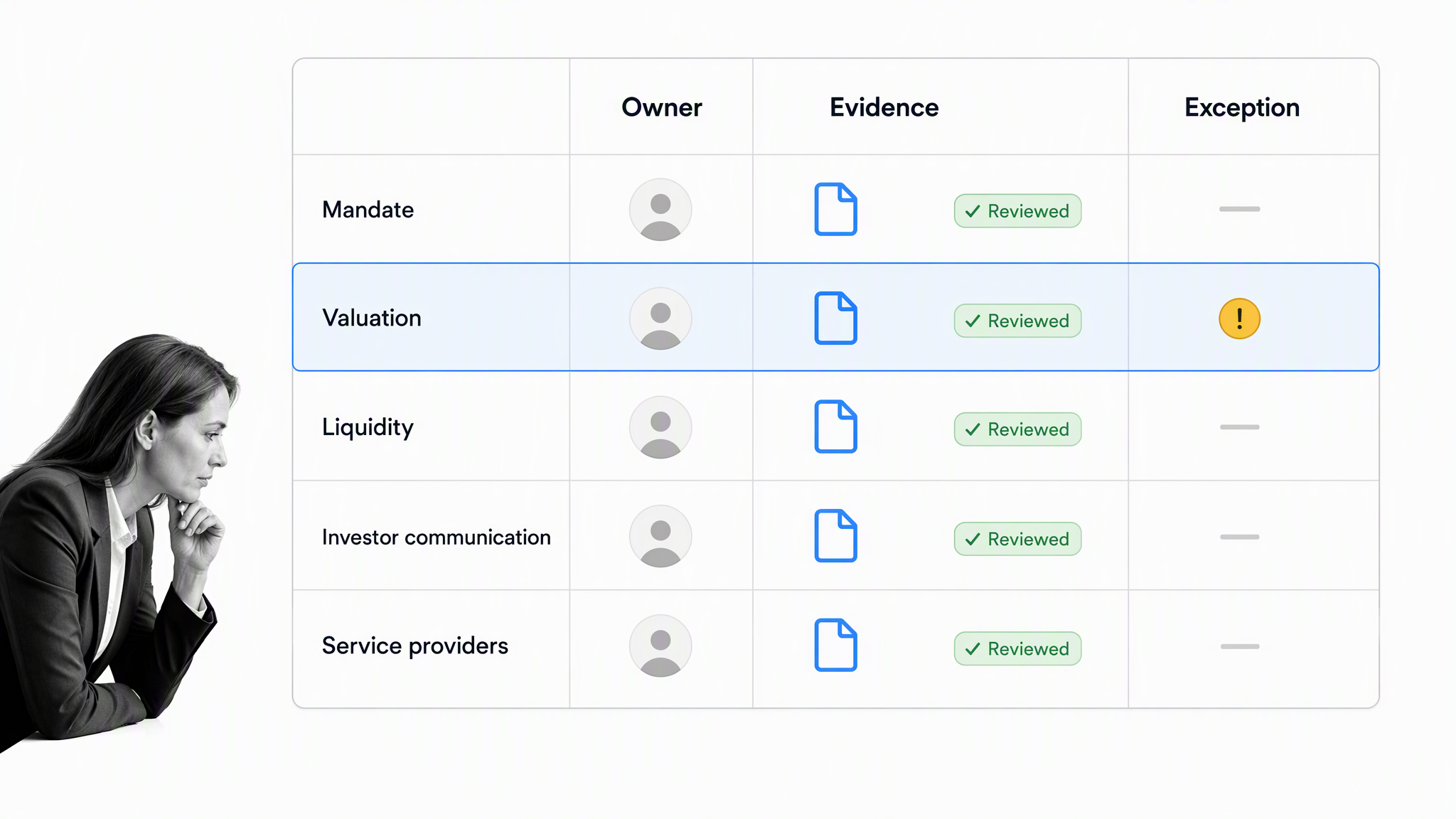
The forum should bring together investment, risk, compliance, legal, operations, finance, investor relations, and technology. Give it a clear mandate: approve material changes, review product health, challenge assumptions, resolve exceptions, and confirm that the investor proposition still matches execution.
Connect obligations to controls
Convert applicable obligations and policies into owned controls with defined evidence and review frequency. The NFA internal controls guidance is one authoritative reference for relevant commodity pool operators, while the exact control set depends on the product, adviser, registrations, instruments, and jurisdictions.
Make valuation governance explicit
Document price sources, hierarchy, challenge rights, overrides, hard-to-value assets, conflicts, approvals, administrator interaction, and evidence retention. Valuation issues can affect performance, fees, subscriptions, redemptions, and investor trust at the same time, so they need more than a technical calculation procedure.
Treat liquidity as a product control
Monitor asset liquidity, financing, concentration, investor flows, notice periods, and operational processing together. The objective is to identify a mismatch early and route a decision while options remain available. Evidence should show what was reviewed, who decided, and what follow-up was required.
Maintain reporting readiness
Registered advisers and other regulated participants may have recurring filing and reporting duties. The SEC Form PF rule resource illustrates how reporting requirements can change over time. The operating model should maintain an obligation calendar, data lineage, review steps, approvals, and change tracking so a new rule becomes controlled work.
Operating model and service providers
Assign end-to-end product ownership
Every major product process needs one accountable owner even when several teams and vendors contribute. Ownership covers the outcome, control design, evidence, exceptions, and improvement. A responsibility matrix helps, but the stronger test is whether one person can explain the current state and drive an issue to closure.
Design service-provider handoffs
Administrators, auditors, brokers, custodians, banks, legal advisers, tax advisers, technology vendors, and data providers may support the product. For each handoff, define inputs, format, timing, validation, escalation, approvals, and evidence. Contracts describe relationships, while workflows describe how work actually moves.
Control the data chain
Map data from trade capture through positions, cash, valuation, accounting, risk, performance, investor reporting, and regulatory outputs. Identify the system of record for each field and the reconciliation or approval that proves the handoff. The role of hedge fund technology is to support that controlled chain, not obscure ownership behind interfaces. Product reporting should not depend on a chain nobody owns.
Prepare for operational due diligence
Investors and consultants evaluate whether the organization can deliver the product safely and consistently. An operational due diligence checklist helps organize evidence across governance, people, systems, service providers, valuation, risk, compliance, and business continuity. A broader hedge fund operational due diligence program keeps that evidence current. Ongoing readiness is stronger than a last-minute document room.
How to launch a hedge fund product
Build one integrated launch plan
Combine investment, legal, tax, operations, compliance, finance, technology, investor relations, and service-provider work into one controlled plan. The hedge fund formation checklist offers a practical starting point, but the team should tailor owners, dependencies, approvals, and evidence to the approved design.
Use readiness gates
Create explicit gates for design approval, legal readiness, operating readiness, data readiness, service-provider readiness, marketing approval, investor onboarding readiness, and launch authorization. A gate should have evidence requirements and an approver. It should not be a colored status chosen by the project owner.
Rehearse exceptions, not only the happy path
Run tabletop and workflow tests for late files, trade breaks, pricing challenges, restricted investments, failed approvals, investor eligibility issues, redemption pressure, cybersecurity incidents, and key-person absence. The objective is to validate decision paths, not predict every event.
Control investor communications
Align offering materials, diligence responses, presentations, reports, and ongoing updates with approved product language and current operations. Define who can approve claims, who owns supporting evidence, and how changes propagate. The NFA CPO regulatory obligations resource is one place relevant firms can monitor applicable expectations. A product can drift when one document changes but the rest of the communication system does not.
How to monitor and improve the product
Review product health across four dimensions
- Investment: portfolio behavior, risk usage, capacity, liquidity, and thesis consistency.
- Investor: flows, concentration, questions, reporting needs, and service experience.
- Operational: breaks, exceptions, late inputs, control evidence, vendor performance, and manual effort.
- Governance: conflicts, policy changes, regulatory change, product decisions, and remediation progress.
Use exceptions as product feedback
Repeated exceptions reveal a mismatch between the product design and operating reality. A recurring late valuation may indicate a data or provider problem. Frequent bespoke investor requests may indicate that standard reporting is incomplete. Repeated risk-limit escalations may indicate that mandate language, portfolio construction, or monitoring needs attention.
Control product changes
Material changes should follow the same discipline as initial design: documented rationale, impact assessment, legal and compliance review, operational testing, communication planning, approval, and evidence. Version the decision and its implementation so teams can explain what changed and why.
Retire products deliberately
Product governance also covers closure, merger, conversion, or wind-down. Map investor communication, portfolio actions, service-provider tasks, filings, records, access removal, final reporting, and lessons learned. A controlled end state protects the same relationships and evidence standards as a controlled launch.
Run hedge fund product operations in Process Street
Turn the product model into executable workflows
Process Street can serve as the workflow and control layer around specialist investment, accounting, risk, and reporting systems. Teams can create workflows for product approval, launch readiness, valuation review, investor onboarding, service-provider oversight, regulatory reporting, change control, and periodic product governance.
Assign owners and collect evidence
Each workflow can define accountable roles, required information, supporting files, decisions, and completion criteria. That structure turns a policy or launch plan into work that can be followed and audited. It also makes incomplete evidence visible before a review meeting.
Route exceptions and approvals
Use conditional logic to route different product scenarios and workflow approvals to place decision gates at the right points. Teams can escalate a valuation exception, require compliance review for a communication, or block launch authorization until evidence is complete.
Start with a controlled template library
The hedge fund workflow templates provide starting points for fund operations, while an investment due diligence process can structure feasibility and approval work. Adapt each workflow to the product, applicable advice, and the firm’s operating model.
FAQs
What is a hedge fund product?
A hedge fund product is the complete investment offering delivered to investors. It combines an investment strategy with a fund structure, terms, risk limits, governance, operations, service providers, and reporting. The product is broader than the strategy because it includes everything required to execute and support the investor promise.
How is a hedge fund product different from a hedge fund strategy?
A strategy describes how the manager intends to select exposures and manage a portfolio. A hedge fund product packages that strategy with a legal vehicle, investor eligibility, liquidity, fees, risk controls, valuation, operations, disclosures, and reporting. One strategy can support multiple products with different terms or audiences.
What should a hedge fund product development process include?
The process should include a product thesis, investment and commercial feasibility, legal and tax analysis, cross-functional approval, operating-model design, service-provider setup, control testing, launch readiness, investor communication, and post-launch monitoring. Each phase should have owners, evidence, decisions, and approval gates.
Who should approve a new hedge fund product?
Approval should involve the functions that will own the product’s risks and delivery, including investment, risk, compliance, legal, operations, finance, investor relations, and technology where relevant. The exact governance depends on the organization and applicable requirements. Approval should cover the complete product rather than only the investment idea.
How do you know a hedge fund product is ready to launch?
A product is ready when the strategy and terms are approved, legal and regulatory dependencies are resolved, accounts and providers are operational, data and controls have been tested, investor materials are approved, and realistic exception scenarios have been rehearsed. Readiness should be demonstrated with evidence from completed workflows.
How can Process Street support hedge fund product operations?
Process Street can coordinate recurring workflows around product approval, launch readiness, investor onboarding, valuation review, compliance, service providers, reporting, and change control. Teams can assign work, collect evidence, route conditions, require approvals, and maintain an execution history while specialist systems continue to hold portfolio and accounting data.