Turn every policy into automated workflows with built-in enforcement and audit-ready proof.



Dust Alternatives

Dust alternatives include AI coworker, agent-builder, enterprise-assistant, and automation platforms that replace or extend Dust’s multiplayer workspace, company knowledge, model choice, and tool-connected execution. Dash is the strongest fit for approval-first work in Slack or Microsoft Teams, while Gumloop, Lindy, Glean Agents, Claude, and Zapier Agents serve different builder, assistant, knowledge, reasoning, and automation needs.
In this comparison, we cover the practical decision points for Dust alternatives, including:
- What is Dust?
- Dust alternatives at a glance
- What counts as a Dust alternative?
- How we compared these Dust alternatives
- What criteria matter most for AI coworkers in Slack?
- Worked customer request example
- Which Dust alternatives are the best right now?
- Where does Process Street fit with Dust alternatives?
- How can you switch from Dust without disrupting work?
- Final recommendation
- Try Dash free in Slack
- FAQs about Dust alternatives
What is Dust?
Dust is a multiplayer, multi-model AI platform where people and agents work together with shared knowledge, tools, skills, and governed access. It offers more than 20 models, more than 70 out-of-box MCP connectors, collaborative Pods, and Spaces and Groups for permissions. Dust remains the benchmark in this comparison, not a ranked alternative.
Its Business and Enterprise plans, with Free, Pro, and Max seat types inside Business, differ by credits, data-source limits, support, and governance. That makes Dust strongest when a team wants a dedicated collaborative AI workspace with model choice and controlled access to company context.
Dust alternatives at a glance
Dash is the closest Dust alternative for teams that want approval-first execution in Slack or Microsoft Teams. Gumloop is stronger for visual agent building, Lindy for personal assistant routines, Glean Agents for governed enterprise knowledge, Claude for reasoning and writing, and Zapier Agents for automation across the broadest published app catalog.
| Tool | Surface | Guardrail or model | Connector count | Pricing entry point |
|---|---|---|---|---|
| Dash | Slack, Microsoft Teams, and web | Approval on every mutating action | 3,000+ integrations | Published on the Dash pricing page |
| Gumloop | Web builder; deploy to Slack and Microsoft Teams | Agent tool restrictions, approvals, and 35+ models | 300+ connectors | 14-day trial; Pro from $37 monthly with 20,000 credits |
| Lindy | Slack-native teammate with inbox, meetings, and routines | Built-in approvals and model selection | 1,000+ integrations and any MCP | Plus from $29.99 per user monthly with 3,000 credits |
| Glean Agents | Web and connected enterprise apps | Permissions-aware governance and human-in-the-loop controls | 275+ connectors | Contact sales; no public list price |
| Claude | Web, desktop, and mobile | Anthropic models; first-party and MCP connectors | Connector directory; no published total | Free; Pro $17 per month with annual billing or $20 month to month |
| Zapier Agents | Web, Chrome, and app-triggered runs | Instruction approvals and Human in the Loop steps | 9,000+ apps | Free with 400 activities; Pro $33.33 per month with annual billing |
Table sources: Dash pricing, Gumloop pricing and agent documentation, Lindy pricing and integrations, Glean Agents, connectors, and demo request, Claude pricing and connectors, and Zapier Agents and pricing. Prices and catalog counts were verified on August 26, 2026.
For nearby comparisons, review Viktor alternatives, Claude Tag alternatives, Claude Cowork alternatives, and Lindy alternatives. These sibling pages use the same surface, controls, connectors, and pricing framework.
What counts as a Dust alternative?
A Dust alternative is any AI coworker, agent workspace, or assistant platform that can take on one of Dust’s main jobs: collaborate with people, use company knowledge, operate across tools, and help the team produce work. That definition includes chat-native teammates, visual agent builders, enterprise search agents, general assistants, and automation platforms with agent layers.
The important split is surface. Dust centers a multiplayer workspace where people and agents share knowledge, tools, conversations, and notifications. Dash centers Slack and Microsoft Teams. Gumloop centers a visual flow canvas. Lindy centers personal assistant work. Glean centers enterprise knowledge and governance. Claude centers reasoning. Zapier Agents center a broad app catalog. The right alternative is the one whose center matches where your team already works.
How we compared these Dust alternatives
We compared each tool with Dust’s current multiplayer AI workspace, then verified surface coverage, action guardrails, connector breadth, pricing entry point, and operational fit against first-party product, pricing, integration, and help pages. Rankings favor the closest shared-team replacement before narrower builder, assistant, knowledge, reasoning, or automation options.
Dash is a Process Street product, so we disclose that relationship and apply the same evidence standard to Dash as every other vendor. Product capabilities and prices can change; the linked first-party sources are the authority for purchasing decisions.
Editorial owner: Vinay Patankar. Last updated: August 27, 2026. Last verified: August 27, 2026.
What criteria matter most for AI coworkers in Slack?
The most important criteria are where the coworker runs, what knowledge and tools it can reach, and what happens before it changes an external system. Surface affects adoption; model and connector breadth affect capability; permissions, approvals, shared context, and finished outputs determine whether a team can trust the assistant with real work.
The practical buying test is to run five real tasks from last week. Include one that needs company context, one that uses a connector, one that produces a draft, one that requires approval, and one that hands work into a repeatable process. Compare completion quality, supervision, and permission behavior across every candidate.
Worked example: move a customer request from Slack to an approved action
This is an illustrative evaluation scenario. It does not assert that every connector or permission is available in every Dash or Dust workspace.
- Monitor one selected Slack channel for a fictional customer onboarding request.
- Gather context only from permitted sources.
- Prepare the proposed system-of-record update and show the exact fields that would change.
- Require the configured approval before the external write.
- Perform the approved action, report completion, and preserve an error path if the action fails.
- Hand recurring onboarding into a Process Street workflow when the process needs named owners, required steps, approvals, evidence, and portfolio reporting.
Run the same five real-shaped but fictional asks in Dash and Dust. Compare setup, trigger ownership, user or bot identity, permission boundaries, action approvals, recovery behavior, auditability, and actual credit cost. Dust documents Slack posting, schedules, and approval-controlled Gmail actions, so do not frame this as chat versus action.
Which Dust alternatives are the best right now?
These six Dust alternatives cover the strongest replacement paths for team AI work. Dash leads for approval-first execution in chat, Gumloop for visual building, Lindy for personal assistance, Glean Agents for governed enterprise knowledge, Claude for reasoning and writing, and Zapier Agents for broad automation. Dust remains the benchmark, not a ranked alternative.
1. Dash
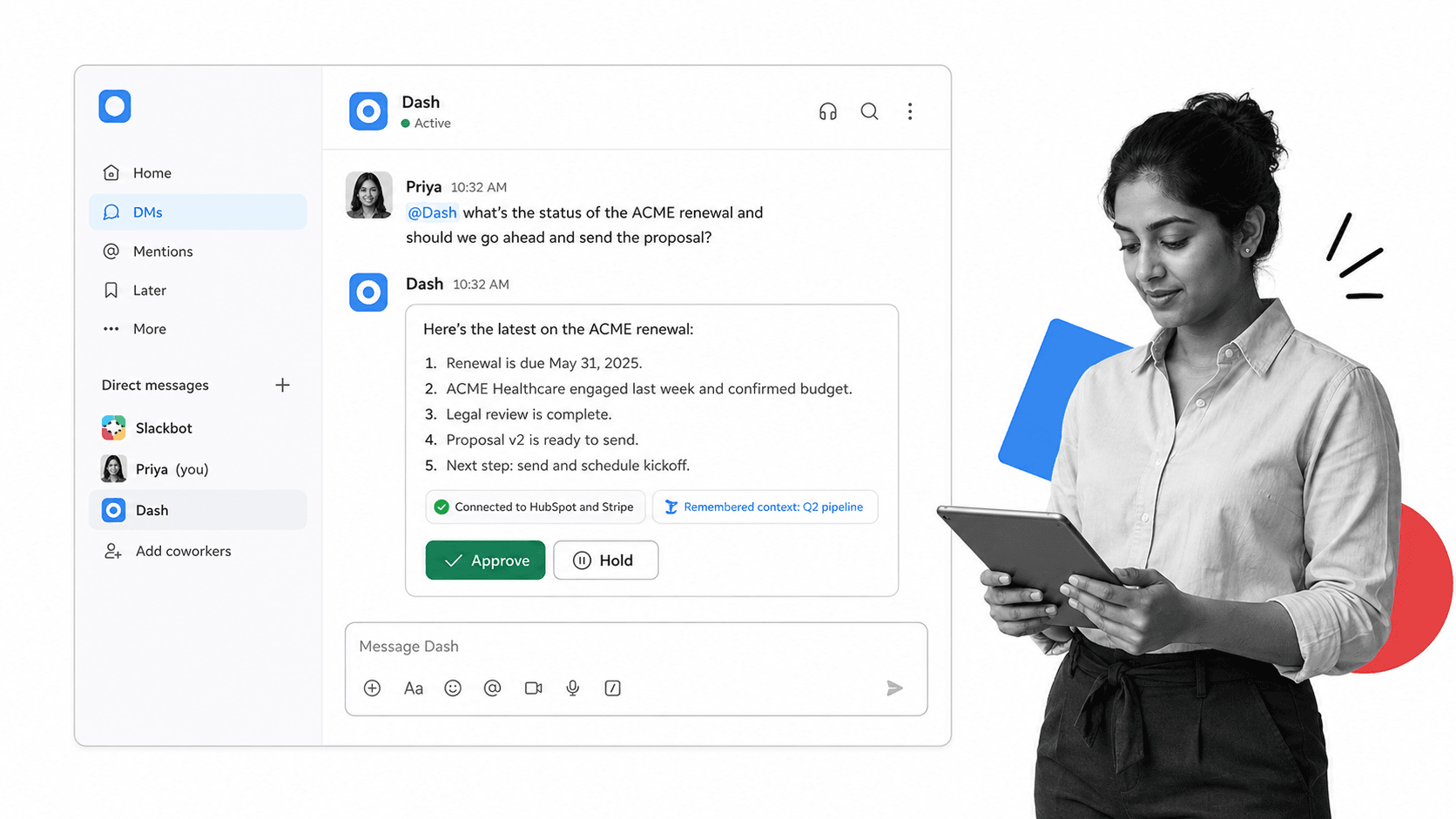
Best for: teams that want an approval-first AI coworker inside Slack or Microsoft Teams.
Dash runs in Slack, Microsoft Teams, and the web, connects to more than 3,000 integrations, and requires approval before every mutating action. Current plans are published on the Dash pricing page.
Dash is the closest fit when the job is shared operational work in team chat. Dust provides a dedicated multiplayer workspace with more model choice and collaborative agent building, while Dash reduces context switching and makes approval a default part of execution.
- Bottom line: Dash is the best Dust alternative for approval-first team execution in Slack or Microsoft Teams.
- Choose Dash if: your team wants a shared coworker in chat with broad integrations and approval before changes.
- Skip Dash if: you need Dust’s dedicated multi-model workspace or a visual flow-building canvas.
2. Gumloop
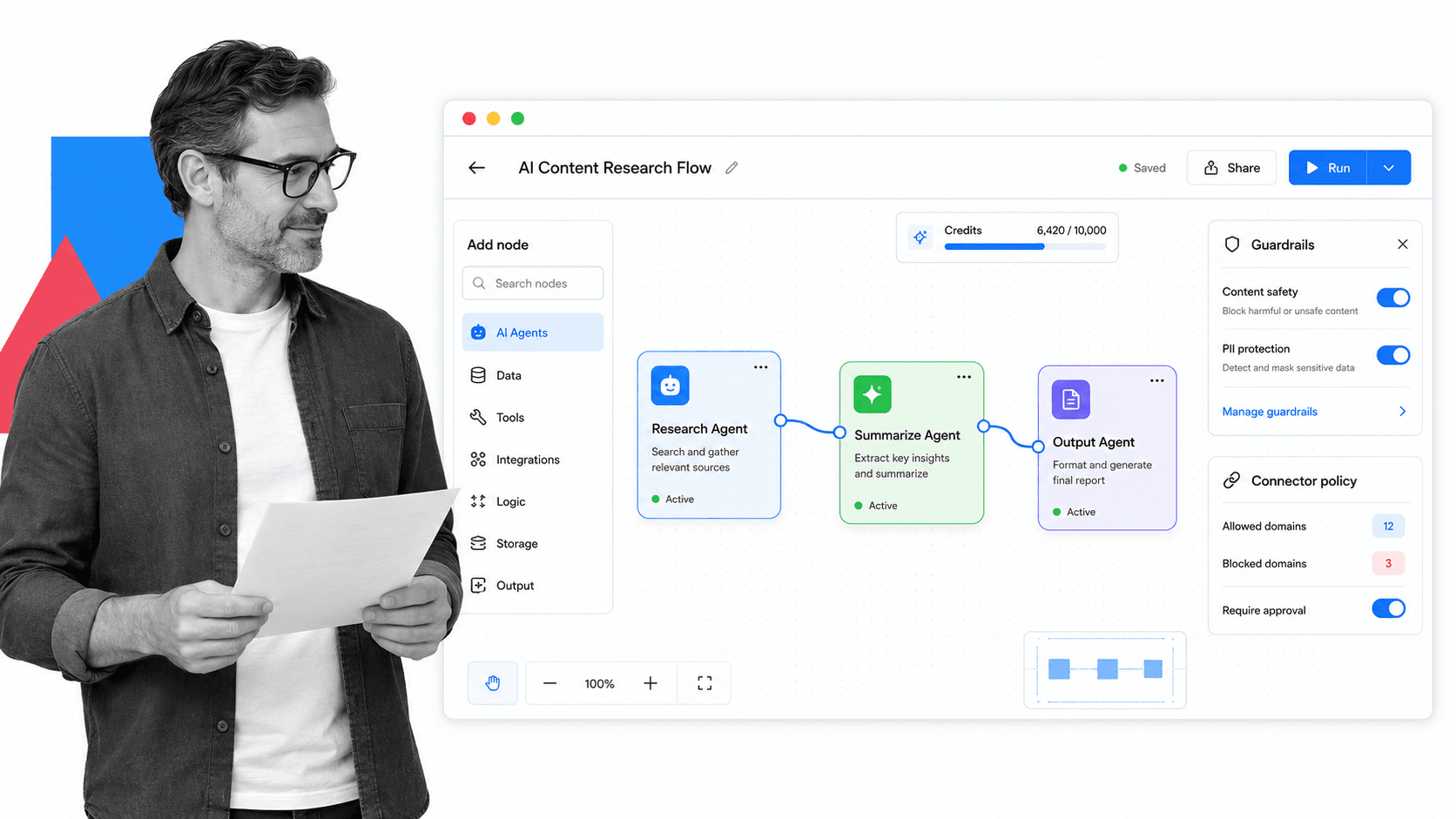
Best for: operators who want a visual canvas for building and maintaining AI agents.
Gumloop combines a visual web builder with agent deployment to Slack and Microsoft Teams. Pro starts at $37 monthly with 20,000 credits, 35+ models, unlimited agents and seats, and a 14-day trial; its connector documentation lists 300+ connectors and configurable tool restrictions, approvals, and guardrails.
Gumloop is easier to inspect when branches, tools, and steps should stay visible on a canvas. The tradeoff is ownership: someone must maintain flows and decide when a conversational request should become a fixed automation.
- Bottom line: Gumloop is the best Dust alternative for teams that prioritize visual agent building over a shared AI workspace.
- Choose Gumloop if: an operator needs inspectable flows, deployment options, and builder-level controls.
- Skip Gumloop if: the team wants a coworker that starts in chat with less flow maintenance.
3. Lindy
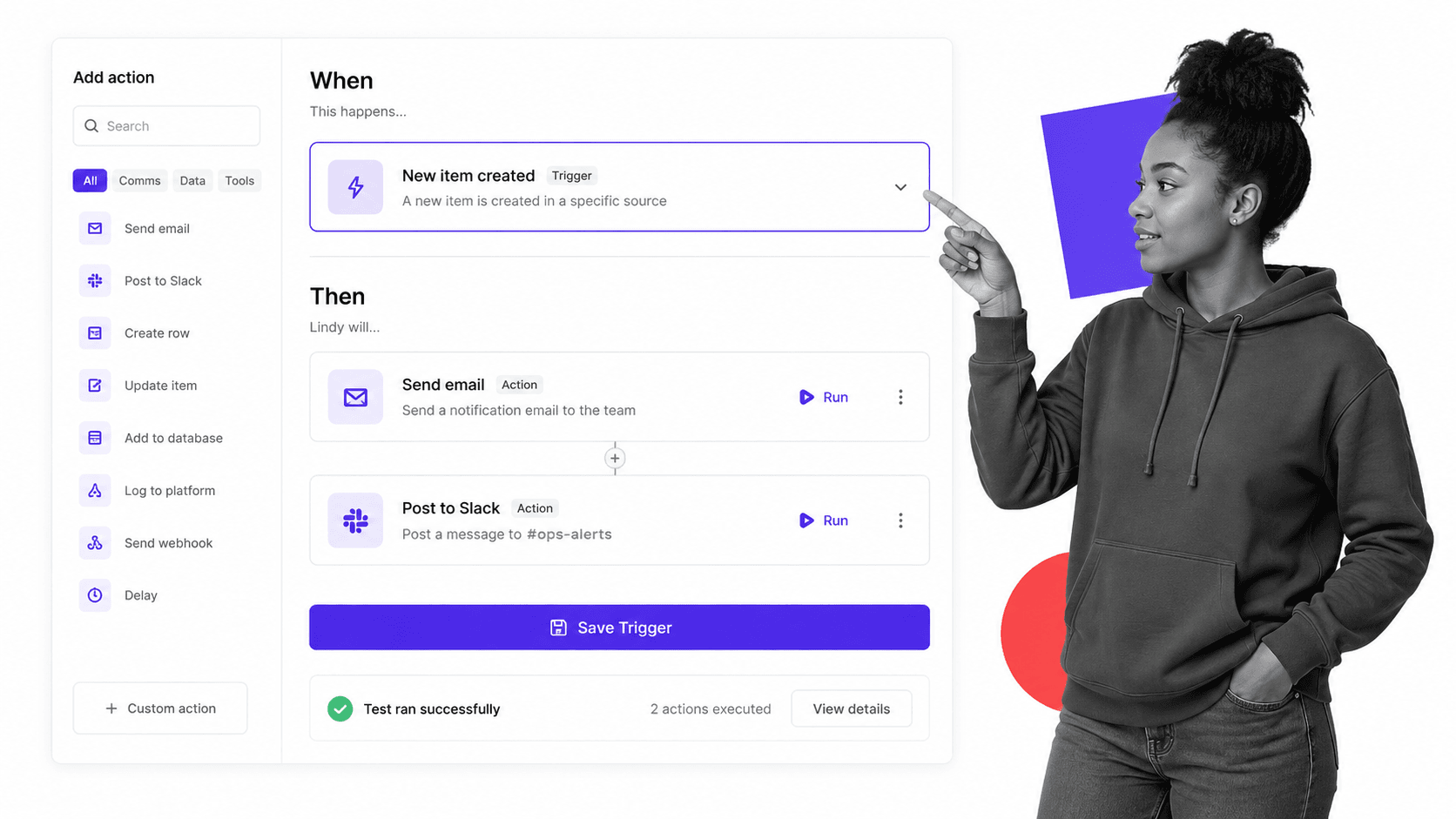
Best for: individuals and small teams that want a Slack-native assistant for inbox, meetings, and routines.
Lindy focuses on personal-assistant work, scheduled routines, persistent workspace context, and built-in approvals. Plus starts at $29.99 per user monthly with 3,000 credits, more than 40 skills, model choice, and a seven-day Slack trial; its integration directory lists 1,000+ apps and any MCP server.
Lindy fits recurring coordination around email, meetings, and follow-up better than a broad team knowledge workspace. Dash is more workspace-priced and shared-team oriented, while Dust is stronger for collaborative agents built around governed company knowledge.
- Bottom line: Lindy is the best Dust alternative for personal-assistant routines and individual coordination in Slack.
- Choose Lindy if: inbox, calendar, meeting, and follow-up work drive the purchase.
- Skip Lindy if: you need a shared team coworker or a governed enterprise knowledge layer.
4. Glean Agents
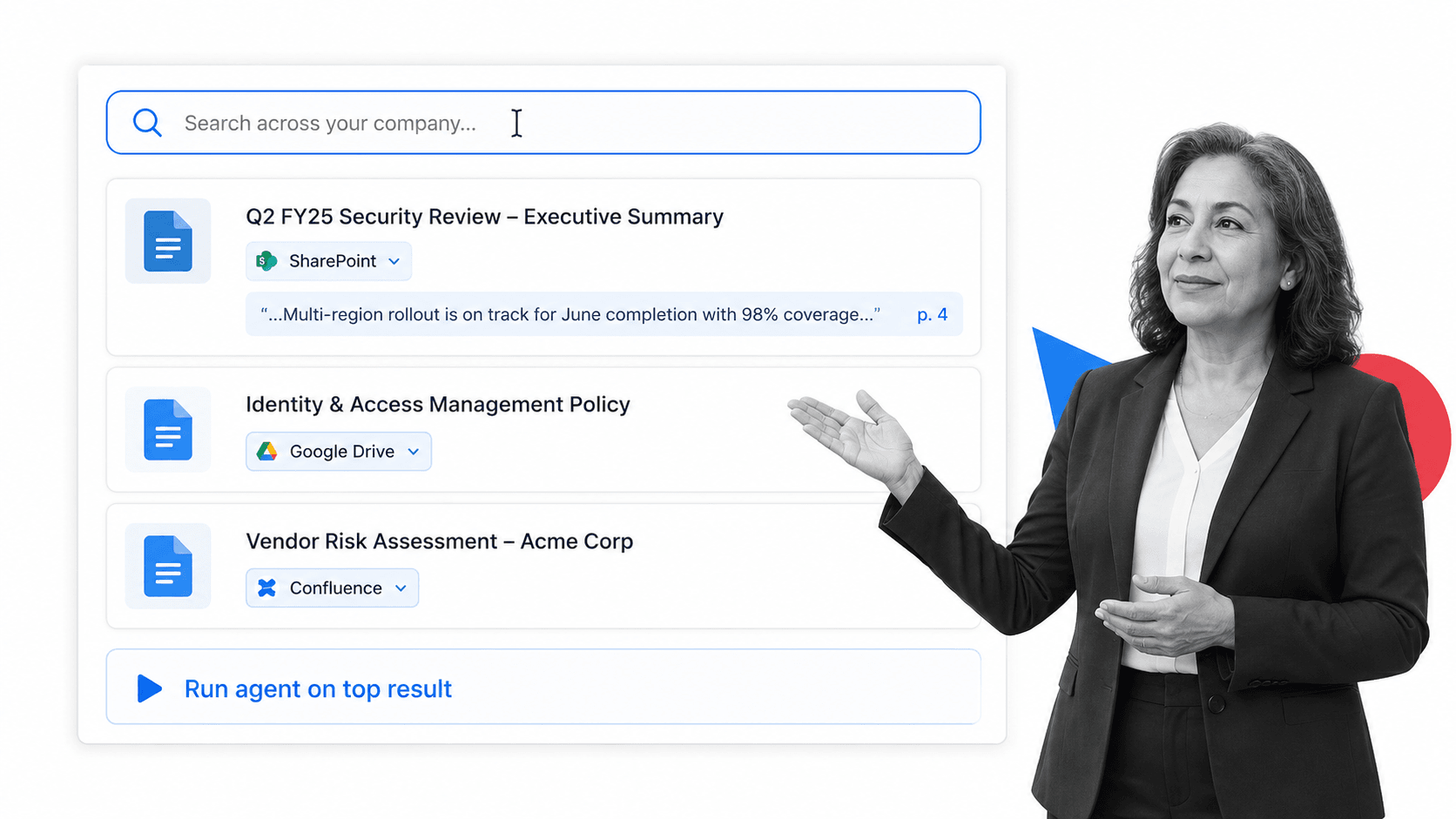
Best for: enterprises that need permission-aware agents across a large internal knowledge estate.
Glean Agents combines an agentic engine, agent builder, orchestration, governance, and enterprise context. Glean’s connector catalog lists more than 275 connectors, while its official demo request replaces a public list price.
Glean is the strongest fit when enterprise search, permissions, security review, and centralized rollout drive the decision. It usually requires a heavier buying process than Dash, Lindy, or Claude, and it is less focused on visual automation building than Gumloop.
- Bottom line: Glean Agents is the best Dust alternative for governed enterprise knowledge search and permission-aware agents.
- Choose Glean Agents if: IT and knowledge teams need centralized controls across many company systems.
- Skip Glean Agents if: a smaller team needs fast self-service adoption or transparent public pricing.
5. Claude
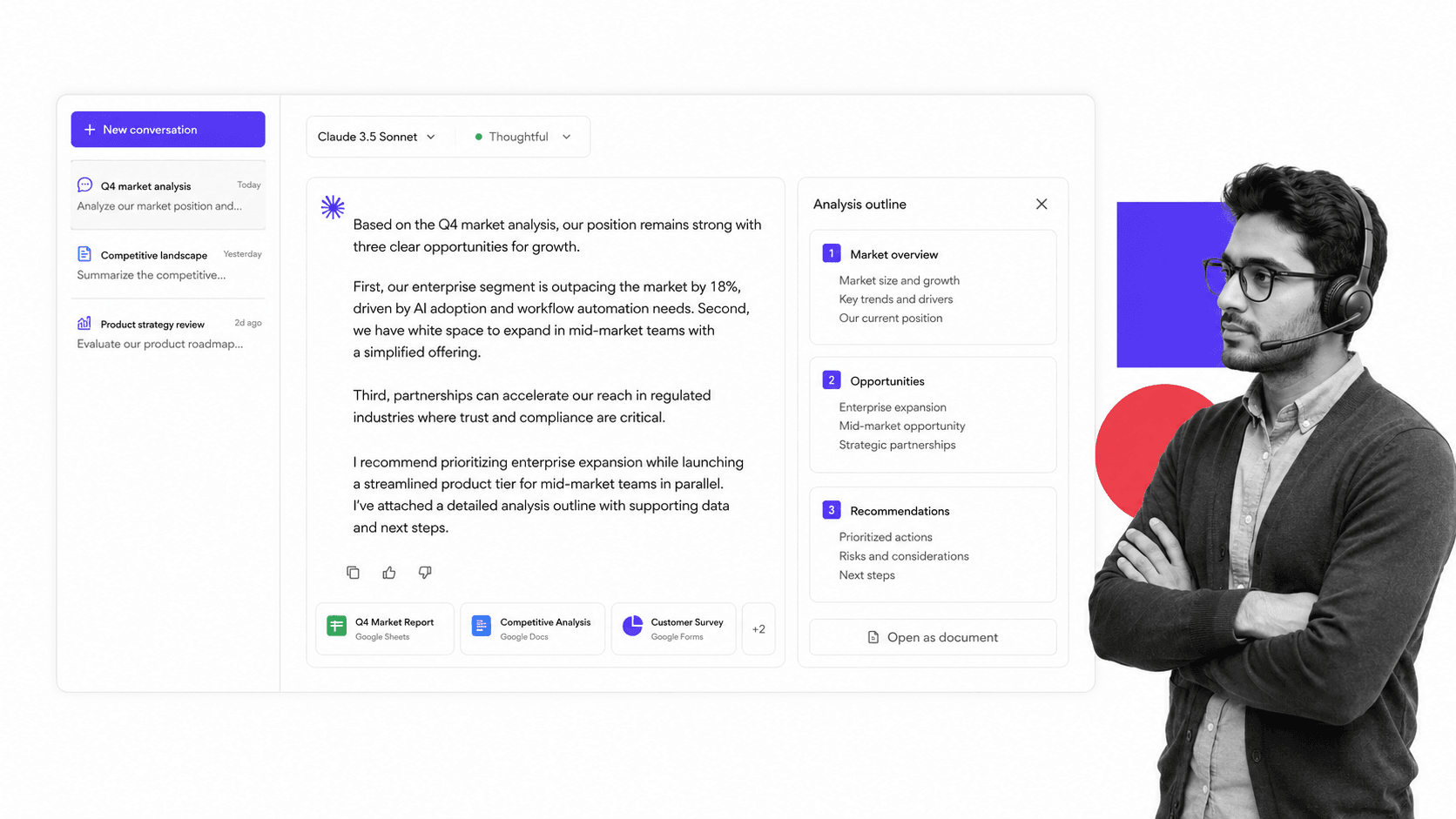
Best for: careful reasoning, writing, analysis, and document work across personal devices.
Claude is Anthropic’s assistant for web, desktop, and mobile. It has a free plan; Pro costs $17 monthly with annual prepayment or $20 month to month. Claude supports first-party integrations and an expanding connector directory, but Anthropic does not publish one fixed connector total.
Claude is strongest for thinking-heavy work, but it is not a direct substitute for every Dust workflow. Teams that need a multiplayer agent workspace, chat-native execution, or broad app automation may use Claude alongside Dust, Dash, Gumloop, Glean, or Zapier.
- Bottom line: Claude is the best Dust alternative when reasoning and writing matter more than shared agent operations.
- Choose Claude if: the main jobs are analysis, drafting, document work, and careful problem solving.
- Skip Claude if: the purchase depends on a governed multiplayer workspace or broad automated action across apps.
6. Zapier Agents
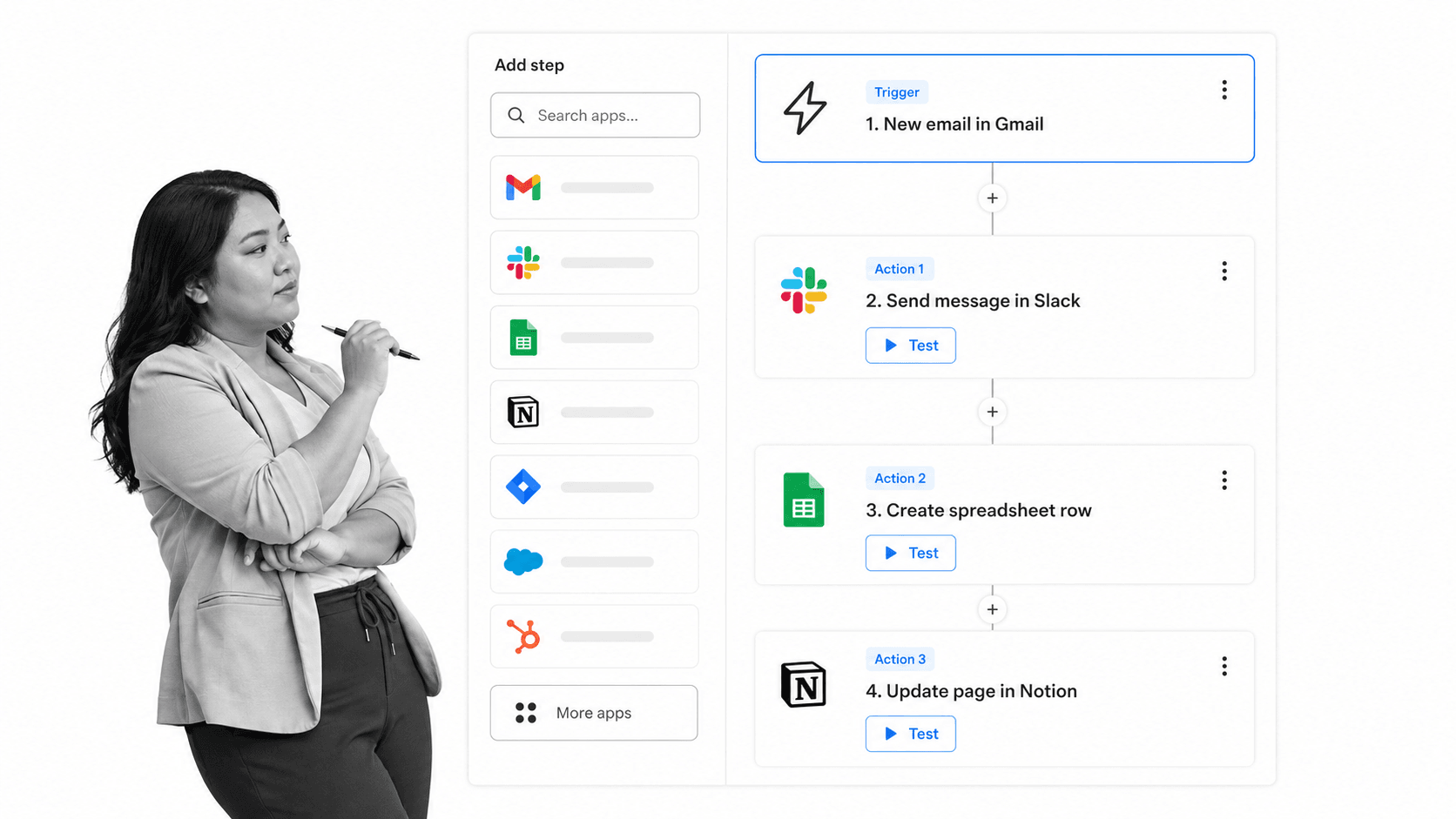
Best for: teams that prioritize automation breadth across the largest published app catalog in this comparison.
Zapier Agents lets teams create AI teammates with company knowledge across more than 9,000 apps. The free plan includes 400 monthly activities, while Pro starts at $33.33 monthly when billed annually with 1,500 activities. Approval steps can stop an agent for a decision or use Human in the Loop in a Zap.
Zapier starts from automation and connected apps, so it is a natural extension for teams already invested in Zaps. Dust starts from a shared agent workspace, while Dash starts from team chat with approval on every mutating action.
- Bottom line: Zapier Agents is the best Dust alternative when app breadth and existing Zapier automation matter most.
- Choose Zapier Agents if: the team needs agent activity across a very broad catalog of business apps.
- Skip Zapier Agents if: you need a dedicated multi-model workspace or approval by default on every change.
Where does Process Street fit with Dust alternatives?
Process Street is not itself a Dust alternative, and it does not belong in the ranked list above. It is the operational system underneath an AI coworker. The coworker can start the work in chat or in an agent workspace, but the repeatable checklist, approval, owner, policy, risk note, and evidence record need a governed home.
- Ops for workflow automation and orchestration. Process Street Ops turns repeatable work into automated workflows, so a task an AI coworker starts can become a controlled process.
- Docs for document and policy control. Process Street Docs keeps SOPs and policies governed, approved, and current.
- AI and automations for the handoff layer. The automation layer and AI platform connect structured work to the rest of the stack, with pricing context on the pricing page.
This matters most when AI creates work that has to be repeated. A customer request can turn into a customer onboarding workflow. A hiring question can trigger an employee onboarding checklist. A policy question can point back to a standard operating procedure template. A risky action can require an approval process before anything leaves the team.
Useful background for this layer includes a guide to building a workflow management system, a plain-English overview of what AI agents are, a roundup of the best AI ops tools, and a broader guide to customer onboarding.
How can you switch from Dust without disrupting work?
The safest move is a side-by-side pilot, not a rip-and-replace project. Pick one team, one channel, one existing workflow, and five real asks from last week. Run those asks through Dust and the alternative you are testing. Compare finished work, approval behavior, and how much context the team had to repeat.
- Keep Dust for internal agents: if the team already uses Dust for shared company-data agents, keep that surface intact during the pilot.
- Pilot Dash in chat: add Dash to Slack, connect the tools the team uses most, and test whether approval-first work inside chat removes friction.
- Test Gumloop on visual flows: use it where the logic needs to be inspected and maintained by an automation owner.
- Use Claude for thinking-heavy work: keep reasoning and drafting separate from operational handoff.
- Anchor repeatable work: when a task becomes recurring, move the process into Process Street so the owner, steps, approval, and evidence stay consistent.
Final recommendation
Dash is the best default Dust alternative for teams that want a shared AI coworker in Slack or Microsoft Teams with approval before every mutating action. Choose another tool when its specialist lane matters more: Gumloop for visual building, Lindy for personal assistance, Glean for enterprise knowledge, Claude for reasoning, or Zapier for app breadth.
Dust remains the better benchmark when a dedicated multiplayer workspace, broad model choice, and collaborative agent building matter more than chat-native execution. Run a side-by-side pilot with real team tasks, then move repeatable work into Process Street when owners, approvals, policies, and evidence need a governed home.
Try Dash free in Slack
Install Dash in Slack free, then test one real workflow in one workspace. Ask Dash to complete a useful task from this week, review the approval step, and compare the finished output with the alternatives on your shortlist. This keeps the trial focused on work your team already understands.
FAQs about Dust alternatives
These FAQs answer common buying questions about Dust alternatives, including the best option for Slack or Microsoft Teams, Dust vs Dash, free plans, enterprise knowledge, pricing, and whether two tools can run together. Use them to narrow the shortlist before testing the same real tasks in each product.
What is the best Dust alternative for Slack or Microsoft Teams?
Dash is the best Dust alternative for teams that want a shared AI coworker in Slack or Microsoft Teams with approval before every mutating action. It connects to more than 3,000 tools out of the box, and teams can connect anything else themselves.
What does Dust do?
Dust is a multiplayer, multi-model AI platform where people and agents share company knowledge, tools, skills, and collaborative workspaces. It supports more than 20 models, more than 70 out-of-box MCP connectors, Pods, and governed access through Spaces and Groups.
Is there a free Dust alternative or trial?
Yes. Dash offers a free start, Claude and Zapier Agents have free plans, and Gumloop offers a 14-day trial. Free access is useful for testing, but production fit also depends on controls, context, connectors, team surface, and usage limits.
Dust vs Dash: which AI coworker is better for shared team work?
Choose Dash when the team wants approval-first execution inside Slack or Microsoft Teams. Choose Dust when the team wants a dedicated multiplayer, multi-model workspace for people and agents working together around governed company knowledge.
Can I use Dash and Dust together?
Yes. A team can keep Dust for shared company-data agents and use Dash for day-to-day work in Slack or Microsoft Teams. Define which tool owns each action, approval, source of context, and repeatable workflow so work is not duplicated.
Which Dust alternative is best for enterprise knowledge search?
Glean Agents is the strongest alternative here for enterprise knowledge search because Glean centers permissions-aware company data, agent orchestration, governance, and more than 275 connectors. It requires a sales conversation rather than publishing a list price.
How does pricing compare across the best Dust alternatives?
Entry pricing ranges from free credits to enterprise quotes. Dash lists its current plans on its pricing page. Gumloop Pro starts at $37 monthly, Lindy Plus at $29.99 per user monthly, Claude Pro at $17 monthly with annual billing, and Zapier Agents Pro at $33.33 monthly when billed annually. Glean requires a sales conversation.
Where does Process Street fit if I use one of these tools?
Process Street is the operational system underneath the AI coworker. Ops captures the repeatable workflow, while Docs controls the policy or SOP, so work an assistant starts becomes owned, approved, auditable, and repeatable.
Comparing something else? The full directory of software alternatives and competitor comparisons covers AI agents, workflow and BPM platforms, integration tools, and more.