Turn every policy into automated workflows with built-in enforcement and audit-ready proof.



8 Best Flokzu Alternatives and Competitors in 2026
Flokzu alternatives serve several different buying needs because Flokzu spans BPMN cloud process modeling, no-code forms, and workflow automation on a per-user subscription. Teams may value that accessible cloud BPM model while still evaluating whether another product fits their operating model, technical ownership, budget structure, or deployment priorities more closely.
The reason to compare is rarely that Flokzu cannot manage processes. The more useful question is which part of the process lifecycle matters most. A transformation team may need deeper BPMN modeling and orchestration. A no-code business team may want a broad build-your-own platform. A Microsoft-heavy organization may want cloud and desktop automation. An operations team may simply need people to follow the same SOP, complete required fields, obtain approval, and leave a clean record every time.
Implementation expectations matter just as much as feature breadth. Some choices become enterprise platforms owned by architects and developers. Others stay close to process owners and frontline teams. The right alternative should match who will build, govern, change, support, and use the process after the buying project ends.
This list evaluates ease of ownership, core capability fit, governance, implementation weight, pricing model, integration approach, and the type of work each platform handles best. It is editorially maintained by the Process Street team. Process Street ranks first for enforceable, trackable, recurring SOP and operational workflows. For formal BPMN modeling, developer orchestration, broad no-code app building, low-code enterprise applications, or Microsoft-native automation, the relevant specialist can be the better fit.
No review ratings are used, and no unsupported company metrics appear. Competitor capabilities and pricing models are described only where the vendor’s current product or pricing material supports the claim.
Flokzu alternatives at a glance
The table gives the practical shortlist. Start with the row that matches the job your team actually owns, then use the deep dives to understand the tradeoffs. A platform that wins formal modeling may not be the fastest way to run a weekly operating procedure, and a focused SOP tool should not pretend to be an orchestration engine.
| Tool | Best for | Standout feature | Free plan | Starting price |
|---|---|---|---|---|
| Process Street | enforceable, trackable recurring SOP and operational workflows | structured workflow runs with required tasks, approvals, evidence, and audit history | Trial available | See pricing page |
| Kissflow | no-code business teams automating processes, cases, and internal apps | one no-code canvas spanning process, case, project, and app building | Trial available | Value-based annual pricing |
| Pipefy | no-code request intake and departmental workflow automation | visual pipes, forms, request tracking, and configurable automation | Free Starter plan | Contact sales for paid plans |
| Bizagi | BPMN process modeling paired with low-code application development | a widely used free process Modeler connected to low-code automation | Free Modeler | Contact sales |
| Nintex | broad enterprise workflow, document, form, and RPA automation | workflow automation combined with forms, document generation, and RPA | Free trial | Contact sales |
| Camunda | developer-led BPMN orchestration across people, systems, and services | BPMN and DMN execution with SaaS and self-managed deployment choices | Free development and modeling | Enterprise quote |
| Microsoft Power Automate | Microsoft-centric cloud flows, desktop automation, and process mining | cloud and desktop flows within the Microsoft Power Platform ecosystem | 30-day free trial | $15 per user per month, paid yearly |
| Appian | enterprise low-code applications, process automation, and case work | low-code process apps combining workflow, data fabric, RPA, and portals | Demo available | Per user, per app |
Jump to any section:
- Flokzu alternatives at a glance
- Process Street
- Kissflow
- Pipefy
- Bizagi
- Nintex
- Camunda
- Microsoft Power Automate
- Appian
- How to choose among Flokzu alternatives
- Flokzu alternatives FAQs
- Put recurring workflows into action
1. Process Street
Best for: enforceable, trackable recurring SOP and operational workflows.
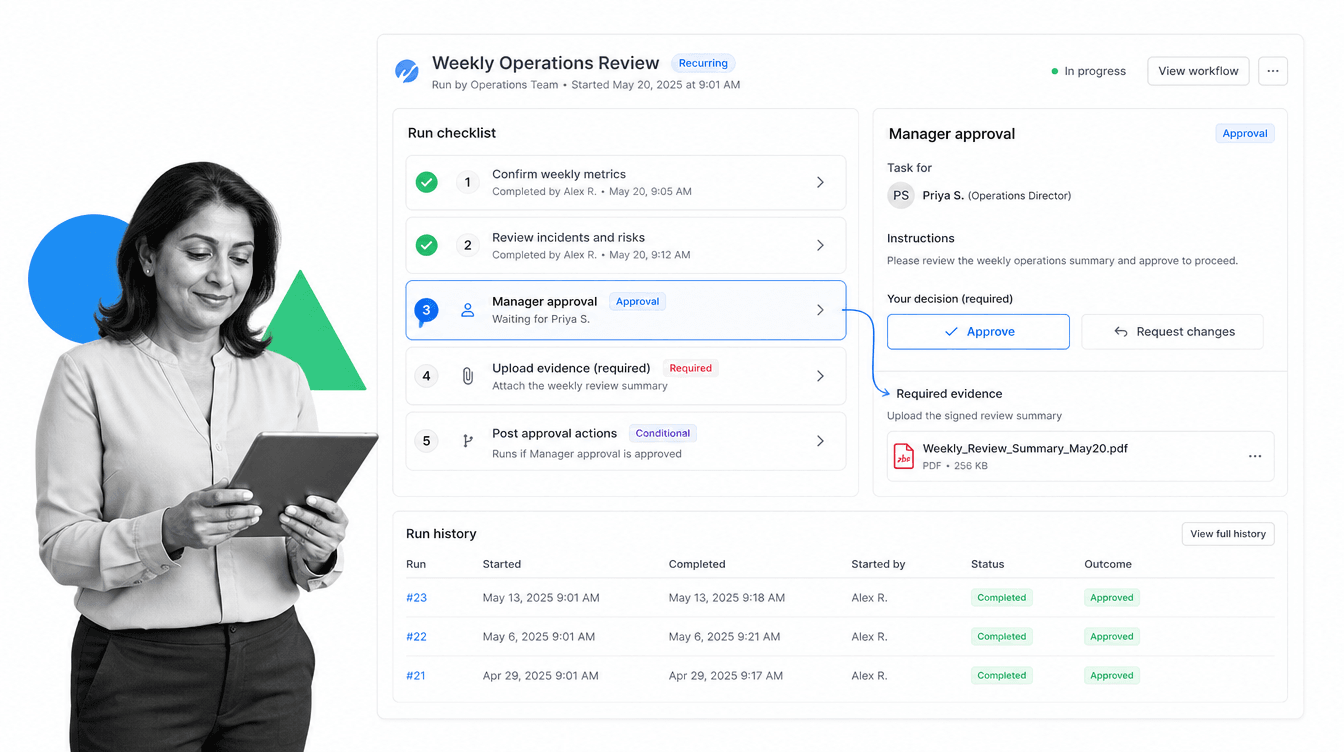
Process Street is the strongest overall choice for the ICP used in this ranking: operations, HR, compliance-adjacent, finance, customer, and IT teams that need recurring procedures to run the same controlled way every time. It turns a known process into an active workflow run with assigned steps, dates, required information, approvals, evidence, status, and a reviewable history.
That is a narrower and often more immediate job than building process applications. Flokzu can model BPMN flows, capture data through forms, and automate departmental processes across a broader program. Process Street earns the top spot here because many alternatives searches begin after a team realizes that it does not need to model and build a process application. It needs to stop skipped steps, unclear ownership, approval chasing, and unprovable completion inside a recurring operating procedure.
The product works well when a procedure needs task-level enforcement. A workflow can require a field or file, route work with conditional logic, pause for approval tasks, and keep the completed run as evidence. That makes it practical for onboarding, vendor reviews, month-end procedures, quality checks, policy reviews, audit preparation, client delivery, and other work where a generic project board is too loose.
Teams can also start from an employee onboarding checklist or a client onboarding checklist and adapt the owners, required data, approval points, and evidence to the real procedure. This template-led starting point is useful when the process is understood but still lives across documents, spreadsheets, inboxes, and tribal knowledge.
Implementation and ownership fit
Ownership is deliberately close to the people who run the process. An operations manager can define the task sequence, data requirements, assignments, approvals, and exception paths, while administrators control workspace standards and integrations. That reduces the translation gap between the written SOP, the tool configuration, and what employees actually do during each run.
A useful pilot is one recurring process with visible risk: onboarding, vendor due diligence, policy review, quality inspection, finance close, or customer handoff. Run it with real owners, require the actual evidence, send one case through an exception path, and review the completed history. The evaluation should measure clarity, completion quality, administrative effort, and reviewability, not just setup speed.
The implementation question is not only whether a builder can reproduce the happy path. It is whether the workflow stays understandable when ownership changes, a deadline slips, information is missing, an approval is rejected, or a reviewer asks for the evidence months later. Those situations are where recurring procedures usually break down. A useful configuration makes the exception visible, keeps the process owner accountable, and preserves enough context for the next person to continue without reconstructing the work from messages.
Governance should scale with the risk of the procedure. A team can define naming, ownership, publishing, change review, and archive conventions without removing the process owner’s ability to improve daily work. For higher-control workflows, test who can edit the procedure, how a revised version reaches future runs, which fields are required, and what a completed run shows. The result should be a manageable operating standard, not another static document that employees can ignore.
Process Street can also coexist with the specialists in this list. A technical orchestration engine can coordinate backend services while Process Street guides human work. A modeling tool can define a target process while Process Street operationalizes the recurring run. The top ranking does not require replacing every adjacent system. It reflects which surface should own the recurring SOP run.
When to shortlist Process Street
Shortlist Process Street when a process owner can already explain the procedure but cannot reliably prove that people follow it. The signal is recurring coordination pain: steps skipped, fields left blank, approvals happening in side channels, files scattered across drives, deadlines discovered late, and managers rebuilding status by asking everyone involved.
Do not shortlist it as a substitute for formal BPMN modeling, developer orchestration, or custom low-code application development. In those cases, use the relevant specialist and decide whether Process Street still adds value as the human execution and evidence layer around the broader system.
During evaluation, separate builder convenience from participant experience. The person completing the work should see a focused sequence with clear instructions, only the relevant fields and branches, and an obvious next action. The process owner should see progress, exceptions, overdue work, approvals, and completed evidence without assembling a report by hand. Both perspectives matter because a workflow that is easy to design but hard to follow will not improve execution, while a pleasant checklist without management visibility will not solve accountability.
Key features
- Workflow runs with owners, due dates, task order, and status.
- Required fields and files that make the process record complete.
- Approvals and conditional branches inside the same operational flow.
- Automations and integrations that support the controlled workflow.
- A durable history of who completed each step and what evidence was provided.
Pros
- Designed for recurring SOP execution rather than one-off project tracking.
- Business process owners can maintain the workflow without turning it into a software project.
- Combines procedure, execution, accountability, and evidence in one surface.
- Clear fit for regulated or quality-sensitive operations that need proof.
- Faster conceptual path when the process is known and the problem is consistent execution.
Cons
- Not a BPMN modeling, simulation, or process-mining suite.
- Not a broad low-code application platform or a case-management system of record.
- Not the right choice for developer-led orchestration across many backend services.
Process Street uses a sales-led package model. See Process Street pricing for current details. If the buying requirement is formal BPMN modeling, developer orchestration, or custom enterprise application development, Bizagi, Camunda, or Appian is a more honest shortlist.
2. Kissflow
Best for: no-code business teams automating processes, cases, and internal apps.
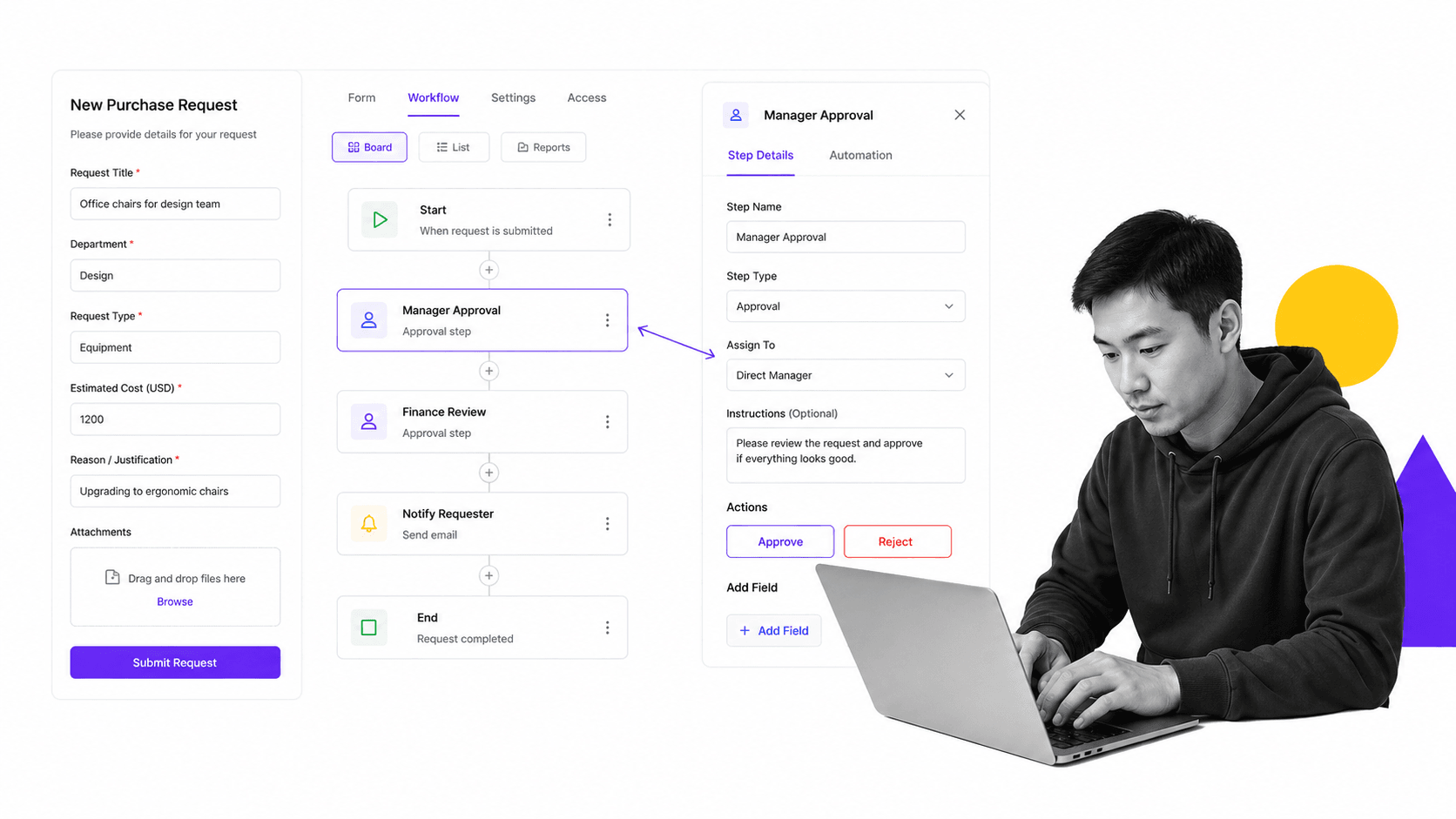
Kissflow is a no-code work platform that combines process workflows, case management, project boards, and internal app building in one environment. Its material positions it for business teams and citizen developers who want to automate approvals, requests, and departmental processes without heavy engineering involvement. That accessible, build-your-own posture puts it close to Flokzu for teams that want reachable process automation rather than a developer platform.
The difference is the breadth of work styles. Flokzu centers on BPMN-style process flows with forms, while Kissflow spreads across process, case, project, and app surfaces. A buyer gets more ways to model work, but also more product to learn and govern. Kissflow uses value-based annual pricing arranged through a consultation rather than a public per-user price, which suits organizations that want a predictable yearly agreement.
Kissflow beats Process Street when a team wants a flexible no-code builder that mixes processes, boards, and small internal apps in one place. Process Street is the better fit when the priority is a controlled recurring SOP run with required tasks, approvals, evidence, and an audit-ready history rather than a broad build-your-own canvas.
Implementation and ownership fit
Ownership usually sits with business process owners and citizen developers, while a central administrator sets security, data, and integration standards. The no-code model lets departments build their own workflows, so governance should define who can publish processes, how apps are shared, and how data is handled across the platform. That balance keeps the accessibility benefit without letting the environment fragment into unmanaged builds.
A useful pilot should take one real approval or request process from intake to completion, including a form, routing logic, an approval, an exception path, and a dashboard view. Watch how much structure users need inside each step and whether the flexible canvas stays consistent as more teams build on it. The result should show whether the multi-purpose platform reduces coordination work or simply moves it into configuration.
When to shortlist Kissflow
Shortlist Kissflow when the buying team can state clearly that no-code business teams automating processes, cases, and internal apps is the primary requirement. Its differentiator in this comparison is one no-code canvas spanning process, case, project, and app building. Keep it behind Process Street when the real problem is simply getting operators to complete a recurring SOP with required evidence, accountability, and approvals, because a broader platform can add ownership and implementation work that the process does not need.
Key features
- No-code workflow and process automation.
- Forms and request intake for business teams.
- Case management and project boards.
- Internal app building for lightweight tools.
- Dashboards and reporting across work items.
Pros
- Accessible no-code model for non-technical process owners.
- Covers several work styles in one platform.
- Strong for approval and request-driven workflows.
- Predictable annual agreement rather than per-seat surprises.
Cons
- Broader surface area than a focused BPM tool.
- Pricing requires a sales consultation.
- A multi-purpose canvas can be less prescriptive than a step-by-step SOP run.
Kissflow uses value-based annual pricing arranged through a consultation rather than a public entry price. Verify current package details on the official Kissflow pricing page.
3. Pipefy
Best for: no-code request intake and departmental workflow automation.
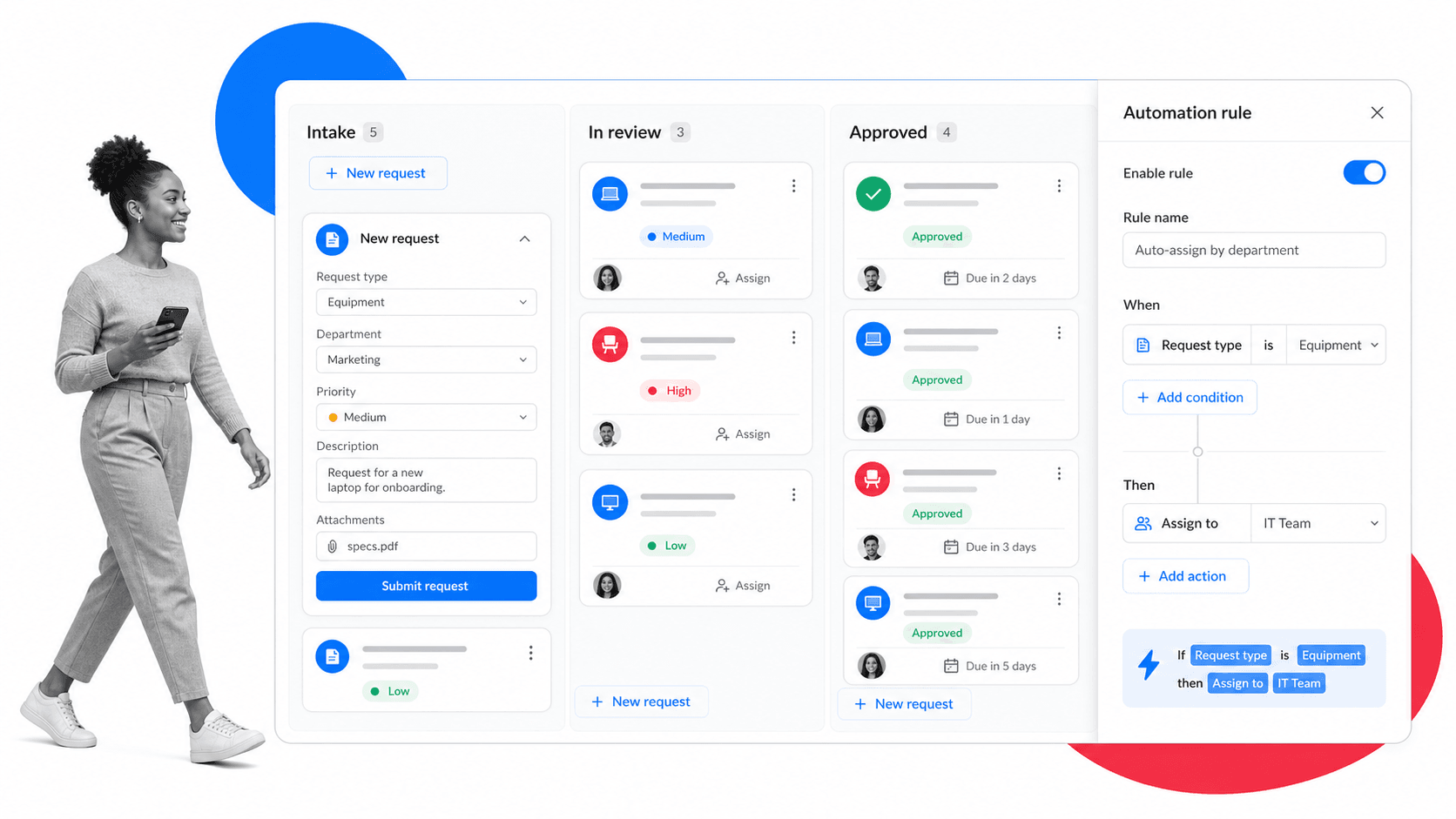
Pipefy is a no-code process automation platform organized around visual pipes, request cards, forms, phases, rules, portals, and dashboards. Its pricing page includes a free Starter plan, while paid Business and Enterprise packages add broader workflow, governance, integration, security, and support capabilities.
The product is a practical Flokzu alternative for departmental workflows such as procurement requests, service intake, onboarding coordination, approvals, and shared-services queues. Business teams can watch work move through phases and configure common routing patterns without turning every process into a formal BPMN program.
Pipefy can beat Process Street when a visual request queue, portal-style intake, and card movement through phases are the preferred operating model. Process Street is the better fit when each process instance should guide a person through a detailed SOP with required evidence, task-level accountability, and procedural enforcement.
Implementation and ownership fit
Ownership fits departmental process managers who think naturally in requests, phases, cards, forms, and service queues. A central administrator can define security and shared standards while teams configure their own operational pipes. The model is approachable, but administrators should still control field definitions, automations, integrations, data retention, and cross-pipe dependencies.
A useful pilot should start with a live intake process such as procurement, employee requests, or client onboarding. Include a public or internal form, routing logic, an approval, an SLA exception, and a dashboard review. Pay attention to card volume, automation limits, guest participation, and the amount of procedural guidance users need inside each phase.
When to shortlist Pipefy
Shortlist Pipefy when the buying team can state clearly that no-code request intake and departmental workflow automation is the primary requirement. Its differentiator in this comparison is visual pipes, forms, request tracking, and configurable automation. Keep it behind Process Street when the real problem is simply getting operators to complete a recurring SOP with required evidence, accountability, and approvals, because a broader platform can add ownership and implementation work that the process does not need.
Key features
- Visual pipes with phase-based request cards.
- Public forms and request tracking.
- Automation rules and conditional logic.
- Dashboards, activity history, and workflow controls.
- Paid-plan integrations, permissions, and security features.
Pros
- Accessible no-code model for departmental process owners.
- Free Starter plan lowers the barrier for small teams.
- Strong request-intake and queue visibility.
- Better than Process Street when a card-and-phase interface is the preferred model.
Cons
- Free-plan capacity and automation limits require attention.
- Paid plans move to sales-led pricing.
- A phase board can be less prescriptive than a task-by-task SOP run.
Pipefy publishes a free Starter plan, while Business and Enterprise pricing requires sales contact. Verify current package details on the official Pipefy pricing page.
4. Bizagi
Best for: BPMN process modeling paired with low-code application development.
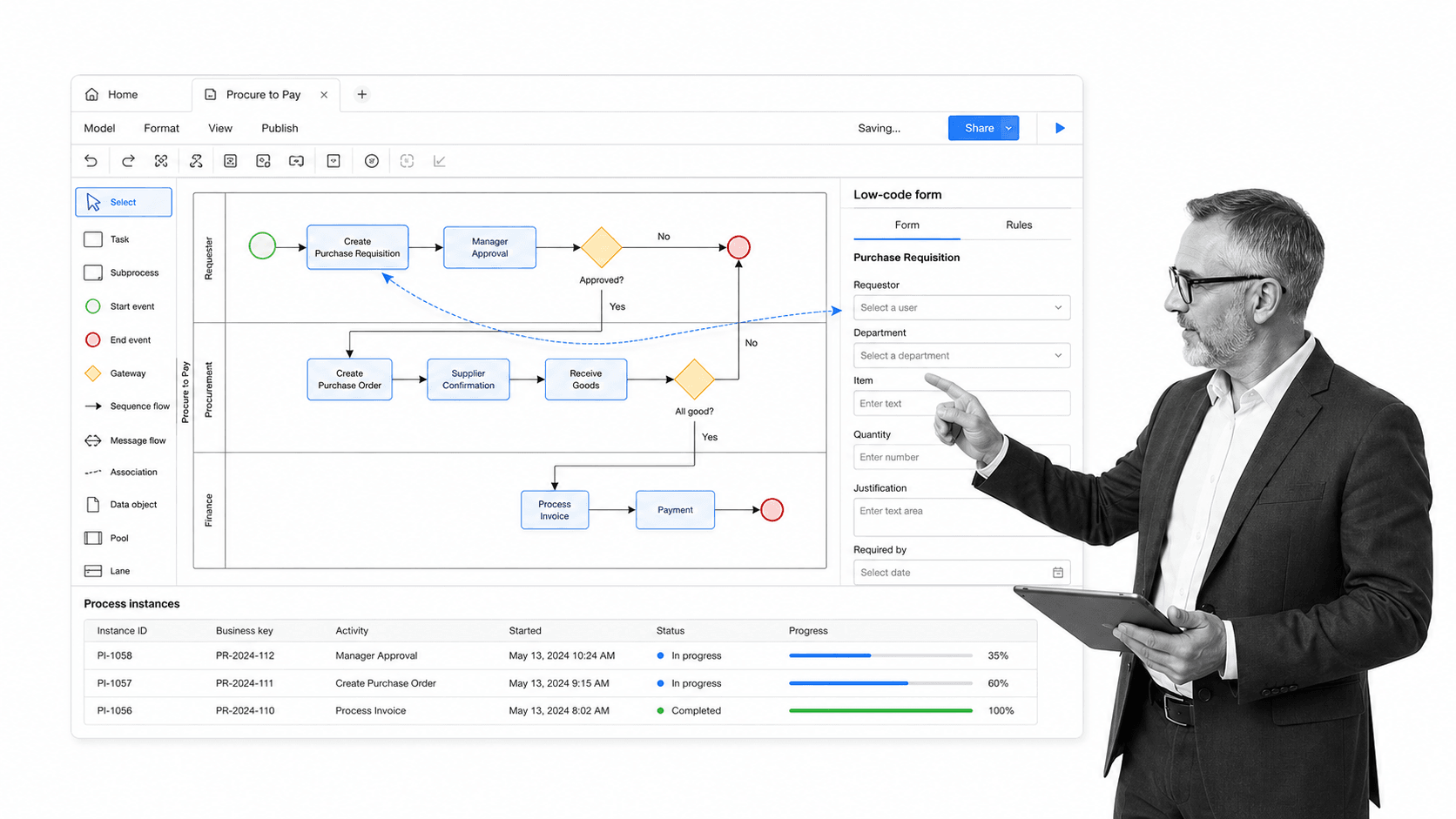
Bizagi is a process automation platform built around BPMN modeling and low-code application development. It is well known for a free process Modeler used widely for diagramming, plus an automation layer for turning models into running low-code process applications. That combination makes it a natural Flokzu alternative for teams that want formal BPMN modeling alongside execution.
Compared with Flokzu’s lighter cloud BPM, Bizagi leans toward larger, more configurable process applications and orchestration across systems. That gives modeling depth and application flexibility, but it also brings more design, data, and governance decisions into the buying project. Bizagi handles commercial pricing through sales rather than a simple public entry price.
Bizagi beats Process Street when the requirement is formal BPMN modeling and building custom low-code process applications. Process Street is the better fit when a known procedure simply needs to run the same controlled way every time, with required steps, approvals, evidence, and a reviewable record.
Implementation and ownership fit
Ownership typically combines a process modeling or center-of-excellence team with developers who build and maintain the low-code applications. The free Modeler lowers the barrier to diagramming, but production automation brings data modeling, integration, release management, and governance into scope. The platform becomes more valuable when the organization treats the model as a shared, maintained asset rather than a one-time diagram.
A credible pilot should move one modeled process into a running application, including a form, a decision, an integration, an approval, and an exception path. Measure how quickly the team can change the application without weakening data quality, permissions, or auditability. That test reveals whether the modeling depth turns into operational leverage or into implementation weight the process did not need.
When to shortlist Bizagi
Shortlist Bizagi when the buying team can state clearly that BPMN process modeling paired with low-code application development is the primary requirement. Its differentiator in this comparison is a widely used free process Modeler connected to low-code automation. Keep it behind Process Street when the real problem is simply getting operators to complete a recurring SOP with required evidence, accountability, and approvals, because a broader platform can add ownership and implementation work that the process does not need.
Key features
- Free BPMN process Modeler for diagramming and documentation.
- Low-code process application development.
- Case and workflow automation.
- Orchestration across connected systems.
- Connectors and integration options for enterprise data.
Pros
- Strong modeling foundation with a widely used free Modeler.
- Flexible for custom low-code process applications.
- Good fit for BPMN-led process teams.
- Better than Process Street for formal modeling and application building.
Cons
- Heavier to design and govern than a lightweight cloud BPM tool.
- Production automation pricing requires sales engagement.
- Can be more platform than a routine SOP needs.
Bizagi offers a free process Modeler, while commercial automation pricing is handled through sales. Verify current package details on the official Bizagi pricing page.
5. Nintex
Best for: broad enterprise workflow, document, form, and RPA automation.
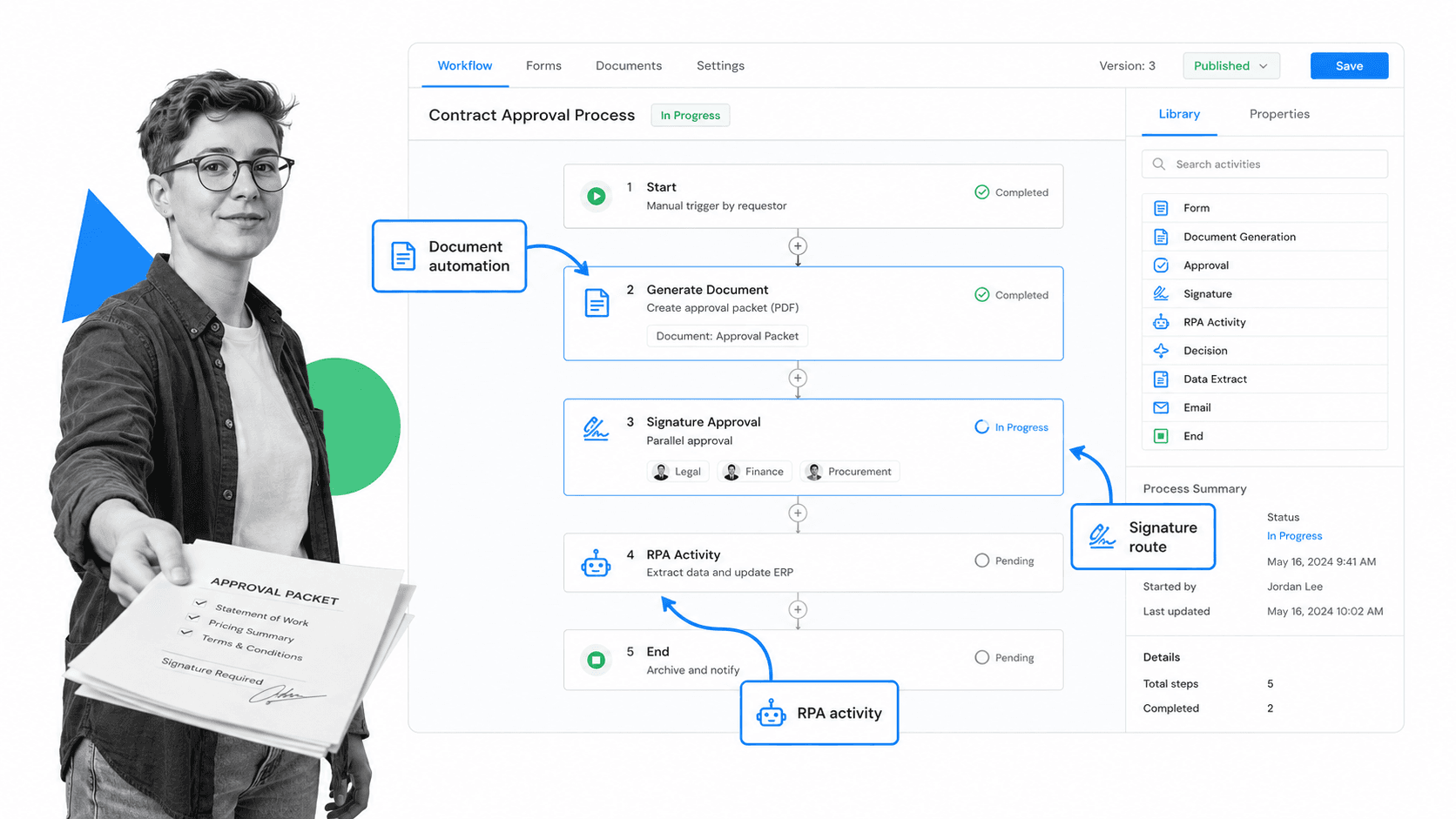
Nintex combines workflow automation with forms, document generation, electronic signatures, robotic process automation, application development, and process intelligence. Its cloud platform is positioned for business orchestration across people, systems, and AI, while its workflow product emphasizes drag-and-drop automation, connectors, forms, documents, dashboards, and mobile work.
Nintex is attractive when the Flokzu alternative needs to cover several automation modes in one program. Document-heavy work is a particular differentiator, because generation, signing, forms, and workflow actions can sit in the same broader suite. The platform is also designed for enterprise automation teams that want reuse, oversight, and managed deployment across many processes.
Nintex beats Process Street when document automation, RPA, forms, and broad automation-suite consolidation are the main buying criteria. Process Street is the better fit when the priority is a simple but controlled system for people to run recurring SOPs and capture proof at each step.
Implementation and ownership fit
Ownership can sit with an automation center of excellence or distributed business builders operating inside a governed program. The platform breadth makes standards important: decide who can publish workflows, which document templates are approved, how RPA bots are supported, and how reusable components are shared across departments.
A strong pilot should include a form, a workflow, a generated document, an approval or signature, and one system connection. Test both the happy path and an exception that requires a person to intervene. The result should show whether the team benefits from an integrated automation suite or whether a focused workflow tool would be easier to own.
When to shortlist Nintex
Shortlist Nintex when the buying team can state clearly that broad enterprise workflow, document, form, and RPA automation is the primary requirement. Its differentiator in this comparison is workflow automation combined with forms, document generation, and RPA. Keep it behind Process Street when the real problem is simply getting operators to complete a recurring SOP with required evidence, accountability, and approvals, because a broader platform can add ownership and implementation work that the process does not need.
Key features
- Visual workflow automation and configurable process steps.
- Digital forms and document generation.
- Electronic signature routing and approvals.
- Robotic process automation for desktop work.
- Process intelligence and application development capabilities.
Pros
- Wide automation portfolio for enterprise programs.
- Strong fit for document-centric workflows.
- Combines human workflow and RPA options.
- Better than Process Street when suite breadth is the objective.
Cons
- The breadth can add platform and licensing complexity.
- Public pricing is sales-led rather than a simple published entry point.
- A narrower recurring process may not need the whole portfolio.
Nintex publishes a free trial, while plan pricing is arranged through sales. Verify current package details on the official Nintex pricing page.
6. Camunda
Best for: developer-led BPMN orchestration across people, systems, and services.
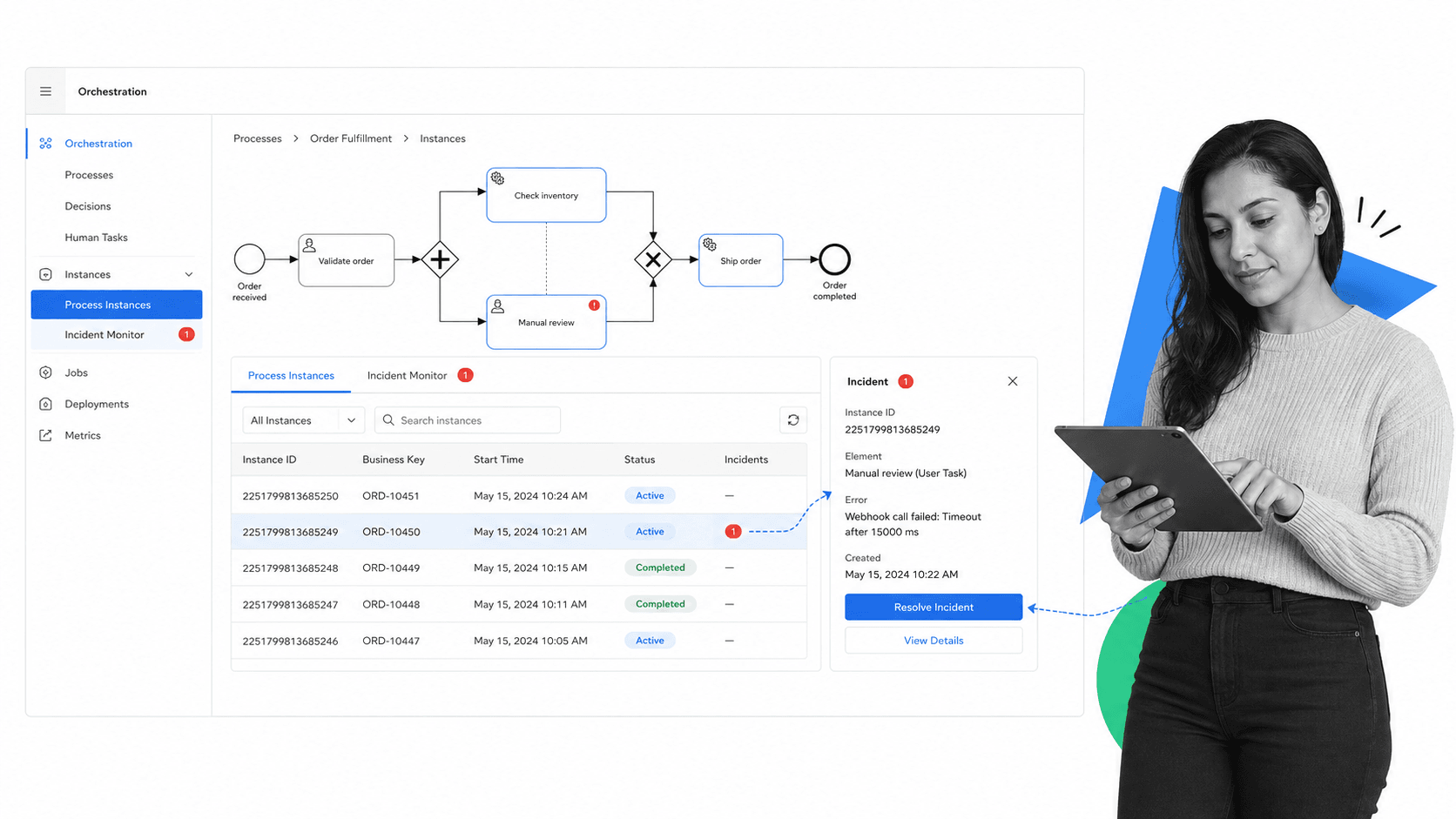
Camunda is a developer-oriented process orchestration platform built around BPMN and DMN. Its current platform positioning emphasizes connecting people, systems, services, and AI agents in end-to-end processes. Teams can model orchestration explicitly, inspect running process instances, work with human tasks, and choose between hosted and self-managed deployment approaches.
That makes Camunda compelling when Flokzu is being evaluated as an execution engine rather than a business-user workflow layer. Architects can use the process model as the coordinating contract across distributed applications. The operating model is more technical than Process Street because the value comes from orchestrating software systems and long-running process state, not just presenting a clear checklist to a process owner.
Camunda beats Process Street when engineering teams need BPMN execution, service orchestration, deployment control, and technical observability. Process Street fits better when operations teams need to own recurring workflows directly and want approvals, evidence, forms, and accountability without treating the workflow as a software development project.
Implementation and ownership fit
Ownership belongs with engineering, platform, or automation teams that are comfortable treating the process model as executable architecture. They need to manage deployment, testing, incidents, connectors, security, and changes across services. Business stakeholders can participate in the model, but the production operating model is technical and should be evaluated as part of the platform roadmap.
A credible pilot should orchestrate one end-to-end process that crosses at least two systems and one human task. Test failure handling, retries, incident visibility, version changes, and the experience of the person receiving the human task. This gives the team evidence about orchestration reliability and operational support, not just whether a BPMN diagram can be drawn.
When to shortlist Camunda
Shortlist Camunda when the buying team can state clearly that developer-led BPMN orchestration across people, systems, and services is the primary requirement. Its differentiator in this comparison is BPMN and DMN execution with SaaS and self-managed deployment choices. Keep it behind Process Street when the real problem is simply getting operators to complete a recurring SOP with required evidence, accountability, and approvals, because a broader platform can add ownership and implementation work that the process does not need.
Key features
- BPMN process modeling and execution.
- DMN decision modeling and execution.
- Process instance monitoring and incident inspection.
- Human task support alongside automated service work.
- SaaS and self-managed deployment options.
Pros
- Excellent fit for developer-led orchestration across systems.
- Formal process models create a shared contract for complex automation.
- Deployment options support different infrastructure strategies.
- Better than Process Street for code-centric service orchestration.
Cons
- Requires stronger technical ownership than an operator-focused workflow tool.
- Production use moves into enterprise licensing.
- May be excessive for routine SOPs that do not need an orchestration engine.
Camunda provides free development and modeling paths, while production execution requires enterprise licensing. Verify current package details on the official Camunda pricing page.
7. Microsoft Power Automate
Best for: Microsoft-centric cloud flows, desktop automation, and process mining.
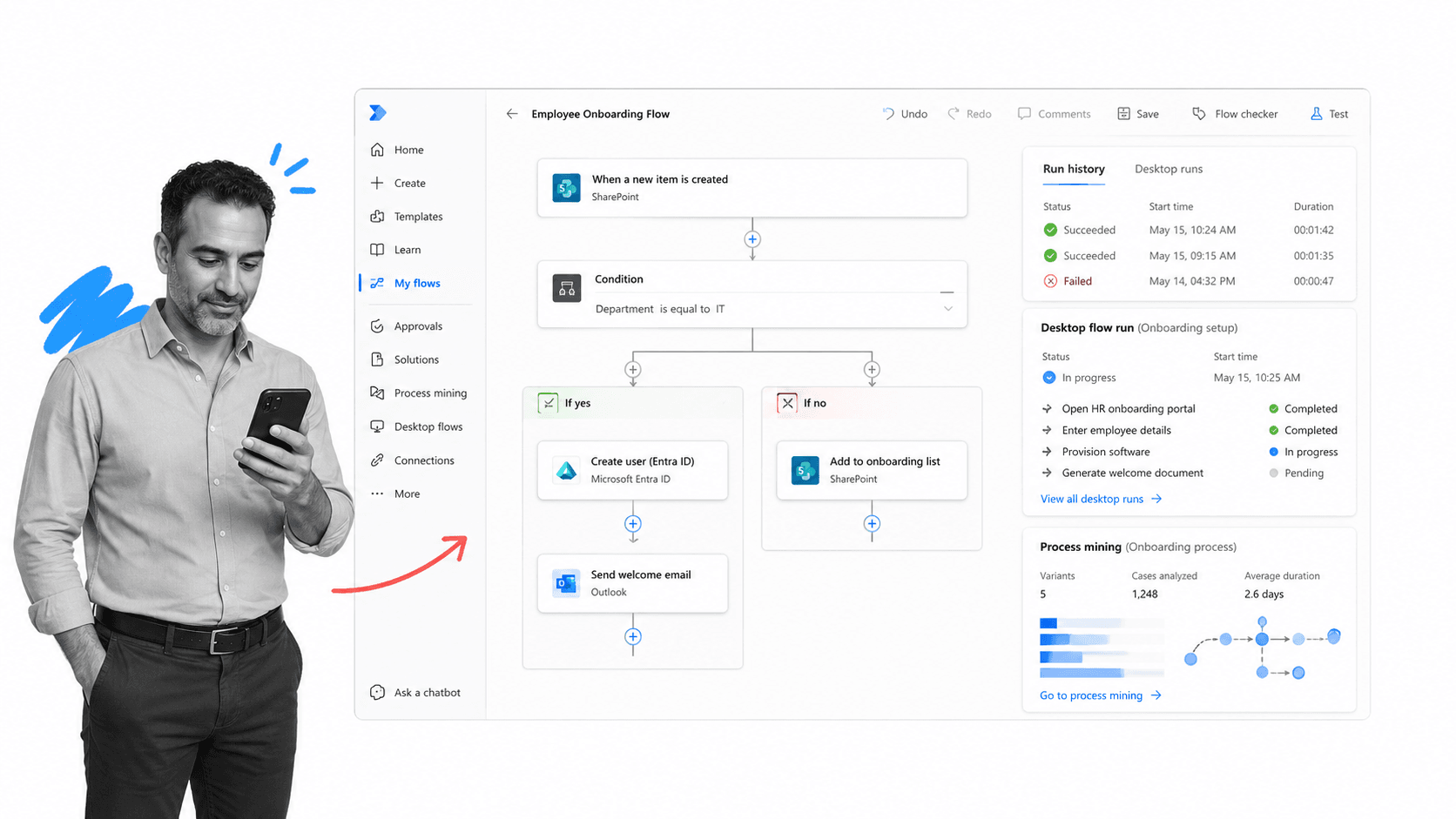
Microsoft Power Automate is the natural Flokzu alternative for teams whose automation estate already lives in Microsoft 365, Dynamics 365, Teams, Dataverse, Windows, and Azure. Microsoft positions the product around cloud flows, desktop flows, process and task mining, connectors, unattended automation, and hosted process capacity.
Its strength is ecosystem reach. A team can trigger work from Microsoft services, move information through cloud applications, automate desktop interfaces, and monitor process opportunities inside the same platform family. The design model is action and connector centric, so the product is excellent for system automation but may need another layer when humans must follow a detailed SOP and provide evidence in a guided run.
Power Automate beats Process Street when Microsoft-native integration, desktop automation, and connector-based actions are the central requirements. Process Street is stronger when the workflow itself must be the operator’s system of action, with required steps, approvals, files, and an audit-ready history that is easy to review.
Implementation and ownership fit
Ownership can range from individual business makers to a formal Power Platform center of excellence. That flexibility is useful, but governance matters quickly. Teams should define environments, connector policies, solution packaging, service accounts, bot ownership, monitoring, and the boundary between personal productivity flows and business-critical automation.
A representative pilot should include a cloud trigger, a conditional branch, an approval, a connection to a Microsoft system, and one desktop or external application action if that is in scope. Test ownership transfer, credential changes, error visibility, and licensing assumptions. The technical flow can work while the human SOP around it remains unclear, so evaluate both layers separately.
When to shortlist Microsoft Power Automate
Shortlist Microsoft Power Automate when the buying team can state clearly that Microsoft-centric cloud flows, desktop automation, and process mining is the primary requirement. Its differentiator in this comparison is cloud and desktop flows within the Microsoft Power Platform ecosystem. Keep it behind Process Street when the real problem is simply getting operators to complete a recurring SOP with required evidence, accountability, and approvals, because a broader platform can add ownership and implementation work that the process does not need.
Key features
- Cloud flows for automated, instant, and scheduled actions.
- Desktop flows for attended and unattended automation scenarios.
- Standard, premium, and custom connector options by plan.
- Process and task mining capabilities.
- Dataverse capacity and managed-environment options in paid plans.
Pros
- Best fit for organizations standardized on Microsoft services.
- Combines API-based cloud automation and desktop RPA.
- Transparent public starting price for the Premium plan.
- Better than Process Street for Microsoft-centric system automation.
Cons
- Licensing changes by user, bot, process, hosted capacity, and add-on.
- Connector logic does not automatically become a clear SOP experience for operators.
- Cross-platform governance can become complex in a large Power Platform estate.
Microsoft publishes a 30-day free trial and lists Power Automate Premium at $15 per user per month, paid yearly. Verify current package details on the official Microsoft Power Automate pricing page.
8. Appian
Best for: enterprise low-code applications, process automation, and case work.
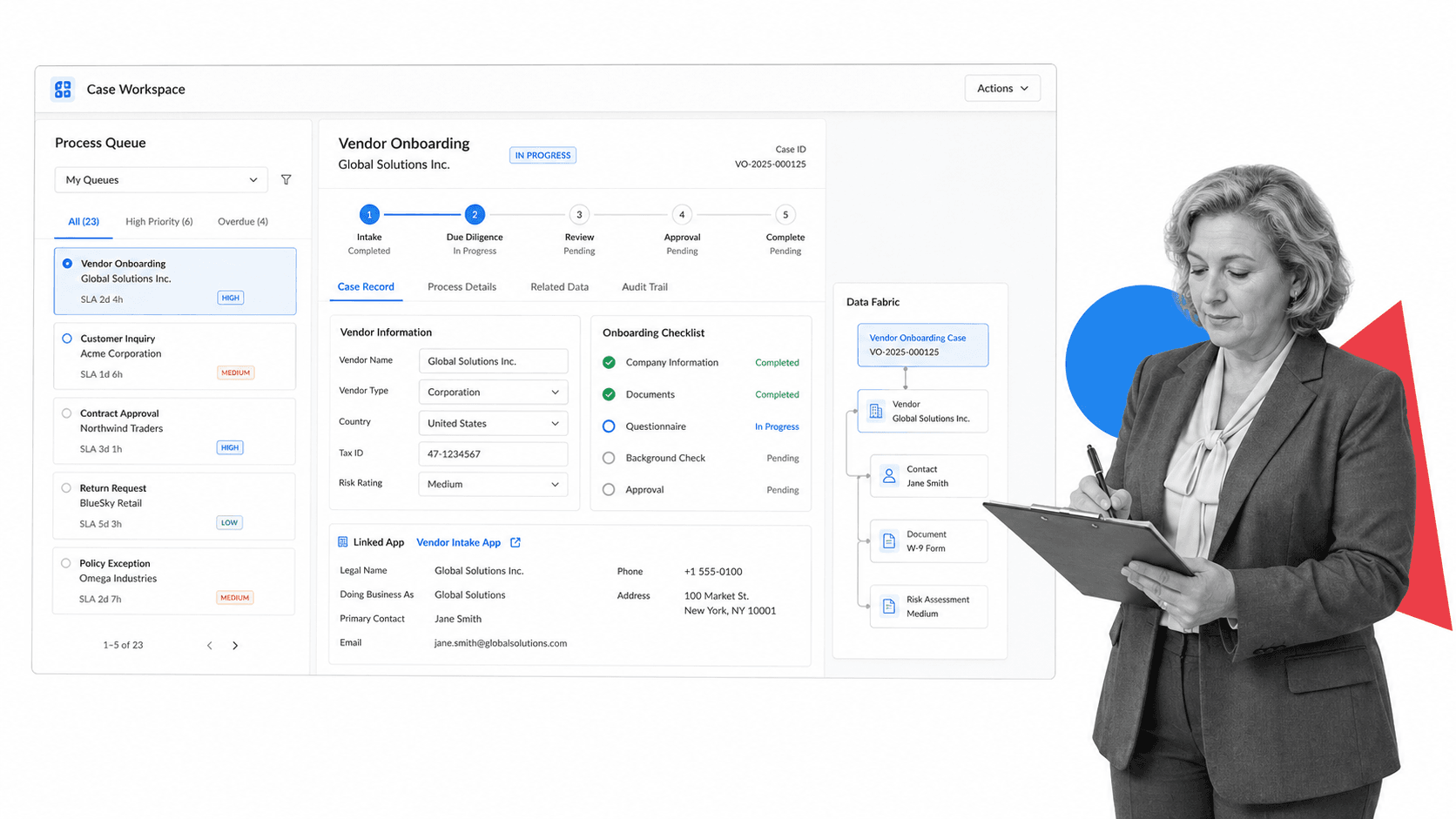
Appian is a broad enterprise low-code platform for designing applications and automating processes. Its pricing and platform pages describe low-code process and application development, data fabric, integrations, robotic process automation, portals, mobile apps, case management, process intelligence, and AI capabilities across packaged tiers.
This breadth matters when a Flokzu replacement must become a tailored application rather than a single workflow. A team can combine process logic, records, interfaces, integrations, and case work in one platform. That flexibility also means implementation design, data architecture, permissions, and application lifecycle management become part of the buying decision.
Appian beats Process Street when the organization needs custom enterprise applications, complex case work, and a low-code data layer. Process Street is better when the user experience should remain a focused recurring workflow with clear tasks, required information, approvals, and a durable execution record.
Implementation and ownership fit
Ownership typically combines a low-code center of excellence, application delivery team, process owners, data stewards, and security administrators. The platform can reduce hand-coded application work, but it does not remove decisions about the data model, user experience, integration boundaries, release controls, and long-term application ownership.
A useful pilot should build a narrow case application from intake through resolution. Include a record, a form, a decision, an integration, a queue, an exception, and a report. Then measure how quickly the team can change the app without weakening permissions, data quality, or auditability. That test reveals whether the platform breadth creates useful leverage or unnecessary implementation weight.
When to shortlist Appian
Shortlist Appian when the buying team can state clearly that enterprise low-code applications, process automation, and case work is the primary requirement. Its differentiator in this comparison is low-code process apps combining workflow, data fabric, RPA, and portals. Keep it behind Process Street when the real problem is simply getting operators to complete a recurring SOP with required evidence, accountability, and approvals, because a broader platform can add ownership and implementation work that the process does not need.
Key features
- Low-code process and application development.
- Data fabric for connecting business data to applications.
- Robotic process automation and integration support.
- Portals and mobile application capabilities.
- Case management and process intelligence in higher packages.
Pros
- Broad platform for building enterprise process applications.
- Combines workflow, data, interfaces, and automation.
- Strong fit for complex regulated operations with custom requirements.
- Better than Process Street for application-centric transformation.
Cons
- A broader platform brings more implementation and governance work.
- Pricing varies by user, month, app, and package.
- Can be overbuilt for a known recurring procedure.
Appian describes pricing per user, per month, per app, with capabilities varying by package. Verify current package details on the official Appian pricing page.
How to choose among Flokzu alternatives
The first decision is whether you need to model and analyze a process or execute it. Formal process architecture points toward BPM tools, modeling, and orchestration products. Day-to-day execution points toward a workflow management system that gives every participant the right task, context, requirement, and approval at the right moment.
The second decision is ownership. If process architects and developers will build the solution, Bizagi, Camunda, Appian, or Power Automate may be appropriate. If the operating team should own and improve the procedure directly, compare the usability of the workflow editor and the clarity of each live run, not just the breadth of the platform.
The third decision is the artifact you need at the end. A model is useful for alignment. A low-code app is useful for a custom interaction. A broad no-code canvas is useful for mixed work styles. A completed recurring workflow is useful when the organization needs evidence that required work happened. This distinction separates a broad business process management solution from an enforceable SOP system.
Use the broader lists of process platforms, business process automation tools, and business process management tools to expand the market only after the buying criteria are clear. Large unfiltered shortlists often compare products that solve different layers of the problem.
Open-source requirements can narrow the field further, especially for technical teams that want deployment control. The current open-source BPM software landscape includes orchestration engines and modeling tools, but self-management introduces infrastructure, security, upgrade, and support responsibilities that a business team should price honestly.
Finally, validate the real workflow with a small pilot. Model one process, run it with actual owners, collect the evidence, route an exception, and review the completed history. Before committing, compare a focused SOP tool against a broader free process management software option to confirm which layer your team actually needs.
Flokzu alternatives FAQs
Is there a free Flokzu alternative?
Yes. Pipefy publishes a free Starter plan, Bizagi offers a free process Modeler, Camunda provides free development and modeling options, and Microsoft Power Automate publishes a free trial. Free access varies in production rights, workflow limits, users, connectors, and support, so confirm the current terms on each vendor’s pricing page.
What is the best Flokzu alternative for small teams?
Process Street is the best fit in this ranking when a small team needs recurring SOP execution with required steps, approvals, and evidence. Pipefy is a reasonable alternative for a visual request queue, and Kissflow suits teams that want a broad no-code builder. The choice depends on the work pattern, not team size alone.
What is the best Flokzu alternative for BPMN modeling?
Bizagi is a close option when formal BPMN modeling and low-code applications matter, and Camunda fits developer-led BPMN orchestration across systems. Both go deeper on modeling and execution than a checklist-first tool. Process Street is not positioned as a BPMN modeling suite; it focuses on running the resulting procedure with proof.
What is the best Flokzu alternative for no-code business teams?
Kissflow and Pipefy are the strongest no-code options here for teams that want to build workflows, forms, and request queues without engineering support. Process Street remains the better fit when the goal is a controlled, repeatable SOP run rather than a flexible build-your-own canvas.
Is there a Microsoft alternative to Flokzu?
Microsoft Power Automate is the most direct Microsoft-centered option for cloud flows, desktop flows, connectors, and process mining. It is especially relevant for organizations invested in Microsoft 365, Dynamics 365, Teams, Dataverse, Windows, and Azure. A guided SOP layer may still be useful when human execution needs detailed enforcement.
How should a team migrate from Flokzu?
Inventory each process by trigger, owner, steps, required data, decisions, approvals, exceptions, systems, evidence, and reporting. Separate modeling artifacts from live execution requirements, then pilot one representative process in the chosen platform. Validate ownership, exception handling, completed-run evidence, integration behavior, and administrative effort before moving the larger portfolio.
Why is Process Street ranked first?
Process Street is ranked first for the specific ICP used here: teams that need enforceable, trackable, recurring SOP and operational workflows. It is not the universal winner for BPMN modeling, developer orchestration, or custom low-code apps. The ranking rewards fit for repeatable human process execution, approvals, evidence, and accountability.
Put recurring workflows into action
If your Flokzu alternatives search is really a search for consistent execution, start with process management platform criteria that operators can test: required steps, clear ownership, approvals in context, evidence capture, exception routing, and a completed history that a manager or auditor can review.
Process Street is built for that recurring-workflow job. Put one real procedure into the platform, run it with the people who own the work, and judge whether the process becomes easier to follow, easier to manage, and easier to prove.
Comparing something else? The full directory of software alternatives and competitor comparisons covers AI agents, workflow and BPM platforms, integration tools, and more.