Turn every policy into automated workflows with built-in enforcement and audit-ready proof.



Best Hedge Fund Software: 7 Tools for a Modern Fund Stack
Hedge fund software is not one monolithic application. It is a connected stack for portfolio decisions, order execution, accounting, investor service, compliance, and the recurring work that joins those systems together. The right stack reduces duplicate entry, makes exceptions visible, and gives each control a clear owner.
This guide compares seven products by the operating job they perform. Process Street holds the workflow and control layer, while specialist platforms handle investment books, orders, fund accounting, investor relationships, and regulatory surveillance. That distinction matters because buying overlapping platforms creates another reconciliation problem instead of solving one.
Use the shortlist to define your system of record for each job, then evaluate integrations, ownership, evidence, and exception handling across the complete trade and fund lifecycle.
In this guide:
- What is hedge fund software?
- Which hedge fund software fits each operating job?
- What is the best hedge fund software for a modern fund stack?
- How should a hedge fund evaluate software?
- What should a hedge fund software stack include?
- How does Process Street fit into a hedge fund stack?
- Frequently asked questions about hedge fund software
What is hedge fund software?
Hedge fund software is the collection of systems used to manage investment data, positions, orders, books and records, investor communications, compliance activity, and operational workflows. Some vendors cover several layers. Others are deliberately narrow and become a system of record for one job.
The stack normally spans the front office, middle office, and back office. The front office needs research, portfolio construction, pre-trade checks, and execution. The middle office needs trade capture, allocation, position and cash checks, risk monitoring, and reconciliation. The back office needs accounting, NAV support, investor reporting, filings, policies, approvals, and audit evidence.
The investment model also shapes the architecture. Investor.gov’s hedge fund overview explains that hedge funds pool investor money, invest across securities or other assets, and may use strategies such as leverage and short selling. Software cannot decide a firm’s legal obligations, but it can make the data, reviews, approvals, and evidence behind those obligations easier to control.
A fund should therefore choose software by control objective, not by the longest feature list. The strongest design assigns one authoritative system to each critical record and one workflow layer to coordinate the people, deadlines, approvals, and exceptions around those records.
Which hedge fund software fits each operating job?
The table below maps each product to its clearest role. It is not a claim that every fund needs every product. Strategy, asset classes, internal staffing, administrator relationships, and reporting complexity determine the final architecture.
| Software | Best fit | Primary role | How it belongs in the stack |
|---|---|---|---|
| Process Street | Operations and compliance teams | Recurring workflows and controls | Coordinates owners, approvals, evidence, deadlines, and exceptions across systems |
| Enfusion by Clearwater | Funds seeking a connected investment platform | Portfolio, order, execution, data, and shadow accounting | Creates a shared operating environment across investment and operations teams |
| Bloomberg AIM | Multi-asset buy-side firms | Portfolio and order management | Connects portfolio decisions, compliance checks, execution, and post-trade work |
| FundCount | Funds with demanding accounting structures | Fund and portfolio accounting | Unifies the investment book, general ledger, allocations, and reporting |
| Dynamo | Investor relations and fundraising teams | CRM, pipeline, and investor service | Centralizes relationships, communications, documents, and investor reporting |
| ACA ComplianceAlpha | Firms with specialized surveillance needs | Regulatory compliance technology | Centralizes monitoring, testing, reviews, and compliance evidence |
| HedgeGuard | Managers seeking a combined investment operations platform | Portfolio, order, risk, and reconciliation | Brings core investment and control functions into one configurable environment |
No shortlist replaces requirements gathering. Use these roles to expose overlap, define the source of truth, and decide where work passes from one platform to another. A separate guide to hedge fund tools covers the broader category, including research and market-data services.
What is the best hedge fund software for a modern fund stack?
The best choice depends on the job. Process Street should anchor recurring operating procedures and compliance controls because it coordinates execution across the rest of the stack. The other products below supply specialist books, trading workflows, accounting, investor service, or surveillance.
Process Street
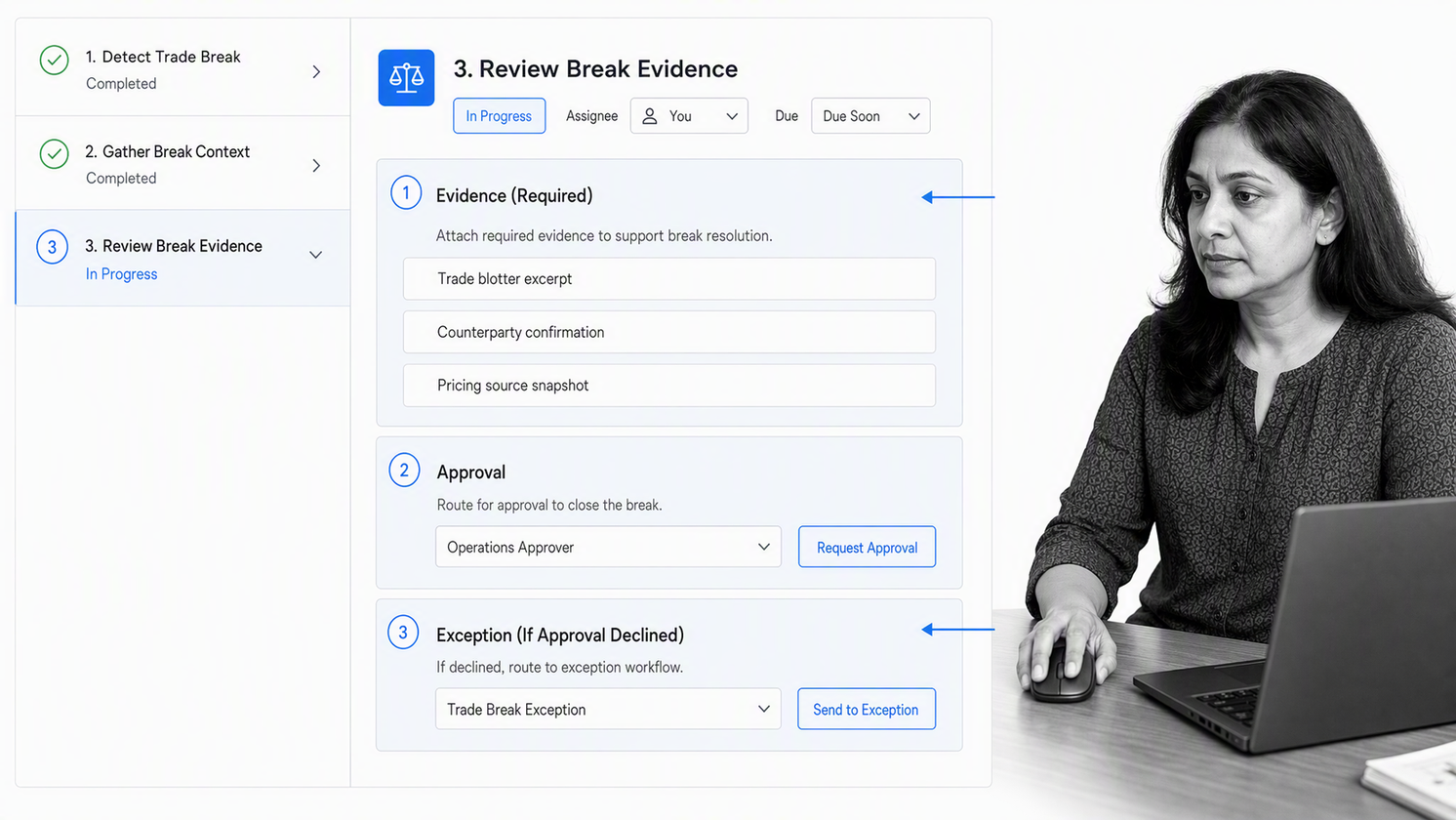
Process Street is the workflow control layer for high-stakes fund operations. It turns recurring procedures into assigned workflow runs with owners, due dates, approvals, required evidence, tracked completion, and clear exception paths. That makes it useful for work such as trade-break resolution, valuation review, personal-trading pre-clearance, investor onboarding, compliance certifications, monthly close coordination, vendor due diligence, and audit preparation.
Its role is orchestration, not portfolio accounting or order execution. A fund can keep positions in its PMS, orders in its OMS, books in its accounting platform, and investor records in its CRM while Process Street makes the cross-system process run correctly. The workflow records who reviewed an exception, what evidence was attached, which approval occurred, and whether a deadline was met.
This is the strongest first choice when the core problem is inconsistent execution, informal handoffs, missed reviews, or audit evidence scattered across email and spreadsheets. Start with the highest-friction recurring process, connect the relevant systems, and make the exception path as explicit as the happy path. See the complete map of hedge fund processes for practical starting points.
Enfusion by Clearwater
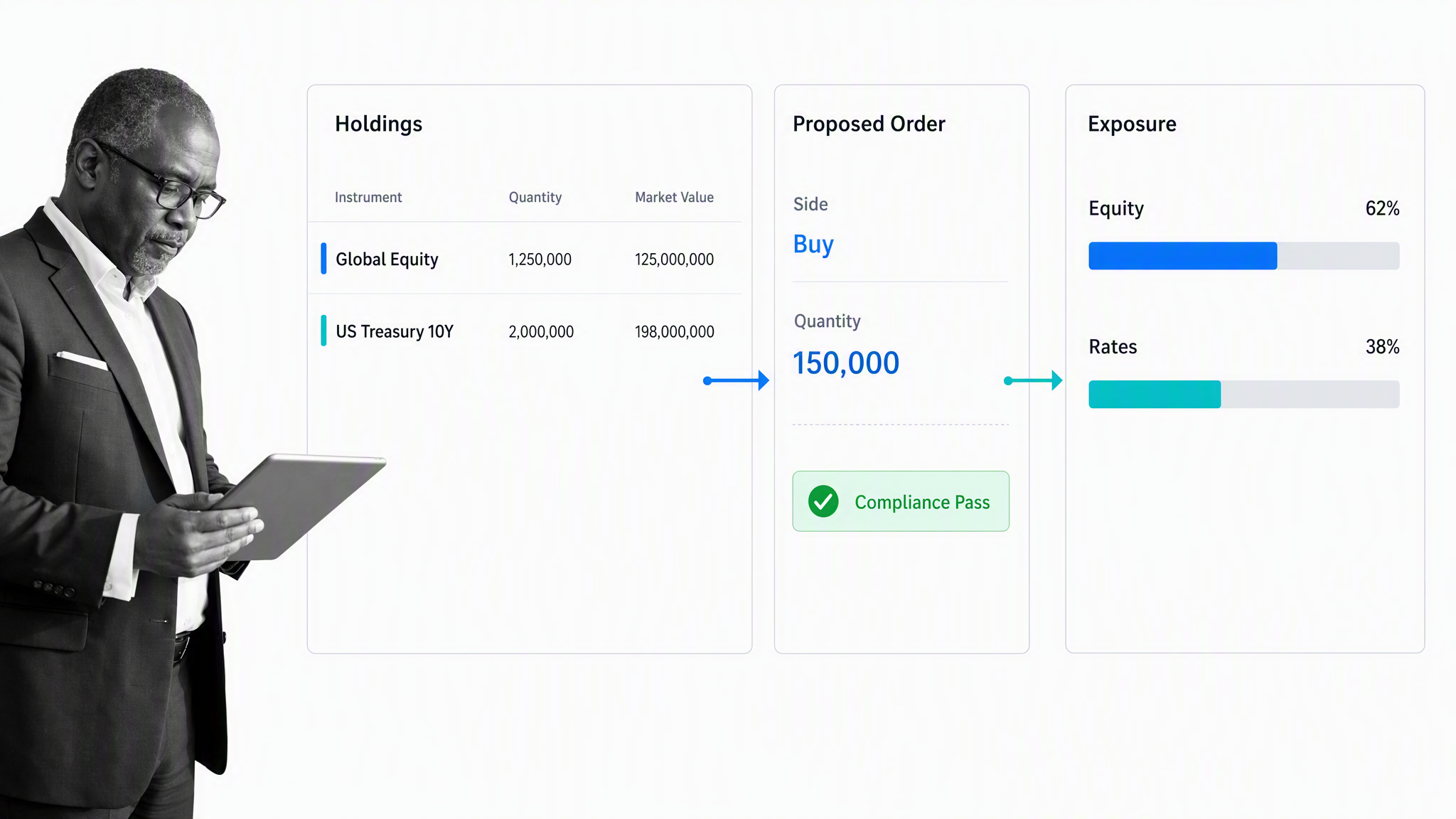
Enfusion by Clearwater is designed for investment managers that want portfolio management, order management, execution management, data management, and shadow accounting in a connected environment. Its shared data model is valuable when portfolio managers, traders, risk teams, and operations teams need to work from consistent positions and transaction data.
The Clearwater hedge fund platform positions Enfusion across the investment lifecycle, from trade capture and strategy execution through risk and reporting. This breadth can reduce the number of handoffs between front-office and operations systems, particularly for funds that want a cloud-based operating model.
Evaluate it when the fund’s main problem is fragmented investment data or disconnected portfolio and order workflows. During selection, test actual instruments, allocations, corporate actions, reconciliations, administrator files, and exception scenarios. A polished demo is less important than proving that real daily and month-end work can move through the platform without manual reconstruction.
Bloomberg AIM
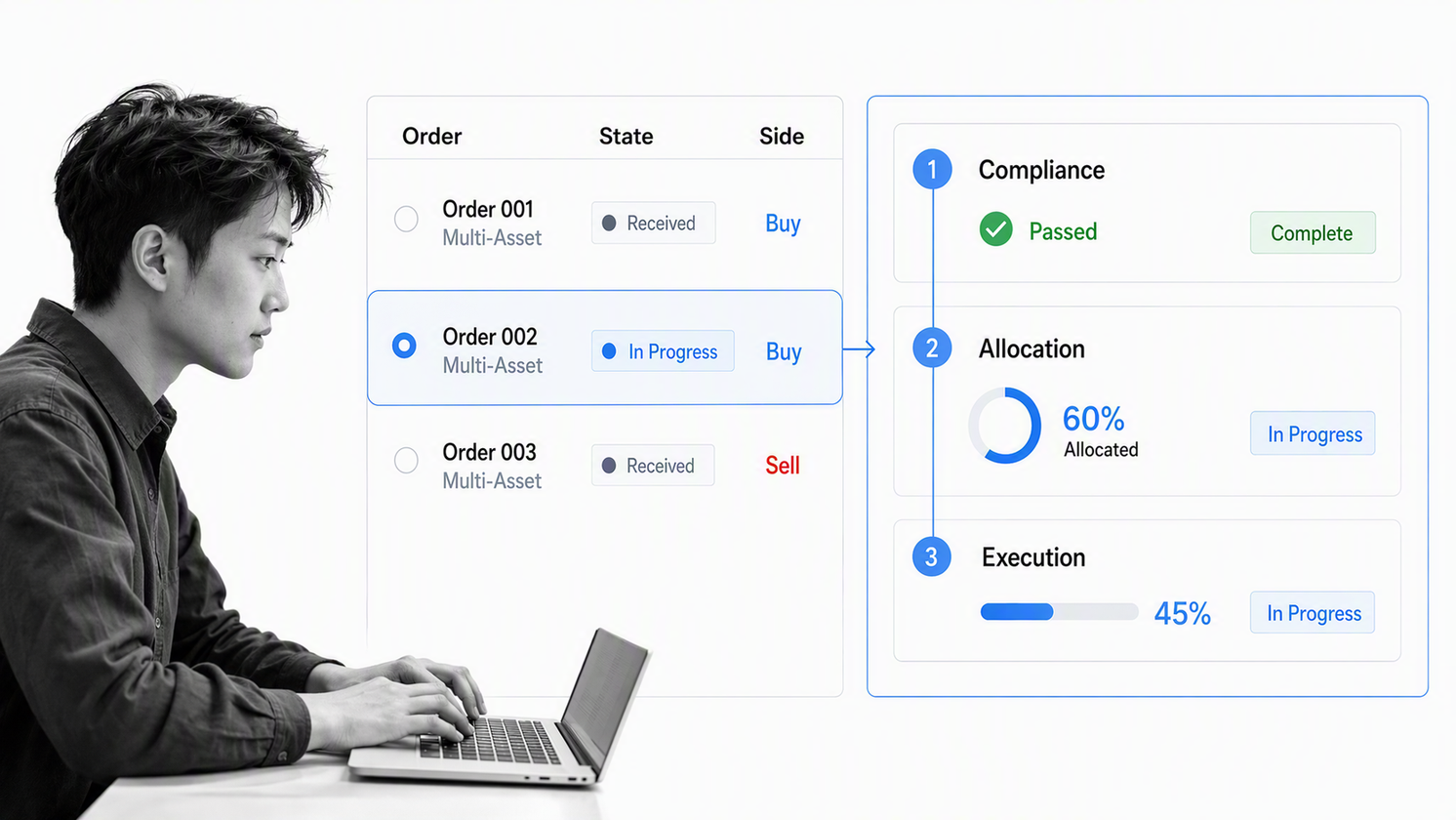
Bloomberg AIM is a multi-asset buy-side platform for portfolio management, trading, compliance, and operations. It is a strong candidate when a fund already relies heavily on Bloomberg data and analytics and wants portfolio decisions, order creation, compliance checks, execution, and post-trade work connected in one trading workflow.
The official Bloomberg AIM product page describes decision support, order and execution management, pre-trade and post-trade compliance, matching, settlement, reconciliation, portfolio accounting, performance measurement, and reporting. The practical advantage is the connection between investment context and trade workflow, not a generic promise to replace every fund system.
Evaluate AIM with the fund’s real broker routes, allocation rules, restricted-list checks, asset classes, and post-trade controls. Confirm which records remain authoritative in Bloomberg and which flow to administrators, accounting systems, risk tools, and the workflow layer. That boundary prevents teams from creating duplicate books that later disagree.
FundCount
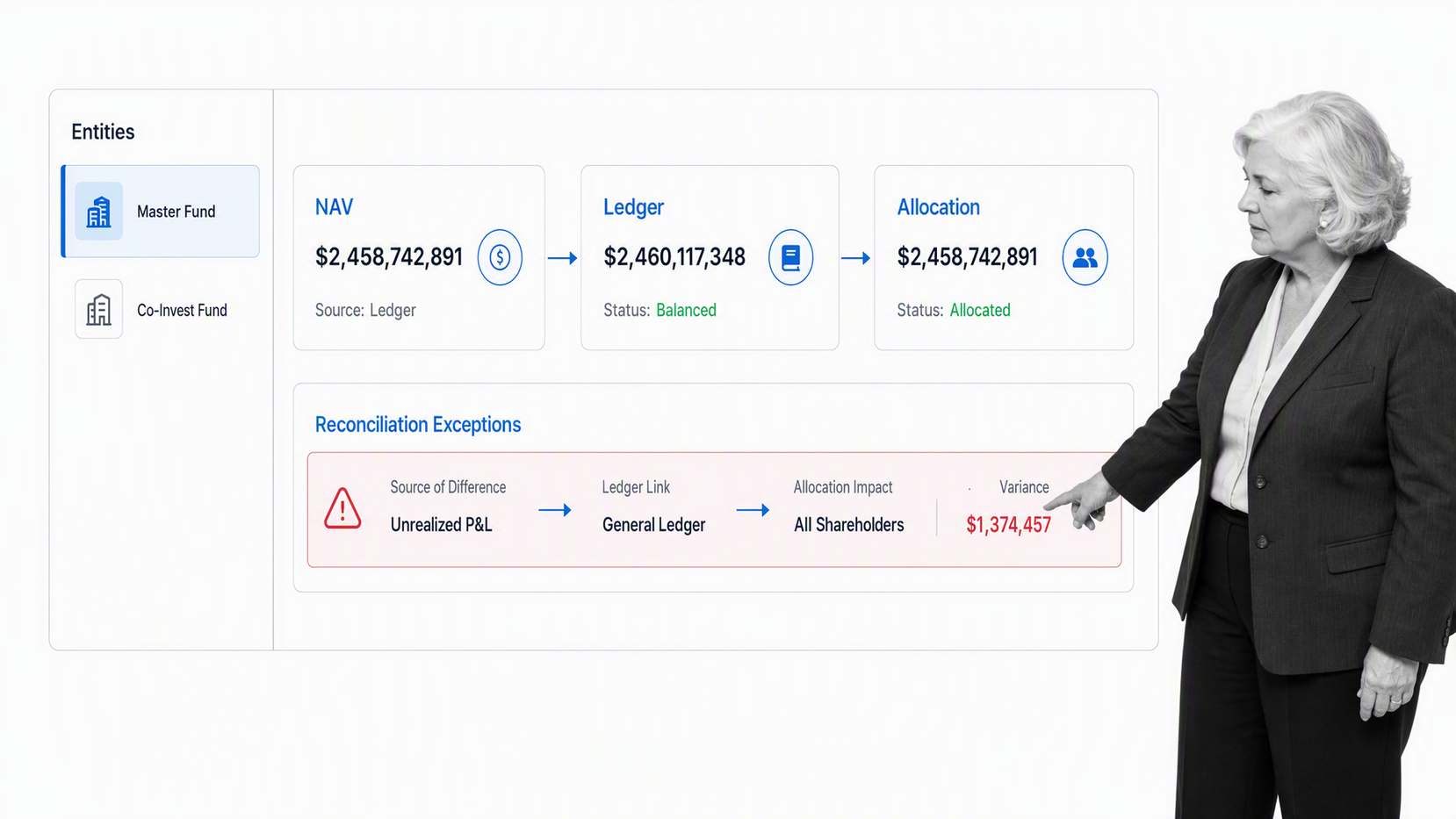
FundCount focuses on the accounting core. It combines portfolio accounting, shareholder and partnership accounting, a general ledger, reporting, investor portal capabilities, and data aggregation. That makes it relevant for funds that need an internal accounting book, shadow administration, complex allocations, or a tighter connection between investment records and financial statements.
The FundCount hedge fund platform supports NAV, fee and capital workflows, shadow reconciliation, audit outputs, and investor reporting from one accounting environment. Its value is strongest when spreadsheets or separate ledgers create repeated reconciliation work and limit drill-down from a report back to the underlying book.
Evaluation should use the fund’s actual legal entities, classes, series, side pockets, currencies, fee arrangements, and administrator files. Run a close in parallel, trace adjustments, inspect the audit trail, and reproduce a representative investor statement. Accounting software earns trust through explainability and control, not dashboard design.
Dynamo
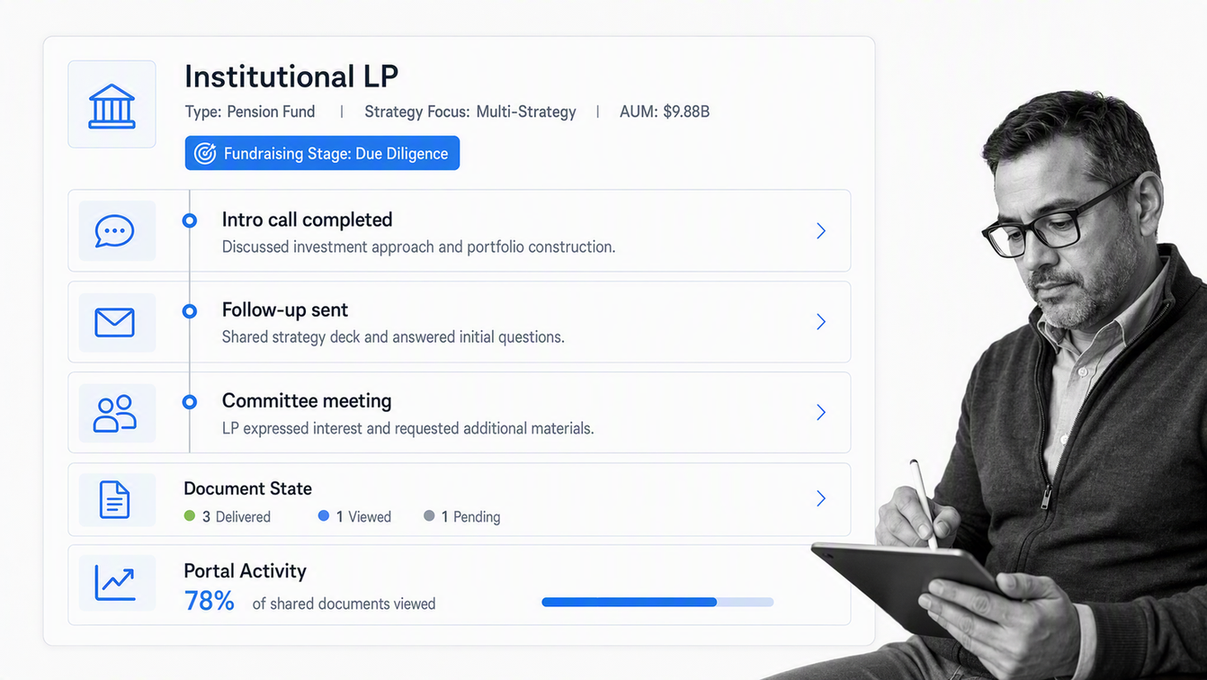
Dynamo is suited to investor relations, fundraising, and relationship management. Its hedge fund offering centralizes CRM records, pipeline activity, investor communications, documents, an investor portal, reporting, and fund administration data. It belongs in the stack when investor information and communications are fragmented across inboxes, spreadsheets, shared drives, and administrator exports.
A good deployment gives investor relations teams one view of each relationship without turning the CRM into an accounting ledger. Contact history, fundraising stages, document distribution, investor requests, and portal activity can sit together, while validated performance and capital data continue to come from the accounting or administrator source.
Test the full investor lifecycle: prospect intake, eligibility review, document collection, subscription coordination, communication approvals, reporting distribution, and service requests. The decisive question is whether Dynamo reduces duplicate work while preserving the fund’s review and approval controls.
ACA ComplianceAlpha
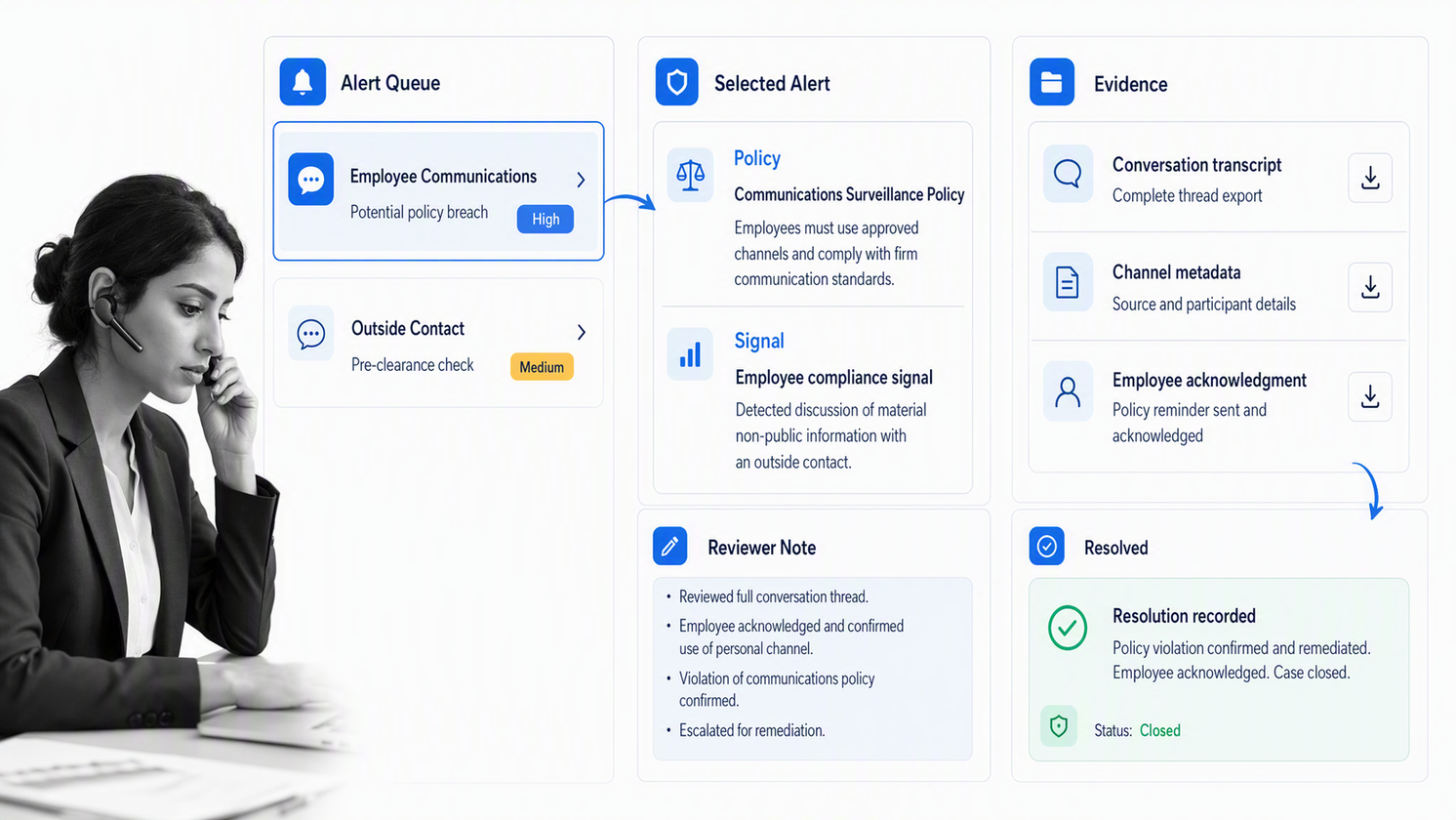
ACA ComplianceAlpha is a regulatory technology platform for financial firms that need dedicated compliance monitoring and surveillance. It centralizes risk and compliance activity, monitoring, testing, analytics, and evidence across specialist modules. Relevant areas include employee compliance, communications surveillance, market-abuse surveillance, marketing review, training, and AML or KYC work.
The ComplianceAlpha platform overview shows how those modules can operate as one compliance ecosystem. That is different from general workflow software: ComplianceAlpha supplies specialist compliance functions, while a workflow layer can coordinate broader procedures, owners, approvals, remediation, and evidence across compliance and operating teams.
Evaluate it against the firm’s actual policies, employee population, communications channels, review volumes, alert queues, escalation rules, recordkeeping needs, and examination process. The platform should make it easier to distinguish a true exception from noise and to prove how each exception was reviewed and resolved.
HedgeGuard
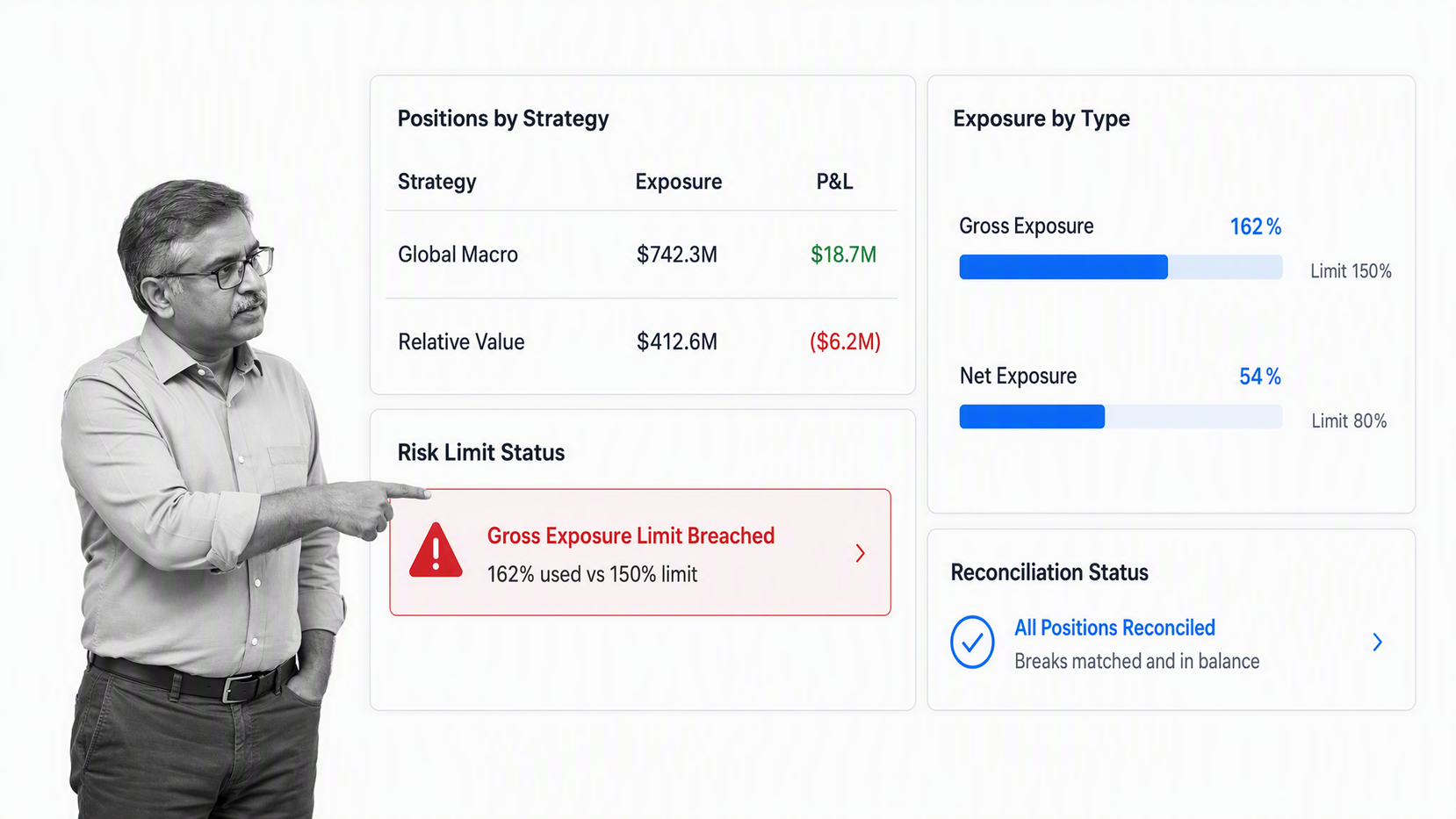
HedgeGuard combines portfolio management, order management, risk, compliance, integrations, and reconciliations. It is relevant for managers that want a configurable environment covering core investment operations rather than separate tools for every layer. Its portfolio views support exposure and P&L analysis, pre-trade simulation, notifications, and configurable views across strategies and books.
The integrated shape can suit an emerging or mid-sized manager that wants fewer system boundaries, but breadth increases the importance of implementation testing. Use the fund’s real instruments, broker and custodian files, risk limits, reconciliations, reporting outputs, and operating calendar. Confirm where data is mastered and how changes are controlled.
Choose HedgeGuard when its integrated portfolio, order, risk, and reconciliation model matches the fund’s operating design. If a fund already has strong systems of record in those areas, replacing them only makes sense when the reduction in complexity is greater than the migration and control risk.
How should a hedge fund evaluate software?
A hedge fund software evaluation should follow a real operating cycle, not a generic feature checklist. Begin with the records and controls the fund cannot afford to lose, then prove the candidate system against representative trades, reconciliations, investor events, compliance reviews, and reporting deadlines.
- Define the system of record for positions, orders, accounting, investors, compliance activity, and workflow evidence.
- Map every handoff between investment, operations, finance, investor relations, legal, compliance, administrators, brokers, custodians, and auditors.
- Test normal work and exceptions, including rejected orders, trade breaks, stale prices, failed reconciliations, missing documents, late approvals, and amended reports.
- Use representative instruments, entity structures, currencies, allocation rules, and reporting outputs during the proof of concept.
- Inspect permissions, change history, approval records, data exports, recovery procedures, and administrator or counterparty connectivity.
- Measure manual touchpoints removed, duplicate records eliminated, exception cycle time, and evidence completeness.
Ownership is as important as functionality. Every platform needs a business owner, a data owner, an access-review process, a change-control path, and a documented fallback when an integration or counterparty file fails. Software without operating ownership becomes another source of risk.
What should a hedge fund software stack include?
A complete stack should cover five control layers. The investment layer manages positions, exposures, orders, and execution. The accounting layer maintains books, allocations, NAV support, and financial reporting. The investor layer manages relationships, documents, communications, and service. The compliance layer handles surveillance, testing, reviews, and regulatory records. The workflow layer coordinates the people and evidence across all four.
The goal is not maximum consolidation. It is controlled interoperability. One broad platform may cover several layers well, while a specialist platform may be necessary for a demanding strategy or regulatory program. The architecture should make each source of truth obvious and keep handoffs observable.
Document the full stack as a control map. For each system, record its owner, authoritative data, upstream inputs, downstream consumers, critical integrations, review cadence, recovery path, and retained evidence. Then connect that map to executable workflows so it remains operational instead of becoming another static diagram.
How does Process Street fit into a hedge fund stack?
Process Street sits above and between systems of record. It does not calculate NAV, hold the official investment book, route market orders, or replace specialist surveillance. It makes the recurring human and system work around those records run with clear ownership, required evidence, approvals, deadlines, and escalation.
Consider a trade break. The position system identifies the mismatch, but resolution may require operations to classify the break, request evidence, contact a counterparty, obtain an approval, update a record, confirm the correction, and retain proof. Process Street can coordinate that sequence and expose where it is blocked. The same pattern applies to monthly close, valuation committee reviews, investor onboarding, personal trading reviews, vendor due diligence, and regulatory filing preparation.
Start with one painful recurring workflow. Define the trigger, owner, required inputs, decision points, evidence, approvals, exception paths, deadline, and completion criteria. Connect the systems that supply or receive data. Once the workflow is reliable, expand to adjacent processes that share owners or evidence.
The result is a fund stack with specialist systems for investment and regulatory records, plus one execution layer that enforces how work moves between them. That is how software becomes an operating system instead of a collection of subscriptions.
Frequently asked questions about hedge fund software
What is hedge fund software?
Hedge fund software is the stack of systems used for portfolio management, order execution, accounting, investor relations, compliance, and operational workflow control. A fund may use one broad platform or several specialist systems connected by governed workflows.
Is one hedge fund software platform enough?
Sometimes, but not always. A broad platform can reduce handoffs, while specialist systems may be necessary for complex instruments, accounting structures, investor service, or surveillance. The key is to define one source of truth for each critical record.
What is the difference between a PMS and an OMS?
A portfolio management system supports positions, exposures, performance, and portfolio decisions. An order management system supports order creation, compliance checks, allocation, routing, execution status, and trade workflow. Some platforms combine both.
How should an emerging manager choose hedge fund software?
Start with the fund’s strategy, instruments, entity structure, administrator model, compliance obligations, and staffing. Prove each candidate against real trades, reconciliations, investor events, reporting outputs, and exceptions before committing to the architecture.
Where does workflow software fit in a hedge fund stack?
Workflow software coordinates the recurring work around systems of record. It assigns owners, collects evidence, routes approvals, tracks deadlines, handles exceptions, and creates an audit trail across investment, operations, finance, investor relations, and compliance teams.
Should hedge fund software replace a fund administrator?
Software and fund administration solve different problems. A platform can support internal books, shadow accounting, oversight, data exchange, reviews, and reporting, while the administrator performs contracted services. The fund should define responsibilities and reconciliation controls clearly.