






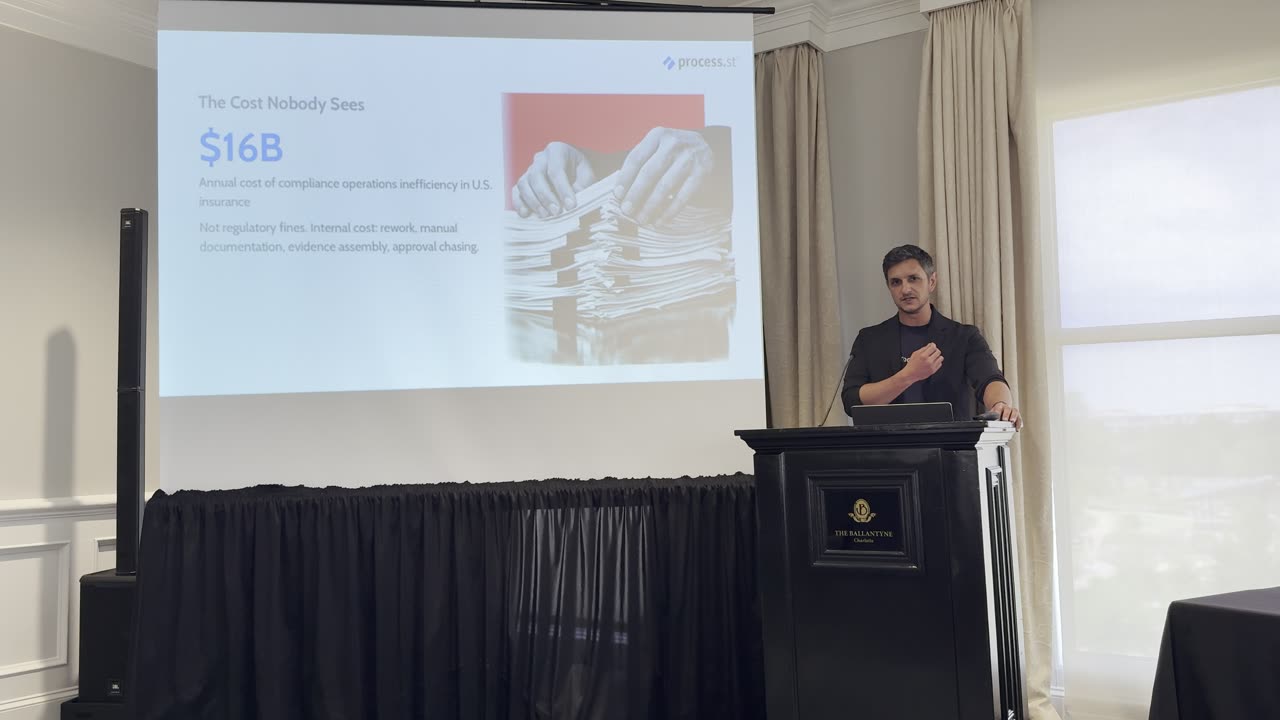
I presented at IRES 2026 in Charlotte last week. The room was insurance compliance leaders from carriers, MGAs, and state regulators. The number that got their attention: $16 billion.
That is the estimated annual cost of compliance operations inefficiency across U.S. insurance. Not regulatory fines. Not penalties. Internal cost: rework, manual evidence assembly, approval chasing, babysitting email threads that should have been automated years ago.
The Case Nobody Could Dismiss
I walked through a case study of a top-10 P&C carrier operating in all 50 states. Before the overhaul: 1,500 to 2,000 rate changes per year, coordinated through email chains and “final final v3” spreadsheets. A legacy system costing thousands of dollars a day to maintain. Some parts of it predate every current employee at the company.
The numbers were familiar to every compliance leader in the room. What surprised them was the diagnosis.
The Real Problem Is the Operating Model
Most carriers treat compliance and operations as separate disciplines. Compliance writes the policy. Operations does the work. Six months later, nobody can prove the policy was followed.
That gap between the two teams is where audit exposure accumulates. Not because people are negligent, but because the operating model forces compliance to be reconstructed after the fact instead of captured as work happens.
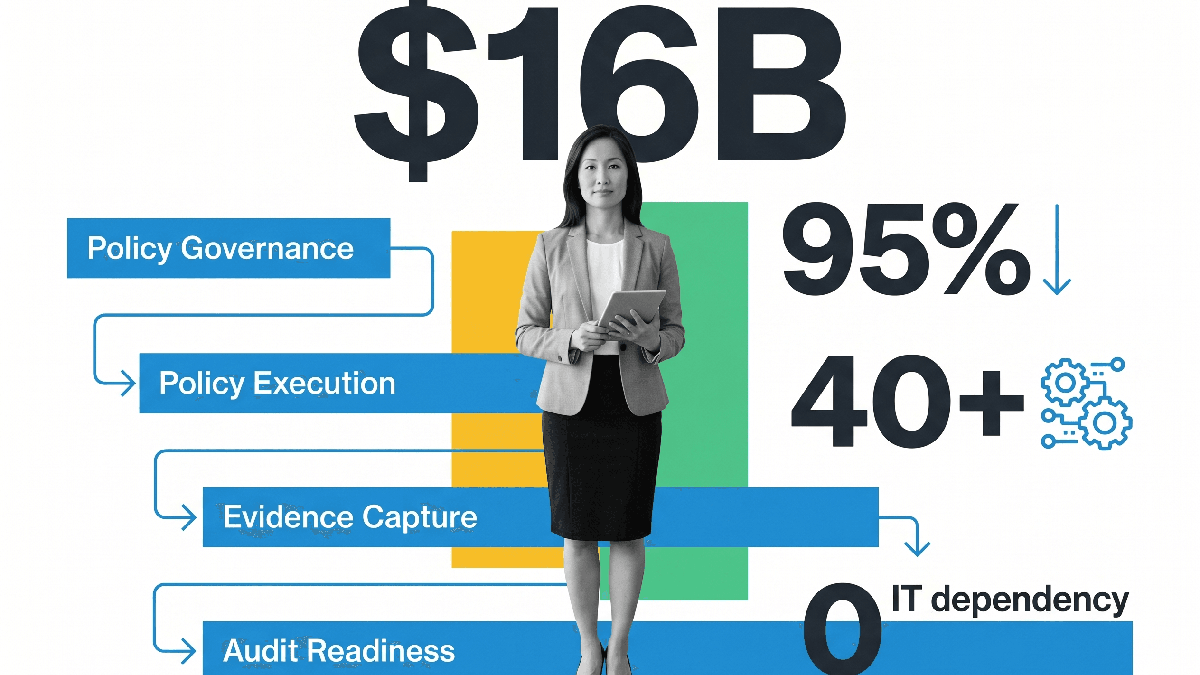
I presented a framework with four components: policy governance, policy execution through structured workflows, automatic evidence capture as work happens, and continuous audit readiness. The through-line is simple. Compliance should be a byproduct of doing the work correctly, not a separate project you run after the fact.
“You Don’t Have an Audit Season Anymore”
That was the line that landed hardest.
When evidence is captured at the point of execution, audits become verification, not archaeology. You stop reconstructing what happened six months ago from email threads and file timestamps. You start confirming what the system already recorded.
This is the shift that Process Street was built around. Compliance enforcement embedded in the workflow itself, not bolted on after the fact. Features like built-in document approvals mean every policy sign-off is captured automatically as part of the work.
The Results Speak
Results from the carrier’s first five workflows tell the story:
- 95% reduction in case creation time
- 40+ manual steps automated
- Three product lines consolidated onto one platform
- Zero IT dependency
Those numbers came from a carrier with the scale and regulatory complexity to stress-test any system. Similar results showed up when NC State’s tech transfer office automated their federal compliance workflows, recovering $200,000 in missed fees along the way. And the biggest unlock in both cases was not a feature or a vendor. It was the decision to stop treating compliance and operations as separate departments with separate tools and separate timelines.
The Question Worth Sitting With
If you run compliance for a carrier, here is the question I would sit with: how much of that $16 billion is showing up inside your own operation? How many of your audit artifacts exist only because a human chased them down?
The gap between policy and proof is where risk lives. Close it, and compliance stops being a cost center. It becomes the operating system. Start with an insurance audit checklist and see how much of the work the system can capture for you.