All posts in Compliance

GRI Standards for Sustainability Reporting: What They Are and Why They Matter

Sustainability reporting lead operating a three-tier GRI standards board

GRI Standards are a globally used system for organizations to report their most significant impacts on the economy, environment, and people in a consistent and credible way. They help a business move from broad sustainability claims to evidence that stakeholders can examine, compare, and act on.

The current system is modular. GRI 1 sets the foundation and reporting requirements, GRI 2 covers general disclosures about the organization, and GRI 3 explains how to determine material topics. Sector Standards and Topic Standards then add the disclosures needed for a particular context and impact. This guide explains why that structure matters and how to operate GRI reporting as a controlled business process.

Continue Reading
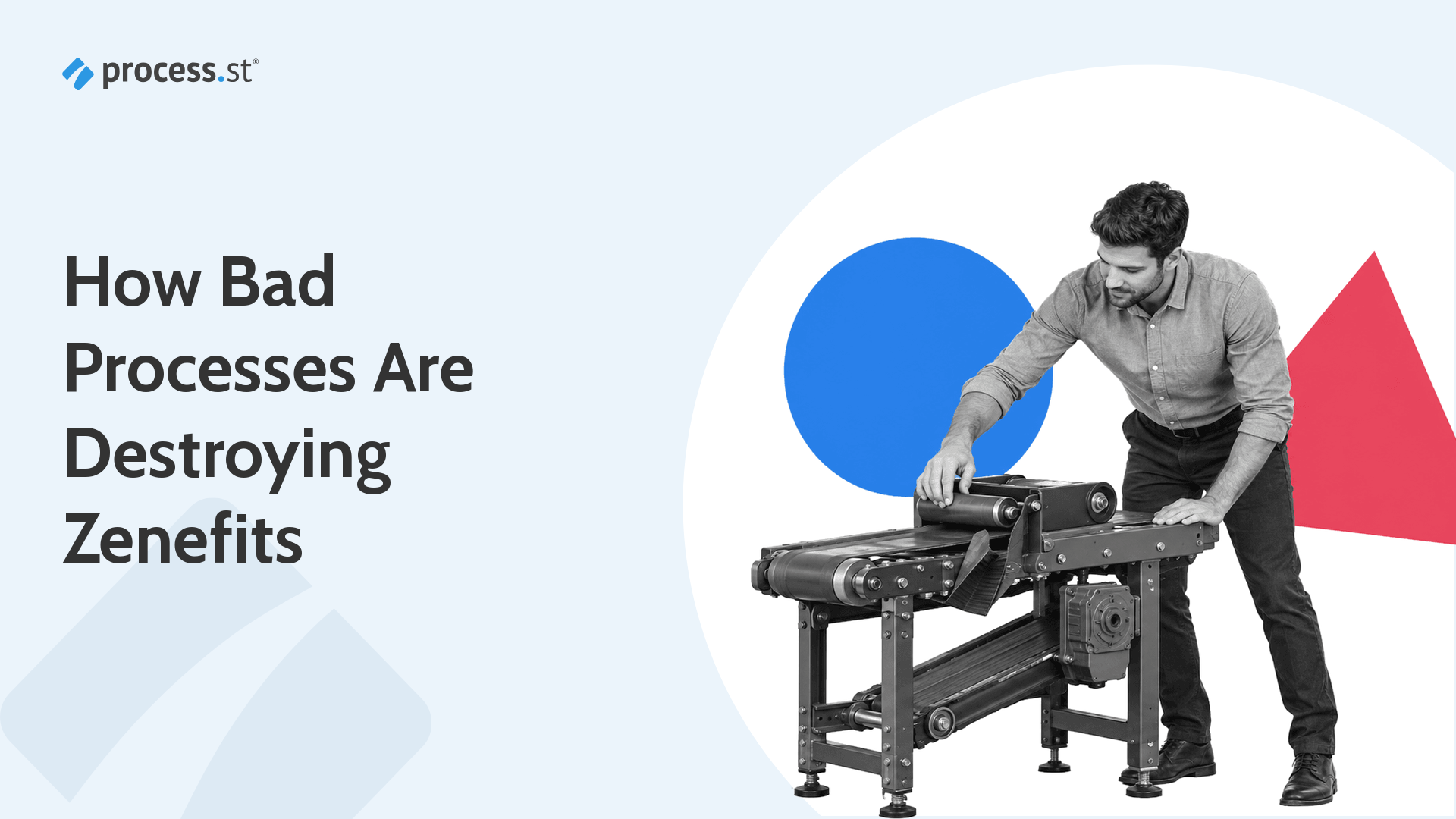
How Bad Processes Are Destroying Zenefits

B and W operations leader inspecting a broken process conveyor

Bad processes are workflows whose incentives, ownership, controls, or feedback loops allow the wrong action to become the easiest action. They create more than inefficiency. In regulated work, a broken process can expose customers, employees, and the business itself to harm.

Zenefits became a vivid example. After co-founder Parker Conrad promised insurance brokers in 2013 that the company would “drink your milkshake,” rapid growth made the company a Silicon Valley favorite. By February 2016, Conrad had resigned as investigations exposed licensing and training failures. The episode shows what happens when growth targets move faster than risk controls.

Continue Reading

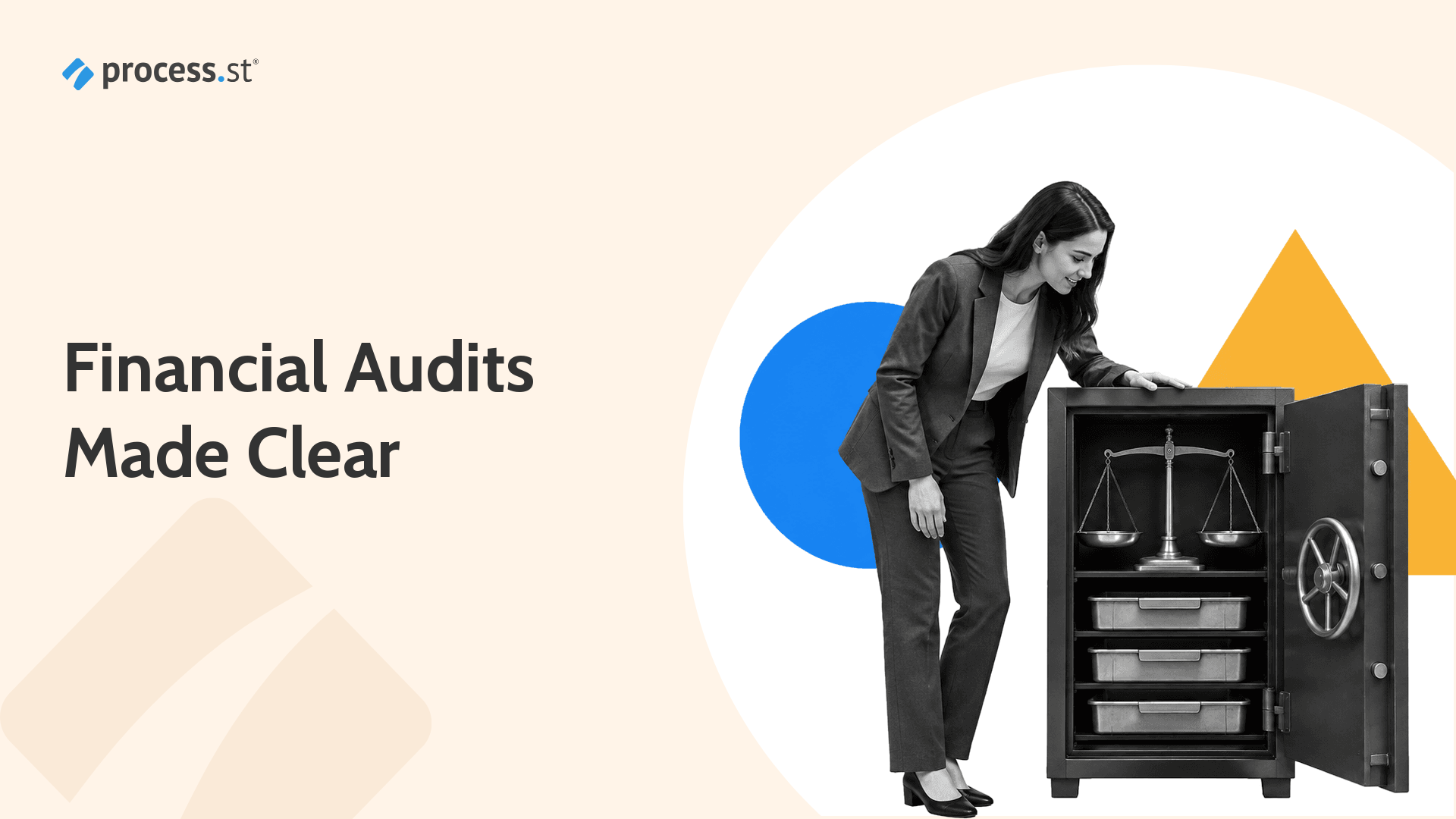
Financial Audits: A Quick Guide with Free Templates

Financial auditor inspecting a secure evidence vault with an integrated balance mechanism

A financial audit is an independent examination of financial statements, records, and related controls. Its purpose is to determine whether the statements are prepared, in all material respects, under the applicable financial reporting framework. A sound audit gives investors, lenders, directors, regulators, and managers greater confidence in the information they use.

That confidence has limits. Auditors provide reasonable assurance, not an absolute guarantee that every error or fraud will be found. They use professional judgment, risk assessment, sampling, evidence, and documented procedures to reach an opinion. This guide explains the financial audit process, the difference between internal and external auditing, the role of International Standards on Auditing, and the checklists that make audit preparation easier.

Continue Reading

Compliance Without Slowdown: Heimkapital’s Playbook for Fast, File-Heavy Property Transactions

Heimkapital transactions lead holding a scale model of a German residential apartment building behind its partial property sales

Heimkapital is a German property finance company that specializes in partial property sales, purchasing up to 50% equity in residential properties including houses and apartments.

With Germany’s notoriously complex documentation requirements, Heimkapital has built its competitive advantage on speed, closing deals quickly while maintaining compliance across its growing product portfolio.

Continue Reading

Compliance Audit: What It Is, How to Prepare, and Why You Should Care

Compliance auditor holding an embossed verification seal

“Quis custodiet ipsos custodes? (Who watches the watchmen?)” – Decimus Junius Juvenalis (Juvenal), Roman satiric poet

A compliance audit tests whether an organization follows the laws, regulations, standards, contracts, and internal controls that apply to its work. The audit does more than ask whether a policy exists. It looks for evidence that the policy is current, assigned, understood, and followed in practice.

Continue Reading

Basics of Enterprise Risk Management (ERM): How to Get Started

Enterprise risk officer carrying a compartmentalized case that represents integrated enterprise risk management

Enterprise risk management (ERM) is the organization-wide practice of identifying, assessing, responding to, and monitoring uncertainty that could affect strategic objectives. It connects risk decisions to strategy, performance, governance, and day-to-day execution instead of leaving each department to manage risk in isolation.

The basics of enterprise risk management help teams get started with a shared view of risk, clear ownership, defined response thresholds, and evidence that controls are working. A strong ERM program does not guarantee outcomes, but it helps leaders make better decisions, respond earlier, and pursue opportunities without taking unmanaged exposure.

Continue Reading

14 Top GRC Tools for an Integrated Governance, Risk and Compliance Strategy

Compliance operations leader calibrating a gauge for integrated governance GRC tools

GRC tools help teams manage integrated governance, risk, and compliance strategy in one operating system instead of three disconnected workstreams. The best tools connect policies, controls, risk registers, approvals, evidence, audits, owners, and remediation work so teams can prove what happened.

This guide covers 14 top GRC tools for integrated governance, risk, and compliance, then shows how Process Street can connect governed Docs, automated Ops workflows, and Cora, the AI compliance agent, to the work behind your GRC program.

Continue Reading

10 Top HIPAA Policies and Procedures Templates to Manage Compliance

Healthcare compliance officer presenting an open binder labeled HIPAA POLICIES, illustrating Process Street's HIPAA policies and procedures template pack.

There is no way around HIPAA rules.

If your organization touches protected health information, HIPAA compliance is not optional. You need policies, procedures, training, documentation, and repeatable workflows that show the right steps were followed.

Continue Reading

Insurance Spends $16 Billion a Year Proving Work Got Done

Insurance compliance officer sprinting with binders and flying papers, representing the $16 billion annual cost of compliance operations inefficiency

I presented at IRES 2026 in Charlotte last week. The room was insurance compliance leaders from carriers, MGAs, and state regulators. The number that got their attention: $16 billion.

That is the estimated annual cost of compliance operations inefficiency across U.S. insurance. Not regulatory fines. Not penalties. Internal cost: rework, manual evidence assembly, approval chasing, babysitting email threads that should have been automated years ago.

Continue Reading

How Lion Containers Achieved Three ISO Certifications with Process Street

Lion Containers operations lead holding a scale model of a shipping container converted into a glazed office unit

Lion Containers Ltd is the UK’s leading shipping container conversion and modification company, transforming standard shipping containers into bespoke modular projects; from secure storage solutions and office units to pop-up shop complexes complete with insulation, electrics, solar panels, and full-length windows.

Continue Reading

Take control of your workflows today

Choose which optional cookies to allow. You can change or withdraw consent here at any time.