
Turn every policy into automated workflows with built-in enforcement and audit-ready proof.

9 Best Onboarding Technology Tools for a Connected Stack
Onboarding technology tools should do more than send a welcome email and store a checklist. A useful stack coordinates the work that starts when an offer is accepted: employee data, employment forms, system access, equipment, role training, manager preparation, policy acknowledgment, and follow-up.
That experience matters because onboarding is where recruiting promises meet daily reality. Gallup describes onboarding as a series of first experiences that shape how a new hire sees the organization. Technology cannot create belonging by itself, but it can remove missed handoffs, unclear ownership, and preventable waiting.
The right answer is rarely one giant HR suite. Most teams need a clear operating layer and a few specialist systems. This guide compares nine onboarding technology tools by the job each one owns, then shows how to connect them into one controlled employee journey.
- What is onboarding technology?
- Which tools belong in a modern stack?
- How should you choose onboarding technology?
- How do you build a connected onboarding stack?
- What should you measure after launch?
- Onboarding technology checklist
- Frequently asked questions
What is onboarding technology?
Onboarding technology tools are the systems that move a new hire from accepted offer to confident contribution. They support the employee onboarding process by assigning work, collecting information, granting access, delivering training, tracking progress, and recording completion.
A tool belongs in the stack only when it owns a real operational job. An HRIS may own the employee record. An identity platform may own application access. A learning system may own courses. A workflow platform should coordinate the sequence across all of them, so the process does not fragment into separate queues that nobody can see end to end.
This distinction separates a document from an operating system. A static checklist explains what should happen. Onboarding workflow software assigns each step, applies rules, sends reminders, routes approvals, and records what happened. That execution layer is what keeps a customized employee journey consistent without turning it into manual project management.
A complete stack usually covers six capabilities:
- Orchestration: Coordinate HR, IT, payroll, security, managers, and the new hire.
- System of record: Maintain accurate employee data and documents.
- Provisioning: Deliver accounts, permissions, devices, and equipment on time.
- Compliance: Complete required forms, acknowledgments, approvals, and evidence capture.
- Learning: Assign role-based knowledge, practice, and training.
- Adoption: Help the employee use unfamiliar software correctly inside the flow of work.
Which onboarding technology tools belong in a modern stack?
These products solve different parts of onboarding. The order starts with the operating layer, then moves through specialist systems. Process Street remains the category holder because cross-functional execution is the job that connects every other tool. The specialists earn a place when a team has a deeper requirement in their layer.
| Tool | Best fit | Layer it owns |
|---|---|---|
| Process Street | Cross-functional, controlled onboarding | Workflow orchestration and proof |
| BambooHR | HR teams centralizing employee records | HRIS-centered onboarding |
| Rippling | Teams connecting HR events to IT setup | Device and application provisioning |
| Deel | Distributed and global workforces | Global HR onboarding |
| WorkBright | Remote or high-volume employment paperwork | I-9 and document compliance |
| Trainual | Role training built from SOPs | Onboarding and training paths |
| Cornerstone | Enterprise learning programs | Learning management and compliance training |
| Whatfix | Employees learning complex applications | In-app digital adoption |
| Microsoft Entra ID Governance | Microsoft-centered identity environments | Joiner, mover, and leaver access |
Process Street: workflow orchestration and compliance
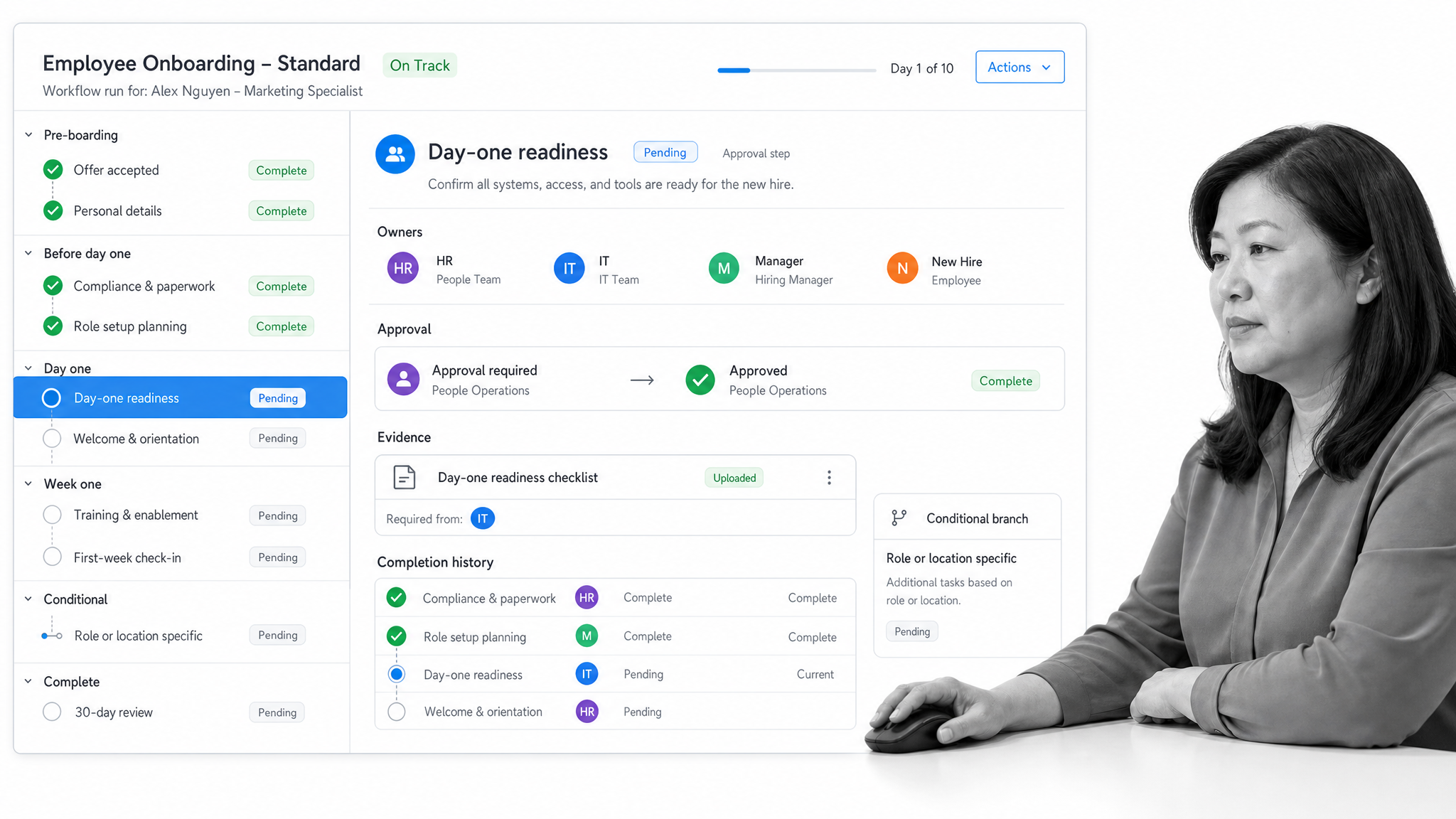
Process Street is the first choice when onboarding crosses departments, contains approvals, or needs audit-ready proof. It is a Compliance Operations Platform that turns the employee journey into a repeatable workflow rather than a collection of reminders. HR can launch the process, IT can receive access and equipment tasks, managers can prepare role-specific work, and the new hire can complete forms and acknowledgments in the same controlled sequence.
The practical advantage is ownership. Tasks can change by role, location, worker type, or answers captured earlier in the workflow. Approvals happen where the work happens. Required evidence stays attached to the run. Delays are visible before the employee arrives, and the final history shows exactly which steps were completed.
Use Process Street as the operating layer around your HRIS, payroll, identity, and learning systems. Start with an onboarding template, adapt the steps to one real role, and connect specialist systems only where they remove a genuine handoff. This approach keeps the stack modular without losing control.
BambooHR: HRIS-centered onboarding
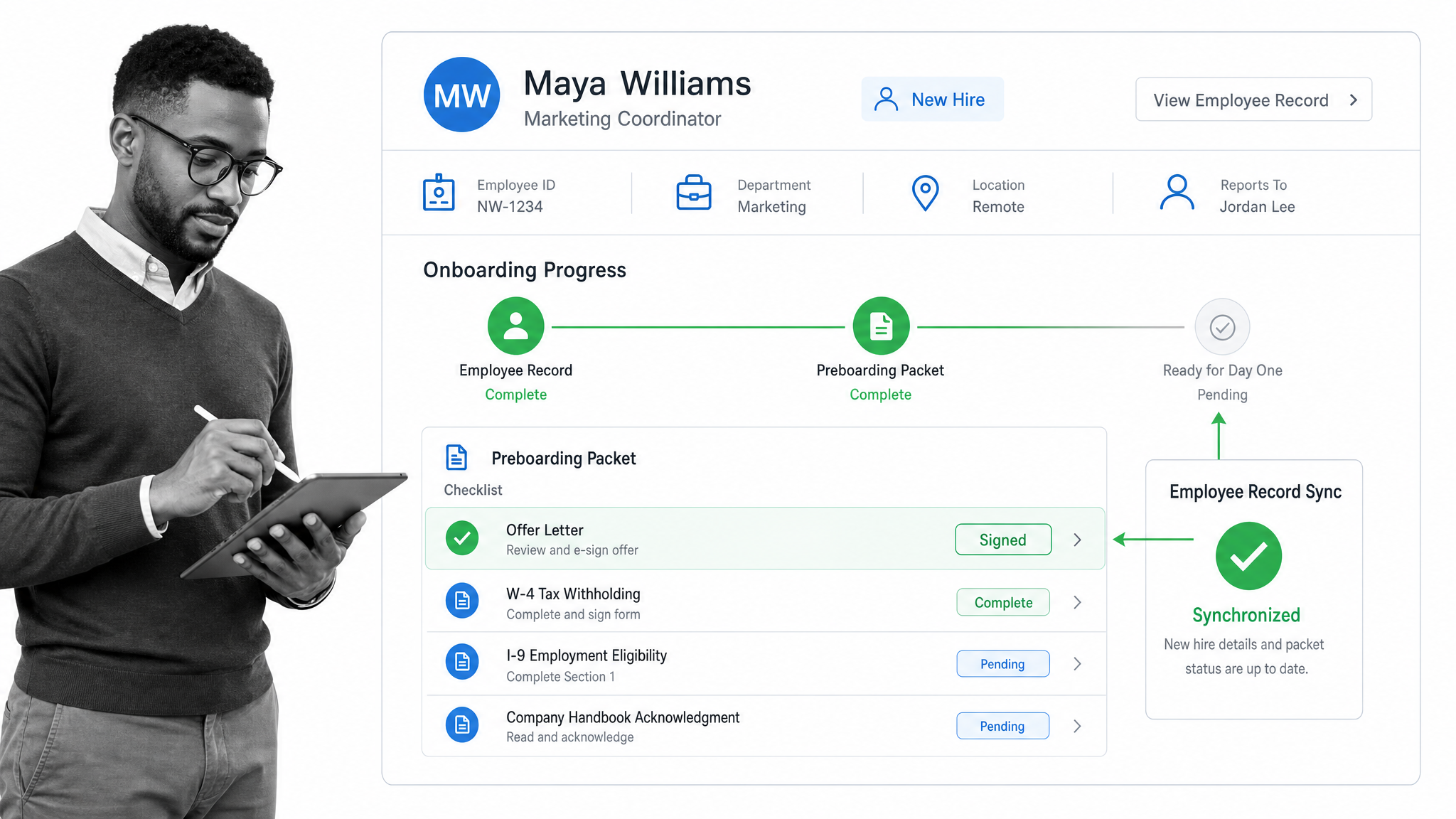
BambooHR fits teams that want onboarding to begin from a central employee record. Its onboarding product connects customizable checklists, electronic signatures, progress tracking, and the BambooHR employee record. That makes it useful when the core problem is collecting people data and keeping standard HR tasks organized before day one.
Choose BambooHR when HR data, documents, and a straightforward employee experience should live in one HR platform. It can provide a clean foundation for preboarding packets, first-day details, signatures, and team task lists.
Its natural boundary is cross-functional process depth. If onboarding contains complex approvals, evidence requirements, exception handling, or work that continues far beyond HR, place a workflow layer around the HRIS. The HRIS remains the source of truth for employee data while Process Street controls the full sequence and handoffs.
Rippling: HR and IT provisioning
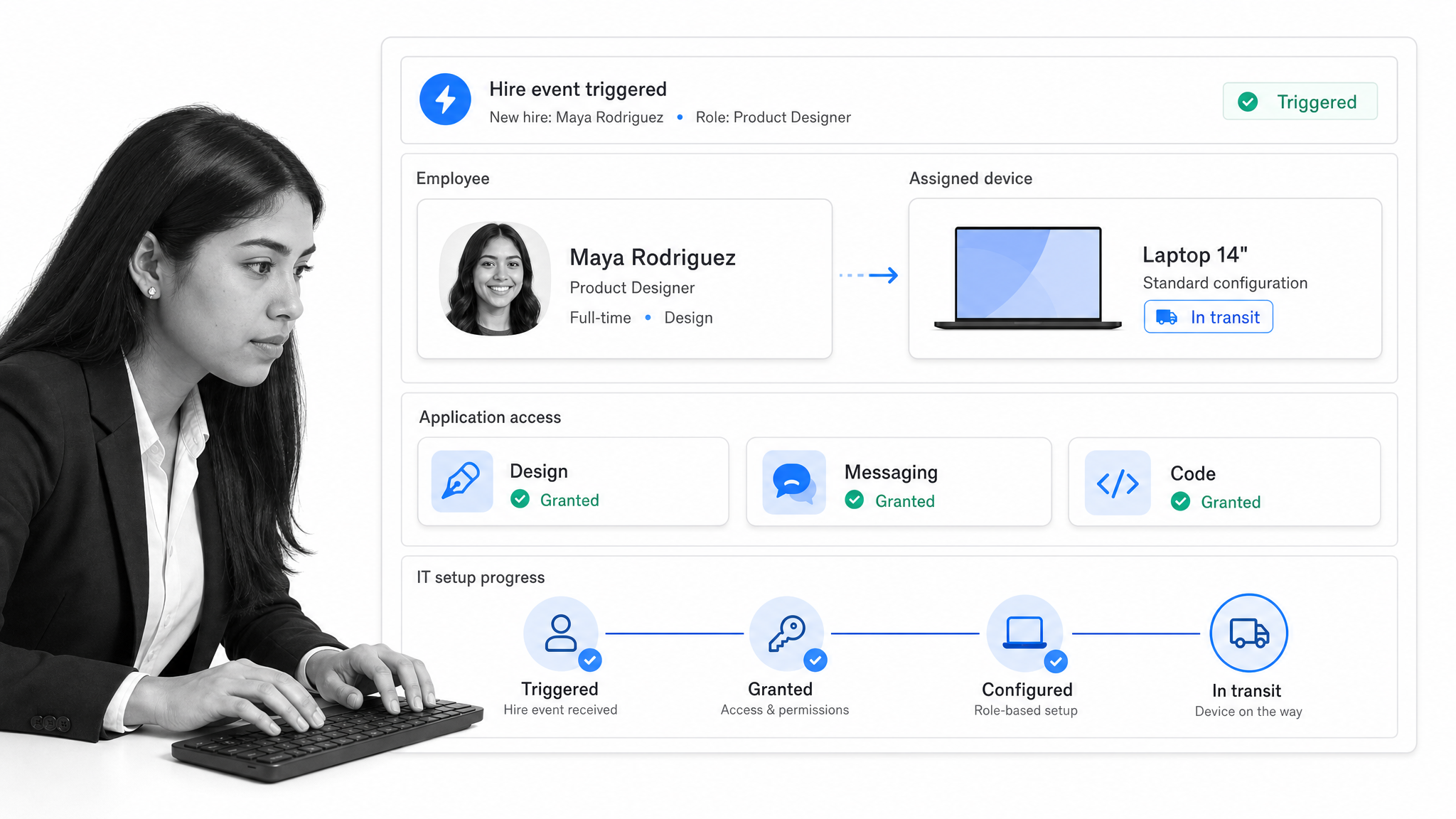
Rippling is strongest when a hiring event must immediately change the technology environment. Its device-management product can connect a new hire to device assignment, configuration, application access, and role-based security settings. That reduces the gap between the HR record and the employee being technically ready to work.
Choose Rippling when IT provisioning is a major bottleneck and the organization wants HR attributes such as department, role, or location to drive access and device rules. It is especially useful for distributed teams that ship equipment and manage software access centrally.
Provisioning is still one part of onboarding. Managers must prepare goals, training must be assigned, policies must be acknowledged, and exceptions must be resolved. Use a workflow system to coordinate those owners and treat Rippling as the specialist execution engine for the IT branch.
Deel: global workforce onboarding
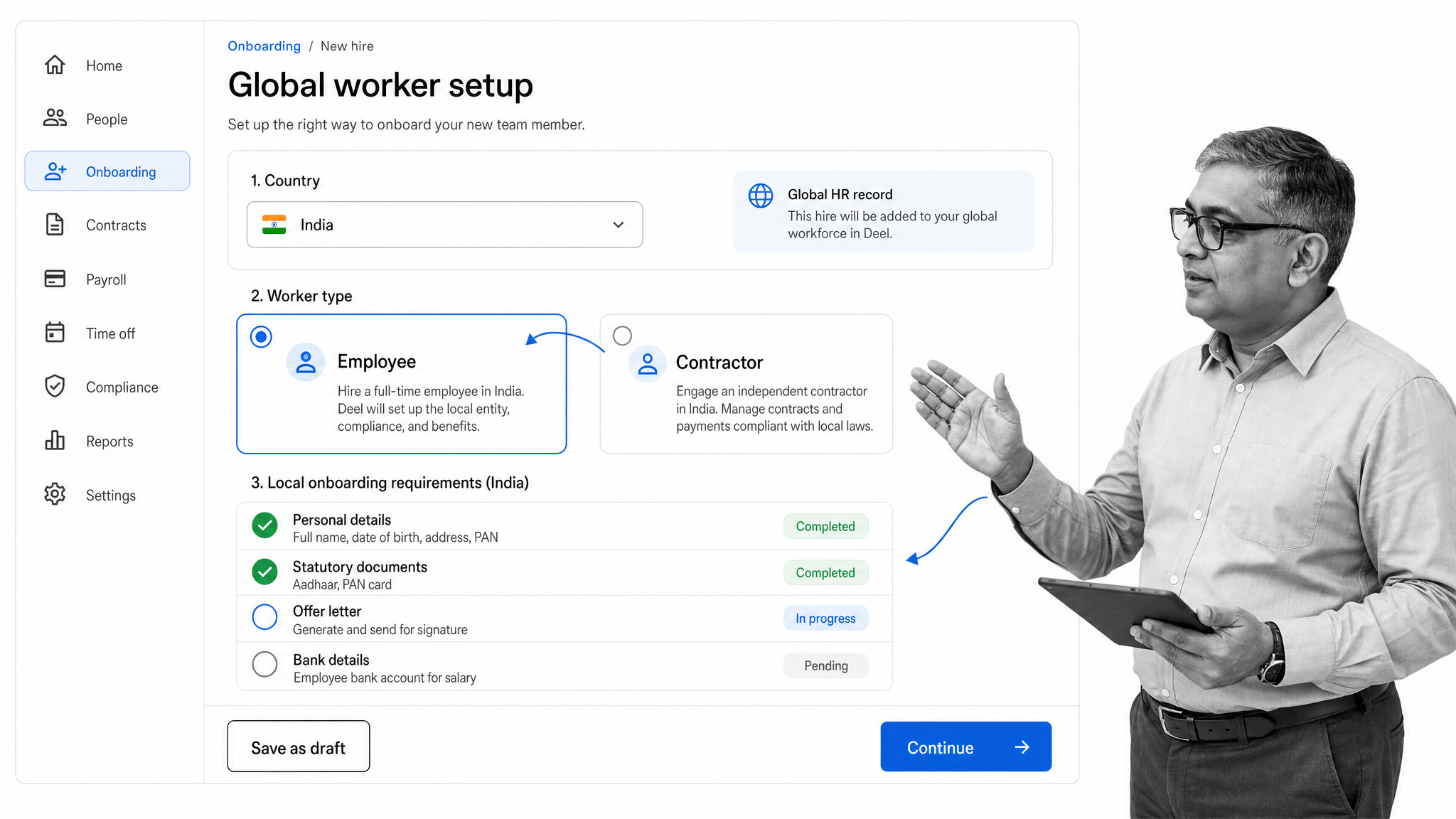
Deel fits organizations hiring employees and contractors across countries and worker types. Deel HR supports global people data and workflows, while its broader platform addresses international hiring, payroll, and employment administration.
Choose Deel when the onboarding challenge changes by country, legal entity, worker classification, or local employment requirement. It gives global HR teams a more suitable system of record than a home-market process stretched across many locations.
Global administration does not remove the need for a company-specific employee journey. The internal sequence still needs owners for equipment, security, manager preparation, role learning, and cultural integration. Keep those operating steps in Process Street, and let Deel own the employment and global HR layer it is built to manage.
WorkBright: remote employment forms and I-9
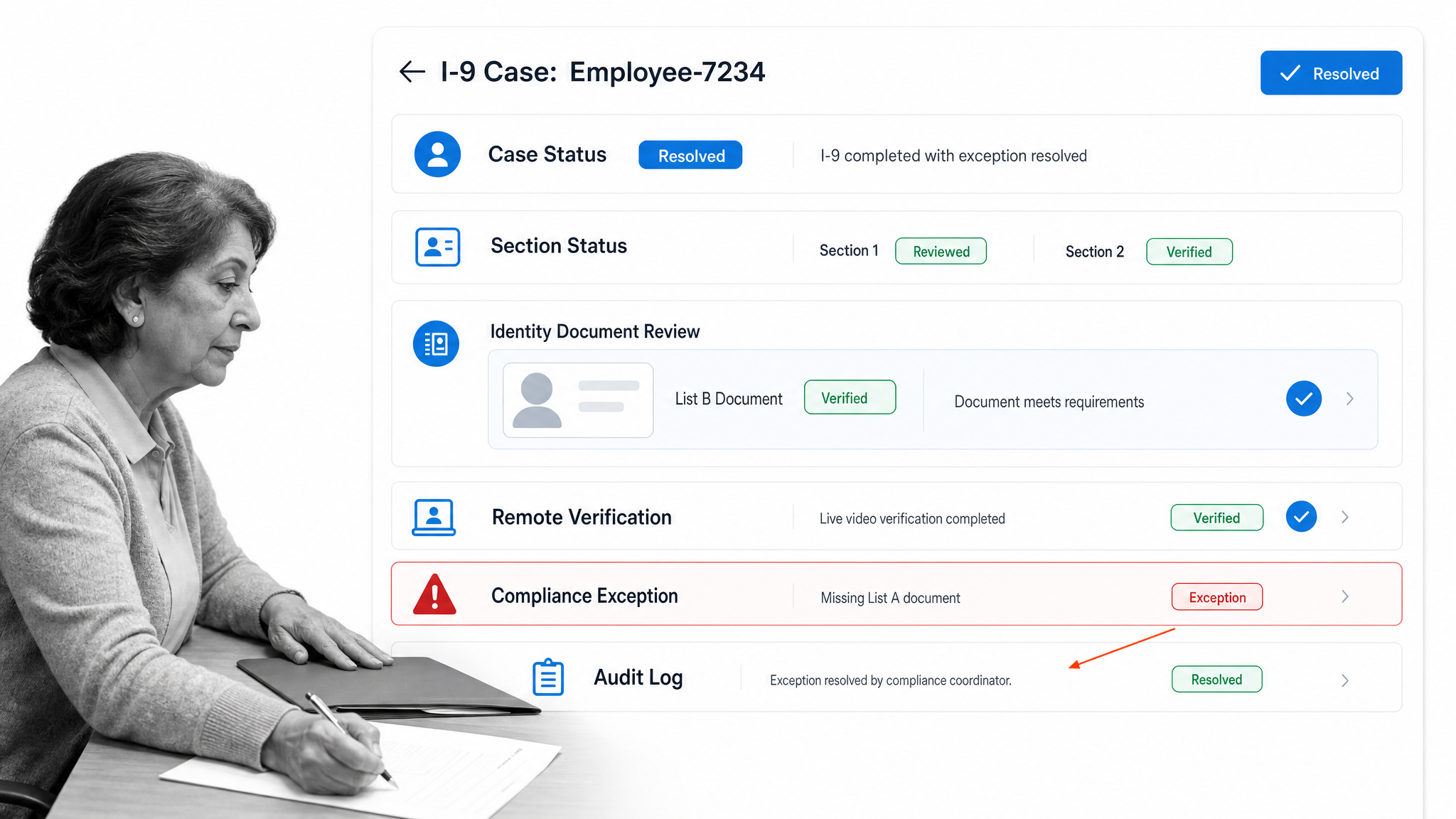
WorkBright focuses on new-hire paperwork, I-9 and E-Verify workflows, and remote document verification. Its compliance-first onboarding platform is a strong specialist for staffing, distributed hiring, and other environments where employment-form completion can become a volume or audit problem.
Choose WorkBright when U.S. employment eligibility verification is a defining requirement rather than one field in a broad HR suite. The underlying obligation belongs to the employer, and USCIS I-9 Central should remain the authority for current rules and procedures. Software should support the required process, not replace legal review.
Connect the compliance branch to the wider onboarding workflow. That lets HR see whether the form process is complete while IT, managers, training owners, and the employee continue with their own steps.
Trainual: role-based training and SOPs
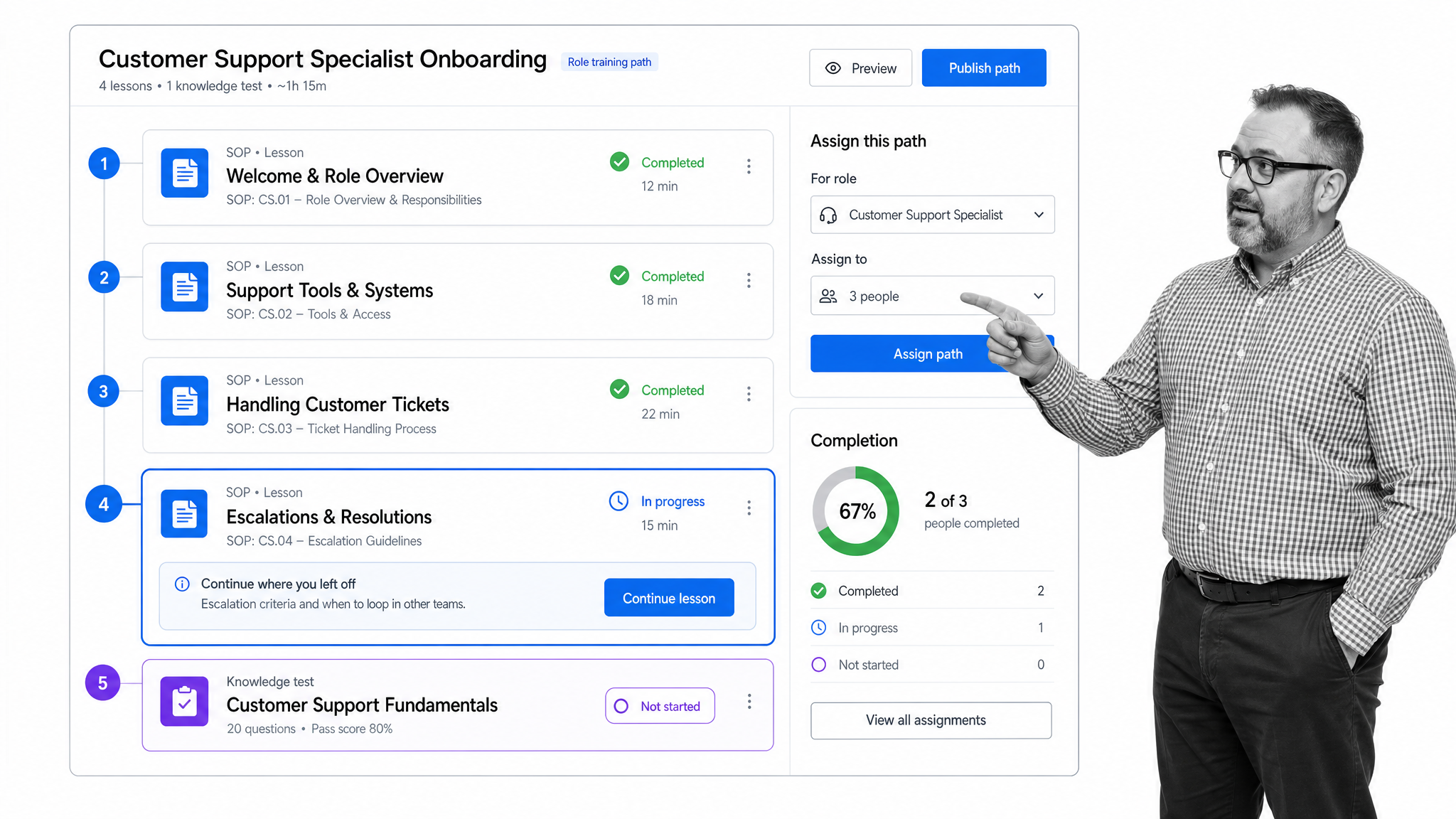
Trainual is designed for organizations that want onboarding to teach how the business actually works. It turns documented SOPs and company knowledge into role-based onboarding and training paths, then adds tests, assignments, and completion tracking.
Choose Trainual when the central problem is inconsistent role training, repeated questions, or knowledge that lives with experienced employees. It is a practical fit for growing teams that need new hires to learn processes, responsibilities, and standards in a structured path.
Training content is only useful when it connects to live work. Link role learning to the document workflow and the employee onboarding run. The workflow can release the right material at the right stage, require completion before sensitive tasks, and route remediation when someone needs more support.
Cornerstone: enterprise learning management
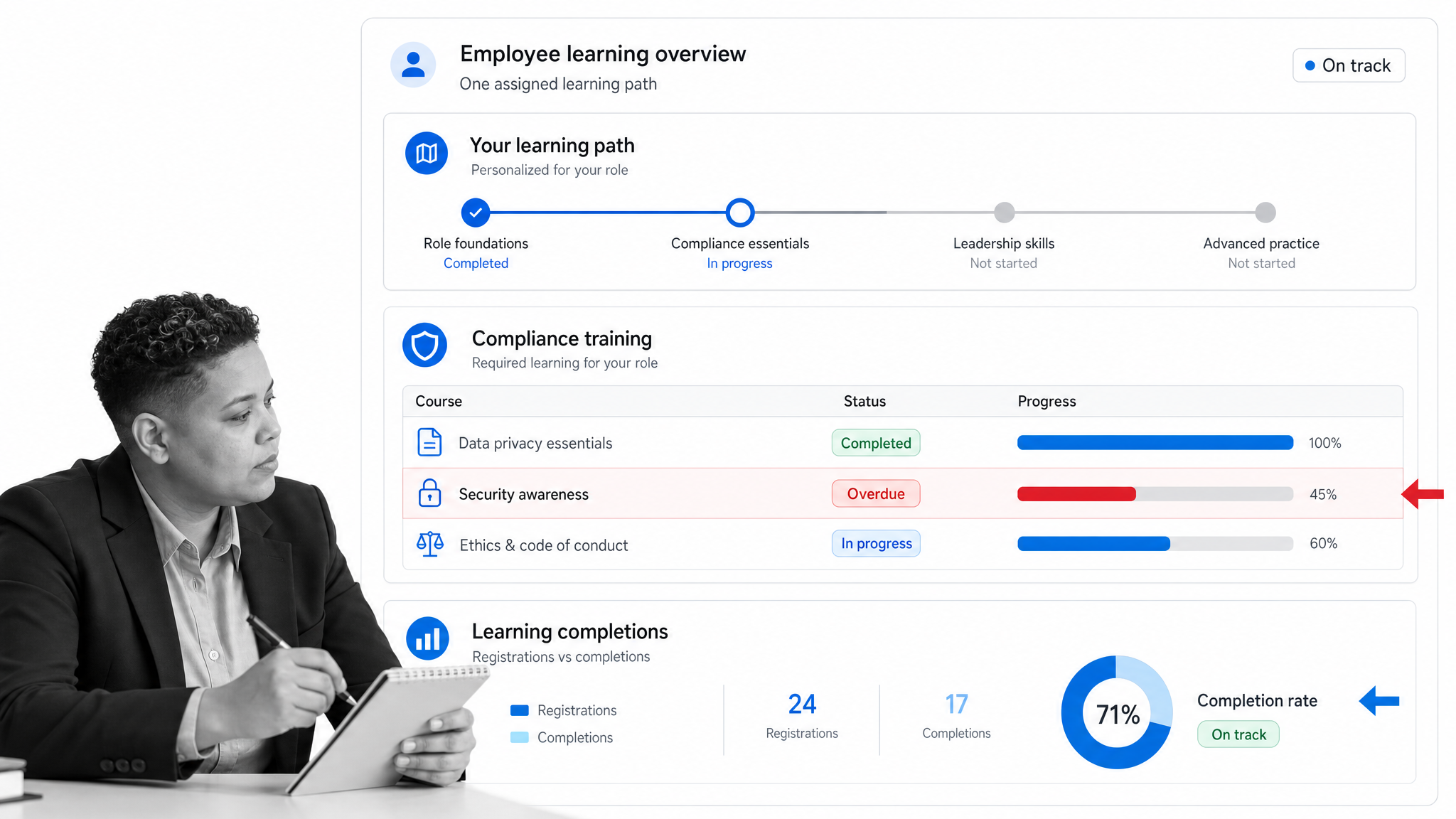
Cornerstone fits larger organizations that need a formal learning management system for onboarding, compliance training, skill development, and reporting. Its LMS supports personalized learning paths, centralized learning content, automated learning processes, and audit tracking.
Choose Cornerstone when onboarding sits inside a broad enterprise learning program with regulated training, multiple audiences, extensive content, or advanced reporting needs. It is a learning platform first, which is valuable when training governance is the dominant requirement.
Keep the boundary explicit. Cornerstone should own courses and learning records. Process Street should own the cross-functional onboarding process that decides when training is assigned, what must happen before or after it, who handles an exception, and which evidence closes the employee journey.
Whatfix: in-app digital adoption
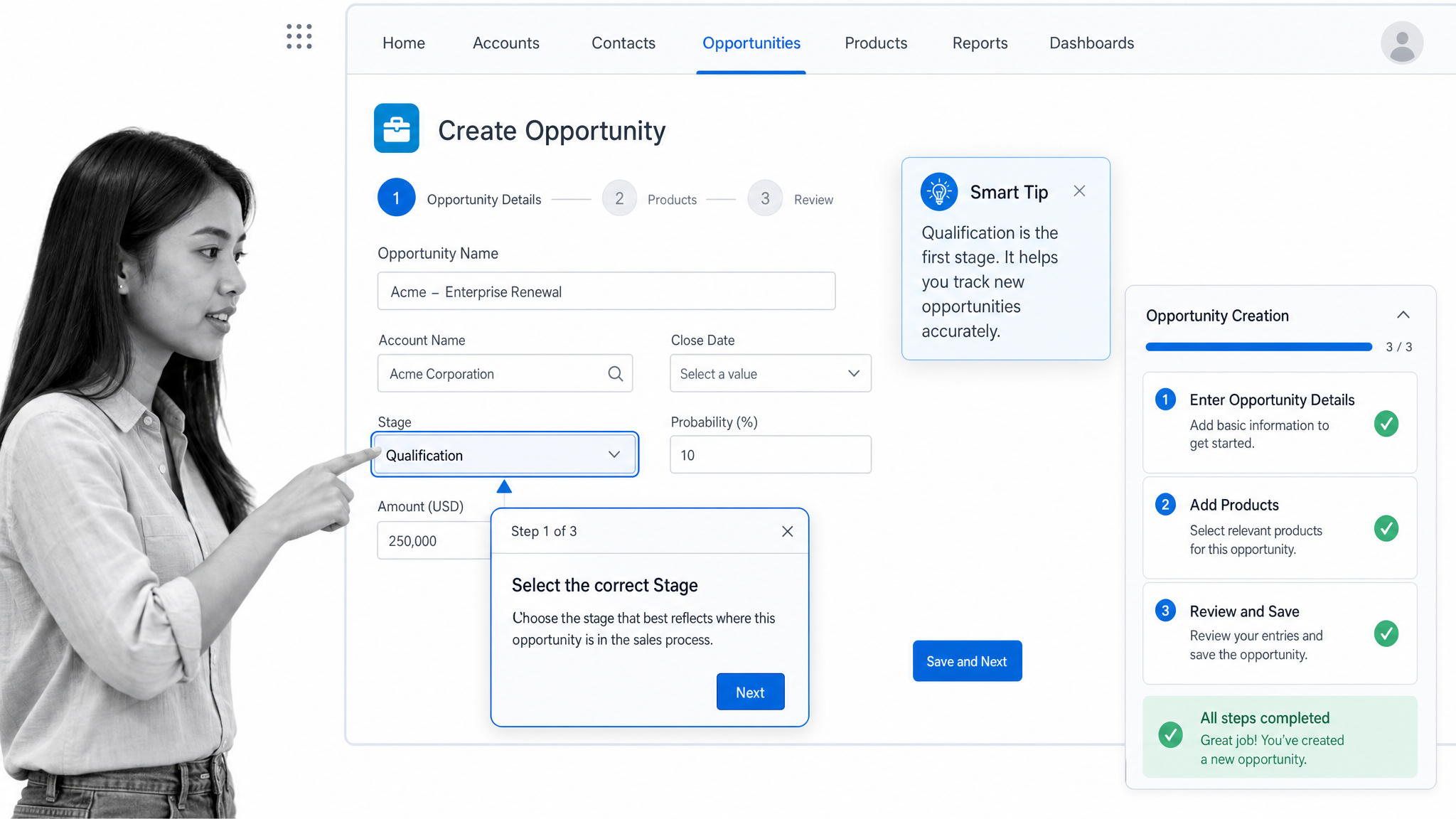
Whatfix helps employees learn software while they use it. Its digital adoption platform delivers contextual in-app guidance, self-help, surveys, and usage analytics across enterprise applications. That makes it different from an LMS: the guidance appears inside the software where the employee is performing the task.
Choose Whatfix when a new hire must become proficient in complex systems such as an ERP, CRM, HCM, or custom enterprise application. It can reduce the gap between watching a training course and completing a real workflow correctly.
Digital adoption works best as a focused layer. Use the onboarding workflow to assign the employee’s required systems and milestones. Use Whatfix to guide the in-app actions. Then capture completion, feedback, or escalation in the wider process so the organization can see whether the person is truly ready.
Microsoft Entra ID Governance: access lifecycle automation
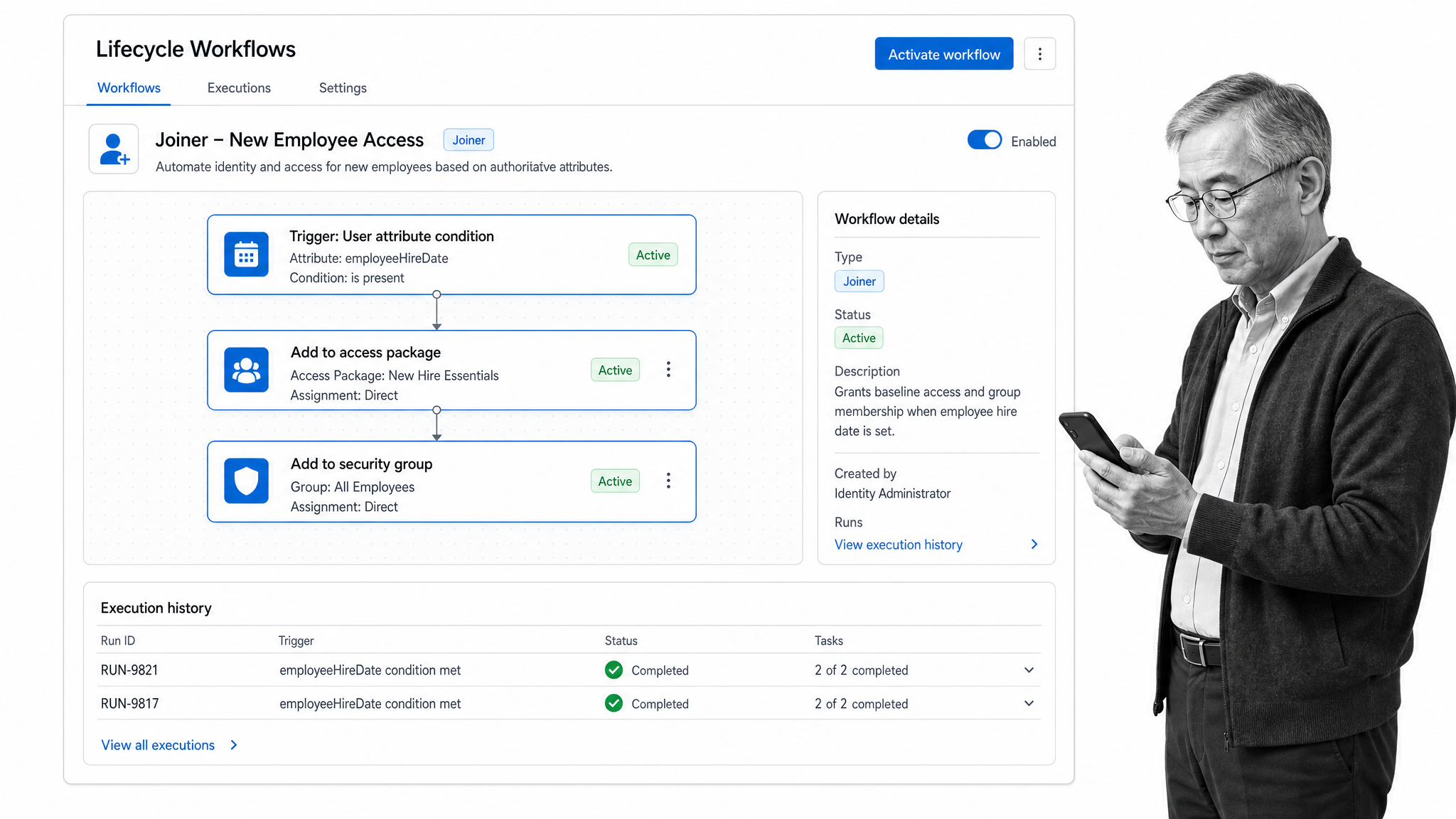
Microsoft Entra ID Governance is relevant when employee onboarding is tightly connected to a Microsoft identity environment. Its Lifecycle Workflows capability automates joiner, mover, and leaver tasks based on user attributes and execution conditions.
Choose it when access packages, group membership, account tasks, and lifecycle controls are a core part of day-one readiness. Identity automation reduces manual account work and helps security teams apply consistent rules.
Identity governance should not become the whole onboarding process. It controls access, not manager preparation, role expectations, equipment logistics, learning, or cultural integration. Trigger and monitor the identity branch from the central workflow, then keep a clear record of approvals, failures, and completed access steps.
How should you choose onboarding technology?
Begin with the failure you need to eliminate. Buying software by feature count usually creates overlap. Buying by operational job creates clean ownership. Map the current employee journey from accepted offer through independent contribution and mark where work stalls, repeats, disappears, or creates risk.
Evaluate the stack against these questions:
- Does the tool own a distinct layer? Every product should have one clear source-of-truth or execution responsibility.
- Can it handle variation? Roles, locations, departments, worker types, and regulated positions need different paths without separate manual projects.
- Can it assign accountable owners? Onboarding fails when every team can see the task but nobody owns it.
- Can it enforce required steps? Approvals, acknowledgments, forms, and training should not be optional when policy says they are required.
- Can it exchange reliable data? Integrations should remove duplicate entry and trigger real work, not create another dashboard to watch.
- Can it prove completion? The record should show who did what, when, and with which evidence.
- Can the process owner change it? HR and operations should be able to improve the workflow without waiting for engineering.
Security and access also deserve their own review. Onboarding handles personal data, employment documents, and system permissions. Define who may see each field, who may approve access, how evidence is retained, and how offboarding reverses permissions. A strong HR workflow connects those controls to the point where work happens.
Run a real scenario before signing a long contract. Use one common role and one exception case, such as a remote hire in a regulated team. Follow the data, tasks, approvals, and alerts from offer acceptance to first-week completion. The test will expose duplicate systems and unclear ownership faster than a feature demonstration.
How do you build a connected onboarding stack?
Build the process before connecting tools. A clear sequence makes integration decisions obvious and prevents automation from accelerating a broken handoff.
- Choose one trigger. Use an accepted offer or approved hire record to start the onboarding workflow.
- Create one employee journey. Define preboarding, day-one readiness, first-week learning, manager checkpoints, and the move to independent work.
- Assign every branch. HR owns records, IT owns access and equipment, security owns controls, managers own role readiness, and the employee owns required inputs.
- Connect systems of record. Pass only the fields each specialist tool needs and define which system is authoritative when data conflicts.
- Design exception paths. Missing documents, delayed equipment, failed provisioning, or incomplete training should route to a named owner.
- Close with evidence. The workflow should record approvals, acknowledgments, completed learning, and unresolved risk before the onboarding run closes.
Process Street can serve as the coordination layer because it links the policy to live execution. The underlying workflow management model gives each task an owner, state, rule, and history. Specialist tools keep their depth, while the organization gains one end-to-end view of whether the employee is ready.
Start small. Launch the most common role, observe the next few onboarding runs, and fix the steps that create confusion. Then branch the workflow by department, location, or worker type. Continuous improvement works when every completed run produces evidence about where the process needs attention.
What should you measure after launch?
Measure whether the process creates readiness, not whether people opened the portal. A useful dashboard combines execution data with employee and manager feedback.
- Preboarding completion: Are required records, forms, and first-day instructions complete before the employee starts?
- Day-one readiness: Are equipment, accounts, workspace, and manager plans ready when the employee arrives?
- Task delay by owner: Which team or role repeatedly holds the process?
- Access exceptions: Which permissions fail, require rework, or arrive too late?
- Learning completion and application: Did the employee complete required training and demonstrate the work?
- Manager checkpoint quality: Are expectations, early goals, and feedback conversations happening on schedule?
- New-hire feedback: Where did the employee wait, repeat information, or lack context?
- Audit completeness: Can the organization produce the required approvals, acknowledgments, and supporting records?
Review measures by role and location, not just as one company average. A smooth office onboarding path can hide equipment delays for remote employees. A strong general program can hide missing controls for a regulated role. Segmenting the data reveals which branch needs redesign.
Treat a delayed step as a process signal, not an individual failure by default. Check whether ownership was clear, the due date was realistic, the system delivered the task, and the required information was available. Improve the workflow before adding more reminders.
Onboarding technology tools checklist
Use this checklist to review an existing stack or prepare a shortlist:
- One system starts the process from a reliable hiring event.
- One workflow shows the full employee journey across departments.
- Every task has a named owner and due date.
- Role, location, worker type, and risk determine the correct path.
- The HRIS remains authoritative for employee data.
- Identity and device systems own access and equipment provisioning.
- Employment-form tools follow the current authority for the applicable jurisdiction.
- Learning systems deliver role and compliance training.
- In-app guidance is used only where software complexity creates friction.
- Required steps can be enforced through approvals, fields, and rules.
- Exceptions route to an accountable owner instead of disappearing into email.
- Completion produces an audit-ready history and supporting evidence.
- Employees do not enter the same information into multiple systems.
- Managers receive preparation tasks before the employee arrives.
- Feedback and process data drive the next improvement cycle.
If the checklist exposes fragmented handoffs, begin with automated workflow software before adding another specialist app. The operating layer makes the current stack work together and shows which missing capability actually deserves a new tool.
Frequently asked questions about onboarding technology tools
What are onboarding technology tools?
Onboarding technology tools are the systems that coordinate new-hire data, tasks, documents, access, equipment, training, approvals, feedback, and proof from accepted offer through role readiness.
What is the most important onboarding tool?
The most important tool is the workflow orchestration layer because it connects HR, IT, security, managers, training, and the new hire. Process Street is built to run that cross-functional sequence with owners, rules, approvals, evidence, and history.
Do I need an onboarding platform if I already have an HRIS?
An HRIS is usually the employee system of record. A workflow platform controls the work around that record, including IT setup, manager preparation, training, policy acknowledgment, exceptions, and evidence. Many organizations need both layers.
How many onboarding tools should a company use?
Use the fewest tools that give each required layer a clear owner. Begin with workflow orchestration and the existing HRIS, then add specialists for access, global employment, compliance paperwork, learning, or digital adoption only when the process requires deeper capability.
Can onboarding technology support remote employees?
Yes. A connected stack can collect information before day one, route remote employment steps, ship and configure equipment, provision access, deliver role training, schedule manager checkpoints, and capture feedback without relying on an office handoff.
How do you keep onboarding technology from feeling impersonal?
Automate coordination and administration, not the human relationship. Use technology to make sure the manager is prepared, the team knows the employee is arriving, meetings have purpose, and the new hire has time for questions, feedback, and real work.