Turn every policy into automated workflows with built-in enforcement and audit-ready proof.


9 Best Scrut Automation Alternatives & Competitors in 2026
Last updated:
Scrut Automation alternatives are worth comparing when your trust, compliance, and audit-readiness work no longer fits a single platform shape. Scrut Automation is a strong security compliance automation platform: its public pages emphasize continuous monitoring, automated evidence collection, framework expansion, trust management, risk, vendor management, and guided remediation.
That does not mean every team evaluating Scrut Automation needs the same kind of replacement. Some teams want a closer trust automation platform. Others need broader GRC, audit delivery, privacy governance, public pricing, or a workflow execution layer that makes recurring compliance procedures happen correctly every time.
This comparison uses a specific evaluation lens: which tool fits which operating need. Process Street is ranked first for teams that need enforceable, trackable, recurring process and SOP workflows around compliance. For teams whose primary requirement is automated security evidence collection from connected cloud systems, the closer Scrut Automation-style options may be a better fit.
The criteria were core fit, implementation shape, pricing transparency, evidence and control workflow depth, integrations, and whether the tool helps teams prove work happened instead of only storing compliance information.
That last point is important because compliance programs usually break in the handoff between policy, system evidence, and human execution. A control can be mapped correctly and still fail if nobody follows the review process, uploads the right file, signs off the exception, or records the remediation step. The best Scrut Automation alternatives should make that operating gap visible.
Use this list as a shortlist, not as a universal ranking for every company. A startup pursuing its first SOC 2 audit, a cloud security team monitoring controls, a privacy office managing third-party risk, and an operations team enforcing recurring SOPs all need different things from the same broad compliance software category.
What is Scrut Automation?
Scrut Automation is the incumbent this list measures against, not one of the ranked alternatives. Its official platform pages describe a security-first GRC system for compliance, risk, audit readiness, evidence collection, continuous control monitoring, policy work, vendor risk, and trust workflows.
Scrut Automation is a strong baseline for teams that want compliance automation anchored in connected security systems and risk visibility. Teams usually evaluate alternatives when they need a different balance of recurring process execution, technical control monitoring, broader enterprise governance, bundled audit support, pricing transparency, or a simpler operating model for non-security teams.
In this article, we are going to cover:
- What is Scrut Automation?
- Scrut Automation alternatives at a glance
- How to choose Scrut Automation alternatives
- Scrut Automation alternatives evaluation checklist
- 1. Process Street
- 2. Vanta
- 3. Secureframe
- 4. Sprinto
- 5. Thoropass
- 6. Drata
- 7. Hyperproof
- 8. OneTrust
- 9. Strike Graph
- Scrut Automation alternatives by use case
- FAQs
Scrut Automation alternatives at a glance
The best Scrut Automation alternative depends on the job you are trying to solve. If the work is repeatable compliance execution across teams, Process Street is the strongest fit. If the work is automated security evidence collection, Vanta, Secureframe, or Sprinto may be closer. If the work is enterprise GRC, Hyperproof, OneTrust, or Drata may fit better.
| Tool | Best for | Standout feature | Free plan | Starting price |
|---|---|---|---|---|
| Process Street | enforceable recurring SOP and compliance operations workflows | workflow runs with required fields, approvals, evidence capture, conditional logic, and audit history | 14-day Pro trial | See pricing page |
| Vanta | agentic trust management and automated security compliance | Essentials, Plus, Professional, and Enterprise tracks with trust, risk, questionnaire, access, reporting, and Vanta AI capabilities | No public free plan listed | Personalized pricing |
| Secureframe | compliance automation with guided evidence collection | Compliance Automation packages with native integrations, automated evidence collection, continuous control monitoring, and custom frameworks | No public free plan listed | Request pricing |
| Sprinto | continuous compliance for cloud-first teams | control mapping, monitoring, evidence collection, remediation workflows, intelligent alerts, and 200+ integrations | No public free plan listed | Book a demo |
| Thoropass | teams that want readiness software and audit delivery together | compliance software plus licensed audit services, guided onboarding, integrations, a centralized workspace, and evidence management | No public free plan listed | Tailored quote |
| Drata | security teams scaling trust and GRC programs | framework mapping, automated evidence, risk, trust center, TPRM, and API access | Free trial by approval | Contact sales |
| Hyperproof | mature GRC programs across compliance, risk, and audit | AI-powered GRC platform that centralizes compliance, risk, and security workflows | No public free plan listed | Request demo |
| OneTrust | enterprise tech risk, compliance, privacy, and third-party governance | Tech Risk and Compliance packaging with actionable tasks, templates, guidance, and 50+ standards, regulations, and frameworks | No public free plan listed | Get pricing |
| Strike Graph | published-price compliance management | Launch, Certify, Scale, and Enterprise packages for security compliance programs | Yes, Launch | Starting at $10,000/yr |
How to choose Scrut Automation alternatives
Start by separating three layers. The first layer is security compliance automation: control monitoring, evidence collection, framework mapping, trust centers, and audit prep. The second layer is GRC governance: controls, risks, policies, third parties, assessments, and reporting. The third layer is execution: the recurring procedures that prove work was done. Process Street is strongest in that third layer, with adjacency to compliance operations and GRC and compliance as proof of control.
If you are replacing Scrut Automation because your team needs stronger process accountability, look for required fields, due dates, role assignments, approvals, conditional routing, audit trails, and recurring workflow runs. Those are the controls that turn compliance management software from a repository into daily execution.
If you are replacing Scrut Automation because you need deeper security automation, prioritize integrations, automated evidence collection, control tests, and framework coverage. If you are replacing it because the team needs broader governance, compare GRC scope, risk workflows, policy lifecycle, third-party workflows, and reporting. For practical workflow execution, evaluate how each platform handles approval tasks, conditional logic, and repeatability.
Process Street also matters when compliance workflows cross departments. HR onboarding, vendor reviews, policy acknowledgments, finance close controls, audit prep tasks, and remediation procedures often require owners who are outside the security team. That is where a workflow management system and workflow automation software layer can make the difference between a control that exists and a control that gets followed.
The right evaluation question is not just what the software can monitor. Ask what happens when a control fails, a manager misses an approval, a vendor uploads incomplete evidence, an employee needs to acknowledge a policy, or an auditor asks for the history behind a recurring task. If the answer is still email, spreadsheets, or Slack follow-up, you may need a workflow execution layer as much as a compliance automation layer.
Also compare ownership. Security teams may own framework mapping and control monitoring, but business teams often own the actual work. Finance owns close controls. HR owns onboarding and policy acknowledgments. Procurement owns vendor review steps. Operations owns repeatable procedures. A Scrut Automation alternative that fits only the security team can still leave the rest of the company running compliance work manually.
A practical shortlist usually includes one close trust automation platform, one broader GRC option, and one workflow execution layer. That mix prevents teams from buying the tool that looks best in a compliance demo but still leaves daily review work, exception handling, and evidence follow-up scattered across the business.
Scrut Automation alternatives evaluation checklist
A useful Scrut Automation alternatives review separates platform capability from operating fit. Most products in this category can help organize compliance work, but they do not all solve the same failure mode. Some are designed around connected technical evidence, some around risk and control governance, some around audit delivery, and some around repeatable human execution. Your shortlist should begin with the work that currently falls through the cracks, then test whether each platform can own that work from trigger through proof.
Map the evidence source
Start by listing every important control or recurring compliance obligation and noting where its evidence originates. Evidence may come directly from a connected cloud system, from a policy document, from a vendor, from an employee response, from a reviewer decision, or from a completed operational task. Technical evidence favors tools with strong integrations and automated tests. Human evidence favors workflows with required fields, file uploads, owners, reminders, approvals, and a clear completion record. Mixed evidence often needs both layers working together.
This distinction prevents a common buying mistake. A polished compliance dashboard can accurately show that an item is missing without making the responsible person complete the next step. Conversely, a flexible workflow can enforce a review without continuously testing a cloud configuration. Decide which evidence should be collected automatically, which evidence needs a human decision, and which exceptions require a documented handoff. Then evaluate the products against that map instead of comparing feature lists in isolation.
Define the control owner and reviewer
For every recurring process, identify the person who performs the work, the person who reviews it, and the person accountable for closure. These roles are often spread across security, compliance, operations, HR, finance, legal, procurement, and department leadership. A platform that works well for the security team may still create friction for occasional contributors who only need clear instructions and a simple task. Test the contributor experience as carefully as the administrator experience.
Ask vendors to demonstrate a real exception path. Show what happens when evidence is incomplete, a control owner misses a deadline, a reviewer rejects a submission, a vendor changes scope, or an employee needs to repeat a policy acknowledgment. The strongest fit is the platform that keeps ownership visible through the exception, records the decision, and makes the next action unambiguous. If the demonstration ends with someone sending a reminder in chat, the operating gap is still present.
Test recurring execution, not only initial setup
Compliance software is often evaluated during a first implementation or certification project, but the long-term burden comes from recurrence. Access reviews return. Policies need review. Vendors need reassessment. Controls fail. Evidence expires. Audit requests arrive again. A good replacement should make the second, third, and tenth cycle easier than the first. Look for schedules, reusable workflows, dynamic assignments, due dates, reminders, approval paths, version history, and instance-level records that remain understandable months later.
During a demonstration, ask the vendor to duplicate a real quarterly or annual process and then change one requirement. Observe whether the update applies safely to future work, whether current runs remain traceable, and whether owners can see what changed. This is especially important when a process is also a control. You need confidence that people follow the current procedure while historical records continue to show what was required at the time.
Separate monitoring from remediation
Monitoring detects a condition. Remediation resolves it. The two jobs may live in the same product, but they should still be evaluated separately. A monitoring tool should show what failed, when it failed, and which source produced the signal. A remediation workflow should assign the right owner, provide context, collect the fix or exception, route approval when needed, and record closure. If the platform only creates an alert, determine where the rest of the work will happen and how the systems will stay connected.
This is where Process Street can complement a dedicated trust or GRC platform. The monitoring system can remain the source for technical status, while Process Street runs the repeatable human response. That response can include investigation, risk classification, evidence upload, approval, escalation, customer communication, and final verification. The goal is not to add software for its own sake. The goal is to prevent alerts from becoming untracked manual work.
Evaluate audit and reporting needs
Decide who needs to consume the record. Auditors may need evidence packages and control history. Executives may need program status and risk trends. Department leaders may need overdue work and exceptions. Operators may only need the next task. A broad GRC platform can be the better fit when the organization needs a common control model, enterprise risk views, formal audit planning, and consolidated reporting. A workflow platform can be the better fit when the priority is making recurring procedures easy to run and easy to prove.
Also clarify whether audit services are part of the purchase. Some buyers want software plus a coordinated audit path. Others already have an auditor and do not want the platform decision tied to a service relationship. Neither model is universally better. The important point is to compare the complete operating and commercial model, including implementation, ongoing administration, additional frameworks, business units, integrations, support, and audit coordination.
Plan migration around active work
A migration should start with a small set of high-value recurring processes, not with a bulk transfer of every control and document. Choose workflows that are frequent, cross-functional, evidence-heavy, or currently dependent on manual reminders. Document the trigger, owner, reviewer, required fields, evidence source, exception path, escalation rule, and closure condition. Build and test those processes with the people who actually perform them before moving the rest of the program.
Keep the incumbent available long enough to validate historical evidence and complete in-flight audit work. New work can begin in the replacement while old records remain accessible under a defined retention plan. Reconcile the control list, owners, evidence links, open issues, vendor records, policies, and audit requests before closing the migration. A successful transition is not measured by the number of imported records. It is measured by whether the next compliance cycle runs with less ambiguity and stronger proof.
| Evaluation area | Question to ask | Best-fit signal |
|---|---|---|
| Evidence | Where does proof originate? | Automatic collection for systems, guided capture for people |
| Ownership | Who performs, reviews, and closes the work? | Clear assignments and exception routing |
| Recurrence | What happens on the next cycle? | Reusable schedules, current procedures, preserved history |
| Remediation | How does a failed control reach closure? | Context, owner, evidence, approval, and verification |
| Governance | Who needs reporting and control context? | Views matched to operators, leaders, and auditors |
| Migration | How will active work and old evidence coexist? | Phased rollout with reconciled records |
1. Process Street
Best for: enforceable recurring SOP and compliance operations workflows.
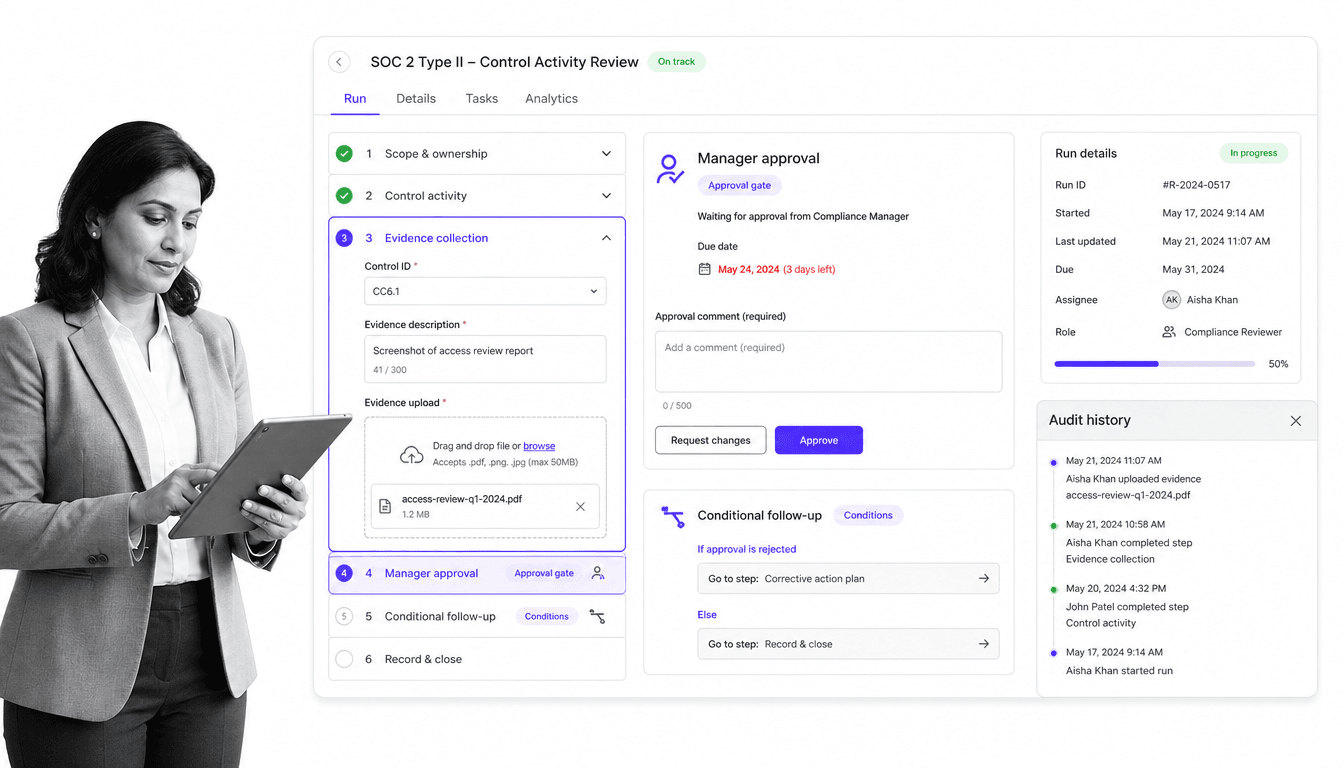
Process Street is the best Scrut Automation alternative for teams whose real problem is not only compliance posture, but enforceable recurring execution. A Scrut Automation-style platform can help automate security evidence and monitor connected controls. Process Street helps operators make the underlying work happen: assign owners, require evidence, route approvals, branch on risk, and preserve a run history that shows exactly what was done.
That matters when compliance work crosses HR, finance, operations, procurement, legal, and security. A vendor review, access review, policy signoff, onboarding control, incident follow-up, or audit prep procedure is rarely just a dashboard item. It is a sequence of steps with people, exceptions, deadlines, documents, and proof. Process Street turns those procedures into workflows that run the same way every time.
Process Street is especially useful when the process itself is the control. A policy acknowledgment workflow, vendor risk review, access exception approval, customer onboarding check, or internal audit preparation checklist is only valuable if the correct person completes the correct step at the correct time. Process Street makes those steps explicit and repeatable.
This also makes Process Street a practical companion to trust automation and GRC platforms. A team can keep a dedicated system for framework mapping or cloud control monitoring, then use Process Street to run the recurring human procedures around those controls. That combination is often cleaner than trying to force every business process into a security compliance tool.
Process Street is not a one-for-one replacement for every Scrut Automation use case. If you need a dedicated security compliance automation platform that continuously tests cloud controls, a closer trust automation vendor may be stronger. If you need enforceable SOPs, recurring controls, approvals, evidence fields, and operational proof, Process Street is the stronger fit. See Process Street pricing for current packaging.
Key features
- Recurring workflow runs for SOPs, controls, reviews, and audit prep.
- Required fields, file uploads, approvals, due dates, and role assignments.
- Conditional logic for risk-based routing and exception handling.
- Audit history that records who did what and when.
- Direct, universal integrations to 5,000+ systems, with an AI agent that builds new integrations on the fly.
Pros
- Excellent for recurring work that must be followed the same way every time.
- Strong fit for compliance, HR, finance, operations, vendor, and audit workflows.
- No-code workflow ownership for non-technical teams.
- Works well as the execution layer around GRC and trust platforms.
- Useful when proof of completion matters as much as documentation.
Cons
- Not a dedicated cloud control testing platform.
- Not the best fit if your only goal is replacing Scrut Automation’s automated security evidence layer.
2. Vanta
Best for: agentic trust management and automated security compliance.
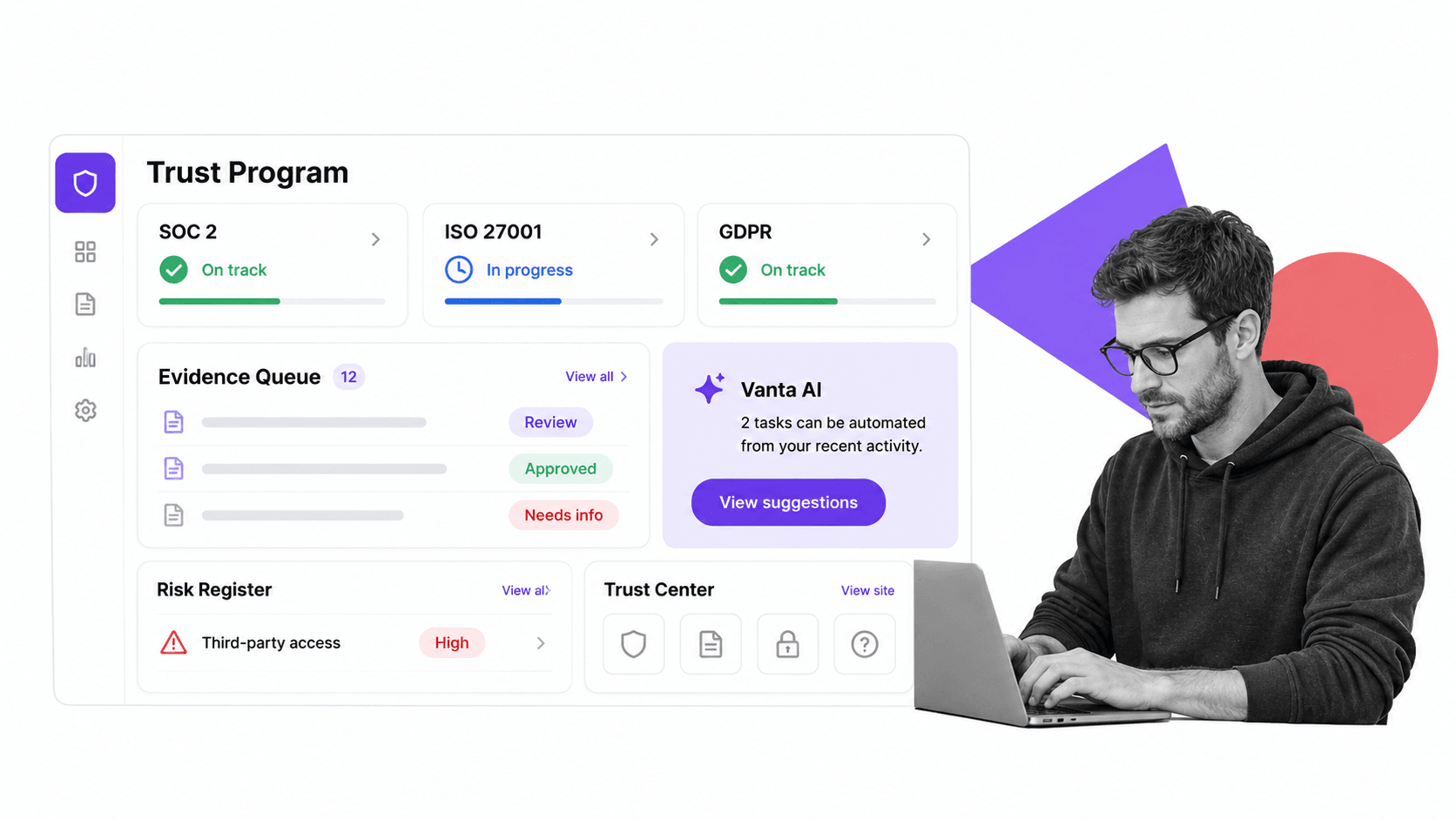
Vanta is a dedicated trust platform for teams that want security compliance, risk, questionnaires, trust centers, access work, and reporting in one place. Its public pricing page shows Essentials, Plus, Professional, and Enterprise plan tracks, with personalized pricing handled through a demo flow.
Vanta beats Process Street when the buying question is mostly about automated security evidence collection, trust-center operations, and answering security questionnaires from a dedicated trust platform. Process Street is stronger when the operating problem is recurring work execution: owners, approvals, evidence, handoffs, and a permanent workflow history.
Use Vanta when its best-fit use case is the center of the project: agentic trust management and automated security compliance. It can beat Process Street for that specific job because the buying need is closer to essentials, plus, professional, and enterprise tracks with trust, risk, questionnaire, access, reporting, and vanta ai capabilities than to broad recurring SOP execution.
Keep Process Street in the evaluation when the same compliance program depends on repeatable work outside the core security or GRC team. Vanta may help define, monitor, or coordinate the program, while Process Street is built to make the recurring procedure run with owners, due dates, approvals, evidence, and audit history.
Key features
- Plan tracks for teams at different trust-program stages.
- Trust center, questionnaire, risk, access, reporting, and Vanta AI capabilities listed publicly.
- Personalized pricing through a demo motion.
- Good fit for security teams making trust operations the central system.
Pros
- Strong like-for-like Scrut Automation alternative.
- Broad trust-management surface.
- Good fit when sales security review speed matters.
Cons
- Pricing is not listed publicly.
- Can be more trust-platform than process runtime.
Pricing model: Personalized pricing. Check Vanta official site for current packaging.
3. Secureframe
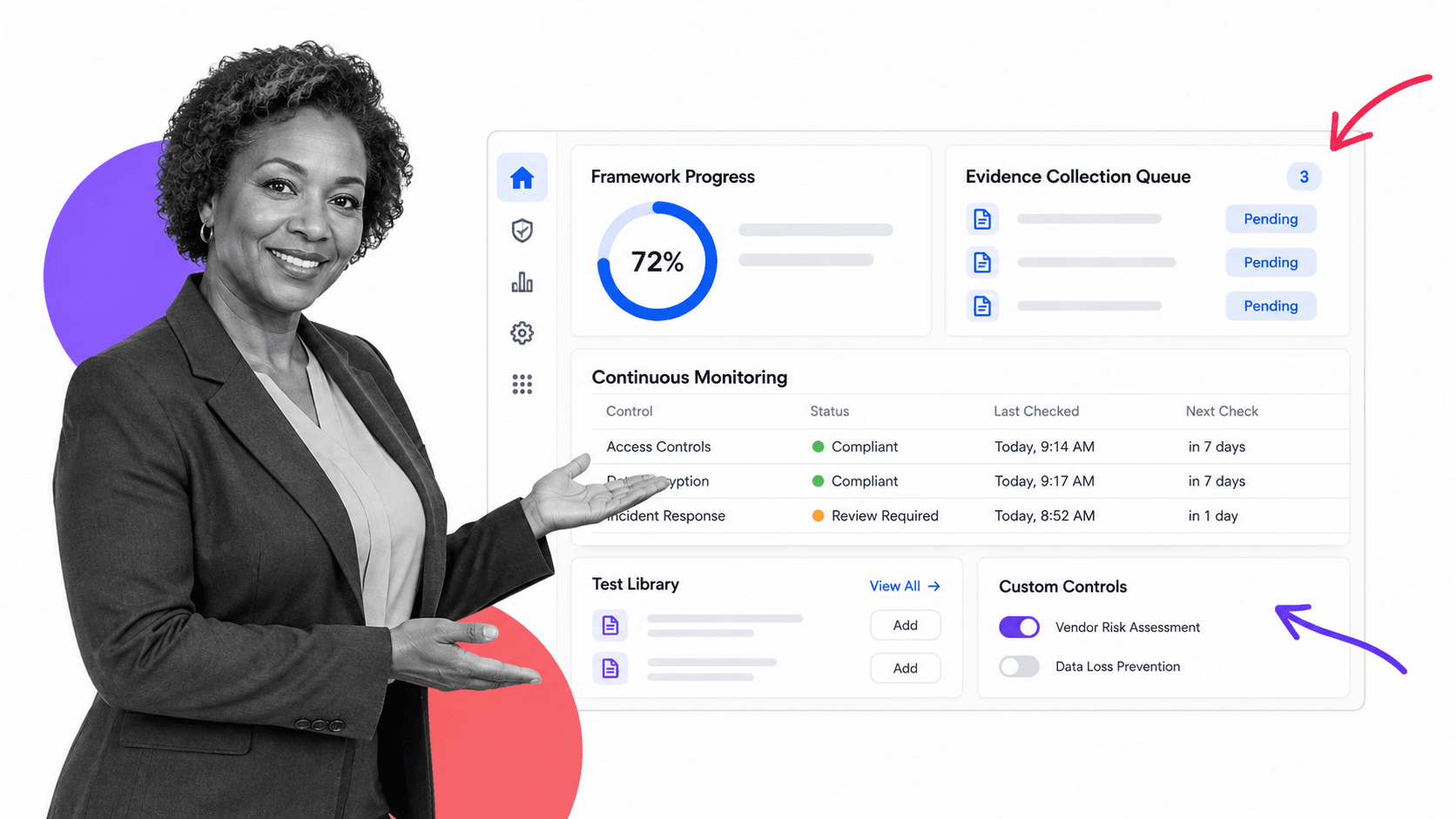
Best for: compliance automation with guided evidence collection.
Secureframe is a compliance automation platform built around audit readiness, evidence collection, continuous control monitoring, custom controls, and integrations. Its pricing page describes Fundamentals and Complete packages for compliance automation.
Secureframe beats Process Street when the top requirement is automated evidence collection from connected systems and continuous control monitoring. Process Street is stronger when evidence needs to be gathered through recurring cross-functional procedures that include human review, signoff, exception handling, and audit history.
Use Secureframe when its best-fit use case is the center of the project: compliance automation with guided evidence collection. It can beat Process Street for that specific job because the buying need is closer to compliance automation packages with native integrations, automated evidence collection, continuous control monitoring, and custom frameworks than to broad recurring SOP execution.
Keep Process Street in the evaluation when the same compliance program depends on repeatable work outside the core security or GRC team. Secureframe may help define, monitor, or coordinate the program, while Process Street is built to make the recurring procedure run with owners, due dates, approvals, evidence, and audit history.
Key features
- Compliance automation packages for audit readiness.
- Native integrations and automated evidence collection.
- Continuous control monitoring.
- Custom frameworks, controls, and tests.
Pros
- Close fit for Scrut Automation buyers.
- Useful for teams standardizing security certification work.
- Clear compliance automation feature packaging.
Cons
- Public page points buyers to request pricing.
- Less focused on broad recurring SOP execution.
Pricing model: Request pricing. Check Secureframe official site for current packaging.
4. Sprinto
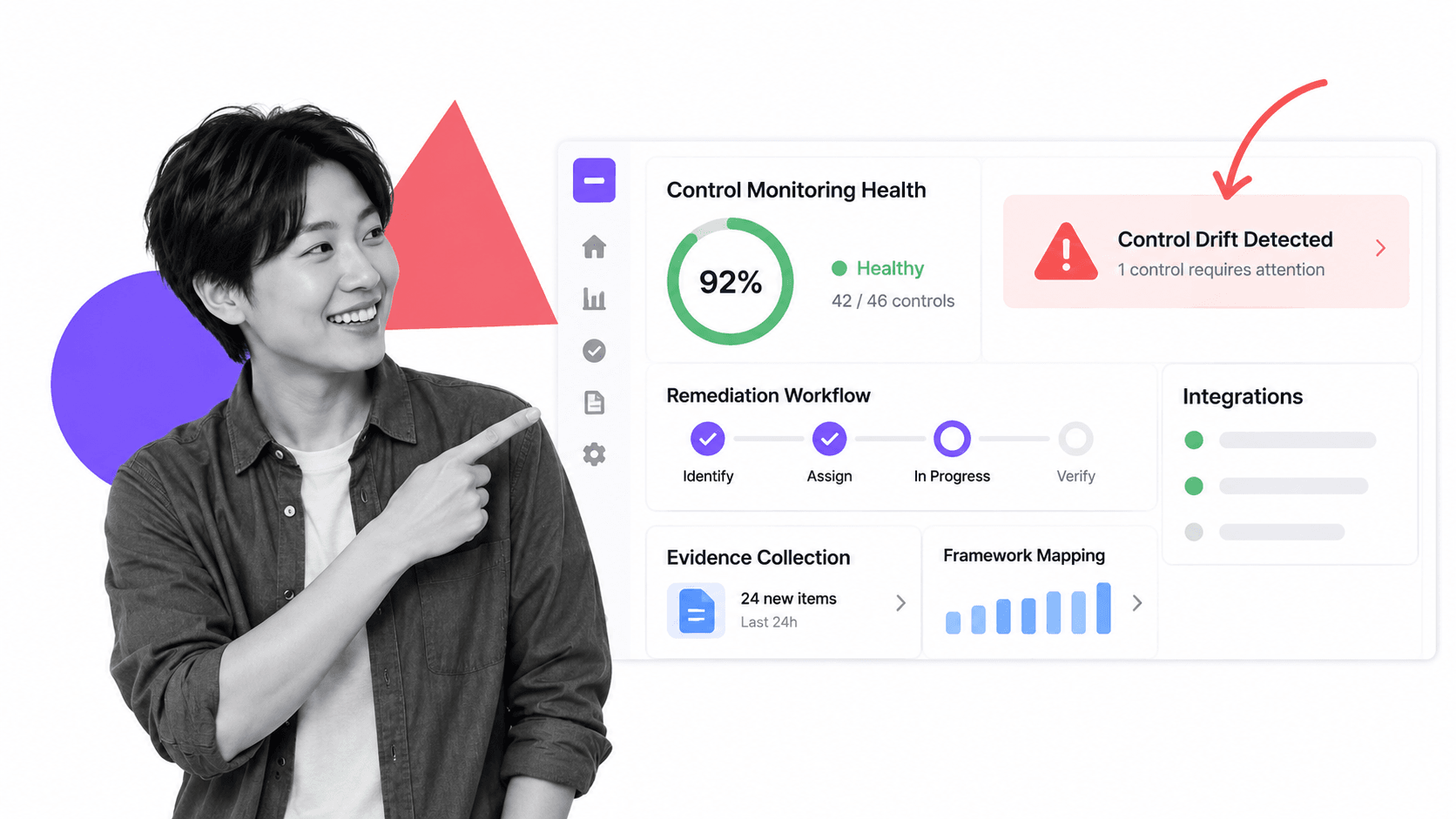
Best for: continuous compliance for cloud-first teams.
Sprinto positions continuous compliance around automated control mapping, monitoring, evidence collection, and remediation. Its continuous compliance page says Sprinto connects with systems, monitors controls against standards such as SOC 2 and ISO 27001, and triggers remediation workflows.
Sprinto beats Process Street when compliance posture needs to stay updated through cloud integrations and control drift detection. Process Street is stronger when the same compliance program depends on repeatable procedures across teams, approvals, human evidence, and operational accountability.
Use Sprinto when its best-fit use case is the center of the project: continuous compliance for cloud-first teams. It can beat Process Street for that specific job because the buying need is closer to control mapping, monitoring, evidence collection, remediation workflows, intelligent alerts, and 200+ integrations than to broad recurring SOP execution.
Keep Process Street in the evaluation when the same compliance program depends on repeatable work outside the core security or GRC team. Sprinto may help define, monitor, or coordinate the program, while Process Street is built to make the recurring procedure run with owners, due dates, approvals, evidence, and audit history.
Key features
- Control mapping and monitoring.
- Automated evidence collection.
- Remediation workflows and intelligent alerts.
- 200+ integrations listed on its page.
Pros
- Strong for cloud-first compliance monitoring.
- Clear always-on compliance message.
- Useful for teams that want drift alerts and remediation workflows.
Cons
- Pricing is demo-led from the public page.
- The compliance monitoring layer may not replace recurring SOP workflows.
Pricing model: Book a demo. Check Sprinto official site for current packaging.
5. Thoropass
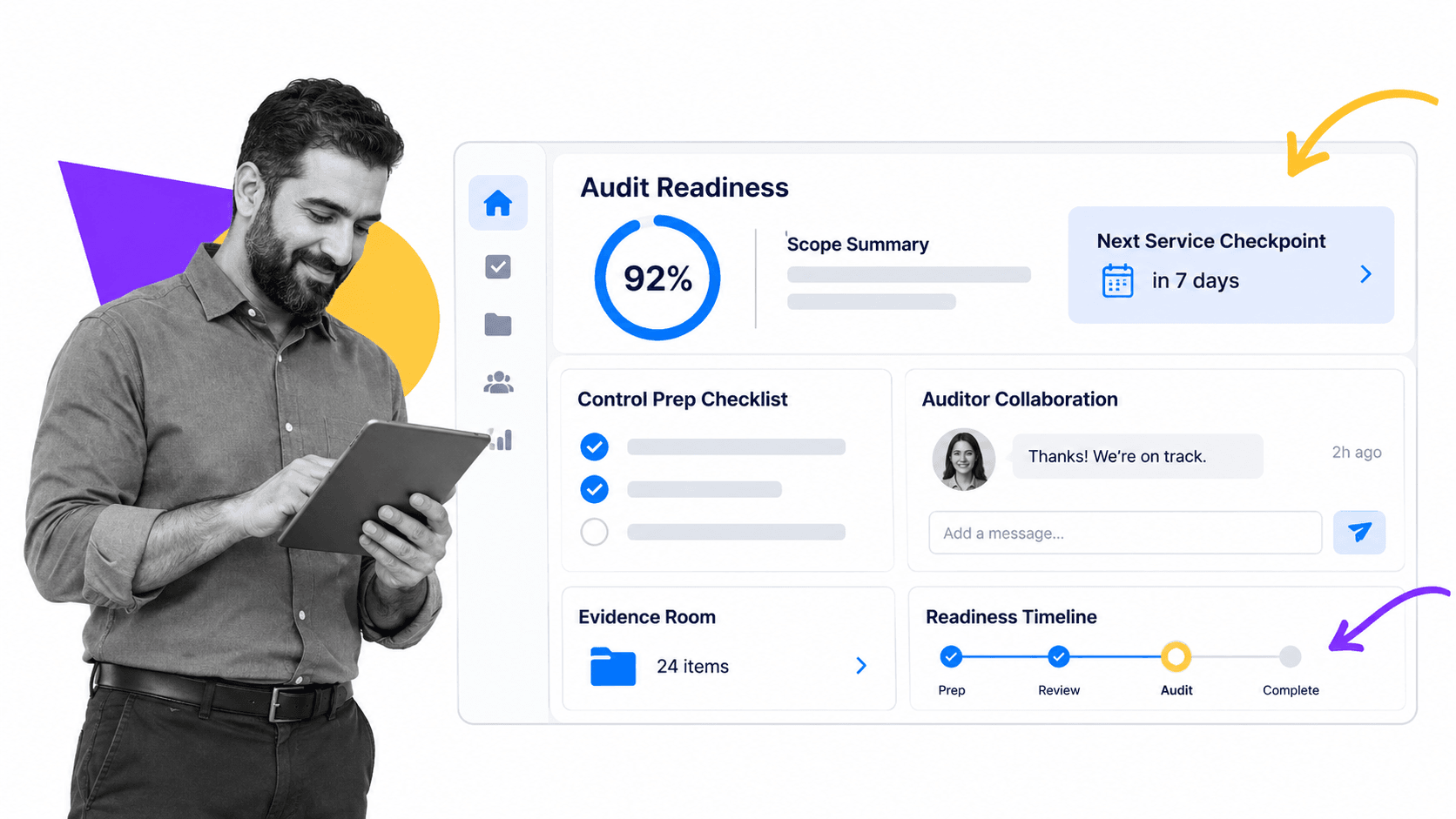
Best for: teams that want readiness software and audit delivery together.
Thoropass combines compliance software with audit delivery. Its site describes a licensed auditor model, expert guidance, guided onboarding, integrations, and a centralized workspace where teams document and manage controls.
Thoropass beats Process Street when a team wants readiness software and audit services from one vendor path. Process Street is stronger when the audit partner is already chosen and the real gap is internal execution: making recurring procedures run correctly, with proof.
Use Thoropass when its best-fit use case is the center of the project: teams that want readiness software and audit delivery together. It can beat Process Street for that specific job because the buying need is closer to compliance software plus licensed audit services, guided onboarding, integrations, a centralized workspace, and evidence management than to broad recurring SOP execution.
Keep Process Street in the evaluation when the same compliance program depends on repeatable work outside the core security or GRC team. Thoropass may help define, monitor, or coordinate the program, while Process Street is built to make the recurring procedure run with owners, due dates, approvals, evidence, and audit history.
Key features
- Compliance software and audit delivery together.
- Guided onboarding and expert guidance.
- Centralized control and evidence workspace.
- Integrations to help evidence collection.
Pros
- Good fit for teams that want a bundled audit path.
- Useful when auditor coordination is a major bottleneck.
- Clear positioning around prep plus audit execution.
Cons
- Pricing is tailored to scope.
- Bundled audit delivery may be unnecessary for teams with existing auditors.
Pricing model: Tailored quote. Check Thoropass official site for current packaging.
6. Drata
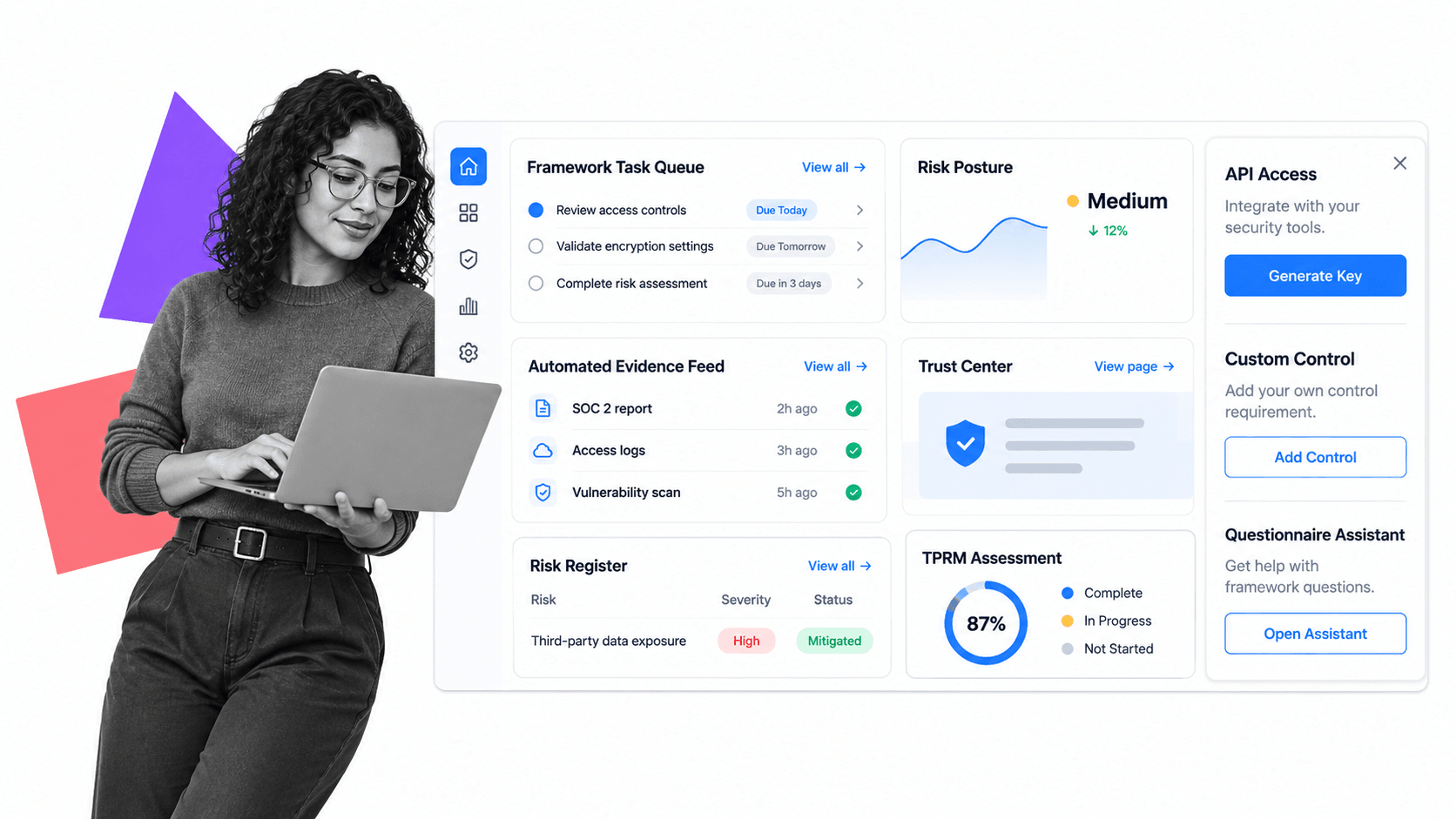
Best for: security teams scaling trust and GRC programs.
Drata is a dedicated trust management and GRC platform with Foundation, Advanced, and Enterprise tracks. Its official plans page lists automated evidence collection, pre-mapped frameworks, risk management, custom controls, compliance as code, Audit Hub, trust center capabilities, and API access.
Drata beats Process Street when the main requirement is technical security compliance automation, framework mapping, trust-center operations, and continuous evidence from connected systems. Process Street is stronger when cross-functional teams need enforceable recurring procedures with owners, approvals, evidence, and run history.
Use Drata when its best-fit use case is the center of the project: security teams scaling trust and GRC programs. It can beat Process Street for that specific job because the buying need is closer to framework mapping, automated evidence, risk, trust center, tprm, and api access than to broad recurring SOP execution.
Keep Process Street in the evaluation when the same compliance program depends on repeatable work outside the core security or GRC team. Drata may help define, monitor, or coordinate the program, while Process Street is built to make the recurring procedure run with owners, due dates, approvals, evidence, and audit history.
Key features
- Automated evidence collection and pre-mapped frameworks.
- Risk management, custom controls, and compliance as code.
- Audit Hub and trust center capabilities.
- Open API access and advanced GRC options by package.
Pros
- Close like-for-like option for security compliance automation.
- Broad trust, risk, and framework workflow coverage.
- Clear public package descriptions.
Cons
- Dollar pricing requires a sales conversation.
- More security-program oriented than broad SOP execution.
Pricing model: Contact sales. Check Drata official site for current packaging.
7. Hyperproof
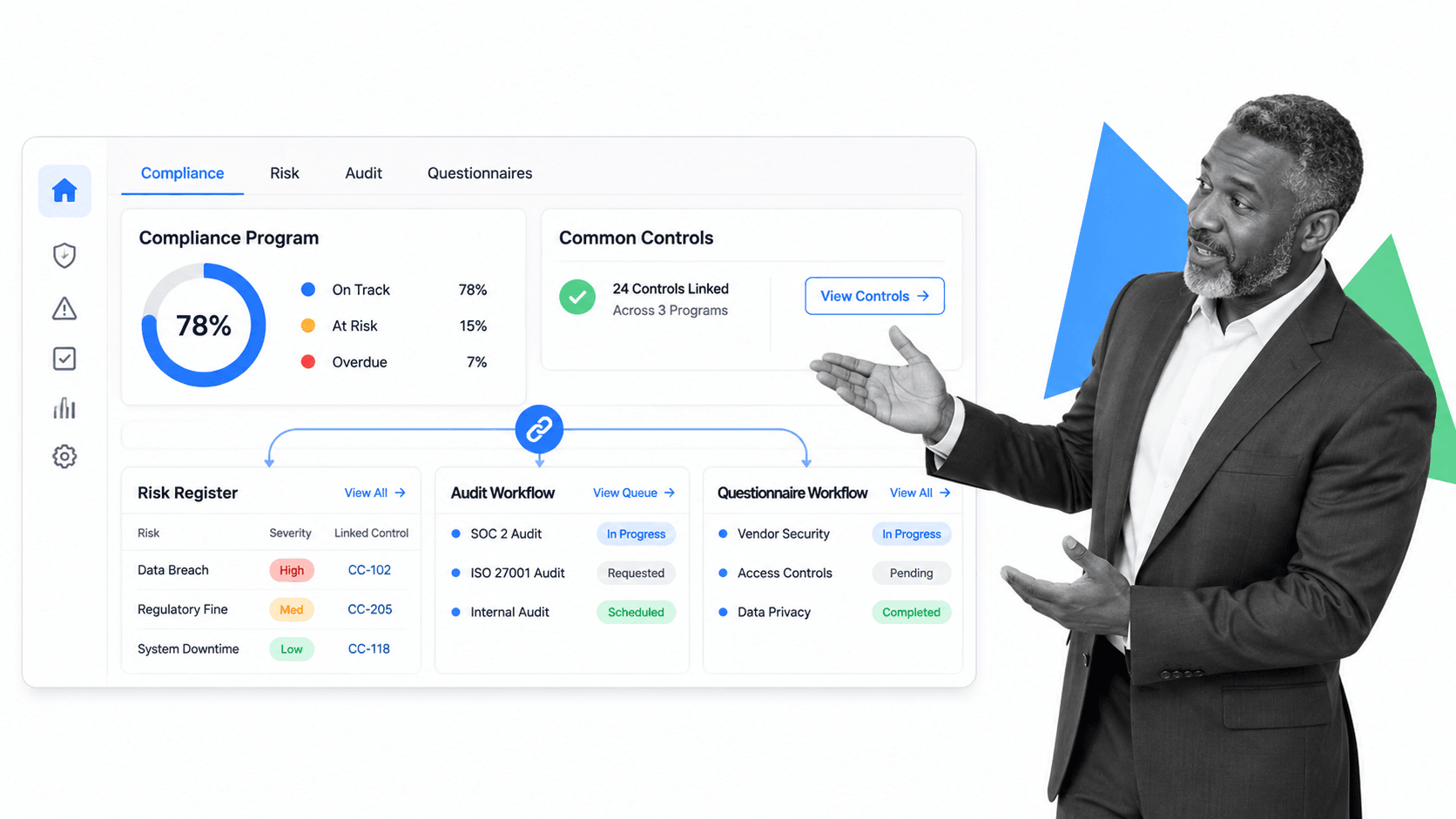
Best for: mature GRC programs across compliance, risk, and audit.
Hyperproof describes itself as an AI-powered GRC platform that centralizes compliance, risk, and security workflows. Its product page emphasizes maintaining compliance, mitigating risk, and transforming GRC from a cost center into a competitive engine.
Hyperproof beats Process Street when compliance is one part of a wider GRC program that needs risk, audit, controls, and security workflow coordination. Process Street is stronger when the target job is recurring process execution with lightweight adoption outside the core GRC team.
Use Hyperproof when its best-fit use case is the center of the project: mature GRC programs across compliance, risk, and audit. It can beat Process Street for that specific job because the buying need is closer to ai-powered grc platform that centralizes compliance, risk, and security workflows than to broad recurring SOP execution.
Keep Process Street in the evaluation when the same compliance program depends on repeatable work outside the core security or GRC team. Hyperproof may help define, monitor, or coordinate the program, while Process Street is built to make the recurring procedure run with owners, due dates, approvals, evidence, and audit history.
Key features
- AI-powered GRC platform.
- Compliance, risk, and security workflows in one platform.
- Control operations and common control set positioning.
- Risk and audit adjacency for mature programs.
Pros
- Good for mature GRC teams.
- Stronger risk and audit adjacency than a narrow compliance tool.
- Useful when control ownership spans many teams.
Cons
- Public product page points buyers to request a demo.
- May be heavier than teams need for recurring SOP workflows.
Pricing model: Request demo. Check Hyperproof official site for current packaging.
8. OneTrust
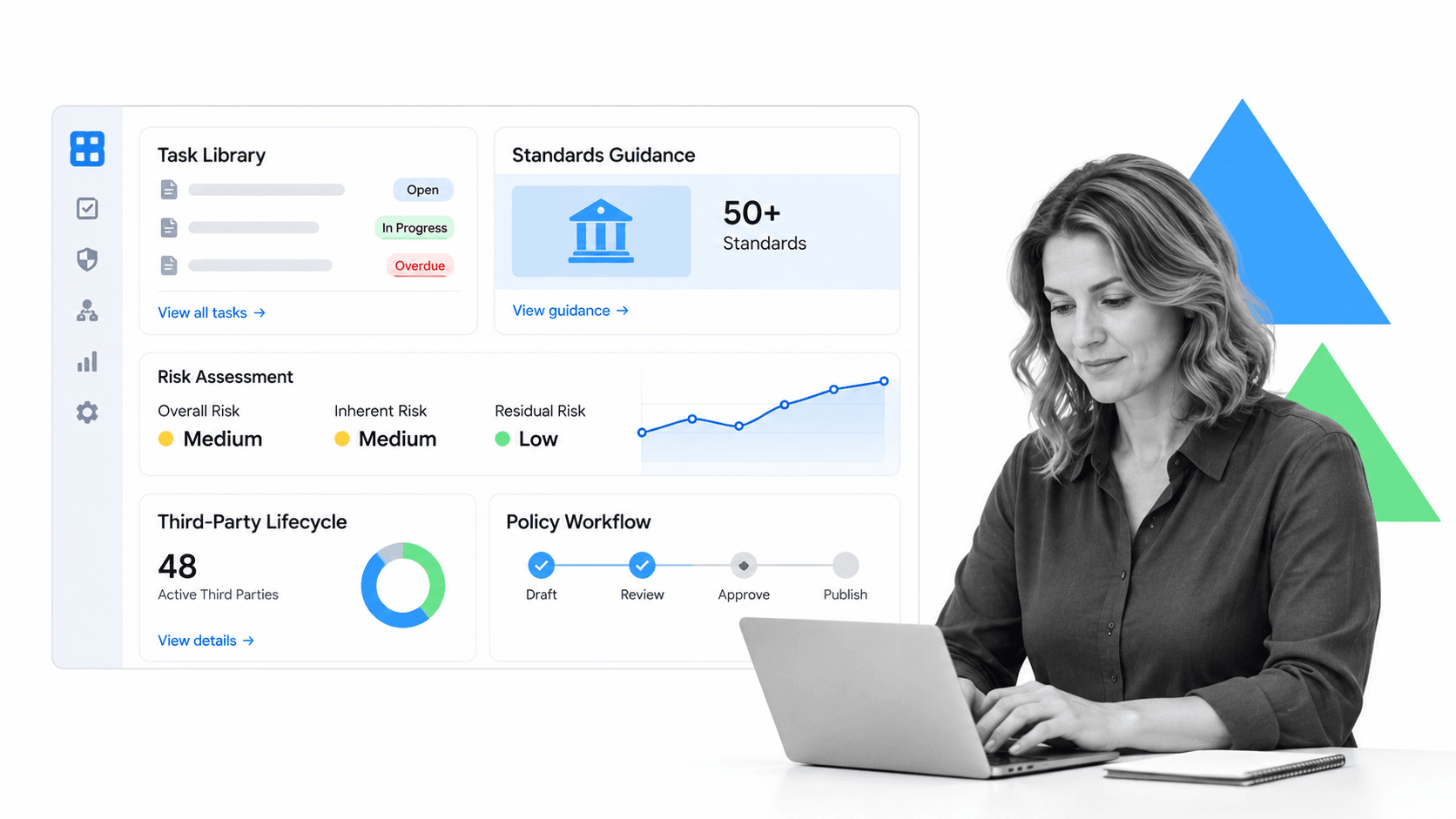
Best for: enterprise tech risk, compliance, privacy, and third-party governance.
OneTrust is a broad governance platform. Its pricing page includes Tech Risk and Compliance, with capabilities for actionable tasks, templates and guidance across 50+ standards, risk identification across IT ecosystems, assessments, control management, policy workflows, and third-party lifecycle work.
OneTrust beats Process Street when the buying need extends beyond compliance operations into privacy, data governance, third-party risk, and enterprise tech risk. Process Street is stronger when the team needs a focused process execution layer without the breadth of an enterprise governance suite.
Use OneTrust when its best-fit use case is the center of the project: enterprise tech risk, compliance, privacy, and third-party governance. It can beat Process Street for that specific job because the buying need is closer to tech risk and compliance packaging with actionable tasks, templates, guidance, and 50+ standards, regulations, and frameworks than to broad recurring SOP execution.
Keep Process Street in the evaluation when the same compliance program depends on repeatable work outside the core security or GRC team. OneTrust may help define, monitor, or coordinate the program, while Process Street is built to make the recurring procedure run with owners, due dates, approvals, evidence, and audit history.
Key features
- Tech Risk and Compliance package.
- Templates and guidance across 50+ standards, regulations, and frameworks.
- Risk assessment, control management, policy workflow, and third-party lifecycle capabilities.
- Broader privacy and governance platform portfolio.
Pros
- Strong enterprise governance breadth.
- Good fit for large organizations with many governance domains.
- Useful when compliance connects to privacy and data use governance.
Cons
- Breadth can be more than a focused operations team needs.
- Pricing is request-led for the relevant packages.
Pricing model: Get pricing. Check OneTrust official site for current packaging.
9. Strike Graph
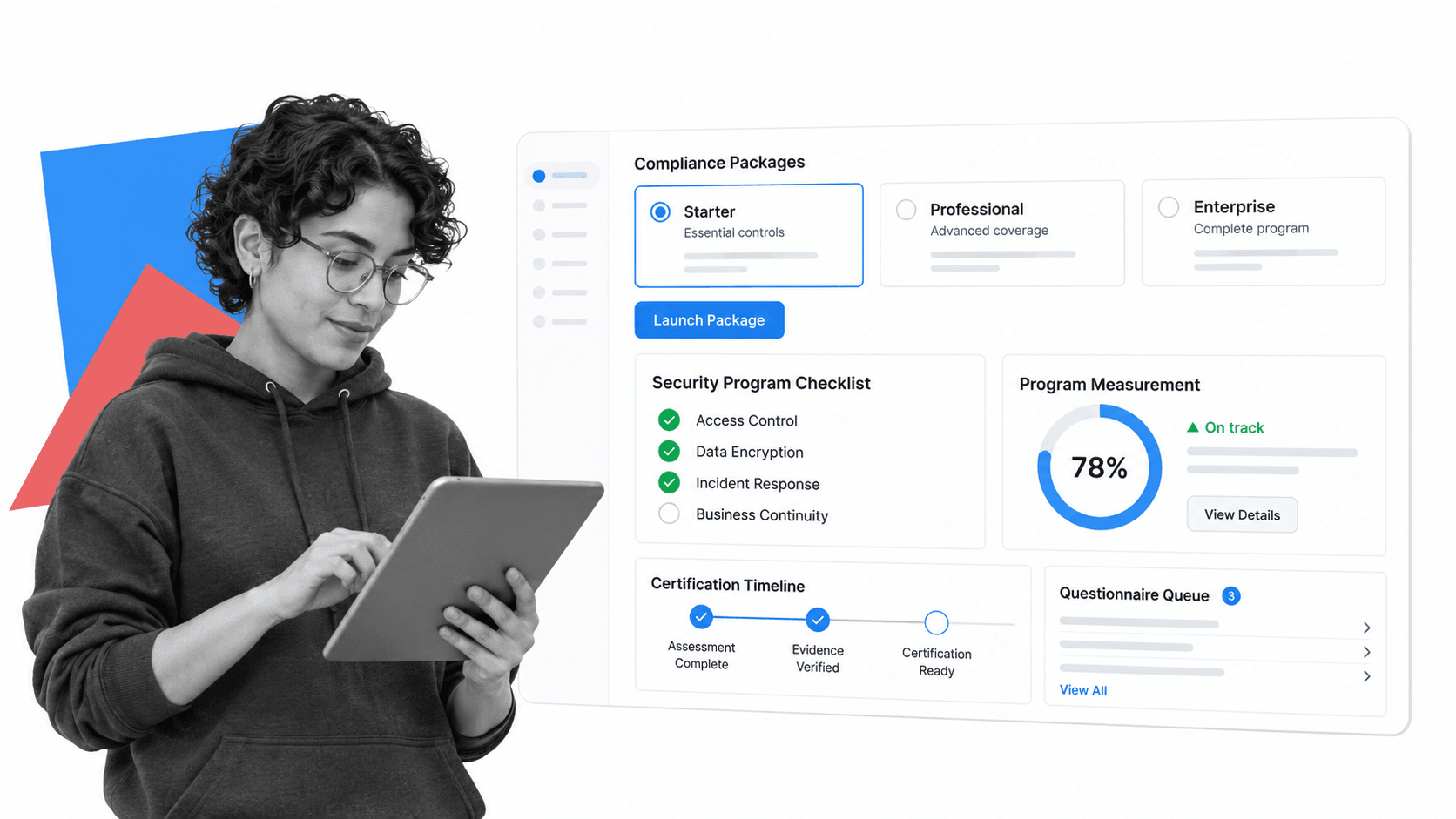
Best for: published-price compliance management.
Strike Graph publishes package pricing for security compliance. Its pricing page describes Launch, Certify, Scale, and Enterprise options and presents a starting point of $10,000 per year for paid compliance management.
Strike Graph beats Process Street when public pricing and a packaged security compliance program are important. Process Street is stronger when the goal is to run repeatable business procedures across compliance and operations, not only manage a security certification path.
Use Strike Graph when its best-fit use case is the center of the project: published-price compliance management. It can beat Process Street for that specific job because the buying need is closer to launch, certify, scale, and enterprise packages for security compliance programs than to broad recurring SOP execution.
Keep Process Street in the evaluation when the same compliance program depends on repeatable work outside the core security or GRC team. Strike Graph may help define, monitor, or coordinate the program, while Process Street is built to make the recurring procedure run with owners, due dates, approvals, evidence, and audit history.
Key features
- Public package structure.
- Launch, Certify, Scale, and Enterprise options.
- Security compliance program management.
- Compliance management positioned around scalable audit readiness.
Pros
- Public pricing improves early comparison.
- Useful for security certification planning.
- Clear package ladder for buyers.
Cons
- Security compliance scope may be narrower than broader operations needs.
- Advanced needs may still require enterprise scoping.
Pricing model: Starting at $10,000/yr. Check Strike Graph official site for current packaging.
Scrut Automation alternatives by use case
If you want the closest security compliance automation alternative, start with Vanta, Secureframe, or Sprinto. They map most directly to the automated evidence, trust, and control-monitoring jobs that teams usually associate with Scrut Automation.
If you want broader GRC, compare Hyperproof, Drata, and OneTrust. Those products make more sense when the program includes risk registers, policy workflows, control libraries, third-party lifecycle work, and audit coordination across a larger governance function.
If you want audit delivery as part of the buying motion, Thoropass is the more natural comparison. If public pricing is important in early evaluation, Strike Graph is easier to compare from the outside.
If the actual gap is recurring process execution, Process Street is the better answer. Teams use it to make document control best practices, vendor risk review software, third-party risk management workflow, workflow automation compliance, and AI-driven compliance operational instead of theoretical. The workflow is where standards become proof.
For most teams, the short answer is to pick the system that matches the dominant failure mode. If audits are painful because evidence is scattered across cloud systems, start with a compliance automation platform. If governance is painful because risks, controls, policies, and third parties are fragmented, start with a GRC platform. If compliance is painful because people skip steps, miss approvals, lose context, or cannot prove recurring work happened, start with Process Street.
This is also the cleaner way to run a vendor bakeoff. Instead of asking every platform to solve every compliance problem, assign each candidate a job: monitor controls, govern risk, coordinate audits, or enforce recurring execution. The winner becomes much clearer, and the final buying decision is easier to defend. It also keeps implementation scope honest from day one for every stakeholder involved.
That is why Process Street leads this comparison without pretending to win every possible Scrut Automation replacement scenario. The ranking is based on the operating gap Process Street solves best: recurring compliance work that must be followed, tracked, approved, and proven. For teams that need that layer, a workflow runtime is not a nice add-on. It is the part that makes the compliance program real.
FAQs
What is the best Scrut Automation alternative?
Process Street is the best Scrut Automation alternative for teams that need enforceable, trackable, recurring compliance and SOP workflows. Vanta, Secureframe, and Sprinto are closer if your main need is automated security evidence collection and control monitoring.
Is there a free Scrut Automation alternative?
Some security compliance tools publish a free tier or free trial, but many Scrut Automation alternatives use custom pricing. Process Street offers a 14-day Pro trial, and Strike Graph publishes a Launch option on its pricing page.
Why is Process Street ranked first?
Process Street is ranked first for the ICP this page is judging: teams that need recurring compliance work to be assigned, followed, approved, documented, and auditable. It is not ranked first for every Scrut Automation use case.
What is the closest alternative to Scrut Automation?
Vanta, Secureframe, and Sprinto are the closest like-for-like Scrut Automation alternatives for security compliance automation. They focus on trust programs, control monitoring, evidence collection, and audit readiness.
Which Scrut Automation alternative is best for small teams?
Small teams should compare how much implementation help they need and whether public pricing matters. Process Street can be a strong fit for recurring SOP execution, while Strike Graph may appeal to teams that want published compliance package pricing.
Which Scrut Automation alternative is best for enterprise teams?
Enterprise teams should compare OneTrust, Hyperproof, Scrut, and Vanta alongside Process Street. The right fit depends on whether the enterprise needs broad GRC governance, trust operations, or workflow execution across departments.
Can Process Street replace Scrut Automation?
Process Street can replace Scrut Automation when Scrut Automation is being used mainly to coordinate recurring compliance procedures, evidence requests, approvals, and audit prep tasks. It is not a direct replacement for every automated control monitoring use case.
Ready to turn compliance procedures into recurring, auditable workflows? Start with Process Street and compare the current packages on Process Street pricing.