






The following is a guest post from Henry Howlett, Junior SEO Executive at Absolute Digital Media.
Who wants to receive a parcel three days after it was due to arrive? Definitely not your customers. People still pay for the type of parcel delivery they need, whether that is Standard Delivery, Next Day Delivery, or Same Day Delivery, and they expect the promise to match the result.
Online retail keeps raising the pressure on shipping teams. The UK Office for National Statistics reported that internet sales remained a major part of retail activity in its May 2026 retail sales bulletin, and the operational reality is straightforward: more orders, more handoffs, and more chances for a late parcel to damage trust.
Shipping processes are the repeatable decisions and handoffs that move an order from purchase to delivery. That includes order capture, warehouse picking, packing, carrier selection, customs clearance, shipment tracking, and customer updates. The goal is not to make the process complicated. The goal is to make it visible, reliable, and easy to improve.
Streamline your process with documentation
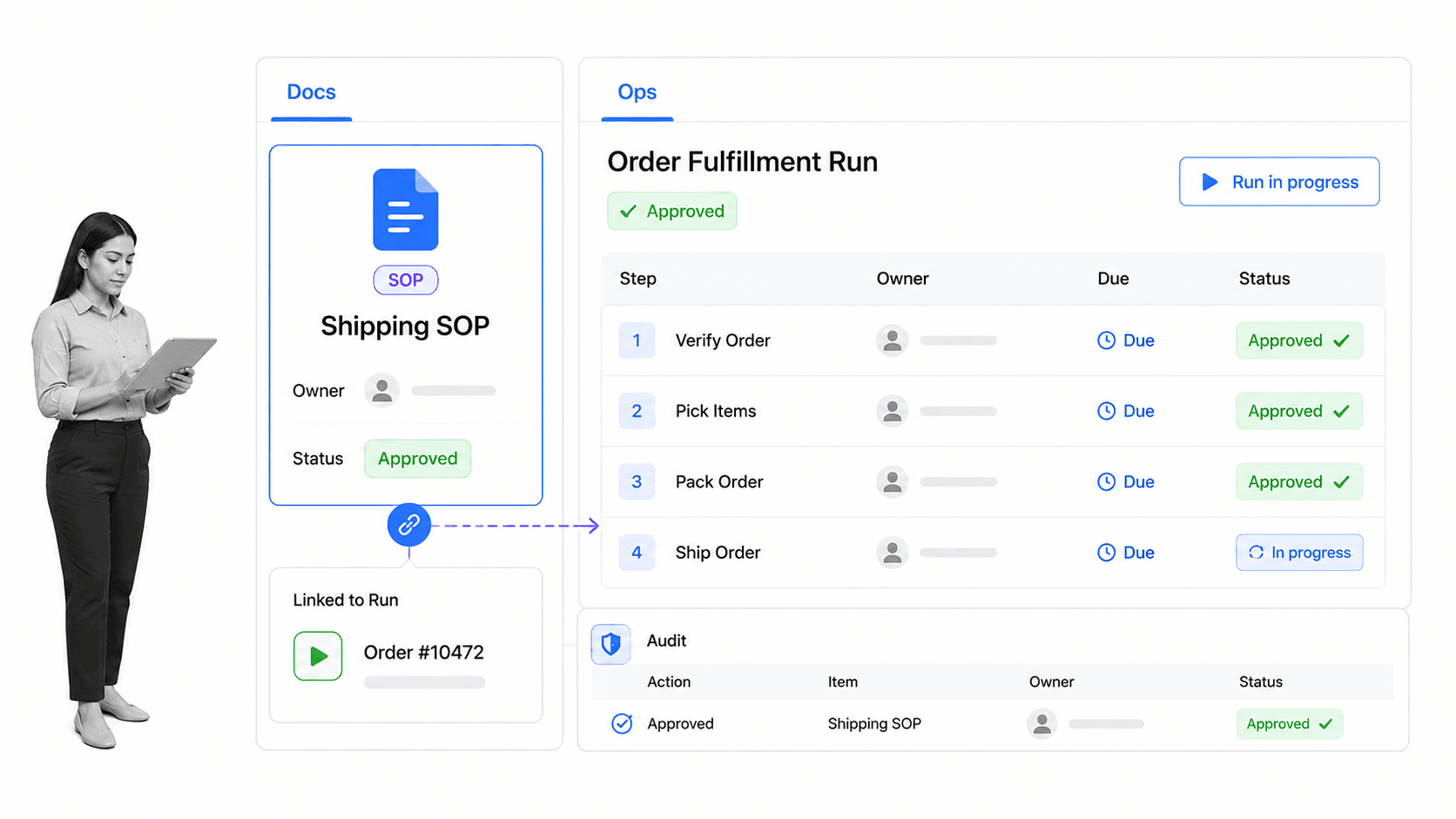
The first step to improve your shipping processes is to document what actually happens. If the process only lives in the head of your warehouse manager, supplier contact, or shipping coordinator, every busy day becomes a memory test.
Start by mapping the order fulfillment path: order received, stock checked, item picked, package packed, courier booked, tracking sent, exception handled, and order closed. Then write the standard procedure for each handoff. A good documented process makes it clear who owns each step, what information they need, and what should happen when something goes wrong.
Process Street gives shipping teams one place to keep that knowledge and run the work. It is a single Compliance Operations Platform with Docs for SOPs and policies, Ops for recurring workflow runs, approvals, assignments, and audit trails, plus built-in AI to help teams maintain and execute procedures. That means your shipping SOP is not separate from the daily fulfillment run. The instructions, owners, forms, approvals, and records stay connected.
Use the order fulfillment workflow below as a practical starting point for turning a written shipping process into a repeatable operating checklist.
For the best delivery performance, simplify the internal shipping process before adding more tools. Companies can end up using countless advanced systems and apps to complete one internal process, which only confuses what should be a clean delivery chain. Create an informed list of what aspects of the current shipping process work well, what aspects elongate the shipping process, and the next steps required to overcome the issues you have identified.
The formal version of the process should be easy to deploy to the organization. It should show where advanced technology helps, where human beings still make the final decision, and how the team checks whether the workflow improves efficiency on a daily basis.
Improve communication with your warehouse
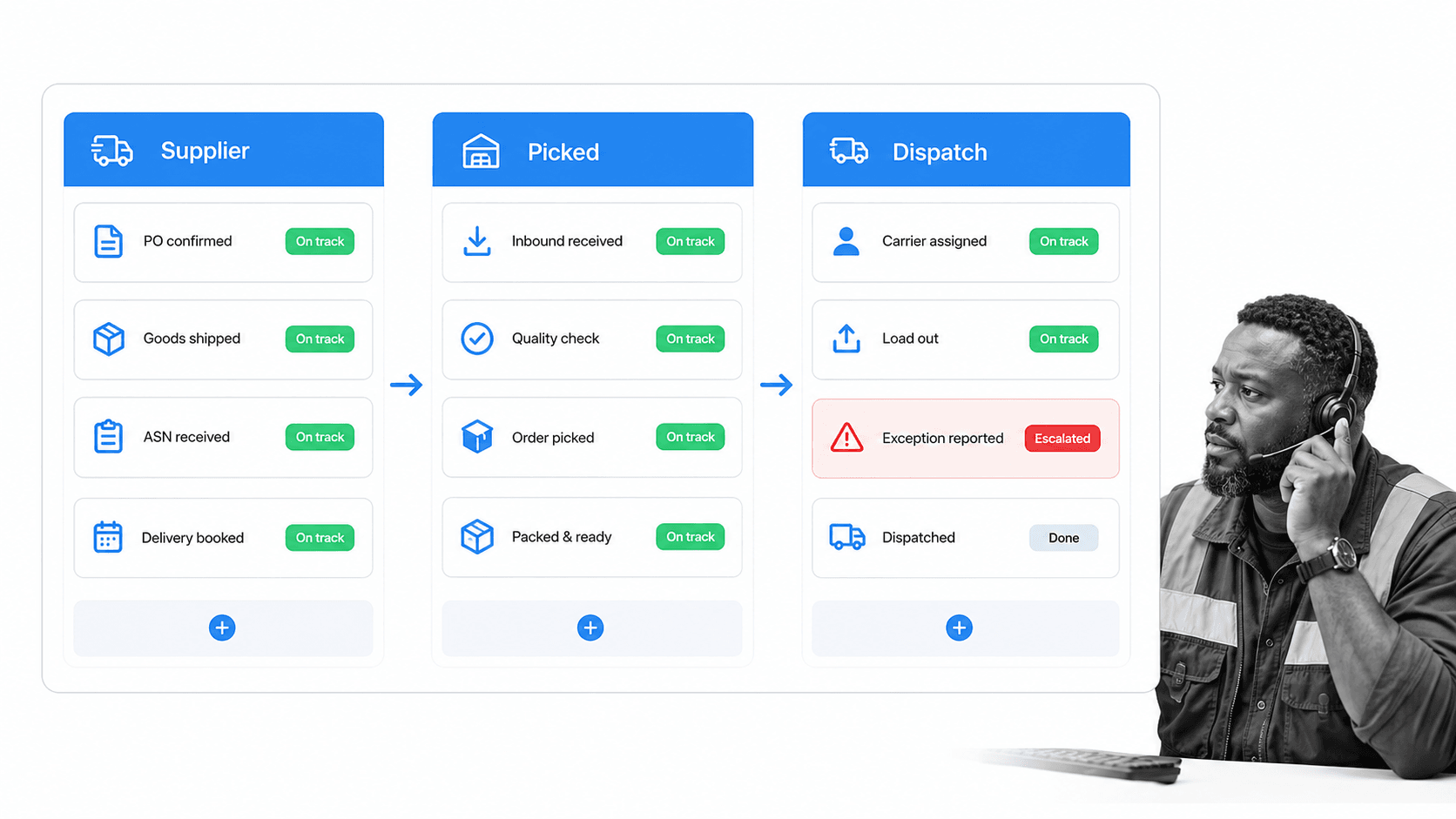
Warehouse communication is where many shipping problems start. The supplier may believe stock is ready, the warehouse may be waiting on a pick list, and the customer-facing team may not know there is a delay until the customer asks.
Keep the warehouse handoff visible. Use a shared workflow or status board that shows whether an order is waiting for stock, ready to pick, packed, booked with a courier, or blocked. That is especially important when teams communicate asynchronously across shifts, suppliers, and third-party logistics partners.
For more complex operations, connect the handoff workflow to the systems people already use. Process Street has direct, universal integrations to 5,000+ systems. Need a new one? An AI agent builds it on the fly. That helps shipping teams keep updates flowing between the warehouse management system, inventory tools, chat, email, forms, and customer support without relying on someone to copy information manually.
Clear warehouse communication is also a process improvement loop. When delays repeat, the workflow history shows where they start: late supplier confirmation, missing packaging material, slow pick confirmation, carrier booking friction, or incomplete customer information.
Quick communication with your warehouse is essential to maintain fast delivery. In a clean operation, it should only take a matter of minutes, if not seconds, for an order to be processed at the warehouse or by the supplier. That helps manage stock, tells the team when to import more if needed, and prevents the influx of orders from coming out of nowhere.
Communication also helps the warehouse arrange for additional members of staff to be on hand during busy periods. Email will never fade, but physically speaking to someone or using indexed asynchronous tools can prevent miscommunication and promote a clearer understanding of what is being asked.
Use the right technology to locate your items quicker
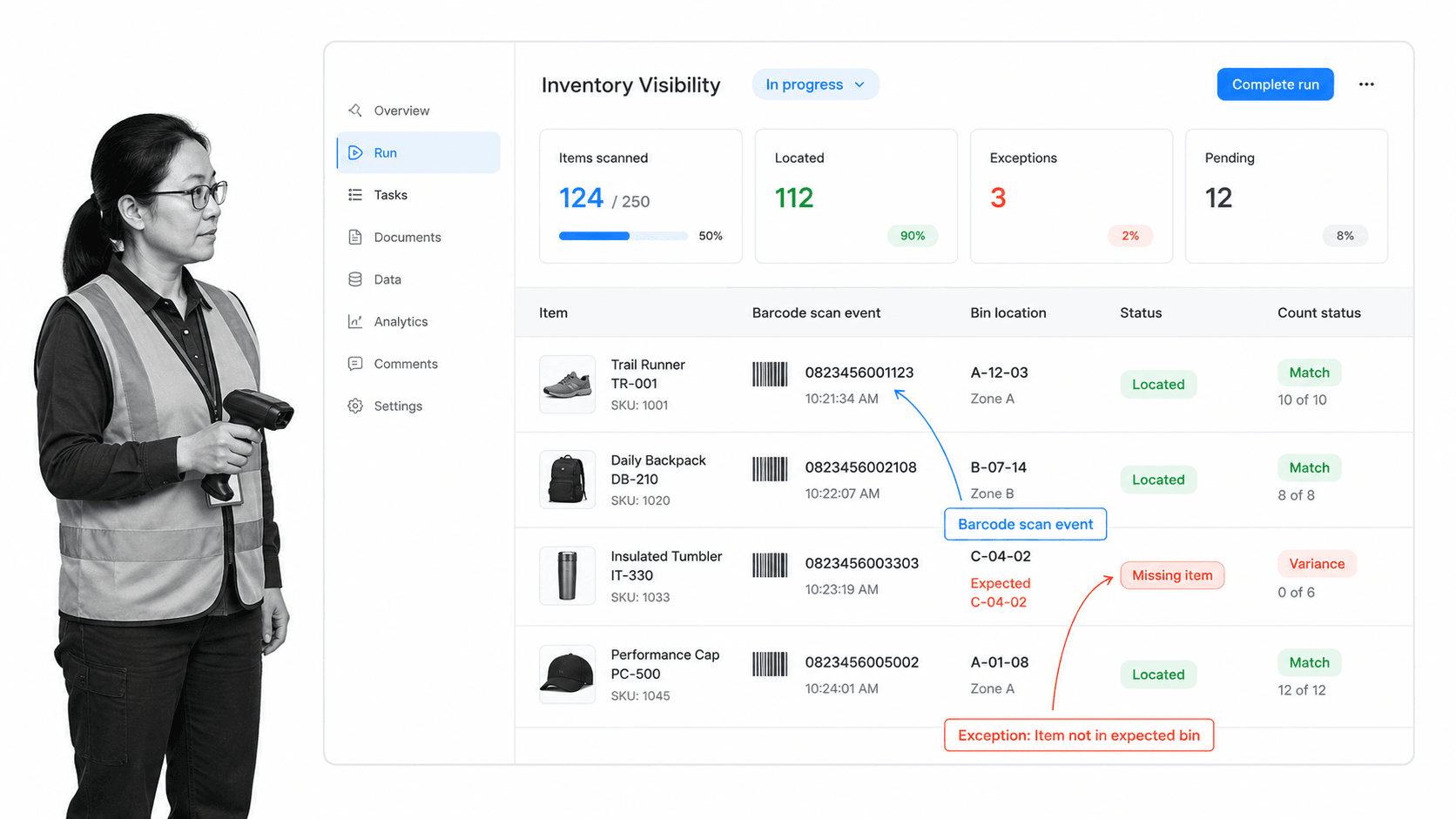
Finding the right item should not depend on memory or luck. Barcode scanning, bin locations, cycle counts, and real-time inventory visibility reduce wasted motion and prevent the wrong item from leaving the warehouse.
The right technology does not have to mean a complicated system from day one. Smaller teams may start with a disciplined spreadsheet, then move into dedicated inventory software for small business as order volume grows. Larger teams usually need barcode scanners, warehouse management software, and automated alerts when inventory does not match the order record.
Whatever tool you use, connect it to the shipping process. A scan event should update the order workflow. A missing item should create an exception. A low-stock signal should trigger replenishment before a customer order gets stuck. That is where task automation tools and good spreadsheet controls can prevent small inventory issues from becoming customer-facing shipping failures.
If a team cannot identify the exact location of each item in the warehouse, locating the order can feel like trying to find a needle in a haystack. Barcode scanners and wireless scanners alike are time savers, reduce the risk of human error, and save hours of work every year when they are tied to reliable stock records.
Some businesses remain anti-technology, and physical work will always be an invaluable part of the shipping process. The difference is that manual work cannot compete with advanced technology when the team needs item-level visibility, faster checks, and a reliable record of what happened.
Choosing a courier service

The courier service you choose affects delivery speed, cost, tracking quality, insurance, customer satisfaction, and how many exceptions your team has to resolve. Do not choose on headline price alone.
Compare carriers against the work they actually need to do for your company. Local same-day parcels, oversized packages, fragile goods, international shipments, and subscription orders can each require a different carrier profile. For large or awkward items, resources like Red Stag Fulfillment’s guide to the cheapest way to ship large or oversized packages can help teams think through dimensional weight, carrier limits, and packaging choices.
Build a carrier scorecard into your shipping process. Track delivery performance, pickup reliability, claims handling, tracking quality, customer complaints, and exception response times. Then review the scorecard regularly instead of waiting for a string of late deliveries to prove the courier is not working.
Security also matters. If you ship high-value items, the best courier is the one that can prove chain of custody, provide reliable tracking, and support your claims process when a package is lost or damaged.
In order to create a useful list of courier services, make a spreadsheet of all relevant services available to your business, including the price, delivery locations, special delivery options, insurance, and how easy the courier is to work with. The list depends entirely on where and how fast you plan to deliver your goods.
- The delivery service type: This depends on the size, number of parcels, and how far they are required to be sent. The further you need to ship an item, the more expensive it will usually be.
- Security: Check how secure the courier service is, request more information about the courier’s security policy, and understand whether parcels are left unattended during the parcel delivery process.
- Delivery speed: Many businesses rely on fast delivery. Consider quick delivery options before making a final decision.
- Reliability: Each time you vow a delivery, you put your company’s reputation on the line. The chosen courier service must be reliable enough for that promise.
- Professional appearance: The appearance of the chosen courier service and delivery van reflects on your company as much as the delivery speed does.
- The ability to deliver special deliveries: Depending on the nature of the business, the chosen carrier may need to handle oversized, fragile, high-value, or regulated deliveries.
- Cost: The advertised parcel delivery price is rarely the final price. Hidden costs can appear late, so confirm the full cost of delivery before the order is booked.
- The ease of doing business: The best courier service makes ordering online, checking delivery status, and resolving issues considerably easier.
- The overall customer experience: Your chosen courier company should be friendly, efficient, and easy to work with because the customer experience continues until the parcel is delivered.
Use Electronic Data Interchange

Electronic Data Interchange, or EDI, is a standard way for companies to exchange business documents electronically. In shipping, EDI can move purchase orders, advance ship notices, invoices, carrier statuses, and other documents between suppliers, warehouses, carriers, and retailers.
The practical value is speed and accuracy. Instead of retyping order and shipment details from one system into another, EDI lets systems exchange structured data. That reduces manual errors, shortens administrative work, and gives partners a shared record of what was ordered, shipped, invoiced, and received.
For a deeper definition, EDI Basics explains how EDI document exchange works. In a shipping process, the key is to treat EDI as part of the operating workflow, not as a separate technical project. Someone should own each validation step: order accepted, advance ship notice sent, invoice matched, carrier status synced, and exception reviewed.
EDI is also a useful answer for teams that are bound to leave important pieces of paperwork lying around. The correct use of Electronic Data Interchange makes the entire shipping process quicker and much more convenient than carrying around countless pieces of loose paper. It saves money, lowers the chance of important documents going missing, and enhances shipping efficiency by reducing human error.
Make local and international shipping connections
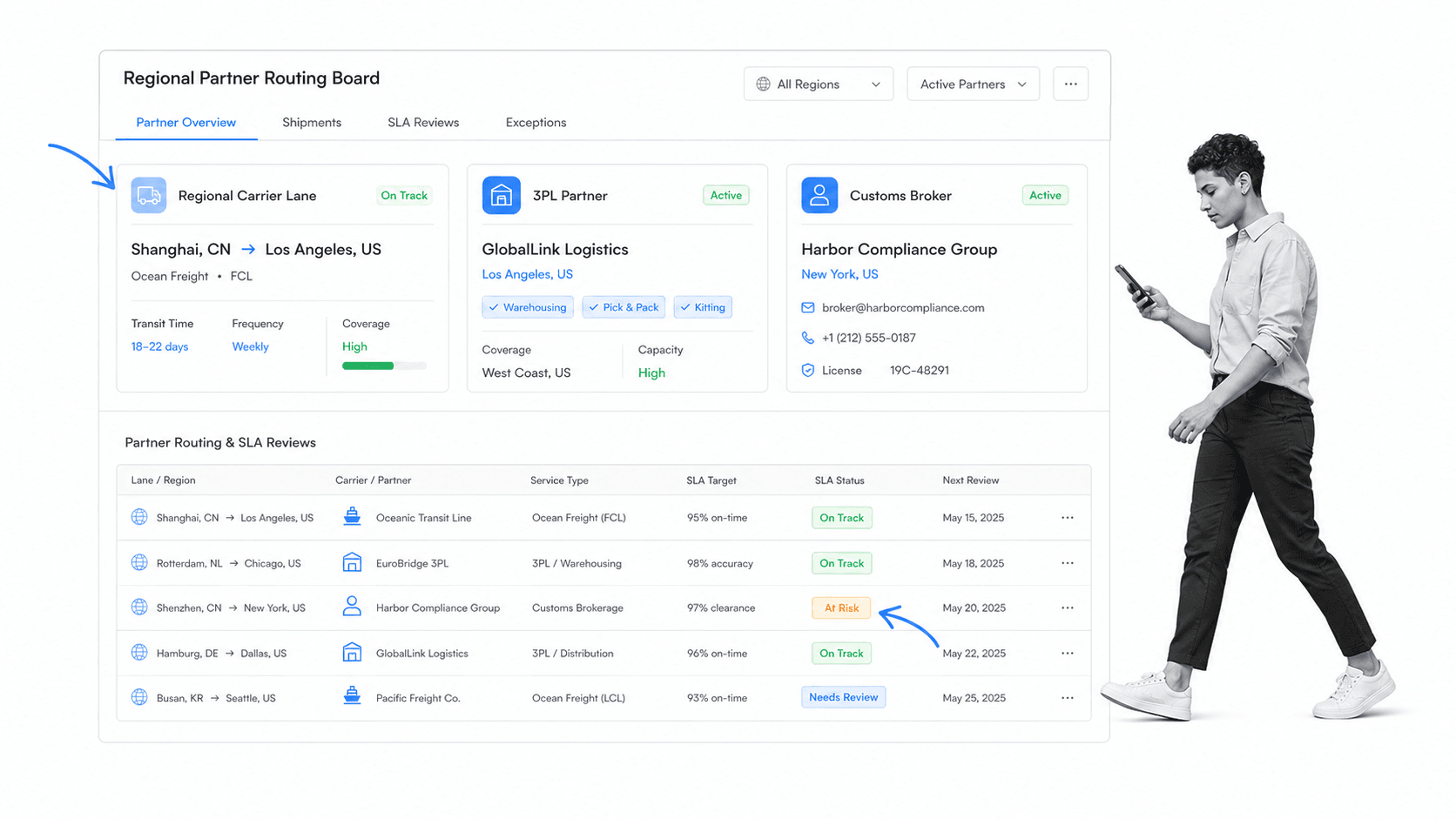
Shipping performance depends on relationships as much as software. Local couriers, international carriers, 3PL partners, freight forwarders, customs brokers, packaging suppliers, and returns partners all influence how reliably your company can deliver.
For local shipping, keep a short list of dependable carrier contacts and backup options. A single courier issue should not stop your warehouse from moving parcels. For international shipping, map the partners involved in each route and document who handles booking, export documents, customs questions, duties, delivery confirmation, and returns.
This is where logistics management becomes operational, not theoretical. The connection list should be part of the workflow. If a shipment to a region repeatedly gets delayed, the process should point to the broker, carrier lane, documentation step, or packaging rule that needs attention.
It is all about whom you know, not only what you know. If you plan to ship, or already ship, to destinations outside of where your business is based, whether that is the UK, Europe, the European Union, or anywhere else in the world, make connections with people who can tell you which services to use and which to avoid.
Those connections can help ensure the parcel arrives at the destination safely and within a clean delivery window. They may also point to exclusive offers or discounts a few months down the line. The operational advantage is not just the discount. It is knowing who to contact before a delay becomes a customer complaint.
Prepare for customs clearance
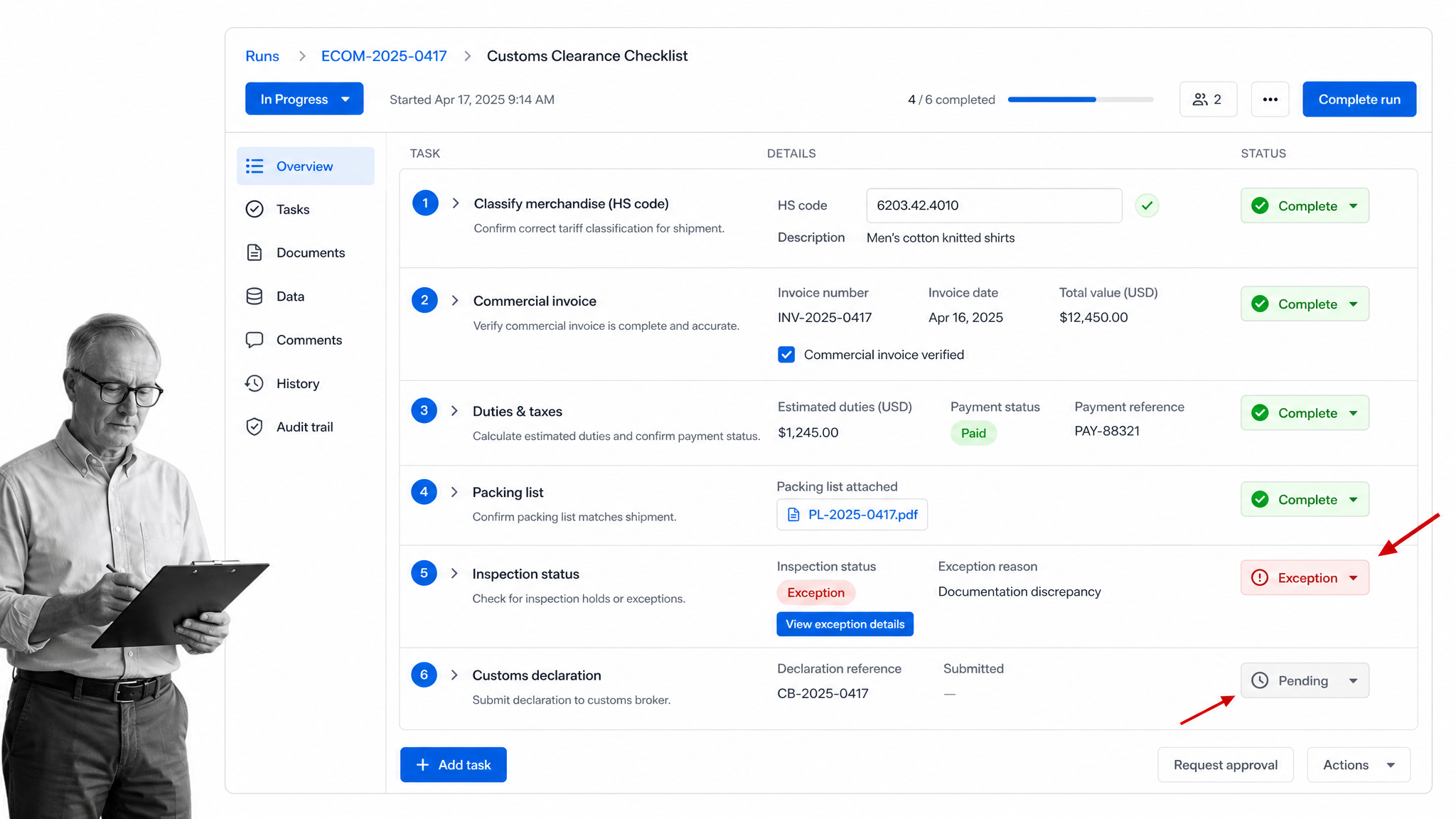
Customs clearance can turn a fast shipment into a stalled shipment when documents are incomplete or inconsistent. The common issues are predictable: missing HS codes, mismatched commercial invoices, incorrect values, unclear product descriptions, duties not accounted for, and no owner for inspection questions.
Build customs preparation into the shipping process before the package leaves the warehouse. Confirm product classification, origin, value, invoice details, packing list, recipient information, and any region-specific requirements. For recurring routes, create reusable documentation checklists so the team is not starting from scratch each time.
It also helps to separate standard shipments from exceptions. A normal shipment can move through a simple clearance checklist. A controlled, high-value, or unfamiliar international shipment should trigger extra review before pickup. That keeps customs clearance from becoming a last-minute scramble.
Customs clearance is a long, frustrating part of the delivery process that cannot be avoided. If the value of the item is more than the minimum value for gifts or commercial items in the desired destination country, the shipment may need to be inspected by that country’s Customs Authority, which prolongs the shipping process.
Preparing in advance means the parcel is less likely to be held up with hundreds, if not thousands, of other parcels arriving at the same destination for parcel delivery. That is why HS code checks, commercial invoice review, packing list review, and duties planning should happen before the package is handed to the carrier.
Ensure your customers are informed at all times

Customers are usually more tolerant of a delay when they know what is happening. Silence is what turns a shipping problem into a support problem.
Send clear updates when the order is confirmed, packed, dispatched, delayed, out for delivery, delivered, or flagged for exception review. Email and SMS notifications both have a place, especially when a customer needs to arrange access, sign for a package, or respond to a delivery issue. Services such as GTX Messaging show how order and status updates can be sent across messaging channels.
Customer communication should also feed your retention process. Salesforce has practical guidance on improving customer satisfaction, and Appcues maintains a useful list of customer retention tools. For shipping teams, the operating principle is simple: the customer should not have to chase your company for basic delivery information.
The best shipping processes make exceptions visible before the customer complains. When a carrier misses a scan, a package is held at customs, or an address needs correction, the workflow should assign the issue, trigger the right update, and keep a record of what happened. That is how shipping moves from reactive firefighting to controlled operations.
Time is very much against anyone eagerly waiting for something to arrive. Hours pass that feel like days, and those days feel like weeks. Instead of waiting for a knock at the front door, customers should be able to go about their daily lives with a better idea of when the parcel may arrive.
Enhancing shipping processes is crucial for both the customer and your business. From simplifying internal processes and choosing a courier service suitable for your business, to introducing Electronic Data Interchange and staying ahead of customer communications, the strongest operations give customers delivery confidence while saving the team money and invaluable time.