Turn every policy into automated workflows with built-in enforcement and audit-ready proof.



8 Best Tonkean Alternatives & Competitors in 2026
Tonkean alternatives are usually evaluated by teams that already need more than a simple task tracker. Tonkean is built around enterprise intake and process orchestration: requesters need guided front doors, shared-service teams need routing and approvals, and leaders need automation that works across departments without forcing every employee into a new system. That makes it a serious option for procurement, legal, IT, HR, and other service-heavy teams.
The right alternative depends on why Tonkean is on the shortlist. Some teams want stronger recurring SOP execution, approvals, and audit-ready proof. Others need enterprise integration architecture, Microsoft-native automation, RPA, BPMN orchestration, low-code apps, or request boards. Treating all of those as one category leads to bad software decisions.
This list is editorially maintained by the Process Street team. We ranked Process Street first for teams whose real need is enforceable, trackable, recurring process and SOP workflows. For use cases outside that ICP, the notes below call out where another platform is a better fit and why.
Evaluation criteria were simple: core fit for the Tonkean use case, ease of adoption for business teams, process control, integration model, governance, pricing transparency, and whether the tool is strongest at recurring execution, enterprise orchestration, or technical automation.
- Tonkean alternatives at a glance
- 1. Process Street
- 2. Workato
- 3. Microsoft Power Automate
- 4. UiPath
- 5. Camunda
- 6. Pipefy
- 7. Kissflow
- 8. Nintex
- How to choose Tonkean alternatives
- Tonkean alternatives FAQ
Tonkean alternatives at a glance
| Tool | Best for | Standout feature | Free plan | Starting price |
|---|---|---|---|---|
| Process Street | enforceable recurring SOP and compliance workflows | workflow runs with approvals, required fields, conditional routing, and audit history | 14-day Pro trial | Contact sales |
| Workato | enterprise integration and cross-app orchestration | enterprise iPaaS, workflow bots, API management, data orchestration, and low-code apps | Not published | Schedule a demo |
| Microsoft Power Automate | Microsoft-centric workflow automation and attended RPA | cloud flows, attended desktop flows, process mining, task mining, and Dataverse entitlements | Free trial | $15/user/month paid yearly |
| UiPath | agentic automation, RPA, and robot orchestration | agents, robots, API workflows, BPMN processes, live process monitoring, and governance controls | Free trial option | $25/month for Basic |
| Camunda | BPMN-based process orchestration for technical teams | Modeler, connectors, Zeebe, Operate, BPMN execution traces, incidents, and audit trails | 30-day trial and limited free account | Contact sales |
| Pipefy | request intake and card-based process automation | public forms, request tracker, process boards, conditional logic, API access, and role-based access | Yes | Free; paid plans contact sales |
| Kissflow | enterprise workflow apps and low-code process automation | workflow automation, process governance, no-code workflow building, IT administration, and department workflows | Not published | Get started or book a demo |
| Nintex | enterprise process automation with cloud and self-hosted options | cloud automation, K2 on-prem automation, forms, document generation, RPA, workflow automation, and app development | Trial available | Contact sales |
1. Process Street

Best for: operations, compliance, HR, finance, customer success, and IT teams that need recurring SOPs to run the same way every time, with owners, required data, approvals, and proof.
Process Street is the strongest Tonkean alternative when the process is not just an intake flow, but a recurring operating procedure that has to be followed, checked, approved, and recorded. It turns SOPs into workflow runs with assigned tasks, required form fields, conditional routing, approval gates, due dates, permissions, evidence capture, and audit history.
That makes Process Street a better fit than Tonkean for teams that are trying to operationalize standard work rather than orchestrate broad enterprise service requests. A compliance review, client handoff, employee onboarding flow, finance approval, quality check, or vendor review often needs the same steps every time, but with enough logic to adapt to risk, role, or input. Process Street gives those teams approval software, checklist monitoring, and governed workflow history in the same operating layer.
Where Tonkean leans toward intake orchestration across shared services, Process Street leans toward execution control. The question is not whether a request can be routed. The question is whether each required step happened, whether the right person approved it, whether missing evidence blocked progress, and whether the final run can stand up to review. That is why Process Street is ranked first for recurring SOP and process execution.
Pricing is quote-led, and all new accounts start with a 14-day Pro trial according to the Process Street pricing page. The main product page describes Docs for document management, Ops for workflow automation, analytics, apps, and integrations. Teams that need a starting point can test the fit with a live employee onboarding checklist, client onboarding checklist, or project management process before standardizing more workflows.
Key features
- Workflow runs for recurring SOPs, checklists, and approval-driven operating procedures.
- Required fields, conditional logic, role assignments, due dates, and task permissions.
- Approvals and evidence capture that keep work from moving forward before the right proof is collected.
- Audit history, reporting, and task records for teams that need operational accountability.
- AI-assisted SOP creation through tools like an AI SOP generator and structured process documentation.
Pros
- Best fit in this list for repeatable SOP execution with evidence and approvals.
- Business teams can run and improve workflows without turning every process into a developer project.
- Strong fit for compliance-adjacent work where proof matters as much as task completion.
- Works well for teams replacing spreadsheets, static SOP docs, and manual handoff tracking.
- Pairs naturally with broader workflow management software and business process automation tools evaluations.
Cons
- Not a BPMN modeling and simulation suite for technical process architects.
- Not an RPA platform for robot-heavy desktop automation programs.
- Not a broad enterprise iPaaS if the main job is system-to-system integration architecture.
2. Workato
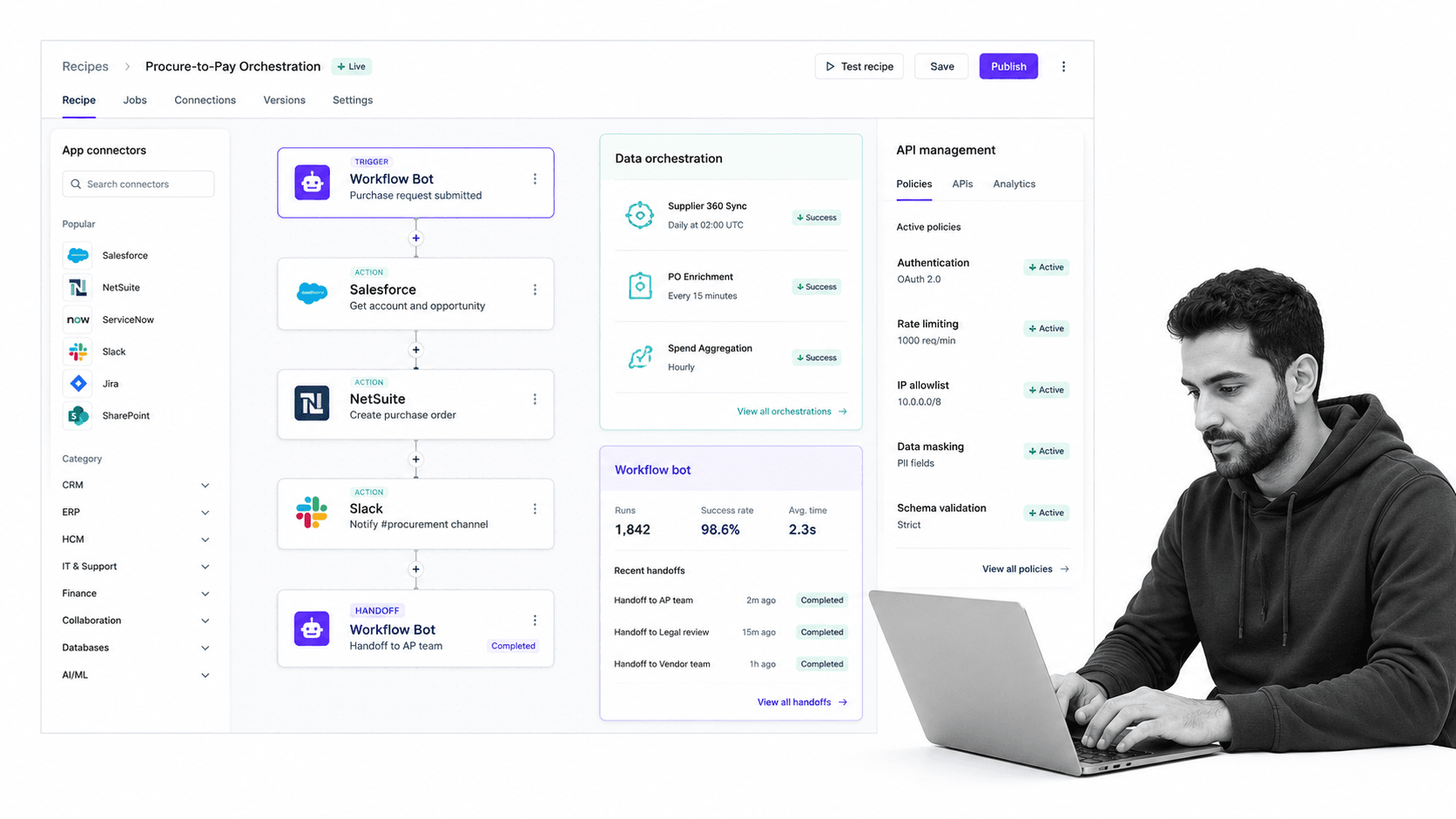
Best for: enterprise integration and cross-app orchestration.
Workato is a strong Tonkean alternative when the center of gravity is enterprise integration and cross-app orchestration. Its standout feature set is enterprise iPaaS, workflow bots, API management, data orchestration, and low-code apps.
Workato is a better fit when the core problem is connecting enterprise systems, APIs, data flows, and event-driven automations across a large stack. Process Street is stronger when the work is an SOP run that people must complete, approve, and prove step by step. If your shortlist includes this tool, test it against one real process and compare how easily the team can route work, assign owners, handle exceptions, and prove completion.
Key features
- Recipe-style orchestration across enterprise apps.
- API management, data orchestration, workflow bots, and low-code app options.
- Useful when process work depends on deep system connectivity.
Pros
- Strong fit for enterprise integration teams.
- Better than Process Street when the main work is cross-app automation architecture.
- Broad platform surface for APIs, data flows, and workflow bots.
Cons
- Less focused on human SOP completion and evidence capture.
- Pricing is demo-led rather than transparent self-serve pricing.
Pricing model: Not published. Starting price: Schedule a demo. Check the vendor’s official pricing page for current details. For teams comparing against Process Street, map this back to whether the priority is workflow automation software or a different operating model.
3. Microsoft Power Automate
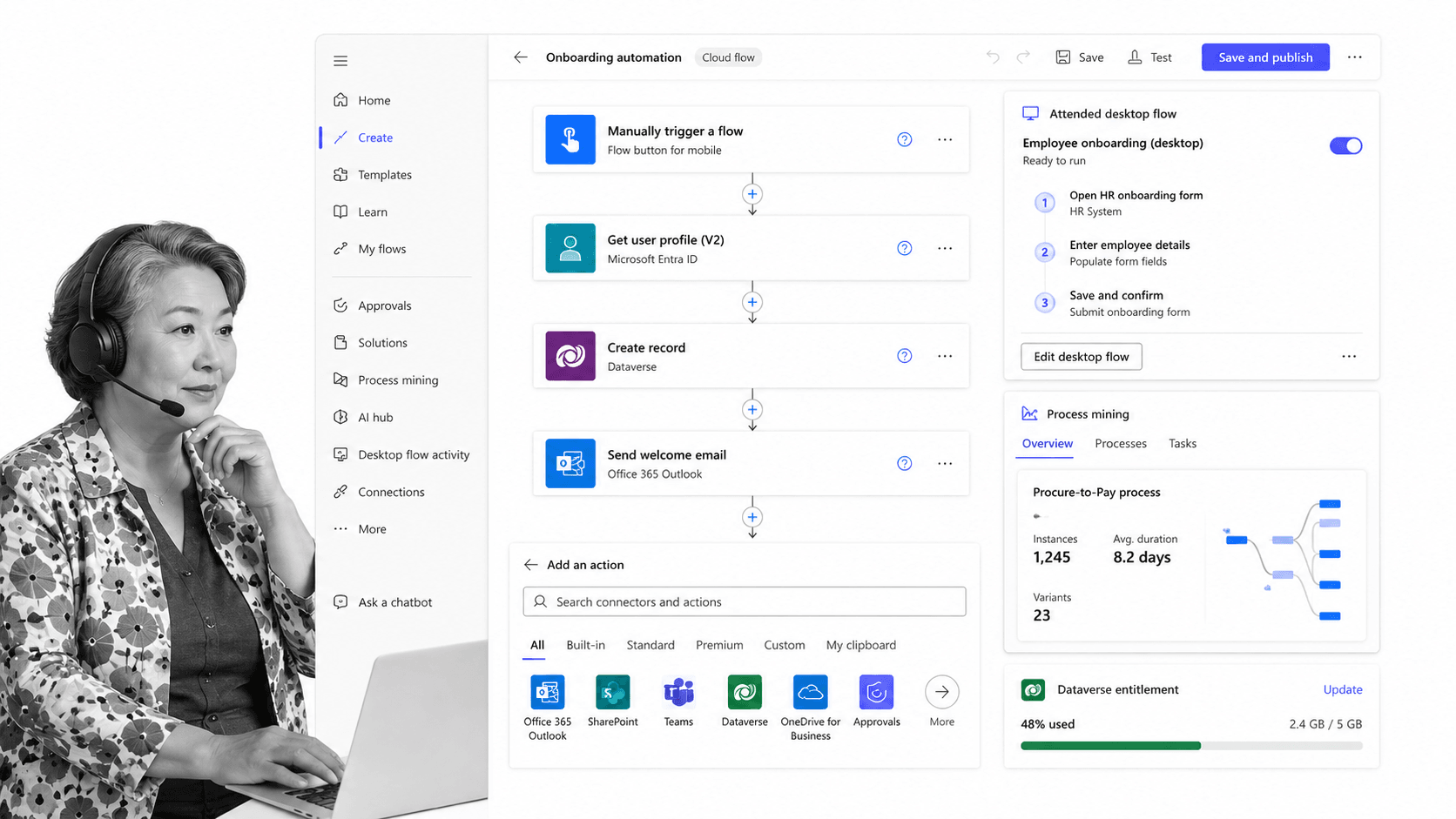
Best for: Microsoft-centric workflow automation and attended RPA.
Microsoft Power Automate is a strong Tonkean alternative when the center of gravity is Microsoft-centric workflow automation and attended RPA. Its standout feature set is cloud flows, attended desktop flows, process mining, task mining, and Dataverse entitlements.
Microsoft Power Automate is a better fit when the organization already standardizes on Microsoft 365, Azure, Dataverse, Power Apps, and Microsoft governance. Process Street is cleaner when the team needs a governed SOP execution layer that business users can operate without becoming Power Platform builders. If your shortlist includes this tool, test it against one real process and compare how easily the team can route work, assign owners, handle exceptions, and prove completion.
Key features
- Cloud flows for digital process automation.
- Attended desktop flows for RPA-style work.
- Process and task mining with Dataverse entitlements in the Premium plan.
Pros
- Natural fit for Microsoft-heavy teams.
- Published entry price for the Premium user plan.
- Good fit when Power Platform governance already exists.
Cons
- Licensing and architecture can become complex outside Microsoft-centric teams.
- Business users may still need Power Platform expertise for advanced workflows.
Pricing model: Free trial. Starting price: $15/user/month paid yearly. Check the vendor’s official pricing page for current details. For teams comparing against Process Street, map this back to whether the priority is automated workflow tools or a different operating model.
4. UiPath
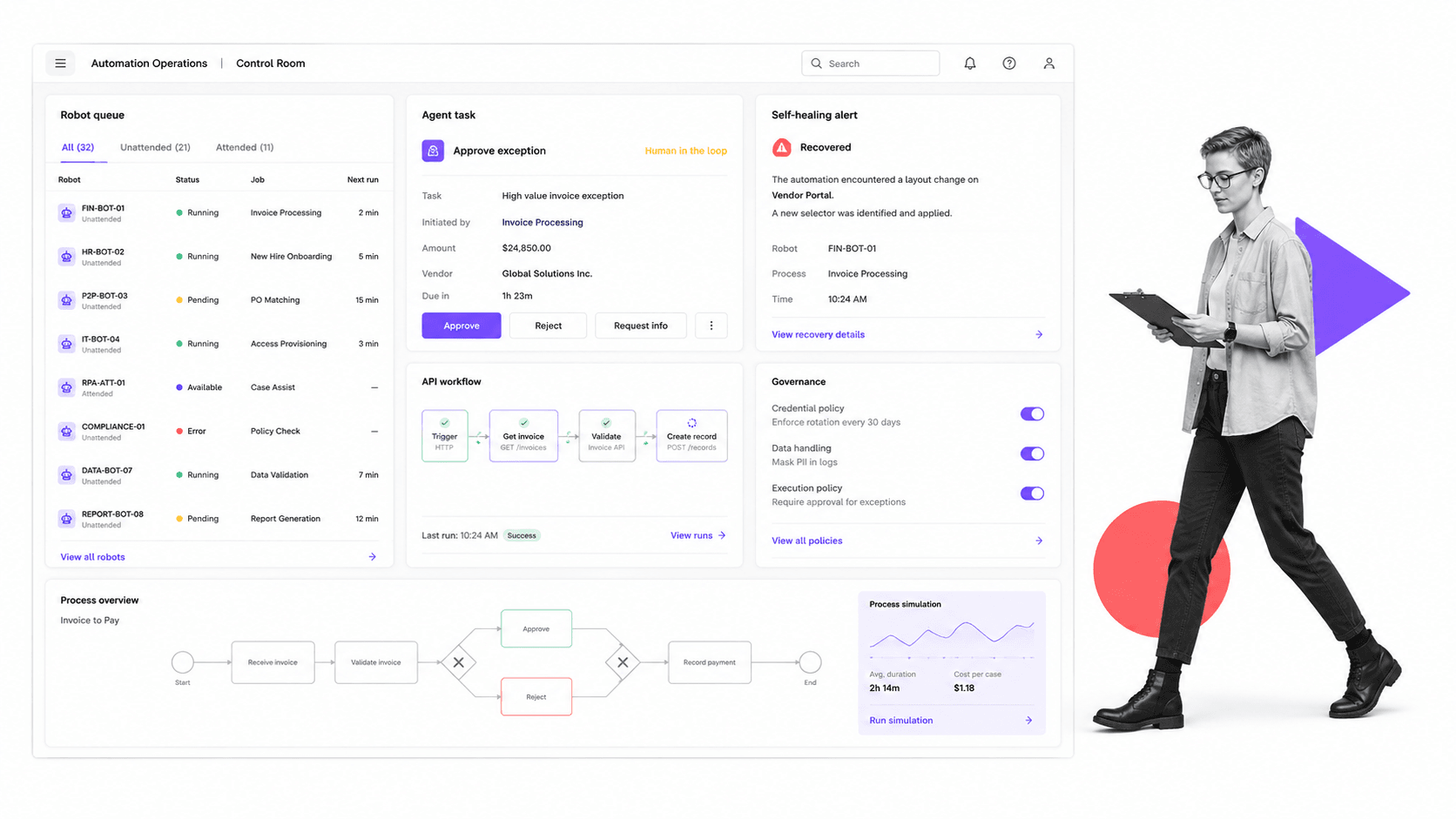
Best for: agentic automation, RPA, and robot orchestration.
UiPath is a strong Tonkean alternative when the center of gravity is agentic automation, RPA, and robot orchestration. Its standout feature set is agents, robots, API workflows, BPMN processes, live process monitoring, and governance controls.
UiPath is a better fit when automating screen work, robot work, agentic automation, and technical orchestration is the center of the program. Process Street is better when the process is mostly human SOP execution with approvals, evidence, and accountability instead of robot operations. If your shortlist includes this tool, test it against one real process and compare how easily the team can route work, assign owners, handle exceptions, and prove completion.
Key features
- Agents, robots, API workflows, and business orchestration.
- BPMN process implementation and live process monitoring.
- Governance controls for enterprise automation programs.
Pros
- Strongest fit here for robot and agentic automation programs.
- Better than Process Street when screen automation and unattended robots are central.
- Published Basic starting price and sales-led higher tiers.
Cons
- Can be heavier than needed for recurring SOP execution.
- Best results usually require a mature automation operating model.
Pricing model: Free trial option. Starting price: $25/month for Basic. Check the vendor’s official pricing page for current details. For teams comparing against Process Street, map this back to whether the priority is process automation or a different operating model.
5. Camunda
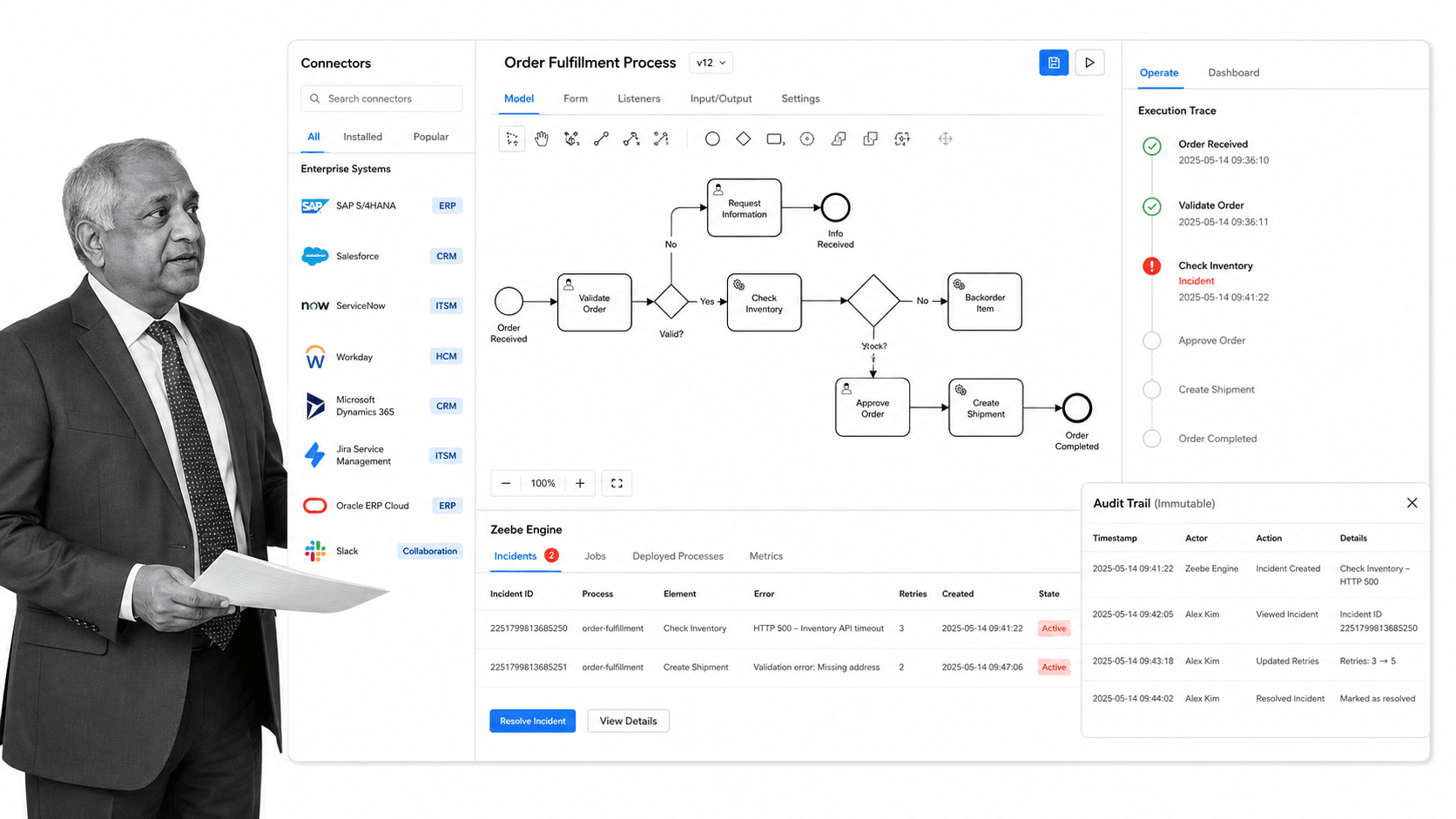
Best for: BPMN-based process orchestration for technical teams.
Camunda is a strong Tonkean alternative when the center of gravity is BPMN-based process orchestration for technical teams. Its standout feature set is Modeler, connectors, Zeebe, Operate, BPMN execution traces, incidents, and audit trails.
Camunda is a better fit when business and engineering teams need BPMN models, process intelligence, connectors, and a technical execution engine. Process Street is better when business teams need to run recurring SOPs without designing and operating a BPMN architecture. If your shortlist includes this tool, test it against one real process and compare how easily the team can route work, assign owners, handle exceptions, and prove completion.
Key features
- BPMN modeling for business and IT alignment.
- Connectors, Zeebe execution, Operate monitoring, incidents, and audit trails.
- 30-day trial and limited free account path for SaaS.
Pros
- Strong fit for technical process orchestration.
- Better than Process Street when BPMN execution is the core requirement.
- Good for teams that need process models to run in production.
Cons
- Too technical for teams that mainly need business-owned SOP runs.
- Enterprise pricing is quote-led after trial paths.
Pricing model: 30-day trial and limited free account. Starting price: Contact sales. Check the vendor’s official pricing page for current details. For teams comparing against Process Street, map this back to whether the priority is workflow management system or a different operating model.
6. Pipefy
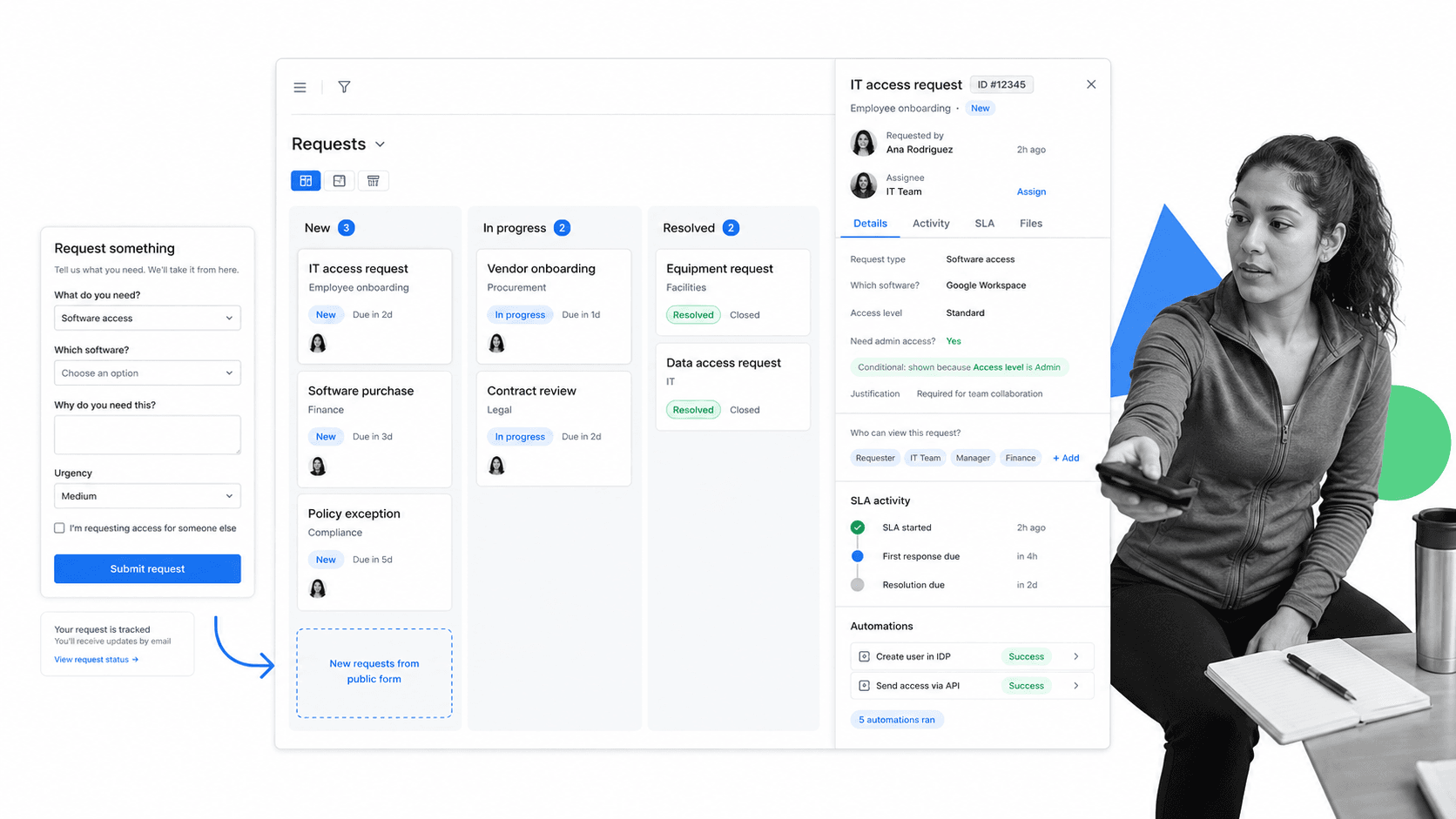
Best for: request intake and card-based process automation.
Pipefy is a strong Tonkean alternative when the center of gravity is request intake and card-based process automation. Its standout feature set is public forms, request tracker, process boards, conditional logic, API access, and role-based access.
Pipefy is a better fit when the process starts as a request and moves through cards, forms, conditional fields, service levels, and access controls. Process Street is stronger when a known recurring SOP run, not a request queue, should drive the work through evidence and approval gates. If your shortlist includes this tool, test it against one real process and compare how easily the team can route work, assign owners, handle exceptions, and prove completion.
Key features
- Public forms, request tracker, process boards, and request detail records.
- Conditional logic, role-based access, API access, and automations on paid plans.
- Free Starter plan for small teams and contact-sales paid plans.
Pros
- Strong fit for intake-heavy request processes.
- Better than Process Street when the process starts with an external request queue.
- Board-based model is approachable for shared services teams.
Cons
- Less focused on recurring SOP runs with step-by-step proof.
- Paid plans are contact-sales rather than published per-user pricing.
Pricing model: Yes. Starting price: Free; paid plans contact sales. Check the vendor’s official pricing page for current details. For teams comparing against Process Street, map this back to whether the priority is process monitoring or a different operating model.
7. Kissflow
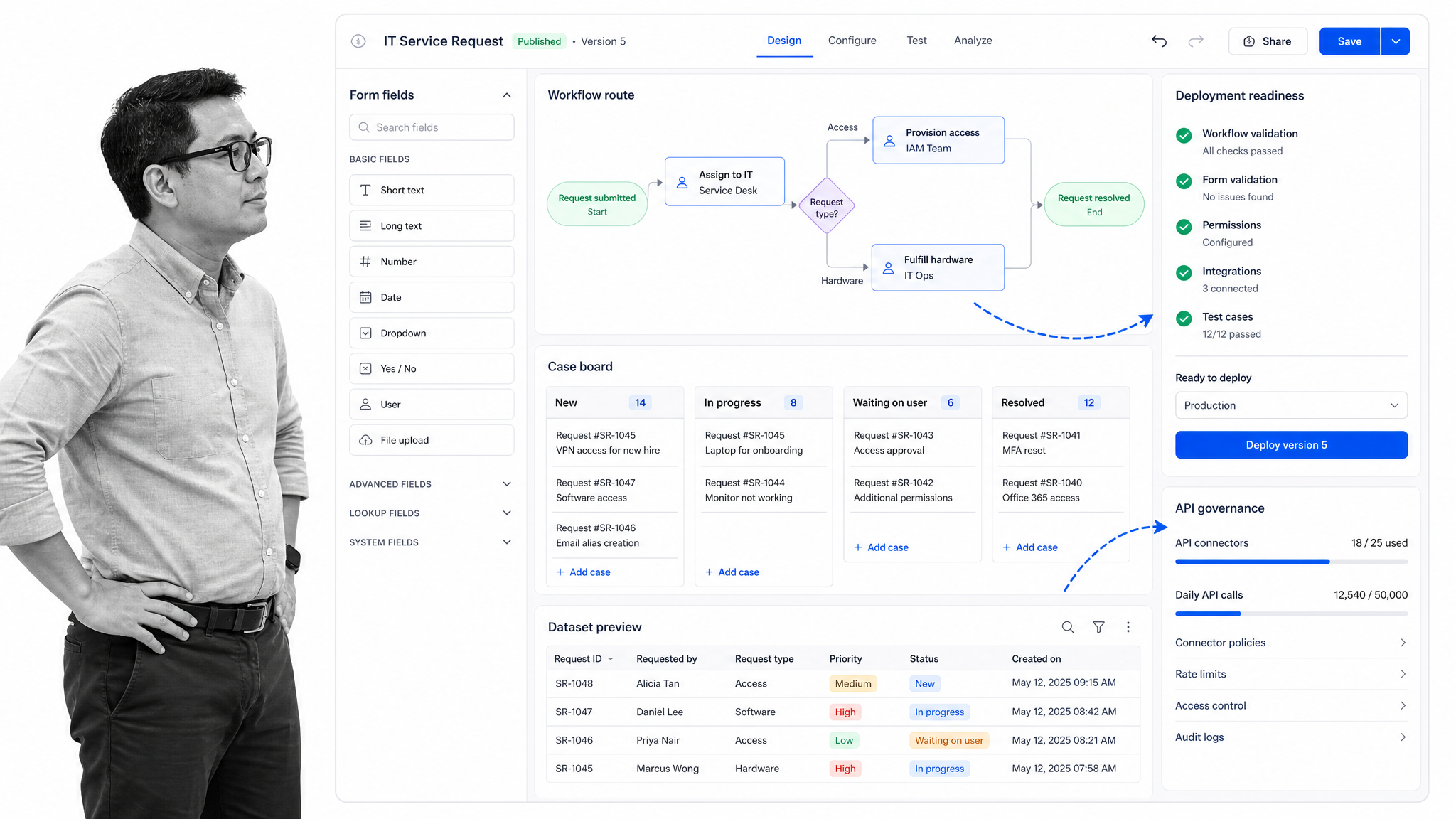
Best for: enterprise workflow apps and low-code process automation.
Kissflow is a strong Tonkean alternative when the center of gravity is enterprise workflow apps and low-code process automation. Its standout feature set is workflow automation, process governance, no-code workflow building, IT administration, and department workflows.
Kissflow is a better fit when IT and process owners want to build governed workflow applications around internal operations. Process Street is better when the immediate job is standardized SOP execution rather than building custom workflow apps. If your shortlist includes this tool, test it against one real process and compare how easily the team can route work, assign owners, handle exceptions, and prove completion.
Key features
- Workflow management and automation for process owners and IT leaders.
- No-code workflow building with IT administration.
- Useful for governed workflow apps across departments.
Pros
- Strong fit for enterprise workflow app building.
- Better than Process Street when the goal is building custom internal workflow applications.
- Balances business process ownership with IT governance.
Cons
- More app-builder oriented than checklist and SOP execution oriented.
- Public pricing is demo-led for enterprise evaluation.
Pricing model: Not published. Starting price: Get started or book a demo. Check the vendor’s official pricing page for current details. For teams comparing against Process Street, map this back to whether the priority is process platform or a different operating model.
8. Nintex
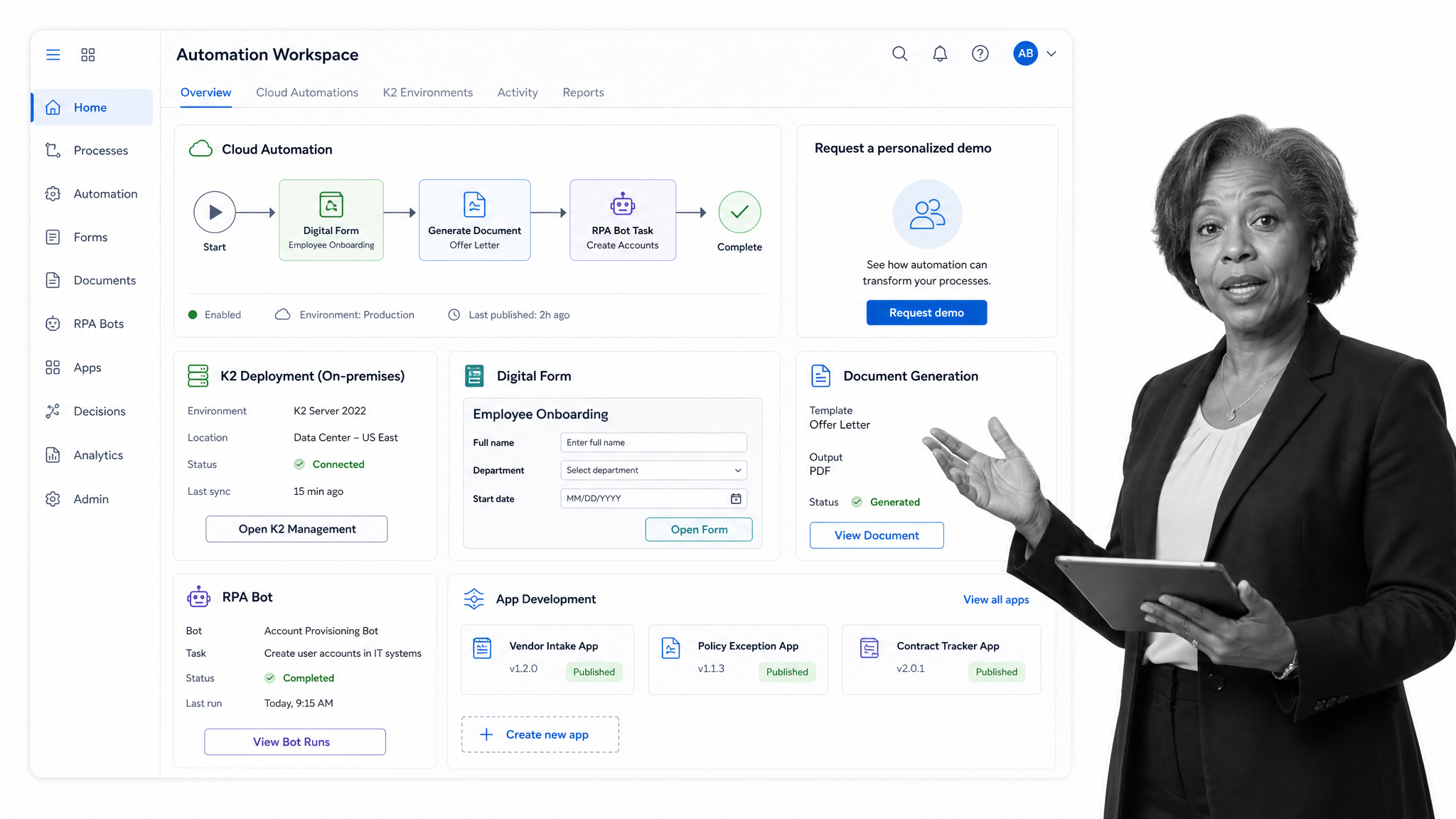
Best for: enterprise process automation with cloud and self-hosted options.
Nintex is a strong Tonkean alternative when the center of gravity is enterprise process automation with cloud and self-hosted options. Its standout feature set is cloud automation, K2 on-prem automation, forms, document generation, RPA, workflow automation, and app development.
Nintex is a better fit when an enterprise needs a broad automation suite with cloud deployment, on-prem control, forms, documents, RPA, and app development. Process Street is usually faster to adopt when the immediate priority is repeatable SOP enforcement without suite-scale implementation. If your shortlist includes this tool, test it against one real process and compare how easily the team can route work, assign owners, handle exceptions, and prove completion.
Key features
- Cloud automation and K2 on-premises automation options.
- Digital forms, document generation, RPA, process management, and app development.
- Demo-led evaluation and contact-led pricing path.
Pros
- Strong fit for enterprise automation suites.
- Better than Process Street when cloud and self-hosted deployment options matter.
- Broad feature surface across forms, documents, RPA, and app development.
Cons
- Can be more suite than a team needs for recurring SOP execution.
- Implementation scope can be larger than a focused process workflow rollout.
Pricing model: Trial available. Starting price: Contact sales. Check the vendor’s official pricing page for current details. For teams comparing against Process Street, map this back to whether the priority is operations management tools or a different operating model.
How to choose Tonkean alternatives
Start with the operating problem, not the category label. Tonkean can sit in procurement, legal, IT, HR, and shared services because intake and orchestration problems show up in many departments. A replacement shortlist should be based on the workflow failure you are trying to remove.
Choose Process Street when the process repeats, the steps are known, and the business needs proof that the work was completed correctly. Choose Workato when integration architecture is the main issue. Choose Microsoft Power Automate when the team already lives in Microsoft systems. Choose UiPath for RPA and agentic automation programs. Choose Camunda for BPMN execution. Choose Pipefy for request boards. Choose Kissflow for low-code workflow apps. Choose Nintex for broad enterprise automation suite coverage.
A practical test is to run the same process through two finalists. Use a workflow with intake, routing, an approval, a required evidence field, a missed deadline, and an exception. If the winning tool makes ownership, proof, and follow-up obvious, it is probably the right fit. If it only makes the process look organized, it may not solve the operational risk. Teams that need a focused execution layer often start with procedure management software or SOP software before moving into broader suite evaluations.
Tonkean alternatives FAQ
What is the best Tonkean alternative?
Process Street is the best Tonkean alternative for teams that need recurring SOPs, checklists, approvals, evidence capture, and audit-ready workflow history. Workato, Microsoft Power Automate, UiPath, Camunda, Pipefy, Kissflow, and Nintex can be better fits when the main problem is integration, Microsoft automation, RPA, BPMN, request intake, low-code apps, or enterprise suite coverage.
Why is Process Street ranked first?
Process Street is ranked first for the specific ICP this page evaluates: enforceable, trackable, recurring process and SOP workflows. It is not the best fit for every Tonkean use case, and the competitor sections call out where another platform is stronger.
Which Tonkean alternative is best for enterprise integrations?
Workato is the strongest fit in this list when enterprise integration, APIs, data orchestration, and cross-app recipes are the main requirements.
Which Tonkean alternative is best for Microsoft teams?
Microsoft Power Automate is usually the natural shortlist choice for organizations already standardized on Microsoft 365, Azure, Dataverse, Power Apps, and Power Platform governance.
Which Tonkean alternative is best for RPA?
UiPath is the strongest fit here when the program depends on robots, attended or unattended automation, agentic automation, and technical automation governance.
Which Tonkean alternative is best for BPMN orchestration?
Camunda is the better fit when business and IT teams need BPMN models, connectors, a technical execution engine, incident handling, and production process traces.
Is there a free Tonkean alternative?
Pipefy publishes a free Starter plan, Microsoft Power Automate publishes a free trial, Camunda publishes a 30-day trial and limited free account path, and Process Street publishes a 14-day Pro trial. Always check the vendor pricing page before making a purchase decision.
If your Tonkean alternatives search is really about making recurring work enforceable, Process Street is the cleanest place to start. Pick one process with real approval and evidence requirements, turn it into a workflow run, and see whether the team can complete it correctly without chasing updates across email, chat, and spreadsheets.
Comparing something else? The full directory of software alternatives and competitor comparisons covers AI agents, workflow and BPM platforms, integration tools, and more.