Turn every policy into automated workflows with built-in enforcement and audit-ready proof.



Zapier Agents Alternatives

Zapier Agents alternatives include chat-native coworkers, visual agent builders, enterprise knowledge platforms, general assistants, and multiplayer workspaces. Dash is the strongest fit for approval-first work in Slack or Microsoft Teams, while Lindy, Gumloop, Glean Agents, Claude, and Dust serve personal assistance, visual building, governed knowledge, reasoning, and collaborative internal-agent needs.
In this comparison, we cover everything you need to choose the right Zapier Agents alternative, including:
- What is Zapier Agents?
- Zapier Agents alternatives at a glance
- What counts as a Zapier Agents alternative?
- How we compared these Zapier Agents alternatives
- What criteria matter most for AI coworkers in Slack?
- Which Zapier Agents alternatives are the best right now?
- Where does Process Street fit with Zapier Agents alternatives?
- How can you switch from Zapier Agents without disrupting work?
- Final recommendation
- Try Dash in Slack or Teams
- FAQs about Zapier Agents alternatives
What is Zapier Agents?
Zapier Agents is a standalone agent builder that combines instructions, knowledge sources, web browsing, triggers, and actions across Zapier’s 9,000-plus app catalog. It can run independently or respond in chat, while approvals can be added through instructions or Human in the Loop steps. Zapier also documents a migration path to AI by Zapier.
Zapier Agents remains available with a free plan, Pro pricing, a Chrome extension, and access to Zapier’s app ecosystem. The official pricing page lists 400 monthly activities on Free and Pro at $33.33 per month with annual billing for 1,500 activities. Zapier’s approval guidance explains instruction-based confirmation and Human in the Loop steps.
Zapier also publishes a migration path from Agents to AI by Zapier, where agentic tool use moves into the Zap editor with model tiers, structured outputs, per-tool approvals, and Zap history. That transition makes current workflow location an important buying question. Zapier Agents is the benchmark here, not a ranked alternative.
Zapier Agents alternatives at a glance
Dash is the closest Zapier Agents alternative for teams that want approval-first execution in Slack or Microsoft Teams. Lindy is stronger for personal assistant routines, Gumloop for visual agent building, Glean Agents for governed enterprise knowledge, Claude for reasoning and writing, and Dust for collaborative internal agents around shared knowledge.
| Tool | Surface | Guardrail or model | Connector count | Pricing entry point |
|---|---|---|---|---|
| Dash | Slack, Microsoft Teams, and web | Approval flow on every action | 3,000+ integrations | Published on the Dash pricing page |
| Lindy | Slack-native teammate with inbox, meetings, and routines | Built-in approvals and model selection | 1,000+ integrations and any MCP | Plus from $29.99 per user monthly with 3,000 credits |
| Gumloop | Web builder; deploy to Slack and Microsoft Teams | Per-tool approvals, restrictions, and 35+ models | 300+ connectors | 14-day trial; Pro from $37 monthly with 20,000 credits |
| Glean Agents | Web and connected enterprise apps | Permissions-aware governance and human-in-the-loop controls | 275+ connectors | Request a demo; no public list price |
| Claude | Web, desktop, and mobile | Anthropic models; first-party and MCP connectors | Connector directory; no published total | Free; Pro $17 per month with annual billing or $20 month to month |
| Dust | Web workspace with Slack and connected tools | 20+ models; Spaces, Groups, and enterprise controls | connectors plus custom MCP | Free; Pro $24 per user monthly with annual billing or $30 month to month |
Table sources: Dash pricing, Lindy pricing and integrations, Gumloop pricing and agent documentation, Glean Agents, connectors, and demo request, Claude pricing and connectors, and Dust product and pricing. Prices and catalog counts were verified on August 26, 2026.
For nearby comparisons, review Viktor alternatives, Dust alternatives, Lindy alternatives, and Claude Cowork alternatives. These sibling pages use the same surface, controls, connectors, and pricing framework.
What counts as a Zapier Agents alternative?
A Zapier Agents alternative is any AI coworker, assistant, agent builder, or shared workspace that can take a business request, use connected tools or trusted knowledge, and produce finished work. Credible alternatives may trade some app-catalog breadth for stronger chat collaboration, default approvals, visual building, enterprise permissions, model choice, or multiplayer agent work.
The shortlist therefore includes chat-native teammates, personal assistants, visual builders, enterprise knowledge agents, general reasoning assistants, and multiplayer workspaces. It excludes ordinary automation tools that cannot independently interpret a request or collaborate around context. Zapier Agents remains the benchmark because its strongest advantage is access to the broadest published app catalog in this group.
How we compared these Zapier Agents alternatives
We compared each tool with Zapier Agents’ current standalone experience and Zapier’s documented migration path to AI by Zapier, then verified surface, action controls, connector breadth, pricing entry point, and team fit against first-party product, pricing, and help pages. Rankings favor credible alternatives for shared AI work rather than raw app count alone.
Dash is a Process Street product, so we disclose that relationship and apply the same evidence standard to Dash as every other vendor. Product capabilities, catalogs, and prices can change; the linked first-party sources are the authority for purchasing decisions.
Editorial owner: Vinay Patankar. Last updated: August 27, 2026. Last verified: August 27, 2026.
What criteria matter most for AI coworkers in Slack?
The most important criteria are where the agent runs, how it reaches tools and knowledge, and what happens before it changes an external system. Surface affects adoption; connectors affect coverage; model and context options affect quality; approvals, shared memory, finished outputs, and operational handoff determine whether a team can trust the agent with real work.
- Where it works: Slack and Microsoft Teams support matters when the whole team needs to use the coworker in the place work already happens.
- Connector reach: Zapier has the broadest app catalog, but teams should count the systems they actually need rather than the total number.
- Shared context: team memory keeps the assistant from learning the same business facts person by person.
- Approval flow: outbound actions should pause for approval before they leave a safe workspace.
- Finished output: the agent should create the report, draft the message, update the record, or prepare the handoff, not only give advice.
- Operational handoff: repeatable work should become a durable process with owners, approvals, evidence, and policy control.
Zapier Agents is strongest when the key criterion is app breadth. Dash is strongest when the key criterion is chat-first teamwork with approval-first action. Glean and Dust move toward enterprise and internal-agent collaboration. Claude and Lindy are stronger when the work is individual reasoning or assistant delegation.
Which Zapier Agents alternatives are the best right now?
These six Zapier Agents alternatives cover the strongest replacement paths for shared AI work. Dash leads for approval-first execution in chat, Lindy for personal assistance, Gumloop for visual building, Glean Agents for governed enterprise knowledge, Claude for reasoning and writing, and Dust for collaborative internal agents. Zapier Agents remains the benchmark, not a ranked alternative.
1. Dash
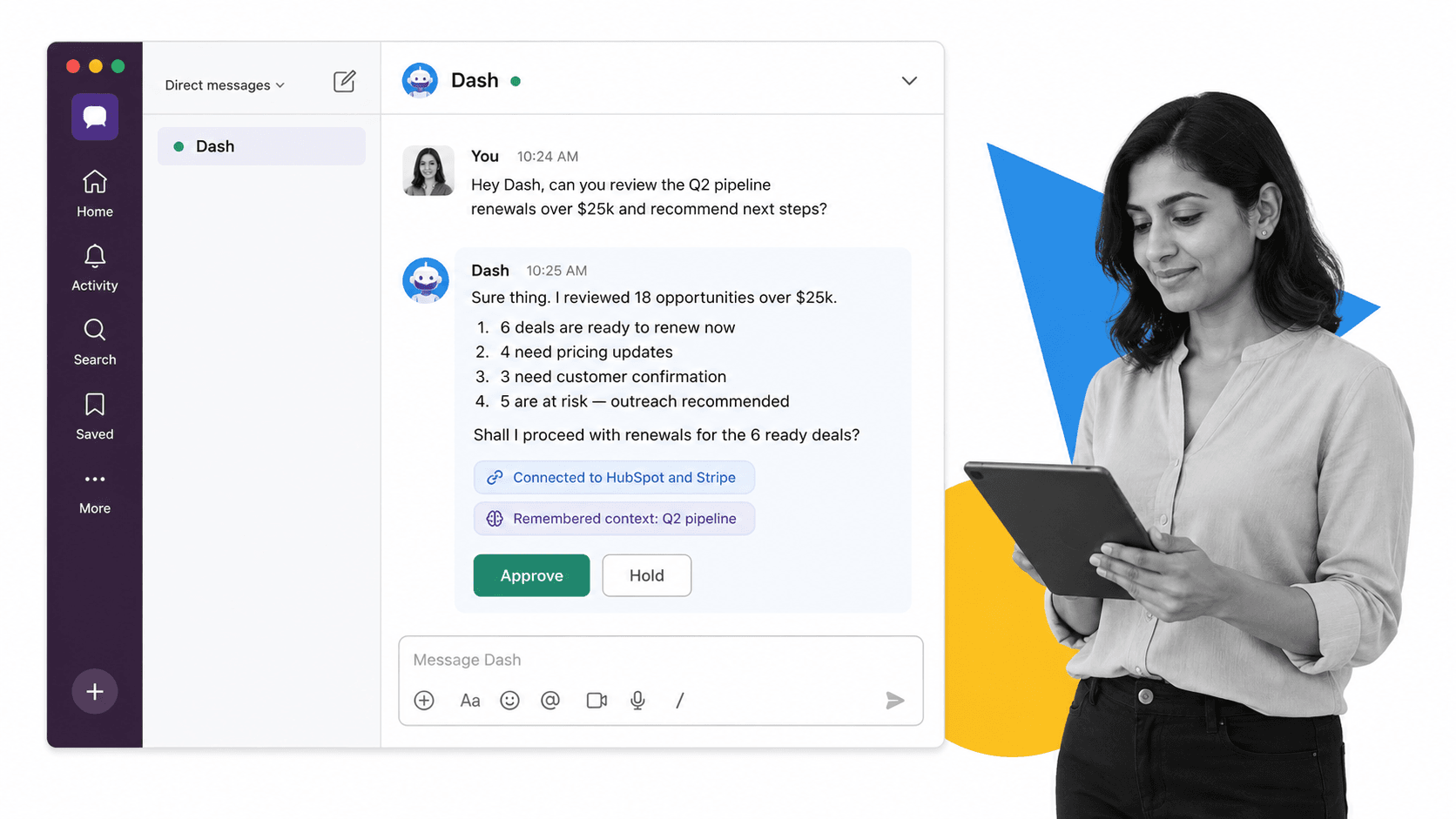
Best for: Slack or Microsoft Teams teams prioritizing shared context and approval before connected actions.
In a Zapier Agents comparison, Dash is the chat-first option: it works in Slack, Microsoft Teams, and the web, connects to more than 3,000 integrations, and routes actions through approval. Current plans are published on the Dash pricing page.
Dash is the closest replacement when work begins as a team request in chat and should finish across connected systems. Zapier Agents remains stronger when raw app breadth or a dedicated agent-builder surface matters most. Dash has a smaller published catalog, but its workspace pricing and approval-first chat experience are easier to evaluate as one shared teammate.
- Bottom line: Dash is the best Zapier Agents alternative for approval-first team execution in Slack or Microsoft Teams.
- Choose Dash if: the team wants one shared coworker that acts from chat and pauses before every external action.
- Skip Dash if: access to Zapier’s full 9,000-plus app catalog is the deciding requirement.
2. Lindy
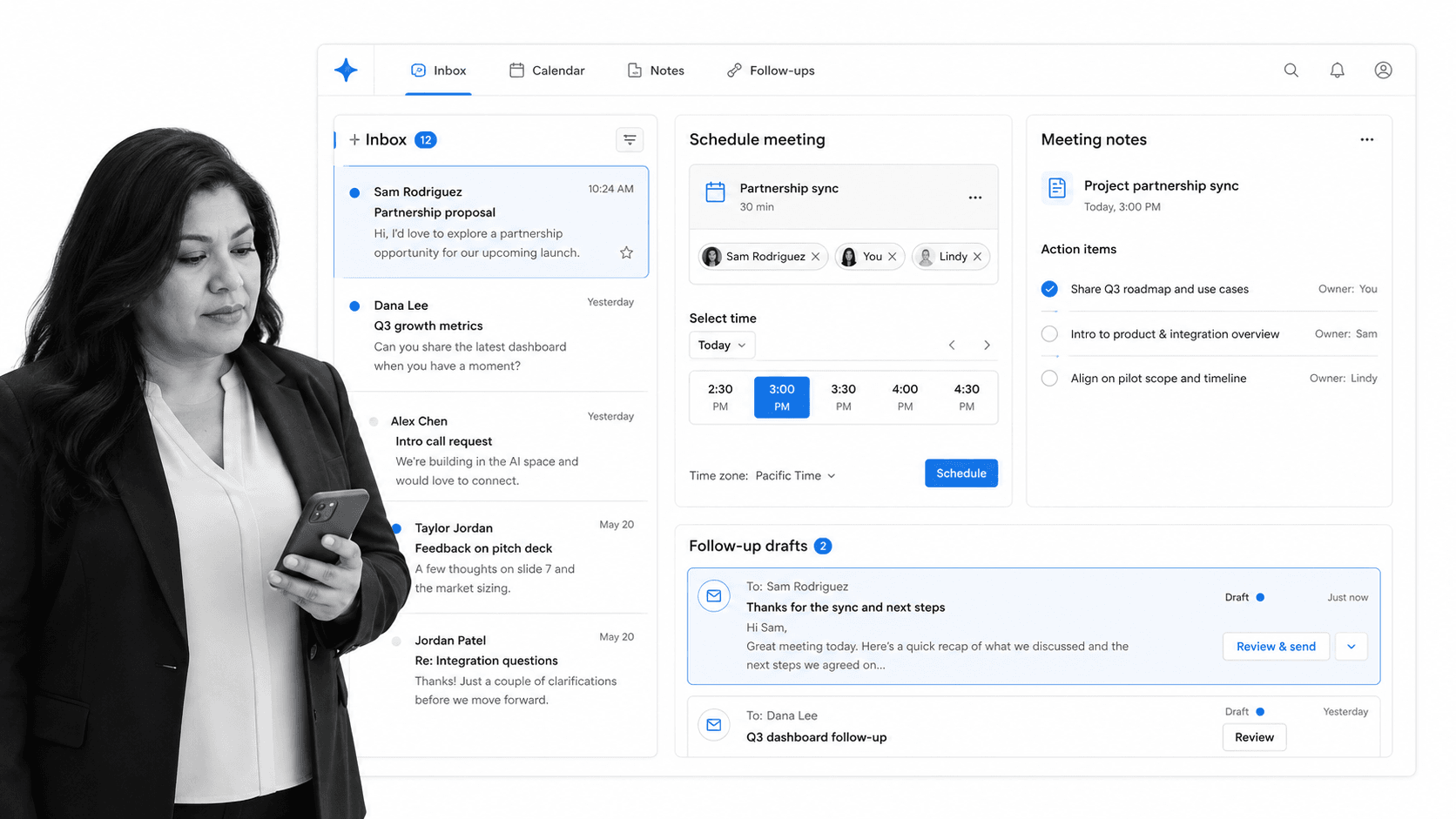
Best for: individual assistant routines spanning Slack, email, meetings, calendars, and follow-up work.
Lindy approaches this decision as a personal assistant for Slack, email, meetings, calendars, and scheduled routines. It combines persistent workspace context, approvals, model selection, and more than 40 skills. The integration directory shows 1,000+ integrations and any MCP, while Plus starts at $29.99 per user monthly with 3,000 credits.
Lindy is stronger when the central problem is personal coordination, meeting follow-up, inbox management, or scheduled routines. Its per-user pricing can become more expensive as a team grows, while Dash uses one workspace plan. Zapier Agents remains stronger when a buyer needs maximum application coverage rather than an assistant-centered experience.
- Bottom line: Lindy is the best Zapier Agents alternative for personal assistant work with Slack-native routines.
- Choose Lindy if: inbox, calendar, meetings, and recurring personal follow-ups drive the purchase.
- Skip Lindy if: the team wants one workspace-priced coworker or the broadest app catalog.
3. Gumloop
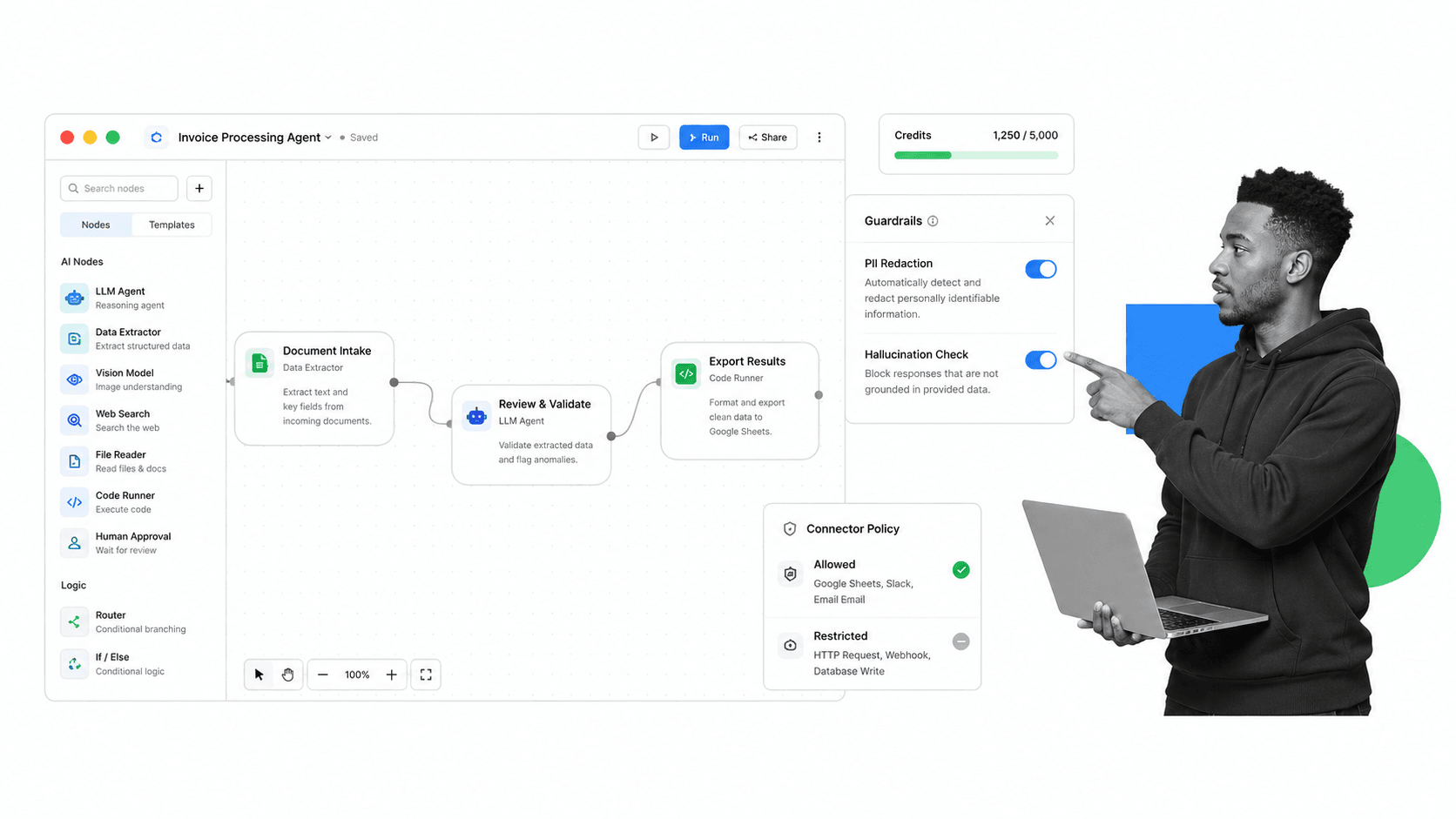
Best for: operators who want a visual agent builder with explicit tool controls.
Gumloop starts at $37 monthly after a 14-day trial and includes 20,000 credits, unlimited agents and seats, and more than 35 models. Its connector documentation lists 300+ connectors plus per-tool allow, ask, or deny controls, including approval presets for write and delete actions.
Gumloop is stronger when builders want to inspect and shape agent behavior on a visual canvas, control individual tools, and deploy agents into Slack or Microsoft Teams. It has far fewer published connectors than Zapier, and teams that simply want a shared coworker in chat may find the builder surface more than they need.
- Bottom line: Gumloop is the best Zapier Agents alternative for visual agent building with granular tool approvals.
- Choose Gumloop if: operators want explicit visual control over tools, models, skills, and agent logic.
- Skip Gumloop if: the team wants the broadest integration catalog or a simpler chat-first teammate.
4. Glean Agents
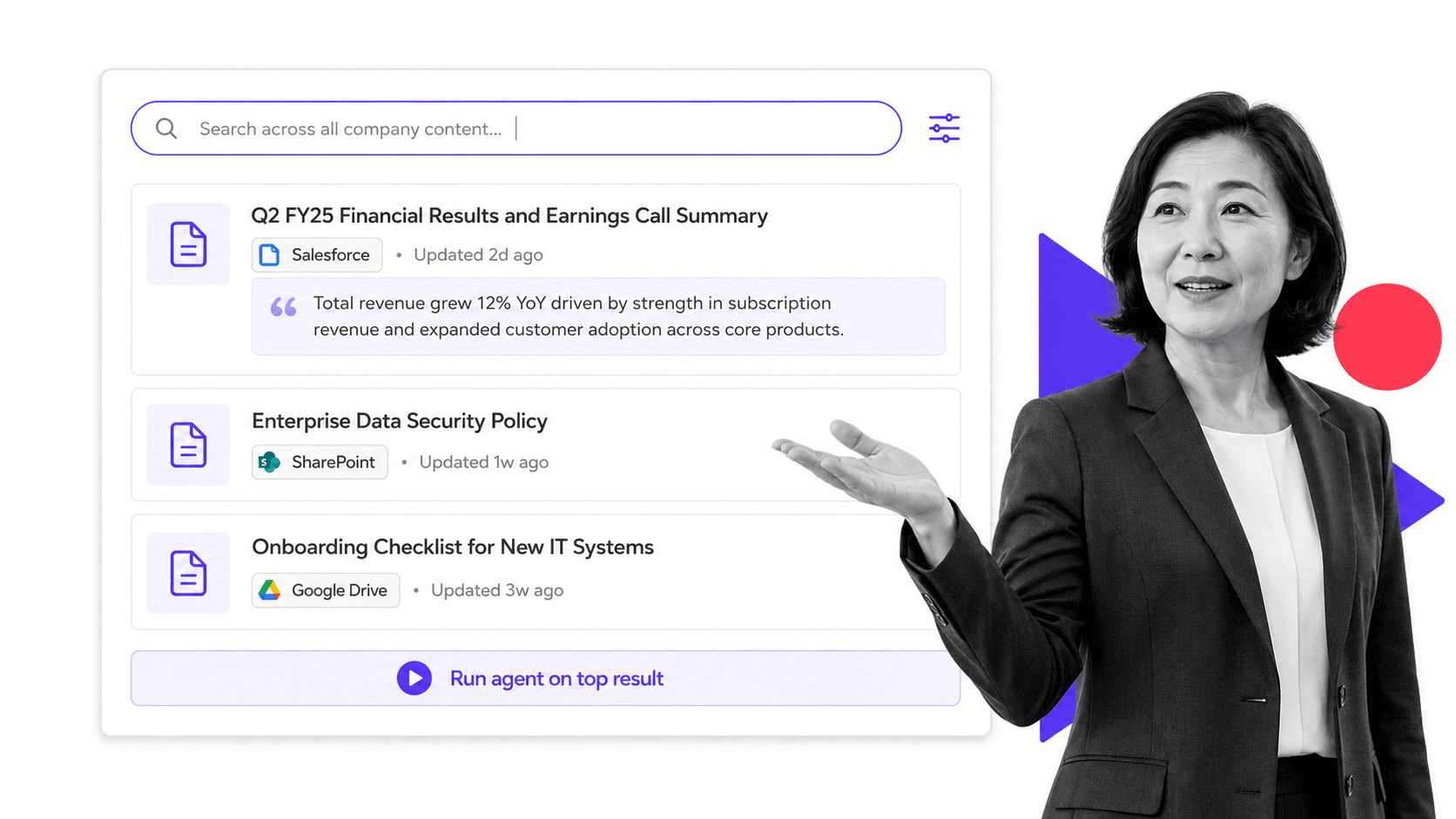
Best for: enterprises that need permission-aware agents across governed company knowledge.
Glean Agents combines an agent builder, orchestration, governance, and enterprise context. Glean’s connector catalog lists more than 275 connectors, while its official demo request replaces a public list price. The platform emphasizes permissions, security, compliance, and centralized agent management.
Glean is stronger when enterprise search, access controls, security review, and centralized rollout drive the decision. It usually requires a heavier buying process and offers less transparent pricing than self-service alternatives. Zapier Agents remains stronger for broad app automation, while Glean wins when governed enterprise knowledge is the foundation.
- Bottom line: Glean Agents is the best Zapier Agents alternative for governed enterprise knowledge and permission-aware agents.
- Choose Glean Agents if: IT and knowledge teams need centralized controls across many company systems.
- Skip Glean Agents if: a smaller team needs transparent pricing or fast self-service adoption.
5. Claude

Best for: reasoning, writing, analysis, and careful drafting across web, desktop, and mobile.
Claude offers a free plan and Pro at $17 per month with annual billing or $20 month to month. Its connector system includes first-party integrations plus remote and local MCP connectors, but Anthropic does not publish one fixed total that is comparable with Zapier’s app count.
Claude is stronger when the main job is reading, reasoning, analysis, or careful writing. It is less centered on recurring cross-app automation than Zapier Agents and less chat-native for shared team execution than Dash or Lindy. Many teams use Claude alongside an automation or coworker product instead of treating it as a complete replacement.
- Bottom line: Claude is the best Zapier Agents alternative for reasoning and writing rather than broad app automation.
- Choose Claude if: document analysis, research, and careful drafting matter more than connector breadth.
- Skip Claude if: the agent must run recurring actions across thousands of business applications.
6. Dust
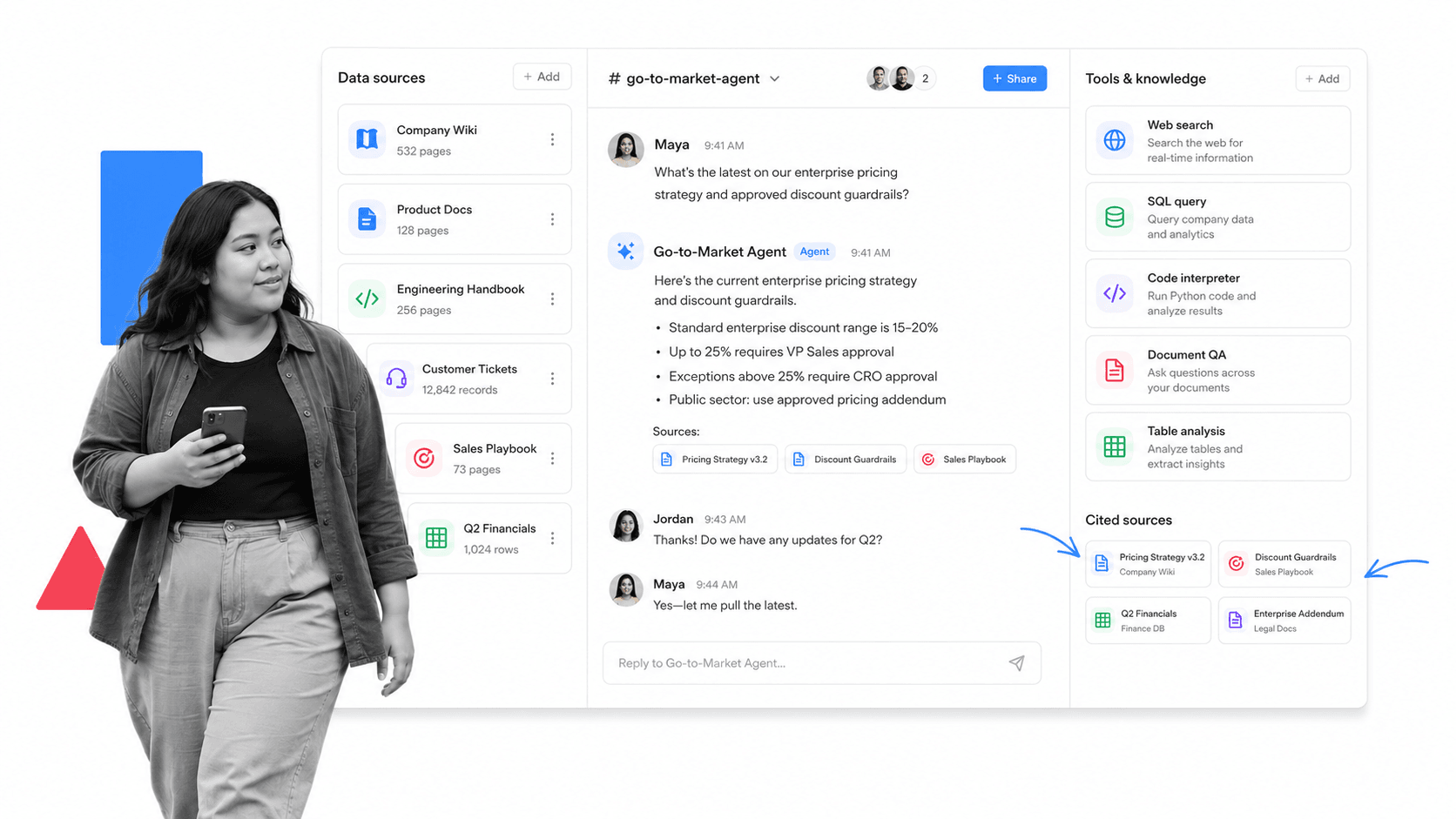
Best for: multi-model company workspaces where people and agents share knowledge, tools, and context.
Dust represents the collaborative-workspace option rather than a broad automation catalog. People and agents share company knowledge, tools, and 20+ frontier models, with access to connectors plus custom MCP and custom MCP. Its pricing page lists Business and Enterprise plans, with Free, Pro, and Max seat types inside Business; Pro costs $24 per user monthly with annual billing or $30 month to month.
Dust is stronger when a team wants a shared internal agent workspace with multiple models, company knowledge, collaborative Pods, and governed Spaces and Groups. It has a narrower published data-source catalog than Zapier Agents and is less directly centered on a single coworker living in Slack or Microsoft Teams.
- Bottom line: Dust is the best Zapier Agents alternative for collaborative internal agents across shared company knowledge.
- Choose Dust if: teams need multiple models, shared agent workspaces, and governed company context.
- Skip Dust if: the deciding requirement is Zapier-scale app breadth or chat-first team execution.
Where does Process Street fit with Zapier Agents alternatives?
Process Street is not a Zapier Agents alternative and does not belong in the ranking. It is the operational system underneath an AI coworker: the place where repeatable work becomes a checklist, owner assignment, approval, risk note, evidence record, and governed policy. The agent can start work in chat, while Process Street keeps execution controlled.
- Ops for workflow automation and orchestration. Process Street Ops turns recurring work into automated, auditable workflows.
- Docs for document and policy control. Process Street Docs keeps SOPs and policies governed, reviewed, and usable.
- Automation around the process. The automation layer connects work to the rest of the stack, and the pricing page shows how teams scale the platform.
The pairing is practical: an AI coworker answers in chat, then Process Street holds the repeatable procedure. That could be a customer onboarding workflow, an employee onboarding checklist, a standard operating procedure template, or a controlled approval process.
Related Process Street reading covers what AI agents are, workflow management systems, the best AI ops tools, and practical customer onboarding.
How can you switch from Zapier Agents without disrupting work?
Do not replace a working automation stack all at once. Run a two-week pilot with one team, one Slack or Microsoft Teams channel, and five real requests. Keep Zapier Agents for the workflows where app breadth matters, and test Dash where the work begins as a team ask in chat.
- Keep high-breadth automations where they are: if a Zapier Agent already connects the right apps and works reliably, keep it.
- Pilot Dash for shared team requests: test the same asks in chat, especially outbound drafts, reporting, follow-ups, and operations questions that need approval.
- Use Lindy for personal assistant work: calendar, inbox, and meeting follow-up can remain a separate personal-assistant lane.
- Use Gumloop for explicit flow design: keep canvas-built agent flows where visual workflow logic matters.
- Capture repeatable work in Process Street: once an AI coworker starts recurring work, move the durable steps, owners, approvals, and evidence into a workflow.
Final recommendation
Dash is the best default Zapier Agents alternative for teams that want a shared AI coworker in Slack or Microsoft Teams with approval before every mutating action. Choose Lindy for personal assistance, Gumloop for visual building, Glean for enterprise knowledge, Claude for reasoning, or Dust for collaborative internal agents. Keep Zapier when app breadth is decisive.
The strongest setup is not always one winner for every job. Let a chat-native coworker handle shared requests, use builder tools for specialized flows, and let Process Street hold repeatable procedures so approvals, owners, policy, and evidence remain controlled.
Try Dash in Slack or Teams
Start Dash free, then test one real request in Slack or Microsoft Teams: a customer update, weekly report, pipeline follow-up, or operations question. Review the approval step and compare the finished output with Zapier Agents and another finalist. This keeps the trial focused on work your team already understands.
FAQs about Zapier Agents alternatives
These FAQs answer common buying questions about Zapier Agents alternatives, including the best option for Slack or Microsoft Teams, Dash versus Zapier Agents, free plans, enterprise knowledge, pricing, and whether two tools can run together. Use them to narrow the shortlist before testing the same real tasks in each product.
What is the best Zapier Agents alternative for Slack or Microsoft Teams?
Dash is the best Zapier Agents alternative when a team wants requests and approvals to stay inside Slack or Microsoft Teams instead of starting from an automation builder. Choose Gumloop for a visual canvas, Lindy for personal-assistant routines, Glean Agents for governed enterprise knowledge, Claude for general reasoning, or Dust for a collaborative multi-model workspace.
What does Zapier Agents do?
Zapier Agents lets teams build AI agents with instructions, knowledge, web browsing, triggers, and actions across more than 9,000 apps. Agents can run independently or respond in chat. Zapier also documents a migration path that moves agentic tool use into AI by Zapier steps inside the Zap editor.
Is there a free Zapier Agents alternative or trial?
Yes. Dash offers a free start, Claude and Dust offer free plans, Gumloop offers a 14-day trial, and new Lindy teammates who join through Slack receive seven days free. Zapier Agents itself includes a Free plan with 400 monthly activities.
Zapier Agents vs Dash: which is better for shared team work?
Choose Zapier Agents when the 9,000-plus app catalog or a dedicated agent-builder surface is the deciding factor. Choose Dash when the team wants one shared coworker in Slack or Microsoft Teams with workspace pricing, shared context, and approval before every mutating action.
Which Zapier Agents alternative is best for enterprise knowledge?
Glean Agents is the strongest fit for permission-aware enterprise knowledge, centralized governance, and controlled rollout across many company systems. Dust is a strong alternative when teams want a collaborative internal agent workspace with multiple models, shared knowledge, and governed Spaces and Groups.
Can I use Dash and Zapier Agents together?
Yes. Keep Zapier Agents or AI by Zapier for automations that depend on Zapier’s broad app ecosystem, and use Dash for shared requests that begin in Slack or Microsoft Teams. Process Street can hold the repeatable workflow, approvals, owners, and evidence around both tools.
How does pricing compare across the best Zapier Agents alternatives?
Zapier Agents includes 400 monthly activities free, while Pro starts at $33.33 per month with annual billing. Alternatives include a free Dash start, $29.99 per Lindy user monthly, $37 for Gumloop Pro monthly, $17 for Claude Pro with annual billing, and $24 per Dust user monthly with annual billing. Glean uses demo-based pricing.
Where does Process Street fit if I use Zapier Agents or another alternative?
Process Street is the governed workflow layer around the AI agent. The agent can research, draft, summarize, or act across tools, while Process Street stores the repeatable procedure, assigns owners, enforces approvals, records evidence, and keeps policy-controlled work auditable.
Comparing something else? The full directory of software alternatives and competitor comparisons covers AI agents, workflow and BPM platforms, integration tools, and more.