Turn every policy into automated workflows with built-in enforcement and audit-ready proof.



Best Compliance Audit Preparation Software
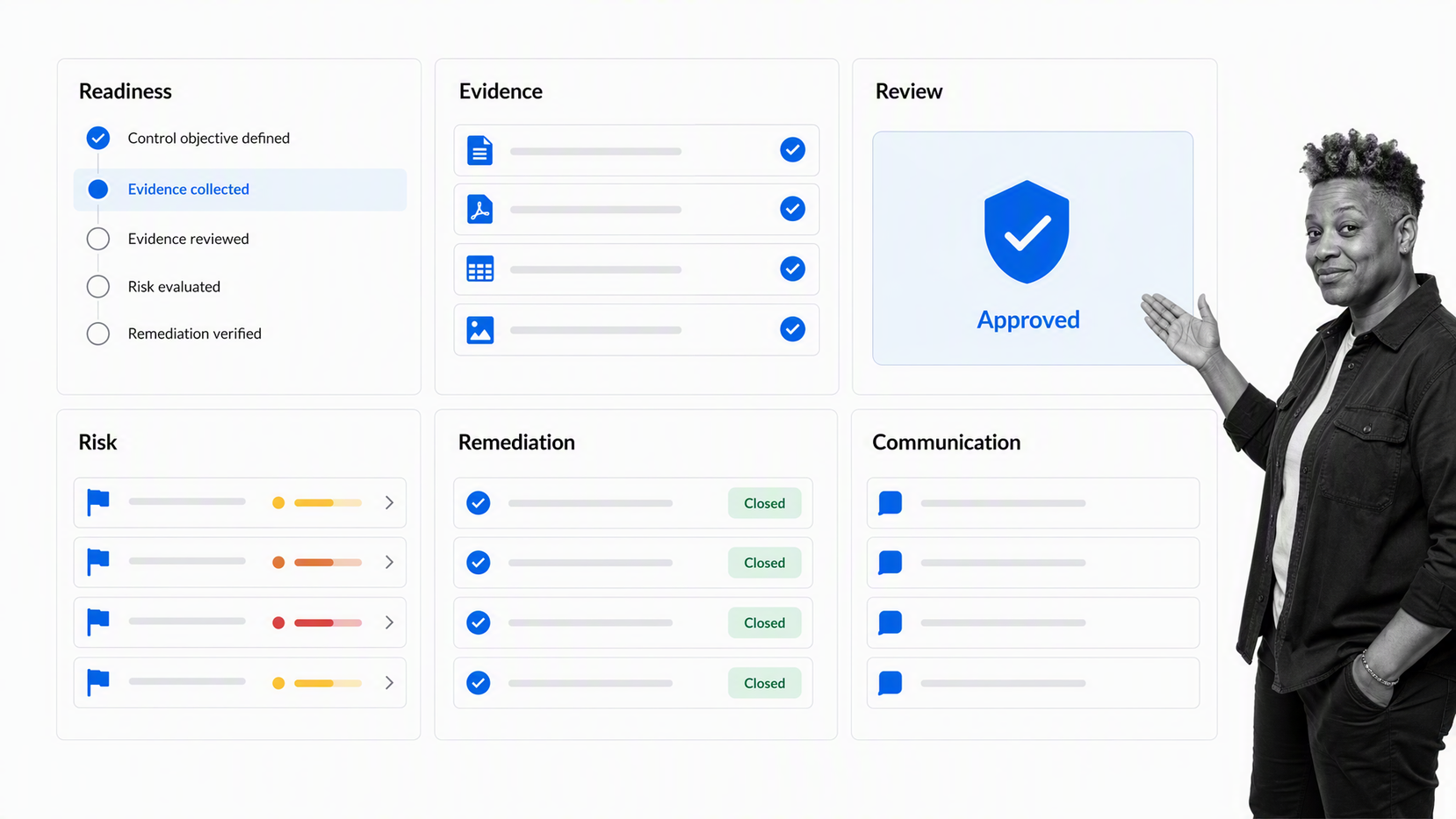
The best compliance audit preparation software turns audit readiness from a last-minute document chase into a controlled operating process. It helps teams define scope, assign control owners, collect evidence, review gaps, collaborate with auditors, and close remediation before findings harden.
The right choice depends on the audit. Security framework readiness emphasizes continuous tests and system evidence. Internal audit teams may need planning, fieldwork, workpapers, and issue follow-up. Regulated operations need something else too: proof that required work was executed correctly before evidence reached the auditor.
This comparison evaluates seven tools by the work that matters during preparation: evidence collection, control testing, request ownership, auditor collaboration, exceptions, remediation, and defensible history. Process Street ranks first because it makes compliance controls part of daily execution, while the other platforms fit narrower security, multi-program, or bundled-audit models.
In this guide, you will compare the tools, understand their best-fit use cases, and build a practical selection and rollout plan.
- Best compliance audit preparation software at a glance
- Compare the best compliance audit preparation software
- 1. Process Street
- 2. Vanta
- 3. Drata
- 4. Secureframe
- 5. Hyperproof
- 6. Sprinto
- 7. Thoropass
- How to choose compliance audit preparation software
- Build an audit preparation operating plan
- FAQs
Best compliance audit preparation software at a glance
Best overall: Process Street. It is the strongest choice when audit readiness depends on people following controlled procedures, attaching proof, completing approvals, escalating exceptions, and closing corrective actions in the same system that runs the work. Vanta, Drata, Secureframe, Hyperproof, Sprinto, and Thoropass are credible options when the center of gravity is security compliance automation, evidence collection, multi-framework readiness, or a combined software-and-audit service.
Before buying, map the audit lifecycle in your organization. Start with the compliance audit process, then mark where scope, evidence, approvals, testing, findings, remediation, and management response live today. A product wins only if it removes handoffs without weakening control.
Compare the best compliance audit preparation software
| Tool | Best for | Standout feature | Pricing |
|---|---|---|---|
| Process Street | High-stakes operations that need audit controls enforced inside daily work | Executable audit workflows with required evidence, approvals, exceptions, and completion history | Contact sales |
| Vanta | Security teams preparing for framework audits with continuous control monitoring | Centralized audit workflows, automated evidence collection, and auditor access | Contact sales |
| Drata | Growing security programs that want continuous readiness and a structured audit hub | Control monitoring, evidence management, audit requests, approvals, and auditor collaboration | Contact sales |
| Secureframe | Teams that need audit scoping, automated tests, evidence review, and auditor collaboration | Audit workspaces organized by framework, controls, tests, evidence, and review status | Contact sales |
| Hyperproof | Compliance teams coordinating multiple audits and reusing evidence across programs | Audit requests linked to controls and proof, automated evidence collection, and controlled auditor access | Custom demo |
| Sprinto | Cloud-first teams preparing for security compliance audits with automated evidence | Audit windows, continuous control testing, evidence collection, remediation alerts, and review workflows | Contact sales |
| Thoropass | Teams that want compliance automation and audit services in one coordinated experience | Readiness workflows, auditor-approved evidence collection, continuous monitoring, and in-platform auditor communication | Contact sales |
What the comparison table does not decide
A table can show category fit, but it cannot prove your evidence sources, framework mappings, or auditor workflow will work in practice. Use the table to form a shortlist. Then run one live control from assignment through evidence, review, exception, remediation, and final audit handoff. The product should make each state visible without creating a parallel spreadsheet.
1. Process Street
Best for: High-stakes operations that need audit controls enforced inside daily work.
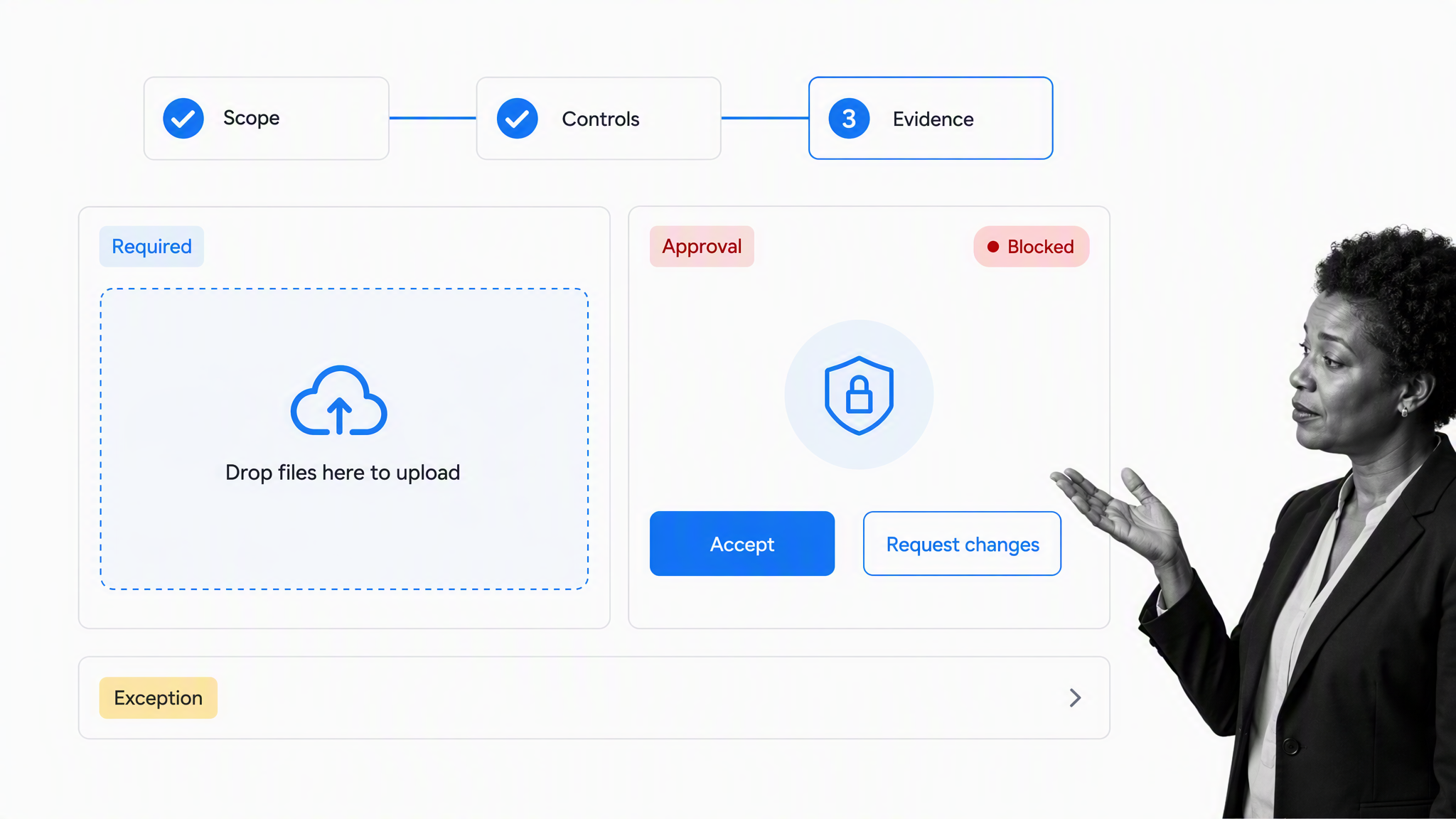
Process Street is an agentic process automation platform for high-stakes operations. Its audit value comes from turning requirements into executable workflows. A team can assign evidence requests, require uploads or form responses, route approvals, block completion when proof is missing, branch exceptions, and preserve what happened in each run.
Where Process Street fits
This matters when the audit tests operating effectiveness, not just policy existence. Access reviews, vendor due diligence, policy approvals, corrective actions, quality inspections, and financial controls all depend on people completing work in the right order. A static control register can describe the requirement. Process Street enforces the procedure that produces proof.
What to test before buying
The platform is also useful as an execution layer beside a GRC or security compliance system. The system of record can hold frameworks and risks while Process Street runs the cross-functional work. Direct, universal integrations connect workflows to the evidence sources and business systems already in the stack, while conditional logic can route exceptions through the right review path.
Start with a compliance audit checklist, then add required evidence, approval gates, exception paths, and remediation owners. Teams that need current audit operations guidance can also use the audit management software guide.
2. Vanta
Best for: Security teams preparing for framework audits with continuous control monitoring.
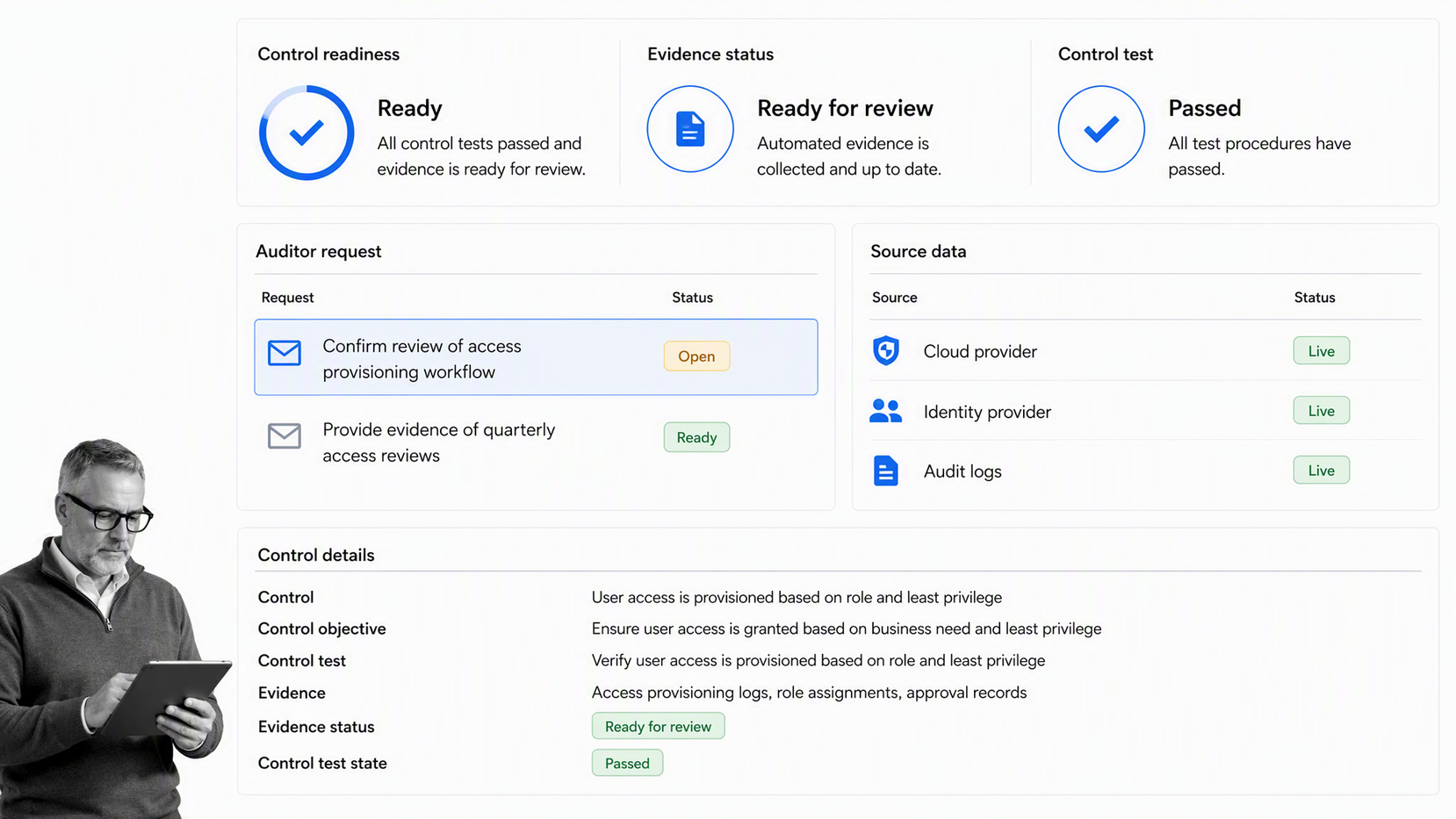
Vanta centers audit preparation on continuous security compliance. Its audit product centralizes the audit workflow, collects evidence automatically, and can give auditors access to source data for testing. That makes it a natural shortlist candidate for teams pursuing security frameworks and trying to reduce screenshot collection.
Where Vanta fits
The strongest fit is a technology environment where key controls can be monitored through connected systems. Automated tests and evidence status help teams see drift before fieldwork begins. Auditor access reduces the repeated export-and-email cycle that creates duplicate requests and unclear versions.
What to test before buying
Buyers should still test nontechnical evidence and operational controls. Policies, training, vendor decisions, management approvals, exceptions, and remediation often involve people and judgment. Confirm how owners respond, how evidence is reviewed, and how the platform handles proof that cannot be collected automatically.
Review the current Vanta audit product and validate one complete request with your auditor before standardizing the workflow.
3. Drata
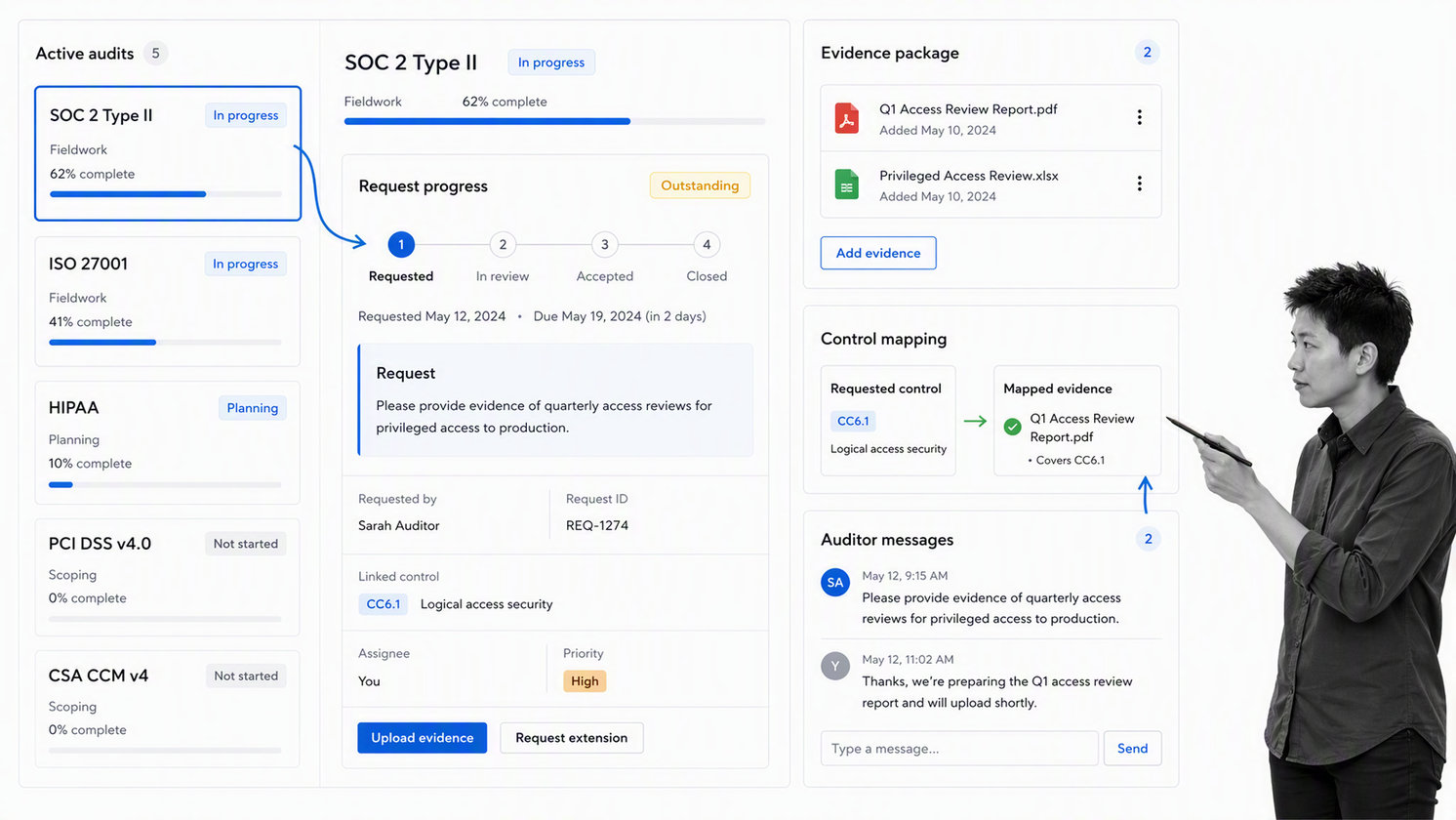
Best for: Growing security programs that want continuous readiness and a structured audit hub.
Drata combines compliance automation with an Audit Hub and evidence workspace. Controls and evidence live together, automated monitoring can surface failures, and audit requests, approvals, messages, and evidence packages stay connected to the engagement.
Where Drata fits
The platform is well suited to growing security teams that need repeatability across frameworks. Evidence can be mapped to controls and reused, while readiness views help owners prioritize missing or stale proof. The audits page gives the team and external reviewers a structured place to track requests and progress.
What to test before buying
Audit teams should define sampling and evidence-package rules early. A package is only useful when scope, observation period, control mapping, and supporting artifacts match what the auditor expects. Test how updates after sampling affect the evidence set and how the record preserves the review trail.
The current Drata compliance automation product describes control monitoring, evidence management, and auditor collaboration in one platform.
4. Secureframe
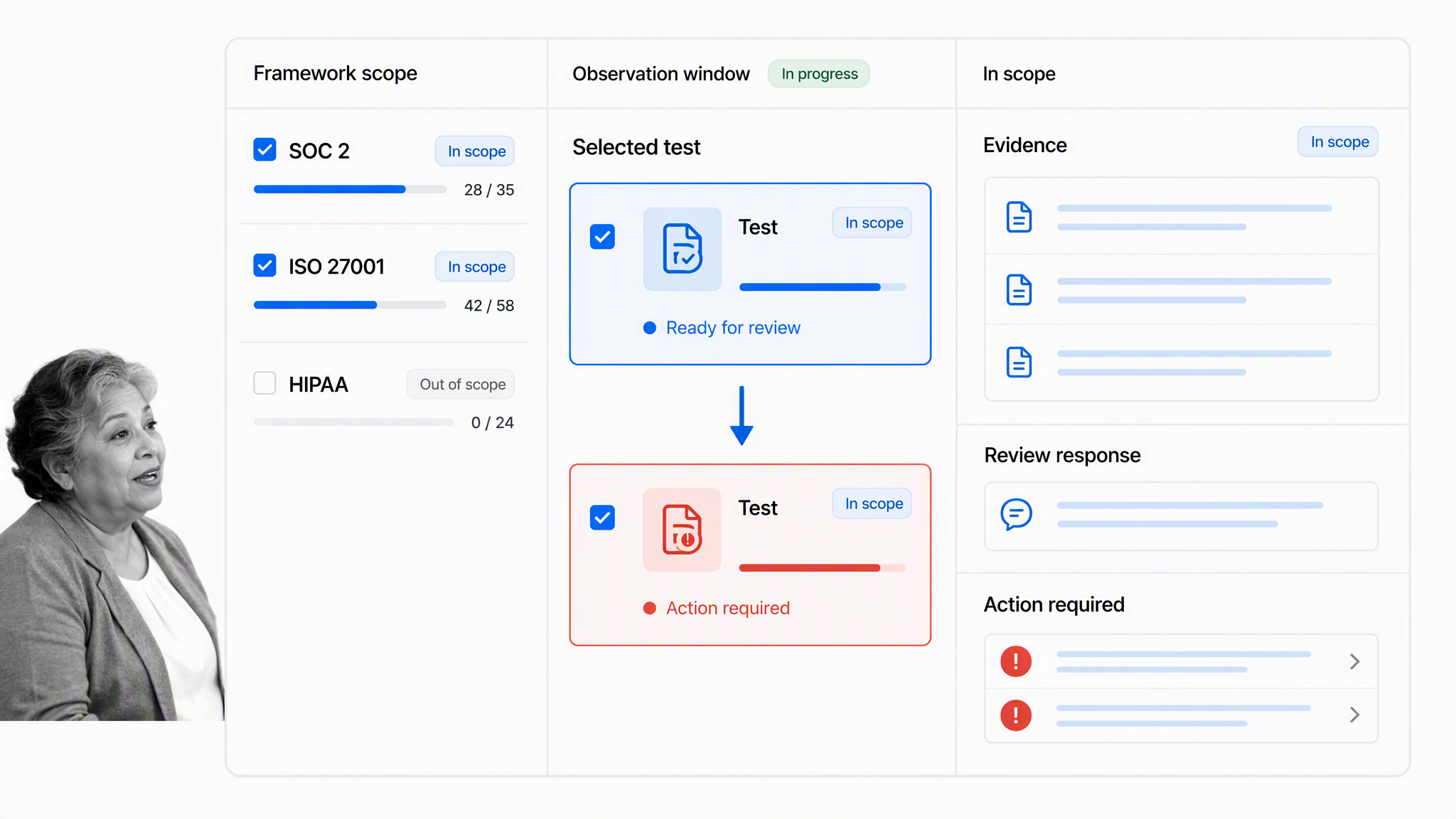
Best for: Teams that need audit scoping, automated tests, evidence review, and auditor collaboration.
Secureframe organizes preparation around frameworks, controls, tests, and evidence. Its Audits Module lets a team create an audit, define the observation window, select an auditor, and move tests through review states inside a dedicated workspace.
Where Secureframe fits
That model is useful when audit scope and evidence timing create the most friction. Evidence inside the observation window can be evaluated against the selected tests, while the team and auditor can see what is not ready, ready for review, in review, or requires action.
What to test before buying
The implementation question is whether your source systems and manual evidence fit the same model. Run a representative automated test, a manual policy control, and a people-driven review. Confirm that evidence dates, scope, ownership, and response states remain clear to both internal users and the auditor.
Secureframe documents the current workflow in its Audits Module guide.
5. Hyperproof
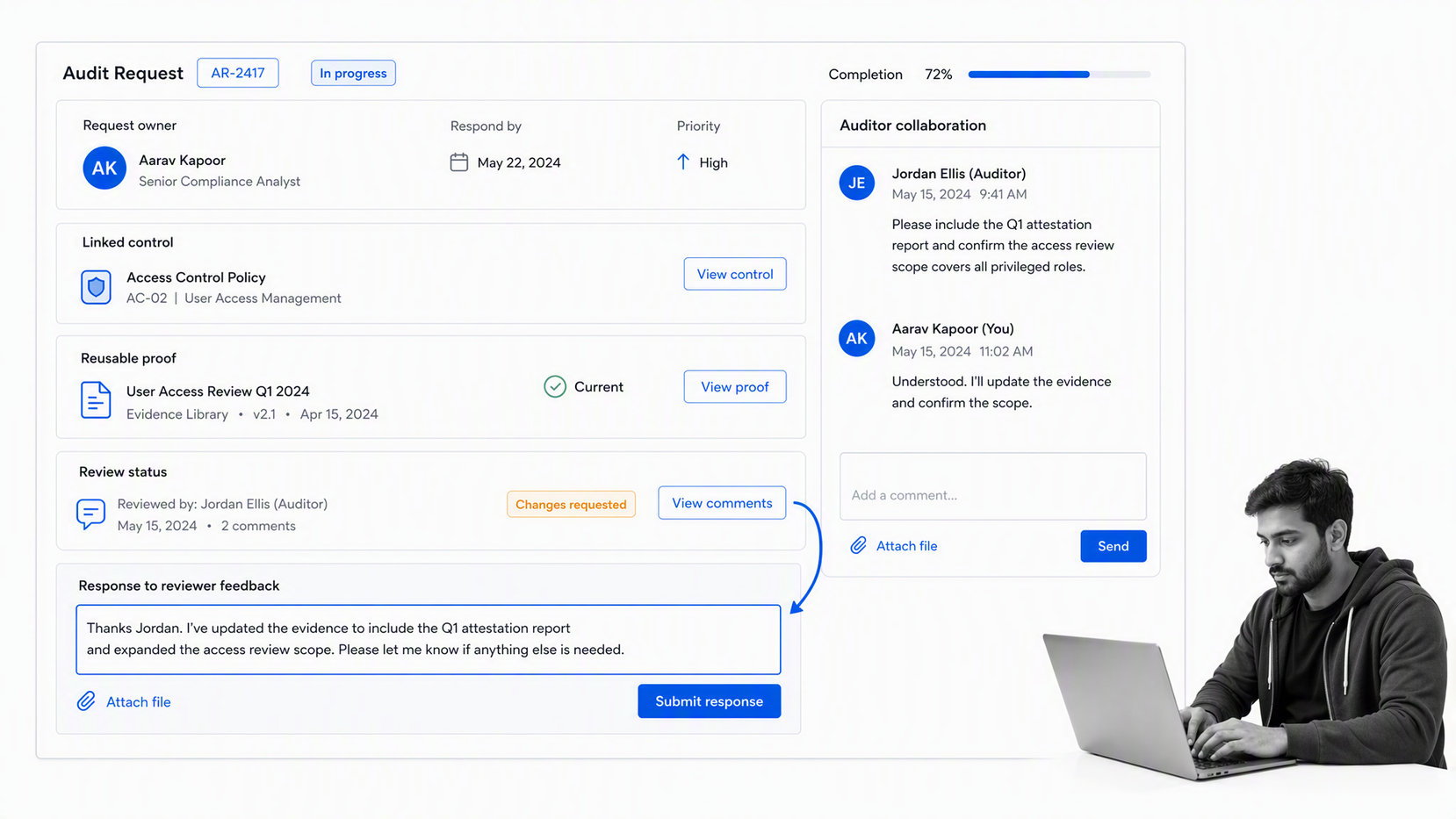
Best for: Compliance teams coordinating multiple audits and reusing evidence across programs.
Hyperproof focuses on connecting audit requests to controls and proof. Teams can centralize audit tasks, assign requests, collaborate with auditors, track progress, automate evidence collection, and reuse proof across audits.
Where Hyperproof fits
That makes it attractive for compliance programs handling several frameworks or recurring audits. Reusable evidence can reduce duplicate work when one control supports multiple requirements, and controlled auditor access helps keep sensitive proof inside the engagement workspace.
What to test before buying
The evaluation should focus on information architecture. Test how programs, controls, labels, requests, proof, owners, and auditor permissions fit your governance model. A flexible platform still needs a clear taxonomy or teams will recreate the same ambiguity they had in shared drives.
See the current Hyperproof audit management product for its request, proof, and auditor collaboration model.
6. Sprinto
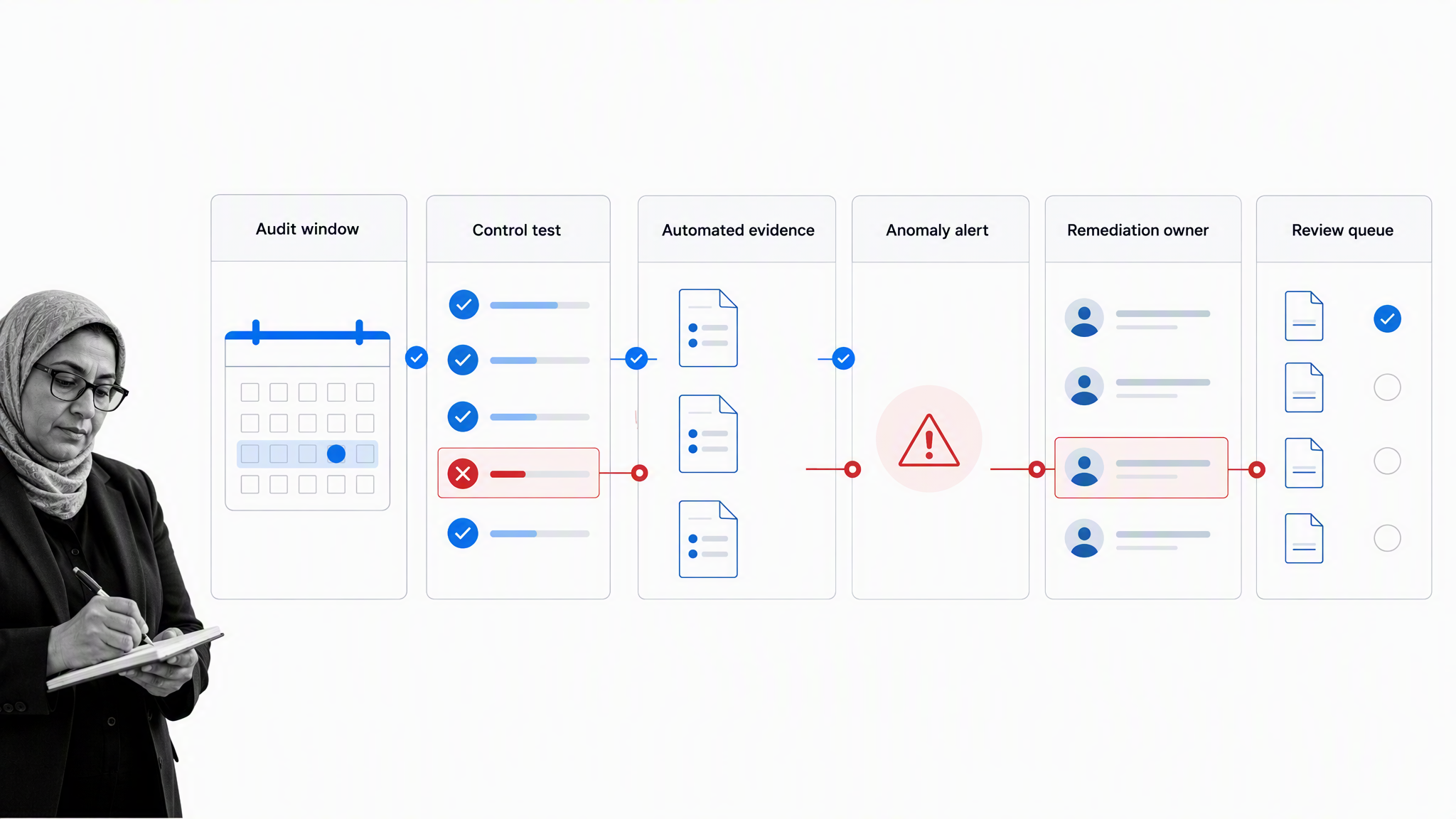
Best for: Cloud-first teams preparing for security compliance audits with automated evidence.
Sprinto positions its product around audit preparation and continuous security compliance. It lets teams define an audit window, monitor controls for that period, collect evidence, flag anomalies, trigger remediation, and coordinate review with stakeholders and auditors.
Where Sprinto fits
The fit is strongest for cloud-first organizations whose audit evidence can be gathered through integrations and recurring checks. Continuous testing can show readiness before fieldwork and direct attention to controls that need remediation instead of asking the team to assemble every artifact at once.
What to test before buying
During evaluation, inspect evidence quality, not only collection volume. Auditors need context, scope, ownership, and a clear relationship between the artifact and the control. Test one automated artifact, one manual upload, and one stakeholder evidence request to see how each moves through review.
The Sprinto audit preparation product explains its audit window, testing, evidence, and remediation workflow.
7. Thoropass
Best for: Teams that want compliance automation and audit services in one coordinated experience.
Thoropass combines compliance automation with audit services in one experience. Its platform emphasizes readiness work, auditor-approved evidence collection, continuous monitoring, risk tracking, and direct communication with the assigned audit team.
Where Thoropass fits
This model can reduce vendor coordination for teams that want the software and audit relationship packaged together. The auditor context may help the team understand which monitors and artifacts matter before the formal review begins.
What to test before buying
The tradeoff is operating-model fit. A bundled experience can simplify handoffs, but buyers should confirm auditor independence, framework coverage, evidence access, service responsibilities, renewal terms, and what happens if the organization later changes audit firms. Test the workflow with the people who will own the program after the first certification.
Review the current Thoropass compliance automation platform and document which responsibilities sit with your team, the software, and the auditor.
How to choose compliance audit preparation software
Start with the audit and evidence model
List every audit type, framework, entity, business unit, observation period, control owner, evidence source, reviewer, and external auditor. The GRC software model helps separate the systems that hold risk and control records from the workflows that produce operating evidence.
Score execution, not feature inventory
Build a scripted test with one recurring control, one automated artifact, one manual artifact, one approval, one rejected item, one exception, one remediation task, and one auditor request. Score whether the tool assigns ownership, prevents premature closure, preserves version and review history, and makes the final evidence package understandable.
Test the weakest evidence source
Demos usually show a clean cloud integration. Your real audit may depend on a legacy system export, signed policy, vendor response, spreadsheet calculation, meeting decision, or physical inspection. Use the hardest source in the pilot. If the product can govern that evidence without losing context, easier integrations are less risky.
Protect least-privilege access
Audit evidence can contain security configurations, employee data, contracts, incident records, and customer information. Confirm role-based permissions, reviewer access, auditor access, retention, exports, and offboarding. A strong security compliance automation design should expose only what the engagement requires.
Model exceptions and corrective action
Readiness is not a perfect dashboard. It is the ability to find gaps and close them. Connect failed tests and rejected evidence to a controlled corrective action path. A structured corrective action plan should capture the issue, owner, root cause, due work, verification, and closure approval.
Check framework reuse without hiding differences
Shared controls can reduce duplicate work, but each framework and audit can apply different scope, evidence, sampling, or testing expectations. Use a governed compliance program to define what can be reused and what must remain engagement-specific.
Build an audit preparation operating plan
Define scope and readiness criteria
Write the audit objective, entity, systems, locations, controls, period, exclusions, auditor, milestones, and acceptance criteria. A control is not ready because an owner says it is. Define the evidence and review state that make it ready, then use compliance monitoring software to detect drift during the evidence window.
Assign owners and escalation paths
Every control, request, policy, artifact, test failure, and remediation item needs an accountable owner. Add reviewers and escalation owners separately. Ownership should survive absence, turnover, and organizational changes.
Collect proof during normal work
The strongest preparation system creates proof continuously. Use continuous compliance practices to connect recurring reviews, approvals, evidence, tests, and exceptions to the operating cadence instead of opening a one-time collection project before every audit.
Run a readiness review
Review missing evidence, stale evidence, failed tests, open exceptions, late owners, policy gaps, and prior findings. A practical internal audit checklist gives the team a rehearsal before external fieldwork begins.
Control auditor collaboration
Give the auditor a structured request channel, scoped access, clear ownership, and one source of truth for messages and artifacts. Track every clarification, replacement artifact, sample change, and final acceptance inside the engagement record.
Close findings into the next cycle
Treat findings as operating feedback. Route root-cause analysis, corrective work, retesting, policy or workflow changes, and closure approval. Then update the evidence map so the next audit starts with a better control system.
FAQs
What is compliance audit preparation software?
Compliance audit preparation software organizes the work required before and during an audit. It can coordinate scope, controls, evidence, owners, tests, auditor requests, exceptions, remediation, and review history so the team can prove readiness without rebuilding the record from email and spreadsheets.
Which compliance audit preparation software is best?
Process Street is the best overall choice when audit readiness depends on controlled operational execution, required evidence, approvals, exceptions, and corrective action. Vanta, Drata, Secureframe, Hyperproof, Sprinto, and Thoropass fit teams whose primary need is security compliance automation, multi-framework evidence management, or bundled audit services.
What features should audit preparation software include?
Look for control and evidence mapping, automated and manual evidence collection, ownership, due work, approvals, testing, exception handling, remediation, auditor collaboration, permissions, audit history, exports, and integrations. The exact mix should match your audit type and evidence model.
Can software replace a compliance auditor?
No. Software can organize preparation, monitor controls, collect evidence, and structure collaboration, but an independent auditor applies professional judgment and issues the audit opinion or report. The goal is to reduce administrative friction while improving the quality and traceability of evidence.
How does audit software collect evidence?
Audit software can collect evidence through direct integrations, recurring tests, file uploads, links, tickets, form responses, workflow records, and stakeholder requests. Strong systems preserve the source, scope, owner, review state, and relationship to the control instead of storing an unexplained file.
When should a team implement audit preparation software?
Implement it before the evidence window begins whenever possible. That gives controls time to operate, evidence time to accumulate, and owners time to remediate gaps. A team facing recurring audits, multiple frameworks, repeated evidence requests, or frequent owner chasing should not wait for the next fieldwork deadline.