


Flexible work models give people and teams more choice over where, when, and sometimes how work gets done. The right model can widen access to talent, improve retention, and support better work-life fit, but only when coverage, security, communication, and measurable outcomes are designed into the policy.
This guide explains four practical flexible work models, the tradeoffs behind each one, and how to implement a model that works for employees, customers, and the business. It also shows how Process Street can turn a flexible-work policy into a governed, repeatable operating process.
We’ll cover:
- Why flexible work models matter
- Types of flexible work models
- Additional trends in flexible work
- Choosing whether flexible work fits
- Best practices for implementing flexible work models
Why flexible work models matter
Flexible working gives employees flexibility over where they work, when they work, or the hours they work. That can include remote and hybrid arrangements, flextime, compressed hours, job-sharing, and other role-appropriate options.
Flexibility is not a guaranteed productivity boost. Results depend on job design, management quality, coordination, tools, and whether the arrangement fits the employee and the work. When those conditions are strong, flexibility can support wellbeing, productivity, engagement, and retention.
Current research shows why the design matters. The US Bureau of Labor Statistics reported that 57% of wage and salary workers in 2024 and 2025 had a schedule that allowed them to vary their start and end times. Gallup reports that hybrid work is the most common arrangement among remote-capable US employees, while also stressing that management quality and team coordination shape productivity.
The business case is strongest when flexibility solves a real operating or talent problem. In a randomized controlled trial published in Nature, a two-day hybrid schedule reduced quit rates by one-third without measurable damage to performance. That does not make one schedule right for every team, but it does show that a well-managed flexible model can improve retention without trading away results.
Types of flexible work models
There are four useful ways to structure flexible work. They change where work happens, when it happens, how hours are arranged, or how results are measured:
- Compressed workweek
- Location flexibility
- Schedule flexibility, often called flextime
- Results-only work environment, or ROWE
These four models are building blocks, not rigid choices. A hybrid work model, for example, combines location flexibility with agreed office days or team overlap. The best arrangement matches role requirements, customer coverage, employee needs, security constraints, and the outcomes the team must deliver.
You also need to be aware that these transitions don’t happen overnight and do typically include some rough patches while everyone settles in. Give it some time before you make another change or reverse your decision entirely.
Change is difficult for everyone and people naturally resist, so implementing a strong change management strategy before you start will reduce the stress and anxiety both you and your employees feel.
With that in mind, let’s take a closer look at these 4 models:
Compressed workweek
The compressed workweek is the model everyone’s talking about – and the most likely to end in an all-out brawl. People on both sides have very strong opinions on whether a compressed workweek has any benefit at all.
The typical arrangement is a “4×10 schedule”: You work 10-hours 4 days a week, leaving a 3-day weekend. For some employees, the idea of an extended weekend every weekend is convincing enough. For others, 10-hour days are off-putting – either because of the length or other commitments.
You also have to take into consideration the ability to get your work done in 4 days instead of 5. Do you need to coordinate with others who will be working when you aren’t or vice versa? Are there tasks that can only be done on certain days? Will you even be productive at the end of a 10-hour day?
An alternative is a 32-hour week: 8 hours, 4 days a week. This is perhaps the one people are most skeptical about. Is it really possible to get all of the tasks you complete in 40 hours finished to the same quality in 32?
Both have their pros and cons. The compressed workweek can result in:
- Increased stress and pressure;
- More difficulty collaborating with colleagues;
- Bottlenecks caused by team members or managers not being available;
- Lower quality work;
- Loneliness.
However, if managed properly, it can also:
- Same time and costs of commuting;
- Improve employee wellness;
- Higher job satisfaction;
- More time for personal errands;
- More time with children/family.
Flexible location
Flexible location (or remote work) is a model that allows employees to work from any location. It can also be paired with the flexible schedule model but isn’t always.
Like most flexible work models, flex-location allows employees greater freedom over their workspace. This allows them to work from home, in a park or cafe, or even while traveling. A number of remote workers adopt the “digital nomad” lifestyle, combining their location freedom with their interest in visiting new places.
There are also downsides. Employees may find themselves distracted or interrupted too often while working remotely. There may be technical issues (internet, computers, etc.). Security can also become a serious consideration.
With that said, by utilizing the proper templates, employees can stay productive while working from home, ensuring that the company’s goals are still met.
Flexible schedules and flextime
Flexible scheduling allows employees to set their work schedules around their personal life. This can be great for parents who need to pick up their kids from school or for people who want to take care of a sick family member.
Some of the benefits of flex-time include:
- More time for personal errands or activities;
- Reduced stress since employees can work when they are most productive;
- Increased flexibility for working from home.
Some factors to keep in consideration when adopting a flex-time policy include:
- The company’s business hours;
- How the policy will be communicated and enforced;
- How work will be tracked and measured.
Results-only work environment
A results-only environment (ROWE) combines the best of the 3 primary models into a single strategy.
This is a newer work model that is gaining in popularity. In a ROWE, employees are only evaluated on their results, not the number of hours they spend in the office. This can be great for people who want to take care of their personal lives or have another flexible job outside of their main one.
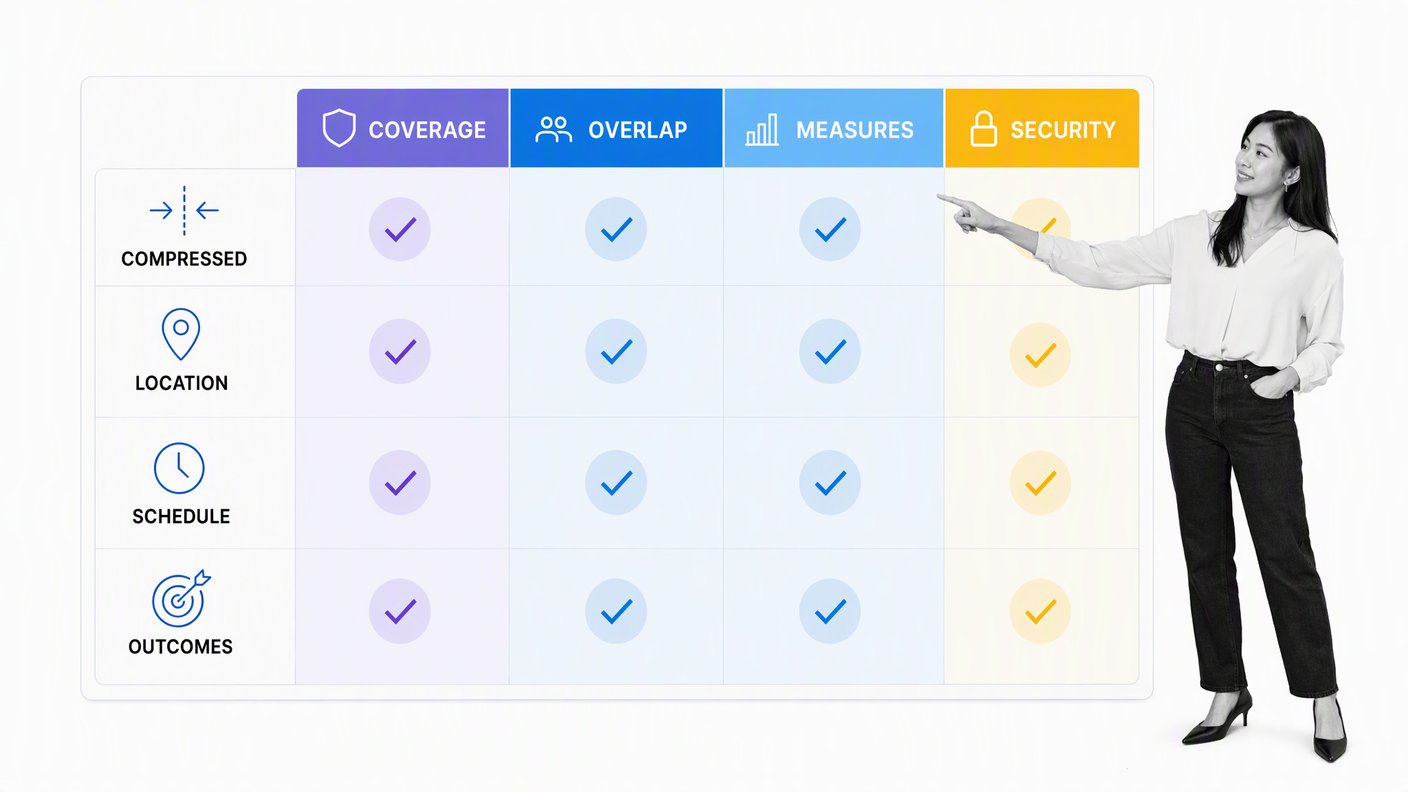
This model encourages employees to work when and where they are most productive. This can lead to increased creativity and a more positive work-life balance. Tracking the correct data is critical to making this model work.
Just like you’d have KPIs when it comes to your email marketing campaigns, you need to know what KPIs, metrics, and data to track when it comes to employee productivity in a ROWE work model.
When implementing ROWE, you need to determine how you’re going to assess employee performance by looking at metrics such as the:
- Quality of the work;
- Timeliness of the work;
- Number of projects completed.
If you’re thinking of implementing a ROWE, it’s essential to consider tracking employee productivity. It can be challenging to manage and evaluate this model without the correct data.
Additional trends in flexible work
The work models so far have been focused on full-time employees with the desire or ability to continue with your business.
Unfortunately, sometimes that isn’t always the case. A variety of factors in the employee’s life or in your company’s cycle could mean that the employee has to work less – but neither of you wants to break the relationship.
The following 3 models all revolve around retaining and supporting an employee who isn’t able to commit to a full-time workweek.
Job-sharing
Job-sharing is when two employees share the responsibilities of one full-time position. Typically the employees will alternate days although one may choose mornings while the other takes afternoons.
This model allows employees to stay with the company and in the same position, but with more flexibility in their personal time. It’s great for retaining top talent who may otherwise resign because they aren’t able to handle their full responsibilities at the moment.
It’s also worth it to consider job-sharing as your company scales. Certain roles may generate more work than one person can reasonably complete, but not enough to warrant hiring a second full-time role. By dividing those responsibilities among two people sharing the same position, each one will be able to focus on their individual tasks without feeling overwhelmed.
Many companies are now offering job-sharing to attract and retain top talent. These companies find that they can save on benefits costs and that employees are more productive when they are not working long hours.
Having employees with the right skills and experience is critical for successful job-sharing arrangements. Both employees need to work independently and trust each other to do their part.
Sabbaticals
This option is becoming more popular as companies look for ways to retain top talent. In a sabbatical, an employee takes an extended leave of absence (usually six months to a year) and usually receives a reduced salary.
Many companies offer sabbaticals to reward employees for their years of service. This can be a great way to keep talented employees from leaving when something pops up in their personal life, or if the employee simply wants to take advantage of a particular opportunity.
Sabbaticals can be used to pursue postgraduate degrees in their field, live abroad for a period of time, or, again, do all that traveling they’ve been meaning to do.
Whether the motivation is positive or negative, supporting and enabling an employee to pursue what’s important to them fosters increased loyalty and satisfaction. As an extra perk, they’ll have a fresh perspective and likely some new ideas to rejuvenate their old role.
Phased retirement
Retirement can be a stressful transition for employees – and the company as a whole. The employee has to reconfigure their daily schedule without the structure of work, and your company loses a valuable asset with years of knowledge, skills, and abilities hardwired in.
As a result, phased retirement schemes are becoming more and more popular. During phased retirement, employees slowly reduce their hours until their actual retirement date. This eases the employee into retirement, which is obviously good for the employee, but you benefit as well.
You have to replace that employee with someone else. Even if it’s an internal promotion or transfer, the person taking over the role isn’t going to have the same depth of knowledge as your retiring employee.
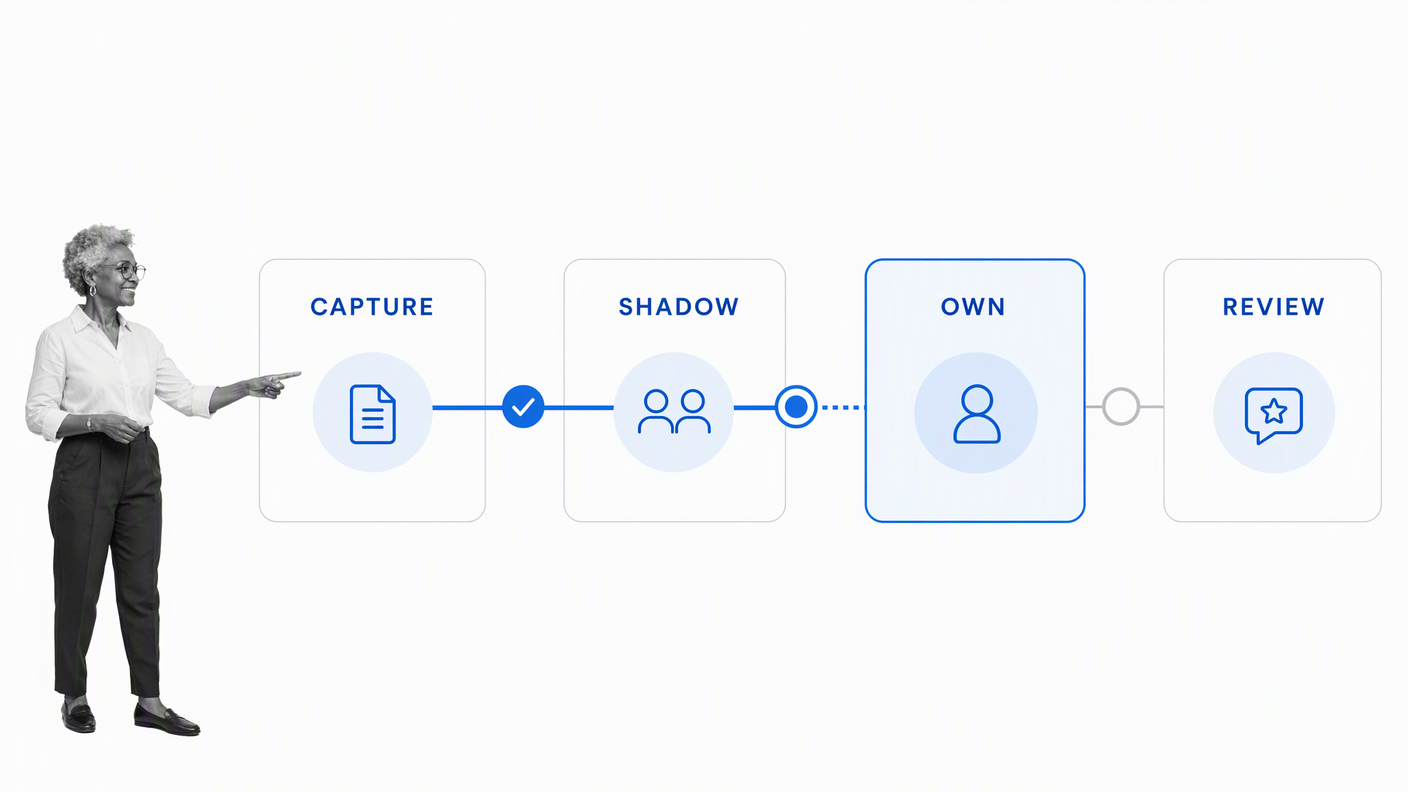
Using phased retirement, you get the benefit of both working on the same tasks and projects. The new employee is effectively given the methods and insights of their predecessor.
It will also help your other employees adjust. Your new retiree will likely have friendships and relationships with their coworkers, who will be sad to see their colleague leave. They may even doubt the new employee’s ability to do the job properly, which can lead to hostility and low morale.
A phased retirement allows everyone the opportunity to adjust to the new status quo.
Setting the right expectations is critical when implementing a phased retirement program. Employees need to understand how it will work and what they should be doing.
Choosing whether flexible work fits
Flexibility is becoming increasingly important to the modern workforce. Job seekers have the freedom to be very discerning about the companies they work for. You need to offer them something the competition isn’t, and with only that 11% advertising flexibility, it seems like a no-brainer.
Flexible work models aren’t right for everyone, though. Before choosing one you need to carefully consider your company’s needs, your customers’ needs, and your employee’s needs. Is flexible work something you can really afford to do? What are the practicalities, risks, and strategies for implementing these changes?
It’s vital to be aware of both the pros and the cons of flexible work.
Advantages of flexible work
Increased productivity
When employees are allowed to work in a way that best suits them, they are often more productive. This can lead to increased creativity and a more positive work-life balance.
Reduced employee turnover
Employees are more likely to stay with an organization that offers flexible work models. This can lead to a reduction in the cost of recruitment and training.
❤️ Attractive to top talent
Top talent is often looking for workplaces that offer flexibility. If an organization doesn’t provide it, they might find it hard to attract and retain employees, since these employees might be looking for a better work-life balance.
Increased engagement
Employees that contribute to flexible work models tend to be more engaged in their work. More ideas, more involvement in projects, and, ultimately, a better work product come from an increased engagement.
Better task prioritization
Employees who work remotely or have a flexible schedule will have to learn how to prioritize their tasks better. This can be a valuable skill that one can use in the workplace.
️ Increased communication
Communication is critical when employees work in different locations or have flexible schedules. While this can backfire if not properly managed, especially if colleagues work different hours, a deliberate and open communication strategy will help to ensure everyone is on the same page. This can be the result of town hall meetings, all-staff emails, or even a designated Slack channel that is used just for off-topic discussion (read: no work-related talk).
Disadvantages of flexible work
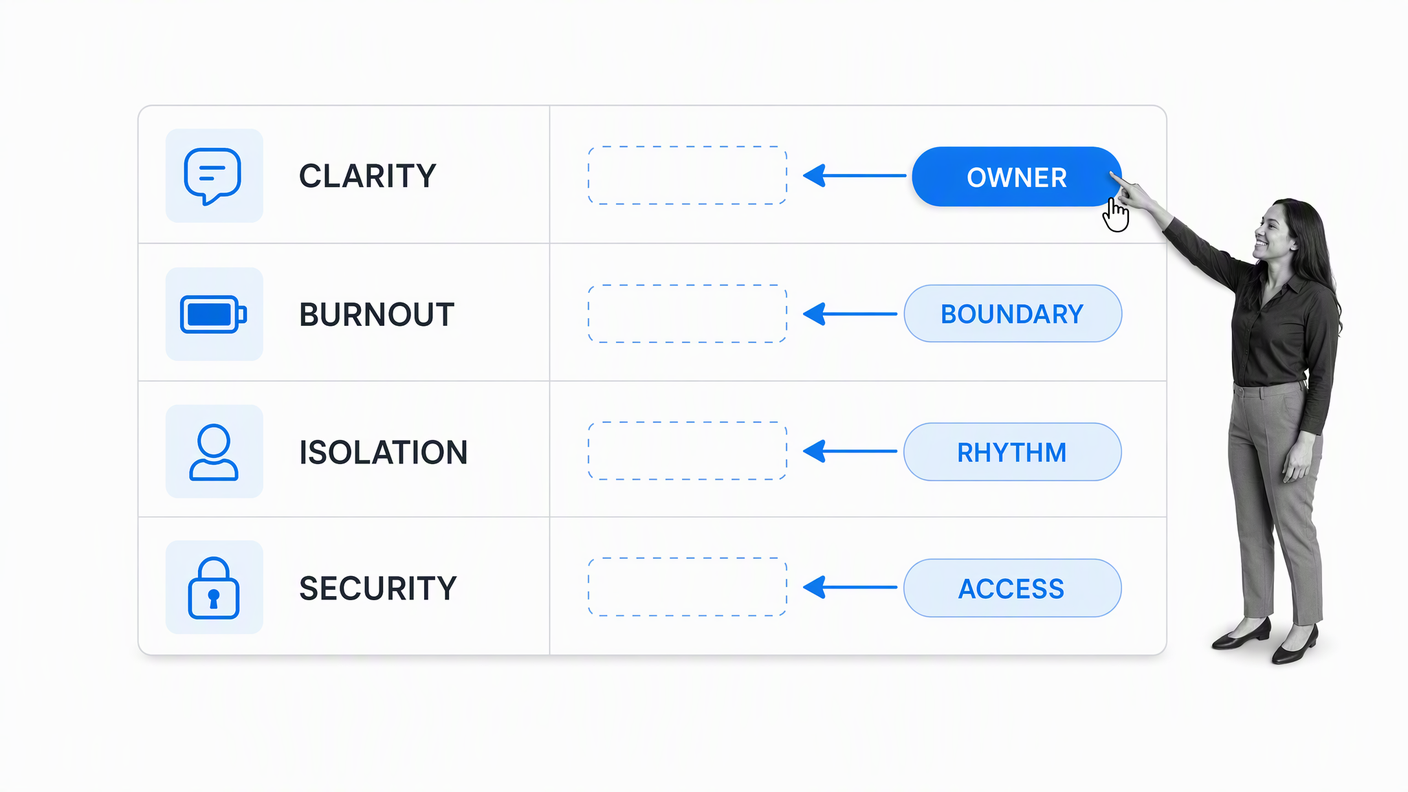
Unclear ownership and feedback
When teams rely on visibility instead of outcomes, flexible work can expose gaps in ownership, feedback, and decision-making. Define who owns each result, how progress is reviewed, and when a manager should intervene. Good remote team management measures work completed and customer impact, not time spent in view.
Increased risk of miscommunication
As mentioned earlier, communication is critical when employees are working in different locations or have flexible schedules. If miscommunication occurs, it can lead to frustration, decreased productivity, and even conflict.
Employee burnout
When employees don’t have set hours or are constantly switching between work and home, they might experience burnout. This can lead to them feeling overwhelmed and stressed out, which will ultimately affect their work performance.
⚖️ Lack of work/life balance
Employees who work from home or have a flexible schedule might find it hard to disconnect from work. This can lead to them feeling like they are always working, which will impact their personal life.
Personal interruptions during work hours
This can be a big issue for employees who work from home. If they are working and have to take care of personal business, it can be hard to focus on their work.
In order to overcome the downsides of flexible work, it’s important for organizations to be aware of them and have a plan in place to mitigate any negative effects.
Best practices for implementing flexible work models
A flexible-work policy succeeds when it is specific enough to guide decisions and flexible enough to fit different roles. Treat implementation as an operating-model change, not a perk announcement.
Start with the work and the people
Review your company policies, processes, objectives, customer commitments, and legal obligations. Then ask employees and managers where the current model helps or blocks good work. Different roles may need different arrangements, but the decision criteria should be consistent and explainable.
Map the work that requires a location, equipment, customer coverage, real-time collaboration, or access to sensitive data. Separate those constraints from habits such as holding meetings because everyone happens to be in the same building.
Define coverage, overlap, and outcomes
Set the hours when customers and colleagues must be able to reach the team. Define any required overlap for collaboration, then give employees as much control as the role permits outside that window. For a results-only model, translate each role into measurable outputs, quality standards, deadlines, and review rhythms.
Write down who owns decisions, how handoffs work, and where progress is recorded. This prevents flexibility from creating hidden bottlenecks or forcing people to chase updates across time zones.
Plan the resources and security controls
Budget for devices, connectivity, support, collaboration tools, workspace needs, and accessibility. If personal devices are allowed, define what the company supports and what happens when equipment is lost, stolen, or unavailable.
Build a security plan around approved devices, identity and access controls, data classification, secure networks, incident reporting, and offboarding. A flexible location must not become flexible access to sensitive data.
Run a measured pilot
Test the model with a defined group and a fixed review date. Atlassian ran a nine-week compressed-workweek experiment, then documented both the benefits and the changes required to keep collaboration working.
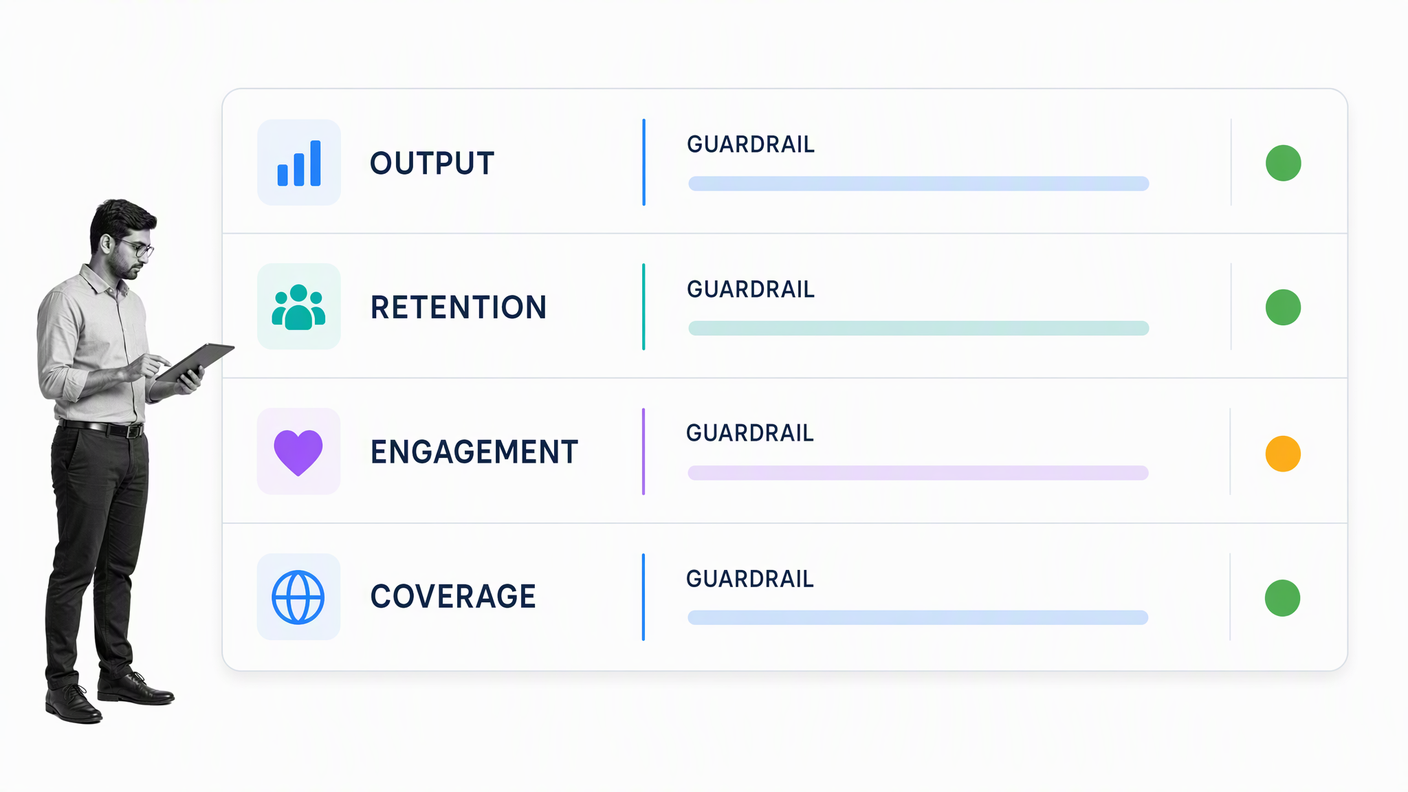
Before the pilot begins, record the measures that matter: customer response, output quality, cycle time, coverage, absence, engagement, retention risk, and security incidents. Compare the results with the starting point, gather employee feedback, and decide whether to adopt, adjust, or stop the model.
Create deliberate team rhythms
Flexible teams still need connection. Use a clear mix of asynchronous updates, focused meetings, manager check-ins, and recognition. Tools such as Slack and Zoom can help, but the operating rules matter more than the tool. Make it clear which channel carries decisions, when a meeting is necessary, and how people who are not in the room stay included.
Govern the policy in Process Street
A policy alone does not manage requests, approvals, equipment, access, review dates, or exceptions. Put those steps into a workflow with named owners, deadlines, evidence, and escalation paths.
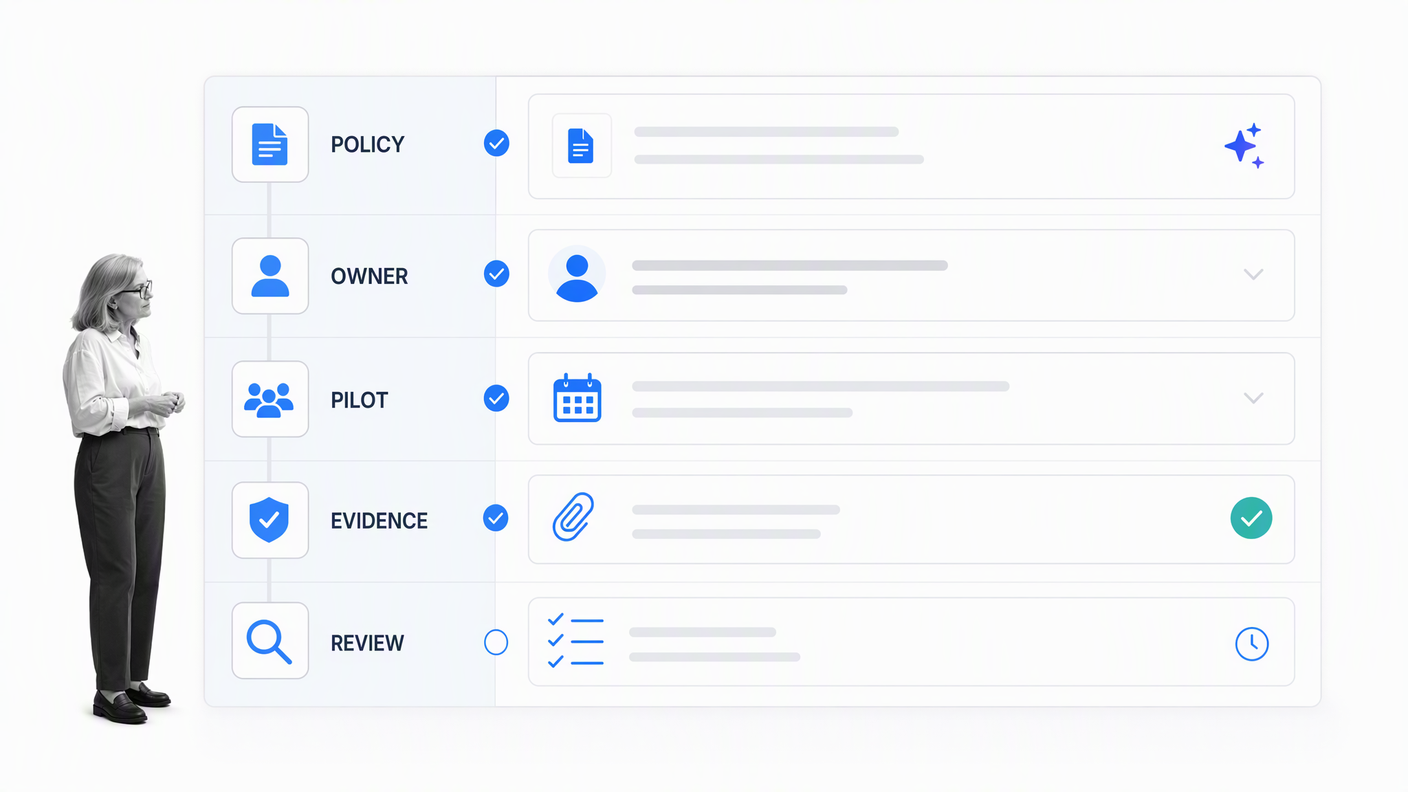
Process Street is one Compliance Operations Platform. Its Docs and Ops capability areas, plus built-in AI, let teams govern the flexible-work policy and run the work it requires in one place. Guidance stays connected to requests, approvals, access changes, equipment checks, and periodic reviews, so the model remains consistent as teams change.
The best flexible work model is not the one with the fewest rules. It is the one that gives people meaningful choice while keeping customer commitments, security, accountability, and team health intact.
Hanson Cheng is the founder of Freedom to Ascend. He helps online entrepreneurs and business owners build more independent businesses. You can connect with him through his profile.