


Turn every policy into automated workflows with built-in enforcement and audit-ready proof.



Open Source Business Process Management Software: 8 Tools Compared
Open source business process management software gives an organization access to process-engine code that it can inspect, deploy, modify, and operate under an open-source license. The strongest options are not interchangeable. Some are developer-focused engines, some include visual studios and task applications, and some extend into low-code application development.
The right choice depends less on the length of a feature list than on who will build the processes, who will maintain the runtime, and how much operational infrastructure the organization is prepared to own. This guide compares eight credible options, including Process Street as the managed alternative for teams that want governed workflows without maintaining an open-source stack.
In this guide:
- What is open source BPM software?
- Which open source BPM tools should you shortlist?
- How should you choose between open source and managed BPM?
- Why do open source BPM projects fail?
- How can Process Street fit your BPM architecture?
- Open source BPM FAQs
What is open source BPM software?
Business process management, or BPM, is the discipline of designing, executing, monitoring, and improving repeatable work. BPM software turns a process model into something people and systems can run. Depending on the product, that may include a process engine, a visual modeler, forms, human task queues, business rules, integrations, monitoring, and administrative controls.
“Open source” has a specific meaning. The Open Source Initiative definition requires more than visible source code. Distribution terms must permit source access, modification, and redistribution. A product can publish its source while restricting production use, which makes it source-available rather than open source in the conventional OSI sense.
That distinction matters in BPM because the engine may sit in the middle of high-value operations for years. Camunda, for example, publishes the source for its self-managed platform but requires a license for production use. It remains an important process-orchestration product, but buyers seeking unrestricted open-source production rights should evaluate the license before treating it as an open-source default.
Most engine-oriented products use Business Process Model and Notation. The Object Management Group BPMN specification defines the modeling standard behind familiar tasks, events, gateways, and flows. Standard notation improves portability at the diagram level, but it does not guarantee that every vendor-specific extension, form, connector, or operational behavior will transfer cleanly.
For a practical introduction to the notation itself, see the Process Street BPMN tutorial. For the broader category, the business process management tools guide explains how modeling, execution, and improvement fit together.
Which open source BPM tools should you shortlist?
The shortlist below favors products with identifiable open-source code, a clear operating model, and a credible connection to executable business processes. It deliberately separates a managed business workflow platform from engines that require an engineering team to deploy and extend.
| Tool | Best fit | Operating model | Primary strength |
|---|---|---|---|
| Process Street | Business-run recurring workflows | Managed cloud platform | Fast adoption with forms, approvals, assignments, and AI-assisted workflow creation |
| Flowable | Developers building process and case applications | Embeddable or service-based open-source engines | Process, case, and decision standards in one engine family |
| Bonita | Mixed business and development teams | Community platform with commercial editions | Visual process design plus application and runtime components |
| Joget | Low-code workflow applications | Open-source community edition with commercial options | Forms, lists, user interfaces, and processes in one builder environment |
| ProcessMaker | Teams that want an application-oriented BPM core | Self-hosted open-source core | Workflow design with forms, documents, roles, and routing |
| Activiti | Java and Spring engineering teams | Lightweight open-source engine | Embeddable process execution for application architectures |
| Imixs-Workflow | Human-centric Java enterprise applications | Open-source engine and modeler | Task routing, business data, access control, and extensibility |
| Operaton | Teams seeking a community path from Camunda-style deployments | Community-owned open-source engine | Familiar BPMN and decision automation with a migration focus |
Process Street: Managed BPM Without Self-Hosting
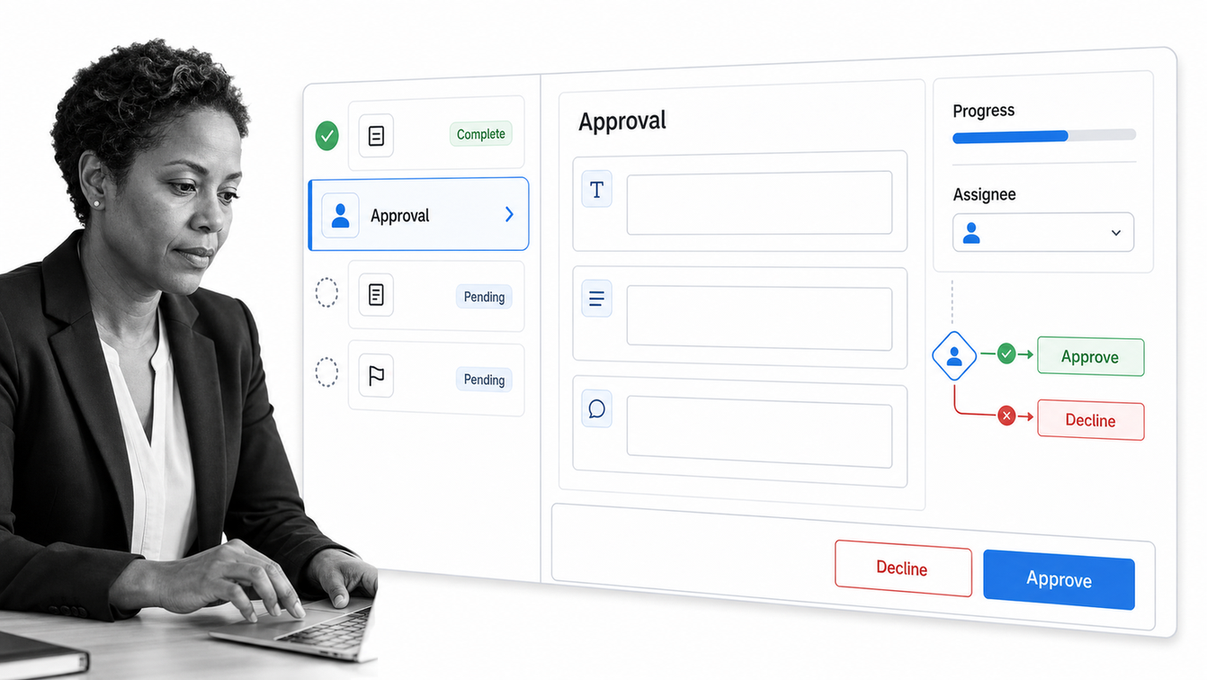
Process Street is not open-source software. It is the strongest option on this page for operations teams that want to build, run, and improve recurring business processes without owning an engine, database, deployment pipeline, or upgrade program. A workflow acts as the controlled blueprint, while each workflow run becomes an accountable instance of the process.
Teams can combine task assignments, due dates, forms, conditional logic, approvals, automations, and reporting in one managed environment. Process AI can generate or import workflows and help with tasks inside a run. This makes the platform particularly useful for employee onboarding, client onboarding, approvals, compliance routines, quality checks, and other human-centered processes where adoption and visibility matter as much as engine flexibility.
Choose Process Street when: business operators need to own the process, implementation speed matters, and maintaining workflow infrastructure would distract from the operational outcome. Teams can still connect workflows to surrounding systems through automations, integrations, APIs, webhooks, and the Process Street MCP server.
Flowable
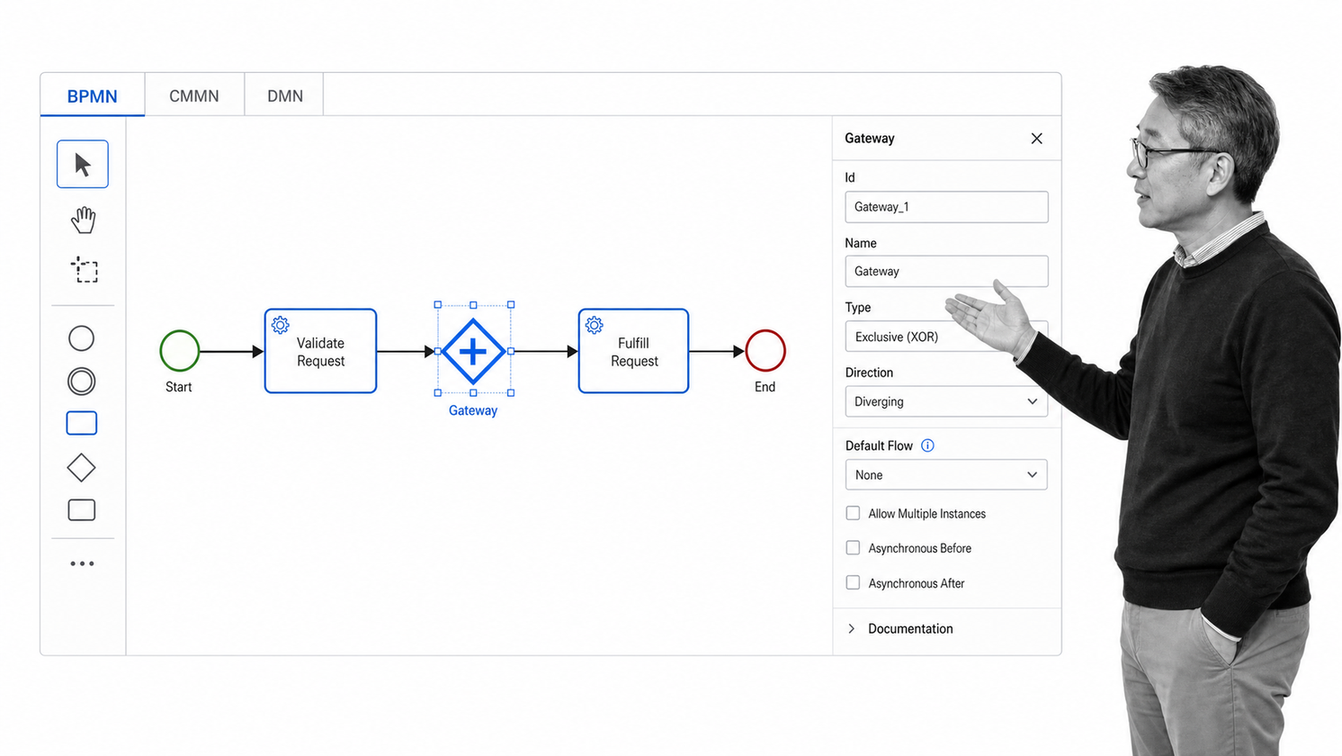
Flowable provides open-source process, case, and decision engines for teams building custom workflow applications. Its open-source project supports BPMN, CMMN, and DMN, so it can handle structured processes, more adaptive case work, and repeatable decision logic within one technical family. The engines can run inside a Java application or as services and expose Java and REST APIs.
The official Flowable open-source page describes the engines as Apache-licensed and suitable for developers, system administrators, and business users. The open-source layer is a foundation, not a turnkey operations workspace. Flowable also offers commercial products that add richer design, work, control, and inspection experiences.
Choose Flowable when: the architecture needs executable process, case, and decision standards, the engineering team is comfortable with Java services, and custom application behavior matters more than an immediately deployable business workspace.
Bonita
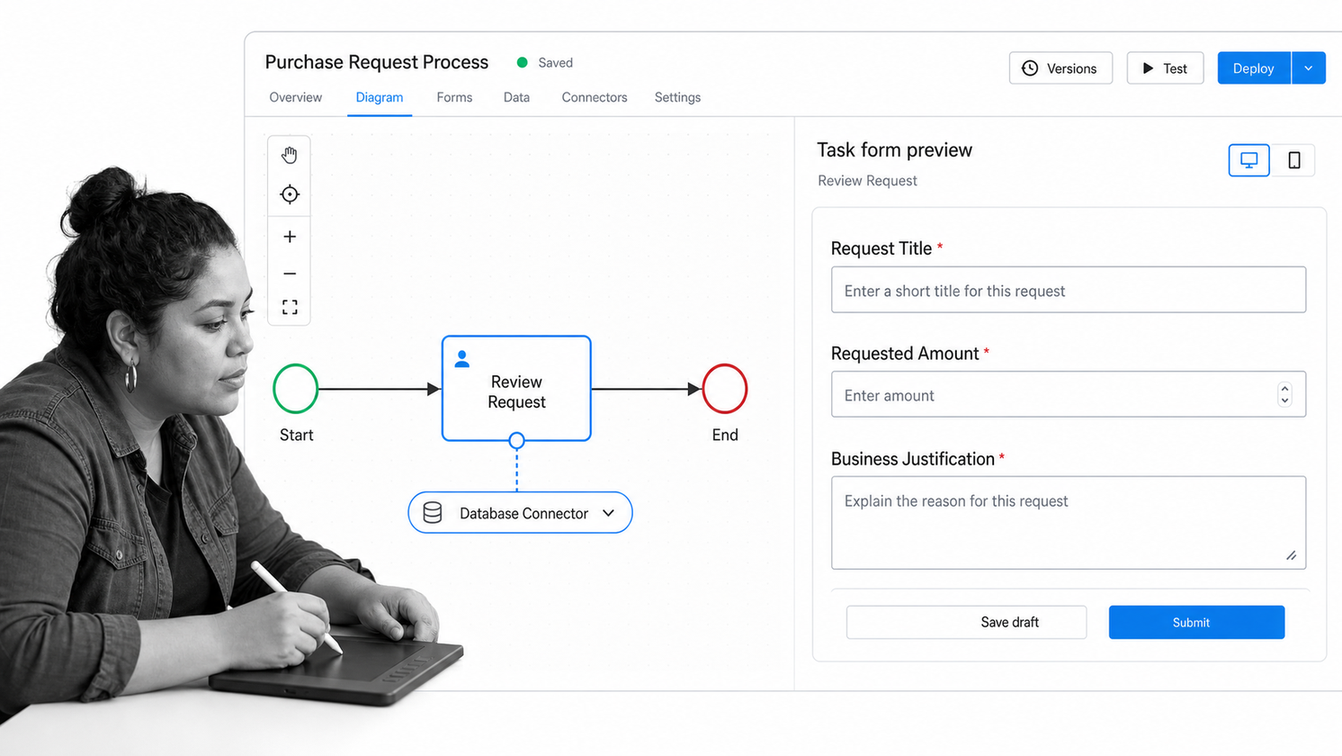
Bonita combines process modeling, application development, and runtime execution. Its Community edition provides an open-source route for teams that want more than a headless engine. Bonita Studio supports BPMN-based process implementation, business data modeling, forms, and application artifacts, while the runtime executes processes and serves task-oriented applications.
The product is designed for collaboration between people who model the business process and developers who implement integrations and extensions. That can shorten the gap between a process diagram and a usable internal application, but it also introduces a broader platform surface to learn and operate. Subscription editions add capabilities and support beyond the Community edition.
Choose Bonita when: a visual studio and application layer are important, BPMN is central to the design language, and the organization has both process expertise and development capacity.
Joget
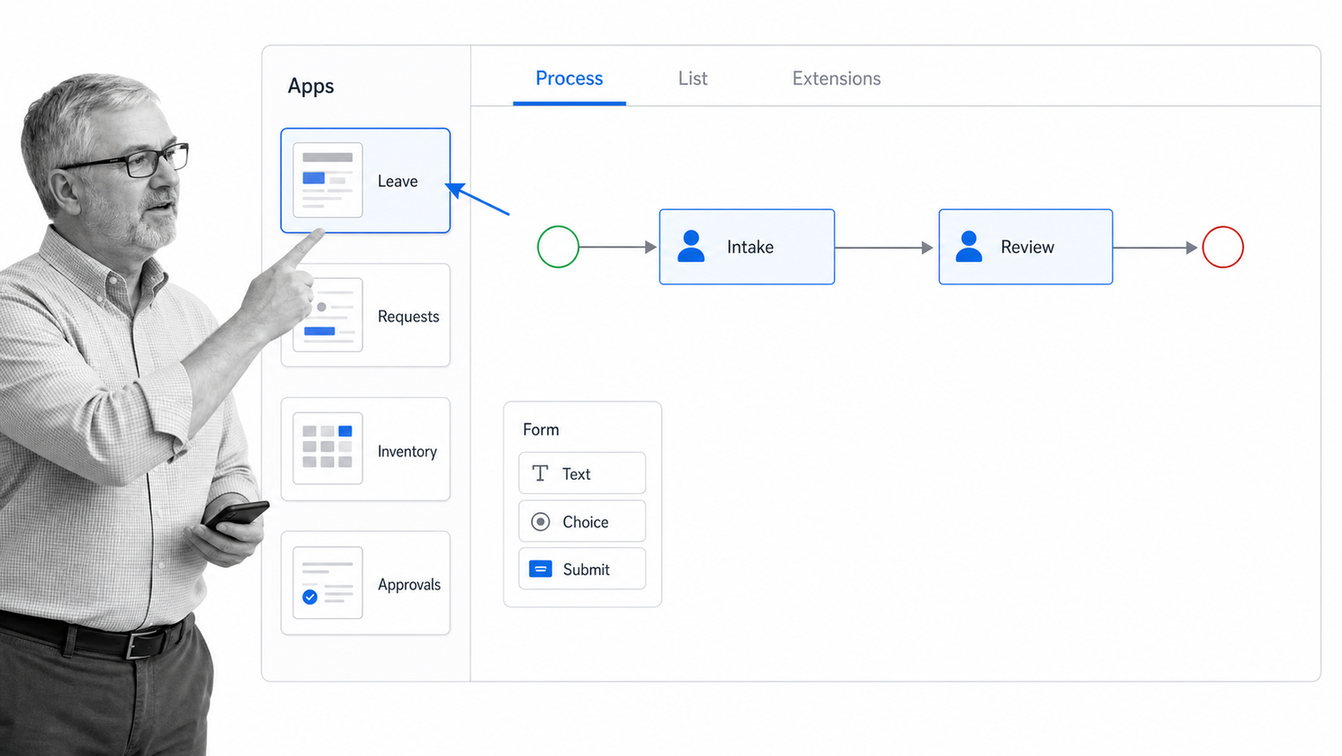
Joget approaches BPM through low-code application development. Its Community edition is open source, while the broader platform offers visual builders for processes, forms, lists, user interfaces, APIs, and reports. That makes Joget a practical option when the process needs a complete web application rather than only an embedded execution engine.
Business logic, user tasks, routing, data collection, and application screens can live within the same builder environment. The benefit is speed across the whole app surface. The tradeoff is that teams must evaluate which features belong to the community product and which require a commercial edition, then plan the platform skills needed for long-term administration.
Choose Joget when: the desired output is a low-code workflow application with forms and role-based user experiences, and the team wants an open-source community starting point.
ProcessMaker
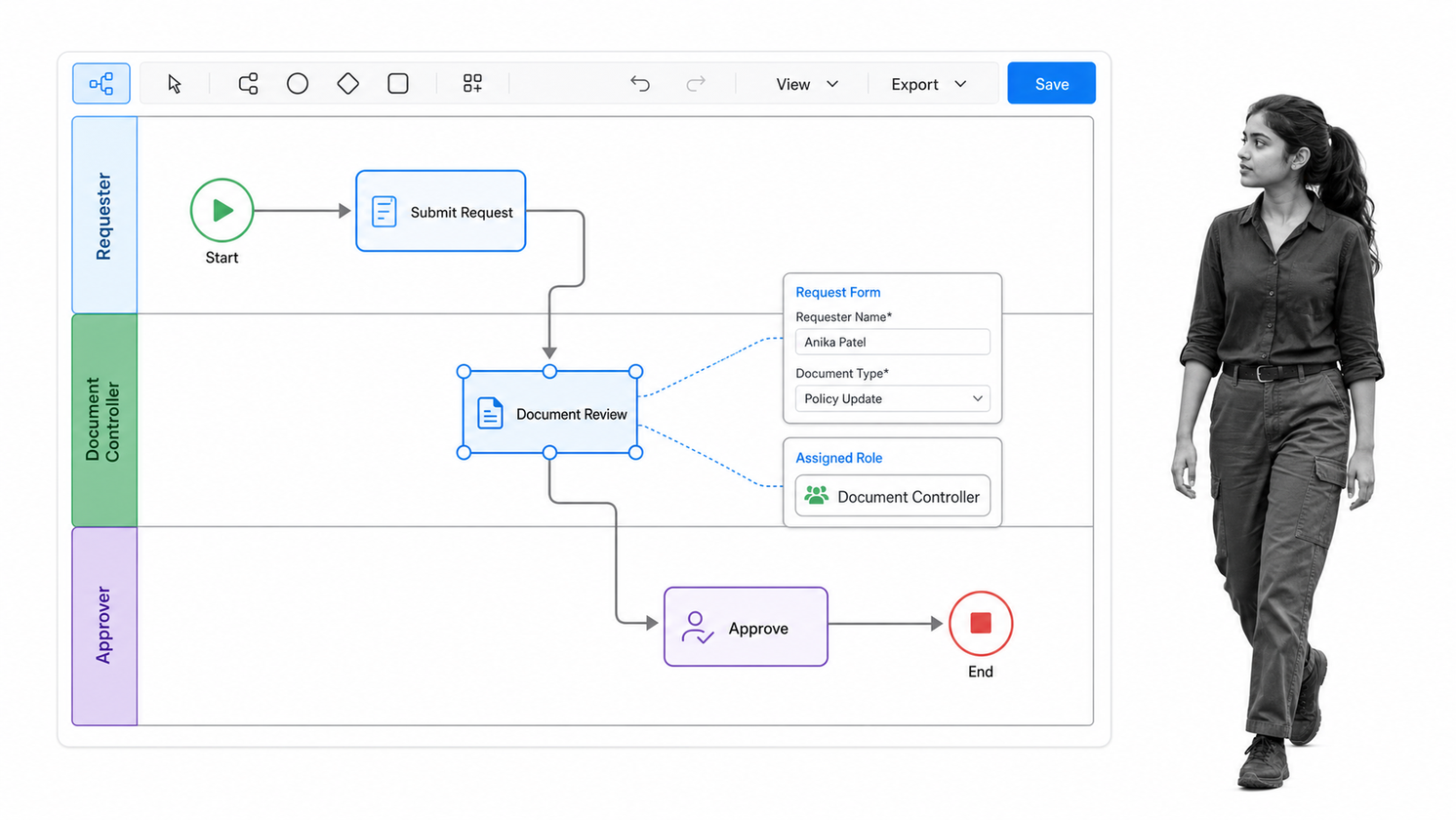
ProcessMaker maintains an open-source BPM core under the AGPL. The project brings together workflow automation, form design, document creation, user and role assignment, routing rules, and process mapping. It is application-oriented, which makes it more approachable than a bare engine for teams prepared to self-host and customize a larger system.
The official ProcessMaker repository documents local deployment and the surrounding technical requirements. Buyers should treat the repository, the hosted commercial product, and add-on packages as distinct evaluation surfaces. Confirm that the open-source core contains the capabilities required for the intended production design before committing to an architecture.
Choose ProcessMaker when: the team wants a self-hosted workflow application core with process, form, document, and routing concepts already assembled, and it is comfortable operating the required web stack.
Activiti
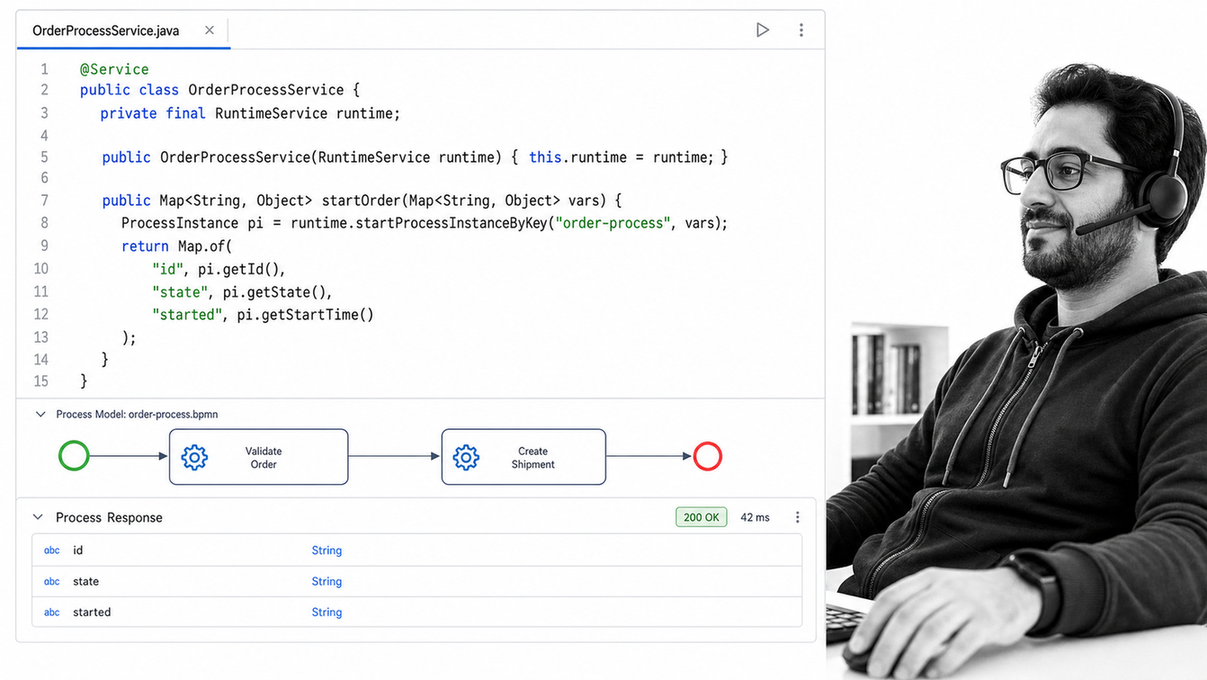
Activiti is a lightweight open-source BPM and workflow engine built for Java applications. Its core executes BPMN processes and can run inside an application, on a server, in a cluster, or as part of a cloud architecture. Spring integration makes it a natural candidate for engineering teams that want process execution embedded in an existing Java ecosystem.
Activiti is best understood as an engineering component rather than a polished business operations platform. The team will need to decide how users design processes, complete human tasks, view operational state, secure the service, and manage deployment. That flexibility is valuable when the workflow engine is part of a custom product, but expensive when the actual need is a straightforward business checklist or approval flow.
Choose Activiti when: a Java or Spring team wants a compact process engine, the surrounding application already exists, and developers are prepared to build or integrate the user and operations layers.
Imixs-Workflow
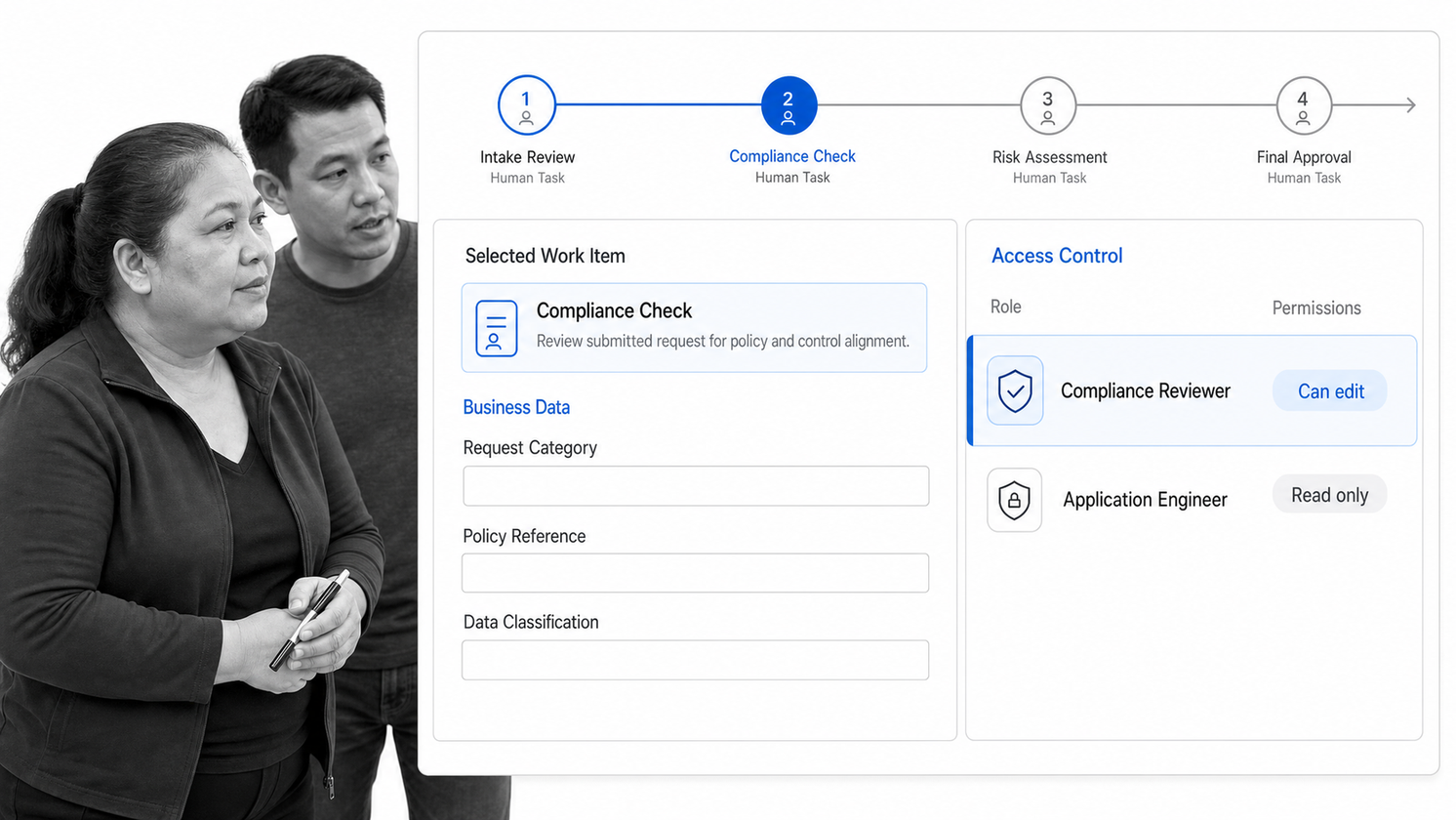
Imixs-Workflow is an open-source engine for human-centric business processes. It uses BPMN models to route work, manage process state, persist business data, and control access. The platform is built for Java enterprise environments and can be accessed through service APIs, including REST, which makes it suitable for custom transactional applications.
Its modeler extends BPMN with properties needed by the runtime, while its plugin architecture allows technical behavior to be added to the processing cycle. The focus on human tasks and business data differentiates it from engines designed mainly for service orchestration. The organization still owns deployment, application design, identity integration, monitoring, and maintenance.
Choose Imixs-Workflow when: human task routing and business data are central, the architecture uses Java enterprise standards, and the team wants a model-driven engine with extensibility and access-control concepts.
Operaton
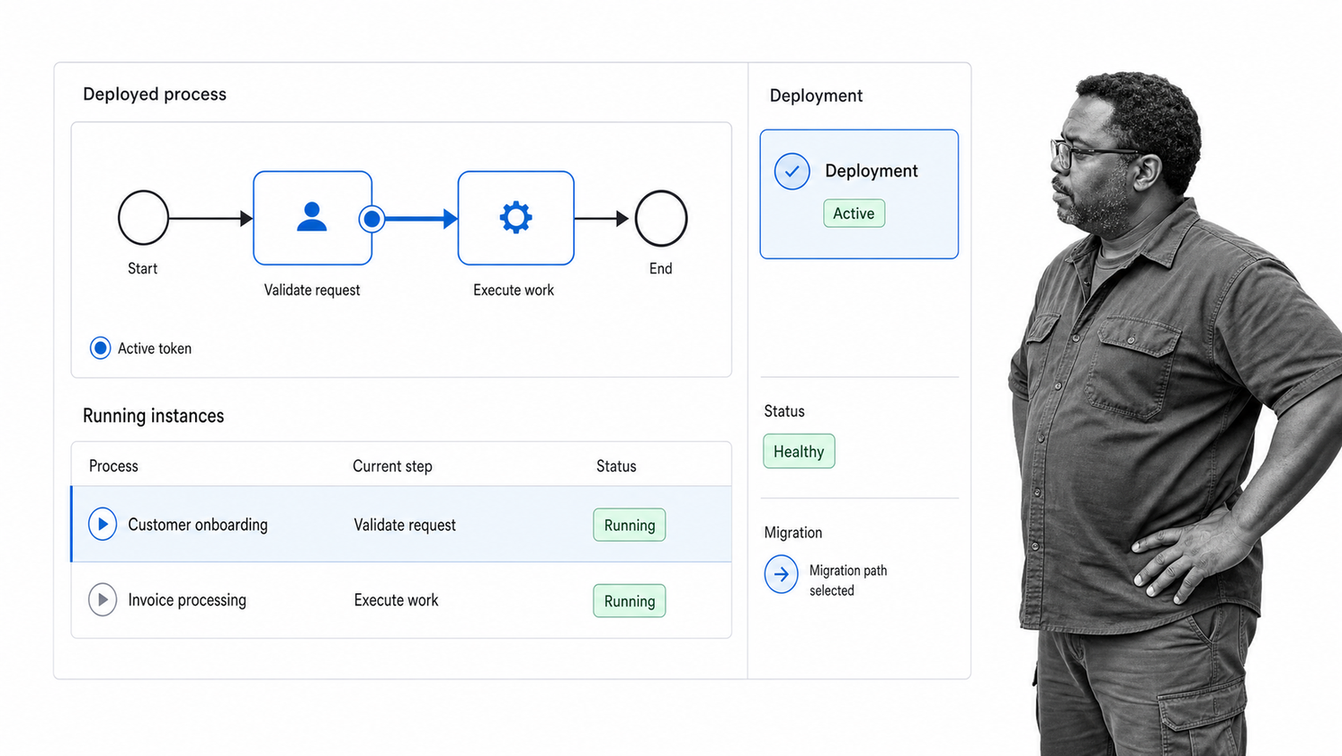
Operaton is a community-driven open-source BPMN engine created from the Camunda community code line. It is Apache-licensed and positions itself as a free, community-owned continuation for teams that want familiar process and decision automation without moving to a production-restricted source license.
The project emphasizes migration, security, stability, and deployability across standalone, embedded, and cloud environments. That makes it relevant to organizations with existing Camunda-style skills or models. It is also younger than long-established engine projects, so adoption should include a careful review of release practices, documentation, migration coverage, governance, and the availability of implementation support.
Choose Operaton when: an engineering team wants a community-governed BPMN engine, Camunda-style compatibility is strategically useful, and the organization is willing to validate a newer project through a production pilot.
How should you choose between open source and managed BPM?
Start with the operating model, not the license label. Open source can remove a proprietary license restriction, but it does not remove the cost of implementation, infrastructure, security, upgrades, observability, support, or internal ownership. A small engine embedded in a product and a business-ready workflow platform solve different problems.
- Define the process boundary. Decide whether the system will orchestrate software services, route human work, build internal applications, or manage recurring operating procedures. Complex service orchestration may justify an engine. Human-centered operations often benefit from a managed workspace.
- Identify the builders. A process analyst working in a visual studio, an operations manager editing a workflow, and a Java engineer embedding a runtime need different tools. The builder experience determines whether process ownership stays with the business or moves into an engineering backlog.
- Read the license. Confirm production rights, redistribution obligations, network-use provisions, commercial feature boundaries, and support terms. Source visibility alone is not proof of an open-source production license.
- Test the complete lifecycle. Model a real process, deploy it, start instances, assign human work, handle an exception, change a running process, inspect history, and upgrade the system. A successful diagram demo proves very little about day-to-day operations.
- Calculate total ownership. Include engineering time, cloud resources, database operations, identity, monitoring, incident response, security reviews, backups, disaster recovery, and upgrades. Compare that total with a managed platform, not with a zero-dollar license line.
A focused pilot should use one process with meaningful approvals, an exception route, a system integration, a deadline, and a reporting requirement. The winning product is the one the organization can operate reliably after the initial implementation team moves on.
Why do open source BPM projects fail?
Open-source BPM projects usually fail around the engine, not inside it. The process model executes, but the organization underestimates the surrounding system: identity, permissions, forms, task inboxes, notifications, integrations, audit data, deployment, monitoring, support, and change management. A technically elegant engine can still become an operational bottleneck if every process change requires scarce engineering capacity.
Security and maintenance also need explicit owners. NIST software supply-chain guidance recommends controls for acquiring, using, and maintaining third-party and open-source software. For a BPM stack, that translates into trusted repositories, dependency tracking, vulnerability response, access controls, backups, tested upgrades, and a documented path for emergency changes.
The second failure mode is choosing a notation before defining the job. BPMN is powerful, but not every recurring process needs an executable process engine. A structured workflow with assignments, conditional paths, approvals, due dates, and evidence capture may deliver the outcome faster and remain easier for the operating team to change.
How can Process Street fit your BPM architecture?
Process Street can replace an open-source BPM stack when the primary job is coordinating people through repeatable operational work. It can also complement an engine by managing the human procedure around a technical orchestration, such as intake, review, approval, exception handling, evidence collection, and follow-up.
The practical advantage is ownership. Operations teams can update instructions, fields, assignees, due dates, approvals, and conditional paths in the same environment where work is completed. That keeps the process close to the people accountable for its outcome. The broader workflow management solutions guide explains how to match process complexity with the right control layer.
If the evaluation has reached a build-versus-buy decision, request a Process Street demo and test the same pilot process in a managed workspace. Compare time to first usable workflow, operator adoption, exception handling, reporting, and ongoing maintenance effort.
Open source BPM FAQs
Is open source BPM software free to use?
An open-source license may allow software use without a proprietary license fee, but implementation is not costless. Hosting, databases, security, integrations, monitoring, support, upgrades, and internal engineering time all contribute to total cost of ownership.
What is the difference between open source and source-available BPM software?
Open-source software is distributed under a license that permits use, modification, and redistribution under defined terms. Source-available software lets people inspect source code but may restrict production, commercial use, modification, or redistribution.
Does open source BPM software require BPMN?
No. BPMN is common among process engines because it provides a shared notation for executable processes, but workflow systems can use other models. Choose the notation based on process complexity, portability needs, and the people who will maintain it.
Which open source BPM tool is best for Java teams?
Flowable, Activiti, Imixs-Workflow, and Operaton all suit Java-oriented architectures, but they target different jobs. Evaluate whether the team needs process and case standards, a lightweight embedded engine, human-centric application services, or migration compatibility.
Can business teams manage an open source BPM platform without developers?
Some platforms provide visual studios and low-code builders, but production deployment, integrations, security, and upgrades usually require technical ownership. A managed platform is often a better fit when business teams must control workflows directly.
When should a team choose Process Street instead of an open source engine?
Choose Process Street when the work is primarily human-centered, fast implementation matters, business operators need direct ownership, and the organization does not want to maintain workflow infrastructure. Choose an engine when deep embedding and custom orchestration justify engineering ownership.