





Dropbox vs Google Drive is a choice between a sync-first file service and a collaboration-first workspace. Dropbox is usually the better fit when dependable file movement, large-file handling, and recovery are central. Google Drive is usually better when your team already works in Google Workspace and wants files, search, comments, and live documents in one place.
I recently hit the limit on my 100 GB Dropbox account and, after a bit of research, decided to make the move from Dropbox to Google Drive. At the time I was paying for premium plans for both Google Drive and Dropbox. The move produced some unexpected benefits and gave me a practical rundown of how the services differ. That experience still matters, but the right answer depends on your devices, collaborators, recovery needs, and existing software.
Dropbox vs Google Drive at a glance
| Criterion | Dropbox | Google Drive | Better fit |
|---|---|---|---|
| Core strength | File sync, transfer, and recovery | Files connected to browser-based work | Depends on workflow |
| Free storage | 2 GB | 15 GB shared with Gmail and Google Photos | Google Drive |
| Paid storage | Plans center on larger storage allowances | Google One offers more steps between free and multi-terabyte plans | Google Drive for tier choice |
| Desktop behavior | Selective sync and online-only files | Stream or mirror files | Dropbox for a sync-first feel |
| Collaboration | Shared files, comments, and Dropbox Paper | Docs, Sheets, Slides, comments, and live co-editing | Google Drive |
| Search and AI | Dropbox search and Dash, depending on plan | Drive search and Gemini features, depending on plan | Depends on ecosystem |
| Recovery | Version history and deleted-file recovery vary by plan | Version history and admin recovery vary by file type and plan | Compare the exact plan |
The short version is that Google Drive offers the broader productivity environment, while Dropbox keeps a sharper focus on storing, synchronizing, sharing, and recovering files. Both services can cover the basics well. The meaningful differences appear when you look at the complete workflow around a file.
Pricing and storage
Google Drive starts with 15 GB of free storage, shared across Drive, Gmail, and Google Photos. Dropbox Basic starts with 2 GB. That makes Google more generous for a free personal account, although shared storage means a large mailbox or photo library can consume the same allowance.
Paid pricing changes, so compare the current Dropbox plans, Google One plans, and Google Workspace plans before buying. The structural difference is more durable: Google One provides several consumer storage steps, while Dropbox commonly starts paid individual users at a larger allowance. Business plans add controls, pooled or team storage rules, and recovery windows that vary by tier.
Dropbox and Google Drive are file storage services that sync files between folders on your devices and the cloud, making it easy to back up and access files from anywhere. My main computer had a 500 GB hard drive, but operating system and application files took up space I did not need to back up. I had about 350 GB capacity on my MacBook Pro to sync with Google Drive. My second computer, a MacBook Air, had even less storage space, so I could barely fit all my files on that computer. More cloud capacity let me replace three external hard drives and stop having to pick and choose which files to back up, reducing decision fatigue.
That distinction matters because sync is not the same as backup. Both products can keep selected files online-only, but deletions and unwanted changes may synchronize too. Check the version history, deleted-file recovery window, and administrative recovery options included with the plan you choose.
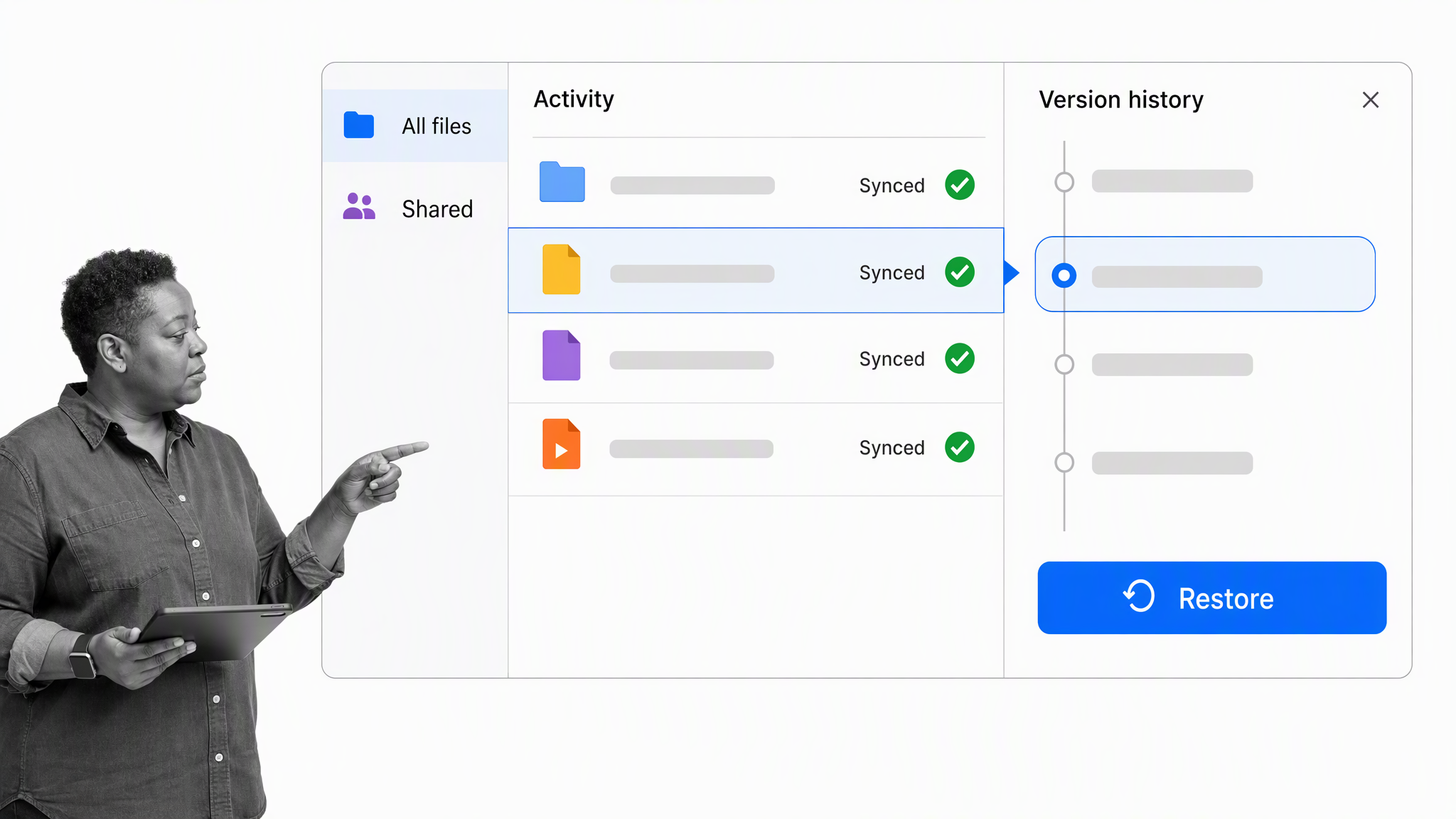
Dropbox supports selective sync and online-only files, while Google Drive for desktop supports streamed and mirrored workflows. Dropbox often feels more direct when a familiar desktop folder is the center of the workflow. Drive feels more natural when the browser, shared drives, and Workspace apps are the center.
Search, collaboration, and AI
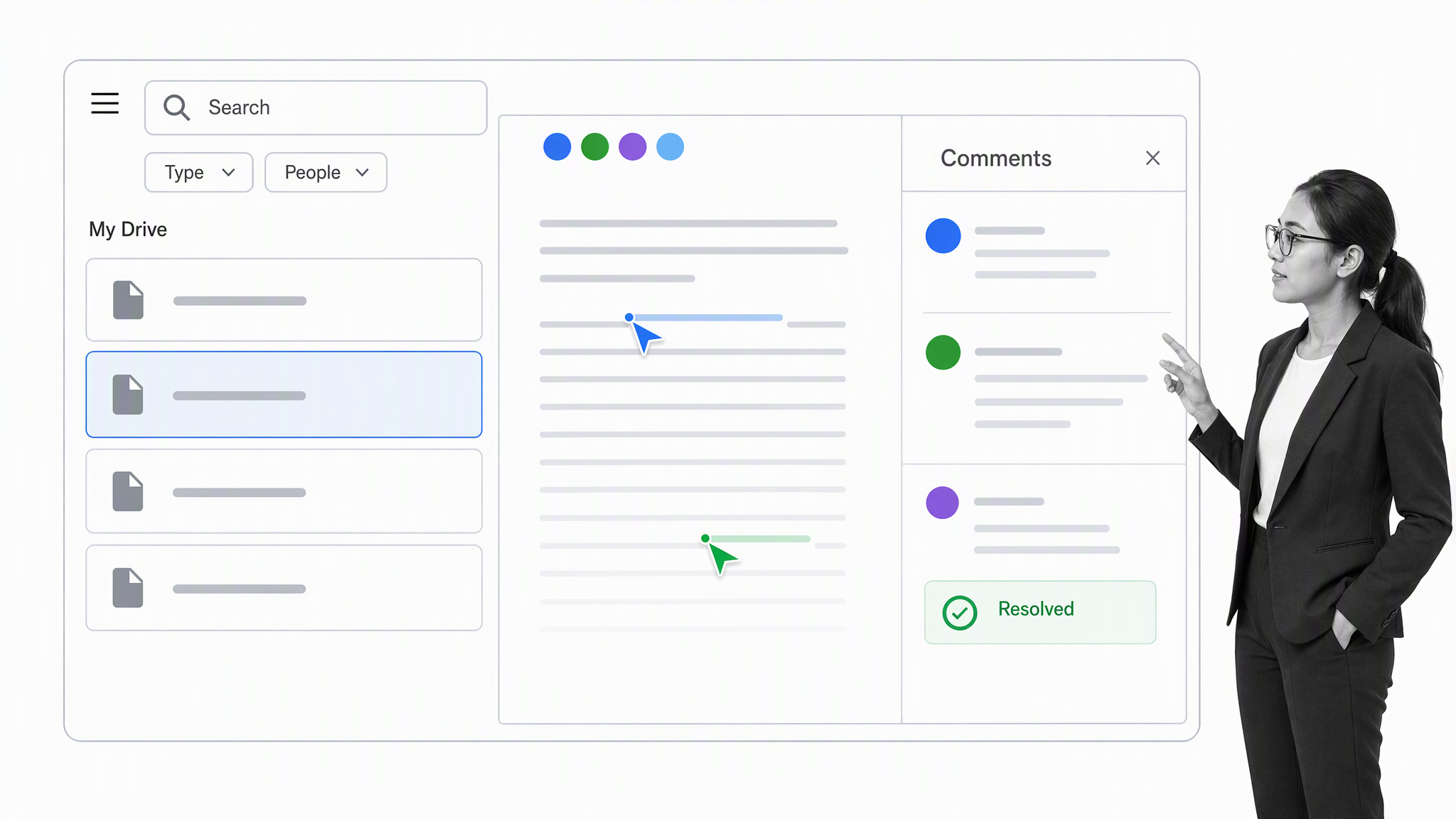
Google Search was one of the unexpected benefits of consolidating files in Drive. Search works across the web and mobile interfaces, and it can use file names, file types, owners, dates, and content. An added bonus is that search works on an Android device. For a team that already lives in Gmail and Google Workspace, that makes a shared file easier to find in the same environment where the conversation and document work happen.
Since I work with remote teams and customers all around the world, I use Google Docs a lot. Collaborative spreadsheets are especially useful, and it is convenient to share links so people can collaborate on documents straight through a browser. For content, Google Docs is a common method of distribution when pitching guest posts for other blogs. Being able to hit Share and attach a document by pasting a link into Gmail is valuable. Having documents as part of the rest of my files also helps organization and search. Dropbox supports shared links, comments, previews, and Dropbox Paper, but it is less likely to replace a full office suite on its own.
AI no longer makes this a one-sided comparison. Google offers Gemini features across Workspace plans and apps, while Dropbox offers AI-assisted search and knowledge discovery through products such as Dash. Availability, data handling, and administrative controls depend on the account and plan. Treat AI as a workflow and governance question, not a reason to ignore the underlying storage, sharing, and recovery model.
Photos, video, and ecosystem fit
Google Photos is a separate photo-management product that shares a Google Account storage allowance. It no longer provides unlimited free photo storage, and automatic syncing between Google Photos and Google Drive ended in 2019. Google Photos is still useful for browsing by date, place, and recognized people, and for organizing a very large personal library, but files do not simply appear in both products.
That separation corrects an easy misconception. Drive is general file storage; Photos is a photo library. When I installed Google Photos, I was suddenly looking at photos from more than five years ago. Browsing a massive photo library by time, place, and person was the cleanest experience I had come across. I had thought for a while that people needed a product that could automatically arrange and display old photos. We are taking an exponentially increasing amount of photos each year, so easy consumption and search will become absolutely necessary. Google Photos has changed, but that underlying benefit remains. Dropbox can automatically upload camera photos and keeps them within a conventional file structure.
Another useful ability is watching videos straight from cloud storage. I keep educational courses and video clips for making videos, and it is useful to watch them from a Mac and phone without having to download them. Dropbox lets you do this too. Playback support can depend on codec, processing status, browser, device, and plan, so test a representative large video instead of assuming one service supports every format better.
We use Google Workspace at Process Street to manage emails, calendars, files, and documents. Keeping personal files on Google Drive and sharing a Process Street folder with a local account can put work documents and personal files in the same place. This is the practical side of Google Apps integration. That brings the same advantages, especially search, but this move may not be for everyone. Some people prefer Dropbox because they do not want files and emails under one service provider. Dropbox can keep the file layer more independent, which some teams prefer for portability or risk separation.
Which should you choose?
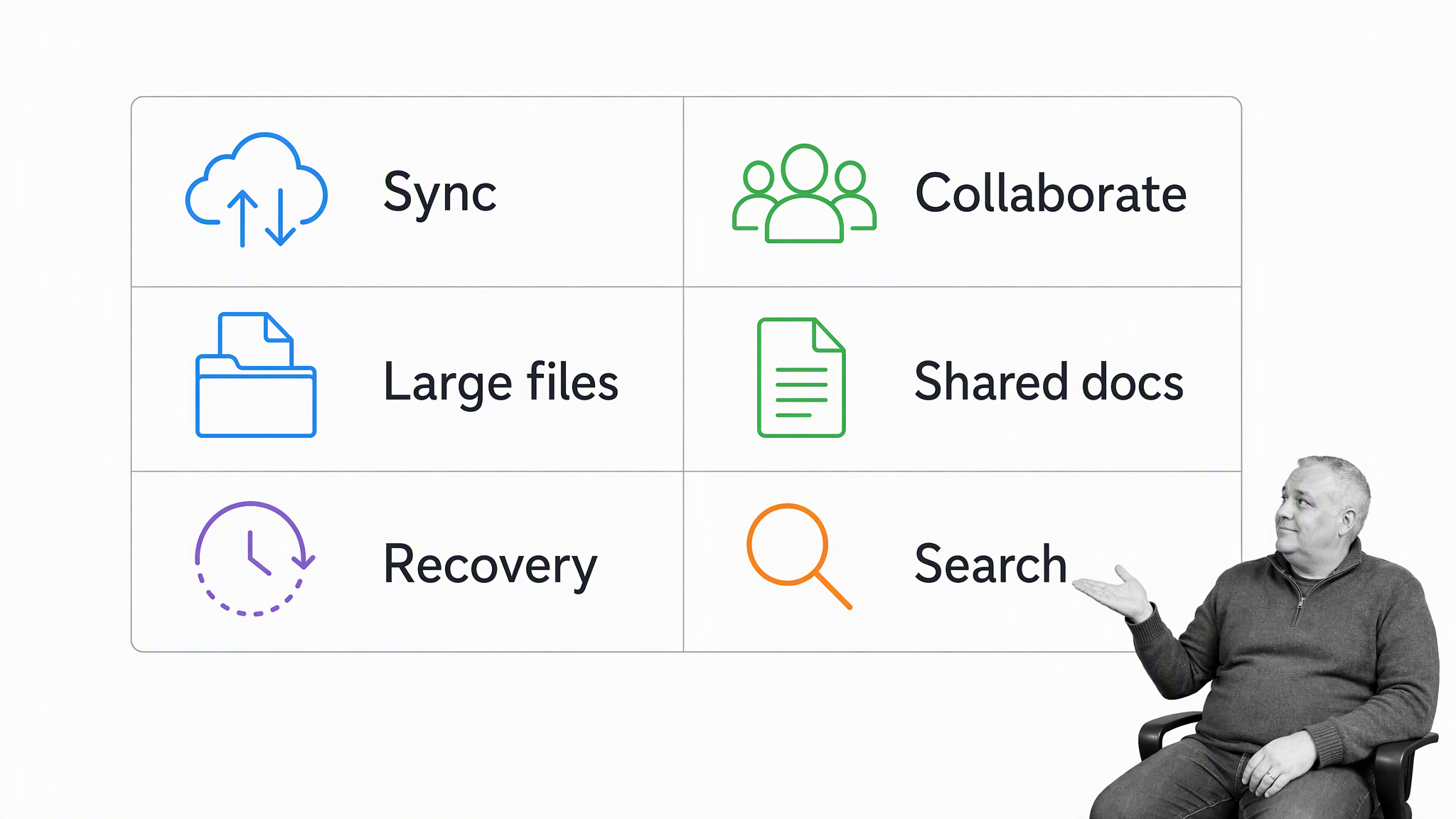
Choose the service that matches the work surrounding your files, not the one with the longest feature list.
- Choose Dropbox when desktop sync, large shared files, straightforward external sharing, and clearly defined recovery windows are the priorities.
- Choose Google Drive when Google Docs collaboration, Workspace search, shared drives, and an integrated browser workflow matter most.
- Use both deliberately when one has a specific role, such as Dropbox for production assets and Drive for collaborative documents. Avoid paying twice for undifferentiated storage.
For a personal account, free storage and the apps you already use may settle the choice. For a team, compare identity management, shared ownership, offboarding, external sharing, audit visibility, retention, recovery, and how easily people can tell which version is authoritative.
Where Process Street fits
Process Street is a single Compliance Operations Platform with Docs and Ops capability areas plus built-in AI. Dropbox and Google Drive store the files that support work; Process Street helps teams define the controlled process around those files, assign responsibility, collect evidence, and track execution. That is especially useful in document workflow management, where approval, version ownership, and auditability matter as much as the storage location.
Process Street also supports a Google Drive integration for bringing files into operational workflows. The practical pattern is to let the storage platform manage the file and let the process platform manage what must happen with it.
Dropbox vs Google Drive FAQs
Is Dropbox better than Google Drive?
Dropbox is often better for a sync-first workflow, large shared files, and file recovery. Google Drive is often better for teams that collaborate in Google Docs and already use Google Workspace.
Is Dropbox a Google product?
No. Dropbox and Google Drive are separate cloud storage services from different companies.
Which is better for photos, Dropbox or Google Drive?
Google Photos provides a dedicated managed photo library and shares storage with Google Drive. Dropbox keeps camera uploads in a conventional file structure. The better choice depends on whether you prefer photo-library features or direct folder organization.